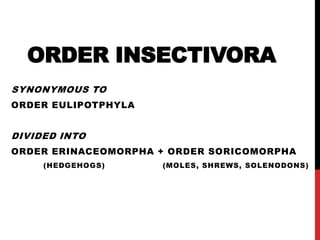
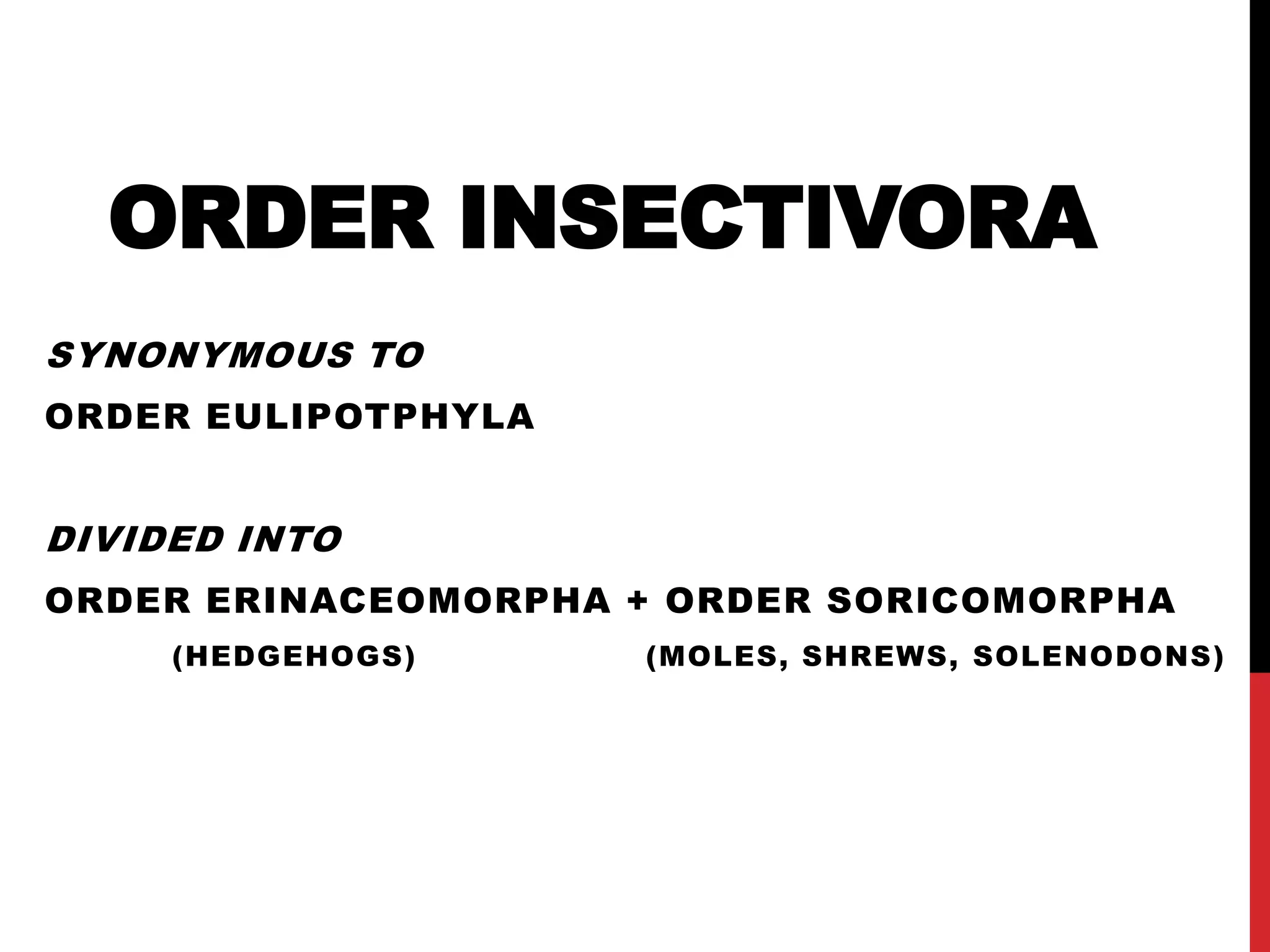
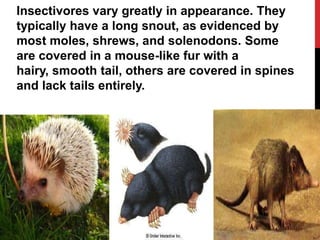
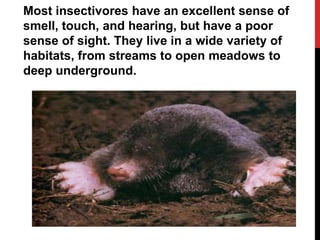
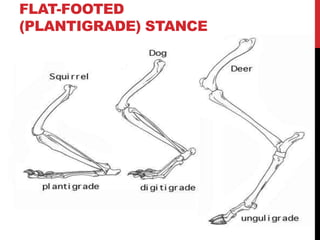
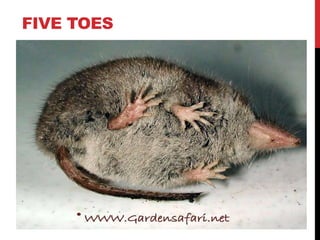
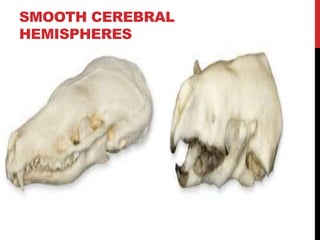
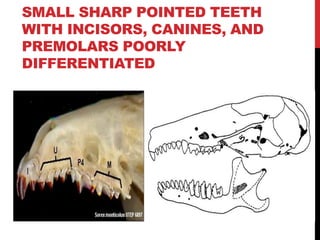
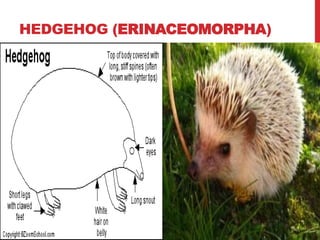
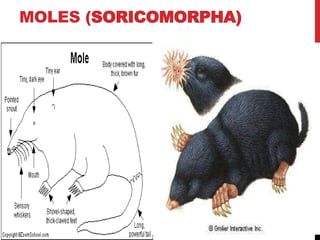
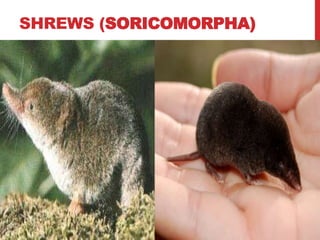
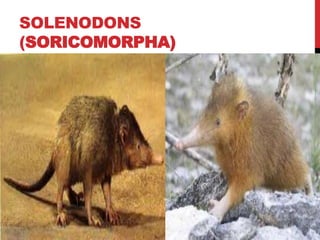
The document discusses the order Insectivora, which includes moles, shrews, hedgehogs, and solenodons. Insectivora subsist on a diet of insects, worms and other small invertebrates. They represent a few survivors of what was once a more abundant group. Examples like moles, shrews and hedgehogs demonstrate convergent feeding strategies of burrowing, digging and hunting for insects in soil and organic matter. Insectivores display both primitive traits like plantigrade stance and smooth cerebral hemispheres, as well as specialized features for their insectivorous diets and lifestyles.



![Getting Started with Apache Spark: Big Data Made Simple [Free Meetup]](https://cdn.slidesharecdn.com/ss_thumbnails/apachesparkgettingstarted-260203175547-8361bcc3-thumbnail.jpg?width=640&height=640&fit=bounds)


