We believe in harmony
 Md. Mazedul Islam
 Indra Bhowmick
 Mukta Mondal
 Farhana Nasrin
 Sungida Sarmin
 Md. Amir Hamza
14
-5
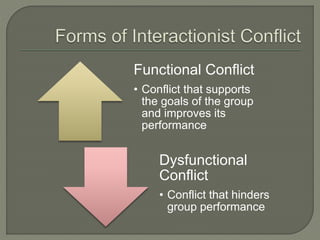
Functional Conflict
• Conflict that supports
the goals of the group
and improves its
performance
Dysfunctional
Conflict
• Conflict that hinders
group performance
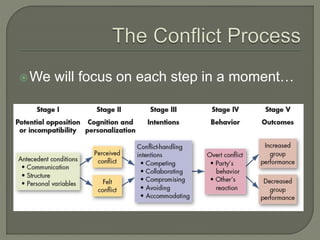
We will focus on each step in a moment…
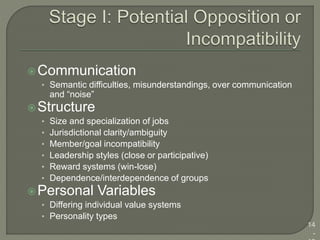
Communication
• Semantic difficulties, misunderstandings, over communication
and “noise”
Structure
• Size and specialization of jobs
• Jurisdictional clarity/ambiguity
• Member/goal incompatibility
• Leadership styles (close or participative)
• Reward systems (win-lose)
• Dependence/interdependence of groups
Personal Variables
• Differing individual value systems
• Personality types
14
-
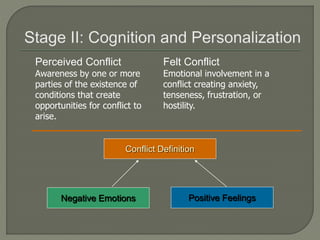
Positive FeelingsNegative Emotions
Conflict Definition
Perceived Conflict
Awareness by one or more
parties of the existence of
conditions that create
opportunities for conflict to
arise.
Felt Conflict
Emotional involvement in a
conflict creating anxiety,
tenseness, frustration, or
hostility.
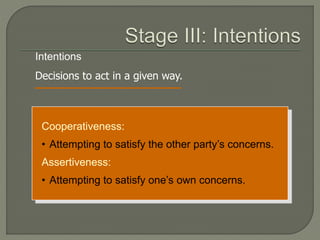
Cooperativeness:
• Attempting to satisfy the other party’s concerns.
Assertiveness:
• Attempting to satisfy one’s own concerns.
Intentions
Decisions to act in a given way.
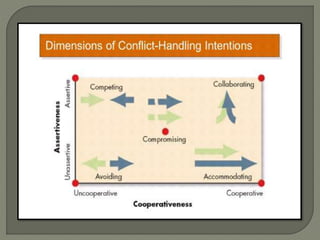
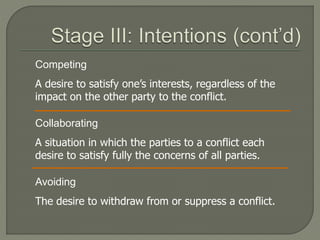
Competing
A desire to satisfy one’s interests, regardless of the
impact on the other party to the conflict.
Collaborating
A situation in which the parties to a conflict each
desire to satisfy fully the concerns of all parties.
Avoiding
The desire to withdraw from or suppress a conflict.
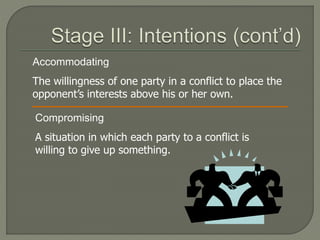
Accommodating
The willingness of one party in a conflict to place the
opponent’s interests above his or her own.
Compromising
A situation in which each party to a conflict is
willing to give up something.
Conflict Management
The use of resolution and stimulation techniques to
achieve the desired level of conflict.
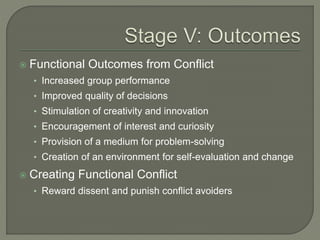
 Functional Outcomes from Conflict
• Increased group performance
• Improved quality of decisions
• Stimulation of creativity and innovation
• Encouragement of interest and curiosity
• Provision of a medium for problem-solving
• Creation of an environment for self-evaluation and change
 Creating Functional Conflict
• Reward dissent and punish conflict avoiders
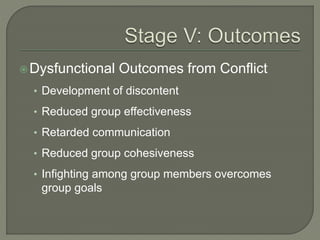
Dysfunctional Outcomes from Conflict
• Development of discontent
• Reduced group effectiveness
• Retarded communication
• Reduced group cohesiveness
• Infighting among group members overcomes
group goals
Presented by
Orchid Group

orchid group by mazed

  • 1.
  • 2.
     Md. MazedulIslam  Indra Bhowmick  Mukta Mondal  Farhana Nasrin  Sungida Sarmin  Md. Amir Hamza
  • 5.
  • 11.
    Functional Conflict • Conflictthat supports the goals of the group and improves its performance Dysfunctional Conflict • Conflict that hinders group performance
  • 12.
    We will focuson each step in a moment…
  • 13.
    Communication • Semantic difficulties,misunderstandings, over communication and “noise” Structure • Size and specialization of jobs • Jurisdictional clarity/ambiguity • Member/goal incompatibility • Leadership styles (close or participative) • Reward systems (win-lose) • Dependence/interdependence of groups Personal Variables • Differing individual value systems • Personality types 14 -
  • 14.
    Positive FeelingsNegative Emotions ConflictDefinition Perceived Conflict Awareness by one or more parties of the existence of conditions that create opportunities for conflict to arise. Felt Conflict Emotional involvement in a conflict creating anxiety, tenseness, frustration, or hostility.
  • 15.
    Cooperativeness: • Attempting tosatisfy the other party’s concerns. Assertiveness: • Attempting to satisfy one’s own concerns. Intentions Decisions to act in a given way.
  • 17.
    Competing A desire tosatisfy one’s interests, regardless of the impact on the other party to the conflict. Collaborating A situation in which the parties to a conflict each desire to satisfy fully the concerns of all parties. Avoiding The desire to withdraw from or suppress a conflict.
  • 18.
    Accommodating The willingness ofone party in a conflict to place the opponent’s interests above his or her own. Compromising A situation in which each party to a conflict is willing to give up something.
  • 19.
    Conflict Management The useof resolution and stimulation techniques to achieve the desired level of conflict.
  • 21.
     Functional Outcomesfrom Conflict • Increased group performance • Improved quality of decisions • Stimulation of creativity and innovation • Encouragement of interest and curiosity • Provision of a medium for problem-solving • Creation of an environment for self-evaluation and change  Creating Functional Conflict • Reward dissent and punish conflict avoiders
  • 22.
    Dysfunctional Outcomes fromConflict • Development of discontent • Reduced group effectiveness • Retarded communication • Reduced group cohesiveness • Infighting among group members overcomes group goals
  • 51.