1 
OrbitDynamics 
byEngA.FarragADCS Team Leader 
By Ahmad farrag
2 
Overview 
Kelper’slaws 
Orbital elements 
Orbit types 
Reference co-ordinate system 
Two body problem 
By Ahmad farrag
3 
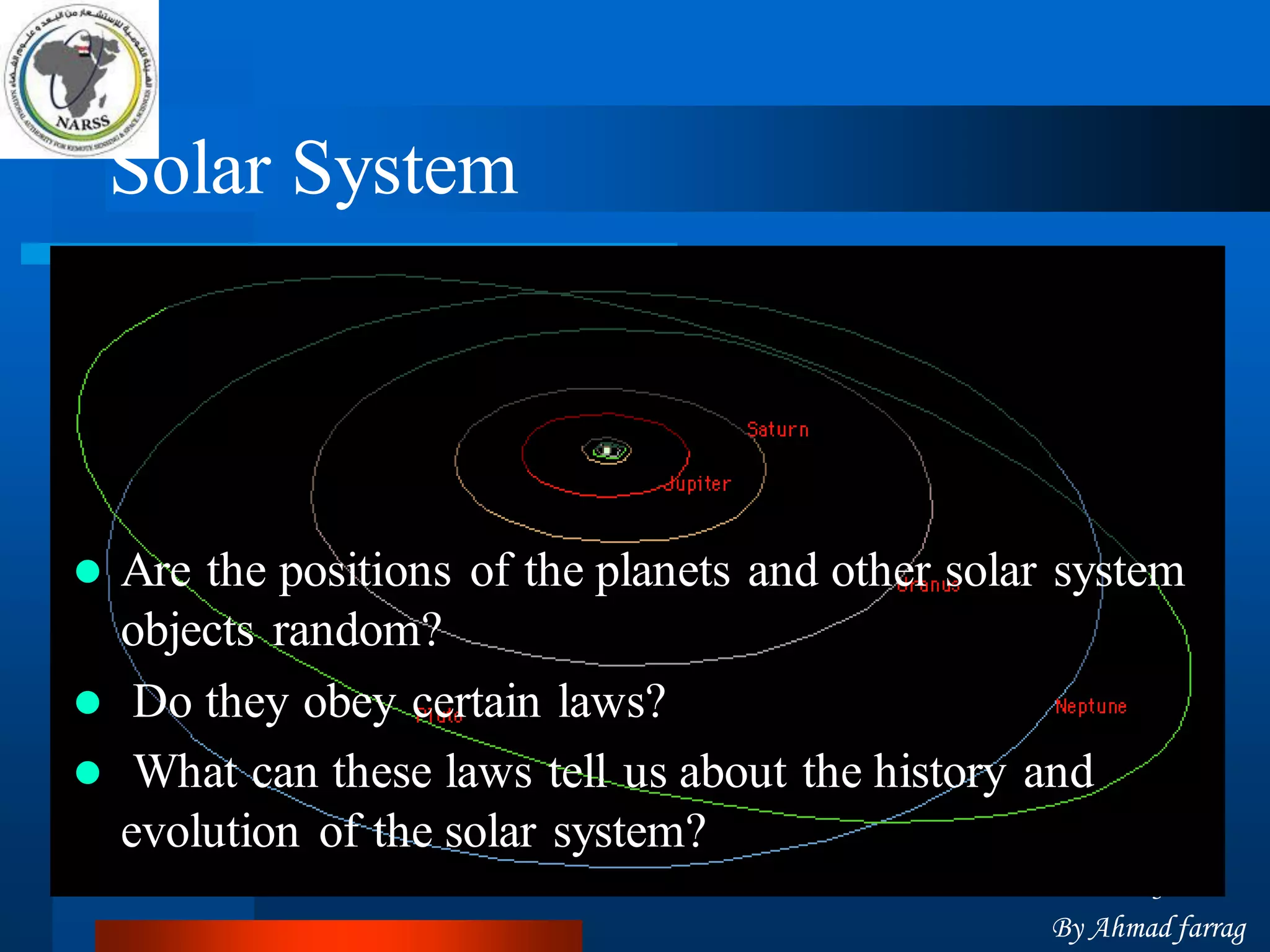
Solar System 
Are the positions of the planets and other solar system objects random? 
Do they obey certain laws? 
What can these laws tell us about the history and evolution of the solar system? 
By Ahmad farrag
4 
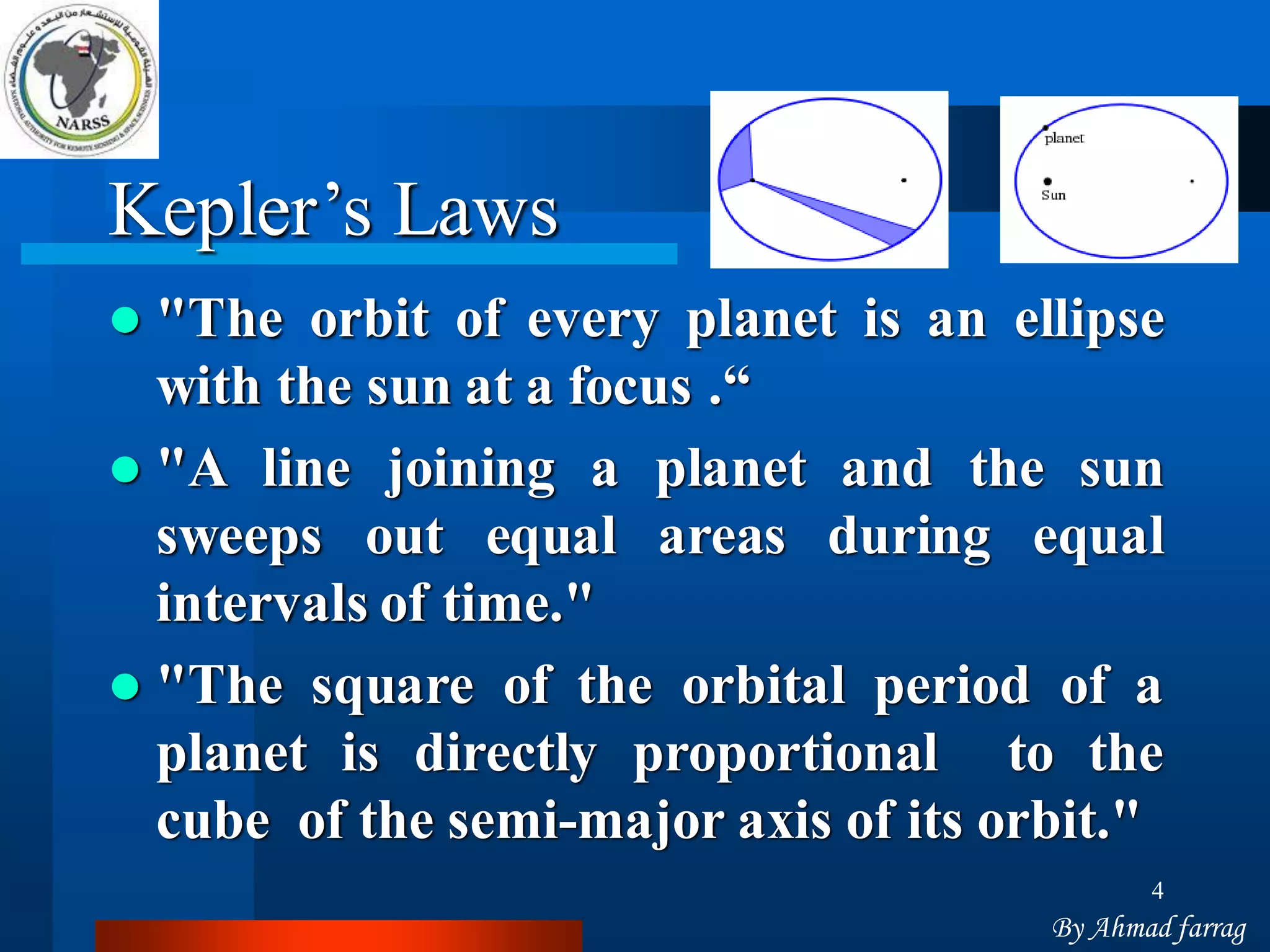
Kepler’s Laws "Theorbitofeveryplanetisanellipsewiththesunatafocus.“ "Alinejoiningaplanetandthesunsweepsoutequalareasduringequalintervalsoftime." "Thesquareoftheorbitalperiodofaplanetisdirectlyproportionaltothecubeofthesemi-majoraxisofitsorbit." 
By Ahmad farrag
5 
Whatisasatelliteanyway? 
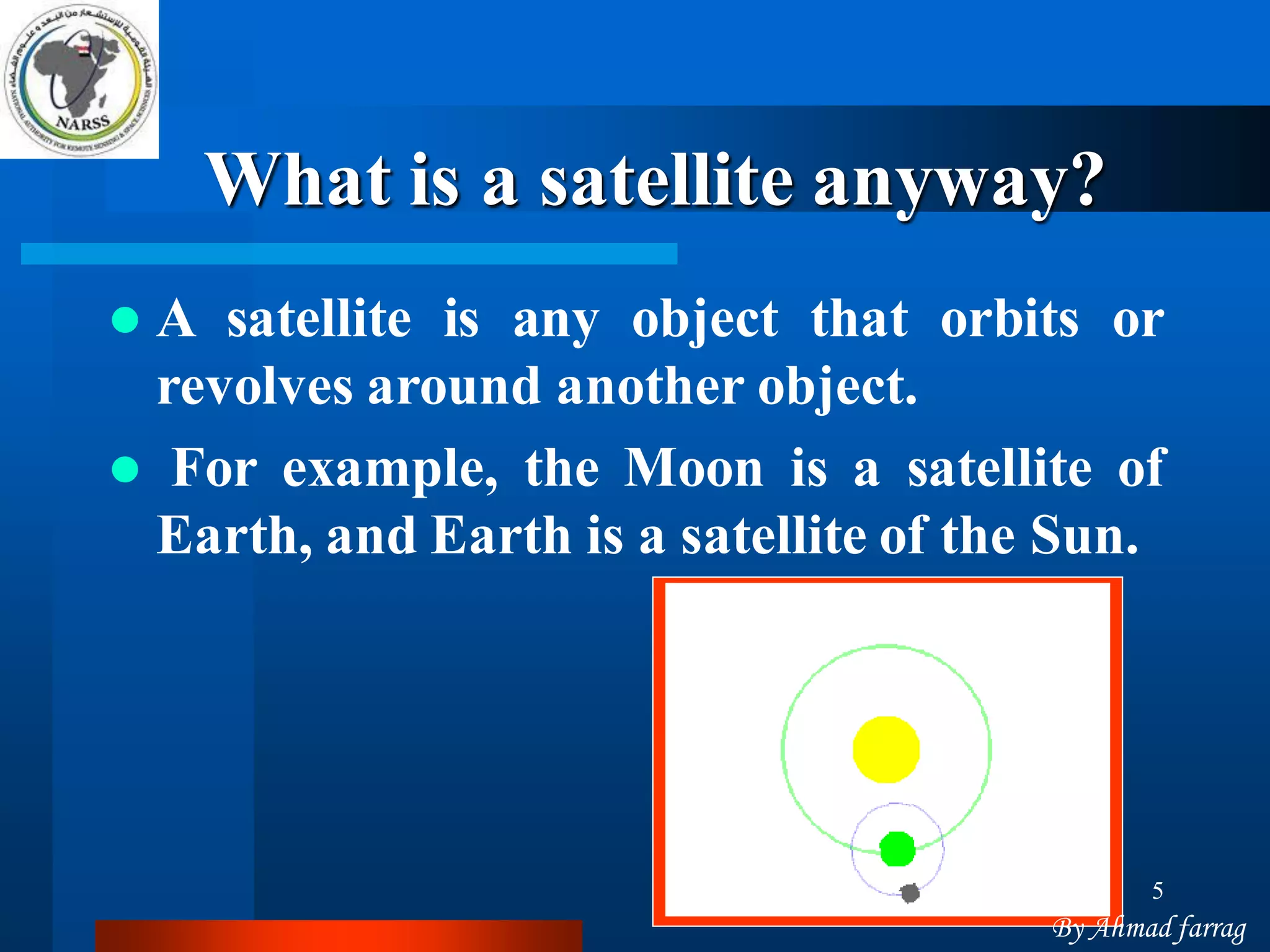
Asatelliteisanyobjectthatorbitsorrevolvesaroundanotherobject. 
Forexample,theMoonisasatelliteofEarth,andEarthisasatelliteoftheSun. 
By Ahmad farrag
6 
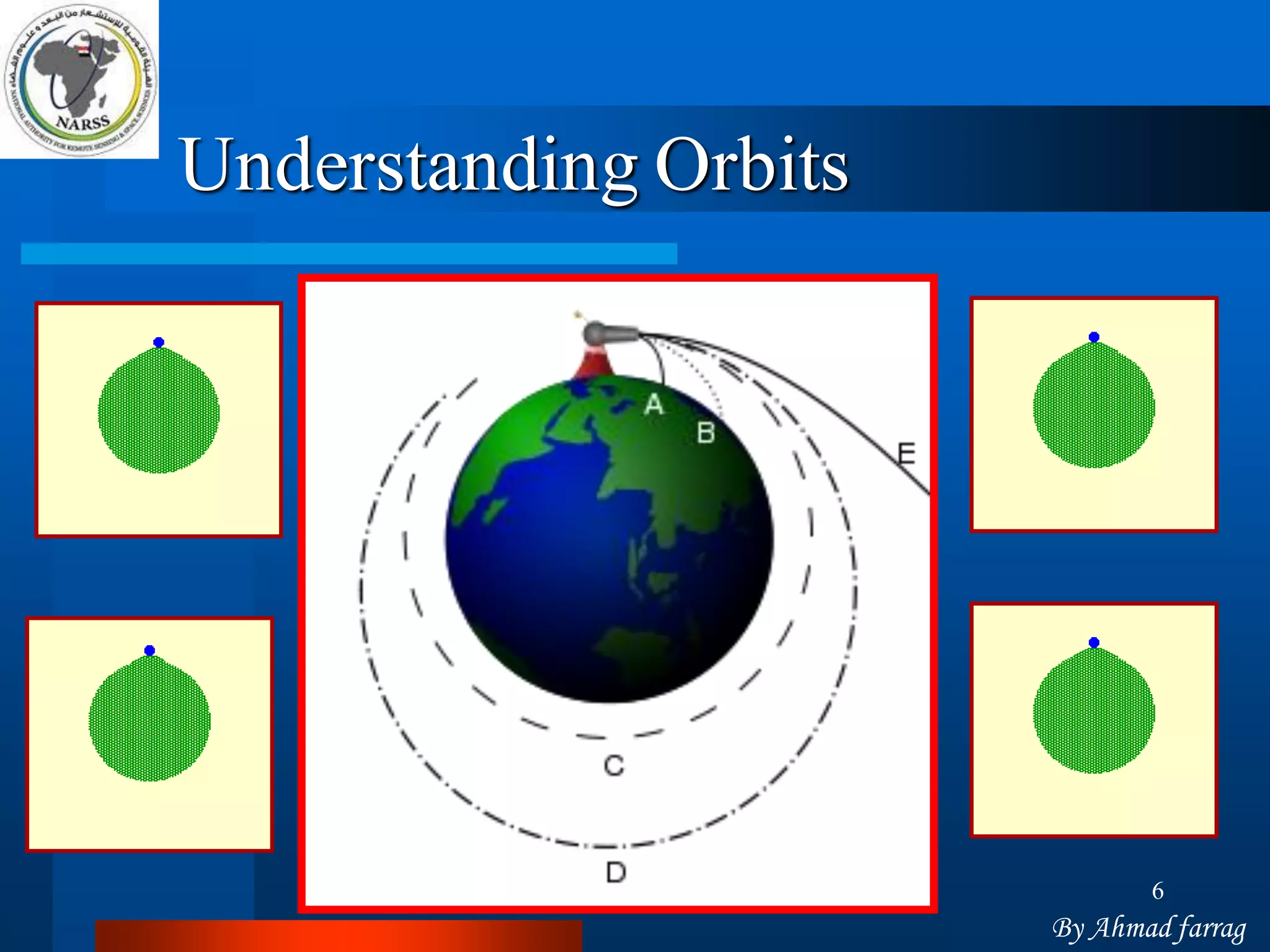
Understanding Orbits 
By Ahmad farrag
8 
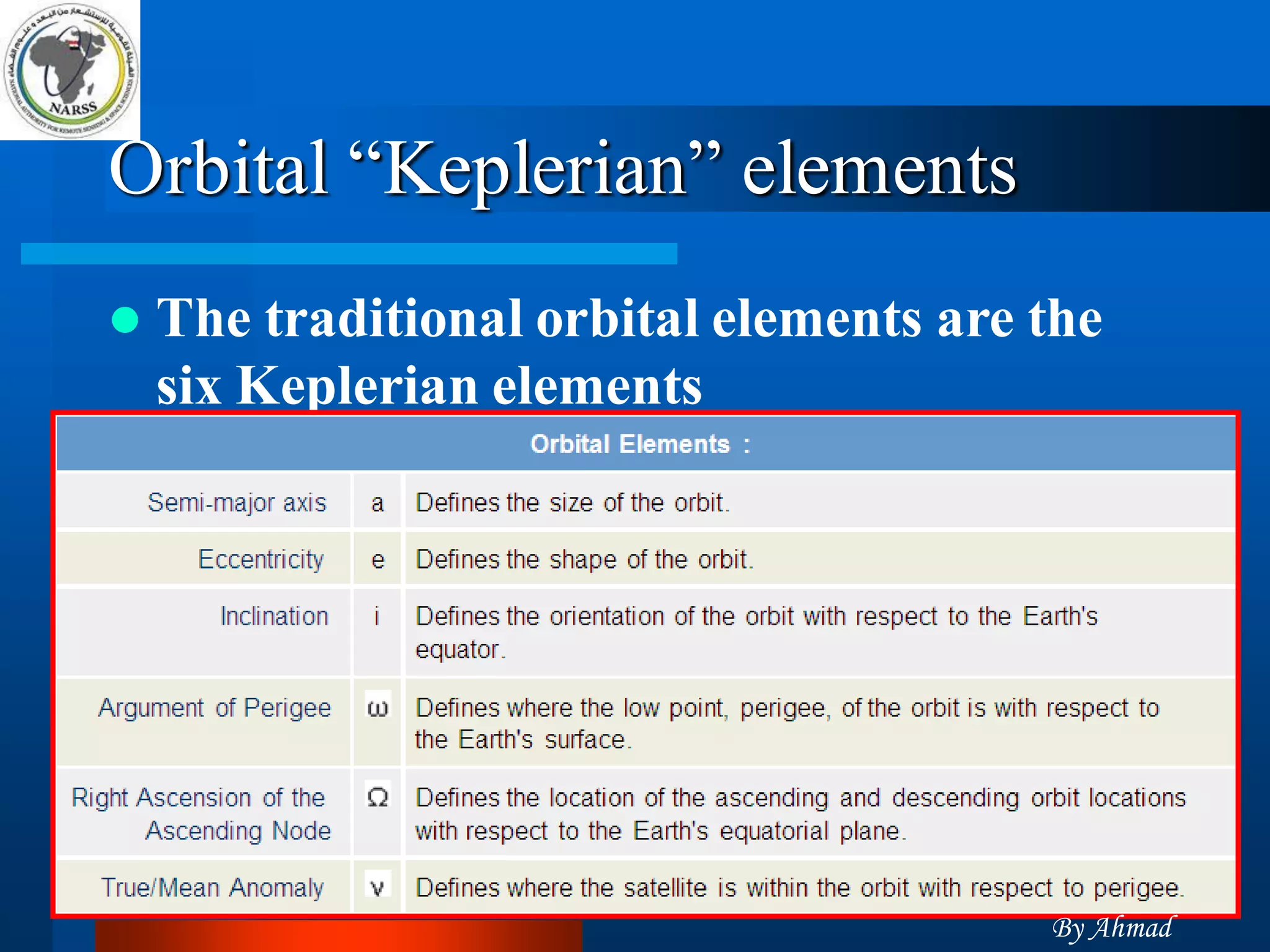
Orbital “Keplerian” elements 
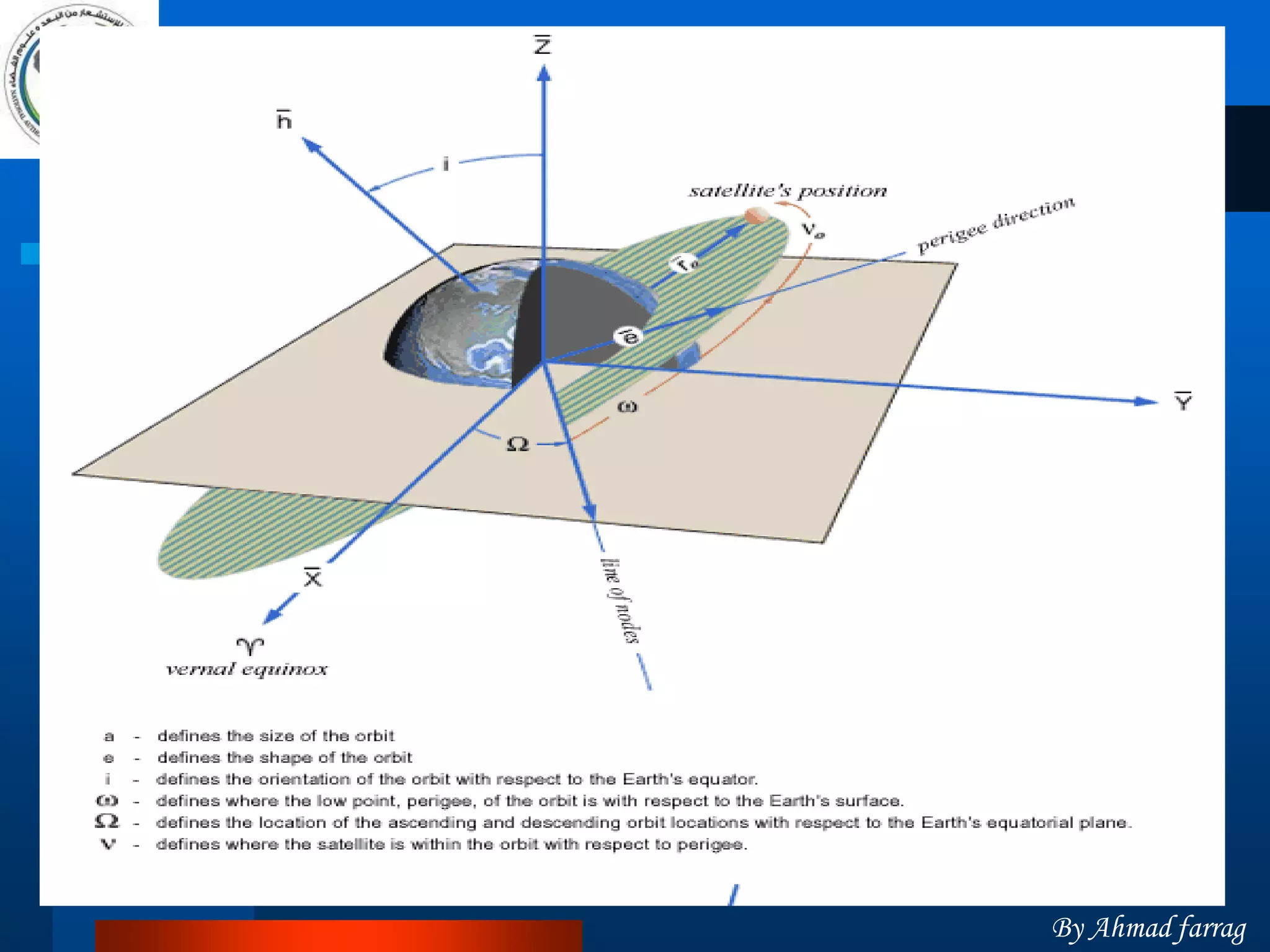
The traditional orbital elements are the six Keplerian elements 
By Ahmad
9 
By Ahmad farrag
10
12 
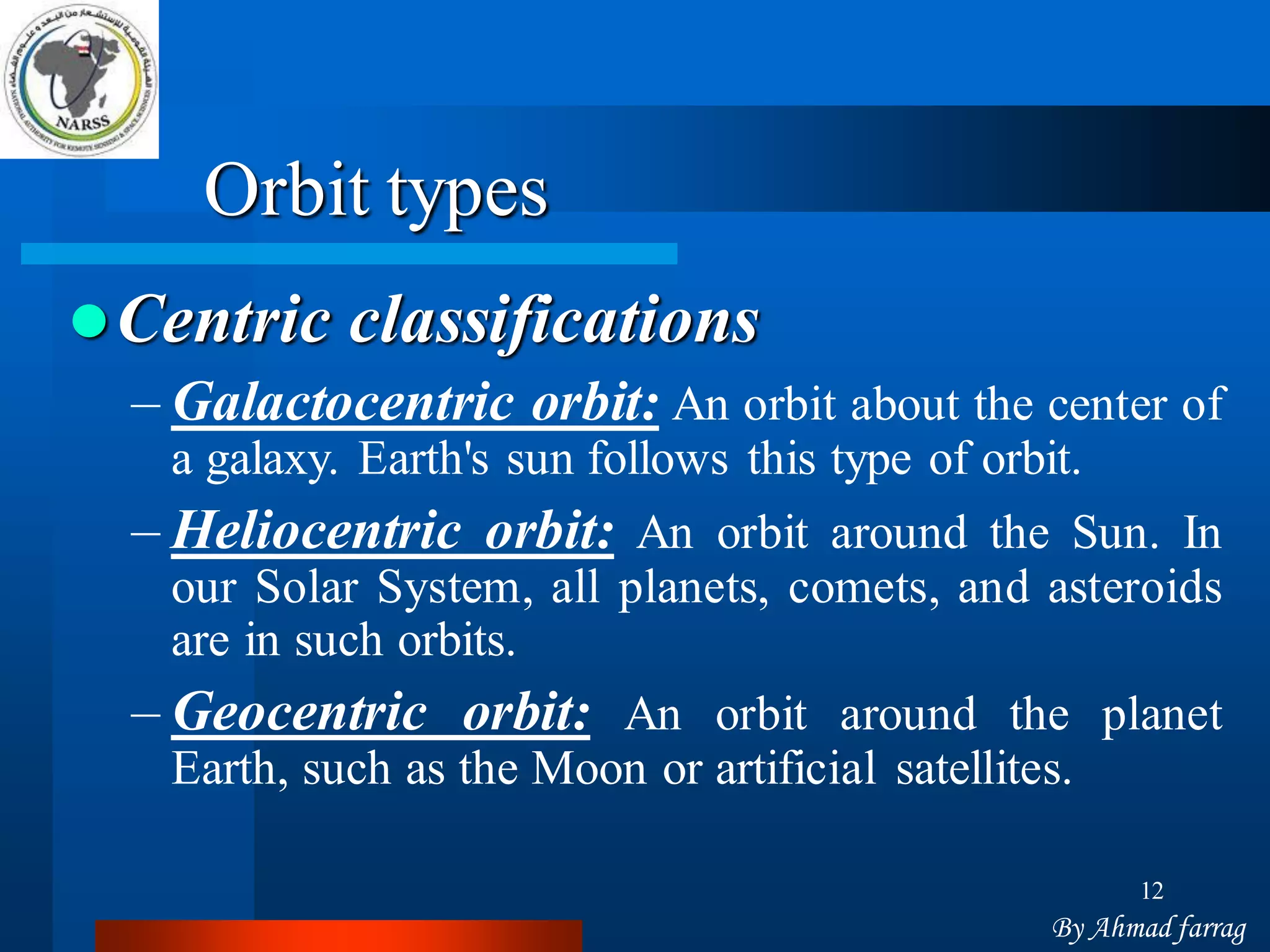
Orbit types Centricclassifications 
–Galactocentricorbit:Anorbitaboutthecenterofagalaxy.Earth'ssunfollowsthistypeoforbit. 
–Heliocentricorbit:AnorbitaroundtheSun.InourSolarSystem,allplanets,comets,andasteroidsareinsuchorbits. 
–Geocentricorbit:AnorbitaroundtheplanetEarth,suchastheMoonorartificialsatellites. 
By Ahmad farrag
13 
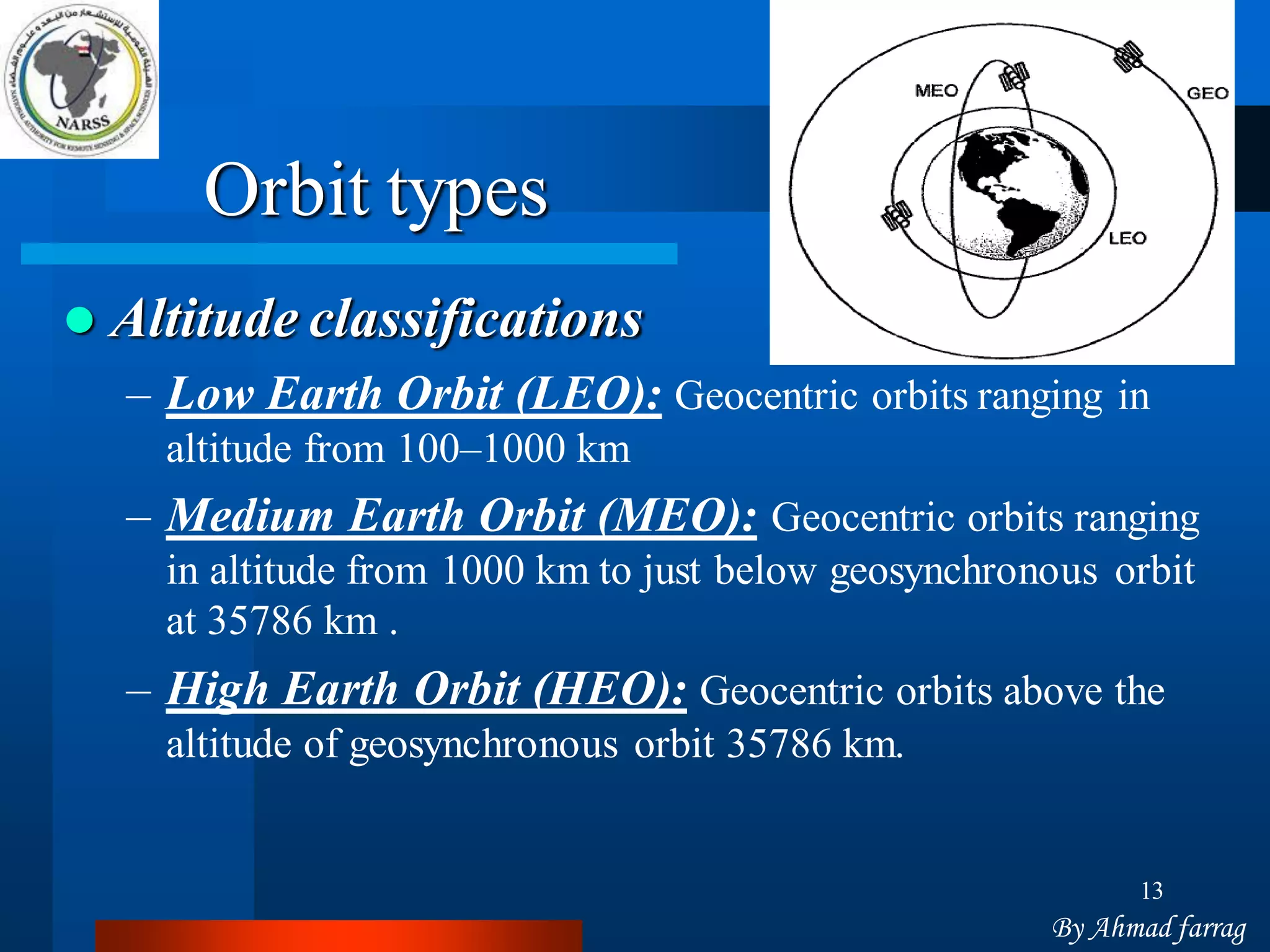
By Ahmad farragOrbit types Altitude classifications 
–Low Earth Orbit (LEO):Geocentric orbits ranging in altitude from 100–1000 km 
–Medium Earth Orbit (MEO):Geocentric orbits ranging in altitude from 1000 km to just below geosynchronous orbit at 35786 km . 
–High Earth Orbit (HEO):Geocentric orbits above the altitude of geosynchronous orbit 35786 km.
14 
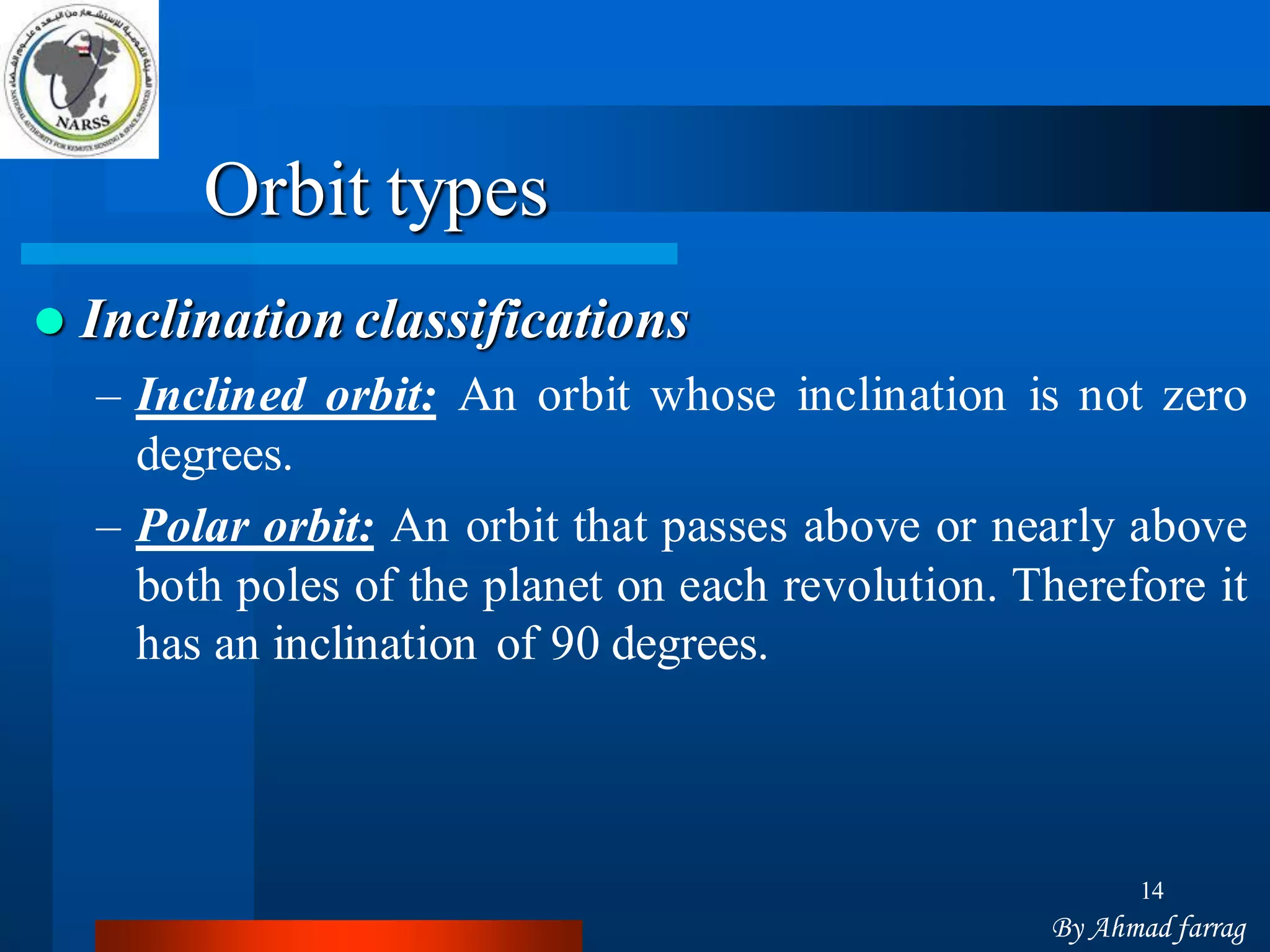
Orbit types Inclinationclassifications 
–Inclinedorbit:Anorbitwhoseinclinationisnotzerodegrees. 
–Polarorbit:Anorbitthatpassesaboveornearlyabovebothpolesoftheplanetoneachrevolution.Thereforeithasaninclinationof90degrees. 
By Ahmad farrag
15 
Orbit types 
Eccentricity classifications 
–Circular orbit: An orbit that has an eccentricity of 0 and whose path traces a circle 
–Elliptic orbit: An orbit with an eccentricity greater than 0 and less than 1 whose orbit traces the path of an ellipse. 
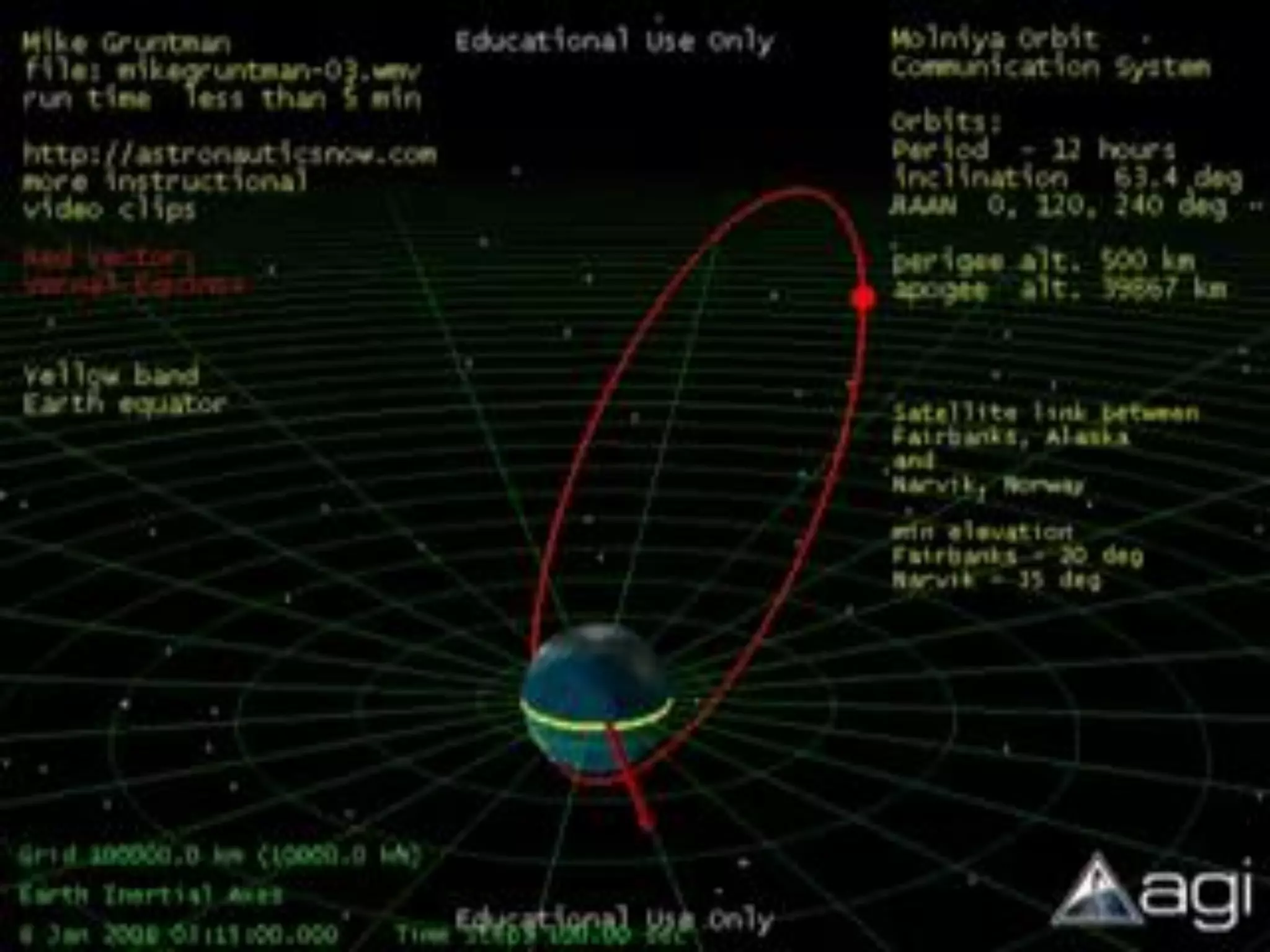
•Molniya orbit: A highly elliptic orbit with inclination of 63.4°and orbital period of half of a sidereal day (roughly 12 hours). Such a satellite spends most of its time over a designated area of the planet 
By Ahmad farrag
16
17 
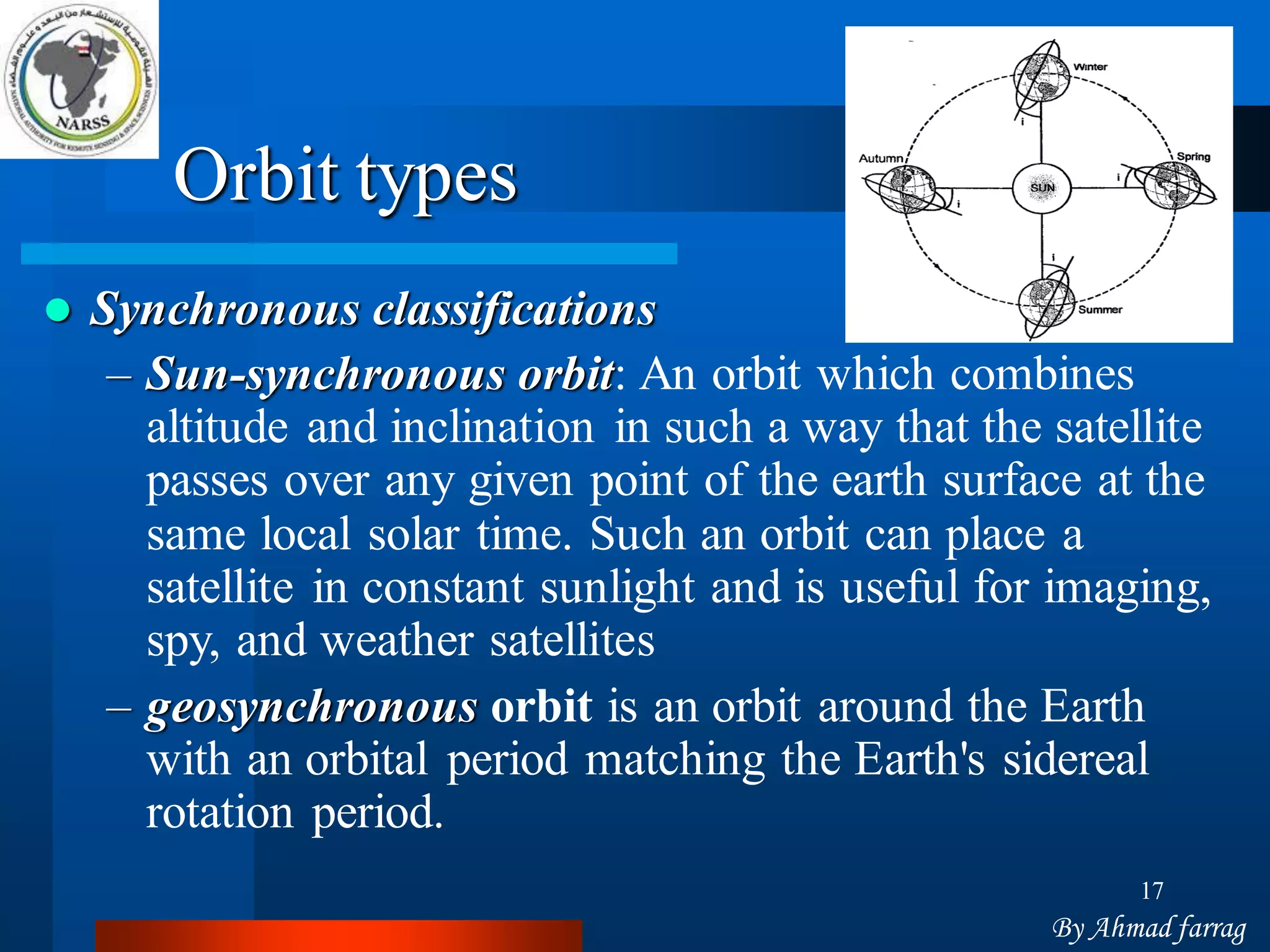
By Ahmad farragOrbit types Synchronous classifications–Sun-synchronous orbit: An orbit which combines altitude and inclination in such a way that the satellite passes over any given point of the earth surface at the same local solar time. Such an orbit can place a satellite in constant sunlight and is useful for imaging, spy, and weather satellites–geosynchronousorbitis an orbit around the Earth with an orbital period matching the Earth's sidereal rotation period.
18 
Reference Co-ordinate System 
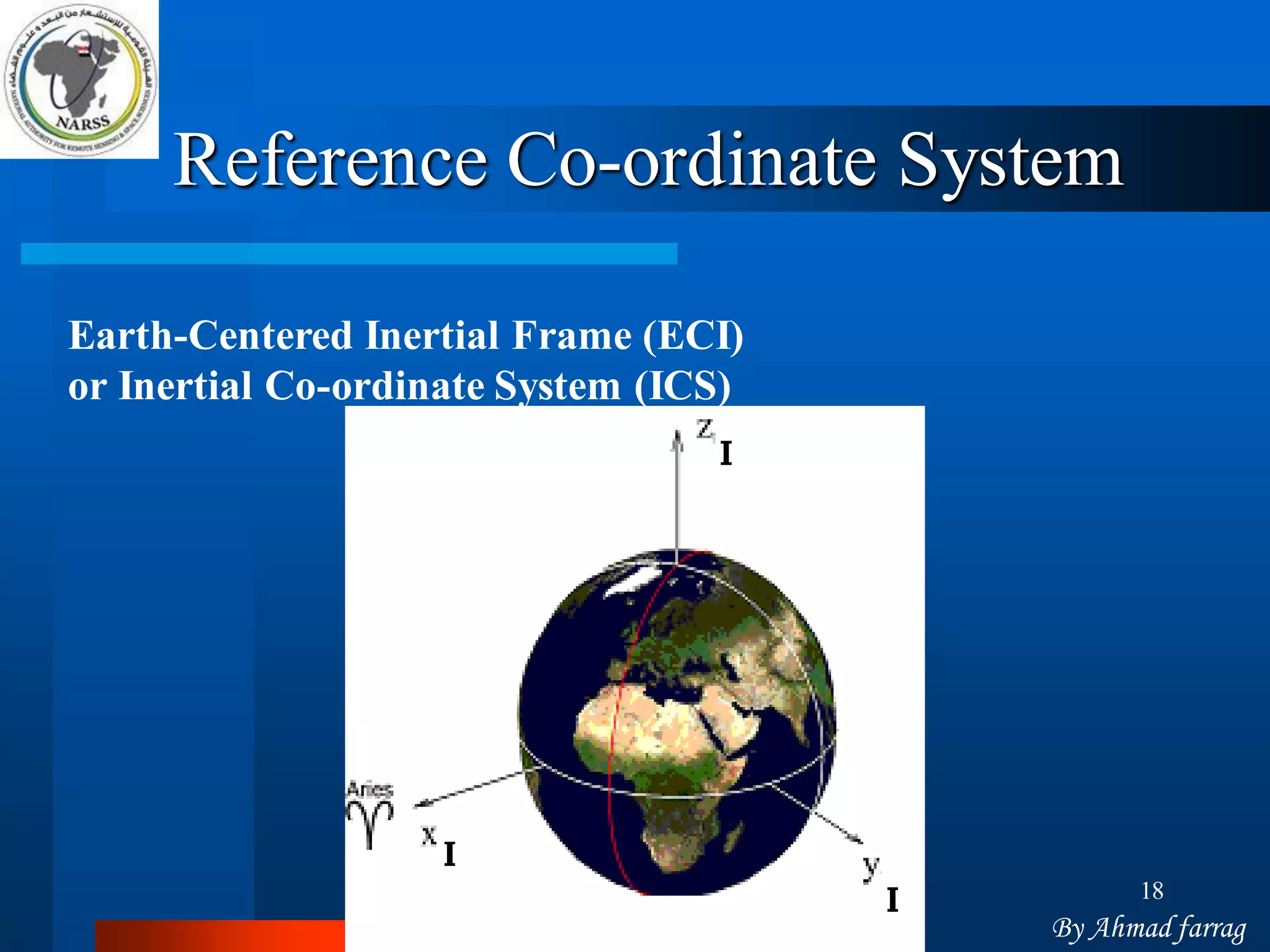
Earth-Centered Inertial Frame (ECI) or Inertial Co-ordinate System (ICS) 
By Ahmad farrag
19 
Reference Co-ordinate System 
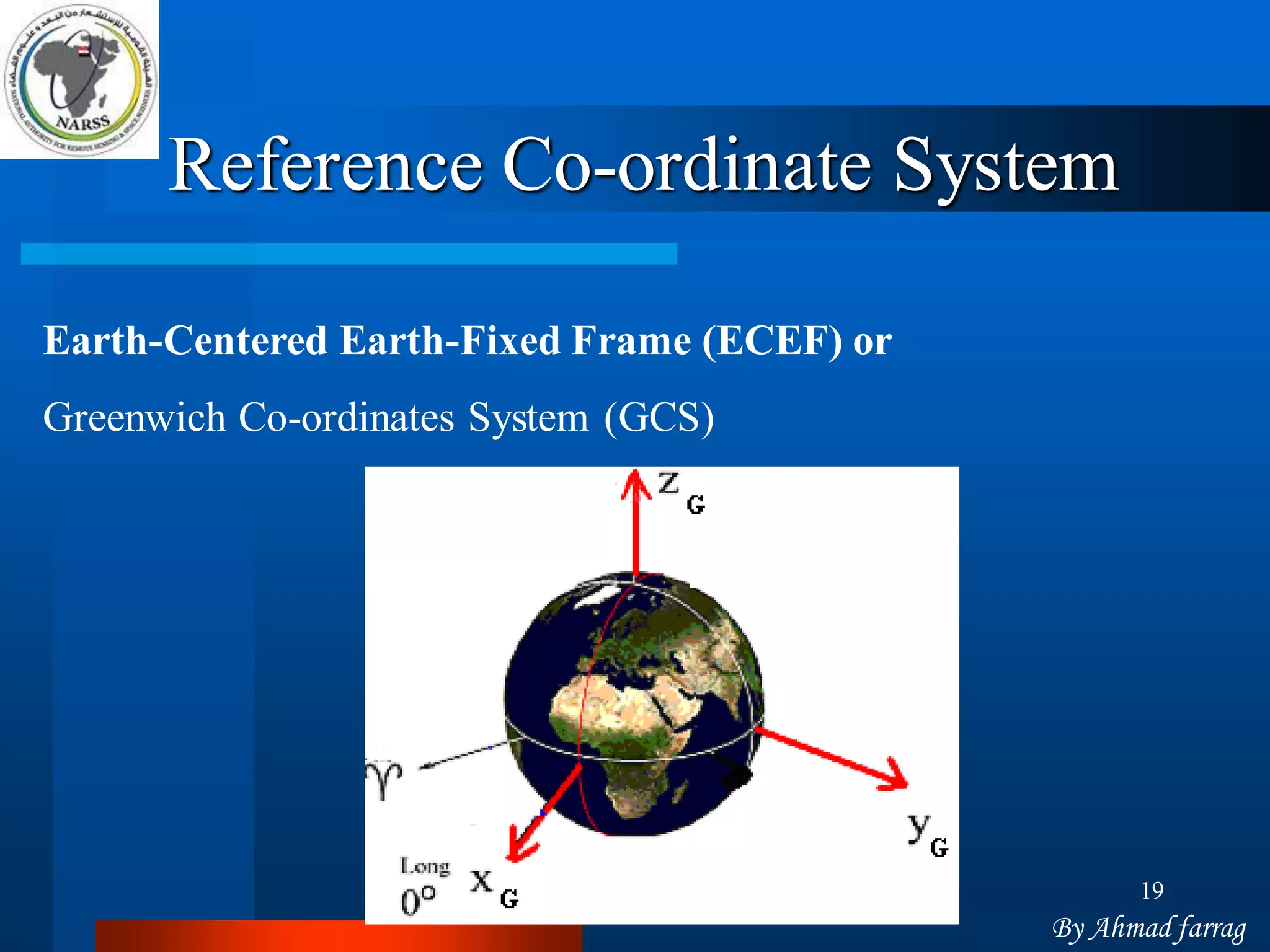
Earth-Centered Earth-Fixed Frame (ECEF) or 
Greenwich Co-ordinates System (GCS) 
By Ahmad farrag
20 
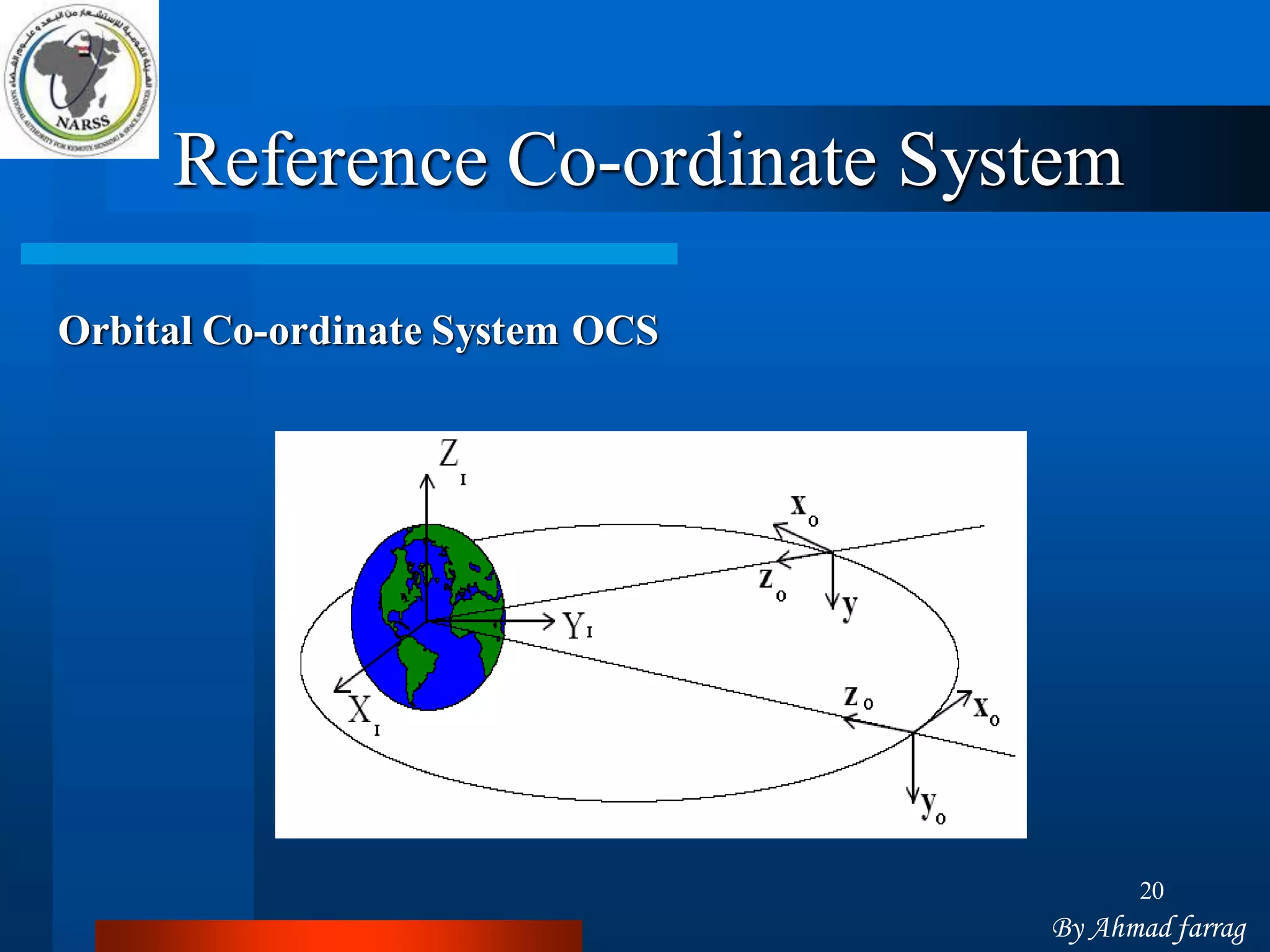
Reference Co-ordinate System Orbital Co-ordinate System OCS 
By Ahmad farrag
21 
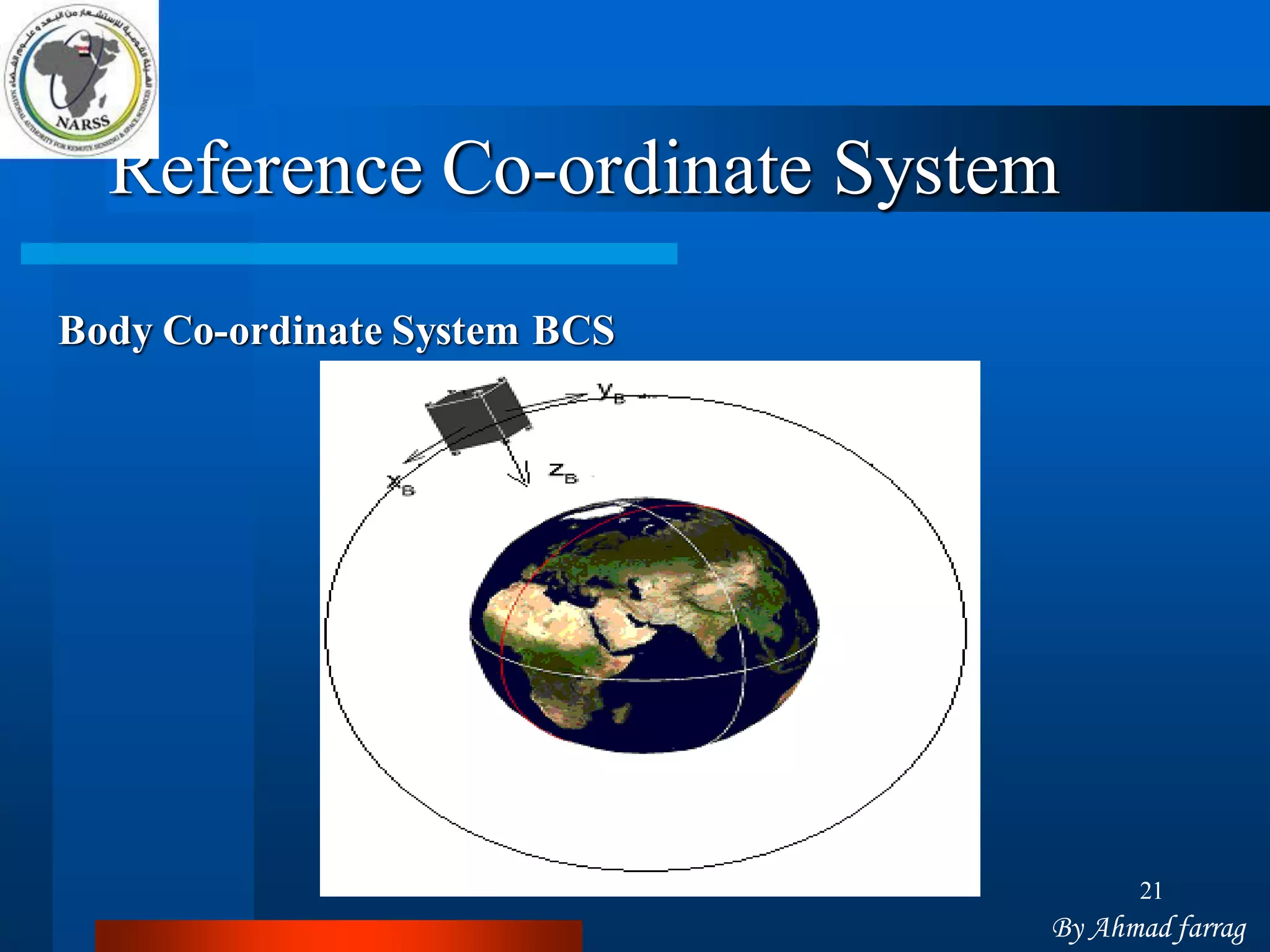
Reference Co-ordinate System Body Co-ordinate System BCS 
By Ahmad farrag

Orbits dynamics

  • 1.
    1 OrbitDynamics byEngA.FarragADCSTeam Leader By Ahmad farrag
  • 2.
    2 Overview Kelper’slaws Orbital elements Orbit types Reference co-ordinate system Two body problem By Ahmad farrag
  • 3.
    3 Solar System Are the positions of the planets and other solar system objects random? Do they obey certain laws? What can these laws tell us about the history and evolution of the solar system? By Ahmad farrag
  • 4.
    4 Kepler’s Laws"Theorbitofeveryplanetisanellipsewiththesunatafocus.“ "Alinejoiningaplanetandthesunsweepsoutequalareasduringequalintervalsoftime." "Thesquareoftheorbitalperiodofaplanetisdirectlyproportionaltothecubeofthesemi-majoraxisofitsorbit." By Ahmad farrag
  • 5.
    5 Whatisasatelliteanyway? Asatelliteisanyobjectthatorbitsorrevolvesaroundanotherobject. Forexample,theMoonisasatelliteofEarth,andEarthisasatelliteoftheSun. By Ahmad farrag
  • 6.
    6 Understanding Orbits By Ahmad farrag
  • 7.
    8 Orbital “Keplerian”elements The traditional orbital elements are the six Keplerian elements By Ahmad
  • 8.
    9 By Ahmadfarrag
  • 9.
  • 10.
    12 Orbit typesCentricclassifications –Galactocentricorbit:Anorbitaboutthecenterofagalaxy.Earth'ssunfollowsthistypeoforbit. –Heliocentricorbit:AnorbitaroundtheSun.InourSolarSystem,allplanets,comets,andasteroidsareinsuchorbits. –Geocentricorbit:AnorbitaroundtheplanetEarth,suchastheMoonorartificialsatellites. By Ahmad farrag
  • 11.
    13 By AhmadfarragOrbit types Altitude classifications –Low Earth Orbit (LEO):Geocentric orbits ranging in altitude from 100–1000 km –Medium Earth Orbit (MEO):Geocentric orbits ranging in altitude from 1000 km to just below geosynchronous orbit at 35786 km . –High Earth Orbit (HEO):Geocentric orbits above the altitude of geosynchronous orbit 35786 km.
  • 12.
    14 Orbit typesInclinationclassifications –Inclinedorbit:Anorbitwhoseinclinationisnotzerodegrees. –Polarorbit:Anorbitthatpassesaboveornearlyabovebothpolesoftheplanetoneachrevolution.Thereforeithasaninclinationof90degrees. By Ahmad farrag
  • 13.
    15 Orbit types Eccentricity classifications –Circular orbit: An orbit that has an eccentricity of 0 and whose path traces a circle –Elliptic orbit: An orbit with an eccentricity greater than 0 and less than 1 whose orbit traces the path of an ellipse. •Molniya orbit: A highly elliptic orbit with inclination of 63.4°and orbital period of half of a sidereal day (roughly 12 hours). Such a satellite spends most of its time over a designated area of the planet By Ahmad farrag
  • 14.
  • 15.
    17 By AhmadfarragOrbit types Synchronous classifications–Sun-synchronous orbit: An orbit which combines altitude and inclination in such a way that the satellite passes over any given point of the earth surface at the same local solar time. Such an orbit can place a satellite in constant sunlight and is useful for imaging, spy, and weather satellites–geosynchronousorbitis an orbit around the Earth with an orbital period matching the Earth's sidereal rotation period.
  • 16.
    18 Reference Co-ordinateSystem Earth-Centered Inertial Frame (ECI) or Inertial Co-ordinate System (ICS) By Ahmad farrag
  • 17.
    19 Reference Co-ordinateSystem Earth-Centered Earth-Fixed Frame (ECEF) or Greenwich Co-ordinates System (GCS) By Ahmad farrag
  • 18.
    20 Reference Co-ordinateSystem Orbital Co-ordinate System OCS By Ahmad farrag
  • 19.
    21 Reference Co-ordinateSystem Body Co-ordinate System BCS By Ahmad farrag