Principles of Speech
Writing
Media and Information Literacy
Choosing the Topic
01
A speech is meant to relay a message to the
listeners. The choice of the topic may be up to
the speaker but, more often than not, the
speaker is given the topic because it is the
central theme of a program, conference or
presentation
Analyzing the
Audience
02
A speech for one occasion cannot
simply be used for another. There is
no speech that fits any and all
occasion
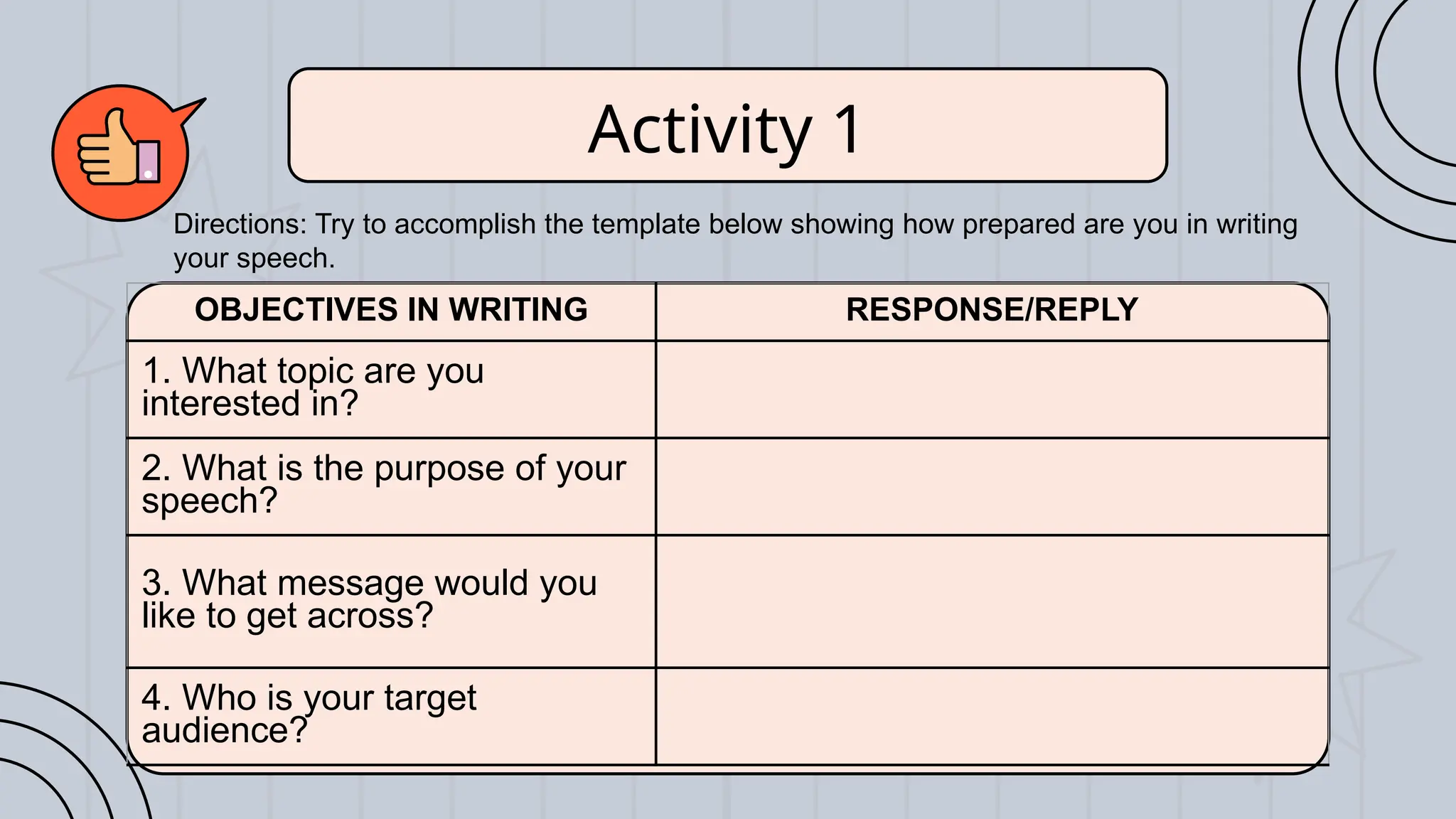
Activity 1
OBJECTIVES IN WRITING RESPONSE/REPLY
1. What topic are you
interested in?
2. What is the purpose of your
speech?
3. What message would you
like to get across?
4. Who is your target
audience?
Directions: Try to accomplish the template below showing how prepared are you in writing
your speech.
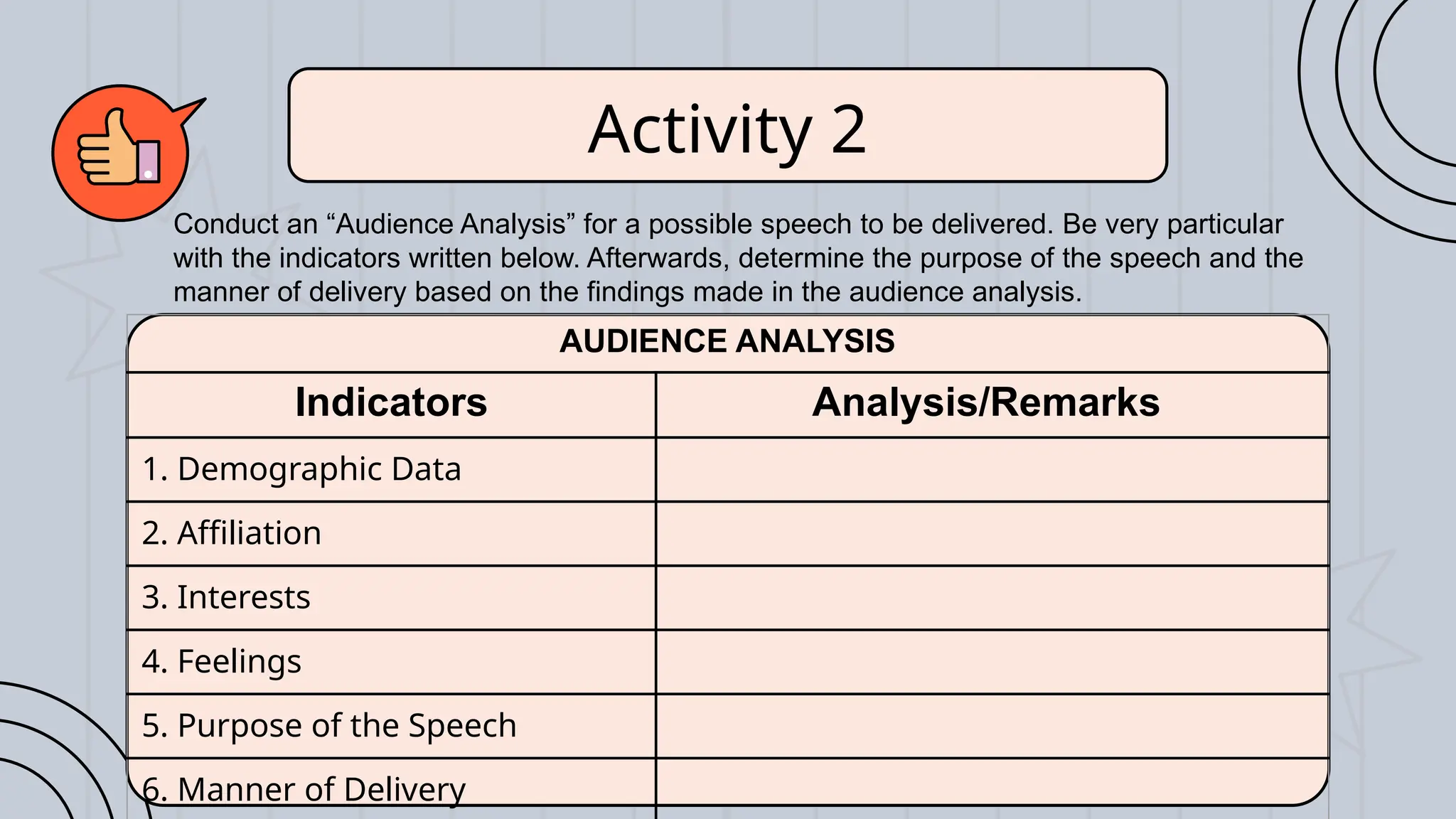
Activity 2
AUDIENCE ANALYSIS
Indicators Analysis/Remarks
1. Demographic Data
2. Affiliation
3. Interests
4. Feelings
5. Purpose of the Speech
6. Manner of Delivery
Conduct an “Audience Analysis” for a possible speech to be delivered. Be very particular
with the indicators written below. Afterwards, determine the purpose of the speech and the
manner of delivery based on the findings made in the audience analysis.
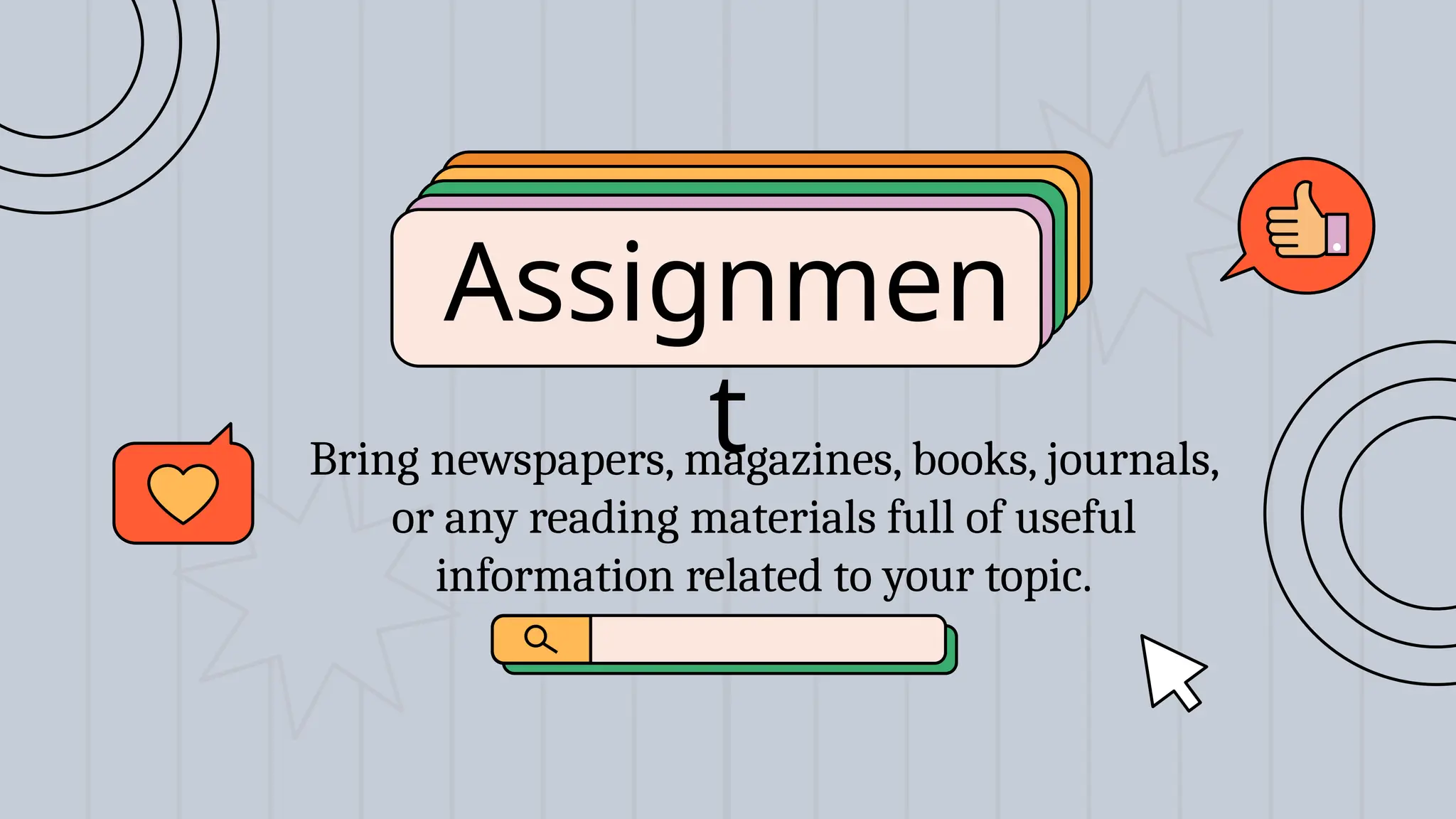
Assignmen
t
Bring newspapers, magazines, books, journals,
or any reading materials full of useful
information related to your topic.
Sourcing the
Information
03
This involves seeking out all the available
means for finding materials to support the
speech. Good sources are newspapers,
magazines, books, journals, or any reading
materials full of useful information.
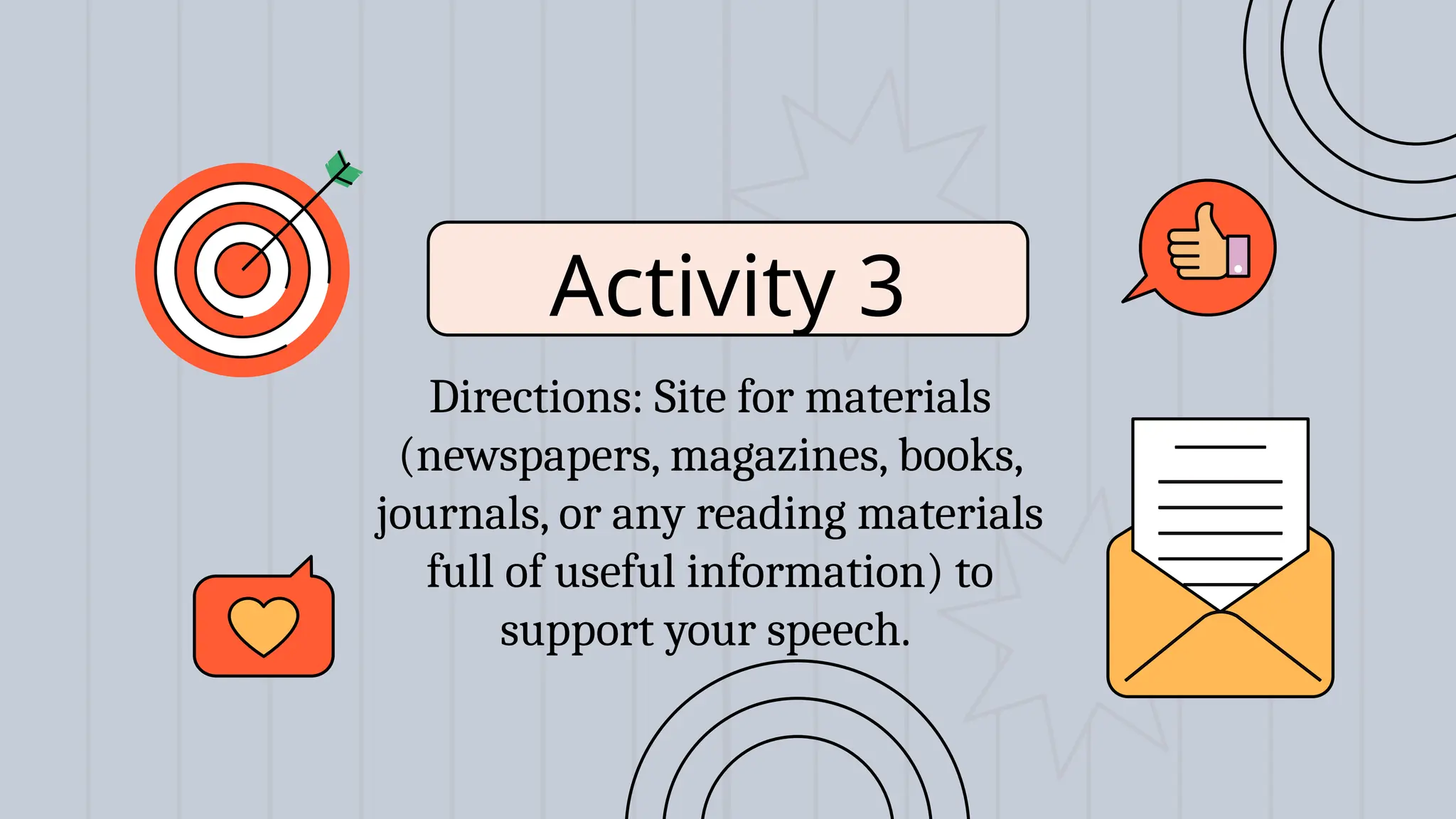
Activity 3
Directions: Site for materials
(newspapers, magazines, books,
journals, or any reading materials
full of useful information) to
support your speech.
04
Outlining and Organizing
the Speech Content
This makes sense of all the research
conducted. With all the information
gathered for the specific topic, it is quite
easy to be overwhelmed. On the other
hand, the next step is to organize the
speech itself.
For this, the best method is an outline.
There are different types of outline.
There are different types of outlines
that one can use depending on how the
speech is to be organized:
chronological outline, spatial or
geographical outline, cause and effect
outline, problem – solution outline and
topical outline.
Outline your ideas for the
speech. Don’t forget to include
your sources from other
materials.
Activity 4
Organize your ideas into a comprehensible outline.
You can use either
1. chronological outline,
2. spatial or geographical outline,
3. cause and effect outline,
4. problem – solution outline and
5. topical outline,
depending on what fits perfect for your speech.
Activity 5
Connect the sources you
found to your own
experience. How do you
think can your audience
relate to the materials you
provided?
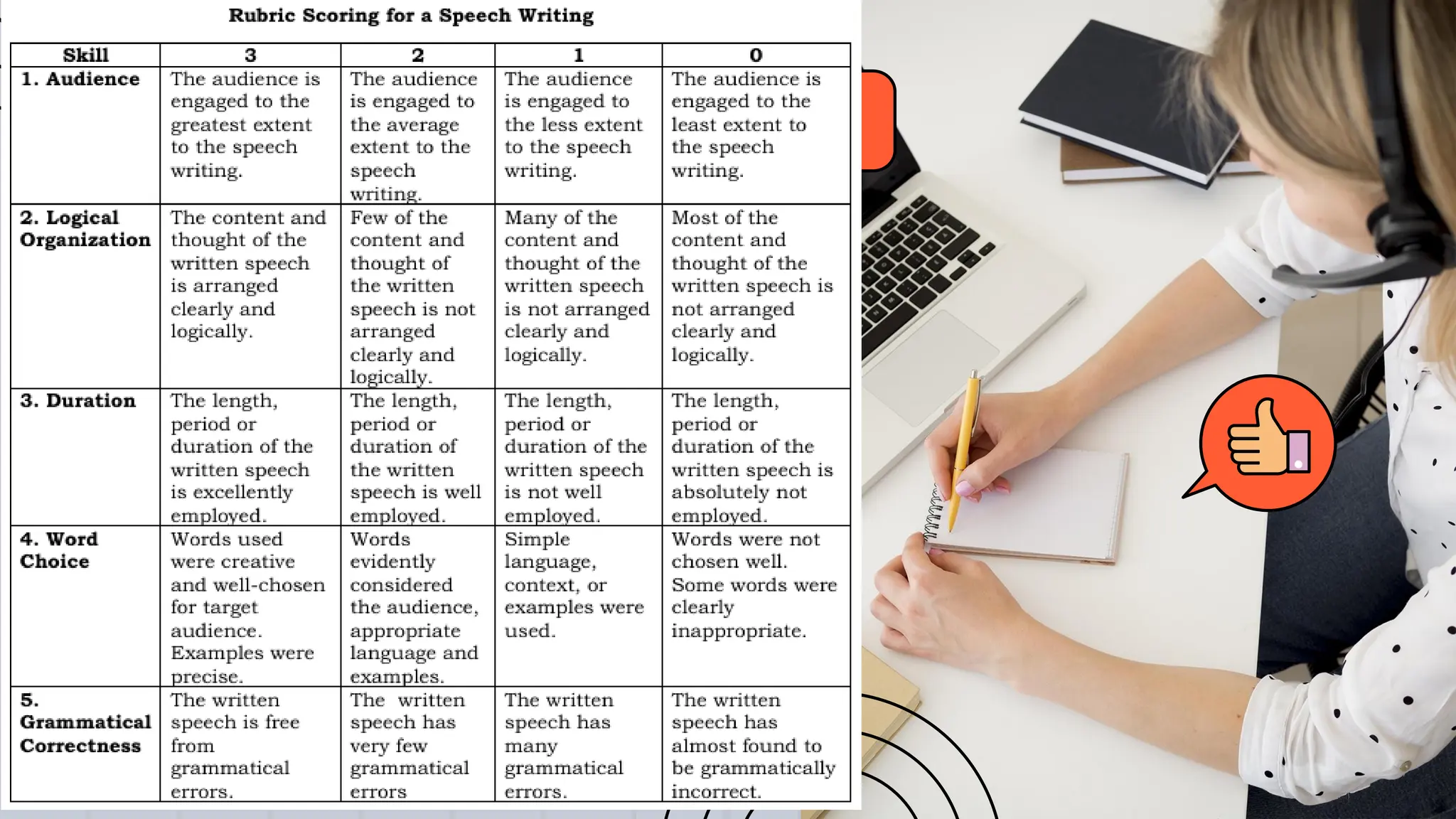
Activity 5
Present your
speech on A4 bond
paper. Be guided by
the rubric below.
Present your
speech on A4 bond
paper. Be guided by
the rubric below.
You may not write well every
day, but you can always edit a
bad page.
Jodi Picoult Librum
YOU CAN’T EDIT
A BLANK PAGE.
CREDITS: This presentation template was created
by Slidesgo, including icons by Flaticon and
infographics & images by Freepik
Thanks
Do you have any questions?
youremail@freepik.com
+91 620 421 838
yourwebsite.com
Please keep this slide for attribution

Oral Communication Principles of Speech Writing

  • 1.
    Principles of Speech Writing Mediaand Information Literacy
  • 2.
  • 3.
    A speech ismeant to relay a message to the listeners. The choice of the topic may be up to the speaker but, more often than not, the speaker is given the topic because it is the central theme of a program, conference or presentation
  • 4.
  • 5.
    A speech forone occasion cannot simply be used for another. There is no speech that fits any and all occasion
  • 6.
    Activity 1 OBJECTIVES INWRITING RESPONSE/REPLY 1. What topic are you interested in? 2. What is the purpose of your speech? 3. What message would you like to get across? 4. Who is your target audience? Directions: Try to accomplish the template below showing how prepared are you in writing your speech.
  • 7.
    Activity 2 AUDIENCE ANALYSIS IndicatorsAnalysis/Remarks 1. Demographic Data 2. Affiliation 3. Interests 4. Feelings 5. Purpose of the Speech 6. Manner of Delivery Conduct an “Audience Analysis” for a possible speech to be delivered. Be very particular with the indicators written below. Afterwards, determine the purpose of the speech and the manner of delivery based on the findings made in the audience analysis.
  • 8.
    Assignmen t Bring newspapers, magazines,books, journals, or any reading materials full of useful information related to your topic.
  • 9.
  • 10.
    This involves seekingout all the available means for finding materials to support the speech. Good sources are newspapers, magazines, books, journals, or any reading materials full of useful information.
  • 11.
    Activity 3 Directions: Sitefor materials (newspapers, magazines, books, journals, or any reading materials full of useful information) to support your speech.
  • 12.
  • 13.
    This makes senseof all the research conducted. With all the information gathered for the specific topic, it is quite easy to be overwhelmed. On the other hand, the next step is to organize the speech itself.
  • 14.
    For this, thebest method is an outline. There are different types of outline. There are different types of outlines that one can use depending on how the speech is to be organized: chronological outline, spatial or geographical outline, cause and effect outline, problem – solution outline and topical outline.
  • 15.
    Outline your ideasfor the speech. Don’t forget to include your sources from other materials. Activity 4
  • 16.
    Organize your ideasinto a comprehensible outline. You can use either 1. chronological outline, 2. spatial or geographical outline, 3. cause and effect outline, 4. problem – solution outline and 5. topical outline, depending on what fits perfect for your speech. Activity 5
  • 17.
    Connect the sourcesyou found to your own experience. How do you think can your audience relate to the materials you provided? Activity 5
  • 18.
    Present your speech onA4 bond paper. Be guided by the rubric below.
  • 19.
    Present your speech onA4 bond paper. Be guided by the rubric below.
  • 20.
    You may notwrite well every day, but you can always edit a bad page. Jodi Picoult Librum YOU CAN’T EDIT A BLANK PAGE.
  • 21.
    CREDITS: This presentationtemplate was created by Slidesgo, including icons by Flaticon and infographics & images by Freepik Thanks Do you have any questions? youremail@freepik.com +91 620 421 838 yourwebsite.com Please keep this slide for attribution