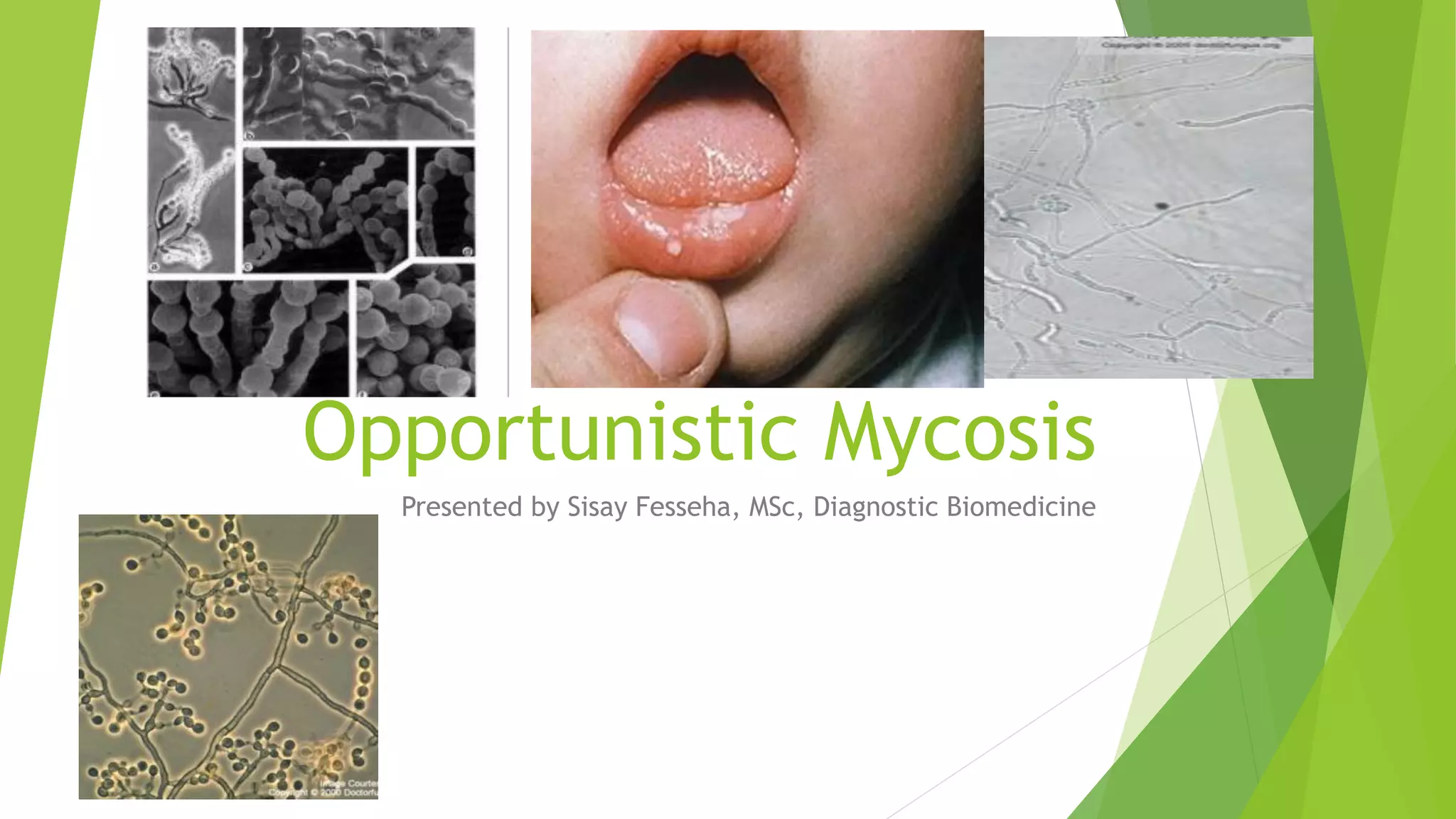
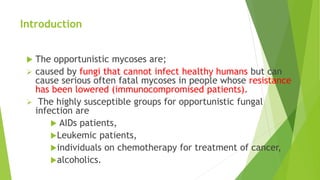
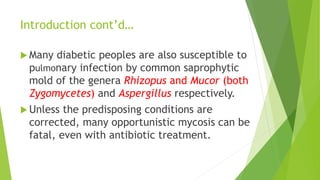
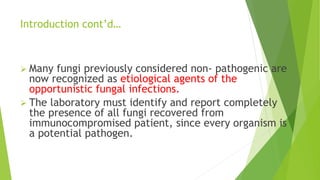
Opportunistic Mycosis
Presented by Sisay Fesseha, MSc, Diagnostic Biomedicine
Outline of presentation
 Candidiasis
 Asperigilosis
 Zygomycosis
 Cryptococosis
 Pneumocystis carni
Introduction
 The opportunistic mycoses are;
 caused by fungi that cannot infect healthy humans but can
cause serious often fatal mycoses in people whose resistance
has been lowered (immunocompromised patients).
 The highly susceptible groups for opportunistic fungal
infection are
 AIDs patients,
Leukemic patients,
individuals on chemotherapy for treatment of cancer,
alcoholics.
Introduction cont’d…
 Many diabetic peoples are also susceptible to
pulmonary infection by common saprophytic
mold of the genera Rhizopus and Mucor (both
Zygomycetes) and Aspergillus respectively.
 Unless the predisposing conditions are
corrected, many opportunistic mycosis can be
fatal, even with antibiotic treatment.
Introduction cont’d…
 Many fungi previously considered non- pathogenic are
now recognized as etiological agents of the
opportunistic fungal infections.
 The laboratory must identify and report completely
the presence of all fungi recovered from
immunocompromised patient, since every organism is
a potential pathogen.
Introduction cont’d…
 Although there is an ongoing list of opportunistic mycosis,
They are often seen in three forms that includes :
1. Yeast forms;
Candidiasis,
Cryptococcosis,
2. Mold forms;
Aspargillosis,
Zygomycosis
Mucormycosis
3. Pneumocystis carinii
1. Candidiasis
 Candidiasis is a relatively common human infection that can
take form of;
 superficial,
 mucocutanous or
 systemic disease.
 Principally it is caused by the three species of genus candida,
namely,
 C.albicans,
 C.tropicalis and
 C.krusei
Cont’d……
 Candida albicans is the most common cause of
infection.
 Since the species of candida, including C.albicans are
the part of the normal endogenous microbial flora,
candidiasis is usually the result of autoinfection during
a metabolic or an immunologic disturbance.
 C.albicans is not a dimorphic fungus, can exist in the
form of yeast & hyphae in tissue (in vivo).
Pathogenesis and clinical pictures
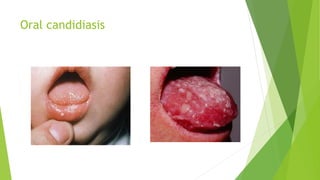
A. Superficial and mucocutaneous candidiasis
 It is superficial infections of skin and mucous membranes
 Through, oral and vaginal candidiasis
 Oesophagial candidiasis
 Skin lesions of folds, groin, axilla, and interdigital areas
 Napkin eruptions in infants
 Paranychial candidiaiasis
Oral candidiasis
Clinical forms
 Invasive:
 Candidemia: initial stage can be transient if phagocytic
system is intact.
 Disseminated or hematogenous candidiasis if phagocytic
system is compromised.
 Multi organs can be involved with infection: kidney,
prosthetic heart valves, brain, eye, meninges.
 Mortality: 30-40%
Predisposing factors
 Diabetes
 Immunosupperession
 T-cell immunodeficiency disorders
 Acquired- immunodeficiency syndrome, (AIDS)
 Leukaemias, Lymphomas
Steroid treatments
Broad spectrum antibiotics
Laboratory diagnosis
 Superficial or mucocutaneous candidiasis is diagnosed by
finding the fungus in tissue scraping and culture
 Systemic candidiasis is difficult to diagnose.
 Definitive diagnosis is made by the histopathologic
demonstration of the invasion of tissue by the yeast.
 Specimens from surface lesions, mouth, vaginal, sputum,
exudates etc are examined using different methods
Direct examination
a) KOH
 Exposed lesions can usually be easily diagnosed by
clinical appearance together with finding typical budding
yeast cells and pseudohyphae and /or true hyphea in lesion
scrapings treated with KOH.
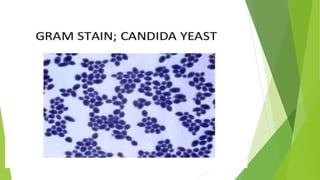
b) Gram- stain
 Gram stain smears shows large gram positive budding yeast cells
with pseudohyphea.
c) Germ tube test
 Candida albicans can be presumptively identified based
on the production of a germ tube
Principle
 When incubated with serum at 370C for 1 to 3 hours,
C.albicans will form a germ tube.
Procedure
1.Pipette 0.5 ml of serum into a test tube
2. Inoculate the tube with a small amount of the
organism to be
tested.
Germ tube test cont’d…
A large inoculums may produce false- negative results.
3. Incubate at 370C for 1 to 3 hours
4. Place a drop of the suspension on a slide, apply a cover
slip, and examine for the presence of germ tubes.
 Interpretation
 A germ tube is approximately half as wide and three to
four times as long as the yeast cells.
Germ tube test
Germ tube positive
Germ tube negative
Germ tube test cont’d…
 No point of constriction should exist where the germ
tube arises from the mother cell.
 C.stellotidae is also germ tube positive.
Quality control
 C. albicans: positive control; produces germ tube
within 2 hours
 C.tropicalis: negative control; fails to produce germ
tube within 3 hours
d) Culture and identification
 Growth is rapid on sabouroud’s dextrose blood agar, triptase
soy, and many other media.
Creamy yeast colonies are formed after overnight incubation at
temperature of 210C or 370C; the optimum growth
temperature is around 300C.
 C.albicans grows as round-to-oval yeast cells that are 4-6µm
in diameter.
 Pseudohyphae and hyphae also seen; especially at lower
incubation temperature (i.e. 220C-250C) and on nutritionally
poor media.
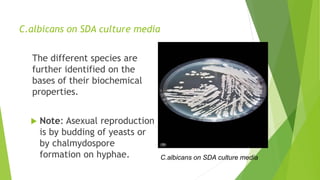
C.albicans on SDA culture media
The different species are
further identified on the
bases of their biochemical
properties.
 Note: Asexual reproduction
is by budding of yeasts or
by chalmydospore
formation on hyphae. C.albicans on SDA culture media
2. Aspergillosis
Aspergillosis
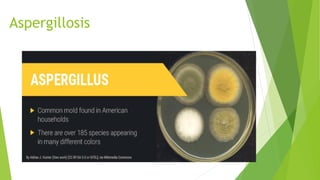
 Aspergillosis comprises a group of world wide
human disease caused by about dozens of fungal
species of the genus Aspergillus. About 185
different species has been identified.
 Since Aspergillus species are many and are
widespread in soil, air, and decaying vegetable
matter many people are heavily exposed to
inhalation of spores.
Aspergillosis
Pathogenesis and clinical picture
 The spectrum of human disease caused by Asperagillus ranges
from allergy to disseminated infection.
 Most of the disease processes are caused by the inhalation of
conidia.
 Allergy:- Persons may develop IgE. against Aspergillus and
present with allergic condition. Example, asthma
 Non-invasive colonization:- Aspergillus can colonize a pre-
existing lung cavity e.g., tuberculosis, forming fungus ball or
aspergilloma.
Invasive aspergillosis
 May occur in severely
immunocompromised patients, organ transplant
recipients,.
 Patients under corticosteroid therapy and patients
with leukaemia.
 Toxin production
 e.g. aflatoxin of Aspergillus flavus is
carcinogenic; cause liver cancer and necrosis. Can be
found in spoiled legumes.
Predisposing factors
 Infections occur principally in individuals who have
disease or predisposing abnormalities such as cystic
fibrosis, bronchietasis, chronic bronchitis, tuberculosis
etc. or who are immunosuppressed.
 Aspergillus species are not dimorphic; they are
characterized by chains of conidia borne or condiophore.
 Speciation is based on principally morphology; some 150
species are recognized.
Predisposing factors
 Infections occur principally in individuals who have
disease or predisposing abnormalities such as cystic
fibrosis, bronchietasis, chronic bronchitis, tuberculosis
etc. or who are immunosuppressed.
 Aspergillus species are not dimorphic; they are
characterized by chains of conidia or condiophore.
 Speciation is based on principally morphology; some 150
species are recognized.
Predisposing factor cont’d…
Aspergillus fumigatus is most commonly
recovered from immunocompromised patients,
and most often seen in clinical laboratories.
Aspergillus niger and A. flavus are also
recognized as significant cause of infection in
immunocompromised patients.
Laboratory diagnosis
 The diagnosis of aspergillosis is difficult due to their wide
spread in nature.
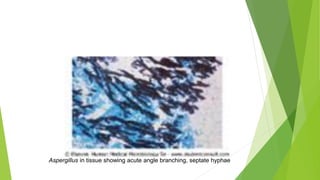
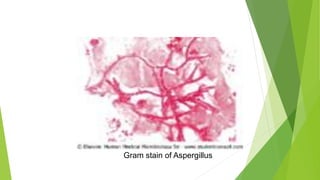
 Direct examination
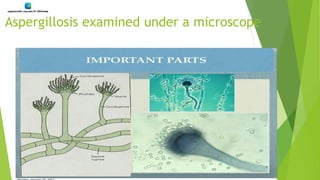
Microscopic examination of KOH preparations of sputum
show characteristic branching hyphae filaments and may
show the conididophores attached to the spare head.
Demonstration of hyphal fragments in tissue biopsy is
diagnostic of tissue invasion
Gram stain of Aspergillus
Aspergillus in tissue showing acute angle branching, septate hyphae
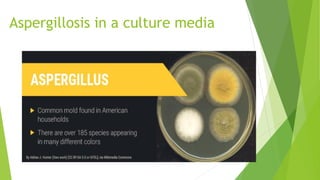
Culture and identification
 A.fumigatus is rapidly growing mold (2 to 5
days) that produce a fluty to granular, white to
blue- green colony, on blood enriched medium.
 Mature sporulating colonies most often exhibits
the blue- green powdery appearance.
Aspergillosis examined under a microscope
Aspergillosis in a culture media
Serologic test
Antibodies to Aspergillus extracts are
detected in serum and positive skin
testing in allergic cases.
3. Zygomycosis (phycomycosis,
mucormycosis)
 Zygomycosis is caused by several genera belonging
to zygomycetes, e.g. mucor, rhizopus, and Abiedia.
 It is some what less common infection when
compared with Aspergillosis; however it is a
significant cause of morbidity and mortality in
immunocompromised patients.
Cont’d ………
Like Aspergillus species, members of
the zygomycetes are common
environmental molds of low intrinsic
pathogencity.
 The disease occurs in debilitated persons, metabolic acidosis,
malignancies, uraemia, malnutrition, steroid therapy and
hepatic failure.
 The organisms produce broad non septate hyphea, aerial
mycelia, sporangia, sporangiospores and sexual zygospores;
grow rapidly on routine media to produce profuse cottony
colonies.
Pathogenesis and clinical picture
 One of the most common forms observed in the
 Rhinocerebral form in which the nasal mucosa, plate,
Sinuses, orbit, face, and brain are involved; each shows
massive necrosis with vascular invasion and infraction.
 Other types of infection involved the lungs and
gastrointestinal tract; some patients develop
disseminated infection.
Cont’d …….
 Organs including the liver, spleen, pancreas,
and kidney may be involved.
 The hyphae usually invade the upper or lower
respiratory tract or through burn wound of the
skin.
 Lesion progression is usually rapid, spore do not
form in vivo.
Laboratory diagnosis
 Is based on the demonstration of non-
septate hyphae in smears and biopsy
sections.
 Culture show sporangium containing
sporangiospores
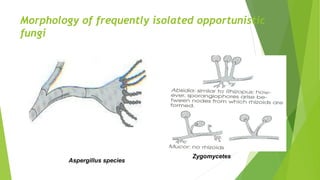
Morphology of frequently isolated opportunistic
fungi
Aspergillus species
Zygomycetes
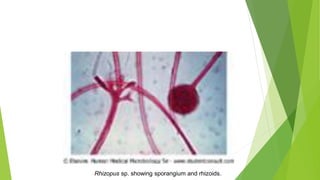
Rhizopus sp. showing sporangium and rhizoids.
4. Cryptococcosis
Definition :
 The causative organism is cryptoceccus
neoformas Cryptococcosis occurs in sporadic
form and as an opportunistic infection
associated with immunosupperession.
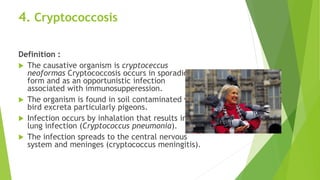
 The organism is found in soil contaminated with
bird excreta particularly pigeons.
 Infection occurs by inhalation that results in
lung infection (Cryptococcus pneumonia).
 The infection spreads to the central nervous
system and meninges (cryptococcus meningitis).
Transmission of cryptococcosis
Natural history of saprobic and parasitic cycle of Cryptococcus neoformans.
Laboratory Diagnosis
 Detection of Cryptococcus neoformans in sputum and CSF.
 The organism is characterized by the presence of large
gelationous carbohydrate capsule that surrounds the budding
yeast cell.
 Direct examination
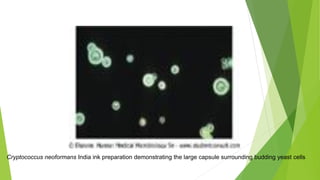
 The capsulated yeast cells are best seen in an India ink
preparation (wet mount)
 Immunofluorescent stain is applied to dried smear.
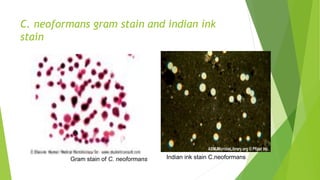
C. neoformans gram stain and indian ink
stain
Gram stain of C. neoformans Indian ink stain C.neoformans
Laboratory diagnosis cont’d…
 Culture and identification
 The organism grows easily giving rise to
mucoid colonies with the typical capsulated
yeast cells.
The organism is ureases positive.
 Serologic test
Capsular antigens are detected in C.S.F and in
the circulation by using anticapsular
antibodies.
Cryptococcus neoformans India ink preparation demonstrating the large capsule surrounding budding yeast cells
5. Pnemocystis carinii
 The taxonomy of P.carinii remains in question, with
evidence of classification as both a fungus and a
protozoan.
 Ribonuclic acid (RNA) sequencing, cell wall composition,
ulterstructure, and method of reproduction seem to
indicate the organism is fungus.
 P.carinii may thus be reclassified with in the fungi
species. P.carinii is wide spread I nature and often found
in several mammals; especially rodents, cats, dogs,
sheep, and goats.
Forms of Pneumocystis carinii
The organism has two forms
 Cyst stage
 It measures 5-8µm in diameter
May contain up to eight oval intera-cystic bodies
 Trophic or pleomorphic form
It measures 1-4µm in diameter
Covered with tiny projections for attachment to the
host epithelial cells.
 The cyst form is inhaled and the intra-cystic bodies
released in to the alveoli of the lungs.
 The tropic form develops and multiplies
asexually on the surface of the epithial
cells.
 The trophic form than rounds up forming a
cyst stages. None of the stage is intera
cellular
Pathogenesis and clinical picture
 P.carinii produces a symptomatic pneumonia in
debilitated or premature infants who are
immunodeficent.
 A rapid, progressive pneumonia is also seen is
patients with leukemia, following transplants, and
most recently in AIDS patients.
 In fact. P.carinii pneumonia was one of the first
opportunistic pathogens linked to AIDS.
Pathogenesis and clinical picture
To days, more than half of all AIDS
patients have P.carinii infection and it
is remains a leading cause of death in
these patients.
The infection may disseminate in AIDS
patients in to the eyes, liver, spleen or
bone marrow.
Laboratory Diagnosis
Direct microscopic
examination
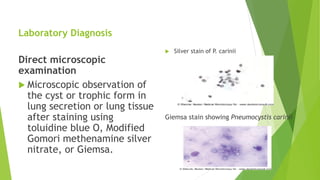
 Microscopic observation of
the cyst or trophic form in
lung secretion or lung tissue
after staining using
toluidine blue O, Modified
Gomori methenamine silver
nitrate, or Giemsa.
 Silver stain of P. carinii
Giemsa stain showing Pneumocystis carinii
Treatment of Opportunistic fungal infections
 Oral thrush & mucocutaneous
 Topical nystatin
 Oral ketoconazole
 Fluconazole
 Systemic
 Amphotericin B
 Oral fluconazole
 Prevention: remove moisture, drugs, personal hygiene, avoid birds excreta ,
wear masks
Summary
 Write the predisposing factors for candidiasis?
 List the laboratory test used to diagnose candidiasis?
 How do you differentiate candida albican from other
candida species?
 Explain the clinical presentation of Aspergillosis?
 What is the major route of infection of Cryptococcosis?
Any Question?
7/3/2023 59

Opportunistic Mycosis.pdf

  • 1.
    Opportunistic Mycosis Presented bySisay Fesseha, MSc, Diagnostic Biomedicine
  • 2.
    Outline of presentation Candidiasis  Asperigilosis  Zygomycosis  Cryptococosis  Pneumocystis carni
  • 3.
    Introduction  The opportunisticmycoses are;  caused by fungi that cannot infect healthy humans but can cause serious often fatal mycoses in people whose resistance has been lowered (immunocompromised patients).  The highly susceptible groups for opportunistic fungal infection are  AIDs patients, Leukemic patients, individuals on chemotherapy for treatment of cancer, alcoholics.
  • 4.
    Introduction cont’d…  Manydiabetic peoples are also susceptible to pulmonary infection by common saprophytic mold of the genera Rhizopus and Mucor (both Zygomycetes) and Aspergillus respectively.  Unless the predisposing conditions are corrected, many opportunistic mycosis can be fatal, even with antibiotic treatment.
  • 5.
    Introduction cont’d…  Manyfungi previously considered non- pathogenic are now recognized as etiological agents of the opportunistic fungal infections.  The laboratory must identify and report completely the presence of all fungi recovered from immunocompromised patient, since every organism is a potential pathogen.
  • 6.
    Introduction cont’d…  Althoughthere is an ongoing list of opportunistic mycosis, They are often seen in three forms that includes : 1. Yeast forms; Candidiasis, Cryptococcosis, 2. Mold forms; Aspargillosis, Zygomycosis Mucormycosis 3. Pneumocystis carinii
  • 7.
    1. Candidiasis  Candidiasisis a relatively common human infection that can take form of;  superficial,  mucocutanous or  systemic disease.  Principally it is caused by the three species of genus candida, namely,  C.albicans,  C.tropicalis and  C.krusei
  • 8.
    Cont’d……  Candida albicansis the most common cause of infection.  Since the species of candida, including C.albicans are the part of the normal endogenous microbial flora, candidiasis is usually the result of autoinfection during a metabolic or an immunologic disturbance.  C.albicans is not a dimorphic fungus, can exist in the form of yeast & hyphae in tissue (in vivo).
  • 9.
    Pathogenesis and clinicalpictures A. Superficial and mucocutaneous candidiasis  It is superficial infections of skin and mucous membranes  Through, oral and vaginal candidiasis  Oesophagial candidiasis  Skin lesions of folds, groin, axilla, and interdigital areas  Napkin eruptions in infants  Paranychial candidiaiasis
  • 10.
  • 11.
    Clinical forms  Invasive: Candidemia: initial stage can be transient if phagocytic system is intact.  Disseminated or hematogenous candidiasis if phagocytic system is compromised.  Multi organs can be involved with infection: kidney, prosthetic heart valves, brain, eye, meninges.  Mortality: 30-40%
  • 12.
    Predisposing factors  Diabetes Immunosupperession  T-cell immunodeficiency disorders  Acquired- immunodeficiency syndrome, (AIDS)  Leukaemias, Lymphomas Steroid treatments Broad spectrum antibiotics
  • 13.
    Laboratory diagnosis  Superficialor mucocutaneous candidiasis is diagnosed by finding the fungus in tissue scraping and culture  Systemic candidiasis is difficult to diagnose.  Definitive diagnosis is made by the histopathologic demonstration of the invasion of tissue by the yeast.  Specimens from surface lesions, mouth, vaginal, sputum, exudates etc are examined using different methods
  • 14.
    Direct examination a) KOH Exposed lesions can usually be easily diagnosed by clinical appearance together with finding typical budding yeast cells and pseudohyphae and /or true hyphea in lesion scrapings treated with KOH. b) Gram- stain  Gram stain smears shows large gram positive budding yeast cells with pseudohyphea.
  • 16.
    c) Germ tubetest  Candida albicans can be presumptively identified based on the production of a germ tube Principle  When incubated with serum at 370C for 1 to 3 hours, C.albicans will form a germ tube. Procedure 1.Pipette 0.5 ml of serum into a test tube 2. Inoculate the tube with a small amount of the organism to be tested.
  • 17.
    Germ tube testcont’d… A large inoculums may produce false- negative results. 3. Incubate at 370C for 1 to 3 hours 4. Place a drop of the suspension on a slide, apply a cover slip, and examine for the presence of germ tubes.  Interpretation  A germ tube is approximately half as wide and three to four times as long as the yeast cells.
  • 18.
    Germ tube test Germtube positive Germ tube negative
  • 19.
    Germ tube testcont’d…  No point of constriction should exist where the germ tube arises from the mother cell.  C.stellotidae is also germ tube positive. Quality control  C. albicans: positive control; produces germ tube within 2 hours  C.tropicalis: negative control; fails to produce germ tube within 3 hours
  • 20.
    d) Culture andidentification  Growth is rapid on sabouroud’s dextrose blood agar, triptase soy, and many other media. Creamy yeast colonies are formed after overnight incubation at temperature of 210C or 370C; the optimum growth temperature is around 300C.  C.albicans grows as round-to-oval yeast cells that are 4-6µm in diameter.  Pseudohyphae and hyphae also seen; especially at lower incubation temperature (i.e. 220C-250C) and on nutritionally poor media.
  • 21.
    C.albicans on SDAculture media The different species are further identified on the bases of their biochemical properties.  Note: Asexual reproduction is by budding of yeasts or by chalmydospore formation on hyphae. C.albicans on SDA culture media
  • 22.
  • 23.
    Aspergillosis  Aspergillosis comprisesa group of world wide human disease caused by about dozens of fungal species of the genus Aspergillus. About 185 different species has been identified.  Since Aspergillus species are many and are widespread in soil, air, and decaying vegetable matter many people are heavily exposed to inhalation of spores.
  • 24.
  • 25.
    Pathogenesis and clinicalpicture  The spectrum of human disease caused by Asperagillus ranges from allergy to disseminated infection.  Most of the disease processes are caused by the inhalation of conidia.  Allergy:- Persons may develop IgE. against Aspergillus and present with allergic condition. Example, asthma  Non-invasive colonization:- Aspergillus can colonize a pre- existing lung cavity e.g., tuberculosis, forming fungus ball or aspergilloma.
  • 26.
    Invasive aspergillosis  Mayoccur in severely immunocompromised patients, organ transplant recipients,.  Patients under corticosteroid therapy and patients with leukaemia.  Toxin production  e.g. aflatoxin of Aspergillus flavus is carcinogenic; cause liver cancer and necrosis. Can be found in spoiled legumes.
  • 27.
    Predisposing factors  Infectionsoccur principally in individuals who have disease or predisposing abnormalities such as cystic fibrosis, bronchietasis, chronic bronchitis, tuberculosis etc. or who are immunosuppressed.  Aspergillus species are not dimorphic; they are characterized by chains of conidia borne or condiophore.  Speciation is based on principally morphology; some 150 species are recognized.
  • 28.
    Predisposing factors  Infectionsoccur principally in individuals who have disease or predisposing abnormalities such as cystic fibrosis, bronchietasis, chronic bronchitis, tuberculosis etc. or who are immunosuppressed.  Aspergillus species are not dimorphic; they are characterized by chains of conidia or condiophore.  Speciation is based on principally morphology; some 150 species are recognized.
  • 29.
    Predisposing factor cont’d… Aspergillusfumigatus is most commonly recovered from immunocompromised patients, and most often seen in clinical laboratories. Aspergillus niger and A. flavus are also recognized as significant cause of infection in immunocompromised patients.
  • 30.
    Laboratory diagnosis  Thediagnosis of aspergillosis is difficult due to their wide spread in nature.  Direct examination Microscopic examination of KOH preparations of sputum show characteristic branching hyphae filaments and may show the conididophores attached to the spare head. Demonstration of hyphal fragments in tissue biopsy is diagnostic of tissue invasion
  • 31.
    Gram stain ofAspergillus
  • 32.
    Aspergillus in tissueshowing acute angle branching, septate hyphae
  • 33.
    Culture and identification A.fumigatus is rapidly growing mold (2 to 5 days) that produce a fluty to granular, white to blue- green colony, on blood enriched medium.  Mature sporulating colonies most often exhibits the blue- green powdery appearance.
  • 34.
  • 35.
    Aspergillosis in aculture media
  • 36.
    Serologic test Antibodies toAspergillus extracts are detected in serum and positive skin testing in allergic cases.
  • 37.
    3. Zygomycosis (phycomycosis, mucormycosis) Zygomycosis is caused by several genera belonging to zygomycetes, e.g. mucor, rhizopus, and Abiedia.  It is some what less common infection when compared with Aspergillosis; however it is a significant cause of morbidity and mortality in immunocompromised patients.
  • 38.
    Cont’d ……… Like Aspergillusspecies, members of the zygomycetes are common environmental molds of low intrinsic pathogencity.
  • 39.
     The diseaseoccurs in debilitated persons, metabolic acidosis, malignancies, uraemia, malnutrition, steroid therapy and hepatic failure.  The organisms produce broad non septate hyphea, aerial mycelia, sporangia, sporangiospores and sexual zygospores; grow rapidly on routine media to produce profuse cottony colonies.
  • 40.
    Pathogenesis and clinicalpicture  One of the most common forms observed in the  Rhinocerebral form in which the nasal mucosa, plate, Sinuses, orbit, face, and brain are involved; each shows massive necrosis with vascular invasion and infraction.  Other types of infection involved the lungs and gastrointestinal tract; some patients develop disseminated infection.
  • 41.
    Cont’d …….  Organsincluding the liver, spleen, pancreas, and kidney may be involved.  The hyphae usually invade the upper or lower respiratory tract or through burn wound of the skin.  Lesion progression is usually rapid, spore do not form in vivo.
  • 42.
    Laboratory diagnosis  Isbased on the demonstration of non- septate hyphae in smears and biopsy sections.  Culture show sporangium containing sporangiospores
  • 43.
    Morphology of frequentlyisolated opportunistic fungi Aspergillus species Zygomycetes
  • 44.
    Rhizopus sp. showingsporangium and rhizoids.
  • 45.
    4. Cryptococcosis Definition : The causative organism is cryptoceccus neoformas Cryptococcosis occurs in sporadic form and as an opportunistic infection associated with immunosupperession.  The organism is found in soil contaminated with bird excreta particularly pigeons.  Infection occurs by inhalation that results in lung infection (Cryptococcus pneumonia).  The infection spreads to the central nervous system and meninges (cryptococcus meningitis).
  • 46.
    Transmission of cryptococcosis Naturalhistory of saprobic and parasitic cycle of Cryptococcus neoformans.
  • 47.
    Laboratory Diagnosis  Detectionof Cryptococcus neoformans in sputum and CSF.  The organism is characterized by the presence of large gelationous carbohydrate capsule that surrounds the budding yeast cell.  Direct examination  The capsulated yeast cells are best seen in an India ink preparation (wet mount)  Immunofluorescent stain is applied to dried smear.
  • 48.
    C. neoformans gramstain and indian ink stain Gram stain of C. neoformans Indian ink stain C.neoformans
  • 49.
    Laboratory diagnosis cont’d… Culture and identification  The organism grows easily giving rise to mucoid colonies with the typical capsulated yeast cells. The organism is ureases positive.  Serologic test Capsular antigens are detected in C.S.F and in the circulation by using anticapsular antibodies.
  • 50.
    Cryptococcus neoformans Indiaink preparation demonstrating the large capsule surrounding budding yeast cells
  • 51.
    5. Pnemocystis carinii The taxonomy of P.carinii remains in question, with evidence of classification as both a fungus and a protozoan.  Ribonuclic acid (RNA) sequencing, cell wall composition, ulterstructure, and method of reproduction seem to indicate the organism is fungus.  P.carinii may thus be reclassified with in the fungi species. P.carinii is wide spread I nature and often found in several mammals; especially rodents, cats, dogs, sheep, and goats.
  • 52.
    Forms of Pneumocystiscarinii The organism has two forms  Cyst stage  It measures 5-8µm in diameter May contain up to eight oval intera-cystic bodies  Trophic or pleomorphic form It measures 1-4µm in diameter Covered with tiny projections for attachment to the host epithelial cells.  The cyst form is inhaled and the intra-cystic bodies released in to the alveoli of the lungs.
  • 53.
     The tropicform develops and multiplies asexually on the surface of the epithial cells.  The trophic form than rounds up forming a cyst stages. None of the stage is intera cellular
  • 54.
    Pathogenesis and clinicalpicture  P.carinii produces a symptomatic pneumonia in debilitated or premature infants who are immunodeficent.  A rapid, progressive pneumonia is also seen is patients with leukemia, following transplants, and most recently in AIDS patients.  In fact. P.carinii pneumonia was one of the first opportunistic pathogens linked to AIDS.
  • 55.
    Pathogenesis and clinicalpicture To days, more than half of all AIDS patients have P.carinii infection and it is remains a leading cause of death in these patients. The infection may disseminate in AIDS patients in to the eyes, liver, spleen or bone marrow.
  • 56.
    Laboratory Diagnosis Direct microscopic examination Microscopic observation of the cyst or trophic form in lung secretion or lung tissue after staining using toluidine blue O, Modified Gomori methenamine silver nitrate, or Giemsa.  Silver stain of P. carinii Giemsa stain showing Pneumocystis carinii
  • 57.
    Treatment of Opportunisticfungal infections  Oral thrush & mucocutaneous  Topical nystatin  Oral ketoconazole  Fluconazole  Systemic  Amphotericin B  Oral fluconazole  Prevention: remove moisture, drugs, personal hygiene, avoid birds excreta , wear masks
  • 58.
    Summary  Write thepredisposing factors for candidiasis?  List the laboratory test used to diagnose candidiasis?  How do you differentiate candida albican from other candida species?  Explain the clinical presentation of Aspergillosis?  What is the major route of infection of Cryptococcosis?
  • 59.