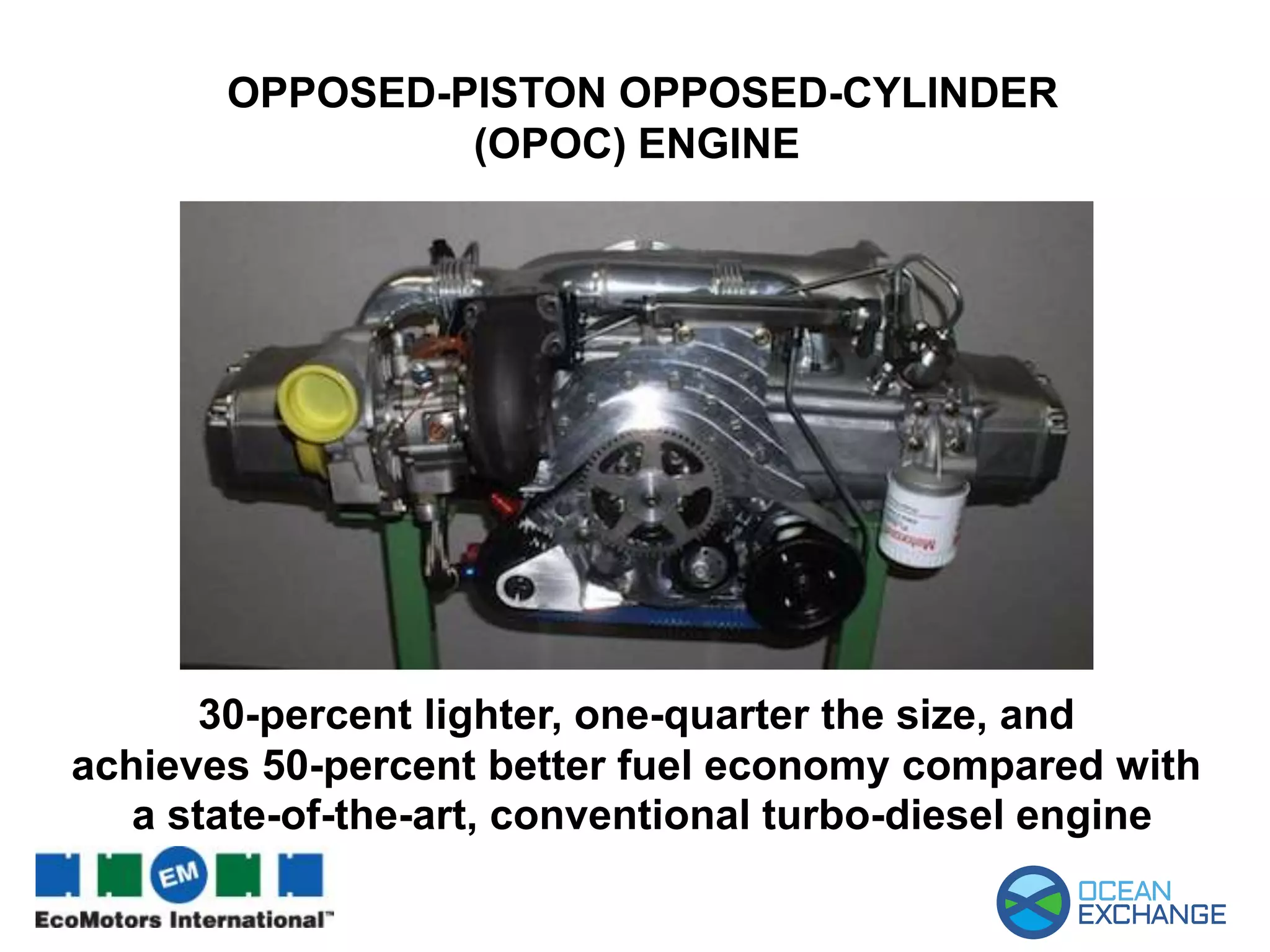
OPPOSED-PISTON OPPOSED-CYLINDER
(OPOC) ENGINE
30-percent lighter, one-quarter the size, and
achieves 50-percent better fuel economy compared with
a state-of-the-art, conventional turbo-diesel engine
EcoMotors International’s opoc® engine addresses the global
need for a significant reduction of fossil fuel consumption (and
the attendant environmental impact regarding emissions) in
the transportation and propulsion industry.
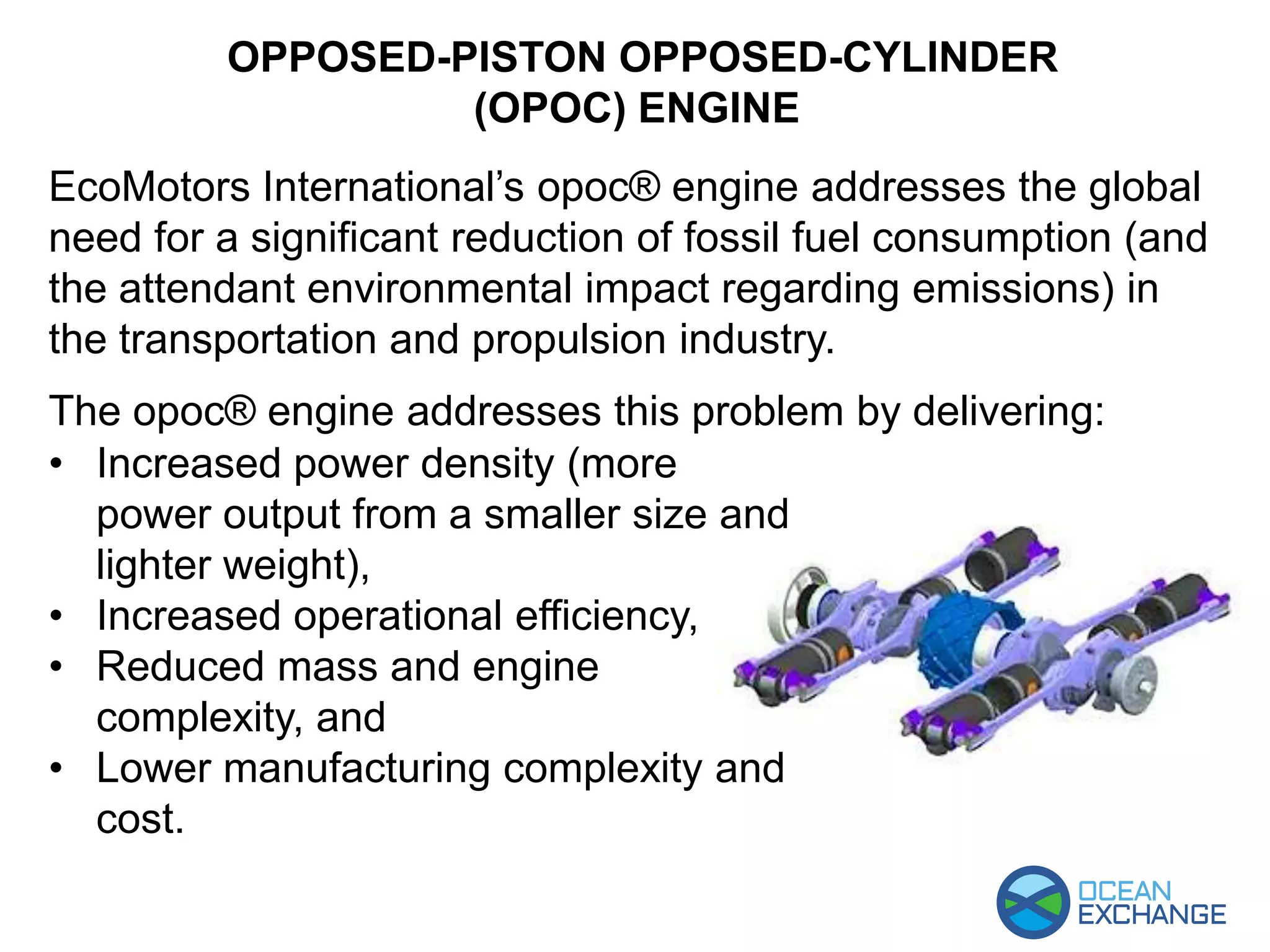
The opoc® engine addresses this problem by delivering:
OPPOSED-PISTON OPPOSED-CYLINDER
(OPOC) ENGINE
• Increased power density (more
power output from a smaller size and
lighter weight),
• Increased operational efficiency,
• Reduced mass and engine
complexity, and
• Lower manufacturing complexity and
cost.
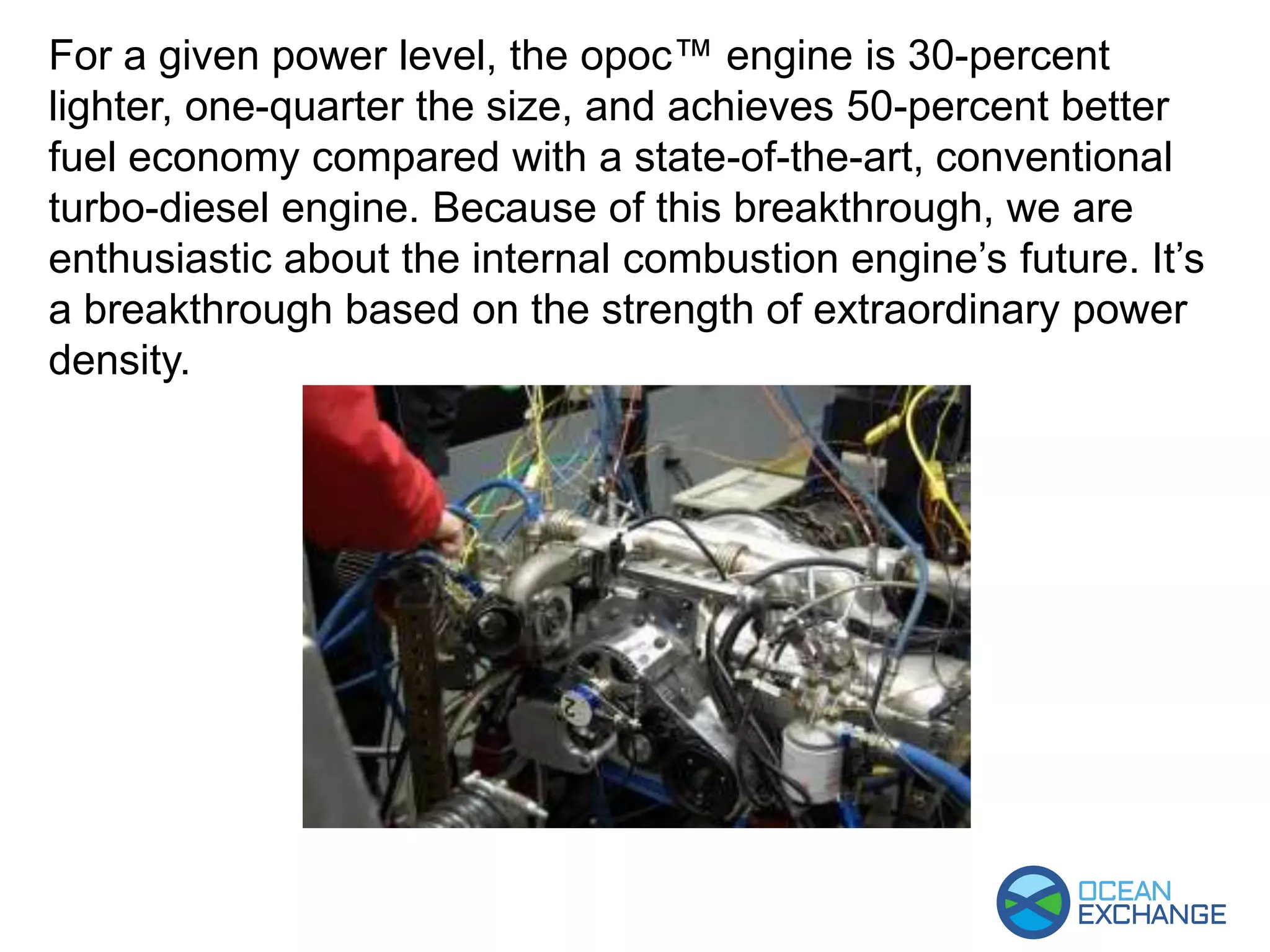
For a given power level, the opoc™ engine is 30-percent
lighter, one-quarter the size, and achieves 50-percent better
fuel economy compared with a state-of-the-art, conventional
turbo-diesel engine. Because of this breakthrough, we are
enthusiastic about the internal combustion engine’s future. It’s
a breakthrough based on the strength of extraordinary power
density.

Opoc Engine

  • 1.
    OPPOSED-PISTON OPPOSED-CYLINDER (OPOC) ENGINE 30-percentlighter, one-quarter the size, and achieves 50-percent better fuel economy compared with a state-of-the-art, conventional turbo-diesel engine
  • 2.
    EcoMotors International’s opoc®engine addresses the global need for a significant reduction of fossil fuel consumption (and the attendant environmental impact regarding emissions) in the transportation and propulsion industry. The opoc® engine addresses this problem by delivering: OPPOSED-PISTON OPPOSED-CYLINDER (OPOC) ENGINE • Increased power density (more power output from a smaller size and lighter weight), • Increased operational efficiency, • Reduced mass and engine complexity, and • Lower manufacturing complexity and cost.
  • 3.
    For a givenpower level, the opoc™ engine is 30-percent lighter, one-quarter the size, and achieves 50-percent better fuel economy compared with a state-of-the-art, conventional turbo-diesel engine. Because of this breakthrough, we are enthusiastic about the internal combustion engine’s future. It’s a breakthrough based on the strength of extraordinary power density.