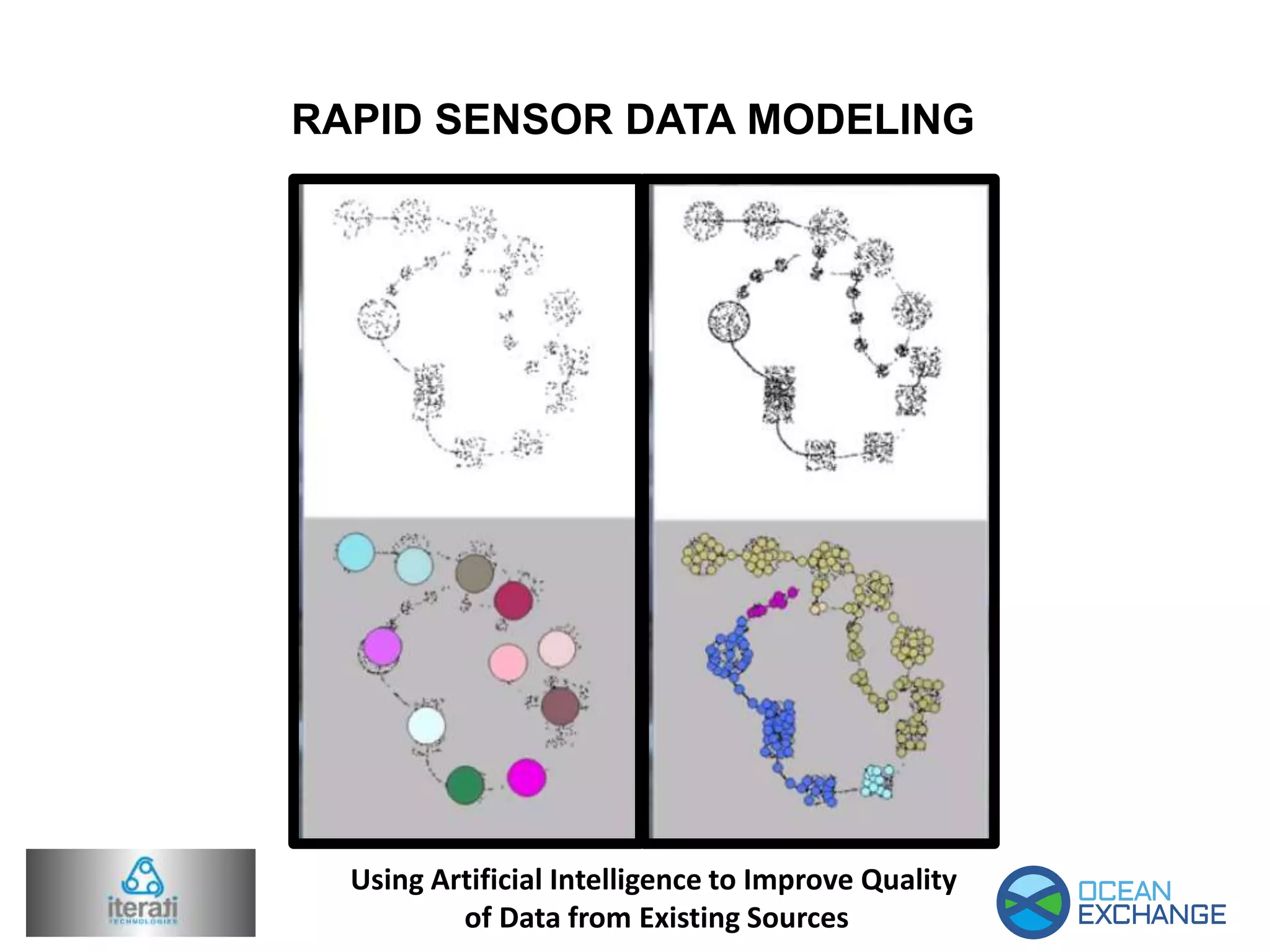
RAPID SENSOR DATA MODELING
Using Artificial Intelligence to Improve Quality
of Data from Existing Sources
RAPID SENSOR DATA MODELING
The problem of sensor-based datastreams from
oceanographic data has computational features, making it a
ripe target for application of new Artificial Intelligence
technology. Realtime data streams, as measured from a group
of collection sensors like these buoys, have systemic and
unique problems in their analysis. In short, it is difficult to
continuously and autonomously refine models and predictions
while simultaneously correcting for biases on individual “no-
two-are-exactly- alike” physical sensors.
A system which could automatically highlight troublesome
areas of interest and highlight potentially problematic
measurements would speed the rate of research in this field,
and quickly surmise critical data patterns for end users to
make decisions and/or identify paths of action from the data.
Iterati Technologies is a company which specializes in
addressing these type of “big data, quick decision” problems
through the use of cutting-edge artificial intelligence
techniques. The implementation of these techniques is
intended to be useful across a wide swath of environmentally
relevant applications which rely on data streams. The ability to
take a large amount of sensor data, rapidly model it in this
fashion, and present areas of interest/anomaly, has the
following applications:
- Short term prediction based on up-to-date information
- Systemic correction for biases of individual sensors
- Ease of merging disparate data into singular prediction
- Rapid identification of anomalous events
To learn more about this and other innovative solutions
Go to OceanExchange(dot)Org
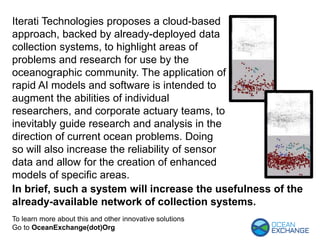
Iterati Technologies proposes a cloud-based
approach, backed by already-deployed data
collection systems, to highlight areas of
problems and research for use by the
oceanographic community. The application of
rapid AI models and software is intended to
augment the abilities of individual
researchers, and corporate actuary teams, to
inevitably guide research and analysis in the
direction of current ocean problems. Doing
so will also increase the reliability of sensor
data and allow for the creation of enhanced
models of specific areas.
In brief, such a system will increase the usefulness of the
already-available network of collection systems.

Rapid Sensor Data Modeling

  • 1.
    RAPID SENSOR DATAMODELING Using Artificial Intelligence to Improve Quality of Data from Existing Sources
  • 2.
    RAPID SENSOR DATAMODELING The problem of sensor-based datastreams from oceanographic data has computational features, making it a ripe target for application of new Artificial Intelligence technology. Realtime data streams, as measured from a group of collection sensors like these buoys, have systemic and unique problems in their analysis. In short, it is difficult to continuously and autonomously refine models and predictions while simultaneously correcting for biases on individual “no- two-are-exactly- alike” physical sensors. A system which could automatically highlight troublesome areas of interest and highlight potentially problematic measurements would speed the rate of research in this field, and quickly surmise critical data patterns for end users to make decisions and/or identify paths of action from the data.
  • 3.
    Iterati Technologies isa company which specializes in addressing these type of “big data, quick decision” problems through the use of cutting-edge artificial intelligence techniques. The implementation of these techniques is intended to be useful across a wide swath of environmentally relevant applications which rely on data streams. The ability to take a large amount of sensor data, rapidly model it in this fashion, and present areas of interest/anomaly, has the following applications: - Short term prediction based on up-to-date information - Systemic correction for biases of individual sensors - Ease of merging disparate data into singular prediction - Rapid identification of anomalous events
  • 4.
    To learn moreabout this and other innovative solutions Go to OceanExchange(dot)Org Iterati Technologies proposes a cloud-based approach, backed by already-deployed data collection systems, to highlight areas of problems and research for use by the oceanographic community. The application of rapid AI models and software is intended to augment the abilities of individual researchers, and corporate actuary teams, to inevitably guide research and analysis in the direction of current ocean problems. Doing so will also increase the reliability of sensor data and allow for the creation of enhanced models of specific areas. In brief, such a system will increase the usefulness of the already-available network of collection systems.