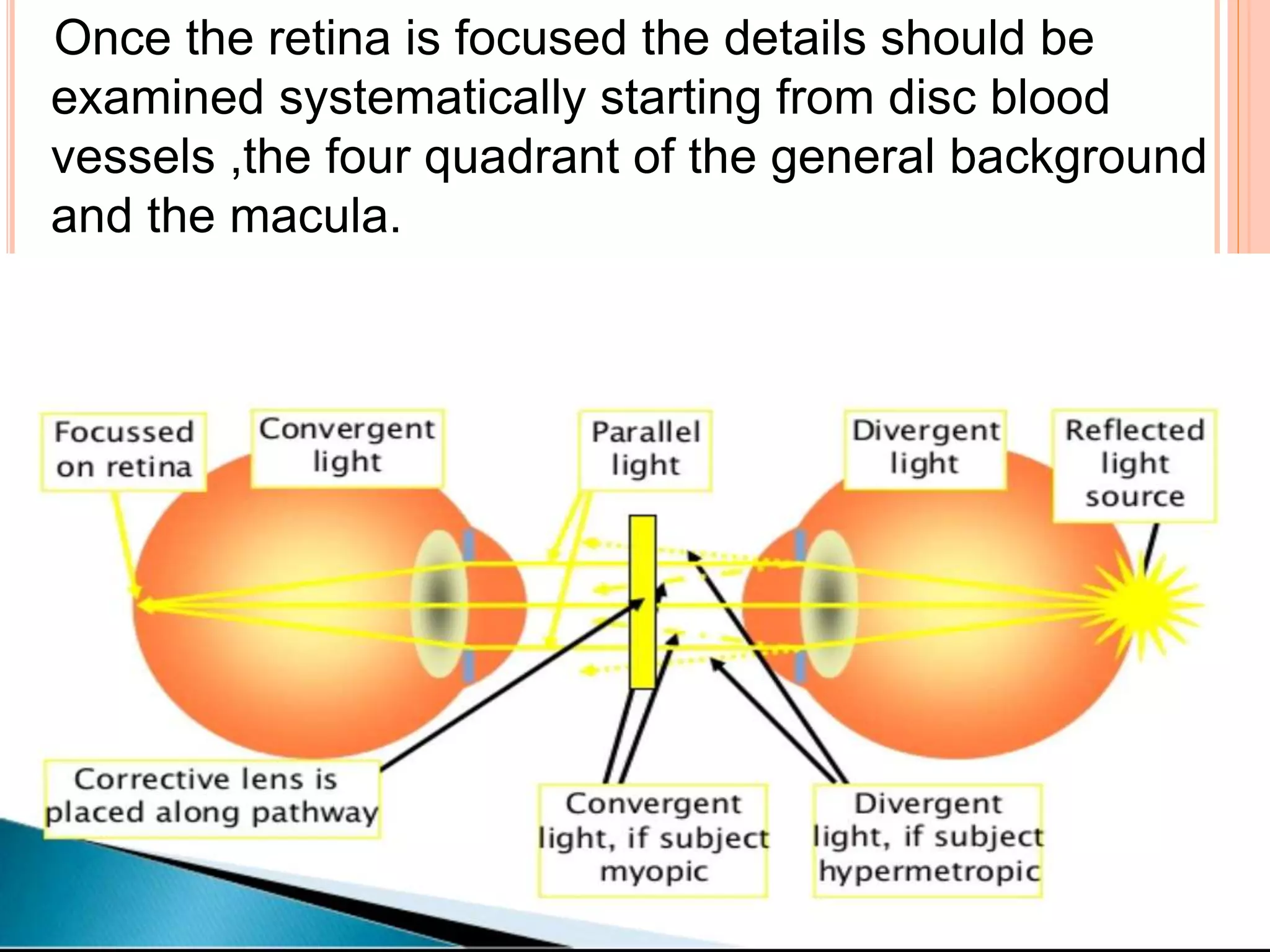
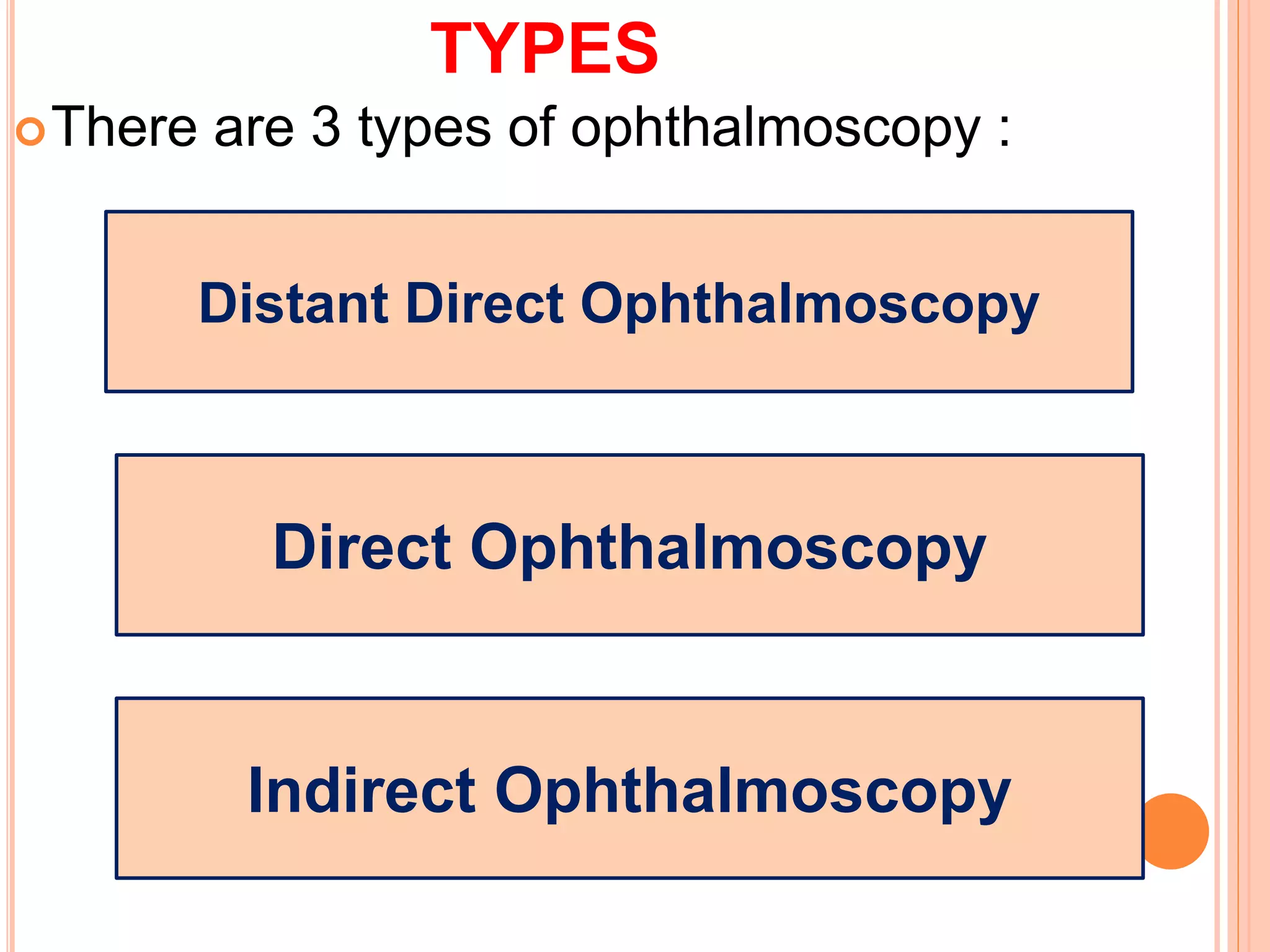
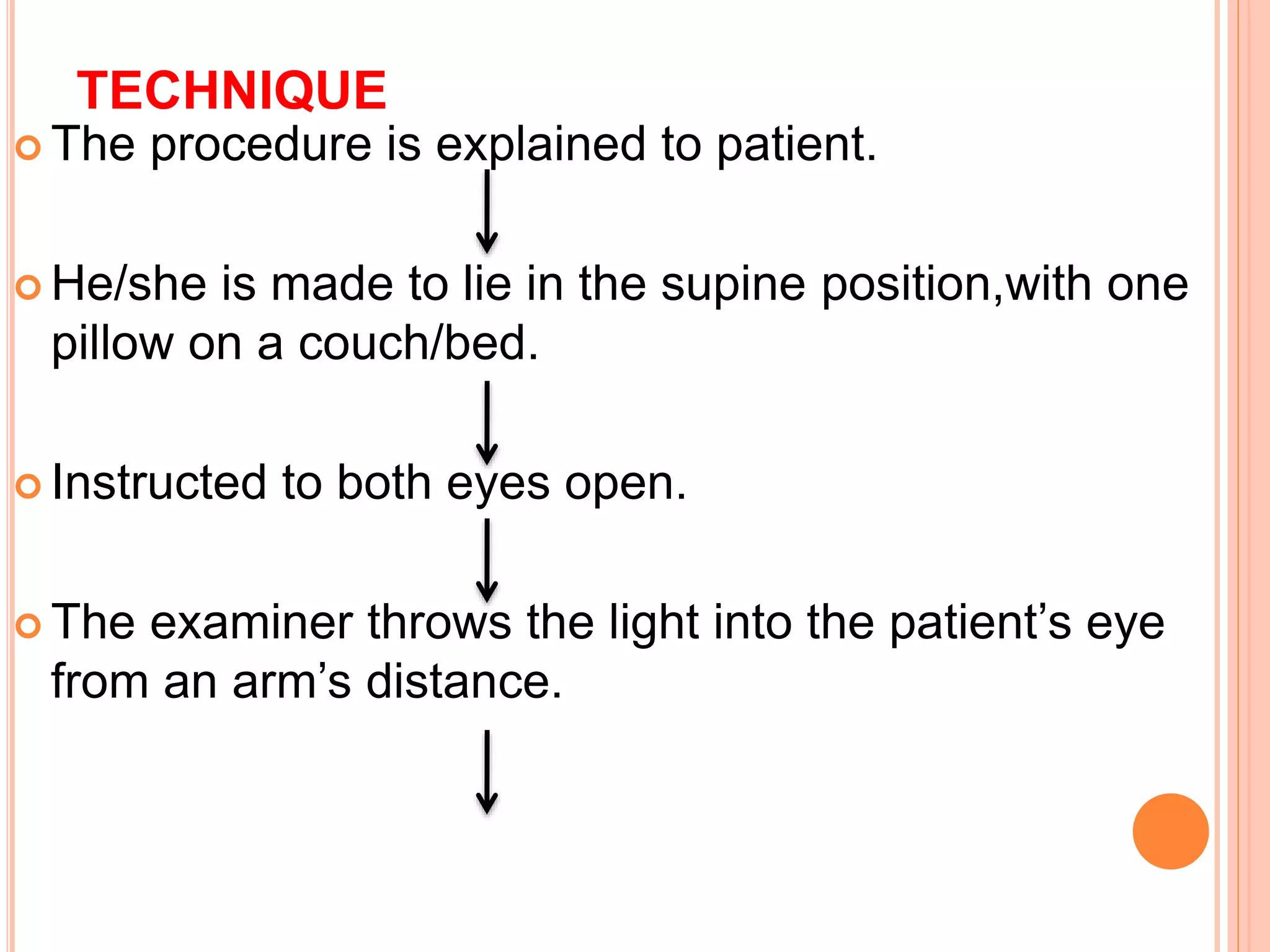
This document provides an overview of ophthalmoscopy, including its history, principles, types (distant direct, direct, and indirect), optics, techniques, and applications. Ophthalmoscopy allows examination of the interior of the eye and detection of opacities. The key developments were Babbage inventing the ophthalmoscope in 1848 and Helmholtz improving the design in 1850 to allow viewing of the retina. The types vary in their optics, fields of view, and use of lenses or mirrors to illuminate and view the retina. Indirect ophthalmoscopy provides the largest field of view including the vitreous base but requires more practice to perform.