By
Rajkumar Gupta
MBA FM-MARKETING
ROLL NO-38
Introduction
It had its early roots
in World War II and is
flourishing in
business and industry
with the aid of
computer
• Operations
• The activities carried out in an organization.
• Research
• The process of observation and testing characterized
by the scientific method. Situation, problem
statement, model construction, validation,
experimentation, candidate solutions.
Operations Research is a quantitative approach to
decision making based on the scientific method of
problem solving.
Terminology
• The British/Europeans refer to “Operational Research", the
Americans to “Operations Research" - but both are often
shortened to just "OR".
• Another term used for this field is “Management Science"
("MS"). In U.S. OR and MS are combined together to form
"OR/MS" or "ORMS".
• Yet other terms sometimes used are “Industrial Engineering"
("IE") and “Decision Science" ("DS").
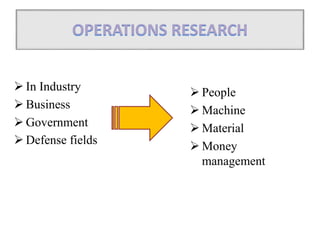
 In Industry
 Business
 Government
 Defense fields
 People
 Machine
 Material
 Money
management
This Situation Provides
 More complete data
 Consideration of all available options
 Careful predictions of outcomes and
estimates of risk
 The latest decision tools and techniques
.
Optimization is a word that
comes to mind first in
operations research.
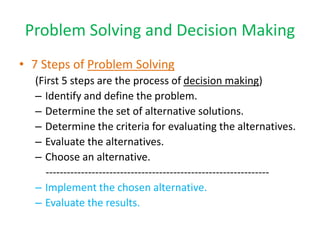
Problem Solving and Decision Making
• 7 Steps of Problem Solving
(First 5 steps are the process of decision making)
– Identify and define the problem.
– Determine the set of alternative solutions.
– Determine the criteria for evaluating the alternatives.
– Evaluate the alternatives.
– Choose an alternative.
---------------------------------------------------------------
– Implement the chosen alternative.
– Evaluate the results.
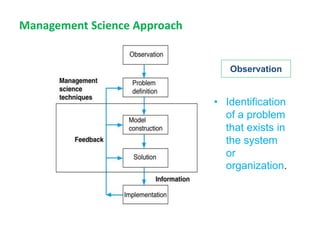
Management Science Approach
Observation
• Identification
of a problem
that exists in
the system
or
organization.
Identification Of The Problem
 “Right solution” can not be
obtained from the “wrong
problem
 The first and most important
stage of the work is defining
the problem well.
 This phase helps examine
the problem at hand
quantitatively.
The Establishment Of The Model
Development of the functional mathematical relationships that describe-
 Decision variables
 Objective function
 Constraints of the problem and
 Non negativity condition
Advantages of Models
• Generally, experimenting with models
(compared to experimenting with the real
situation):
– requires less time
– is less expensive
– involves less risk
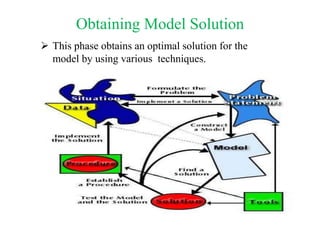
Obtaining Model Solution
 This phase obtains an optimal solution for the
model by using various techniques.
Various Techniques/Methods
1. Linear Programming Problem (LPP)
2. Transportation Problem (TP)
3. Assignment Problem (AP)
4. Simulation
5. PERT/CPM
Testing Of The Model Solution
 Before the application of the model solution, the validity of model and
reliability of the solution should be tested.
 Validity of the model can be decided by comparing its outputs with the
results of past.
If past behavior is repeated when
provided similar inputs (a stable
solution is being obtained), the
model will be valid.
Implementation
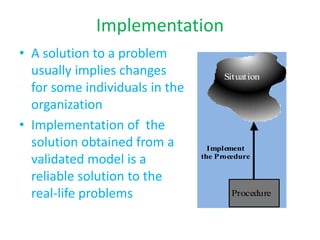
• A solution to a problem
usually implies changes
for some individuals in the
organization
• Implementation of the
solution obtained from a
validated model is a
reliable solution to the
real-life problems
Situation
Procedure
Implement
the Procedure
CONCLUSION
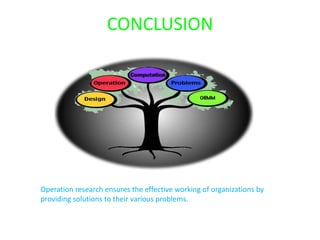
Operation research ensures the effective working of organizations by
providing solutions to their various problems.
THANKYOU

applications of operation research in business

  • 1.
  • 2.
    Introduction It had itsearly roots in World War II and is flourishing in business and industry with the aid of computer
  • 3.
    • Operations • Theactivities carried out in an organization. • Research • The process of observation and testing characterized by the scientific method. Situation, problem statement, model construction, validation, experimentation, candidate solutions. Operations Research is a quantitative approach to decision making based on the scientific method of problem solving.
  • 5.
    Terminology • The British/Europeansrefer to “Operational Research", the Americans to “Operations Research" - but both are often shortened to just "OR". • Another term used for this field is “Management Science" ("MS"). In U.S. OR and MS are combined together to form "OR/MS" or "ORMS". • Yet other terms sometimes used are “Industrial Engineering" ("IE") and “Decision Science" ("DS").
  • 6.
     In Industry Business  Government  Defense fields  People  Machine  Material  Money management
  • 7.
    This Situation Provides More complete data  Consideration of all available options  Careful predictions of outcomes and estimates of risk  The latest decision tools and techniques
  • 8.
  • 9.
    Optimization is aword that comes to mind first in operations research.
  • 10.
    Problem Solving andDecision Making • 7 Steps of Problem Solving (First 5 steps are the process of decision making) – Identify and define the problem. – Determine the set of alternative solutions. – Determine the criteria for evaluating the alternatives. – Evaluate the alternatives. – Choose an alternative. --------------------------------------------------------------- – Implement the chosen alternative. – Evaluate the results.
  • 11.
    Management Science Approach Observation •Identification of a problem that exists in the system or organization.
  • 12.
    Identification Of TheProblem  “Right solution” can not be obtained from the “wrong problem  The first and most important stage of the work is defining the problem well.  This phase helps examine the problem at hand quantitatively.
  • 13.
    The Establishment OfThe Model Development of the functional mathematical relationships that describe-  Decision variables  Objective function  Constraints of the problem and  Non negativity condition
  • 14.
    Advantages of Models •Generally, experimenting with models (compared to experimenting with the real situation): – requires less time – is less expensive – involves less risk
  • 15.
    Obtaining Model Solution This phase obtains an optimal solution for the model by using various techniques.
  • 16.
    Various Techniques/Methods 1. LinearProgramming Problem (LPP) 2. Transportation Problem (TP) 3. Assignment Problem (AP) 4. Simulation 5. PERT/CPM
  • 17.
    Testing Of TheModel Solution  Before the application of the model solution, the validity of model and reliability of the solution should be tested.  Validity of the model can be decided by comparing its outputs with the results of past.
  • 18.
    If past behavioris repeated when provided similar inputs (a stable solution is being obtained), the model will be valid.
  • 19.
    Implementation • A solutionto a problem usually implies changes for some individuals in the organization • Implementation of the solution obtained from a validated model is a reliable solution to the real-life problems Situation Procedure Implement the Procedure
  • 20.
    CONCLUSION Operation research ensuresthe effective working of organizations by providing solutions to their various problems.
  • 21.