OPERATION
MANAGEMENT
‘’OPERATIONS KEEPS THE LIGHTS ON, STRATEGY PROVIDES
A LIGHT AT THE END OF THE TUNNEL, AND MANAGEMENT IS
THE TRAIN ENGINE THAT MOVES THE ORGANIZATION
FORWARD’’.
INTRODUCTION TO OPERATION
MANAGEMENT
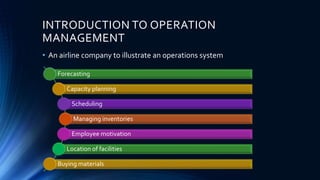
• An airline company to illustrate an operations system
Forecasting
Capacity planning
Scheduling
Managing inventories
Employee motivation
Location of facilities
Buying materials
WHY STUDY OPERATIONS MANAGEMENT?
• operations management activities are at the core of all business
organizations
• a large number of all jobs are in operations management
• activities in all of the other areas of business organizations, such as
finance, accounting, human resources, management information
systems (MIS), and marketing
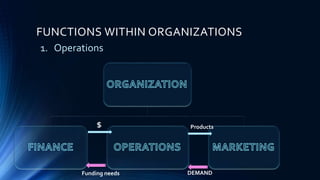
FUNCTIONS WITHIN ORGANIZATIONS
1. Operations
$ Products
DEMANDFunding needs
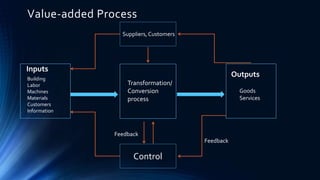
Value-added Process
Inputs
Building
Labor
Machines
Materials
Customers
Information
Transformation/
Conversion
process
Outputs
Goods
Services
Control
Suppliers, Customers
Feedback
Feedback
2. Finance
• Provision of funds.
• Economic analysis
3. Marketing
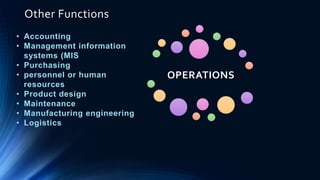
Other Functions
OPERATIONS
• Accounting
• Management information
systems (MIS
• Purchasing
• personnel or human
resources
• Product design
• Maintenance
• Manufacturing engineering
• Logistics
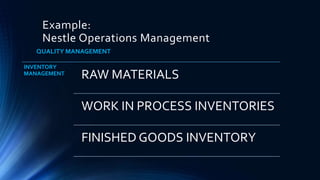
Example:
Nestle Operations Management
INVENTORY
MANAGEMENT
RAW MATERIALS
WORK IN PROCESS INVENTORIES
FINISHED GOODS INVENTORY
QUALITY MANAGEMENT
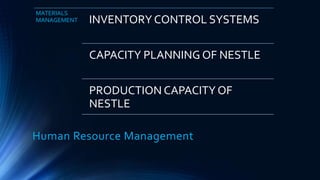
Human Resource Management
MATERIALS
MANAGEMENT INVENTORY CONTROL SYSTEMS
CAPACITY PLANNING OF NESTLE
PRODUCTION CAPACITY OF
NESTLE
The Journey of milk from Cow to Nestlé's Kit Kat
Importance of Production Management
• Helps to Introduce New Products
• Expansion of the Firm
• Minimizes price of Production
• Accomplishment of Firm’s Objectives
• Reputation, Goodwill and Image
• Helps to Face Competition
• Optimum Utilization of Resources
• Supports different usefulAreas
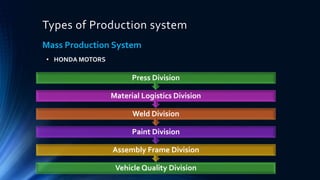
Types of Production system
Vehicle Quality Division
Assembly Frame Division
Paint Division
Weld Division
Material Logistics Division
Press Division
Mass Production System
• HONDA MOTORS
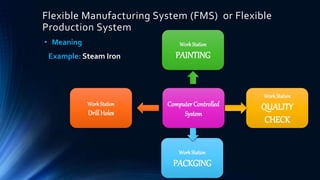
Flexible Manufacturing System (FMS) or Flexible
Production System
• Meaning
Example: Steam Iron
Computer Controlled
System
WorkStation
DrillHoles
WorkStation
PAINTING
WorkStation
QUALITY
CHECK
WorkStation
PACKGING
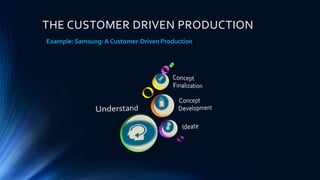
THE CUSTOMER DRIVEN PRODUCTION
Example: Samsung: A Customer-Driven Production
Production Process
• Analytical Production System
• Synthetic Production System
• Continuous Production system
• Intermittent Production system
TECHNOLOGY AND THE PRODUCTION
PROCESS
• Green Manufacturing Process
• Process of Green Manufacturing
Robots
• Assembling products
• Handling dangerous materials
• Spraying finishes
• Inspecting parts, produce, and livestock
• Cutting, polishing andWelding
Computer-Aided Design and Manufacturing
• Prototype manufacture
• Determining the efficient method for manufacturing by calculating the costs and
considering the production methods, volume of products, storage and distribution
• Ordering of the necessary materials needed for the manufacturing process
• Computer-aided manufacturing of the products with the help of computer
numerical controllers
• Quality controls at each phase of the development.
• Product assembly with the help of robots
• Quality check and automated storage
• Automatic distribution of products from the storage areas to waiting lorries/trucks
• Automatic updating of logs, financial data and bills in the computer system
Computer Integrated Manufacturing
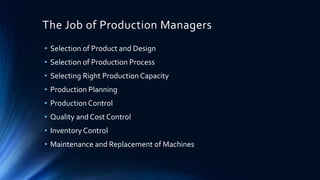
The Job of Production Managers
• Selection of Product and Design
• Selection of Production Process
• Selecting Right Production Capacity
• Production Planning
• Production Control
• Quality and Cost Control
• Inventory Control
• Maintenance and Replacement of Machines
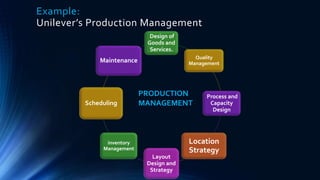
Example:
Unilever’s Production Management
Design of
Goods and
Services.
Quality
Management
Process and
Capacity
Design
Location
Strategy
Layout
Design and
Strategy
inventory
Management
Scheduling
Maintenance
PRODUCTION
MANAGEMENT
Importance of Quality
• Customer Expectations
• Reputation
• Meeting Standards
• Costs
Quality Control
• ISO STANDARDS
• HISTORY
• PAKISTAN STANDARDS AND QUALITY CONTROL AUTHORITY
Conclusion
‘’Operations keeps the lights on, strategy
provides a light at the end of the tunnel, and
management is the train engine that moves the
organization forward’’.
THANKYOU..!
Waqas_ali81@yahoo.com

Operation management

  • 1.
    OPERATION MANAGEMENT ‘’OPERATIONS KEEPS THELIGHTS ON, STRATEGY PROVIDES A LIGHT AT THE END OF THE TUNNEL, AND MANAGEMENT IS THE TRAIN ENGINE THAT MOVES THE ORGANIZATION FORWARD’’.
  • 2.
    INTRODUCTION TO OPERATION MANAGEMENT •An airline company to illustrate an operations system Forecasting Capacity planning Scheduling Managing inventories Employee motivation Location of facilities Buying materials
  • 3.
    WHY STUDY OPERATIONSMANAGEMENT? • operations management activities are at the core of all business organizations • a large number of all jobs are in operations management • activities in all of the other areas of business organizations, such as finance, accounting, human resources, management information systems (MIS), and marketing
  • 4.
    FUNCTIONS WITHIN ORGANIZATIONS 1.Operations $ Products DEMANDFunding needs
  • 5.
  • 6.
    2. Finance • Provisionof funds. • Economic analysis 3. Marketing
  • 7.
    Other Functions OPERATIONS • Accounting •Management information systems (MIS • Purchasing • personnel or human resources • Product design • Maintenance • Manufacturing engineering • Logistics
  • 8.
    Example: Nestle Operations Management INVENTORY MANAGEMENT RAWMATERIALS WORK IN PROCESS INVENTORIES FINISHED GOODS INVENTORY QUALITY MANAGEMENT
  • 9.
    Human Resource Management MATERIALS MANAGEMENTINVENTORY CONTROL SYSTEMS CAPACITY PLANNING OF NESTLE PRODUCTION CAPACITY OF NESTLE
  • 10.
    The Journey ofmilk from Cow to Nestlé's Kit Kat
  • 11.
    Importance of ProductionManagement • Helps to Introduce New Products • Expansion of the Firm • Minimizes price of Production • Accomplishment of Firm’s Objectives • Reputation, Goodwill and Image • Helps to Face Competition • Optimum Utilization of Resources • Supports different usefulAreas
  • 12.
    Types of Productionsystem Vehicle Quality Division Assembly Frame Division Paint Division Weld Division Material Logistics Division Press Division Mass Production System • HONDA MOTORS
  • 13.
    Flexible Manufacturing System(FMS) or Flexible Production System • Meaning Example: Steam Iron Computer Controlled System WorkStation DrillHoles WorkStation PAINTING WorkStation QUALITY CHECK WorkStation PACKGING
  • 14.
    THE CUSTOMER DRIVENPRODUCTION Example: Samsung: A Customer-Driven Production
  • 15.
    Production Process • AnalyticalProduction System • Synthetic Production System • Continuous Production system • Intermittent Production system
  • 16.
    TECHNOLOGY AND THEPRODUCTION PROCESS • Green Manufacturing Process • Process of Green Manufacturing Robots • Assembling products • Handling dangerous materials • Spraying finishes • Inspecting parts, produce, and livestock • Cutting, polishing andWelding
  • 17.
    Computer-Aided Design andManufacturing • Prototype manufacture • Determining the efficient method for manufacturing by calculating the costs and considering the production methods, volume of products, storage and distribution • Ordering of the necessary materials needed for the manufacturing process • Computer-aided manufacturing of the products with the help of computer numerical controllers • Quality controls at each phase of the development. • Product assembly with the help of robots • Quality check and automated storage • Automatic distribution of products from the storage areas to waiting lorries/trucks • Automatic updating of logs, financial data and bills in the computer system Computer Integrated Manufacturing
  • 18.
    The Job ofProduction Managers • Selection of Product and Design • Selection of Production Process • Selecting Right Production Capacity • Production Planning • Production Control • Quality and Cost Control • Inventory Control • Maintenance and Replacement of Machines
  • 19.
    Example: Unilever’s Production Management Designof Goods and Services. Quality Management Process and Capacity Design Location Strategy Layout Design and Strategy inventory Management Scheduling Maintenance PRODUCTION MANAGEMENT
  • 20.
    Importance of Quality •Customer Expectations • Reputation • Meeting Standards • Costs
  • 21.
    Quality Control • ISOSTANDARDS • HISTORY • PAKISTAN STANDARDS AND QUALITY CONTROL AUTHORITY Conclusion
  • 22.
    ‘’Operations keeps thelights on, strategy provides a light at the end of the tunnel, and management is the train engine that moves the organization forward’’. THANKYOU..! Waqas_ali81@yahoo.com