PGBM03 Operations Management
Session 06
Operations Planning and
Managing Capacity
Module Leader: Peter Coleman
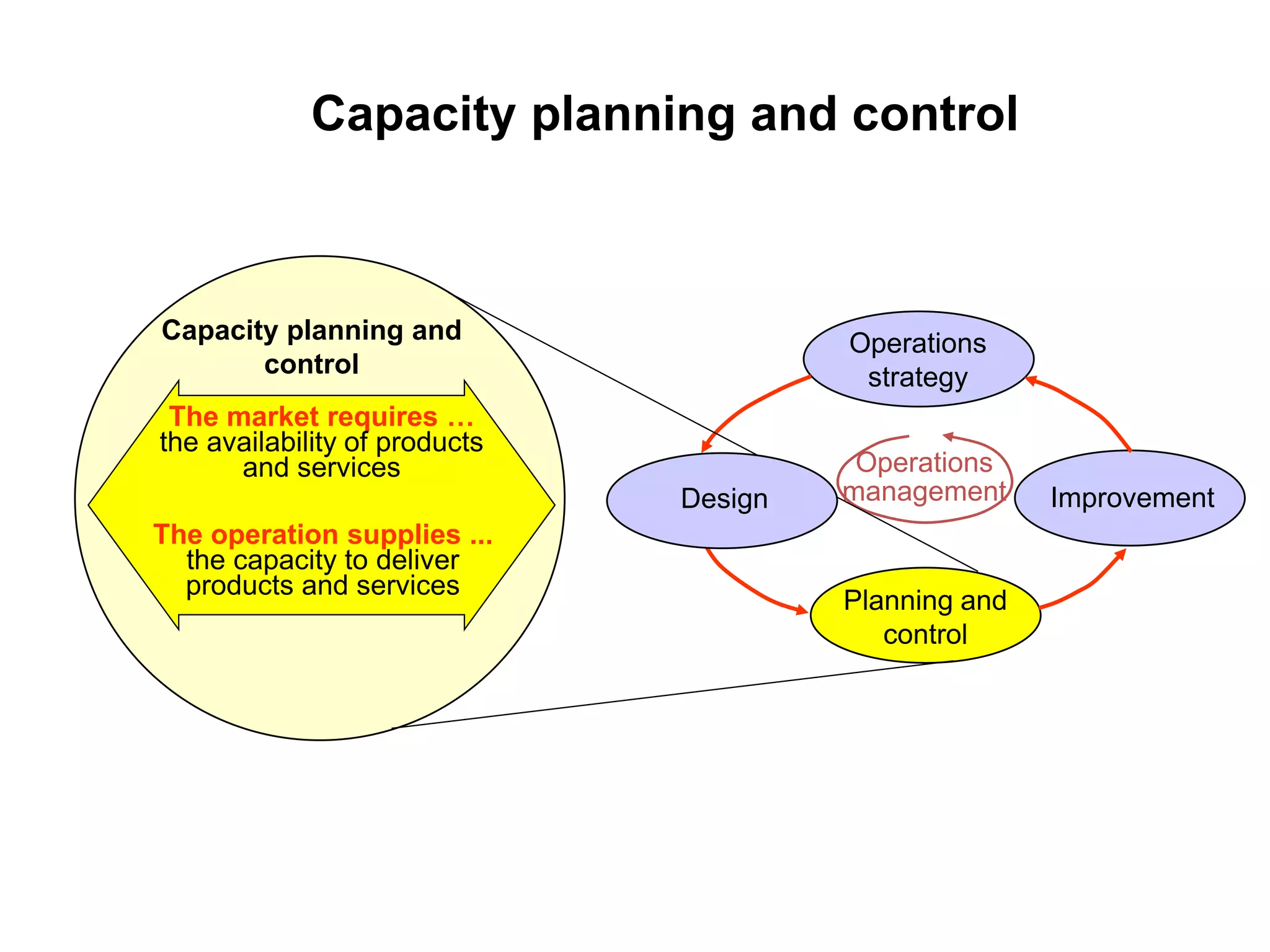
Capacity planning and control
Operations
strategy
Improvement
Planning and
control
Operations
management
Capacity planning and
control
The operation supplies ...
the capacity to deliver
products and services
The market requires …
the availability of products
and services
Design
In Chapter 10 – The nature of planning and control – Slack et al.
identify the following key questions:
• What is planning and control?
• How do supply demand affect planning and control?
• What are the activities of planning and control?
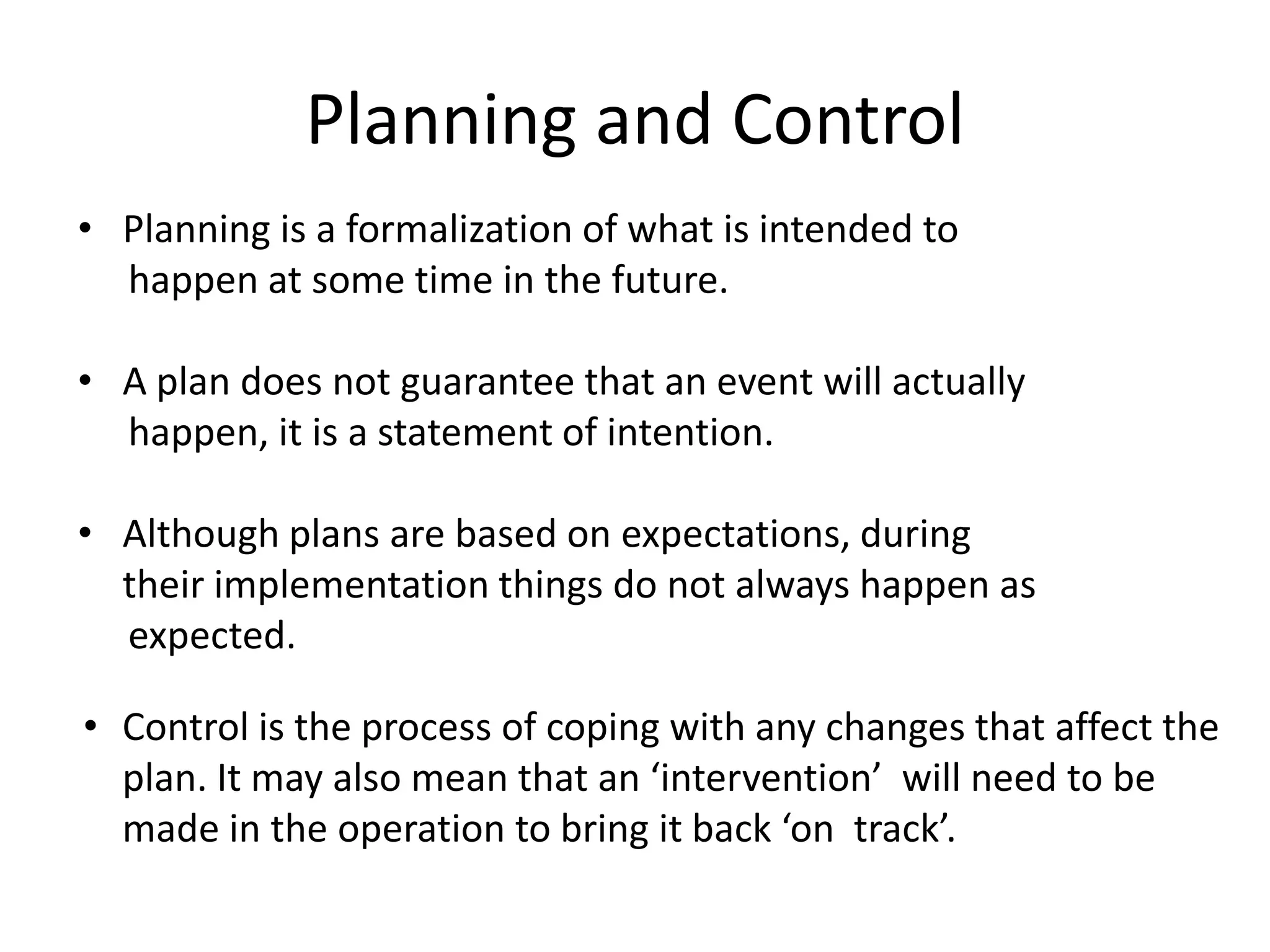
Planning and Control
• Planning is a formalization of what is intended to
happen at some time in the future.
• A plan does not guarantee that an event will actually
happen, it is a statement of intention.
• Although plans are based on expectations, during
their implementation things do not always happen as
expected.
• Control is the process of coping with any changes that affect the
plan. It may also mean that an ‘intervention’ will need to be
made in the operation to bring it back ‘on track’.
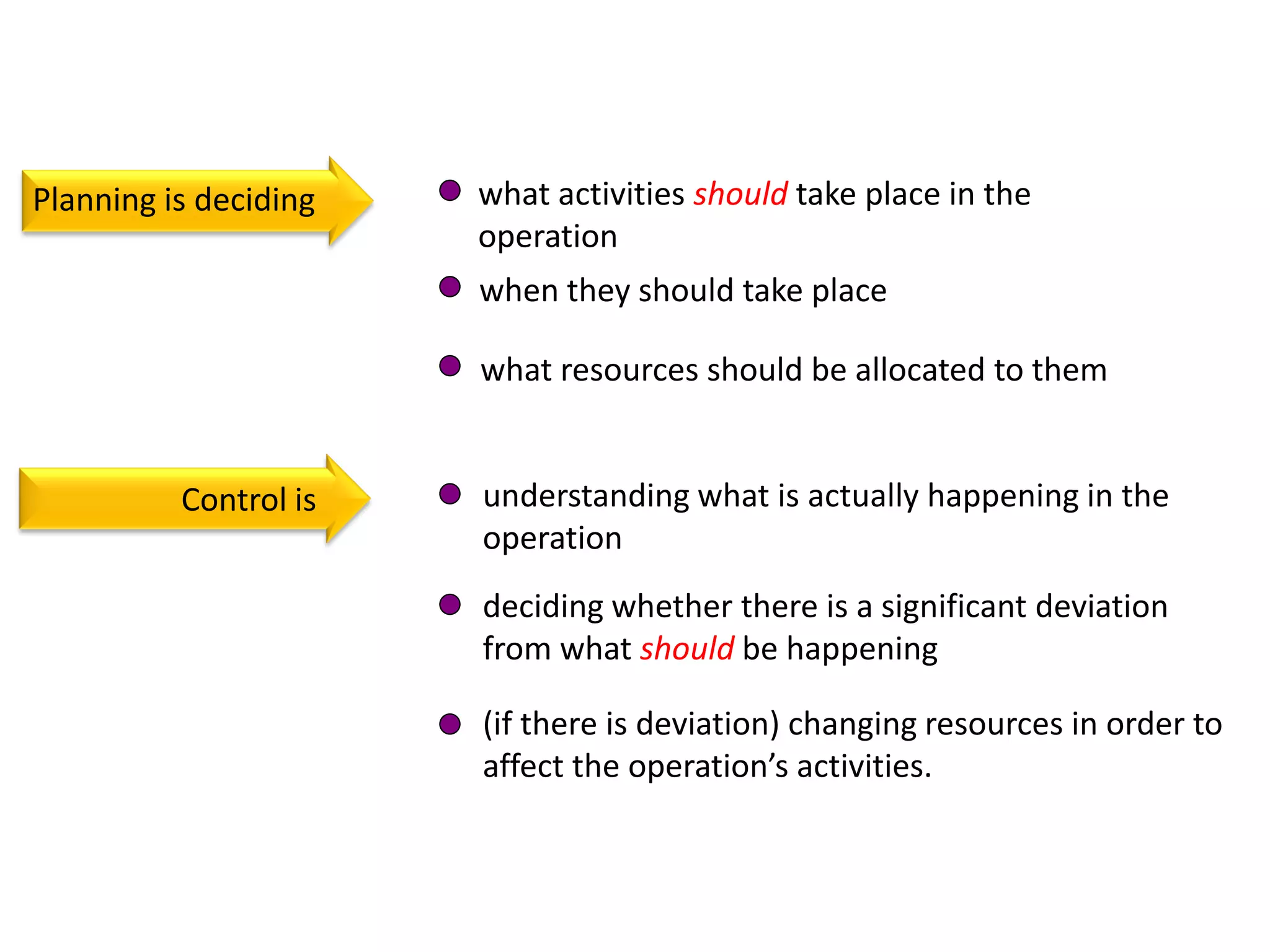
Planning is deciding
Control is
what activities should take place in the
operation
when they should take place
what resources should be allocated to them
understanding what is actually happening in the
operation
deciding whether there is a significant deviation
from what should be happening
(if there is deviation) changing resources in order to
affect the operation’s activities.
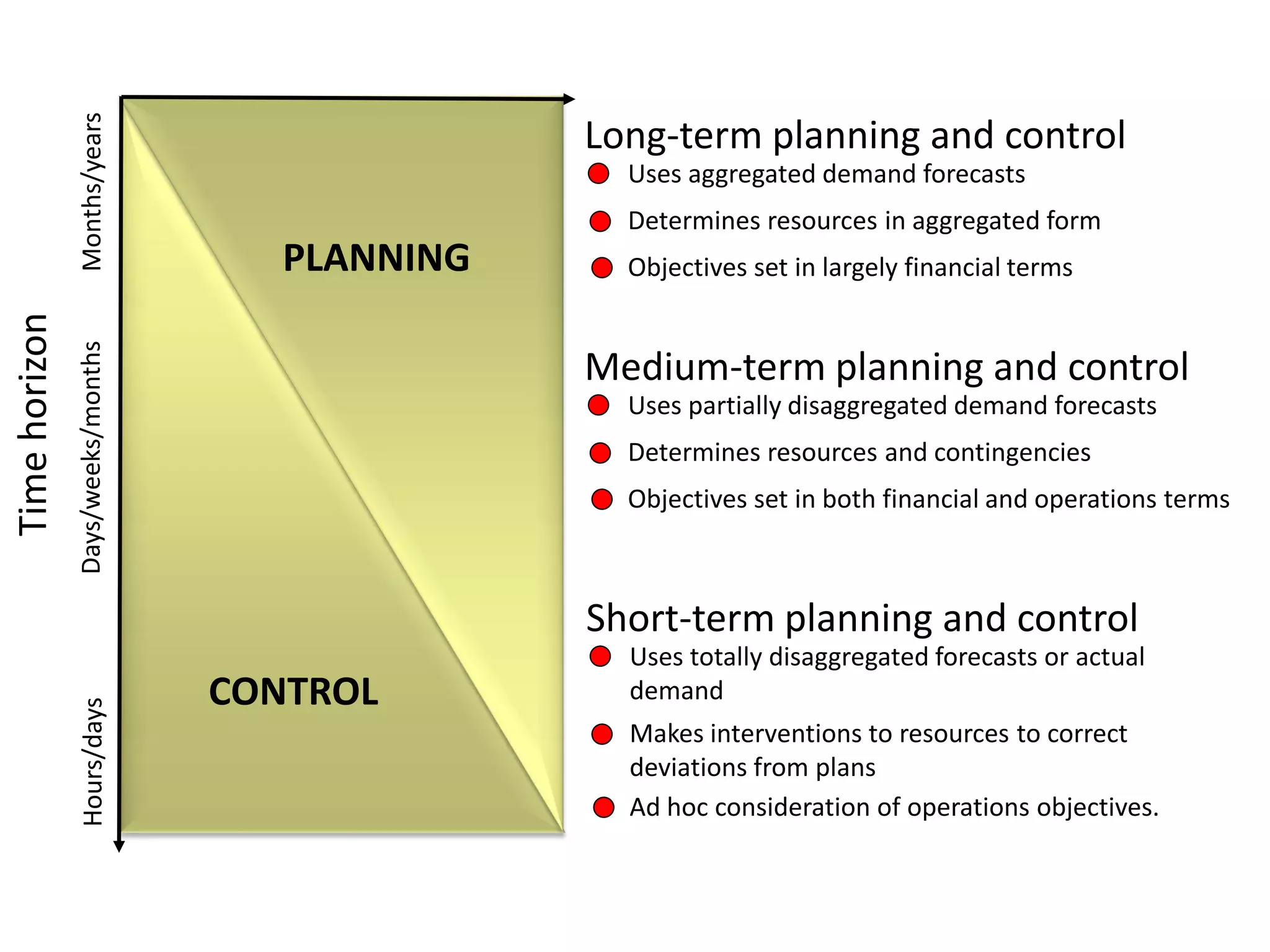
PLANNING
CONTROL
Timehorizon
Hours/daysDays/weeks/monthsMonths/years
Long-term planning and control
Uses aggregated demand forecasts
Determines resources in aggregated form
Objectives set in largely financial terms
Medium-term planning and control
Uses partially disaggregated demand forecasts
Determines resources and contingencies
Objectives set in both financial and operations terms
Short-term planning and control
Uses totally disaggregated forecasts or actual
demand
Makes interventions to resources to correct
deviations from plans
Ad hoc consideration of operations objectives.
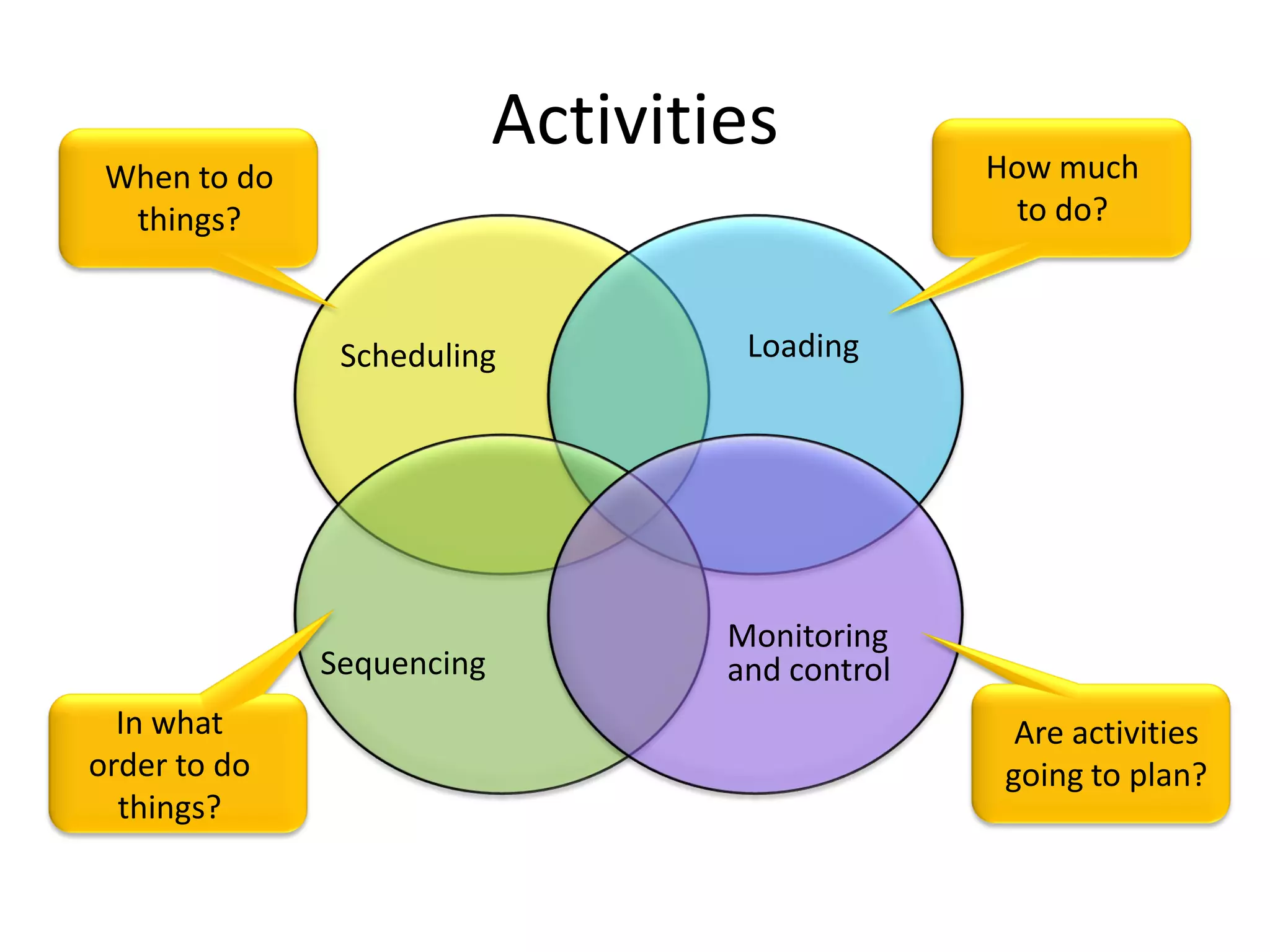
Scheduling Loading
Sequencing
Monitoring
and control
When to do
things?
In what
order to do
things?
How much
to do?
Are activities
going to plan?
Activities
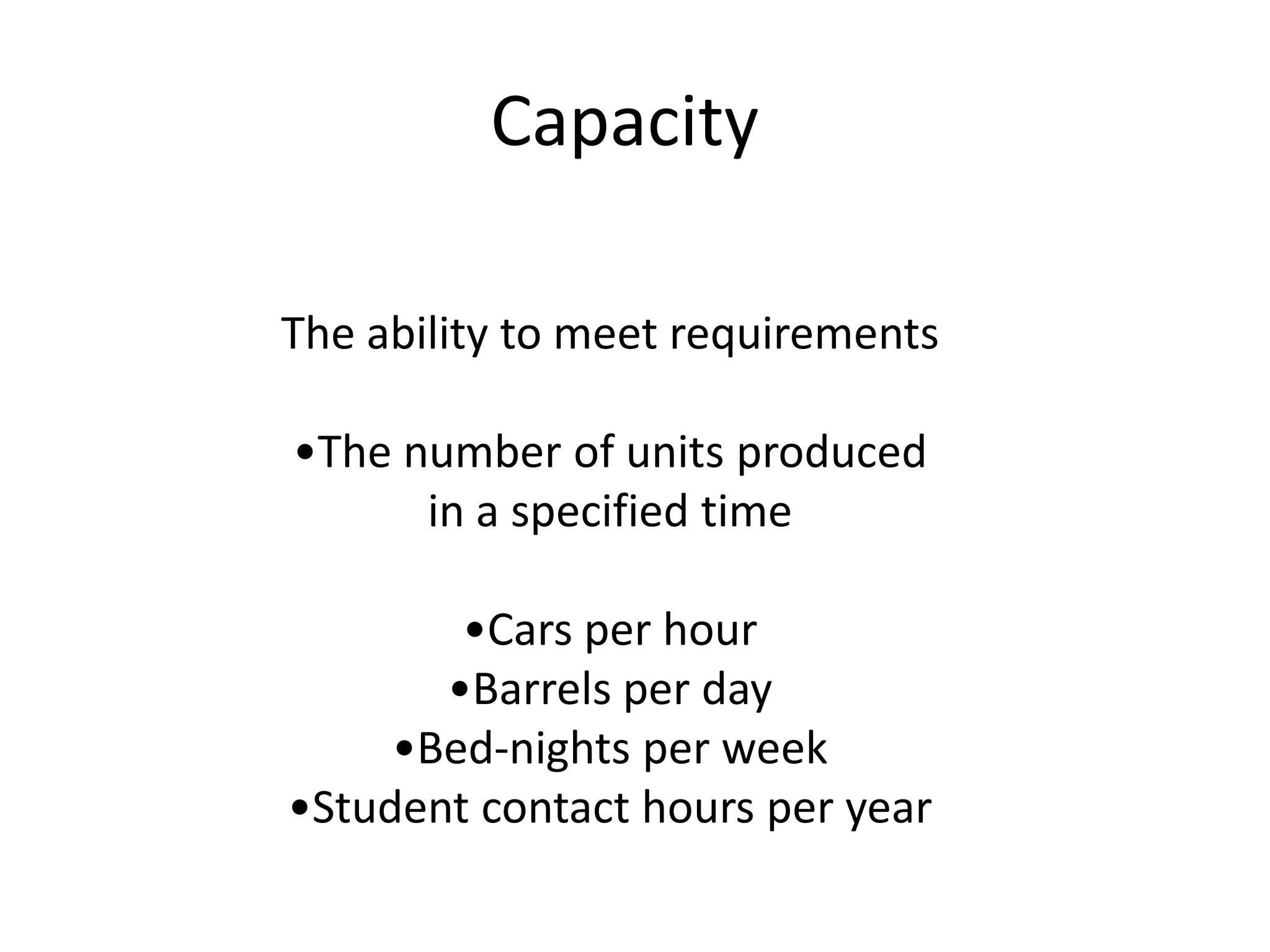
The ability to meet requirements
•The number of units produced
in a specified time
•Cars per hour
•Barrels per day
•Bed-nights per week
•Student contact hours per year
Capacity
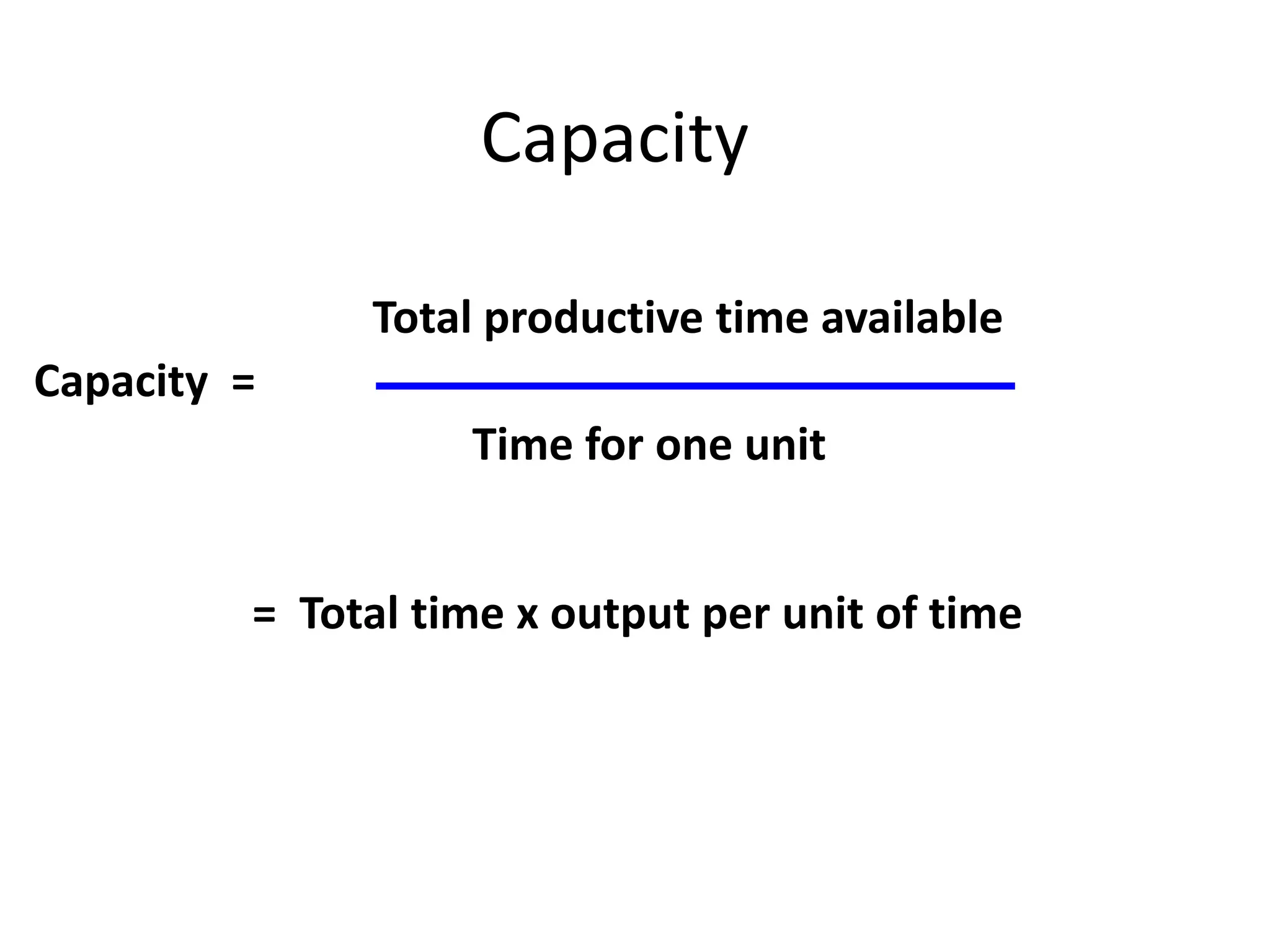
Capacity =
Total productive time available
Time for one unit
= Total time x output per unit of time
Capacity
Capacity
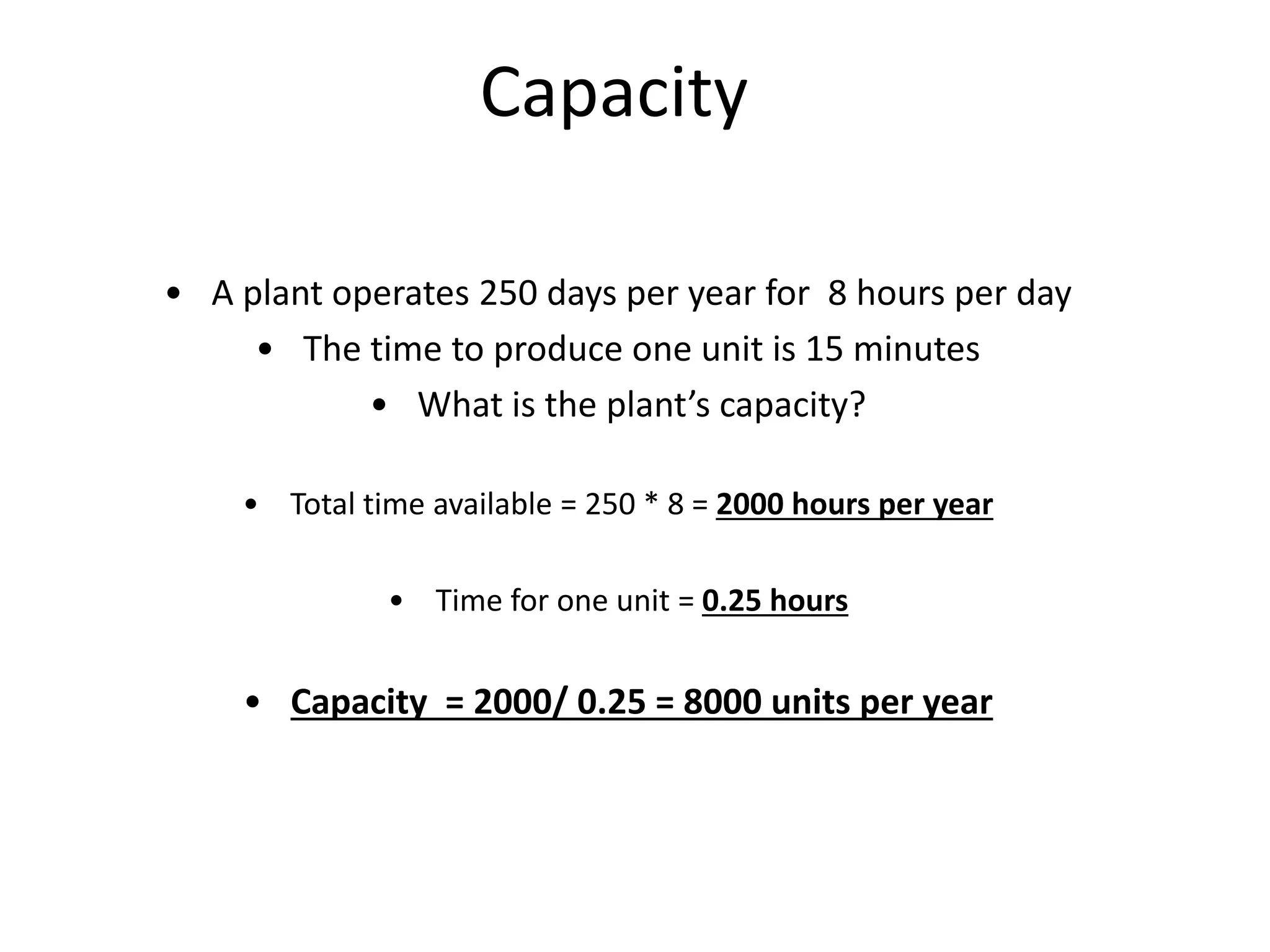
• A plant operates 250 days per year for 8 hours per day
• The time to produce one unit is 15 minutes
• What is the plant’s capacity?
• Total time available = 250 * 8 = 2000 hours per year
• Time for one unit = 0.25 hours
• Capacity = 2000/ 0.25 = 8000 units per year
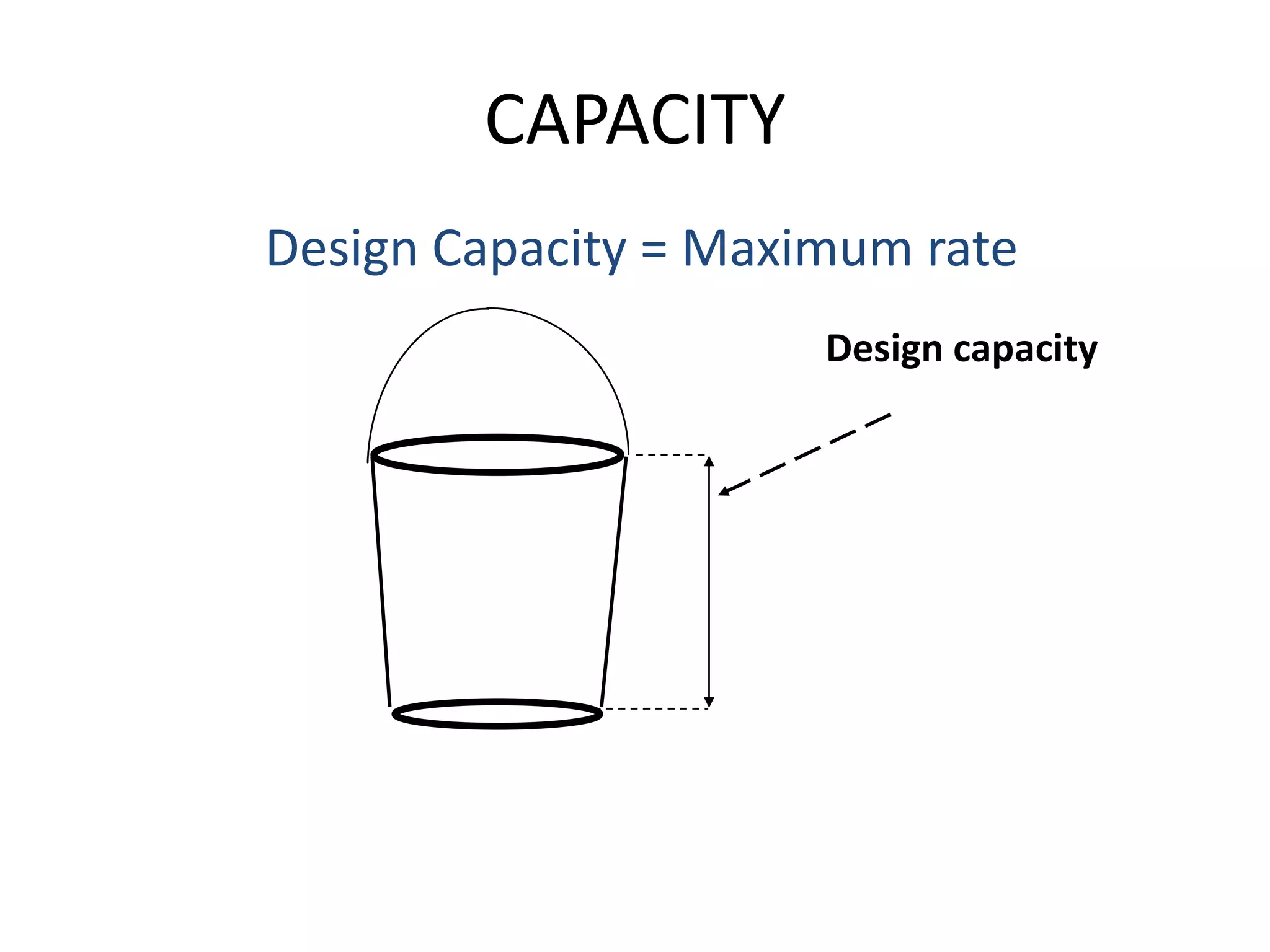
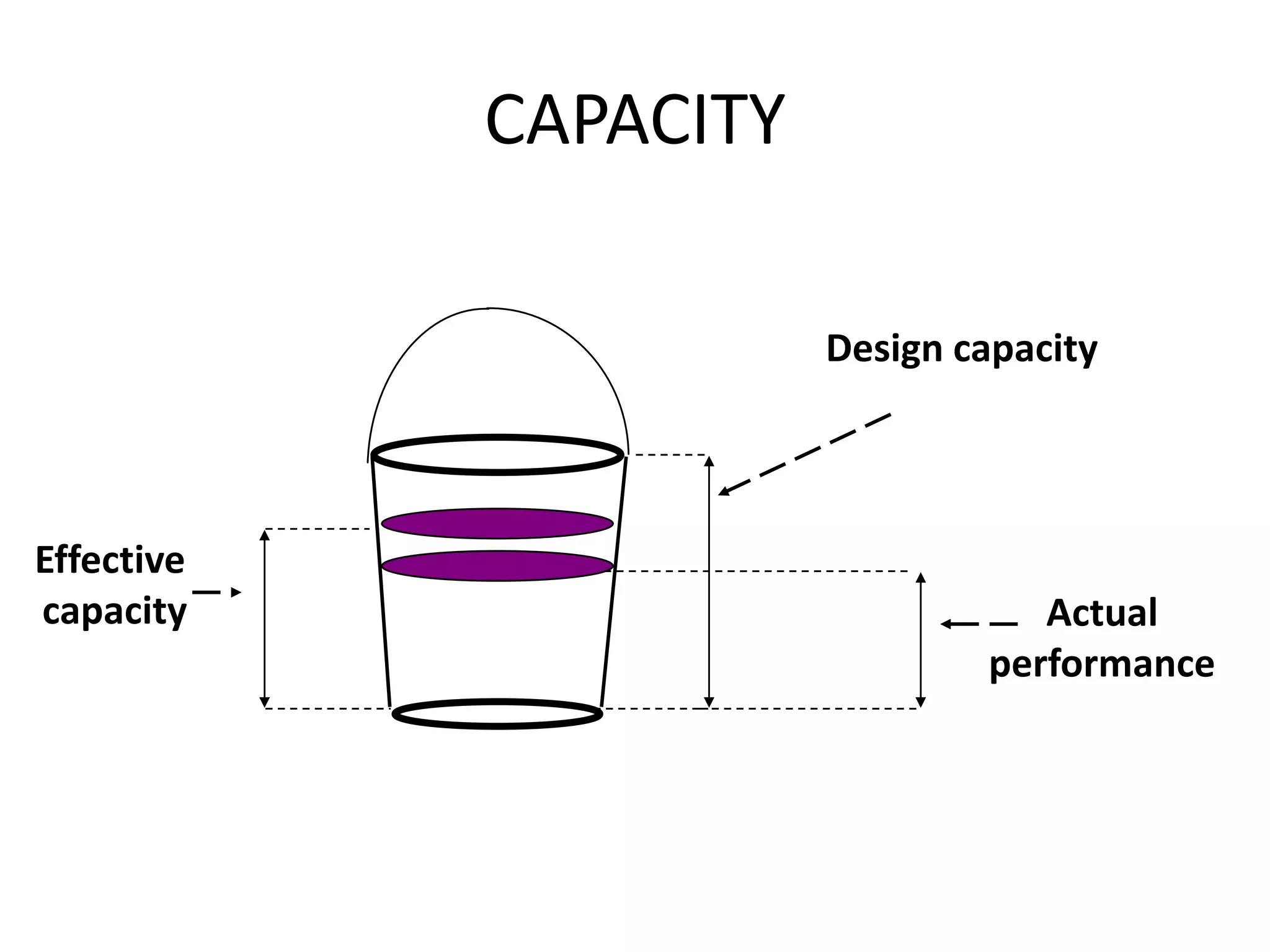
CAPACITY
Design Capacity = Maximum rate
Design capacity
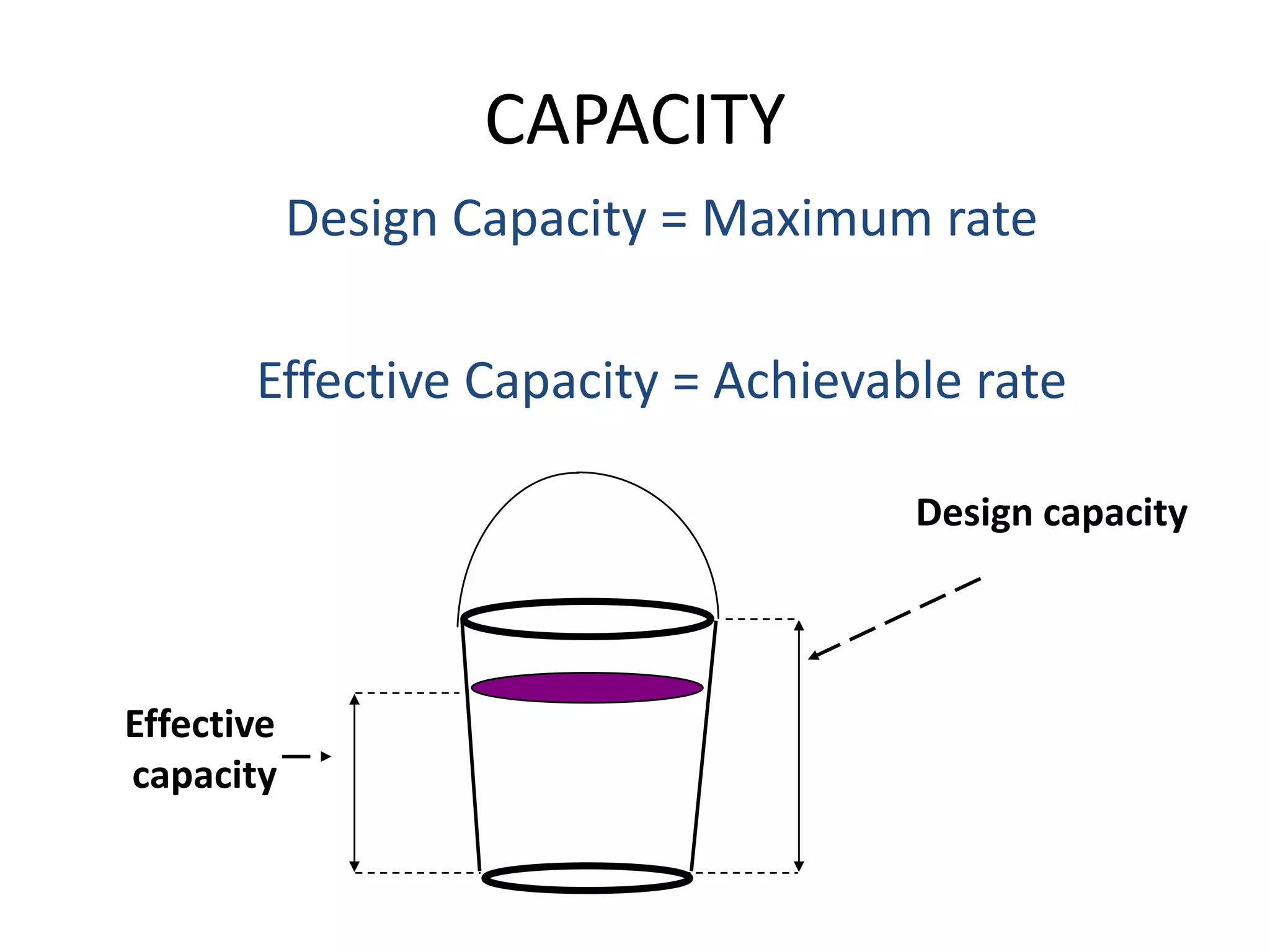
CAPACITY
Design Capacity = Maximum rate
Effective Capacity = Achievable rate
Design capacity
Effective
capacity
CAPACITY
Design capacity
Effective
capacity Actual
performance
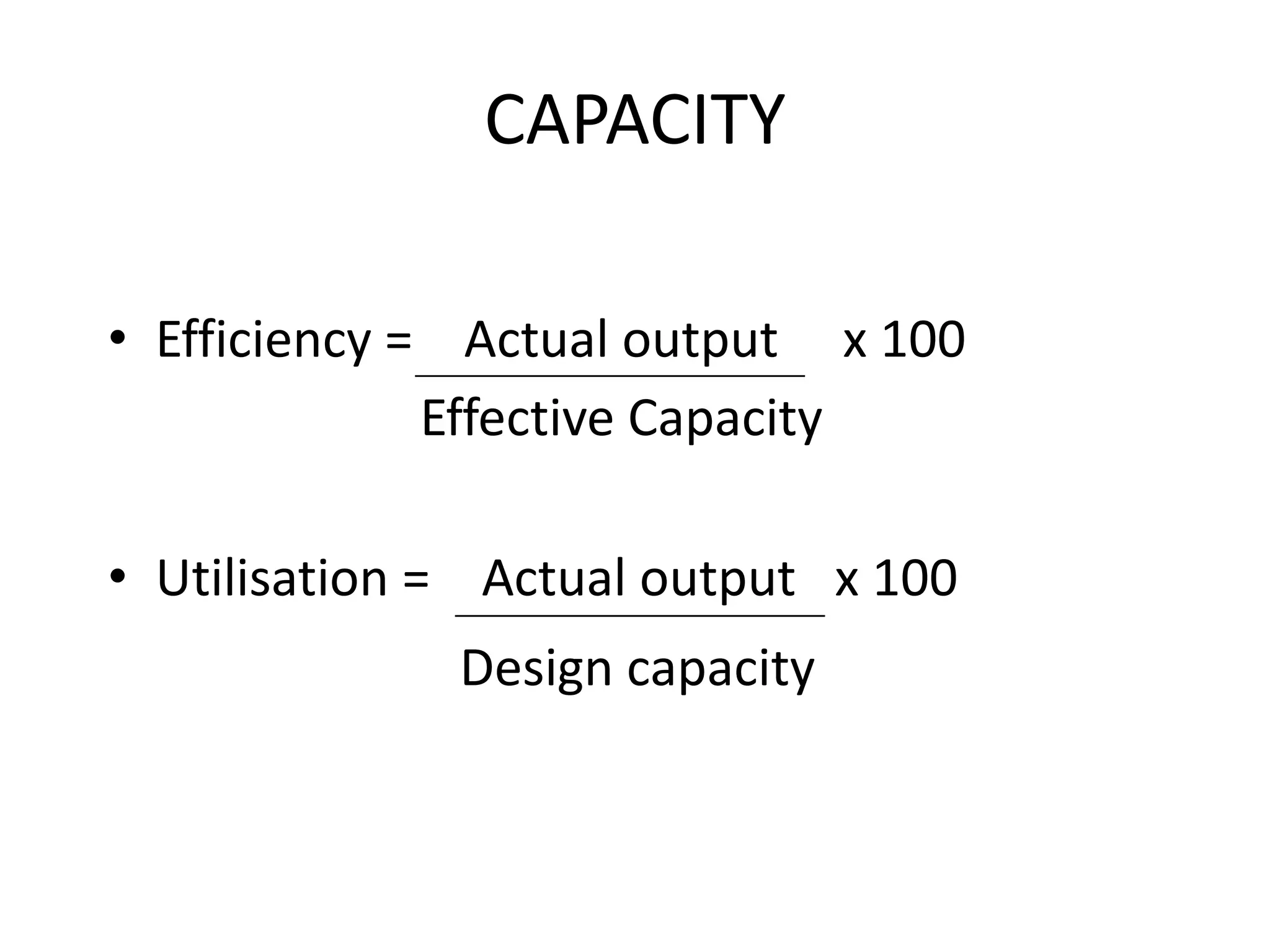
• Efficiency = Actual output x 100
CAPACITY
• Utilisation = Actual output x 100
Design capacity
Effective Capacity
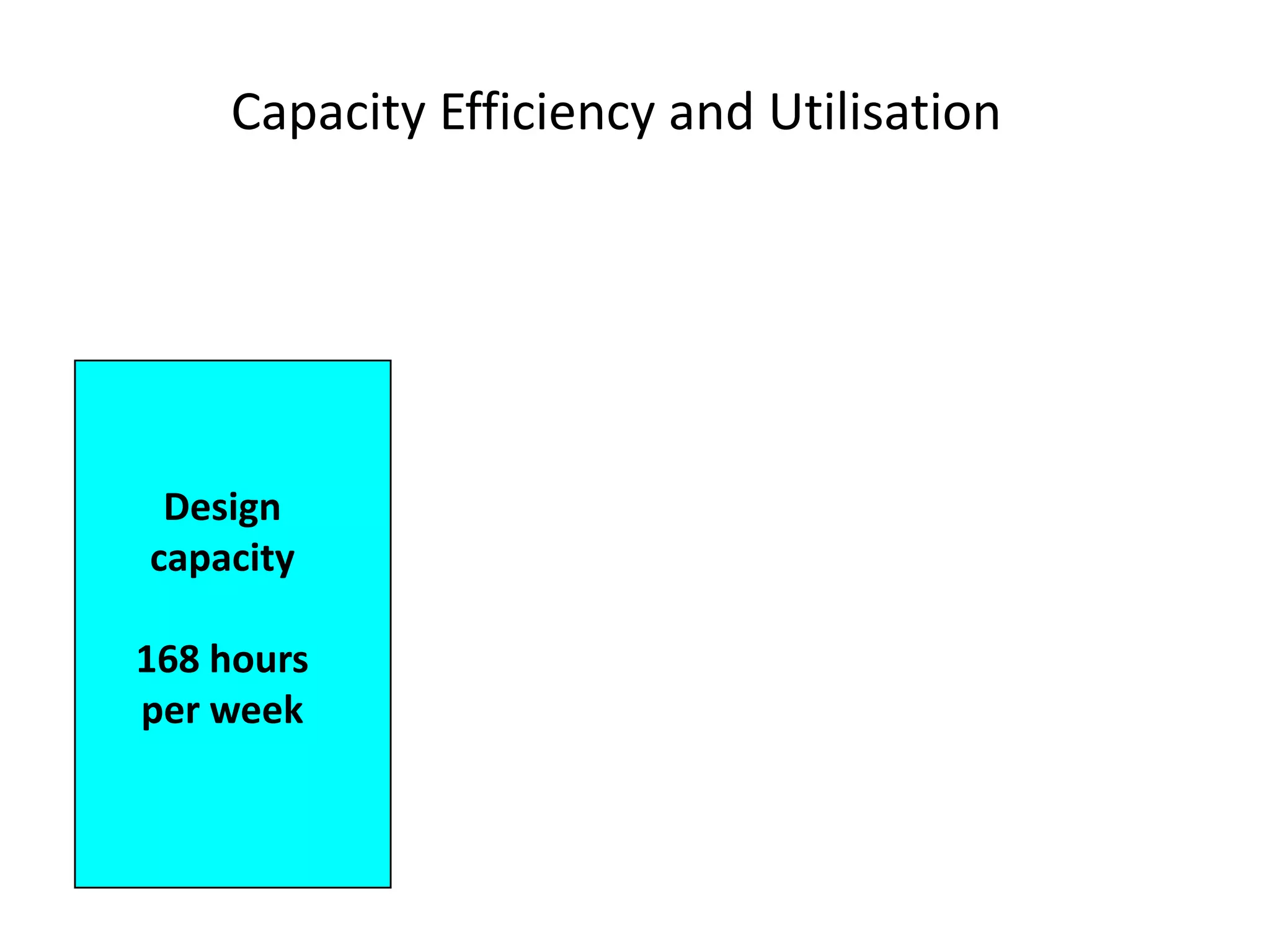
Design
capacity
168 hours
per week
Capacity Efficiency and Utilisation
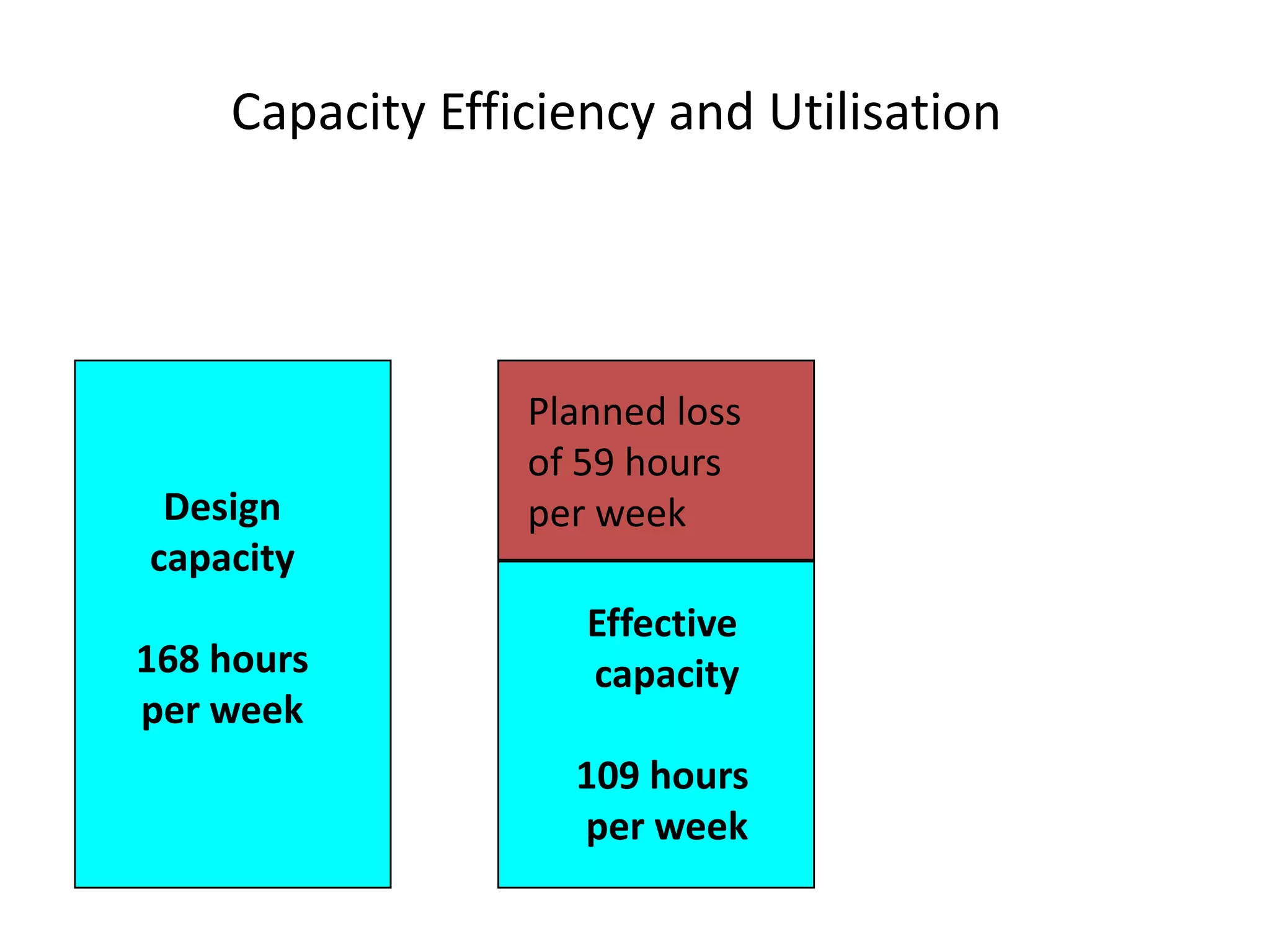
Design
capacity
168 hours
per week
Effective
capacity
109 hours
per week
Capacity Efficiency and Utilisation
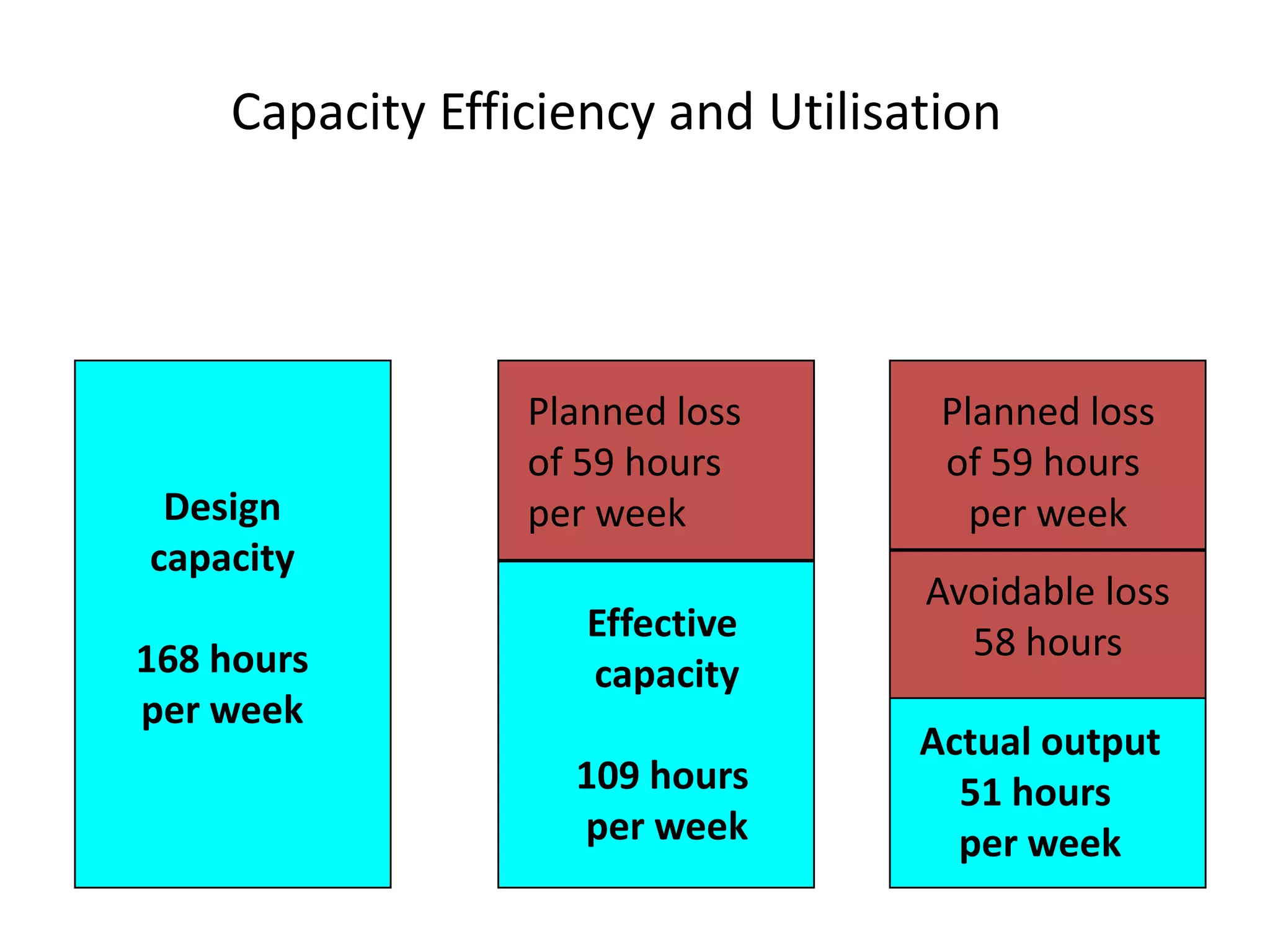
Planned loss
of 59 hours
per week
Design
capacity
168 hours
per week
Effective
capacity
109 hours
per week
Actual output
51 hours
per week
Capacity Efficiency and Utilisation
Planned loss
of 59 hours
per week
Avoidable loss
58 hours
Planned loss
of 59 hours
per week
Capacity Example
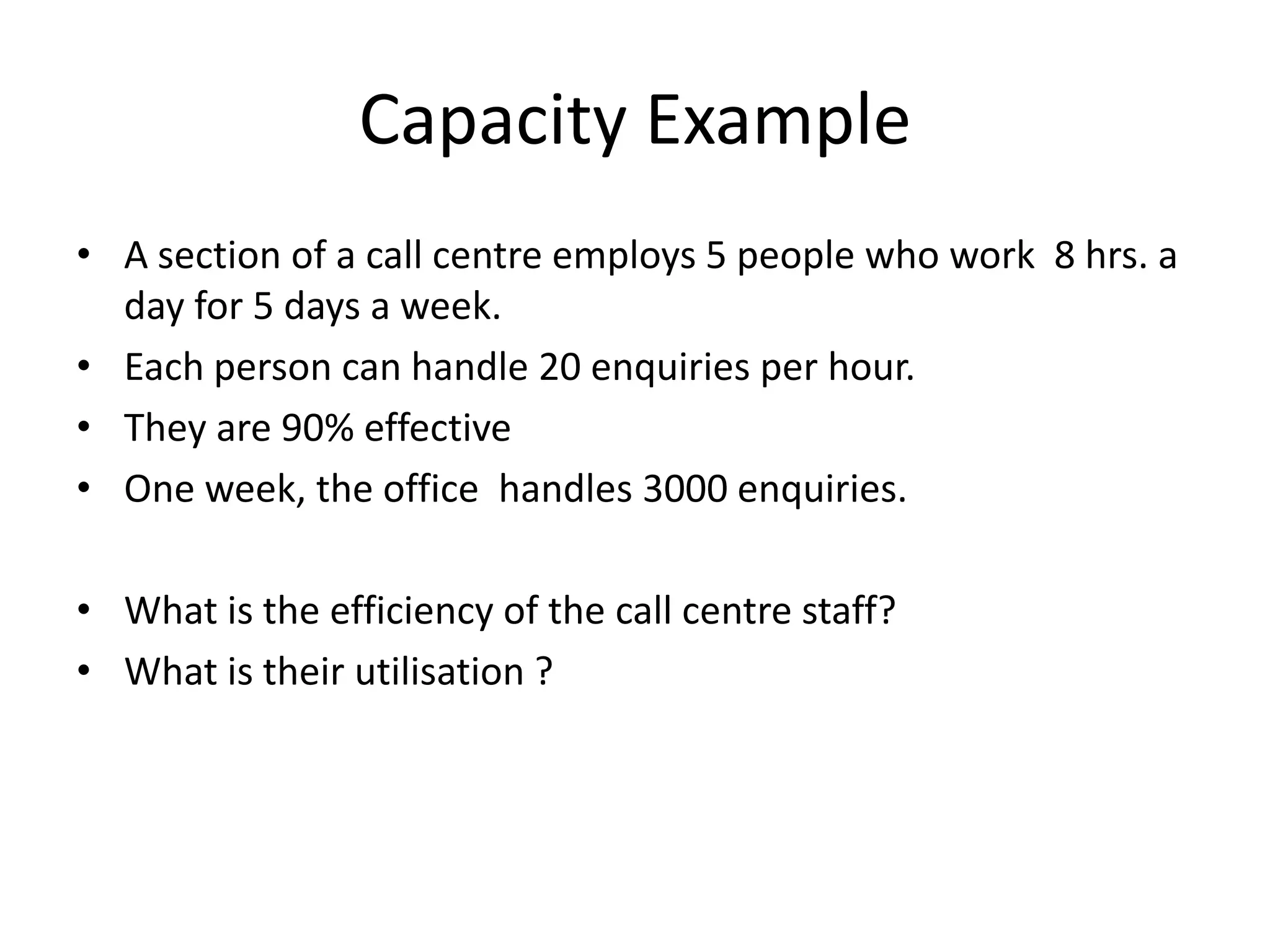
• A section of a call centre employs 5 people who work 8 hrs. a
day for 5 days a week.
• Each person can handle 20 enquiries per hour.
• They are 90% effective
• One week, the office handles 3000 enquiries.
• What is the efficiency of the call centre staff?
• What is their utilisation ?
Capacity Example
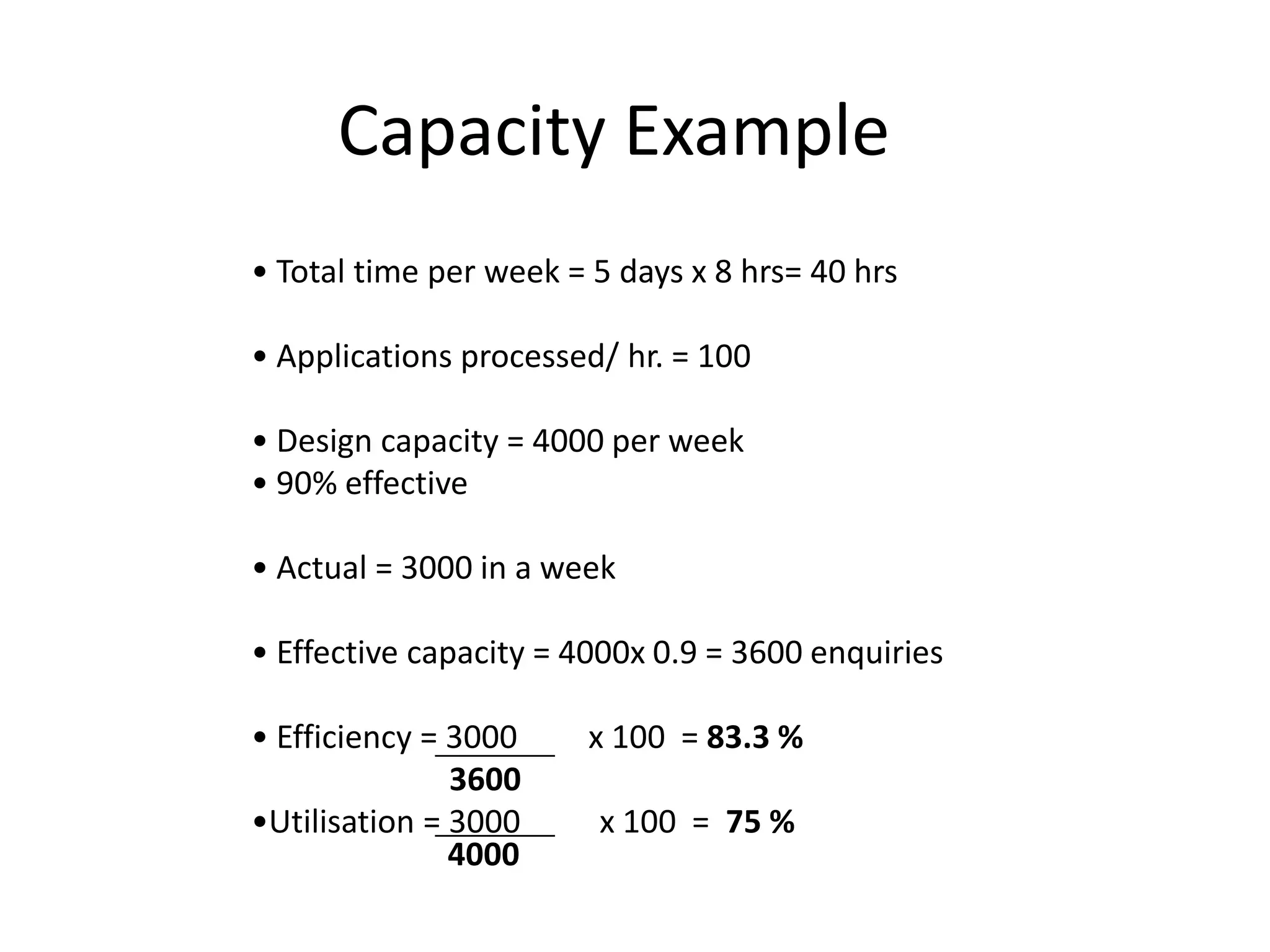
• Total time per week = 5 days x 8 hrs= 40 hrs
• Applications processed/ hr. = 100
• Design capacity = 4000 per week
• 90% effective
• Actual = 3000 in a week
• Effective capacity = 4000x 0.9 = 3600 enquiries
• Efficiency = 3000 x 100 = 83.3 %
3600
•Utilisation = 3000 x 100 = 75 %
4000
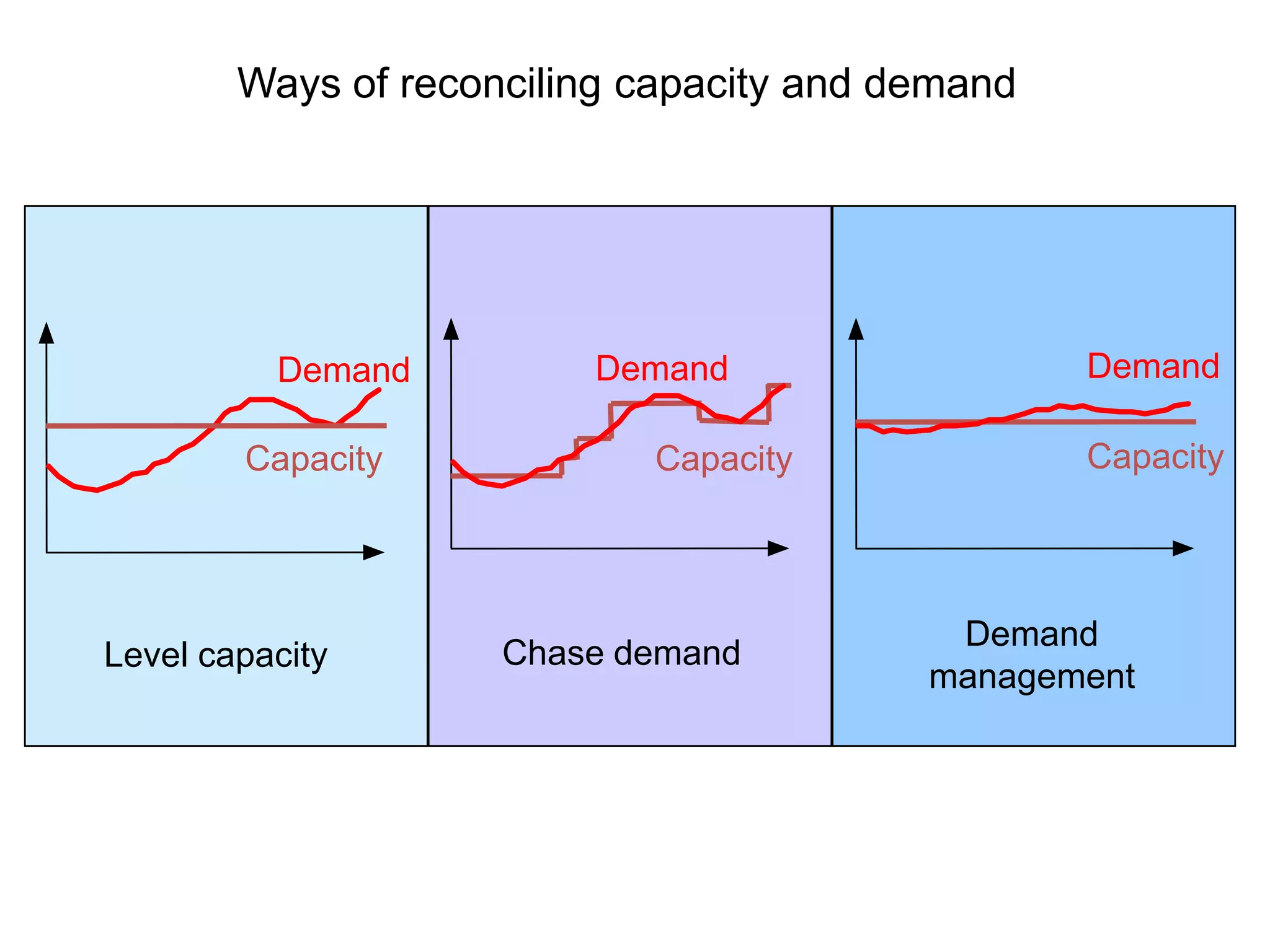
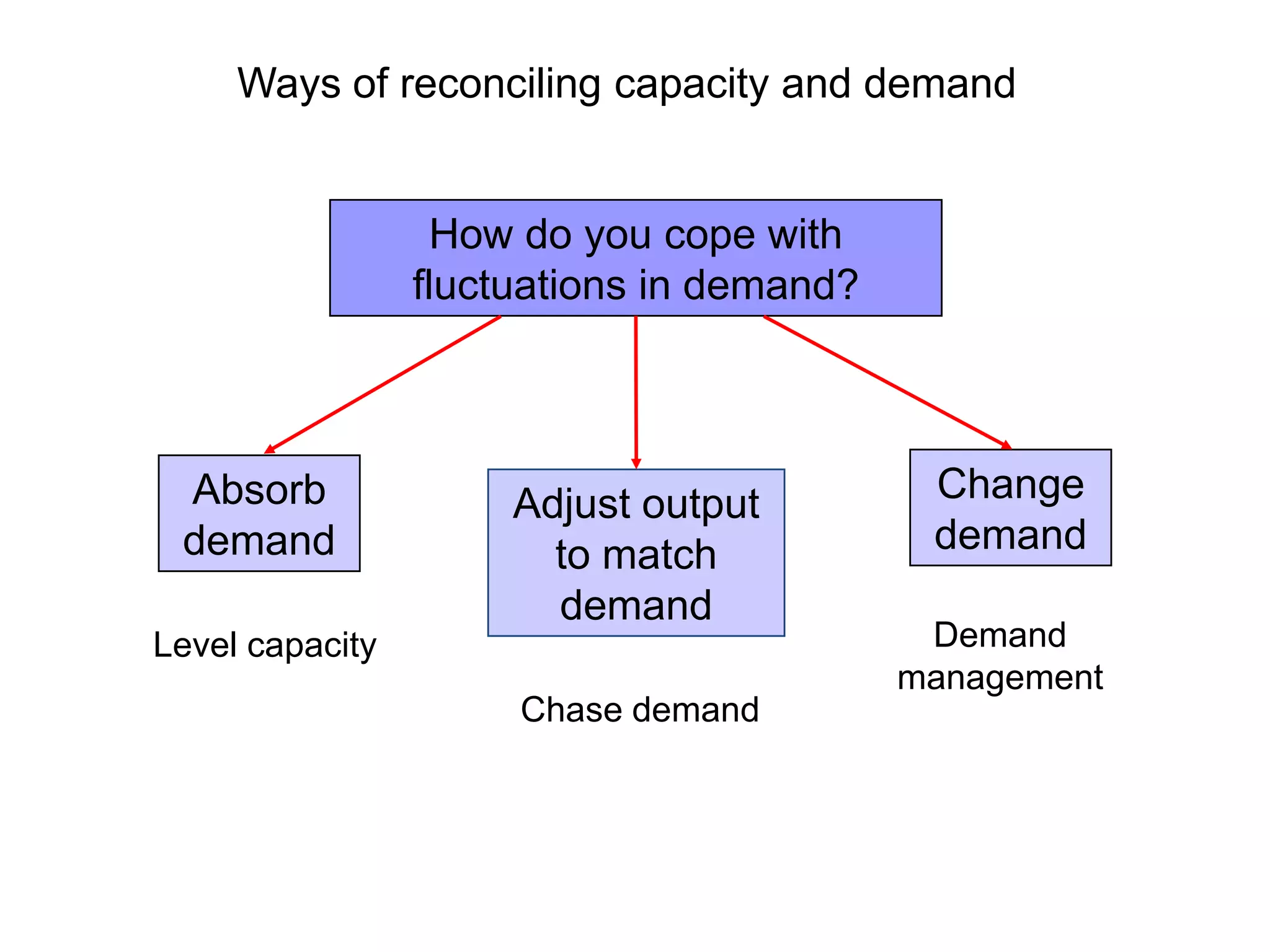
Ways of reconciling capacity and demand
Level capacity
Demand
Capacity
Chase demand
Demand
management
CapacityCapacity
Demand Demand
How do you cope with
fluctuations in demand?
Absorb
demand
Change
demand
Adjust output
to match
demand
Level capacity
Chase demand
Demand
management
Ways of reconciling capacity and demand
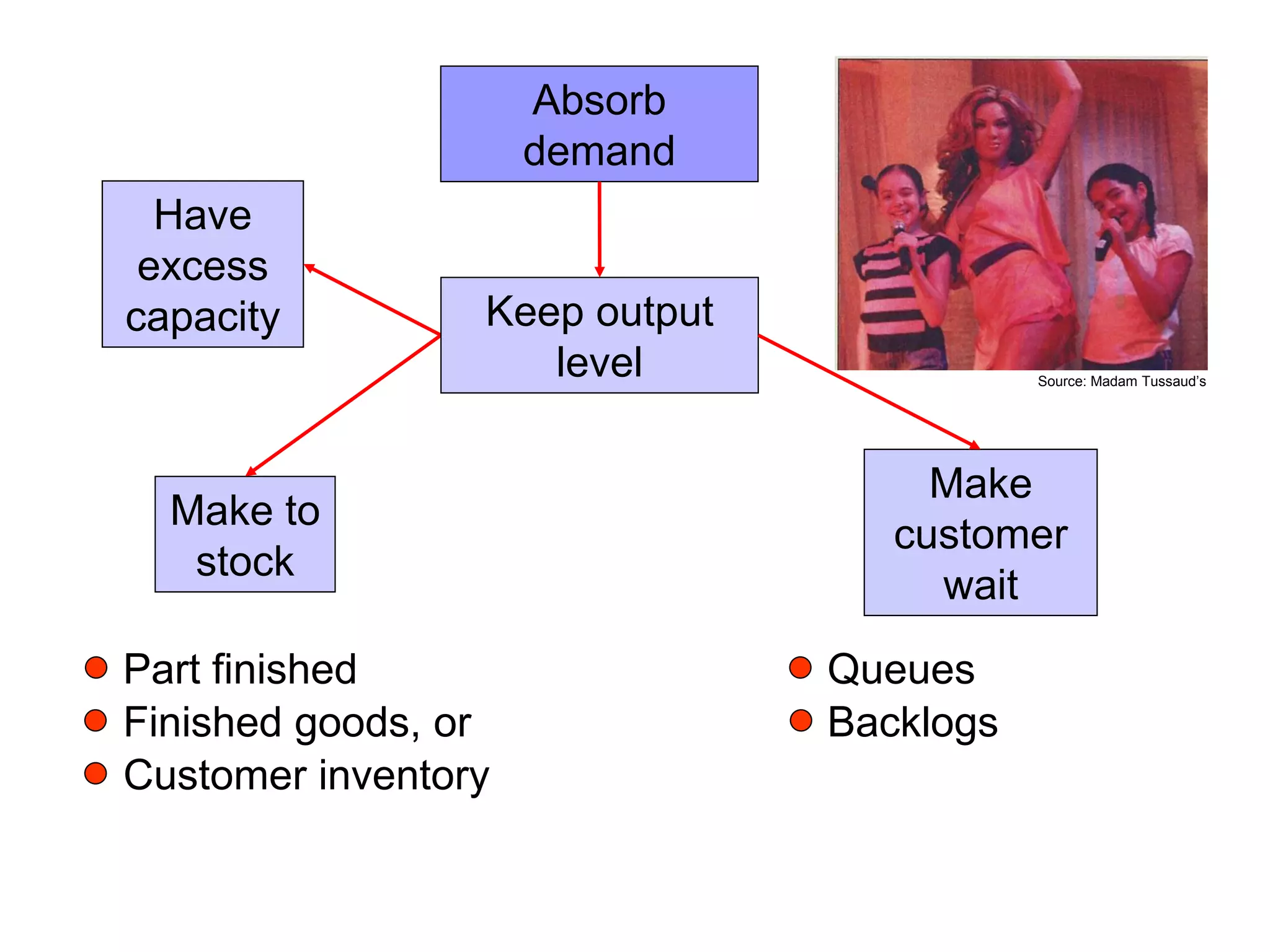
Absorb
demand
Part finished
Finished goods, or
Customer inventory
Queues
Backlogs
Have
excess
capacity
Make to
stock
Keep output
level
Make
customer
wait
Source: Madam Tussaud’s
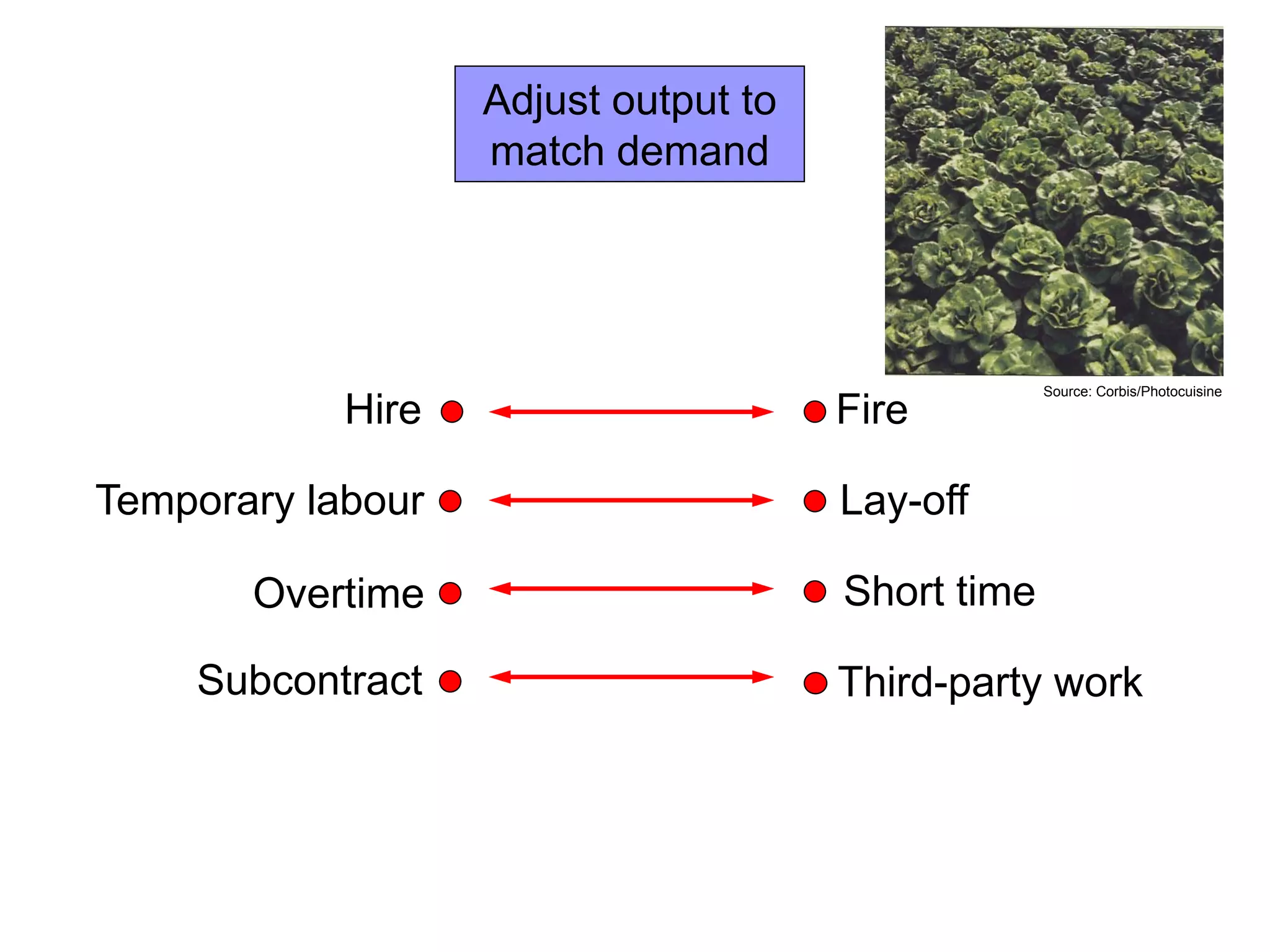
Adjust output to
match demand
Hire Fire
Temporary labour Lay-off
Overtime
Subcontract
Short time
Third-party work
Source: Corbis/Photocuisine
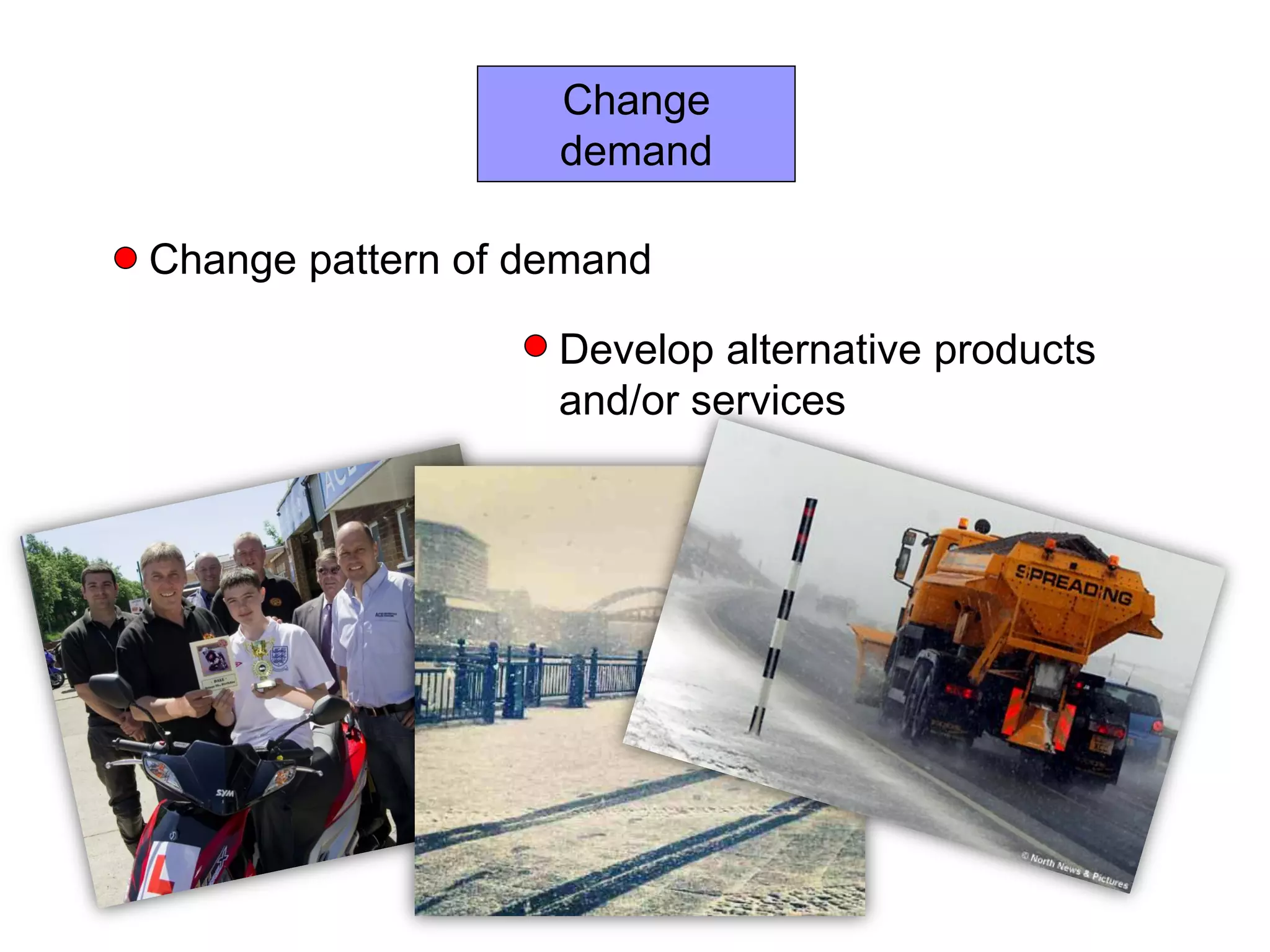
Change
demand
Change pattern of demand
Develop alternative products
and/or services
Thank you

Pgbm03 MBA OPERATION MANAGEMENT session 06 planning and managing capacity

  • 1.
    PGBM03 Operations Management Session06 Operations Planning and Managing Capacity Module Leader: Peter Coleman
  • 2.
    Capacity planning andcontrol Operations strategy Improvement Planning and control Operations management Capacity planning and control The operation supplies ... the capacity to deliver products and services The market requires … the availability of products and services Design
  • 3.
    In Chapter 10– The nature of planning and control – Slack et al. identify the following key questions: • What is planning and control? • How do supply demand affect planning and control? • What are the activities of planning and control?
  • 4.
    Planning and Control •Planning is a formalization of what is intended to happen at some time in the future. • A plan does not guarantee that an event will actually happen, it is a statement of intention. • Although plans are based on expectations, during their implementation things do not always happen as expected. • Control is the process of coping with any changes that affect the plan. It may also mean that an ‘intervention’ will need to be made in the operation to bring it back ‘on track’.
  • 5.
    Planning is deciding Controlis what activities should take place in the operation when they should take place what resources should be allocated to them understanding what is actually happening in the operation deciding whether there is a significant deviation from what should be happening (if there is deviation) changing resources in order to affect the operation’s activities.
  • 6.
    PLANNING CONTROL Timehorizon Hours/daysDays/weeks/monthsMonths/years Long-term planning andcontrol Uses aggregated demand forecasts Determines resources in aggregated form Objectives set in largely financial terms Medium-term planning and control Uses partially disaggregated demand forecasts Determines resources and contingencies Objectives set in both financial and operations terms Short-term planning and control Uses totally disaggregated forecasts or actual demand Makes interventions to resources to correct deviations from plans Ad hoc consideration of operations objectives.
  • 7.
    Scheduling Loading Sequencing Monitoring and control Whento do things? In what order to do things? How much to do? Are activities going to plan? Activities
  • 8.
    The ability tomeet requirements •The number of units produced in a specified time •Cars per hour •Barrels per day •Bed-nights per week •Student contact hours per year Capacity
  • 9.
    Capacity = Total productivetime available Time for one unit = Total time x output per unit of time Capacity
  • 10.
    Capacity • A plantoperates 250 days per year for 8 hours per day • The time to produce one unit is 15 minutes • What is the plant’s capacity? • Total time available = 250 * 8 = 2000 hours per year • Time for one unit = 0.25 hours • Capacity = 2000/ 0.25 = 8000 units per year
  • 11.
    CAPACITY Design Capacity =Maximum rate Design capacity
  • 12.
    CAPACITY Design Capacity =Maximum rate Effective Capacity = Achievable rate Design capacity Effective capacity
  • 13.
  • 14.
    • Efficiency =Actual output x 100 CAPACITY • Utilisation = Actual output x 100 Design capacity Effective Capacity
  • 15.
  • 16.
    Design capacity 168 hours per week Effective capacity 109hours per week Capacity Efficiency and Utilisation Planned loss of 59 hours per week
  • 17.
    Design capacity 168 hours per week Effective capacity 109hours per week Actual output 51 hours per week Capacity Efficiency and Utilisation Planned loss of 59 hours per week Avoidable loss 58 hours Planned loss of 59 hours per week
  • 18.
    Capacity Example • Asection of a call centre employs 5 people who work 8 hrs. a day for 5 days a week. • Each person can handle 20 enquiries per hour. • They are 90% effective • One week, the office handles 3000 enquiries. • What is the efficiency of the call centre staff? • What is their utilisation ?
  • 19.
    Capacity Example • Totaltime per week = 5 days x 8 hrs= 40 hrs • Applications processed/ hr. = 100 • Design capacity = 4000 per week • 90% effective • Actual = 3000 in a week • Effective capacity = 4000x 0.9 = 3600 enquiries • Efficiency = 3000 x 100 = 83.3 % 3600 •Utilisation = 3000 x 100 = 75 % 4000
  • 20.
    Ways of reconcilingcapacity and demand Level capacity Demand Capacity Chase demand Demand management CapacityCapacity Demand Demand
  • 21.
    How do youcope with fluctuations in demand? Absorb demand Change demand Adjust output to match demand Level capacity Chase demand Demand management Ways of reconciling capacity and demand
  • 22.
    Absorb demand Part finished Finished goods,or Customer inventory Queues Backlogs Have excess capacity Make to stock Keep output level Make customer wait Source: Madam Tussaud’s
  • 23.
    Adjust output to matchdemand Hire Fire Temporary labour Lay-off Overtime Subcontract Short time Third-party work Source: Corbis/Photocuisine
  • 24.
    Change demand Change pattern ofdemand Develop alternative products and/or services
  • 25.