OPERATING SYSTEM
Operating system
■ An operating system is the most important software that runs on a computer.
■ An operating system (OS) is a collection of software that manages computer
hardware resources.
■ An operating system or OS is a software program that enables the computer
hardware to communicate and operate with the computer software.
■ Without a computer operating system, a computer and software programs would
be useless.
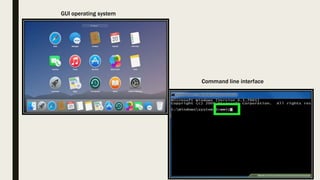
WHEN COMPUTERS WERE FIRST INTRODUCED, THE USER
INTERACTED WITH THEM USING A COMMAND LINE INTERFACE,
WHICH REQUIRED COMMANDS.
TODAY, ALMOST EVERY COMPUTER IS USING A GRAPHICAL
USER INTERFACE (GUI) OPERATING SYSTEM THAT IS MUCH
EASIER TO USE AND OPERATE.
GUI - SHORT FOR GRAPHICAL USER INTERFACE, A GUI
OPERATING SYSTEM CONTAINS GRAPHICS AND ICONS AND IS
COMMONLY NAVIGATED BY USING A COMPUTER MOUSE.
GUI operating system
Command line interface
WHAT OPERATING SYSTEMS DOES
■ An operating system performs basic tasks such as,
• controlling and allocating memory
• prioritizing system requests
• controlling input and output devices
• facilitating networking
• managing file systems.
• Error Detection, Resource Allocation and Security.
FEATURES OF OPERATING SYSTEMS
• Multi-tasking
• Multi-programming
• Embedded System
• Multi-user
• Multithreading
MULTI-TASKING
MULTI-TASKING handle 2 or more programs at the same time from a single user’s perception
– CPU can only perform one task at a time, however, it runs so fast that 2 or more jobs seem
to execute at the same time.
Multi-user
■ A multi-user operating system allows for multiple users to use the same computer at the
same time and different times.
Multitasking
An operating system that is capable of allowing multiple software processes to run at the
same time.
Multiprocessing
■ An operating system capable of supporting and utilizing more than one computer
processor.
Multithreading
■ Operating systems that allow different parts of a software program to run concurrently
Embedded System:
■ The operating systems designed to operate on small machines like PDAs with less
autonomy. They are able to operate with a limited number of resources.
THANKS

Operating system

  • 1.
  • 2.
    Operating system ■ Anoperating system is the most important software that runs on a computer. ■ An operating system (OS) is a collection of software that manages computer hardware resources. ■ An operating system or OS is a software program that enables the computer hardware to communicate and operate with the computer software. ■ Without a computer operating system, a computer and software programs would be useless.
  • 4.
    WHEN COMPUTERS WEREFIRST INTRODUCED, THE USER INTERACTED WITH THEM USING A COMMAND LINE INTERFACE, WHICH REQUIRED COMMANDS. TODAY, ALMOST EVERY COMPUTER IS USING A GRAPHICAL USER INTERFACE (GUI) OPERATING SYSTEM THAT IS MUCH EASIER TO USE AND OPERATE. GUI - SHORT FOR GRAPHICAL USER INTERFACE, A GUI OPERATING SYSTEM CONTAINS GRAPHICS AND ICONS AND IS COMMONLY NAVIGATED BY USING A COMPUTER MOUSE.
  • 5.
  • 6.
    WHAT OPERATING SYSTEMSDOES ■ An operating system performs basic tasks such as, • controlling and allocating memory • prioritizing system requests • controlling input and output devices • facilitating networking • managing file systems. • Error Detection, Resource Allocation and Security.
  • 7.
    FEATURES OF OPERATINGSYSTEMS • Multi-tasking • Multi-programming • Embedded System • Multi-user • Multithreading
  • 8.
    MULTI-TASKING MULTI-TASKING handle 2or more programs at the same time from a single user’s perception – CPU can only perform one task at a time, however, it runs so fast that 2 or more jobs seem to execute at the same time. Multi-user ■ A multi-user operating system allows for multiple users to use the same computer at the same time and different times. Multitasking An operating system that is capable of allowing multiple software processes to run at the same time.
  • 9.
    Multiprocessing ■ An operatingsystem capable of supporting and utilizing more than one computer processor. Multithreading ■ Operating systems that allow different parts of a software program to run concurrently Embedded System: ■ The operating systems designed to operate on small machines like PDAs with less autonomy. They are able to operate with a limited number of resources.
  • 10.