How to make sure your website is indexed and
         optimized for search engines


A deeper look at on-site SEO


                                            By Mary Hirst
Search Engine Optimization (SEO) is the practice of
 improving natural listings on search engines so that
     people can locate your website more easily.

           There are two strands of SEO

On-page: The content, keywords, images etc that you
              place on your website

 Off-site: The back links and social media that drive
                    people to you
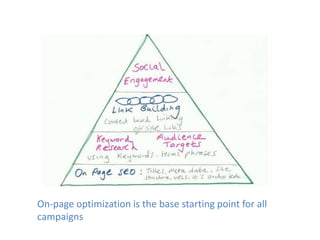
On-page optimization is the base starting point for all
campaigns
Keywords
 Keywords are significant because search engines index
them in databases and look them up again when internet
               users type search terms.

   Competitor analysis is one of the best ways to start
identifying keywords, and keyword suggestions tools can
                    also be helpful.
What your competitors are doing?

  What keywords do my competitors use and to what
                     effect?

        How did they optimize these keywords?

What meta data and title tags are my competitors using?

        What URL extensions did they choose?
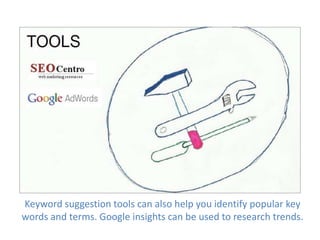
Keyword suggestion tools can also help you identify popular key
words and terms. Google insights can be used to research trends.
Choose only 4 or 5 keywords to work with. Select them by popularity
                   search volume and relevance.
Long-tail keywords

When you start researching keywords you will notice that short phrases
 like “Croatia holiday” drive more traffic than long-tail keywords like
                    “Croatia holiday rentals in Bol”.

That said the competition for the short phrases is sometimes immense
  and with the best SEO in the world you may not get a high ranking.
 Therefore it is good practice to select some high relevance long-tail
   keywords. Because they are less competitive you may be able to
                        dominate these areas.
Content is king

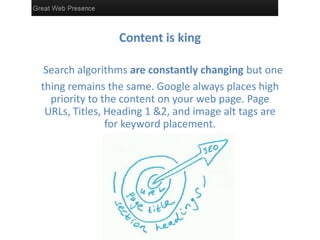
 Search algorithms are constantly changing but one
thing remains the same. Google always places high
  priority to the content on your web page. Page
 URLs, Titles, Heading 1 &2, and image alt tags are
               for keyword placement.
                      placement
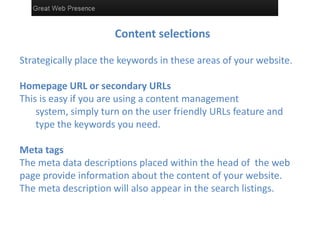
Content selections

Strategically place the keywords in these areas of your website.

Homepage URL or secondary URLs
This is easy if you are using a content management
    system, simply turn on the user friendly URLs feature and
    type the keywords you need.

Meta tags
The meta data descriptions placed within the head of the web
page provide information about the content of your website.
The meta description will also appear in the search listings.
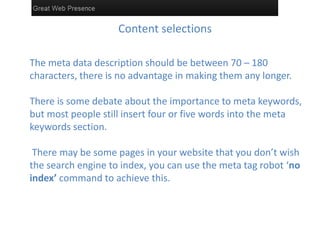
Content selections

The meta data description should be between 70 – 180
characters, there is no advantage in making them any longer.

There is some debate about the importance to meta keywords,
but most people still insert four or five words into the meta
keywords section.

 There may be some pages in your website that you don’t wish
the search engine to index, you can use the meta tag robot ‘no
index’ command to achieve this.
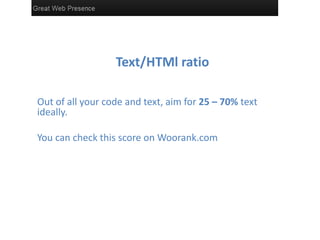
Text/HTMl ratio

Out of all your code and text, aim for 25 – 70% text
ideally.

You can check this score on Woorank.com
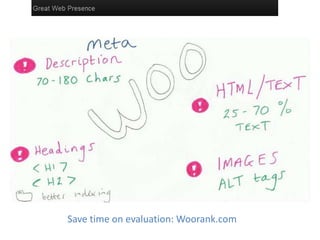
Save time on evaluation: Woorank.com
Content optimization
 When you write quality content for the user, they
 will reward you with Facebook likes, social media
  bookmarks and shares and they will trust your
website. This in turn will also help your SEO efforts.
Content optimization

In the future, search engines will look at html 5 elements
and semantics like <article>, <nav>, <header> <section>
<figure> to evaluate what type of content you have.

                      Micro formats

Micro data also helps search engines identify content
types and improve the display on the search engine
results page. In the future they may have a bearing on
SEO, learn more at www.schema.org
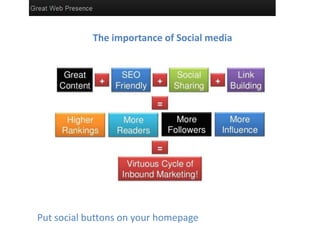
The importance of Social media


Put social buttons on your homepage
Evaluation and analysis

SEO is a practice and a discipline requiring constant
evaluation and tracking. Websites like:
www.markosweb.com and SEO Moz pro’s on page score
card, can give you a full analysis of how you are doing and
they also provide useful suggestions for future
improvements.
If you are new to SEO, improving your on-site strategy is
the first and fastest step in the process of boosting your
                     websites ranking.

                 The main skills of SEO

                      Be focussed
                    Be methodical
                  Constantly evaluate
                    Stay up-to-date

  On-site optimisation will greatly improve your web
        ranking and boost your natural listings.

Onsite seo - a quick guide

  • 1.
    How to makesure your website is indexed and optimized for search engines A deeper look at on-site SEO By Mary Hirst
  • 2.
    Search Engine Optimization(SEO) is the practice of improving natural listings on search engines so that people can locate your website more easily. There are two strands of SEO On-page: The content, keywords, images etc that you place on your website Off-site: The back links and social media that drive people to you
  • 3.
    On-page optimization isthe base starting point for all campaigns
  • 4.
    Keywords Keywords aresignificant because search engines index them in databases and look them up again when internet users type search terms. Competitor analysis is one of the best ways to start identifying keywords, and keyword suggestions tools can also be helpful.
  • 5.
    What your competitorsare doing? What keywords do my competitors use and to what effect? How did they optimize these keywords? What meta data and title tags are my competitors using? What URL extensions did they choose?
  • 6.
    Keyword suggestion toolscan also help you identify popular key words and terms. Google insights can be used to research trends.
  • 7.
    Choose only 4or 5 keywords to work with. Select them by popularity search volume and relevance.
  • 8.
    Long-tail keywords When youstart researching keywords you will notice that short phrases like “Croatia holiday” drive more traffic than long-tail keywords like “Croatia holiday rentals in Bol”. That said the competition for the short phrases is sometimes immense and with the best SEO in the world you may not get a high ranking. Therefore it is good practice to select some high relevance long-tail keywords. Because they are less competitive you may be able to dominate these areas.
  • 9.
    Content is king Search algorithms are constantly changing but one thing remains the same. Google always places high priority to the content on your web page. Page URLs, Titles, Heading 1 &2, and image alt tags are for keyword placement. placement
  • 10.
    Content selections Strategically placethe keywords in these areas of your website. Homepage URL or secondary URLs This is easy if you are using a content management system, simply turn on the user friendly URLs feature and type the keywords you need. Meta tags The meta data descriptions placed within the head of the web page provide information about the content of your website. The meta description will also appear in the search listings.
  • 11.
    Content selections The metadata description should be between 70 – 180 characters, there is no advantage in making them any longer. There is some debate about the importance to meta keywords, but most people still insert four or five words into the meta keywords section. There may be some pages in your website that you don’t wish the search engine to index, you can use the meta tag robot ‘no index’ command to achieve this.
  • 12.
    Text/HTMl ratio Out ofall your code and text, aim for 25 – 70% text ideally. You can check this score on Woorank.com
  • 13.
    Save time onevaluation: Woorank.com
  • 14.
    Content optimization Whenyou write quality content for the user, they will reward you with Facebook likes, social media bookmarks and shares and they will trust your website. This in turn will also help your SEO efforts.
  • 15.
    Content optimization In thefuture, search engines will look at html 5 elements and semantics like <article>, <nav>, <header> <section> <figure> to evaluate what type of content you have. Micro formats Micro data also helps search engines identify content types and improve the display on the search engine results page. In the future they may have a bearing on SEO, learn more at www.schema.org
  • 16.
    The importance ofSocial media Put social buttons on your homepage
  • 17.
    Evaluation and analysis SEOis a practice and a discipline requiring constant evaluation and tracking. Websites like: www.markosweb.com and SEO Moz pro’s on page score card, can give you a full analysis of how you are doing and they also provide useful suggestions for future improvements.
  • 18.
    If you arenew to SEO, improving your on-site strategy is the first and fastest step in the process of boosting your websites ranking. The main skills of SEO Be focussed Be methodical Constantly evaluate Stay up-to-date On-site optimisation will greatly improve your web ranking and boost your natural listings.