Overview
 Project background
 Bench scale pilot / bioreactor setup
 Results to date
 Continued Efforts
Background
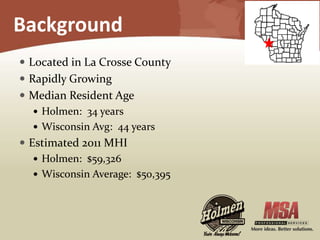
 Located in La Crosse County
 Rapidly Growing
 Median Resident Age
 Holmen: 34 years
 Wisconsin Avg: 44 years
 Estimated 2011 MHI
 Holmen: $59,326
 Wisconsin Average: $50,395
Background
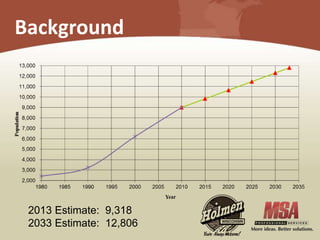
2013 Estimate: 9,318
2033 Estimate: 12,806
Background
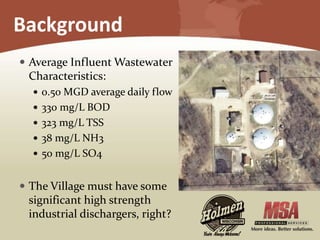
 Average Influent Wastewater
Characteristics:
 0.50 MGD average daily flow
 330 mg/L BOD
 323 mg/L TSS
 38 mg/L NH3
 50 mg/L SO4
 The Village must have some
significant high strength
industrial dischargers, right?
Background
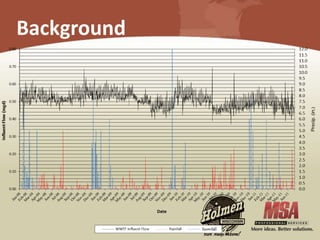
 Wrong!
 Very Little Infiltration and Inflow
 Tight sewers (a lot of new construction)
 Sandy soils
 Not many areas of high groundwater
Background
Facility Planning
 WWTF is nearing organic capacity
 Lots of growth
 Future P limit of 0.075 mg/L
 Compliance Options
 Oxidation Ditch A/S with Tertiary Filtration
 Membrane BioReactors
 Regional treatment at La Crosse WWTF (via Onalaska)
Facility Planning
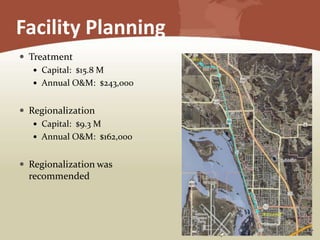
 Treatment
 Capital: $15.8 M
 Annual O&M: $243,000
 Regionalization
 Capital: $9.3 M
 Annual O&M: $162,000
 Regionalization was
recommended
Facility Planning
 Regionalization Assumptions
 New regional pump station at location of WWTF
 4.8 Miles of 16” Forcemain to Onalaska
 Chemical addition at the regional pump station to
control odors (hydrogen sulfide)
 Intermediate chemical feed building ~2 miles away
included in cost, but hopefully not necessary
 Goal: feed chemical at regional pump station only
Facility Planning
 Regionalization Assumptions, Continued
 Estimated aqueous hydrogen sulfide generation of 16.8
mg/L or 70.5 lbs/day at startup flow (summer temps)
 Calcium Nitrate dosage of 1.3 gallons per pound of
sulfide
 Roughly 33,000 gallons of calcium nitrate @ $4.25/gallon
 Estimated annual chemical cost of ~ $140,000
Facility Planning
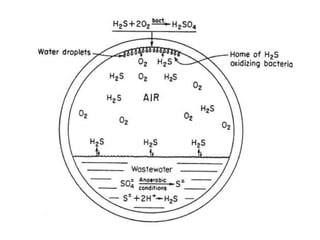
 Hydrogen Sulfide (H2S) forms when:
 Conditions are anaerobic (no free oxygen)
 Food (BOD) is available
 Sulfate Reducing Bacteria (SRBs) are present
 Rotten egg smell
 Reported Odor Thresholds Vary
 In Air: 0.005 – 0.3 ppm (Ruth 1986, Guidotti 1994)
 In Water: 0.000029 ppm (O’Neil 2001)
Facility Planning
 Should we worry about odors in this case?
 Odors are common in forcemains, especially when:
 Strong wastewater (Holmen BOD = 330 mg/L)
 Plenty of Sulfates (Holmen SO4 = 50 mg/L)
 Significant forcemain hydraulic retention times
 Holmen HRT = 13 hours at startup flow
 Holmen HRT = 8 hours at design flow
 Plan for odor control
Facility Planning
Conditions of Regionalization Recommendation:
 Condition 1
 Equitable agreements with Onalaska and La Crosse
would be reached
 Condition 2
 Control of odors at the discharge in Onalaska would be
feasible and cost effective
Pilot Test
 Goal 1: Construct bench-scale bioreactors to mimic
forcemain conditions
 Goal 2: Document and assess sulfide generation
potential of Holmen’s wastewater
 Goal 3: Treat reactors with calcium nitrate under and
document inhibition of sulfide generation
 Goal 4: Determine necessary dosage and compare
projected O&M costs to facility plan estimates
Pilot Test
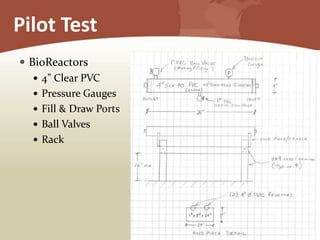
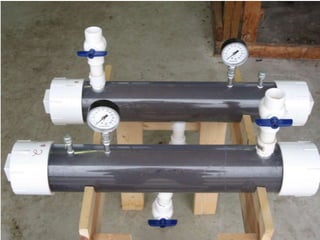
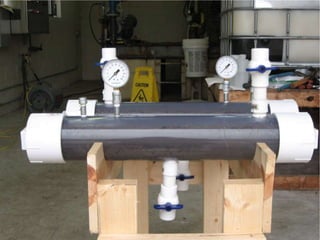
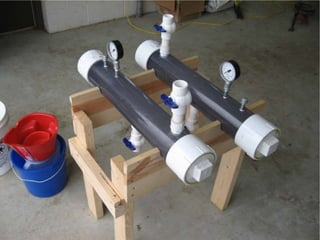
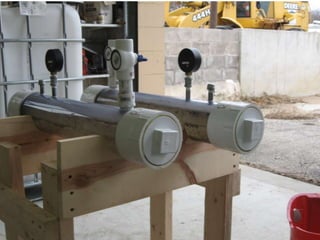
 BioReactors
 4” Clear PVC
 Pressure Gauges
 Fill & Draw Ports
 Ball Valves
 Rack
Pilot Test – Reactor Conditioning
 Condition Reactors to establish anaerobic biofilm
 Bioreactors were filled and emptied every 24 hours
 Biofilm was visible after roughly 2 weeks
 H2S Odor was noticeable when emptying reactors
Pilot Test – Reactor Conditioning
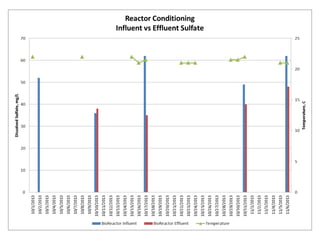
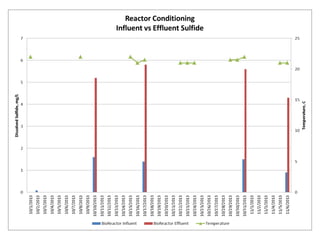
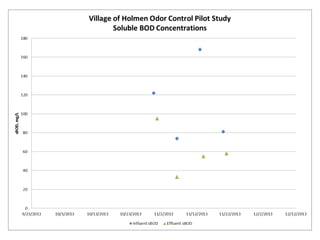
 Influent and Effluent Sampling to Confirm Biological
Activity
 Sulfate (influent should be higher than effluent)
 Sulfide (influent should be lower than effluent)
 sBOD (influent should be higher than effluent)
 H2S Odor was noticeable when emptying reactors
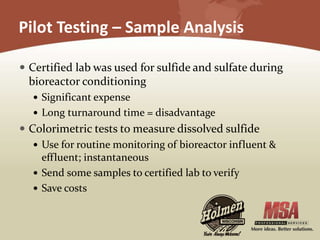
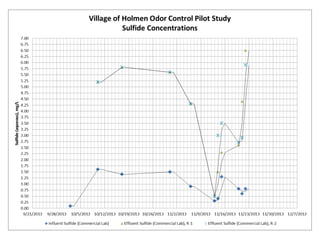
Pilot Testing – Sample Analysis
 Certified lab was used for sulfide and sulfate during
bioreactor conditioning
 Significant expense
 Long turnaround time = disadvantage
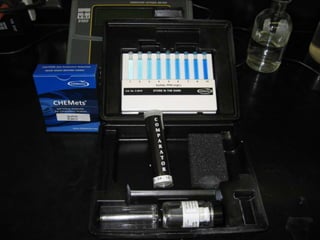
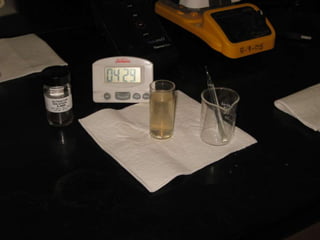
 Colorimetric tests to measure dissolved sulfide
 Use for routine monitoring of bioreactor influent &
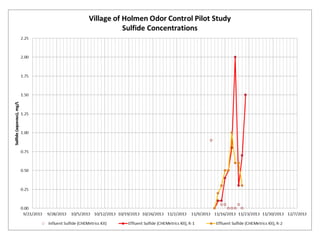
effluent; instantaneous
 Send some samples to certified lab to verify
 Save costs
Pilot Testing – Products
 Hawkins HSX AquaHawk (Calcium Nitrate)
 Provided product as a courtesy
 Other manufacturers’ products would be tested later
as time permitted
 Bioxide (Siemens/Evoqua)
 CS41 (Hydrite)
 Other chemicals (Ferric Chloride? H2O2 ? )
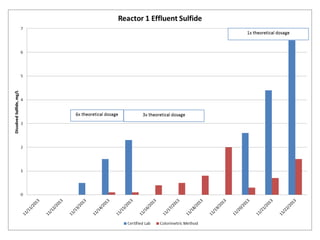
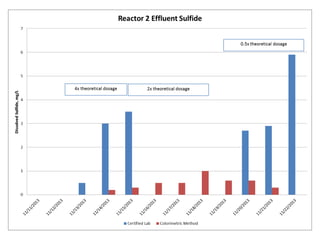
Pilot Testing – Original Plan
 Week 1
 Feed R1 at 3x theoretical dosage
 Feed R2 at 2x theoretical dosage
 Use 24 hour HRT for simplicity
 Fill & Draw (no dose) over the weekend
 Week 2
 Feed R1 at 1x theoretical dosage
 Feed R2 at 0.5x theoretical dosage
 Document reduction in sulfide generation
Pilot Testing – Initial Results
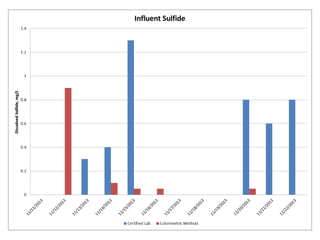
 Large discrepancy between certified lab and
colorimetric test results
 Colorimetric typically 5% - 20% of certified lab result
 Believed to be interference with TSS
 Sulfide generation actually increased
 Over fed the SRBs with nitrate
 Artificially created a population boom
 Tests were too short to re-achieve equilibrium
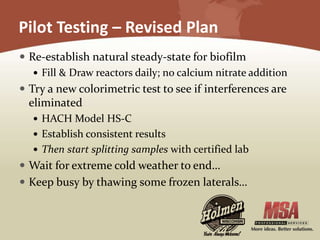
Pilot Testing – Revised Plan
 Re-establish natural steady-state for biofilm
 Fill & Draw reactors daily; no calcium nitrate addition
 Try a new colorimetric test to see if interferences are
eliminated
 HACH Model HS-C
 Establish consistent results
 Then start splitting samples with certified lab
 Wait for extreme cold weather to end…
 Keep busy by thawing some frozen laterals…
Pilot Testing – March 2014
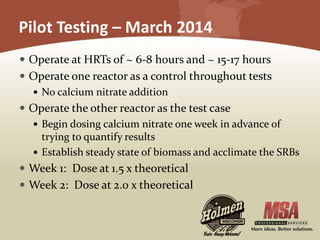
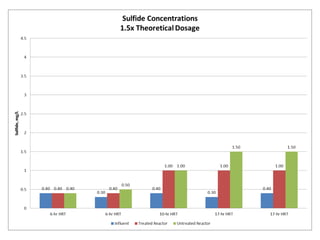
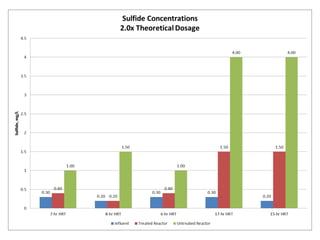
 Operate at HRTs of ~ 6-8 hours and ~ 15-17 hours
 Operate one reactor as a control throughout tests
 No calcium nitrate addition
 Operate the other reactor as the test case
 Begin dosing calcium nitrate one week in advance of
trying to quantify results
 Establish steady state of biomass and acclimate the SRBs
 Week 1: Dose at 1.5 x theoretical
 Week 2: Dose at 2.0 x theoretical
Pilot Testing – March 2014
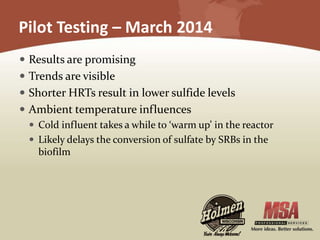
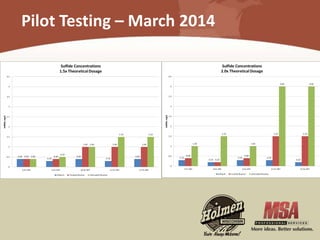
 Results are promising
 Trends are visible
 Shorter HRTs result in lower sulfide levels
 Ambient temperature influences
 Cold influent takes a while to ‘warm up’ in the reactor
 Likely delays the conversion of sulfate by SRBs in the
biofilm
Pilot Testing – March 2014
Further Work
 Continue pilot testing
 Long-term data should increase overall consistency
 Characterize temperature impacts
 Summertime operation will be critical
 Compare modeled vs actual sulfide production in
untreated reactor
 To date, observed sulfide concentrations are much
lower than modeled
 Begin splitting samples with certified lab
Is This Going to Stink?

Is This Going to Stink?

  • 2.
    Overview  Project background Bench scale pilot / bioreactor setup  Results to date  Continued Efforts
  • 3.
    Background  Located inLa Crosse County  Rapidly Growing  Median Resident Age  Holmen: 34 years  Wisconsin Avg: 44 years  Estimated 2011 MHI  Holmen: $59,326  Wisconsin Average: $50,395
  • 4.
  • 5.
    Background  Average InfluentWastewater Characteristics:  0.50 MGD average daily flow  330 mg/L BOD  323 mg/L TSS  38 mg/L NH3  50 mg/L SO4  The Village must have some significant high strength industrial dischargers, right?
  • 6.
    Background  Wrong!  VeryLittle Infiltration and Inflow  Tight sewers (a lot of new construction)  Sandy soils  Not many areas of high groundwater
  • 7.
  • 8.
    Facility Planning  WWTFis nearing organic capacity  Lots of growth  Future P limit of 0.075 mg/L  Compliance Options  Oxidation Ditch A/S with Tertiary Filtration  Membrane BioReactors  Regional treatment at La Crosse WWTF (via Onalaska)
  • 9.
    Facility Planning  Treatment Capital: $15.8 M  Annual O&M: $243,000  Regionalization  Capital: $9.3 M  Annual O&M: $162,000  Regionalization was recommended
  • 10.
    Facility Planning  RegionalizationAssumptions  New regional pump station at location of WWTF  4.8 Miles of 16” Forcemain to Onalaska  Chemical addition at the regional pump station to control odors (hydrogen sulfide)  Intermediate chemical feed building ~2 miles away included in cost, but hopefully not necessary  Goal: feed chemical at regional pump station only
  • 11.
    Facility Planning  RegionalizationAssumptions, Continued  Estimated aqueous hydrogen sulfide generation of 16.8 mg/L or 70.5 lbs/day at startup flow (summer temps)  Calcium Nitrate dosage of 1.3 gallons per pound of sulfide  Roughly 33,000 gallons of calcium nitrate @ $4.25/gallon  Estimated annual chemical cost of ~ $140,000
  • 12.
    Facility Planning  HydrogenSulfide (H2S) forms when:  Conditions are anaerobic (no free oxygen)  Food (BOD) is available  Sulfate Reducing Bacteria (SRBs) are present  Rotten egg smell  Reported Odor Thresholds Vary  In Air: 0.005 – 0.3 ppm (Ruth 1986, Guidotti 1994)  In Water: 0.000029 ppm (O’Neil 2001)
  • 13.
    Facility Planning  Shouldwe worry about odors in this case?  Odors are common in forcemains, especially when:  Strong wastewater (Holmen BOD = 330 mg/L)  Plenty of Sulfates (Holmen SO4 = 50 mg/L)  Significant forcemain hydraulic retention times  Holmen HRT = 13 hours at startup flow  Holmen HRT = 8 hours at design flow  Plan for odor control
  • 15.
    Facility Planning Conditions ofRegionalization Recommendation:  Condition 1  Equitable agreements with Onalaska and La Crosse would be reached  Condition 2  Control of odors at the discharge in Onalaska would be feasible and cost effective
  • 16.
    Pilot Test  Goal1: Construct bench-scale bioreactors to mimic forcemain conditions  Goal 2: Document and assess sulfide generation potential of Holmen’s wastewater  Goal 3: Treat reactors with calcium nitrate under and document inhibition of sulfide generation  Goal 4: Determine necessary dosage and compare projected O&M costs to facility plan estimates
  • 17.
    Pilot Test  BioReactors 4” Clear PVC  Pressure Gauges  Fill & Draw Ports  Ball Valves  Rack
  • 22.
    Pilot Test –Reactor Conditioning  Condition Reactors to establish anaerobic biofilm  Bioreactors were filled and emptied every 24 hours  Biofilm was visible after roughly 2 weeks  H2S Odor was noticeable when emptying reactors
  • 23.
    Pilot Test –Reactor Conditioning  Influent and Effluent Sampling to Confirm Biological Activity  Sulfate (influent should be higher than effluent)  Sulfide (influent should be lower than effluent)  sBOD (influent should be higher than effluent)  H2S Odor was noticeable when emptying reactors
  • 27.
    Pilot Testing –Sample Analysis  Certified lab was used for sulfide and sulfate during bioreactor conditioning  Significant expense  Long turnaround time = disadvantage  Colorimetric tests to measure dissolved sulfide  Use for routine monitoring of bioreactor influent & effluent; instantaneous  Send some samples to certified lab to verify  Save costs
  • 30.
    Pilot Testing –Products  Hawkins HSX AquaHawk (Calcium Nitrate)  Provided product as a courtesy  Other manufacturers’ products would be tested later as time permitted  Bioxide (Siemens/Evoqua)  CS41 (Hydrite)  Other chemicals (Ferric Chloride? H2O2 ? )
  • 31.
    Pilot Testing –Original Plan  Week 1  Feed R1 at 3x theoretical dosage  Feed R2 at 2x theoretical dosage  Use 24 hour HRT for simplicity  Fill & Draw (no dose) over the weekend  Week 2  Feed R1 at 1x theoretical dosage  Feed R2 at 0.5x theoretical dosage  Document reduction in sulfide generation
  • 32.
    Pilot Testing –Initial Results  Large discrepancy between certified lab and colorimetric test results  Colorimetric typically 5% - 20% of certified lab result  Believed to be interference with TSS  Sulfide generation actually increased  Over fed the SRBs with nitrate  Artificially created a population boom  Tests were too short to re-achieve equilibrium
  • 38.
    Pilot Testing –Revised Plan  Re-establish natural steady-state for biofilm  Fill & Draw reactors daily; no calcium nitrate addition  Try a new colorimetric test to see if interferences are eliminated  HACH Model HS-C  Establish consistent results  Then start splitting samples with certified lab  Wait for extreme cold weather to end…  Keep busy by thawing some frozen laterals…
  • 39.
    Pilot Testing –March 2014  Operate at HRTs of ~ 6-8 hours and ~ 15-17 hours  Operate one reactor as a control throughout tests  No calcium nitrate addition  Operate the other reactor as the test case  Begin dosing calcium nitrate one week in advance of trying to quantify results  Establish steady state of biomass and acclimate the SRBs  Week 1: Dose at 1.5 x theoretical  Week 2: Dose at 2.0 x theoretical
  • 40.
    Pilot Testing –March 2014  Results are promising  Trends are visible  Shorter HRTs result in lower sulfide levels  Ambient temperature influences  Cold influent takes a while to ‘warm up’ in the reactor  Likely delays the conversion of sulfate by SRBs in the biofilm
  • 43.
  • 44.
    Further Work  Continuepilot testing  Long-term data should increase overall consistency  Characterize temperature impacts  Summertime operation will be critical  Compare modeled vs actual sulfide production in untreated reactor  To date, observed sulfide concentrations are much lower than modeled  Begin splitting samples with certified lab