ARC571 Reflections on
Architectural Education
Seminar 2
Widening Participation and the
Inclusive Curriculum
Monday 21 October 2019
Today:
• Introduction
• Discussion Groups:
‘Widening Participation and the Inclusive Curriculum’
• Feedback and further discussion
• What is Action Research?
• Teaching innovation development
• Slides included on MOLE – have a look and we will discuss
in more depth next time
Context – embracing diversity
Valuing difference, recognising different learning needs, and
helping individuals to achieve their full potential
• Gender
• Sexual orientation
• Ethnicity
• Religion
• Abilities and disabilities
• Socio-economic background
• Culture
• Family and caring commitments
• Students dependent on term-time employment
• Mature students
Context – gender
ARB registered architects:
2006 4,339 total 86% male 14% female
2016 7,538 total 78% male 22% female
New registrations 62% male 38% female
GMC List of Registered Medical Practitioners:
2006 63% male 37% female
2016 280,785 total 55% male 45% female
General Practitioners:
2016 67,741 total 48% male 52% female
In architecture: 2006 = 14%; 2016 = 22% - not even on the graph!
The percentage of women who say they have
experienced discrimination while working in architecture
AJ Women in Architecture Survey 2016
Context – ethnicity
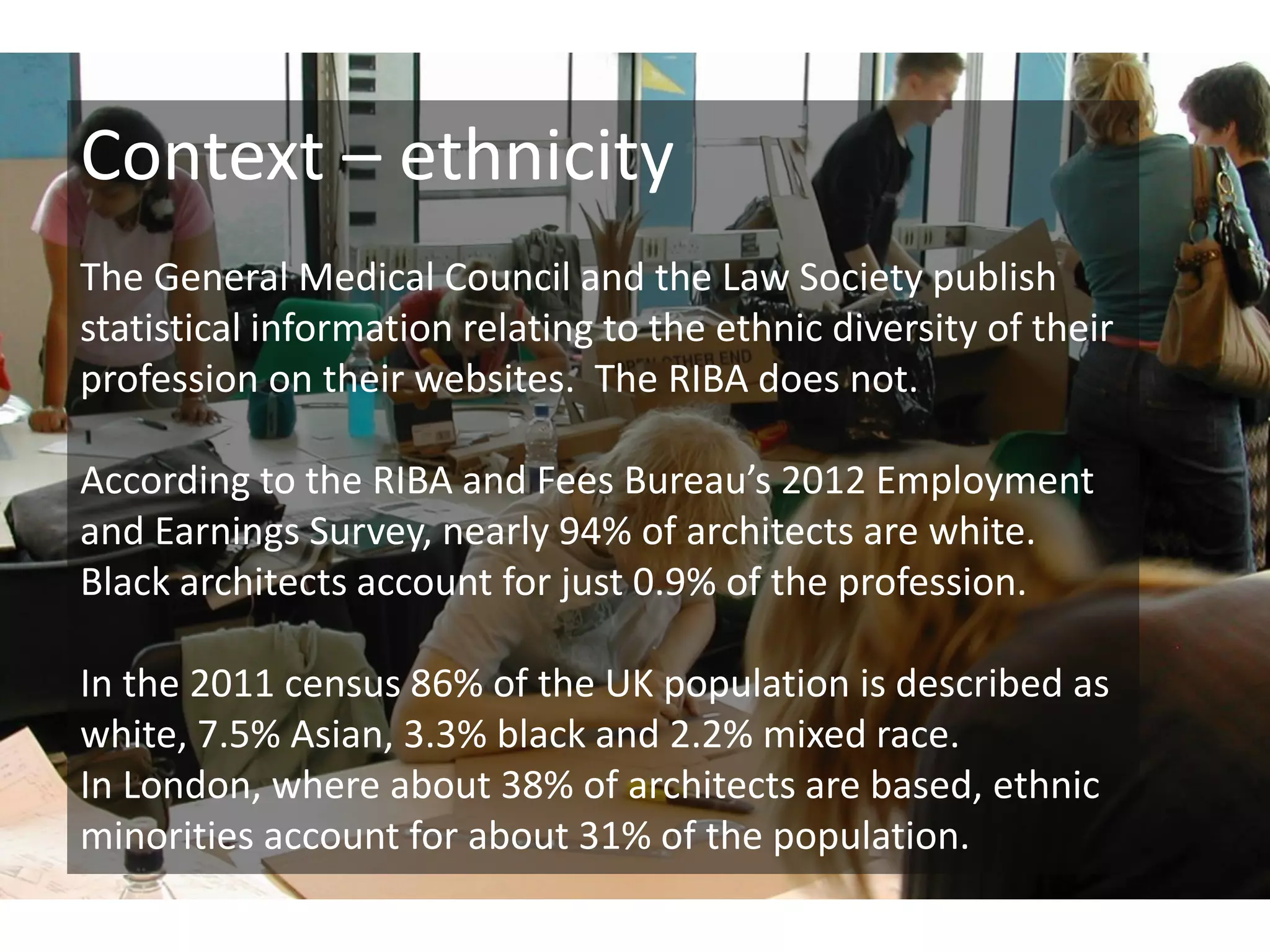
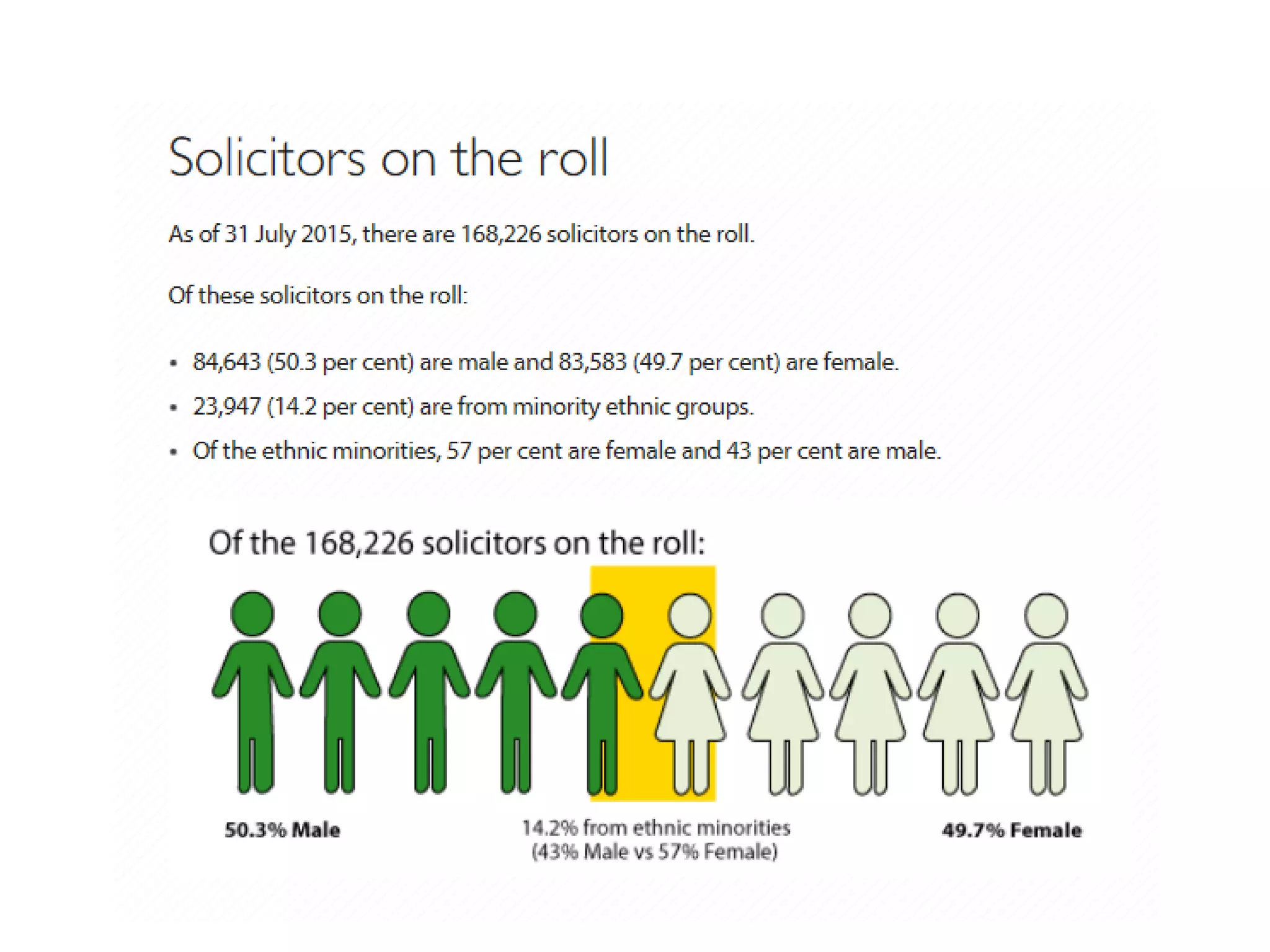
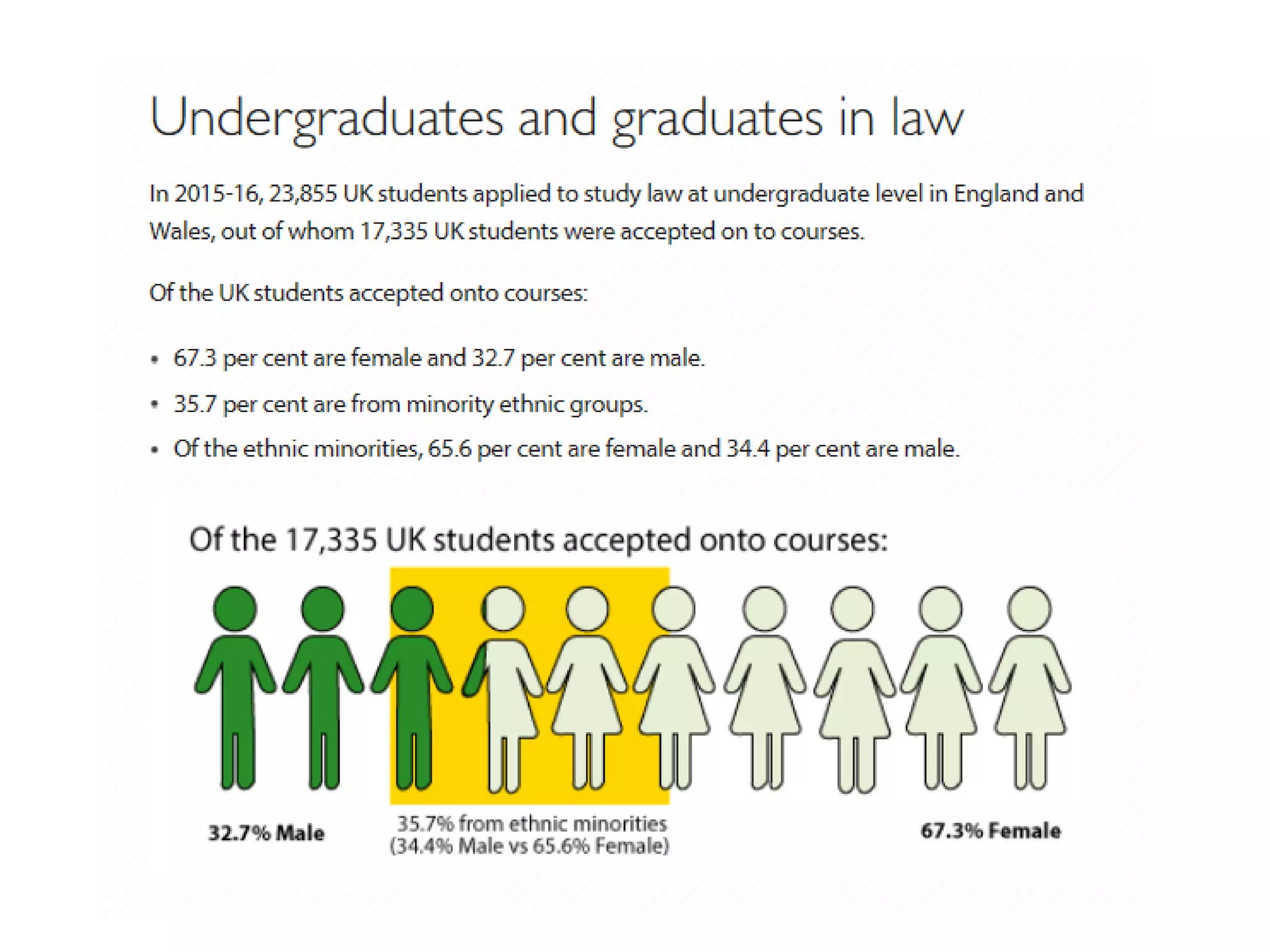
The General Medical Council and the Law Society publish
statistical information relating to the ethnic diversity of their
profession on their websites. The RIBA does not.
According to the RIBA and Fees Bureau’s 2012 Employment
and Earnings Survey, nearly 94% of architects are white.
Black architects account for just 0.9% of the profession.
In the 2011 census 86% of the UK population is described as
white, 7.5% Asian, 3.3% black and 2.2% mixed race.
In London, where about 38% of architects are based, ethnic
minorities account for about 31% of the population.
Graph showing architects' ethnicity
RIBA and Fees Bureau employment and earnings survey 2012
Discussion Group
• Discuss your thoughts as a group
• Make reference to given texts
• Relate to your own experience
• Prepare notes for group discussion
Questions to address
• Why is diversity important in architectural education
and the profession?
• How can we recruit a more diverse student cohort?
• How can we better support diversity through course
content, mode of delivery, and forms of assessment?
• How might we change the design studio as a learning
environment to support diversity?
- physical environment
- role of studio design tutor,
- format of tutorials and reviews
Looking ahead:
Tuesday 29 October: Y1 Interim Reviews
– agree with Stuart when you can attend
Monday 4 November: Seminar 3
– What do you want to discuss?
• The Future of architectural education
• Studio as a Learning Environment
• The Crit and the Review
What else?
We will also be discussing your the action research
project – arrive with some initial ideas…
Action Research
Action Research
• How do we describe and explain what we are doing?
• Critical reflection on own practice
• Explaining how and why things work
• Checking things are as they should be
• Providing evidence that things are working
• Making changes and improvements where they’re not
• Practice informs theory and theory informs practice
Used by practitioners:
• to investigate own work/practice
• to create own theories of practice
• ideally to inform policy as well as own practice
Theoretical basis
• Not only an abstract body of knowledge ‘out there’
• Located within your own practice
• Your knowledge and expertise = your theory of practice
• Practice informs theory and theory informs practice –
they are always transforming each other
What makes something action research?
(rather than everyday good practice)
• Production of evidence (authenticated and validated)
• Making claims public – sharing best practice
Developing and implementing
your own Teaching Innovation
• Start as a whole group
• Identify issues needing to be addressed
• Organise into small groups of 2 or 3
• Identify the issue you will focus on
• How might you address it?
• Discussion and development – today and next time
• Implementation – weeks 7-10
• Evaluation – assessing impact
• Dissemination – written assignment
Deciding what to investigate
Try to identify something challenging and potentially
transformative – not just an alternative way of achieving the
same outcomes
• Address the tension when values are denied in practice
• Or when personally held values and those of the
organisation or ‘system’ are at odds
Possibilities to consider:
• Opportunities for risk taking and playful exploration
• Development of new skills and techniques
• Learning from other disciplines
• Exploration of collaboration and group working
• Peer/student-led learning
• Encouragement of discussion and debate
• Reflection on feedback and assessment
• Self-appraisal and judgement
• Challenging power relationships
• Developing visual literacy and communication
• Enabling autonomous learning
What are you hoping to achieve?
Who Takes Part?
• Research participants
- source of data, not objects of study
- it is about what you do, not what they do
• Collaborative colleagues
- getting others involved, working collectively
• Critical friends, validators and advisers
- a sympathetic person offering critical feedback
• Interested observers
- other students, tutors – invite comment
Data and evidence
• Collect a variety of types of data
• Qualitative/quantitative/both? – appropriate to research
• Records – field notes, observations, record sheets
• Interviews, questionnaires, marks, work produced
• Diagram the process and map the activity
• Think about how the work is communicated
Questions you should ask
• What is my concern? And why am I concerned?
• What kind of evidence can I produce to show why I am
concerned?
• What can I do about it? And what will I do about it?
• What kind of evidence will I produce to show that what I
am doing is having an influence?
• How do I evaluate that influence?
• How do I make sure the judgments I make are reasonably
fair and accurate?
• How do I modify my practice in the light of my
evaluation?

ARC571 seminar 2 191021

  • 1.
    ARC571 Reflections on ArchitecturalEducation Seminar 2 Widening Participation and the Inclusive Curriculum Monday 21 October 2019
  • 2.
    Today: • Introduction • DiscussionGroups: ‘Widening Participation and the Inclusive Curriculum’ • Feedback and further discussion • What is Action Research? • Teaching innovation development • Slides included on MOLE – have a look and we will discuss in more depth next time
  • 3.
    Context – embracingdiversity Valuing difference, recognising different learning needs, and helping individuals to achieve their full potential • Gender • Sexual orientation • Ethnicity • Religion • Abilities and disabilities • Socio-economic background • Culture • Family and caring commitments • Students dependent on term-time employment • Mature students
  • 4.
    Context – gender ARBregistered architects: 2006 4,339 total 86% male 14% female 2016 7,538 total 78% male 22% female New registrations 62% male 38% female GMC List of Registered Medical Practitioners: 2006 63% male 37% female 2016 280,785 total 55% male 45% female General Practitioners: 2016 67,741 total 48% male 52% female
  • 5.
    In architecture: 2006= 14%; 2016 = 22% - not even on the graph!
  • 6.
    The percentage ofwomen who say they have experienced discrimination while working in architecture AJ Women in Architecture Survey 2016
  • 7.
    Context – ethnicity TheGeneral Medical Council and the Law Society publish statistical information relating to the ethnic diversity of their profession on their websites. The RIBA does not. According to the RIBA and Fees Bureau’s 2012 Employment and Earnings Survey, nearly 94% of architects are white. Black architects account for just 0.9% of the profession. In the 2011 census 86% of the UK population is described as white, 7.5% Asian, 3.3% black and 2.2% mixed race. In London, where about 38% of architects are based, ethnic minorities account for about 31% of the population.
  • 8.
    Graph showing architects'ethnicity RIBA and Fees Bureau employment and earnings survey 2012
  • 12.
    Discussion Group • Discussyour thoughts as a group • Make reference to given texts • Relate to your own experience • Prepare notes for group discussion
  • 13.
    Questions to address •Why is diversity important in architectural education and the profession? • How can we recruit a more diverse student cohort? • How can we better support diversity through course content, mode of delivery, and forms of assessment? • How might we change the design studio as a learning environment to support diversity? - physical environment - role of studio design tutor, - format of tutorials and reviews
  • 14.
    Looking ahead: Tuesday 29October: Y1 Interim Reviews – agree with Stuart when you can attend Monday 4 November: Seminar 3 – What do you want to discuss? • The Future of architectural education • Studio as a Learning Environment • The Crit and the Review What else? We will also be discussing your the action research project – arrive with some initial ideas…
  • 15.
  • 16.
    Action Research • Howdo we describe and explain what we are doing? • Critical reflection on own practice • Explaining how and why things work • Checking things are as they should be • Providing evidence that things are working • Making changes and improvements where they’re not • Practice informs theory and theory informs practice Used by practitioners: • to investigate own work/practice • to create own theories of practice • ideally to inform policy as well as own practice
  • 17.
    Theoretical basis • Notonly an abstract body of knowledge ‘out there’ • Located within your own practice • Your knowledge and expertise = your theory of practice • Practice informs theory and theory informs practice – they are always transforming each other What makes something action research? (rather than everyday good practice) • Production of evidence (authenticated and validated) • Making claims public – sharing best practice
  • 18.
    Developing and implementing yourown Teaching Innovation • Start as a whole group • Identify issues needing to be addressed • Organise into small groups of 2 or 3 • Identify the issue you will focus on • How might you address it? • Discussion and development – today and next time • Implementation – weeks 7-10 • Evaluation – assessing impact • Dissemination – written assignment
  • 19.
    Deciding what toinvestigate Try to identify something challenging and potentially transformative – not just an alternative way of achieving the same outcomes • Address the tension when values are denied in practice • Or when personally held values and those of the organisation or ‘system’ are at odds
  • 20.
    Possibilities to consider: •Opportunities for risk taking and playful exploration • Development of new skills and techniques • Learning from other disciplines • Exploration of collaboration and group working • Peer/student-led learning • Encouragement of discussion and debate • Reflection on feedback and assessment • Self-appraisal and judgement • Challenging power relationships • Developing visual literacy and communication • Enabling autonomous learning What are you hoping to achieve?
  • 21.
    Who Takes Part? •Research participants - source of data, not objects of study - it is about what you do, not what they do • Collaborative colleagues - getting others involved, working collectively • Critical friends, validators and advisers - a sympathetic person offering critical feedback • Interested observers - other students, tutors – invite comment
  • 22.
    Data and evidence •Collect a variety of types of data • Qualitative/quantitative/both? – appropriate to research • Records – field notes, observations, record sheets • Interviews, questionnaires, marks, work produced • Diagram the process and map the activity • Think about how the work is communicated
  • 23.
    Questions you shouldask • What is my concern? And why am I concerned? • What kind of evidence can I produce to show why I am concerned? • What can I do about it? And what will I do about it? • What kind of evidence will I produce to show that what I am doing is having an influence? • How do I evaluate that influence? • How do I make sure the judgments I make are reasonably fair and accurate? • How do I modify my practice in the light of my evaluation?