OECD 50-YEAR GLOBAL SCENARIO
Policy Challenges for the
Next 50 Years
Rintaro Tamaki
Deputy-Secretary General and Acting Chief Economist
2 July 2014, Tokyo
The OECD will be 100-years old in 2060
What are the policy challenges for the next
50 years?
The OECD 50-Year Global Scenario helps to
highlight key global challenges and how they
are connected
Policy Challenges for the Next 50 Years
2
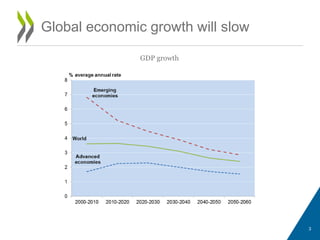
Global economic growth will slow
GDP growth
3
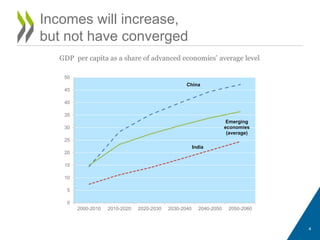
Incomes will increase,
but not have converged
GDP per capita as a share of advanced economies’ average level
4
China
India
Emerging
economies
(average)
0
5
10
15
20
25
30
35
40
45
50
2000-2010 2010-2020 2020-2030 2030-2040 2040-2050 2050-2060
5
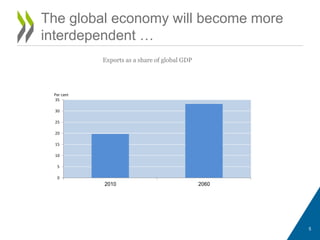
The global economy will become more
interdependent …
0
5
10
15
20
25
30
35
2010 2060
Per cent
Exports as a share of global GDP
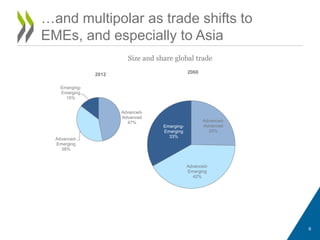
…and multipolar as trade shifts to
EMEs, and especially to Asia
Size and share global trade
6
Advanced-
Advanced
25%
Advanced-
Emerging
42%
Emerging-
Emerging
33%
2060
Advanced-
Advanced
47%
Advanced-
Emerging
38%
Emerging-
Emerging
15%
2012
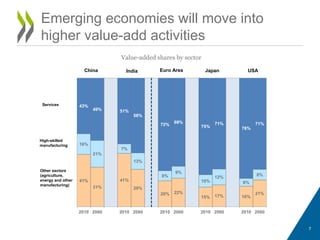
Emerging economies will move into
higher value-add activities
Value-added shares by sector
7
41%
31%
41%
29%
20% 22%
15% 17% 16%
21%
16%
21%
7%
13%
8%
9%
10%
12%
6%
8%
43%
49% 51%
58%
72%
69%
75%
71%
78%
71%
2010 2060 2010 2060 2010 2060 2010 2060 2010 2060
Services
High-skilled
manufacturing
Other sectors
(agriculture,
energy and other
manufacturing)
China India Euro Area Japan USA
8
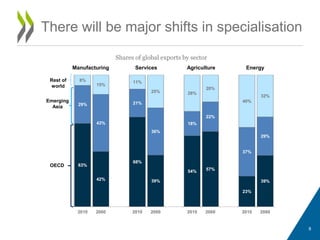
There will be major shifts in specialisation
63%
42%
68%
39%
54% 57%
23%
39%
29%
43%
21%
36%
18%
22%
37%
29%
8%
15%
11%
25% 28%
20%
40%
32%
2010 2060 2010 2060 2010 2060 2010 2060
OECD
Emerging
Asia
Rest of
world
Manufacturing Services Agriculture Energy
Shares of global exports by sector
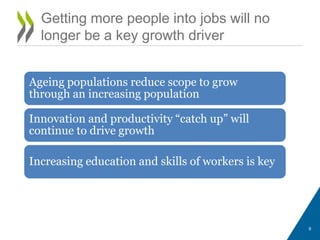
Getting more people into jobs will no
longer be a key growth driver
Ageing populations reduce scope to grow
through an increasing population
Innovation and productivity “catch up” will
continue to drive growth
Increasing education and skills of workers is key
9
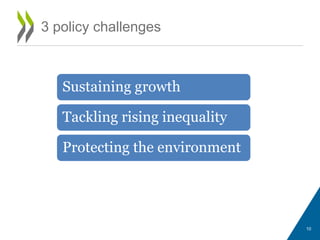
3 policy challenges
Sustaining growth
Tackling rising inequality
Protecting the environment
10
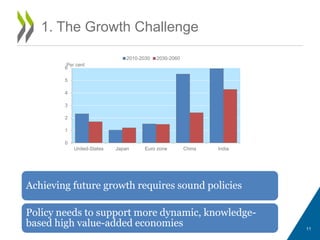
1. The Growth Challenge
Achieving future growth requires sound policies
Policy needs to support more dynamic, knowledge-
based high value-added economies 11
0
1
2
3
4
5
6
United-States Japan Euro zone China India
Per cent
2010-2030 2030-2060
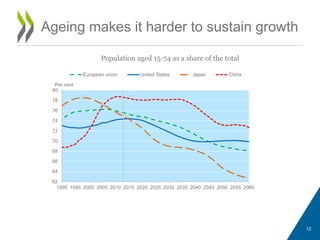
Ageing makes it harder to sustain growth
12
62
64
66
68
70
72
74
76
78
80
1990 1995 2000 2005 2010 2015 2020 2025 2030 2035 2040 2045 2050 2055 2060
Per cent
European union United States Japan China
Population aged 15-74 as a share of the total
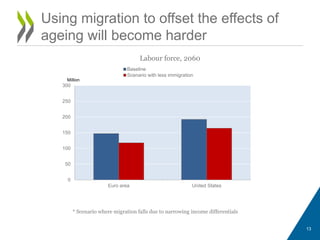
Using migration to offset the effects of
ageing will become harder
13
0
50
100
150
200
250
300
Euro area United States
Baseline
Scenario with less immigration
Million
* Scenario where migration falls due to narrowing income differentials
Labour force, 2060
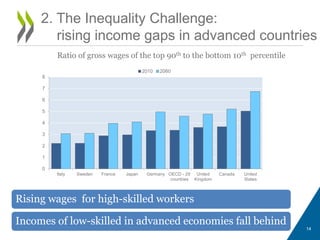
2. The Inequality Challenge:
rising income gaps in advanced countries
Ratio of gross wages of the top 90th to the bottom 10th percentile
Rising wages for high-skilled workers
Incomes of low-skilled in advanced economies fall behind
14
0
1
2
3
4
5
6
7
8
Italy Sweden France Japan Germany OECD - 29
countries
United
Kingdom
Canada United
States
2010 2060
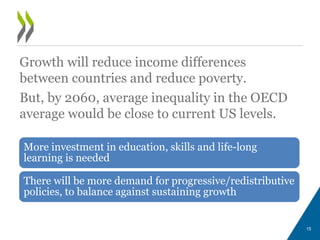
Growth will reduce income differences
between countries and reduce poverty.
But, by 2060, average inequality in the OECD
average would be close to current US levels.
More investment in education, skills and life-long
learning is needed
There will be more demand for progressive/redistributive
policies, to balance against sustaining growth
15
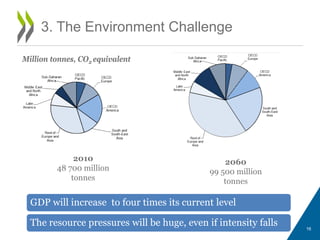
3. The Environment Challenge
Million tonnes, CO2 equivalent
2010
48 700 million
tonnes
2060
99 500 million
tonnes
GDP will increase to four times its current level
The resource pressures will be huge, even if intensity falls 16
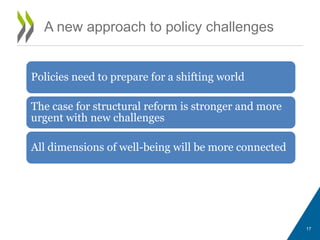
A new approach to policy challenges
Policies need to prepare for a shifting world
The case for structural reform is stronger and more
urgent with new challenges
All dimensions of well-being will be more connected
17
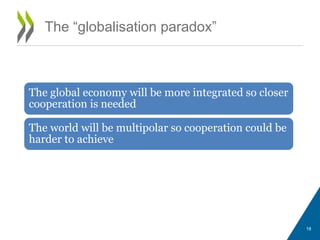
The “globalisation paradox”
The global economy will be more integrated so closer
cooperation is needed
The world will be multipolar so cooperation could be
harder to achieve
18
OECD 50-year Global Scenario website
19
Further reading
OECD Economics Department working paper series
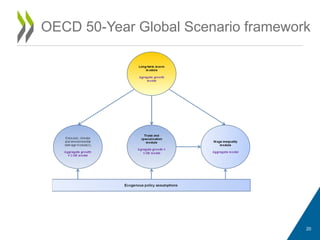
OECD 50-Year Global Scenario framework
20

Policy challenges for the next 50 years

  • 1.
    OECD 50-YEAR GLOBALSCENARIO Policy Challenges for the Next 50 Years Rintaro Tamaki Deputy-Secretary General and Acting Chief Economist 2 July 2014, Tokyo
  • 2.
    The OECD willbe 100-years old in 2060 What are the policy challenges for the next 50 years? The OECD 50-Year Global Scenario helps to highlight key global challenges and how they are connected Policy Challenges for the Next 50 Years 2
  • 3.
    Global economic growthwill slow GDP growth 3
  • 4.
    Incomes will increase, butnot have converged GDP per capita as a share of advanced economies’ average level 4 China India Emerging economies (average) 0 5 10 15 20 25 30 35 40 45 50 2000-2010 2010-2020 2020-2030 2030-2040 2040-2050 2050-2060
  • 5.
    5 The global economywill become more interdependent … 0 5 10 15 20 25 30 35 2010 2060 Per cent Exports as a share of global GDP
  • 6.
    …and multipolar astrade shifts to EMEs, and especially to Asia Size and share global trade 6 Advanced- Advanced 25% Advanced- Emerging 42% Emerging- Emerging 33% 2060 Advanced- Advanced 47% Advanced- Emerging 38% Emerging- Emerging 15% 2012
  • 7.
    Emerging economies willmove into higher value-add activities Value-added shares by sector 7 41% 31% 41% 29% 20% 22% 15% 17% 16% 21% 16% 21% 7% 13% 8% 9% 10% 12% 6% 8% 43% 49% 51% 58% 72% 69% 75% 71% 78% 71% 2010 2060 2010 2060 2010 2060 2010 2060 2010 2060 Services High-skilled manufacturing Other sectors (agriculture, energy and other manufacturing) China India Euro Area Japan USA
  • 8.
    8 There will bemajor shifts in specialisation 63% 42% 68% 39% 54% 57% 23% 39% 29% 43% 21% 36% 18% 22% 37% 29% 8% 15% 11% 25% 28% 20% 40% 32% 2010 2060 2010 2060 2010 2060 2010 2060 OECD Emerging Asia Rest of world Manufacturing Services Agriculture Energy Shares of global exports by sector
  • 9.
    Getting more peopleinto jobs will no longer be a key growth driver Ageing populations reduce scope to grow through an increasing population Innovation and productivity “catch up” will continue to drive growth Increasing education and skills of workers is key 9
  • 10.
    3 policy challenges Sustaininggrowth Tackling rising inequality Protecting the environment 10
  • 11.
    1. The GrowthChallenge Achieving future growth requires sound policies Policy needs to support more dynamic, knowledge- based high value-added economies 11 0 1 2 3 4 5 6 United-States Japan Euro zone China India Per cent 2010-2030 2030-2060
  • 12.
    Ageing makes itharder to sustain growth 12 62 64 66 68 70 72 74 76 78 80 1990 1995 2000 2005 2010 2015 2020 2025 2030 2035 2040 2045 2050 2055 2060 Per cent European union United States Japan China Population aged 15-74 as a share of the total
  • 13.
    Using migration tooffset the effects of ageing will become harder 13 0 50 100 150 200 250 300 Euro area United States Baseline Scenario with less immigration Million * Scenario where migration falls due to narrowing income differentials Labour force, 2060
  • 14.
    2. The InequalityChallenge: rising income gaps in advanced countries Ratio of gross wages of the top 90th to the bottom 10th percentile Rising wages for high-skilled workers Incomes of low-skilled in advanced economies fall behind 14 0 1 2 3 4 5 6 7 8 Italy Sweden France Japan Germany OECD - 29 countries United Kingdom Canada United States 2010 2060
  • 15.
    Growth will reduceincome differences between countries and reduce poverty. But, by 2060, average inequality in the OECD average would be close to current US levels. More investment in education, skills and life-long learning is needed There will be more demand for progressive/redistributive policies, to balance against sustaining growth 15
  • 16.
    3. The EnvironmentChallenge Million tonnes, CO2 equivalent 2010 48 700 million tonnes 2060 99 500 million tonnes GDP will increase to four times its current level The resource pressures will be huge, even if intensity falls 16
  • 17.
    A new approachto policy challenges Policies need to prepare for a shifting world The case for structural reform is stronger and more urgent with new challenges All dimensions of well-being will be more connected 17
  • 18.
    The “globalisation paradox” Theglobal economy will be more integrated so closer cooperation is needed The world will be multipolar so cooperation could be harder to achieve 18
  • 19.
    OECD 50-year GlobalScenario website 19 Further reading OECD Economics Department working paper series
  • 20.
    OECD 50-Year GlobalScenario framework 20