Download as PDF, PPTX

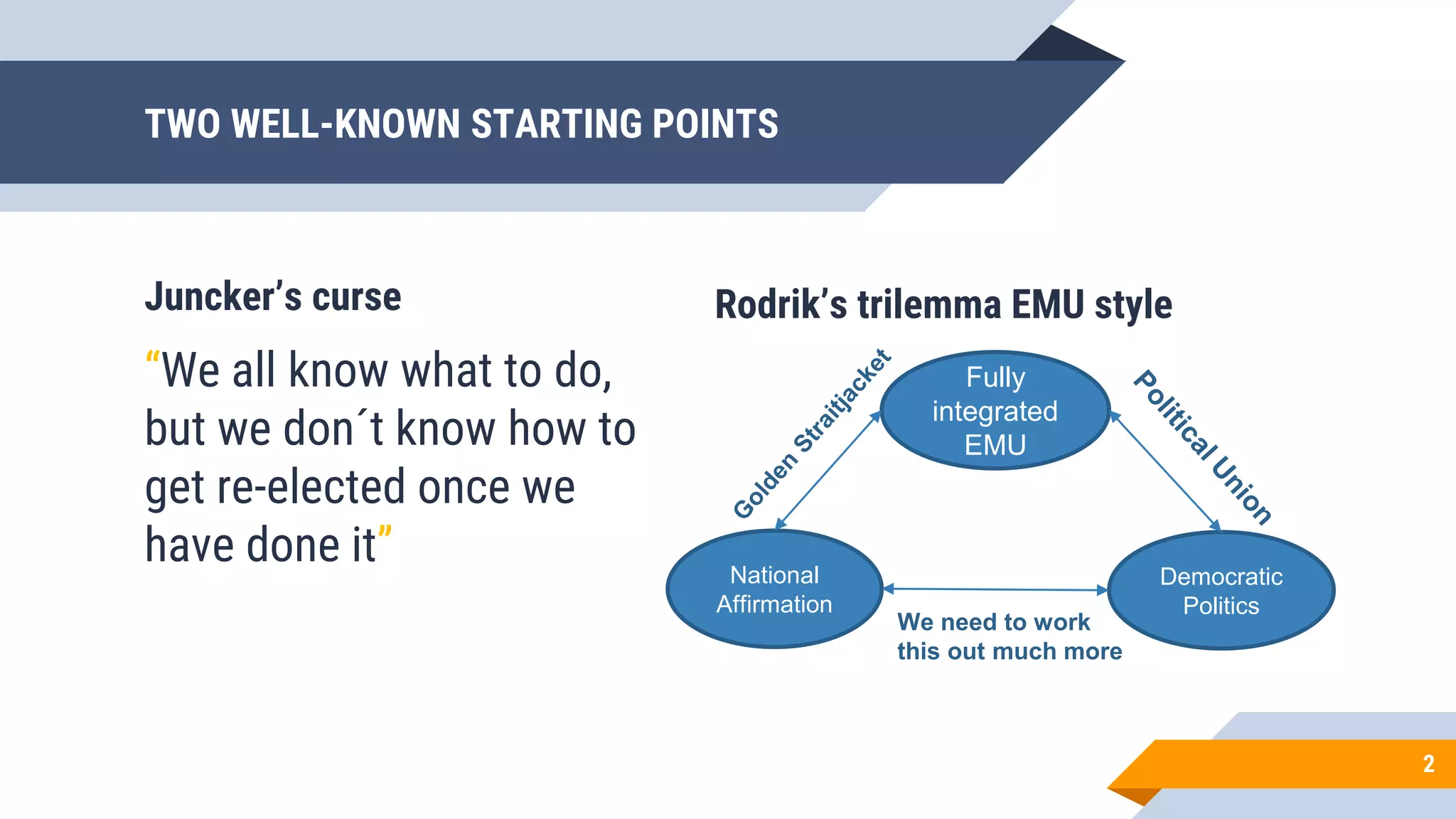

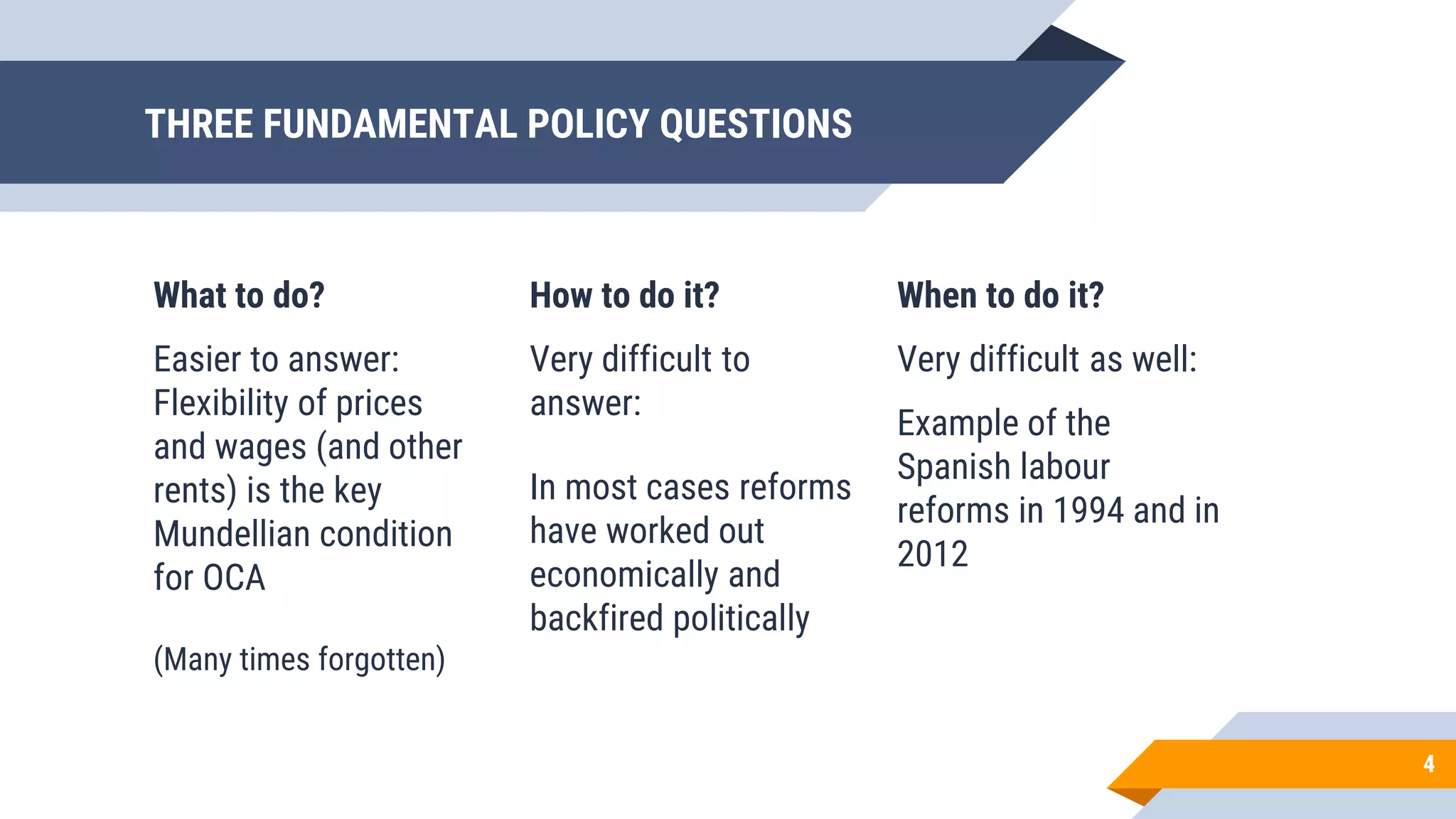
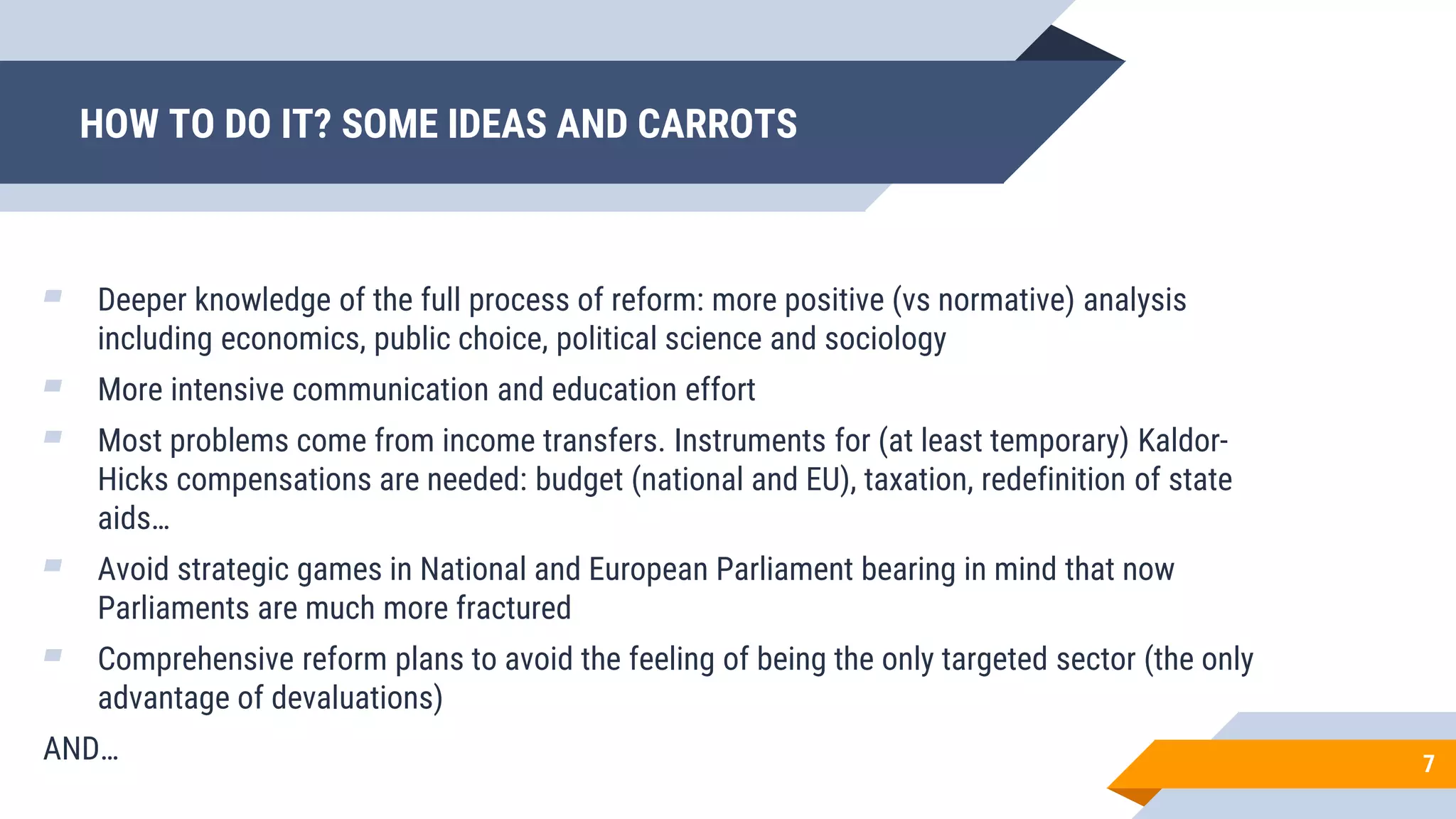



National governments face challenges in implementing structural reforms in the eurozone due to political considerations. There is a conflict between economic theory, which advocates for reforms like flexible prices and wages, and political realities. It is difficult to answer fundamental questions about what reforms to make, how to implement them, and when. While most reforms have positive economic impacts, they often backfire politically. Successful reforms require comprehensive plans to avoid targeting single sectors, income compensation mechanisms, and avoiding strategic political games. Communication and education are also important to build support.


