Ocular surface squamous
neoplasia
Dr.Ruchi sood
PG 2nd year,SSIMSRC
Introduction
• Tumors of the ocular surface have a wide clinical spectrum and include several
forms of epithelial, stromal, caruncular, and secondary tumors.
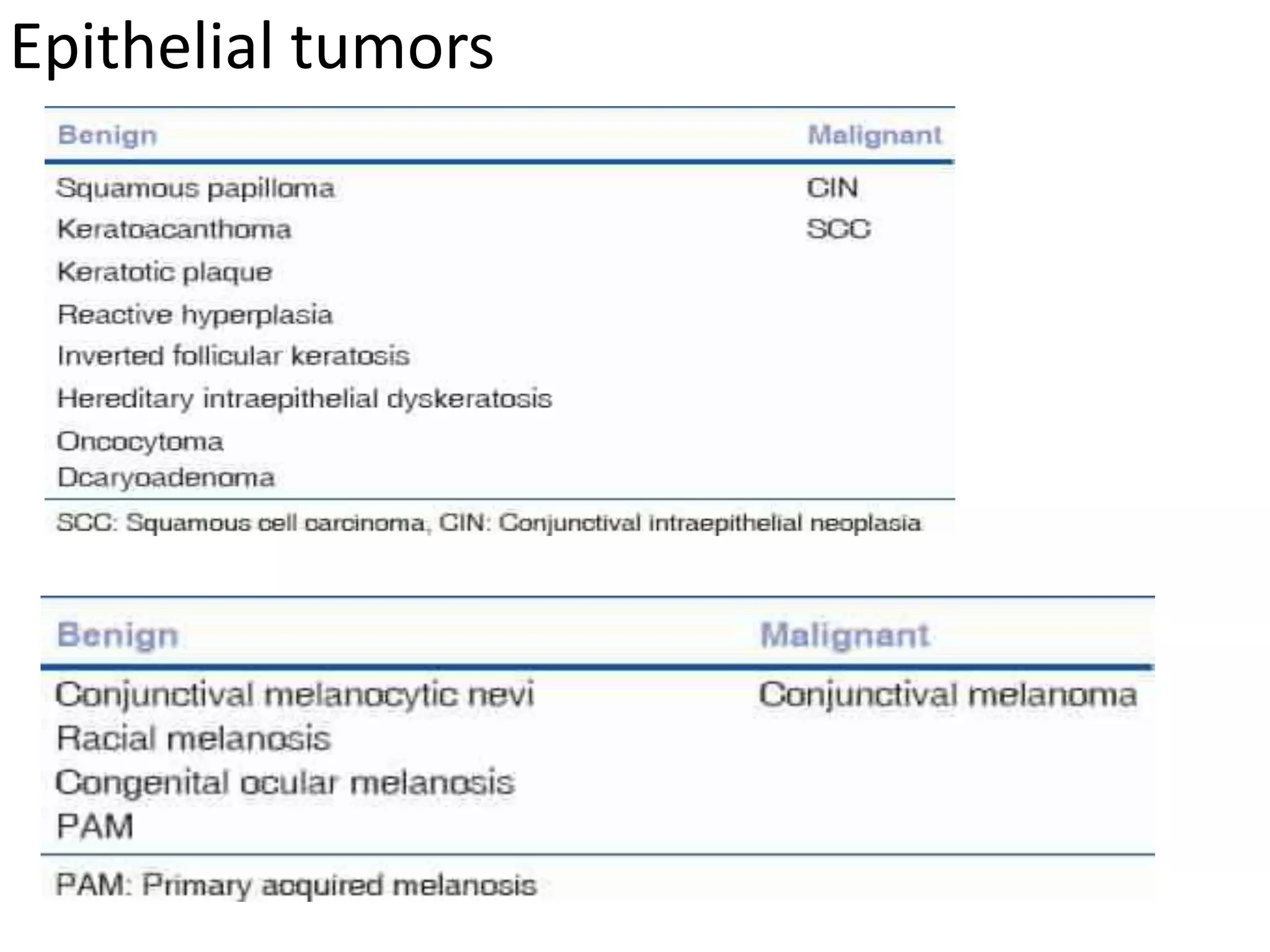
Epithelial tumors
• Ocular surface squamous neoplasia (OSSN) is an encompassing term
for precancerous and cancerous epithelial lesions of the conjunctiva
and cornea.
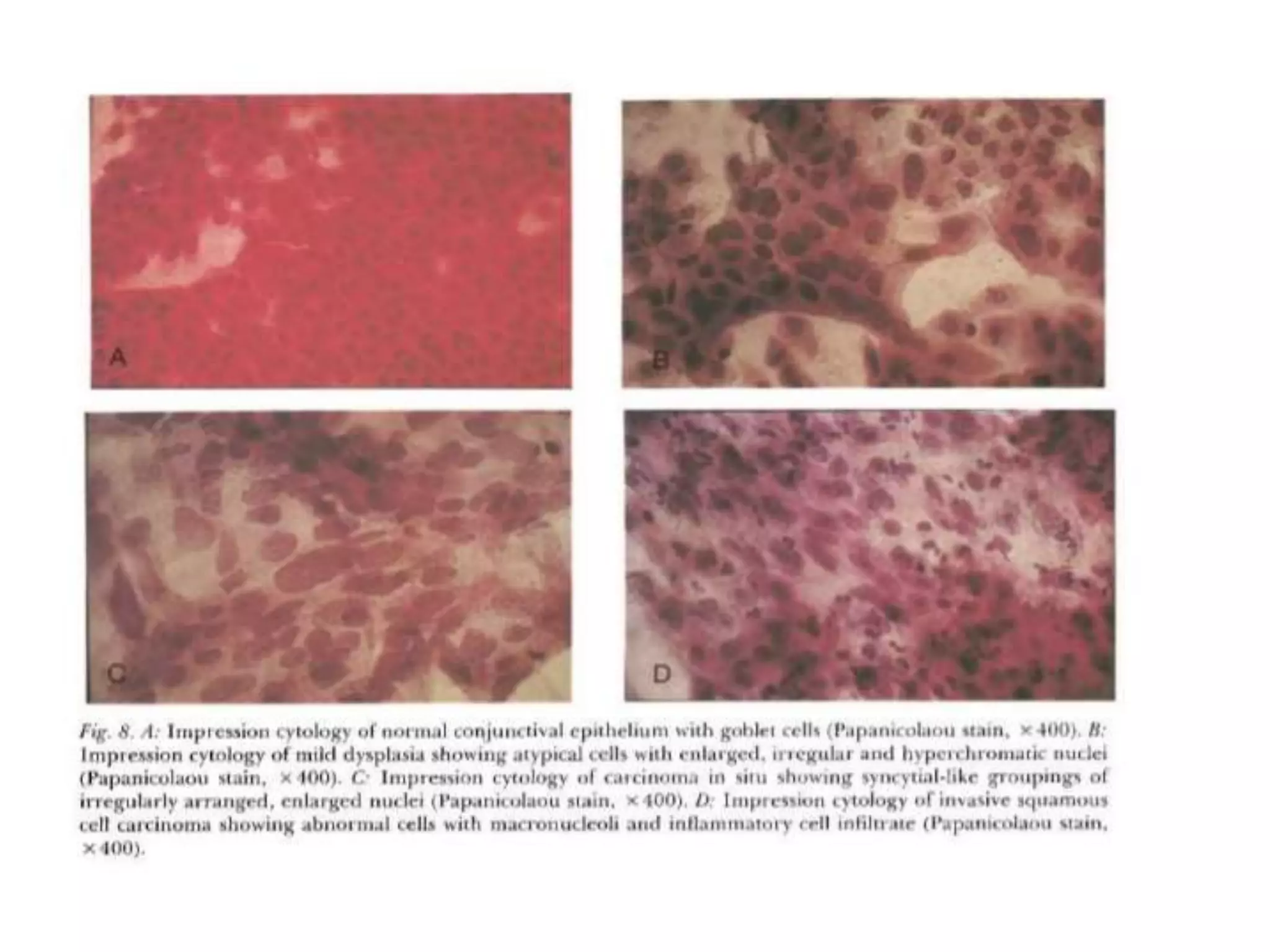
• Proposed by Lee and Hirst, (OSSN) includes the clinical continuum of
mild, moderate, and severe dysplasia, carcinoma in situ, and invasive
squamous cell carcinoma (SCC).
• CIN accounts for 39% of all premalignant and malignant lesions of the
conjunctiva.
• Ocular surface squamous neoplasia is mostly unilateral and is seen in
middle-aged and older patients
Etiology and Risk factors
 Ultraviolet light
 Immunosuppression/ HIV
 Human papillomavirus (HPV) 16
 Mutation or deletions of tumor suppressor gene p53
 Xeroderma pigmentosum and Papillon-Leferve syndrome
 Smoking
 Ocular surface injury(chemical)
 Chronic inflammatory conditions like- ocular pemphigoid,
blepharoconjunctivitis.
 Chemical exposure- trifluridine, arsenic beryllium
Diagnosis
• Patients are often unaware, may complain of redness and ocular irritation
secondary to inflammation.
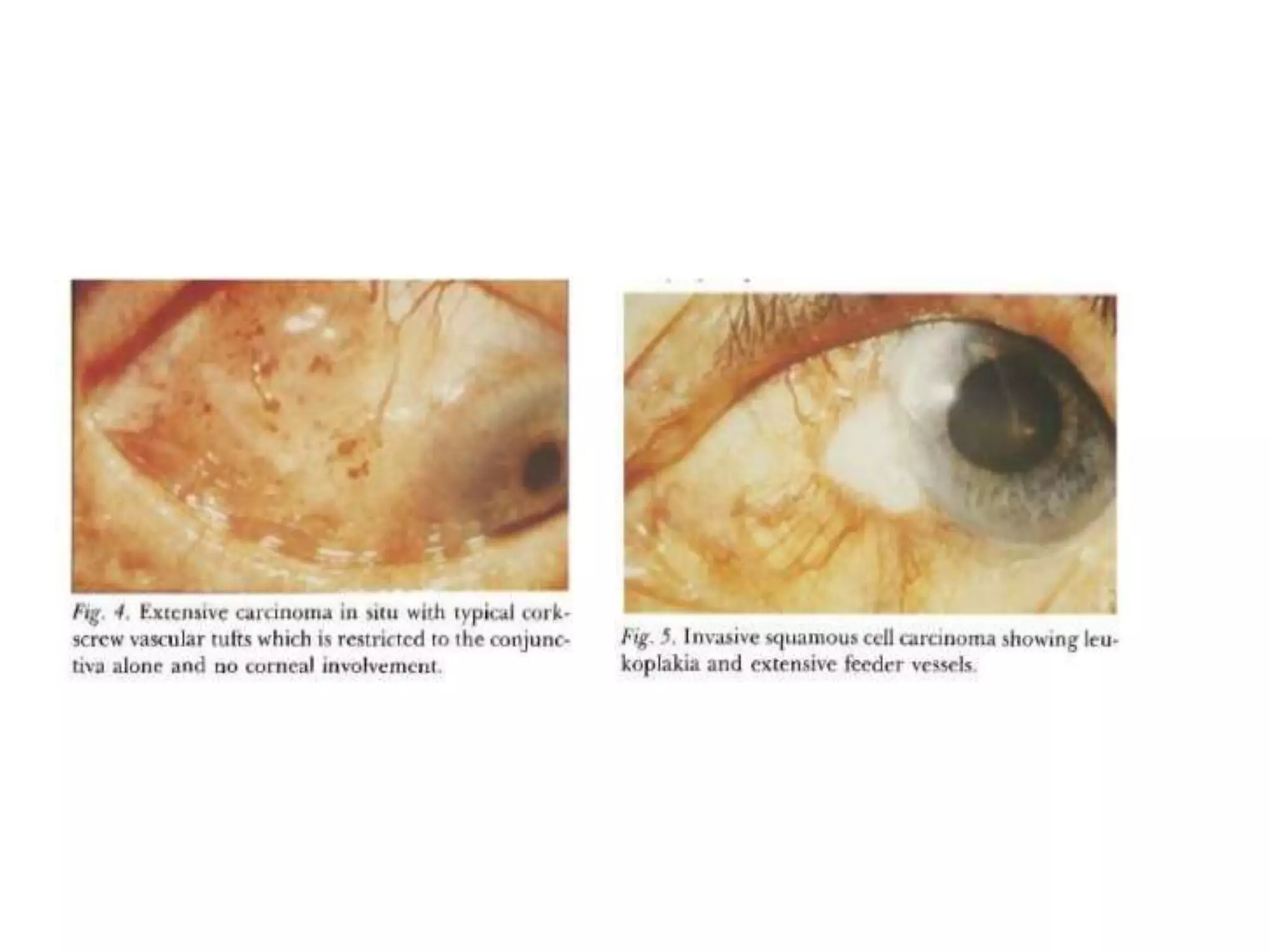
• Leukoplakia is usually absent or minimal in CIN. The presence of feeder
vessels and intrinsic vascularity favors SCC.
• The tarsal conjunctiva should be examined after everting the eyelid of
patients with OSSN to detect contiguous or multifocal involvement of the
tarsal conjunctiva.
• Advanced cases can infiltrate the cornea and sclera to have the intraocular
extension.
• Rarely, the tumor may extend into the orbit causing proptosis. The tumor
can metastasize to the regional lymph nodes and rarely distant metastasis
may occur.
(a) Elevated nasal LIMBAL MASS INVOLVING THE CORNEA with abundant keratin
and feeder vessels.
(b) Pigmented variant seen as a NODULAR MASS.
(c) Diffuse, elevated, PAPILLIFORM LESION involving the entire ocular surface
with intrinsic vessels.
(d) GELATINOUS TYPE with episcleral feeder vessels.
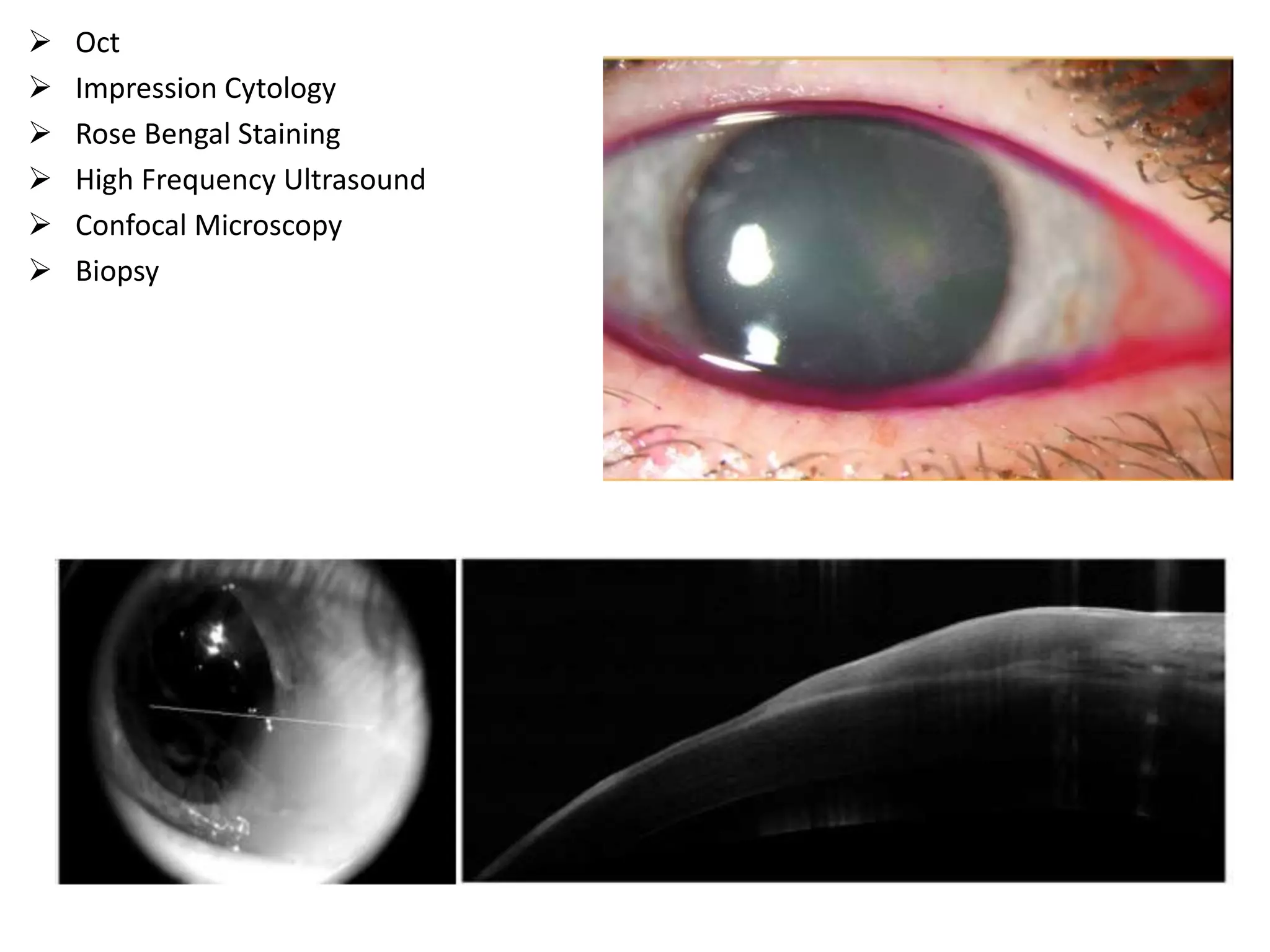
 Oct
 Impression Cytology
 Rose Bengal Staining
 High Frequency Ultrasound
 Confocal Microscopy
 Biopsy
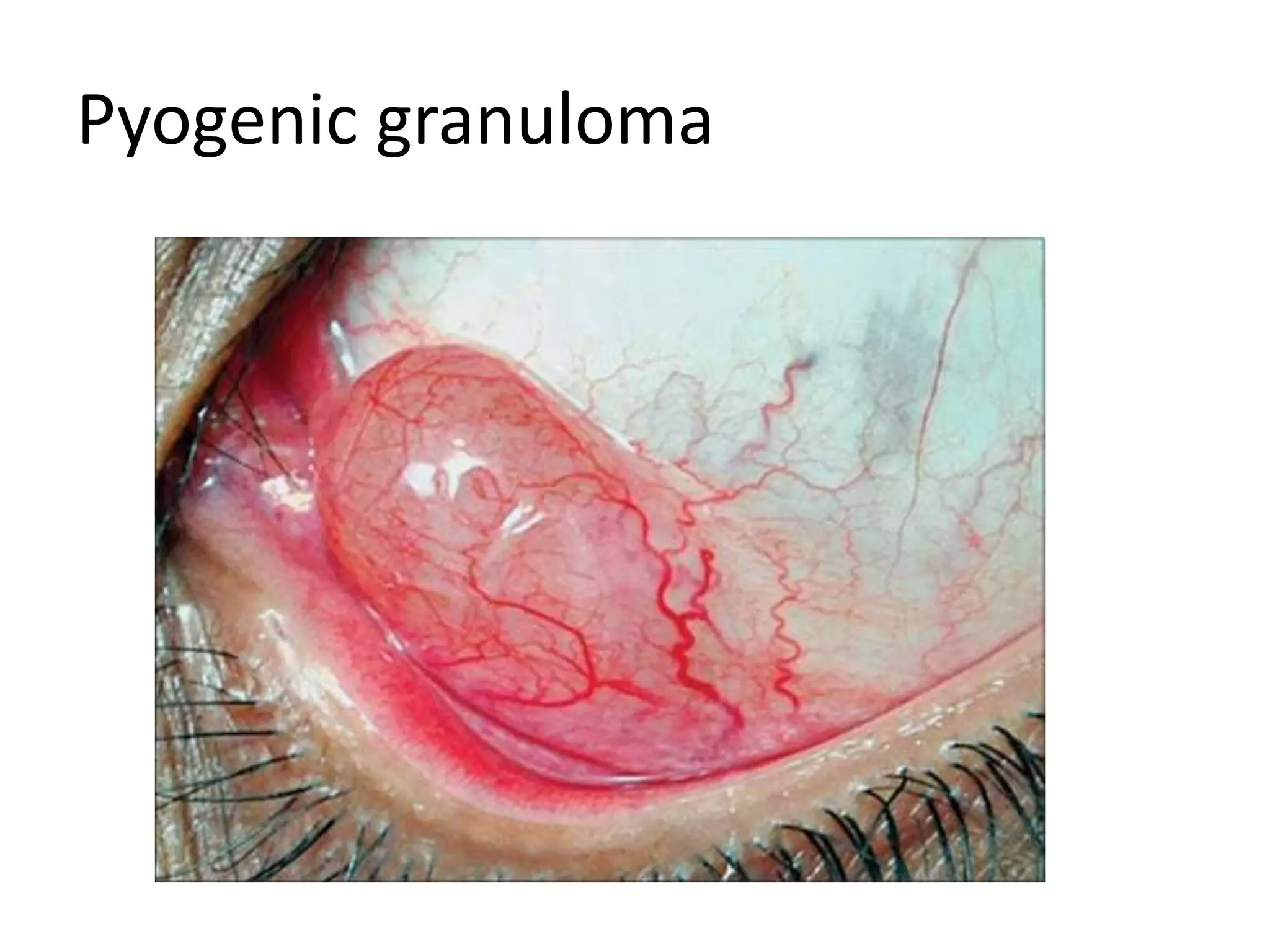
Pyogenic granuloma
Hereditary benign intraepithelial dyskeratosis
AD Elevated leukoplakic pink lesion in the temporal limbal area with apparent feeder
vessels and pigmentation.
Pterygium
Actinic keratosis A focal leukoplakic lesion seen in the interpalpebral are
Rose bengal
(a) Conjunctival nevus with intralesional cysts and feeder vessels.
(b) Microphotograph of a subepithelial nevus showing clumps of melanocytes with no
cellular atypia
CONJUNCTIVAL MELANOMA
(A) Elevated, nodular, pigmented mass at the inferior limbus with extension into the peripheral
cornea. Note the presence of feeder vessels and intrinsic vessels.
(B) Microphotograph of conjunctival melanoma showing variably pigmented melanocytes with
mitotic activity
CONJUCTIVAL LYMPHOMA
(a) Superior bulbar conjunctiva shows typical salmon pink mass with cork-screw
vessels
(b) Microphotograph of conjunctival lymphoma. Note the monomorphic appearance
of cells
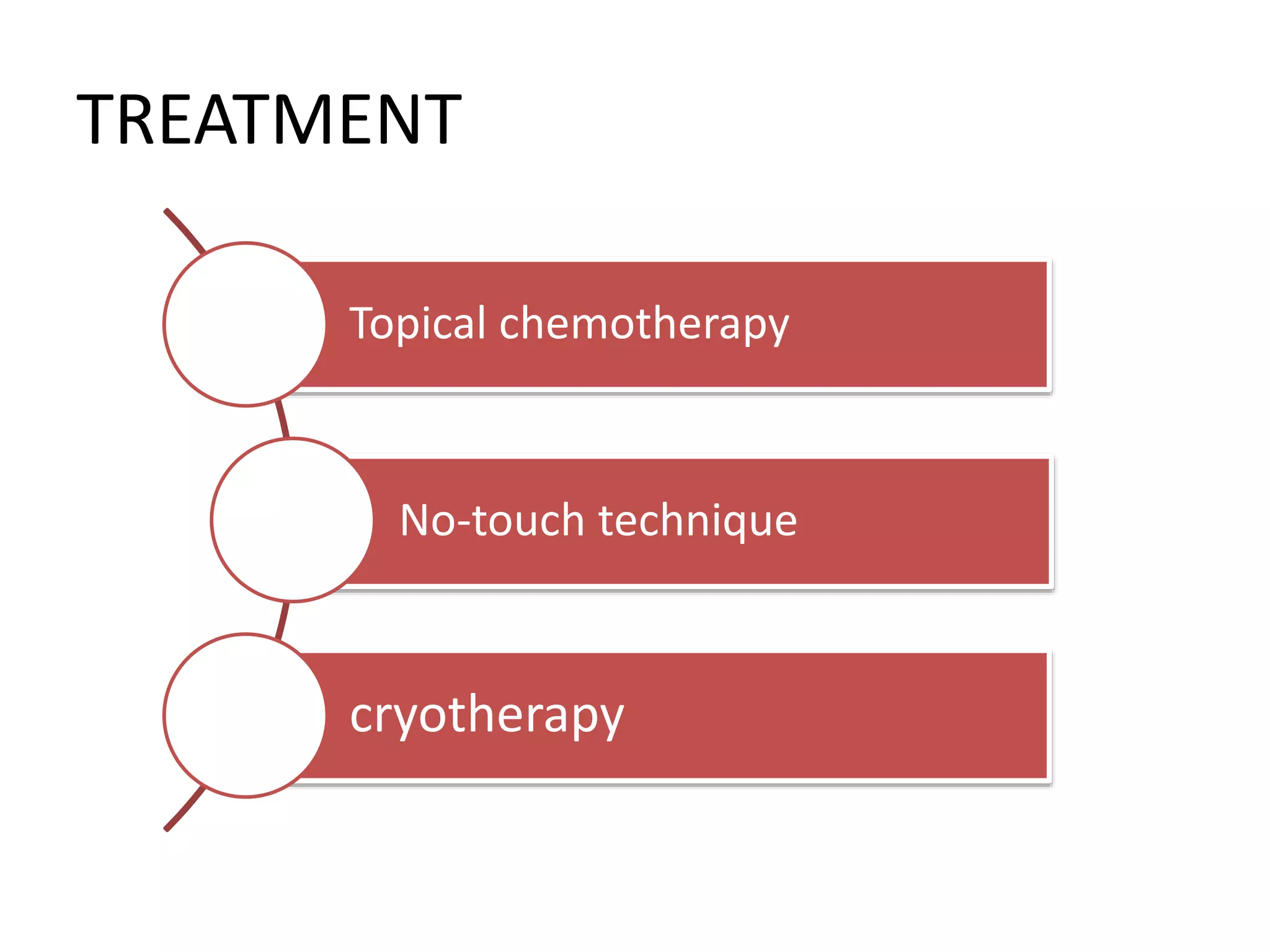
TREATMENT
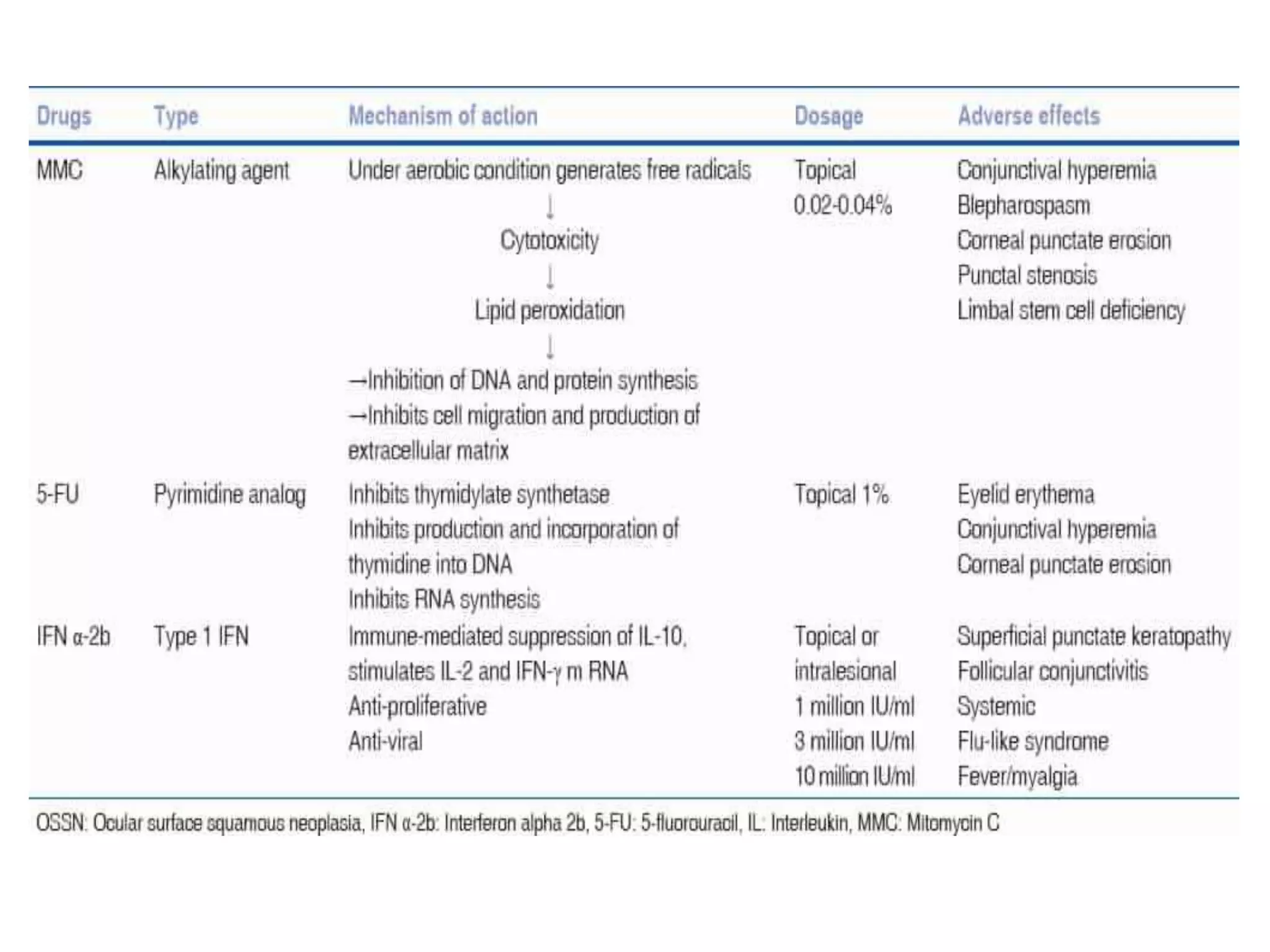
Topical chemotherapy
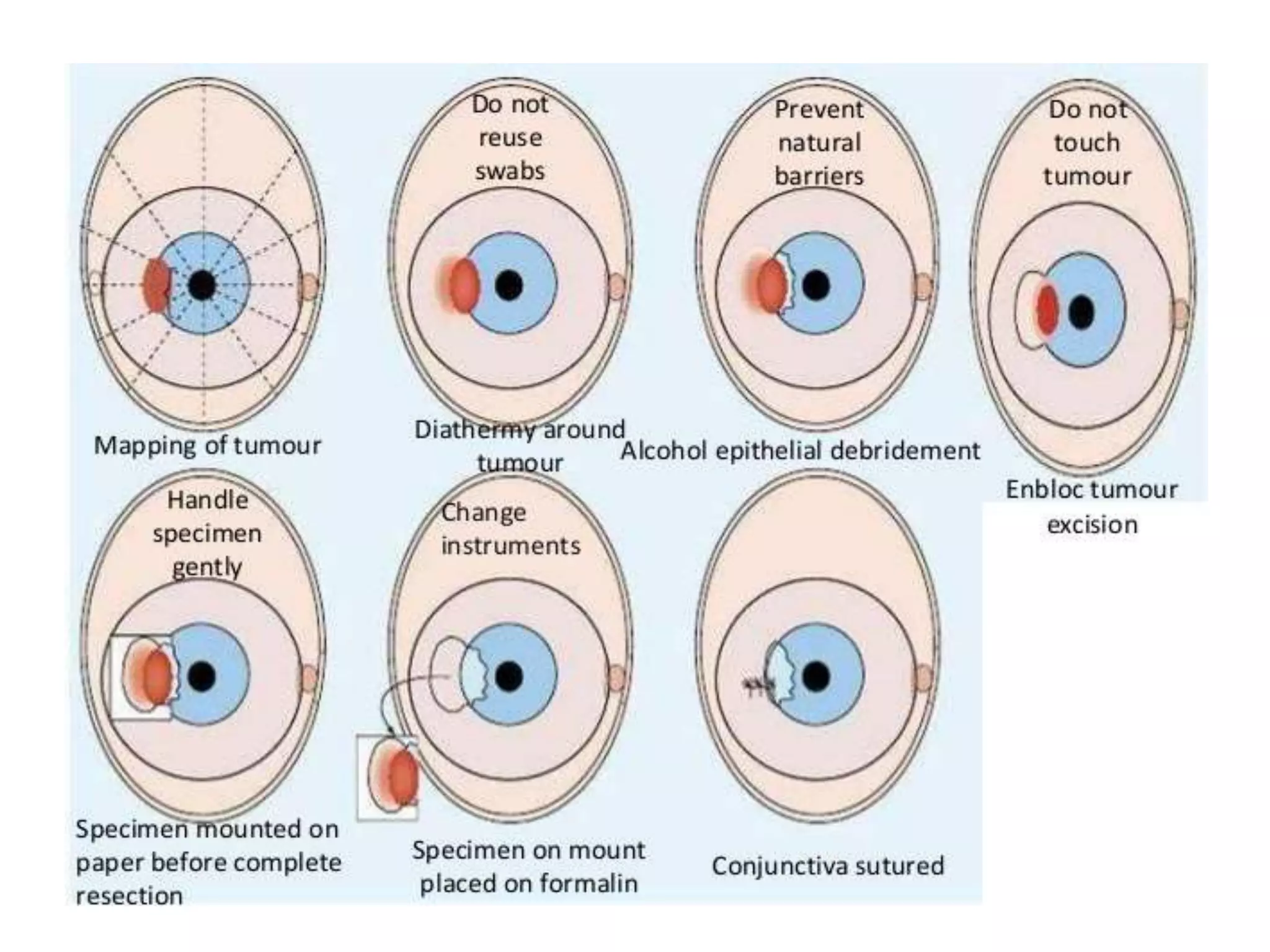
No-touch technique
cryotherapy
• Nodular lesion with abundant keratin at the limbus.
• Immediate postoperative appearance following complete excision with margin
clearance, double freeze cryotherapy and ocular surface reconstruction with
amniotic membrane transplantation with tissue glue.
PROGNOSIS
• The recurrence rate of OSSN after surgical excision can occur
in over half of cases and may occur years later.
• The rate of recurrence is substantially higher in the setting of
positive surgical margins. Even if the surgical margins are
negative, up to one- third of eyes may experience a
recurrence within 10 years.

Ocular surface squamous neoplasia

  • 1.
  • 2.
    Introduction • Tumors ofthe ocular surface have a wide clinical spectrum and include several forms of epithelial, stromal, caruncular, and secondary tumors.
  • 3.
  • 4.
    • Ocular surfacesquamous neoplasia (OSSN) is an encompassing term for precancerous and cancerous epithelial lesions of the conjunctiva and cornea. • Proposed by Lee and Hirst, (OSSN) includes the clinical continuum of mild, moderate, and severe dysplasia, carcinoma in situ, and invasive squamous cell carcinoma (SCC). • CIN accounts for 39% of all premalignant and malignant lesions of the conjunctiva. • Ocular surface squamous neoplasia is mostly unilateral and is seen in middle-aged and older patients
  • 6.
    Etiology and Riskfactors  Ultraviolet light  Immunosuppression/ HIV  Human papillomavirus (HPV) 16  Mutation or deletions of tumor suppressor gene p53  Xeroderma pigmentosum and Papillon-Leferve syndrome  Smoking  Ocular surface injury(chemical)  Chronic inflammatory conditions like- ocular pemphigoid, blepharoconjunctivitis.  Chemical exposure- trifluridine, arsenic beryllium
  • 9.
    Diagnosis • Patients areoften unaware, may complain of redness and ocular irritation secondary to inflammation. • Leukoplakia is usually absent or minimal in CIN. The presence of feeder vessels and intrinsic vascularity favors SCC. • The tarsal conjunctiva should be examined after everting the eyelid of patients with OSSN to detect contiguous or multifocal involvement of the tarsal conjunctiva. • Advanced cases can infiltrate the cornea and sclera to have the intraocular extension. • Rarely, the tumor may extend into the orbit causing proptosis. The tumor can metastasize to the regional lymph nodes and rarely distant metastasis may occur.
  • 10.
    (a) Elevated nasalLIMBAL MASS INVOLVING THE CORNEA with abundant keratin and feeder vessels. (b) Pigmented variant seen as a NODULAR MASS. (c) Diffuse, elevated, PAPILLIFORM LESION involving the entire ocular surface with intrinsic vessels. (d) GELATINOUS TYPE with episcleral feeder vessels.
  • 11.
     Oct  ImpressionCytology  Rose Bengal Staining  High Frequency Ultrasound  Confocal Microscopy  Biopsy
  • 15.
  • 17.
    Hereditary benign intraepithelialdyskeratosis AD Elevated leukoplakic pink lesion in the temporal limbal area with apparent feeder vessels and pigmentation. Pterygium
  • 18.
    Actinic keratosis Afocal leukoplakic lesion seen in the interpalpebral are Rose bengal
  • 19.
    (a) Conjunctival nevuswith intralesional cysts and feeder vessels. (b) Microphotograph of a subepithelial nevus showing clumps of melanocytes with no cellular atypia
  • 20.
    CONJUNCTIVAL MELANOMA (A) Elevated,nodular, pigmented mass at the inferior limbus with extension into the peripheral cornea. Note the presence of feeder vessels and intrinsic vessels. (B) Microphotograph of conjunctival melanoma showing variably pigmented melanocytes with mitotic activity
  • 21.
    CONJUCTIVAL LYMPHOMA (a) Superiorbulbar conjunctiva shows typical salmon pink mass with cork-screw vessels (b) Microphotograph of conjunctival lymphoma. Note the monomorphic appearance of cells
  • 22.
  • 25.
    • Nodular lesionwith abundant keratin at the limbus. • Immediate postoperative appearance following complete excision with margin clearance, double freeze cryotherapy and ocular surface reconstruction with amniotic membrane transplantation with tissue glue.
  • 30.
    PROGNOSIS • The recurrencerate of OSSN after surgical excision can occur in over half of cases and may occur years later. • The rate of recurrence is substantially higher in the setting of positive surgical margins. Even if the surgical margins are negative, up to one- third of eyes may experience a recurrence within 10 years.