OCD SPECTRUM
DISORDER
OBSESSIVE COMPUSIVE
DISORDER
• OCD is an anxiety disorder
• Characterized by obsessive thoughts and/or compulsive behaviours
that significantly interfere with normal life.
• Obsessions are unwanted, recurrent, and disturbing thoughts which
the person cannot suppress and which can cause overwhelming
anxiety.
• Compulsions are repetitive, ritualized behaviours that the person
feels driven to perform to alleviate the anxiety of the obsessions.
• The obsessive and compulsive rituals can occupy many hours of each
day.
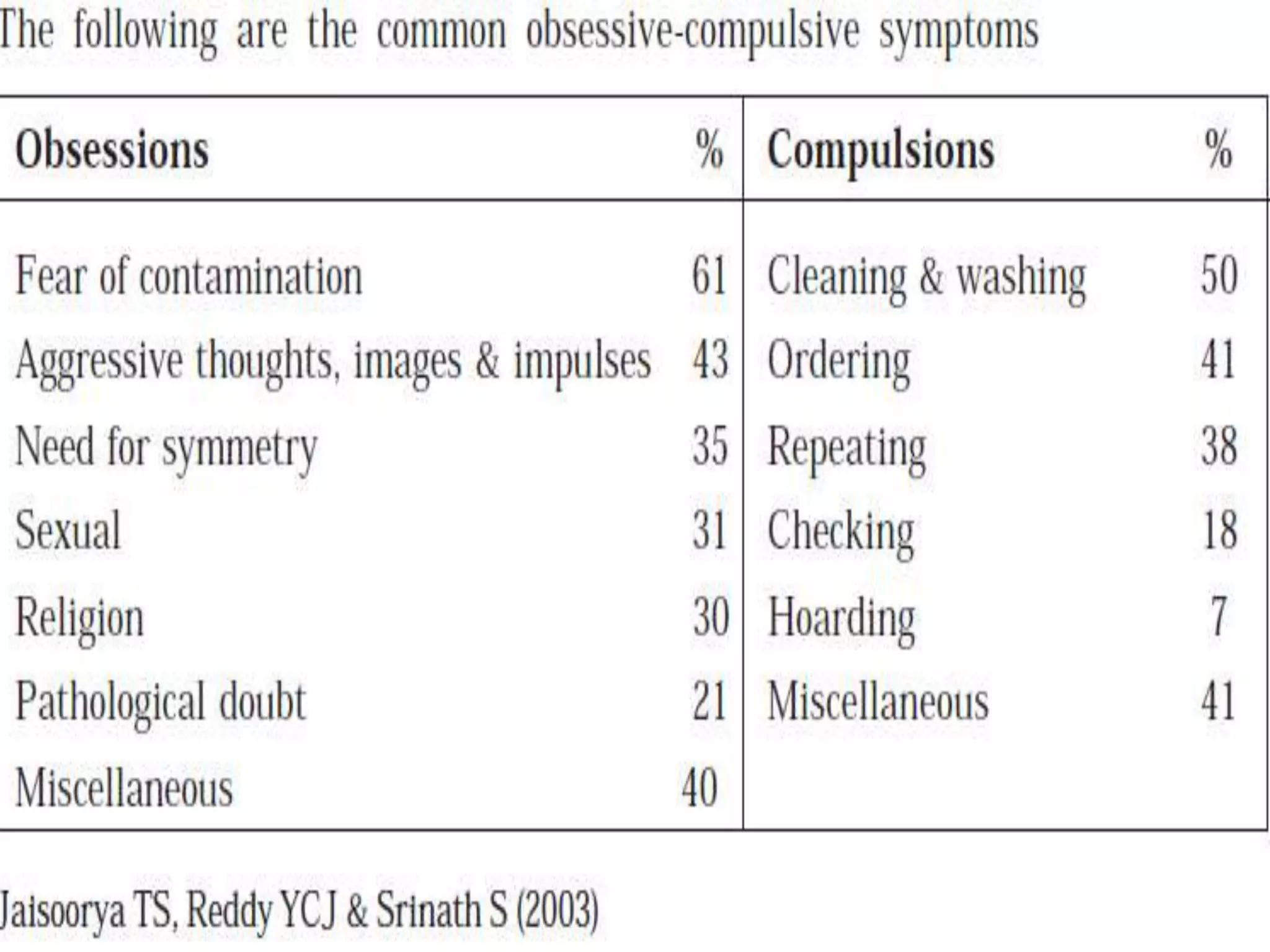
Epidemiology
• 4th commonest mental disorder with disability in severe cases
often comparable to the disability associated with mental illnesses
such as schizophrenia and bipolar disorder.
• Lifetime prevalence of OCD in India is 2.5%.
• High rate of family history of obsessional illness (26%) and
premorbid obsessional personality (26%).
• Spectrum of related conditions that share important features with
OCD, known as obsessive compulsive spectrum disorders.
• It affects 10% of US population.
Delhi Psychiatry Journal 2008; 11:(2)
OCD: An Indian Perspective NIMHANS article
OCD-Hidden epidemic
• It is twice as prevalent as schizophrenia and bipolar
disorder and the fourth most common psychiatric
disorder
• 50-60% of the OCD patients also experience two or
more comorbid psychiatric conditions during their
lifetime.
• Nearly 65% of the patients have their onset before age
25 whereas fewer than 15% have onset after age 35
GP Gururaj et al JPMG 2008; 54(2):91-97
Does OCD Always Include Both
Obsessions and Compulsions?
• Approximately 80 percent of patients with OCD have both obsessions
and compulsions; 20 percent have only obsessions or compulsions.
Typical cycle of an OCD person
Obsessions cause anxiety,
causing the sufferer to engage in
compulsions in an attempt to
alleviate the distress caused by
the obsessions. Performing out
these obsessions, or rituals,
does not result in any lasting
relief, and in fact, the OC
symptoms worsen.
Obsession
• Most patients who suffer from obsessions readily admit
that their thoughts/images/impulses are irrational,
excessive and unwanted.
• They also admit that they are a product of their own
mind and not imposed from without.
• Because the obsessions are intrusive, unwanted and
distressing, attempts are made to ignore, suppress or
neutralize them with some other action or thought
(compulsions). OCD: An Indian Perspective NIMHANS article
Compulsion
• The compulsions are aimed at preventing or reducing
distress (e.g., washing hands repeatedly to get over the
feeling of being contaminated) or preventing some
dreaded event from occurring (e.g., counting to prevent
family members from meeting with a fatal accident).
• These behaviours are either not connected in a
realistic way with what they are designed to prevent,
or are clearly excessive.
OCD: An Indian Perspective NIMHANS article
Essent Psychopharmacol 5:4, 2004
ICD-10 diagnostic guideline
(a) They must be recognized as the individual’s own thoughts or impulses;
(b) There must be at least one thought or act that is still resisted unsuccessfully,
even though others may be present which the sufferer no longer resists;
(c) The thought of carrying out the act must not in itself be pleasurable (simple
relief of tension or anxiety is not recognized as pleasure in this sense);
(d) The thoughts, images, or impulses must be unpleasantly repetitive
For a definite diagnosis, obsessional symptoms or compulsive acts, or both, must be
present on most days for at least 2 successive weeks and be a source of distress or
interference with activities.
OCD: An Indian Perspective NIMHANS article
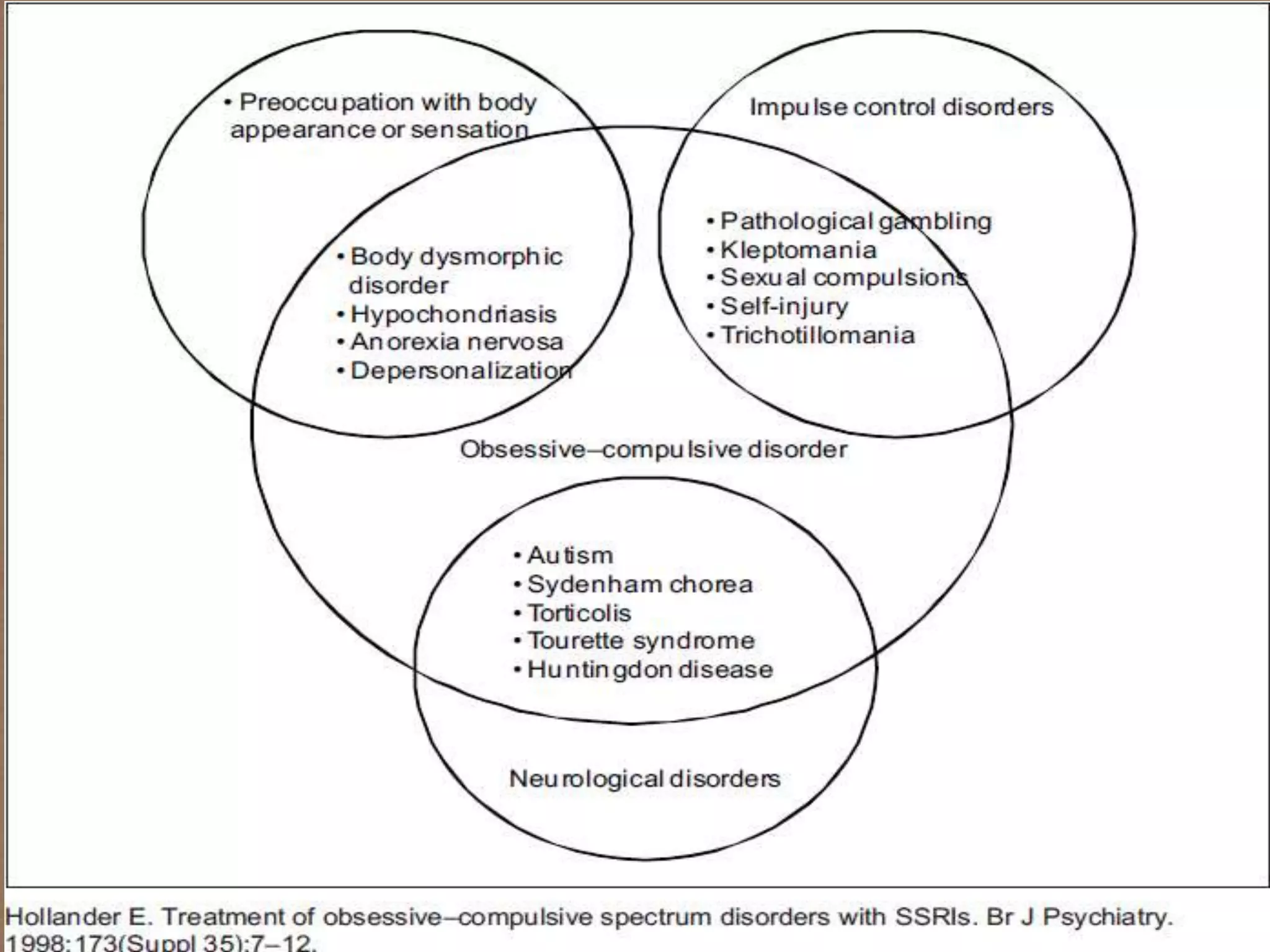
Clusters in OCSD
1. Disorders where individuals are obsessed or preoccupied
with issues concerning bodily sensations, body appearance
or body weight. Hence includes body dysmorphic disorder,
hypochondriasis, anorexia nervosa and depersonalization
2. Conditions that may be conceptualized as impulsive
disorders. Patients ‘give in’ to the impulse and then engage
in behaviour that is associated with pleasure, arousal,
gratification or stimulation. There is frequently a feeling of
guilt or remorse afterwards. These include sexual
compulsions, trichotillomania, pathological gambling,
kleptomania, self injurious behaviour
Delhi Psychiatry Journal 2008; 11:(2)
Clusters in OCSD
3. Neurologically based
disorders that affect the basal
ganglia, the symptom domains
of which are narrow restricted
interests, repetitive behaviour
and rituals and routines. These
include Tourette’s syndrome,
Sydenham’s chorea, torticollis
and autism.
Delhi Psychiatry Journal 2008; 11:(2)
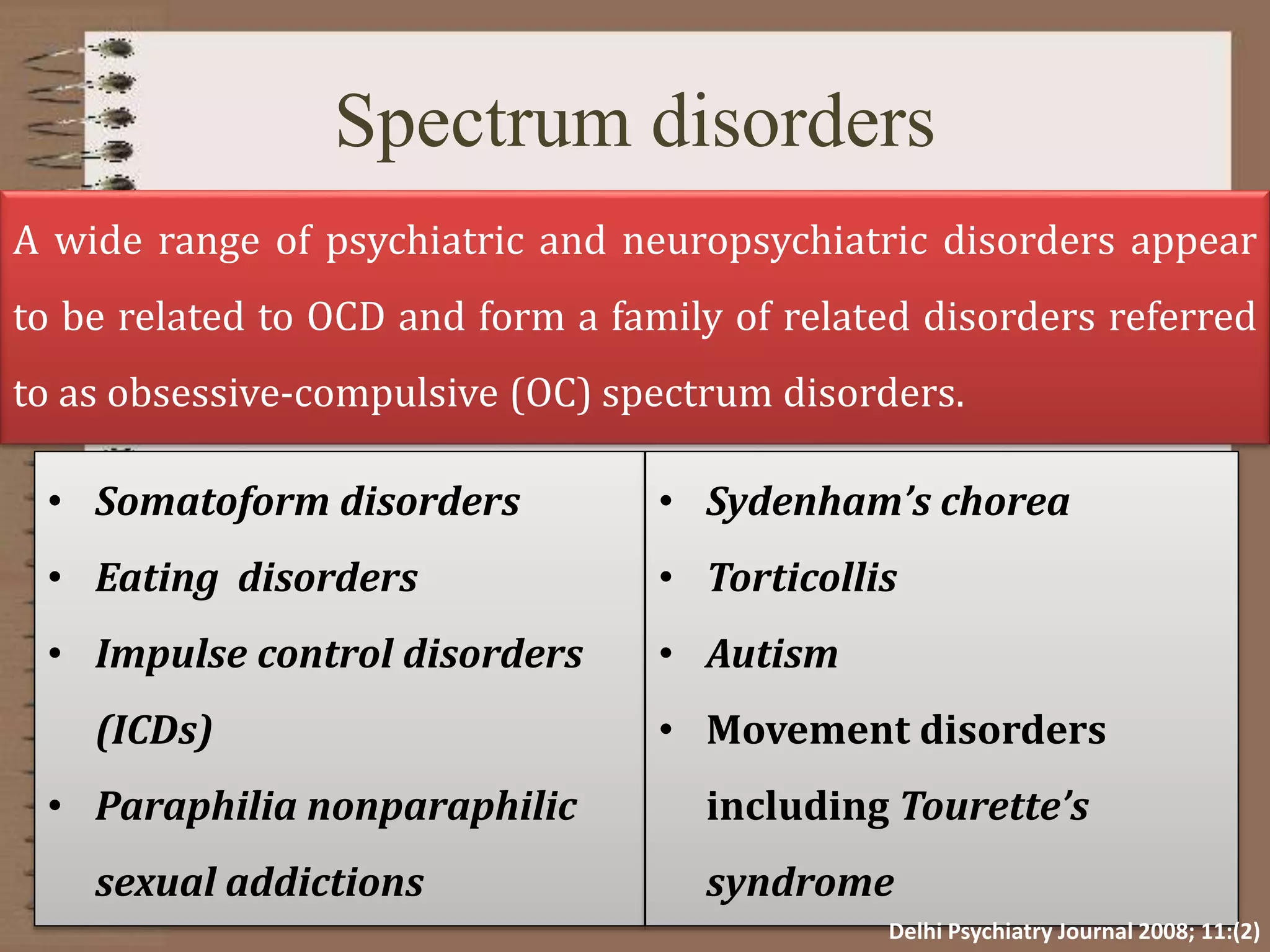
Spectrum disorders
A wide range of psychiatric and neuropsychiatric disorders appear
to be related to OCD and form a family of related disorders referred
to as obsessive-compulsive (OC) spectrum disorders.
• Somatoform disorders
• Eating disorders
• Impulse control disorders
(ICDs)
• Paraphilia nonparaphilic
sexual addictions
• Sydenham’s chorea
• Torticollis
• Autism
• Movement disorders
including Tourette’s
syndrome
Delhi Psychiatry Journal 2008; 11:(2)
Somatoform disorders
 Body dysmorphic disorder
(BDD)
Delhi Psychiatry Journal 2008; 11:(2)
 Hypochondriasis
Body dysmorphic disorder (BDD)
 Preoccupation with an imagined
slight defect in appearance that
causes significant distress or
impairment in functioning.
 Individuals suffering from BDD
have preoccupations similar to
OCD obsessions in that they have
repetitive intrusive thoughts, often
perform time consuming,
repetitive and sometimes
ritualistic behaviours.
Delhi Psychiatry Journal 2008; 11:(2)
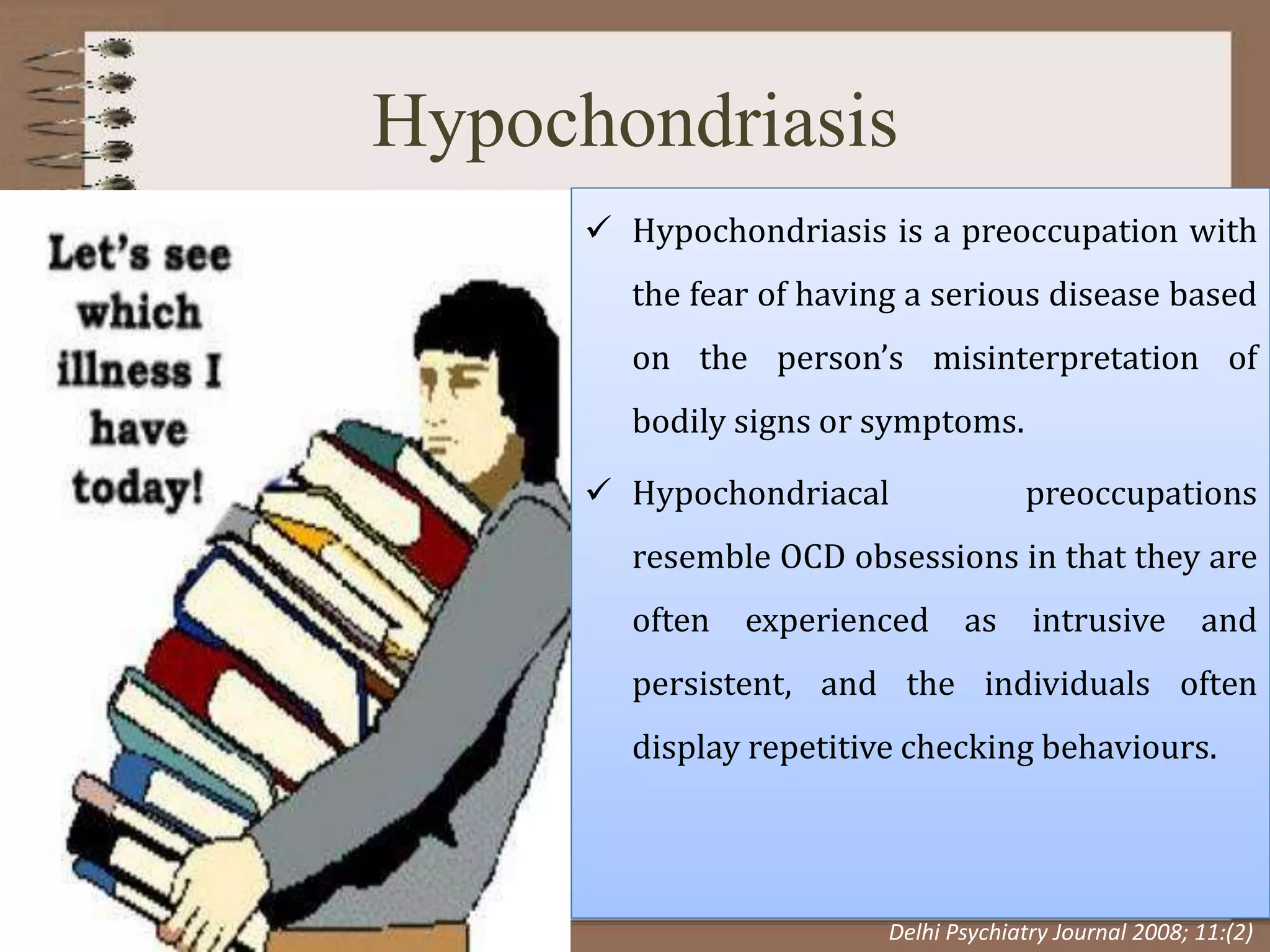
Hypochondriasis
 Hypochondriasis is a preoccupation with
the fear of having a serious disease based
on the person’s misinterpretation of
bodily signs or symptoms.
 Hypochondriacal preoccupations
resemble OCD obsessions in that they are
often experienced as intrusive and
persistent, and the individuals often
display repetitive checking behaviours.
Delhi Psychiatry Journal 2008; 11:(2)
Eating disorders
I. Anorexia nervosa
II. Bulimia nervosa
III. Binge eating disorder (BED)
• There is some overlap among anorexia nervosa, bulimia nervosa,
and BED.
• However, all three disorders are characterized by a core
preoccupation with food and body weight.
• Individuals suffering from eating disorders often perform specific
rituals, and have an abnormal preoccupation with food and weight..
Delhi Psychiatry Journal 2008; 11:(2)
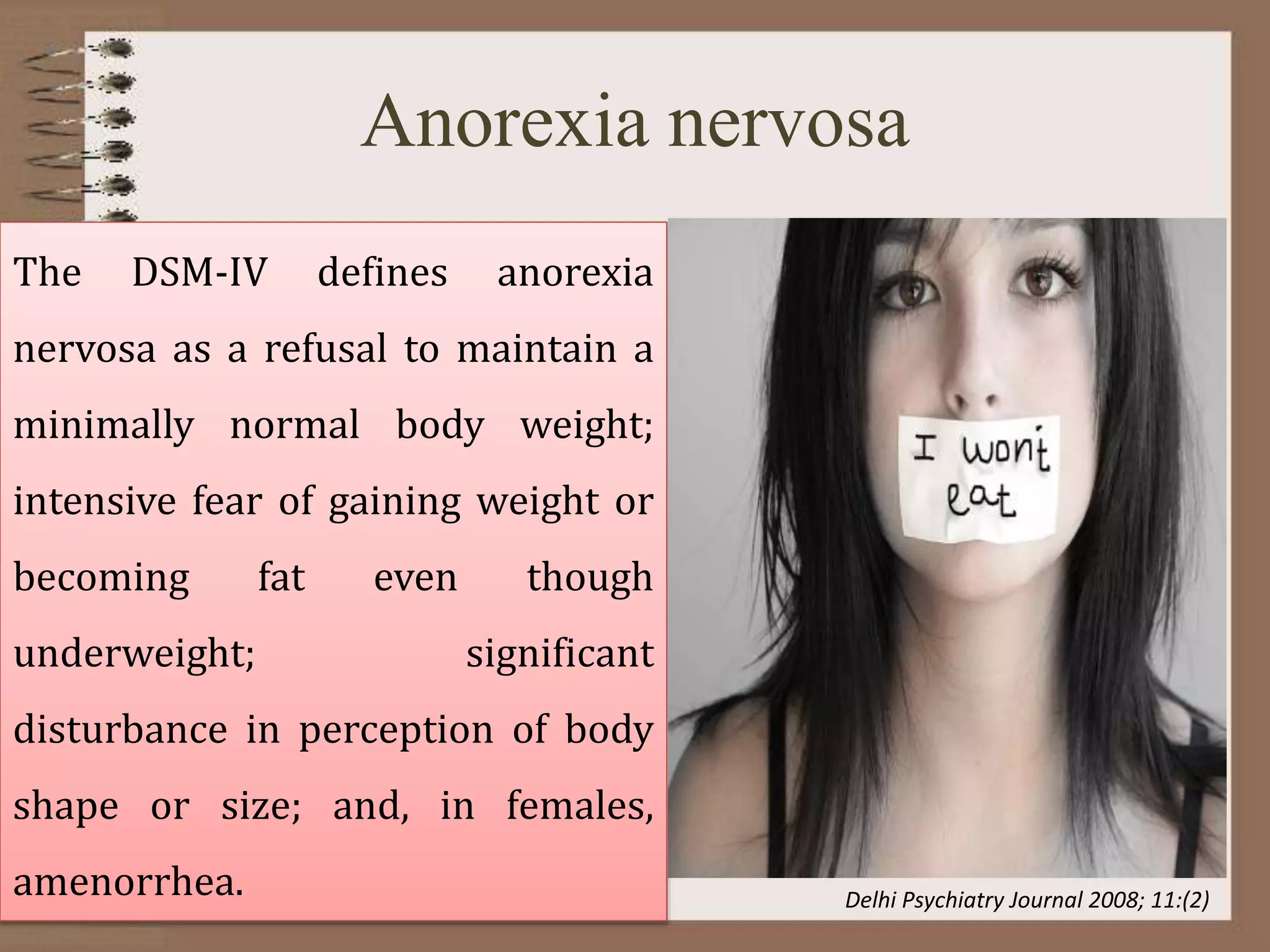
Anorexia nervosa
The DSM-IV defines anorexia
nervosa as a refusal to maintain a
minimally normal body weight;
intensive fear of gaining weight or
becoming fat even though
underweight; significant
disturbance in perception of body
shape or size; and, in females,
amenorrhea. Delhi Psychiatry Journal 2008; 11:(2)
Bulimia nervosa
The DSM-IV defines bulimia nervosa
as recurrent episodes of binge
eating followed by inappropriate
compensatory behaviours designed
to prevent a weight gain.
Delhi Psychiatry Journal 2008; 11:(2)
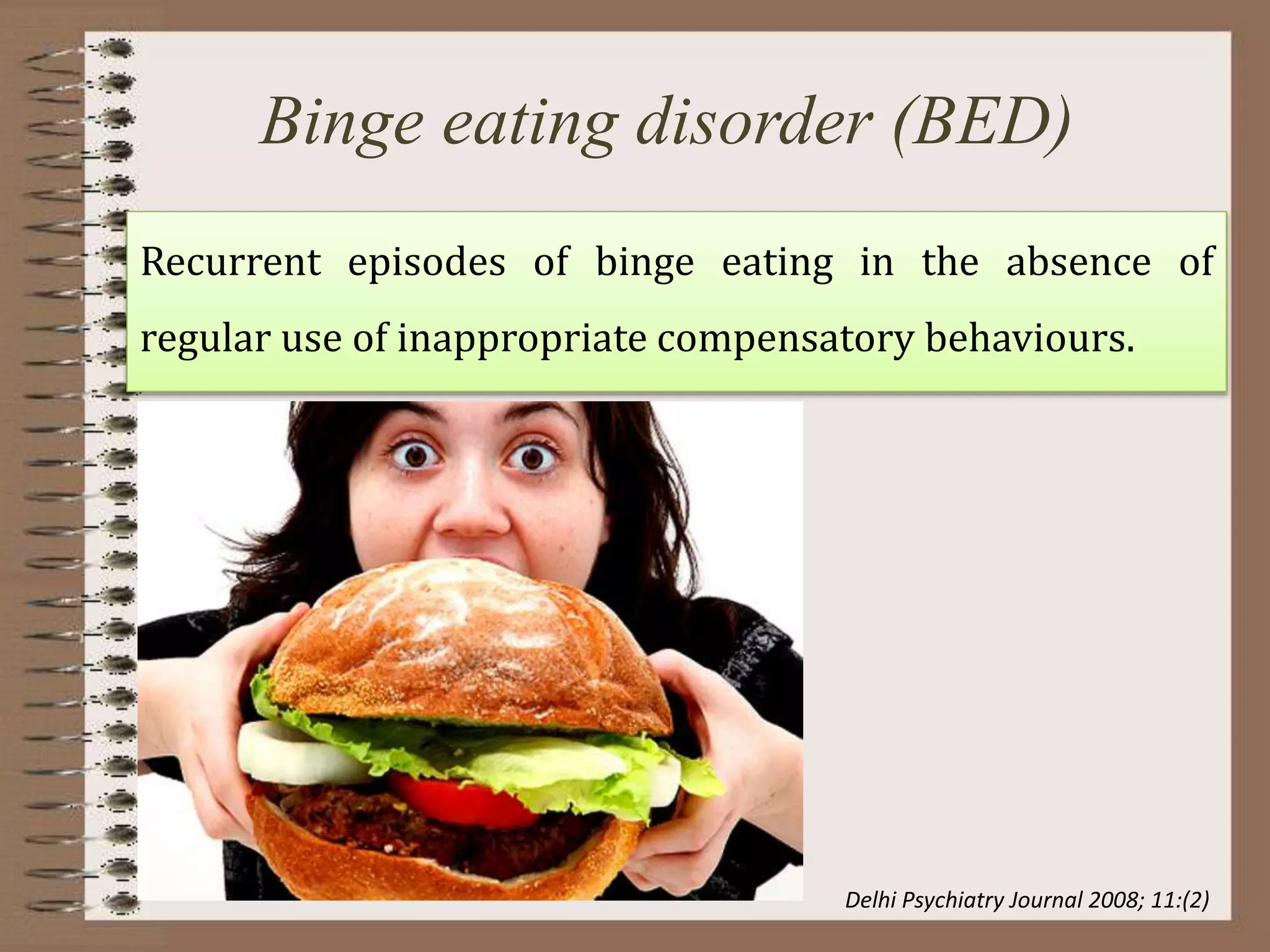
Binge eating disorder (BED)
Recurrent episodes of binge eating in the absence of
regular use of inappropriate compensatory behaviours.
Delhi Psychiatry Journal 2008; 11:(2)
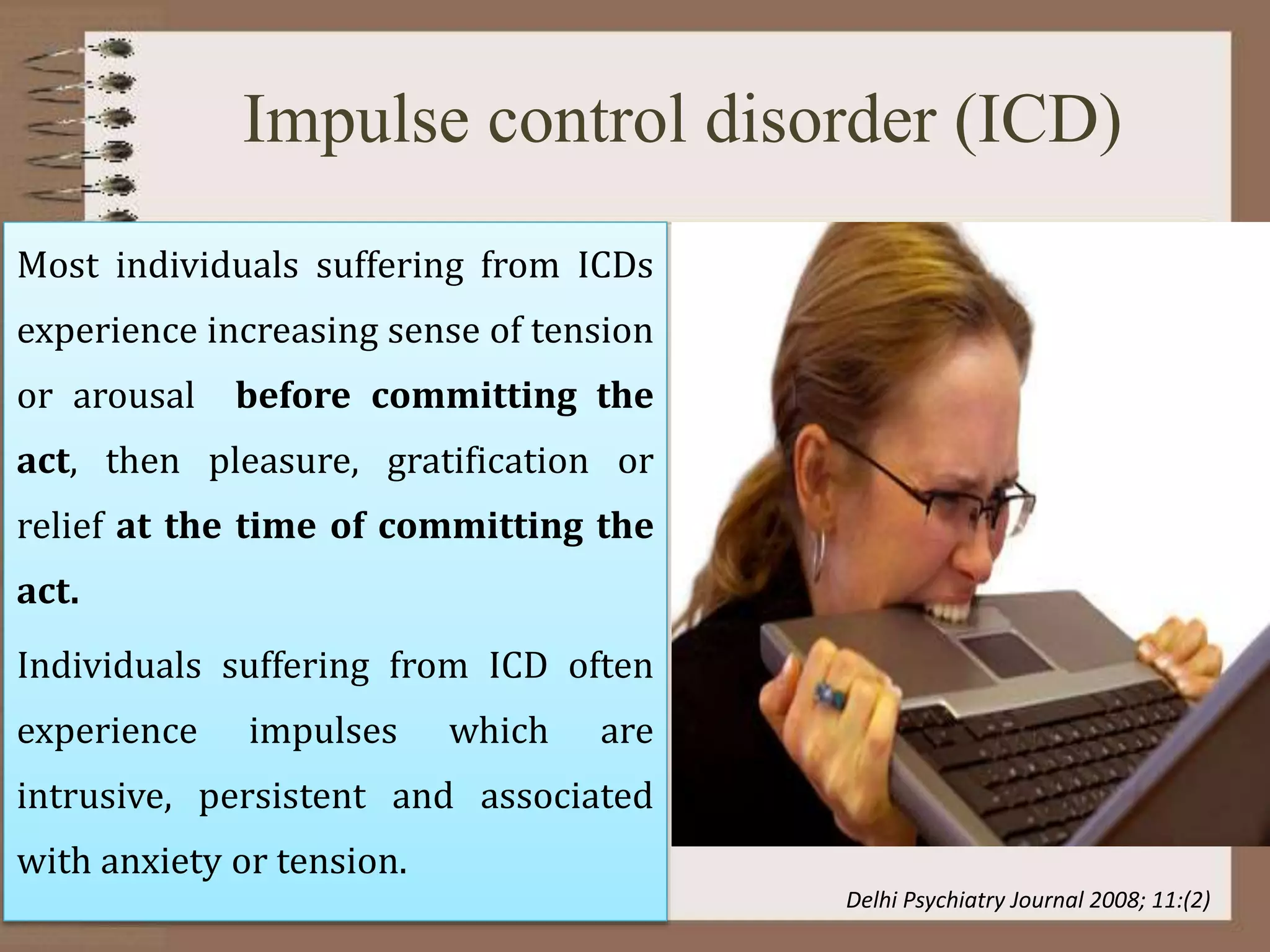
Impulse control disorder (ICD)
 Failure to resist the impulse, drive or temptation to
perform some act that is harmful.
 ICDs include intermitted explosive disorder (IED),
compulsive buying or shopping, repetitive self-
mutilation (RSM), onychophagia, psychogenic
excoriation, kleptomania, pathological gambling,
and trichotillomania.
Delhi Psychiatry Journal 2008; 11:(2)
Impulse control disorder (ICD)
Most individuals suffering from ICDs
experience increasing sense of tension
or arousal before committing the
act, then pleasure, gratification or
relief at the time of committing the
act.
Individuals suffering from ICD often
experience impulses which are
intrusive, persistent and associated
with anxiety or tension.
Delhi Psychiatry Journal 2008; 11:(2)
Paraphilias and nonparaphilic sexual
addictions (NPSAs)
 Individuals suffering from paraphilias and
nonparaphilic sexual addictions (NPSAs) experience
similar increasing senses of tension or arousal before
committing the act, then pleasure, gratification or relief
at the time of committing the act
Delhi Psychiatry Journal 2008; 11:(2)
Tourette’s syndrome
Chronic neuropsychiatric disorder characterized by
motor tics and one or more vocal tics beginning
before the age of 18 years.
The DSM-IV defines a tic as a sudden, rapid,
recurrent, nonrhythmic, stereotyped motor
movement or vocalization.
Tourette’s patients exhibit obsessions resembling
OCD obsessions, for example, they often feel the
need to perform tics until they are felt to be “just
right”
Delhi Psychiatry Journal 2008; 11:(2)
OCD and OCSD shared features
 Co-morbidity is an important shared feature. An OCD
patient often has a cluster of OCSD symptoms that may
present during the course of illness.
 Similarities in the brain circuits and neurotransmitters.
The key distinction between OCD and OCSD is that insight is usually
preserved in OCD whereas it is not usually preserved in OCSD.
Delhi Psychiatry Journal 2008; 11:(2)
What Causes OCD?
• One of the most common physiological findings in OCD
patients is a variety of alterations in the functioning and
neuroanatomy of the basal ganglia and areas of the frontal
cerebral cortex associated with limbic function.
• Involves neurotransmitters -- brain chemicals that carry
impulses from one nerve cell to another -- that behave
abnormally in the affected areas of the brain.
• Serotonin is one important neurotransmitter involved in
the disorder, as well as dopamine and glutamine.
OCD: An Indian Perspective NIMHANS article
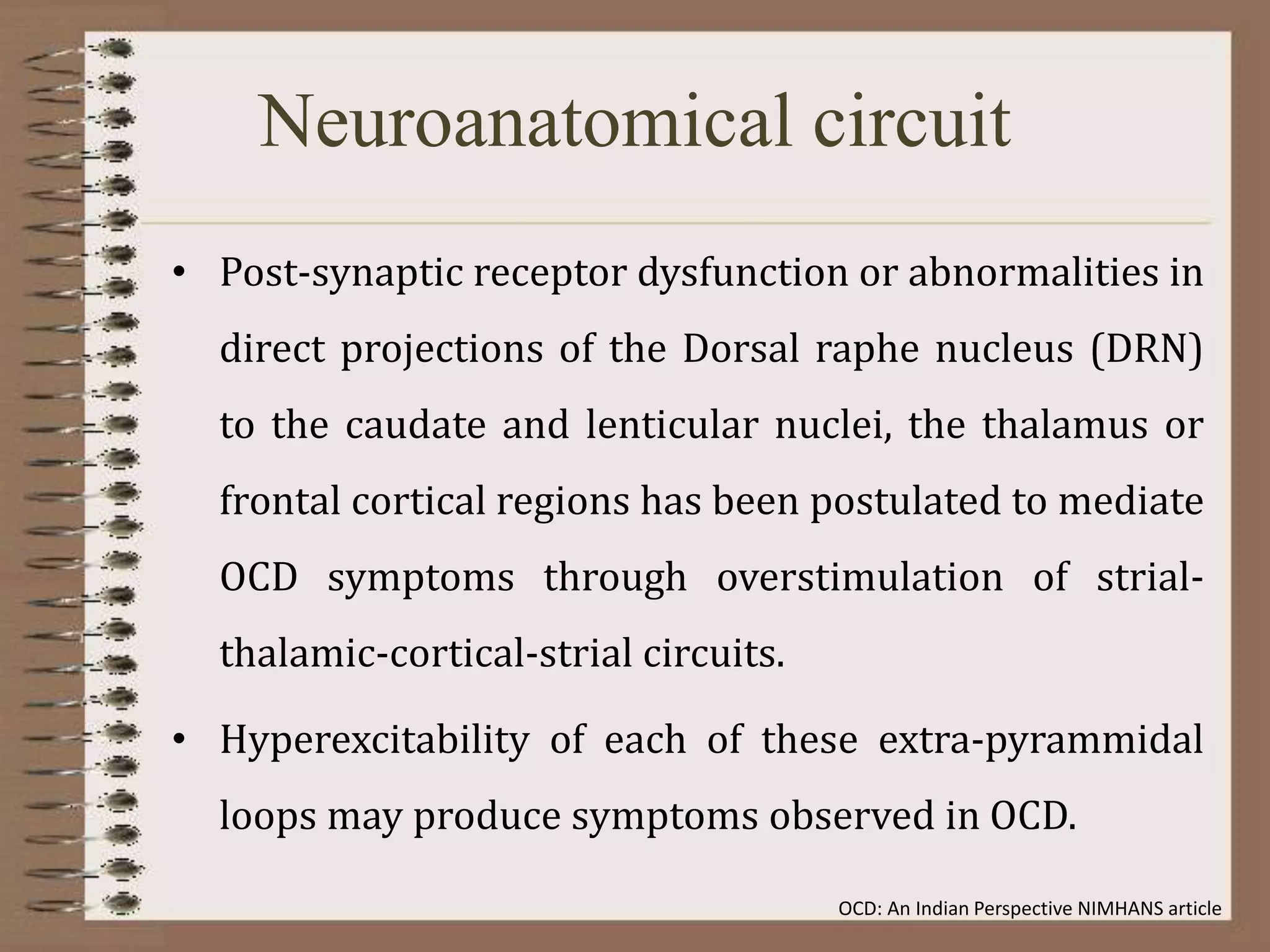
Neuroanatomical circuit
• Post-synaptic receptor dysfunction or abnormalities in
direct projections of the Dorsal raphe nucleus (DRN)
to the caudate and lenticular nuclei, the thalamus or
frontal cortical regions has been postulated to mediate
OCD symptoms through overstimulation of strial-
thalamic-cortical-strial circuits.
• Hyperexcitability of each of these extra-pyrammidal
loops may produce symptoms observed in OCD.
OCD: An Indian Perspective NIMHANS article
Diagnostic tools
• Magnetic Resonance Imaging,
• CT,
• PET exploring neuroanatomical structures and
measuring regional cerebral blood flow (rCBF)
OCD: An Indian Perspective NIMHANS article
Non-pharmacological treatment
• Behavioural therapy: involving relaxation techniques and
gradual exposure to the thing or situation causing the OCD in
an attempt to reduce the anxiety
• Cognitive-behavioural therapy: involving changing thinking
patterns or helping individuals react differently
• Having a good diet, getting enough sleep, and exercising
regularly have been proven to decrease symptoms in people
with anxiety disorders as well.
Essent Psychopharmacol 5:4, 2004
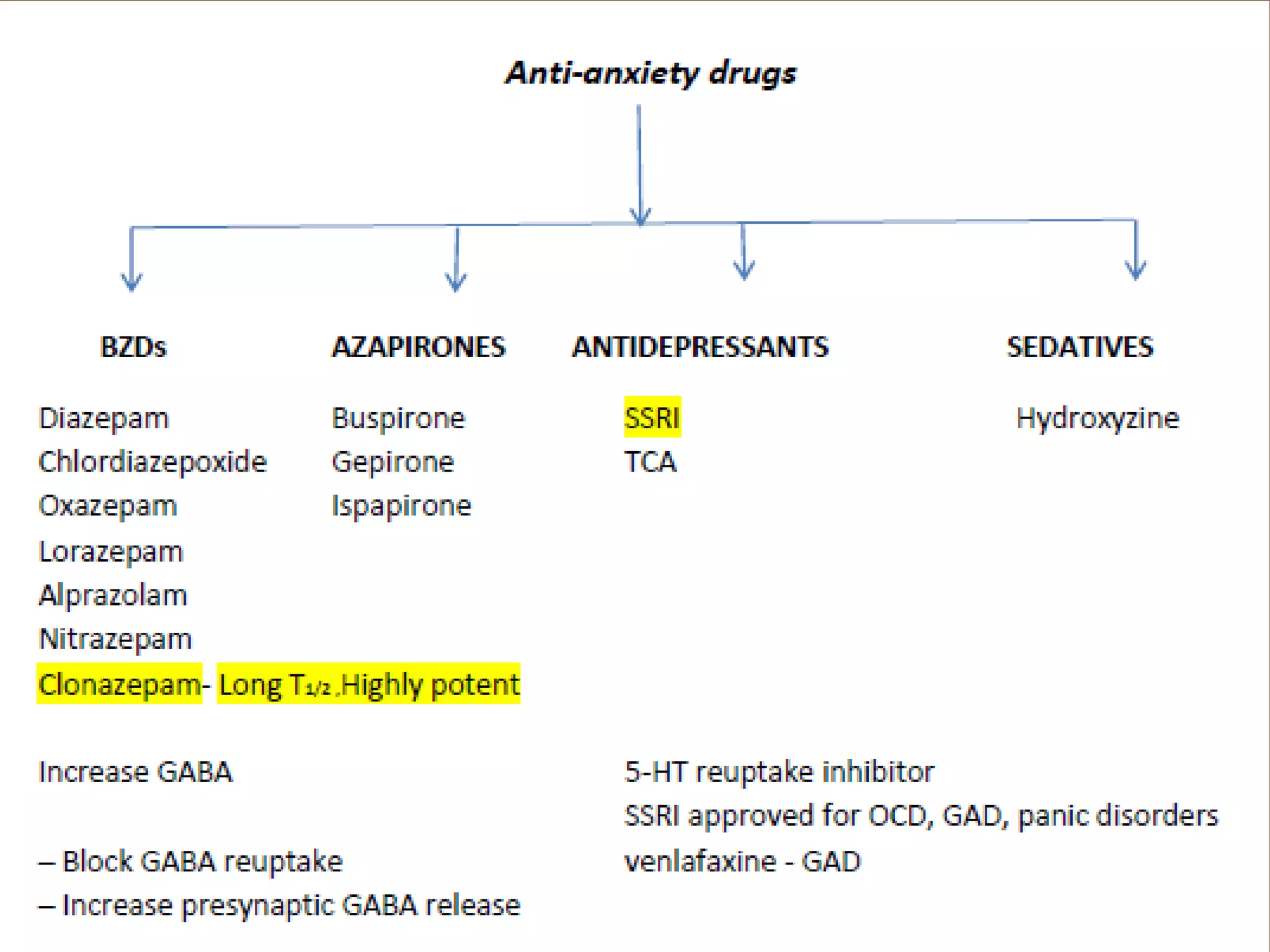
Drugs for anxiety
SSRI
 Selective serotonin reuptake inhibitors
(SSRI) considered to be first choice of drug for management
of OCD and related disorders.
 SSRI Inhibits the reuptake of serotonin back into the nerve
terminal
 At the present time, each of five selective SSRIs fluoxetine
[Prozac], paroxetine [Paxil], fluvoxamine [Luvox],
sertraline [Zoloft], and citalopram [Celexa] have shown
efficacy for OCD in randomized controlled trials
Essent Psychopharmacol 5:4, 2004
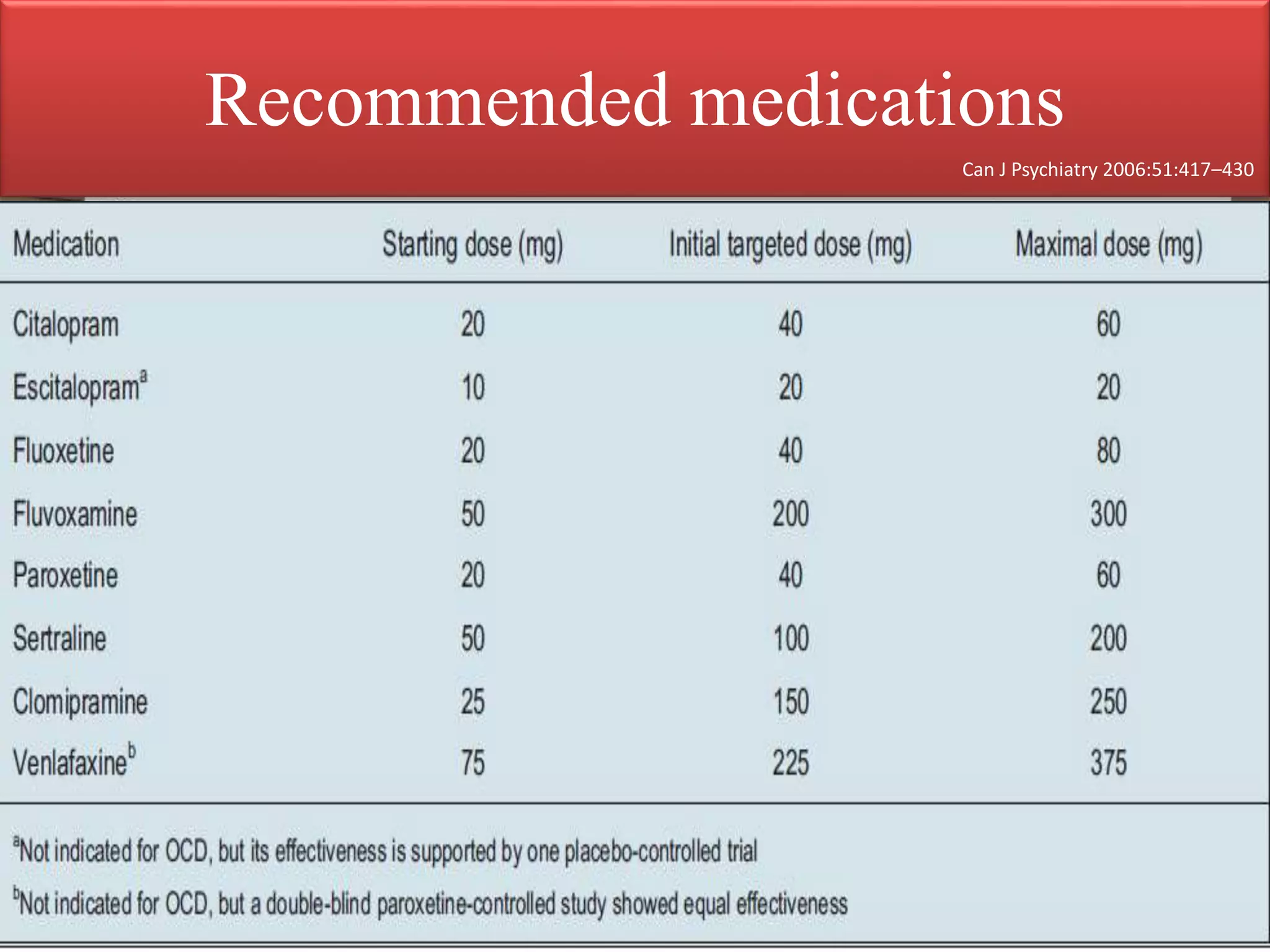
Recommended medications
Can J Psychiatry 2006:51:417–430
Future therapeutic options
• D-cycloserine : N-methyl-D-aspartic acid (NMDA)
partial agonist
• Riluzole: glutamate antagonist
• Transcranial magnetic stimulation
Ocd spectrum disorder

Ocd spectrum disorder

  • 1.
  • 2.
    OBSESSIVE COMPUSIVE DISORDER • OCDis an anxiety disorder • Characterized by obsessive thoughts and/or compulsive behaviours that significantly interfere with normal life. • Obsessions are unwanted, recurrent, and disturbing thoughts which the person cannot suppress and which can cause overwhelming anxiety. • Compulsions are repetitive, ritualized behaviours that the person feels driven to perform to alleviate the anxiety of the obsessions. • The obsessive and compulsive rituals can occupy many hours of each day.
  • 4.
    Epidemiology • 4th commonestmental disorder with disability in severe cases often comparable to the disability associated with mental illnesses such as schizophrenia and bipolar disorder. • Lifetime prevalence of OCD in India is 2.5%. • High rate of family history of obsessional illness (26%) and premorbid obsessional personality (26%). • Spectrum of related conditions that share important features with OCD, known as obsessive compulsive spectrum disorders. • It affects 10% of US population. Delhi Psychiatry Journal 2008; 11:(2) OCD: An Indian Perspective NIMHANS article
  • 5.
    OCD-Hidden epidemic • Itis twice as prevalent as schizophrenia and bipolar disorder and the fourth most common psychiatric disorder • 50-60% of the OCD patients also experience two or more comorbid psychiatric conditions during their lifetime. • Nearly 65% of the patients have their onset before age 25 whereas fewer than 15% have onset after age 35 GP Gururaj et al JPMG 2008; 54(2):91-97
  • 6.
    Does OCD AlwaysInclude Both Obsessions and Compulsions? • Approximately 80 percent of patients with OCD have both obsessions and compulsions; 20 percent have only obsessions or compulsions. Typical cycle of an OCD person Obsessions cause anxiety, causing the sufferer to engage in compulsions in an attempt to alleviate the distress caused by the obsessions. Performing out these obsessions, or rituals, does not result in any lasting relief, and in fact, the OC symptoms worsen.
  • 7.
    Obsession • Most patientswho suffer from obsessions readily admit that their thoughts/images/impulses are irrational, excessive and unwanted. • They also admit that they are a product of their own mind and not imposed from without. • Because the obsessions are intrusive, unwanted and distressing, attempts are made to ignore, suppress or neutralize them with some other action or thought (compulsions). OCD: An Indian Perspective NIMHANS article
  • 8.
    Compulsion • The compulsionsare aimed at preventing or reducing distress (e.g., washing hands repeatedly to get over the feeling of being contaminated) or preventing some dreaded event from occurring (e.g., counting to prevent family members from meeting with a fatal accident). • These behaviours are either not connected in a realistic way with what they are designed to prevent, or are clearly excessive. OCD: An Indian Perspective NIMHANS article
  • 9.
  • 10.
  • 11.
    ICD-10 diagnostic guideline (a)They must be recognized as the individual’s own thoughts or impulses; (b) There must be at least one thought or act that is still resisted unsuccessfully, even though others may be present which the sufferer no longer resists; (c) The thought of carrying out the act must not in itself be pleasurable (simple relief of tension or anxiety is not recognized as pleasure in this sense); (d) The thoughts, images, or impulses must be unpleasantly repetitive For a definite diagnosis, obsessional symptoms or compulsive acts, or both, must be present on most days for at least 2 successive weeks and be a source of distress or interference with activities. OCD: An Indian Perspective NIMHANS article
  • 13.
    Clusters in OCSD 1.Disorders where individuals are obsessed or preoccupied with issues concerning bodily sensations, body appearance or body weight. Hence includes body dysmorphic disorder, hypochondriasis, anorexia nervosa and depersonalization 2. Conditions that may be conceptualized as impulsive disorders. Patients ‘give in’ to the impulse and then engage in behaviour that is associated with pleasure, arousal, gratification or stimulation. There is frequently a feeling of guilt or remorse afterwards. These include sexual compulsions, trichotillomania, pathological gambling, kleptomania, self injurious behaviour Delhi Psychiatry Journal 2008; 11:(2)
  • 14.
    Clusters in OCSD 3.Neurologically based disorders that affect the basal ganglia, the symptom domains of which are narrow restricted interests, repetitive behaviour and rituals and routines. These include Tourette’s syndrome, Sydenham’s chorea, torticollis and autism. Delhi Psychiatry Journal 2008; 11:(2)
  • 16.
    Spectrum disorders A widerange of psychiatric and neuropsychiatric disorders appear to be related to OCD and form a family of related disorders referred to as obsessive-compulsive (OC) spectrum disorders. • Somatoform disorders • Eating disorders • Impulse control disorders (ICDs) • Paraphilia nonparaphilic sexual addictions • Sydenham’s chorea • Torticollis • Autism • Movement disorders including Tourette’s syndrome Delhi Psychiatry Journal 2008; 11:(2)
  • 17.
    Somatoform disorders  Bodydysmorphic disorder (BDD) Delhi Psychiatry Journal 2008; 11:(2)  Hypochondriasis
  • 18.
    Body dysmorphic disorder(BDD)  Preoccupation with an imagined slight defect in appearance that causes significant distress or impairment in functioning.  Individuals suffering from BDD have preoccupations similar to OCD obsessions in that they have repetitive intrusive thoughts, often perform time consuming, repetitive and sometimes ritualistic behaviours. Delhi Psychiatry Journal 2008; 11:(2)
  • 19.
    Hypochondriasis  Hypochondriasis isa preoccupation with the fear of having a serious disease based on the person’s misinterpretation of bodily signs or symptoms.  Hypochondriacal preoccupations resemble OCD obsessions in that they are often experienced as intrusive and persistent, and the individuals often display repetitive checking behaviours. Delhi Psychiatry Journal 2008; 11:(2)
  • 20.
    Eating disorders I. Anorexianervosa II. Bulimia nervosa III. Binge eating disorder (BED) • There is some overlap among anorexia nervosa, bulimia nervosa, and BED. • However, all three disorders are characterized by a core preoccupation with food and body weight. • Individuals suffering from eating disorders often perform specific rituals, and have an abnormal preoccupation with food and weight.. Delhi Psychiatry Journal 2008; 11:(2)
  • 21.
    Anorexia nervosa The DSM-IVdefines anorexia nervosa as a refusal to maintain a minimally normal body weight; intensive fear of gaining weight or becoming fat even though underweight; significant disturbance in perception of body shape or size; and, in females, amenorrhea. Delhi Psychiatry Journal 2008; 11:(2)
  • 22.
    Bulimia nervosa The DSM-IVdefines bulimia nervosa as recurrent episodes of binge eating followed by inappropriate compensatory behaviours designed to prevent a weight gain. Delhi Psychiatry Journal 2008; 11:(2)
  • 23.
    Binge eating disorder(BED) Recurrent episodes of binge eating in the absence of regular use of inappropriate compensatory behaviours. Delhi Psychiatry Journal 2008; 11:(2)
  • 24.
    Impulse control disorder(ICD)  Failure to resist the impulse, drive or temptation to perform some act that is harmful.  ICDs include intermitted explosive disorder (IED), compulsive buying or shopping, repetitive self- mutilation (RSM), onychophagia, psychogenic excoriation, kleptomania, pathological gambling, and trichotillomania. Delhi Psychiatry Journal 2008; 11:(2)
  • 25.
    Impulse control disorder(ICD) Most individuals suffering from ICDs experience increasing sense of tension or arousal before committing the act, then pleasure, gratification or relief at the time of committing the act. Individuals suffering from ICD often experience impulses which are intrusive, persistent and associated with anxiety or tension. Delhi Psychiatry Journal 2008; 11:(2)
  • 26.
    Paraphilias and nonparaphilicsexual addictions (NPSAs)  Individuals suffering from paraphilias and nonparaphilic sexual addictions (NPSAs) experience similar increasing senses of tension or arousal before committing the act, then pleasure, gratification or relief at the time of committing the act Delhi Psychiatry Journal 2008; 11:(2)
  • 27.
    Tourette’s syndrome Chronic neuropsychiatricdisorder characterized by motor tics and one or more vocal tics beginning before the age of 18 years. The DSM-IV defines a tic as a sudden, rapid, recurrent, nonrhythmic, stereotyped motor movement or vocalization. Tourette’s patients exhibit obsessions resembling OCD obsessions, for example, they often feel the need to perform tics until they are felt to be “just right” Delhi Psychiatry Journal 2008; 11:(2)
  • 28.
    OCD and OCSDshared features  Co-morbidity is an important shared feature. An OCD patient often has a cluster of OCSD symptoms that may present during the course of illness.  Similarities in the brain circuits and neurotransmitters. The key distinction between OCD and OCSD is that insight is usually preserved in OCD whereas it is not usually preserved in OCSD. Delhi Psychiatry Journal 2008; 11:(2)
  • 29.
    What Causes OCD? •One of the most common physiological findings in OCD patients is a variety of alterations in the functioning and neuroanatomy of the basal ganglia and areas of the frontal cerebral cortex associated with limbic function. • Involves neurotransmitters -- brain chemicals that carry impulses from one nerve cell to another -- that behave abnormally in the affected areas of the brain. • Serotonin is one important neurotransmitter involved in the disorder, as well as dopamine and glutamine. OCD: An Indian Perspective NIMHANS article
  • 30.
    Neuroanatomical circuit • Post-synapticreceptor dysfunction or abnormalities in direct projections of the Dorsal raphe nucleus (DRN) to the caudate and lenticular nuclei, the thalamus or frontal cortical regions has been postulated to mediate OCD symptoms through overstimulation of strial- thalamic-cortical-strial circuits. • Hyperexcitability of each of these extra-pyrammidal loops may produce symptoms observed in OCD. OCD: An Indian Perspective NIMHANS article
  • 31.
    Diagnostic tools • MagneticResonance Imaging, • CT, • PET exploring neuroanatomical structures and measuring regional cerebral blood flow (rCBF) OCD: An Indian Perspective NIMHANS article
  • 32.
    Non-pharmacological treatment • Behaviouraltherapy: involving relaxation techniques and gradual exposure to the thing or situation causing the OCD in an attempt to reduce the anxiety • Cognitive-behavioural therapy: involving changing thinking patterns or helping individuals react differently • Having a good diet, getting enough sleep, and exercising regularly have been proven to decrease symptoms in people with anxiety disorders as well. Essent Psychopharmacol 5:4, 2004
  • 33.
  • 34.
    SSRI  Selective serotoninreuptake inhibitors (SSRI) considered to be first choice of drug for management of OCD and related disorders.  SSRI Inhibits the reuptake of serotonin back into the nerve terminal  At the present time, each of five selective SSRIs fluoxetine [Prozac], paroxetine [Paxil], fluvoxamine [Luvox], sertraline [Zoloft], and citalopram [Celexa] have shown efficacy for OCD in randomized controlled trials Essent Psychopharmacol 5:4, 2004
  • 35.
    Recommended medications Can JPsychiatry 2006:51:417–430
  • 36.
    Future therapeutic options •D-cycloserine : N-methyl-D-aspartic acid (NMDA) partial agonist • Riluzole: glutamate antagonist • Transcranial magnetic stimulation