OBESITY SURGERY
Mohey Elbanna
What Is Obesity?
• Is Obesity an increased body weight ?
• Is obesity an increased body fat ?
• Is obesity a metabolic disorder ?
Obesity is All of the Above
• Obesity is increased body weight
• Obesity is increased body fat
• Obesity is a metabolic disease
• Obesity is not a character or personality problem, and not
a cosmetic disorder
Definition of Obesity
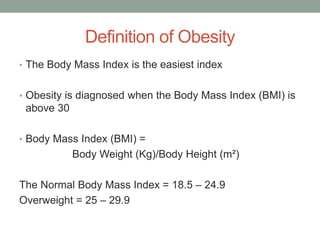
• The Body Mass Index is the easiest index
• Obesity is diagnosed when the Body Mass Index (BMI) is
above 30
• Body Mass Index (BMI) =
Body Weight (Kg)/Body Height (m²)
The Normal Body Mass Index = 18.5 – 24.9
Overweight = 25 – 29.9
BMI and Obesity
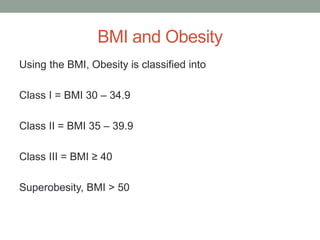
Using the BMI, Obesity is classified into
Class I = BMI 30 – 34.9
Class II = BMI 35 – 39.9
Class III = BMI ≥ 40
Superobesity, BMI > 50
Obesity is a Disease
• Obesity is not only an increase in body weight or increase
in body fat, but it is a disease
• Obesity is a disease of Energy Metabolism
• Obesity is a serious health problem
• The mortality and morbidity of obesity exceeds the
morbidity and mortality of smoking and alcohol
Waist Circumference
• More than 60 years ago, the French physician Jean
Vague observed that people with larger waists had a
higher risk of premature cardiovascular disease and death
than people who had trimmer waists or carried more of
their weight around their hips and thighs
• Decades later, long-term follow-up studies showed that
so-called “abdominal obesity” was strongly associated
with an increased risk of type 2 diabetes, cardiovascular
disease and death, even after controlling for body mass
index (BMI).
Waist Circumference and
Waist-to-Hip Ratio
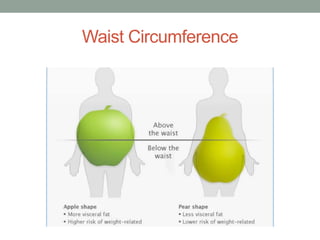
• Abdominal obesity results in an “apple-shaped” body type,
which is more common among men (Android)
• Women typically accumulate fat around the hips and
thighs to develop a “pear-shaped” body type (although
they can certainly develop “apple-shaped” body types as
well)
• The two most common ways to measure abdominal
obesity are waist circumference and the waist-to-hip ratio
• American Heart Association, National Heart, Lung and
Blood Institute: Waist circumference Women: > 88 cm (35
inches) Men: > 102 cm (40 inches)
• World Health Organization Waist-to-hip ratio:
Women: > 0.85 Men: > 0.9
Waist Circumference
Waist and Health
• Interestingly, in people who are not overweight, having a large waist
means they are at higher cardiometabolic risk smaller waist subjects
• The Nurses’ Health Study, one of the largest and longest studies to
date that has measured abdominal obesity, looked at the relationship
between waist size and death from heart disease, cancer, or any
cause in middle-aged women
• At the start of the study, all 44,000 study volunteers were healthy, and
all of them measured their waist size and hip size
• Waist circumference: Measured by wrapping a flexible measuring
tape around the natural waist (in between the lowest rib and the top of
the hip bone), the umbilicus (belly button), or at the narrowest point of
the midsection. Keep the tape parallel to the floor.
• Hip circumference: Measured by wrapping a flexible tape around the
hips at the widest diameter of the buttocks. Keep the tape parallel to

the floor.

• Waist-to-hip ratio: Waist circumference divided by hip
circumference.
Waist and Heart Disease
• After 16 years, women who had reported the highest waist sizes—35
inches or higher—had nearly double the risk of dying from heart
disease, compared to women who had reported the lowest waist
sizes (less than 28 inches)
• Women in the group with the largest waists had a similarly high risk
of death from cancer or any cause, compared with women with the
smallest waists. The risks increased steadily with every added inch
around the waist.
• The study found that even women at a “normal weight”—BMI less
than 25—were at a higher risk, if they were carrying more of that
weight around their waist: Normal-weight women with a waist of 35
inches or higher had three times the risk of death from heart disease,
compared to normal-weight women whose waists were smaller than
35 inches
• “Visceral Fat,” is very metabolically active. It releases fatty acids,
inflammatory agents, and hormones that ultimately lead to higher LDL
cholesterol, triglycerides, blood glucose, and blood pressure
Accurate Objective Methods
• Dual energy X-ray absorptiometry: a specialized X-ray
exam that provides detailed information about the ratio
between fat, muscle and bones in specific parts of the
body
• Air displacement plethysmography: the patient is
enclosed in a computerized, egg-shaped chamber. The
device measures body weight and volume to determine
body density, then uses these figures to calculate
percentage of body fat
• Underwater weighing: Also known as
hydrodensitometry, this method involves sitting on a
special chair submerged under water. The underwater
weight or body density is then used to calculate the
percentage of body fat
Metabolic Syndrome
• Metabolic syndrome is defined by the presence of any
three of the following conditions:
1- Elevated Fasting Blood Glucose > 110 mg/dL
2- Elevated BP > 130/85 mm Hg
3- Elevated Triglycerides > 150 mg/dL
4- Reduced HDL Cholesterol <40 mg/dL (M) – 50 mg/dL (F)
Higher Risk of Cardiovascular Disease
Etiology
• Energy Balance between Nutrient intake and Expenditure
• Increased availability of food
• Limited physical exercise
• Nutrient ingestion in the stomach and proximal intestine
leads to the release of hormonal signals that release
neuropeptides that alter body metabolism
Etiology
1. Genetic factors
2. Environmental factors
3. Eating Disorders
4. Drug Induced Obesity
5. Endocrinal Causes
6. Behavioral Changes
7. Psychogenic Obesity
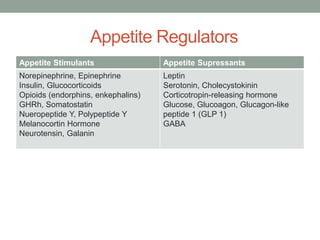
Appetite Regulators
Appetite Stimulants Appetite Supressants
Norepinephrine, Epinephrine
Insulin, Glucocorticoids
Opioids (endorphins, enkephalins)
GHRh, Somatostatin
Nueropeptide Y, Polypeptide Y
Melanocortin Hormone
Neurotensin, Galanin
Leptin
Serotonin, Cholecystokinin
Corticotropin-releasing hormone
Glucose, Glucoagon, Glucagon-like
peptide 1 (GLP 1)
GABA
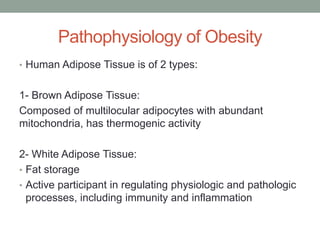
Pathophysiology of Obesity
• Human Adipose Tissue is of 2 types:
1- Brown Adipose Tissue:
Composed of multilocular adipocytes with abundant
mitochondria, has thermogenic activity
2- White Adipose Tissue:
• Fat storage
• Active participant in regulating physiologic and pathologic
processes, including immunity and inflammation
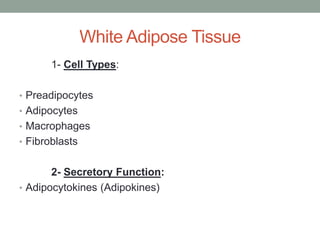
White Adipose Tissue
1- Cell Types:
• Preadipocytes
• Adipocytes
• Macrophages
• Fibroblasts
2- Secretory Function:
• Adipocytokines (Adipokines)
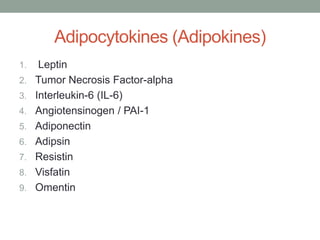
Adipocytokines (Adipokines)
1. Leptin
2. Tumor Necrosis Factor-alpha
3. Interleukin-6 (IL-6)
4. Angiotensinogen / PAI-1
5. Adiponectin
6. Adipsin
7. Resistin
8. Visfatin
9. Omentin
Incretins
• GIT hormones
• They increase insulin secretion after eating, even before
serum glucose levels are elevated
• Inhibit glucagon secretion
• They slow the absorption of nutrients into the blood
stream by reducing gastric emptying
• They may directly reduce food intake
The Incretins
• Two:
• 1- Glucagon-Like Peptide 1 (GLP 1)
• 2- Gastric Inhibitory Peptide (Glucose-dependent
insulinotropic polypeptide - GIP)
• Both are rapidly inactivated by the enzyme dipeptidyl
peptidase-4 (DPP-4)
Antidiabetic Agents
• Antidiabetic agents are grouped in parts I, II and III
according to the history of development
• Part I groups early developed drugs, during the 20th
century, including insulin, sulfonylureas, the metiglinides,
insulin sensitizers, biguanides and α-glucosidase
inhibitors
• Part II groups newer drugs developed during the early
part of the 21st century, the past decade, including
GLP-1 analogs, DPP-VI inhibitors,
amylin analogs and SGLT2 inhibitors
• Part III groups potential targets for future design of newer
antidiabetic agents with less adverse effects than the
currently available antidiabetic drugs
Obesity, Inflammation and Immunity
• Obesity is an inflammatory condition
• Associated with chronic inflammatory response with
abnormal adipokine production, activation of
proinflammatory signaling pathways
• Reduction in body weight is accompanied by a decrease
or even normalization of these parameters
• Obesity is associated with an exaggerated inflammatory
reaction
Obesity and Immunity
• Obesity, like other states of malnutrition, is known to impair the immune function,
altering leucocyte counts as well as cell-mediated immune responses
• In addition, evidence has arisen that an altered immune function contributes to
the pathogenesis of obesity
• Explanations:
(1) Obesity-associated increase in the production of leptin (pro-inflammatory) and
the reduction in adiponectin (anti-inflammatory) seem to affect the activation of
immune cells
(2) NEFA (Non-Esterfied Fatty Acids) can induce inflammation through modulation
of adipokine production or activation
(3) nutrient excess and adipocyte expansion trigger endoplasmic reticulum stress
(4) hypoxia occurring in hypertrophied adipose tissue stimulates the expression of
inflammatory genes and activates immune cells
• Data suggest a greater impact of visceral adipose tissue and central obesity,
rather than total body fat, on the inflammatory process
• These factors contribute to the development of related metabolic complications
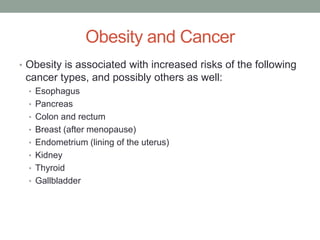
Obesity and Cancer
• Obesity is associated with increased risks of the following
cancer types, and possibly others as well:
• Esophagus
• Pancreas
• Colon and rectum
• Breast (after menopause)
• Endometrium (lining of the uterus)
• Kidney
• Thyroid
• Gallbladder
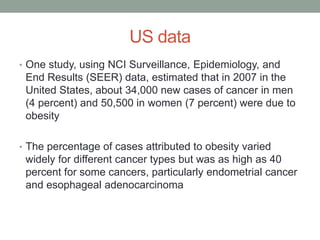
US data
• One study, using NCI Surveillance, Epidemiology, and
End Results (SEER) data, estimated that in 2007 in the
United States, about 34,000 new cases of cancer in men
(4 percent) and 50,500 in women (7 percent) were due to
obesity
• The percentage of cases attributed to obesity varied
widely for different cancer types but was as high as 40
percent for some cancers, particularly endometrial cancer
and esophageal adenocarcinoma
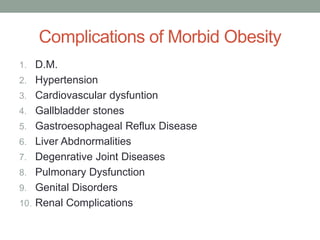
Complications of Morbid Obesity
1. D.M.
2. Hypertension
3. Cardiovascular dysfuntion
4. Gallbladder stones
5. Gastroesophageal Reflux Disease
6. Liver Abdnormalities
7. Degenrative Joint Diseases
8. Pulmonary Dysfunction
9. Genital Disorders
10. Renal Complications
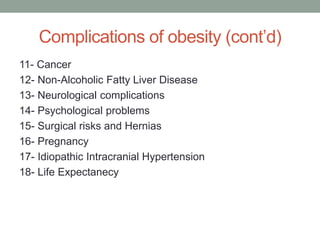
Complications of obesity (cont’d)
11- Cancer
12- Non-Alcoholic Fatty Liver Disease
13- Neurological complications
14- Psychological problems
15- Surgical risks and Hernias
16- Pregnancy
17- Idiopathic Intracranial Hypertension
18- Life Expectanecy
Treatment of Obesity
• 1- Life Style Modifications
• 2- Medical Treatment
• 3- Non-surgical Interventions
• 4- Surgical Management
Life Style Modifications
• Low Calorie Diet
• Other Types of Diet
• Exercise
• Behavioral Modifications – Behavioral Therapy
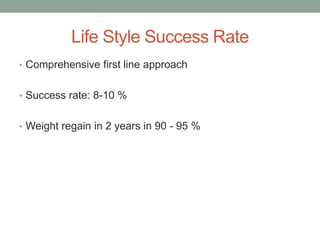
Life Style Success Rate
• Comprehensive first line approach
• Success rate: 8-10 %
• Weight regain in 2 years in 90 - 95 %
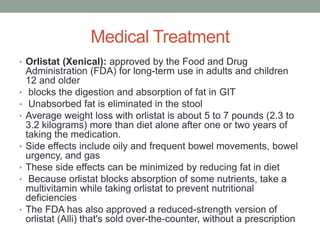
Medical Treatment
• Orlistat (Xenical): approved by the Food and Drug
Administration (FDA) for long-term use in adults and children
12 and older
• blocks the digestion and absorption of fat in GIT
• Unabsorbed fat is eliminated in the stool
• Average weight loss with orlistat is about 5 to 7 pounds (2.3 to
3.2 kilograms) more than diet alone after one or two years of
taking the medication.
• Side effects include oily and frequent bowel movements, bowel
urgency, and gas
• These side effects can be minimized by reducing fat in diet
• Because orlistat blocks absorption of some nutrients, take a
multivitamin while taking orlistat to prevent nutritional
deficiencies
• The FDA has also approved a reduced-strength version of
orlistat (Alli) that's sold over-the-counter, without a prescription
Medical Treatment
• Lorcaserin (Belviq): a long-term weight-loss drug approved by the FDA for
adults
• It works by central suppression of appetite
• If you loss of less than 5 percent of total body weight within 12 weeks of taking
lorcaserin, it's unlikely the drug will work and the medication should be stopped
• Side effects of lorcaserin include headaches, dizziness, fatigue, nausea, dry
mouth and constipation. Rare but serious side effects include a chemical
imbalance (serotonin syndrome), suicidal thoughts, psychiatric problems, and
problems with memory or comprehension. Pregnant women shouldn't take
lorcaserin
• Phentermine-topiramate (Qsymia): a combination drug approved by the FDA for
long-term use in adults. Qsymia combines phentermine, a weight-loss drug
prescribed for short-term use, with topiramate, a medication that's used to control
seizures
• If loss of weight is less than 3 percent of body weight within 12 weeks of starting
treatment, it should be stopped
• Side effects include increased heart rate, tingling of hands and feet, insomnia,
dizziness, dry mouth and constipation. Serious but rare side effects include
suicidal thoughts, problems with memory or comprehension, sleep disorders
Medical Treatment
• Phentermine (Adipex-P, Suprenza):
• A weight-loss medication for short-term use (three
months) in adults
• Using weight-loss medications short-term doesn't usually
lead to long-term weight loss
• While some health care providers prescribe phentermine
for long-term use, few studies have evaluated its safety
and weight-loss results long term
Non-Surgical Interventions
• 1- Intragastric Balloon
• 2- Gastric Pacing
• 3- EndoBarrier
• 4- TOGA
• 5- Endocinch
Intragastric Balloon
• A gastric balloon aims to reduce feelings of hunger
• During the procedure a soft balloon is inserted using an
endoscope (a thin, flexible telescope)
• The balloon is then filled with saline solution to partially fill
the stomach, leaving less room for large amounts of food
or drink
• A gastric balloon is designed to be a temporary weight
loss solution, and will usually be removed after six months
• It is sometimes used to help you lose enough weight to
undergo Bariatric Surgery
Intragastric Balloon Side Effects
• Nausea
• Vomiting
• Upper Abdominal Pain
• Rupture of the Balloon
• Obstruction
• Failure of Weight loss
• Regain of Weight
Bariatric Surgery
• 1- Restrictive Procedures:
• Sleeve Gastrectomy
• Adjustable Gastric Band
• Vertical Banded Gastroplasty
• Greater Curve Plication
• 2- Malabsorptive Procedures:
• Biliopancreatic Diversion
• Duodenal Switch
• 3- Combined Procedures:
• Gastric Bypasses
Thank You
• Thank You

Obesity surgery

  • 1.
  • 2.
    What Is Obesity? •Is Obesity an increased body weight ? • Is obesity an increased body fat ? • Is obesity a metabolic disorder ?
  • 3.
    Obesity is Allof the Above • Obesity is increased body weight • Obesity is increased body fat • Obesity is a metabolic disease • Obesity is not a character or personality problem, and not a cosmetic disorder
  • 4.
    Definition of Obesity •The Body Mass Index is the easiest index • Obesity is diagnosed when the Body Mass Index (BMI) is above 30 • Body Mass Index (BMI) = Body Weight (Kg)/Body Height (m²) The Normal Body Mass Index = 18.5 – 24.9 Overweight = 25 – 29.9
  • 5.
    BMI and Obesity Usingthe BMI, Obesity is classified into Class I = BMI 30 – 34.9 Class II = BMI 35 – 39.9 Class III = BMI ≥ 40 Superobesity, BMI > 50
  • 6.
    Obesity is aDisease • Obesity is not only an increase in body weight or increase in body fat, but it is a disease • Obesity is a disease of Energy Metabolism • Obesity is a serious health problem • The mortality and morbidity of obesity exceeds the morbidity and mortality of smoking and alcohol
  • 7.
    Waist Circumference • Morethan 60 years ago, the French physician Jean Vague observed that people with larger waists had a higher risk of premature cardiovascular disease and death than people who had trimmer waists or carried more of their weight around their hips and thighs • Decades later, long-term follow-up studies showed that so-called “abdominal obesity” was strongly associated with an increased risk of type 2 diabetes, cardiovascular disease and death, even after controlling for body mass index (BMI).
  • 8.
    Waist Circumference and Waist-to-HipRatio • Abdominal obesity results in an “apple-shaped” body type, which is more common among men (Android) • Women typically accumulate fat around the hips and thighs to develop a “pear-shaped” body type (although they can certainly develop “apple-shaped” body types as well) • The two most common ways to measure abdominal obesity are waist circumference and the waist-to-hip ratio • American Heart Association, National Heart, Lung and Blood Institute: Waist circumference Women: > 88 cm (35 inches) Men: > 102 cm (40 inches) • World Health Organization Waist-to-hip ratio: Women: > 0.85 Men: > 0.9
  • 9.
  • 10.
    Waist and Health •Interestingly, in people who are not overweight, having a large waist means they are at higher cardiometabolic risk smaller waist subjects • The Nurses’ Health Study, one of the largest and longest studies to date that has measured abdominal obesity, looked at the relationship between waist size and death from heart disease, cancer, or any cause in middle-aged women • At the start of the study, all 44,000 study volunteers were healthy, and all of them measured their waist size and hip size • Waist circumference: Measured by wrapping a flexible measuring tape around the natural waist (in between the lowest rib and the top of the hip bone), the umbilicus (belly button), or at the narrowest point of the midsection. Keep the tape parallel to the floor. • Hip circumference: Measured by wrapping a flexible tape around the hips at the widest diameter of the buttocks. Keep the tape parallel to the floor. • Waist-to-hip ratio: Waist circumference divided by hip circumference.
  • 11.
    Waist and HeartDisease • After 16 years, women who had reported the highest waist sizes—35 inches or higher—had nearly double the risk of dying from heart disease, compared to women who had reported the lowest waist sizes (less than 28 inches) • Women in the group with the largest waists had a similarly high risk of death from cancer or any cause, compared with women with the smallest waists. The risks increased steadily with every added inch around the waist. • The study found that even women at a “normal weight”—BMI less than 25—were at a higher risk, if they were carrying more of that weight around their waist: Normal-weight women with a waist of 35 inches or higher had three times the risk of death from heart disease, compared to normal-weight women whose waists were smaller than 35 inches • “Visceral Fat,” is very metabolically active. It releases fatty acids, inflammatory agents, and hormones that ultimately lead to higher LDL cholesterol, triglycerides, blood glucose, and blood pressure
  • 12.
    Accurate Objective Methods •Dual energy X-ray absorptiometry: a specialized X-ray exam that provides detailed information about the ratio between fat, muscle and bones in specific parts of the body • Air displacement plethysmography: the patient is enclosed in a computerized, egg-shaped chamber. The device measures body weight and volume to determine body density, then uses these figures to calculate percentage of body fat • Underwater weighing: Also known as hydrodensitometry, this method involves sitting on a special chair submerged under water. The underwater weight or body density is then used to calculate the percentage of body fat
  • 13.
    Metabolic Syndrome • Metabolicsyndrome is defined by the presence of any three of the following conditions: 1- Elevated Fasting Blood Glucose > 110 mg/dL 2- Elevated BP > 130/85 mm Hg 3- Elevated Triglycerides > 150 mg/dL 4- Reduced HDL Cholesterol <40 mg/dL (M) – 50 mg/dL (F) Higher Risk of Cardiovascular Disease
  • 14.
    Etiology • Energy Balancebetween Nutrient intake and Expenditure • Increased availability of food • Limited physical exercise • Nutrient ingestion in the stomach and proximal intestine leads to the release of hormonal signals that release neuropeptides that alter body metabolism
  • 15.
    Etiology 1. Genetic factors 2.Environmental factors 3. Eating Disorders 4. Drug Induced Obesity 5. Endocrinal Causes 6. Behavioral Changes 7. Psychogenic Obesity
  • 16.
    Appetite Regulators Appetite StimulantsAppetite Supressants Norepinephrine, Epinephrine Insulin, Glucocorticoids Opioids (endorphins, enkephalins) GHRh, Somatostatin Nueropeptide Y, Polypeptide Y Melanocortin Hormone Neurotensin, Galanin Leptin Serotonin, Cholecystokinin Corticotropin-releasing hormone Glucose, Glucoagon, Glucagon-like peptide 1 (GLP 1) GABA
  • 17.
    Pathophysiology of Obesity •Human Adipose Tissue is of 2 types: 1- Brown Adipose Tissue: Composed of multilocular adipocytes with abundant mitochondria, has thermogenic activity 2- White Adipose Tissue: • Fat storage • Active participant in regulating physiologic and pathologic processes, including immunity and inflammation
  • 18.
    White Adipose Tissue 1-Cell Types: • Preadipocytes • Adipocytes • Macrophages • Fibroblasts 2- Secretory Function: • Adipocytokines (Adipokines)
  • 19.
    Adipocytokines (Adipokines) 1. Leptin 2.Tumor Necrosis Factor-alpha 3. Interleukin-6 (IL-6) 4. Angiotensinogen / PAI-1 5. Adiponectin 6. Adipsin 7. Resistin 8. Visfatin 9. Omentin
  • 20.
    Incretins • GIT hormones •They increase insulin secretion after eating, even before serum glucose levels are elevated • Inhibit glucagon secretion • They slow the absorption of nutrients into the blood stream by reducing gastric emptying • They may directly reduce food intake
  • 21.
    The Incretins • Two: •1- Glucagon-Like Peptide 1 (GLP 1) • 2- Gastric Inhibitory Peptide (Glucose-dependent insulinotropic polypeptide - GIP) • Both are rapidly inactivated by the enzyme dipeptidyl peptidase-4 (DPP-4)
  • 22.
    Antidiabetic Agents • Antidiabeticagents are grouped in parts I, II and III according to the history of development • Part I groups early developed drugs, during the 20th century, including insulin, sulfonylureas, the metiglinides, insulin sensitizers, biguanides and α-glucosidase inhibitors • Part II groups newer drugs developed during the early part of the 21st century, the past decade, including GLP-1 analogs, DPP-VI inhibitors, amylin analogs and SGLT2 inhibitors • Part III groups potential targets for future design of newer antidiabetic agents with less adverse effects than the currently available antidiabetic drugs
  • 23.
    Obesity, Inflammation andImmunity • Obesity is an inflammatory condition • Associated with chronic inflammatory response with abnormal adipokine production, activation of proinflammatory signaling pathways • Reduction in body weight is accompanied by a decrease or even normalization of these parameters • Obesity is associated with an exaggerated inflammatory reaction
  • 24.
    Obesity and Immunity •Obesity, like other states of malnutrition, is known to impair the immune function, altering leucocyte counts as well as cell-mediated immune responses • In addition, evidence has arisen that an altered immune function contributes to the pathogenesis of obesity • Explanations: (1) Obesity-associated increase in the production of leptin (pro-inflammatory) and the reduction in adiponectin (anti-inflammatory) seem to affect the activation of immune cells (2) NEFA (Non-Esterfied Fatty Acids) can induce inflammation through modulation of adipokine production or activation (3) nutrient excess and adipocyte expansion trigger endoplasmic reticulum stress (4) hypoxia occurring in hypertrophied adipose tissue stimulates the expression of inflammatory genes and activates immune cells • Data suggest a greater impact of visceral adipose tissue and central obesity, rather than total body fat, on the inflammatory process • These factors contribute to the development of related metabolic complications
  • 25.
    Obesity and Cancer •Obesity is associated with increased risks of the following cancer types, and possibly others as well: • Esophagus • Pancreas • Colon and rectum • Breast (after menopause) • Endometrium (lining of the uterus) • Kidney • Thyroid • Gallbladder
  • 26.
    US data • Onestudy, using NCI Surveillance, Epidemiology, and End Results (SEER) data, estimated that in 2007 in the United States, about 34,000 new cases of cancer in men (4 percent) and 50,500 in women (7 percent) were due to obesity • The percentage of cases attributed to obesity varied widely for different cancer types but was as high as 40 percent for some cancers, particularly endometrial cancer and esophageal adenocarcinoma
  • 27.
    Complications of MorbidObesity 1. D.M. 2. Hypertension 3. Cardiovascular dysfuntion 4. Gallbladder stones 5. Gastroesophageal Reflux Disease 6. Liver Abdnormalities 7. Degenrative Joint Diseases 8. Pulmonary Dysfunction 9. Genital Disorders 10. Renal Complications
  • 28.
    Complications of obesity(cont’d) 11- Cancer 12- Non-Alcoholic Fatty Liver Disease 13- Neurological complications 14- Psychological problems 15- Surgical risks and Hernias 16- Pregnancy 17- Idiopathic Intracranial Hypertension 18- Life Expectanecy
  • 29.
    Treatment of Obesity •1- Life Style Modifications • 2- Medical Treatment • 3- Non-surgical Interventions • 4- Surgical Management
  • 30.
    Life Style Modifications •Low Calorie Diet • Other Types of Diet • Exercise • Behavioral Modifications – Behavioral Therapy
  • 31.
    Life Style SuccessRate • Comprehensive first line approach • Success rate: 8-10 % • Weight regain in 2 years in 90 - 95 %
  • 32.
    Medical Treatment • Orlistat(Xenical): approved by the Food and Drug Administration (FDA) for long-term use in adults and children 12 and older • blocks the digestion and absorption of fat in GIT • Unabsorbed fat is eliminated in the stool • Average weight loss with orlistat is about 5 to 7 pounds (2.3 to 3.2 kilograms) more than diet alone after one or two years of taking the medication. • Side effects include oily and frequent bowel movements, bowel urgency, and gas • These side effects can be minimized by reducing fat in diet • Because orlistat blocks absorption of some nutrients, take a multivitamin while taking orlistat to prevent nutritional deficiencies • The FDA has also approved a reduced-strength version of orlistat (Alli) that's sold over-the-counter, without a prescription
  • 33.
    Medical Treatment • Lorcaserin(Belviq): a long-term weight-loss drug approved by the FDA for adults • It works by central suppression of appetite • If you loss of less than 5 percent of total body weight within 12 weeks of taking lorcaserin, it's unlikely the drug will work and the medication should be stopped • Side effects of lorcaserin include headaches, dizziness, fatigue, nausea, dry mouth and constipation. Rare but serious side effects include a chemical imbalance (serotonin syndrome), suicidal thoughts, psychiatric problems, and problems with memory or comprehension. Pregnant women shouldn't take lorcaserin • Phentermine-topiramate (Qsymia): a combination drug approved by the FDA for long-term use in adults. Qsymia combines phentermine, a weight-loss drug prescribed for short-term use, with topiramate, a medication that's used to control seizures • If loss of weight is less than 3 percent of body weight within 12 weeks of starting treatment, it should be stopped • Side effects include increased heart rate, tingling of hands and feet, insomnia, dizziness, dry mouth and constipation. Serious but rare side effects include suicidal thoughts, problems with memory or comprehension, sleep disorders
  • 34.
    Medical Treatment • Phentermine(Adipex-P, Suprenza): • A weight-loss medication for short-term use (three months) in adults • Using weight-loss medications short-term doesn't usually lead to long-term weight loss • While some health care providers prescribe phentermine for long-term use, few studies have evaluated its safety and weight-loss results long term
  • 35.
    Non-Surgical Interventions • 1-Intragastric Balloon • 2- Gastric Pacing • 3- EndoBarrier • 4- TOGA • 5- Endocinch
  • 36.
    Intragastric Balloon • Agastric balloon aims to reduce feelings of hunger • During the procedure a soft balloon is inserted using an endoscope (a thin, flexible telescope) • The balloon is then filled with saline solution to partially fill the stomach, leaving less room for large amounts of food or drink • A gastric balloon is designed to be a temporary weight loss solution, and will usually be removed after six months • It is sometimes used to help you lose enough weight to undergo Bariatric Surgery
  • 37.
    Intragastric Balloon SideEffects • Nausea • Vomiting • Upper Abdominal Pain • Rupture of the Balloon • Obstruction • Failure of Weight loss • Regain of Weight
  • 38.
    Bariatric Surgery • 1-Restrictive Procedures: • Sleeve Gastrectomy • Adjustable Gastric Band • Vertical Banded Gastroplasty • Greater Curve Plication • 2- Malabsorptive Procedures: • Biliopancreatic Diversion • Duodenal Switch • 3- Combined Procedures: • Gastric Bypasses
  • 39.