The Management of Obesity Celso M. Fidel MD,FPSGS,FPCS Diplomate Philippine Board of Surgery
Introduction   Obesity  is a very serious health problem.  The advent of modern  bariatric surgery  is increasingly recognized as an important therapeutic option for many patients with clinically significant obesity.
 
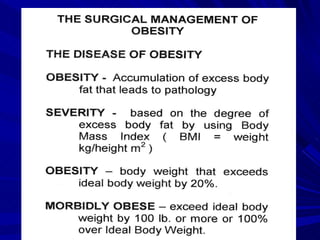
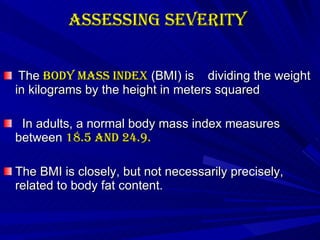
Assessing Severity   The  body mass index  (BMI) is  dividing the weight in kilograms by the height in meters squared In adults, a normal body mass index measures between  18.5 and 24.9. The BMI is closely, but not necessarily precisely, related to body fat content.
Assessing Severity   The  body mass index  has proven to be a clinically relevant measure of obesity that can be linked to health outcomes.  The BMI associated with  the lowest risk of death  is within the  normal range for  most men  and lies within the  normal to overweight range  for most women .
Assessing Severity   Abdominal obesity  is more predictive of the presence of metabolic risk factors (e.g., insulin resistance) than is an elevated BMI alone. Waist circumference and the waist:hip ratio , used in conjunction with the BMI, may more accurately identify patients with central adiposity who are at risk for significant medical comorbidities, including cardiovascular disease.
Assessing Severity   .   Waist circumference is more closely correlated with visceral obesity  . Population survey data indicate that a waist circumference exceeding  98 cm  in men and  87 cm  in women  can help identify patients who have an increased risk for cardiovascular disease
Assessing Severity Other risk factors include :  (1) elevated fasting triglycerides (>150 mg/dL) (2) elevated high-density lipoprotein cholesterol (3) hypertension (blood pressure >130/85 mm Hg); (4) hyperglycemia (fasting plasma glucose levels >110 mg/dL). The presence of any three of these risk factors identifies patients who have the metabolic syndrome. .
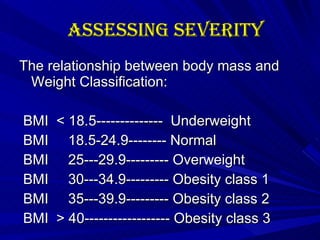
Assessing Severity . The National Heart, Lung and Blood Institute guidelines  define patients with body mass indices between 25 and 29.9 kg/m 2  body surface area as overweight  Those with BMIs exceeding 30 kg/m 2  are classified as obese
Assessing Severity Medical obesity is further subclassified into three categories: class 1 obesity for patients with body mass indices between 30 and 34.9 kg/m 2 class 2 obesity for BMIs between 35 and 39.9 class 3 obesity for patients with BMIs that exceed 40 kg/m 2
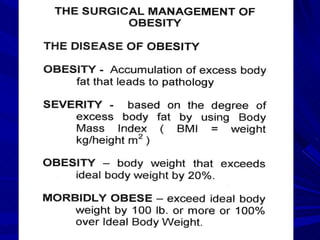
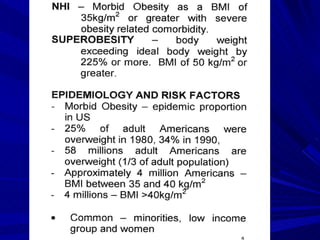
Assessing Severity In 1991, the National Institutes of Health defined  morbidly obese  patients as those with BMIs of 35 kg/m 2  or greater who had significant obesity-related conditions, or those with BMIs 40 kg/m 2  or greater in the absence of medical comorbidities. Superobesity  is a term that is occasionally used to identify patients who have BMIs equal to 50 kg/m 2  or greater. The National Institutes of Health definitions are similar to those of the World Health Organization.
 
Assessing Severity The relationship between body mass and Weight Classification: BMI  < 18.5--------------  Underweight BMI  18.5-24.9-------- Normal BMI  25---29.9--------- Overweight BMI  30---34.9--------- Obesity class 1 BMI  35---39.9--------- Obesity class 2 BMI  > 40------------------ Obesity class 3
Etiology   Storage of consumed energy as triglycerides within adipose tissue is a normal physiological process. It is teleologically appropriate to suppose that such a storage process would  provide a survival advantage  to the host during times of starvation or increased energy demands because  the consumption of adipose tissue via hydrolysis releases fatty acids  that can be used as an energy source by many tissues.
Etiology   The changes that have been witnessed over the past decades most likely have occurred as  energy expenditure has declined  due to less physical activity, while food intake has remained the same or increased. Energy balance  is regulated by the balance between food intake and energy expenditure.
 
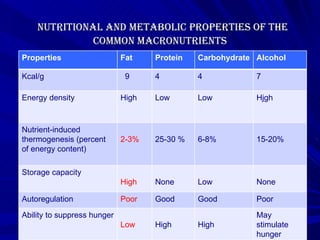
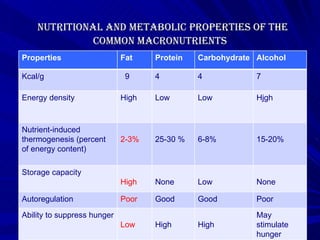
Etiology   The  properties  of the major macronutrients consumed by humans have substantially different core properties that predict their effect on energy intake in most instances  Macronutrient's thermic effect , otherwise known as  nutrient-induced thermogenesis , is the energy cost to the body of absorbing, processing, and storing an orally ingested food.
Nutritional and Metabolic Properties of the Common Macronutrients Properties Fat Protein Carbohydrate Alcohol Kcal/g 9 4 4 7 Energy density High Low Low Hjgh Nutrient-induced thermogenesis (percent of energy content) 2-3% 25-30 % 6-8% 15-20% Storage capacity High None Low None Autoregulation Poor Good Good Poor Ability to suppress hunger Low High High May stimulate hunger
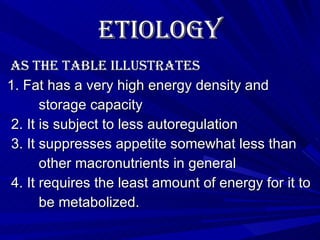
Etiology   As the table illustrates 1. Fat has a very high energy density and  storage capacity 2. It is subject to less autoregulation 3. It suppresses appetite somewhat less than  other macronutrients in general 4. It requires the least amount of energy for it to  be metabolized.
Nutritional and Metabolic Properties of the Common Macronutrients Properties Fat Protein Carbohydrate Alcohol Kcal/g 9 4 4 7 Energy density High Low Low Hjgh Nutrient-induced thermogenesis (percent of energy content) 2-3% 25-30 % 6-8% 15-20% Storage capacity High None Low None Autoregulation Poor Good Good Poor Ability to suppress hunger Low High High May stimulate hunger
Etiology   For these reasons, the importance of fat intake as a determinant of weight gain should be apparent—especially as compared with protein or carbohydrate. .
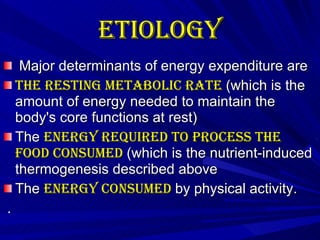
Etiology   Major determinants of energy expenditure are The resting metabolic rate  (which is the amount of energy needed to maintain the body's core functions at rest)  The  energy required to process the food consumed  (which is the nutrient-induced thermogenesis described above The  energy consumed  by physical activity.  .
Etiology   Behavioral factors that may vary genetically 1.The  preference for fat  in the diet 2. Metabolic adaptations  to food restriction 3. Tolerance  for physical activity 4. The  frequenc y of meals.
Etiology   Various metabolites, besides fatty acids or triglycerides, that are released by adipose tissue during starvation include various  Cytokines  and  prostaglandins  that may help regulate energy balance,  Resistin  and  Fibronectin   that may influence carbohydrate metabolism
Etiolog y   Nutrient ingestion into the stomach or proximal intestine elicits hormonal signals that release  neuropeptides , which in turn alter body metabolism Pleptin, ghrelin , which is normally associated with appetite stimulation (i.e., is orexigenic) Insulin  and  cholecystokinin   are  normally anorexic
Etiology   Leptin  is a good example  of the fundamental principles of neurohormonal signaling between the periphery and the central nervous system Leptin is a cytokinelike polypeptide hormone that is known to influence long-term changes in satiety. It is produced predominantly by adipose tissue and its circulating levels are proportional to the amount of fat stored as adipose tissue.
Etiology   Leptin’s effects on food intake are governed by its effects on receptors within the arcuate nucleus of the hypothalamus. There it induces the production of -melanocyte stimulating hormone MSH) from propiomelanocortin.  MSH binds with melanocortin 4 receptors within hypothalamic nuclei and inhibits food intake. Leptin also decreases the production of appetite-inducing neuropeptides such as neuropeptide Y.   .
Etiology   Humans born with homozygous loss of function mutations of the leptin gene (and who, therefore cannot produce leptin) eventually develop morbid obesity. These unfortunate individuals continuously seek food and eat much more than normal  Other phenotypical manifestations includes Adrenal insufficiency Changes in hair color Impaired fertility are commonly
Etiology   The Prader-Willi syndrome is a well-recognized disorder characterized by childhood-onset upper body obesity short stature mental retardation hypogonadism.
Etiology   The Prader-Willi syndrome  .  In general when such syndromes are identified, they most often include alterations in the leptin-hypothalamic feedback loop (i.e., of important signal precursors such as propiomelanocortin, the leptin gene, and the leptin receptor).   Melanocortin 4 receptor mutations have also been described but are extremely rare.
Etiology   Ghrelin  discovered in 1999, is a growth hormone secretagogue that is synthesized predominantly by the stomach.  Its levels rise just before meals and with short-term food restriction, or prolonged starvation in general and may be an important orexigenic (i.e., appetite-stimulating) signal.  Ghrelin levels normally fall rapidly after meals. Like leptin, ghrelin metabolism may be dysregulated in obese subjects.
Etiology   Obesity is associated with decreased circulating ghrelin levels. After gastric bypass surgery, ghrelin levels fall but do not increase as expected before meals Low levels of ghrelin and its metabolic dysregulation may be at least partially responsible for the sustained weight loss after surgical procedures that resect and/or bypass a significant portion of the stomach.
  Medical problems associated with Obesity   Gastroesophageal reflux 2. Coronary artery disease 3. Cerebrovascular accident 4. Congestive heart failure 5. Hypertension 6. Dyslipidemia 7. Cholelithisis and gallbladder disease 8. Osteoarthritis and degenerative joint disease 9. Slap apnea
  Medical problems associated with Obesity   Cancer of the: Esophagus 2. Stomach 3. Liver 4. Pancreatic 5. Kidney 6. Non Hodgkin’s lymphoma 7. Multiple myeloma 8. Prostate
  Medical problems associated with Obesity   Cancer: 9. Ovarian 10.Uterus 11.Gallbladder 12. Colon Menstrual Abnormalities Impaired fertility and increased risk of adverse outcome after pregnancy Stress inccontinence
Medical problems associated with  Obesity   Morbidity from obesity is increased in the presence of: 1. Preexisting coronary artery or peripheral artery disease  2.Type II diabetes 3. Hypertension 4. Smoking
Medical problems associated with Obesity   Morbidity from obesity is increased in the presence of : 5. Elevated low-density or decreased high-density lipoprotein levels 6. Increased fasting blood sugar concentrations 7. Patients with a family history of early-onset heart disease
Medical problems associated with Obesity  Cardiovascular risks associated w/ significant obesity.   1. Overweight women have 50% > risk of heart failure compared to women with normal BMIs.  2.The risk is twofold higher in obese females. 3. Obese men have a 90% greater risk of heart failure. 4. Overall, approximately 11% of all heart failure cases in men and 14% in women can be attributed to obesity alone.
Medical management of Obesity   Medications are classified into:  1. Those that  decrease food intake  by suppressing appetite or increasing satiety 2. Those that  decrease nutrient absorption .
Medical management of Obesity   Appetite suppressants are believed to work by  increasing the availability of neurotransmitters  which suppress appetite such as:  1.  norepinephrine   2.  serotonin 3 . dopamine
Medical management of Obesity   Sibutramine  works by inhibiting the uptake of these neurotransmitters. This drug may also  stimulate thermogenesis , although this effect is modest and constitutes only 3–5% of the average person's resting metabolic rate. Randomized controlled trials indicate that the average patient will lose approximately 3–4 kg over 8–52 weeks of treatment.
Medical management of Obesity   Orlistat  reduces nutrient absorption  by binding to gastrointestinal lipase and prevents the hydrolysis of dietary fat into absorbable free fatty acids and monoacylglycerols.  Patients who are treated with  orlistat  excrete about a third of the dietary fat that they consume in their stools and can be expected to lose about 9% of their baseline weight on average.
Medical management of Obesity   The currently accepted approach is to combine caloric restriction with exercise and behavioral modification as the initial treatment recommendation for most overweight or obese patients. Diet modification, exercise, and behavioral modifications should be the cornerstones of every treatment plan.
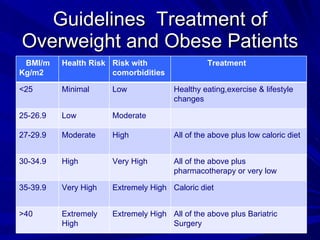
Guidelines  Treatment of Overweight and Obese Patients BMI/m Kg/m2  Health Risk Risk with comorbidities Treatment <25 Minimal Low Healthy eating,exercise & lifestyle changes 25-26.9 Low Moderate 27-29.9 Moderate High All of the above plus low caloric diet 30-34.9 High Very High All of the above plus pharmacotherapy or very low 35-39.9 Very High Extremely High Caloric diet >40 Extremely High Extremely High All of the above plus Bariatric Surgery
Surgical management of obesity Bariatric surgery should be offered To appropriate patients with BMIs of 40 kg/m 2  or greater (or between 35 and 40 kg/m 2  if any of the previously described significant medical comorbidities are present)  Who have failed medical treatment, nutritional treatment, lifestyle changes, behavioral modification, or other conservative therapies.
Surgical management of obesity .  Candidates  for surgical therapy must be willing and able to comply with: Postoperative dietary recommendations Exercise Follow-up requirements.
Surgical management of obesity .  Patients  who should  not undergo bariatric surgery 1. Ongoing drug or alcohol dependency 2. Who are unstable or otherwise unfit  psychiatrically 3. Who are unable to undergo general  anesthesia
Surgical management of obesity Surgical treatment is the only way to obtain consistent, durable weight loss for most morbidly obese patients
Surgical management of obesity Surgical treatment is indicated for patients with: 1. BMIs of 40 kg/m 2  or greater   2. BMIs of 35–40 kg/m 2  with obesity-related comorbidities    3. When medical, nutritional, and behavioral therapies are ineffective
Surgical management of obesity In all instances, the best care for morbidly obese patients provides unfettered access to, and evaluation by, a multidisciplinary team comprised of : 1. Nutritionists 2. Physical or exercise therapists 3. Surgeons 4. Medical specialists 5. Psychiatrists.
Criteria for Surgical Treatment of Obesity 1. BMI >40 or BMI between 35 and 40 in individuals with high-risk comorbid conditions or severe lifestyle limitations for greater than 5 years 2. Absence of secondary cause of morbid obesity 3. Ability and willingness to cooperate with long-term follow-up 4. Acceptable operative risk
Criteria for Surgical Treatment of Obesity Not yet uniformly recommenced for children or adolescents (less than 18 years of age), or patients over the age of 60
Preoperative Preparation Nutritional evaluation and education are critically important components of preoperative preparation. Psychiatric evaluation  helps some patients cope more effectively with various stressors that may surface in their interpersonal relationships after surgery.
Preoperative Preparation Psychiatric evaluation helps to prepare patients for operation and their postoperative recuperation, and also helps to identify patients with  eating disorders ,  severe depression ,  psychosis , or  other mood disturbances  that could adversely affect outcome.
Preoperative Preparation 1. All patients should have an electrocardiogram  performed preoperatively.  2. Stress testing & even cardiac catheterization  may be indicated for intermediate- or high-  risk patients. 3. Polysomnographic evaluation at a sleep  center for all morbidly obese patients who  are being evaluated for surgical treatment.
Preoperative Preparation 4. Patients who are diagnosed with significant sleep apnea require treatment with continuous positive airway pressure and are at risk for acute upper airway obstruction and significant cardiac arrhythmias postoperatively.
Preoperative Preparation 5.  Obesity hypoventilation syndrome  may also be present in many obese patients. The syndrome is defined by the presence of significant hypoxemia with arterial partial pressure of oxygen less than 55 mm Hg, and hypercarbia with a partial pressure of carbon dioxide greater than 47 mm Hg.
Preoperative Preparation 6. Patients with sleep apnea, the obesity hypoventilation syndrome, or any other significant airway or parenchymal lung disease should be evaluated by a pulmonologist preoperatively
Preoperative Preparation 7. Finally, many patients with severe gastroesophageal reflux, dysphagia, nausea, vomiting, abdominal pain, or a prior history of gastric or intestinal surgery may require formal evaluation of the gastrointestinal tract including barium swallow, upper G I series, esophagogastroduodenoscopy, esophageal manometry, and pH testing and computed tomography of the abdomen with and without contrast.
Preoperative Preparation 8. Preoperative laboratory evaluation will typically include hemoglobin, hematocrit, and platelet count measurements, along with assessment of electrolyte levels, BUN, creatine, blood glucose, and liver function. In women, Pap smears and pregnancy testing should be performed routinely. Hemoglobin A 1c  measurements are appropriate for patients with adult-onset diabetes mellitus. Posteroanterior and lateral radiographs of the chest should also be evaluated routinely.
Preoperative Preparation 9. Obesity likely increases the risk of postoperative wound infections. For this reason antibiotic prophylaxis is indicated according to the likelihood of wound contamination and the type of procedure planned. The rate of wound infection after laparoscopic gastric bypass appears to be reduced by at least 75% compared with open gastric bypass surgery.
Historical Perspective and Overview A useful paradigm is to categorize bariatric procedures as:  1. Restrictive 2. Malabsorptive 3. Combination of both
Historical Perspective and Overview The rationale for the surgical treatment of obesity has been based on three fundamental goals: 1. Reducing caloric absorption by bypassing  portions of the stomach and small bowel 2. Reducing gastric capacity via banding,  stapling, or transection 3. Performing operations that induce  malabsorption and restrict food intake.
.  Major Types of Bariatric Surgical Procedures 1. Malabsorptive     2. Restrictive
.  Major Types of Bariatric Surgical Procedures 3. Mostly restrictive 4. Mostly malabsorptive  
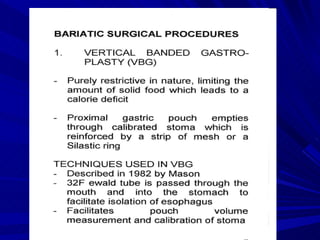
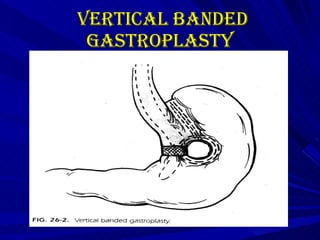
.  Major Types of Bariatric Surgical Procedures 1. Malabsorptive    Jejunoileal and jejunocolic bypasses (no longer recommended 2. Restrictive (1) Vertical banded gastroplasty (2) Adjustable silicone gastric banding
.  Major Types of Bariatric Surgical Procedures 3. Mostly restrictive (1)   Short-limb (50–100 cm) Roux-en-Y  gastric bypass (2)  Long-limb (150 cm) Roux-en-Y gastric  bypass 4. Mostly malabsorptive   Biliopancreatic diversion with or without  duodenal switch
 
 
Vertical Banded gastroplasty
 
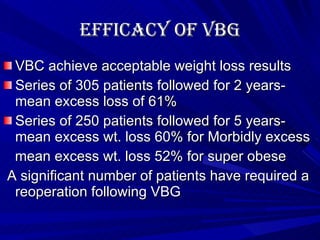
Efficacy of VBG VBC achieve acceptable weight loss results Series of 305 patients followed for 2 years- mean excess loss of 61% Series of 250 patients followed for 5 years- mean excess wt. loss 60% for Morbidly excess mean excess wt. loss 52% for super obese A significant number of patients have required a reoperation following VBG
Efficacy of VBG Complications Over all morbidity rate of VBG- under 10% mortality rate of 0- 38% Early Complications Splenectomy  3% Peritonitis from  leak 6%
Efficacy of VBG Complications Late Complications 1. Stoma stenosis 2. Staple line dehiscence 48% 3. Reflux Esophagitis 4. Intractable vomiting  30-50%
Efficacy of VBG Advantages 1. Significant improvement in comorbidities like dyspnea, hypertension,  diabetes mellitus, quality of life 2. Minimal long term metabolic or nutritional deficiency 3. Less operating time 4. No anastomosis required
Efficacy of VBG Disadvantages Long term weight loss is less successful when 1. Patient eat sweet food 2. In high liquid caloric intake 3. Less effective in terms of weight loss as  compared to gastric bypass
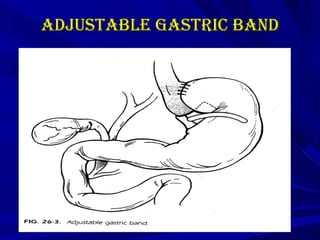
Laparoscopic Gastric banding Mechanism of Action Use of Silicone band Restricts amount of ingested solid food Adjustable nature of the band
Adjustable gastric band
Efficacy of lGb Mean Excess weight loss in 1 and 2  years  55 to 56%
Laparoscopic Gastric banding Complications Intraoperative Complications 1. Splenic injury  0 to 1 % 2. Esophageal injury  0 to 1% 3. Gastric injury  0 to 1% 4. Conversion to open procedure  1 to 2 % 5. Bleeding  0 to 1%
Laparoscopic Gastric banding Complications Early postoperative Complications 1. Bleeding  0.5 % 2. Wound infection  0 to 1% 3. Food intolerance 0 to 11%
Laparoscopic Gastric banding Complications Late Complications 1. Slippage of Band  7- 21% 2. Band Erosion 2 to 7.5% 3. Leakage of reservoir 4. Persistent vomiting
Laparoscopic Gastric banding Advantages 1. Simple procedure and less operative time 2. Mortality is low 0.06% 3. No staple liner or anastomosis 4. Recovery is rapid and hospital stay is short
Laparoscopic Gastric banding Disadvantages Potential for site complicaton  Need for frequent  postoperative visit for  gastric band adjustment
 
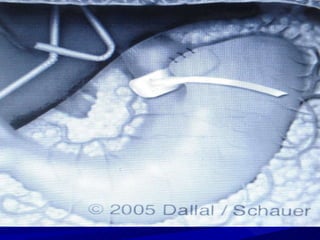
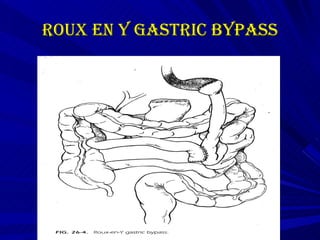
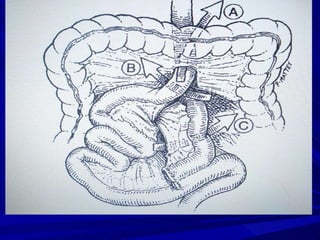
Open roux en y gastric bypass Mechanism of action Both a gastric restrictive and mildly malabsorptive procedure
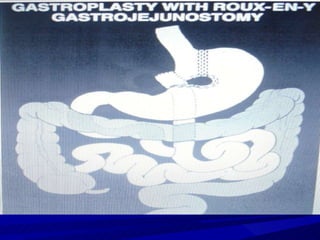
Roux en y gastric bypass
Efficacy of Open roux en y gastric bypass 1. Weight  loss  from gastric bypass is superior  than purely restrictive procedures .  2 .  Five year weight loss was 48 -74 % loss of excess weight. 3. RYGB- to prevent the progression of non  insulin dependent Diabetes Mellitus, reduce the mortality from Diabetes Mellitus and Cardiovascular disease.
Efficacy of Open roux en y gastric bypass Early Complications 1.  ANASTOMOTIC LEAK with  peritonitis - 1.2% 2.  Acute distal gastric  dilatation 3 .  Severe wound infection
Efficacy of Open roux en y gastric bypass late Complications 1. Stomach stenosis  15% 2. Marginal Ulcer  13% 3. Intestinal Obstruction 4. Internal Hernia 5. Staple line destruction 6. Incisional Hernia
Efficacy of Open roux en y gastric bypass late Complications 7. Metabolic Complications a. Deficiencies of:  Calcium, thiamine, Vit B12  30-70% Folate  9- 18% Iron  20-49% b. Anemia  18-35%
Efficacy of Open roux en y gastric bypass Advantages 1. RYGB is more effective than vertical bonded gastroplasty 2. Presence of dumping syndrome encourages  patient to avoid sweet food
Efficacy of Open roux en y gastric bypass disAdvantages 1. Dumping syndrome in a lot of patients  a. Due to rapid emptying hyperosmolar boluses in small intestines b.  Bloating, nausea, vomiting, diarrhea and abdominal pain after intake of milk and sweet products
Efficacy of Open roux en y gastric bypass disAdvantages c. Vasomotor symptoms like palpitation,  diaphoresis and lightheadedness 2. Distal gastric distention – hiccups and left shoulder pain 3. Internal hernia
 
Laparoscopic roux en y gastric bypass Mechanism of action 1. Both gastric restrictive & mildly malabsortive procedure 2. Small gastric pouch restricts gastric intake while the Roux Y configuration provides malabsorpton of calories and nutrients
Laparoscopic roux en y gastric bypass Efficacy 1. After 24 months follow up mean excess weight loss ranges from 69- 82% 2. Most  comorbidities were improved and  eradicated
Laparoscopic roux en y gastric bypass complications 1. Pulmonary embolism 0- 1.5% 2. Anastomotic leak  1.5- 5.8% 3. Bleeding  0- 3.3% 4. Stenosis of gastroepinoctomy 1.6- 6.3% 5. Internal Hernia  2.5% 6. Marginal Ulcer  1.4% 7. Gallstone  1.4%
Laparoscopic roux en y gastric bypass advantages 1. Better cosmesis 2. Less postoperative pain 3. Attenuation of postoperative stress response 4. Reduce wound infection, dehiscence 5. Incisional Hernia  6. Improvement of postoperative pulmonary function
 
Laparoscopic roux en y gastric bypass advantages 1. Better cosmesis 2. Less postoperative pain 3. Attenuation of postoperative stress response 4. Reduce wound infection, dehiscence 5. Incisional Hernia  6. Improvement of postoperative pulmonary function
Laparoscopic roux en y gastric bypass disadvantages 1. Technically challenging, advance laparoscopy of steep learning curve 2.  Approach may be difficult in super obese patients
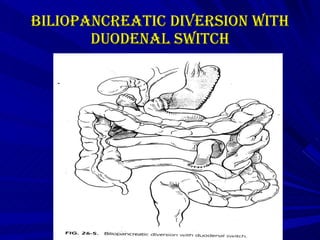
biliopancreatic diversion with duodenal switch
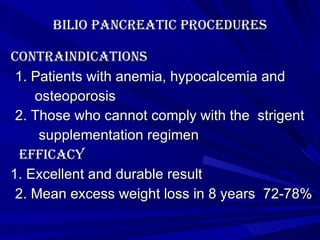
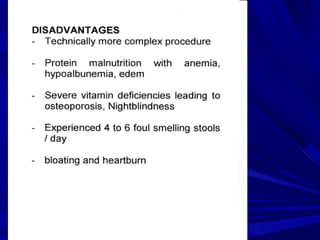
Bilio pancreatic procedures 1. It combines gastric restriction with intestinal malabsorption procedure 2. Fifty (50 to 100 cms  common absorptive alimentary channel is created proximal to the ileo cecal valve and absorption is limited to that segmemt
Bilio pancreatic procedures contraindications 1. Patients with anemia, hypocalcemia and osteoporosis 2. Those who cannot comply with the  strigent supplementation regimen Efficacy 1. Excellent and durable result 2. Mean excess weight loss in 8 years  72-78%
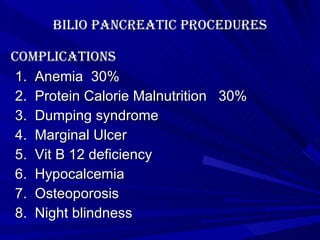
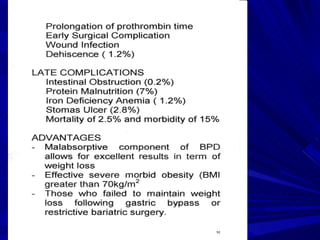
Bilio pancreatic procedures complications  1.  Anemia  30% 2.  Protein Calorie Malnutrition  30% 3.  Dumping syndrome 4.  Marginal Ulcer 5.  Vit B 12 deficiency 6.  Hypocalcemia 7.  Osteoporosis 8.  Night blindness
 
 
Thank You

Themanagementofobesity 100312193454 Phpapp02

  • 1.
    The Management ofObesity Celso M. Fidel MD,FPSGS,FPCS Diplomate Philippine Board of Surgery
  • 2.
    Introduction Obesity is a very serious health problem. The advent of modern bariatric surgery is increasingly recognized as an important therapeutic option for many patients with clinically significant obesity.
  • 3.
  • 4.
    Assessing Severity The body mass index (BMI) is dividing the weight in kilograms by the height in meters squared In adults, a normal body mass index measures between 18.5 and 24.9. The BMI is closely, but not necessarily precisely, related to body fat content.
  • 5.
    Assessing Severity The body mass index has proven to be a clinically relevant measure of obesity that can be linked to health outcomes. The BMI associated with the lowest risk of death is within the normal range for most men and lies within the normal to overweight range for most women .
  • 6.
    Assessing Severity Abdominal obesity is more predictive of the presence of metabolic risk factors (e.g., insulin resistance) than is an elevated BMI alone. Waist circumference and the waist:hip ratio , used in conjunction with the BMI, may more accurately identify patients with central adiposity who are at risk for significant medical comorbidities, including cardiovascular disease.
  • 7.
    Assessing Severity . Waist circumference is more closely correlated with visceral obesity . Population survey data indicate that a waist circumference exceeding 98 cm in men and 87 cm in women can help identify patients who have an increased risk for cardiovascular disease
  • 8.
    Assessing Severity Otherrisk factors include : (1) elevated fasting triglycerides (>150 mg/dL) (2) elevated high-density lipoprotein cholesterol (3) hypertension (blood pressure >130/85 mm Hg); (4) hyperglycemia (fasting plasma glucose levels >110 mg/dL). The presence of any three of these risk factors identifies patients who have the metabolic syndrome. .
  • 9.
    Assessing Severity .The National Heart, Lung and Blood Institute guidelines define patients with body mass indices between 25 and 29.9 kg/m 2 body surface area as overweight Those with BMIs exceeding 30 kg/m 2 are classified as obese
  • 10.
    Assessing Severity Medicalobesity is further subclassified into three categories: class 1 obesity for patients with body mass indices between 30 and 34.9 kg/m 2 class 2 obesity for BMIs between 35 and 39.9 class 3 obesity for patients with BMIs that exceed 40 kg/m 2
  • 11.
    Assessing Severity In1991, the National Institutes of Health defined morbidly obese patients as those with BMIs of 35 kg/m 2 or greater who had significant obesity-related conditions, or those with BMIs 40 kg/m 2 or greater in the absence of medical comorbidities. Superobesity is a term that is occasionally used to identify patients who have BMIs equal to 50 kg/m 2 or greater. The National Institutes of Health definitions are similar to those of the World Health Organization.
  • 12.
  • 13.
    Assessing Severity Therelationship between body mass and Weight Classification: BMI < 18.5-------------- Underweight BMI 18.5-24.9-------- Normal BMI 25---29.9--------- Overweight BMI 30---34.9--------- Obesity class 1 BMI 35---39.9--------- Obesity class 2 BMI > 40------------------ Obesity class 3
  • 14.
    Etiology Storage of consumed energy as triglycerides within adipose tissue is a normal physiological process. It is teleologically appropriate to suppose that such a storage process would provide a survival advantage to the host during times of starvation or increased energy demands because the consumption of adipose tissue via hydrolysis releases fatty acids that can be used as an energy source by many tissues.
  • 15.
    Etiology The changes that have been witnessed over the past decades most likely have occurred as energy expenditure has declined due to less physical activity, while food intake has remained the same or increased. Energy balance is regulated by the balance between food intake and energy expenditure.
  • 16.
  • 17.
    Etiology The properties of the major macronutrients consumed by humans have substantially different core properties that predict their effect on energy intake in most instances Macronutrient's thermic effect , otherwise known as nutrient-induced thermogenesis , is the energy cost to the body of absorbing, processing, and storing an orally ingested food.
  • 18.
    Nutritional and MetabolicProperties of the Common Macronutrients Properties Fat Protein Carbohydrate Alcohol Kcal/g 9 4 4 7 Energy density High Low Low Hjgh Nutrient-induced thermogenesis (percent of energy content) 2-3% 25-30 % 6-8% 15-20% Storage capacity High None Low None Autoregulation Poor Good Good Poor Ability to suppress hunger Low High High May stimulate hunger
  • 19.
    Etiology As the table illustrates 1. Fat has a very high energy density and storage capacity 2. It is subject to less autoregulation 3. It suppresses appetite somewhat less than other macronutrients in general 4. It requires the least amount of energy for it to be metabolized.
  • 20.
    Nutritional and MetabolicProperties of the Common Macronutrients Properties Fat Protein Carbohydrate Alcohol Kcal/g 9 4 4 7 Energy density High Low Low Hjgh Nutrient-induced thermogenesis (percent of energy content) 2-3% 25-30 % 6-8% 15-20% Storage capacity High None Low None Autoregulation Poor Good Good Poor Ability to suppress hunger Low High High May stimulate hunger
  • 21.
    Etiology For these reasons, the importance of fat intake as a determinant of weight gain should be apparent—especially as compared with protein or carbohydrate. .
  • 22.
    Etiology Major determinants of energy expenditure are The resting metabolic rate (which is the amount of energy needed to maintain the body's core functions at rest) The energy required to process the food consumed (which is the nutrient-induced thermogenesis described above The energy consumed by physical activity. .
  • 23.
    Etiology Behavioral factors that may vary genetically 1.The preference for fat in the diet 2. Metabolic adaptations to food restriction 3. Tolerance for physical activity 4. The frequenc y of meals.
  • 24.
    Etiology Various metabolites, besides fatty acids or triglycerides, that are released by adipose tissue during starvation include various Cytokines and prostaglandins that may help regulate energy balance, Resistin and Fibronectin that may influence carbohydrate metabolism
  • 25.
    Etiolog y Nutrient ingestion into the stomach or proximal intestine elicits hormonal signals that release neuropeptides , which in turn alter body metabolism Pleptin, ghrelin , which is normally associated with appetite stimulation (i.e., is orexigenic) Insulin and cholecystokinin are normally anorexic
  • 26.
    Etiology Leptin is a good example of the fundamental principles of neurohormonal signaling between the periphery and the central nervous system Leptin is a cytokinelike polypeptide hormone that is known to influence long-term changes in satiety. It is produced predominantly by adipose tissue and its circulating levels are proportional to the amount of fat stored as adipose tissue.
  • 27.
    Etiology Leptin’s effects on food intake are governed by its effects on receptors within the arcuate nucleus of the hypothalamus. There it induces the production of -melanocyte stimulating hormone MSH) from propiomelanocortin. MSH binds with melanocortin 4 receptors within hypothalamic nuclei and inhibits food intake. Leptin also decreases the production of appetite-inducing neuropeptides such as neuropeptide Y. .
  • 28.
    Etiology Humans born with homozygous loss of function mutations of the leptin gene (and who, therefore cannot produce leptin) eventually develop morbid obesity. These unfortunate individuals continuously seek food and eat much more than normal Other phenotypical manifestations includes Adrenal insufficiency Changes in hair color Impaired fertility are commonly
  • 29.
    Etiology The Prader-Willi syndrome is a well-recognized disorder characterized by childhood-onset upper body obesity short stature mental retardation hypogonadism.
  • 30.
    Etiology The Prader-Willi syndrome . In general when such syndromes are identified, they most often include alterations in the leptin-hypothalamic feedback loop (i.e., of important signal precursors such as propiomelanocortin, the leptin gene, and the leptin receptor). Melanocortin 4 receptor mutations have also been described but are extremely rare.
  • 31.
    Etiology Ghrelin discovered in 1999, is a growth hormone secretagogue that is synthesized predominantly by the stomach. Its levels rise just before meals and with short-term food restriction, or prolonged starvation in general and may be an important orexigenic (i.e., appetite-stimulating) signal. Ghrelin levels normally fall rapidly after meals. Like leptin, ghrelin metabolism may be dysregulated in obese subjects.
  • 32.
    Etiology Obesity is associated with decreased circulating ghrelin levels. After gastric bypass surgery, ghrelin levels fall but do not increase as expected before meals Low levels of ghrelin and its metabolic dysregulation may be at least partially responsible for the sustained weight loss after surgical procedures that resect and/or bypass a significant portion of the stomach.
  • 33.
    Medicalproblems associated with Obesity Gastroesophageal reflux 2. Coronary artery disease 3. Cerebrovascular accident 4. Congestive heart failure 5. Hypertension 6. Dyslipidemia 7. Cholelithisis and gallbladder disease 8. Osteoarthritis and degenerative joint disease 9. Slap apnea
  • 34.
    Medicalproblems associated with Obesity Cancer of the: Esophagus 2. Stomach 3. Liver 4. Pancreatic 5. Kidney 6. Non Hodgkin’s lymphoma 7. Multiple myeloma 8. Prostate
  • 35.
    Medicalproblems associated with Obesity Cancer: 9. Ovarian 10.Uterus 11.Gallbladder 12. Colon Menstrual Abnormalities Impaired fertility and increased risk of adverse outcome after pregnancy Stress inccontinence
  • 36.
    Medical problems associatedwith Obesity Morbidity from obesity is increased in the presence of: 1. Preexisting coronary artery or peripheral artery disease 2.Type II diabetes 3. Hypertension 4. Smoking
  • 37.
    Medical problems associatedwith Obesity Morbidity from obesity is increased in the presence of : 5. Elevated low-density or decreased high-density lipoprotein levels 6. Increased fasting blood sugar concentrations 7. Patients with a family history of early-onset heart disease
  • 38.
    Medical problems associatedwith Obesity Cardiovascular risks associated w/ significant obesity. 1. Overweight women have 50% > risk of heart failure compared to women with normal BMIs. 2.The risk is twofold higher in obese females. 3. Obese men have a 90% greater risk of heart failure. 4. Overall, approximately 11% of all heart failure cases in men and 14% in women can be attributed to obesity alone.
  • 39.
    Medical management ofObesity Medications are classified into: 1. Those that decrease food intake by suppressing appetite or increasing satiety 2. Those that decrease nutrient absorption .
  • 40.
    Medical management ofObesity Appetite suppressants are believed to work by increasing the availability of neurotransmitters which suppress appetite such as: 1. norepinephrine 2. serotonin 3 . dopamine
  • 41.
    Medical management ofObesity Sibutramine works by inhibiting the uptake of these neurotransmitters. This drug may also stimulate thermogenesis , although this effect is modest and constitutes only 3–5% of the average person's resting metabolic rate. Randomized controlled trials indicate that the average patient will lose approximately 3–4 kg over 8–52 weeks of treatment.
  • 42.
    Medical management ofObesity Orlistat reduces nutrient absorption by binding to gastrointestinal lipase and prevents the hydrolysis of dietary fat into absorbable free fatty acids and monoacylglycerols. Patients who are treated with orlistat excrete about a third of the dietary fat that they consume in their stools and can be expected to lose about 9% of their baseline weight on average.
  • 43.
    Medical management ofObesity The currently accepted approach is to combine caloric restriction with exercise and behavioral modification as the initial treatment recommendation for most overweight or obese patients. Diet modification, exercise, and behavioral modifications should be the cornerstones of every treatment plan.
  • 44.
    Guidelines Treatmentof Overweight and Obese Patients BMI/m Kg/m2 Health Risk Risk with comorbidities Treatment <25 Minimal Low Healthy eating,exercise & lifestyle changes 25-26.9 Low Moderate 27-29.9 Moderate High All of the above plus low caloric diet 30-34.9 High Very High All of the above plus pharmacotherapy or very low 35-39.9 Very High Extremely High Caloric diet >40 Extremely High Extremely High All of the above plus Bariatric Surgery
  • 45.
    Surgical management ofobesity Bariatric surgery should be offered To appropriate patients with BMIs of 40 kg/m 2 or greater (or between 35 and 40 kg/m 2 if any of the previously described significant medical comorbidities are present) Who have failed medical treatment, nutritional treatment, lifestyle changes, behavioral modification, or other conservative therapies.
  • 46.
    Surgical management ofobesity . Candidates for surgical therapy must be willing and able to comply with: Postoperative dietary recommendations Exercise Follow-up requirements.
  • 47.
    Surgical management ofobesity . Patients who should not undergo bariatric surgery 1. Ongoing drug or alcohol dependency 2. Who are unstable or otherwise unfit psychiatrically 3. Who are unable to undergo general anesthesia
  • 48.
    Surgical management ofobesity Surgical treatment is the only way to obtain consistent, durable weight loss for most morbidly obese patients
  • 49.
    Surgical management ofobesity Surgical treatment is indicated for patients with: 1. BMIs of 40 kg/m 2 or greater   2. BMIs of 35–40 kg/m 2 with obesity-related comorbidities    3. When medical, nutritional, and behavioral therapies are ineffective
  • 50.
    Surgical management ofobesity In all instances, the best care for morbidly obese patients provides unfettered access to, and evaluation by, a multidisciplinary team comprised of : 1. Nutritionists 2. Physical or exercise therapists 3. Surgeons 4. Medical specialists 5. Psychiatrists.
  • 51.
    Criteria for SurgicalTreatment of Obesity 1. BMI >40 or BMI between 35 and 40 in individuals with high-risk comorbid conditions or severe lifestyle limitations for greater than 5 years 2. Absence of secondary cause of morbid obesity 3. Ability and willingness to cooperate with long-term follow-up 4. Acceptable operative risk
  • 52.
    Criteria for SurgicalTreatment of Obesity Not yet uniformly recommenced for children or adolescents (less than 18 years of age), or patients over the age of 60
  • 53.
    Preoperative Preparation Nutritionalevaluation and education are critically important components of preoperative preparation. Psychiatric evaluation helps some patients cope more effectively with various stressors that may surface in their interpersonal relationships after surgery.
  • 54.
    Preoperative Preparation Psychiatricevaluation helps to prepare patients for operation and their postoperative recuperation, and also helps to identify patients with eating disorders , severe depression , psychosis , or other mood disturbances that could adversely affect outcome.
  • 55.
    Preoperative Preparation 1.All patients should have an electrocardiogram performed preoperatively. 2. Stress testing & even cardiac catheterization may be indicated for intermediate- or high- risk patients. 3. Polysomnographic evaluation at a sleep center for all morbidly obese patients who are being evaluated for surgical treatment.
  • 56.
    Preoperative Preparation 4.Patients who are diagnosed with significant sleep apnea require treatment with continuous positive airway pressure and are at risk for acute upper airway obstruction and significant cardiac arrhythmias postoperatively.
  • 57.
    Preoperative Preparation 5. Obesity hypoventilation syndrome may also be present in many obese patients. The syndrome is defined by the presence of significant hypoxemia with arterial partial pressure of oxygen less than 55 mm Hg, and hypercarbia with a partial pressure of carbon dioxide greater than 47 mm Hg.
  • 58.
    Preoperative Preparation 6.Patients with sleep apnea, the obesity hypoventilation syndrome, or any other significant airway or parenchymal lung disease should be evaluated by a pulmonologist preoperatively
  • 59.
    Preoperative Preparation 7.Finally, many patients with severe gastroesophageal reflux, dysphagia, nausea, vomiting, abdominal pain, or a prior history of gastric or intestinal surgery may require formal evaluation of the gastrointestinal tract including barium swallow, upper G I series, esophagogastroduodenoscopy, esophageal manometry, and pH testing and computed tomography of the abdomen with and without contrast.
  • 60.
    Preoperative Preparation 8.Preoperative laboratory evaluation will typically include hemoglobin, hematocrit, and platelet count measurements, along with assessment of electrolyte levels, BUN, creatine, blood glucose, and liver function. In women, Pap smears and pregnancy testing should be performed routinely. Hemoglobin A 1c measurements are appropriate for patients with adult-onset diabetes mellitus. Posteroanterior and lateral radiographs of the chest should also be evaluated routinely.
  • 61.
    Preoperative Preparation 9.Obesity likely increases the risk of postoperative wound infections. For this reason antibiotic prophylaxis is indicated according to the likelihood of wound contamination and the type of procedure planned. The rate of wound infection after laparoscopic gastric bypass appears to be reduced by at least 75% compared with open gastric bypass surgery.
  • 62.
    Historical Perspective andOverview A useful paradigm is to categorize bariatric procedures as: 1. Restrictive 2. Malabsorptive 3. Combination of both
  • 63.
    Historical Perspective andOverview The rationale for the surgical treatment of obesity has been based on three fundamental goals: 1. Reducing caloric absorption by bypassing portions of the stomach and small bowel 2. Reducing gastric capacity via banding, stapling, or transection 3. Performing operations that induce malabsorption and restrict food intake.
  • 64.
    . MajorTypes of Bariatric Surgical Procedures 1. Malabsorptive    2. Restrictive
  • 65.
    . MajorTypes of Bariatric Surgical Procedures 3. Mostly restrictive 4. Mostly malabsorptive  
  • 66.
    . MajorTypes of Bariatric Surgical Procedures 1. Malabsorptive    Jejunoileal and jejunocolic bypasses (no longer recommended 2. Restrictive (1) Vertical banded gastroplasty (2) Adjustable silicone gastric banding
  • 67.
    . MajorTypes of Bariatric Surgical Procedures 3. Mostly restrictive (1)   Short-limb (50–100 cm) Roux-en-Y gastric bypass (2) Long-limb (150 cm) Roux-en-Y gastric bypass 4. Mostly malabsorptive   Biliopancreatic diversion with or without duodenal switch
  • 68.
  • 69.
  • 70.
  • 71.
  • 72.
    Efficacy of VBGVBC achieve acceptable weight loss results Series of 305 patients followed for 2 years- mean excess loss of 61% Series of 250 patients followed for 5 years- mean excess wt. loss 60% for Morbidly excess mean excess wt. loss 52% for super obese A significant number of patients have required a reoperation following VBG
  • 73.
    Efficacy of VBGComplications Over all morbidity rate of VBG- under 10% mortality rate of 0- 38% Early Complications Splenectomy 3% Peritonitis from leak 6%
  • 74.
    Efficacy of VBGComplications Late Complications 1. Stoma stenosis 2. Staple line dehiscence 48% 3. Reflux Esophagitis 4. Intractable vomiting 30-50%
  • 75.
    Efficacy of VBGAdvantages 1. Significant improvement in comorbidities like dyspnea, hypertension, diabetes mellitus, quality of life 2. Minimal long term metabolic or nutritional deficiency 3. Less operating time 4. No anastomosis required
  • 76.
    Efficacy of VBGDisadvantages Long term weight loss is less successful when 1. Patient eat sweet food 2. In high liquid caloric intake 3. Less effective in terms of weight loss as compared to gastric bypass
  • 77.
    Laparoscopic Gastric bandingMechanism of Action Use of Silicone band Restricts amount of ingested solid food Adjustable nature of the band
  • 78.
  • 79.
    Efficacy of lGbMean Excess weight loss in 1 and 2 years 55 to 56%
  • 80.
    Laparoscopic Gastric bandingComplications Intraoperative Complications 1. Splenic injury 0 to 1 % 2. Esophageal injury 0 to 1% 3. Gastric injury 0 to 1% 4. Conversion to open procedure 1 to 2 % 5. Bleeding 0 to 1%
  • 81.
    Laparoscopic Gastric bandingComplications Early postoperative Complications 1. Bleeding 0.5 % 2. Wound infection 0 to 1% 3. Food intolerance 0 to 11%
  • 82.
    Laparoscopic Gastric bandingComplications Late Complications 1. Slippage of Band 7- 21% 2. Band Erosion 2 to 7.5% 3. Leakage of reservoir 4. Persistent vomiting
  • 83.
    Laparoscopic Gastric bandingAdvantages 1. Simple procedure and less operative time 2. Mortality is low 0.06% 3. No staple liner or anastomosis 4. Recovery is rapid and hospital stay is short
  • 84.
    Laparoscopic Gastric bandingDisadvantages Potential for site complicaton Need for frequent postoperative visit for gastric band adjustment
  • 85.
  • 86.
    Open roux eny gastric bypass Mechanism of action Both a gastric restrictive and mildly malabsorptive procedure
  • 87.
    Roux en ygastric bypass
  • 88.
    Efficacy of Openroux en y gastric bypass 1. Weight loss from gastric bypass is superior than purely restrictive procedures . 2 . Five year weight loss was 48 -74 % loss of excess weight. 3. RYGB- to prevent the progression of non insulin dependent Diabetes Mellitus, reduce the mortality from Diabetes Mellitus and Cardiovascular disease.
  • 89.
    Efficacy of Openroux en y gastric bypass Early Complications 1. ANASTOMOTIC LEAK with peritonitis - 1.2% 2. Acute distal gastric dilatation 3 . Severe wound infection
  • 90.
    Efficacy of Openroux en y gastric bypass late Complications 1. Stomach stenosis 15% 2. Marginal Ulcer 13% 3. Intestinal Obstruction 4. Internal Hernia 5. Staple line destruction 6. Incisional Hernia
  • 91.
    Efficacy of Openroux en y gastric bypass late Complications 7. Metabolic Complications a. Deficiencies of: Calcium, thiamine, Vit B12 30-70% Folate 9- 18% Iron 20-49% b. Anemia 18-35%
  • 92.
    Efficacy of Openroux en y gastric bypass Advantages 1. RYGB is more effective than vertical bonded gastroplasty 2. Presence of dumping syndrome encourages patient to avoid sweet food
  • 93.
    Efficacy of Openroux en y gastric bypass disAdvantages 1. Dumping syndrome in a lot of patients a. Due to rapid emptying hyperosmolar boluses in small intestines b. Bloating, nausea, vomiting, diarrhea and abdominal pain after intake of milk and sweet products
  • 94.
    Efficacy of Openroux en y gastric bypass disAdvantages c. Vasomotor symptoms like palpitation, diaphoresis and lightheadedness 2. Distal gastric distention – hiccups and left shoulder pain 3. Internal hernia
  • 95.
  • 96.
    Laparoscopic roux eny gastric bypass Mechanism of action 1. Both gastric restrictive & mildly malabsortive procedure 2. Small gastric pouch restricts gastric intake while the Roux Y configuration provides malabsorpton of calories and nutrients
  • 97.
    Laparoscopic roux eny gastric bypass Efficacy 1. After 24 months follow up mean excess weight loss ranges from 69- 82% 2. Most comorbidities were improved and eradicated
  • 98.
    Laparoscopic roux eny gastric bypass complications 1. Pulmonary embolism 0- 1.5% 2. Anastomotic leak 1.5- 5.8% 3. Bleeding 0- 3.3% 4. Stenosis of gastroepinoctomy 1.6- 6.3% 5. Internal Hernia 2.5% 6. Marginal Ulcer 1.4% 7. Gallstone 1.4%
  • 99.
    Laparoscopic roux eny gastric bypass advantages 1. Better cosmesis 2. Less postoperative pain 3. Attenuation of postoperative stress response 4. Reduce wound infection, dehiscence 5. Incisional Hernia 6. Improvement of postoperative pulmonary function
  • 100.
  • 101.
    Laparoscopic roux eny gastric bypass advantages 1. Better cosmesis 2. Less postoperative pain 3. Attenuation of postoperative stress response 4. Reduce wound infection, dehiscence 5. Incisional Hernia 6. Improvement of postoperative pulmonary function
  • 102.
    Laparoscopic roux eny gastric bypass advantages 1. Better cosmesis 2. Less postoperative pain 3. Attenuation of postoperative stress response 4. Reduce wound infection, dehiscence 5. Incisional Hernia 6. Improvement of postoperative pulmonary function
  • 103.
    Laparoscopic roux eny gastric bypass disadvantages 1. Technically challenging, advance laparoscopy of steep learning curve 2. Approach may be difficult in super obese patients
  • 104.
  • 105.
    Bilio pancreatic procedures1. It combines gastric restriction with intestinal malabsorption procedure 2. Fifty (50 to 100 cms common absorptive alimentary channel is created proximal to the ileo cecal valve and absorption is limited to that segmemt
  • 106.
    Bilio pancreatic procedurescontraindications 1. Patients with anemia, hypocalcemia and osteoporosis 2. Those who cannot comply with the strigent supplementation regimen Efficacy 1. Excellent and durable result 2. Mean excess weight loss in 8 years 72-78%
  • 107.
    Bilio pancreatic procedurescomplications 1. Anemia 30% 2. Protein Calorie Malnutrition 30% 3. Dumping syndrome 4. Marginal Ulcer 5. Vit B 12 deficiency 6. Hypocalcemia 7. Osteoporosis 8. Night blindness
  • 108.
  • 109.
  • 110.

Editor's Notes