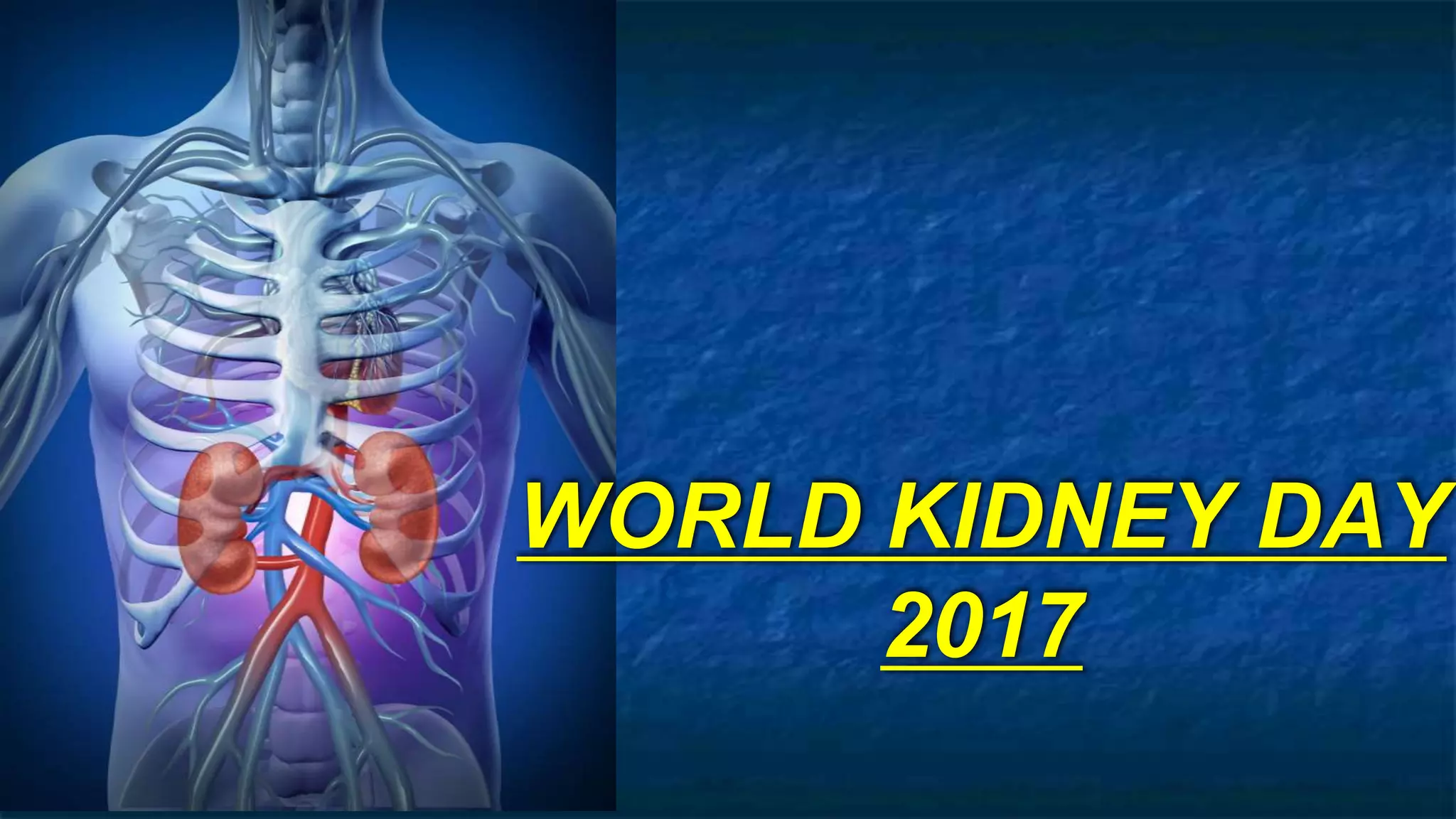
WORLD KIDNEY DAY
2017
OBESITY
&
RENAL FAILURE
PROF. MANOHAR LAL DAWANI
Professor of Nephrology
DEFINITION OF OBESITY
 Derived from word OBESUS meaning
To Devour (eating)
 determined by weight and height ratio
 Body Mass Index (BMI)= kg/m2
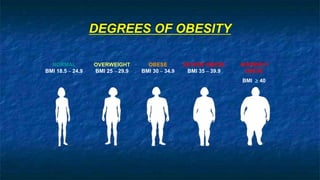
DEGREES OF OBESITY
NORMAL
BMI 18.5 – 24.9
OVERWEIGHT
BMI 25 – 29.9
OBESE
BMI 30 – 34.9
SEVERE OBESE
BMI 35 – 39.9
MORBIDLY
OBESE
BMI  40
MEDICAL IMPLICATIONS
 hypertension
 hyperlipidemia
 diabetes mellitus
 respiratory
insufficiency
 obesity-
hypoventilation
 sleep apnea
 Asthma
 Renal Failure
 cardiomyopathy/MI
 GERD
 PE/DVT
 CVA
 stress incontinence
 Arthritis wt-bearing
joints
 low back pain
 venous stasis/ulcers
 cholelithiasis
 amenhorrhea
 infertility problems
 skin
infections/inflammation
 accident proneness
- cancer (uterus, breast,
colon, prostate)
 Obesity is a U.S. public health epidemic:
 64% Americans overweight
 30% Americans obese
 10% morbidly obese
 400,000 deaths /year from obesity related causes
 [90,000 deaths/yr from colon + breast ca]
 #2 cause of preventable deaths
 #1 is smoking
 PAKISTAN ---- # 9 in World Obesity Index
EFFECTS ON KIDNEY
 Obesity causes various structural, hemodynamic and
metabolic alterations
 Mostly due to compensatory response to increased body
mass
 Renal failure is usually secondary to failure of chronic
compensation
RENAL CHANGES
 Increase in the GFR
 Kidney weight increases secondary to Glomerular
hypertrophy
 Systemic Hypertension
 Increased salt sensitivity
 RAA system activation
 Diabetes
OBESITY RELATED GLOMERULOPATHY
 Non Hypertensive & Non diabetic renal changes
 Specific to Obesity without apparent comorbidity
 Characterised by :
 Proteinuria
 FSGS
 10% - 30% progress to End Stage Renal Disease
PREDISPOSING FACTORS
 Visceral Body Fat
 Metabolic Syndrome
 Obesity Associated Conditions
 Low Nephron Number
 Nephron Mass Reduction
 Progressive loss of functioning nephrons
How does surgery work?
 Restrictive - restrict amount of food ingested
 Decreases appetite/hunger
 Early satiety
 Behavior modification
 Gastric Banding (Lap Band)
 Sleeve Gastrectomy
 Malabsorptive- limits digestion and absorption
 Decreases length of intestine exposed to digested food
 25% of fat is absorbed
 Behavior modification
 Biliopancreatic Diversion, Duodenal Switch (BPD/DS)
 Combination- Roux-En-Y Gastric Bypass
 All operations can be performed open or laparoscopically
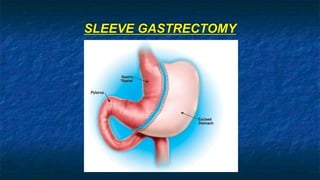
SLEEVE GASTRECTOMY
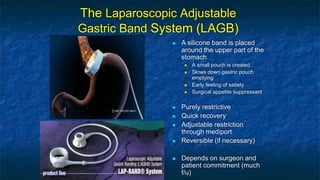
The Laparoscopic Adjustable
Gastric Band System (LAGB)
 A silicone band is placed
around the upper part of the
stomach
 A small pouch is created
 Slows down gastric pouch
emptying
 Early feeling of satiety
 Surgical appetite suppressant
 Purely restrictive
 Quick recovery
 Adjustable restriction
through mediport
 Reversible (if necessary)
 Depends on surgeon and
patient commitment (much
f/u)
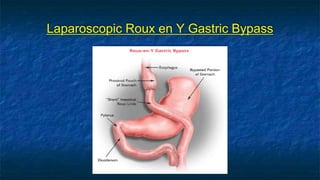
Laparoscopic Roux en Y Gastric Bypass
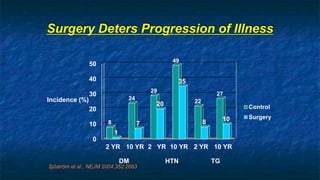
Surgery Deters Progression of Illness
0
10
20
30
40
50
2 YR 10 YR 2 YR 10 YR 2 YR 10 YR
8
24
29
49
22
27
1
7
20
35
8 10
Incidence (%)
DM HTN TG
Control
Surgery
Sjöström et al., NEJM 2004,352:2683
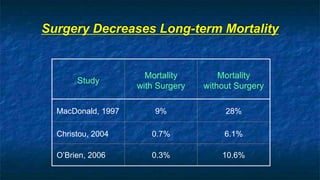
Study
Mortality
with Surgery
Mortality
without Surgery
MacDonald, 1997 9% 28%
Christou, 2004 0.7% 6.1%
O’Brien, 2006 0.3% 10.6%
Surgery Decreases Long-term Mortality
The Goal is to be Healthy
 55 – 70% of the excess weight off
 Feeling less tired and sick
 Relief from multiple medications especially for
Hypertension, Dyslipidemias
 Control and possible remission of Diabetes
Obesity & Renal Failure

Obesity & Renal Failure

  • 1.
  • 2.
    OBESITY & RENAL FAILURE PROF. MANOHARLAL DAWANI Professor of Nephrology
  • 3.
    DEFINITION OF OBESITY Derived from word OBESUS meaning To Devour (eating)  determined by weight and height ratio  Body Mass Index (BMI)= kg/m2
  • 4.
    DEGREES OF OBESITY NORMAL BMI18.5 – 24.9 OVERWEIGHT BMI 25 – 29.9 OBESE BMI 30 – 34.9 SEVERE OBESE BMI 35 – 39.9 MORBIDLY OBESE BMI  40
  • 5.
    MEDICAL IMPLICATIONS  hypertension hyperlipidemia  diabetes mellitus  respiratory insufficiency  obesity- hypoventilation  sleep apnea  Asthma  Renal Failure  cardiomyopathy/MI  GERD  PE/DVT  CVA  stress incontinence  Arthritis wt-bearing joints  low back pain  venous stasis/ulcers  cholelithiasis  amenhorrhea  infertility problems  skin infections/inflammation  accident proneness - cancer (uterus, breast, colon, prostate)
  • 6.
     Obesity isa U.S. public health epidemic:  64% Americans overweight  30% Americans obese  10% morbidly obese  400,000 deaths /year from obesity related causes  [90,000 deaths/yr from colon + breast ca]  #2 cause of preventable deaths  #1 is smoking  PAKISTAN ---- # 9 in World Obesity Index
  • 9.
    EFFECTS ON KIDNEY Obesity causes various structural, hemodynamic and metabolic alterations  Mostly due to compensatory response to increased body mass  Renal failure is usually secondary to failure of chronic compensation
  • 10.
    RENAL CHANGES  Increasein the GFR  Kidney weight increases secondary to Glomerular hypertrophy  Systemic Hypertension  Increased salt sensitivity  RAA system activation  Diabetes
  • 11.
    OBESITY RELATED GLOMERULOPATHY Non Hypertensive & Non diabetic renal changes  Specific to Obesity without apparent comorbidity  Characterised by :  Proteinuria  FSGS  10% - 30% progress to End Stage Renal Disease
  • 12.
    PREDISPOSING FACTORS  VisceralBody Fat  Metabolic Syndrome  Obesity Associated Conditions  Low Nephron Number  Nephron Mass Reduction  Progressive loss of functioning nephrons
  • 13.
    How does surgerywork?  Restrictive - restrict amount of food ingested  Decreases appetite/hunger  Early satiety  Behavior modification  Gastric Banding (Lap Band)  Sleeve Gastrectomy  Malabsorptive- limits digestion and absorption  Decreases length of intestine exposed to digested food  25% of fat is absorbed  Behavior modification  Biliopancreatic Diversion, Duodenal Switch (BPD/DS)  Combination- Roux-En-Y Gastric Bypass  All operations can be performed open or laparoscopically
  • 14.
  • 15.
    The Laparoscopic Adjustable GastricBand System (LAGB)  A silicone band is placed around the upper part of the stomach  A small pouch is created  Slows down gastric pouch emptying  Early feeling of satiety  Surgical appetite suppressant  Purely restrictive  Quick recovery  Adjustable restriction through mediport  Reversible (if necessary)  Depends on surgeon and patient commitment (much f/u)
  • 16.
    Laparoscopic Roux enY Gastric Bypass
  • 17.
    Surgery Deters Progressionof Illness 0 10 20 30 40 50 2 YR 10 YR 2 YR 10 YR 2 YR 10 YR 8 24 29 49 22 27 1 7 20 35 8 10 Incidence (%) DM HTN TG Control Surgery Sjöström et al., NEJM 2004,352:2683
  • 18.
    Study Mortality with Surgery Mortality without Surgery MacDonald,1997 9% 28% Christou, 2004 0.7% 6.1% O’Brien, 2006 0.3% 10.6% Surgery Decreases Long-term Mortality
  • 19.
    The Goal isto be Healthy  55 – 70% of the excess weight off  Feeling less tired and sick  Relief from multiple medications especially for Hypertension, Dyslipidemias  Control and possible remission of Diabetes