Submitted By
Zeeshan Ali Haider.
15-Arid-4441
OAT
General Characteristics
 Oat is an important Cereal crop
 Annual fodder
 Rabbi crop
 Temperate climate
 Scientific name: Avena Sativa.
Continue
 It is One of the most important feed sources of
 livestock and animal in the world
 Rich in nutrients and essential minerals
 Common Name:
Oat (English), Jai (Urdu), Jodra (Punjabi),
Javi (Saraiki).
 Other Names:
Hafer (German), ma-karasu-mugi (Japanese),
avena (Spanish).
Morphology of plant
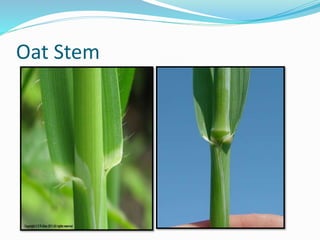
• Stem:-
• Erect and ascending.
• 40-180cm in length.
• Soft.
• Nodes of stem are swollen and internodes are
hollow.
• Stem tufted or clustered.
Oat Stem
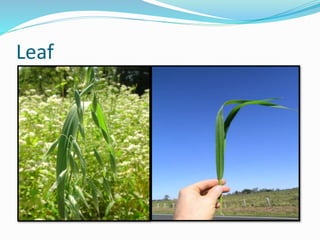
Leaf
 Its leaves are cauline (arise from the upper part of
stem).
 The leaves blade are 14-40 cm long.
 Oat has veined rough broad leaf.
 Leaf sheath is smooth and glabrous.
 Short awns and hairy lemmas
Leaf
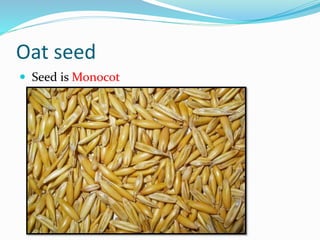
Oat seed
 Seed is Monocot
Varieties
o (ARRI, Faisalabad)
 Palestine
 Fatua
 Algerian
 Weston-11
 DN-8
o (NARC, Islamabad)
 Avon
 Sargodha-81
 S-2000
 NARC-Oat
 S-2011
Sowing and Harvesting
 It is sown from October to December.
 Oat crop will become available for harvesting after 4
months of sowing.
 For fodder purpose two cuttings are taken at 40 days
interval.
 Harvesting for grain is done in early April before the
plant is dead ripe, to avoid shedding of grain.
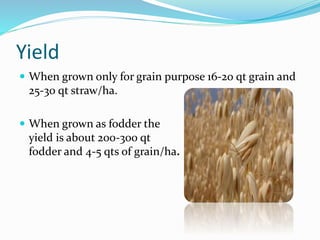
Yield
 When grown only for grain purpose 16-20 qt grain and
25-30 qt straw/ha.
 When grown as fodder the
yield is about 200-300 qt
fodder and 4-5 qts of grain/ha.
Uses
 cereal, a feed grain
 green or conserved fodder
 Commonly fed to horses and ruminants due to its
excellent nutritional qualities that aid with
maintaining optimal rumen and hindgut function
 Oat grass used for medicine purpose
 Also used as an excellent skin cleanser.
 Oat straw herbal can also improve mental function
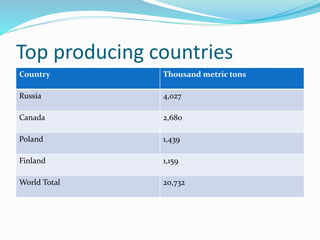
Top producing countries
Country Thousand metric tons
Russia 4,027
Canada 2,680
Poland 1,439
Finland 1,159
World Total 20,732
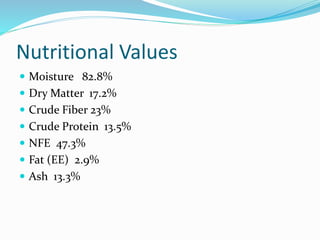
Nutritional Values
 Moisture 82.8%
 Dry Matter 17.2%
 Crude Fiber 23%
 Crude Protein 13.5%
 NFE 47.3%
 Fat (EE) 2.9%
 Ash 13.3%
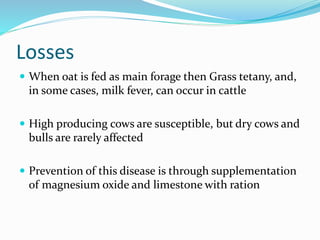
Losses
 When oat is fed as main forage then Grass tetany, and,
in some cases, milk fever, can occur in cattle
 High producing cows are susceptible, but dry cows and
bulls are rarely affected
 Prevention of this disease is through supplementation
of magnesium oxide and limestone with ration
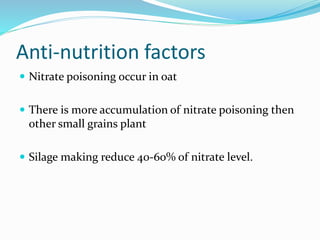
Anti-nutrition factors
 Nitrate poisoning occur in oat
 There is more accumulation of nitrate pois0ning then
other small grains plant
 Silage making reduce 40-60% of nitrate level.
Barley
 Cereal crop
 Annual fodder
 Rabbi fodder
 Temperate climate
 High in fiber and protein
Continue
 Balanced in protein, fat and energy
 Full of essential nutrients, minerals and vitamins
 Rich in enzymes
 Low acid content
 It is ranked 4th in term of quantity production.
Morphology
 leaves are 1.5–12.0 mm wide and up to 200 mm long
 Barley grass grows to about 450 mm in height.
 Barley may have bearded heads or be beardless.
Bearded barley has a slender bristle about three inches
long, called an "awn," attached to each seed. Beardless
varieties are generally preferred for forage,
Benefits
 Reduced occurrence of digestive diseases, such as colic
and bloat
 Stimulated immune system
 Naturally balanced with essential nutrients
 High in fiber, energy and protein
 Rich in enzymes
 Low acid content
 Highly digestible
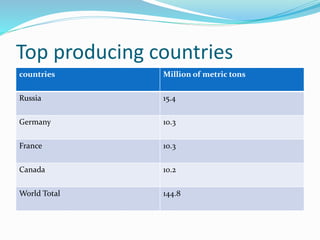
Top producing countries
countries Million of metric tons
Russia 15.4
Germany 10.3
France 10.3
Canada 10.2
World Total 144.8
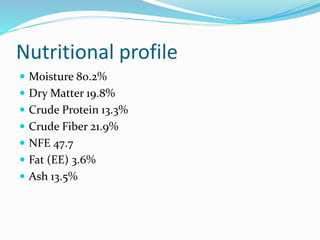
Nutritional profile
 Moisture 80.2%
 Dry Matter 19.8%
 Crude Protein 13.3%
 Crude Fiber 21.9%
 NFE 47.7
 Fat (EE) 3.6%
 Ash 13.5%
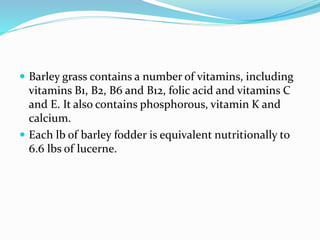
 Barley grass contains a number of vitamins, including
vitamins B1, B2, B6 and B12, folic acid and vitamins C
and E. It also contains phosphorous, vitamin K and
calcium.
 Each lb of barley fodder is equivalent nutritionally to
6.6 lbs of lucerne.

Oat and barley

  • 1.
    Submitted By Zeeshan AliHaider. 15-Arid-4441
  • 2.
    OAT General Characteristics  Oatis an important Cereal crop  Annual fodder  Rabbi crop  Temperate climate  Scientific name: Avena Sativa.
  • 3.
    Continue  It isOne of the most important feed sources of  livestock and animal in the world  Rich in nutrients and essential minerals  Common Name: Oat (English), Jai (Urdu), Jodra (Punjabi), Javi (Saraiki).  Other Names: Hafer (German), ma-karasu-mugi (Japanese), avena (Spanish).
  • 4.
    Morphology of plant •Stem:- • Erect and ascending. • 40-180cm in length. • Soft. • Nodes of stem are swollen and internodes are hollow. • Stem tufted or clustered.
  • 5.
  • 6.
    Leaf  Its leavesare cauline (arise from the upper part of stem).  The leaves blade are 14-40 cm long.  Oat has veined rough broad leaf.  Leaf sheath is smooth and glabrous.  Short awns and hairy lemmas
  • 7.
  • 8.
  • 9.
    Varieties o (ARRI, Faisalabad) Palestine  Fatua  Algerian  Weston-11  DN-8 o (NARC, Islamabad)  Avon  Sargodha-81  S-2000  NARC-Oat  S-2011
  • 10.
    Sowing and Harvesting It is sown from October to December.  Oat crop will become available for harvesting after 4 months of sowing.  For fodder purpose two cuttings are taken at 40 days interval.  Harvesting for grain is done in early April before the plant is dead ripe, to avoid shedding of grain.
  • 11.
    Yield  When grownonly for grain purpose 16-20 qt grain and 25-30 qt straw/ha.  When grown as fodder the yield is about 200-300 qt fodder and 4-5 qts of grain/ha.
  • 12.
    Uses  cereal, afeed grain  green or conserved fodder  Commonly fed to horses and ruminants due to its excellent nutritional qualities that aid with maintaining optimal rumen and hindgut function  Oat grass used for medicine purpose  Also used as an excellent skin cleanser.  Oat straw herbal can also improve mental function
  • 13.
    Top producing countries CountryThousand metric tons Russia 4,027 Canada 2,680 Poland 1,439 Finland 1,159 World Total 20,732
  • 14.
    Nutritional Values  Moisture82.8%  Dry Matter 17.2%  Crude Fiber 23%  Crude Protein 13.5%  NFE 47.3%  Fat (EE) 2.9%  Ash 13.3%
  • 15.
    Losses  When oatis fed as main forage then Grass tetany, and, in some cases, milk fever, can occur in cattle  High producing cows are susceptible, but dry cows and bulls are rarely affected  Prevention of this disease is through supplementation of magnesium oxide and limestone with ration
  • 16.
    Anti-nutrition factors  Nitratepoisoning occur in oat  There is more accumulation of nitrate pois0ning then other small grains plant  Silage making reduce 40-60% of nitrate level.
  • 17.
    Barley  Cereal crop Annual fodder  Rabbi fodder  Temperate climate  High in fiber and protein
  • 18.
    Continue  Balanced inprotein, fat and energy  Full of essential nutrients, minerals and vitamins  Rich in enzymes  Low acid content  It is ranked 4th in term of quantity production.
  • 19.
    Morphology  leaves are1.5–12.0 mm wide and up to 200 mm long  Barley grass grows to about 450 mm in height.  Barley may have bearded heads or be beardless. Bearded barley has a slender bristle about three inches long, called an "awn," attached to each seed. Beardless varieties are generally preferred for forage,
  • 20.
    Benefits  Reduced occurrenceof digestive diseases, such as colic and bloat  Stimulated immune system  Naturally balanced with essential nutrients  High in fiber, energy and protein  Rich in enzymes  Low acid content  Highly digestible
  • 21.
    Top producing countries countriesMillion of metric tons Russia 15.4 Germany 10.3 France 10.3 Canada 10.2 World Total 144.8
  • 22.
    Nutritional profile  Moisture80.2%  Dry Matter 19.8%  Crude Protein 13.3%  Crude Fiber 21.9%  NFE 47.7  Fat (EE) 3.6%  Ash 13.5%
  • 23.
     Barley grasscontains a number of vitamins, including vitamins B1, B2, B6 and B12, folic acid and vitamins C and E. It also contains phosphorous, vitamin K and calcium.  Each lb of barley fodder is equivalent nutritionally to 6.6 lbs of lucerne.

Editor's Notes