


Benefits of The use of Omega3 in
Pediatric Neurology
Presented By: H Abdeldayem
Professor of Pediatric Neurology, Alex University
Member of AAN, ICNA
9, 2018
Faculty of Medicine, Alex University
Department of Pediatrics
Pediatrics Neurology Unit
Background on Omega-3 Fatty Acids
Omega3 FA constitute the group of
polyunsaturated FAs. PUFAs are
essential FA because they can't be
synthesized by humans and must
be provided via dietary sources
Omega-3 Fatty Acids
Types
Alpha-linolenic acid (ALA)
Eicosapentaenoic acid (EPA)
Docosahexaenoic acid (DHA)
Alpha-linolenic Acid
ALA
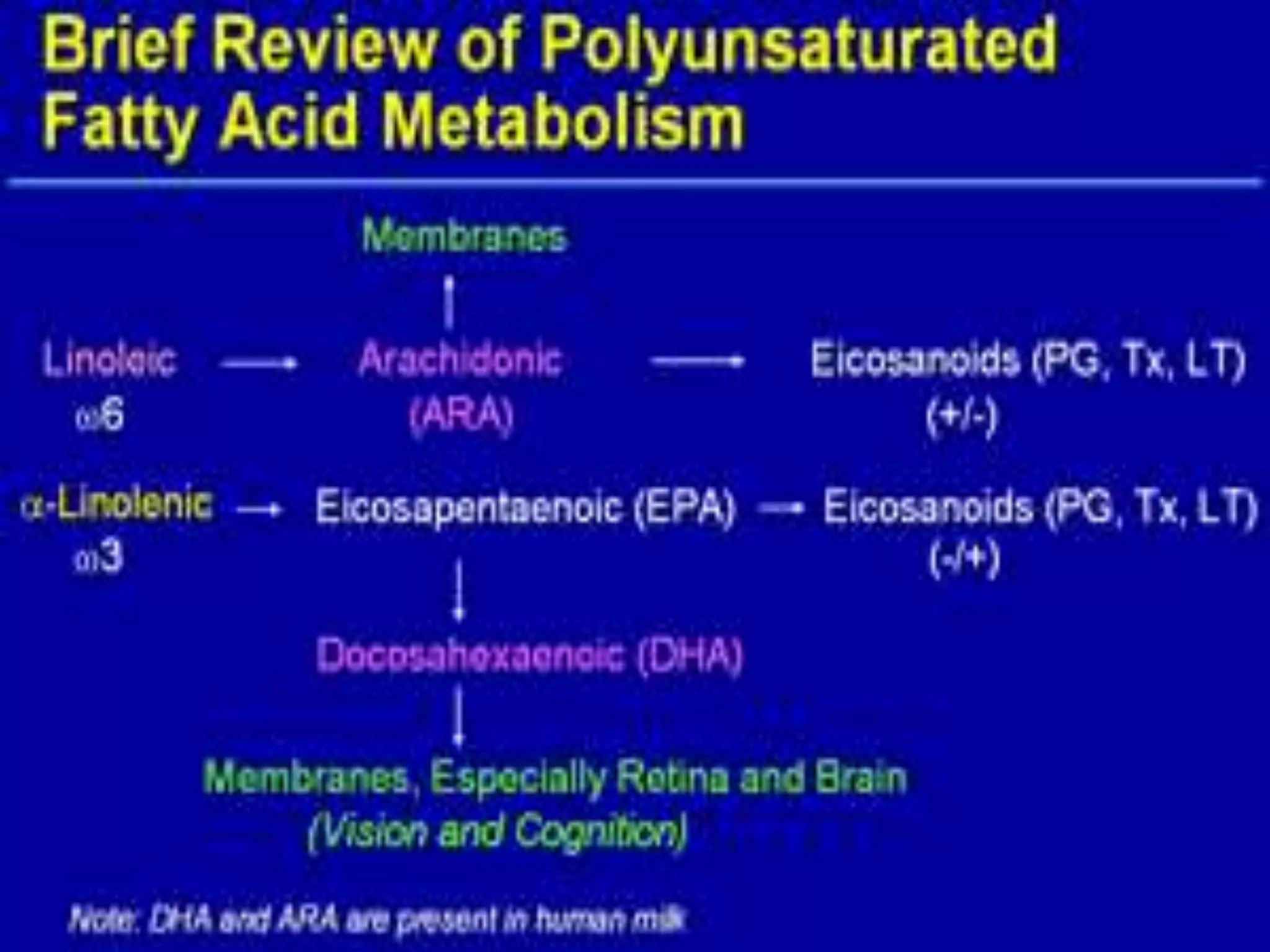
• Humans can synthesize other omega-3 fatty acids from ALA:
• Eicosapentaenoic acid (EPA): 20:5n-3
• Docosahexaenoic acid (DHA): 22:6n
• ALA is considered a plant-derived omega-3 fatty acid
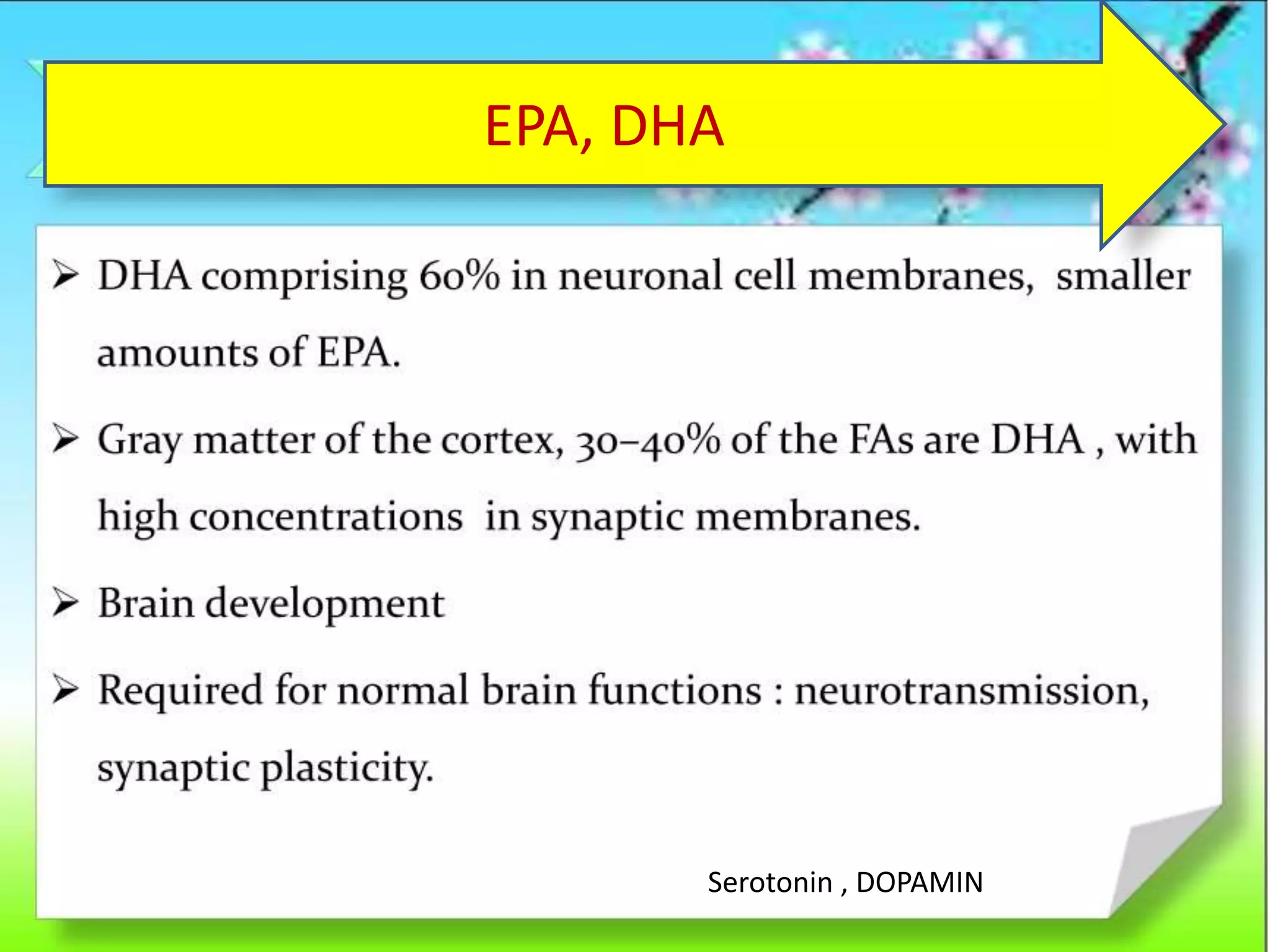
Serotonin , DOPAMIN
EPA, DHA
PBRC 2005
Docosahexaenoic acid (DHA)
• Found in very high concentrations in the cell
membranes of the retina
• Studies in animals indicate that DHA is required for
the normal development and function of the retina
EPA, DHA
Main CNS Functions
• Increased brain plasticity
• Increased production of the membrane- rich
neurites required for new synapses formation
• Enhance neurotransmitter effects
• Increased synaptic release of vital
neurotransmitters as serotonin and dopamine
• Antioxidant and anti-inflammatory membrane
effect
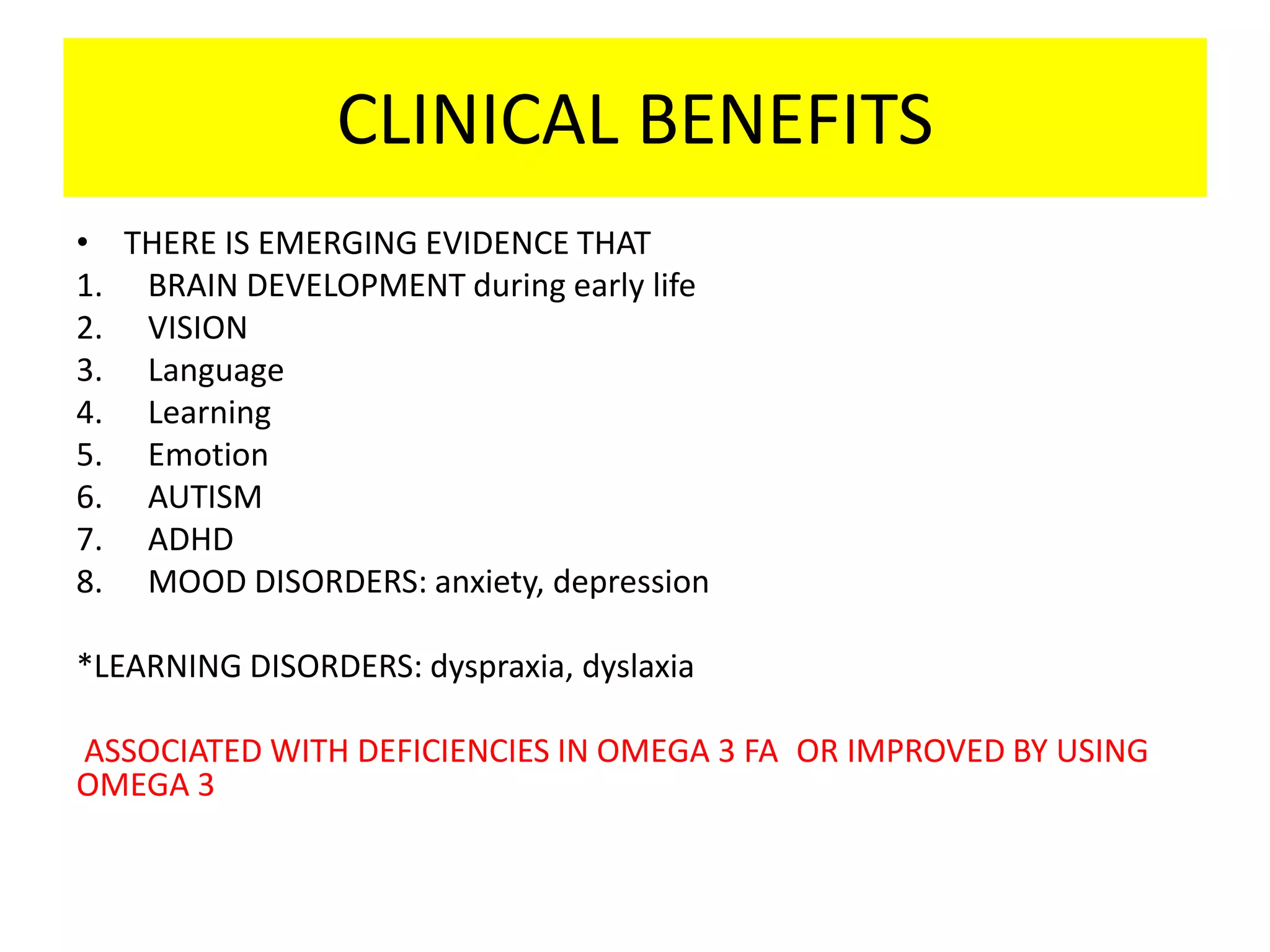
CLINICAL BENEFITS
• THERE IS EMERGING EVIDENCE THAT
1. BRAIN DEVELOPMENT during early life
2. VISION
3. Language
4. Learning
5. Emotion
6. AUTISM
7. ADHD
8. MOOD DISORDERS: anxiety, depression
*LEARNING DISORDERS: dyspraxia, dyslaxia
ASSOCIATED WITH DEFICIENCIES IN OMEGA 3 FA OR IMPROVED BY USING
OMEGA 3
Summarized Clinical
Indications
• Infant milk feeding
• Risky for neurological disorders babies
• GDD
• ASD
• ADHD
• Anxiety
• DLD
• Depression
• Dementia
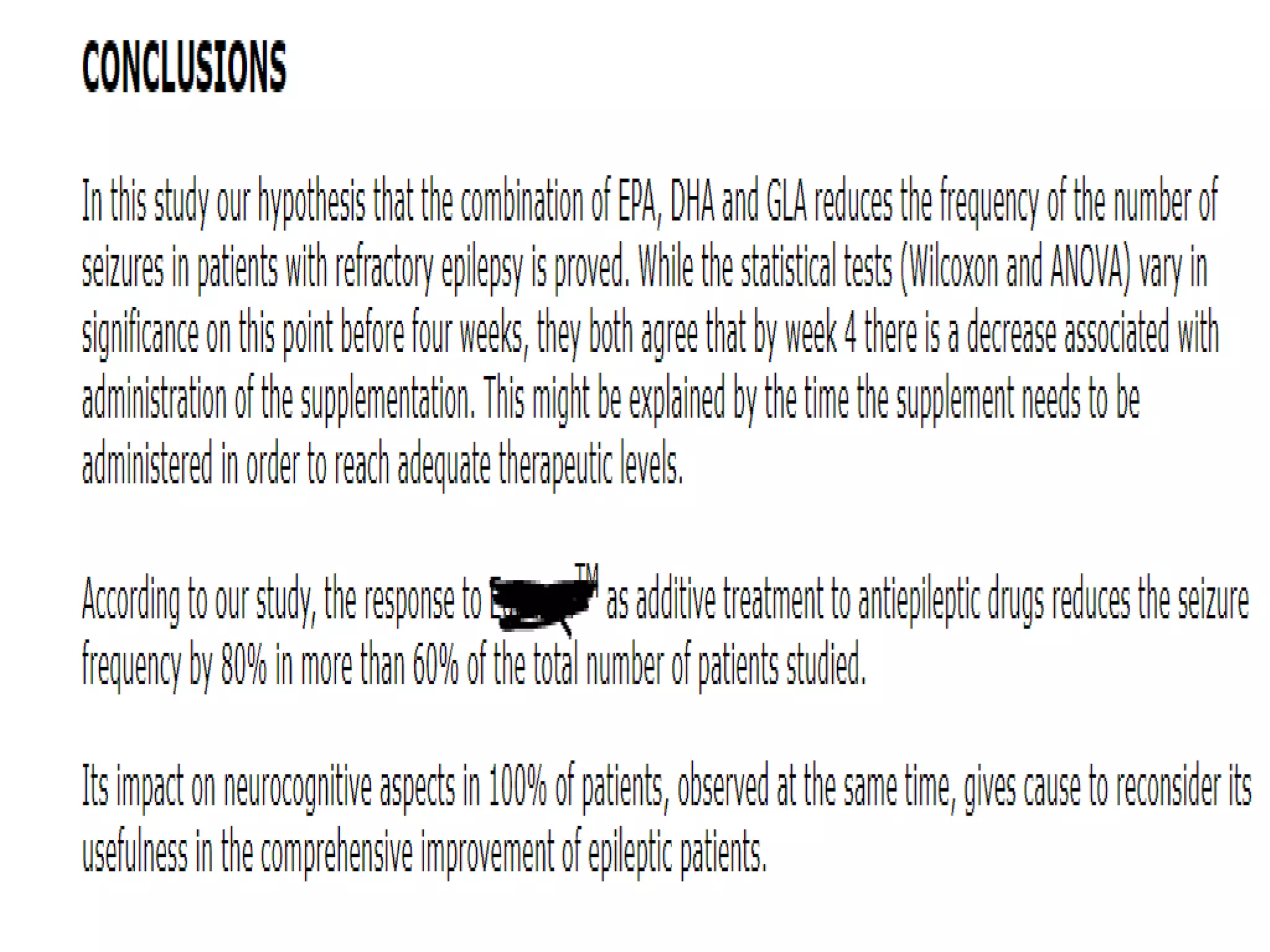
• Epilepsy
• Learning disorders as dyslexia, dyspraxia
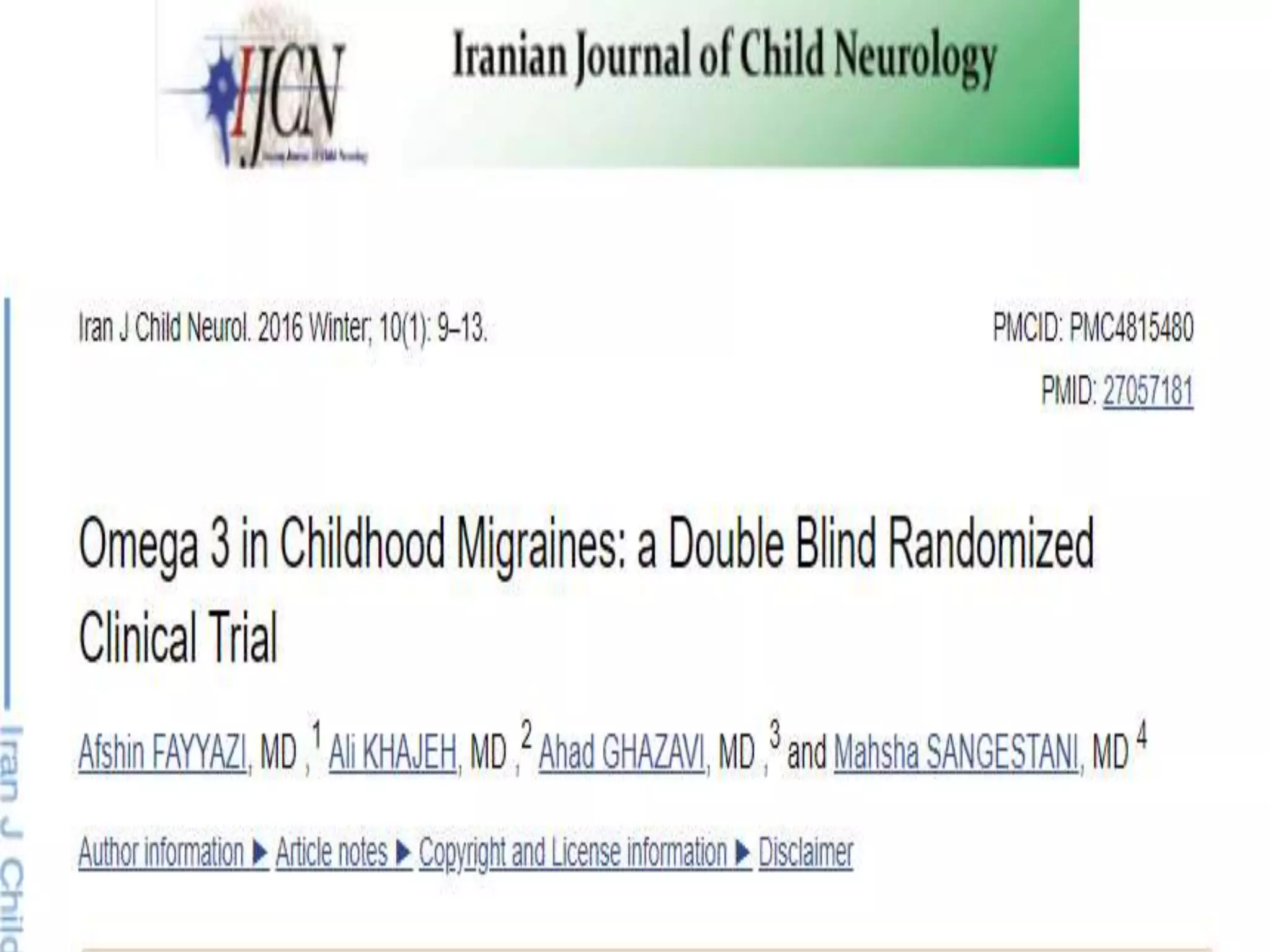
• Migraine
• THERE IS EMERGING EVIDENCE THAT these
disorders are
ASSOCIATED WITH DEFICIENCIES IN OMEGA 3
FA
Either genetic defect or intake deficiency
ALARM
• Omega3 should be considered as a safe add
on treatment but not replace or used be per
se for treatment of clinical diseases
Benefits of Omega-3
in developing brain and young
infants
Presented By: H Abdeldayem
9, 2018
1
• Omega 3 accumulate in the human brain
during fetal development
• Omega 3 should be supplied for pregnant
mothers and for infants
• Breast milk and certain artificial milk will
supply the baby with omega 3
• Omega 3 will help and increase brain plasticity
and development of synapses in growing brain
What is brain plasticity?
Answer: Brain reacts and adapts in response to
challenge.
Brain Plasticity
the capability of the brain to alter its functional
organization as a result of experience or
sensory stimulation.
The brain’s ability to adapt/modify itself,
especially after injury/ need/ experience.
Developmental Plasticity
• neuroplasticity is the lifelong ability of our
brains to reorganize neural pathways based on
new experiences as learning
• Critical periods: limited time during which the
nervous system displays heightened sensitivity
to environmental stimuli and develops in
particular directions as a result of these
stimuli.
WHO SHOULD BE GIVEN OMEGA 3?
All young children especially those with
risk factor or with GDD
Global Developmental Delay
GDD
Significant delay* in twoor more of five
of the following five developmental skills:
cognitive
motor ( fine
and gross)
language
self-
dependence
social
Age : 3 - 5
1. INDICATIONS (Babies)
All young babies especially premature
Babies with risk for brain damage
Babies with GDD
Babies with cortical blindness
PBRC 2005
Impaired Visual and Neural Development
• Because the last trimester of pregnancy is a critical period for the
accumulation of DHA in the brain and retina, preterm infants are particularly
vulnerable to adverse effects of insufficient DHA on visual and neural
development
• Although preterm infants can synthesize DHA from ALA, they can’t
synthesize enough to prevent declines in plasma and cellular DHA levels
without additional dietary intake
• Preterm infants fed formulas with DHA added had significantly improved
measures of visual function compared to preterm infants fed DHA-free
formulas in 5 out of 5 randomized controlled trials
H Dayem . 2002MS thesis
*
LC-PUFAs and Neuropsychological Assessment of Healthy,
Term infants
at 6 Months of Age
-----------------------------------------------
Helmy E, Barakat S, Abdeldayem H, Barghash N,
Selim O, Elmattery D
Pediatr Department, Faculty of Medicine , Alex
University
Benefits of Omega-3
in children
Presented By: H Abdeldayem
9, 2018
Omega 3 benefits
• Memory
• Cognitive abilities
• Learning
• Behaviors
• Emotional conditions
• Increased brain plasticity
• Increased production of the membrane- rich
neurites required for new synapses formation
• Enhance neurotransmitter effects
• Increased synaptic release of vital
neurotransmitters as serotonin and dopamine
• Antioxidant and anti-inflammatory membrane
effect
Pathogenesis
Benefits of Omega-3
in ADHD
Presented By: H Abdeldayem
9, 2018
2
What is the best protocol for
treatment?
• School underachievement
• Impulsive
• Smoking,etc
• Careless, accident
• Opositional defiant disorder/conduct
disorders
• Carrier underemployment
• Impulsive life decisions
• Addiction
• Serious accident
• Antisocial personality
AdultsChildren
Untreated ADHD
Rule 1
Untreated ADHD
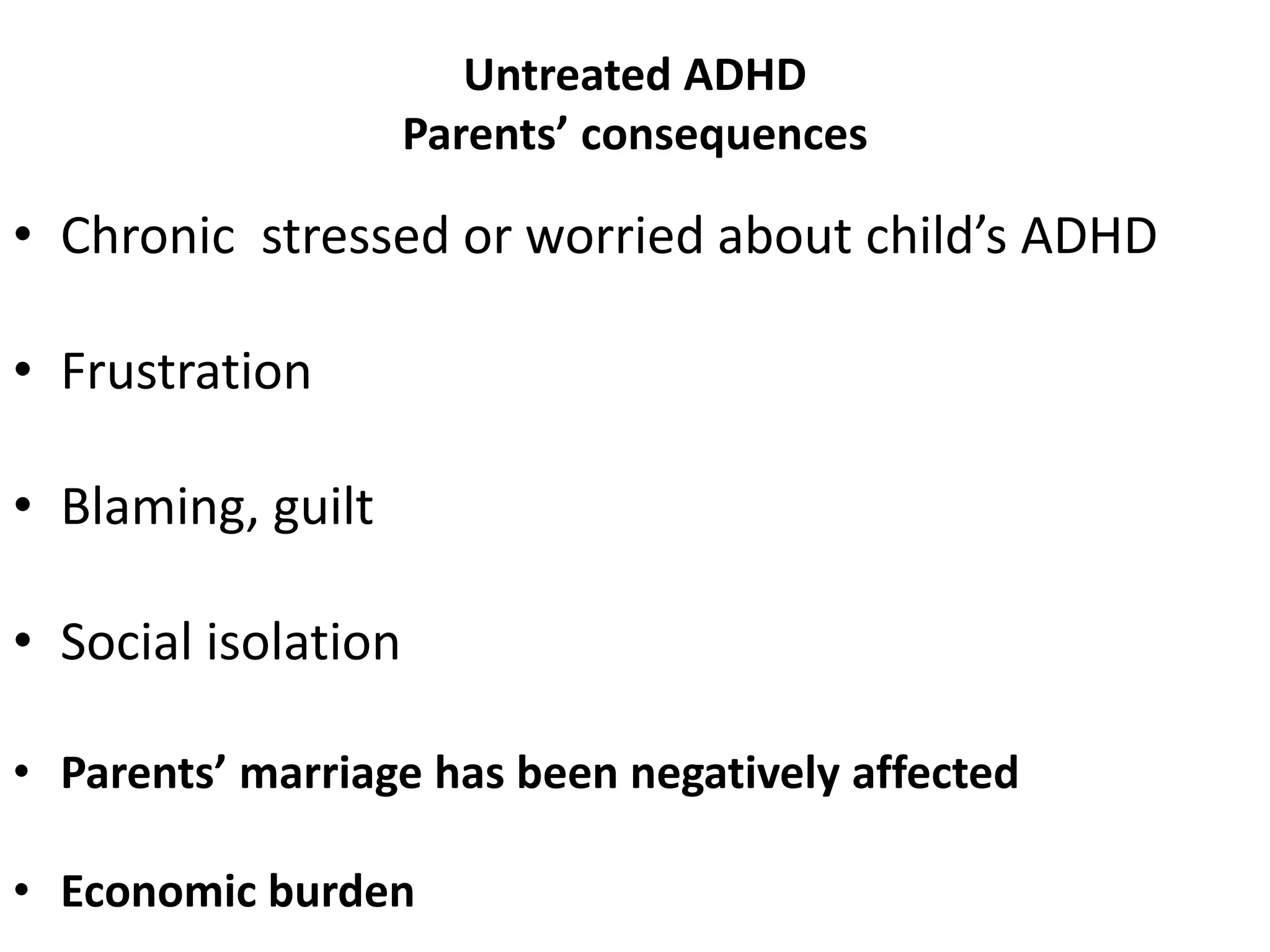
Parents’ consequences
• Chronic stressed or worried about child’s ADHD
• Frustration
• Blaming, guilt
• Social isolation
• Parents’ marriage has been negatively affected
• Economic burden
EF networks depends 1ry
on 2 chemicals
Dopamine Norepinephrine
Not release and reload effectively
Medications : slow reuptake so longer in contact with
receptors
Methylphenidate (Ritalin)
Increases release of norepinephrine and dopamine in
the cerebral cortex to reticular activating system
Drugs Used For Treatment
FDA approval
(non stimulant)
Atomoxetine
= Selective Nor-epinephrine reuptake
inhibitors
Since 2002
<6 ys 1-Behavior modification sessions
2-Family counseling*
6-12 ys 1-Behavior modification sessions
2-Family counseling*
3- drugs
>12 ys 1-Drugs
2-Family counseling
• American academy of pediatrics guidelines
• ATTENTION-DEFICIT SO. ADHD: clinical practice guideline for the diagnosis, evaluation, and treatment of attention-deficit/hyperactivity disorder in children
and adolescents. Pediatrics. 2011 Oct 14:peds-2011.
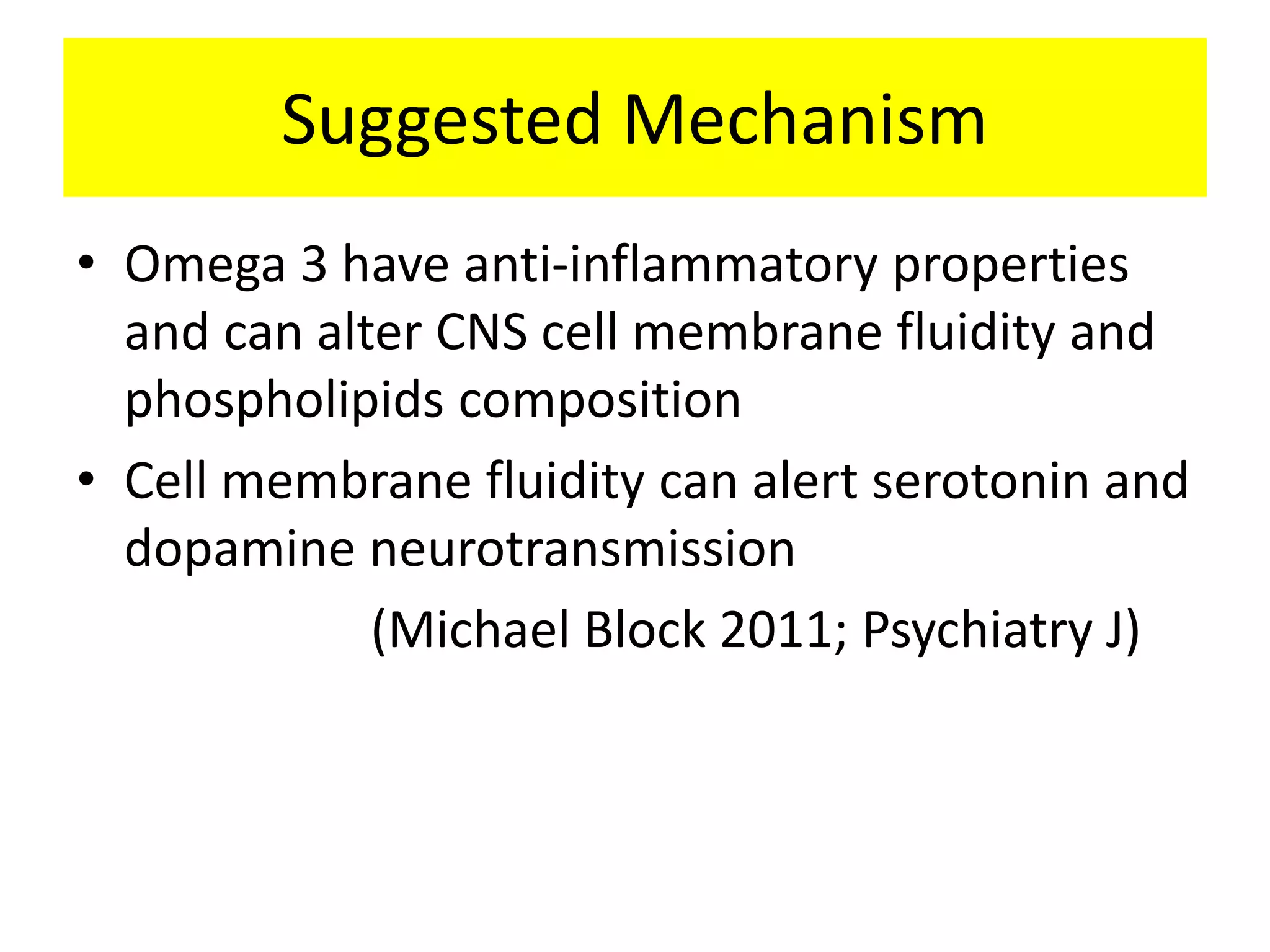
Suggested Mechanism
• Omega 3 have anti-inflammatory properties
and can alter CNS cell membrane fluidity and
phospholipids composition
• Cell membrane fluidity can alert serotonin and
dopamine neurotransmission
(Michael Block 2011; Psychiatry J)
?? Can FOOD ameliorate ADHD symptoms
dietary modification
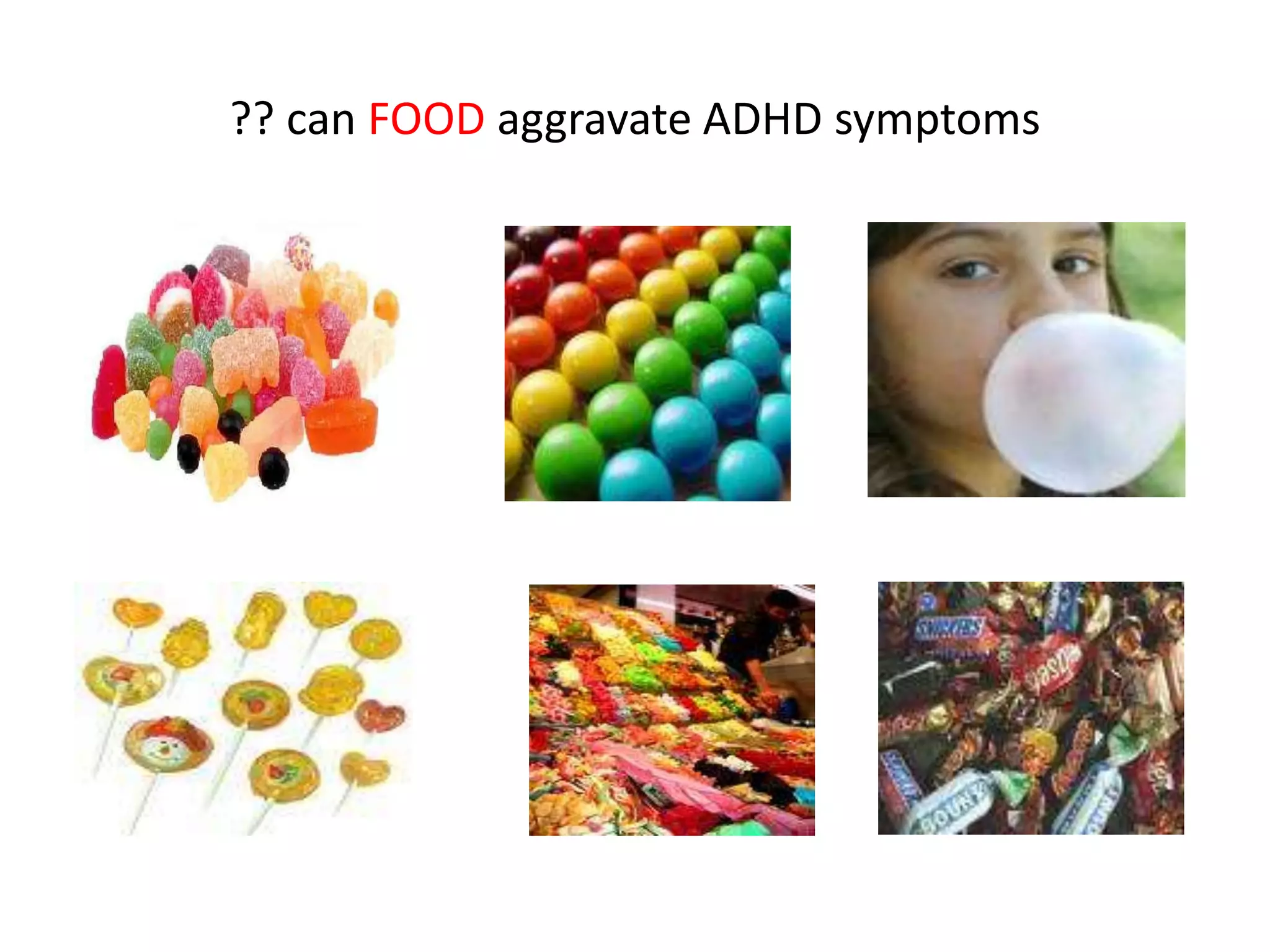
?? can FOOD aggravate ADHD symptoms
• omega-3s boost the body’s synthesis of
dopamine, the neurotransmitter that attention
deficit disorder (ADHD or ADD) medications act
to increase.
• a study published in Pediatrics. “A lack of certain
polyunsaturated fatty acids may contribute to
dyslexia and attention-deficit/hyperactivity
disorder,” Paul Montgomery, a researcher in the
psychiatry department at the University of Oxford
in England.
I would recommend 500 mg omega 3 for
children with ADHD . If above 6ys age and not
use specific drugs for ADHD, use 1000 mg
omega 3 especially if associated with behaviors
comorbid conditions
Benefits of Omega-3
in AUTISM (ASD)
Presented By: H Abdeldayem
9, 2018
3
Prof Dr Hussein Abdeldayem
Prof of Ped Neurology, Alex University
Member of AAN, AAP, ICNA
IS AUTISM
A TREATABLE DISORDER?
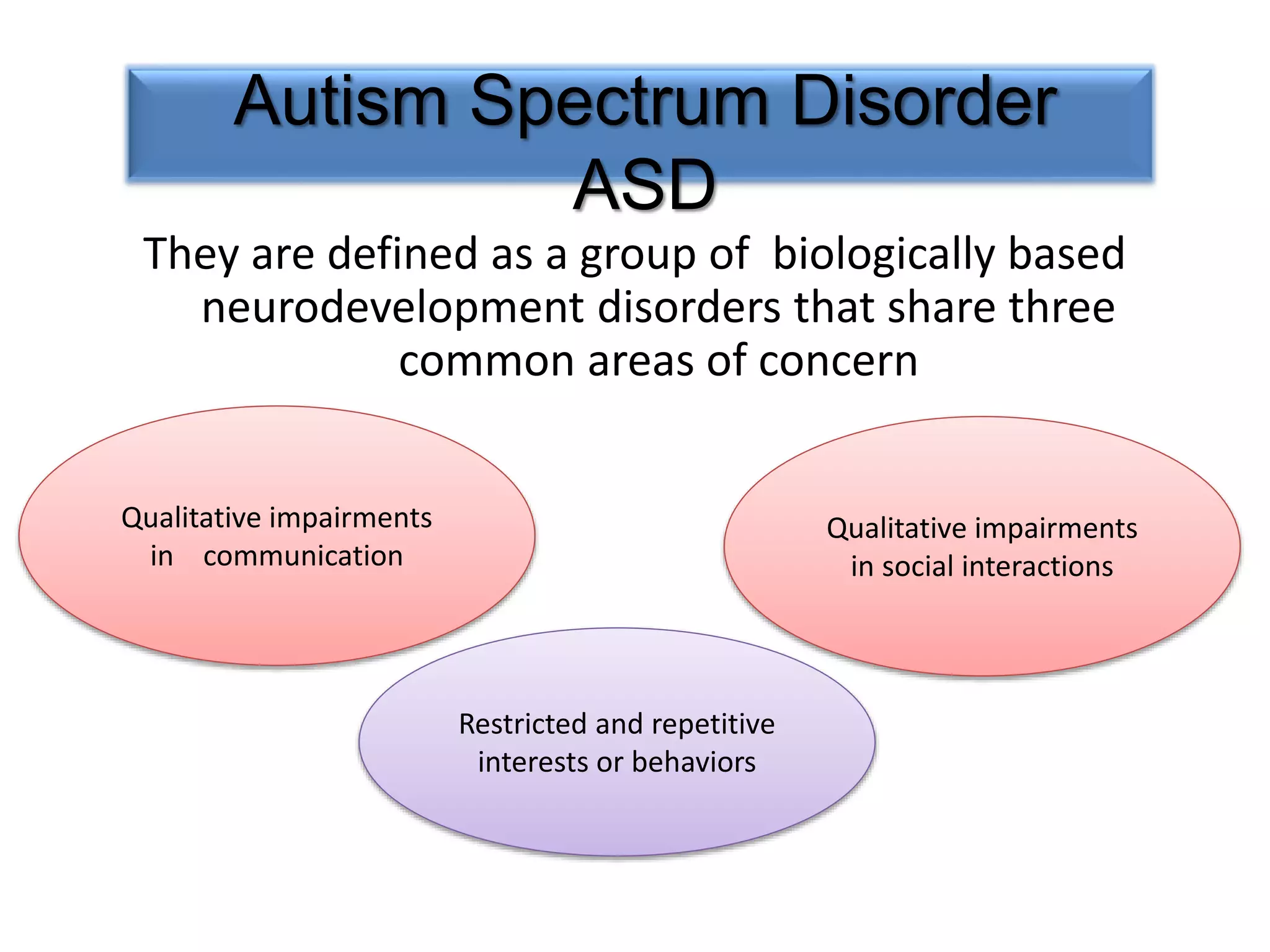
Autism Spectrum Disorder
ASD
They are defined as a group of biologically based
neurodevelopment disorders that share three
common areas of concern
Qualitative impairments
in social interactions
Restricted and repetitive
interests or behaviors
Qualitative impairments
in communication
ASD
male 4/ 1 female
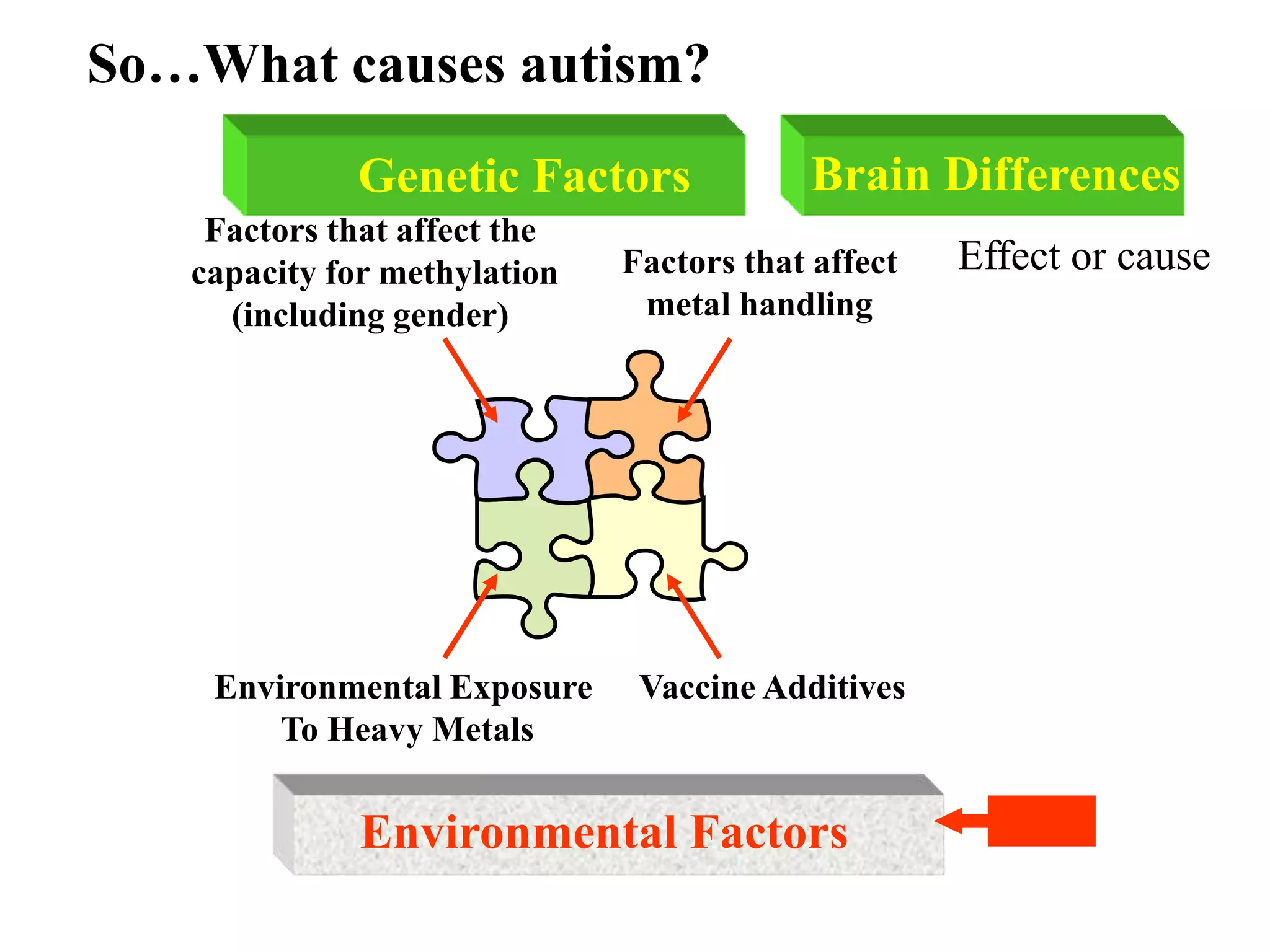
So…What causes autism?
Genetic Factors
Factors that affect the
capacity for methylation
(including gender)
Factors that affect
metal handling
Environmental Factors
Vaccine AdditivesEnvironmental Exposure
To Heavy Metals
Brain Differences
Effect or cause
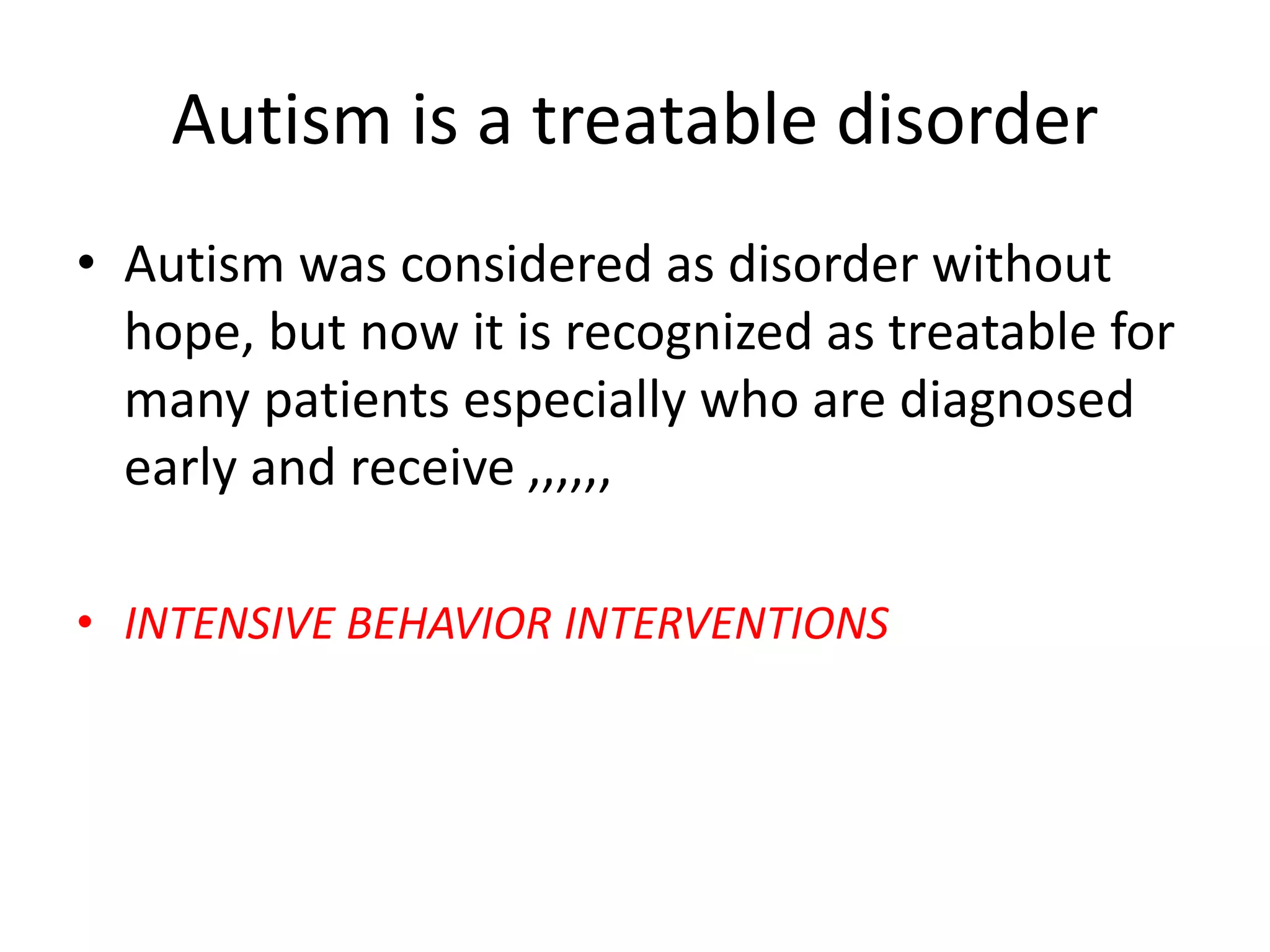
Autism is a treatable disorder
• Autism was considered as disorder without
hope, but now it is recognized as treatable for
many patients especially who are diagnosed
early and receive ,,,,,,
• INTENSIVE BEHAVIOR INTERVENTIONS
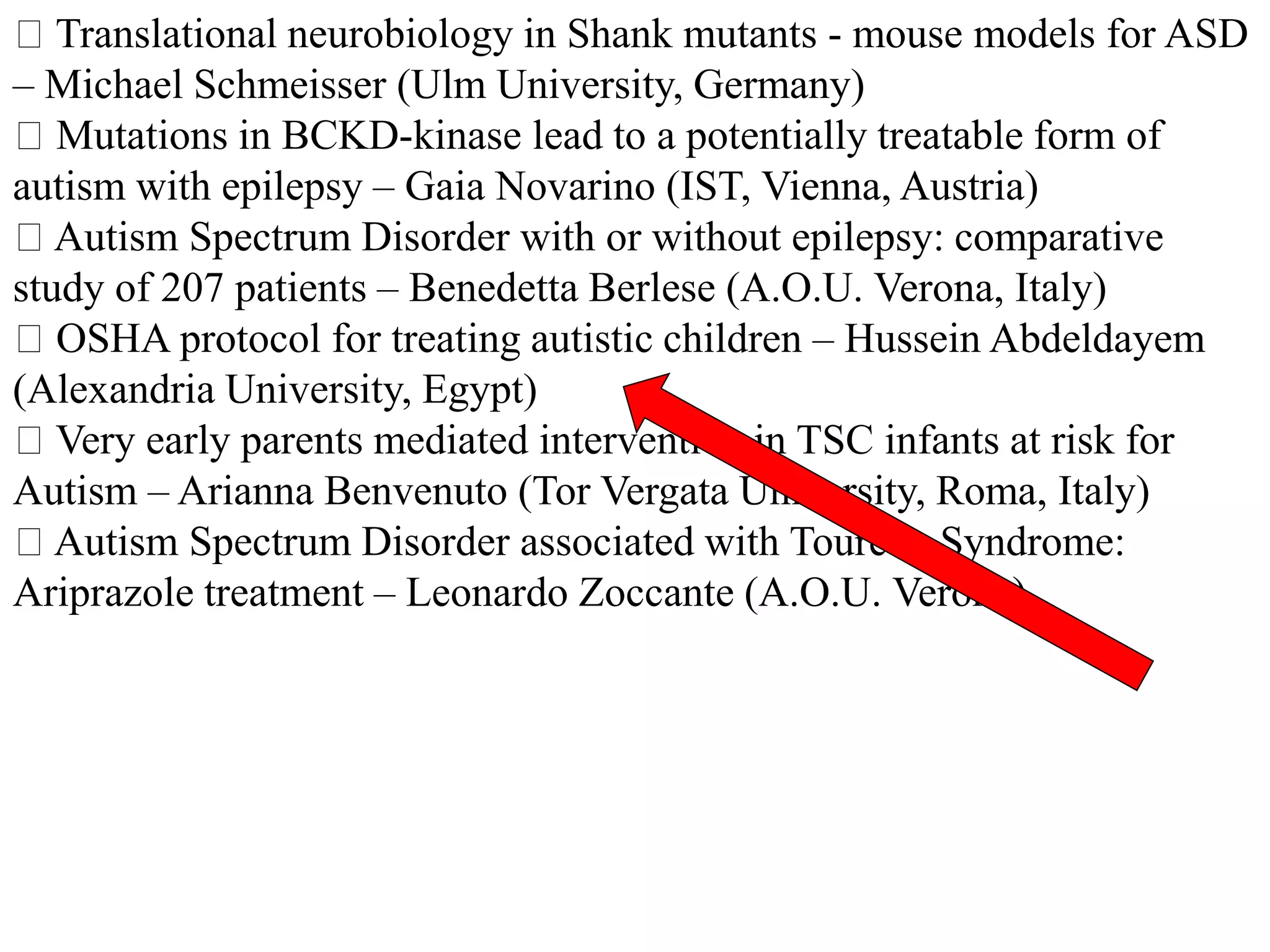
Translational neurobiology in Shank mutants - mouse models for ASD
– Michael Schmeisser (Ulm University, Germany)
Mutations in BCKD-kinase lead to a potentially treatable form of
autism with epilepsy – Gaia Novarino (IST, Vienna, Austria)
Autism Spectrum Disorder with or without epilepsy: comparative
study of 207 patients – Benedetta Berlese (A.O.U. Verona, Italy)
OSHA protocol for treating autistic children – Hussein Abdeldayem
(Alexandria University, Egypt)
Very early parents mediated intervention in TSC infants at risk for
Autism – Arianna Benvenuto (Tor Vergata University, Roma, Italy)
Autism Spectrum Disorder associated with Tourette Syndrome:
Ariprazole treatment – Leonardo Zoccante (A.O.U. Verona)
How to design a OSHA
rehabilitation
program for an
autistic child
INTENSIVE SESSIONS
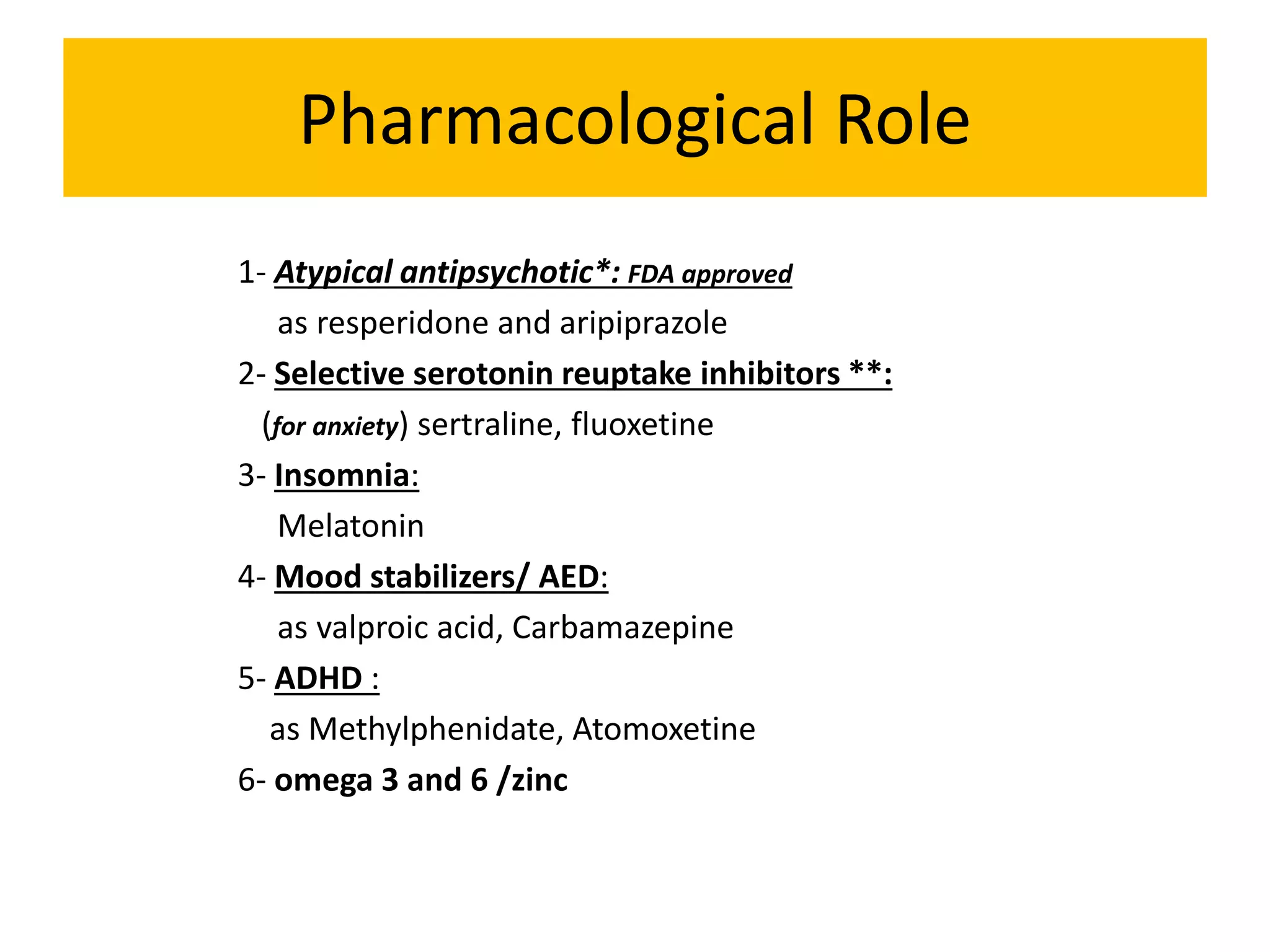
Pharmacological Role
1- Atypical antipsychotic*: FDA approved
as resperidone and aripiprazole
2- Selective serotonin reuptake inhibitors **:
(for anxiety) sertraline, fluoxetine
3- Insomnia:
Melatonin
4- Mood stabilizers/ AED:
as valproic acid, Carbamazepine
5- ADHD :
as Methylphenidate, Atomoxetine
6- omega 3 and 6 /zinc
Omega 3 and AUTISM (ASD)
• The benefits of omega 3 in ASD is still under
research. However it may be of benefit as add
on to the sessions as regard comorbid
inattention , hyperactivity and language
development
Autism and Omega 3
• The fatty acids that make up fish oil have proven to be effective in autistic
patients with those individuals taking the supplement improving in
language and learning skills in at least 8 different testing areas.
• Possible benefits to autistic patients showed decreases in hyperactivity in
their behavior
lancet neurology , 2016:6;45-49
Suggested Mechanism
• Omega 3 have anti-inflammatory properties
and can alter CNS cell membrane fluidity and
phospholipids composition
• Cell membrane fluidity can alert serotonin and
dopamine neurotransmission
(Michael Block 2011; Psychiatry J)
• the omega-3 deficit, especially in the early
stages of life, may cause changes of
myelination, neurogenesis, synaptogenesis,
neurotransmitter turnover, brain connectivity,
cellular differentiation and development,
inflammatory reactions, cognitive functioning,
and behavior. These changes are all
hypothetically involved in ASD
etiopathogenesis
Final Conclusion
At least
• Omega 3 may be of benefits for associated
behavior abnormalities as aggressions SIB and
temper tantrums
• Harmless but even with other body benefits
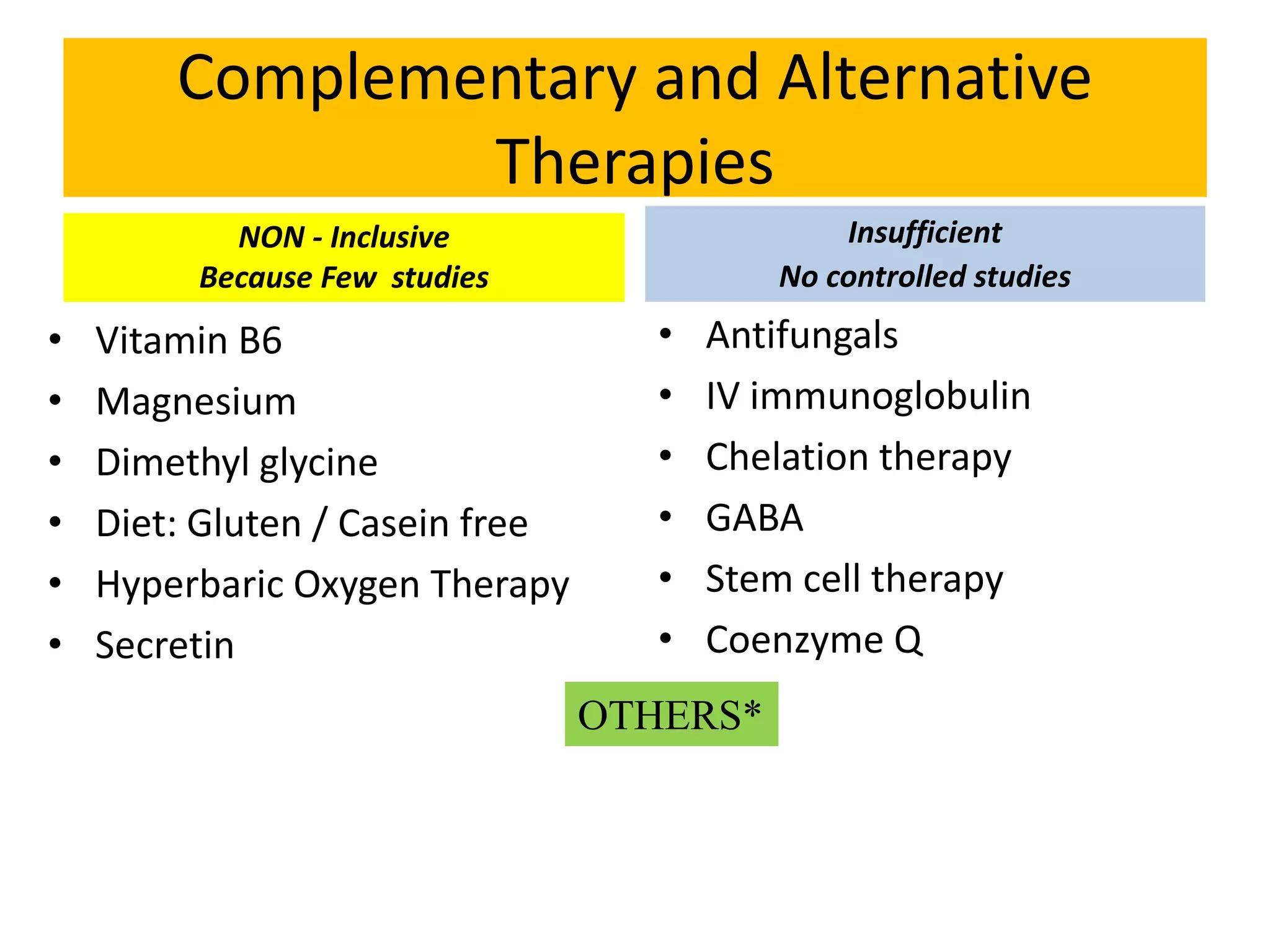
Complementary and Alternative
Therapies
NON - Inclusive
Because Few studies
• Vitamin B6
• Magnesium
• Dimethyl glycine
• Diet: Gluten / Casein free
• Hyperbaric Oxygen Therapy
• Secretin
Insufficient
No controlled studies
• Antifungals
• IV immunoglobulin
• Chelation therapy
• GABA
• Stem cell therapy
• Coenzyme Q
OTHERS*
Benefits of Omega-3
in Psychiatric disorders
Presented By: H Abdeldayem
9, 2018
4
• Low level of omega 3 in the brain of
depressed persons (autopsy)
• Due to effect on serotonin at synapses
• Dose 1000 – 3000 gm /day
Anxiety , Depression
And Bipolar Disorder
PBRC 2005
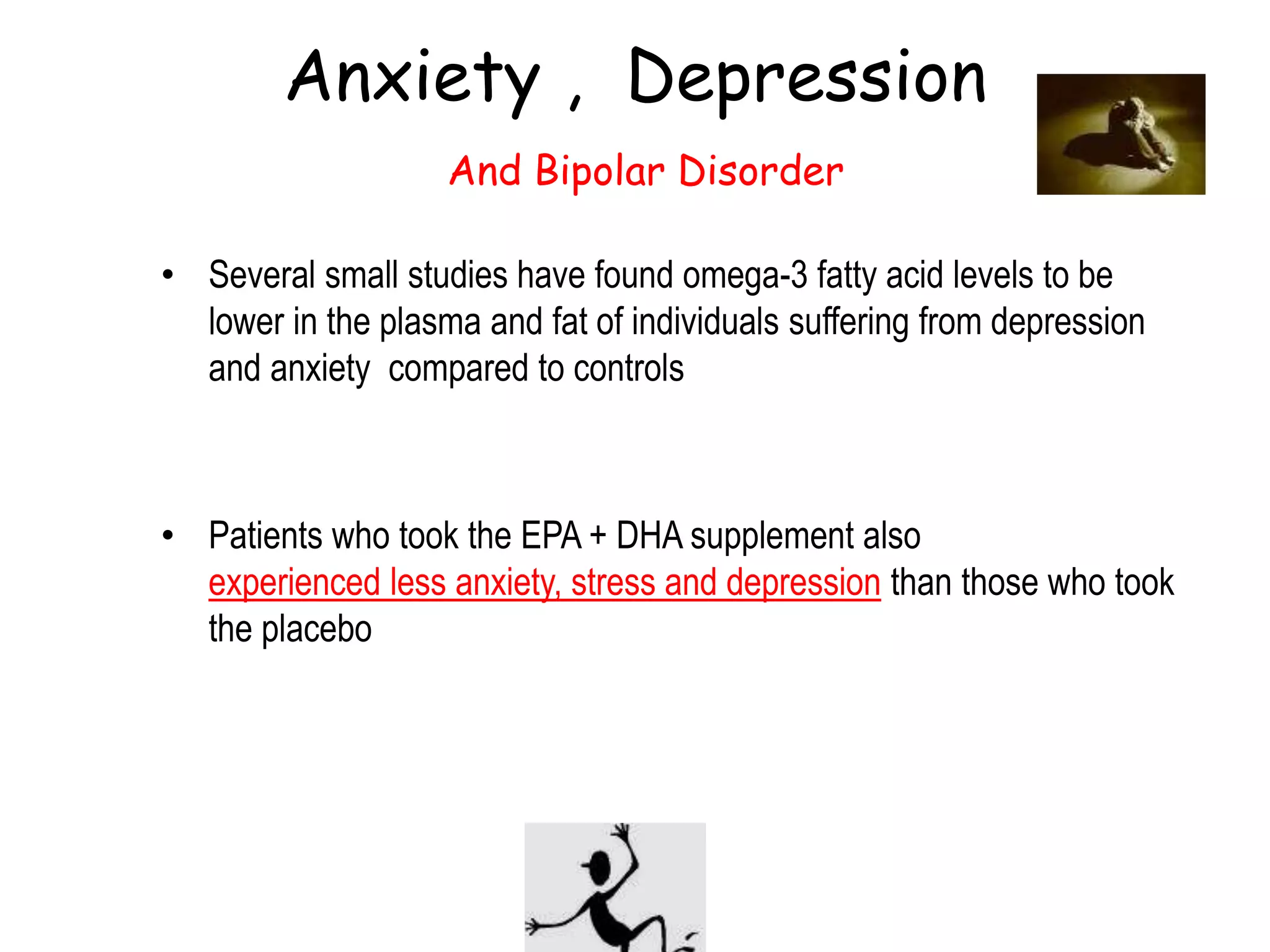
Anxiety , Depression
And Bipolar Disorder
• Several small studies have found omega-3 fatty acid levels to be
lower in the plasma and fat of individuals suffering from depression
and anxiety compared to controls
• Patients who took the EPA + DHA supplement also
experienced less anxiety, stress and depression than those who took
the placebo
Benefits of Omega-3 Fish Oil
in Epilepsy, migraine and stroke
Presented By: H Abdeldayem
9, 2018
5
FINAL Conclusion
• Omega 3 may offer a safe additional
efficacious treatment option in different
neurological disorders in children
FINAL PRACTICAL
CONCLUSIONS
• There is evidence that these patient groups
may have genetic difficulties with
metabolizing PUFAs and therefore have higher
than normal PUFAs requirements
• The use of omega 3 with THE SPECIFIC
TREATMENT PROTOCAL might increase
treatment efficacy
• dietary intake of omega 3 fats has been
declined especially in low income countries
• As well as other micronutrients that might be
required for the metabolism of
• In addition to neurologic benefits of omega 3 .
Other body systems will get benefits as well
e.g., immunity etc.
• PLEASE TAKE CARE OF THE COST
Thank You
Benefits and Risk of Omega-3 Fish
Oil
in Pediatric Neurology
Presented By: H Abdeldayem
9, 2018
“Cod Liver Oil “
LCPUFA
• cod liver oil contains vitamins A and D and has a different
concentration of omega3 (EFA)
• Promotes normal bone formation, vision and
reproduction
• Promotes immunity
• Promotes appetite
• Promotes concentration amd mental function
• For : autism, ADHD/ADD
How Can Fatty Acids Modulate
the CNS System?
• Why do we need CNS good in the first place?
• Answer:
• FAs such as DHA and EPA can
• FAs
• FAs
• FAs
Plasma Membrane
Alpha-linolenic acid (ALA)
• Scientific abbreviation is 18:3n-3
• The first part (18:3) suggests that ALA is an 18-carbon fatty acid with
3 double bonds
• The second part (n-3) tells you that ALA is an omega-3 fatty acid
• It is required for health, but cannot be synthesized in humans
• Must be obtained from the diet
Alpha-linolenic acid: Sources
Food Serving Alpha-linolenic
acid (g)
Flaxseed oil 1 tablespoon 8.5
Walnuts, English 1 ounce 2.6
Flaxseeds 1 tablespoon 2.2
Walnut Oil 1 tablespoon 1.4
Canola Oil 1 tablespoon 1.2
Mustard Oil 1 tablespoon 0.8
Soybean Oil 1 tablespoon 0.9
Walnuts, Black 1 ounce 0.6
Olive Oil 1 tablespoon 0.1
Broccoli, raw 1 cup, chopped 0.1
PBRC 2005
Information:
Omega-3 Fatty Acids
• Omega-3 FA’s are polyunsaturated, meaning they contain more than
one double bond
• They are called omega-3 because the first double bond counting
from the methyl end of the fatty acid is located at the third carbon
atom
Food Serving EPA (g) DHA (g) Amt providing 1 g
of EPA + DHA
Herring, Pacific, cooked 3 ounces 1.06 .75 1.5 ounces
Salmon, chinook, cooked 3 ounces .86 .62 2 ounces
Salmon, Atlantic, cooked 3 ounces .28 .95 2.5 ounces
Oysters, Pacific, cooked 3 ounces .75 .43 2.5 ounces
Salmon, sockeye, cooked 3 ounces .45 .60 3 ounces
Trout, rainbow, cooked 3 ounces .40 .44 3.5 ounces
Tuna, white, packed in
water
3 ounces .20 .54 4 ounces
Crab, dungeness, cooked 3 ounces .24 .10 9 ounces
Shrimp, cooked 3 ounces .15 .12 11 ounces
Cod, Pacific, cooked 3 ounces .09 .15 12.5 ounces
Fish oil, menhaden 1 gram .13 .09 5 grams
Fish oil, salmon 1 gram .13 .18 3 grams
EPA and DHA: Sources
Fat heads??
105
• Human beings are literally fat heads with fat(DHA)accounting for
60% of our dry brain weight.
Omega-3 Fats demystified
• Omega 3’s build all cell membranes(along with the help of other fats called
phospholipids).
• They reduce inflammation-which has been linked to autism, ADHD, Alzheimer’s and
depression.
106
Your Brain on Trans Fats (Franken Fats)
 2009-WHO declared that trans fats (from hydrogenated vegetable oils) really are
toxic. Most sensible countries now ban them.
 These “fake fats” raise the risk for-Type II diabetes, Cardiovascular disease, Obesity
and Inflammation.
 Trans Fats are associated with-Depression, anxiety, memory problems and irritability
and aggression.
 Trans fats are hidden in almost all convenience food and fried.
107
Common Uses for Fish Oil
• Fish oil has also been shown to have a number of
beneficial benefits on the brain
• It has been shown that 60% of the brain is made up
of a structural fat, which has a high number of DHA
in it, and the brain requires a regular intake of good
fats such as the ones from omega-3 fatty acids.
• Low intake of omega-3 fatty acids can lead to
conditions such as ADHD, dyslexia, depression,
aggression, Alzheimer’s Disease, or other dementia.
Omegas and CNS
• Mental and emotional conditions that recent research has connected to low tissue
levels of Omega 3: Depression, Anxiety, ADHD, Autism, Bipolar Disorder, learning
disabilities, Post-partum Depression, Schizophrenia, Multiple Sclerosis and
Seasonal Affective Disorder.
109
PBRC 2005
Schizophrenia
• Schizophrenia is a chronic disabling brain disorder that affects
approximately 1% of the population
• A pilot study in 45 schizophrenic patients found
that the addition of 2 g/day of EPA to standard
antipsychotic therapy was superior to the addition of
a 2 g/day to DHA or a placebo in decreasing residual symptoms
• Although limited evidence does suggest that EPA supplementation
may be a useful adjunct to antipsychotic therapy in schizophrenic
patients, larger long-term studies addressing clinically relevant
outcomes are needed
Converting non-marine sources
• Nuts and seeds contain a short chain omega-3
called alpha-linolenic acid (ALA)
• This is converted into long-chain fatty acids (EPA
and DHA) in the body
• Conversion process isn’t efficient – 8-20% of ALA
is converted to EPA and just 0.5-9% is converted
to DHA
• We lose the enzyme that converts ALA to EPA and
DHA with age
Nature’s edible antifreeze !
• Omega-3s liquid at very low
temperatures
• Without this natural antifreeze, cold
water fish would freeze!
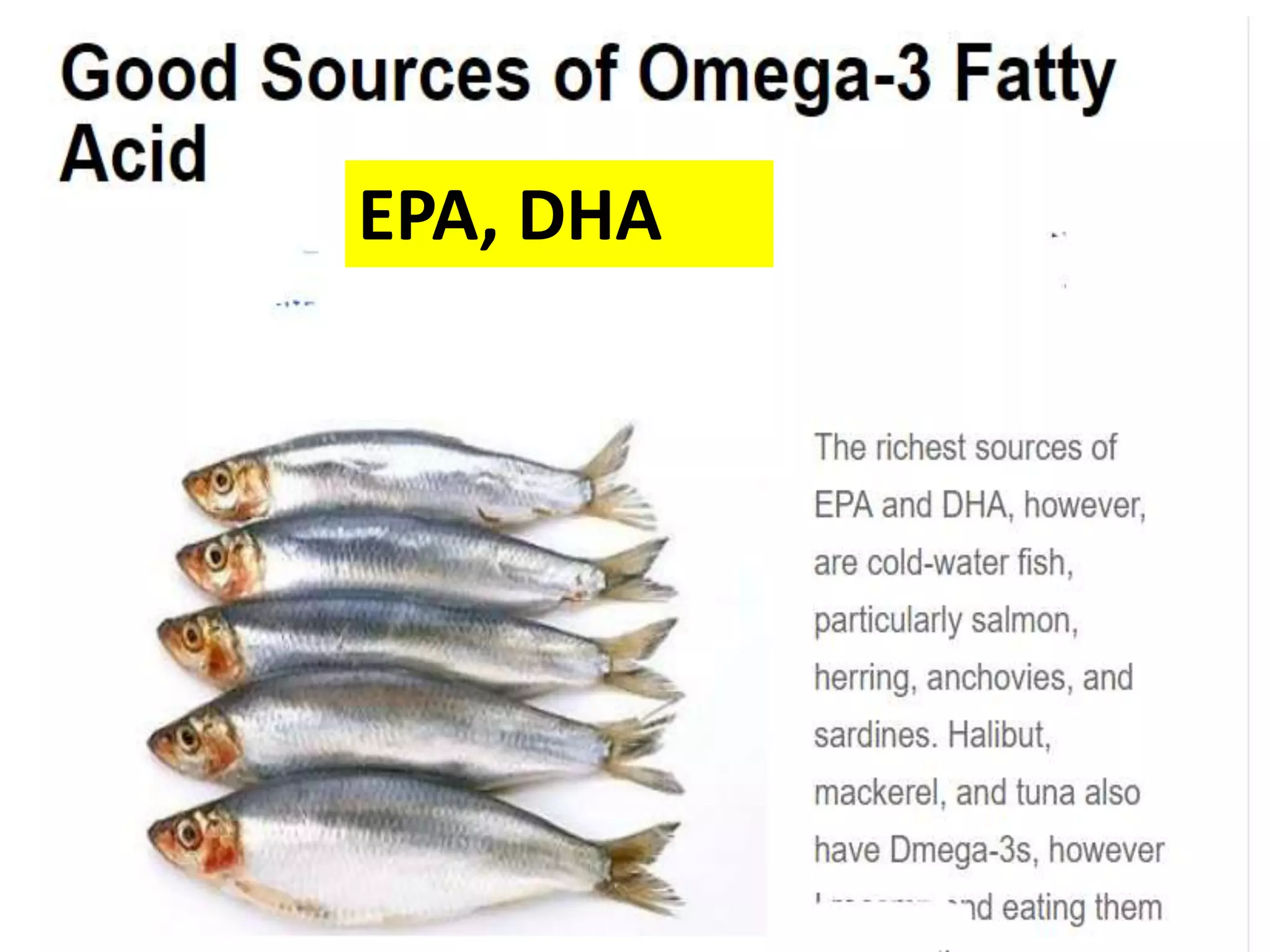
• Helps keep your blood vessels flexible
• Richest sources are oily fish e.g.
salmon, sardines and fresh tuna.
Seafood and white fish contain
smaller but useful quantities
Background on Omega- 3 Fatty Acids
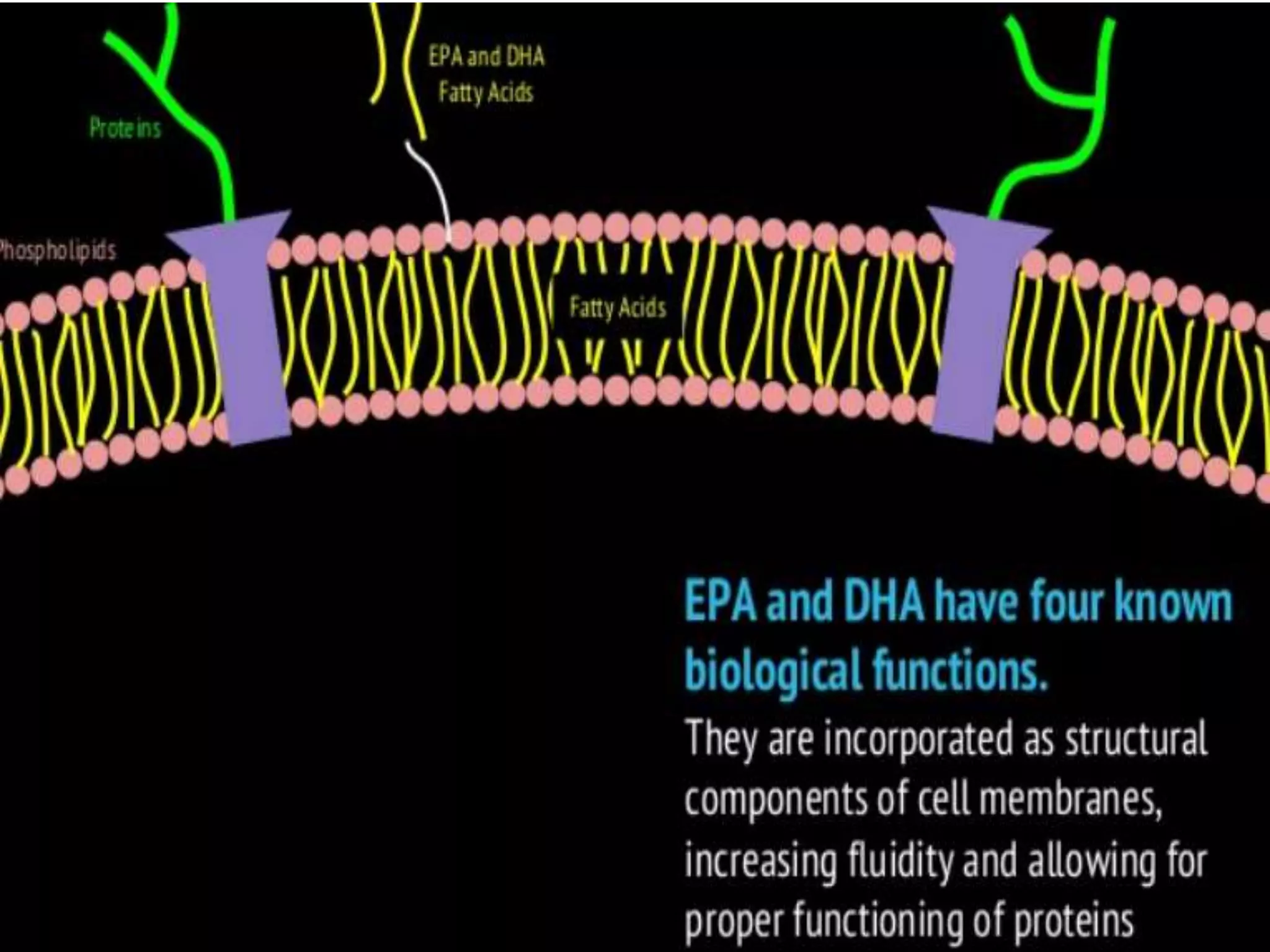
• EPA and DHA are precursors to eicosanoids and provide an
anti-inflammatory effect throughout the body
• These fatty acids are used in the formation and fluidity of cell
membranes, which help with maintenance of blood pressure
and heart rate, nervous system function, and in hemostatic
regulation, consisting of blood clotting and thromboxane
production.
• EPA is a long chain fatty acid. It is the single vital nutrient that
controls communication between nerve cells and the brain.
• DHA is another long chain fatty acid. It is known as the
building block of the brain cells since it is the most important
component that makes up the brain
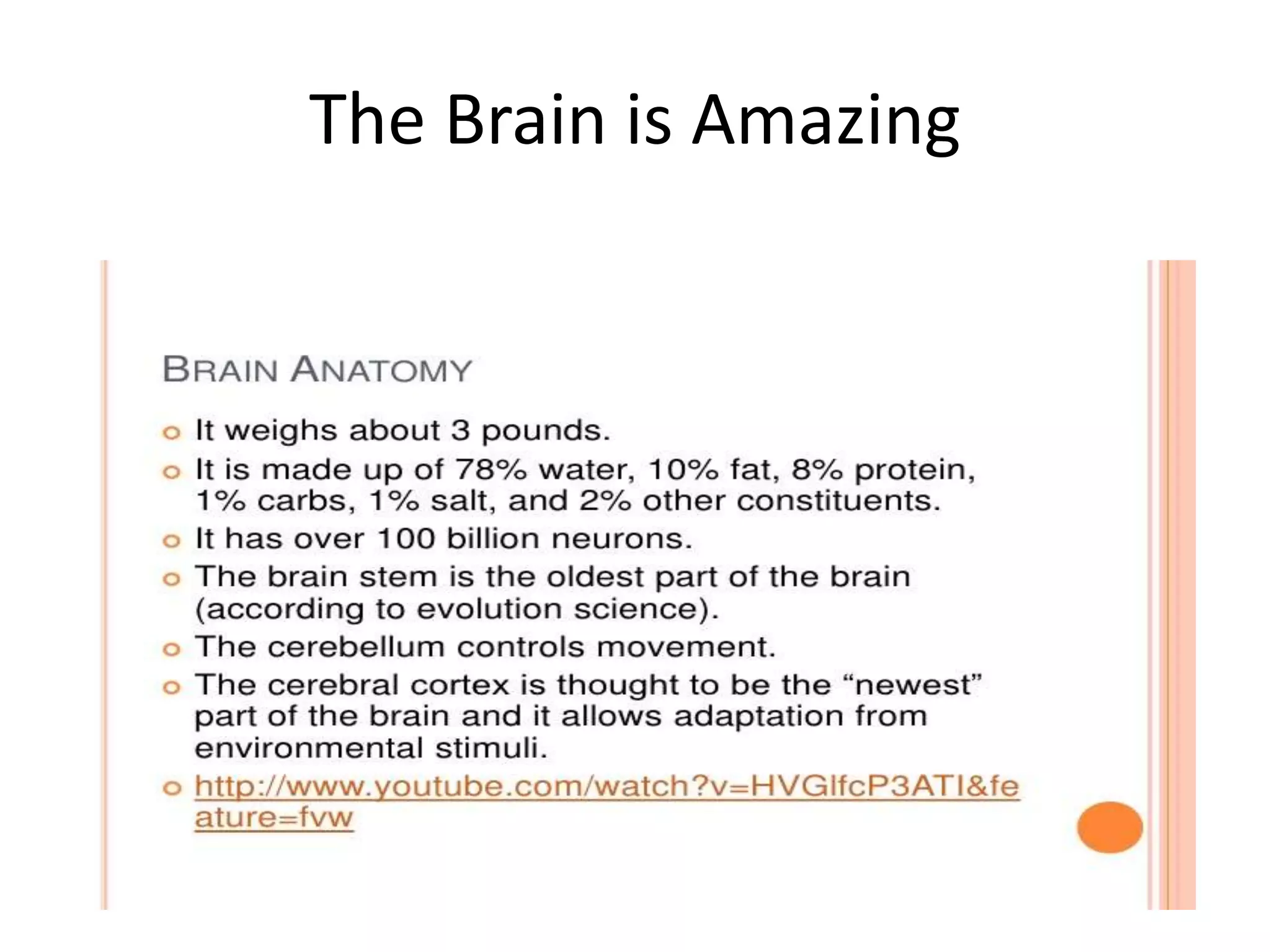
The Brain is Amazing

Omega in pediatric neurology

  • 1.
    Benefits of Theuse of Omega3 in Pediatric Neurology Presented By: H Abdeldayem Professor of Pediatric Neurology, Alex University Member of AAN, ICNA 9, 2018
  • 2.
    Faculty of Medicine,Alex University Department of Pediatrics Pediatrics Neurology Unit
  • 5.
    Background on Omega-3Fatty Acids Omega3 FA constitute the group of polyunsaturated FAs. PUFAs are essential FA because they can't be synthesized by humans and must be provided via dietary sources
  • 6.
    Omega-3 Fatty Acids Types Alpha-linolenicacid (ALA) Eicosapentaenoic acid (EPA) Docosahexaenoic acid (DHA)
  • 7.
    Alpha-linolenic Acid ALA • Humanscan synthesize other omega-3 fatty acids from ALA: • Eicosapentaenoic acid (EPA): 20:5n-3 • Docosahexaenoic acid (DHA): 22:6n • ALA is considered a plant-derived omega-3 fatty acid
  • 10.
  • 11.
    PBRC 2005 Docosahexaenoic acid(DHA) • Found in very high concentrations in the cell membranes of the retina • Studies in animals indicate that DHA is required for the normal development and function of the retina
  • 12.
  • 14.
    Main CNS Functions •Increased brain plasticity • Increased production of the membrane- rich neurites required for new synapses formation • Enhance neurotransmitter effects • Increased synaptic release of vital neurotransmitters as serotonin and dopamine • Antioxidant and anti-inflammatory membrane effect
  • 19.
    CLINICAL BENEFITS • THEREIS EMERGING EVIDENCE THAT 1. BRAIN DEVELOPMENT during early life 2. VISION 3. Language 4. Learning 5. Emotion 6. AUTISM 7. ADHD 8. MOOD DISORDERS: anxiety, depression *LEARNING DISORDERS: dyspraxia, dyslaxia ASSOCIATED WITH DEFICIENCIES IN OMEGA 3 FA OR IMPROVED BY USING OMEGA 3
  • 20.
    Summarized Clinical Indications • Infantmilk feeding • Risky for neurological disorders babies • GDD • ASD • ADHD • Anxiety • DLD • Depression • Dementia • Epilepsy • Learning disorders as dyslexia, dyspraxia • Migraine
  • 21.
    • THERE ISEMERGING EVIDENCE THAT these disorders are ASSOCIATED WITH DEFICIENCIES IN OMEGA 3 FA Either genetic defect or intake deficiency
  • 22.
    ALARM • Omega3 shouldbe considered as a safe add on treatment but not replace or used be per se for treatment of clinical diseases
  • 23.
    Benefits of Omega-3 indeveloping brain and young infants Presented By: H Abdeldayem 9, 2018 1
  • 27.
    • Omega 3accumulate in the human brain during fetal development • Omega 3 should be supplied for pregnant mothers and for infants • Breast milk and certain artificial milk will supply the baby with omega 3 • Omega 3 will help and increase brain plasticity and development of synapses in growing brain
  • 28.
    What is brainplasticity? Answer: Brain reacts and adapts in response to challenge. Brain Plasticity the capability of the brain to alter its functional organization as a result of experience or sensory stimulation. The brain’s ability to adapt/modify itself, especially after injury/ need/ experience.
  • 29.
    Developmental Plasticity • neuroplasticityis the lifelong ability of our brains to reorganize neural pathways based on new experiences as learning • Critical periods: limited time during which the nervous system displays heightened sensitivity to environmental stimuli and develops in particular directions as a result of these stimuli.
  • 30.
    WHO SHOULD BEGIVEN OMEGA 3? All young children especially those with risk factor or with GDD
  • 31.
    Global Developmental Delay GDD Significantdelay* in twoor more of five of the following five developmental skills: cognitive motor ( fine and gross) language self- dependence social Age : 3 - 5
  • 32.
    1. INDICATIONS (Babies) Allyoung babies especially premature Babies with risk for brain damage Babies with GDD Babies with cortical blindness
  • 33.
    PBRC 2005 Impaired Visualand Neural Development • Because the last trimester of pregnancy is a critical period for the accumulation of DHA in the brain and retina, preterm infants are particularly vulnerable to adverse effects of insufficient DHA on visual and neural development • Although preterm infants can synthesize DHA from ALA, they can’t synthesize enough to prevent declines in plasma and cellular DHA levels without additional dietary intake • Preterm infants fed formulas with DHA added had significantly improved measures of visual function compared to preterm infants fed DHA-free formulas in 5 out of 5 randomized controlled trials
  • 36.
    H Dayem .2002MS thesis *
  • 37.
    LC-PUFAs and NeuropsychologicalAssessment of Healthy, Term infants at 6 Months of Age ----------------------------------------------- Helmy E, Barakat S, Abdeldayem H, Barghash N, Selim O, Elmattery D Pediatr Department, Faculty of Medicine , Alex University
  • 38.
    Benefits of Omega-3 inchildren Presented By: H Abdeldayem 9, 2018
  • 39.
    Omega 3 benefits •Memory • Cognitive abilities • Learning • Behaviors • Emotional conditions
  • 40.
    • Increased brainplasticity • Increased production of the membrane- rich neurites required for new synapses formation • Enhance neurotransmitter effects • Increased synaptic release of vital neurotransmitters as serotonin and dopamine • Antioxidant and anti-inflammatory membrane effect Pathogenesis
  • 41.
    Benefits of Omega-3 inADHD Presented By: H Abdeldayem 9, 2018 2
  • 42.
    What is thebest protocol for treatment?
  • 44.
    • School underachievement •Impulsive • Smoking,etc • Careless, accident • Opositional defiant disorder/conduct disorders • Carrier underemployment • Impulsive life decisions • Addiction • Serious accident • Antisocial personality AdultsChildren Untreated ADHD Rule 1
  • 45.
    Untreated ADHD Parents’ consequences •Chronic stressed or worried about child’s ADHD • Frustration • Blaming, guilt • Social isolation • Parents’ marriage has been negatively affected • Economic burden
  • 46.
    EF networks depends1ry on 2 chemicals Dopamine Norepinephrine Not release and reload effectively Medications : slow reuptake so longer in contact with receptors
  • 47.
    Methylphenidate (Ritalin) Increases releaseof norepinephrine and dopamine in the cerebral cortex to reticular activating system
  • 48.
    Drugs Used ForTreatment FDA approval (non stimulant) Atomoxetine = Selective Nor-epinephrine reuptake inhibitors Since 2002
  • 49.
    <6 ys 1-Behaviormodification sessions 2-Family counseling* 6-12 ys 1-Behavior modification sessions 2-Family counseling* 3- drugs >12 ys 1-Drugs 2-Family counseling • American academy of pediatrics guidelines • ATTENTION-DEFICIT SO. ADHD: clinical practice guideline for the diagnosis, evaluation, and treatment of attention-deficit/hyperactivity disorder in children and adolescents. Pediatrics. 2011 Oct 14:peds-2011.
  • 51.
    Suggested Mechanism • Omega3 have anti-inflammatory properties and can alter CNS cell membrane fluidity and phospholipids composition • Cell membrane fluidity can alert serotonin and dopamine neurotransmission (Michael Block 2011; Psychiatry J)
  • 52.
    ?? Can FOODameliorate ADHD symptoms dietary modification
  • 53.
    ?? can FOODaggravate ADHD symptoms
  • 54.
    • omega-3s boostthe body’s synthesis of dopamine, the neurotransmitter that attention deficit disorder (ADHD or ADD) medications act to increase. • a study published in Pediatrics. “A lack of certain polyunsaturated fatty acids may contribute to dyslexia and attention-deficit/hyperactivity disorder,” Paul Montgomery, a researcher in the psychiatry department at the University of Oxford in England.
  • 55.
    I would recommend500 mg omega 3 for children with ADHD . If above 6ys age and not use specific drugs for ADHD, use 1000 mg omega 3 especially if associated with behaviors comorbid conditions
  • 56.
    Benefits of Omega-3 inAUTISM (ASD) Presented By: H Abdeldayem 9, 2018 3
  • 57.
    Prof Dr HusseinAbdeldayem Prof of Ped Neurology, Alex University Member of AAN, AAP, ICNA IS AUTISM A TREATABLE DISORDER?
  • 59.
    Autism Spectrum Disorder ASD Theyare defined as a group of biologically based neurodevelopment disorders that share three common areas of concern Qualitative impairments in social interactions Restricted and repetitive interests or behaviors Qualitative impairments in communication
  • 60.
  • 61.
    So…What causes autism? GeneticFactors Factors that affect the capacity for methylation (including gender) Factors that affect metal handling Environmental Factors Vaccine AdditivesEnvironmental Exposure To Heavy Metals Brain Differences Effect or cause
  • 62.
    Autism is atreatable disorder • Autism was considered as disorder without hope, but now it is recognized as treatable for many patients especially who are diagnosed early and receive ,,,,,, • INTENSIVE BEHAVIOR INTERVENTIONS
  • 63.
    Translational neurobiology inShank mutants - mouse models for ASD – Michael Schmeisser (Ulm University, Germany) Mutations in BCKD-kinase lead to a potentially treatable form of autism with epilepsy – Gaia Novarino (IST, Vienna, Austria) Autism Spectrum Disorder with or without epilepsy: comparative study of 207 patients – Benedetta Berlese (A.O.U. Verona, Italy) OSHA protocol for treating autistic children – Hussein Abdeldayem (Alexandria University, Egypt) Very early parents mediated intervention in TSC infants at risk for Autism – Arianna Benvenuto (Tor Vergata University, Roma, Italy) Autism Spectrum Disorder associated with Tourette Syndrome: Ariprazole treatment – Leonardo Zoccante (A.O.U. Verona)
  • 66.
    How to designa OSHA rehabilitation program for an autistic child INTENSIVE SESSIONS
  • 70.
    Pharmacological Role 1- Atypicalantipsychotic*: FDA approved as resperidone and aripiprazole 2- Selective serotonin reuptake inhibitors **: (for anxiety) sertraline, fluoxetine 3- Insomnia: Melatonin 4- Mood stabilizers/ AED: as valproic acid, Carbamazepine 5- ADHD : as Methylphenidate, Atomoxetine 6- omega 3 and 6 /zinc
  • 71.
    Omega 3 andAUTISM (ASD) • The benefits of omega 3 in ASD is still under research. However it may be of benefit as add on to the sessions as regard comorbid inattention , hyperactivity and language development
  • 72.
    Autism and Omega3 • The fatty acids that make up fish oil have proven to be effective in autistic patients with those individuals taking the supplement improving in language and learning skills in at least 8 different testing areas. • Possible benefits to autistic patients showed decreases in hyperactivity in their behavior lancet neurology , 2016:6;45-49
  • 73.
    Suggested Mechanism • Omega3 have anti-inflammatory properties and can alter CNS cell membrane fluidity and phospholipids composition • Cell membrane fluidity can alert serotonin and dopamine neurotransmission (Michael Block 2011; Psychiatry J)
  • 77.
    • the omega-3deficit, especially in the early stages of life, may cause changes of myelination, neurogenesis, synaptogenesis, neurotransmitter turnover, brain connectivity, cellular differentiation and development, inflammatory reactions, cognitive functioning, and behavior. These changes are all hypothetically involved in ASD etiopathogenesis
  • 78.
    Final Conclusion At least •Omega 3 may be of benefits for associated behavior abnormalities as aggressions SIB and temper tantrums • Harmless but even with other body benefits
  • 79.
    Complementary and Alternative Therapies NON- Inclusive Because Few studies • Vitamin B6 • Magnesium • Dimethyl glycine • Diet: Gluten / Casein free • Hyperbaric Oxygen Therapy • Secretin Insufficient No controlled studies • Antifungals • IV immunoglobulin • Chelation therapy • GABA • Stem cell therapy • Coenzyme Q OTHERS*
  • 82.
    Benefits of Omega-3 inPsychiatric disorders Presented By: H Abdeldayem 9, 2018 4
  • 85.
    • Low levelof omega 3 in the brain of depressed persons (autopsy) • Due to effect on serotonin at synapses • Dose 1000 – 3000 gm /day Anxiety , Depression And Bipolar Disorder
  • 86.
    PBRC 2005 Anxiety ,Depression And Bipolar Disorder • Several small studies have found omega-3 fatty acid levels to be lower in the plasma and fat of individuals suffering from depression and anxiety compared to controls • Patients who took the EPA + DHA supplement also experienced less anxiety, stress and depression than those who took the placebo
  • 87.
    Benefits of Omega-3Fish Oil in Epilepsy, migraine and stroke Presented By: H Abdeldayem 9, 2018 5
  • 92.
    FINAL Conclusion • Omega3 may offer a safe additional efficacious treatment option in different neurological disorders in children
  • 93.
    FINAL PRACTICAL CONCLUSIONS • Thereis evidence that these patient groups may have genetic difficulties with metabolizing PUFAs and therefore have higher than normal PUFAs requirements • The use of omega 3 with THE SPECIFIC TREATMENT PROTOCAL might increase treatment efficacy
  • 94.
    • dietary intakeof omega 3 fats has been declined especially in low income countries • As well as other micronutrients that might be required for the metabolism of • In addition to neurologic benefits of omega 3 . Other body systems will get benefits as well e.g., immunity etc. • PLEASE TAKE CARE OF THE COST
  • 95.
  • 96.
    Benefits and Riskof Omega-3 Fish Oil in Pediatric Neurology Presented By: H Abdeldayem 9, 2018
  • 97.
    “Cod Liver Oil“ LCPUFA • cod liver oil contains vitamins A and D and has a different concentration of omega3 (EFA) • Promotes normal bone formation, vision and reproduction • Promotes immunity • Promotes appetite • Promotes concentration amd mental function • For : autism, ADHD/ADD
  • 98.
    How Can FattyAcids Modulate the CNS System? • Why do we need CNS good in the first place? • Answer: • FAs such as DHA and EPA can • FAs • FAs • FAs
  • 100.
  • 101.
    Alpha-linolenic acid (ALA) •Scientific abbreviation is 18:3n-3 • The first part (18:3) suggests that ALA is an 18-carbon fatty acid with 3 double bonds • The second part (n-3) tells you that ALA is an omega-3 fatty acid • It is required for health, but cannot be synthesized in humans • Must be obtained from the diet
  • 102.
    Alpha-linolenic acid: Sources FoodServing Alpha-linolenic acid (g) Flaxseed oil 1 tablespoon 8.5 Walnuts, English 1 ounce 2.6 Flaxseeds 1 tablespoon 2.2 Walnut Oil 1 tablespoon 1.4 Canola Oil 1 tablespoon 1.2 Mustard Oil 1 tablespoon 0.8 Soybean Oil 1 tablespoon 0.9 Walnuts, Black 1 ounce 0.6 Olive Oil 1 tablespoon 0.1 Broccoli, raw 1 cup, chopped 0.1
  • 103.
    PBRC 2005 Information: Omega-3 FattyAcids • Omega-3 FA’s are polyunsaturated, meaning they contain more than one double bond • They are called omega-3 because the first double bond counting from the methyl end of the fatty acid is located at the third carbon atom
  • 104.
    Food Serving EPA(g) DHA (g) Amt providing 1 g of EPA + DHA Herring, Pacific, cooked 3 ounces 1.06 .75 1.5 ounces Salmon, chinook, cooked 3 ounces .86 .62 2 ounces Salmon, Atlantic, cooked 3 ounces .28 .95 2.5 ounces Oysters, Pacific, cooked 3 ounces .75 .43 2.5 ounces Salmon, sockeye, cooked 3 ounces .45 .60 3 ounces Trout, rainbow, cooked 3 ounces .40 .44 3.5 ounces Tuna, white, packed in water 3 ounces .20 .54 4 ounces Crab, dungeness, cooked 3 ounces .24 .10 9 ounces Shrimp, cooked 3 ounces .15 .12 11 ounces Cod, Pacific, cooked 3 ounces .09 .15 12.5 ounces Fish oil, menhaden 1 gram .13 .09 5 grams Fish oil, salmon 1 gram .13 .18 3 grams EPA and DHA: Sources
  • 105.
    Fat heads?? 105 • Humanbeings are literally fat heads with fat(DHA)accounting for 60% of our dry brain weight.
  • 106.
    Omega-3 Fats demystified •Omega 3’s build all cell membranes(along with the help of other fats called phospholipids). • They reduce inflammation-which has been linked to autism, ADHD, Alzheimer’s and depression. 106
  • 107.
    Your Brain onTrans Fats (Franken Fats)  2009-WHO declared that trans fats (from hydrogenated vegetable oils) really are toxic. Most sensible countries now ban them.  These “fake fats” raise the risk for-Type II diabetes, Cardiovascular disease, Obesity and Inflammation.  Trans Fats are associated with-Depression, anxiety, memory problems and irritability and aggression.  Trans fats are hidden in almost all convenience food and fried. 107
  • 108.
    Common Uses forFish Oil • Fish oil has also been shown to have a number of beneficial benefits on the brain • It has been shown that 60% of the brain is made up of a structural fat, which has a high number of DHA in it, and the brain requires a regular intake of good fats such as the ones from omega-3 fatty acids. • Low intake of omega-3 fatty acids can lead to conditions such as ADHD, dyslexia, depression, aggression, Alzheimer’s Disease, or other dementia.
  • 109.
    Omegas and CNS •Mental and emotional conditions that recent research has connected to low tissue levels of Omega 3: Depression, Anxiety, ADHD, Autism, Bipolar Disorder, learning disabilities, Post-partum Depression, Schizophrenia, Multiple Sclerosis and Seasonal Affective Disorder. 109
  • 110.
    PBRC 2005 Schizophrenia • Schizophreniais a chronic disabling brain disorder that affects approximately 1% of the population • A pilot study in 45 schizophrenic patients found that the addition of 2 g/day of EPA to standard antipsychotic therapy was superior to the addition of a 2 g/day to DHA or a placebo in decreasing residual symptoms • Although limited evidence does suggest that EPA supplementation may be a useful adjunct to antipsychotic therapy in schizophrenic patients, larger long-term studies addressing clinically relevant outcomes are needed
  • 111.
    Converting non-marine sources •Nuts and seeds contain a short chain omega-3 called alpha-linolenic acid (ALA) • This is converted into long-chain fatty acids (EPA and DHA) in the body • Conversion process isn’t efficient – 8-20% of ALA is converted to EPA and just 0.5-9% is converted to DHA • We lose the enzyme that converts ALA to EPA and DHA with age
  • 112.
    Nature’s edible antifreeze! • Omega-3s liquid at very low temperatures • Without this natural antifreeze, cold water fish would freeze! • Helps keep your blood vessels flexible • Richest sources are oily fish e.g. salmon, sardines and fresh tuna. Seafood and white fish contain smaller but useful quantities
  • 113.
    Background on Omega-3 Fatty Acids • EPA and DHA are precursors to eicosanoids and provide an anti-inflammatory effect throughout the body • These fatty acids are used in the formation and fluidity of cell membranes, which help with maintenance of blood pressure and heart rate, nervous system function, and in hemostatic regulation, consisting of blood clotting and thromboxane production. • EPA is a long chain fatty acid. It is the single vital nutrient that controls communication between nerve cells and the brain. • DHA is another long chain fatty acid. It is known as the building block of the brain cells since it is the most important component that makes up the brain
  • 116.
    The Brain isAmazing