Nutritional Assessment:
is the analysis of anthropometric,
biochemical, clinical and dietary data to
determine the nutritional status of a
person or groups.
Purpose of Nutrition Assessment:
- To assess the nutritional status.
- To determine the body needs from
nutrition.
- To identify the health problems that
associated with nutrition status.
- Identifying individuals who are
malnourished or at nutritional risk.
Nutritional Assessment contents of the
following:-
a- Dietary history
b- Physical examination
c- Laboratory investigation
a- Dietary History and Intake
- Appetite and intake
- Taste changes
- Dentition
- Dysphagia
- Feeding independence
- Vitamin/mineral supplements
- Nausea and vomiting
- Swallowing ability
- Eating patterns
- Diet restrictions
- Ethnicity
- Eating away from home
b- Physical examination
1) Anthropometric measurement:
- Height
- Weight
- Weight changes
- Head, chest, and abdominal
circumference (children)
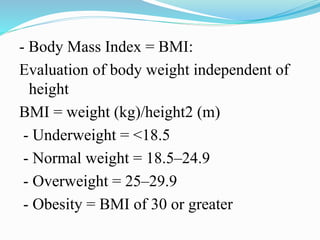
- Body Mass Index = BMI:
Evaluation of body weight independent of
height
BMI = weight (kg)/height2 (m)
- Underweight = <18.5
- Normal weight = 18.5–24.9
- Overweight = 25–29.9
- Obesity = BMI of 30 or greater
- Upper arm measurement
- Skin fold
- Fat folds and various body
circumferences and areas
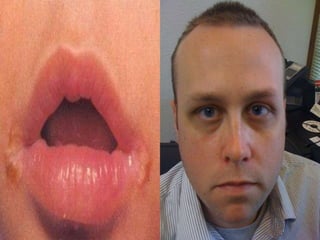
2) Clinical Examination:
Clinical signs
- blue half circles beneath eyes
- Edema
- Lesions at corner of mouth
- Poorly shaped bones or teeth, or delayed
appearance of teeth in children
- Slow clotting time of blood
- Unusual nervousness, dermatitis, diarrhea
in same client
- Tetany
- Goiter
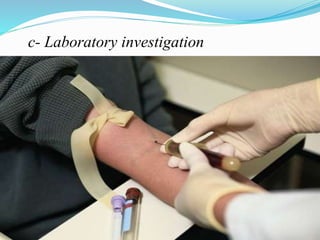
c- Laboratory investigation
Common Biochemical Tests:
- Serum albumin level: Measures main
protein in blood
- Hemoglobin (Hgb)
- Red blood cells (RBCs)
- White blood cells (WBCs)
1) Albumin
- Normal value 3.5-5.0 g/DL
- Most widely used indicator of nutritional
status
- Affected by volume: Increases with
dehydration, decreases with edema and
over hydration
2) Prealbumin
- Normal value: 18-40 mg/DL
- Levels affected by trauma, acute
infections, liver and kidney disease;
highly sensitive to minor stress and
inflammation
3) Hemoglobin
Normal levels are:
- Men: 13.8 to 18.0 g/dL
- Women: 12.1 to 15.1 g/dL)
- Children: 11 to 16 g/dL
- Pregnant women: 11 to 14 g/dL
- Dehydration or hyper hydration influence
hemoglobin levels
Comparison between people of good
nutrition and malnutrition:-
Example:
Good Nutrition = A
Mal Nutrition = B
A = Correct weight for height and age
B = Weight too much or too little
A = Strong Muscles.
B = Weak muscles.
A = Limbs straight.
B = Weak limbs.
A = Smooth mucous membranes, clear skin
B = Skin dry and rough mucous
membranes
A = Healthy bright eyes and clear sight
(Visual)
B = Eyes dull, night blindness poor Sight or
loss of sight.
A= Hearing good.
B = Poor hearing.
A = Breathing unobstructed.
B = Mouth breathing.
A = Teeth well formed, and free from
dental caries
B = Irregular teeth, dental caries; spongy
gums.
A = Tonsil clean and small Tonsils
B = Enlarged tonsil and often sore.
A = Straight posture in sitting, standing and
walking.
B = Round shouldered, twisted spine and
protruding abdomen.
A = Nerves steady; expression calm and
cheerful, quick to learn
B = Nervous, anxious, irritable and slow to
learn.
A = Plenty of energy
B = Tired and lethargic.
A = Good resistance to infections
B = Poor resistance to infections.
Thank

Nutritional Assessment

  • 2.
    Nutritional Assessment: is theanalysis of anthropometric, biochemical, clinical and dietary data to determine the nutritional status of a person or groups.
  • 3.
    Purpose of NutritionAssessment: - To assess the nutritional status. - To determine the body needs from nutrition.
  • 4.
    - To identifythe health problems that associated with nutrition status. - Identifying individuals who are malnourished or at nutritional risk.
  • 5.
    Nutritional Assessment contentsof the following:- a- Dietary history b- Physical examination c- Laboratory investigation
  • 6.
    a- Dietary Historyand Intake - Appetite and intake - Taste changes - Dentition - Dysphagia
  • 7.
    - Feeding independence -Vitamin/mineral supplements - Nausea and vomiting - Swallowing ability
  • 8.
    - Eating patterns -Diet restrictions - Ethnicity - Eating away from home
  • 9.
    b- Physical examination 1)Anthropometric measurement: - Height - Weight - Weight changes - Head, chest, and abdominal circumference (children)
  • 10.
    - Body MassIndex = BMI: Evaluation of body weight independent of height BMI = weight (kg)/height2 (m) - Underweight = <18.5 - Normal weight = 18.5–24.9 - Overweight = 25–29.9 - Obesity = BMI of 30 or greater
  • 11.
    - Upper armmeasurement - Skin fold - Fat folds and various body circumferences and areas
  • 12.
    2) Clinical Examination: Clinicalsigns - blue half circles beneath eyes - Edema - Lesions at corner of mouth
  • 14.
    - Poorly shapedbones or teeth, or delayed appearance of teeth in children - Slow clotting time of blood - Unusual nervousness, dermatitis, diarrhea in same client - Tetany - Goiter
  • 15.
  • 16.
    Common Biochemical Tests: -Serum albumin level: Measures main protein in blood - Hemoglobin (Hgb) - Red blood cells (RBCs) - White blood cells (WBCs)
  • 17.
    1) Albumin - Normalvalue 3.5-5.0 g/DL - Most widely used indicator of nutritional status - Affected by volume: Increases with dehydration, decreases with edema and over hydration
  • 18.
    2) Prealbumin - Normalvalue: 18-40 mg/DL - Levels affected by trauma, acute infections, liver and kidney disease; highly sensitive to minor stress and inflammation
  • 19.
    3) Hemoglobin Normal levelsare: - Men: 13.8 to 18.0 g/dL - Women: 12.1 to 15.1 g/dL) - Children: 11 to 16 g/dL - Pregnant women: 11 to 14 g/dL - Dehydration or hyper hydration influence hemoglobin levels
  • 20.
    Comparison between peopleof good nutrition and malnutrition:- Example: Good Nutrition = A Mal Nutrition = B A = Correct weight for height and age B = Weight too much or too little
  • 21.
    A = StrongMuscles. B = Weak muscles. A = Limbs straight. B = Weak limbs.
  • 22.
    A = Smoothmucous membranes, clear skin B = Skin dry and rough mucous membranes A = Healthy bright eyes and clear sight (Visual) B = Eyes dull, night blindness poor Sight or loss of sight.
  • 23.
    A= Hearing good. B= Poor hearing. A = Breathing unobstructed. B = Mouth breathing. A = Teeth well formed, and free from dental caries B = Irregular teeth, dental caries; spongy gums.
  • 24.
    A = Tonsilclean and small Tonsils B = Enlarged tonsil and often sore. A = Straight posture in sitting, standing and walking. B = Round shouldered, twisted spine and protruding abdomen.
  • 25.
    A = Nervessteady; expression calm and cheerful, quick to learn B = Nervous, anxious, irritable and slow to learn.
  • 26.
    A = Plentyof energy B = Tired and lethargic. A = Good resistance to infections B = Poor resistance to infections.
  • 27.