What is number system?
Number system are the technique to represent number in the computer
system architecture every value that you are saving and getting into/from
computer memory has a defined number system.
Types of Number System:
1. Binary Number System
2. Decimal Number System
3. Hexadecimal Number System
4. Octal Number System
Bit, Byte and base(Radix)
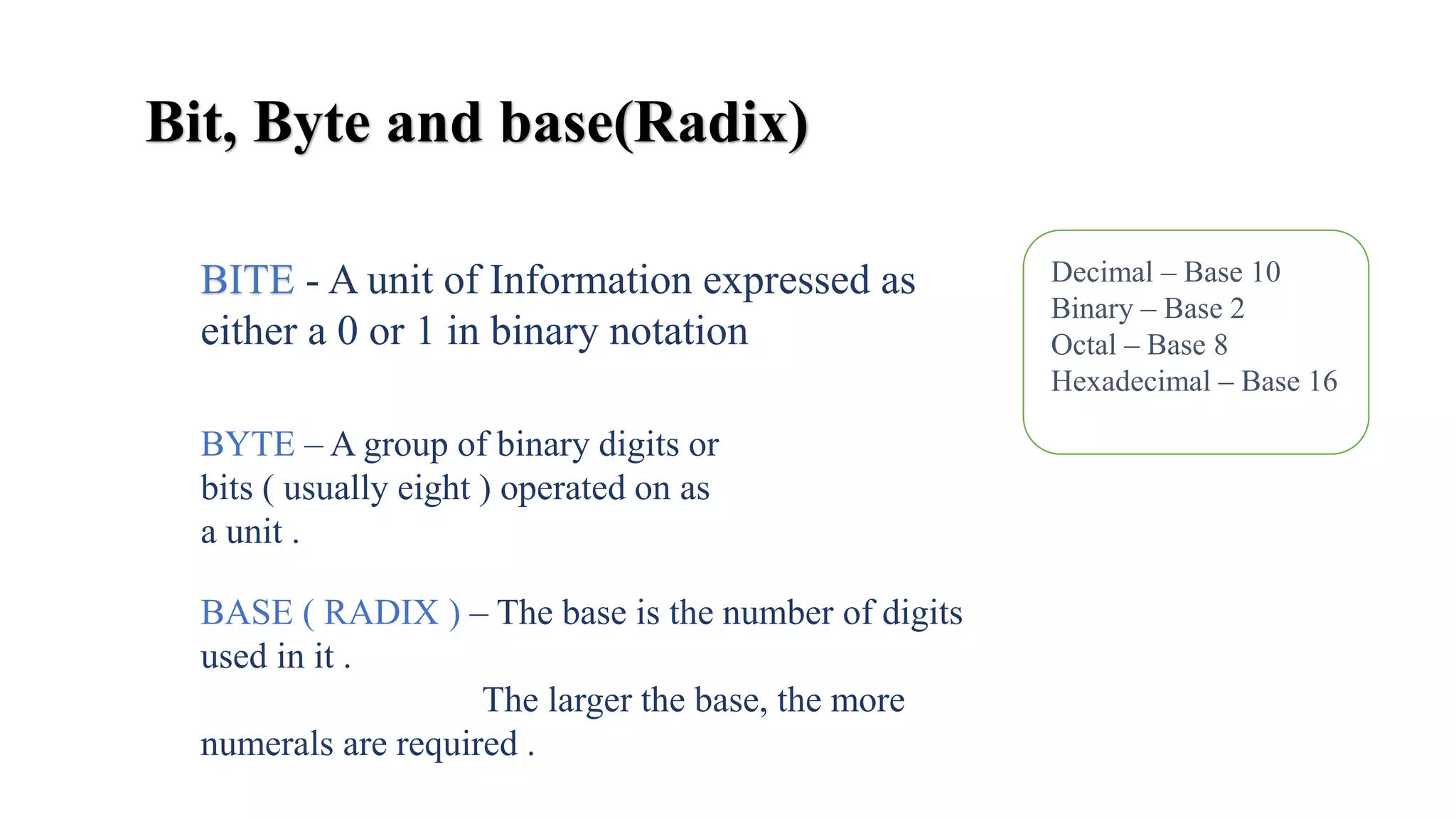
BITE - A unit of Information expressed as
either a 0 or 1 in binary notation
BYTE – A group of binary digits or
bits ( usually eight ) operated on as
a unit .
BASE ( RADIX ) – The base is the number of digits
used in it .
The larger the base, the more
numerals are required .
Decimal – Base 10
Binary – Base 2
Octal – Base 8
Hexadecimal – Base 16
Binary Number System
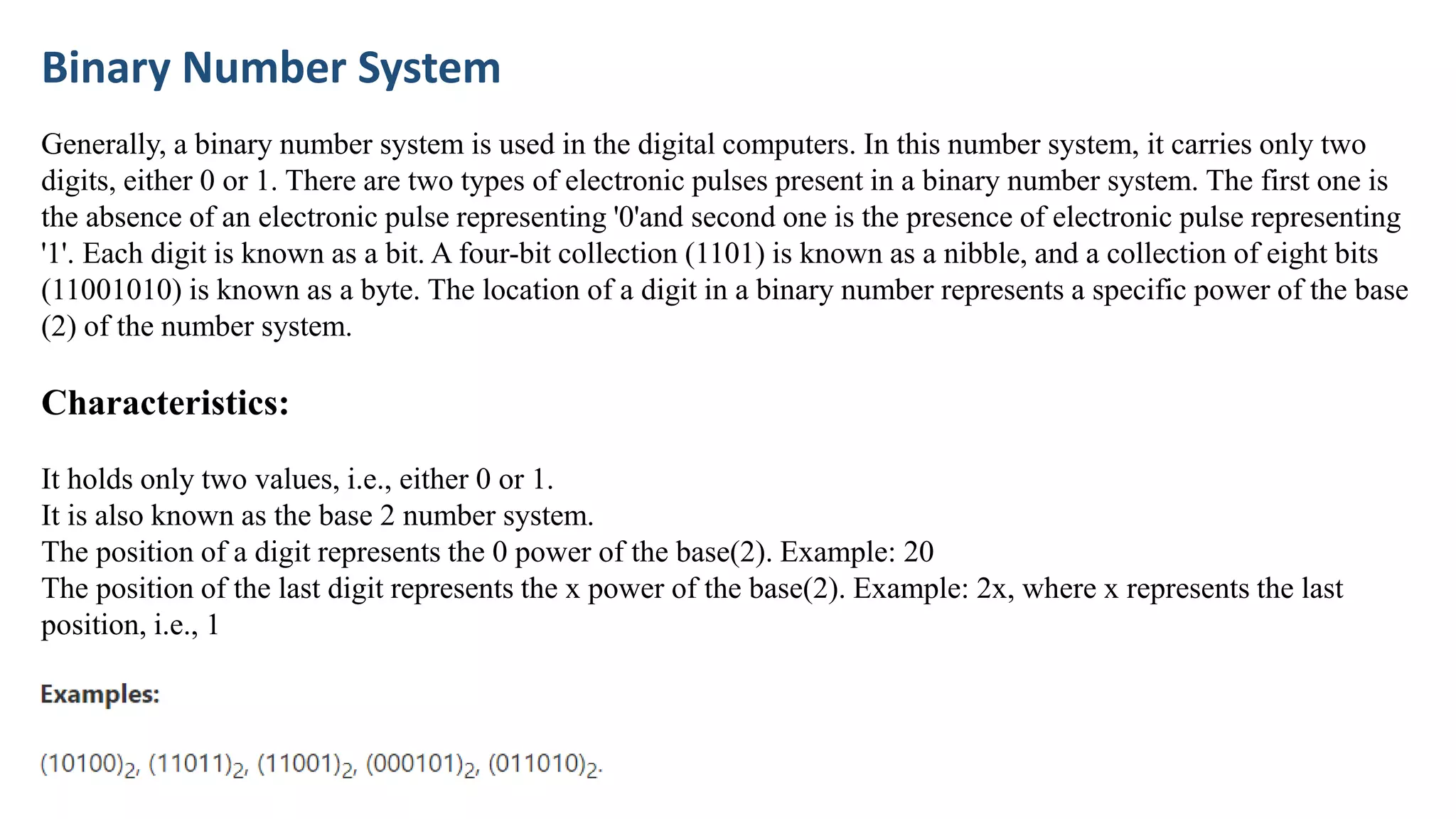
Generally, a binary number system is used in the digital computers. In this number system, it carries only two
digits, either 0 or 1. There are two types of electronic pulses present in a binary number system. The first one is
the absence of an electronic pulse representing '0'and second one is the presence of electronic pulse representing
'1'. Each digit is known as a bit. A four-bit collection (1101) is known as a nibble, and a collection of eight bits
(11001010) is known as a byte. The location of a digit in a binary number represents a specific power of the base
(2) of the number system.
Characteristics:
It holds only two values, i.e., either 0 or 1.
It is also known as the base 2 number system.
The position of a digit represents the 0 power of the base(2). Example: 20
The position of the last digit represents the x power of the base(2). Example: 2x, where x represents the last
position, i.e., 1
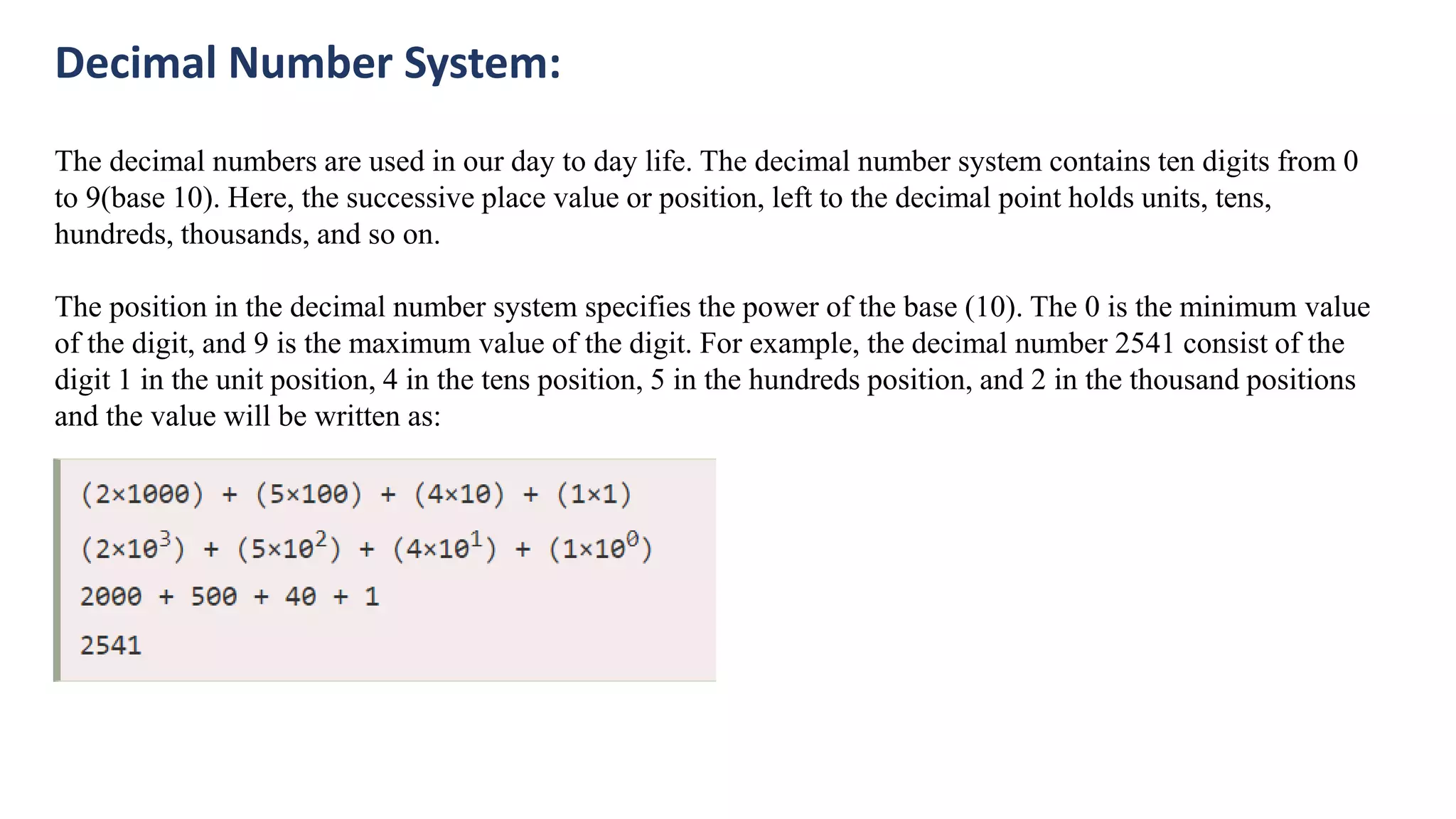
Decimal Number System:
The decimal numbers are used in our day to day life. The decimal number system contains ten digits from 0
to 9(base 10). Here, the successive place value or position, left to the decimal point holds units, tens,
hundreds, thousands, and so on.
The position in the decimal number system specifies the power of the base (10). The 0 is the minimum value
of the digit, and 9 is the maximum value of the digit. For example, the decimal number 2541 consist of the
digit 1 in the unit position, 4 in the tens position, 5 in the hundreds position, and 2 in the thousand positions
and the value will be written as:
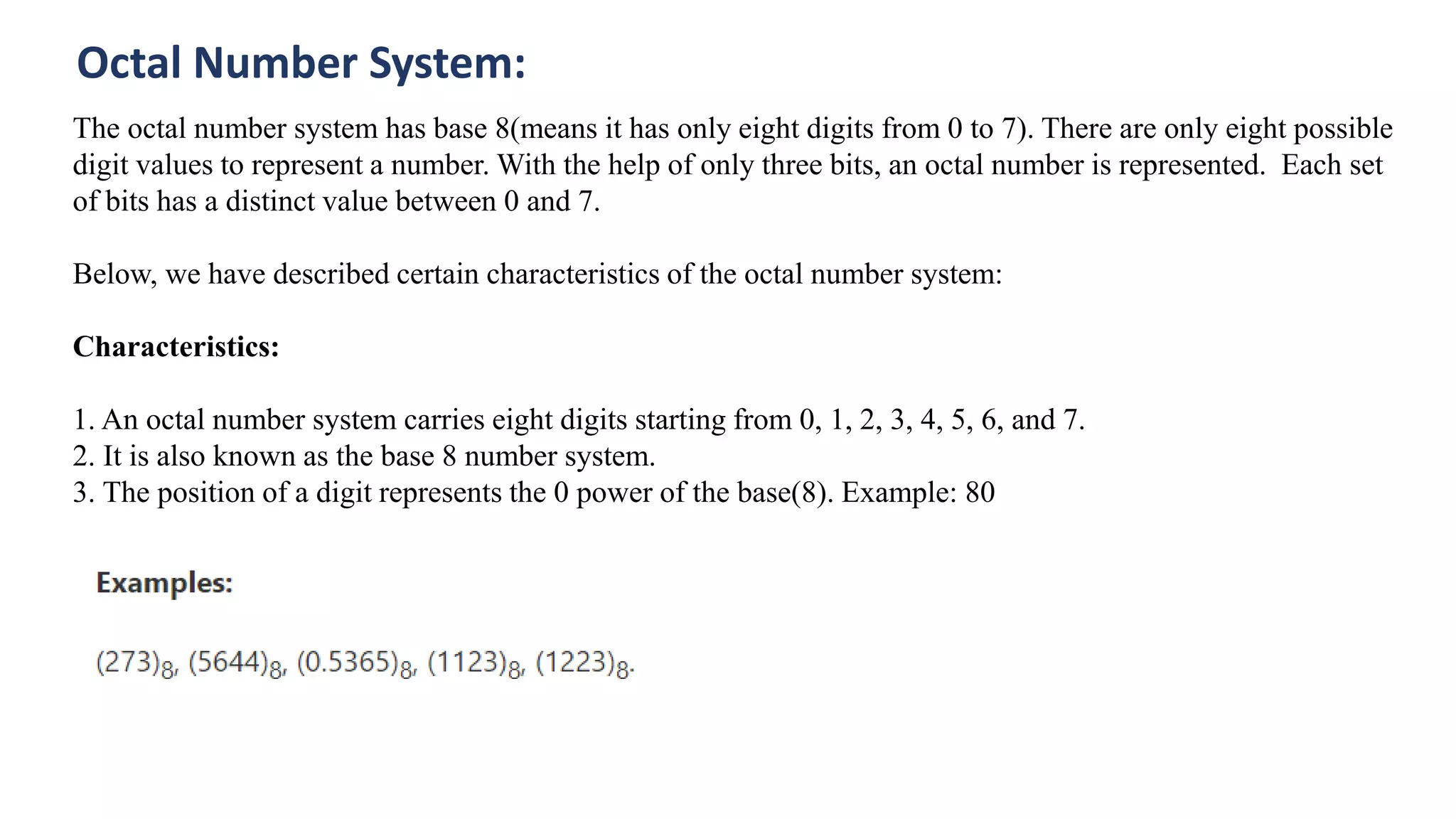
Octal Number System:
The octal number system has base 8(means it has only eight digits from 0 to 7). There are only eight possible
digit values to represent a number. With the help of only three bits, an octal number is represented. Each set
of bits has a distinct value between 0 and 7.
Below, we have described certain characteristics of the octal number system:
Characteristics:
1. An octal number system carries eight digits starting from 0, 1, 2, 3, 4, 5, 6, and 7.
2. It is also known as the base 8 number system.
3. The position of a digit represents the 0 power of the base(8). Example: 80
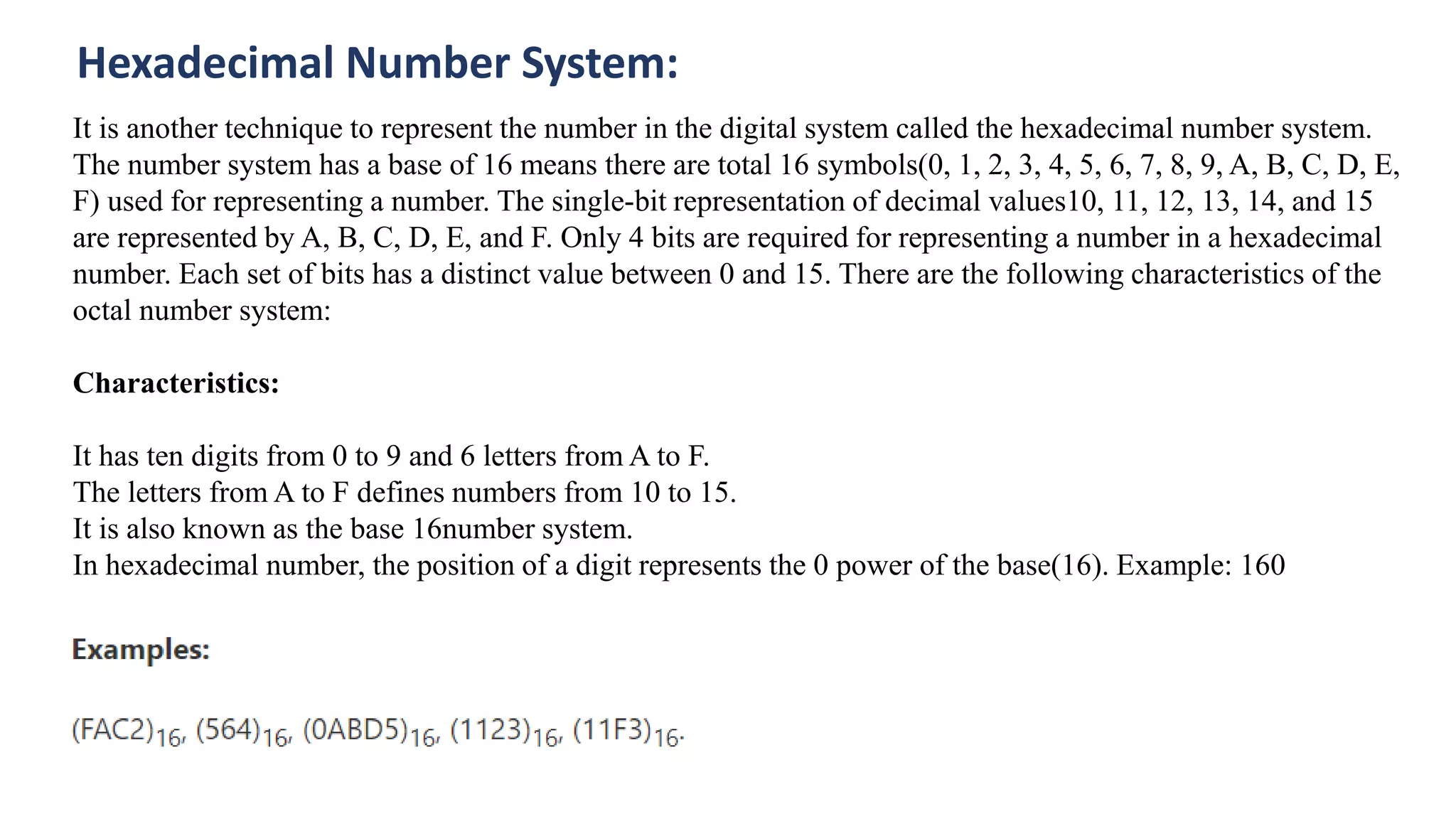
Hexadecimal Number System:
It is another technique to represent the number in the digital system called the hexadecimal number system.
The number system has a base of 16 means there are total 16 symbols(0, 1, 2, 3, 4, 5, 6, 7, 8, 9, A, B, C, D, E,
F) used for representing a number. The single-bit representation of decimal values10, 11, 12, 13, 14, and 15
are represented by A, B, C, D, E, and F. Only 4 bits are required for representing a number in a hexadecimal
number. Each set of bits has a distinct value between 0 and 15. There are the following characteristics of the
octal number system:
Characteristics:
It has ten digits from 0 to 9 and 6 letters from A to F.
The letters from A to F defines numbers from 10 to 15.
It is also known as the base 16number system.
In hexadecimal number, the position of a digit represents the 0 power of the base(16). Example: 160
1. Binary to Decimal Conversion:
Example 1: (10110.001)2
We multiplied each bit of (10110.001)2 with its respective positional weight, and last we add the products of
all the bits with its weight.
Decimal to Binary Conversion:
Number System.

Number System.

  • 2.
    What is numbersystem? Number system are the technique to represent number in the computer system architecture every value that you are saving and getting into/from computer memory has a defined number system. Types of Number System: 1. Binary Number System 2. Decimal Number System 3. Hexadecimal Number System 4. Octal Number System
  • 3.
    Bit, Byte andbase(Radix) BITE - A unit of Information expressed as either a 0 or 1 in binary notation BYTE – A group of binary digits or bits ( usually eight ) operated on as a unit . BASE ( RADIX ) – The base is the number of digits used in it . The larger the base, the more numerals are required . Decimal – Base 10 Binary – Base 2 Octal – Base 8 Hexadecimal – Base 16
  • 4.
    Binary Number System Generally,a binary number system is used in the digital computers. In this number system, it carries only two digits, either 0 or 1. There are two types of electronic pulses present in a binary number system. The first one is the absence of an electronic pulse representing '0'and second one is the presence of electronic pulse representing '1'. Each digit is known as a bit. A four-bit collection (1101) is known as a nibble, and a collection of eight bits (11001010) is known as a byte. The location of a digit in a binary number represents a specific power of the base (2) of the number system. Characteristics: It holds only two values, i.e., either 0 or 1. It is also known as the base 2 number system. The position of a digit represents the 0 power of the base(2). Example: 20 The position of the last digit represents the x power of the base(2). Example: 2x, where x represents the last position, i.e., 1
  • 5.
    Decimal Number System: Thedecimal numbers are used in our day to day life. The decimal number system contains ten digits from 0 to 9(base 10). Here, the successive place value or position, left to the decimal point holds units, tens, hundreds, thousands, and so on. The position in the decimal number system specifies the power of the base (10). The 0 is the minimum value of the digit, and 9 is the maximum value of the digit. For example, the decimal number 2541 consist of the digit 1 in the unit position, 4 in the tens position, 5 in the hundreds position, and 2 in the thousand positions and the value will be written as:
  • 6.
    Octal Number System: Theoctal number system has base 8(means it has only eight digits from 0 to 7). There are only eight possible digit values to represent a number. With the help of only three bits, an octal number is represented. Each set of bits has a distinct value between 0 and 7. Below, we have described certain characteristics of the octal number system: Characteristics: 1. An octal number system carries eight digits starting from 0, 1, 2, 3, 4, 5, 6, and 7. 2. It is also known as the base 8 number system. 3. The position of a digit represents the 0 power of the base(8). Example: 80
  • 7.
    Hexadecimal Number System: Itis another technique to represent the number in the digital system called the hexadecimal number system. The number system has a base of 16 means there are total 16 symbols(0, 1, 2, 3, 4, 5, 6, 7, 8, 9, A, B, C, D, E, F) used for representing a number. The single-bit representation of decimal values10, 11, 12, 13, 14, and 15 are represented by A, B, C, D, E, and F. Only 4 bits are required for representing a number in a hexadecimal number. Each set of bits has a distinct value between 0 and 15. There are the following characteristics of the octal number system: Characteristics: It has ten digits from 0 to 9 and 6 letters from A to F. The letters from A to F defines numbers from 10 to 15. It is also known as the base 16number system. In hexadecimal number, the position of a digit represents the 0 power of the base(16). Example: 160
  • 8.
    1. Binary toDecimal Conversion: Example 1: (10110.001)2 We multiplied each bit of (10110.001)2 with its respective positional weight, and last we add the products of all the bits with its weight.
  • 9.
    Decimal to BinaryConversion: