Number System
By
S.Piramu Kailasam
Assistant Professor
Department of Computer Applications
Sadakathulla Appa College
Tirunelveli
Introduction
A digital system can understand positional
number system only where there are a few
symbols called digits and these symbols
represent different values depending on the
position they occupy in the number.
Types of Number System
• Decimal Number System
• Binary Number System
• Octal System
• Hexadecimal Number System
Decimal Number System
• The number system that we use in our day-to-
day life is the decimal number system.
• Decimal number system has base 10 as it uses
10 digits from 0 to 9.
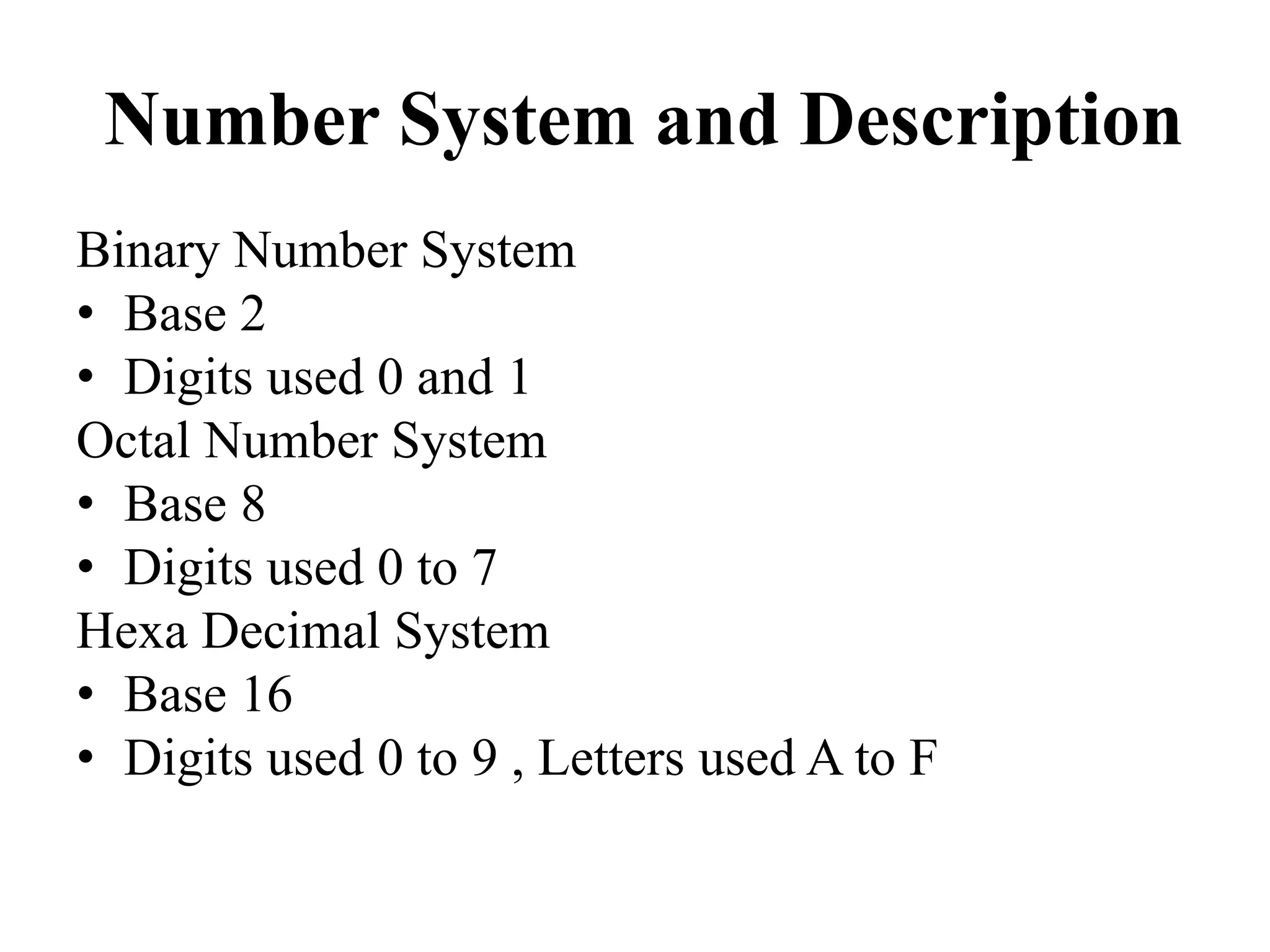
Number System and Description
Binary Number System
• Base 2
• Digits used 0 and 1
Octal Number System
• Base 8
• Digits used 0 to 7
Hexa Decimal System
• Base 16
• Digits used 0 to 9 , Letters used A to F
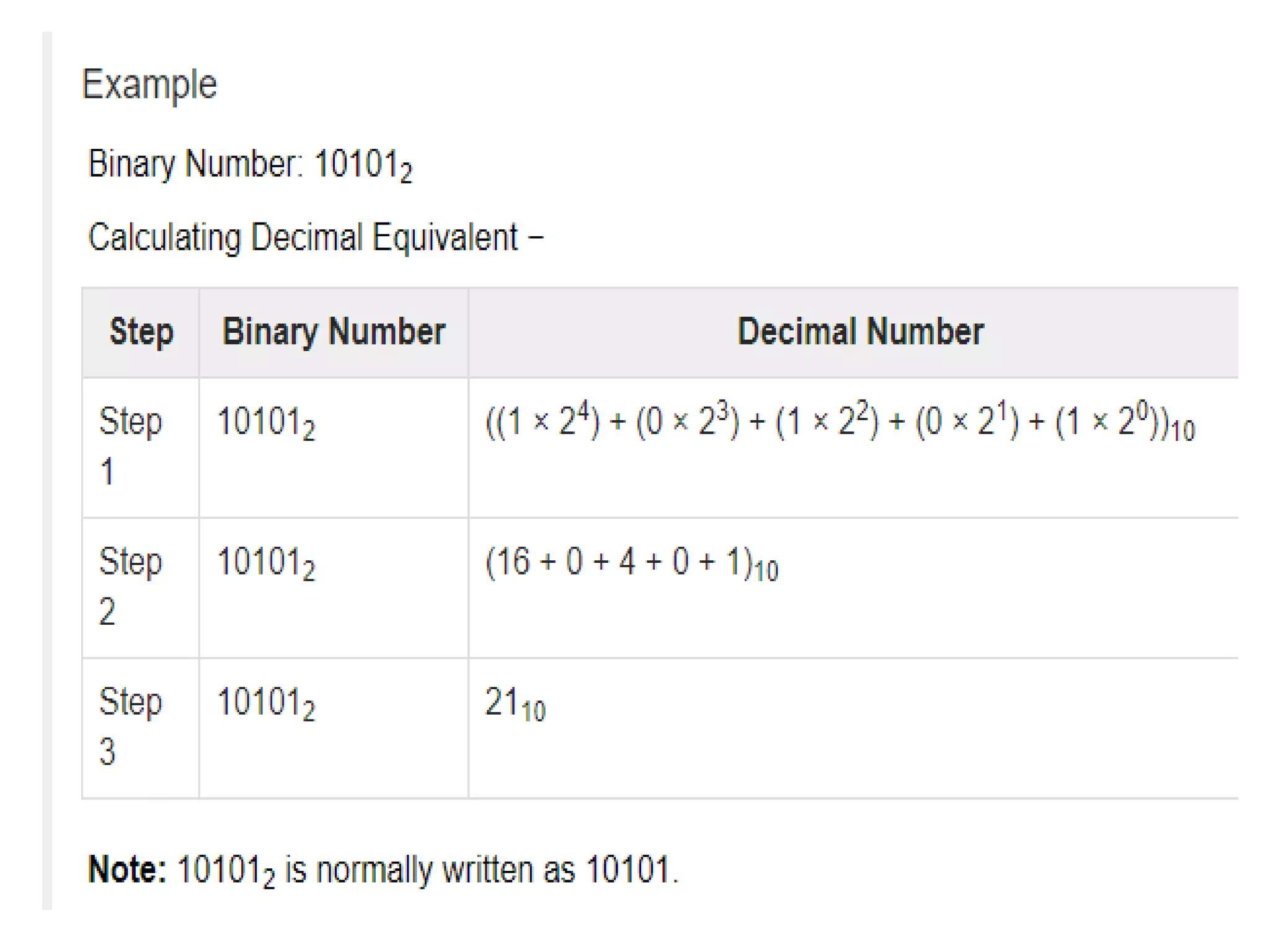
Binary System
Characteristics
• Uses two digits, 0 and 1.
• Also called base 2 number system
• Each position in a binary number represents a
0 power of the base (2). Example: 20
• Last position in a binary number represents an
x power of the base (2). Example: 2x where x
represents the last position - 1.
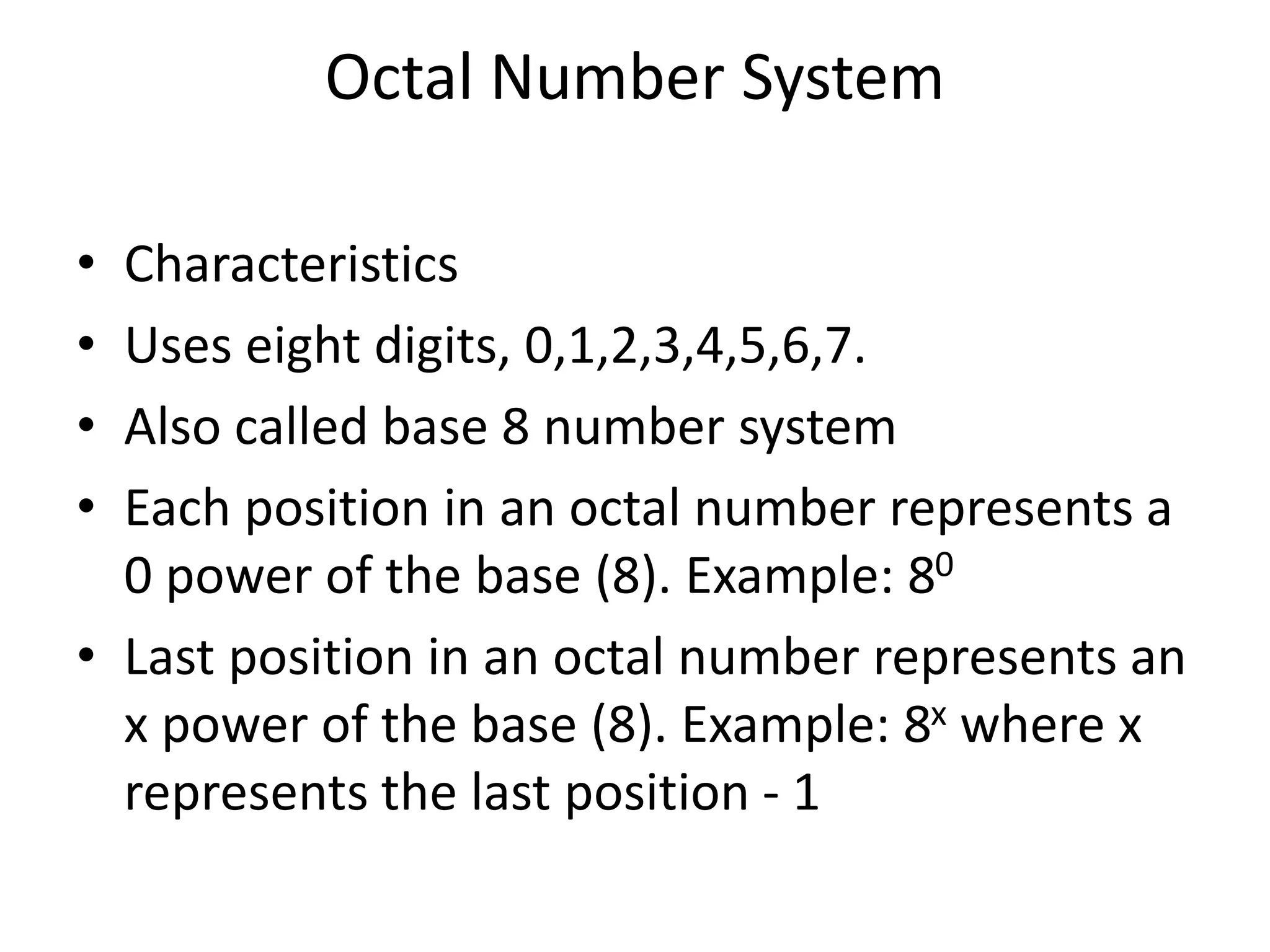
Octal Number System
• Characteristics
• Uses eight digits, 0,1,2,3,4,5,6,7.
• Also called base 8 number system
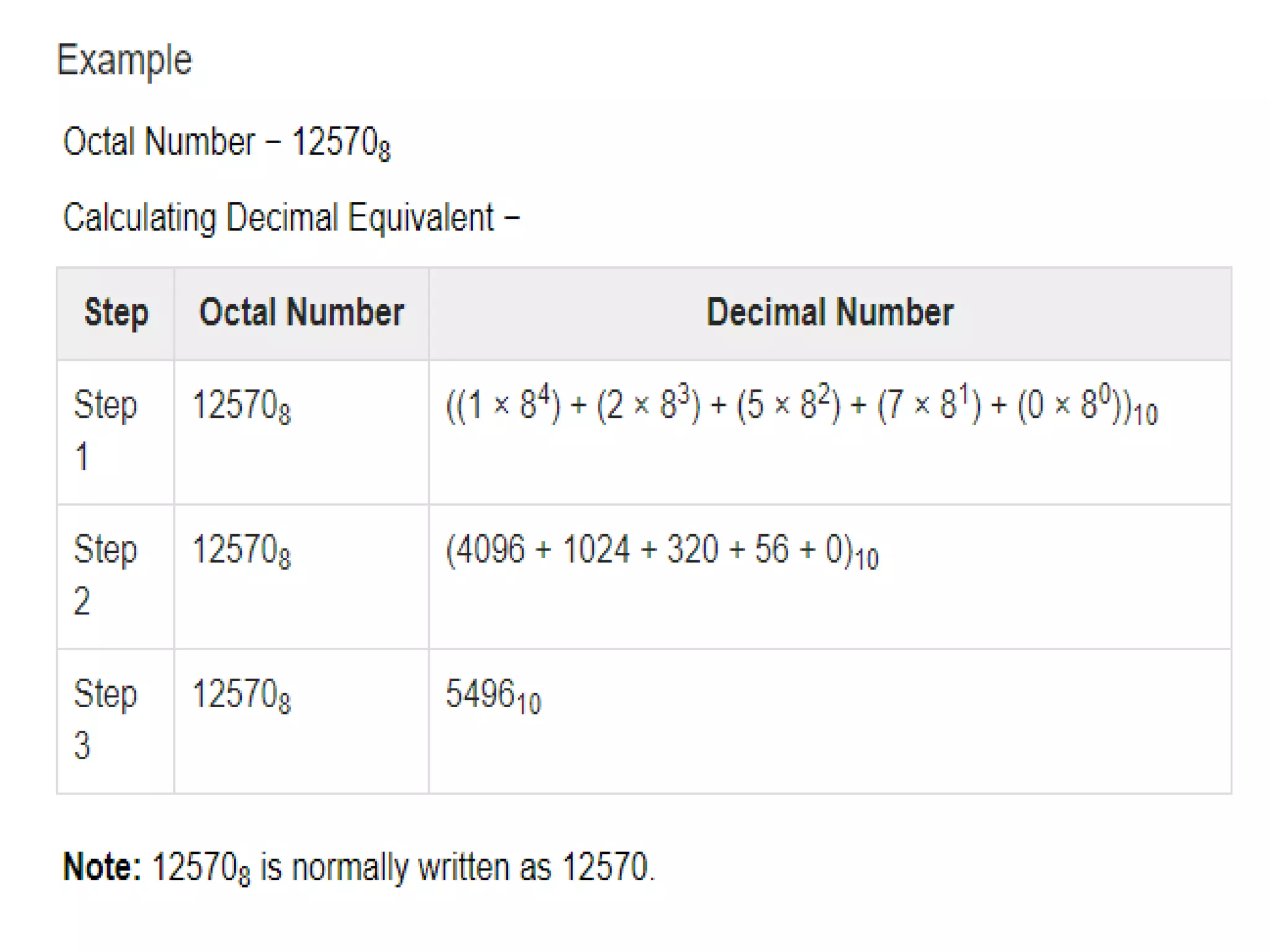
• Each position in an octal number represents a
0 power of the base (8). Example: 80
• Last position in an octal number represents an
x power of the base (8). Example: 8x where x
represents the last position - 1
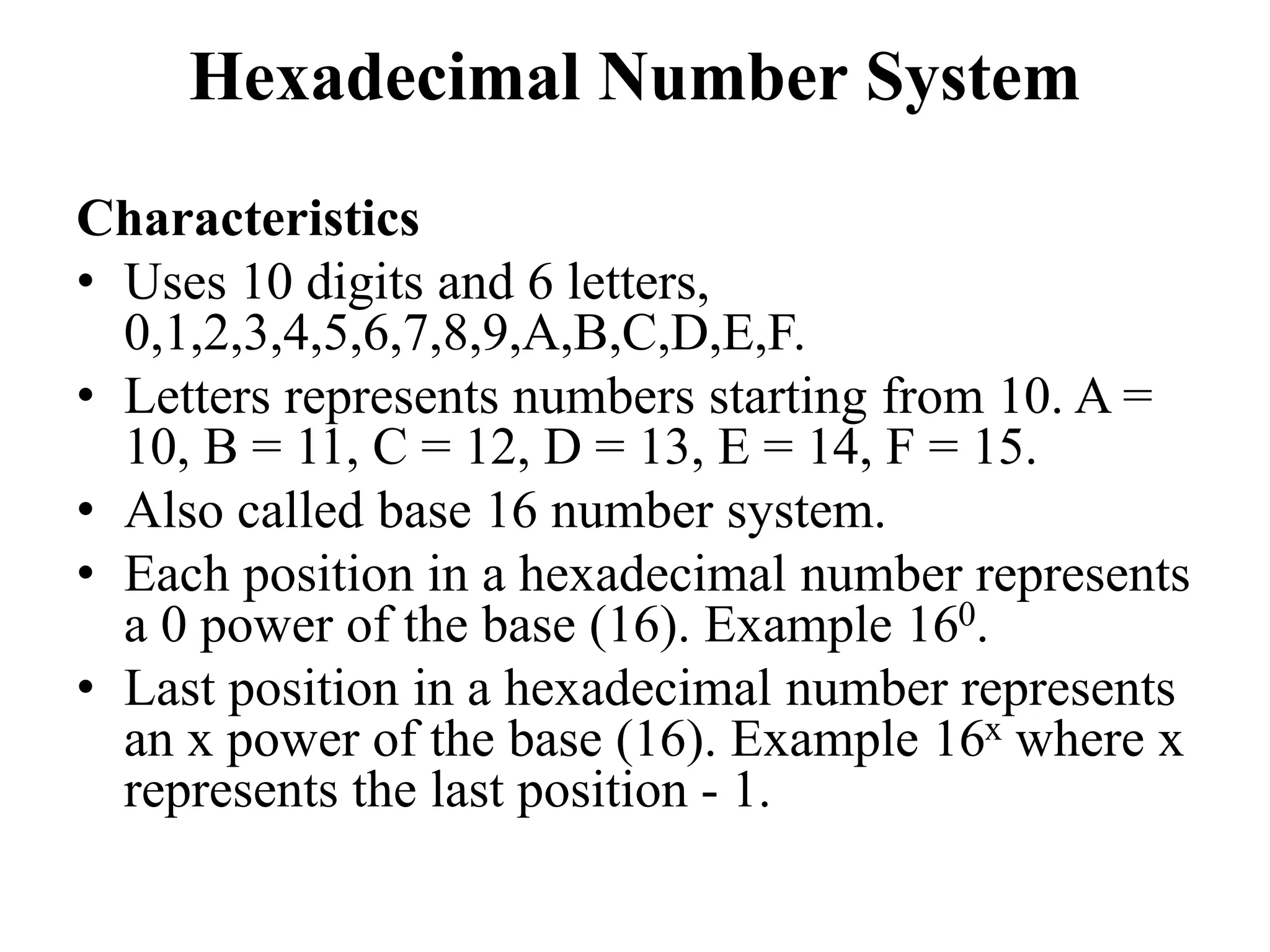
Hexadecimal Number System
Characteristics
• Uses 10 digits and 6 letters,
0,1,2,3,4,5,6,7,8,9,A,B,C,D,E,F.
• Letters represents numbers starting from 10. A =
10, B = 11, C = 12, D = 13, E = 14, F = 15.
• Also called base 16 number system.
• Each position in a hexadecimal number represents
a 0 power of the base (16). Example 160.
• Last position in a hexadecimal number represents
an x power of the base (16). Example 16x where x
represents the last position - 1.
Number System.pptx
Number System.pptx

Number System.pptx

  • 1.
    Number System By S.Piramu Kailasam AssistantProfessor Department of Computer Applications Sadakathulla Appa College Tirunelveli
  • 2.
    Introduction A digital systemcan understand positional number system only where there are a few symbols called digits and these symbols represent different values depending on the position they occupy in the number.
  • 3.
    Types of NumberSystem • Decimal Number System • Binary Number System • Octal System • Hexadecimal Number System
  • 4.
    Decimal Number System •The number system that we use in our day-to- day life is the decimal number system. • Decimal number system has base 10 as it uses 10 digits from 0 to 9.
  • 5.
    Number System andDescription Binary Number System • Base 2 • Digits used 0 and 1 Octal Number System • Base 8 • Digits used 0 to 7 Hexa Decimal System • Base 16 • Digits used 0 to 9 , Letters used A to F
  • 6.
    Binary System Characteristics • Usestwo digits, 0 and 1. • Also called base 2 number system • Each position in a binary number represents a 0 power of the base (2). Example: 20 • Last position in a binary number represents an x power of the base (2). Example: 2x where x represents the last position - 1.
  • 8.
    Octal Number System •Characteristics • Uses eight digits, 0,1,2,3,4,5,6,7. • Also called base 8 number system • Each position in an octal number represents a 0 power of the base (8). Example: 80 • Last position in an octal number represents an x power of the base (8). Example: 8x where x represents the last position - 1
  • 10.
    Hexadecimal Number System Characteristics •Uses 10 digits and 6 letters, 0,1,2,3,4,5,6,7,8,9,A,B,C,D,E,F. • Letters represents numbers starting from 10. A = 10, B = 11, C = 12, D = 13, E = 14, F = 15. • Also called base 16 number system. • Each position in a hexadecimal number represents a 0 power of the base (16). Example 160. • Last position in a hexadecimal number represents an x power of the base (16). Example 16x where x represents the last position - 1.