
CRITICAL ISSUES FORUM
BENCHMARK III
Nuclear Renaissance: Risks versus Benefits
The Author: Evgeny Bekker
Form 10A
High school №216 “Didakt”
The Teacher-Advisor: Elena Kurenkova
The Teacher of English
High school №216 “Didakt”
Zarechny
Penza Region
Russia
2008
 Environmental pollution of nuclear power plants.
 List of dangers, connected with NPPs:
 Release of radioactive particles into environment.
 Radioactive isotopes pollution.
 Water temperature increases.
 The threat of nuclear accidents.
 The threat of nuclear terrorism.
 Nuclear power plants technologies that provide safety.
 Reactor design flaws.
 Mistakes and incompetence of personnel.
 Major incidents regarding NPPs.
 Could it happen again?
 Used sources.
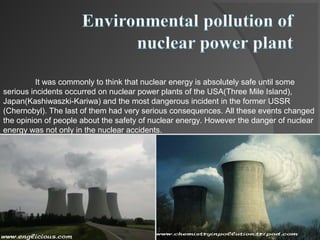
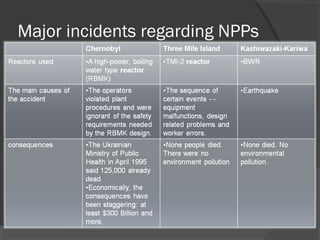
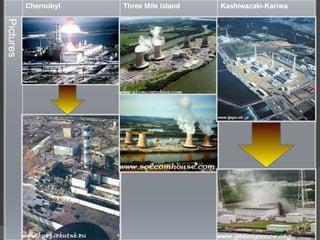
It was commonly to think that nuclear energy is absolutely safe until some
serious incidents occurred on nuclear power plants of the USA(Three Mile Island),
Japan(Kashiwaszki-Kariwa) and the most dangerous incident in the former USSR
(Chernobyl). The last of them had very serious consequences. All these events changed
the opinion of people about the safety of nuclear energy. However the danger of nuclear
energy was not only in the nuclear accidents.
Let’s see the full list of dangers
connected with nuclear power plants:
Release of radioactive particles
 Usually the radioactive particles appear
from radioactive isotopes and in fission
process. In most cases speaking about
radioactive particles pollution, people
mean gamma-radiation, which is easily
determinated by a Geiger counter. At
the same time there are many beta-
radiators, which are badly determinated
by the most of existing devices.
Radioactive isotopes pollution
 Radioactive contamination is typically the
result of a spill or accident during the
production or use of radionuclides
(radioisotopes), an unstable nucleus which
has excessive energy. However the
production of those radionuclides is
controlled by filters and other equipment.
The biological effects of internally
deposited radionuclides depend greatly on
the activity and the biodistribution and
removal rates of the radionuclide, which in
turn depends on its chemical form.
Water temperature increase
 For the NPPs just as for the thermal
power stations heat release into is
typical.
 It is marked that the temperature of
water in the area of nuclear power
station is higher than without it. Because
of that the balance of water evaporation
is disturbed and the amount of salt in
water increased. This changes can lead
to extinction of some species of animals.
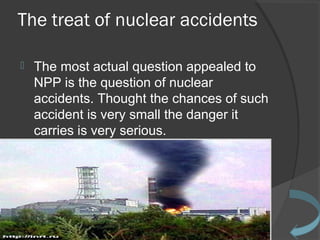
The treat of nuclear accidents
 The most actual question appealed to
NPP is the question of nuclear
accidents. Thought the chances of such
accident is very small the danger it
carries is very serious.
Nuclear terrorism threat
 Another actual
question of the NPP’s
safety is nuclear
terrorism.
 The NPP could be
captured by terrorists
and used like a
nuclear weapon.
Nuclear power plants
technologies that provide safety
 The most widespread causes of the
NPP accident are:
Reactor design flaws.
Mistakes and incompetence of personnel.
 It is important to learn by your own
mistakes. So the Chernobyl disaster
were carefully examined and analyzed.
After that new standards of safety and
new technologies were adopted.
Reactor design flaws
 We’ll take a Chernobyl as an example for reactor
design flaws. There were several serious design
flaws in the Chernobyl RBMK:
 The scram button that supposed to stop the reaction
accelerated it instead.
 the heat from the graphite, which operates at 700 degrees
Centigrade, flows from the graphite back through the
pressure tubes and is taken away by the boiling water.
"However, the problem with graphite at high temperatures
is that if it is exposed to air, it will burn slowly.
 The RBMK reactor was a large one and it could not be put
in containment.
 These reactors are not used nowadays and all
known design flaws are removed from new reactors.
Mistakes and incompetence of
personnel.
 Six human errors were identified.
 Two permanent operating rules were violated: not to
run the reactor for any length of time at reduced
power level (below 700 Megawatts-thermal), and
never to have fewer than thirty control rods fully
inserted into the core
 If any one of these six errors had not been
committed, the explosion would not have occurred.
 However it’s not the fault of personnel, it’s the fault of
their not sufficient training.
 After Chernobyl disaster some new laws of safety
were adopted.
Major incidents regarding NPPs
Could it happen again?
 Yes, the causes of such disasters are
well understood but there’s no certitude
that government and NPP’s personnel
will follow them. First of all some
countries couldn’t have enough money
to develop and integrate newest
technologies into NPPs. Secondly the
chance of human mistakes is always
exists. So there always will be chance of
accident like the ones we examined.
sources
 www.bookrags.com
 www.countrywalking.blogspot.com
 www.ecolo.org
 www.geo4va.vt.edu
 www.gnn.tv
 www.greensense.com
 www.nci.org
 www.nirs.org
 www.personal.psu.edu
 www.prop1.org
 www.wikipedia.org
 www.englicious.com

Nuclear pollution

  • 1.
    CRITICAL ISSUES FORUM BENCHMARKIII Nuclear Renaissance: Risks versus Benefits The Author: Evgeny Bekker Form 10A High school №216 “Didakt” The Teacher-Advisor: Elena Kurenkova The Teacher of English High school №216 “Didakt” Zarechny Penza Region Russia 2008
  • 2.
     Environmental pollutionof nuclear power plants.  List of dangers, connected with NPPs:  Release of radioactive particles into environment.  Radioactive isotopes pollution.  Water temperature increases.  The threat of nuclear accidents.  The threat of nuclear terrorism.  Nuclear power plants technologies that provide safety.  Reactor design flaws.  Mistakes and incompetence of personnel.  Major incidents regarding NPPs.  Could it happen again?  Used sources.
  • 3.
    It was commonlyto think that nuclear energy is absolutely safe until some serious incidents occurred on nuclear power plants of the USA(Three Mile Island), Japan(Kashiwaszki-Kariwa) and the most dangerous incident in the former USSR (Chernobyl). The last of them had very serious consequences. All these events changed the opinion of people about the safety of nuclear energy. However the danger of nuclear energy was not only in the nuclear accidents.
  • 4.
    Let’s see thefull list of dangers connected with nuclear power plants:
  • 5.
    Release of radioactiveparticles  Usually the radioactive particles appear from radioactive isotopes and in fission process. In most cases speaking about radioactive particles pollution, people mean gamma-radiation, which is easily determinated by a Geiger counter. At the same time there are many beta- radiators, which are badly determinated by the most of existing devices.
  • 6.
    Radioactive isotopes pollution Radioactive contamination is typically the result of a spill or accident during the production or use of radionuclides (radioisotopes), an unstable nucleus which has excessive energy. However the production of those radionuclides is controlled by filters and other equipment. The biological effects of internally deposited radionuclides depend greatly on the activity and the biodistribution and removal rates of the radionuclide, which in turn depends on its chemical form.
  • 7.
    Water temperature increase For the NPPs just as for the thermal power stations heat release into is typical.  It is marked that the temperature of water in the area of nuclear power station is higher than without it. Because of that the balance of water evaporation is disturbed and the amount of salt in water increased. This changes can lead to extinction of some species of animals.
  • 8.
    The treat ofnuclear accidents  The most actual question appealed to NPP is the question of nuclear accidents. Thought the chances of such accident is very small the danger it carries is very serious.
  • 9.
    Nuclear terrorism threat Another actual question of the NPP’s safety is nuclear terrorism.  The NPP could be captured by terrorists and used like a nuclear weapon.
  • 10.
    Nuclear power plants technologiesthat provide safety  The most widespread causes of the NPP accident are: Reactor design flaws. Mistakes and incompetence of personnel.  It is important to learn by your own mistakes. So the Chernobyl disaster were carefully examined and analyzed. After that new standards of safety and new technologies were adopted.
  • 11.
    Reactor design flaws We’ll take a Chernobyl as an example for reactor design flaws. There were several serious design flaws in the Chernobyl RBMK:  The scram button that supposed to stop the reaction accelerated it instead.  the heat from the graphite, which operates at 700 degrees Centigrade, flows from the graphite back through the pressure tubes and is taken away by the boiling water. "However, the problem with graphite at high temperatures is that if it is exposed to air, it will burn slowly.  The RBMK reactor was a large one and it could not be put in containment.  These reactors are not used nowadays and all known design flaws are removed from new reactors.
  • 12.
    Mistakes and incompetenceof personnel.  Six human errors were identified.  Two permanent operating rules were violated: not to run the reactor for any length of time at reduced power level (below 700 Megawatts-thermal), and never to have fewer than thirty control rods fully inserted into the core  If any one of these six errors had not been committed, the explosion would not have occurred.  However it’s not the fault of personnel, it’s the fault of their not sufficient training.  After Chernobyl disaster some new laws of safety were adopted.
  • 13.
  • 15.
    Could it happenagain?  Yes, the causes of such disasters are well understood but there’s no certitude that government and NPP’s personnel will follow them. First of all some countries couldn’t have enough money to develop and integrate newest technologies into NPPs. Secondly the chance of human mistakes is always exists. So there always will be chance of accident like the ones we examined.
  • 16.
    sources  www.bookrags.com  www.countrywalking.blogspot.com www.ecolo.org  www.geo4va.vt.edu  www.gnn.tv  www.greensense.com  www.nci.org  www.nirs.org  www.personal.psu.edu  www.prop1.org  www.wikipedia.org  www.englicious.com