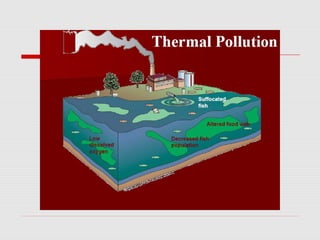
THERMAL POLLUTION
DEFINITION
    ADDITION OF EXCESS OF
UNDESIRABLE HEAT TO WATER
THAT MAKES IT HARMFUL TO MAN,
ANIMAL OR AQUATIC LIFE
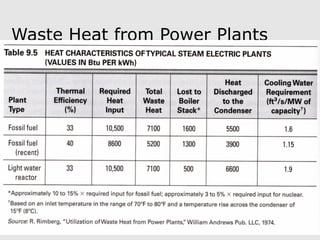
Waste Heat from Power Plants
Nuclear Power Plants
  Nuclear power plants
   use water as a cooling
   agent.
  After the water is used,
   it is put back into a
   water supply at 9-20oC
   warmer
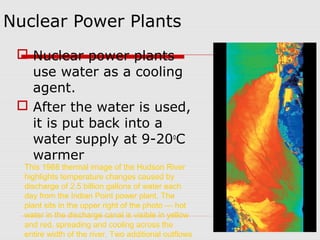
  This 1988 thermal image of the Hudson River
  highlights temperature changes caused by
  discharge of 2.5 billion gallons of water each
  day from the Indian Point power plant. The
  plant sits in the upper right of the photo — hot
  water in the discharge canal is visible in yellow
  and red, spreading and cooling across the
  entire width of the river. Two additional outflows
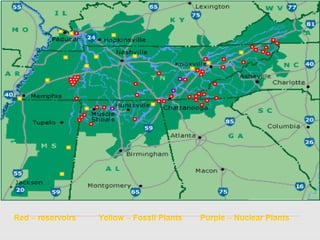
Red – reservoirs   Yellow – Fossil Plants   Purple – Nuclear Plants
CAUSES

 DISCHARGE OF HEATED WATER OR HOT
  WASTE MATERIAL INTO WATER BODIES
  FROM
 NUCLEAR POWER PLANTS
 INDUSTRIAL EFFLUENTS
 DOMESTIC SEWAGE
 HYDRO-ELECTRIC POWER
 COAL FIRED POWER PLANTS
NUCLEAR POWER PLANTS
   Nuclear power plants use water as a cooling agent.

 After the water is used, it is put back into a water
  supply at 9-20oC

 Emissions from nuclear reactor increase the
  temperature of water bodies.
Coal-fired power plants
   Coal is utilized as a fuel
   Condenser coils are cooled with

  water from nearby lake or river
 The heated effluents decrease
  the DO of water
 Damages the marine organisms
Industrial Effluents
Discharged water from steam-electric power industry
 using turbo generators will have a higher temperature
 ranging from 6 to 9˚C than the receiving water
In modern stations, producing 100 MW, nearly one
 million gallons are discharged in an hour with increase
 in temperature of the cooling water passing by 8 to 10 ˚C
Domestic sewage
  Sewage is commonly discharged into lakes,


   canals or streams
  Municipal sewage normally has a higher
   temperature than the receiving water
  Increase in temperature of the receiving
   water decreases the DO of water.
  The foul smelling gases increased in water
   resulting in death of marine organisms
Hydro electric power
generation
Generation of hydroelectric power sometimes results in


 negative thermal loading in water systems
Creates less heat on water sources less than nuclear
 power plant
Dissolved Oxygen vs Temp
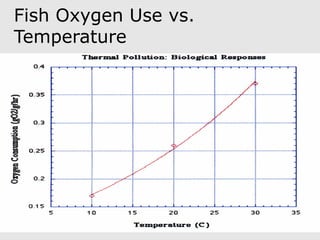
Fish Oxygen Use vs.
Temperature
Fish: Response to Temperature
                        Solid dot:
                        Upper lethal
                        Limit for a
                        Given species

                        Open dot:
                        Best T for
                        spawning

                        Solid blocks:
                        Preferred
                        Temperature
                        Range
The
Future
  is
 Now
Wanted Water Quality Board Actions
1. The Water Quality Board requests TDEC
   conduct a study of the cumulative water quality
   impacts of the thermal pollution caused by
   existing and proposed power generating plants
   on the Tennessee River, including the climatic
   scenarios of prolonged drought and warmer
   temperatures.


2. The Water Quality Board requests that TDEC
   participate in the environmental scoping of the
   impacts upon the waters of the State of TN of
   the proposed TVA Bellefonte, AL nuclear power
   plants and report periodically to the Board.
CONTROL MEASURES
 Cooling towers

 Cooling ponds

 Spray ponds

 Artificial lakes

Thermal pollution

  • 1.
  • 2.
    DEFINITION ADDITION OF EXCESS OF UNDESIRABLE HEAT TO WATER THAT MAKES IT HARMFUL TO MAN, ANIMAL OR AQUATIC LIFE
  • 5.
    Waste Heat fromPower Plants
  • 6.
    Nuclear Power Plants  Nuclear power plants use water as a cooling agent.  After the water is used, it is put back into a water supply at 9-20oC warmer This 1988 thermal image of the Hudson River highlights temperature changes caused by discharge of 2.5 billion gallons of water each day from the Indian Point power plant. The plant sits in the upper right of the photo — hot water in the discharge canal is visible in yellow and red, spreading and cooling across the entire width of the river. Two additional outflows
  • 7.
    Red – reservoirs Yellow – Fossil Plants Purple – Nuclear Plants
  • 8.
    CAUSES DISCHARGE OFHEATED WATER OR HOT WASTE MATERIAL INTO WATER BODIES FROM  NUCLEAR POWER PLANTS  INDUSTRIAL EFFLUENTS  DOMESTIC SEWAGE  HYDRO-ELECTRIC POWER  COAL FIRED POWER PLANTS
  • 9.
    NUCLEAR POWER PLANTS  Nuclear power plants use water as a cooling agent.  After the water is used, it is put back into a water supply at 9-20oC  Emissions from nuclear reactor increase the temperature of water bodies.
  • 10.
    Coal-fired power plants  Coal is utilized as a fuel  Condenser coils are cooled with water from nearby lake or river  The heated effluents decrease the DO of water  Damages the marine organisms
  • 11.
    Industrial Effluents Discharged waterfrom steam-electric power industry using turbo generators will have a higher temperature ranging from 6 to 9˚C than the receiving water In modern stations, producing 100 MW, nearly one million gallons are discharged in an hour with increase in temperature of the cooling water passing by 8 to 10 ˚C
  • 12.
    Domestic sewage Sewage is commonly discharged into lakes, canals or streams Municipal sewage normally has a higher temperature than the receiving water Increase in temperature of the receiving water decreases the DO of water. The foul smelling gases increased in water resulting in death of marine organisms
  • 13.
    Hydro electric power generation Generationof hydroelectric power sometimes results in negative thermal loading in water systems Creates less heat on water sources less than nuclear power plant
  • 14.
  • 15.
    Fish Oxygen Usevs. Temperature
  • 17.
    Fish: Response toTemperature Solid dot: Upper lethal Limit for a Given species Open dot: Best T for spawning Solid blocks: Preferred Temperature Range
  • 18.
  • 19.
    Wanted Water QualityBoard Actions 1. The Water Quality Board requests TDEC conduct a study of the cumulative water quality impacts of the thermal pollution caused by existing and proposed power generating plants on the Tennessee River, including the climatic scenarios of prolonged drought and warmer temperatures. 2. The Water Quality Board requests that TDEC participate in the environmental scoping of the impacts upon the waters of the State of TN of the proposed TVA Bellefonte, AL nuclear power plants and report periodically to the Board.
  • 20.
    CONTROL MEASURES  Coolingtowers  Cooling ponds  Spray ponds  Artificial lakes