Mechanotargeting: Mechanics-Dependent Cellular
Uptake of Nanoparticles.
1
I. Introduction- Mechanotargeting
 Nanoparticles widely studied for the targeted delivery of the drug.
 In this paper the authors studied the relationship between cell stress and NPs delivery mechanism.
 They explained how this model can be used to target NPs towards Malignant cancer.
2
II. Objectives
 In this work the authors demonstrated that cellular uptake of NPs based on the differential mechanical
states of cells.
 By using PAA with different stiffness.
 In order to differentiate uptake of NPs in malignant and non malignant cancer
 HeLa - Non Malignant and HCT-8 - Malignant
 They analysed the nanoparticle uptake using Traction Force Microscopy and Monolayer Stress
Microscopy
III. Materials and Methods
Preparation of PAA Hydrogel Substrates:
PAA hydrogel substrates with controlled stiffness were fabricated following previously published protocols. Briefly, 35 μL
prepolymerized solution with initiators (0.8 μL TEMED and 2.5 μL 10% (w/v) ammonium persulfate) and following relative
concentrations of acrylamide and bis-acrylamide: 5%/0.03% (1.0 ± 0.3 kPa), 5%/0.1% (4.0 ± 0.8 kPa), 8%/0.13% (10.0 ± 1.6
kPa), 8%/0.27% (20.0 ± 1.2 kPa), and 8%/0.48% (40.4 ± 2.4 kPa), was sandwiched between an amino-activated coverslip
(diameter 25 mm, VWR International) and a Rain-X treated hydrophobic glass slide.
After polymerization, PAA gel bound to the activated coverslip was detached from the glass slide and sequentially activated
with 0.5 mg mL−1 Sulfo- SANPAH (Pierce Chemical) under 365 nm UV light, functionalized with fibronectin (Sigma Aldrich) at a
concentration of 0.05 mg mL−1 for overnight and sterilized in a biological cabinet before cell seeding.
Cell Culture:
HeLa cells and HCT-8 cells (ATCC) were seeded onto PAA gel substrates at a density of 10 000 cells cm−2 and cultured for 48 h
in DMEM medium supplemented with 10% fetal bovine serum and RPMI-1640 medium supplemented with 10% nonheat
inactivated horse serum, respectively, at 37 °C in 5% CO2 atmosphere. In the metastaticlike dispersion experiment, HCT-8
colonies were cultured on 20 kPa gel substrates for at least 6 d with cell medium changed every other day.
3
III. Materials and Methods
NPs Uptake Assay:
Carboxylate-modified fluorescent polystyrene NPs (100 nm in diameter, Ex/Em: 580/605 nm) were sonicated for 15 min to
avoid possible aggregations, then diluted in fresh cell medium to reach a final concentration of 0.02 mg mL−1 and incubated
with cells. After 8 h incubation, cells were thoroughly rinsed three times with DPBS, fixed with 4% paraformaldehyde solution,
stained with AlexFluor488 phalloidin for F-actin filaments and DAPI for nuclei. All materials were purchased from Life
Technologies. In single HeLa cell experiments, z-stacked images were taken using a confocal fluorescence microscope
(Olympus FV10i, Japan) with a 60× water-immersion lens (NA = 1.2, Olympus, Japan). In HCT-8 cell colonies experiments,
images were taken with a 20× lens (NA = 0.4, Olympus, Japan). All images were collected with the same exposure parameters
(e.g., laser intensity, exposure time, sensitivity of CCD). Detailed method describing the analysis of cell exposed surface area
and NPs uptake is provided in the Supporting Information.
Statistics:
Statistical analysis was performed in OriginPro 8.0 using Student’s two-tailed t-test between any two data sets. Data are
presented as mean ― standard error of the mean (SEM). Significance level is set as p < 0.05, where p > 0.05 is considered as
no statistically significant difference. Sample size is shown in each figure and data are from at least three parallel experiments.
4
III. Materials and Methods
Traction Force Microscopy:
To measure cell traction force, fluorescent beads (200 nm in diameter, Life Technologies) were placed on a single plane
beneath PAA gel surface following a previously published protocol,[50] being a tracer of the gel deformation. A phase contrast
image of a selected HeLa cell or HCT-8 colony and a pair of fluorescent images of beads taken before and after cells were
detached from the gel were collected. The lateral movement of beads extracted from the paired images gave rise to the in-
plane displacement field of the gel. The corresponding traction force profile was obtained by solving the inverse elasticity
problem furnished by the displacement field along with the boundary conditions based on Boussinesq solution.
Monolayer Stress Microscopy:
To analyze the cell stress of both celllines, MSM[29] was implemented. Briefly, the cell geometries from the phase contrast
images were meshed. The traction force profiles derived from TFM were converted into the body force and used as a
boundary condition. Treating cells as a linear elastic material, solving the 2D boundary value problem in elasticity with the
finite element package (ABAQUS) gave rise to the cell stress.
5
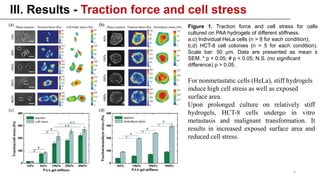
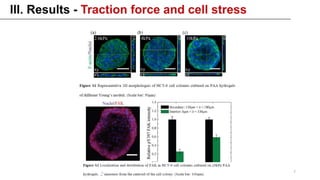
Figure 1. Traction force and cell stress for cells
cultured on PAA hydrogels of different stiffness.
a,c) Individual HeLa cells (n > 8 for each condition);
b,d) HCT-8 cell colonies (n > 5 for each condition).
Scale bar: 50 μm. Data are presented as mean ±
SEM. * p < 0.05; # p < 0.05; N.S. (no significant
difference) p > 0.05.
For nonmetastatic cells (HeLa), stiff hydrogels
induce high cell stress as well as exposed
surface area.
Upon prolonged culture on relatively stiff
hydrogels, HCT-8 cells undergo in vitro
metastasis and malignant transformation. It
results in increased exposed surface area and
reduced cell stress.
6
7
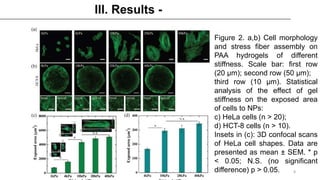
Figure 2. a,b) Cell morphology
and stress fiber assembly on
PAA hydrogels of different
stiffness. Scale bar: first row
(20 μm); second row (50 μm);
third row (10 μm). Statistical
analysis of the effect of gel
stiffness on the exposed area
of cells to NPs:
c) HeLa cells (n > 20);
d) HCT-8 cells (n > 10).
Insets in (c): 3D confocal scans
of HeLa cell shapes. Data are
presented as mean ± SEM. * p
< 0.05; N.S. (no significant
difference) p > 0.05. 8
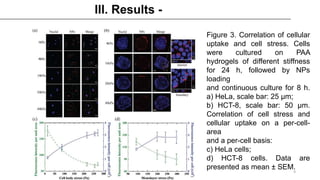
Figure 3. Correlation of cellular
uptake and cell stress. Cells
were cultured on PAA
hydrogels of different stiffness
for 24 h, followed by NPs
loading
and continuous culture for 8 h.
a) HeLa, scale bar: 25 μm;
b) HCT-8, scale bar: 50 μm.
Correlation of cell stress and
cellular uptake on a per-cell-
area
and a per-cell basis:
c) HeLa cells;
d) HCT-8 cells. Data are
presented as mean ± SEM.
9
10
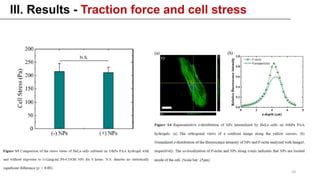
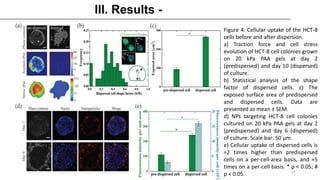
Figure 4. Cellular uptake of the HCT-8
cells before and after dispersion.
a) Traction force and cell stress
evolution of HCT-8 cell colonies grown
on 20 kPa PAA gels at day 2
(predispersed) and day 10 (dispersed)
of culture.
b) Statistical analysis of the shape
factor of dispersed cells. c) The
exposed surface area of predispersed
and dispersed cells. Data are
presented as mean ± SEM.
d) NPs targeting HCT-8 cell colonies
cultured on 20 kPa PAA gels at day 2
(predispersed) and day 6 (dispersed)
of culture. Scale bar: 50 μm.
e) Cellular uptake of dispersed cells is
≈2 times higher than predispersed
cells on a per-cell-area basis, and ≈5
times on a per-cell basis. * p < 0.05; #
p < 0.05. 11
Results
 In vitro NP delivery reveals that increases in cell stress suppress cellular uptake,
 counteracting the enhanced uptake that occurs with increases in exposed surface area of spread cells.
 Upon prolonged culture on stiff hydrogels, cohesive HCT-8 cell colonies undergo metastatic
phenotypic change and disperse into individual malignant cells.
 The metastatic cells are of extremely low stress state and adopt an unspread, 3D morphology, resulting
in several-fold higher uptake than the nonmetastatic counterparts.
12

Meacho targeting

  • 1.
  • 2.
    I. Introduction- Mechanotargeting Nanoparticles widely studied for the targeted delivery of the drug.  In this paper the authors studied the relationship between cell stress and NPs delivery mechanism.  They explained how this model can be used to target NPs towards Malignant cancer. 2 II. Objectives  In this work the authors demonstrated that cellular uptake of NPs based on the differential mechanical states of cells.  By using PAA with different stiffness.  In order to differentiate uptake of NPs in malignant and non malignant cancer  HeLa - Non Malignant and HCT-8 - Malignant  They analysed the nanoparticle uptake using Traction Force Microscopy and Monolayer Stress Microscopy
  • 3.
    III. Materials andMethods Preparation of PAA Hydrogel Substrates: PAA hydrogel substrates with controlled stiffness were fabricated following previously published protocols. Briefly, 35 μL prepolymerized solution with initiators (0.8 μL TEMED and 2.5 μL 10% (w/v) ammonium persulfate) and following relative concentrations of acrylamide and bis-acrylamide: 5%/0.03% (1.0 ± 0.3 kPa), 5%/0.1% (4.0 ± 0.8 kPa), 8%/0.13% (10.0 ± 1.6 kPa), 8%/0.27% (20.0 ± 1.2 kPa), and 8%/0.48% (40.4 ± 2.4 kPa), was sandwiched between an amino-activated coverslip (diameter 25 mm, VWR International) and a Rain-X treated hydrophobic glass slide. After polymerization, PAA gel bound to the activated coverslip was detached from the glass slide and sequentially activated with 0.5 mg mL−1 Sulfo- SANPAH (Pierce Chemical) under 365 nm UV light, functionalized with fibronectin (Sigma Aldrich) at a concentration of 0.05 mg mL−1 for overnight and sterilized in a biological cabinet before cell seeding. Cell Culture: HeLa cells and HCT-8 cells (ATCC) were seeded onto PAA gel substrates at a density of 10 000 cells cm−2 and cultured for 48 h in DMEM medium supplemented with 10% fetal bovine serum and RPMI-1640 medium supplemented with 10% nonheat inactivated horse serum, respectively, at 37 °C in 5% CO2 atmosphere. In the metastaticlike dispersion experiment, HCT-8 colonies were cultured on 20 kPa gel substrates for at least 6 d with cell medium changed every other day. 3
  • 4.
    III. Materials andMethods NPs Uptake Assay: Carboxylate-modified fluorescent polystyrene NPs (100 nm in diameter, Ex/Em: 580/605 nm) were sonicated for 15 min to avoid possible aggregations, then diluted in fresh cell medium to reach a final concentration of 0.02 mg mL−1 and incubated with cells. After 8 h incubation, cells were thoroughly rinsed three times with DPBS, fixed with 4% paraformaldehyde solution, stained with AlexFluor488 phalloidin for F-actin filaments and DAPI for nuclei. All materials were purchased from Life Technologies. In single HeLa cell experiments, z-stacked images were taken using a confocal fluorescence microscope (Olympus FV10i, Japan) with a 60× water-immersion lens (NA = 1.2, Olympus, Japan). In HCT-8 cell colonies experiments, images were taken with a 20× lens (NA = 0.4, Olympus, Japan). All images were collected with the same exposure parameters (e.g., laser intensity, exposure time, sensitivity of CCD). Detailed method describing the analysis of cell exposed surface area and NPs uptake is provided in the Supporting Information. Statistics: Statistical analysis was performed in OriginPro 8.0 using Student’s two-tailed t-test between any two data sets. Data are presented as mean ― standard error of the mean (SEM). Significance level is set as p < 0.05, where p > 0.05 is considered as no statistically significant difference. Sample size is shown in each figure and data are from at least three parallel experiments. 4
  • 5.
    III. Materials andMethods Traction Force Microscopy: To measure cell traction force, fluorescent beads (200 nm in diameter, Life Technologies) were placed on a single plane beneath PAA gel surface following a previously published protocol,[50] being a tracer of the gel deformation. A phase contrast image of a selected HeLa cell or HCT-8 colony and a pair of fluorescent images of beads taken before and after cells were detached from the gel were collected. The lateral movement of beads extracted from the paired images gave rise to the in- plane displacement field of the gel. The corresponding traction force profile was obtained by solving the inverse elasticity problem furnished by the displacement field along with the boundary conditions based on Boussinesq solution. Monolayer Stress Microscopy: To analyze the cell stress of both celllines, MSM[29] was implemented. Briefly, the cell geometries from the phase contrast images were meshed. The traction force profiles derived from TFM were converted into the body force and used as a boundary condition. Treating cells as a linear elastic material, solving the 2D boundary value problem in elasticity with the finite element package (ABAQUS) gave rise to the cell stress. 5
  • 6.
    Figure 1. Tractionforce and cell stress for cells cultured on PAA hydrogels of different stiffness. a,c) Individual HeLa cells (n > 8 for each condition); b,d) HCT-8 cell colonies (n > 5 for each condition). Scale bar: 50 μm. Data are presented as mean ± SEM. * p < 0.05; # p < 0.05; N.S. (no significant difference) p > 0.05. For nonmetastatic cells (HeLa), stiff hydrogels induce high cell stress as well as exposed surface area. Upon prolonged culture on relatively stiff hydrogels, HCT-8 cells undergo in vitro metastasis and malignant transformation. It results in increased exposed surface area and reduced cell stress. 6
  • 7.
  • 8.
    Figure 2. a,b)Cell morphology and stress fiber assembly on PAA hydrogels of different stiffness. Scale bar: first row (20 μm); second row (50 μm); third row (10 μm). Statistical analysis of the effect of gel stiffness on the exposed area of cells to NPs: c) HeLa cells (n > 20); d) HCT-8 cells (n > 10). Insets in (c): 3D confocal scans of HeLa cell shapes. Data are presented as mean ± SEM. * p < 0.05; N.S. (no significant difference) p > 0.05. 8
  • 9.
    Figure 3. Correlationof cellular uptake and cell stress. Cells were cultured on PAA hydrogels of different stiffness for 24 h, followed by NPs loading and continuous culture for 8 h. a) HeLa, scale bar: 25 μm; b) HCT-8, scale bar: 50 μm. Correlation of cell stress and cellular uptake on a per-cell- area and a per-cell basis: c) HeLa cells; d) HCT-8 cells. Data are presented as mean ± SEM. 9
  • 10.
  • 11.
    Figure 4. Cellularuptake of the HCT-8 cells before and after dispersion. a) Traction force and cell stress evolution of HCT-8 cell colonies grown on 20 kPa PAA gels at day 2 (predispersed) and day 10 (dispersed) of culture. b) Statistical analysis of the shape factor of dispersed cells. c) The exposed surface area of predispersed and dispersed cells. Data are presented as mean ± SEM. d) NPs targeting HCT-8 cell colonies cultured on 20 kPa PAA gels at day 2 (predispersed) and day 6 (dispersed) of culture. Scale bar: 50 μm. e) Cellular uptake of dispersed cells is ≈2 times higher than predispersed cells on a per-cell-area basis, and ≈5 times on a per-cell basis. * p < 0.05; # p < 0.05. 11
  • 12.
    Results  In vitroNP delivery reveals that increases in cell stress suppress cellular uptake,  counteracting the enhanced uptake that occurs with increases in exposed surface area of spread cells.  Upon prolonged culture on stiff hydrogels, cohesive HCT-8 cell colonies undergo metastatic phenotypic change and disperse into individual malignant cells.  The metastatic cells are of extremely low stress state and adopt an unspread, 3D morphology, resulting in several-fold higher uptake than the nonmetastatic counterparts. 12

Editor's Notes

  • #7 HeLa cell spread well HCT-8 form cohesive colonies; it contains hundread of cells They analysed the cell traction using TFM and the cellular stress using Monolayer stress microscope.
  • #9 Hela cells at 1KPa round in shape. HCT-8 at 10Kpa- More thick at the boundary, more aligned at basal surface and enriched at cell cell junction. For HeLa the esposed surface is high and for HCT-8 its low.
  • #10 To correlate the cell stress, area and nanoparticle uptake they are using PS-COOH (100nm) They washed the cell with DPS to remove excess nanoparticle. So in present state the nanoparticle are present in the nucleus. After 20Kpa the Hela cell is spreading but HCT-8 is not For HeLa cell the nanoparticle mostly present in the nucleus but for HCT-8 it is uniform. Figure 3c,d shows that with increasing average cell stress, cellular uptake on a per-cell-area basis decreases and then saturates, demonstrating that cell stress suppresses cellular uptake.