Mosby items and derived items © 2012 Mosby, Inc., an imprint of Elsevier Inc. 1
Cellular Structures, Genes,
Immunity, and Diseases
Week One Lecture
Mosby items and derived items © 2012 Mosby, Inc., an imprint of Elsevier Inc. 2
Cellular Functions
 Movement
 Conductivity
 Metabolic absorption
 Secretion
 Excretion
 Respiration
 Reproduction
 Communication
Mosby items and derived items © 2012 Mosby, Inc., an imprint of Elsevier Inc. 3
Eukaryotic Cell
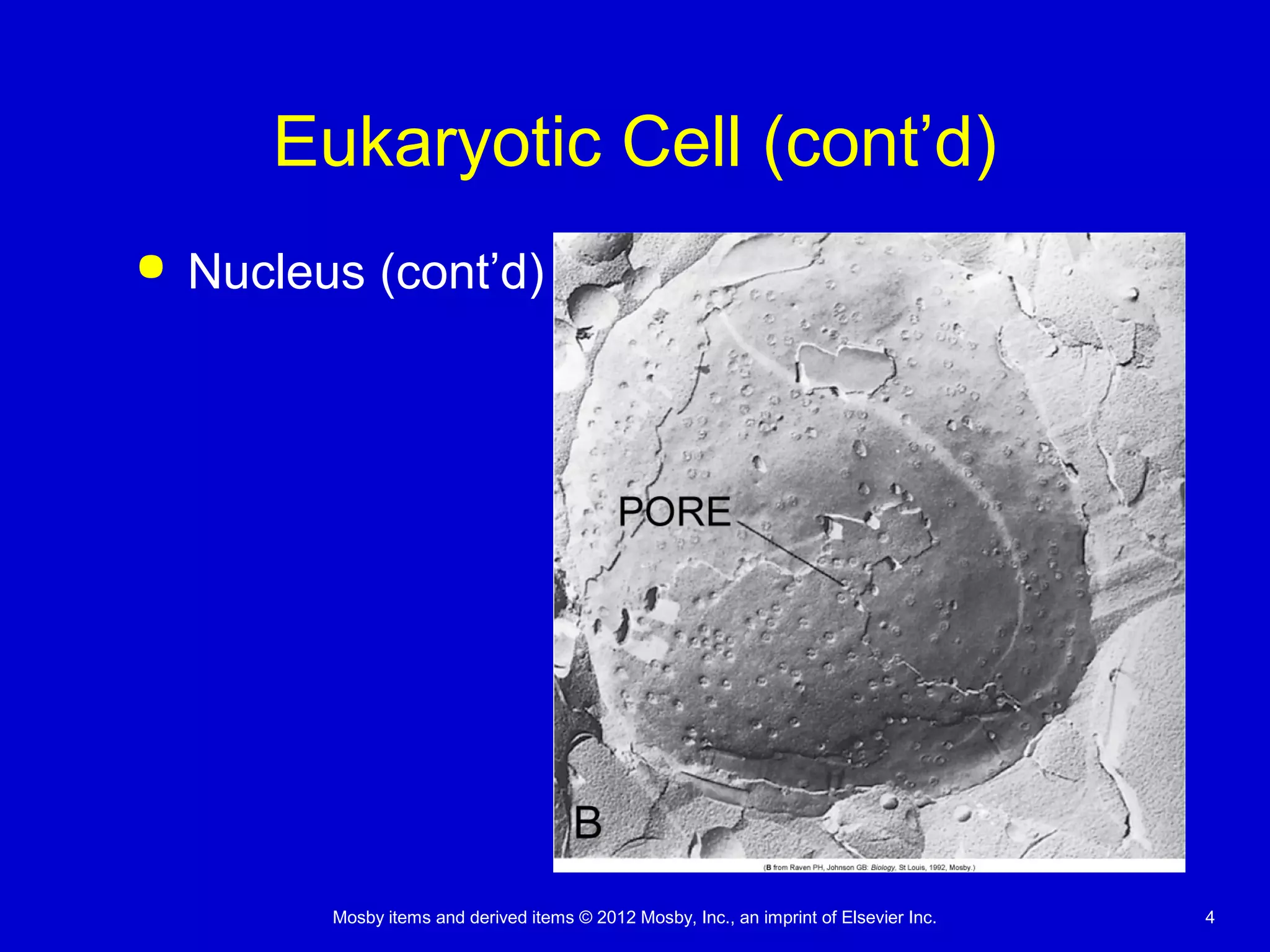
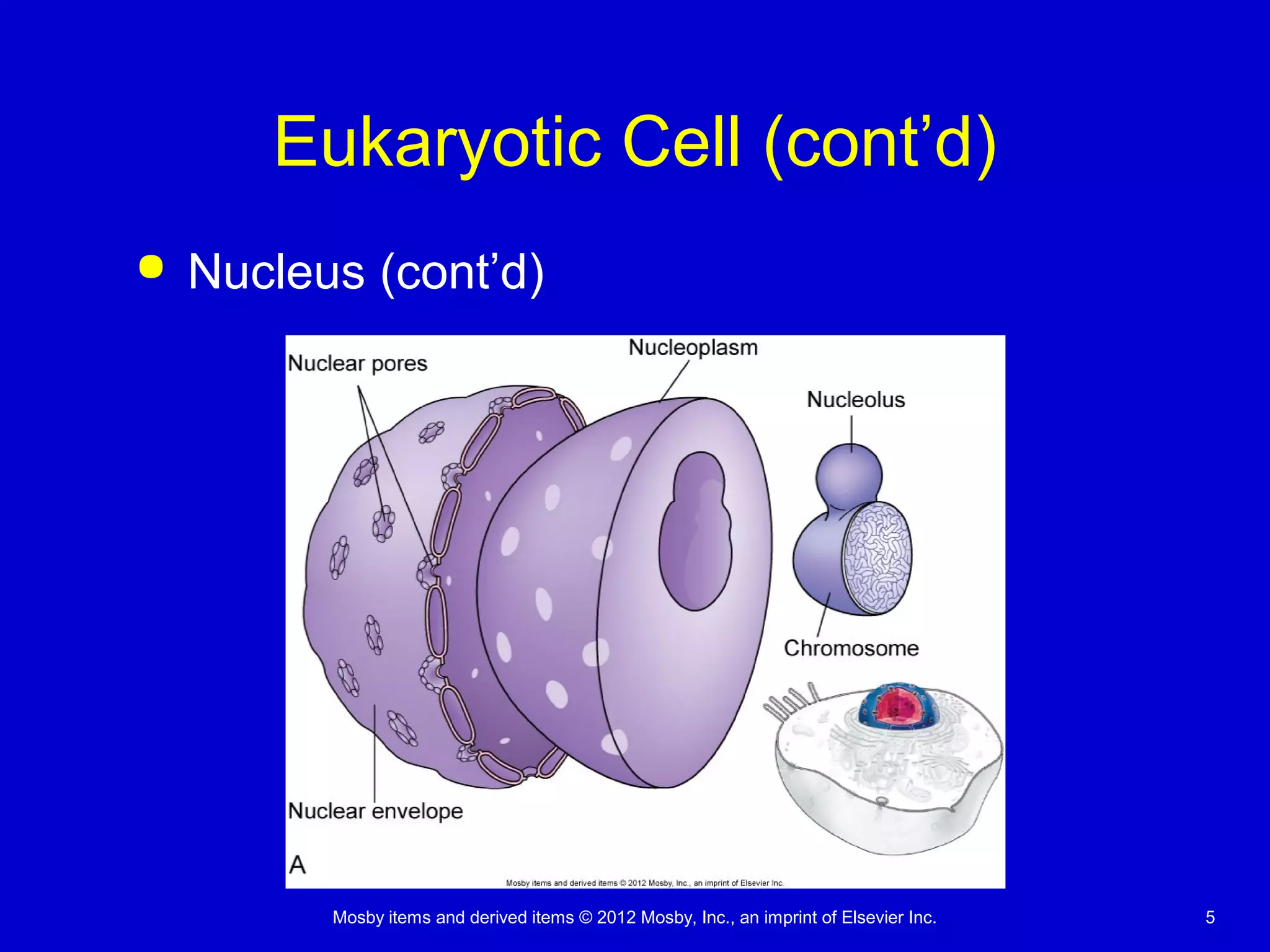
 Nucleus
 Nuclear envelope
 Nucleolus
 DNA
• DNA replication, repair, and transcription
 Histone proteins
 Cell division
 Genetic information
Mosby items and derived items © 2012 Mosby, Inc., an imprint of Elsevier Inc. 4
Eukaryotic Cell (cont’d)
 Nucleus (cont’d)
Mosby items and derived items © 2012 Mosby, Inc., an imprint of Elsevier Inc. 5
Eukaryotic Cell (cont’d)
 Nucleus (cont’d)
Mosby items and derived items © 2012 Mosby, Inc., an imprint of Elsevier Inc. 6
Eukaryotic Cell (cont’d)
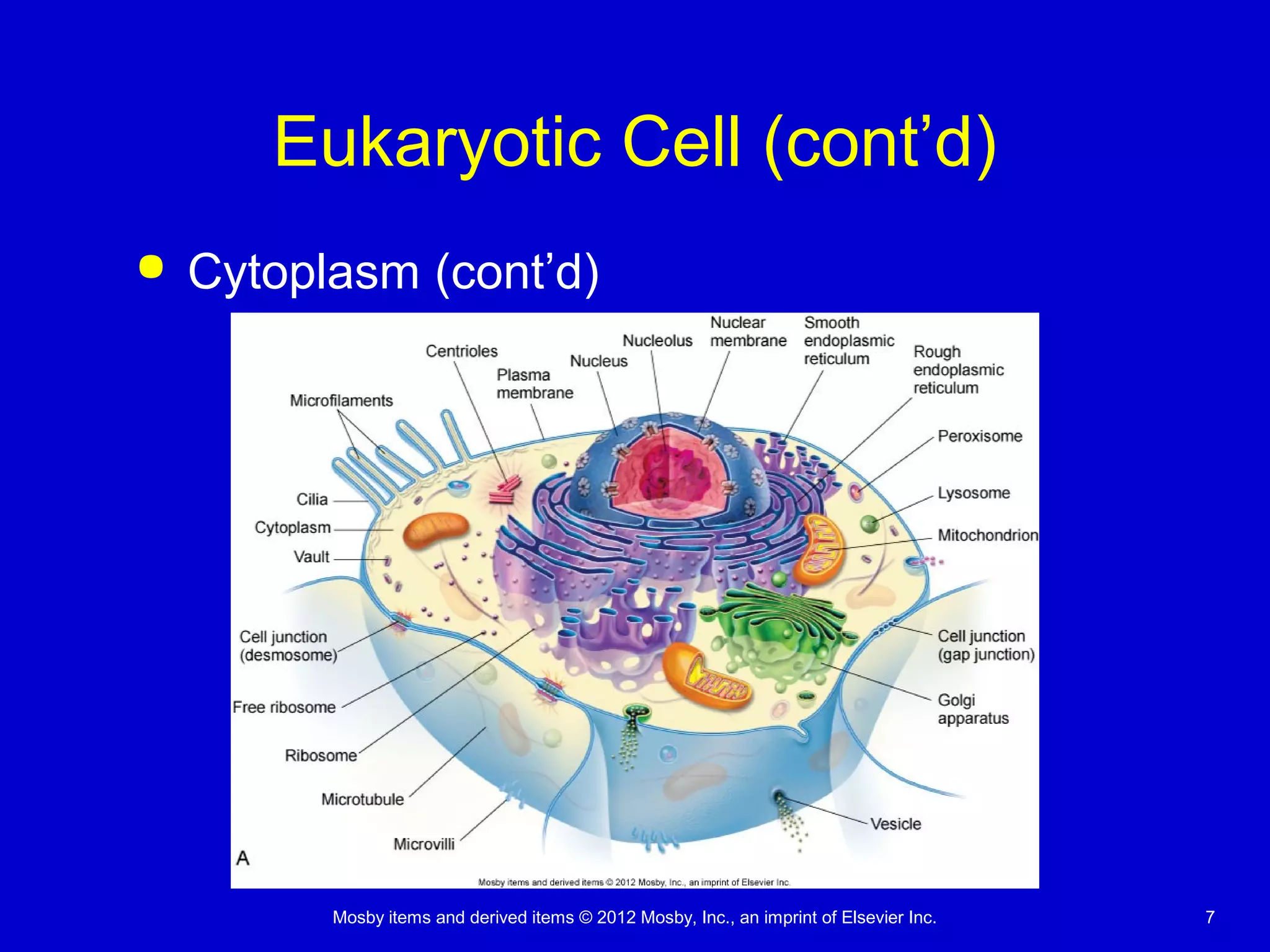
 Cytoplasm
 Cytoplasmic matrix
 Cytosol
 Function
 Cytoplasmic organelles
Mosby items and derived items © 2012 Mosby, Inc., an imprint of Elsevier Inc. 7
Eukaryotic Cell (cont’d)
 Cytoplasm (cont’d)
Mosby items and derived items © 2012 Mosby, Inc., an imprint of Elsevier Inc. 8
Eukaryotic Organelles
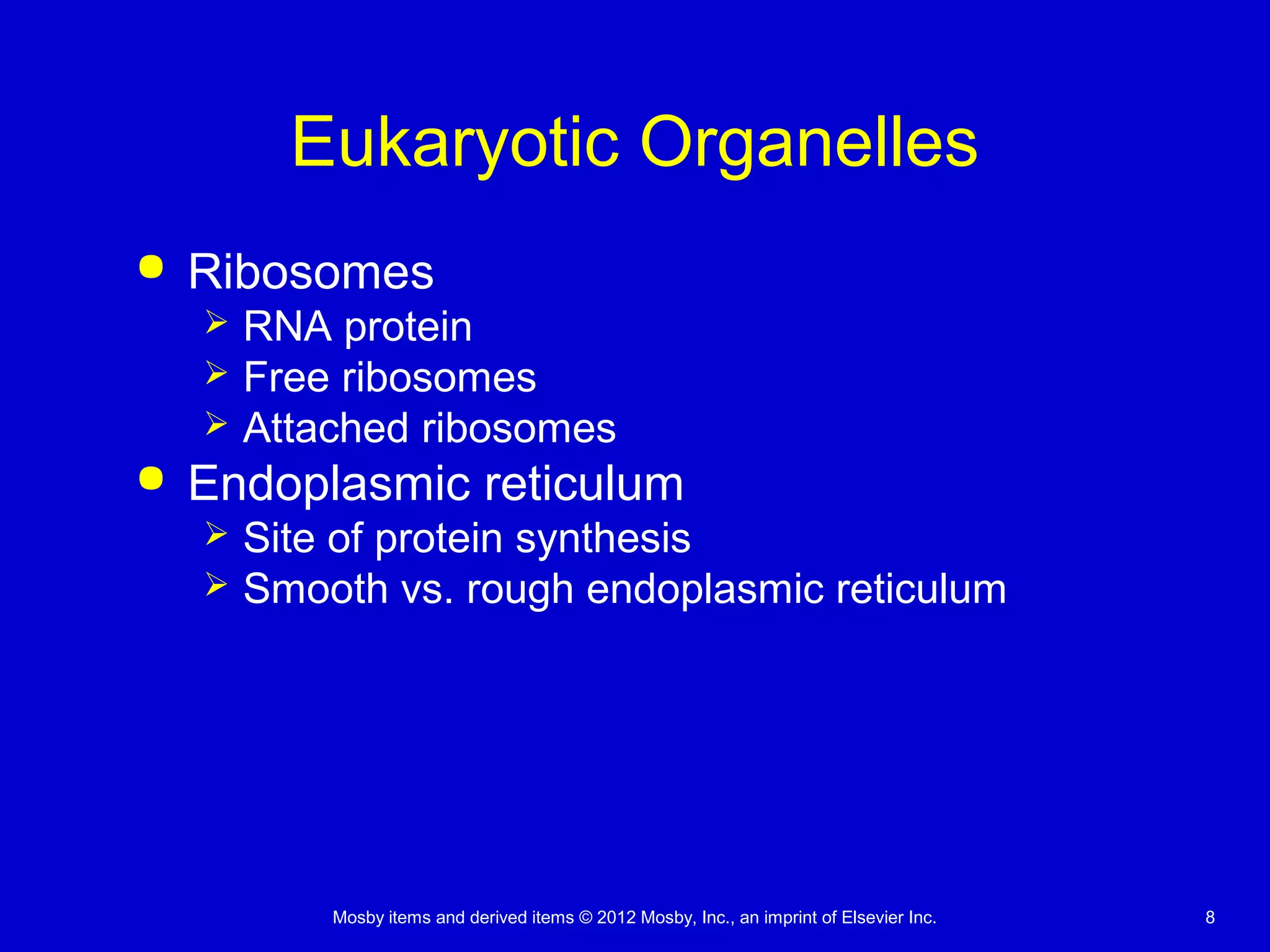
 Ribosomes
 RNA protein
 Free ribosomes
 Attached ribosomes
 Endoplasmic reticulum
 Site of protein synthesis
 Smooth vs. rough endoplasmic reticulum
Mosby items and derived items © 2012 Mosby, Inc., an imprint of Elsevier Inc. 9
Eukaryotic Organelles (cont’d)
 Golgi complex
 Flattened, smooth membranes
 Secretory vesicles
 Proteins from the endoplasmic reticulum are
packaged in the Golgi complex
 Cisternae
Mosby items and derived items © 2012 Mosby, Inc., an imprint of Elsevier Inc. 10
Eukaryotic Organelles (cont’d)
 Lysosomes
 Originate from the Golgi
 Catalyze proteins, lipids, nucleic acids, and
carbohydrates
 Role in autodigestion
Mosby items and derived items © 2012 Mosby, Inc., an imprint of Elsevier Inc. 11
Eukaryotic Organelles (cont’d)
 Peroxisomes
 Contain oxidative enzymes
 Break substances down into harmless
products
Mosby items and derived items © 2012 Mosby, Inc., an imprint of Elsevier Inc. 12
Eukaryotic Organelles (cont’d)
 Mitochondria
 Surrounded by a double lipid–bilayer
membrane
 Participates in oxidative phosphorylation
 Increased inner membrane surface area
provided by cristae
Mosby items and derived items © 2012 Mosby, Inc., an imprint of Elsevier Inc. 13
Eukaryotic Organelles (cont’d)
 Cytoskeleton
 “Bones and muscles” of cell
 Maintains the cell’s shape and internal
organization
 Permits movement of substances within the
cell and movement of external projections
 Microtubules
• Centrioles
 Macrofilaments
Mosby items and derived items © 2012 Mosby, Inc., an imprint of Elsevier Inc. 14
Plasma Membrane
 Controls the composition of a space or
compartment they enclose
 Structure
 Caveolae
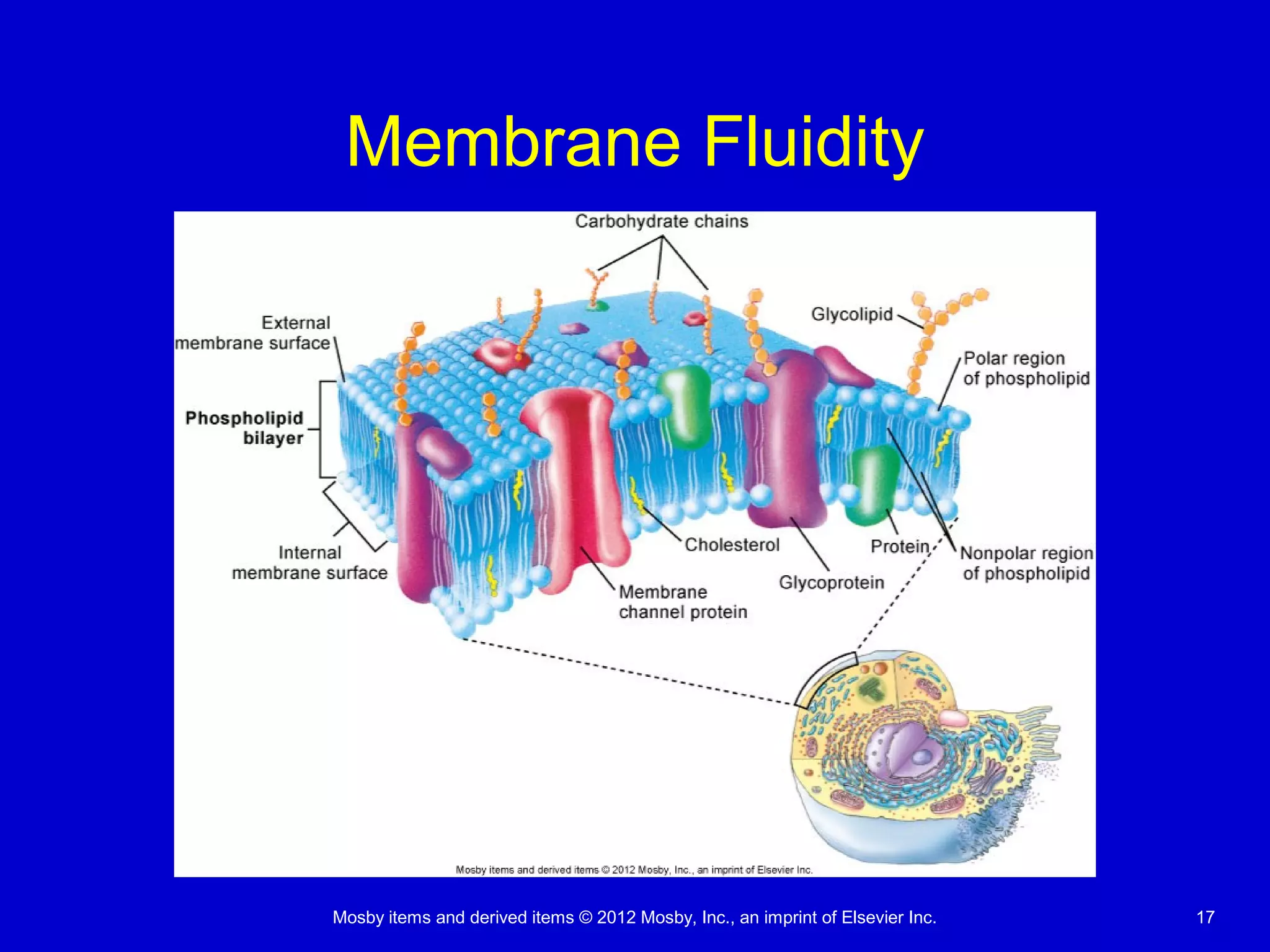
 Lipids
• Amphipathic lipids
 Hydrophilic and hydrophobic
• Phospholipids, glycolipids, and cholesterol
 Carbohydrates
• Glycoproteins
Mosby items and derived items © 2012 Mosby, Inc., an imprint of Elsevier Inc. 15
Plasma Membrane (cont’d)
 Proteins
 Integral, peripheral, transmembrane
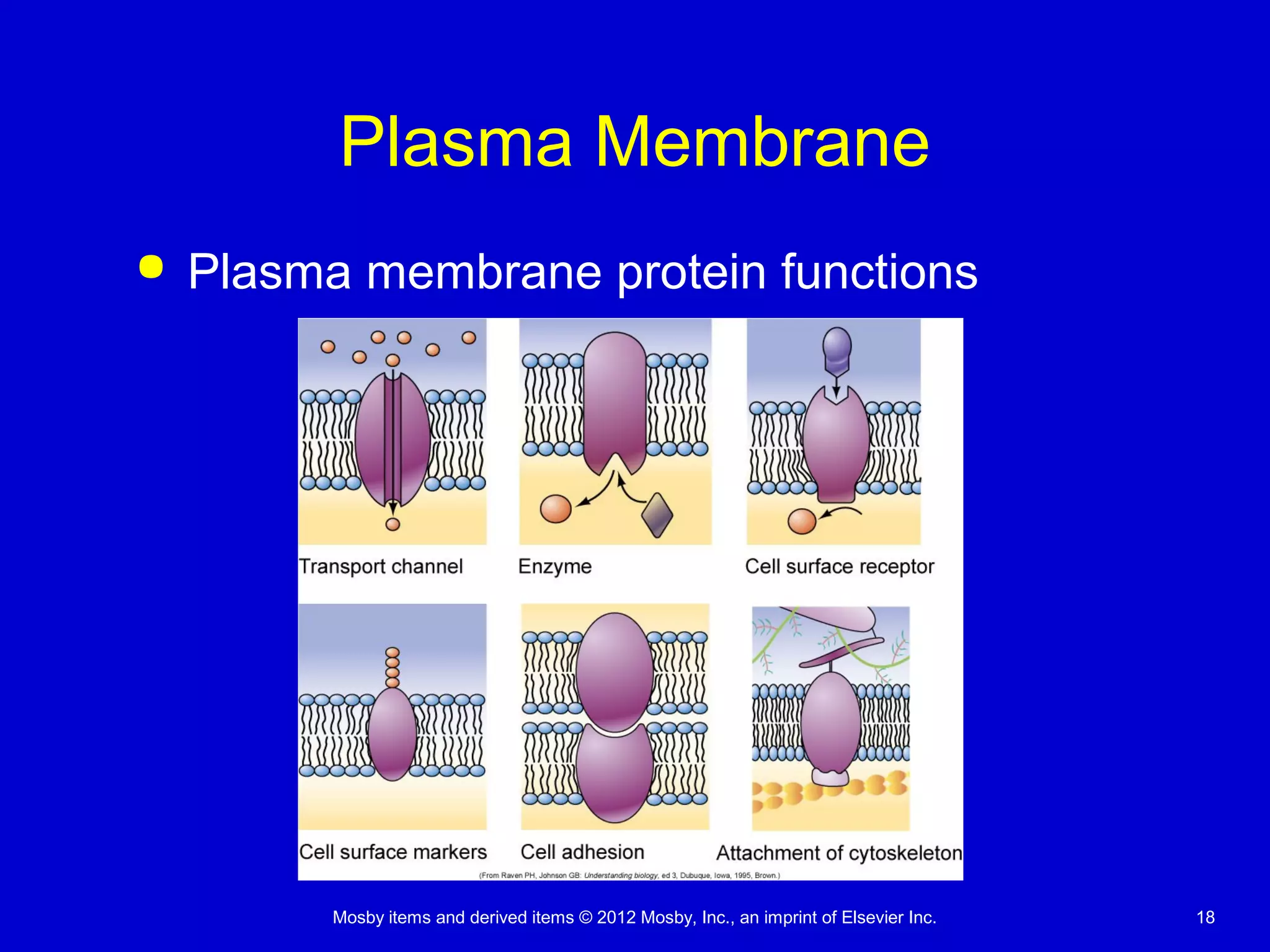
 Functions
• Receptors
• Transport
• Enzymes
• Surface markers
• Cell adhesion molecules (CAMs)
• Catalysts
 Fluid mosaic model
Mosby items and derived items © 2012 Mosby, Inc., an imprint of Elsevier Inc. 16
Plasma Membrane (cont’d)
 Fluid mosaic model
 Flexibility
 Self-regulating
 Impermeability to some substances
 Fluidity impacted by temperature, amount of
cholesterol
Mosby items and derived items © 2012 Mosby, Inc., an imprint of Elsevier Inc. 17
Membrane Fluidity
Mosby items and derived items © 2012 Mosby, Inc., an imprint of Elsevier Inc. 18
Plasma Membrane
 Plasma membrane protein functions
Mosby items and derived items © 2012 Mosby, Inc., an imprint of Elsevier Inc. 19
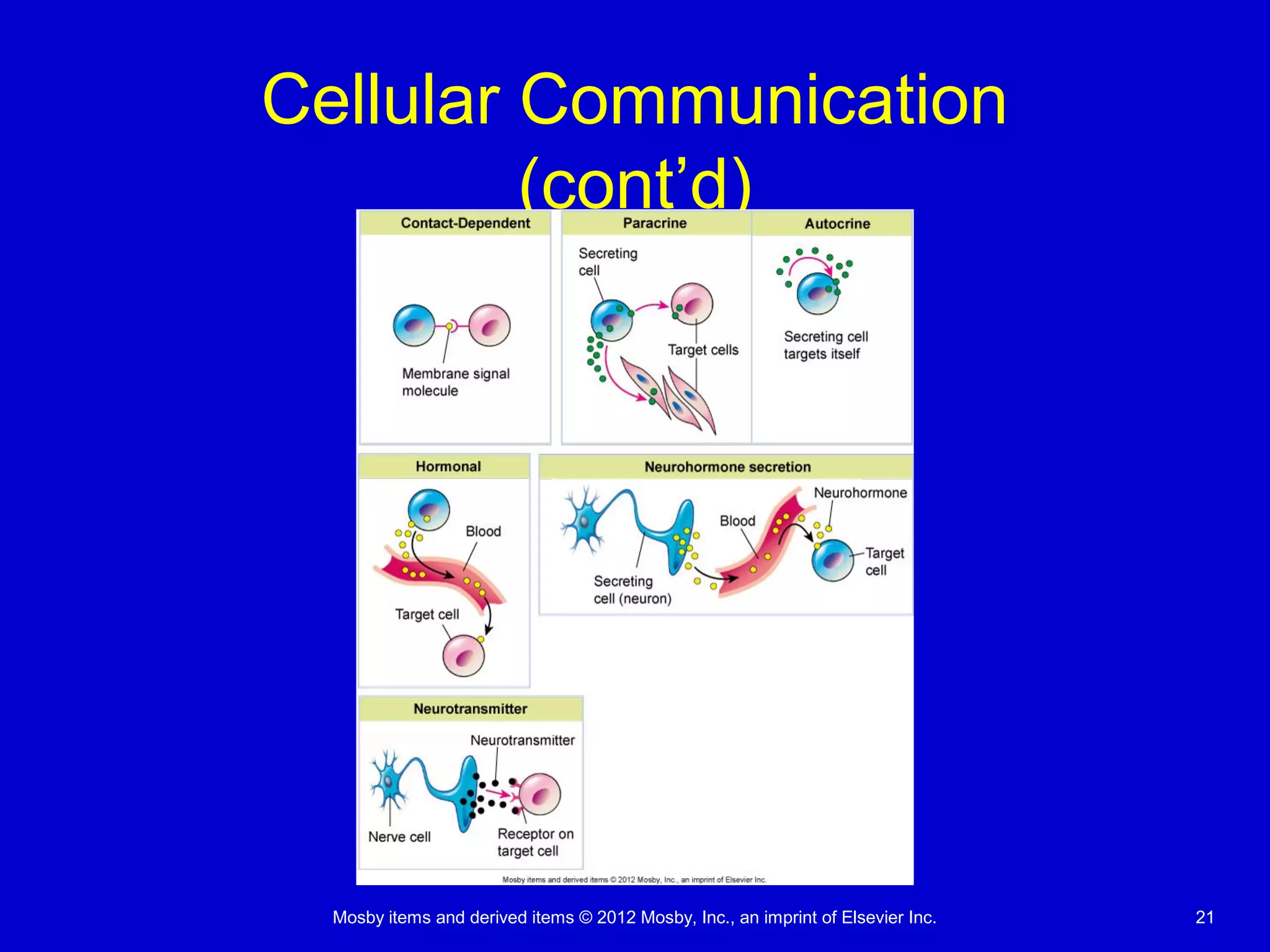
Cellular Communication
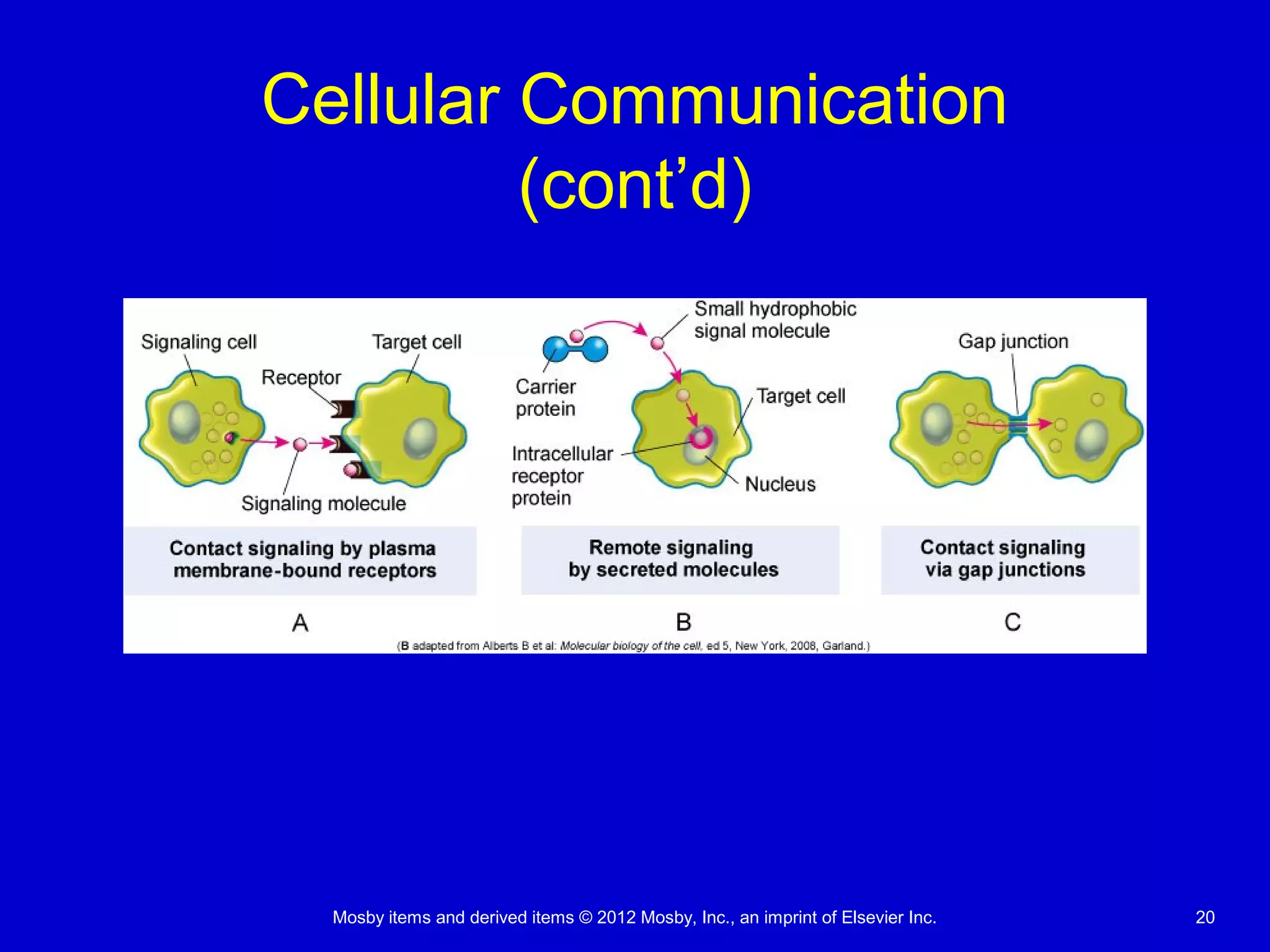
 Plasma membrane bound receptors
 Intracellular receptors
 Gap junctions (contact signaling)
 Chemical signaling
 Paracrine
 Autocrine
 Hormonal
 Neurohormonal
 Neurotransmitters
Mosby items and derived items © 2012 Mosby, Inc., an imprint of Elsevier Inc. 20
Cellular Communication
(cont’d)
Mosby items and derived items © 2012 Mosby, Inc., an imprint of Elsevier Inc. 21
Cellular Communication
(cont’d)
Mosby items and derived items © 2012 Mosby, Inc., an imprint of Elsevier Inc. 22
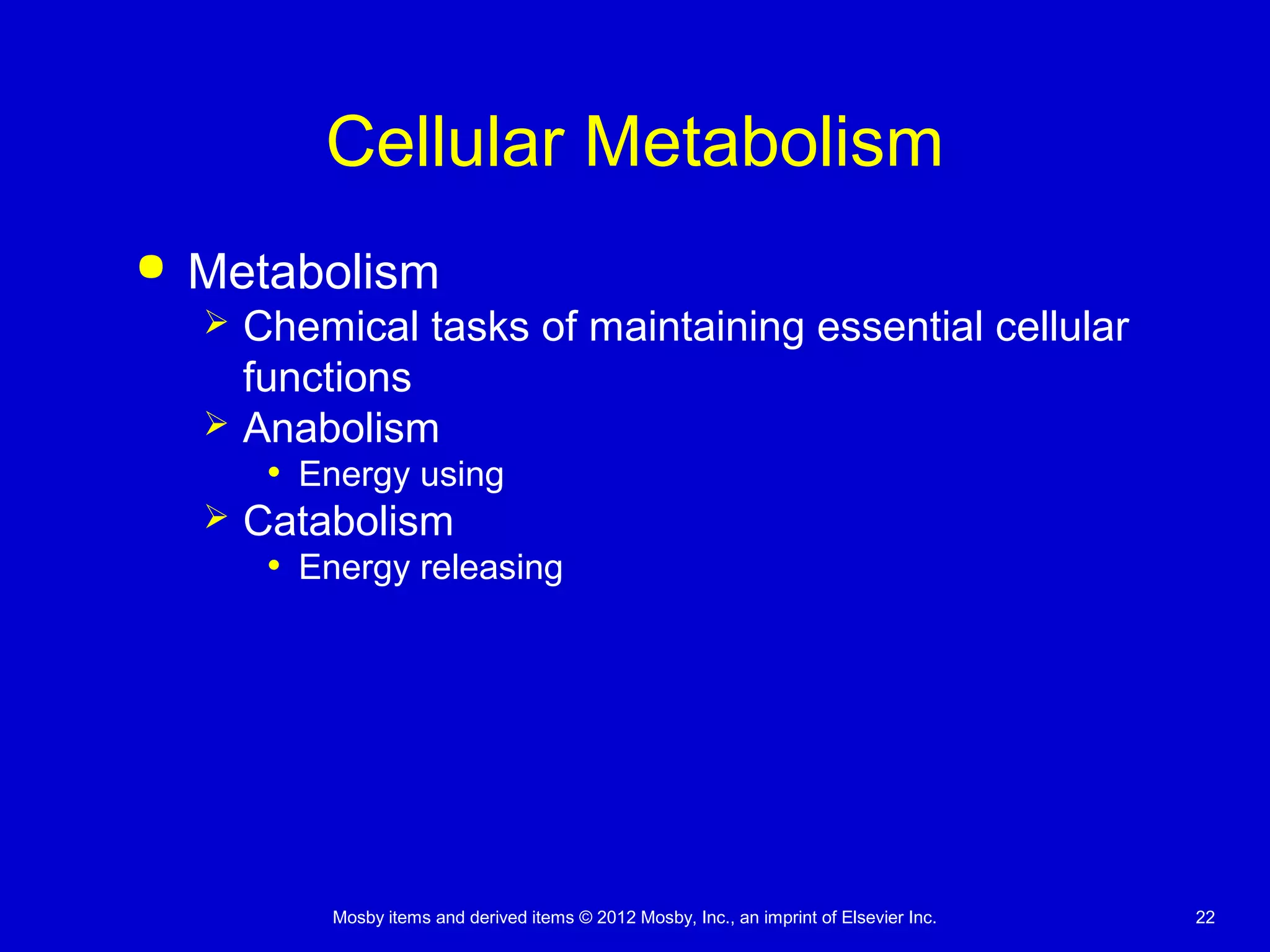
Cellular Metabolism
 Metabolism
 Chemical tasks of maintaining essential cellular
functions
 Anabolism
• Energy using
 Catabolism
• Energy releasing
Mosby items and derived items © 2012 Mosby, Inc., an imprint of Elsevier Inc. 23
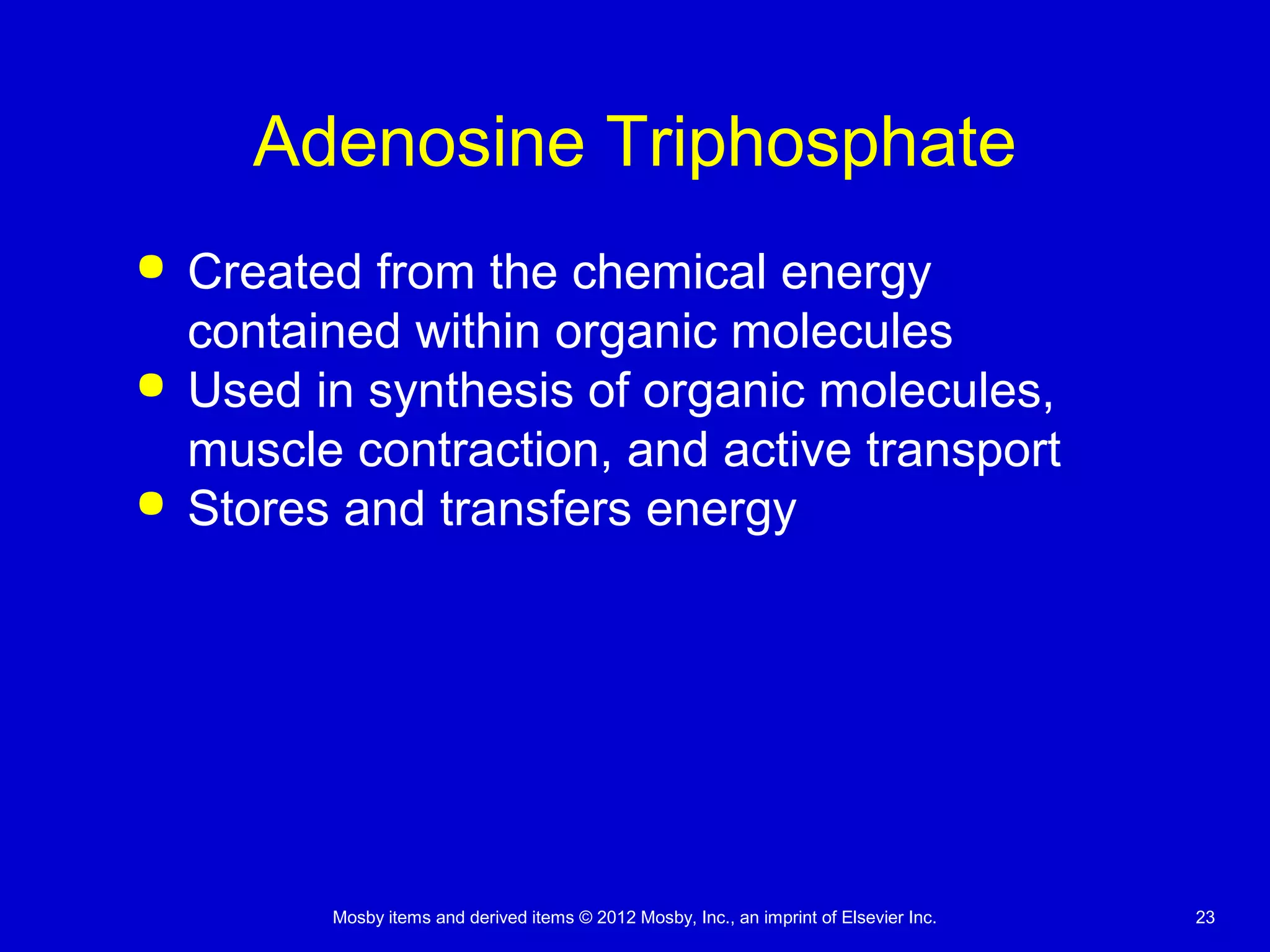
Adenosine Triphosphate
 Created from the chemical energy
contained within organic molecules
 Used in synthesis of organic molecules,
muscle contraction, and active transport
 Stores and transfers energy
Mosby items and derived items © 2012 Mosby, Inc., an imprint of Elsevier Inc. 24
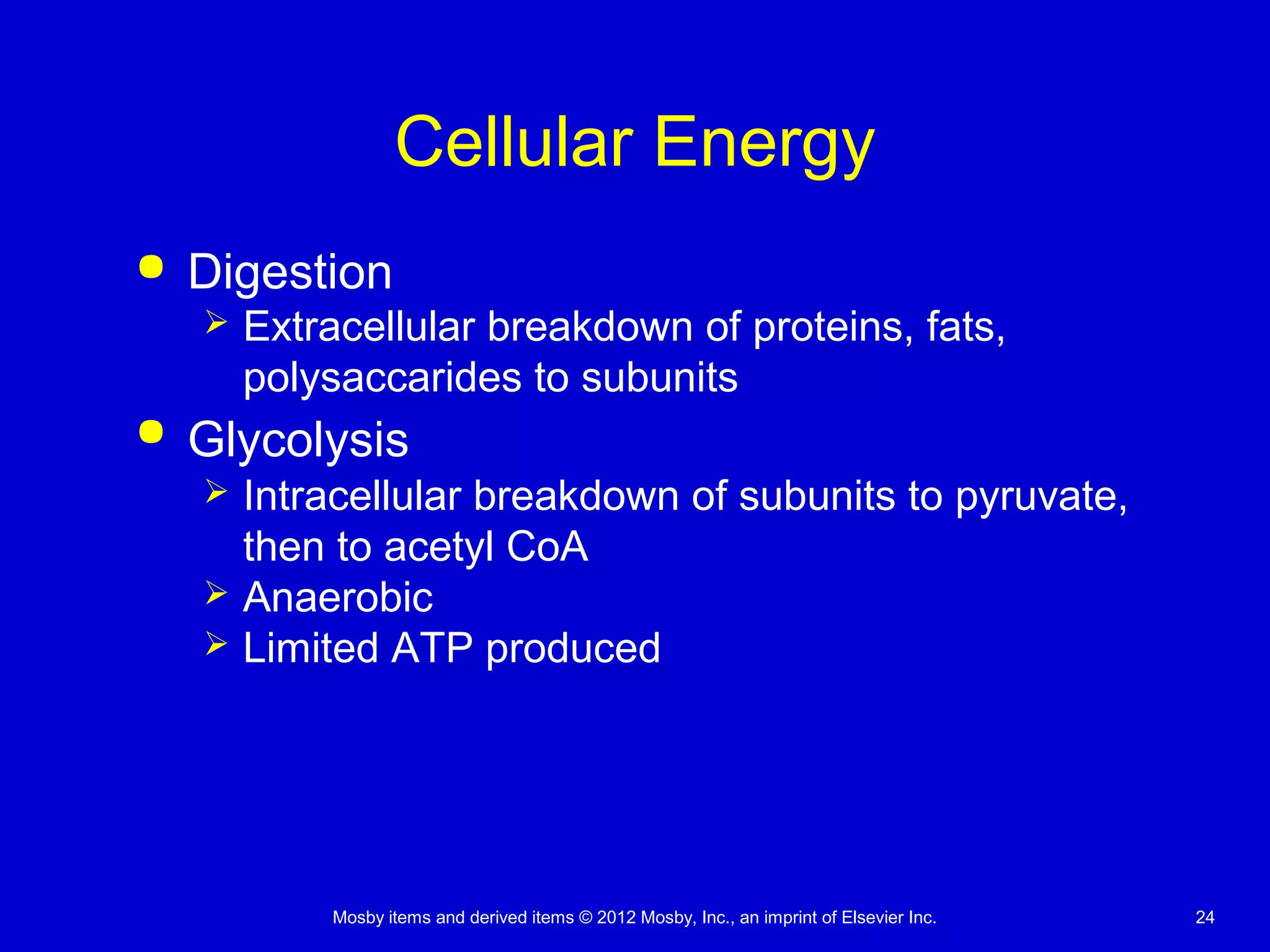
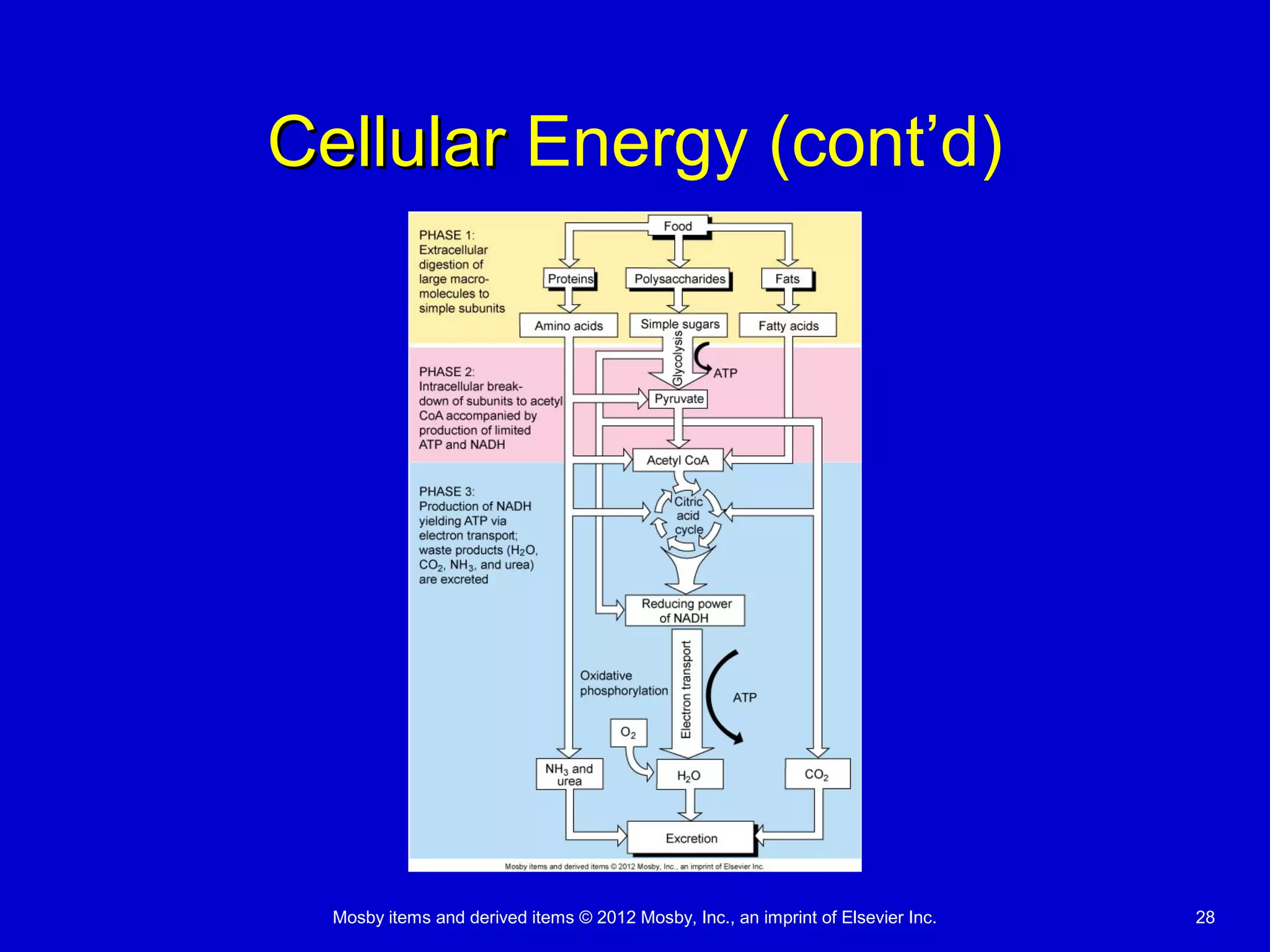
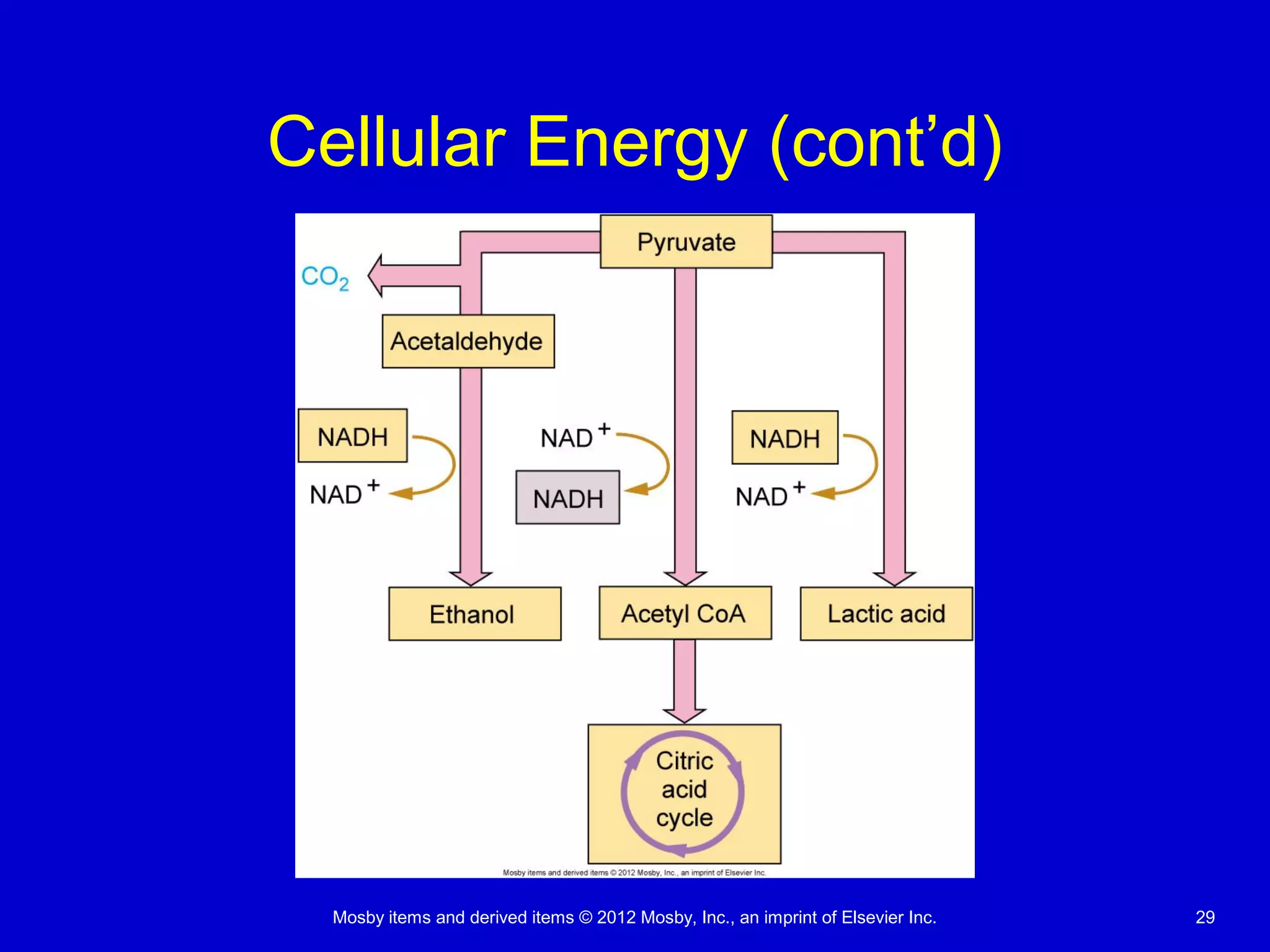
Cellular Energy
 Digestion
 Extracellular breakdown of proteins, fats,
polysaccarides to subunits
 Glycolysis
 Intracellular breakdown of subunits to pyruvate,
then to acetyl CoA
 Anaerobic
 Limited ATP produced
Mosby items and derived items © 2012 Mosby, Inc., an imprint of Elsevier Inc. 25
Cellular Energy (cont’d)
 Citric acid cycle
 Also called Krebs cycle or the tricarboxylic acid
cycle (TCA)
 Much ATP produced via oxidative
phosphorylation if oxygen present
 Waste products excreted
Mosby items and derived items © 2012 Mosby, Inc., an imprint of Elsevier Inc. 26
Cellular Energy (cont’d)
 Oxidative phosphorylation
 Occurs in the mitochondria
 Mechanism producing energy from fats, CHO,
proteins
 Involves the removal of electrons from various
intermediates via a co-enzyme such as
nicotinamide adenine dinucleotide (NAD) to
transfer electrons
Mosby items and derived items © 2012 Mosby, Inc., an imprint of Elsevier Inc. 27
Cellular Energy (cont’d)
 Oxidative phosphorylation (cont’d)
 Anaerobic glycolysis: if oxygen not available,
CHO is converted to pyruvic acid (pyruvate) in
cytoplasm with production of two ATP
molecules which is insufficient for energy
needs; pyruvate then converted to lactic acid
 Process reverses when oxygen becomes
available and lactic acid is converted back to
either pyruvic acid or glucose, which moves
into the mitochondria and enters the citric acid
cycle
Mosby items and derived items © 2012 Mosby, Inc., an imprint of Elsevier Inc. 28
CellularCellular Energy (cont’d)
Mosby items and derived items © 2012 Mosby, Inc., an imprint of Elsevier Inc. 29
Cellular Energy (cont’d)
Mosby items and derived items © 2012 Mosby, Inc., an imprint of Elsevier Inc. 30
Membrane Transport
 Cellular intake and output
 Cells continually take in nutrients, fluids, and
chemical messengers from the extracellular
environment and expel metabolites, or the
products of metabolism, and end products of
lysosomal digestion
Mosby items and derived items © 2012 Mosby, Inc., an imprint of Elsevier Inc. 31
Body Fluids
 Electrolytes, which are electrically
charged, make up 95% of solutes
 Cations are positively charged and migrate
toward the negative pole (e.g., Na+)
 Anions are negatively charged and migrate
toward the positive pole (e.g., Cl-)
Mosby items and derived items © 2012 Mosby, Inc., an imprint of Elsevier Inc. 32
Movement of Body Fluids and
Electrolytes
 Water and electrolytes move across cell
membranes via multiple passive (no
energy required) and active (energy
required) mechanisms
Mosby items and derived items © 2012 Mosby, Inc., an imprint of Elsevier Inc. 33
Membrane Transport
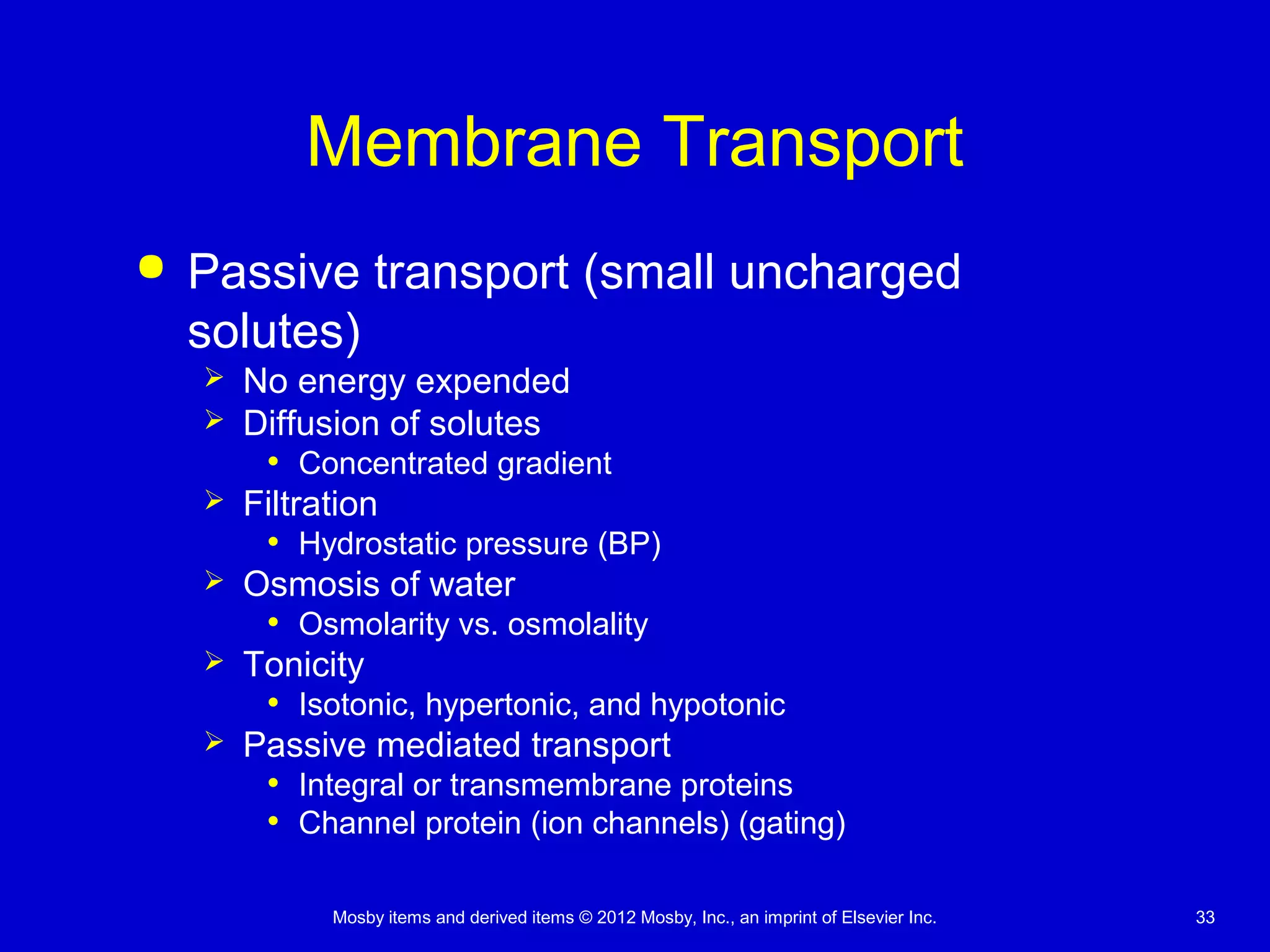
 Passive transport (small uncharged
solutes)
 No energy expended
 Diffusion of solutes
• Concentrated gradient
 Filtration
• Hydrostatic pressure (BP)
 Osmosis of water
• Osmolarity vs. osmolality
 Tonicity
• Isotonic, hypertonic, and hypotonic
 Passive mediated transport
• Integral or transmembrane proteins
• Channel protein (ion channels) (gating)
Mosby items and derived items © 2012 Mosby, Inc., an imprint of Elsevier Inc. 34
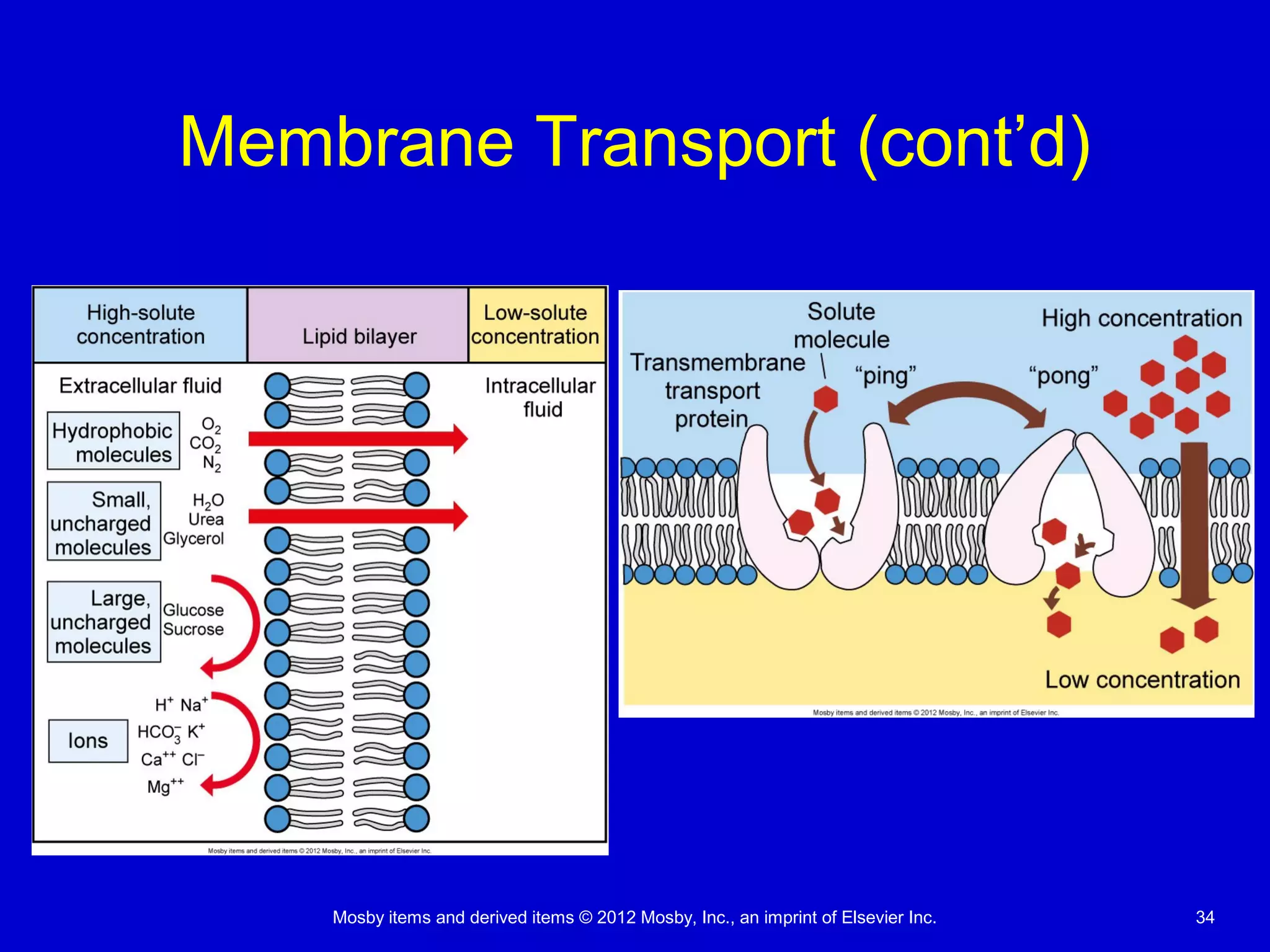
Membrane Transport (cont’d)
Mosby items and derived items © 2012 Mosby, Inc., an imprint of Elsevier Inc. 35
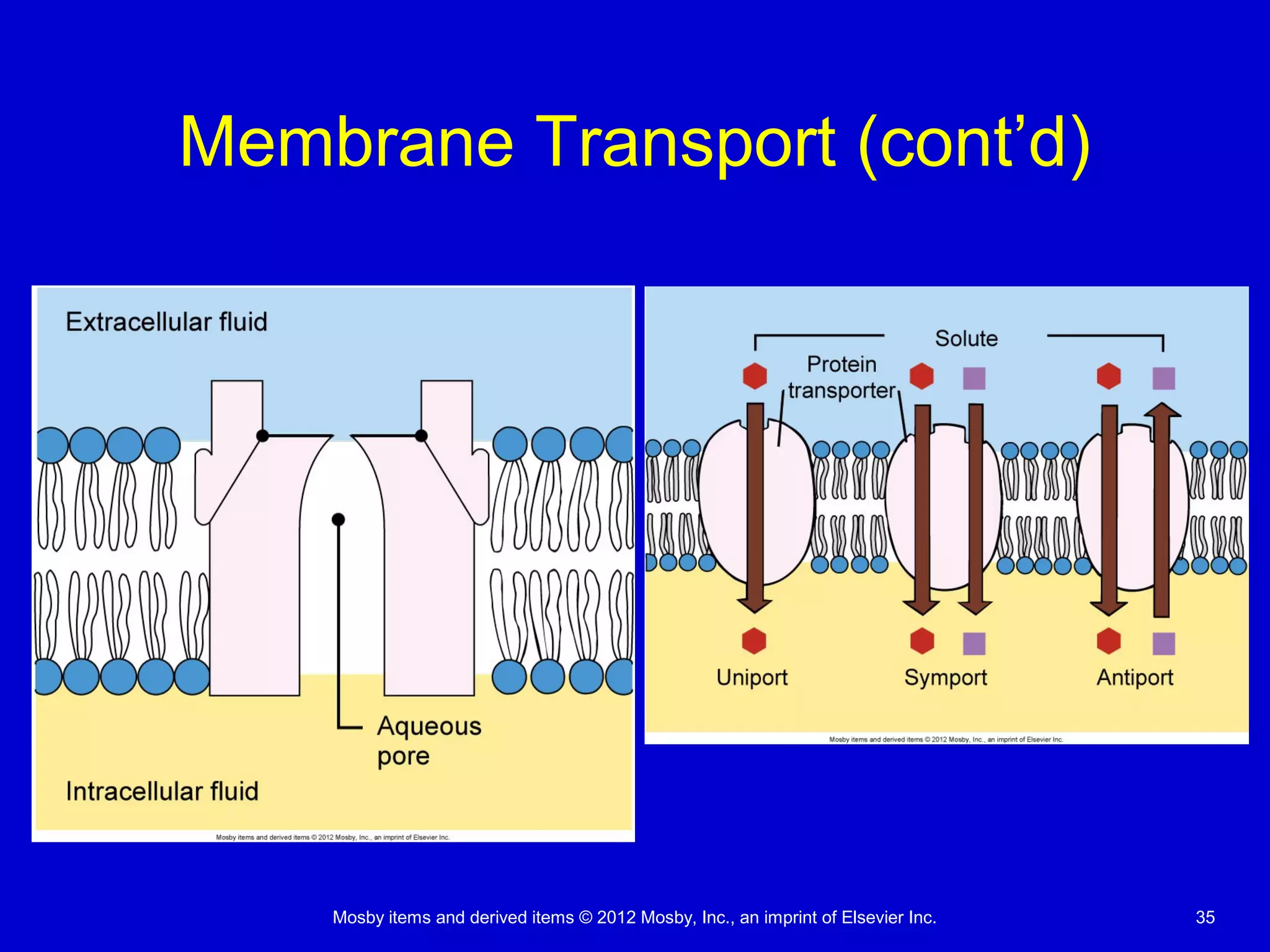
Membrane Transport (cont’d)
Mosby items and derived items © 2012 Mosby, Inc., an imprint of Elsevier Inc. 36
Membrane Transport (cont’d)
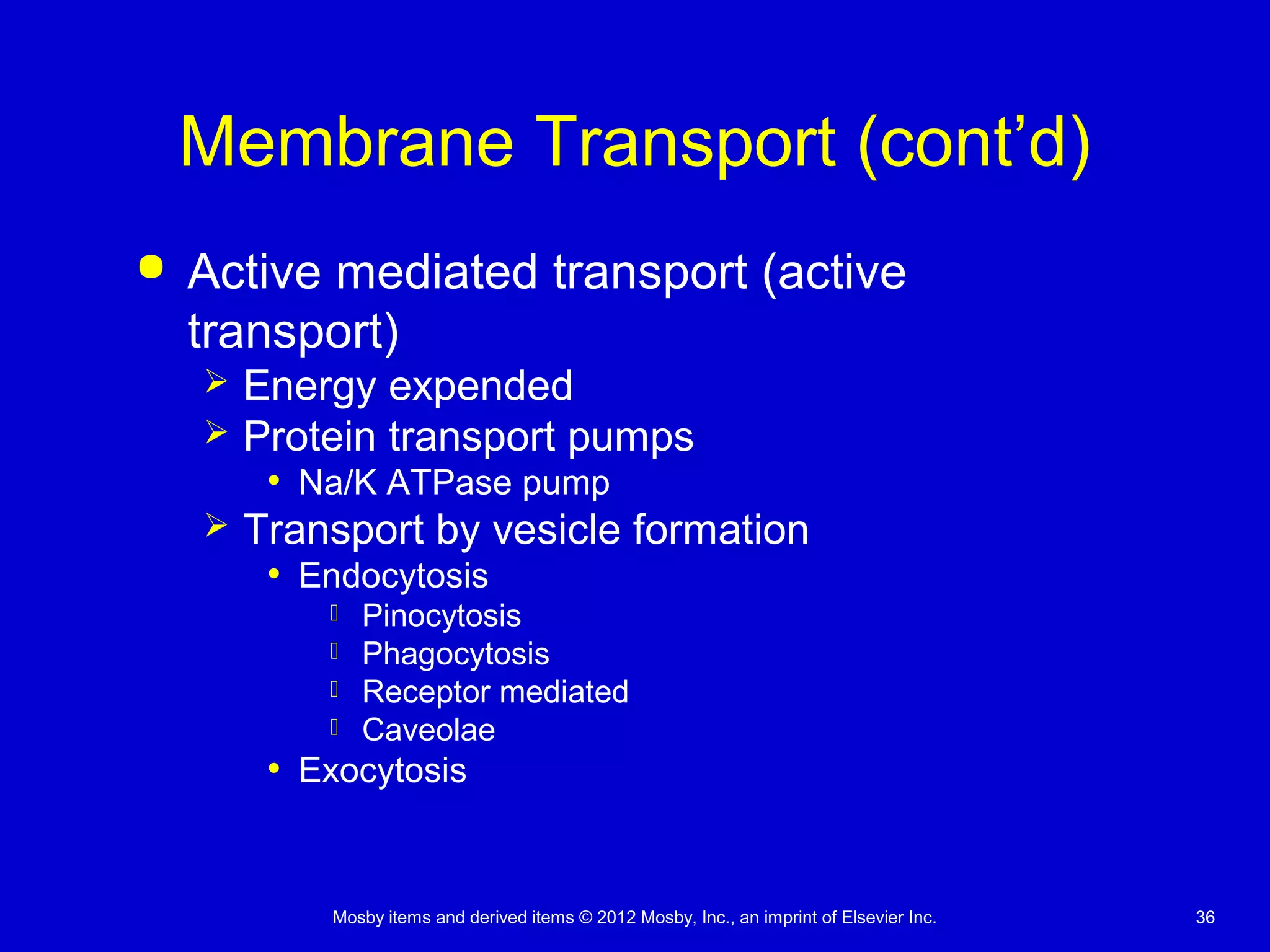
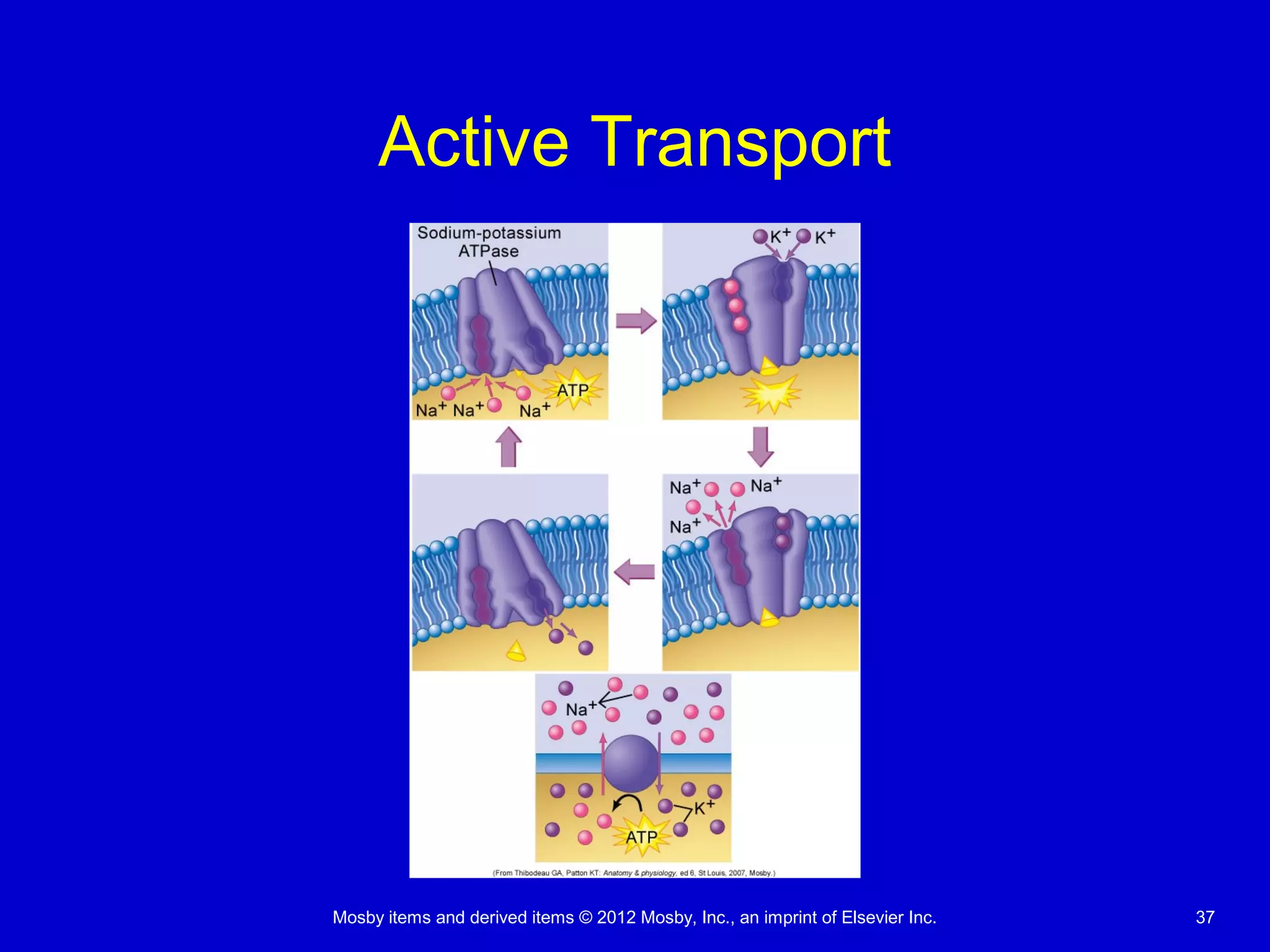
 Active mediated transport (active
transport)
 Energy expended
 Protein transport pumps
• Na/K ATPase pump
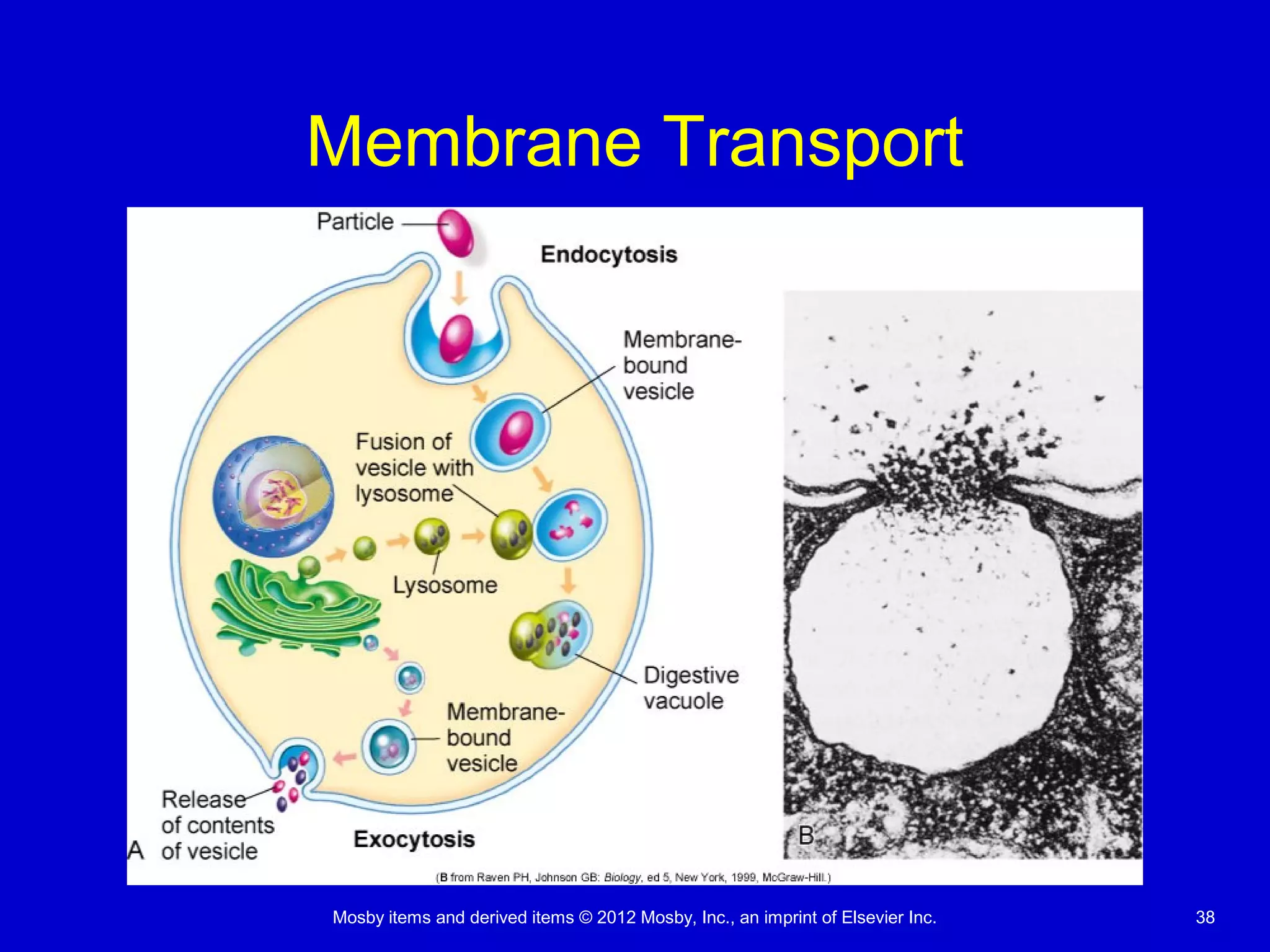
 Transport by vesicle formation
• Endocytosis
 Pinocytosis
 Phagocytosis
 Receptor mediated
 Caveolae
• Exocytosis
Mosby items and derived items © 2012 Mosby, Inc., an imprint of Elsevier Inc. 37
Active Transport
Mosby items and derived items © 2012 Mosby, Inc., an imprint of Elsevier Inc. 38
Membrane Transport
Mosby items and derived items © 2012 Mosby, Inc., an imprint of Elsevier Inc. 39
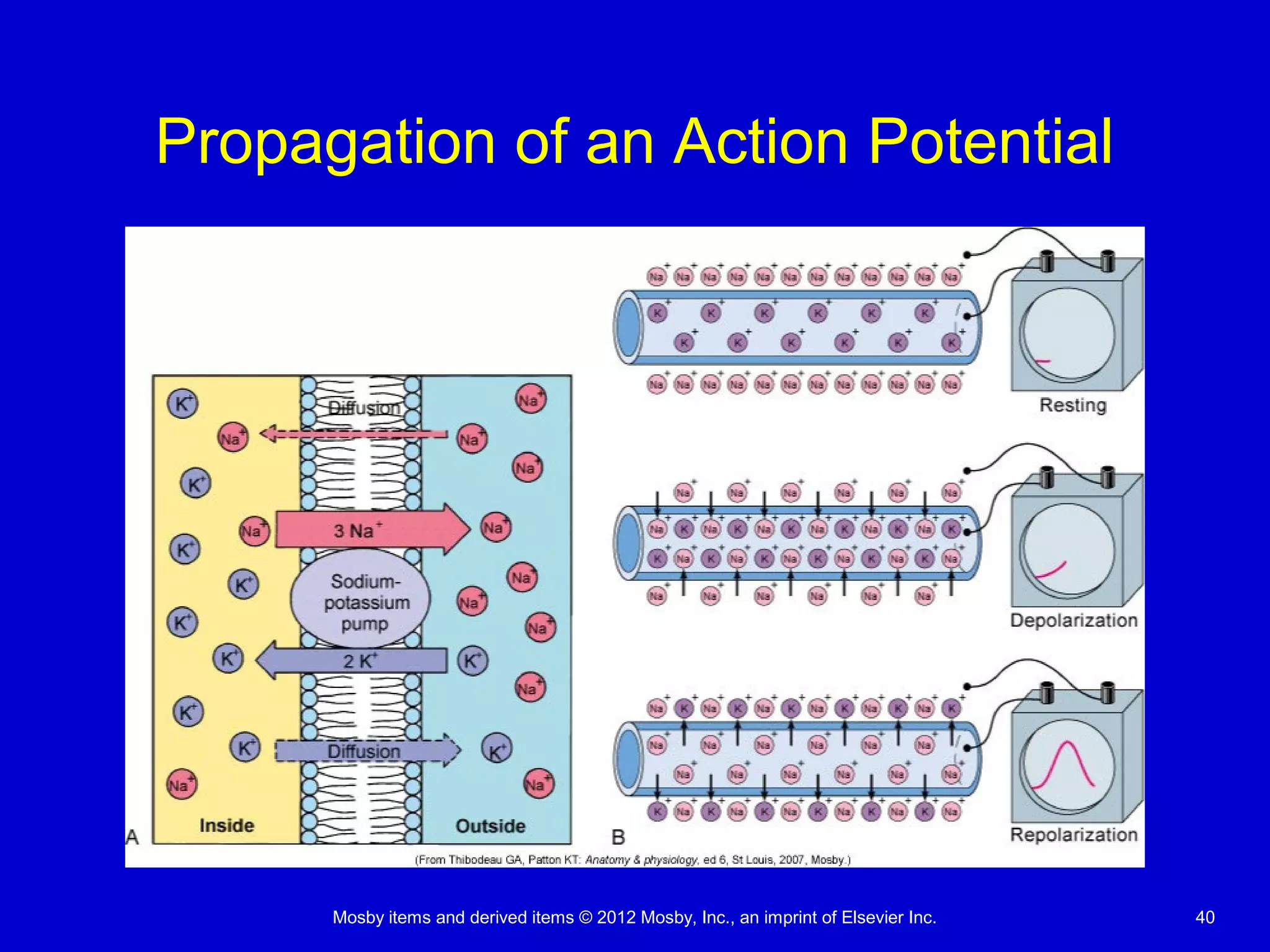
Electrical Impulses
 Resting membrane potential
 Action potential
 Depolarization
 Threshold potential
• Hyperpolarized vs. hypopolarized
 Repolarization
 Refractory period
• Absolute and relative
Mosby items and derived items © 2012 Mosby, Inc., an imprint of Elsevier Inc. 40
Propagation of an Action Potential
Mosby items and derived items © 2012 Mosby, Inc., an imprint of Elsevier Inc. 41
Theory of AgingTheory of Aging
 Accumulation of injurious eventsAccumulation of injurious events
 Genetically controlled programGenetically controlled program
 Theories:Theories:
 Genetic and environmental lifestyle factorsGenetic and environmental lifestyle factors
 Alterations of cellular control mechanismsAlterations of cellular control mechanisms
 Degenerative extracellular and vascularDegenerative extracellular and vascular
changeschanges
Mosby items and derived items © 2012 Mosby, Inc., an imprint of Elsevier Inc. 42
AgingAging
 Cellular agingCellular aging
 Atrophy, decreased function, and loss of cellsAtrophy, decreased function, and loss of cells
 Tissue and systemic agingTissue and systemic aging
 Progressive stiffness and rigidityProgressive stiffness and rigidity
 SarcopeniaSarcopenia
 FrailtyFrailty
 Mobility, balance, muscle strength, motorMobility, balance, muscle strength, motor
activity, cognition, nutrition, endurance, falls,activity, cognition, nutrition, endurance, falls,
fractures, and bone densityfractures, and bone density
Mosby items and derived items © 2012 Mosby, Inc., an imprint of Elsevier Inc. 43
Tissue Formation
 Extracellular matrix
 Pattern formation
Mosby items and derived items © 2012 Mosby, Inc., an imprint of Elsevier Inc. 44
Types of Tissue
 Epithelial tissue
 Simple vs. stratified squamous
 Transitional
 Cuboidal
 Simple vs. stratified columnar
 Pseudostratified ciliated
Mosby items and derived items © 2012 Mosby, Inc., an imprint of Elsevier Inc. 45
Types of Tissue (cont’d)
 Connective tissue
 Dense regular or irregular
 Fibers
 Loose and dense connective tissue
 Elastic and reticular connective
 Cartilage, bone, vascular, and adipose
Mosby items and derived items © 2012 Mosby, Inc., an imprint of Elsevier Inc. 46
Types of Tissue (cont’d)
 Muscle tissue
 Smooth
 Striated (skeletal)
 Cardiac
Mosby items and derived items © 2012 Mosby, Inc., an imprint of Elsevier Inc. 47
DNADNA
 Pentose sugar (deoxyribose)Pentose sugar (deoxyribose)
 Phosphate moleculePhosphate molecule
 Four nitrogenous bases:Four nitrogenous bases:
 Pyrimidines: cytosine and thyminePyrimidines: cytosine and thymine
 Purines: adenine and guaninePurines: adenine and guanine
 Double helix modelDouble helix model
 NucleotideNucleotide
Mosby items and derived items © 2012 Mosby, Inc., an imprint of Elsevier Inc. 48
RNARNA
 RNA is synthesized from the DNARNA is synthesized from the DNA
templatetemplate
 RNA polymerase binds to promoter siteRNA polymerase binds to promoter site
 Results in the formation of messengerResults in the formation of messenger
RNA (mRNA)RNA (mRNA)
 RNA polymerase detachesRNA polymerase detaches
 mRNA moves out of the nucleus and intomRNA moves out of the nucleus and into
the cytoplasmthe cytoplasm
 Transcription continues until terminationTranscription continues until termination
sequence is reachedsequence is reached
Mosby items and derived items © 2012 Mosby, Inc., an imprint of Elsevier Inc. 49
ChromosomesChromosomes
 Somatic cells:Somatic cells:
 Contain 46 chromosomes (23 pairs)Contain 46 chromosomes (23 pairs)
 Diploid cellsDiploid cells
 Gametes:Gametes:
 Contain 23 chromosomesContain 23 chromosomes
 Haploid cellsHaploid cells
• One member of each chromosome pairOne member of each chromosome pair
Mosby items and derived items © 2012 Mosby, Inc., an imprint of Elsevier Inc. 50
ChromosomesChromosomes
 MeiosisMeiosis
 Formation of haploid cells from diploid cellsFormation of haploid cells from diploid cells
 MitosisMitosis
 Formation of somatic cellsFormation of somatic cells
Mosby items and derived items © 2012 Mosby, Inc., an imprint of Elsevier Inc. 51
Autosomal AneuploidyAutosomal Aneuploidy
 Partial trisomyPartial trisomy
 Only an extra portion of a chromosome isOnly an extra portion of a chromosome is
present in each cellpresent in each cell
 Chromosomal mosaicsChromosomal mosaics
 Trisomies occurring only in some cells of theTrisomies occurring only in some cells of the
bodybody
Mosby items and derived items © 2012 Mosby, Inc., an imprint of Elsevier Inc. 52
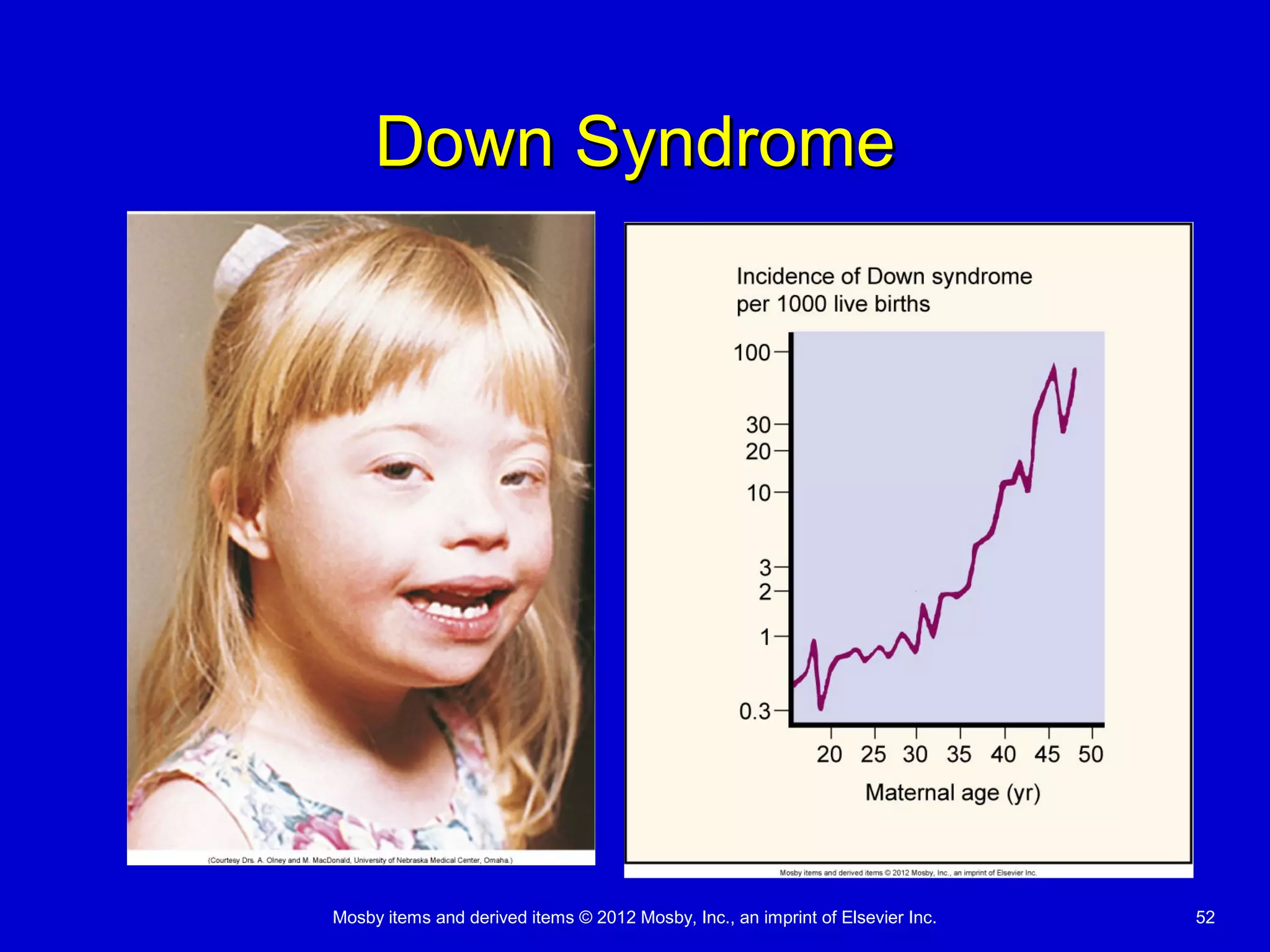
Down SyndromeDown Syndrome
Mosby items and derived items © 2012 Mosby, Inc., an imprint of Elsevier Inc. 53
Single-Gene DisordersSingle-Gene Disorders
 EpigeneticsEpigenetics
 Same DNA sequence can produce differentSame DNA sequence can produce different
phenotypes due to chemical modification thatphenotypes due to chemical modification that
alters expression of genesalters expression of genes
 Genomic imprintingGenomic imprinting
 One parent imprints (inactivates) the geneOne parent imprints (inactivates) the gene
during transmission to offspringduring transmission to offspring
Mosby items and derived items © 2012 Mosby, Inc., an imprint of Elsevier Inc. 54
Single-Gene Disorders (cont’d)Single-Gene Disorders (cont’d)
 Autosomal recessive disorderAutosomal recessive disorder
 Abnormal allele is recessive and a person mustAbnormal allele is recessive and a person must
be homozygous for the abnormal trait tobe homozygous for the abnormal trait to
express the diseaseexpress the disease
 The trait usually appears in the children, notThe trait usually appears in the children, not
the parents, and it affects the genders equallythe parents, and it affects the genders equally
because it is present on a pair of autosomesbecause it is present on a pair of autosomes
 Cystic fibrosis gene encodes a chloride ionCystic fibrosis gene encodes a chloride ion
channel in some epithelial cells that alterschannel in some epithelial cells that alters
sodium balancesodium balance
Mosby items and derived items © 2012 Mosby, Inc., an imprint of Elsevier Inc. 55
Sex-Linked DisordersSex-Linked Disorders
 Sex-linked (X-linked) disorders are usuallySex-linked (X-linked) disorders are usually
expressed by males because femalesexpressed by males because females
have another X chromosome to mask thehave another X chromosome to mask the
abnormal geneabnormal gene
 Can you name a disorder that is a sex-Can you name a disorder that is a sex-
linked disorder?linked disorder?
Mosby items and derived items © 2012 Mosby, Inc., an imprint of Elsevier Inc. 56
ImmunityImmunity
 First line of defenseFirst line of defense
 Innate (natural) (native) immunityInnate (natural) (native) immunity
 Second line of defenseSecond line of defense
 InflammationInflammation
 Third line of defenseThird line of defense
 Adaptive (acquired) immunityAdaptive (acquired) immunity
Mosby items and derived items © 2012 Mosby, Inc., an imprint of Elsevier Inc. 57
First Line of DefenseFirst Line of Defense
Physical barriers:Physical barriers:
 SkinSkin
 Linings of the gastrointestinal,Linings of the gastrointestinal,
genitourinary, and respiratory tractsgenitourinary, and respiratory tracts
• Sloughing off of cellsSloughing off of cells
• Coughing and sneezingCoughing and sneezing
• FlushingFlushing
• VomitingVomiting
• Mucus and ciliaMucus and cilia
Mosby items and derived items © 2012 Mosby, Inc., an imprint of Elsevier Inc. 58
PhagocytesPhagocytes
 NeutrophilsNeutrophils
 Also referred to as polymorphonuclearAlso referred to as polymorphonuclear
neutrophils (PMNs)neutrophils (PMNs)
 Predominate in early inflammatory responsesPredominate in early inflammatory responses
 Ingest bacteria, dead cells, and cellular debrisIngest bacteria, dead cells, and cellular debris
 Cells are short lived and become a componentCells are short lived and become a component
of the purulent exudateof the purulent exudate
Mosby items and derived items © 2012 Mosby, Inc., an imprint of Elsevier Inc. 59
Phagocytes (cont’d)Phagocytes (cont’d)
 Monocytes and macrophagesMonocytes and macrophages
 Monocytes are produced in the bone marrow,Monocytes are produced in the bone marrow,
enter the circulation, and migrate to theenter the circulation, and migrate to the
inflammatory site, where they develop intoinflammatory site, where they develop into
macrophagesmacrophages
 Macrophages typically arrive at theMacrophages typically arrive at the
inflammatory site 24 hours or later afterinflammatory site 24 hours or later after
neutrophilsneutrophils
Mosby items and derived items © 2012 Mosby, Inc., an imprint of Elsevier Inc. 60
Phagocytosis (cont’d)Phagocytosis (cont’d)
 Steps:Steps:
 AdherenceAdherence
 EngulfmentEngulfment
 Phagosome formationPhagosome formation
 Fusion with lysosomal granulesFusion with lysosomal granules
 Destruction of the targetDestruction of the target

Notes week one

  • 1.
    Mosby items andderived items © 2012 Mosby, Inc., an imprint of Elsevier Inc. 1 Cellular Structures, Genes, Immunity, and Diseases Week One Lecture
  • 2.
    Mosby items andderived items © 2012 Mosby, Inc., an imprint of Elsevier Inc. 2 Cellular Functions  Movement  Conductivity  Metabolic absorption  Secretion  Excretion  Respiration  Reproduction  Communication
  • 3.
    Mosby items andderived items © 2012 Mosby, Inc., an imprint of Elsevier Inc. 3 Eukaryotic Cell  Nucleus  Nuclear envelope  Nucleolus  DNA • DNA replication, repair, and transcription  Histone proteins  Cell division  Genetic information
  • 4.
    Mosby items andderived items © 2012 Mosby, Inc., an imprint of Elsevier Inc. 4 Eukaryotic Cell (cont’d)  Nucleus (cont’d)
  • 5.
    Mosby items andderived items © 2012 Mosby, Inc., an imprint of Elsevier Inc. 5 Eukaryotic Cell (cont’d)  Nucleus (cont’d)
  • 6.
    Mosby items andderived items © 2012 Mosby, Inc., an imprint of Elsevier Inc. 6 Eukaryotic Cell (cont’d)  Cytoplasm  Cytoplasmic matrix  Cytosol  Function  Cytoplasmic organelles
  • 7.
    Mosby items andderived items © 2012 Mosby, Inc., an imprint of Elsevier Inc. 7 Eukaryotic Cell (cont’d)  Cytoplasm (cont’d)
  • 8.
    Mosby items andderived items © 2012 Mosby, Inc., an imprint of Elsevier Inc. 8 Eukaryotic Organelles  Ribosomes  RNA protein  Free ribosomes  Attached ribosomes  Endoplasmic reticulum  Site of protein synthesis  Smooth vs. rough endoplasmic reticulum
  • 9.
    Mosby items andderived items © 2012 Mosby, Inc., an imprint of Elsevier Inc. 9 Eukaryotic Organelles (cont’d)  Golgi complex  Flattened, smooth membranes  Secretory vesicles  Proteins from the endoplasmic reticulum are packaged in the Golgi complex  Cisternae
  • 10.
    Mosby items andderived items © 2012 Mosby, Inc., an imprint of Elsevier Inc. 10 Eukaryotic Organelles (cont’d)  Lysosomes  Originate from the Golgi  Catalyze proteins, lipids, nucleic acids, and carbohydrates  Role in autodigestion
  • 11.
    Mosby items andderived items © 2012 Mosby, Inc., an imprint of Elsevier Inc. 11 Eukaryotic Organelles (cont’d)  Peroxisomes  Contain oxidative enzymes  Break substances down into harmless products
  • 12.
    Mosby items andderived items © 2012 Mosby, Inc., an imprint of Elsevier Inc. 12 Eukaryotic Organelles (cont’d)  Mitochondria  Surrounded by a double lipid–bilayer membrane  Participates in oxidative phosphorylation  Increased inner membrane surface area provided by cristae
  • 13.
    Mosby items andderived items © 2012 Mosby, Inc., an imprint of Elsevier Inc. 13 Eukaryotic Organelles (cont’d)  Cytoskeleton  “Bones and muscles” of cell  Maintains the cell’s shape and internal organization  Permits movement of substances within the cell and movement of external projections  Microtubules • Centrioles  Macrofilaments
  • 14.
    Mosby items andderived items © 2012 Mosby, Inc., an imprint of Elsevier Inc. 14 Plasma Membrane  Controls the composition of a space or compartment they enclose  Structure  Caveolae  Lipids • Amphipathic lipids  Hydrophilic and hydrophobic • Phospholipids, glycolipids, and cholesterol  Carbohydrates • Glycoproteins
  • 15.
    Mosby items andderived items © 2012 Mosby, Inc., an imprint of Elsevier Inc. 15 Plasma Membrane (cont’d)  Proteins  Integral, peripheral, transmembrane  Functions • Receptors • Transport • Enzymes • Surface markers • Cell adhesion molecules (CAMs) • Catalysts  Fluid mosaic model
  • 16.
    Mosby items andderived items © 2012 Mosby, Inc., an imprint of Elsevier Inc. 16 Plasma Membrane (cont’d)  Fluid mosaic model  Flexibility  Self-regulating  Impermeability to some substances  Fluidity impacted by temperature, amount of cholesterol
  • 17.
    Mosby items andderived items © 2012 Mosby, Inc., an imprint of Elsevier Inc. 17 Membrane Fluidity
  • 18.
    Mosby items andderived items © 2012 Mosby, Inc., an imprint of Elsevier Inc. 18 Plasma Membrane  Plasma membrane protein functions
  • 19.
    Mosby items andderived items © 2012 Mosby, Inc., an imprint of Elsevier Inc. 19 Cellular Communication  Plasma membrane bound receptors  Intracellular receptors  Gap junctions (contact signaling)  Chemical signaling  Paracrine  Autocrine  Hormonal  Neurohormonal  Neurotransmitters
  • 20.
    Mosby items andderived items © 2012 Mosby, Inc., an imprint of Elsevier Inc. 20 Cellular Communication (cont’d)
  • 21.
    Mosby items andderived items © 2012 Mosby, Inc., an imprint of Elsevier Inc. 21 Cellular Communication (cont’d)
  • 22.
    Mosby items andderived items © 2012 Mosby, Inc., an imprint of Elsevier Inc. 22 Cellular Metabolism  Metabolism  Chemical tasks of maintaining essential cellular functions  Anabolism • Energy using  Catabolism • Energy releasing
  • 23.
    Mosby items andderived items © 2012 Mosby, Inc., an imprint of Elsevier Inc. 23 Adenosine Triphosphate  Created from the chemical energy contained within organic molecules  Used in synthesis of organic molecules, muscle contraction, and active transport  Stores and transfers energy
  • 24.
    Mosby items andderived items © 2012 Mosby, Inc., an imprint of Elsevier Inc. 24 Cellular Energy  Digestion  Extracellular breakdown of proteins, fats, polysaccarides to subunits  Glycolysis  Intracellular breakdown of subunits to pyruvate, then to acetyl CoA  Anaerobic  Limited ATP produced
  • 25.
    Mosby items andderived items © 2012 Mosby, Inc., an imprint of Elsevier Inc. 25 Cellular Energy (cont’d)  Citric acid cycle  Also called Krebs cycle or the tricarboxylic acid cycle (TCA)  Much ATP produced via oxidative phosphorylation if oxygen present  Waste products excreted
  • 26.
    Mosby items andderived items © 2012 Mosby, Inc., an imprint of Elsevier Inc. 26 Cellular Energy (cont’d)  Oxidative phosphorylation  Occurs in the mitochondria  Mechanism producing energy from fats, CHO, proteins  Involves the removal of electrons from various intermediates via a co-enzyme such as nicotinamide adenine dinucleotide (NAD) to transfer electrons
  • 27.
    Mosby items andderived items © 2012 Mosby, Inc., an imprint of Elsevier Inc. 27 Cellular Energy (cont’d)  Oxidative phosphorylation (cont’d)  Anaerobic glycolysis: if oxygen not available, CHO is converted to pyruvic acid (pyruvate) in cytoplasm with production of two ATP molecules which is insufficient for energy needs; pyruvate then converted to lactic acid  Process reverses when oxygen becomes available and lactic acid is converted back to either pyruvic acid or glucose, which moves into the mitochondria and enters the citric acid cycle
  • 28.
    Mosby items andderived items © 2012 Mosby, Inc., an imprint of Elsevier Inc. 28 CellularCellular Energy (cont’d)
  • 29.
    Mosby items andderived items © 2012 Mosby, Inc., an imprint of Elsevier Inc. 29 Cellular Energy (cont’d)
  • 30.
    Mosby items andderived items © 2012 Mosby, Inc., an imprint of Elsevier Inc. 30 Membrane Transport  Cellular intake and output  Cells continually take in nutrients, fluids, and chemical messengers from the extracellular environment and expel metabolites, or the products of metabolism, and end products of lysosomal digestion
  • 31.
    Mosby items andderived items © 2012 Mosby, Inc., an imprint of Elsevier Inc. 31 Body Fluids  Electrolytes, which are electrically charged, make up 95% of solutes  Cations are positively charged and migrate toward the negative pole (e.g., Na+)  Anions are negatively charged and migrate toward the positive pole (e.g., Cl-)
  • 32.
    Mosby items andderived items © 2012 Mosby, Inc., an imprint of Elsevier Inc. 32 Movement of Body Fluids and Electrolytes  Water and electrolytes move across cell membranes via multiple passive (no energy required) and active (energy required) mechanisms
  • 33.
    Mosby items andderived items © 2012 Mosby, Inc., an imprint of Elsevier Inc. 33 Membrane Transport  Passive transport (small uncharged solutes)  No energy expended  Diffusion of solutes • Concentrated gradient  Filtration • Hydrostatic pressure (BP)  Osmosis of water • Osmolarity vs. osmolality  Tonicity • Isotonic, hypertonic, and hypotonic  Passive mediated transport • Integral or transmembrane proteins • Channel protein (ion channels) (gating)
  • 34.
    Mosby items andderived items © 2012 Mosby, Inc., an imprint of Elsevier Inc. 34 Membrane Transport (cont’d)
  • 35.
    Mosby items andderived items © 2012 Mosby, Inc., an imprint of Elsevier Inc. 35 Membrane Transport (cont’d)
  • 36.
    Mosby items andderived items © 2012 Mosby, Inc., an imprint of Elsevier Inc. 36 Membrane Transport (cont’d)  Active mediated transport (active transport)  Energy expended  Protein transport pumps • Na/K ATPase pump  Transport by vesicle formation • Endocytosis  Pinocytosis  Phagocytosis  Receptor mediated  Caveolae • Exocytosis
  • 37.
    Mosby items andderived items © 2012 Mosby, Inc., an imprint of Elsevier Inc. 37 Active Transport
  • 38.
    Mosby items andderived items © 2012 Mosby, Inc., an imprint of Elsevier Inc. 38 Membrane Transport
  • 39.
    Mosby items andderived items © 2012 Mosby, Inc., an imprint of Elsevier Inc. 39 Electrical Impulses  Resting membrane potential  Action potential  Depolarization  Threshold potential • Hyperpolarized vs. hypopolarized  Repolarization  Refractory period • Absolute and relative
  • 40.
    Mosby items andderived items © 2012 Mosby, Inc., an imprint of Elsevier Inc. 40 Propagation of an Action Potential
  • 41.
    Mosby items andderived items © 2012 Mosby, Inc., an imprint of Elsevier Inc. 41 Theory of AgingTheory of Aging  Accumulation of injurious eventsAccumulation of injurious events  Genetically controlled programGenetically controlled program  Theories:Theories:  Genetic and environmental lifestyle factorsGenetic and environmental lifestyle factors  Alterations of cellular control mechanismsAlterations of cellular control mechanisms  Degenerative extracellular and vascularDegenerative extracellular and vascular changeschanges
  • 42.
    Mosby items andderived items © 2012 Mosby, Inc., an imprint of Elsevier Inc. 42 AgingAging  Cellular agingCellular aging  Atrophy, decreased function, and loss of cellsAtrophy, decreased function, and loss of cells  Tissue and systemic agingTissue and systemic aging  Progressive stiffness and rigidityProgressive stiffness and rigidity  SarcopeniaSarcopenia  FrailtyFrailty  Mobility, balance, muscle strength, motorMobility, balance, muscle strength, motor activity, cognition, nutrition, endurance, falls,activity, cognition, nutrition, endurance, falls, fractures, and bone densityfractures, and bone density
  • 43.
    Mosby items andderived items © 2012 Mosby, Inc., an imprint of Elsevier Inc. 43 Tissue Formation  Extracellular matrix  Pattern formation
  • 44.
    Mosby items andderived items © 2012 Mosby, Inc., an imprint of Elsevier Inc. 44 Types of Tissue  Epithelial tissue  Simple vs. stratified squamous  Transitional  Cuboidal  Simple vs. stratified columnar  Pseudostratified ciliated
  • 45.
    Mosby items andderived items © 2012 Mosby, Inc., an imprint of Elsevier Inc. 45 Types of Tissue (cont’d)  Connective tissue  Dense regular or irregular  Fibers  Loose and dense connective tissue  Elastic and reticular connective  Cartilage, bone, vascular, and adipose
  • 46.
    Mosby items andderived items © 2012 Mosby, Inc., an imprint of Elsevier Inc. 46 Types of Tissue (cont’d)  Muscle tissue  Smooth  Striated (skeletal)  Cardiac
  • 47.
    Mosby items andderived items © 2012 Mosby, Inc., an imprint of Elsevier Inc. 47 DNADNA  Pentose sugar (deoxyribose)Pentose sugar (deoxyribose)  Phosphate moleculePhosphate molecule  Four nitrogenous bases:Four nitrogenous bases:  Pyrimidines: cytosine and thyminePyrimidines: cytosine and thymine  Purines: adenine and guaninePurines: adenine and guanine  Double helix modelDouble helix model  NucleotideNucleotide
  • 48.
    Mosby items andderived items © 2012 Mosby, Inc., an imprint of Elsevier Inc. 48 RNARNA  RNA is synthesized from the DNARNA is synthesized from the DNA templatetemplate  RNA polymerase binds to promoter siteRNA polymerase binds to promoter site  Results in the formation of messengerResults in the formation of messenger RNA (mRNA)RNA (mRNA)  RNA polymerase detachesRNA polymerase detaches  mRNA moves out of the nucleus and intomRNA moves out of the nucleus and into the cytoplasmthe cytoplasm  Transcription continues until terminationTranscription continues until termination sequence is reachedsequence is reached
  • 49.
    Mosby items andderived items © 2012 Mosby, Inc., an imprint of Elsevier Inc. 49 ChromosomesChromosomes  Somatic cells:Somatic cells:  Contain 46 chromosomes (23 pairs)Contain 46 chromosomes (23 pairs)  Diploid cellsDiploid cells  Gametes:Gametes:  Contain 23 chromosomesContain 23 chromosomes  Haploid cellsHaploid cells • One member of each chromosome pairOne member of each chromosome pair
  • 50.
    Mosby items andderived items © 2012 Mosby, Inc., an imprint of Elsevier Inc. 50 ChromosomesChromosomes  MeiosisMeiosis  Formation of haploid cells from diploid cellsFormation of haploid cells from diploid cells  MitosisMitosis  Formation of somatic cellsFormation of somatic cells
  • 51.
    Mosby items andderived items © 2012 Mosby, Inc., an imprint of Elsevier Inc. 51 Autosomal AneuploidyAutosomal Aneuploidy  Partial trisomyPartial trisomy  Only an extra portion of a chromosome isOnly an extra portion of a chromosome is present in each cellpresent in each cell  Chromosomal mosaicsChromosomal mosaics  Trisomies occurring only in some cells of theTrisomies occurring only in some cells of the bodybody
  • 52.
    Mosby items andderived items © 2012 Mosby, Inc., an imprint of Elsevier Inc. 52 Down SyndromeDown Syndrome
  • 53.
    Mosby items andderived items © 2012 Mosby, Inc., an imprint of Elsevier Inc. 53 Single-Gene DisordersSingle-Gene Disorders  EpigeneticsEpigenetics  Same DNA sequence can produce differentSame DNA sequence can produce different phenotypes due to chemical modification thatphenotypes due to chemical modification that alters expression of genesalters expression of genes  Genomic imprintingGenomic imprinting  One parent imprints (inactivates) the geneOne parent imprints (inactivates) the gene during transmission to offspringduring transmission to offspring
  • 54.
    Mosby items andderived items © 2012 Mosby, Inc., an imprint of Elsevier Inc. 54 Single-Gene Disorders (cont’d)Single-Gene Disorders (cont’d)  Autosomal recessive disorderAutosomal recessive disorder  Abnormal allele is recessive and a person mustAbnormal allele is recessive and a person must be homozygous for the abnormal trait tobe homozygous for the abnormal trait to express the diseaseexpress the disease  The trait usually appears in the children, notThe trait usually appears in the children, not the parents, and it affects the genders equallythe parents, and it affects the genders equally because it is present on a pair of autosomesbecause it is present on a pair of autosomes  Cystic fibrosis gene encodes a chloride ionCystic fibrosis gene encodes a chloride ion channel in some epithelial cells that alterschannel in some epithelial cells that alters sodium balancesodium balance
  • 55.
    Mosby items andderived items © 2012 Mosby, Inc., an imprint of Elsevier Inc. 55 Sex-Linked DisordersSex-Linked Disorders  Sex-linked (X-linked) disorders are usuallySex-linked (X-linked) disorders are usually expressed by males because femalesexpressed by males because females have another X chromosome to mask thehave another X chromosome to mask the abnormal geneabnormal gene  Can you name a disorder that is a sex-Can you name a disorder that is a sex- linked disorder?linked disorder?
  • 56.
    Mosby items andderived items © 2012 Mosby, Inc., an imprint of Elsevier Inc. 56 ImmunityImmunity  First line of defenseFirst line of defense  Innate (natural) (native) immunityInnate (natural) (native) immunity  Second line of defenseSecond line of defense  InflammationInflammation  Third line of defenseThird line of defense  Adaptive (acquired) immunityAdaptive (acquired) immunity
  • 57.
    Mosby items andderived items © 2012 Mosby, Inc., an imprint of Elsevier Inc. 57 First Line of DefenseFirst Line of Defense Physical barriers:Physical barriers:  SkinSkin  Linings of the gastrointestinal,Linings of the gastrointestinal, genitourinary, and respiratory tractsgenitourinary, and respiratory tracts • Sloughing off of cellsSloughing off of cells • Coughing and sneezingCoughing and sneezing • FlushingFlushing • VomitingVomiting • Mucus and ciliaMucus and cilia
  • 58.
    Mosby items andderived items © 2012 Mosby, Inc., an imprint of Elsevier Inc. 58 PhagocytesPhagocytes  NeutrophilsNeutrophils  Also referred to as polymorphonuclearAlso referred to as polymorphonuclear neutrophils (PMNs)neutrophils (PMNs)  Predominate in early inflammatory responsesPredominate in early inflammatory responses  Ingest bacteria, dead cells, and cellular debrisIngest bacteria, dead cells, and cellular debris  Cells are short lived and become a componentCells are short lived and become a component of the purulent exudateof the purulent exudate
  • 59.
    Mosby items andderived items © 2012 Mosby, Inc., an imprint of Elsevier Inc. 59 Phagocytes (cont’d)Phagocytes (cont’d)  Monocytes and macrophagesMonocytes and macrophages  Monocytes are produced in the bone marrow,Monocytes are produced in the bone marrow, enter the circulation, and migrate to theenter the circulation, and migrate to the inflammatory site, where they develop intoinflammatory site, where they develop into macrophagesmacrophages  Macrophages typically arrive at theMacrophages typically arrive at the inflammatory site 24 hours or later afterinflammatory site 24 hours or later after neutrophilsneutrophils
  • 60.
    Mosby items andderived items © 2012 Mosby, Inc., an imprint of Elsevier Inc. 60 Phagocytosis (cont’d)Phagocytosis (cont’d)  Steps:Steps:  AdherenceAdherence  EngulfmentEngulfment  Phagosome formationPhagosome formation  Fusion with lysosomal granulesFusion with lysosomal granules  Destruction of the targetDestruction of the target

Editor's Notes

  • #2 Elsevier items and derived items ©2012, 2008 by Mosby, Inc., an affiliate of Elsevier Inc.