Mosby items and derived items © 2012 Mosby, Inc., an imprint of Elsevier Inc. 1
Alterations of Digestive Function
Mosby items and derived items © 2012 Mosby, Inc., an imprint of Elsevier Inc. 2
Clinical Manifestations of
Gastrointestinal Dysfunction
 Anorexia
 A lack of a desire to eat despite physiologic
stimuli that would normally produce hunger
 Vomiting
 The forceful emptying of the stomach and
intestinal contents through the mouth
 Several types of stimuli initiate the vomiting
reflex
Mosby items and derived items © 2012 Mosby, Inc., an imprint of Elsevier Inc. 3
Clinical Manifestations of
Gastrointestinal Dysfunction (cont’d)
 Nausea
 A subjective experience that is associated with
a number of conditions
 The common symptoms of vomiting are
hypersalivation and tachycardia
 Retching
 Nonproductive vomiting
Mosby items and derived items © 2012 Mosby, Inc., an imprint of Elsevier Inc. 4
Clinical Manifestations of
Gastrointestinal Dysfunction (cont’d)
 Projectile vomiting
 Projectile vomiting is spontaneous vomiting
that does not follow nausea or retching
Mosby items and derived items © 2012 Mosby, Inc., an imprint of Elsevier Inc. 5
Clinical Manifestations of
Gastrointestinal Dysfunction (cont’d)
 Constipation
 Constipation is defined as infrequent or difficult
defecation
 Pathophysiology
• Neurogenic disorders
• Functional or mechanical conditions
• Low-residue diet
• Sedentary lifestyle
• Excessive use of antacids
• Changes in bowel habits
Mosby items and derived items © 2012 Mosby, Inc., an imprint of Elsevier Inc. 6
Clinical Manifestations of
Gastrointestinal Dysfunction (cont’d)
 Diarrhea
 Increased frequency of bowel movements
 Increased volume, fluidity, weight of the feces
 Major mechanisms of diarrhea:
• Osmotic diarrhea
• Secretory diarrhea
• Motility diarrhea
 Associated with malabsorption syndromes
Mosby items and derived items © 2012 Mosby, Inc., an imprint of Elsevier Inc. 7
Clinical Manifestations of
Gastrointestinal Dysfunction (cont’d)
 Abdominal pain
 Abdominal pain is a symptom of a number of
gastrointestinal disorders
 Parietal pain
 Visceral pain
 Referred pain
Mosby items and derived items © 2012 Mosby, Inc., an imprint of Elsevier Inc. 8
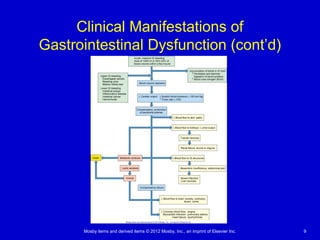
Clinical Manifestations of
Gastrointestinal Dysfunction (cont’d)
 Gastrointestinal bleeding
 Upper gastrointestinal bleeding
• Esophagus, stomach, or duodenum
 Lower gastrointestinal bleeding
• Below the ligament of Treitz or bleeding from the
jejunum, ileum, colon, or rectum
 Hematemesis
 Hematochezia
 Melena
 Occult bleeding
Mosby items and derived items © 2012 Mosby, Inc., an imprint of Elsevier Inc. 9
Clinical Manifestations of
Gastrointestinal Dysfunction (cont’d)
Mosby items and derived items © 2012 Mosby, Inc., an imprint of Elsevier Inc. 10
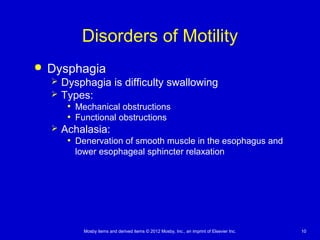
Disorders of Motility
 Dysphagia
 Dysphagia is difficulty swallowing
 Types:
• Mechanical obstructions
• Functional obstructions
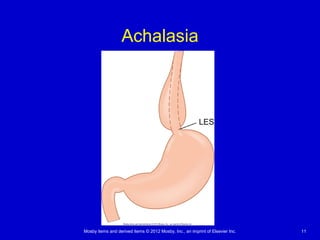
 Achalasia:
• Denervation of smooth muscle in the esophagus and
lower esophageal sphincter relaxation
Mosby items and derived items © 2012 Mosby, Inc., an imprint of Elsevier Inc. 11
Achalasia
Mosby items and derived items © 2012 Mosby, Inc., an imprint of Elsevier Inc. 12
Disorders of Motility
 Gastroesophageal reflux disease (GERD)
 GERD is the reflux of chyme from the stomach
to the esophagus
 If GERD causes inflammation of the
esophagus, it is called reflux esophagitis
 A normal functioning lower esophageal
sphincter maintains a zone of high pressure to
prevent chyme reflux
Mosby items and derived items © 2012 Mosby, Inc., an imprint of Elsevier Inc. 13
Disorders of Motility (cont’d)
 Gastroesophageal reflux disease (GERD)
(cont’d)
 Conditions that increase abdominal pressure
can contribute to GERD
 Manifestations:
• Heartburn
• Regurgitation of chyme
• Mid-epigastric pain within 1 hour of eating
Mosby items and derived items © 2012 Mosby, Inc., an imprint of Elsevier Inc. 14
Disorders of Motility (cont’d)
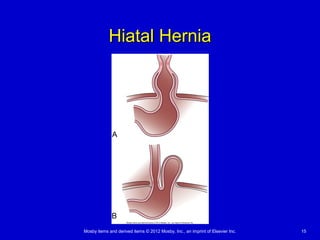
 Hiatal hernia
 Sliding hiatal hernia
 Paraesophageal hiatal hernia
Mosby items and derived items © 2012 Mosby, Inc., an imprint of Elsevier Inc. 15
Hiatal HerniaHiatal Hernia
Mosby items and derived items © 2012 Mosby, Inc., an imprint of Elsevier Inc. 16
Disorders of Motility
 Pyloric obstruction
 The blocking or narrowing of the opening
between the stomach and the duodenum
 Can be acquired or congenital
 Manifestations:
• Epigastric pain and fullness
• Nausea
• Succussion splash
• Vomiting
• With a prolonged obstruction, malnutrition,
dehydration, and extreme debilitation
Mosby items and derived items © 2012 Mosby, Inc., an imprint of Elsevier Inc. 17
Disorders of Motility (cont’d)
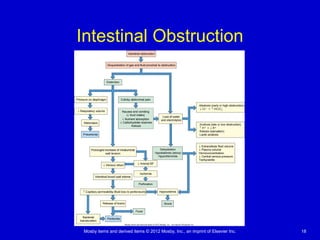
 Intestinal obstruction and paralytic ileus
 An intestinal obstruction is any condition that
prevents the flow of chyme through the
intestinal lumen or failure of normal intestinal
motility in the absence of an obstructing lesion
 An ileus is an obstruction of the intestines
 Simple obstruction
 Functional obstruction
Mosby items and derived items © 2012 Mosby, Inc., an imprint of Elsevier Inc. 18
Intestinal Obstruction
Mosby items and derived items © 2012 Mosby, Inc., an imprint of Elsevier Inc. 19
Gastritis
 Inflammatory disorder of the gastric
mucosa
 Acute gastritis
 Chronic gastritis
 Chronic fundal gastritis
 Chronic antral gastritis
Mosby items and derived items © 2012 Mosby, Inc., an imprint of Elsevier Inc. 20
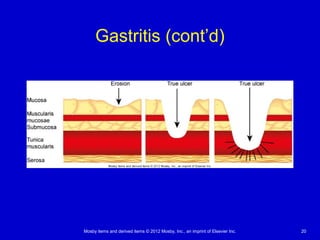
Gastritis (cont’d)
Mosby items and derived items © 2012 Mosby, Inc., an imprint of Elsevier Inc. 21
Peptic Ulcer Disease
 A break or ulceration in the protective
mucosal lining of the lower esophagus,
stomach, or duodenum
 Acute and chronic ulcers
 Superficial
 Erosions
 Deep
 True ulcers
 Zollinger-Ellison syndrome
Mosby items and derived items © 2012 Mosby, Inc., an imprint of Elsevier Inc. 22
Peptic Ulcer Disease (cont’d)
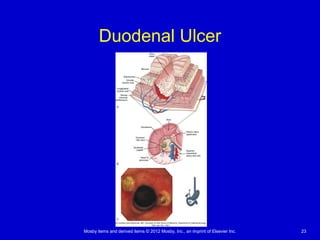
 Duodenal ulcers
 Most common of the peptic ulcers
 Developmental factors:
• Helicobacter pylori infection
 Toxins and enzymes that promote inflammation and
ulceration
• Hypersecretion of stomach acid and pepsin
• Use of NSAIDs
• High gastrin levels
• Acid production by cigarette smoking
Mosby items and derived items © 2012 Mosby, Inc., an imprint of Elsevier Inc. 23
Duodenal Ulcer
Mosby items and derived items © 2012 Mosby, Inc., an imprint of Elsevier Inc. 24
Gastric Ulcer
 Gastric ulcers tend to develop in the antral
region of the stomach, adjacent to the
acid-secreting mucosa of the body
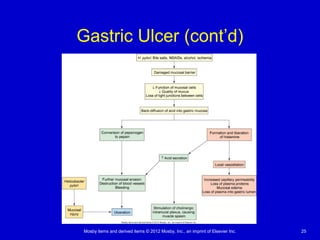
 Pathophysiology
 The primary defect is an increased mucosal
permeability to hydrogen ions
 Gastric secretion tends to be normal or less
than normal
Mosby items and derived items © 2012 Mosby, Inc., an imprint of Elsevier Inc. 25
Gastric Ulcer (cont’d)
Mosby items and derived items © 2012 Mosby, Inc., an imprint of Elsevier Inc. 26
Stress Ulcer
 A stress ulcer is a peptic ulcer that is
related to severe illness, neural injury, or
systemic trauma
 Ischemic ulcers
• Within hours of trauma, burns, hemorrhage, sepsis
 Cushing ulcers
• Ulcers that develop as a result of a head/brain injury
Mosby items and derived items © 2012 Mosby, Inc., an imprint of Elsevier Inc. 27
Postgastrectomy Syndromes
 Dumping syndrome
 Alkaline reflux gastritis
 Afferent loop obstruction
 Diarrhea
 Weight loss
 Anemia
 Bone and mineral disorders
Mosby items and derived items © 2012 Mosby, Inc., an imprint of Elsevier Inc. 28
Dumping Syndrome
 Dumping syndrome is the rapid emptying
of chyme from a surgically created residual
stomach into the small intestine
 Dumping syndrome is a clinical
complication of partial gastrectomy or
pyloroplasty surgery
Mosby items and derived items © 2012 Mosby, Inc., an imprint of Elsevier Inc. 29
Dumping Syndrome (cont’d)
 Developmental factors:
 Loss of gastric capacity
 Loss of emptying control
 Loss of feedback control by the duodenum
when it is removed
 Late dumping syndrome
Mosby items and derived items © 2012 Mosby, Inc., an imprint of Elsevier Inc. 30
Malabsorption Syndromes
 Maldigestion
 Failure of the chemical processes of digestion
 Malabsorption
 Failure of the intestinal mucosa to absorb
digested nutrients
 Maldigestion and malabsorption frequently
occur together
Mosby items and derived items © 2012 Mosby, Inc., an imprint of Elsevier Inc. 31
Malabsorption Syndromes (cont’d)
 Pancreatic insufficiency
 Insufficient pancreatic enzyme production
• Lipase, amylase, trypsin, or chymotrypsin
 Causes:
• Pancreatitis
• Pancreatic carcinoma
• Pancreatic resection
• Cystic fibrosis
 Fat maldigestion is the main problem, so the
patient will exhibit fatty stools and weight loss
Mosby items and derived items © 2012 Mosby, Inc., an imprint of Elsevier Inc. 32
Malabsorption Syndromes (cont’d)
 Lactase deficiency
 Inability to break down lactose into
monosaccharides and therefore prevent
lactose digestion and monosaccharide
absorption
 Fermentation of lactose by bacteria causes
gas (cramping pain, flatulence, etc.) and
osmotic diarrhea
Mosby items and derived items © 2012 Mosby, Inc., an imprint of Elsevier Inc. 33
Malabsorption Syndromes (cont’d)
 Bile salt deficiency
 Conjugated bile salts needed to emulsify and
absorb fats
 Conjugated bile salts are synthesized from
cholesterol in the liver
 Can result from liver disease and bile
obstructions
 Poor intestinal absorption of lipids causes fatty
stools, diarrhea, and loss of fat-soluble
vitamins (A, D, E, K)
Mosby items and derived items © 2012 Mosby, Inc., an imprint of Elsevier Inc. 34
Malabsorption Syndromes (cont’d)
 Fat-soluble vitamin deficiencies:
 Vitamin A
• Night blindness
 Vitamin D
• Decreased calcium absorption
• Bone pain
• Osteoporosis
• Fractures
 Vitamin K
• Prolonged prothrombin time
• Purpura
• Petechiae
 Vitamin E
• Uncertain
Mosby items and derived items © 2012 Mosby, Inc., an imprint of Elsevier Inc. 35
Inflammatory Bowel Diseases
 Chronic, relapsing inflammatory bowel
disorders of unknown origin
 Genetics
 Alterations of epithelial barrier functions
 Immune reactions to intestinal flora
 Abnormal T cell responses
Mosby items and derived items © 2012 Mosby, Inc., an imprint of Elsevier Inc. 36
Ulcerative Colitis
 Chronic inflammatory disease that causes
ulceration of the colonic mucosa
 Sigmoid colon and rectum
 Suggested causes:
 Infectious
 Immunologic (anticolon antibodies)
 Dietary
 Genetic (supported by family studies and
identical twin studies)
Mosby items and derived items © 2012 Mosby, Inc., an imprint of Elsevier Inc. 37
Ulcerative Colitis (cont’d)
 Symptoms:
 Diarrhea (10 to 20/day)
 Bloody stools
 Cramping
 Treatment:
 Broad-spectrum antibiotics and steroids
 Immunosuppressive agents
 Surgery
 An increased colon cancer risk
demonstrated
Mosby items and derived items © 2012 Mosby, Inc., an imprint of Elsevier Inc. 38
Crohn Disease
 Granulomatous colitis, ileocolitis, or
regional enteritis
 Idiopathic inflammatory disorder; affects
any part of the digestive tract, from mouth
to anus
 Difficult to differentiate from ulcerative
colitis
 Similar risk factors and theories of causation
as ulcerative colitis
Mosby items and derived items © 2012 Mosby, Inc., an imprint of Elsevier Inc. 39
Crohn Disease (cont’d)
 Causes “skip lesions”
 Ulcerations can produce longitudinal and
transverse inflammatory fissures that
extend into the lymphatics
 Anemia may result from malabsorption of
vitamin B12 and folic acid
 Treatment similar to ulcerative colitis
Mosby items and derived items © 2012 Mosby, Inc., an imprint of Elsevier Inc. 40
Diverticular Disease of the Colon
 Diverticula
 Herniations of mucosa through the muscle
layers of the colon wall, especially the sigmoid
colon
 Diverticulosis
 Asymptomatic diverticular disease
 Diverticulitis
 The inflammatory stage of diverticulosis
Mosby items and derived items © 2012 Mosby, Inc., an imprint of Elsevier Inc. 41
Appendicitis
 Inflammation of the vermiform appendix
 Possible causes:
 Obstruction, ischemia, increased intraluminal
pressure, infection, ulceration, etc.
 Epigastric and RLQ pain
 Rebound tenderness
 The most serious complication is
peritonitis
Mosby items and derived items © 2012 Mosby, Inc., an imprint of Elsevier Inc. 42
Irritable Bowel Syndrome
 A functional gastrointestinal disorder with
no specific structural or biochemical
alterations as a cause of disease
 Characterized by recurrent abdominal pain
and discomfort associated with altered
bowel habits that present as diarrhea or
constipation or both
 Associated with anxiety, depression, and
chronic fatigue syndrome
Mosby items and derived items © 2012 Mosby, Inc., an imprint of Elsevier Inc. 43
Irritable Bowel Syndrome (cont’d)
 Cause unknown but mechanisms
proposed:
 Visceral hypersensitivity
 Abnormal intestinal motility and secretion
 Intestinal infection
 Overgrowth of small intestinal flora
 Food allergy/intolerance
 Psychosocial factors
Mosby items and derived items © 2012 Mosby, Inc., an imprint of Elsevier Inc. 44
Irritable Bowel Syndrome (cont’d)
 Manifestations:
 Can be diarrhea-predominant or constipation-
predominant
 Alternating diarrhea/constipation, gas, bloating,
and nausea
 Symptoms are usually relieved with
defecation and do not interfere with sleep
Mosby items and derived items © 2012 Mosby, Inc., an imprint of Elsevier Inc. 45
Vascular Insufficiency
 Blood supply to the stomach and intestine
 Celiac axis
 Superior and inferior mesenteric arteries
 Two of three must be compromised to cause
ischemia
 Mesenteric venous thrombosis
 Acute occlusion of mesenteric artery blood
flow
 Chronic mesenteric arterial insufficiency
Mosby items and derived items © 2012 Mosby, Inc., an imprint of Elsevier Inc. 46
Obesity
 An increase in body fat mass
 Body mass index greater than 30
 A major cause of morbidity, death, and
increased health care costs
 Risk factor for many diseases and
conditions
Mosby items and derived items © 2012 Mosby, Inc., an imprint of Elsevier Inc. 47
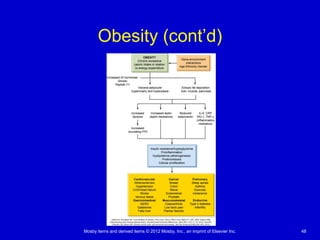
Obesity (cont’d)
 Hypothalamus
 Hormones that control appetite and
weight:
 Insulin
 Ghrelin
 Peptide YY
 Leptin
 Adiponectin
 Resistin
 Leptin resistance
 Hyperleptinemia
Mosby items and derived items © 2012 Mosby, Inc., an imprint of Elsevier Inc. 48
Obesity (cont’d)
Mosby items and derived items © 2012 Mosby, Inc., an imprint of Elsevier Inc. 49
Anorexia Nervosa and Bulimia
Nervosa
 Characteristics:
 Abnormal eating behavior
 Weight regulation
 Disturbed attitudes toward body weight, body
shape, and size
Mosby items and derived items © 2012 Mosby, Inc., an imprint of Elsevier Inc. 50
Anorexia Nervosa and Bulimia
Nervosa (cont’d)
 Anorexia nervosa
 A person has poor body image disorder and
refuses to eat
 Anorexic patients can lose 25% to 30% of their
ideal body weight as a result of fat and muscle
depletion
 Can lead to starvation-induced cardiac failure
 In women and girls, anorexia is characterized
by the absence of three consecutive menstrual
periods
 Binge eating/purging anorexia nervosa
Mosby items and derived items © 2012 Mosby, Inc., an imprint of Elsevier Inc. 51
Anorexia Nervosa and Bulimia
Nervosa (cont’d)
 Bulimia nervosa
 Body weight remains near normal but with
aspirations for weight loss
 Findings
• Recurrent episodes of binge eating
• Self-induced vomiting
• Two binge-eating episodes per week for at least 3
months
• Fasting to oppose the effect of binge eating, or
excessive exercise
Mosby items and derived items © 2012 Mosby, Inc., an imprint of Elsevier Inc. 52
Anorexia Nervosa and Bulimia
Nervosa (cont’d)
 Bulimia nervosa (cont’d)
 Continual vomiting of acidic chyme can cause:
• Pitted teeth
• Pharyngeal and esophageal inflammation
• Tracheoesophageal fistulas
 Overuse of laxative can cause rectal bleeding
Mosby items and derived items © 2012 Mosby, Inc., an imprint of Elsevier Inc. 53
Malnutrition and Starvation
 Starvation
 Decreased caloric intake leading to weight loss
 Cachexia
 Short-term starvation
• Glycogenolysis
• Gluconeogenesis
 Long-term starvation
• Marasmus
• Kwashiorkor
Mosby items and derived items © 2012 Mosby, Inc., an imprint of Elsevier Inc. 54
Liver Disorders
 Portal hypertension
 Abnormally high blood pressure in the portal
venous system caused by resistance to portal
blood flow
• Prehepatic
• Intrahepatic
• Posthepatic
Mosby items and derived items © 2012 Mosby, Inc., an imprint of Elsevier Inc. 55
Liver Disorders (cont’d)
 Portal hypertension (cont’d)
 Consequences:
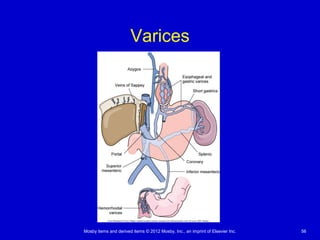
• Varices:
 Lower esophagus
 Stomach
 Rectum
• Splenomegaly
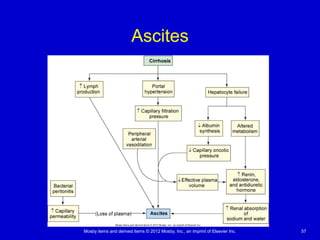
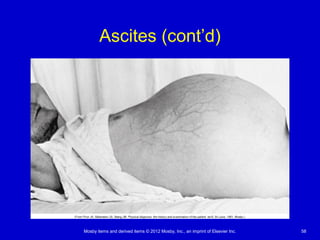
• Ascites
• Hepatic encephalopathy
Mosby items and derived items © 2012 Mosby, Inc., an imprint of Elsevier Inc. 56
Varices
Mosby items and derived items © 2012 Mosby, Inc., an imprint of Elsevier Inc. 57
Ascites
Mosby items and derived items © 2012 Mosby, Inc., an imprint of Elsevier Inc. 58
Ascites (cont’d)
Mosby items and derived items © 2012 Mosby, Inc., an imprint of Elsevier Inc. 59
Liver Disorders
 Hepatic encephalopathy
 A neurologic syndrome of impaired cognitive
function, flapping tremor, and EEG changes
 The condition develops rapidly during fulminant
hepatitis or slowly during chronic liver disease
 Cells in the nervous system are vulnerable to
neurotoxins absorbed from the GI tract that,
because of liver dysfunction circulate to the
brain
Mosby items and derived items © 2012 Mosby, Inc., an imprint of Elsevier Inc. 60
Liver Disorders (cont’d)
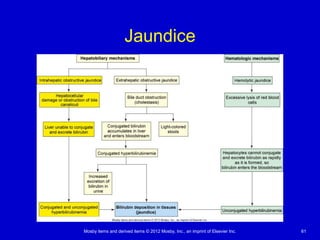
 Jaundice (icterus)
 Obstructive jaundice
• Extrahepatic obstruction
• Intrahepatic obstruction
 Hemolytic jaundice
• Prehepatic jaundice
• Excessive hemolysis of red blood cells or absorption
of a hematoma
Mosby items and derived items © 2012 Mosby, Inc., an imprint of Elsevier Inc. 61
Jaundice
Mosby items and derived items © 2012 Mosby, Inc., an imprint of Elsevier Inc. 62
Hepatorenal Syndrome
 Renal failure demonstrating oliguria,
sodium and water retention, hypotension,
and peripheral vasodilation as a result of
advanced liver disease
Mosby items and derived items © 2012 Mosby, Inc., an imprint of Elsevier Inc. 63
Viral Hepatitis
 Systemic viral disease that primarily
affects the liver
 Hepatitis A
• Formally known as infectious hepatitis
 Hepatitis B
• Formally known as serum hepatitis
 Hepatitis C, D, E, and G
Mosby items and derived items © 2012 Mosby, Inc., an imprint of Elsevier Inc. 64
Hepatitis A
 Hepatitis A can be found in the feces, bile,
and sera of infected individuals
 Usually transmitted by the fecal-oral route
 Risk factors:
 Crowded, unsanitary conditions
 Food and water contamination
Mosby items and derived items © 2012 Mosby, Inc., an imprint of Elsevier Inc. 65
Hepatitis B
 Transmitted through contact with infected
blood, body fluids, or contaminated
needles
 Maternal transmission can occur if the
mother is infected during the third trimester
 The hepatitis B vaccine prevents
transmission and development of hepatitis
B
Mosby items and derived items © 2012 Mosby, Inc., an imprint of Elsevier Inc. 66
Hepatitis C
 Hepatitis C is responsible for most cases
of post-transfusion hepatitis
 Also implicated in infections related to IV
drug use
 50% to 80% of hepatitis C cases result in
chronic hepatitis
Mosby items and derived items © 2012 Mosby, Inc., an imprint of Elsevier Inc. 67
Hepatitis
 Hepatitis D
 Depends on hepatitis B for replication
 Hepatitis E
 Fecal-oral transmission
 Developing countries
 Hepatitis G
 Recently discovered
 Parentally and sexually transmitted
Mosby items and derived items © 2012 Mosby, Inc., an imprint of Elsevier Inc. 68
Hepatitis (cont’d)
 Sequence:
 Incubation phase
 Prodromal (preicteric) phase
 Icteric phase
 Recovery phase
 Chronic active hepatitis
 Fulminant hepatitis
 Results from impairment or necrosis of
hepatocytes
Mosby items and derived items © 2012 Mosby, Inc., an imprint of Elsevier Inc. 69
Cirrhosis
 Irreversible inflammatory disease that
disrupts liver function and even structure
 Decreased hepatic function caused by
nodular and fibrotic tissue synthesis
(fibrosis)
Mosby items and derived items © 2012 Mosby, Inc., an imprint of Elsevier Inc. 70
Cirrhosis (cont’d)
 Biliary channels become obstructed and
cause portal hypertension
 Because of the hypertension, blood can be
shunted away from the liver, and a hypoxic
necrosis develops
Mosby items and derived items © 2012 Mosby, Inc., an imprint of Elsevier Inc. 71
Cirrhosis (cont’d)
 Alcoholic
 The oxidation of alcohol damages hepatocytes
 Biliary (bile canaliculi)
 Cirrhosis begins in the bile canaliculi and ducts
 Primary biliary cirrhosis (autoimmune)
 Secondary biliary cirrhosis (obstruction)
Mosby items and derived items © 2012 Mosby, Inc., an imprint of Elsevier Inc. 72
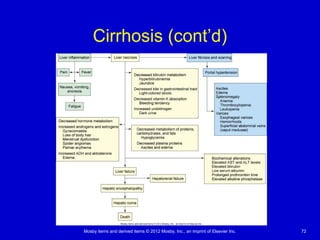
Cirrhosis (cont’d)
Mosby items and derived items © 2012 Mosby, Inc., an imprint of Elsevier Inc. 73
Disorders of the Gallbladder
 Obstruction or inflammation (cholecystitis)
is the most common cause of gallbladder
problems
 Cholelithiasis—gallstone formation
 Types:
• Cholesterol (most common)
• Pigmented (cirrhosis)
 Risks:
• Obesity
• Middle age
• Female
• Native American ancestry
• Gallbladder, pancreas, or ileal disease
Mosby items and derived items © 2012 Mosby, Inc., an imprint of Elsevier Inc. 74
Disorders of the Gallbladder
(cont’d)
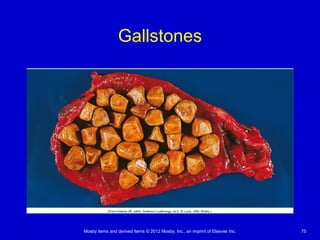
 Gallstones
 Obstruction or inflammation (cholecystitis) is
the most common cause of gallbladder
problems
 Cholesterol stones form in bile that is
supersaturated with cholesterol
 Theories:
• Enzyme defect increases cholesterol synthesis
• Decreased secretion of bile acids to emulsify fats
• Decreased resorption of bile acids from ileum
• Gallbladder smooth muscle hypomotility and stasis
• Genetic predisposition
• Combination of any or all of the above
Mosby items and derived items © 2012 Mosby, Inc., an imprint of Elsevier Inc. 75
Gallstones
Mosby items and derived items © 2012 Mosby, Inc., an imprint of Elsevier Inc. 76
Disorders of the Pancreas
 Pancreatitis
 Inflammation of the pancreas
 Associated with several other clinical disorders
• Caused by an injury or damage to pancreatic cells
and ducts, causing a leakage of pancreatic enzymes
into the pancreatic tissue
These enzymes cause autodigestion of
pancreatic tissue and leak into the
bloodstream to cause injury to blood
vessels and other organs
Mosby items and derived items © 2012 Mosby, Inc., an imprint of Elsevier Inc. 77
Disorders of the Pancreas (cont’d)
 Pancreatitis (cont’d)
 Manifestations and evaluation:
• Epigastric pain radiating to the back
• Fever and leukocytosis
• Hypotension and hypovolemia
 Enzymes increase vascular permeability
• Characterized by an increase in a patient’s serum
amylase level
 Chronic pancreatitis
• Related to chronic alcohol abuse
Mosby items and derived items © 2012 Mosby, Inc., an imprint of Elsevier Inc. 78
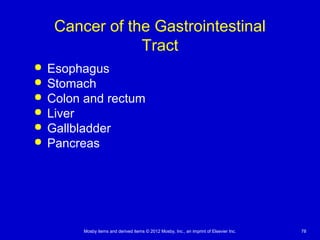
Cancer of the Gastrointestinal
Tract
 Esophagus
 Stomach
 Colon and rectum
 Liver
 Gallbladder
 Pancreas
Mosby items and derived items © 2012 Mosby, Inc., an imprint of Elsevier Inc. 79
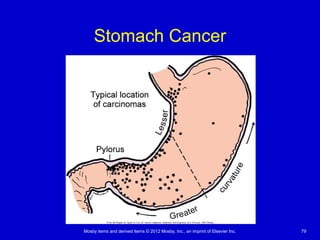
Stomach Cancer
Mosby items and derived items © 2012 Mosby, Inc., an imprint of Elsevier Inc. 80
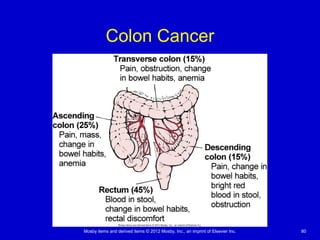
Colon Cancer

Alterations of the digestive function

  • 1.
    Mosby items andderived items © 2012 Mosby, Inc., an imprint of Elsevier Inc. 1 Alterations of Digestive Function
  • 2.
    Mosby items andderived items © 2012 Mosby, Inc., an imprint of Elsevier Inc. 2 Clinical Manifestations of Gastrointestinal Dysfunction  Anorexia  A lack of a desire to eat despite physiologic stimuli that would normally produce hunger  Vomiting  The forceful emptying of the stomach and intestinal contents through the mouth  Several types of stimuli initiate the vomiting reflex
  • 3.
    Mosby items andderived items © 2012 Mosby, Inc., an imprint of Elsevier Inc. 3 Clinical Manifestations of Gastrointestinal Dysfunction (cont’d)  Nausea  A subjective experience that is associated with a number of conditions  The common symptoms of vomiting are hypersalivation and tachycardia  Retching  Nonproductive vomiting
  • 4.
    Mosby items andderived items © 2012 Mosby, Inc., an imprint of Elsevier Inc. 4 Clinical Manifestations of Gastrointestinal Dysfunction (cont’d)  Projectile vomiting  Projectile vomiting is spontaneous vomiting that does not follow nausea or retching
  • 5.
    Mosby items andderived items © 2012 Mosby, Inc., an imprint of Elsevier Inc. 5 Clinical Manifestations of Gastrointestinal Dysfunction (cont’d)  Constipation  Constipation is defined as infrequent or difficult defecation  Pathophysiology • Neurogenic disorders • Functional or mechanical conditions • Low-residue diet • Sedentary lifestyle • Excessive use of antacids • Changes in bowel habits
  • 6.
    Mosby items andderived items © 2012 Mosby, Inc., an imprint of Elsevier Inc. 6 Clinical Manifestations of Gastrointestinal Dysfunction (cont’d)  Diarrhea  Increased frequency of bowel movements  Increased volume, fluidity, weight of the feces  Major mechanisms of diarrhea: • Osmotic diarrhea • Secretory diarrhea • Motility diarrhea  Associated with malabsorption syndromes
  • 7.
    Mosby items andderived items © 2012 Mosby, Inc., an imprint of Elsevier Inc. 7 Clinical Manifestations of Gastrointestinal Dysfunction (cont’d)  Abdominal pain  Abdominal pain is a symptom of a number of gastrointestinal disorders  Parietal pain  Visceral pain  Referred pain
  • 8.
    Mosby items andderived items © 2012 Mosby, Inc., an imprint of Elsevier Inc. 8 Clinical Manifestations of Gastrointestinal Dysfunction (cont’d)  Gastrointestinal bleeding  Upper gastrointestinal bleeding • Esophagus, stomach, or duodenum  Lower gastrointestinal bleeding • Below the ligament of Treitz or bleeding from the jejunum, ileum, colon, or rectum  Hematemesis  Hematochezia  Melena  Occult bleeding
  • 9.
    Mosby items andderived items © 2012 Mosby, Inc., an imprint of Elsevier Inc. 9 Clinical Manifestations of Gastrointestinal Dysfunction (cont’d)
  • 10.
    Mosby items andderived items © 2012 Mosby, Inc., an imprint of Elsevier Inc. 10 Disorders of Motility  Dysphagia  Dysphagia is difficulty swallowing  Types: • Mechanical obstructions • Functional obstructions  Achalasia: • Denervation of smooth muscle in the esophagus and lower esophageal sphincter relaxation
  • 11.
    Mosby items andderived items © 2012 Mosby, Inc., an imprint of Elsevier Inc. 11 Achalasia
  • 12.
    Mosby items andderived items © 2012 Mosby, Inc., an imprint of Elsevier Inc. 12 Disorders of Motility  Gastroesophageal reflux disease (GERD)  GERD is the reflux of chyme from the stomach to the esophagus  If GERD causes inflammation of the esophagus, it is called reflux esophagitis  A normal functioning lower esophageal sphincter maintains a zone of high pressure to prevent chyme reflux
  • 13.
    Mosby items andderived items © 2012 Mosby, Inc., an imprint of Elsevier Inc. 13 Disorders of Motility (cont’d)  Gastroesophageal reflux disease (GERD) (cont’d)  Conditions that increase abdominal pressure can contribute to GERD  Manifestations: • Heartburn • Regurgitation of chyme • Mid-epigastric pain within 1 hour of eating
  • 14.
    Mosby items andderived items © 2012 Mosby, Inc., an imprint of Elsevier Inc. 14 Disorders of Motility (cont’d)  Hiatal hernia  Sliding hiatal hernia  Paraesophageal hiatal hernia
  • 15.
    Mosby items andderived items © 2012 Mosby, Inc., an imprint of Elsevier Inc. 15 Hiatal HerniaHiatal Hernia
  • 16.
    Mosby items andderived items © 2012 Mosby, Inc., an imprint of Elsevier Inc. 16 Disorders of Motility  Pyloric obstruction  The blocking or narrowing of the opening between the stomach and the duodenum  Can be acquired or congenital  Manifestations: • Epigastric pain and fullness • Nausea • Succussion splash • Vomiting • With a prolonged obstruction, malnutrition, dehydration, and extreme debilitation
  • 17.
    Mosby items andderived items © 2012 Mosby, Inc., an imprint of Elsevier Inc. 17 Disorders of Motility (cont’d)  Intestinal obstruction and paralytic ileus  An intestinal obstruction is any condition that prevents the flow of chyme through the intestinal lumen or failure of normal intestinal motility in the absence of an obstructing lesion  An ileus is an obstruction of the intestines  Simple obstruction  Functional obstruction
  • 18.
    Mosby items andderived items © 2012 Mosby, Inc., an imprint of Elsevier Inc. 18 Intestinal Obstruction
  • 19.
    Mosby items andderived items © 2012 Mosby, Inc., an imprint of Elsevier Inc. 19 Gastritis  Inflammatory disorder of the gastric mucosa  Acute gastritis  Chronic gastritis  Chronic fundal gastritis  Chronic antral gastritis
  • 20.
    Mosby items andderived items © 2012 Mosby, Inc., an imprint of Elsevier Inc. 20 Gastritis (cont’d)
  • 21.
    Mosby items andderived items © 2012 Mosby, Inc., an imprint of Elsevier Inc. 21 Peptic Ulcer Disease  A break or ulceration in the protective mucosal lining of the lower esophagus, stomach, or duodenum  Acute and chronic ulcers  Superficial  Erosions  Deep  True ulcers  Zollinger-Ellison syndrome
  • 22.
    Mosby items andderived items © 2012 Mosby, Inc., an imprint of Elsevier Inc. 22 Peptic Ulcer Disease (cont’d)  Duodenal ulcers  Most common of the peptic ulcers  Developmental factors: • Helicobacter pylori infection  Toxins and enzymes that promote inflammation and ulceration • Hypersecretion of stomach acid and pepsin • Use of NSAIDs • High gastrin levels • Acid production by cigarette smoking
  • 23.
    Mosby items andderived items © 2012 Mosby, Inc., an imprint of Elsevier Inc. 23 Duodenal Ulcer
  • 24.
    Mosby items andderived items © 2012 Mosby, Inc., an imprint of Elsevier Inc. 24 Gastric Ulcer  Gastric ulcers tend to develop in the antral region of the stomach, adjacent to the acid-secreting mucosa of the body  Pathophysiology  The primary defect is an increased mucosal permeability to hydrogen ions  Gastric secretion tends to be normal or less than normal
  • 25.
    Mosby items andderived items © 2012 Mosby, Inc., an imprint of Elsevier Inc. 25 Gastric Ulcer (cont’d)
  • 26.
    Mosby items andderived items © 2012 Mosby, Inc., an imprint of Elsevier Inc. 26 Stress Ulcer  A stress ulcer is a peptic ulcer that is related to severe illness, neural injury, or systemic trauma  Ischemic ulcers • Within hours of trauma, burns, hemorrhage, sepsis  Cushing ulcers • Ulcers that develop as a result of a head/brain injury
  • 27.
    Mosby items andderived items © 2012 Mosby, Inc., an imprint of Elsevier Inc. 27 Postgastrectomy Syndromes  Dumping syndrome  Alkaline reflux gastritis  Afferent loop obstruction  Diarrhea  Weight loss  Anemia  Bone and mineral disorders
  • 28.
    Mosby items andderived items © 2012 Mosby, Inc., an imprint of Elsevier Inc. 28 Dumping Syndrome  Dumping syndrome is the rapid emptying of chyme from a surgically created residual stomach into the small intestine  Dumping syndrome is a clinical complication of partial gastrectomy or pyloroplasty surgery
  • 29.
    Mosby items andderived items © 2012 Mosby, Inc., an imprint of Elsevier Inc. 29 Dumping Syndrome (cont’d)  Developmental factors:  Loss of gastric capacity  Loss of emptying control  Loss of feedback control by the duodenum when it is removed  Late dumping syndrome
  • 30.
    Mosby items andderived items © 2012 Mosby, Inc., an imprint of Elsevier Inc. 30 Malabsorption Syndromes  Maldigestion  Failure of the chemical processes of digestion  Malabsorption  Failure of the intestinal mucosa to absorb digested nutrients  Maldigestion and malabsorption frequently occur together
  • 31.
    Mosby items andderived items © 2012 Mosby, Inc., an imprint of Elsevier Inc. 31 Malabsorption Syndromes (cont’d)  Pancreatic insufficiency  Insufficient pancreatic enzyme production • Lipase, amylase, trypsin, or chymotrypsin  Causes: • Pancreatitis • Pancreatic carcinoma • Pancreatic resection • Cystic fibrosis  Fat maldigestion is the main problem, so the patient will exhibit fatty stools and weight loss
  • 32.
    Mosby items andderived items © 2012 Mosby, Inc., an imprint of Elsevier Inc. 32 Malabsorption Syndromes (cont’d)  Lactase deficiency  Inability to break down lactose into monosaccharides and therefore prevent lactose digestion and monosaccharide absorption  Fermentation of lactose by bacteria causes gas (cramping pain, flatulence, etc.) and osmotic diarrhea
  • 33.
    Mosby items andderived items © 2012 Mosby, Inc., an imprint of Elsevier Inc. 33 Malabsorption Syndromes (cont’d)  Bile salt deficiency  Conjugated bile salts needed to emulsify and absorb fats  Conjugated bile salts are synthesized from cholesterol in the liver  Can result from liver disease and bile obstructions  Poor intestinal absorption of lipids causes fatty stools, diarrhea, and loss of fat-soluble vitamins (A, D, E, K)
  • 34.
    Mosby items andderived items © 2012 Mosby, Inc., an imprint of Elsevier Inc. 34 Malabsorption Syndromes (cont’d)  Fat-soluble vitamin deficiencies:  Vitamin A • Night blindness  Vitamin D • Decreased calcium absorption • Bone pain • Osteoporosis • Fractures  Vitamin K • Prolonged prothrombin time • Purpura • Petechiae  Vitamin E • Uncertain
  • 35.
    Mosby items andderived items © 2012 Mosby, Inc., an imprint of Elsevier Inc. 35 Inflammatory Bowel Diseases  Chronic, relapsing inflammatory bowel disorders of unknown origin  Genetics  Alterations of epithelial barrier functions  Immune reactions to intestinal flora  Abnormal T cell responses
  • 36.
    Mosby items andderived items © 2012 Mosby, Inc., an imprint of Elsevier Inc. 36 Ulcerative Colitis  Chronic inflammatory disease that causes ulceration of the colonic mucosa  Sigmoid colon and rectum  Suggested causes:  Infectious  Immunologic (anticolon antibodies)  Dietary  Genetic (supported by family studies and identical twin studies)
  • 37.
    Mosby items andderived items © 2012 Mosby, Inc., an imprint of Elsevier Inc. 37 Ulcerative Colitis (cont’d)  Symptoms:  Diarrhea (10 to 20/day)  Bloody stools  Cramping  Treatment:  Broad-spectrum antibiotics and steroids  Immunosuppressive agents  Surgery  An increased colon cancer risk demonstrated
  • 38.
    Mosby items andderived items © 2012 Mosby, Inc., an imprint of Elsevier Inc. 38 Crohn Disease  Granulomatous colitis, ileocolitis, or regional enteritis  Idiopathic inflammatory disorder; affects any part of the digestive tract, from mouth to anus  Difficult to differentiate from ulcerative colitis  Similar risk factors and theories of causation as ulcerative colitis
  • 39.
    Mosby items andderived items © 2012 Mosby, Inc., an imprint of Elsevier Inc. 39 Crohn Disease (cont’d)  Causes “skip lesions”  Ulcerations can produce longitudinal and transverse inflammatory fissures that extend into the lymphatics  Anemia may result from malabsorption of vitamin B12 and folic acid  Treatment similar to ulcerative colitis
  • 40.
    Mosby items andderived items © 2012 Mosby, Inc., an imprint of Elsevier Inc. 40 Diverticular Disease of the Colon  Diverticula  Herniations of mucosa through the muscle layers of the colon wall, especially the sigmoid colon  Diverticulosis  Asymptomatic diverticular disease  Diverticulitis  The inflammatory stage of diverticulosis
  • 41.
    Mosby items andderived items © 2012 Mosby, Inc., an imprint of Elsevier Inc. 41 Appendicitis  Inflammation of the vermiform appendix  Possible causes:  Obstruction, ischemia, increased intraluminal pressure, infection, ulceration, etc.  Epigastric and RLQ pain  Rebound tenderness  The most serious complication is peritonitis
  • 42.
    Mosby items andderived items © 2012 Mosby, Inc., an imprint of Elsevier Inc. 42 Irritable Bowel Syndrome  A functional gastrointestinal disorder with no specific structural or biochemical alterations as a cause of disease  Characterized by recurrent abdominal pain and discomfort associated with altered bowel habits that present as diarrhea or constipation or both  Associated with anxiety, depression, and chronic fatigue syndrome
  • 43.
    Mosby items andderived items © 2012 Mosby, Inc., an imprint of Elsevier Inc. 43 Irritable Bowel Syndrome (cont’d)  Cause unknown but mechanisms proposed:  Visceral hypersensitivity  Abnormal intestinal motility and secretion  Intestinal infection  Overgrowth of small intestinal flora  Food allergy/intolerance  Psychosocial factors
  • 44.
    Mosby items andderived items © 2012 Mosby, Inc., an imprint of Elsevier Inc. 44 Irritable Bowel Syndrome (cont’d)  Manifestations:  Can be diarrhea-predominant or constipation- predominant  Alternating diarrhea/constipation, gas, bloating, and nausea  Symptoms are usually relieved with defecation and do not interfere with sleep
  • 45.
    Mosby items andderived items © 2012 Mosby, Inc., an imprint of Elsevier Inc. 45 Vascular Insufficiency  Blood supply to the stomach and intestine  Celiac axis  Superior and inferior mesenteric arteries  Two of three must be compromised to cause ischemia  Mesenteric venous thrombosis  Acute occlusion of mesenteric artery blood flow  Chronic mesenteric arterial insufficiency
  • 46.
    Mosby items andderived items © 2012 Mosby, Inc., an imprint of Elsevier Inc. 46 Obesity  An increase in body fat mass  Body mass index greater than 30  A major cause of morbidity, death, and increased health care costs  Risk factor for many diseases and conditions
  • 47.
    Mosby items andderived items © 2012 Mosby, Inc., an imprint of Elsevier Inc. 47 Obesity (cont’d)  Hypothalamus  Hormones that control appetite and weight:  Insulin  Ghrelin  Peptide YY  Leptin  Adiponectin  Resistin  Leptin resistance  Hyperleptinemia
  • 48.
    Mosby items andderived items © 2012 Mosby, Inc., an imprint of Elsevier Inc. 48 Obesity (cont’d)
  • 49.
    Mosby items andderived items © 2012 Mosby, Inc., an imprint of Elsevier Inc. 49 Anorexia Nervosa and Bulimia Nervosa  Characteristics:  Abnormal eating behavior  Weight regulation  Disturbed attitudes toward body weight, body shape, and size
  • 50.
    Mosby items andderived items © 2012 Mosby, Inc., an imprint of Elsevier Inc. 50 Anorexia Nervosa and Bulimia Nervosa (cont’d)  Anorexia nervosa  A person has poor body image disorder and refuses to eat  Anorexic patients can lose 25% to 30% of their ideal body weight as a result of fat and muscle depletion  Can lead to starvation-induced cardiac failure  In women and girls, anorexia is characterized by the absence of three consecutive menstrual periods  Binge eating/purging anorexia nervosa
  • 51.
    Mosby items andderived items © 2012 Mosby, Inc., an imprint of Elsevier Inc. 51 Anorexia Nervosa and Bulimia Nervosa (cont’d)  Bulimia nervosa  Body weight remains near normal but with aspirations for weight loss  Findings • Recurrent episodes of binge eating • Self-induced vomiting • Two binge-eating episodes per week for at least 3 months • Fasting to oppose the effect of binge eating, or excessive exercise
  • 52.
    Mosby items andderived items © 2012 Mosby, Inc., an imprint of Elsevier Inc. 52 Anorexia Nervosa and Bulimia Nervosa (cont’d)  Bulimia nervosa (cont’d)  Continual vomiting of acidic chyme can cause: • Pitted teeth • Pharyngeal and esophageal inflammation • Tracheoesophageal fistulas  Overuse of laxative can cause rectal bleeding
  • 53.
    Mosby items andderived items © 2012 Mosby, Inc., an imprint of Elsevier Inc. 53 Malnutrition and Starvation  Starvation  Decreased caloric intake leading to weight loss  Cachexia  Short-term starvation • Glycogenolysis • Gluconeogenesis  Long-term starvation • Marasmus • Kwashiorkor
  • 54.
    Mosby items andderived items © 2012 Mosby, Inc., an imprint of Elsevier Inc. 54 Liver Disorders  Portal hypertension  Abnormally high blood pressure in the portal venous system caused by resistance to portal blood flow • Prehepatic • Intrahepatic • Posthepatic
  • 55.
    Mosby items andderived items © 2012 Mosby, Inc., an imprint of Elsevier Inc. 55 Liver Disorders (cont’d)  Portal hypertension (cont’d)  Consequences: • Varices:  Lower esophagus  Stomach  Rectum • Splenomegaly • Ascites • Hepatic encephalopathy
  • 56.
    Mosby items andderived items © 2012 Mosby, Inc., an imprint of Elsevier Inc. 56 Varices
  • 57.
    Mosby items andderived items © 2012 Mosby, Inc., an imprint of Elsevier Inc. 57 Ascites
  • 58.
    Mosby items andderived items © 2012 Mosby, Inc., an imprint of Elsevier Inc. 58 Ascites (cont’d)
  • 59.
    Mosby items andderived items © 2012 Mosby, Inc., an imprint of Elsevier Inc. 59 Liver Disorders  Hepatic encephalopathy  A neurologic syndrome of impaired cognitive function, flapping tremor, and EEG changes  The condition develops rapidly during fulminant hepatitis or slowly during chronic liver disease  Cells in the nervous system are vulnerable to neurotoxins absorbed from the GI tract that, because of liver dysfunction circulate to the brain
  • 60.
    Mosby items andderived items © 2012 Mosby, Inc., an imprint of Elsevier Inc. 60 Liver Disorders (cont’d)  Jaundice (icterus)  Obstructive jaundice • Extrahepatic obstruction • Intrahepatic obstruction  Hemolytic jaundice • Prehepatic jaundice • Excessive hemolysis of red blood cells or absorption of a hematoma
  • 61.
    Mosby items andderived items © 2012 Mosby, Inc., an imprint of Elsevier Inc. 61 Jaundice
  • 62.
    Mosby items andderived items © 2012 Mosby, Inc., an imprint of Elsevier Inc. 62 Hepatorenal Syndrome  Renal failure demonstrating oliguria, sodium and water retention, hypotension, and peripheral vasodilation as a result of advanced liver disease
  • 63.
    Mosby items andderived items © 2012 Mosby, Inc., an imprint of Elsevier Inc. 63 Viral Hepatitis  Systemic viral disease that primarily affects the liver  Hepatitis A • Formally known as infectious hepatitis  Hepatitis B • Formally known as serum hepatitis  Hepatitis C, D, E, and G
  • 64.
    Mosby items andderived items © 2012 Mosby, Inc., an imprint of Elsevier Inc. 64 Hepatitis A  Hepatitis A can be found in the feces, bile, and sera of infected individuals  Usually transmitted by the fecal-oral route  Risk factors:  Crowded, unsanitary conditions  Food and water contamination
  • 65.
    Mosby items andderived items © 2012 Mosby, Inc., an imprint of Elsevier Inc. 65 Hepatitis B  Transmitted through contact with infected blood, body fluids, or contaminated needles  Maternal transmission can occur if the mother is infected during the third trimester  The hepatitis B vaccine prevents transmission and development of hepatitis B
  • 66.
    Mosby items andderived items © 2012 Mosby, Inc., an imprint of Elsevier Inc. 66 Hepatitis C  Hepatitis C is responsible for most cases of post-transfusion hepatitis  Also implicated in infections related to IV drug use  50% to 80% of hepatitis C cases result in chronic hepatitis
  • 67.
    Mosby items andderived items © 2012 Mosby, Inc., an imprint of Elsevier Inc. 67 Hepatitis  Hepatitis D  Depends on hepatitis B for replication  Hepatitis E  Fecal-oral transmission  Developing countries  Hepatitis G  Recently discovered  Parentally and sexually transmitted
  • 68.
    Mosby items andderived items © 2012 Mosby, Inc., an imprint of Elsevier Inc. 68 Hepatitis (cont’d)  Sequence:  Incubation phase  Prodromal (preicteric) phase  Icteric phase  Recovery phase  Chronic active hepatitis  Fulminant hepatitis  Results from impairment or necrosis of hepatocytes
  • 69.
    Mosby items andderived items © 2012 Mosby, Inc., an imprint of Elsevier Inc. 69 Cirrhosis  Irreversible inflammatory disease that disrupts liver function and even structure  Decreased hepatic function caused by nodular and fibrotic tissue synthesis (fibrosis)
  • 70.
    Mosby items andderived items © 2012 Mosby, Inc., an imprint of Elsevier Inc. 70 Cirrhosis (cont’d)  Biliary channels become obstructed and cause portal hypertension  Because of the hypertension, blood can be shunted away from the liver, and a hypoxic necrosis develops
  • 71.
    Mosby items andderived items © 2012 Mosby, Inc., an imprint of Elsevier Inc. 71 Cirrhosis (cont’d)  Alcoholic  The oxidation of alcohol damages hepatocytes  Biliary (bile canaliculi)  Cirrhosis begins in the bile canaliculi and ducts  Primary biliary cirrhosis (autoimmune)  Secondary biliary cirrhosis (obstruction)
  • 72.
    Mosby items andderived items © 2012 Mosby, Inc., an imprint of Elsevier Inc. 72 Cirrhosis (cont’d)
  • 73.
    Mosby items andderived items © 2012 Mosby, Inc., an imprint of Elsevier Inc. 73 Disorders of the Gallbladder  Obstruction or inflammation (cholecystitis) is the most common cause of gallbladder problems  Cholelithiasis—gallstone formation  Types: • Cholesterol (most common) • Pigmented (cirrhosis)  Risks: • Obesity • Middle age • Female • Native American ancestry • Gallbladder, pancreas, or ileal disease
  • 74.
    Mosby items andderived items © 2012 Mosby, Inc., an imprint of Elsevier Inc. 74 Disorders of the Gallbladder (cont’d)  Gallstones  Obstruction or inflammation (cholecystitis) is the most common cause of gallbladder problems  Cholesterol stones form in bile that is supersaturated with cholesterol  Theories: • Enzyme defect increases cholesterol synthesis • Decreased secretion of bile acids to emulsify fats • Decreased resorption of bile acids from ileum • Gallbladder smooth muscle hypomotility and stasis • Genetic predisposition • Combination of any or all of the above
  • 75.
    Mosby items andderived items © 2012 Mosby, Inc., an imprint of Elsevier Inc. 75 Gallstones
  • 76.
    Mosby items andderived items © 2012 Mosby, Inc., an imprint of Elsevier Inc. 76 Disorders of the Pancreas  Pancreatitis  Inflammation of the pancreas  Associated with several other clinical disorders • Caused by an injury or damage to pancreatic cells and ducts, causing a leakage of pancreatic enzymes into the pancreatic tissue These enzymes cause autodigestion of pancreatic tissue and leak into the bloodstream to cause injury to blood vessels and other organs
  • 77.
    Mosby items andderived items © 2012 Mosby, Inc., an imprint of Elsevier Inc. 77 Disorders of the Pancreas (cont’d)  Pancreatitis (cont’d)  Manifestations and evaluation: • Epigastric pain radiating to the back • Fever and leukocytosis • Hypotension and hypovolemia  Enzymes increase vascular permeability • Characterized by an increase in a patient’s serum amylase level  Chronic pancreatitis • Related to chronic alcohol abuse
  • 78.
    Mosby items andderived items © 2012 Mosby, Inc., an imprint of Elsevier Inc. 78 Cancer of the Gastrointestinal Tract  Esophagus  Stomach  Colon and rectum  Liver  Gallbladder  Pancreas
  • 79.
    Mosby items andderived items © 2012 Mosby, Inc., an imprint of Elsevier Inc. 79 Stomach Cancer
  • 80.
    Mosby items andderived items © 2012 Mosby, Inc., an imprint of Elsevier Inc. 80 Colon Cancer