Mosby items and derived items © 2012 Mosby, Inc., an imprint of Elsevier Inc. 1
Alterations of Musculoskeletal
Function
Mosby items and derived items © 2012 Mosby, Inc., an imprint of Elsevier Inc. 2
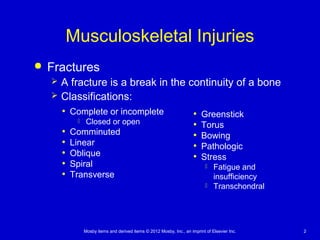
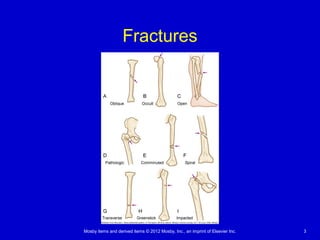
Musculoskeletal Injuries
• Complete or incomplete
 Closed or open
• Comminuted
• Linear
• Oblique
• Spiral
• Transverse
• Greenstick
• Torus
• Bowing
• Pathologic
• Stress
 Fatigue and
insufficiency
 Transchondral
 Fractures
 A fracture is a break in the continuity of a bone
 Classifications:
Mosby items and derived items © 2012 Mosby, Inc., an imprint of Elsevier Inc. 3
Fractures
Mosby items and derived items © 2012 Mosby, Inc., an imprint of Elsevier Inc. 4
Bone Fractures
 A broken bone can cause damage to the
surrounding tissue, the periosteum, and
the blood vessels in the cortex and marrow
 Hematoma formation
 Bone tissue destruction triggers an
inflammatory response
 Procallus formation
Mosby items and derived items © 2012 Mosby, Inc., an imprint of Elsevier Inc. 5
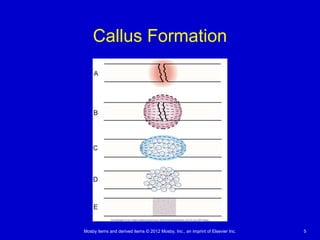
Callus Formation
Mosby items and derived items © 2012 Mosby, Inc., an imprint of Elsevier Inc. 6
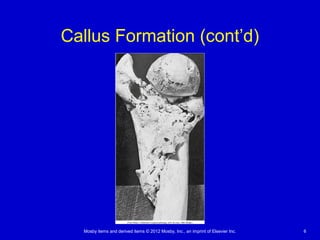
Callus Formation (cont’d)
Mosby items and derived items © 2012 Mosby, Inc., an imprint of Elsevier Inc. 7
Bone Fractures
 Manifestations:
 Often numbness up to 20 minutes following
injury
 Unnatural alignment, swelling, muscle spasm,
tenderness, pain, impaired sensation, and
possible muscle spasms
 Treatment:
 Closed manipulation, traction, and open
reduction
 Internal and external fixation
Mosby items and derived items © 2012 Mosby, Inc., an imprint of Elsevier Inc. 8
Bone Fractures (cont’d)
 Improper reduction or immobilization
 Nonunion, delayed union, and malunion
 Dislocation
 Temporary displacement of two bones
 Loss of contact between articular cartilage
 Subluxation
 Contact between articular surfaces is only
partially lost
Mosby items and derived items © 2012 Mosby, Inc., an imprint of Elsevier Inc. 9
Bone Fractures (cont’d)
 Dislocation and subluxation are associated
with fractures, muscle imbalance,
rheumatoid arthritis, or other forms of joint
instability
Mosby items and derived items © 2012 Mosby, Inc., an imprint of Elsevier Inc. 10
Support Structure Injuries
 Strain
 Tear or injury to a tendon
 Sprain
 Tear or injury to a ligament
 Avulsion
 Complete separation of a tendon or ligament
from its bony attachment site
Mosby items and derived items © 2012 Mosby, Inc., an imprint of Elsevier Inc. 11
Tendinopathy and Bursitis
 Tendinitis
 Inflammation of a tendon
 Tendinosis
 Painful degradation of collagen fibers
 Bursitis
 Inflammation of a bursa
• Skin over bone, skin over muscle, and muscle and
tendon over bone
 Caused by repeated trauma
 Septic bursitis is caused by a wound infection
Mosby items and derived items © 2012 Mosby, Inc., an imprint of Elsevier Inc. 12
Tendinopathy and Bursitis (cont’d)
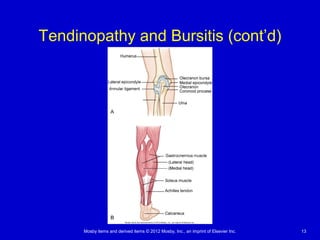
 Epicondylitis
 Inflammation of a tendon where it attaches to a
bone
• Tennis elbow (lateral epicondylitis)
• Golfer’s elbow (medial epicondylitis)
Mosby items and derived items © 2012 Mosby, Inc., an imprint of Elsevier Inc. 13
Tendinopathy and Bursitis (cont’d)
Mosby items and derived items © 2012 Mosby, Inc., an imprint of Elsevier Inc. 14
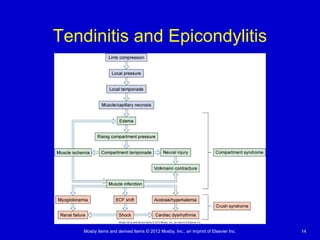
Tendinitis and Epicondylitis
Mosby items and derived items © 2012 Mosby, Inc., an imprint of Elsevier Inc. 15
Muscle Strain
 Sudden, forced motion causing the muscle
to become stretched beyond its normal
capacity
 Local muscle damage
 Muscle strains can also involve the
tendons
Mosby items and derived items © 2012 Mosby, Inc., an imprint of Elsevier Inc. 16
Myositis Ossificans
 Complication of local muscle injury
 Inflammation of muscular tissue with
subsequent calcification and ossification of
the muscle
 Rider’s bone in equestrians
 Drill bone in infantry soldiers
 Thigh muscles in football players
Mosby items and derived items © 2012 Mosby, Inc., an imprint of Elsevier Inc. 17
Rhabdomyolysis
 Rhabdomyolysis (myoglobinuria) is a life-
threatening complication of severe muscle
trauma with muscle cell loss
 Crush syndrome
 Compartment syndromes
• Volkmann ischemic contracture
 Malignant hyperthermia
Mosby items and derived items © 2012 Mosby, Inc., an imprint of Elsevier Inc. 18
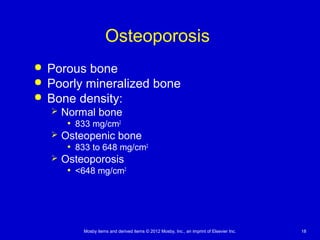
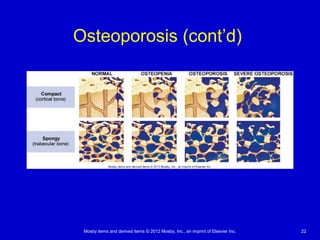
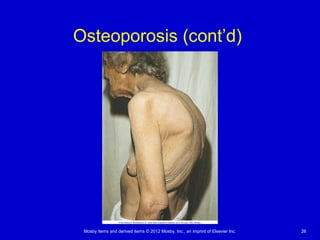
Osteoporosis
 Porous bone
 Poorly mineralized bone
 Bone density:
 Normal bone
• 833 mg/cm2
 Osteopenic bone
• 833 to 648 mg/cm2
 Osteoporosis
• <648 mg/cm2
Mosby items and derived items © 2012 Mosby, Inc., an imprint of Elsevier Inc. 19
Osteoporosis (cont’d)
 Potential causes:
 Decreased levels of estrogen and testosterone
 Decreased activity level
 Excess intake of caffeine, phosphorus, alcohol,
nicotine
 Inadequate levels of vitamins D and C, or Mg++
Mosby items and derived items © 2012 Mosby, Inc., an imprint of Elsevier Inc. 20
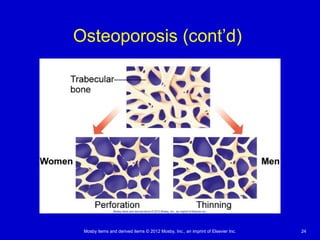
Osteoporosis (cont’d)
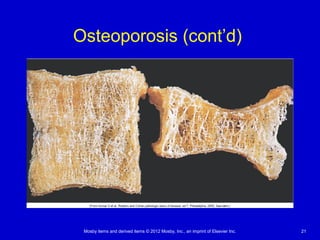
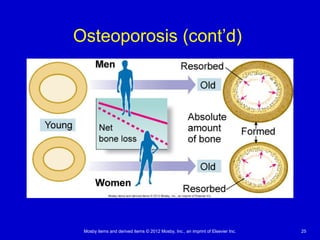
 Demonstrated by reduced bone
mass/density and an imbalance of bone
resorption and formation
 Bone histology is usually normal but it
lacks structural integrity
Mosby items and derived items © 2012 Mosby, Inc., an imprint of Elsevier Inc. 21
Osteoporosis (cont’d)
Mosby items and derived items © 2012 Mosby, Inc., an imprint of Elsevier Inc. 22
Osteoporosis (cont’d)
Mosby items and derived items © 2012 Mosby, Inc., an imprint of Elsevier Inc. 23
Osteoporosis (cont’d)
 Iatrogenic osteoporosis
 Regional osteoporosis
 Postmenopausal osteoporosis
 Glucocorticoid-induced osteoporosis
 Age-related bone loss
Mosby items and derived items © 2012 Mosby, Inc., an imprint of Elsevier Inc. 24
Osteoporosis (cont’d)
Mosby items and derived items © 2012 Mosby, Inc., an imprint of Elsevier Inc. 25
Osteoporosis (cont’d)
Mosby items and derived items © 2012 Mosby, Inc., an imprint of Elsevier Inc. 26
Osteoporosis (cont’d)
Mosby items and derived items © 2012 Mosby, Inc., an imprint of Elsevier Inc. 27
Osteomalacia
 Deficiency of vitamin D lowers the
absorption of calcium from the intestines
 Inadequate or delayed mineralization
 Bone formation progresses to osteoid
formation but calcification does not occur;
the result is soft bones
 Pain, bone fractures, vertebral collapse, bone
malformation
Mosby items and derived items © 2012 Mosby, Inc., an imprint of Elsevier Inc. 28
Paget Disease
 Also called osteitis deformans
 Excessive resorption of spongy bone and
accelerated formation of softened bone
 Disorganized, thickened, but soft bones
 Most often affects the axial skeleton
Mosby items and derived items © 2012 Mosby, Inc., an imprint of Elsevier Inc. 29
Paget Disease (cont’d)
 Thickened bones can cause abnormal
bone curvatures, brain compression,
impaired motor function, deafness, atrophy
of the optic nerve, etc.
Mosby items and derived items © 2012 Mosby, Inc., an imprint of Elsevier Inc. 30
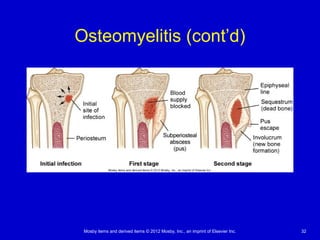
Osteomyelitis
 Osteomyelitis is most often caused by a
staphylococcal infection
 Most common cause is open wound
(exogenous); also can be from a blood-
borne (endogenous) infection
Mosby items and derived items © 2012 Mosby, Inc., an imprint of Elsevier Inc. 31
Osteomyelitis (cont’d)
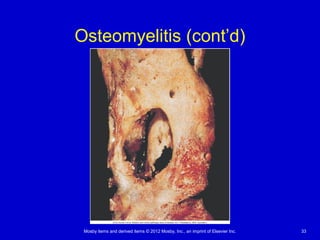
 Manifestations:
 Acute and chronic inflammation
 Fever
 Pain
 Necrotic bone
 Treatment:
 Very difficult to treat
 Antibiotics, debridement, surgery, hyperbaric
oxygen therapy
Mosby items and derived items © 2012 Mosby, Inc., an imprint of Elsevier Inc. 32
Osteomyelitis (cont’d)
Mosby items and derived items © 2012 Mosby, Inc., an imprint of Elsevier Inc. 33
Osteomyelitis (cont’d)
Mosby items and derived items © 2012 Mosby, Inc., an imprint of Elsevier Inc. 34
Inflammatory vs. Noninflammatory
Joint Disease
 Differentiated by:
 Absence of synovial membrane inflammation
 Lack of systemic signs and symptoms
 Normal synovial fluid analysis
Mosby items and derived items © 2012 Mosby, Inc., an imprint of Elsevier Inc. 35
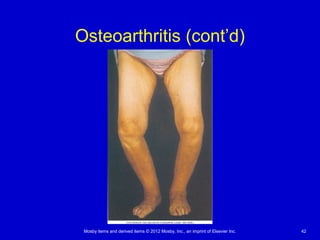
Osteoarthritis
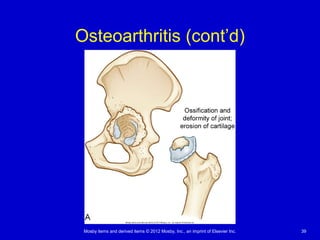
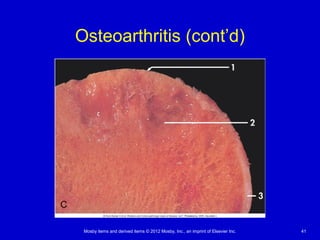
 Degeneration and loss of articular
cartilage, sclerosis of bone underneath
cartilage, and formation of bone spurs
(osteophytes)
 Also referred to as degenerative joint
disease
 Incidence increases with age
 Primary disease is idiopathic
Mosby items and derived items © 2012 Mosby, Inc., an imprint of Elsevier Inc. 36
Osteoarthritis (cont’d)
 Risk factors:
 Increased age
 Joint trauma, long-term mechanical stress
 Endocrine disorders (hyperparathyroidism)
 Drugs
 Obesity
Mosby items and derived items © 2012 Mosby, Inc., an imprint of Elsevier Inc. 37
Osteoarthritis (cont’d)
 Characteristics:
 Local areas of damage and loss of articular
cartilage
 New bone formation of joint margins
 Subchondral bone changes
 Variable degrees of mild synovitis and
thickening of the joint capsule
Mosby items and derived items © 2012 Mosby, Inc., an imprint of Elsevier Inc. 38
Osteoarthritis (cont’d)
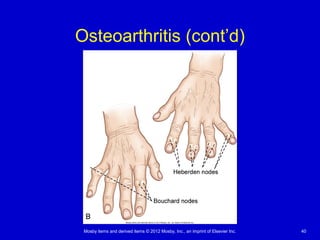
 Manifestations:
 Pain (worsens with activity)
 Stiffness (diminishes with activity)
 Enlargement of the joint
 Tenderness
 Limited motion
 Deformity
Mosby items and derived items © 2012 Mosby, Inc., an imprint of Elsevier Inc. 39
Osteoarthritis (cont’d)
Mosby items and derived items © 2012 Mosby, Inc., an imprint of Elsevier Inc. 40
Osteoarthritis (cont’d)
Mosby items and derived items © 2012 Mosby, Inc., an imprint of Elsevier Inc. 41
Osteoarthritis (cont’d)
Mosby items and derived items © 2012 Mosby, Inc., an imprint of Elsevier Inc. 42
Osteoarthritis (cont’d)
Mosby items and derived items © 2012 Mosby, Inc., an imprint of Elsevier Inc. 43
Rheumatoid Arthritis
 Inflammatory autoimmune joint disease
 Systemic autoimmune damage to
connective tissue, primarily in the joints
(synovial membrane)
 Similar symptoms to osteoarthritis
 Cause unknown; multifactorial with strong
genetic predisposition
Mosby items and derived items © 2012 Mosby, Inc., an imprint of Elsevier Inc. 44
Rheumatoid Arthritis (cont’d)
 Presence of rheumatoid factors (RA or RF
test)
 Antibodies (IgG and IgM) against antibodies
 Joint fluid presents with inflammatory
exudate
Mosby items and derived items © 2012 Mosby, Inc., an imprint of Elsevier Inc. 45
Rheumatoid Arthritis (cont’d)
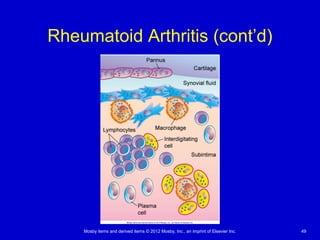
 Pathogenesis
 Three Processes:
• Neutrophils and other cells in the synovial fluid
become activated
• Inflammatory cytokines (tumor necrosis factor-alpha
(TNF-α), interleukin-1 beta (IL-1β), interleukin-6 (IL-
6), interleukin-7 (IL-7), interleukin-21 (IL-21), induce
enzymatic breakdown of cartilage and bone
• T cells also interact with synovial fibroblasts through
TNF-α, converting synovium into a thick, abnormal
layer of granulation tissue (pannus)
Mosby items and derived items © 2012 Mosby, Inc., an imprint of Elsevier Inc. 46
Osteoarthritis
 Manifestations:
 Insidious onset
 Begins with general systemic manifestations of
inflammation, including fever, fatigue,
weakness, anorexia, weight loss, and
generalized aching and stiffness
 Over a period of weeks or months, the joints
become painful, tender, stiff, swollen, warm,
boggy, and lose range of motion
 Joint deformities
Mosby items and derived items © 2012 Mosby, Inc., an imprint of Elsevier Inc. 47
Rheumatoid Arthritis
 Evaluation
 Four or more of the following:
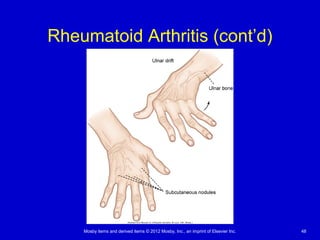
• Morning joint stiffness lasting at least 1 hour
• Arthritis of three or more joint areas
• Arthritis of the hand joints
• Symmetric arthritis
• Rheumatoid nodules
• Abnormal amounts of serum rheumatoid factor
• Radiographic changes
Mosby items and derived items © 2012 Mosby, Inc., an imprint of Elsevier Inc. 48
Rheumatoid Arthritis (cont’d)
Mosby items and derived items © 2012 Mosby, Inc., an imprint of Elsevier Inc. 49
Rheumatoid Arthritis (cont’d)
Mosby items and derived items © 2012 Mosby, Inc., an imprint of Elsevier Inc. 50
Rheumatoid Arthritis (cont’d)
Mosby items and derived items © 2012 Mosby, Inc., an imprint of Elsevier Inc. 51
Ankylosing Spondylitis
 Inflammatory joint disease of the spine or
sacroiliac joints causing stiffening and
fusion of the joints
 Systemic, immune inflammatory disease
 Primary proposed site is the enthesis
 Site where ligaments, tendons, and the joint
capsule are inserted into bone
Mosby items and derived items © 2012 Mosby, Inc., an imprint of Elsevier Inc. 52
Ankylosing Spondylitis (cont’d)
 Cause unknown, but there is a strong
association with HLA-B27 antigen
 Begins with the inflammation of
fibrocartilage, particularly in the vertebrae
and sacroiliac joint
 Inflammatory cells infiltrate and erode
fibrocartilage
 As repair begins, the scar tissue ossifies
and calcifies; the joint eventually fuses
Mosby items and derived items © 2012 Mosby, Inc., an imprint of Elsevier Inc. 53
Ankylosing Spondylitis (cont’d)
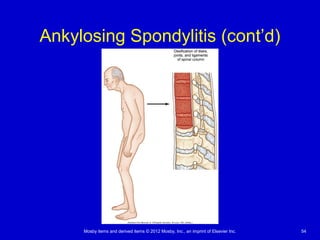
 Manifestations:
 Early symptoms:
• Low back pain that begins in early 20s and
progresses over time
• Stiffness
• Pain
• Restricted motion
 Loss of normal lumbar curvature (lordosis)
 Increased concavity of upper spine (kyphosis)
Mosby items and derived items © 2012 Mosby, Inc., an imprint of Elsevier Inc. 54
Ankylosing Spondylitis (cont’d)
Mosby items and derived items © 2012 Mosby, Inc., an imprint of Elsevier Inc. 55
Gout
 Metabolic disorder that disrupts the body’s
control of uric acid production or excretion
 Gout manifests high levels of uric acid in
the blood and other body fluids
 Occurs when the uric acid concentration
increases to high enough levels to
crystallize
Mosby items and derived items © 2012 Mosby, Inc., an imprint of Elsevier Inc. 56
Gout (cont’d)
 Crystals deposit in connective tissues
throughout the body
 Sites:
• 50% of the initial attacks occur in the
metatarsophalangeal joint of the great toe
• Heel, ankle, instep of the foot, knee, wrist, or elbow
 When these crystals occur in the synovial
fluid, the inflammation is known as gouty
arthritis
Mosby items and derived items © 2012 Mosby, Inc., an imprint of Elsevier Inc. 57
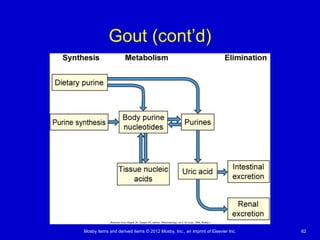
Gout (cont’d)
 Gout is related to purine (adenine and
guanine) metabolism
 Affected patients can have accelerated
purine synthesis, breakdown, or poor uric
acid secretion in the kidneys
Mosby items and derived items © 2012 Mosby, Inc., an imprint of Elsevier Inc. 58
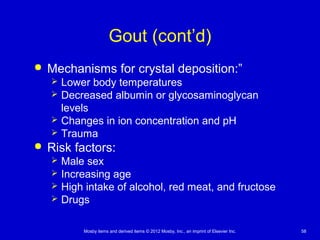
Gout (cont’d)
 Mechanisms for crystal deposition:”
 Lower body temperatures
 Decreased albumin or glycosaminoglycan
levels
 Changes in ion concentration and pH
 Trauma
 Risk factors:
 Male sex
 Increasing age
 High intake of alcohol, red meat, and fructose
 Drugs
Mosby items and derived items © 2012 Mosby, Inc., an imprint of Elsevier Inc. 59
Gout (cont’d)
 Clinical stages:
 Asymptomatic hyperuricemia
 Acute gouty arthritis
 Tophaceous gout
Mosby items and derived items © 2012 Mosby, Inc., an imprint of Elsevier Inc. 60
Gout (cont’d)
 Manifestations:
 An increase in serum urate concentration
(hyperuricemia)
 Recurrent attacks of monoarticular arthritis
(inflammation of a single joint)
 Deposits of monosodium urate monohydrate
(tophi) in and around the joints
 Renal disease involving glomerular, tubular,
and interstitial tissues and blood vessels
 Formation of renal stones
Mosby items and derived items © 2012 Mosby, Inc., an imprint of Elsevier Inc. 61
Gout (cont’d)
 Manifestations of acute gouty attack:
 Severe pain especially at night
 Hot, red, tender joint
 Signs of systemic inflammation:
• Increased sedimentation rate
• Fever
• Leukocytosis)
Mosby items and derived items © 2012 Mosby, Inc., an imprint of Elsevier Inc. 62
Gout (cont’d)
Mosby items and derived items © 2012 Mosby, Inc., an imprint of Elsevier Inc. 63
Disorders of Skeletal Muscle
 Contracture
 Muscle fiber shortening without an action
potential
 Caused by failure of the sarcoplasmic
reticulum (calcium pump) even with available
ATP
 Stress-induced muscle tension
 Neck stiffness, back pain, clenching teeth,
hand grip, and headache
 Associated with chronic anxiety
Mosby items and derived items © 2012 Mosby, Inc., an imprint of Elsevier Inc. 64
Disuse Atrophy
 Reduction in the normal size of muscle
cells as a result of prolonged inactivity
 Bed rest
 Trauma
 Casting
 Nerve damage
 Treatment
 Isometric movements
 Passive lengthening exercises
Mosby items and derived items © 2012 Mosby, Inc., an imprint of Elsevier Inc. 65
Fibromyalgia
 Chronic widespread diffuse joint pain,
fatigue, and tender points
 Vague symptoms:
 Increased sensitivity to touch
 Absence of inflammation
 Fatigue
 Sleep disturbances/non-restorative sleep
Mosby items and derived items © 2012 Mosby, Inc., an imprint of Elsevier Inc. 66
Fibromyalgia (cont’d)
 80% to 90% of individuals affected are
women, and the peak age is 30 to 50
years
 New research indicates a genetic
predisposition and environmental factors
play a role in development of symptoms
Mosby items and derived items © 2012 Mosby, Inc., an imprint of Elsevier Inc. 67
Fibromyalgia (cont’d)
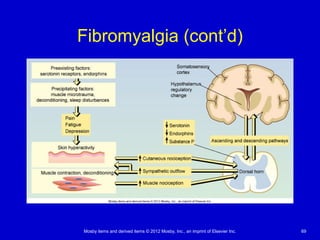
 Viewed as the result of central nervous
system dysfunction, where pain
transmission and interpretation are
amplified (central sensitization)
 Autoimmune disorders often coexist
 Studies of genetic factors have implicated
alterations in genes affecting serotonin,
catecholamines, and dopamine
Mosby items and derived items © 2012 Mosby, Inc., an imprint of Elsevier Inc. 68
Fibromyalgia (cont’d)
 Manifestations:
 Prominent symptom of fibromyalgia is diffuse, chronic
(defined as being present more than 3 months) pain that
is burning or gnawing in nature
 Only reliable finding on examination is the presence of
multiple tender points; the pain often begins in one
location, especially the neck and shoulders, but then
becomes more generalized
 Profound fatigue
 Diagnosis
 Tenderness in eleven pairs of tender points along with a
history of diffuse pain
Mosby items and derived items © 2012 Mosby, Inc., an imprint of Elsevier Inc. 69
Fibromyalgia (cont’d)
Mosby items and derived items © 2012 Mosby, Inc., an imprint of Elsevier Inc. 70
Muscle Membrane Abnormalities
 Myotonia
 Periodic paralysis:
 Hypokalemic
 Hyperkalemic
Mosby items and derived items © 2012 Mosby, Inc., an imprint of Elsevier Inc. 71
Diseases of Muscle Metabolism
 Endocrine disorders
 Hyperthyroidism
 Diseases of energy metabolism:
 McArdle disease
• Myophosphorylase deficiency
 Acid maltase deficiency
• Pompe disease
 Myoadenylate deaminase deficiency (MDD)
 Lipid deficiencies
Mosby items and derived items © 2012 Mosby, Inc., an imprint of Elsevier Inc. 72
Polymyositis and Dermatomyositis
 Collectively described by the term myositis
 Viral, bacterial, and parasitic myositis
 Staphylococcus aureus infections
 Trichinosis
• Trichinella infection
 Toxoplasmosis
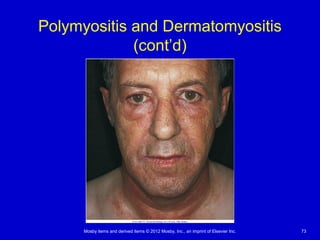
 Polymyositis and dermatomyositis
Mosby items and derived items © 2012 Mosby, Inc., an imprint of Elsevier Inc. 73
Polymyositis and Dermatomyositis
(cont’d)
Mosby items and derived items © 2012 Mosby, Inc., an imprint of Elsevier Inc. 74
Toxic Myopathies/”Muscle
Damage”
 The most common cause of toxic
myopathy is alcohol abuse
 Acute attack of muscle weakness, pain, and
swelling
 Chronic weakness in a drinker of long duration
 Necrosis of individual muscle fibers
• Disturbance of energy turnover, gene dysregulation, and
initiation of apoptosis
 Other causes include lipid-lowering agents
(fibrates and statins), antimalarial drugs,
steroids, thiol derivatives, and narcotics
Mosby items and derived items © 2012 Mosby, Inc., an imprint of Elsevier Inc. 75
Toxic Myopathies/”Muscle
Damage” (cont’d)
 Manifestations:
 Acute muscle weakness
 Painless or severe pain if necrosis
 Most severe complication is
rhabdomyolysis (acute muscle fiber
necrosis with leakage of muscle protein
into the bloodstream) that leads to
myoglobinuria and acute renal failure
Mosby items and derived items © 2012 Mosby, Inc., an imprint of Elsevier Inc. 76
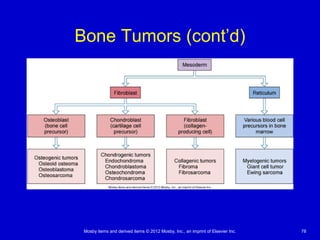
Bone Tumors
 May originate from bone cells, cartilage,
fibrous tissue, marrow, or vascular tissue
 Osteogenic
 Chondrogenic
 Collagenic
 Myelogenic
Mosby items and derived items © 2012 Mosby, Inc., an imprint of Elsevier Inc. 77
Bone Tumors (cont’d)
 Malignant bone tumors
 Increased nuclear/cytoplasmic ratio
 Irregular borders
 Excess chromatin
 A prominent nucleolus
 An increase in the mitotic rate
Mosby items and derived items © 2012 Mosby, Inc., an imprint of Elsevier Inc. 78
Bone Tumors (cont’d)
Mosby items and derived items © 2012 Mosby, Inc., an imprint of Elsevier Inc. 79
Bone Tumors (cont’d)
 Patterns of bone destruction:
 Geographic pattern
 Moth-eaten pattern
 Permeative pattern
Mosby items and derived items © 2012 Mosby, Inc., an imprint of Elsevier Inc. 80
Bone Tumors (cont’d)
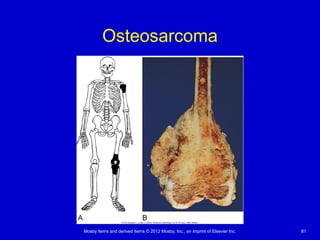
 Osteosarcoma
 38% of bone tumors
 Predominant in adolescents and young adults;
occurs in seniors if they have a history of
radiation therapy
 Contain masses of osteoid
• Streamers: noncalcified bone matrix and callus
 Located in the metaphyses of long bones
• 50% occur around the knees
Mosby items and derived items © 2012 Mosby, Inc., an imprint of Elsevier Inc. 81
Osteosarcoma
Mosby items and derived items © 2012 Mosby, Inc., an imprint of Elsevier Inc. 82
Bone Tumors
 Chondrosarcoma
 Tumor of middle-aged and older adults
 Infiltrates trabeculae in spongy bone; frequent
in the metaphyses or diaphysis of long bones
 The tumor contains lobules of hyaline cartilage
that expand and enlarge the bone
 Causes erosion of the cortex and can expand
into the neighboring soft tissues
Mosby items and derived items © 2012 Mosby, Inc., an imprint of Elsevier Inc. 83
Bone Tumors (cont’d)
 Fibrosarcoma
 Firm, fibrous mass of collagen, malignant
fibroblasts, and osteoclast-like cells
 Usually affects metaphyses of the femur or
tibia
 Metastasis to the lungs is common
Mosby items and derived items © 2012 Mosby, Inc., an imprint of Elsevier Inc. 84
Bone Tumors (cont’d)
 Myelogenic tumors:
 Giant cell tumor
• Causes extensive bone resorption because of the
osteoclastic origin of the giant cells
• Located in the epiphyses of the femur, tibia, radius,
or humerus
• The tumor has a slow, relentless growth rate
 Myeloma
Mosby items and derived items © 2012 Mosby, Inc., an imprint of Elsevier Inc. 85
Muscle Tumors (cont’d)
 Rhabdomyosarcoma
 Malignant tumor of striated muscle
 Usually muscles of the tongue, neck, larynx,
nasal cavity, axilla, vulva, and heart
 Highly malignant with rapid metastasis
 Types:
• Pleomorphic
• Embryonal
• Alveolar
Mosby items and derived items © 2012 Mosby, Inc., an imprint of Elsevier Inc. 86
Muscular Dystrophy
 Group of inherited disorders that cause
degeneration of skeletal muscle fibers
 The muscular dystrophies cause
progressive, symmetric weakness and
wasting of skeletal muscle groups
Mosby items and derived items © 2012 Mosby, Inc., an imprint of Elsevier Inc. 87
Duchenne Muscular Dystrophy
 Most common of the muscular dystrophies
 X-linked recessive inheritance
 Deletion of a segment of DNA or a single gene
defect on the short arm of the X-chromosome
 Generally affects boys
 Duchenne muscular dystrophy gene
 Encodes for the dystrophin protein
 Dystrophin maintains the structural integrity of
the cytoskeleton
Mosby items and derived items © 2012 Mosby, Inc., an imprint of Elsevier Inc. 88
Duchenne Muscular
Dystrophy(Cont)
 Manifestations of the disorder begin to
appear by approximately 3 years of age:
 Slow motor development
 Progressive weakness
 Muscle wasting
 Sitting and standing are delayed
 The child is clumsy, falls frequently, and has
difficulty climbing stairs

Week three muscles

  • 1.
    Mosby items andderived items © 2012 Mosby, Inc., an imprint of Elsevier Inc. 1 Alterations of Musculoskeletal Function
  • 2.
    Mosby items andderived items © 2012 Mosby, Inc., an imprint of Elsevier Inc. 2 Musculoskeletal Injuries • Complete or incomplete  Closed or open • Comminuted • Linear • Oblique • Spiral • Transverse • Greenstick • Torus • Bowing • Pathologic • Stress  Fatigue and insufficiency  Transchondral  Fractures  A fracture is a break in the continuity of a bone  Classifications:
  • 3.
    Mosby items andderived items © 2012 Mosby, Inc., an imprint of Elsevier Inc. 3 Fractures
  • 4.
    Mosby items andderived items © 2012 Mosby, Inc., an imprint of Elsevier Inc. 4 Bone Fractures  A broken bone can cause damage to the surrounding tissue, the periosteum, and the blood vessels in the cortex and marrow  Hematoma formation  Bone tissue destruction triggers an inflammatory response  Procallus formation
  • 5.
    Mosby items andderived items © 2012 Mosby, Inc., an imprint of Elsevier Inc. 5 Callus Formation
  • 6.
    Mosby items andderived items © 2012 Mosby, Inc., an imprint of Elsevier Inc. 6 Callus Formation (cont’d)
  • 7.
    Mosby items andderived items © 2012 Mosby, Inc., an imprint of Elsevier Inc. 7 Bone Fractures  Manifestations:  Often numbness up to 20 minutes following injury  Unnatural alignment, swelling, muscle spasm, tenderness, pain, impaired sensation, and possible muscle spasms  Treatment:  Closed manipulation, traction, and open reduction  Internal and external fixation
  • 8.
    Mosby items andderived items © 2012 Mosby, Inc., an imprint of Elsevier Inc. 8 Bone Fractures (cont’d)  Improper reduction or immobilization  Nonunion, delayed union, and malunion  Dislocation  Temporary displacement of two bones  Loss of contact between articular cartilage  Subluxation  Contact between articular surfaces is only partially lost
  • 9.
    Mosby items andderived items © 2012 Mosby, Inc., an imprint of Elsevier Inc. 9 Bone Fractures (cont’d)  Dislocation and subluxation are associated with fractures, muscle imbalance, rheumatoid arthritis, or other forms of joint instability
  • 10.
    Mosby items andderived items © 2012 Mosby, Inc., an imprint of Elsevier Inc. 10 Support Structure Injuries  Strain  Tear or injury to a tendon  Sprain  Tear or injury to a ligament  Avulsion  Complete separation of a tendon or ligament from its bony attachment site
  • 11.
    Mosby items andderived items © 2012 Mosby, Inc., an imprint of Elsevier Inc. 11 Tendinopathy and Bursitis  Tendinitis  Inflammation of a tendon  Tendinosis  Painful degradation of collagen fibers  Bursitis  Inflammation of a bursa • Skin over bone, skin over muscle, and muscle and tendon over bone  Caused by repeated trauma  Septic bursitis is caused by a wound infection
  • 12.
    Mosby items andderived items © 2012 Mosby, Inc., an imprint of Elsevier Inc. 12 Tendinopathy and Bursitis (cont’d)  Epicondylitis  Inflammation of a tendon where it attaches to a bone • Tennis elbow (lateral epicondylitis) • Golfer’s elbow (medial epicondylitis)
  • 13.
    Mosby items andderived items © 2012 Mosby, Inc., an imprint of Elsevier Inc. 13 Tendinopathy and Bursitis (cont’d)
  • 14.
    Mosby items andderived items © 2012 Mosby, Inc., an imprint of Elsevier Inc. 14 Tendinitis and Epicondylitis
  • 15.
    Mosby items andderived items © 2012 Mosby, Inc., an imprint of Elsevier Inc. 15 Muscle Strain  Sudden, forced motion causing the muscle to become stretched beyond its normal capacity  Local muscle damage  Muscle strains can also involve the tendons
  • 16.
    Mosby items andderived items © 2012 Mosby, Inc., an imprint of Elsevier Inc. 16 Myositis Ossificans  Complication of local muscle injury  Inflammation of muscular tissue with subsequent calcification and ossification of the muscle  Rider’s bone in equestrians  Drill bone in infantry soldiers  Thigh muscles in football players
  • 17.
    Mosby items andderived items © 2012 Mosby, Inc., an imprint of Elsevier Inc. 17 Rhabdomyolysis  Rhabdomyolysis (myoglobinuria) is a life- threatening complication of severe muscle trauma with muscle cell loss  Crush syndrome  Compartment syndromes • Volkmann ischemic contracture  Malignant hyperthermia
  • 18.
    Mosby items andderived items © 2012 Mosby, Inc., an imprint of Elsevier Inc. 18 Osteoporosis  Porous bone  Poorly mineralized bone  Bone density:  Normal bone • 833 mg/cm2  Osteopenic bone • 833 to 648 mg/cm2  Osteoporosis • <648 mg/cm2
  • 19.
    Mosby items andderived items © 2012 Mosby, Inc., an imprint of Elsevier Inc. 19 Osteoporosis (cont’d)  Potential causes:  Decreased levels of estrogen and testosterone  Decreased activity level  Excess intake of caffeine, phosphorus, alcohol, nicotine  Inadequate levels of vitamins D and C, or Mg++
  • 20.
    Mosby items andderived items © 2012 Mosby, Inc., an imprint of Elsevier Inc. 20 Osteoporosis (cont’d)  Demonstrated by reduced bone mass/density and an imbalance of bone resorption and formation  Bone histology is usually normal but it lacks structural integrity
  • 21.
    Mosby items andderived items © 2012 Mosby, Inc., an imprint of Elsevier Inc. 21 Osteoporosis (cont’d)
  • 22.
    Mosby items andderived items © 2012 Mosby, Inc., an imprint of Elsevier Inc. 22 Osteoporosis (cont’d)
  • 23.
    Mosby items andderived items © 2012 Mosby, Inc., an imprint of Elsevier Inc. 23 Osteoporosis (cont’d)  Iatrogenic osteoporosis  Regional osteoporosis  Postmenopausal osteoporosis  Glucocorticoid-induced osteoporosis  Age-related bone loss
  • 24.
    Mosby items andderived items © 2012 Mosby, Inc., an imprint of Elsevier Inc. 24 Osteoporosis (cont’d)
  • 25.
    Mosby items andderived items © 2012 Mosby, Inc., an imprint of Elsevier Inc. 25 Osteoporosis (cont’d)
  • 26.
    Mosby items andderived items © 2012 Mosby, Inc., an imprint of Elsevier Inc. 26 Osteoporosis (cont’d)
  • 27.
    Mosby items andderived items © 2012 Mosby, Inc., an imprint of Elsevier Inc. 27 Osteomalacia  Deficiency of vitamin D lowers the absorption of calcium from the intestines  Inadequate or delayed mineralization  Bone formation progresses to osteoid formation but calcification does not occur; the result is soft bones  Pain, bone fractures, vertebral collapse, bone malformation
  • 28.
    Mosby items andderived items © 2012 Mosby, Inc., an imprint of Elsevier Inc. 28 Paget Disease  Also called osteitis deformans  Excessive resorption of spongy bone and accelerated formation of softened bone  Disorganized, thickened, but soft bones  Most often affects the axial skeleton
  • 29.
    Mosby items andderived items © 2012 Mosby, Inc., an imprint of Elsevier Inc. 29 Paget Disease (cont’d)  Thickened bones can cause abnormal bone curvatures, brain compression, impaired motor function, deafness, atrophy of the optic nerve, etc.
  • 30.
    Mosby items andderived items © 2012 Mosby, Inc., an imprint of Elsevier Inc. 30 Osteomyelitis  Osteomyelitis is most often caused by a staphylococcal infection  Most common cause is open wound (exogenous); also can be from a blood- borne (endogenous) infection
  • 31.
    Mosby items andderived items © 2012 Mosby, Inc., an imprint of Elsevier Inc. 31 Osteomyelitis (cont’d)  Manifestations:  Acute and chronic inflammation  Fever  Pain  Necrotic bone  Treatment:  Very difficult to treat  Antibiotics, debridement, surgery, hyperbaric oxygen therapy
  • 32.
    Mosby items andderived items © 2012 Mosby, Inc., an imprint of Elsevier Inc. 32 Osteomyelitis (cont’d)
  • 33.
    Mosby items andderived items © 2012 Mosby, Inc., an imprint of Elsevier Inc. 33 Osteomyelitis (cont’d)
  • 34.
    Mosby items andderived items © 2012 Mosby, Inc., an imprint of Elsevier Inc. 34 Inflammatory vs. Noninflammatory Joint Disease  Differentiated by:  Absence of synovial membrane inflammation  Lack of systemic signs and symptoms  Normal synovial fluid analysis
  • 35.
    Mosby items andderived items © 2012 Mosby, Inc., an imprint of Elsevier Inc. 35 Osteoarthritis  Degeneration and loss of articular cartilage, sclerosis of bone underneath cartilage, and formation of bone spurs (osteophytes)  Also referred to as degenerative joint disease  Incidence increases with age  Primary disease is idiopathic
  • 36.
    Mosby items andderived items © 2012 Mosby, Inc., an imprint of Elsevier Inc. 36 Osteoarthritis (cont’d)  Risk factors:  Increased age  Joint trauma, long-term mechanical stress  Endocrine disorders (hyperparathyroidism)  Drugs  Obesity
  • 37.
    Mosby items andderived items © 2012 Mosby, Inc., an imprint of Elsevier Inc. 37 Osteoarthritis (cont’d)  Characteristics:  Local areas of damage and loss of articular cartilage  New bone formation of joint margins  Subchondral bone changes  Variable degrees of mild synovitis and thickening of the joint capsule
  • 38.
    Mosby items andderived items © 2012 Mosby, Inc., an imprint of Elsevier Inc. 38 Osteoarthritis (cont’d)  Manifestations:  Pain (worsens with activity)  Stiffness (diminishes with activity)  Enlargement of the joint  Tenderness  Limited motion  Deformity
  • 39.
    Mosby items andderived items © 2012 Mosby, Inc., an imprint of Elsevier Inc. 39 Osteoarthritis (cont’d)
  • 40.
    Mosby items andderived items © 2012 Mosby, Inc., an imprint of Elsevier Inc. 40 Osteoarthritis (cont’d)
  • 41.
    Mosby items andderived items © 2012 Mosby, Inc., an imprint of Elsevier Inc. 41 Osteoarthritis (cont’d)
  • 42.
    Mosby items andderived items © 2012 Mosby, Inc., an imprint of Elsevier Inc. 42 Osteoarthritis (cont’d)
  • 43.
    Mosby items andderived items © 2012 Mosby, Inc., an imprint of Elsevier Inc. 43 Rheumatoid Arthritis  Inflammatory autoimmune joint disease  Systemic autoimmune damage to connective tissue, primarily in the joints (synovial membrane)  Similar symptoms to osteoarthritis  Cause unknown; multifactorial with strong genetic predisposition
  • 44.
    Mosby items andderived items © 2012 Mosby, Inc., an imprint of Elsevier Inc. 44 Rheumatoid Arthritis (cont’d)  Presence of rheumatoid factors (RA or RF test)  Antibodies (IgG and IgM) against antibodies  Joint fluid presents with inflammatory exudate
  • 45.
    Mosby items andderived items © 2012 Mosby, Inc., an imprint of Elsevier Inc. 45 Rheumatoid Arthritis (cont’d)  Pathogenesis  Three Processes: • Neutrophils and other cells in the synovial fluid become activated • Inflammatory cytokines (tumor necrosis factor-alpha (TNF-α), interleukin-1 beta (IL-1β), interleukin-6 (IL- 6), interleukin-7 (IL-7), interleukin-21 (IL-21), induce enzymatic breakdown of cartilage and bone • T cells also interact with synovial fibroblasts through TNF-α, converting synovium into a thick, abnormal layer of granulation tissue (pannus)
  • 46.
    Mosby items andderived items © 2012 Mosby, Inc., an imprint of Elsevier Inc. 46 Osteoarthritis  Manifestations:  Insidious onset  Begins with general systemic manifestations of inflammation, including fever, fatigue, weakness, anorexia, weight loss, and generalized aching and stiffness  Over a period of weeks or months, the joints become painful, tender, stiff, swollen, warm, boggy, and lose range of motion  Joint deformities
  • 47.
    Mosby items andderived items © 2012 Mosby, Inc., an imprint of Elsevier Inc. 47 Rheumatoid Arthritis  Evaluation  Four or more of the following: • Morning joint stiffness lasting at least 1 hour • Arthritis of three or more joint areas • Arthritis of the hand joints • Symmetric arthritis • Rheumatoid nodules • Abnormal amounts of serum rheumatoid factor • Radiographic changes
  • 48.
    Mosby items andderived items © 2012 Mosby, Inc., an imprint of Elsevier Inc. 48 Rheumatoid Arthritis (cont’d)
  • 49.
    Mosby items andderived items © 2012 Mosby, Inc., an imprint of Elsevier Inc. 49 Rheumatoid Arthritis (cont’d)
  • 50.
    Mosby items andderived items © 2012 Mosby, Inc., an imprint of Elsevier Inc. 50 Rheumatoid Arthritis (cont’d)
  • 51.
    Mosby items andderived items © 2012 Mosby, Inc., an imprint of Elsevier Inc. 51 Ankylosing Spondylitis  Inflammatory joint disease of the spine or sacroiliac joints causing stiffening and fusion of the joints  Systemic, immune inflammatory disease  Primary proposed site is the enthesis  Site where ligaments, tendons, and the joint capsule are inserted into bone
  • 52.
    Mosby items andderived items © 2012 Mosby, Inc., an imprint of Elsevier Inc. 52 Ankylosing Spondylitis (cont’d)  Cause unknown, but there is a strong association with HLA-B27 antigen  Begins with the inflammation of fibrocartilage, particularly in the vertebrae and sacroiliac joint  Inflammatory cells infiltrate and erode fibrocartilage  As repair begins, the scar tissue ossifies and calcifies; the joint eventually fuses
  • 53.
    Mosby items andderived items © 2012 Mosby, Inc., an imprint of Elsevier Inc. 53 Ankylosing Spondylitis (cont’d)  Manifestations:  Early symptoms: • Low back pain that begins in early 20s and progresses over time • Stiffness • Pain • Restricted motion  Loss of normal lumbar curvature (lordosis)  Increased concavity of upper spine (kyphosis)
  • 54.
    Mosby items andderived items © 2012 Mosby, Inc., an imprint of Elsevier Inc. 54 Ankylosing Spondylitis (cont’d)
  • 55.
    Mosby items andderived items © 2012 Mosby, Inc., an imprint of Elsevier Inc. 55 Gout  Metabolic disorder that disrupts the body’s control of uric acid production or excretion  Gout manifests high levels of uric acid in the blood and other body fluids  Occurs when the uric acid concentration increases to high enough levels to crystallize
  • 56.
    Mosby items andderived items © 2012 Mosby, Inc., an imprint of Elsevier Inc. 56 Gout (cont’d)  Crystals deposit in connective tissues throughout the body  Sites: • 50% of the initial attacks occur in the metatarsophalangeal joint of the great toe • Heel, ankle, instep of the foot, knee, wrist, or elbow  When these crystals occur in the synovial fluid, the inflammation is known as gouty arthritis
  • 57.
    Mosby items andderived items © 2012 Mosby, Inc., an imprint of Elsevier Inc. 57 Gout (cont’d)  Gout is related to purine (adenine and guanine) metabolism  Affected patients can have accelerated purine synthesis, breakdown, or poor uric acid secretion in the kidneys
  • 58.
    Mosby items andderived items © 2012 Mosby, Inc., an imprint of Elsevier Inc. 58 Gout (cont’d)  Mechanisms for crystal deposition:”  Lower body temperatures  Decreased albumin or glycosaminoglycan levels  Changes in ion concentration and pH  Trauma  Risk factors:  Male sex  Increasing age  High intake of alcohol, red meat, and fructose  Drugs
  • 59.
    Mosby items andderived items © 2012 Mosby, Inc., an imprint of Elsevier Inc. 59 Gout (cont’d)  Clinical stages:  Asymptomatic hyperuricemia  Acute gouty arthritis  Tophaceous gout
  • 60.
    Mosby items andderived items © 2012 Mosby, Inc., an imprint of Elsevier Inc. 60 Gout (cont’d)  Manifestations:  An increase in serum urate concentration (hyperuricemia)  Recurrent attacks of monoarticular arthritis (inflammation of a single joint)  Deposits of monosodium urate monohydrate (tophi) in and around the joints  Renal disease involving glomerular, tubular, and interstitial tissues and blood vessels  Formation of renal stones
  • 61.
    Mosby items andderived items © 2012 Mosby, Inc., an imprint of Elsevier Inc. 61 Gout (cont’d)  Manifestations of acute gouty attack:  Severe pain especially at night  Hot, red, tender joint  Signs of systemic inflammation: • Increased sedimentation rate • Fever • Leukocytosis)
  • 62.
    Mosby items andderived items © 2012 Mosby, Inc., an imprint of Elsevier Inc. 62 Gout (cont’d)
  • 63.
    Mosby items andderived items © 2012 Mosby, Inc., an imprint of Elsevier Inc. 63 Disorders of Skeletal Muscle  Contracture  Muscle fiber shortening without an action potential  Caused by failure of the sarcoplasmic reticulum (calcium pump) even with available ATP  Stress-induced muscle tension  Neck stiffness, back pain, clenching teeth, hand grip, and headache  Associated with chronic anxiety
  • 64.
    Mosby items andderived items © 2012 Mosby, Inc., an imprint of Elsevier Inc. 64 Disuse Atrophy  Reduction in the normal size of muscle cells as a result of prolonged inactivity  Bed rest  Trauma  Casting  Nerve damage  Treatment  Isometric movements  Passive lengthening exercises
  • 65.
    Mosby items andderived items © 2012 Mosby, Inc., an imprint of Elsevier Inc. 65 Fibromyalgia  Chronic widespread diffuse joint pain, fatigue, and tender points  Vague symptoms:  Increased sensitivity to touch  Absence of inflammation  Fatigue  Sleep disturbances/non-restorative sleep
  • 66.
    Mosby items andderived items © 2012 Mosby, Inc., an imprint of Elsevier Inc. 66 Fibromyalgia (cont’d)  80% to 90% of individuals affected are women, and the peak age is 30 to 50 years  New research indicates a genetic predisposition and environmental factors play a role in development of symptoms
  • 67.
    Mosby items andderived items © 2012 Mosby, Inc., an imprint of Elsevier Inc. 67 Fibromyalgia (cont’d)  Viewed as the result of central nervous system dysfunction, where pain transmission and interpretation are amplified (central sensitization)  Autoimmune disorders often coexist  Studies of genetic factors have implicated alterations in genes affecting serotonin, catecholamines, and dopamine
  • 68.
    Mosby items andderived items © 2012 Mosby, Inc., an imprint of Elsevier Inc. 68 Fibromyalgia (cont’d)  Manifestations:  Prominent symptom of fibromyalgia is diffuse, chronic (defined as being present more than 3 months) pain that is burning or gnawing in nature  Only reliable finding on examination is the presence of multiple tender points; the pain often begins in one location, especially the neck and shoulders, but then becomes more generalized  Profound fatigue  Diagnosis  Tenderness in eleven pairs of tender points along with a history of diffuse pain
  • 69.
    Mosby items andderived items © 2012 Mosby, Inc., an imprint of Elsevier Inc. 69 Fibromyalgia (cont’d)
  • 70.
    Mosby items andderived items © 2012 Mosby, Inc., an imprint of Elsevier Inc. 70 Muscle Membrane Abnormalities  Myotonia  Periodic paralysis:  Hypokalemic  Hyperkalemic
  • 71.
    Mosby items andderived items © 2012 Mosby, Inc., an imprint of Elsevier Inc. 71 Diseases of Muscle Metabolism  Endocrine disorders  Hyperthyroidism  Diseases of energy metabolism:  McArdle disease • Myophosphorylase deficiency  Acid maltase deficiency • Pompe disease  Myoadenylate deaminase deficiency (MDD)  Lipid deficiencies
  • 72.
    Mosby items andderived items © 2012 Mosby, Inc., an imprint of Elsevier Inc. 72 Polymyositis and Dermatomyositis  Collectively described by the term myositis  Viral, bacterial, and parasitic myositis  Staphylococcus aureus infections  Trichinosis • Trichinella infection  Toxoplasmosis  Polymyositis and dermatomyositis
  • 73.
    Mosby items andderived items © 2012 Mosby, Inc., an imprint of Elsevier Inc. 73 Polymyositis and Dermatomyositis (cont’d)
  • 74.
    Mosby items andderived items © 2012 Mosby, Inc., an imprint of Elsevier Inc. 74 Toxic Myopathies/”Muscle Damage”  The most common cause of toxic myopathy is alcohol abuse  Acute attack of muscle weakness, pain, and swelling  Chronic weakness in a drinker of long duration  Necrosis of individual muscle fibers • Disturbance of energy turnover, gene dysregulation, and initiation of apoptosis  Other causes include lipid-lowering agents (fibrates and statins), antimalarial drugs, steroids, thiol derivatives, and narcotics
  • 75.
    Mosby items andderived items © 2012 Mosby, Inc., an imprint of Elsevier Inc. 75 Toxic Myopathies/”Muscle Damage” (cont’d)  Manifestations:  Acute muscle weakness  Painless or severe pain if necrosis  Most severe complication is rhabdomyolysis (acute muscle fiber necrosis with leakage of muscle protein into the bloodstream) that leads to myoglobinuria and acute renal failure
  • 76.
    Mosby items andderived items © 2012 Mosby, Inc., an imprint of Elsevier Inc. 76 Bone Tumors  May originate from bone cells, cartilage, fibrous tissue, marrow, or vascular tissue  Osteogenic  Chondrogenic  Collagenic  Myelogenic
  • 77.
    Mosby items andderived items © 2012 Mosby, Inc., an imprint of Elsevier Inc. 77 Bone Tumors (cont’d)  Malignant bone tumors  Increased nuclear/cytoplasmic ratio  Irregular borders  Excess chromatin  A prominent nucleolus  An increase in the mitotic rate
  • 78.
    Mosby items andderived items © 2012 Mosby, Inc., an imprint of Elsevier Inc. 78 Bone Tumors (cont’d)
  • 79.
    Mosby items andderived items © 2012 Mosby, Inc., an imprint of Elsevier Inc. 79 Bone Tumors (cont’d)  Patterns of bone destruction:  Geographic pattern  Moth-eaten pattern  Permeative pattern
  • 80.
    Mosby items andderived items © 2012 Mosby, Inc., an imprint of Elsevier Inc. 80 Bone Tumors (cont’d)  Osteosarcoma  38% of bone tumors  Predominant in adolescents and young adults; occurs in seniors if they have a history of radiation therapy  Contain masses of osteoid • Streamers: noncalcified bone matrix and callus  Located in the metaphyses of long bones • 50% occur around the knees
  • 81.
    Mosby items andderived items © 2012 Mosby, Inc., an imprint of Elsevier Inc. 81 Osteosarcoma
  • 82.
    Mosby items andderived items © 2012 Mosby, Inc., an imprint of Elsevier Inc. 82 Bone Tumors  Chondrosarcoma  Tumor of middle-aged and older adults  Infiltrates trabeculae in spongy bone; frequent in the metaphyses or diaphysis of long bones  The tumor contains lobules of hyaline cartilage that expand and enlarge the bone  Causes erosion of the cortex and can expand into the neighboring soft tissues
  • 83.
    Mosby items andderived items © 2012 Mosby, Inc., an imprint of Elsevier Inc. 83 Bone Tumors (cont’d)  Fibrosarcoma  Firm, fibrous mass of collagen, malignant fibroblasts, and osteoclast-like cells  Usually affects metaphyses of the femur or tibia  Metastasis to the lungs is common
  • 84.
    Mosby items andderived items © 2012 Mosby, Inc., an imprint of Elsevier Inc. 84 Bone Tumors (cont’d)  Myelogenic tumors:  Giant cell tumor • Causes extensive bone resorption because of the osteoclastic origin of the giant cells • Located in the epiphyses of the femur, tibia, radius, or humerus • The tumor has a slow, relentless growth rate  Myeloma
  • 85.
    Mosby items andderived items © 2012 Mosby, Inc., an imprint of Elsevier Inc. 85 Muscle Tumors (cont’d)  Rhabdomyosarcoma  Malignant tumor of striated muscle  Usually muscles of the tongue, neck, larynx, nasal cavity, axilla, vulva, and heart  Highly malignant with rapid metastasis  Types: • Pleomorphic • Embryonal • Alveolar
  • 86.
    Mosby items andderived items © 2012 Mosby, Inc., an imprint of Elsevier Inc. 86 Muscular Dystrophy  Group of inherited disorders that cause degeneration of skeletal muscle fibers  The muscular dystrophies cause progressive, symmetric weakness and wasting of skeletal muscle groups
  • 87.
    Mosby items andderived items © 2012 Mosby, Inc., an imprint of Elsevier Inc. 87 Duchenne Muscular Dystrophy  Most common of the muscular dystrophies  X-linked recessive inheritance  Deletion of a segment of DNA or a single gene defect on the short arm of the X-chromosome  Generally affects boys  Duchenne muscular dystrophy gene  Encodes for the dystrophin protein  Dystrophin maintains the structural integrity of the cytoskeleton
  • 88.
    Mosby items andderived items © 2012 Mosby, Inc., an imprint of Elsevier Inc. 88 Duchenne Muscular Dystrophy(Cont)  Manifestations of the disorder begin to appear by approximately 3 years of age:  Slow motor development  Progressive weakness  Muscle wasting  Sitting and standing are delayed  The child is clumsy, falls frequently, and has difficulty climbing stairs