Mosby items and derived items © 2012 Mosby, Inc., an imprint of Elsevier Inc. 1
Structure, Function, and Disorders
of the Integument
Mosby items and derived items © 2012 Mosby, Inc., an imprint of Elsevier Inc. 2
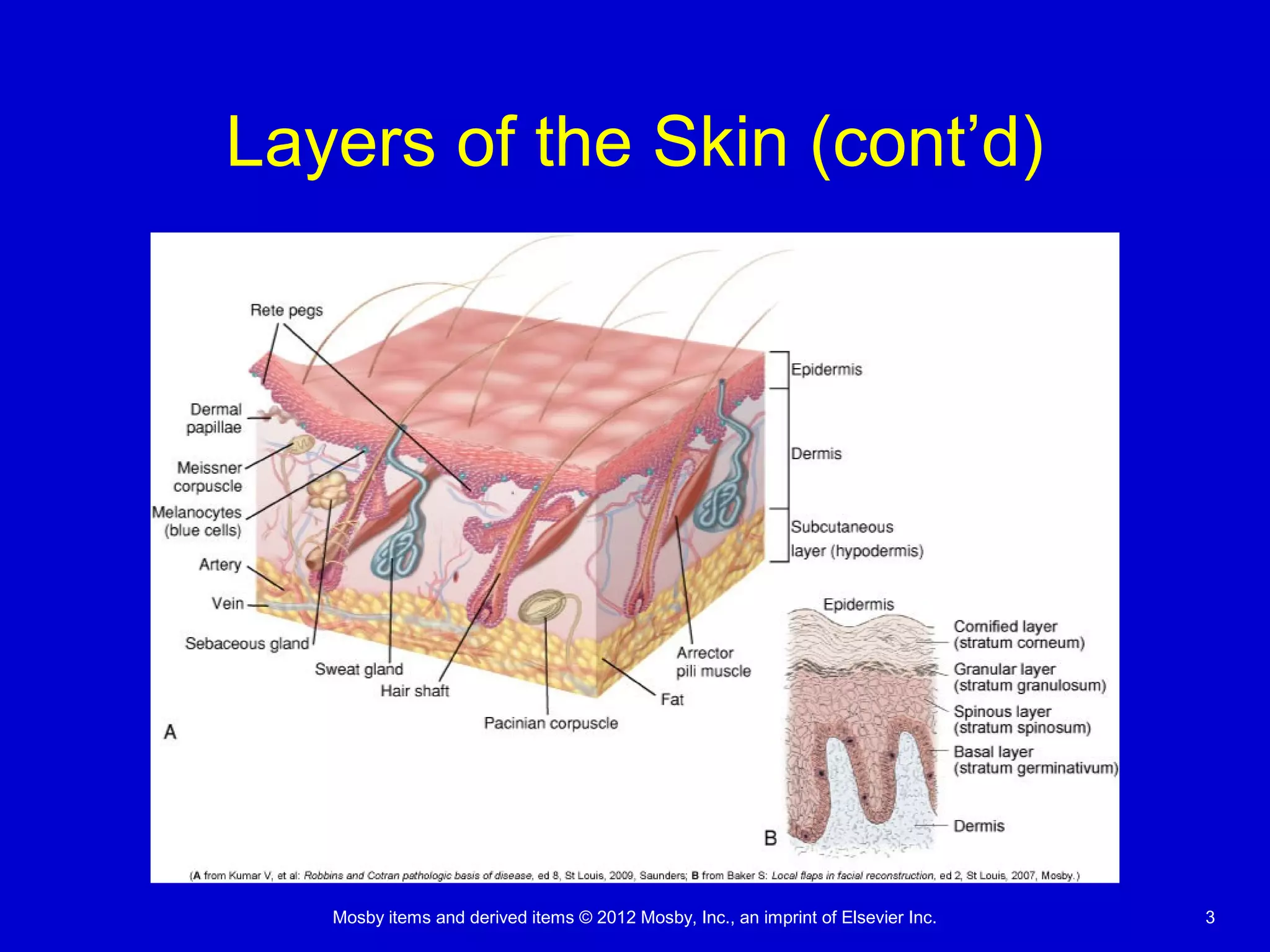
Layers of the Skin
 Epidermis
 Dermis
 Hypodermis
Mosby items and derived items © 2012 Mosby, Inc., an imprint of Elsevier Inc. 3
Layers of the Skin (cont’d)
Mosby items and derived items © 2012 Mosby, Inc., an imprint of Elsevier Inc. 4
Layers of the Skin (cont’d)
 Dermal appendages:
 Nails
 Hair
 Sebaceous glands
 Eccrine and apocrine sweat glands
 Blood supply
 Papillary capillaries
Mosby items and derived items © 2012 Mosby, Inc., an imprint of Elsevier Inc. 5
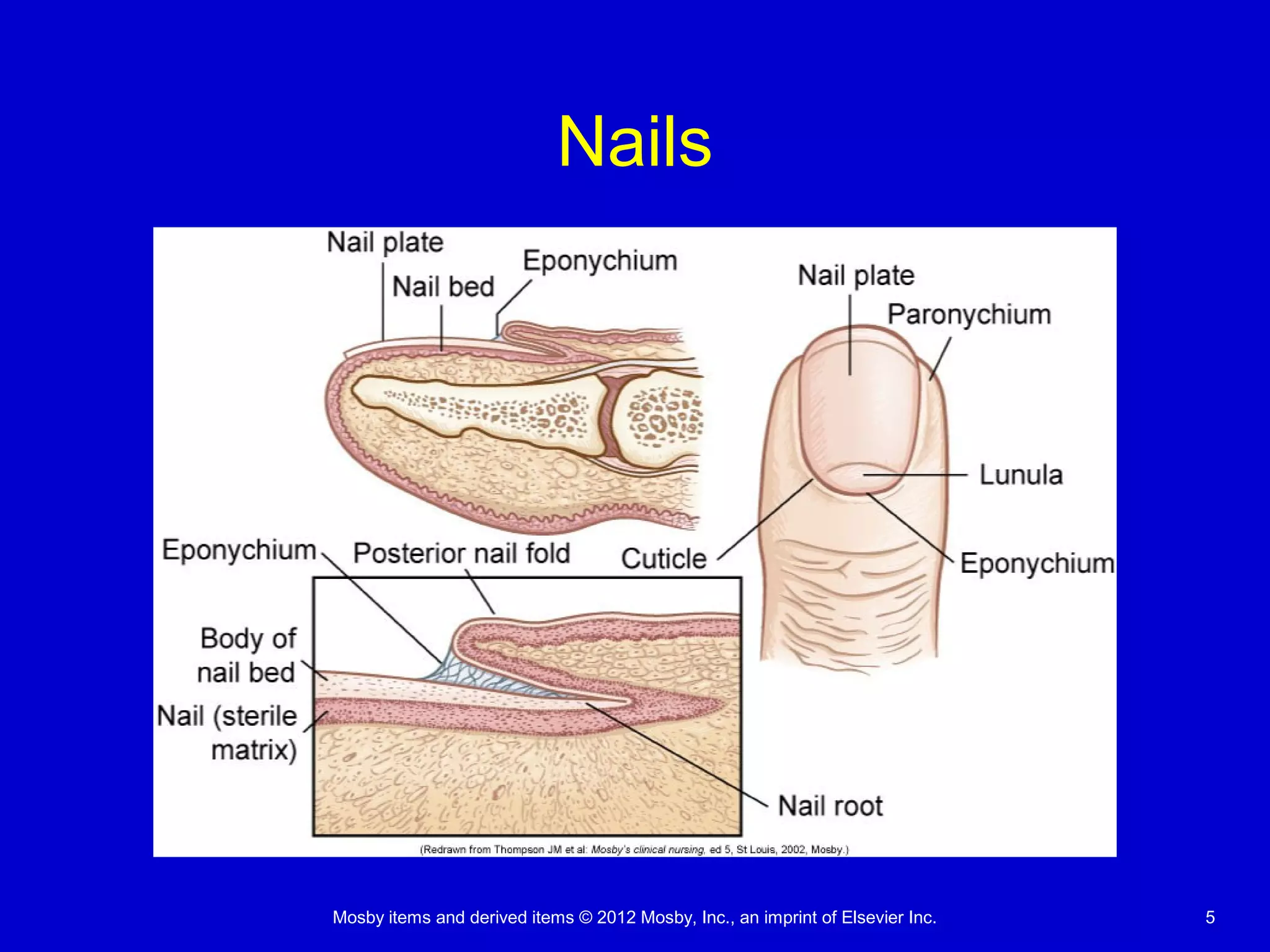
Nails
Mosby items and derived items © 2012 Mosby, Inc., an imprint of Elsevier Inc. 6
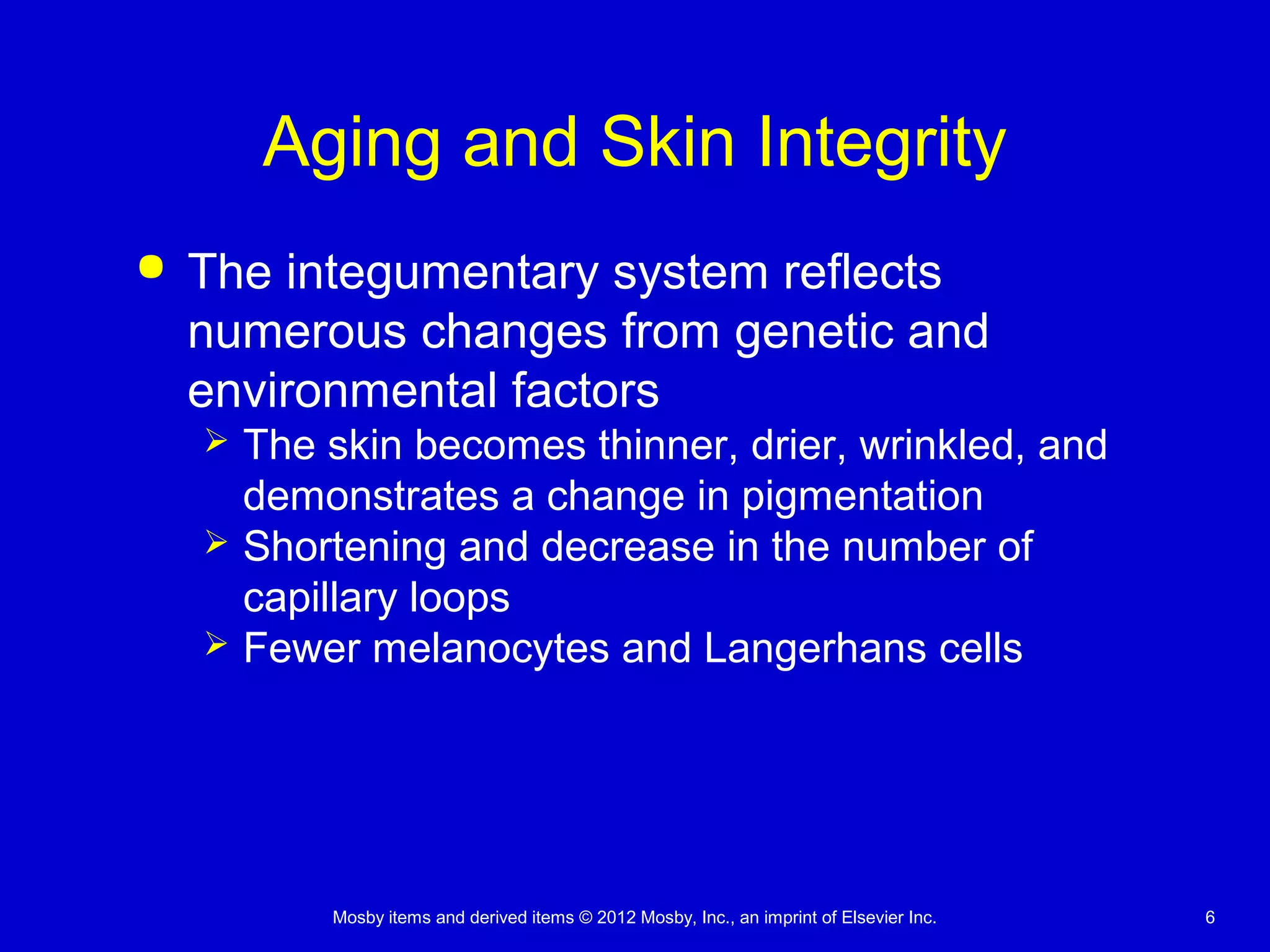
Aging and Skin Integrity
 The integumentary system reflects
numerous changes from genetic and
environmental factors
 The skin becomes thinner, drier, wrinkled, and
demonstrates a change in pigmentation
 Shortening and decrease in the number of
capillary loops
 Fewer melanocytes and Langerhans cells
Mosby items and derived items © 2012 Mosby, Inc., an imprint of Elsevier Inc. 7
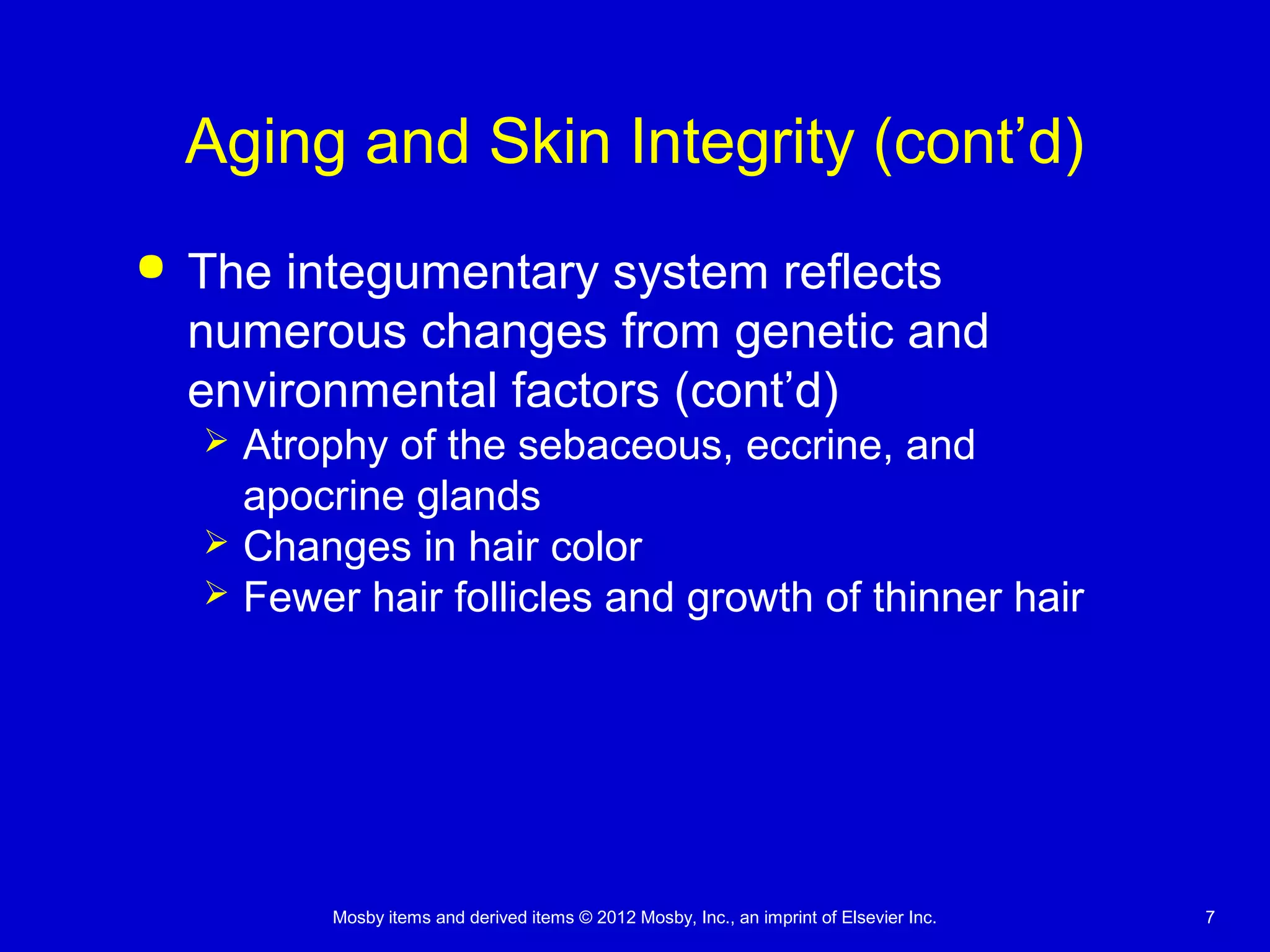
Aging and Skin Integrity (cont’d)
 The integumentary system reflects
numerous changes from genetic and
environmental factors (cont’d)
 Atrophy of the sebaceous, eccrine, and
apocrine glands
 Changes in hair color
 Fewer hair follicles and growth of thinner hair
Mosby items and derived items © 2012 Mosby, Inc., an imprint of Elsevier Inc. 8
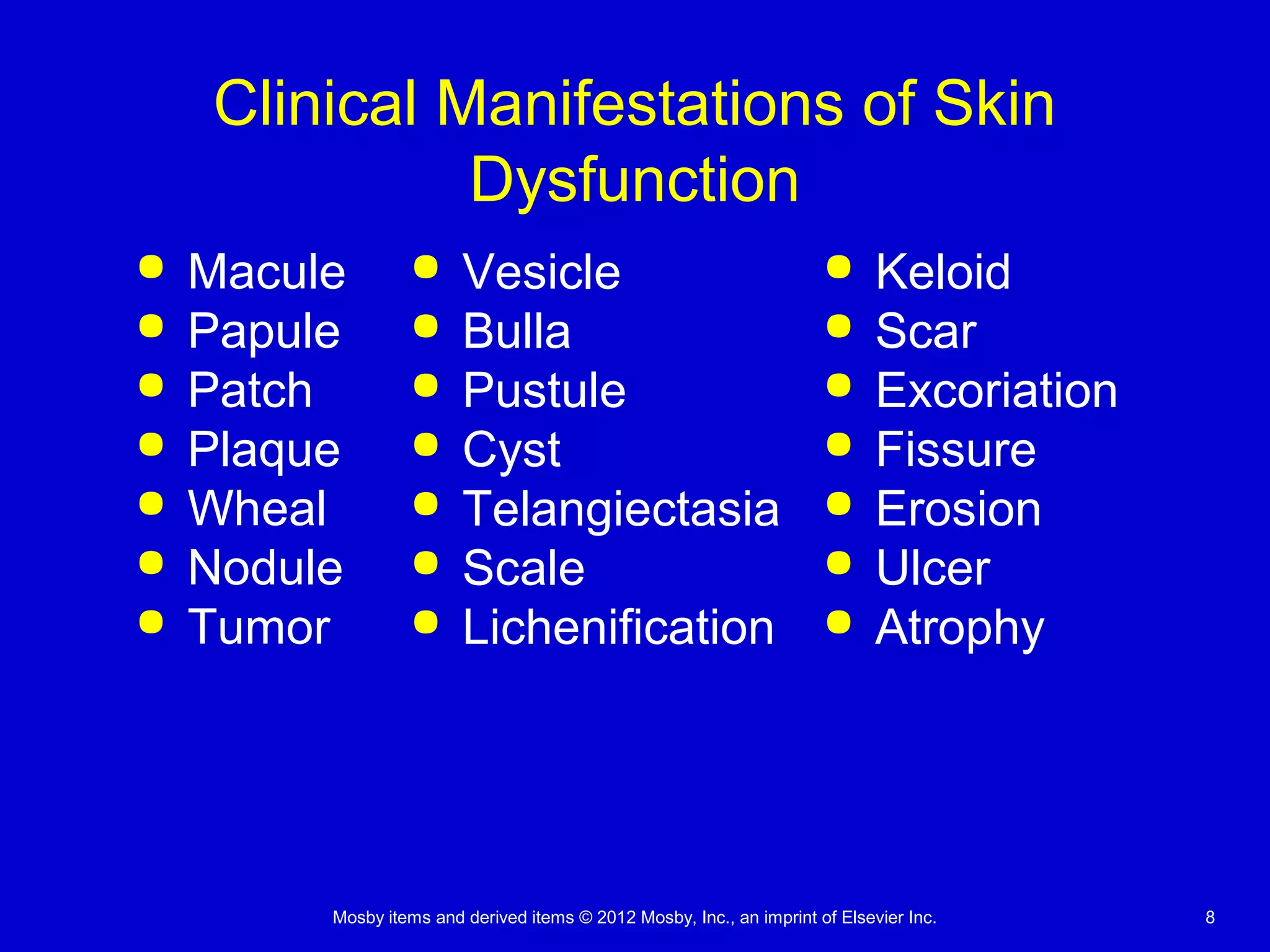
Clinical Manifestations of Skin
Dysfunction
 Macule
 Papule
 Patch
 Plaque
 Wheal
 Nodule
 Tumor
 Vesicle
 Bulla
 Pustule
 Cyst
 Telangiectasia
 Scale
 Lichenification
 Keloid
 Scar
 Excoriation
 Fissure
 Erosion
 Ulcer
 Atrophy
Mosby items and derived items © 2012 Mosby, Inc., an imprint of Elsevier Inc. 9
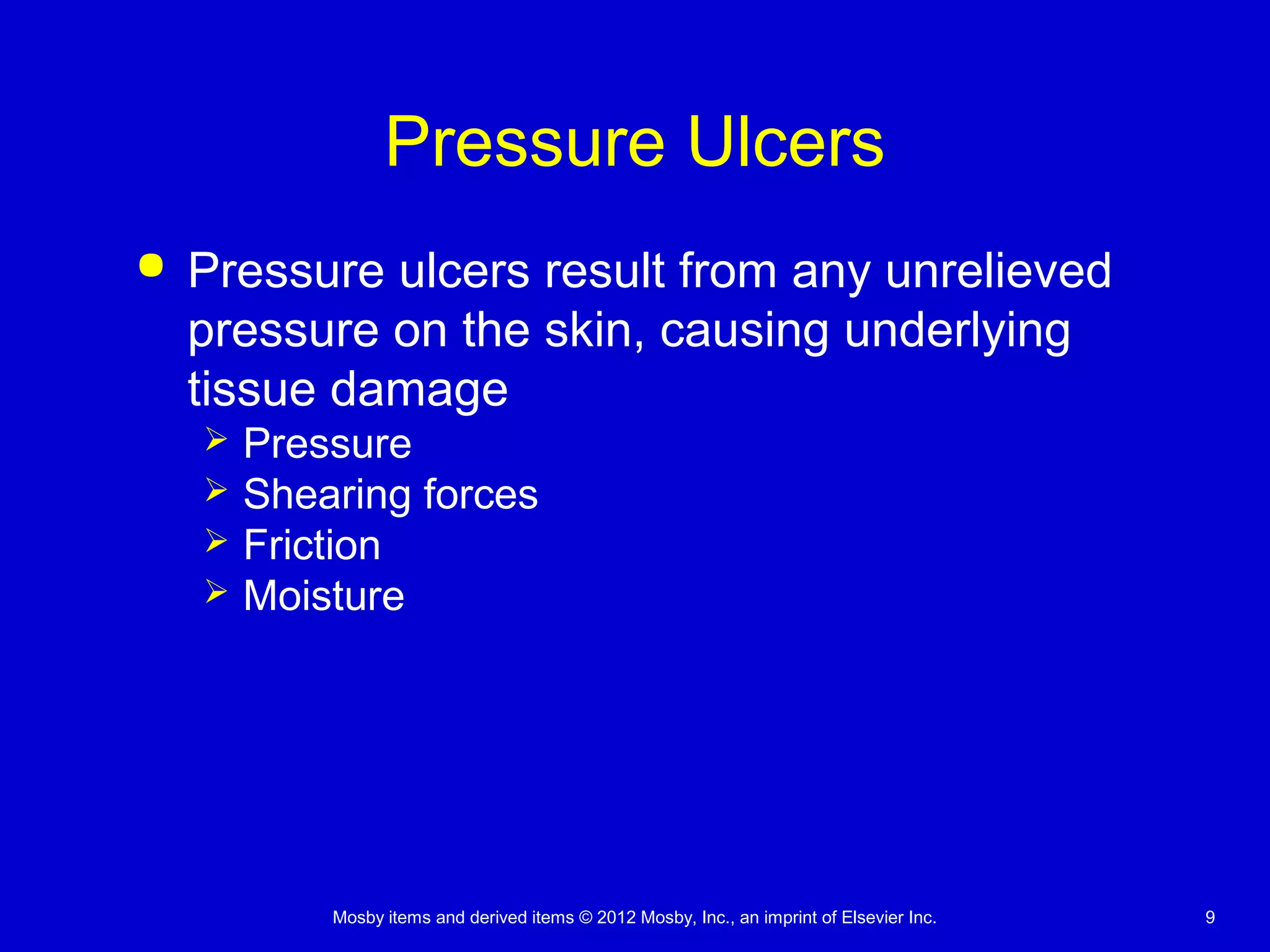
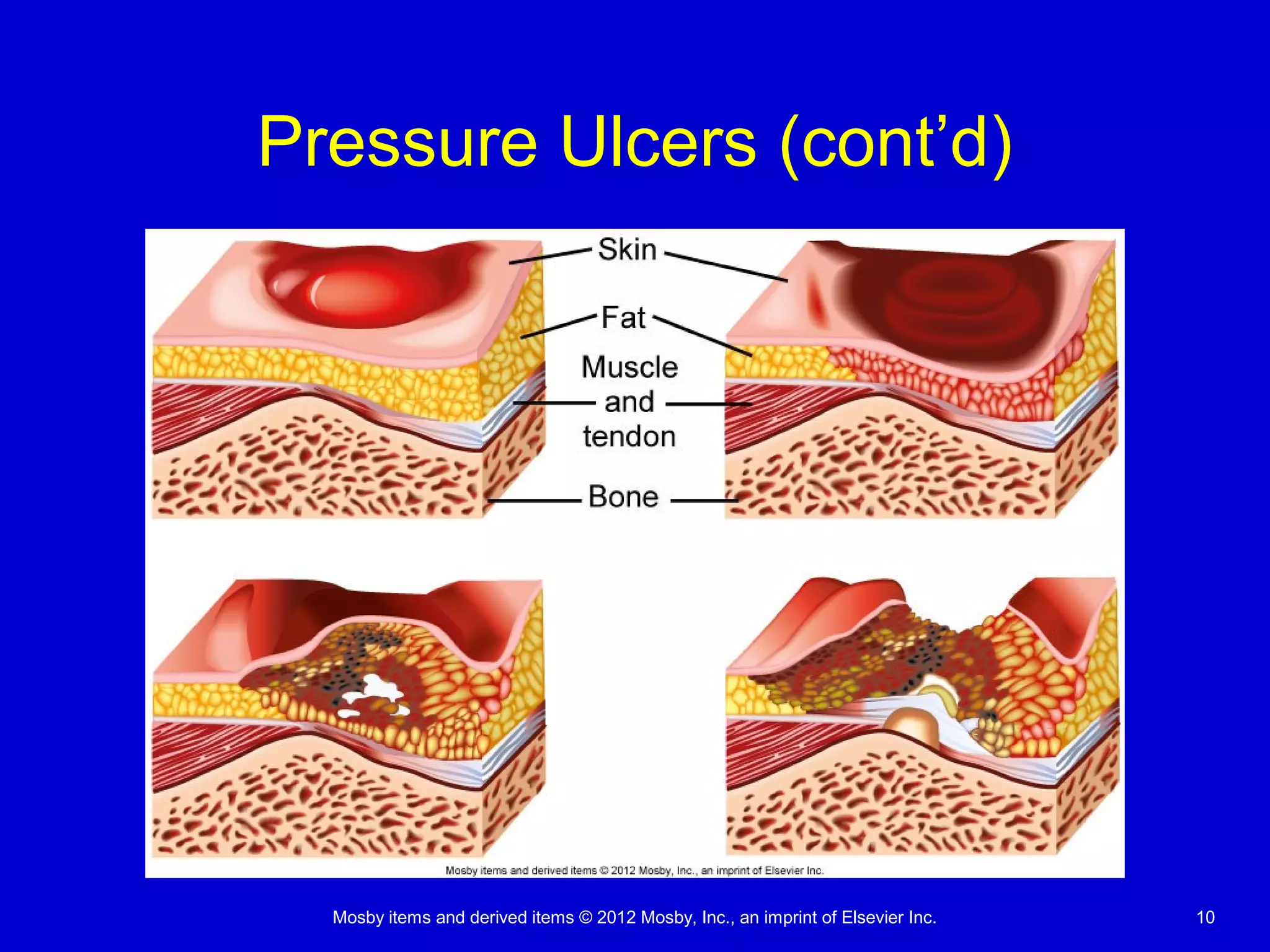
Pressure Ulcers
 Pressure ulcers result from any unrelieved
pressure on the skin, causing underlying
tissue damage
 Pressure
 Shearing forces
 Friction
 Moisture
Mosby items and derived items © 2012 Mosby, Inc., an imprint of Elsevier Inc. 10
Pressure Ulcers (cont’d)
Mosby items and derived items © 2012 Mosby, Inc., an imprint of Elsevier Inc. 11
Pressure Ulcers (cont’d)
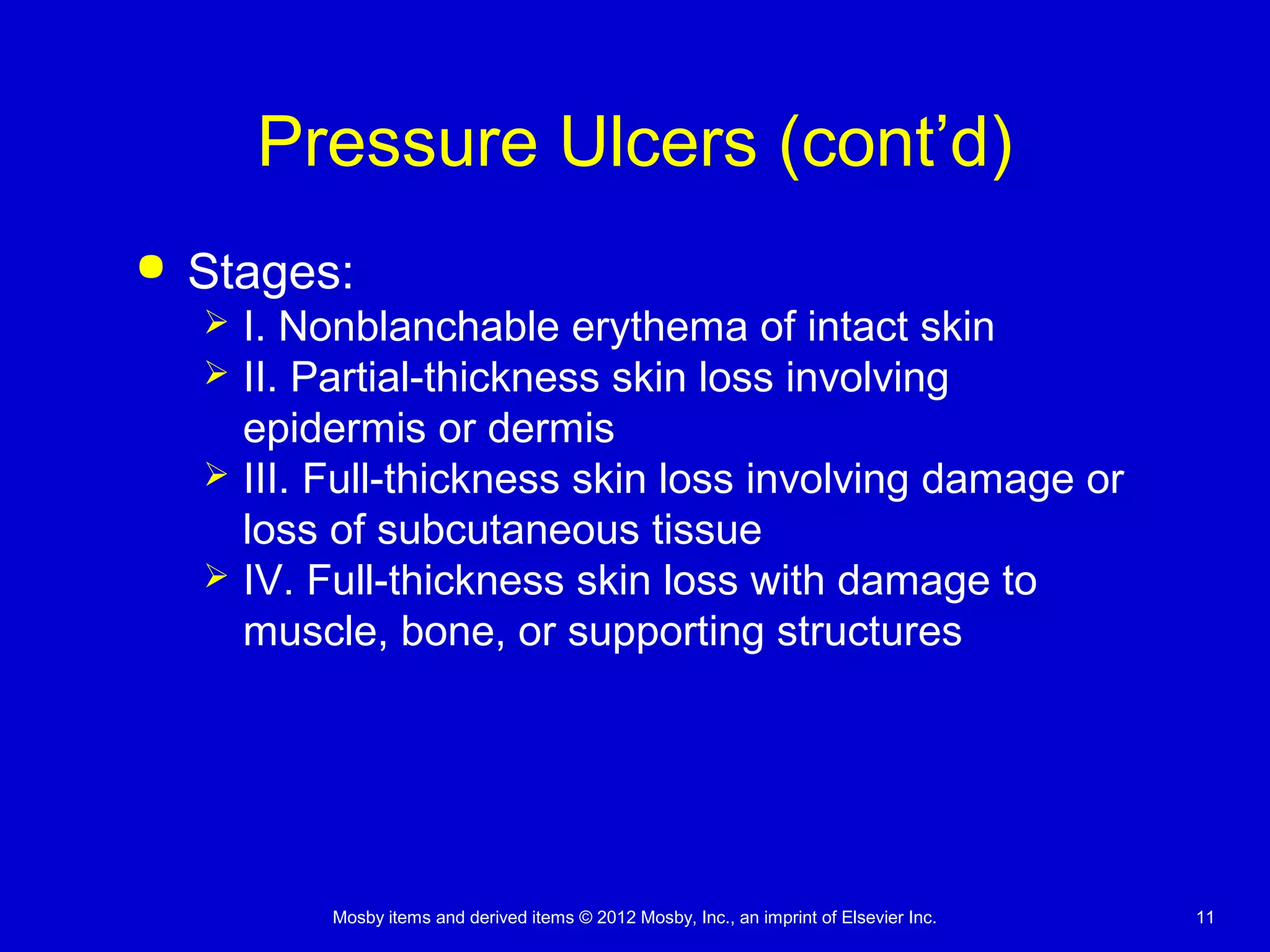
 Stages:
 I. Nonblanchable erythema of intact skin
 II. Partial-thickness skin loss involving
epidermis or dermis
 III. Full-thickness skin loss involving damage or
loss of subcutaneous tissue
 IV. Full-thickness skin loss with damage to
muscle, bone, or supporting structures
Mosby items and derived items © 2012 Mosby, Inc., an imprint of Elsevier Inc. 12
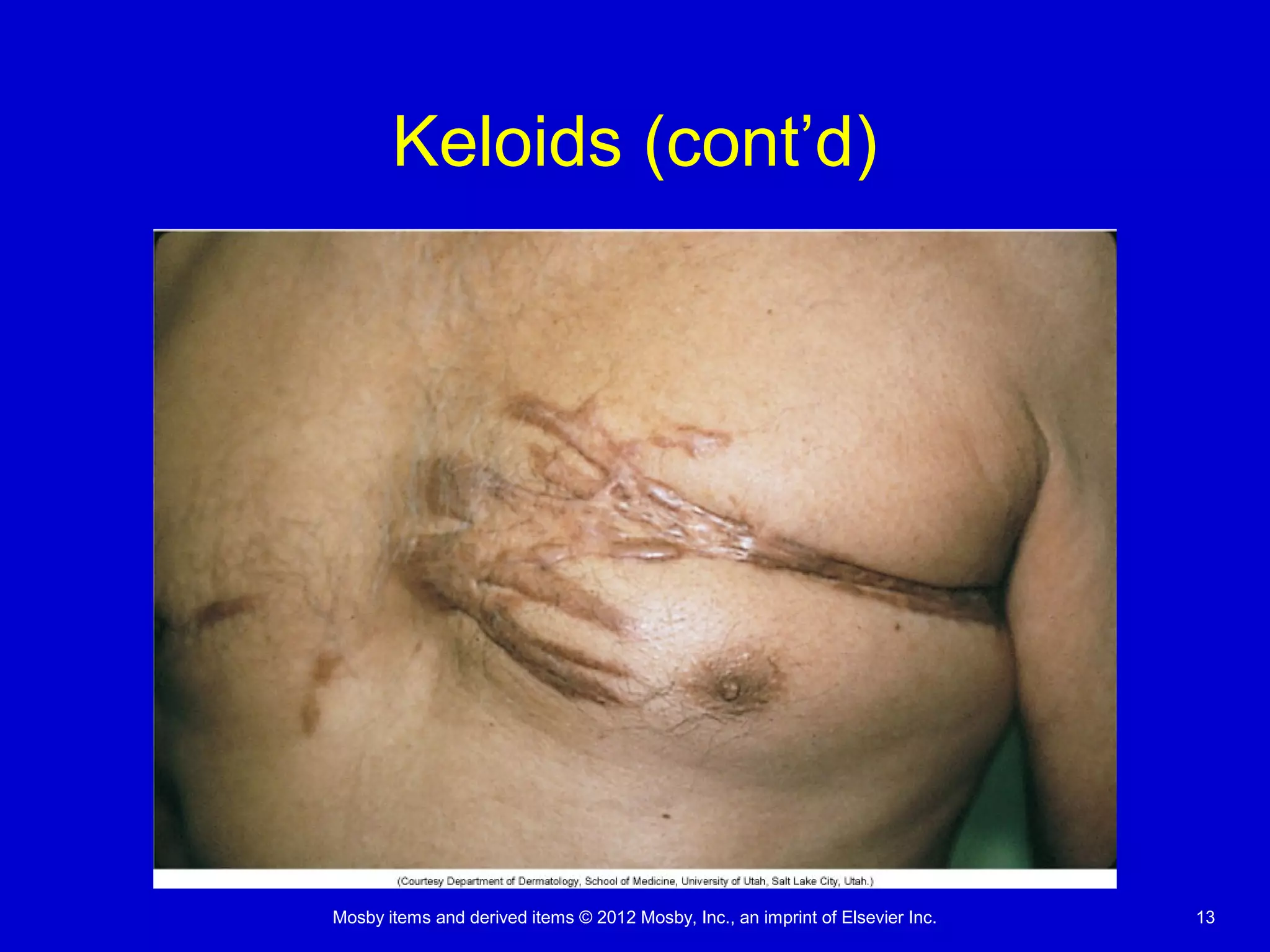
Keloids
 Elevated, rounded, and firm
 Clawlike margins that extend beyond the
original site of injury
 Excessive collagen formation during
dermal connective tissue repair
 Common in darkly pigmented skin types
and burn scars
 Type III collagen is increased
Mosby items and derived items © 2012 Mosby, Inc., an imprint of Elsevier Inc. 13
Keloids (cont’d)
Mosby items and derived items © 2012 Mosby, Inc., an imprint of Elsevier Inc. 14
Pruritus
 Itching
 Most common symptom of primary skin
disorders
 Itch is carried by specific unmyelinated C-
nerve fibers and is triggered by a number
of itch mediators
 The CNS can modulate the itch response
Mosby items and derived items © 2012 Mosby, Inc., an imprint of Elsevier Inc. 15
Pruritus (cont’d)
 Pain stimuli at lower intensities can induce
itching
 Chronic itching can result in infections and
scarring due to persistent scratching
Mosby items and derived items © 2012 Mosby, Inc., an imprint of Elsevier Inc. 16
Disorders of the Skin
 Inflammatory disorders
 The most common inflammatory disorders of
the skin are dermatitis or eczema
 There are various types of dermatitis
 The disorders are generally characterized by:
• Pruritus
• Lesions with indistinct borders
• Epidermal changes
Mosby items and derived items © 2012 Mosby, Inc., an imprint of Elsevier Inc. 17
Inflammatory Disorders
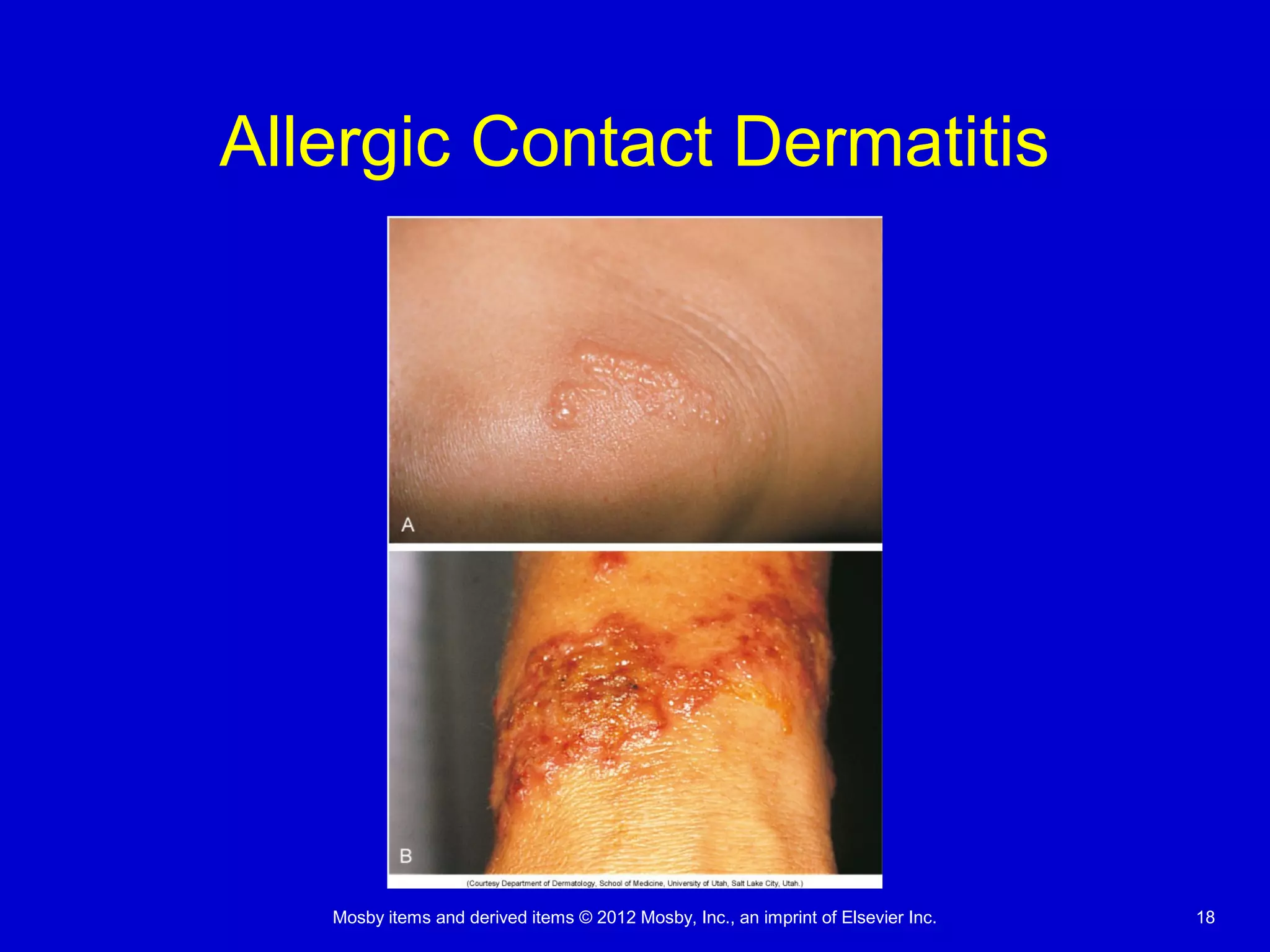
 Allergic contact dermatitis
 Caused by a hypersensitivity type IV reaction
 The allergen comes in contact with the skin,
binds to a carrier protein to form a sensitizing
antigen; Langerhans cells process the antigen
and carry it to T cells, which become sensitized
to the antigen
 Manifestations:
• Erythema
• Swelling
• Pruritus
• Vesicular lesions
Mosby items and derived items © 2012 Mosby, Inc., an imprint of Elsevier Inc. 18
Allergic Contact Dermatitis
Mosby items and derived items © 2012 Mosby, Inc., an imprint of Elsevier Inc. 19
Inflammatory Disorders
 Atopic dermatitis
 Type I hypersensitivity: activation of mast cells,
eosinophils, T-lymphocytes, and other
inflammatory cells
 Causes red, weeping crusts and chronic
inflammation, lichenification
Mosby items and derived items © 2012 Mosby, Inc., an imprint of Elsevier Inc. 20
Inflammatory Disorders (cont’d)
 Irritant contact dermatitis
 Nonimmunologic inflammation of the skin
 Chemical irritation from acids or prolonged
exposure to irritating substances
 Symptoms similar to allergic contact dermatitis
 Treatment: remove stimulus
Mosby items and derived items © 2012 Mosby, Inc., an imprint of Elsevier Inc. 21
Inflammatory Disorders (cont’d)
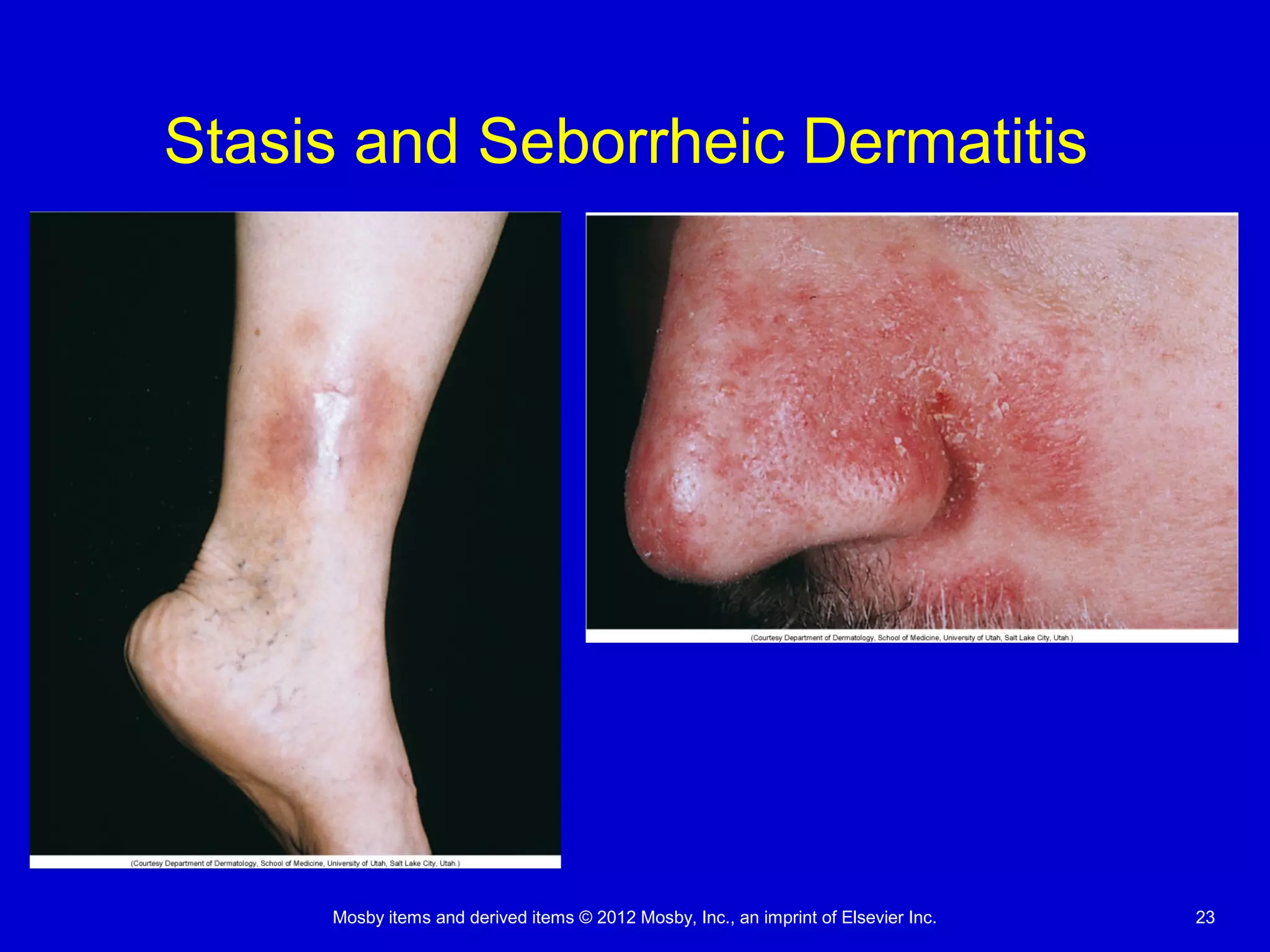
 Stasis dermatitis
 Occurs in the legs as a result of venous stasis,
edema, and vascular trauma
 Sequence of events:
• Erythema
• Pruritus
• Scaling
• Petechiae
• Ulcerations
Mosby items and derived items © 2012 Mosby, Inc., an imprint of Elsevier Inc. 22
Inflammatory Disorders (cont’d)
 Seborrheic dermatitis
 Inflammation of the skin involving the scalp,
eyebrows, eyelids, nasolabial folds, and ear
canals
 Scaly, white, or yellowish plaques
Mosby items and derived items © 2012 Mosby, Inc., an imprint of Elsevier Inc. 23
Stasis and Seborrheic Dermatitis
Mosby items and derived items © 2012 Mosby, Inc., an imprint of Elsevier Inc. 24
Papulosquamous Disorders
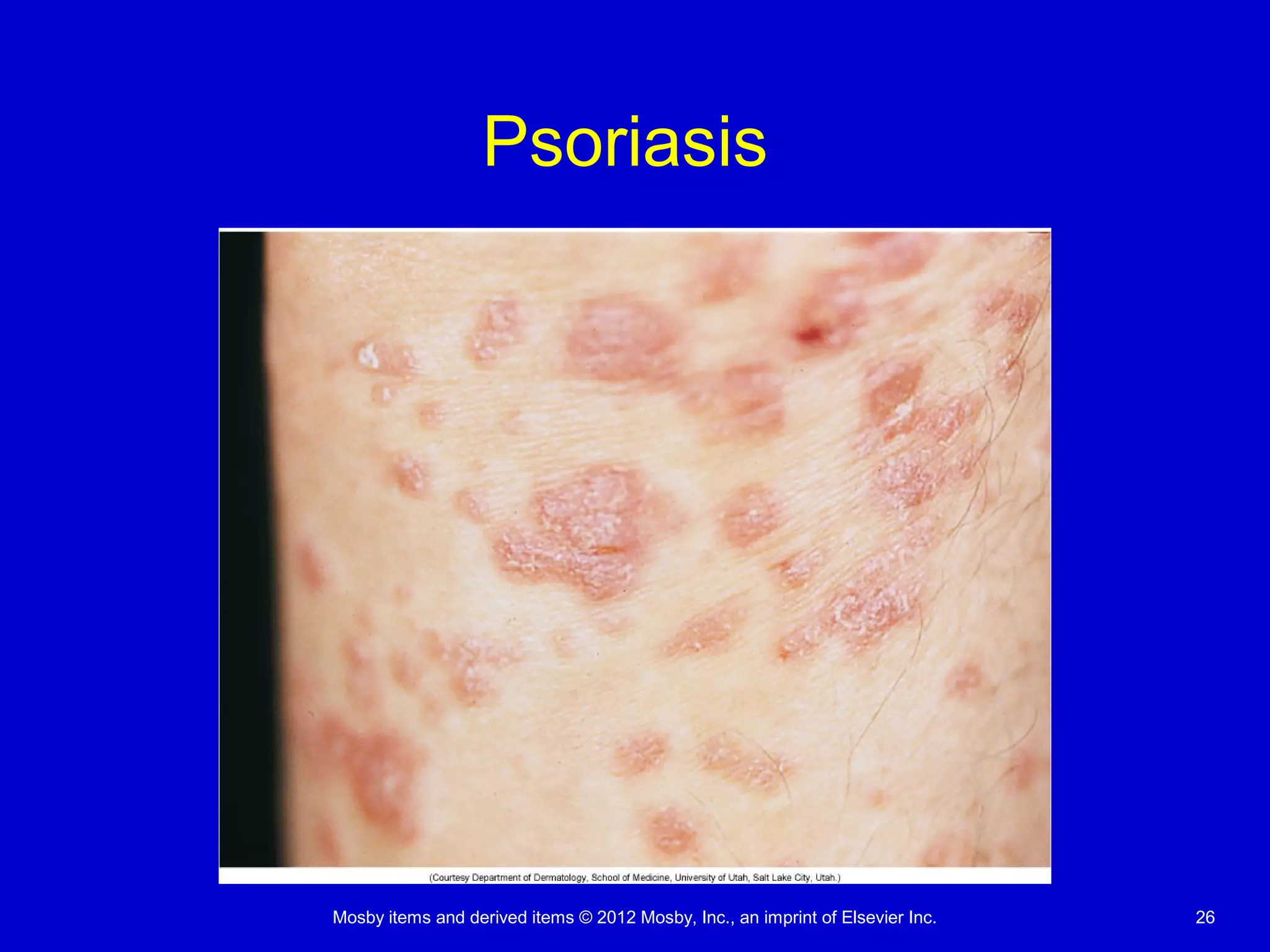
 Psoriasis
 Chronic, relapsing, proliferative skin disorder
 T cell immune- mediated skin disease
 Scaly, thick, silvery, elevated lesions, usually
on the scalp, elbows, or knees caused by a
high rate of mitosis in the basale layer
Mosby items and derived items © 2012 Mosby, Inc., an imprint of Elsevier Inc. 25
Papulosquamous Disorders
(cont’d)
 Psoriasis (cont’d)
 Shows evidence of dermal and epidermal
thickening
 Epidermal turnover goes from 26 to 30 days to
3 to 4 days
 Cells do not have time to mature or adequately
keratinize
Mosby items and derived items © 2012 Mosby, Inc., an imprint of Elsevier Inc. 26
Psoriasis
Mosby items and derived items © 2012 Mosby, Inc., an imprint of Elsevier Inc. 27
Papulosquamous Disorders
 Psoriasis (cont’d)
 Plaque psoriasis
 Inverse psoriasis
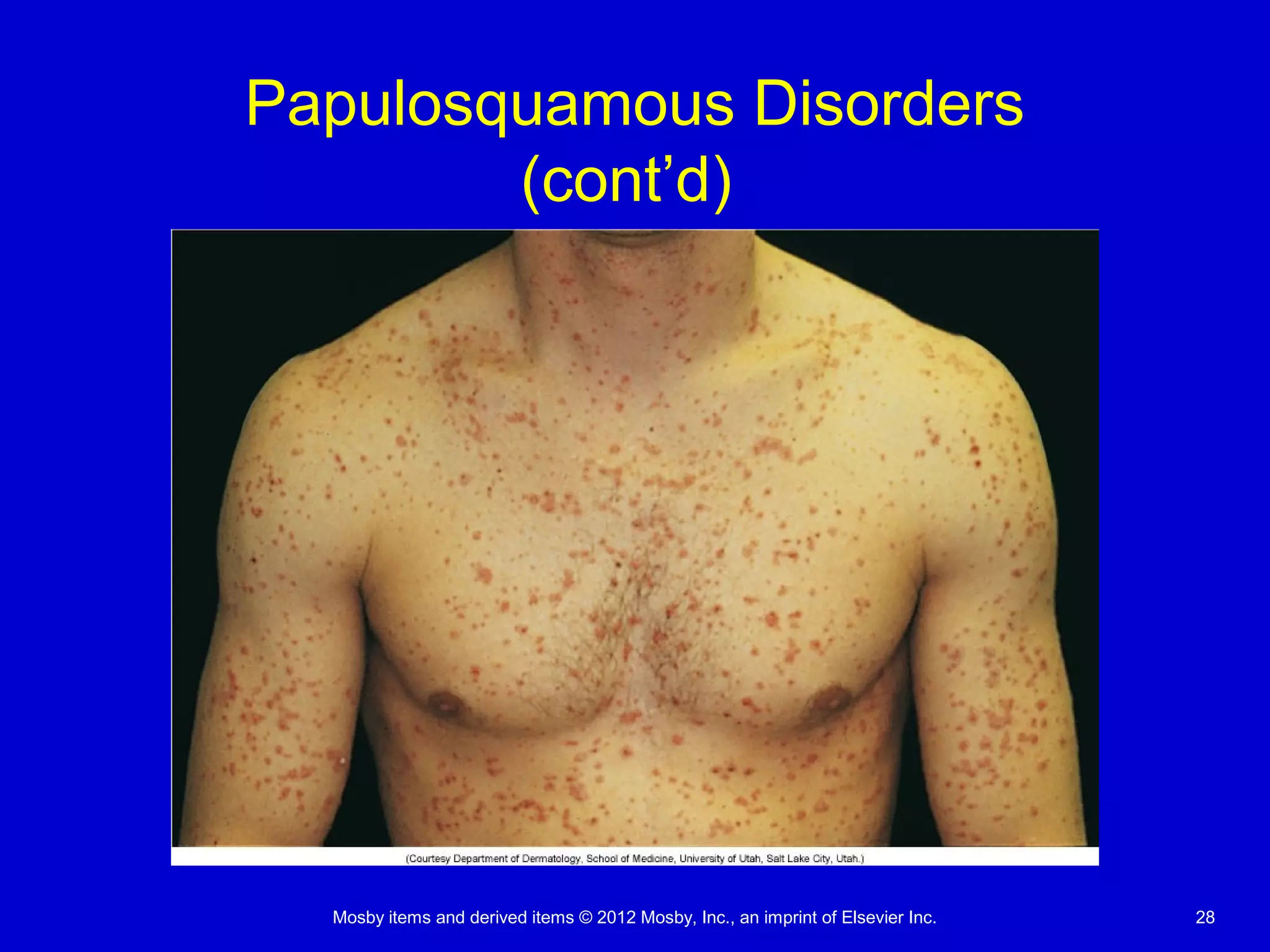
 Guttate psoriasis
 Pustular psoriasis
 Erythrodermic psoriasis
Mosby items and derived items © 2012 Mosby, Inc., an imprint of Elsevier Inc. 28
Papulosquamous Disorders
(cont’d)
Mosby items and derived items © 2012 Mosby, Inc., an imprint of Elsevier Inc. 29
Papulosquamous Disorders
(cont’d)
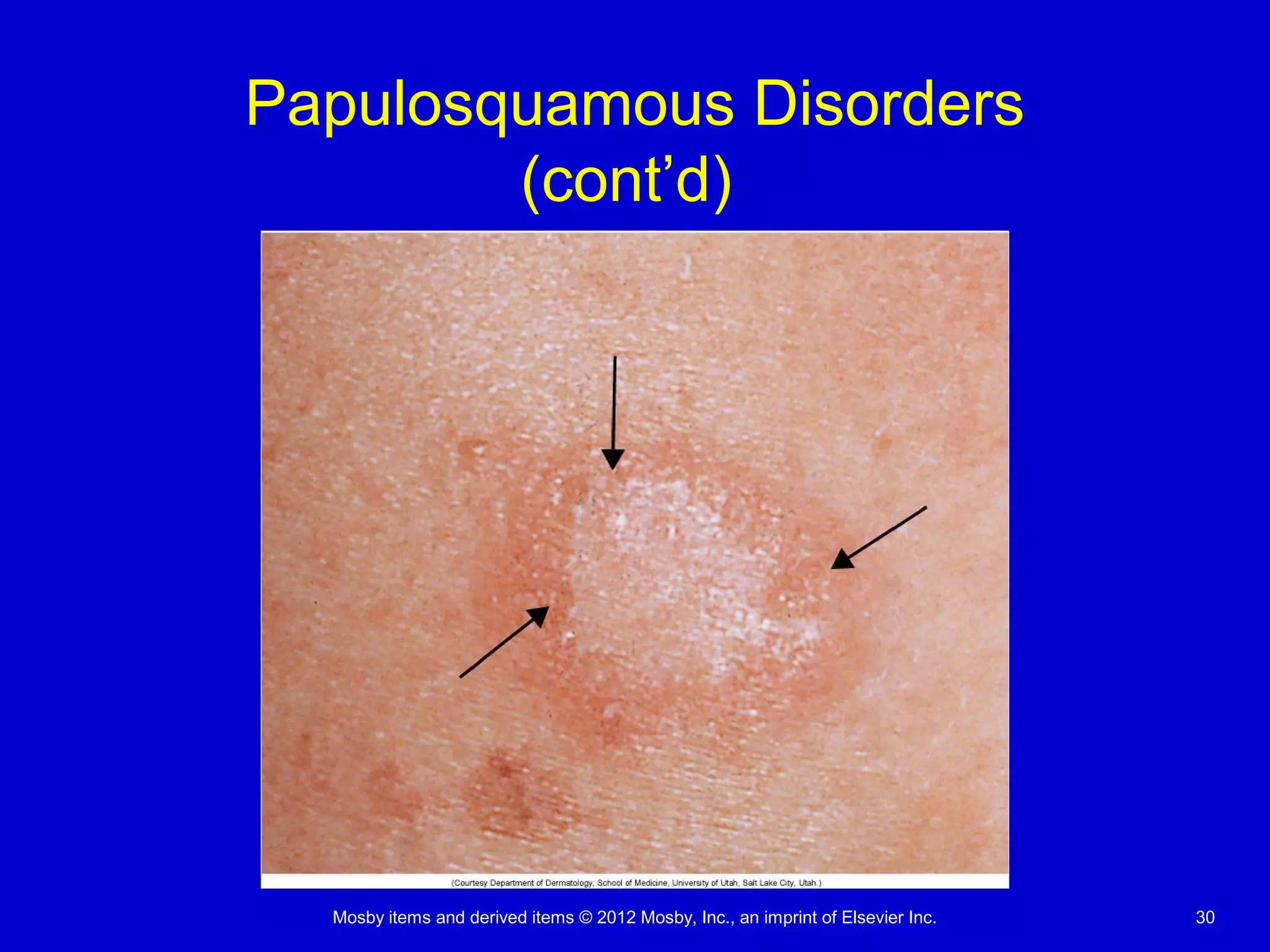
 Pityriasis rosea
 Benign, self-limiting inflammatory disorder
 Usually occurs during the winter months
 Herald patch
• Circular, demarcated, salmon-pink, 3- to 4-cm lesion
Mosby items and derived items © 2012 Mosby, Inc., an imprint of Elsevier Inc. 30
Papulosquamous Disorders
(cont’d)
Mosby items and derived items © 2012 Mosby, Inc., an imprint of Elsevier Inc. 31
Papulosquamous Disorders
(cont’d)
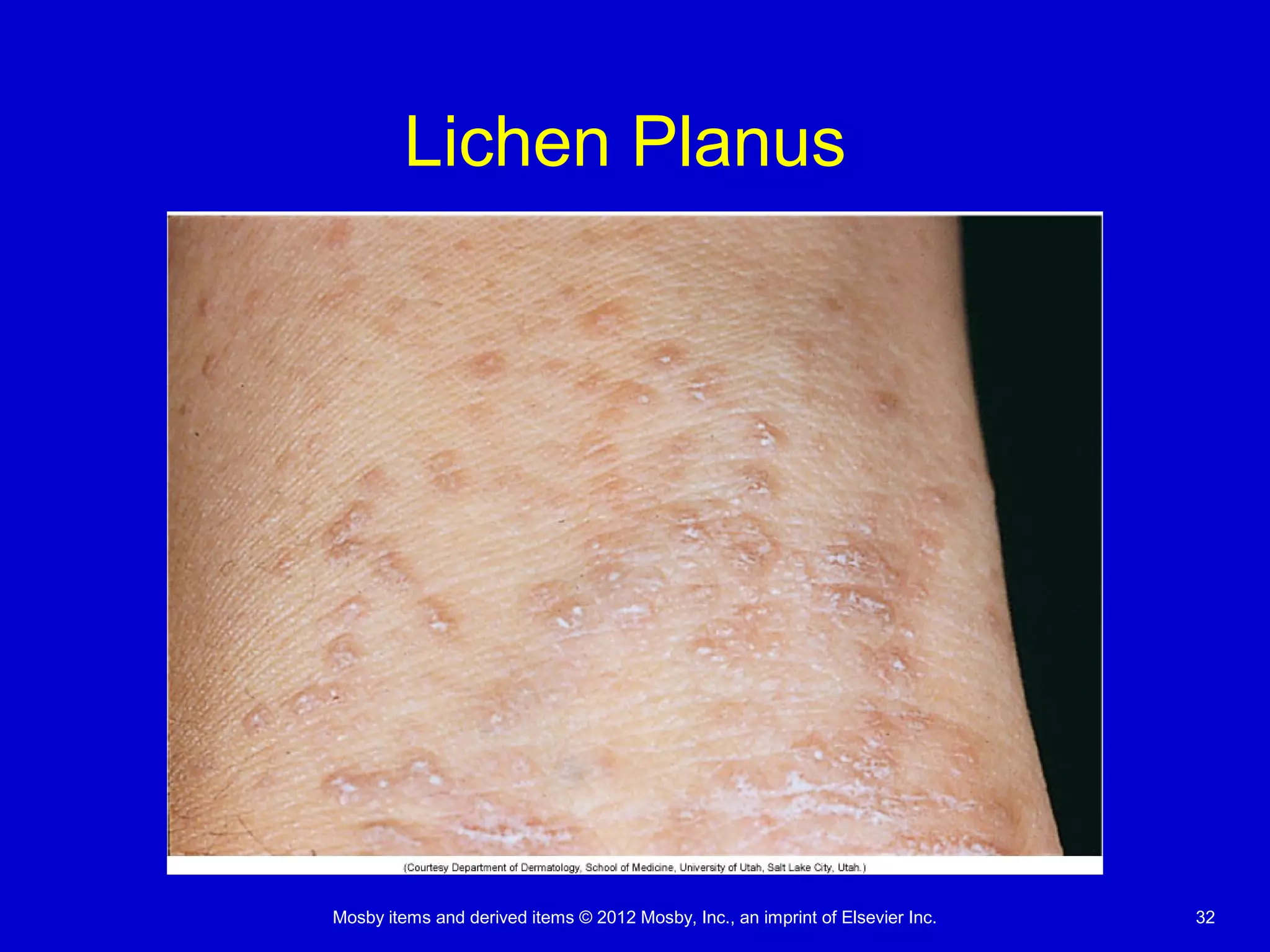
 Lichen planus
 Benign, inflammatory disorder of the skin and
mucous membranes
 Unknown origin, but T cells, adhesion
molecules, inflammatory cytokines, and
antigen presenting cells are involved
 Nonscaling, violet-colored, 2- to 4-mm lesions
 Wrists, ankles, lower legs, genitalia
Mosby items and derived items © 2012 Mosby, Inc., an imprint of Elsevier Inc. 32
Lichen Planus
Mosby items and derived items © 2012 Mosby, Inc., an imprint of Elsevier Inc. 33
Papulosquamous Disorders
 Acne vulgaris
 Inflammatory disease of the pilosebaceous
follicles
 Acne rosacea
 Inflammation of the skin that develops in
adulthood
 Lesions
• Erythematotelangiectatic, papulopustular,
phymatous, and ocular
• Associated with chronic, inappropriate vasodilation
resulting in flushing and sensitivity to the sun
Mosby items and derived items © 2012 Mosby, Inc., an imprint of Elsevier Inc. 34
Papulosquamous Disorders
(cont’d)
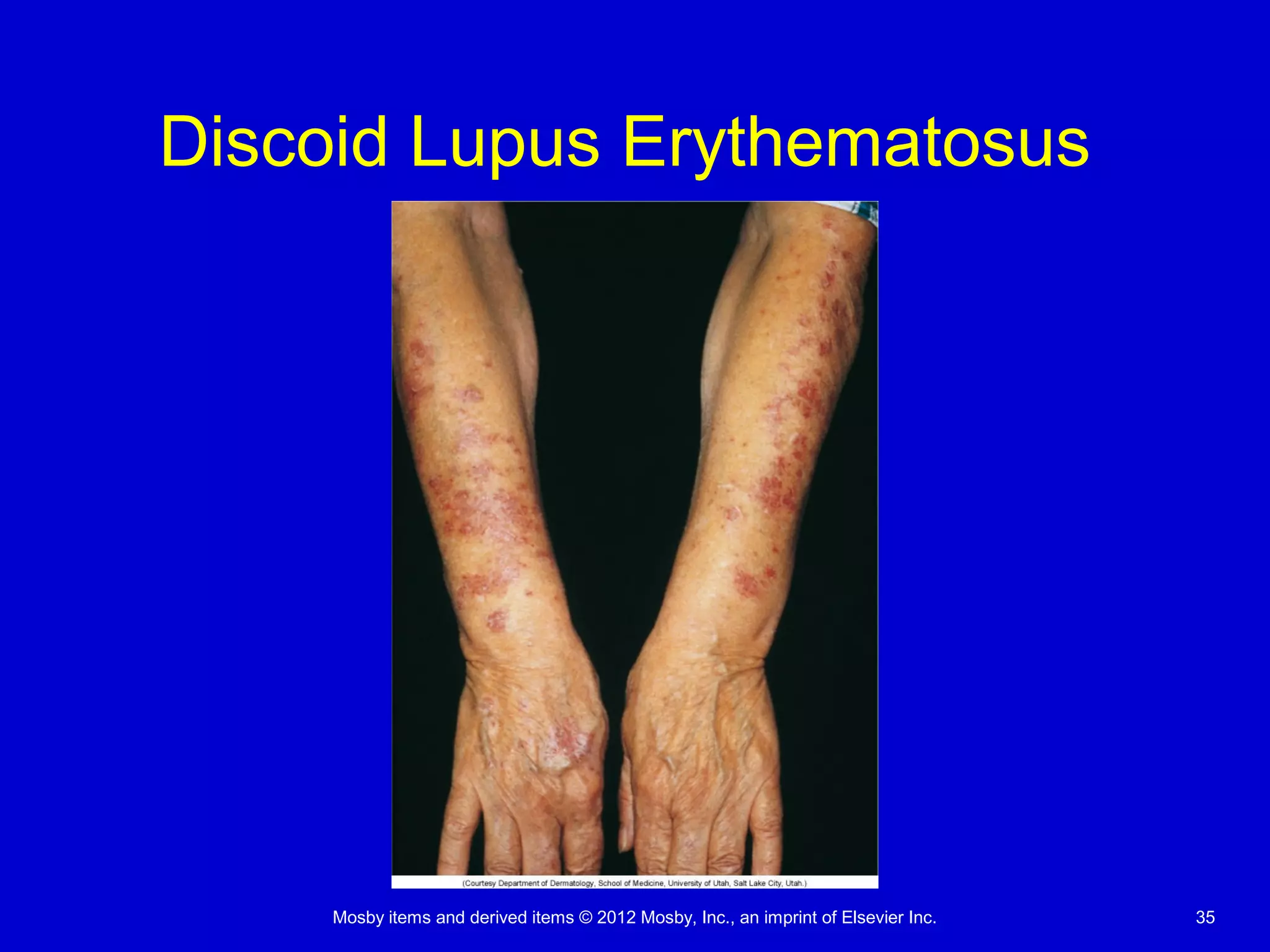
 Lupus erythematosus
 Inflammatory, autoimmune disease with
cutaneous manifestations
 Discoid lupus erythematosus
• Restricted to the skin
• Photosensitivity
• Butterfly pattern over the nose and cheeks
 Systemic lupus erythematosus
Mosby items and derived items © 2012 Mosby, Inc., an imprint of Elsevier Inc. 35
Discoid Lupus Erythematosus
Mosby items and derived items © 2012 Mosby, Inc., an imprint of Elsevier Inc. 36
Vesiculobullous Disorders
 Pemphigus
 Rare, chronic, blister-forming disease of the
skin and oral mucous membranes
 Blisters form in the deep or superficial
epidermis
 Autoimmune disease caused by circulating IgG
autoantibodies
• The antibodies are against the cell surface adhesion
molecule, desmoglein in the suprabasal layer of the
epidermis
Mosby items and derived items © 2012 Mosby, Inc., an imprint of Elsevier Inc. 37
Vesiculobullous Disorders (cont’d)
 Pemphigus (cont’d)
 Tissue biopsies demonstrate autoantibody
presence
 Types:
• Pemphigus vulgaris (severe)
• Pemphigus foliaceus
• Pemphigus erythematosus
Mosby items and derived items © 2012 Mosby, Inc., an imprint of Elsevier Inc. 38
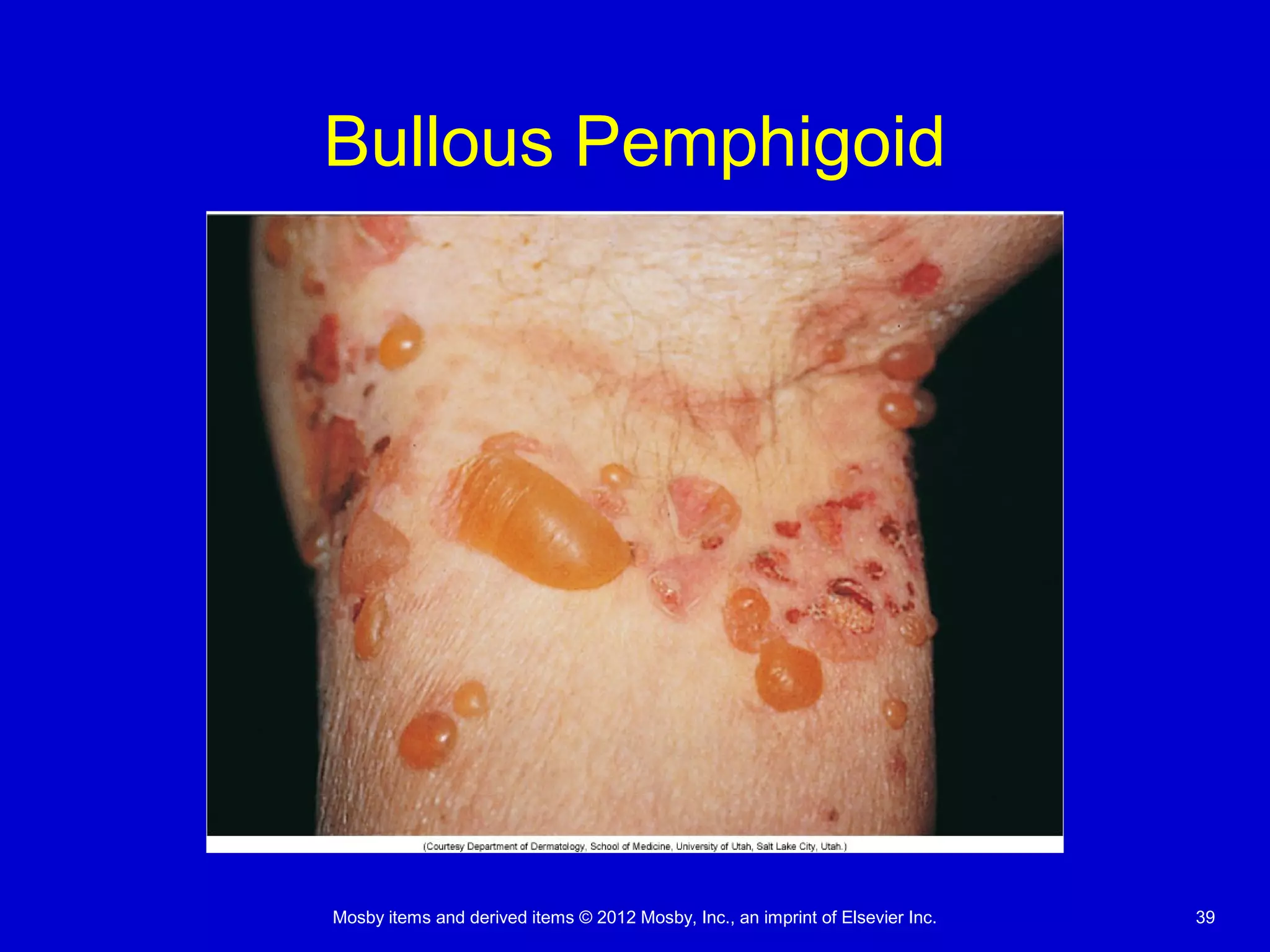
Vesiculobullous Disorders (cont’d)
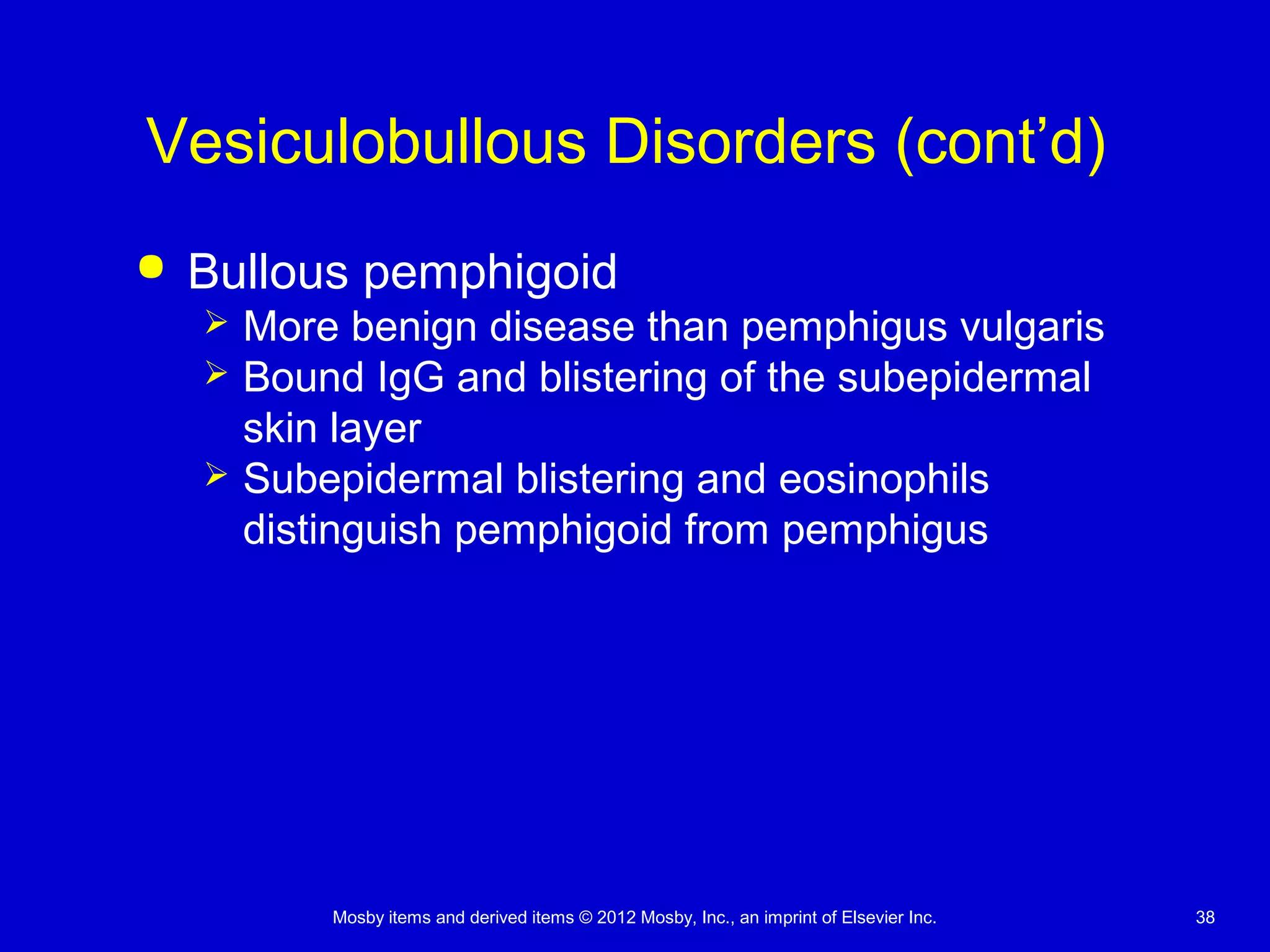
 Bullous pemphigoid
 More benign disease than pemphigus vulgaris
 Bound IgG and blistering of the subepidermal
skin layer
 Subepidermal blistering and eosinophils
distinguish pemphigoid from pemphigus
Mosby items and derived items © 2012 Mosby, Inc., an imprint of Elsevier Inc. 39
Bullous Pemphigoid
Mosby items and derived items © 2012 Mosby, Inc., an imprint of Elsevier Inc. 40
Vesiculobullous Disorders
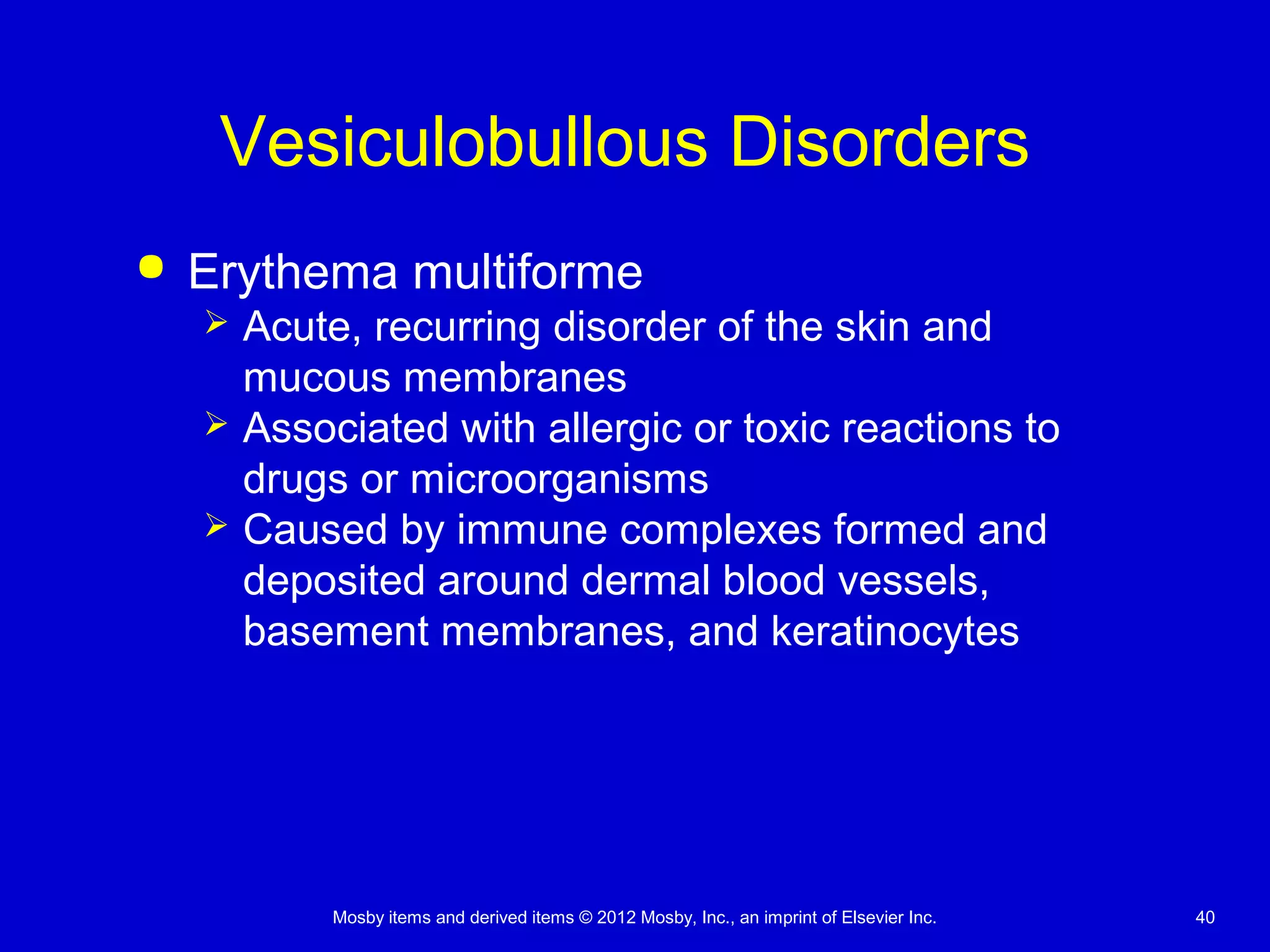
 Erythema multiforme
 Acute, recurring disorder of the skin and
mucous membranes
 Associated with allergic or toxic reactions to
drugs or microorganisms
 Caused by immune complexes formed and
deposited around dermal blood vessels,
basement membranes, and keratinocytes
Mosby items and derived items © 2012 Mosby, Inc., an imprint of Elsevier Inc. 41
Vesiculobullous Disorders (cont’d)
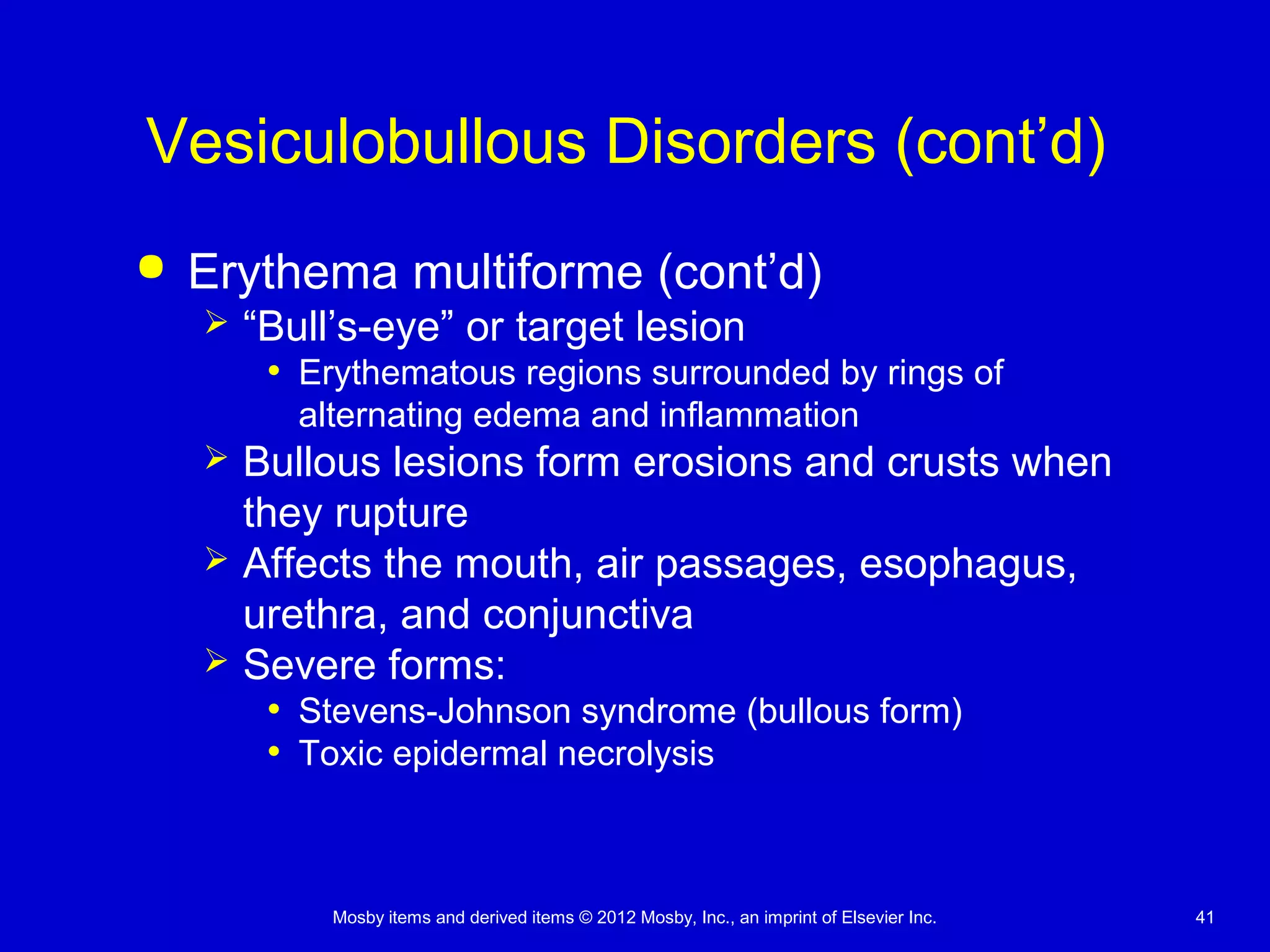
 Erythema multiforme (cont’d)
 “Bull’s-eye” or target lesion
• Erythematous regions surrounded by rings of
alternating edema and inflammation
 Bullous lesions form erosions and crusts when
they rupture
 Affects the mouth, air passages, esophagus,
urethra, and conjunctiva
 Severe forms:
• Stevens-Johnson syndrome (bullous form)
• Toxic epidermal necrolysis
Mosby items and derived items © 2012 Mosby, Inc., an imprint of Elsevier Inc. 42
Infections
 Bacterial infections:
 Folliculitis
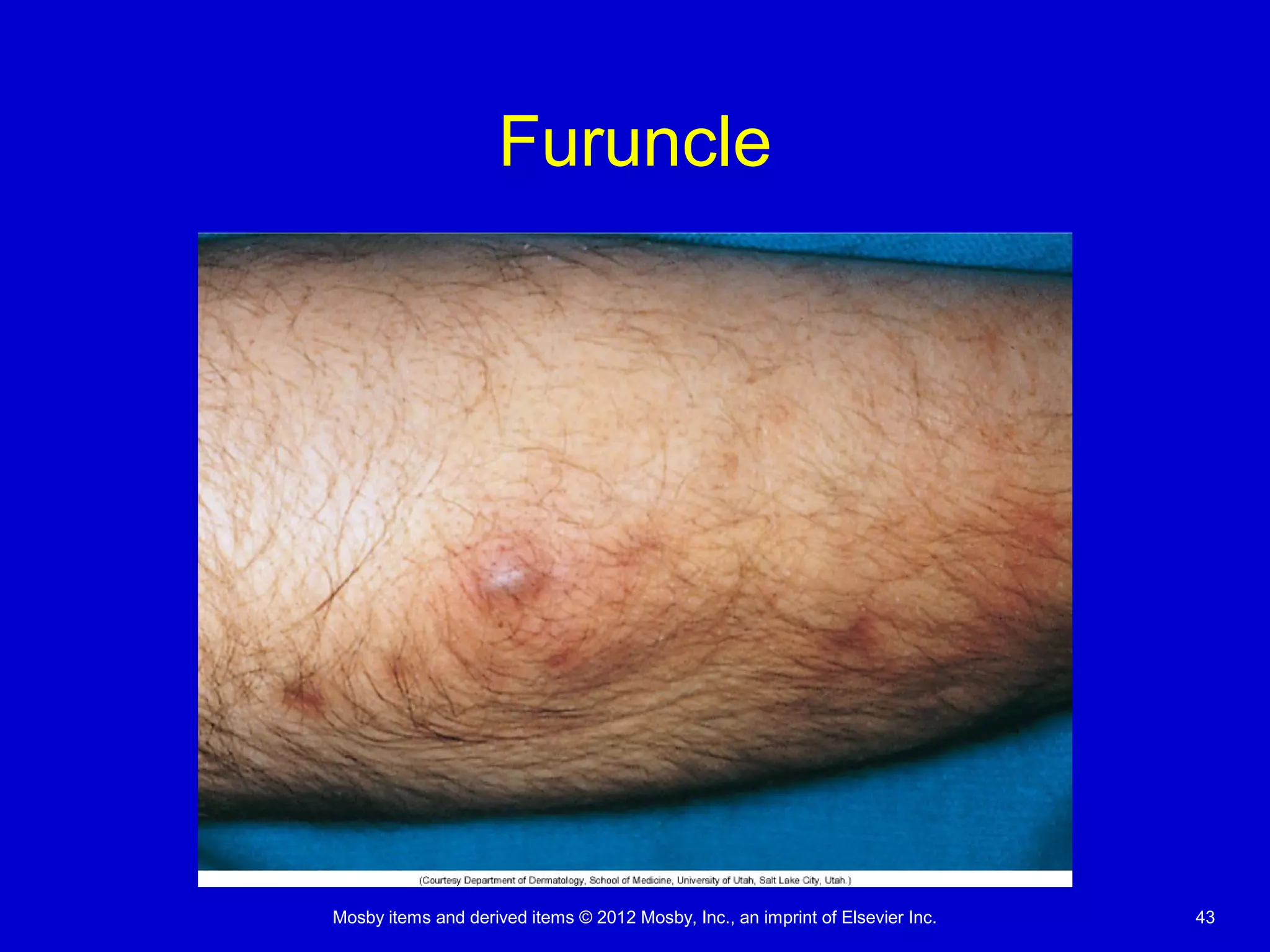
 Furuncles
 Carbuncles
 Cellulitis
 Erysipelas
 Impetigo
Mosby items and derived items © 2012 Mosby, Inc., an imprint of Elsevier Inc. 43
Furuncle
Mosby items and derived items © 2012 Mosby, Inc., an imprint of Elsevier Inc. 44
Infections
 Viral infections
 Herpes zoster and varicella
Mosby items and derived items © 2012 Mosby, Inc., an imprint of Elsevier Inc. 45
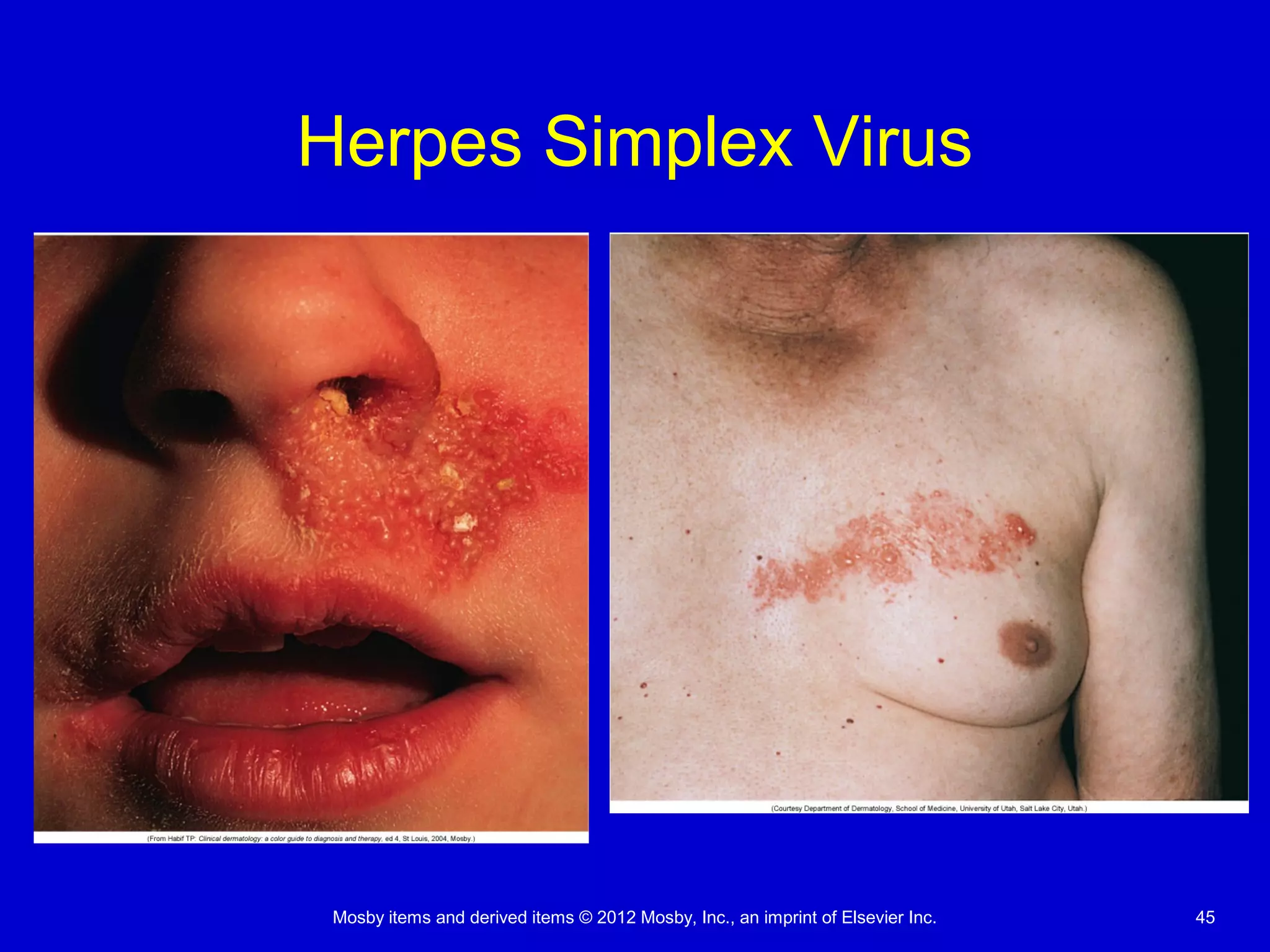
Herpes Simplex Virus
Mosby items and derived items © 2012 Mosby, Inc., an imprint of Elsevier Inc. 46
Warts
 Benign lesions caused by the human
papillomavirus (HPV)
 Diagnosed by visualization
 Condylomata acuminata
 Venereal warts
Mosby items and derived items © 2012 Mosby, Inc., an imprint of Elsevier Inc. 47
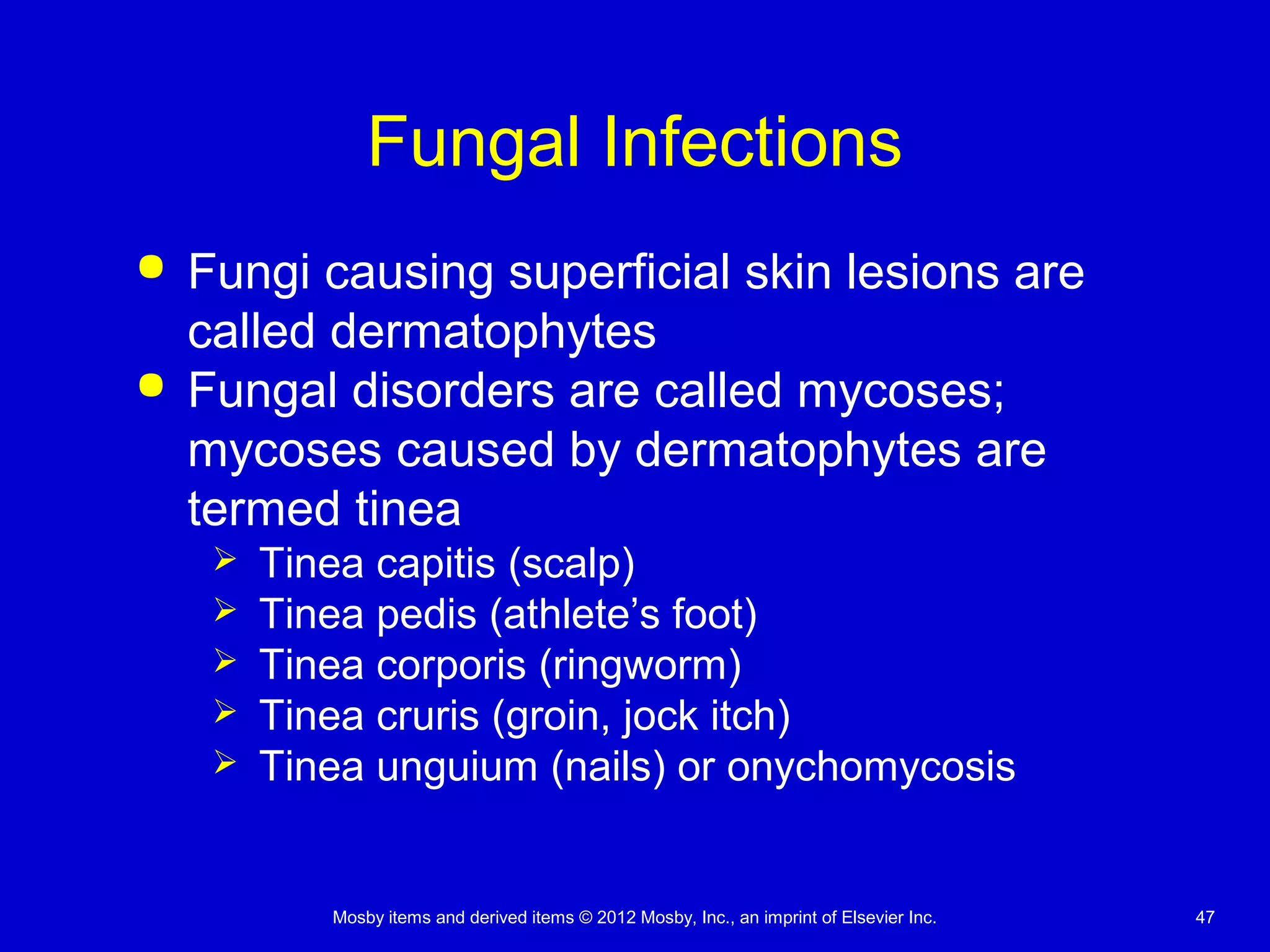
Fungal Infections
 Fungi causing superficial skin lesions are
called dermatophytes
 Fungal disorders are called mycoses;
mycoses caused by dermatophytes are
termed tinea
 Tinea capitis (scalp)
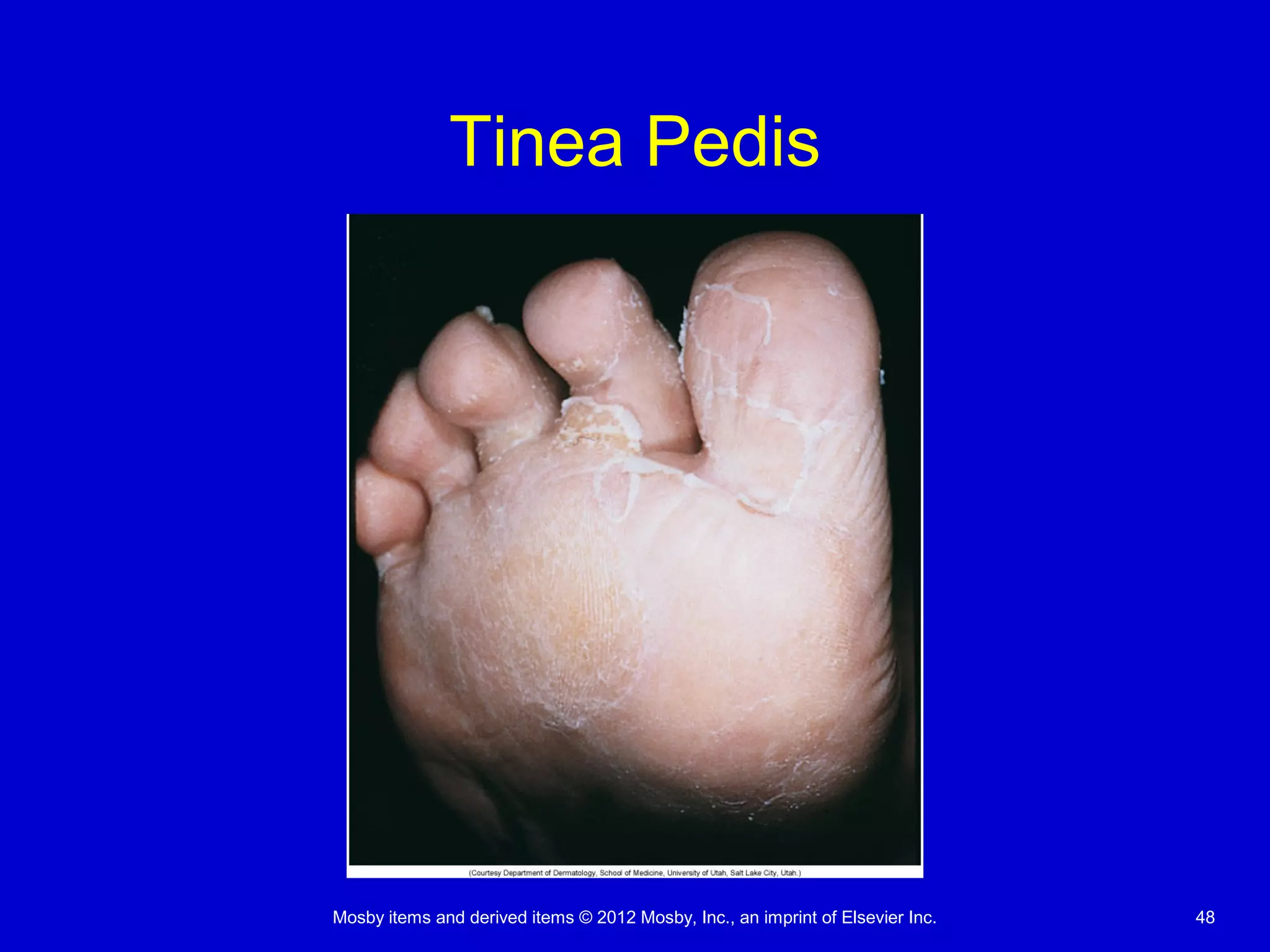
 Tinea pedis (athlete’s foot)
 Tinea corporis (ringworm)
 Tinea cruris (groin, jock itch)
 Tinea unguium (nails) or onychomycosis
Mosby items and derived items © 2012 Mosby, Inc., an imprint of Elsevier Inc. 48
Tinea Pedis
Mosby items and derived items © 2012 Mosby, Inc., an imprint of Elsevier Inc. 49
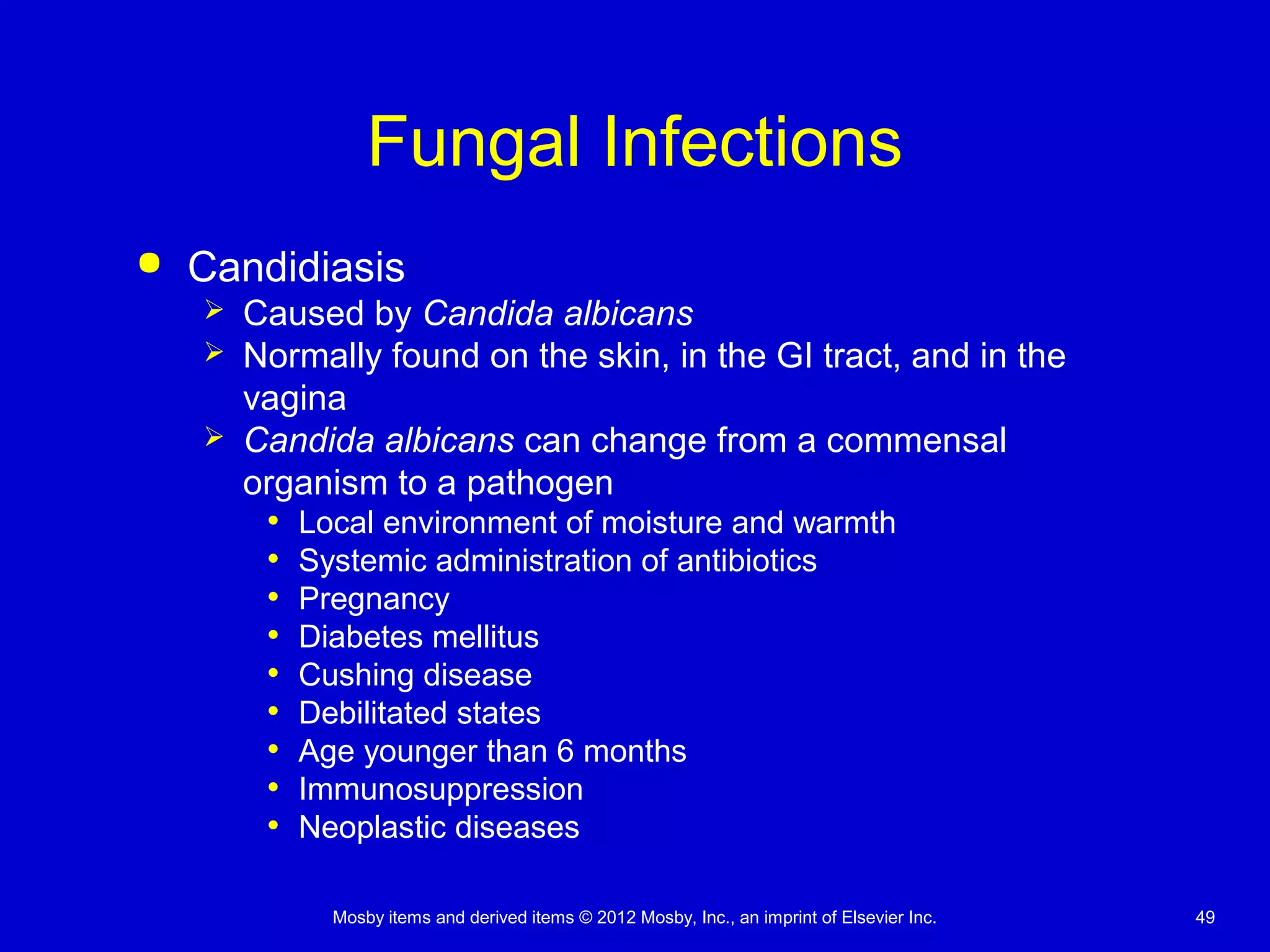
Fungal Infections
 Candidiasis
 Caused by Candida albicans
 Normally found on the skin, in the GI tract, and in the
vagina
 Candida albicans can change from a commensal
organism to a pathogen
• Local environment of moisture and warmth
• Systemic administration of antibiotics
• Pregnancy
• Diabetes mellitus
• Cushing disease
• Debilitated states
• Age younger than 6 months
• Immunosuppression
• Neoplastic diseases
Mosby items and derived items © 2012 Mosby, Inc., an imprint of Elsevier Inc. 50
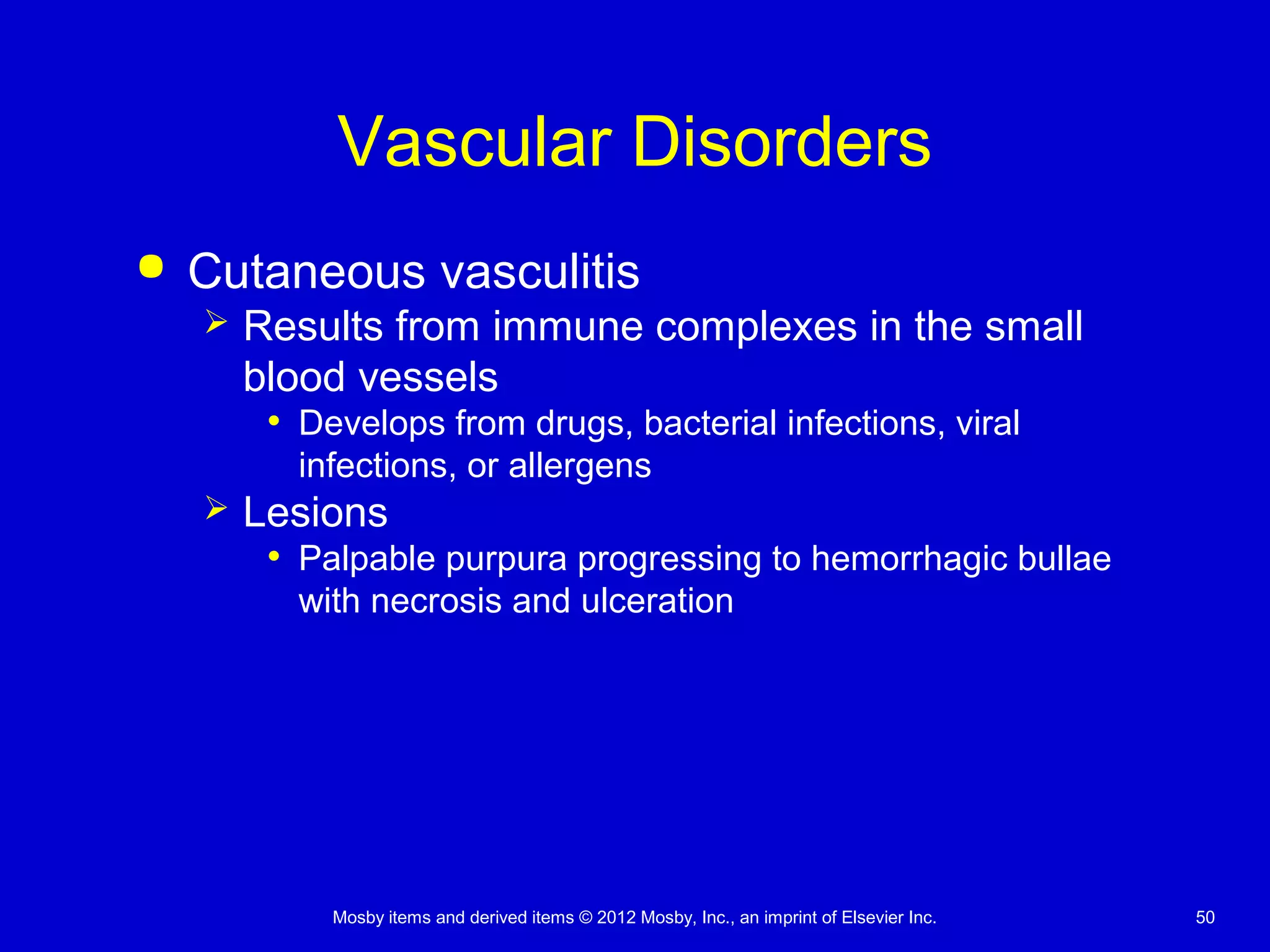
Vascular Disorders
 Cutaneous vasculitis
 Results from immune complexes in the small
blood vessels
• Develops from drugs, bacterial infections, viral
infections, or allergens
 Lesions
• Palpable purpura progressing to hemorrhagic bullae
with necrosis and ulceration
Mosby items and derived items © 2012 Mosby, Inc., an imprint of Elsevier Inc. 51
Vascular Disorders (cont’d)
 Urticaria
 Caused by type I hypersensitivity reactions to
allergens
 Histamine release causes endothelial cells of
the skin to contract
• Causes leakage of fluid from the vessels
 Treatment
• Antihistamines and steroids
Mosby items and derived items © 2012 Mosby, Inc., an imprint of Elsevier Inc. 52
Vascular Disorders (cont’d)
 Scleroderma
 Sclerosis of the skin that can progress to the
internal organs
 The disease is associated with several
antibodies
 Lesions exhibit massive deposits of collagen
with inflammation, vascular changes, and
capillary dilation
 Skin is hard, hypopigmented, taut, and tightly
connected to underlying tissue
Mosby items and derived items © 2012 Mosby, Inc., an imprint of Elsevier Inc. 53
Vascular Disorders (cont’d)
 Scleroderma (cont’d)
 Facial skin becomes very tight
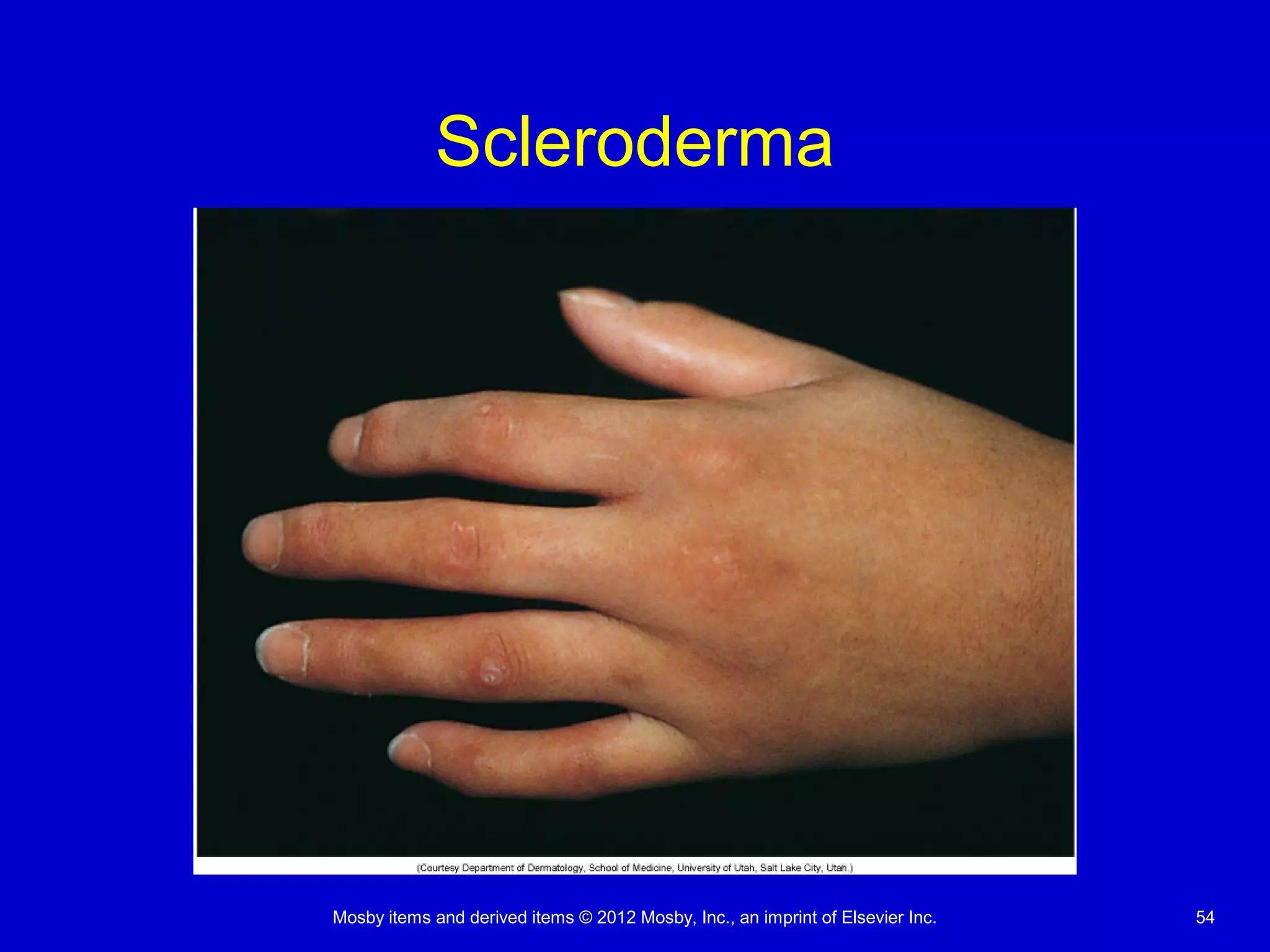
 Fingers become tapered and flexed; nails and
fingertips can be lost from atrophy
 Mouth may not open completely
 50% of patients die within 5 years
Mosby items and derived items © 2012 Mosby, Inc., an imprint of Elsevier Inc. 54
Scleroderma
Mosby items and derived items © 2012 Mosby, Inc., an imprint of Elsevier Inc. 55
Insect Bites
 Bees
 Mosquitoes
 Flies
Mosby items and derived items © 2012 Mosby, Inc., an imprint of Elsevier Inc. 56
Benign Tumors
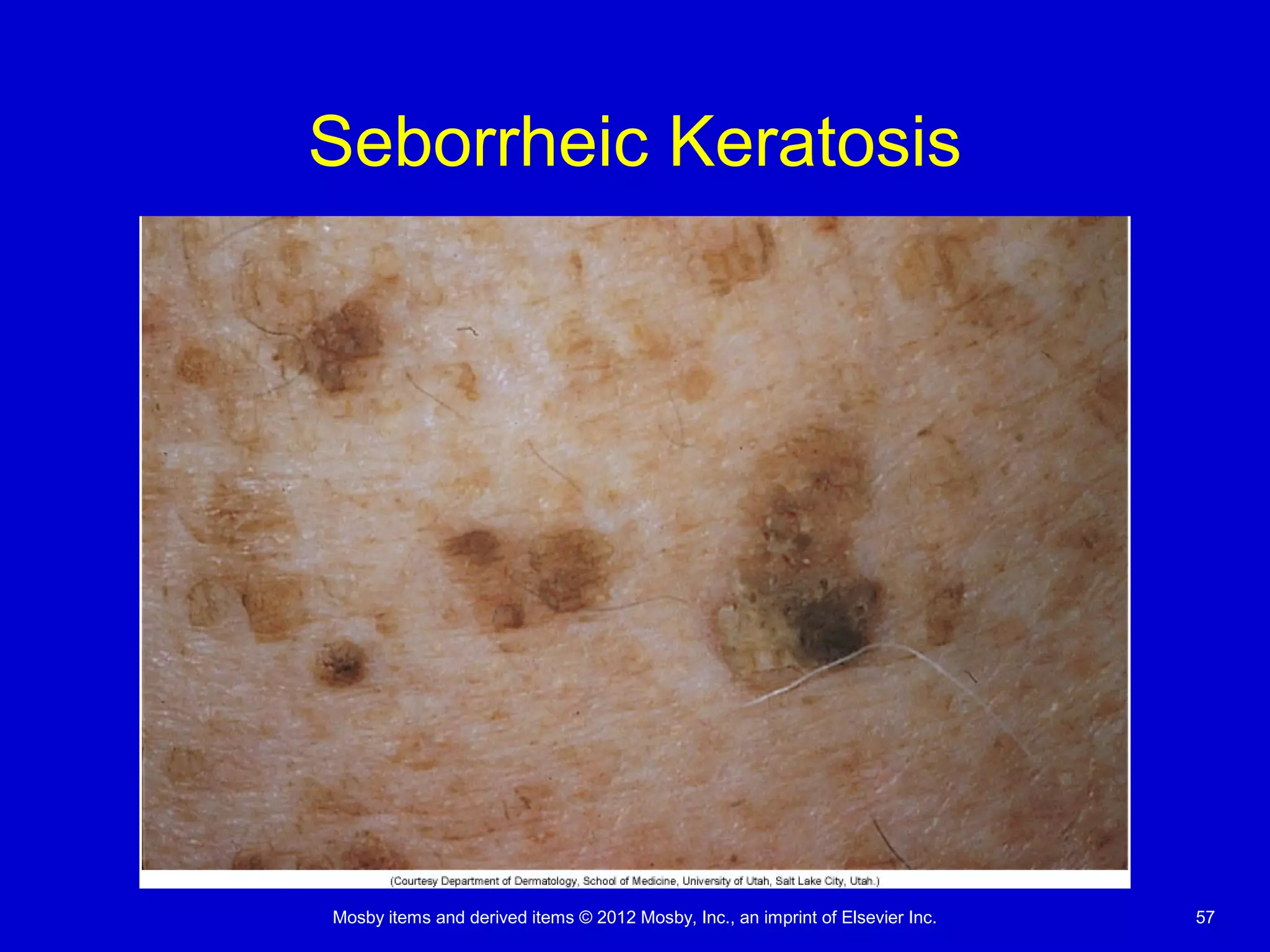
 Seborrheic keratosis
 Keratoacanthoma
 Actinic keratosis
 Nevi (moles)
Mosby items and derived items © 2012 Mosby, Inc., an imprint of Elsevier Inc. 57
Seborrheic Keratosis
Mosby items and derived items © 2012 Mosby, Inc., an imprint of Elsevier Inc. 58
Cancer
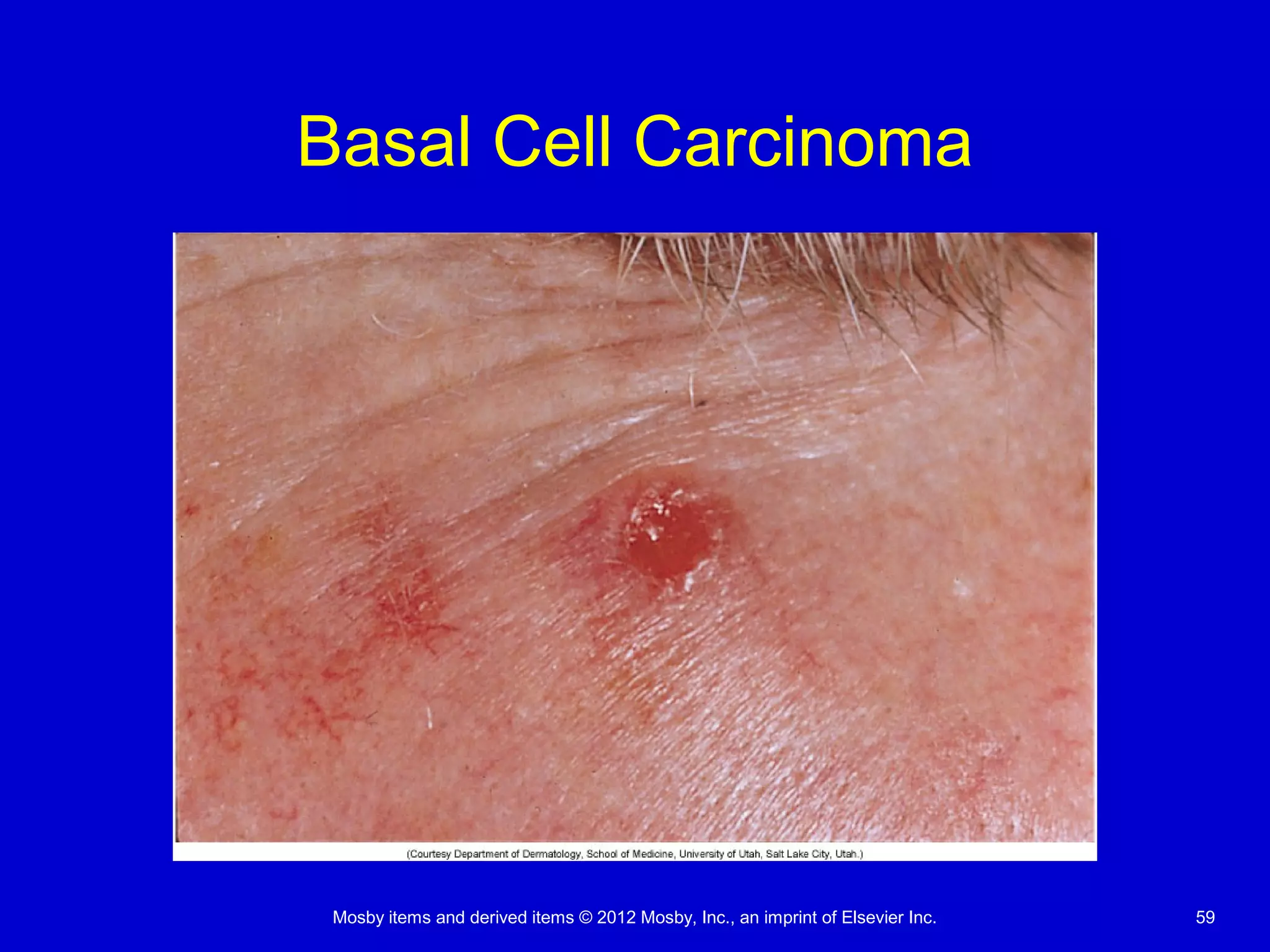
 Basal cell carcinoma
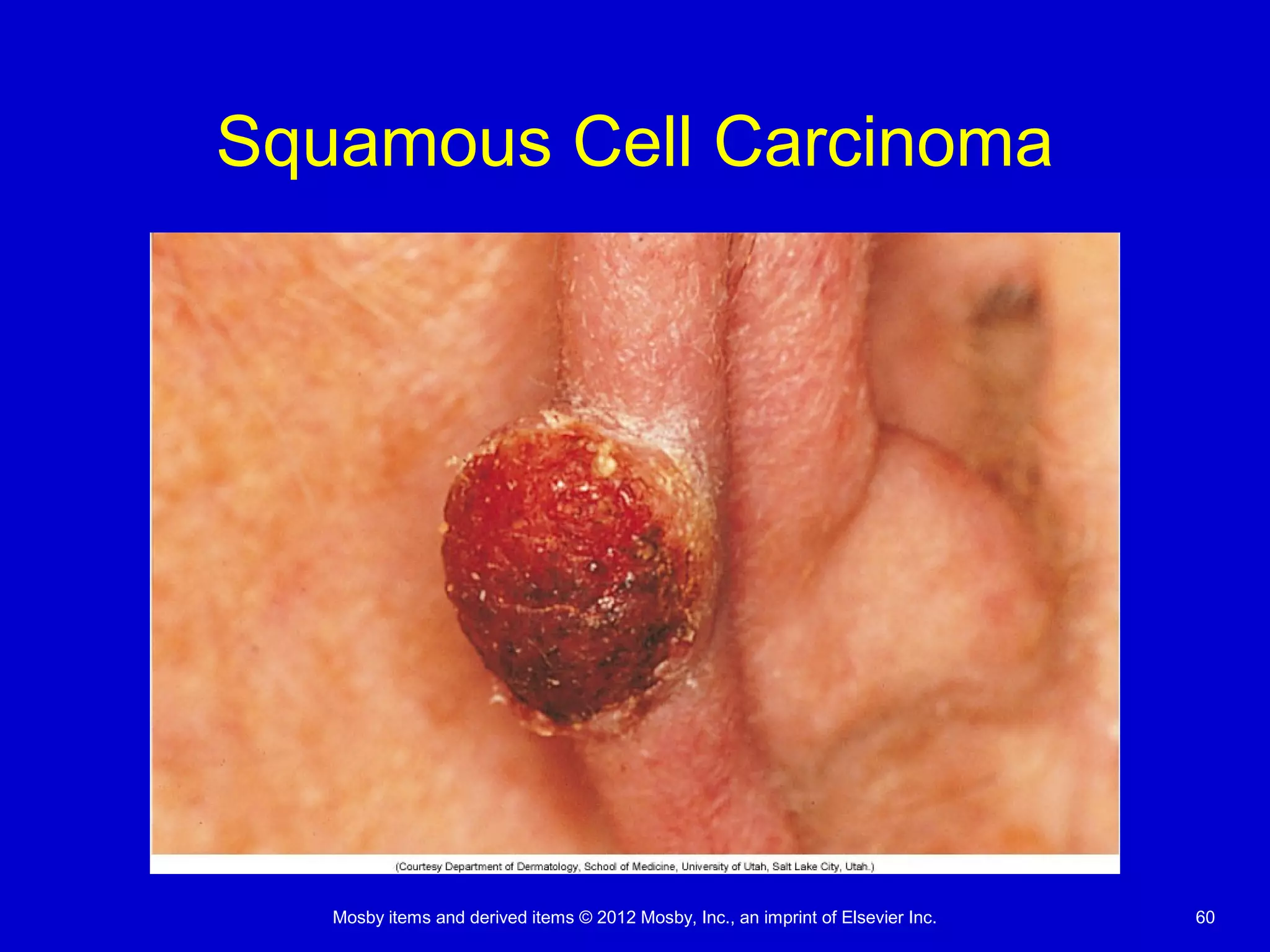
 Squamous cell carcinoma
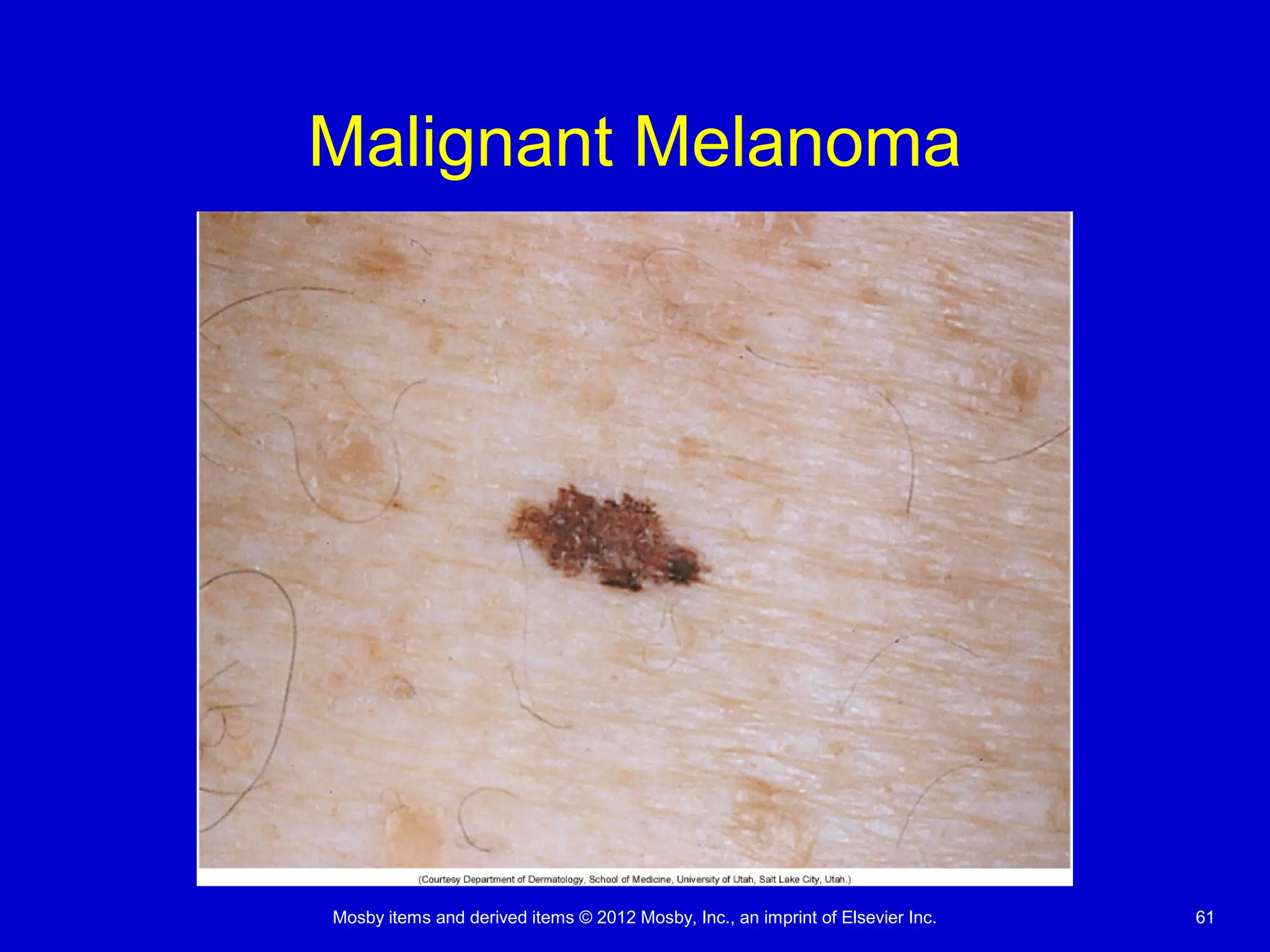
 Malignant melanoma
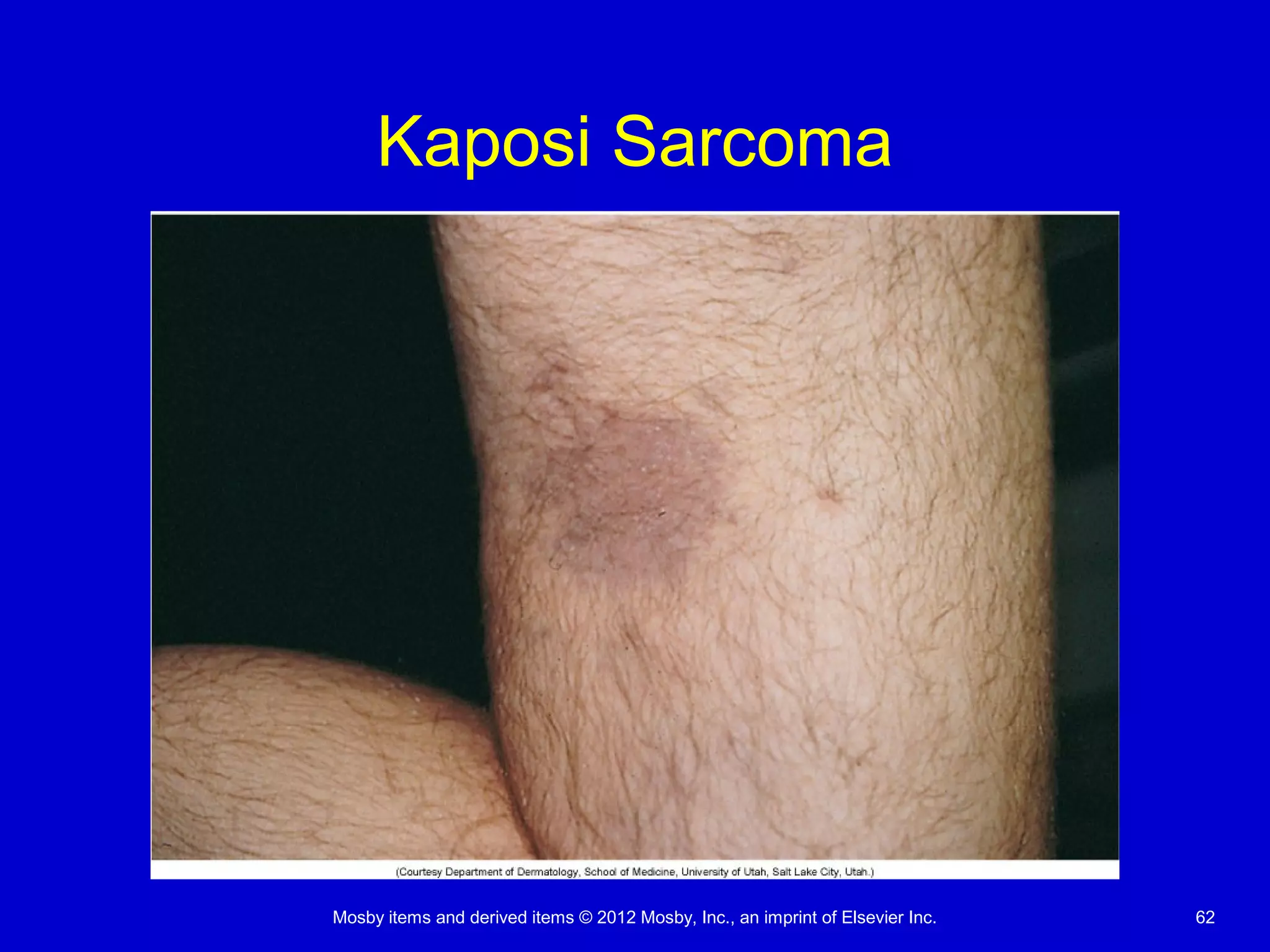
 Kaposi sarcoma
Mosby items and derived items © 2012 Mosby, Inc., an imprint of Elsevier Inc. 59
Basal Cell Carcinoma
Mosby items and derived items © 2012 Mosby, Inc., an imprint of Elsevier Inc. 60
Squamous Cell Carcinoma
Mosby items and derived items © 2012 Mosby, Inc., an imprint of Elsevier Inc. 61
Malignant Melanoma
Mosby items and derived items © 2012 Mosby, Inc., an imprint of Elsevier Inc. 62
Kaposi Sarcoma
Mosby items and derived items © 2012 Mosby, Inc., an imprint of Elsevier Inc. 63
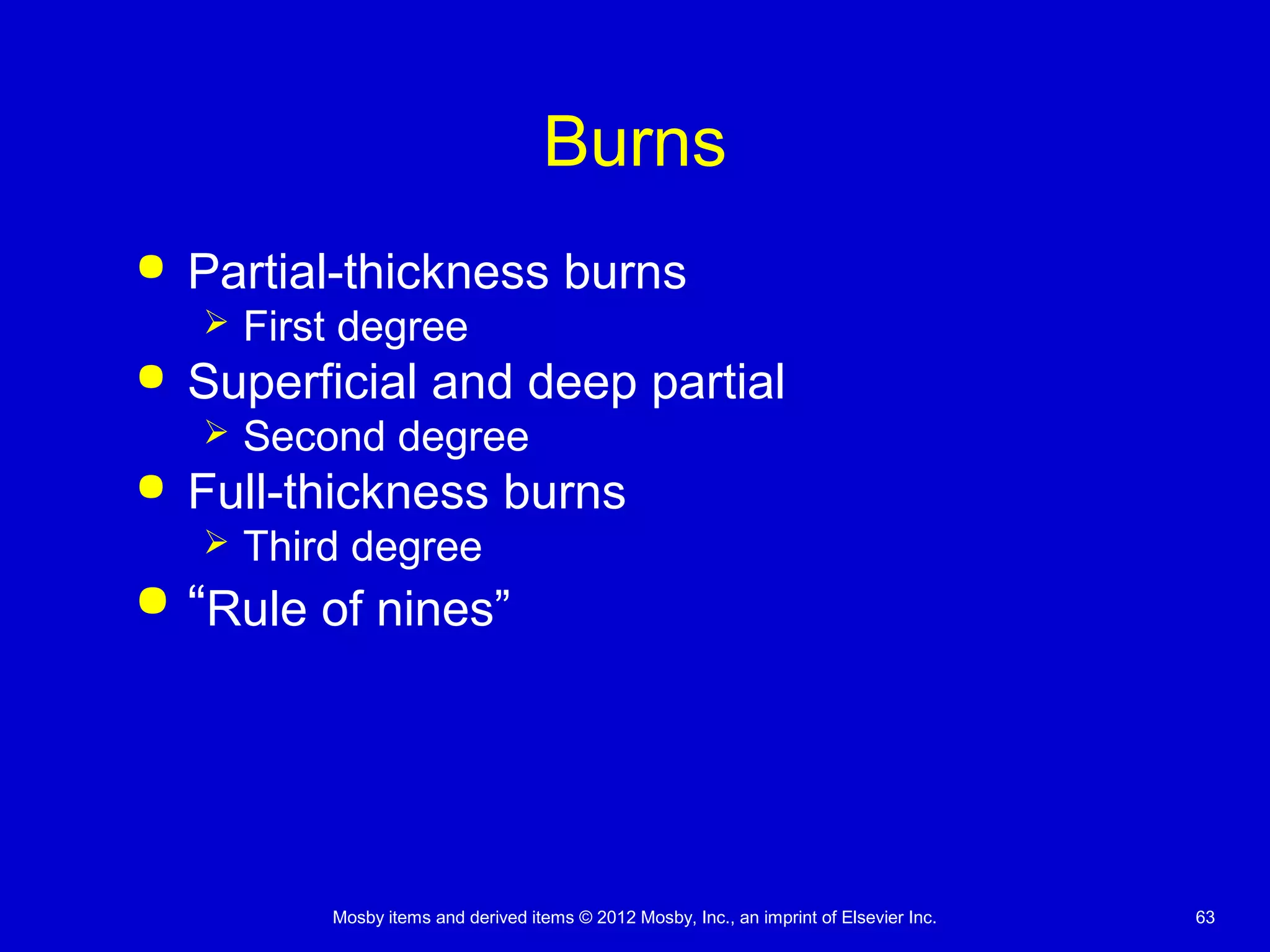
Burns
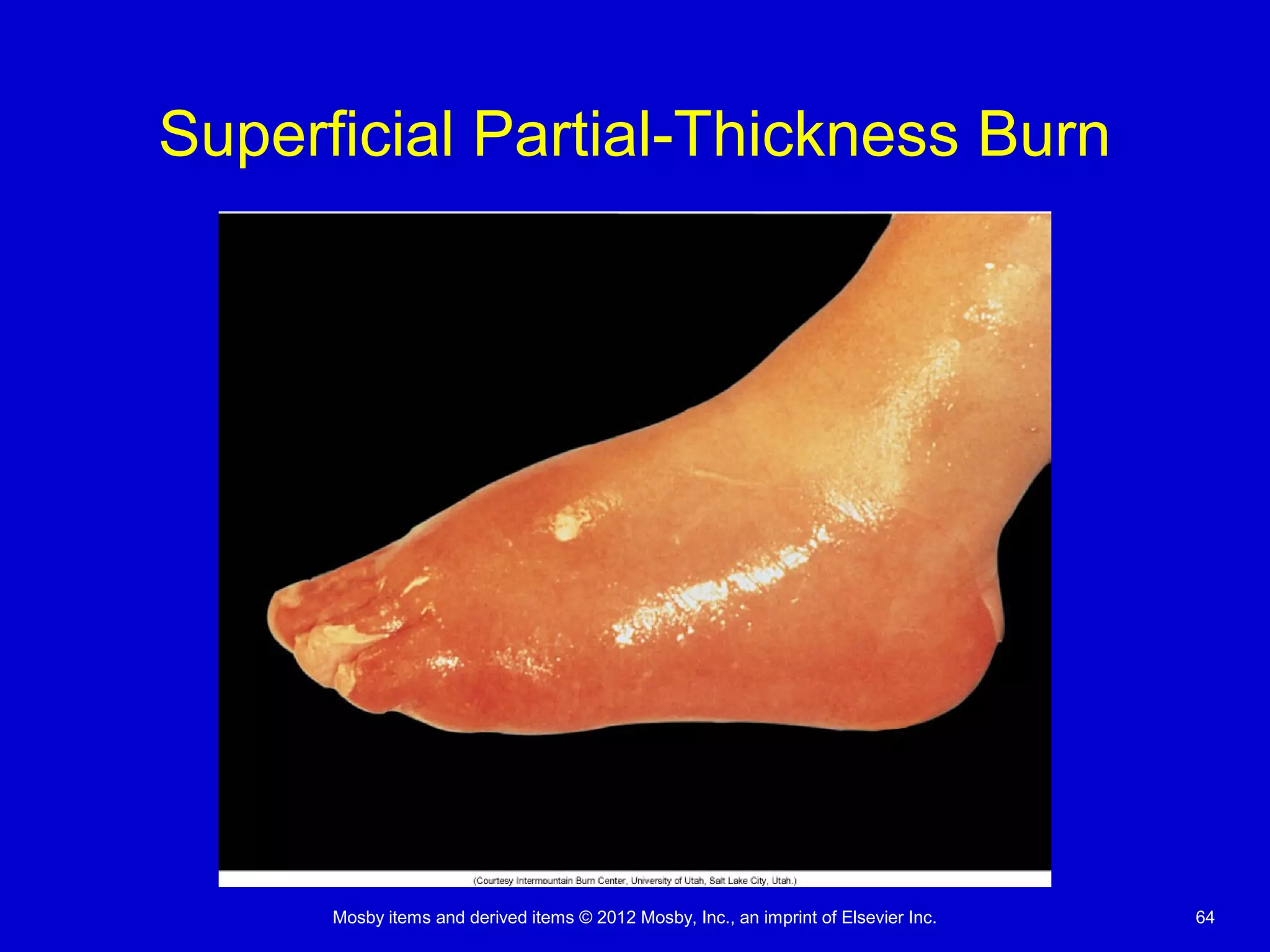
 Partial-thickness burns
 First degree
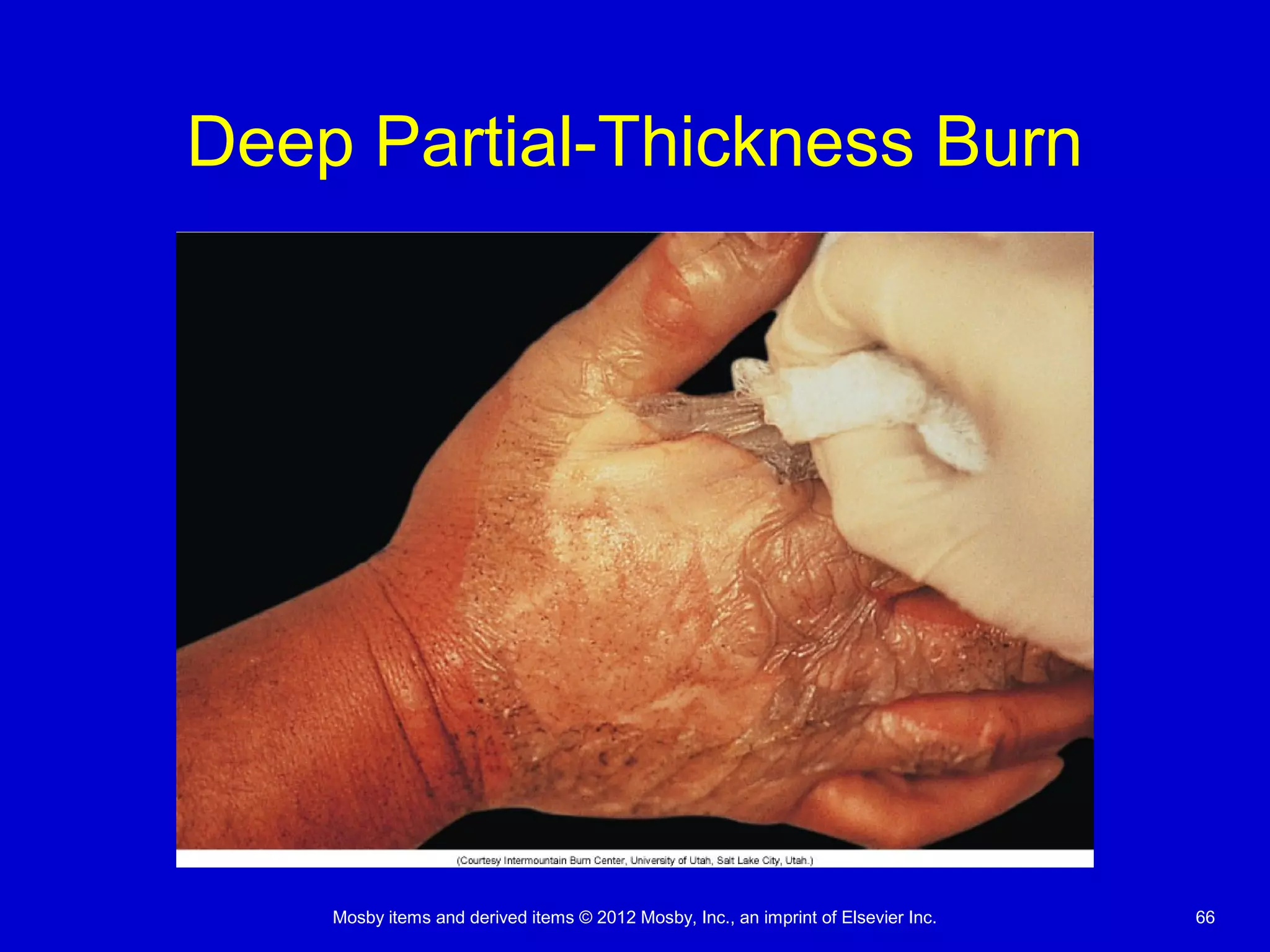
 Superficial and deep partial
 Second degree
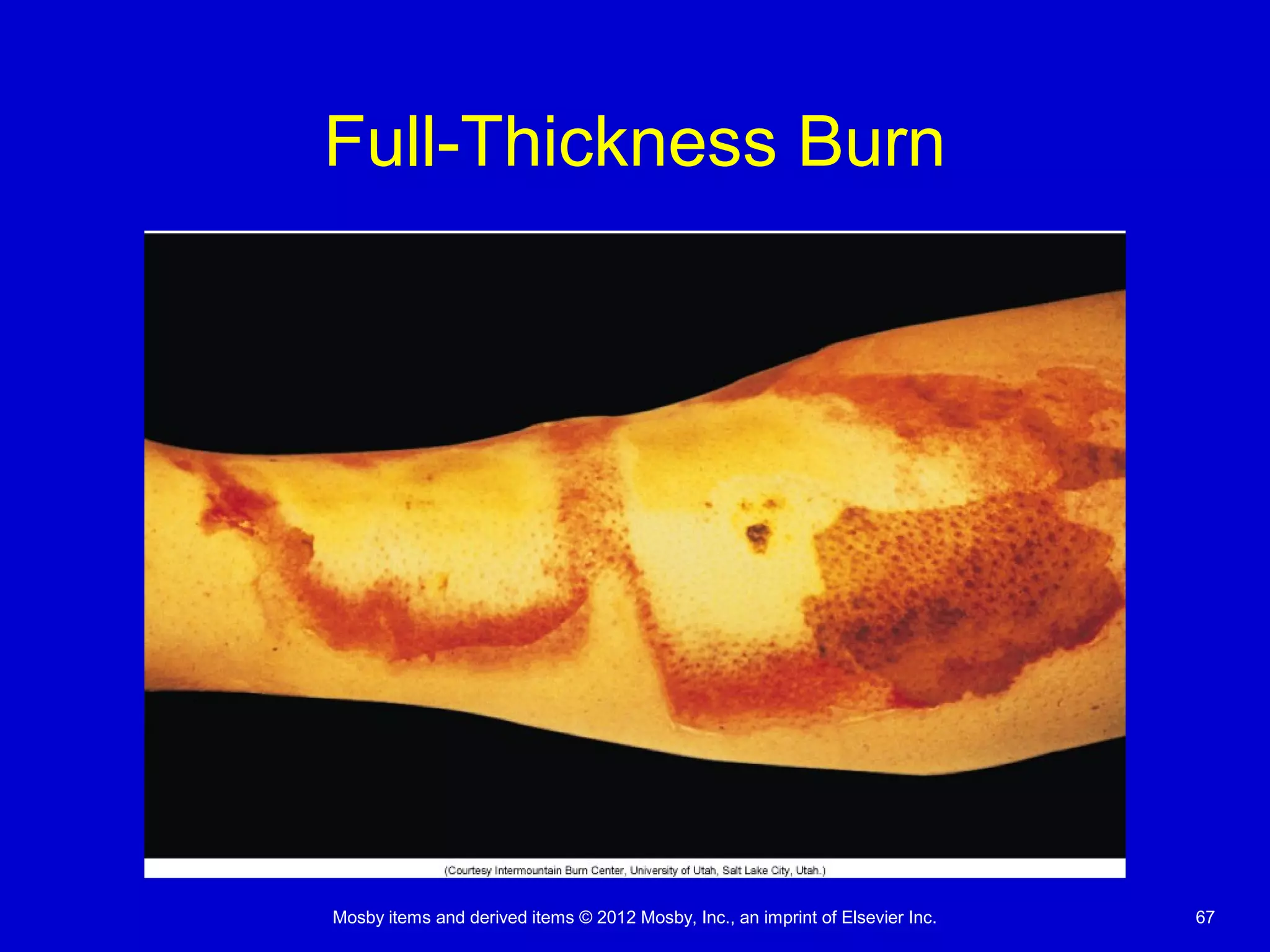
 Full-thickness burns
 Third degree
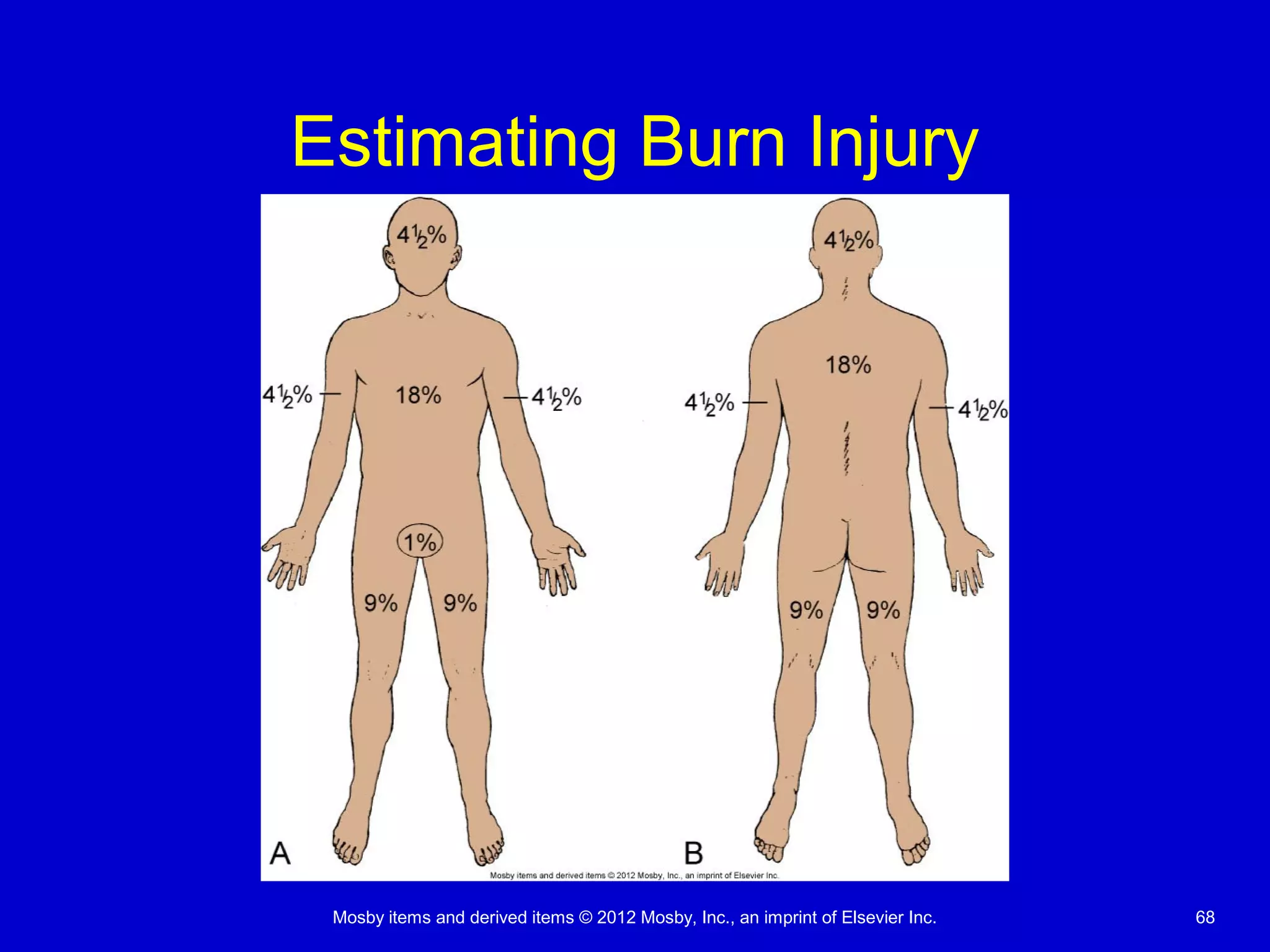
 “Rule of nines”
Mosby items and derived items © 2012 Mosby, Inc., an imprint of Elsevier Inc. 64
Superficial Partial-Thickness Burn
Mosby items and derived items © 2012 Mosby, Inc., an imprint of Elsevier Inc. 65
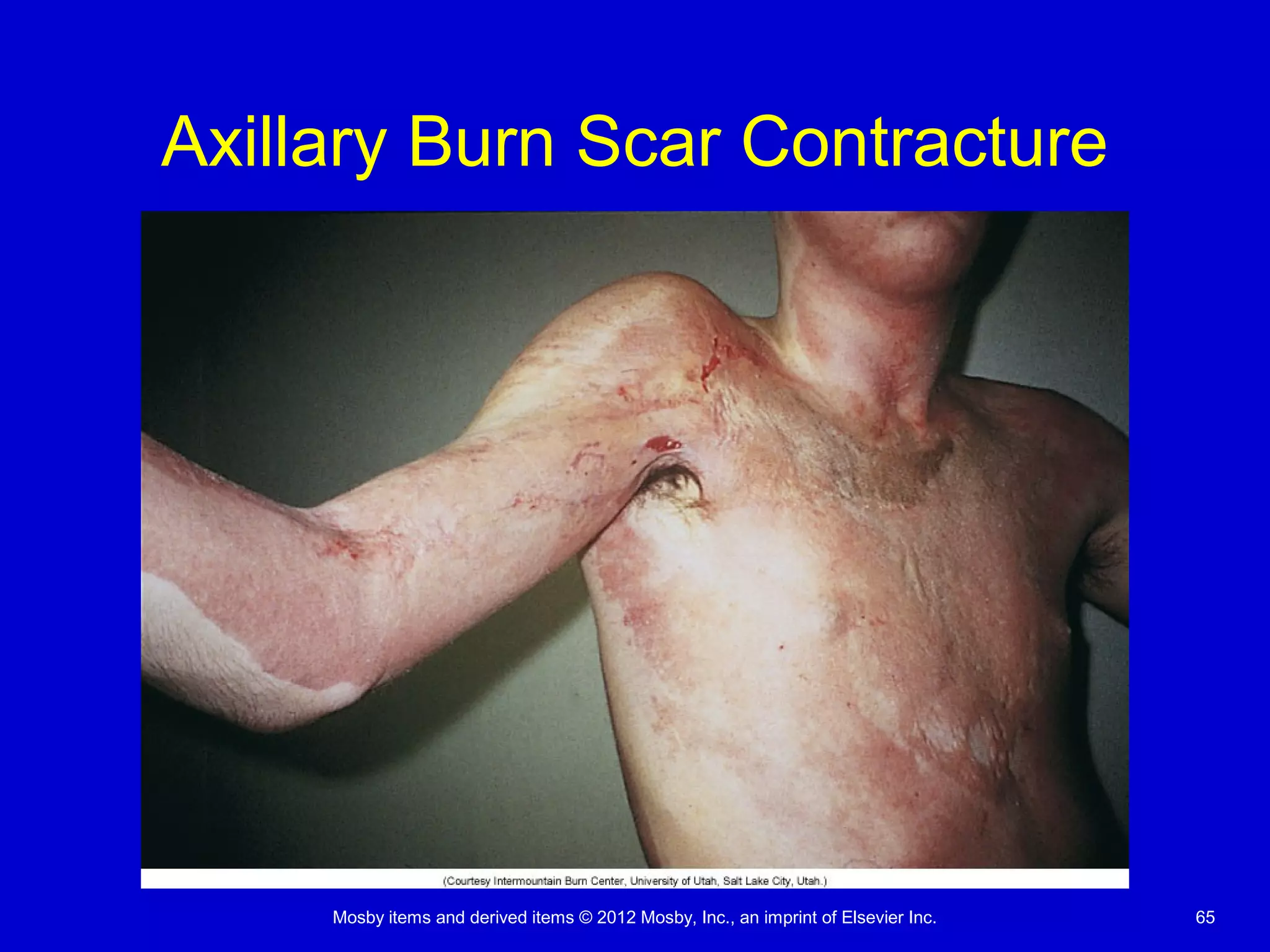
Axillary Burn Scar Contracture
Mosby items and derived items © 2012 Mosby, Inc., an imprint of Elsevier Inc. 66
Deep Partial-Thickness Burn
Mosby items and derived items © 2012 Mosby, Inc., an imprint of Elsevier Inc. 67
Full-Thickness Burn
Mosby items and derived items © 2012 Mosby, Inc., an imprint of Elsevier Inc. 68
Estimating Burn Injury
Mosby items and derived items © 2012 Mosby, Inc., an imprint of Elsevier Inc. 69
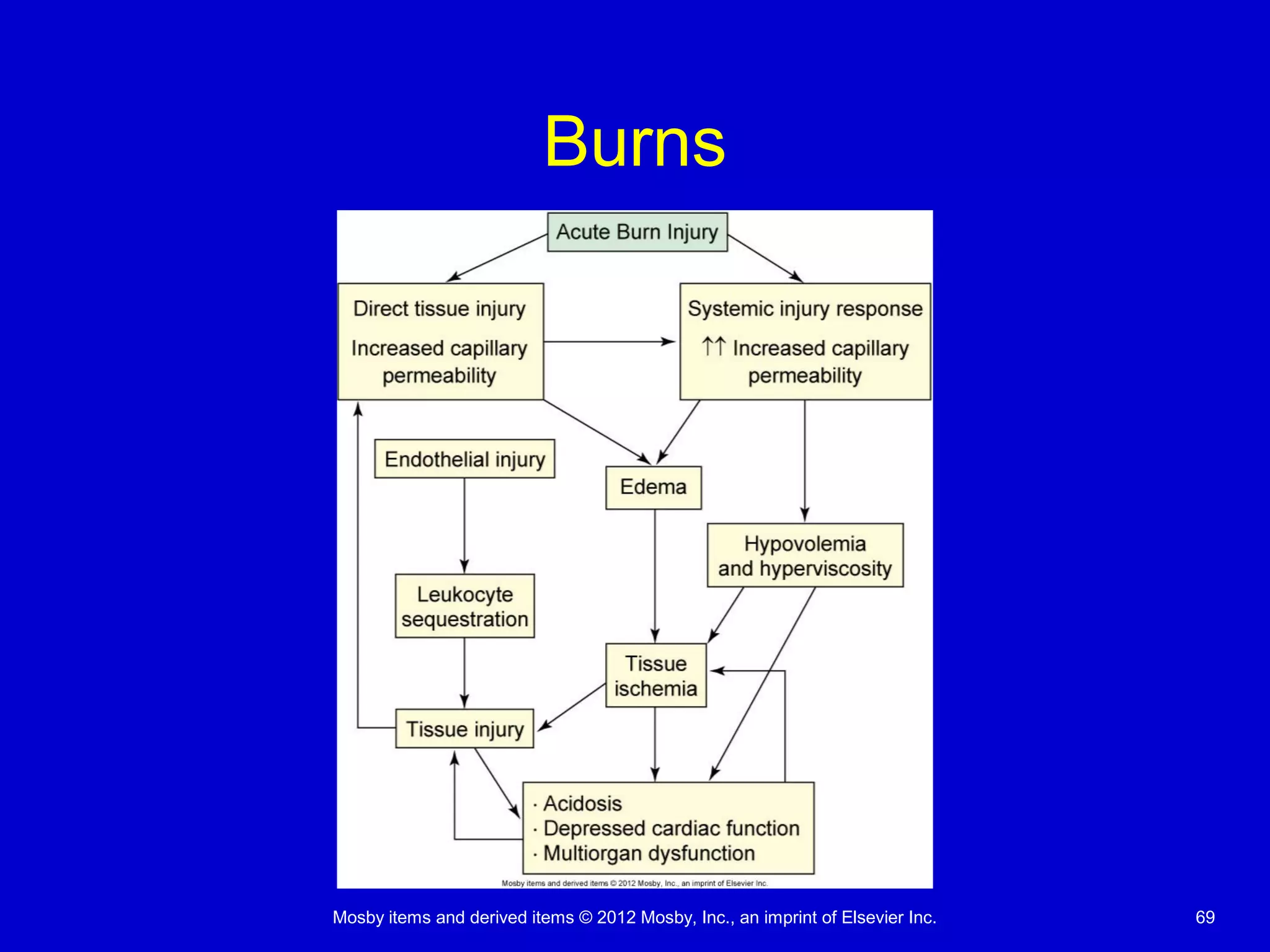
Burns
Mosby items and derived items © 2012 Mosby, Inc., an imprint of Elsevier Inc. 70
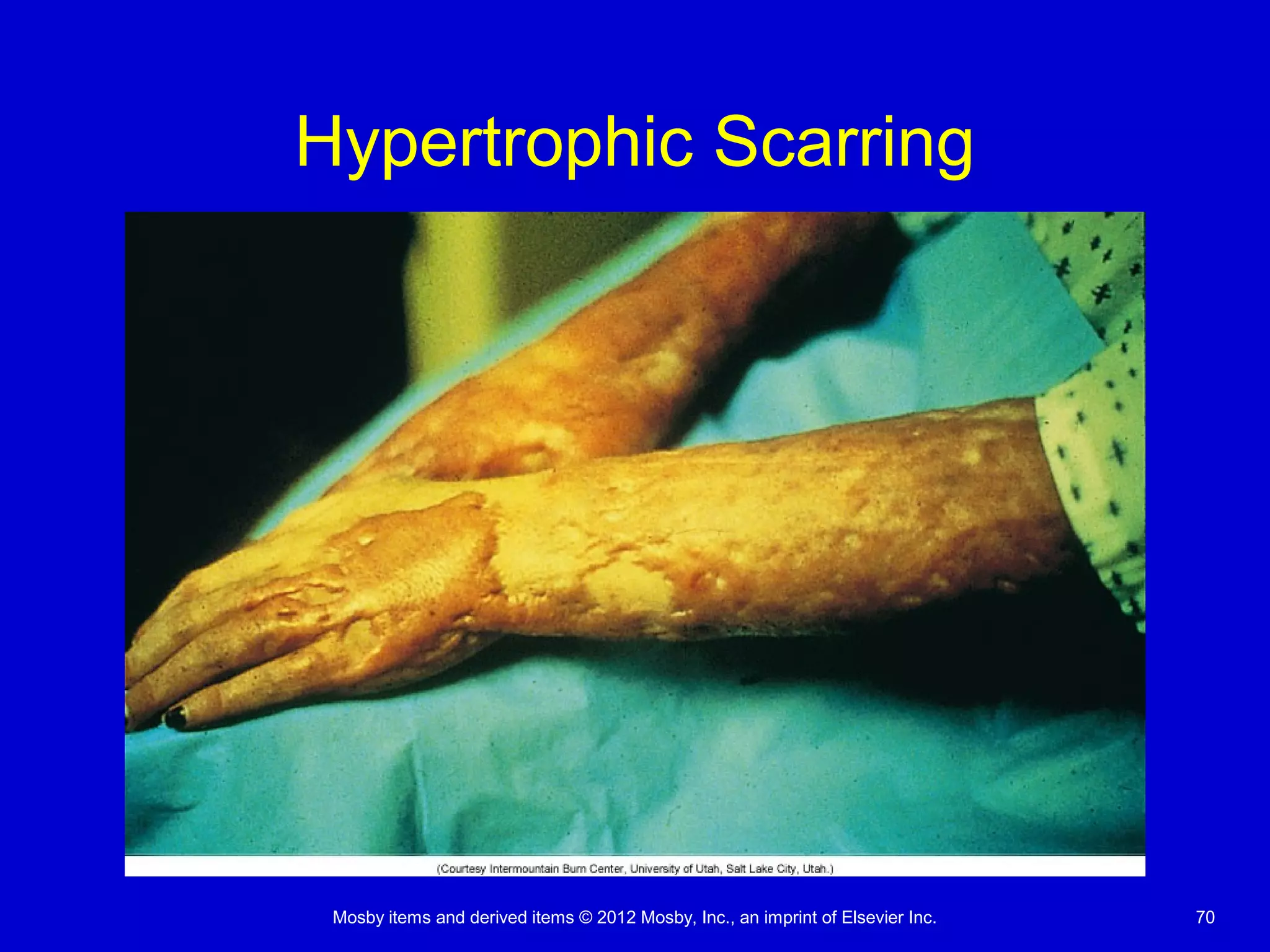
Hypertrophic Scarring
Mosby items and derived items © 2012 Mosby, Inc., an imprint of Elsevier Inc. 71
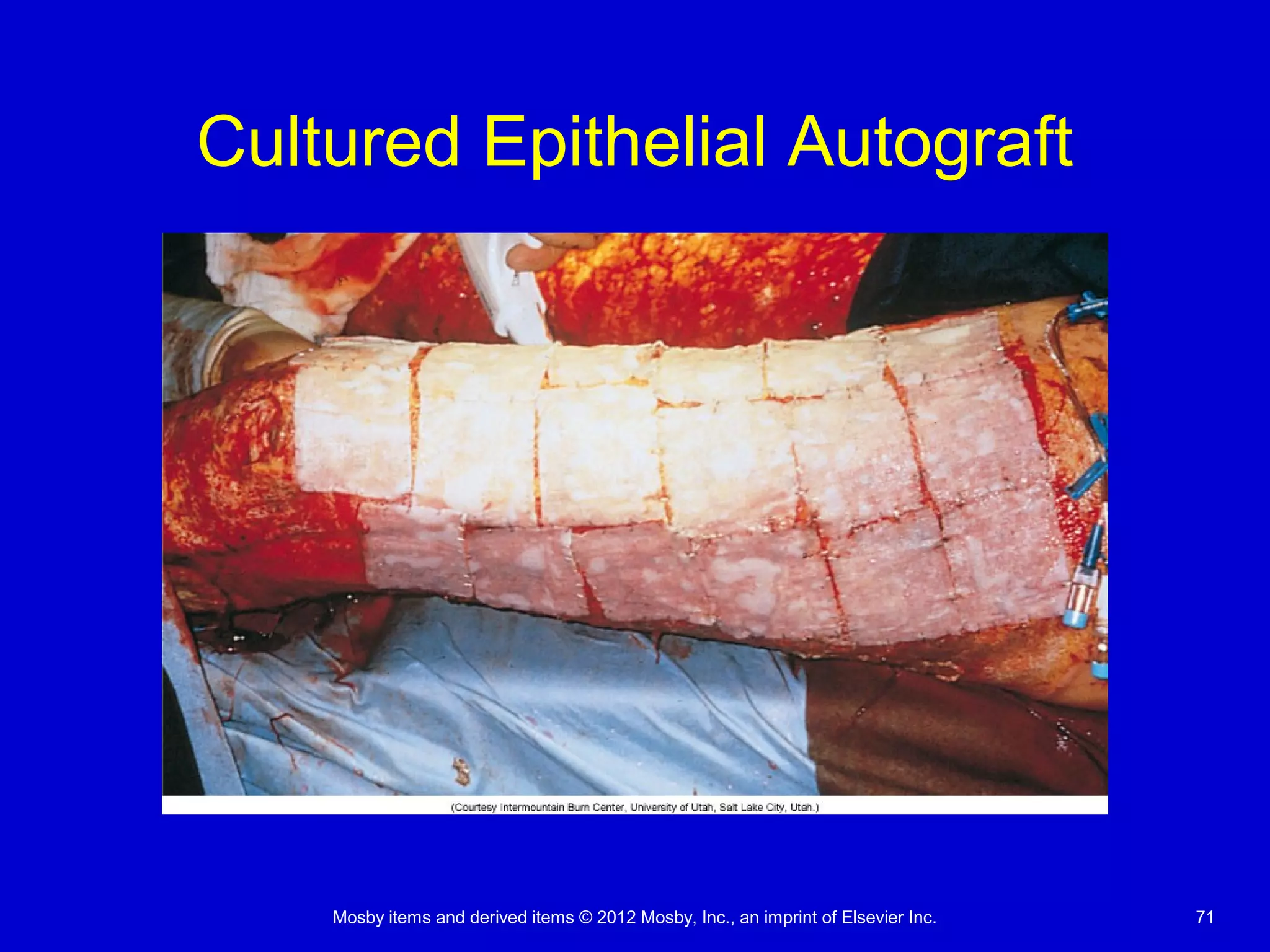
Cultured Epithelial Autograft
Mosby items and derived items © 2012 Mosby, Inc., an imprint of Elsevier Inc. 72
Frostbite
 Skin injury caused by exposure to extreme
cold
 Usually affects fingers, toes, ears, nose,
and cheeks
 The “burning reaction” is caused by
alternating cycles of vasoconstriction and
vasodilation
 Inflammation and reperfusion are both part
of the pathophysiology
Mosby items and derived items © 2012 Mosby, Inc., an imprint of Elsevier Inc. 73
Disorders of the Hair
 Male-pattern alopecia
 Genetically predisposed response to
androgens
 Androgen-sensitive and androgen-insensitive
follicles
Mosby items and derived items © 2012 Mosby, Inc., an imprint of Elsevier Inc. 74
Disorders of the Hair (cont’d)
 Female-pattern alopecia
 Associated with elevated levels of the serum
adrenal androgen dehydroepiandrosterone
sulfate
 No loss of hair along the frontal hairline
Mosby items and derived items © 2012 Mosby, Inc., an imprint of Elsevier Inc. 75
Disorders of the Hair (cont’d)
 Alopecia areata
 Autoimmune T cell-mediated inflammatory
disease against hair follicles that results in
baldness
 Hirsutism
 Androgen-sensitive areas
• Abnormal growth and distribution of hair on the face,
body, and pubic area in a male pattern that occurs in
women
Mosby items and derived items © 2012 Mosby, Inc., an imprint of Elsevier Inc. 76
Disorders of the Nail
 Paronychia
 Acute or chronic infection of the cuticle
 Onychomycosis
 Fungal or dermatophyte infection of the nail
plate

Structure and function of the integument

  • 1.
    Mosby items andderived items © 2012 Mosby, Inc., an imprint of Elsevier Inc. 1 Structure, Function, and Disorders of the Integument
  • 2.
    Mosby items andderived items © 2012 Mosby, Inc., an imprint of Elsevier Inc. 2 Layers of the Skin  Epidermis  Dermis  Hypodermis
  • 3.
    Mosby items andderived items © 2012 Mosby, Inc., an imprint of Elsevier Inc. 3 Layers of the Skin (cont’d)
  • 4.
    Mosby items andderived items © 2012 Mosby, Inc., an imprint of Elsevier Inc. 4 Layers of the Skin (cont’d)  Dermal appendages:  Nails  Hair  Sebaceous glands  Eccrine and apocrine sweat glands  Blood supply  Papillary capillaries
  • 5.
    Mosby items andderived items © 2012 Mosby, Inc., an imprint of Elsevier Inc. 5 Nails
  • 6.
    Mosby items andderived items © 2012 Mosby, Inc., an imprint of Elsevier Inc. 6 Aging and Skin Integrity  The integumentary system reflects numerous changes from genetic and environmental factors  The skin becomes thinner, drier, wrinkled, and demonstrates a change in pigmentation  Shortening and decrease in the number of capillary loops  Fewer melanocytes and Langerhans cells
  • 7.
    Mosby items andderived items © 2012 Mosby, Inc., an imprint of Elsevier Inc. 7 Aging and Skin Integrity (cont’d)  The integumentary system reflects numerous changes from genetic and environmental factors (cont’d)  Atrophy of the sebaceous, eccrine, and apocrine glands  Changes in hair color  Fewer hair follicles and growth of thinner hair
  • 8.
    Mosby items andderived items © 2012 Mosby, Inc., an imprint of Elsevier Inc. 8 Clinical Manifestations of Skin Dysfunction  Macule  Papule  Patch  Plaque  Wheal  Nodule  Tumor  Vesicle  Bulla  Pustule  Cyst  Telangiectasia  Scale  Lichenification  Keloid  Scar  Excoriation  Fissure  Erosion  Ulcer  Atrophy
  • 9.
    Mosby items andderived items © 2012 Mosby, Inc., an imprint of Elsevier Inc. 9 Pressure Ulcers  Pressure ulcers result from any unrelieved pressure on the skin, causing underlying tissue damage  Pressure  Shearing forces  Friction  Moisture
  • 10.
    Mosby items andderived items © 2012 Mosby, Inc., an imprint of Elsevier Inc. 10 Pressure Ulcers (cont’d)
  • 11.
    Mosby items andderived items © 2012 Mosby, Inc., an imprint of Elsevier Inc. 11 Pressure Ulcers (cont’d)  Stages:  I. Nonblanchable erythema of intact skin  II. Partial-thickness skin loss involving epidermis or dermis  III. Full-thickness skin loss involving damage or loss of subcutaneous tissue  IV. Full-thickness skin loss with damage to muscle, bone, or supporting structures
  • 12.
    Mosby items andderived items © 2012 Mosby, Inc., an imprint of Elsevier Inc. 12 Keloids  Elevated, rounded, and firm  Clawlike margins that extend beyond the original site of injury  Excessive collagen formation during dermal connective tissue repair  Common in darkly pigmented skin types and burn scars  Type III collagen is increased
  • 13.
    Mosby items andderived items © 2012 Mosby, Inc., an imprint of Elsevier Inc. 13 Keloids (cont’d)
  • 14.
    Mosby items andderived items © 2012 Mosby, Inc., an imprint of Elsevier Inc. 14 Pruritus  Itching  Most common symptom of primary skin disorders  Itch is carried by specific unmyelinated C- nerve fibers and is triggered by a number of itch mediators  The CNS can modulate the itch response
  • 15.
    Mosby items andderived items © 2012 Mosby, Inc., an imprint of Elsevier Inc. 15 Pruritus (cont’d)  Pain stimuli at lower intensities can induce itching  Chronic itching can result in infections and scarring due to persistent scratching
  • 16.
    Mosby items andderived items © 2012 Mosby, Inc., an imprint of Elsevier Inc. 16 Disorders of the Skin  Inflammatory disorders  The most common inflammatory disorders of the skin are dermatitis or eczema  There are various types of dermatitis  The disorders are generally characterized by: • Pruritus • Lesions with indistinct borders • Epidermal changes
  • 17.
    Mosby items andderived items © 2012 Mosby, Inc., an imprint of Elsevier Inc. 17 Inflammatory Disorders  Allergic contact dermatitis  Caused by a hypersensitivity type IV reaction  The allergen comes in contact with the skin, binds to a carrier protein to form a sensitizing antigen; Langerhans cells process the antigen and carry it to T cells, which become sensitized to the antigen  Manifestations: • Erythema • Swelling • Pruritus • Vesicular lesions
  • 18.
    Mosby items andderived items © 2012 Mosby, Inc., an imprint of Elsevier Inc. 18 Allergic Contact Dermatitis
  • 19.
    Mosby items andderived items © 2012 Mosby, Inc., an imprint of Elsevier Inc. 19 Inflammatory Disorders  Atopic dermatitis  Type I hypersensitivity: activation of mast cells, eosinophils, T-lymphocytes, and other inflammatory cells  Causes red, weeping crusts and chronic inflammation, lichenification
  • 20.
    Mosby items andderived items © 2012 Mosby, Inc., an imprint of Elsevier Inc. 20 Inflammatory Disorders (cont’d)  Irritant contact dermatitis  Nonimmunologic inflammation of the skin  Chemical irritation from acids or prolonged exposure to irritating substances  Symptoms similar to allergic contact dermatitis  Treatment: remove stimulus
  • 21.
    Mosby items andderived items © 2012 Mosby, Inc., an imprint of Elsevier Inc. 21 Inflammatory Disorders (cont’d)  Stasis dermatitis  Occurs in the legs as a result of venous stasis, edema, and vascular trauma  Sequence of events: • Erythema • Pruritus • Scaling • Petechiae • Ulcerations
  • 22.
    Mosby items andderived items © 2012 Mosby, Inc., an imprint of Elsevier Inc. 22 Inflammatory Disorders (cont’d)  Seborrheic dermatitis  Inflammation of the skin involving the scalp, eyebrows, eyelids, nasolabial folds, and ear canals  Scaly, white, or yellowish plaques
  • 23.
    Mosby items andderived items © 2012 Mosby, Inc., an imprint of Elsevier Inc. 23 Stasis and Seborrheic Dermatitis
  • 24.
    Mosby items andderived items © 2012 Mosby, Inc., an imprint of Elsevier Inc. 24 Papulosquamous Disorders  Psoriasis  Chronic, relapsing, proliferative skin disorder  T cell immune- mediated skin disease  Scaly, thick, silvery, elevated lesions, usually on the scalp, elbows, or knees caused by a high rate of mitosis in the basale layer
  • 25.
    Mosby items andderived items © 2012 Mosby, Inc., an imprint of Elsevier Inc. 25 Papulosquamous Disorders (cont’d)  Psoriasis (cont’d)  Shows evidence of dermal and epidermal thickening  Epidermal turnover goes from 26 to 30 days to 3 to 4 days  Cells do not have time to mature or adequately keratinize
  • 26.
    Mosby items andderived items © 2012 Mosby, Inc., an imprint of Elsevier Inc. 26 Psoriasis
  • 27.
    Mosby items andderived items © 2012 Mosby, Inc., an imprint of Elsevier Inc. 27 Papulosquamous Disorders  Psoriasis (cont’d)  Plaque psoriasis  Inverse psoriasis  Guttate psoriasis  Pustular psoriasis  Erythrodermic psoriasis
  • 28.
    Mosby items andderived items © 2012 Mosby, Inc., an imprint of Elsevier Inc. 28 Papulosquamous Disorders (cont’d)
  • 29.
    Mosby items andderived items © 2012 Mosby, Inc., an imprint of Elsevier Inc. 29 Papulosquamous Disorders (cont’d)  Pityriasis rosea  Benign, self-limiting inflammatory disorder  Usually occurs during the winter months  Herald patch • Circular, demarcated, salmon-pink, 3- to 4-cm lesion
  • 30.
    Mosby items andderived items © 2012 Mosby, Inc., an imprint of Elsevier Inc. 30 Papulosquamous Disorders (cont’d)
  • 31.
    Mosby items andderived items © 2012 Mosby, Inc., an imprint of Elsevier Inc. 31 Papulosquamous Disorders (cont’d)  Lichen planus  Benign, inflammatory disorder of the skin and mucous membranes  Unknown origin, but T cells, adhesion molecules, inflammatory cytokines, and antigen presenting cells are involved  Nonscaling, violet-colored, 2- to 4-mm lesions  Wrists, ankles, lower legs, genitalia
  • 32.
    Mosby items andderived items © 2012 Mosby, Inc., an imprint of Elsevier Inc. 32 Lichen Planus
  • 33.
    Mosby items andderived items © 2012 Mosby, Inc., an imprint of Elsevier Inc. 33 Papulosquamous Disorders  Acne vulgaris  Inflammatory disease of the pilosebaceous follicles  Acne rosacea  Inflammation of the skin that develops in adulthood  Lesions • Erythematotelangiectatic, papulopustular, phymatous, and ocular • Associated with chronic, inappropriate vasodilation resulting in flushing and sensitivity to the sun
  • 34.
    Mosby items andderived items © 2012 Mosby, Inc., an imprint of Elsevier Inc. 34 Papulosquamous Disorders (cont’d)  Lupus erythematosus  Inflammatory, autoimmune disease with cutaneous manifestations  Discoid lupus erythematosus • Restricted to the skin • Photosensitivity • Butterfly pattern over the nose and cheeks  Systemic lupus erythematosus
  • 35.
    Mosby items andderived items © 2012 Mosby, Inc., an imprint of Elsevier Inc. 35 Discoid Lupus Erythematosus
  • 36.
    Mosby items andderived items © 2012 Mosby, Inc., an imprint of Elsevier Inc. 36 Vesiculobullous Disorders  Pemphigus  Rare, chronic, blister-forming disease of the skin and oral mucous membranes  Blisters form in the deep or superficial epidermis  Autoimmune disease caused by circulating IgG autoantibodies • The antibodies are against the cell surface adhesion molecule, desmoglein in the suprabasal layer of the epidermis
  • 37.
    Mosby items andderived items © 2012 Mosby, Inc., an imprint of Elsevier Inc. 37 Vesiculobullous Disorders (cont’d)  Pemphigus (cont’d)  Tissue biopsies demonstrate autoantibody presence  Types: • Pemphigus vulgaris (severe) • Pemphigus foliaceus • Pemphigus erythematosus
  • 38.
    Mosby items andderived items © 2012 Mosby, Inc., an imprint of Elsevier Inc. 38 Vesiculobullous Disorders (cont’d)  Bullous pemphigoid  More benign disease than pemphigus vulgaris  Bound IgG and blistering of the subepidermal skin layer  Subepidermal blistering and eosinophils distinguish pemphigoid from pemphigus
  • 39.
    Mosby items andderived items © 2012 Mosby, Inc., an imprint of Elsevier Inc. 39 Bullous Pemphigoid
  • 40.
    Mosby items andderived items © 2012 Mosby, Inc., an imprint of Elsevier Inc. 40 Vesiculobullous Disorders  Erythema multiforme  Acute, recurring disorder of the skin and mucous membranes  Associated with allergic or toxic reactions to drugs or microorganisms  Caused by immune complexes formed and deposited around dermal blood vessels, basement membranes, and keratinocytes
  • 41.
    Mosby items andderived items © 2012 Mosby, Inc., an imprint of Elsevier Inc. 41 Vesiculobullous Disorders (cont’d)  Erythema multiforme (cont’d)  “Bull’s-eye” or target lesion • Erythematous regions surrounded by rings of alternating edema and inflammation  Bullous lesions form erosions and crusts when they rupture  Affects the mouth, air passages, esophagus, urethra, and conjunctiva  Severe forms: • Stevens-Johnson syndrome (bullous form) • Toxic epidermal necrolysis
  • 42.
    Mosby items andderived items © 2012 Mosby, Inc., an imprint of Elsevier Inc. 42 Infections  Bacterial infections:  Folliculitis  Furuncles  Carbuncles  Cellulitis  Erysipelas  Impetigo
  • 43.
    Mosby items andderived items © 2012 Mosby, Inc., an imprint of Elsevier Inc. 43 Furuncle
  • 44.
    Mosby items andderived items © 2012 Mosby, Inc., an imprint of Elsevier Inc. 44 Infections  Viral infections  Herpes zoster and varicella
  • 45.
    Mosby items andderived items © 2012 Mosby, Inc., an imprint of Elsevier Inc. 45 Herpes Simplex Virus
  • 46.
    Mosby items andderived items © 2012 Mosby, Inc., an imprint of Elsevier Inc. 46 Warts  Benign lesions caused by the human papillomavirus (HPV)  Diagnosed by visualization  Condylomata acuminata  Venereal warts
  • 47.
    Mosby items andderived items © 2012 Mosby, Inc., an imprint of Elsevier Inc. 47 Fungal Infections  Fungi causing superficial skin lesions are called dermatophytes  Fungal disorders are called mycoses; mycoses caused by dermatophytes are termed tinea  Tinea capitis (scalp)  Tinea pedis (athlete’s foot)  Tinea corporis (ringworm)  Tinea cruris (groin, jock itch)  Tinea unguium (nails) or onychomycosis
  • 48.
    Mosby items andderived items © 2012 Mosby, Inc., an imprint of Elsevier Inc. 48 Tinea Pedis
  • 49.
    Mosby items andderived items © 2012 Mosby, Inc., an imprint of Elsevier Inc. 49 Fungal Infections  Candidiasis  Caused by Candida albicans  Normally found on the skin, in the GI tract, and in the vagina  Candida albicans can change from a commensal organism to a pathogen • Local environment of moisture and warmth • Systemic administration of antibiotics • Pregnancy • Diabetes mellitus • Cushing disease • Debilitated states • Age younger than 6 months • Immunosuppression • Neoplastic diseases
  • 50.
    Mosby items andderived items © 2012 Mosby, Inc., an imprint of Elsevier Inc. 50 Vascular Disorders  Cutaneous vasculitis  Results from immune complexes in the small blood vessels • Develops from drugs, bacterial infections, viral infections, or allergens  Lesions • Palpable purpura progressing to hemorrhagic bullae with necrosis and ulceration
  • 51.
    Mosby items andderived items © 2012 Mosby, Inc., an imprint of Elsevier Inc. 51 Vascular Disorders (cont’d)  Urticaria  Caused by type I hypersensitivity reactions to allergens  Histamine release causes endothelial cells of the skin to contract • Causes leakage of fluid from the vessels  Treatment • Antihistamines and steroids
  • 52.
    Mosby items andderived items © 2012 Mosby, Inc., an imprint of Elsevier Inc. 52 Vascular Disorders (cont’d)  Scleroderma  Sclerosis of the skin that can progress to the internal organs  The disease is associated with several antibodies  Lesions exhibit massive deposits of collagen with inflammation, vascular changes, and capillary dilation  Skin is hard, hypopigmented, taut, and tightly connected to underlying tissue
  • 53.
    Mosby items andderived items © 2012 Mosby, Inc., an imprint of Elsevier Inc. 53 Vascular Disorders (cont’d)  Scleroderma (cont’d)  Facial skin becomes very tight  Fingers become tapered and flexed; nails and fingertips can be lost from atrophy  Mouth may not open completely  50% of patients die within 5 years
  • 54.
    Mosby items andderived items © 2012 Mosby, Inc., an imprint of Elsevier Inc. 54 Scleroderma
  • 55.
    Mosby items andderived items © 2012 Mosby, Inc., an imprint of Elsevier Inc. 55 Insect Bites  Bees  Mosquitoes  Flies
  • 56.
    Mosby items andderived items © 2012 Mosby, Inc., an imprint of Elsevier Inc. 56 Benign Tumors  Seborrheic keratosis  Keratoacanthoma  Actinic keratosis  Nevi (moles)
  • 57.
    Mosby items andderived items © 2012 Mosby, Inc., an imprint of Elsevier Inc. 57 Seborrheic Keratosis
  • 58.
    Mosby items andderived items © 2012 Mosby, Inc., an imprint of Elsevier Inc. 58 Cancer  Basal cell carcinoma  Squamous cell carcinoma  Malignant melanoma  Kaposi sarcoma
  • 59.
    Mosby items andderived items © 2012 Mosby, Inc., an imprint of Elsevier Inc. 59 Basal Cell Carcinoma
  • 60.
    Mosby items andderived items © 2012 Mosby, Inc., an imprint of Elsevier Inc. 60 Squamous Cell Carcinoma
  • 61.
    Mosby items andderived items © 2012 Mosby, Inc., an imprint of Elsevier Inc. 61 Malignant Melanoma
  • 62.
    Mosby items andderived items © 2012 Mosby, Inc., an imprint of Elsevier Inc. 62 Kaposi Sarcoma
  • 63.
    Mosby items andderived items © 2012 Mosby, Inc., an imprint of Elsevier Inc. 63 Burns  Partial-thickness burns  First degree  Superficial and deep partial  Second degree  Full-thickness burns  Third degree  “Rule of nines”
  • 64.
    Mosby items andderived items © 2012 Mosby, Inc., an imprint of Elsevier Inc. 64 Superficial Partial-Thickness Burn
  • 65.
    Mosby items andderived items © 2012 Mosby, Inc., an imprint of Elsevier Inc. 65 Axillary Burn Scar Contracture
  • 66.
    Mosby items andderived items © 2012 Mosby, Inc., an imprint of Elsevier Inc. 66 Deep Partial-Thickness Burn
  • 67.
    Mosby items andderived items © 2012 Mosby, Inc., an imprint of Elsevier Inc. 67 Full-Thickness Burn
  • 68.
    Mosby items andderived items © 2012 Mosby, Inc., an imprint of Elsevier Inc. 68 Estimating Burn Injury
  • 69.
    Mosby items andderived items © 2012 Mosby, Inc., an imprint of Elsevier Inc. 69 Burns
  • 70.
    Mosby items andderived items © 2012 Mosby, Inc., an imprint of Elsevier Inc. 70 Hypertrophic Scarring
  • 71.
    Mosby items andderived items © 2012 Mosby, Inc., an imprint of Elsevier Inc. 71 Cultured Epithelial Autograft
  • 72.
    Mosby items andderived items © 2012 Mosby, Inc., an imprint of Elsevier Inc. 72 Frostbite  Skin injury caused by exposure to extreme cold  Usually affects fingers, toes, ears, nose, and cheeks  The “burning reaction” is caused by alternating cycles of vasoconstriction and vasodilation  Inflammation and reperfusion are both part of the pathophysiology
  • 73.
    Mosby items andderived items © 2012 Mosby, Inc., an imprint of Elsevier Inc. 73 Disorders of the Hair  Male-pattern alopecia  Genetically predisposed response to androgens  Androgen-sensitive and androgen-insensitive follicles
  • 74.
    Mosby items andderived items © 2012 Mosby, Inc., an imprint of Elsevier Inc. 74 Disorders of the Hair (cont’d)  Female-pattern alopecia  Associated with elevated levels of the serum adrenal androgen dehydroepiandrosterone sulfate  No loss of hair along the frontal hairline
  • 75.
    Mosby items andderived items © 2012 Mosby, Inc., an imprint of Elsevier Inc. 75 Disorders of the Hair (cont’d)  Alopecia areata  Autoimmune T cell-mediated inflammatory disease against hair follicles that results in baldness  Hirsutism  Androgen-sensitive areas • Abnormal growth and distribution of hair on the face, body, and pubic area in a male pattern that occurs in women
  • 76.
    Mosby items andderived items © 2012 Mosby, Inc., an imprint of Elsevier Inc. 76 Disorders of the Nail  Paronychia  Acute or chronic infection of the cuticle  Onychomycosis  Fungal or dermatophyte infection of the nail plate