Mosby items and derived items © 2012 Mosby, Inc., an imprint of Elsevier Inc. 11
Alterations in Cognitive Systems,
Cerebral Hemodynamics and
Motor Function
Mosby items and derived items © 2012 Mosby, Inc., an imprint of Elsevier Inc. 22
Alterations in Cognitive Systems
 Consciousness
 State of awareness of oneself and the
environment
 Arousal
• State of awakeness
Mosby items and derived items © 2012 Mosby, Inc., an imprint of Elsevier Inc. 33
Alterations in Arousal
 Structural
 Divided by location above or below tentorial
plate
 Metabolic
 Psychogenic
Mosby items and derived items © 2012 Mosby, Inc., an imprint of Elsevier Inc. 44
Alterations in Arousal (cont’d)
 Coma is produced by either:
 Bilateral hemisphere damage or suppression
 Brain stem lesions or metabolic derangement
that damages or suppresses the reticular
activating system
Mosby items and derived items © 2012 Mosby, Inc., an imprint of Elsevier Inc. 55
Alterations in Arousal
 Clinical manifestations:
 Level of consciousness changes
 Pattern of breathing
• Posthyperventilation apnea (PHVA)
• Cheyne-Stokes respirations (CSR)
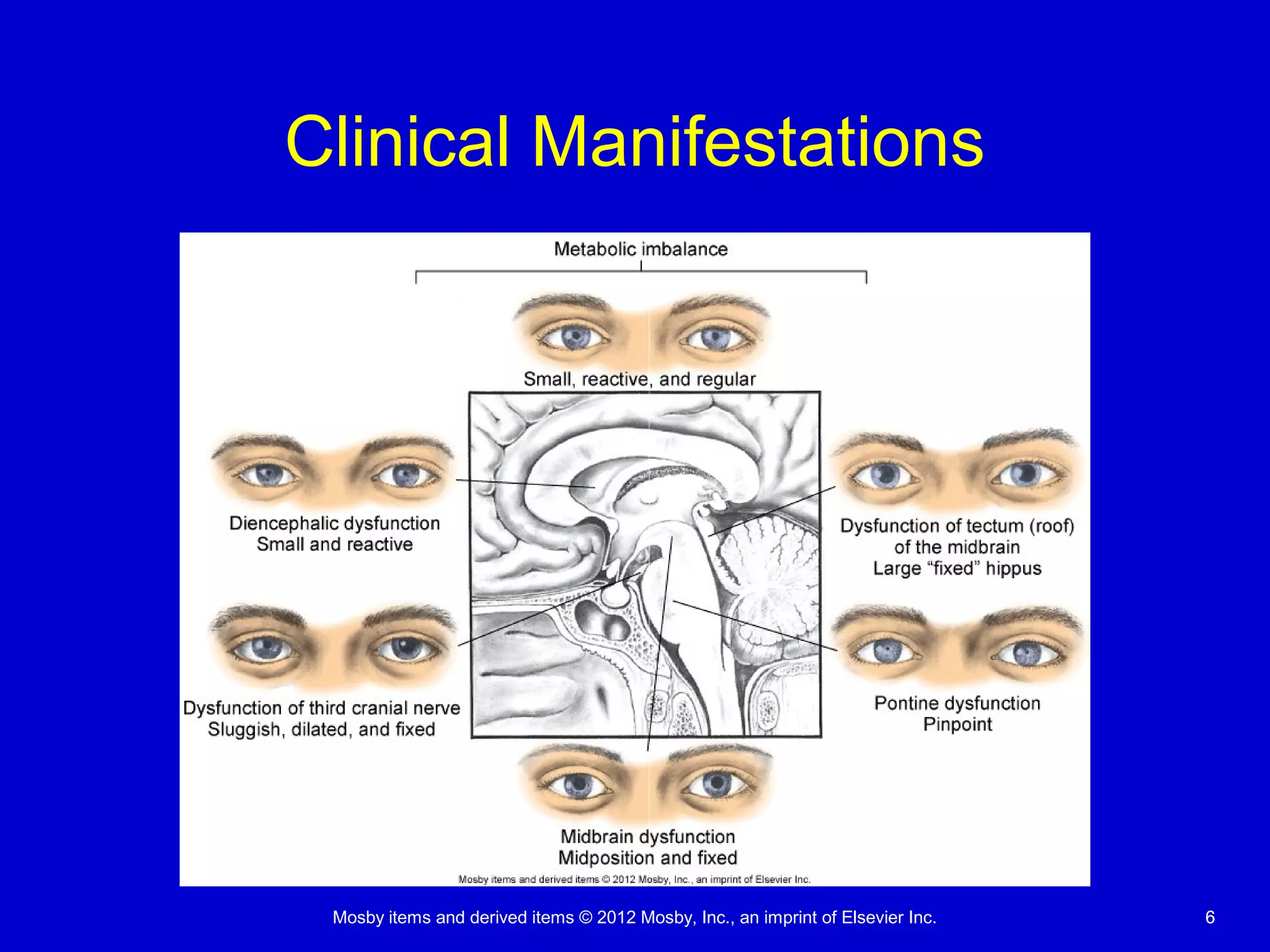
 Pupillary changes
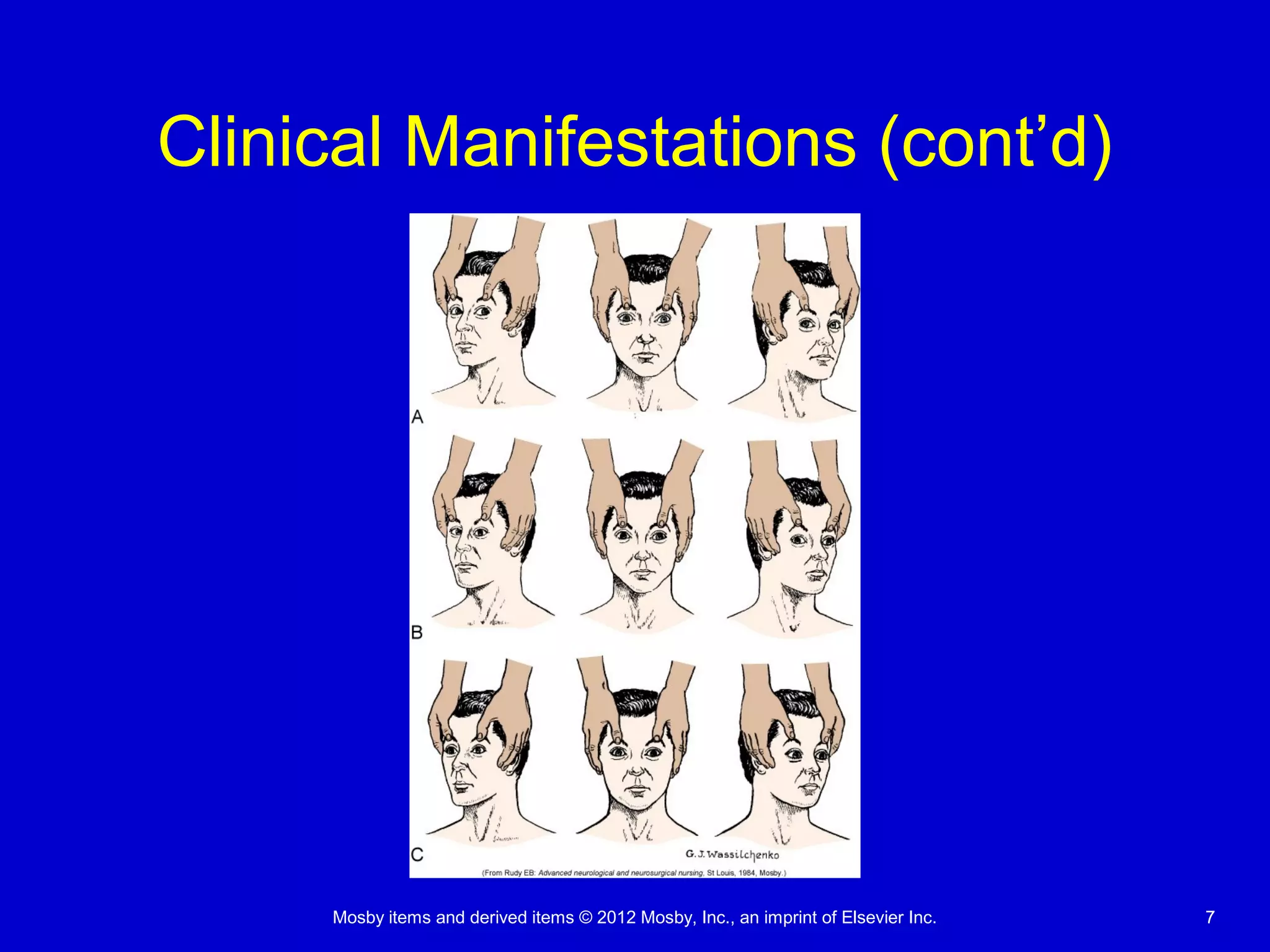
 Oculomotor responses
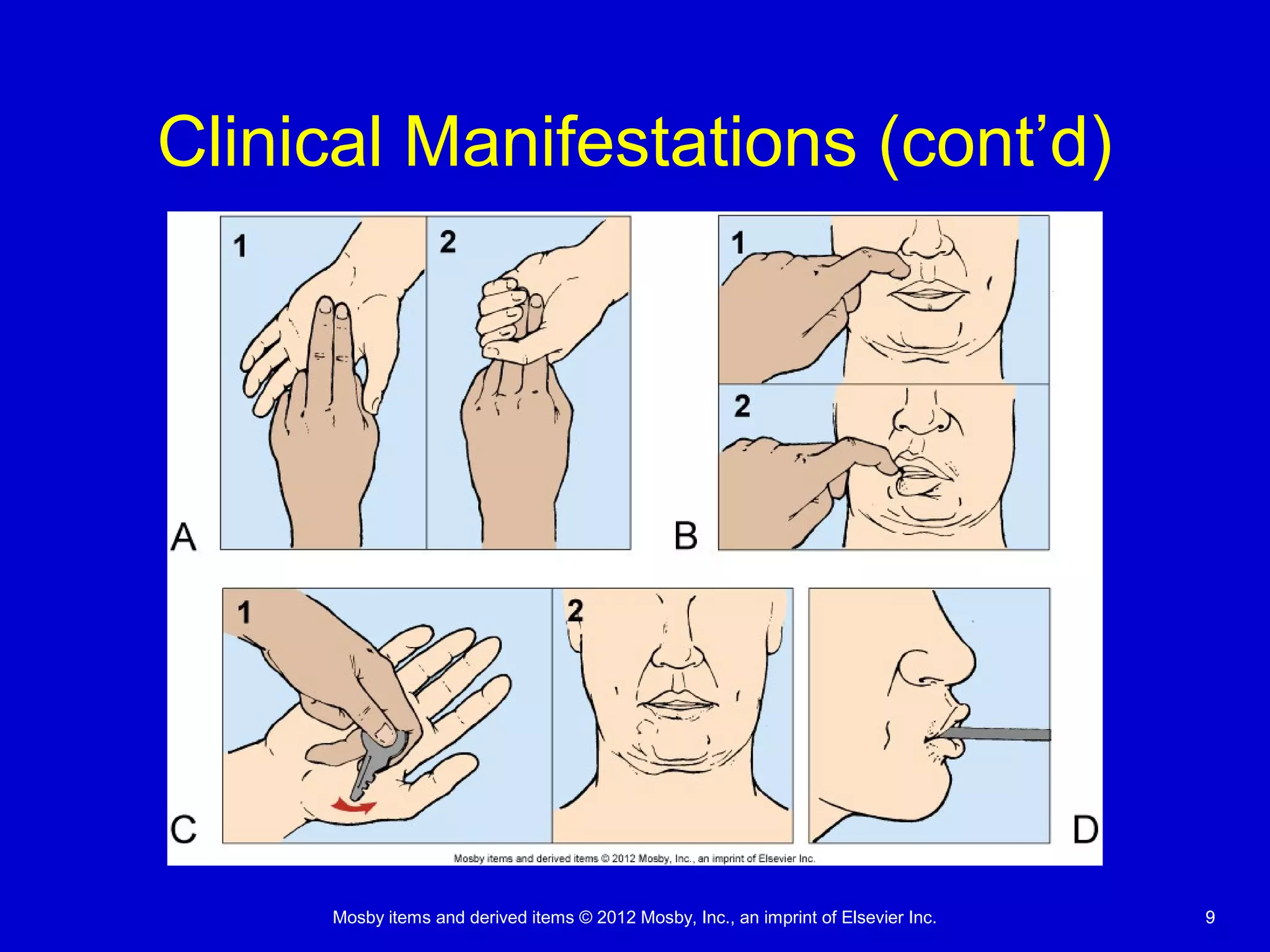
 Motor responses
 Vomiting, yawning, hiccups
Mosby items and derived items © 2012 Mosby, Inc., an imprint of Elsevier Inc. 66
Clinical Manifestations
Mosby items and derived items © 2012 Mosby, Inc., an imprint of Elsevier Inc. 77
Clinical Manifestations (cont’d)
Mosby items and derived items © 2012 Mosby, Inc., an imprint of Elsevier Inc. 88
Clinical Manifestations (cont’d)
Mosby items and derived items © 2012 Mosby, Inc., an imprint of Elsevier Inc. 99
Clinical Manifestations (cont’d)
Mosby items and derived items © 2012 Mosby, Inc., an imprint of Elsevier Inc. 1010
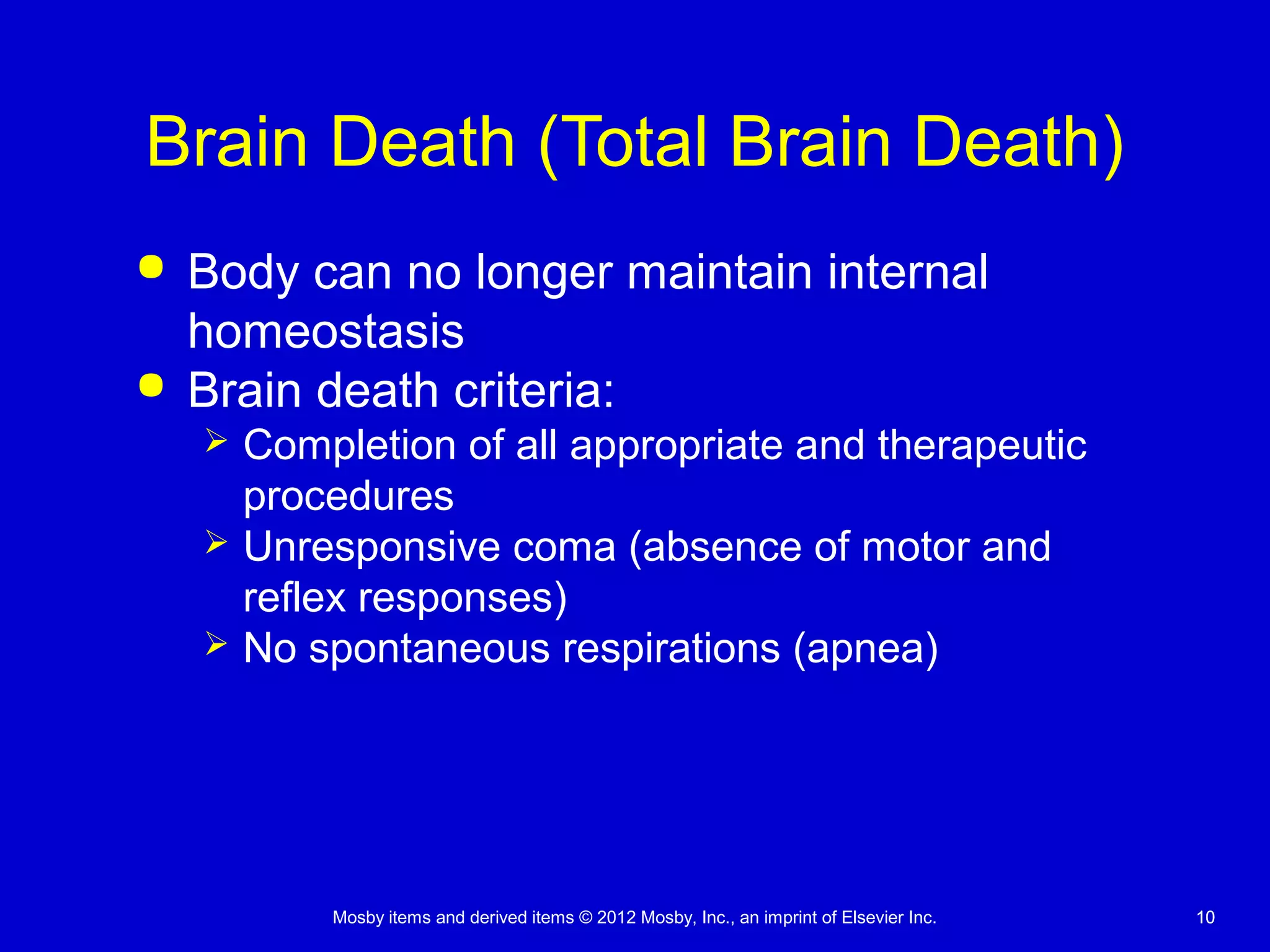
Brain Death (Total Brain Death)
 Body can no longer maintain internal
homeostasis
 Brain death criteria:
 Completion of all appropriate and therapeutic
procedures
 Unresponsive coma (absence of motor and
reflex responses)
 No spontaneous respirations (apnea)
Mosby items and derived items © 2012 Mosby, Inc., an imprint of Elsevier Inc. 1111
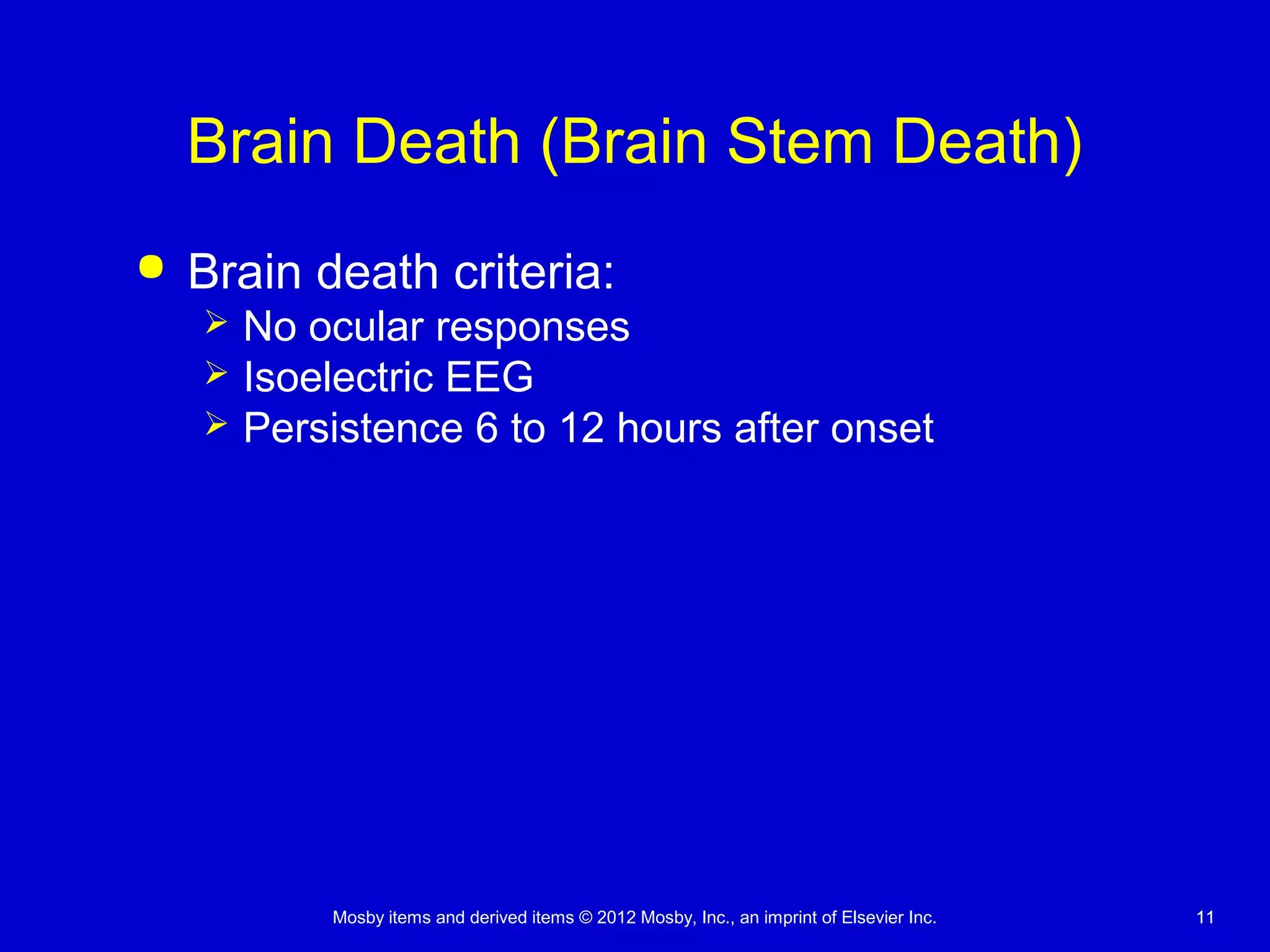
Brain Death (Brain Stem Death)
 Brain death criteria:
 No ocular responses
 Isoelectric EEG
 Persistence 6 to 12 hours after onset
Mosby items and derived items © 2012 Mosby, Inc., an imprint of Elsevier Inc. 1212
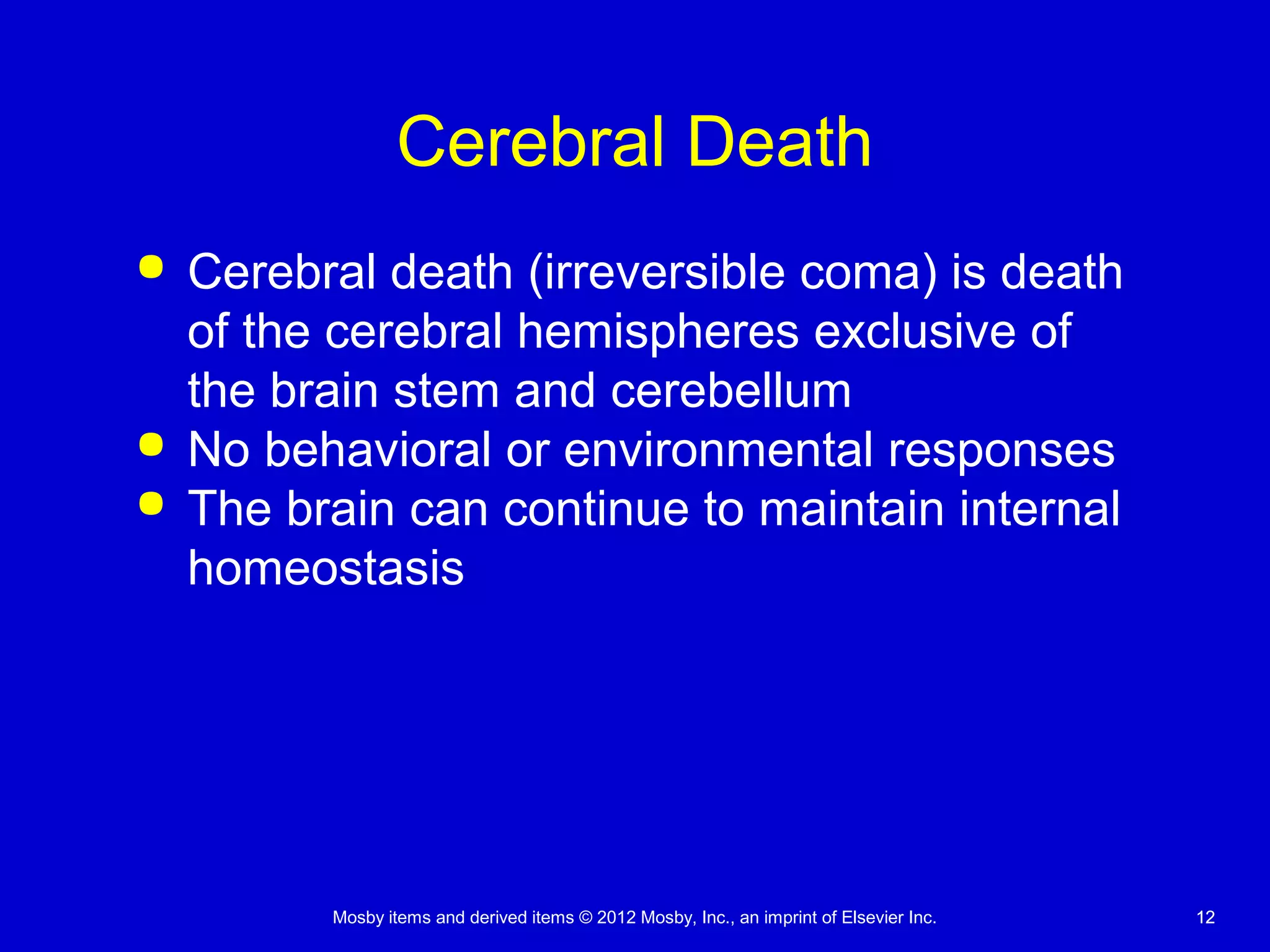
Cerebral Death
 Cerebral death (irreversible coma) is death
of the cerebral hemispheres exclusive of
the brain stem and cerebellum
 No behavioral or environmental responses
 The brain can continue to maintain internal
homeostasis
Mosby items and derived items © 2012 Mosby, Inc., an imprint of Elsevier Inc. 1313
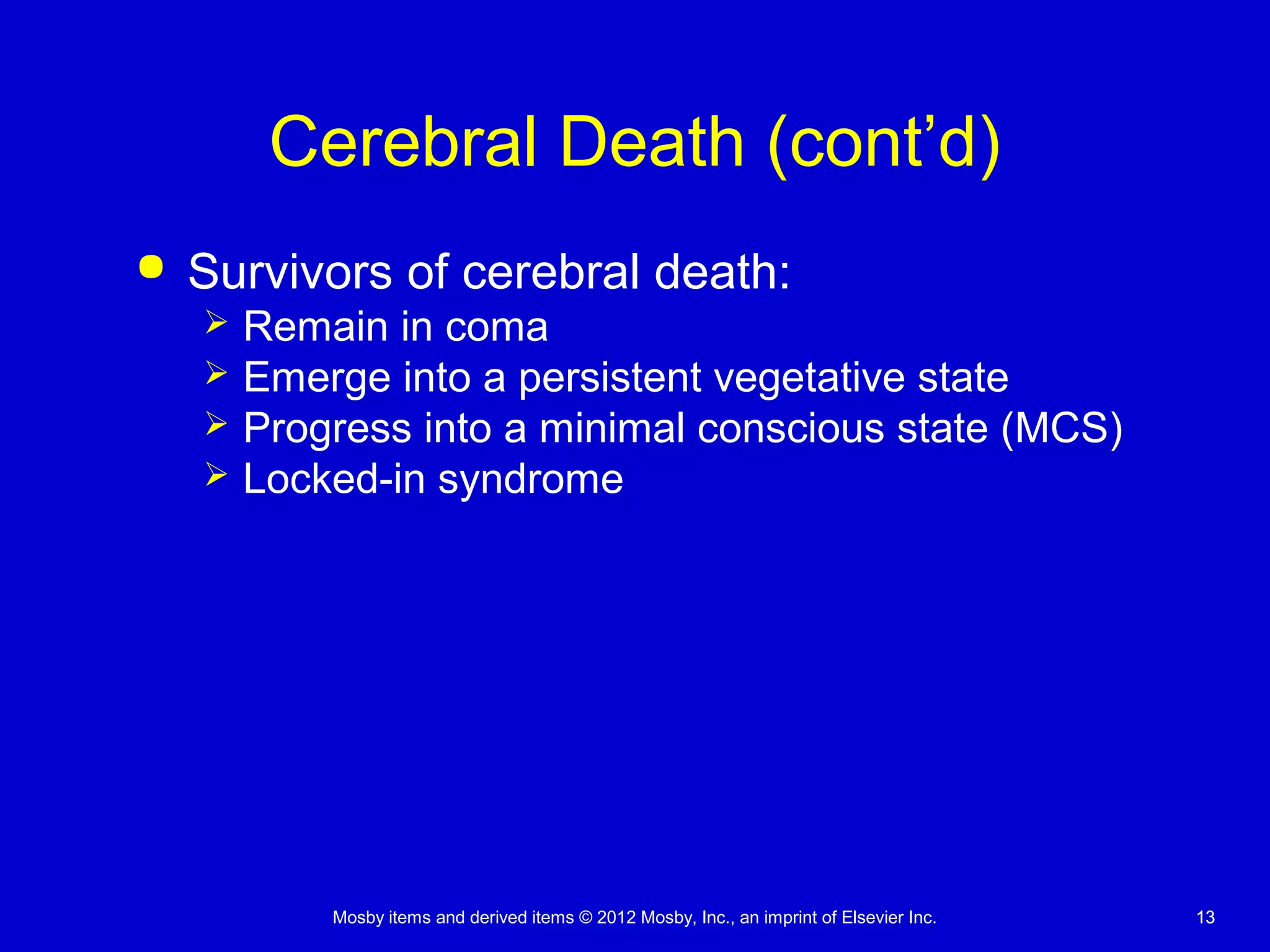
Cerebral Death (cont’d)
 Survivors of cerebral death:
 Remain in coma
 Emerge into a persistent vegetative state
 Progress into a minimal conscious state (MCS)
 Locked-in syndrome
Mosby items and derived items © 2012 Mosby, Inc., an imprint of Elsevier Inc. 1414
Alterations in Awareness
 Selective attention:
 Ability to select from available, competing
environmental and internal stimuli
 Sensory inattentiveness
• Extinction
• Neglect syndrome
 Selective attention deficit
Mosby items and derived items © 2012 Mosby, Inc., an imprint of Elsevier Inc. 1515
Alterations in Awareness (cont’d)
 Memory
 Amnesia
 Retrograde amnesia
 Anterograde amnesia
 Executive attention deficits
• ADHD
 Image processing
Mosby items and derived items © 2012 Mosby, Inc., an imprint of Elsevier Inc. 1616
Seizures
 Syndrome versus disease
 Sudden, transient alteration of brain
function caused by an abrupt explosive,
disorderly discharge of cerebral neurons
 Motor, sensory, autonomic, or psychic
signs
Mosby items and derived items © 2012 Mosby, Inc., an imprint of Elsevier Inc. 1717
Seizures (cont’d)
 Convulsion
 Tonic-clonic (jerky, contract-relax) movements
associated with some seizures
 Epilepsy: no underlying cause can be
found
Mosby items and derived items © 2012 Mosby, Inc., an imprint of Elsevier Inc. 1818
Seizures (cont’d)
 Etiologic factors:
 Cerebral lesions
 Biochemical disorders
 Cerebral trauma
 Epilepsy
Mosby items and derived items © 2012 Mosby, Inc., an imprint of Elsevier Inc. 1919
Seizures (cont’d)
 Partial seizures
 Simple, complex, secondary generalized
 Generalized seizures
 Absent, myoclonic, clonic, tonic-clonic, atonic
 Unclassified epileptic seizure
Mosby items and derived items © 2012 Mosby, Inc., an imprint of Elsevier Inc. 2020
Seizures (cont’d)
 Aura
 Prodroma
 Tonic phase
 Contraction
 Clonic phase
 Relaxation
 Postictal phase
Mosby items and derived items © 2012 Mosby, Inc., an imprint of Elsevier Inc. 2121
Data Processing Deficits
 Agnosia
 Tactile, visual, auditory, etc.
 Dysphasia
 Expressive dysphasia
 Receptive dysphasia
 Transcortical dysphasia
 Aphasia
Mosby items and derived items © 2012 Mosby, Inc., an imprint of Elsevier Inc. 2222
Acute Confusional States (ACS)
 Transient disorders of awareness that
result from cerebral dysfunction
 Secondary to drug intoxication, metabolic
disorder, or nervous system disease
 Delerium
• Hyperkinetic
• Hypokinetic
Mosby items and derived items © 2012 Mosby, Inc., an imprint of Elsevier Inc. 2323
Dementia
 Progressive failure of cerebral functions
that is not caused by an impaired level of
consciousness
 Losses:
 Orientation
 Memory
 Language
 Judgment
 Decision making
Mosby items and derived items © 2012 Mosby, Inc., an imprint of Elsevier Inc. 2424
Alzheimer Disease (AD)
 Familial, early and late onset
 Nonhereditary (sporadic, late onset)
 Theories:
 Mutation for encoding amyloid precursor
protein
 Alteration in apolipoprotein E
 Loss of neurotransmitter stimulation of choline
acetyltransferase
Mosby items and derived items © 2012 Mosby, Inc., an imprint of Elsevier Inc. 2525
Alzheimer Disease (AD) (cont’d)
 Neurofibrillary tangles
 Senile plaques
 Clinical manifestations:
 Forgetfulness
 Emotional upset
 Disorientation
 Confusion
 Lack of concentration
 Decline in abstraction, problem solving, and
judgment
 Diagnosis is made by ruling out other
causes of dementia
Mosby items and derived items © 2012 Mosby, Inc., an imprint of Elsevier Inc. 2626
Cerebral Hemodynamics
 CBF
 CPP
 CBV
 Cerebral oxygenation
Mosby items and derived items © 2012 Mosby, Inc., an imprint of Elsevier Inc. 2727
Increased Intracranial Pressure
(IICP)
 Normal 5 to 15 mm Hg
 Caused by an increase in intracranial
content
 Tumor growth, edema, excessive CSF, or
hemorrhage
 Stage 1
 Stage 2
 Stage 3
 Stage 4
Mosby items and derived items © 2012 Mosby, Inc., an imprint of Elsevier Inc. 2828
Herniation Syndromes
 Supratentorial herniation
 Uncal
• Uncus or hippocampal gyrus (or both) shifts from the
middle fossa through the tentorial notch into the
posterior fossa
 Central
• Downward shift of the diencephalon through the
tentorial notch
 Cingulate
• Cingulate gyrus shifts under the falx cerebri
Mosby items and derived items © 2012 Mosby, Inc., an imprint of Elsevier Inc. 2929
Herniation Syndromes (cont’d)
 Infratentorial herniation
 Cerebellar tonsil shifts through foramen
magnum
Mosby items and derived items © 2012 Mosby, Inc., an imprint of Elsevier Inc. 3030
Cerebral Edema
 Increase in the fluid (intracellular or
extracellular) within the brain
 Types:
 Vasogenic
 Cytotoxic
 Interstitial
Mosby items and derived items © 2012 Mosby, Inc., an imprint of Elsevier Inc. 3131
Hydrocephalus
 Excess fluid within the cranial vault,
subarachnoid space, or both
 Caused by interference in CSF flow
 Decreased reabsorption
 Increased fluid production
 Obstruction within the ventricular system
Mosby items and derived items © 2012 Mosby, Inc., an imprint of Elsevier Inc. 3232
Hydrocephalus (cont’d)
 Noncommunicating hydrocephalus
 Internal
 Intraventricular
 Communicating (extraventricular)
hydrocephalus
 Acute hydrocephalus
 Normal-pressure hydrocephalus
Mosby items and derived items © 2012 Mosby, Inc., an imprint of Elsevier Inc. 3333
Alterations in Neuromuscular
Function
 Muscle tone
 Hypotonia
 Hypertonia
• Spasticity
• Gegenhalten (paratonia)
• Dystonia
• Rigidity
Mosby items and derived items © 2012 Mosby, Inc., an imprint of Elsevier Inc. 3434
Alterations in Movement
 Paresis and paralysis
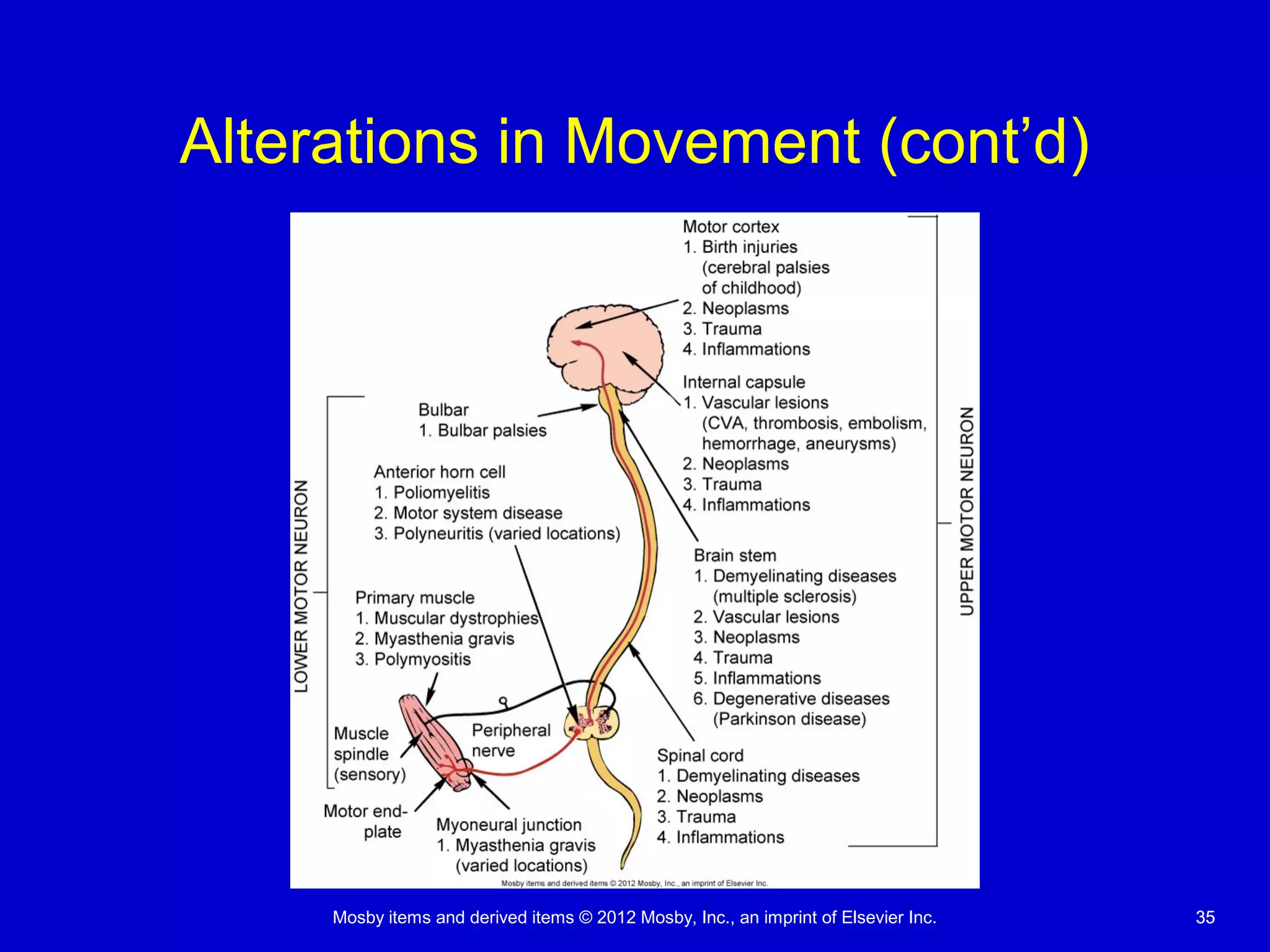
 Upper motor neuron syndromes:
• Hemiparesis or hemiplegia
• Diplegia
• Paraparesis or paraplegia
• Quadriparesis or quadriplegia
• Pyramidal motor syndromes
• Spinal shock
Mosby items and derived items © 2012 Mosby, Inc., an imprint of Elsevier Inc. 3535
Alterations in Movement (cont’d)
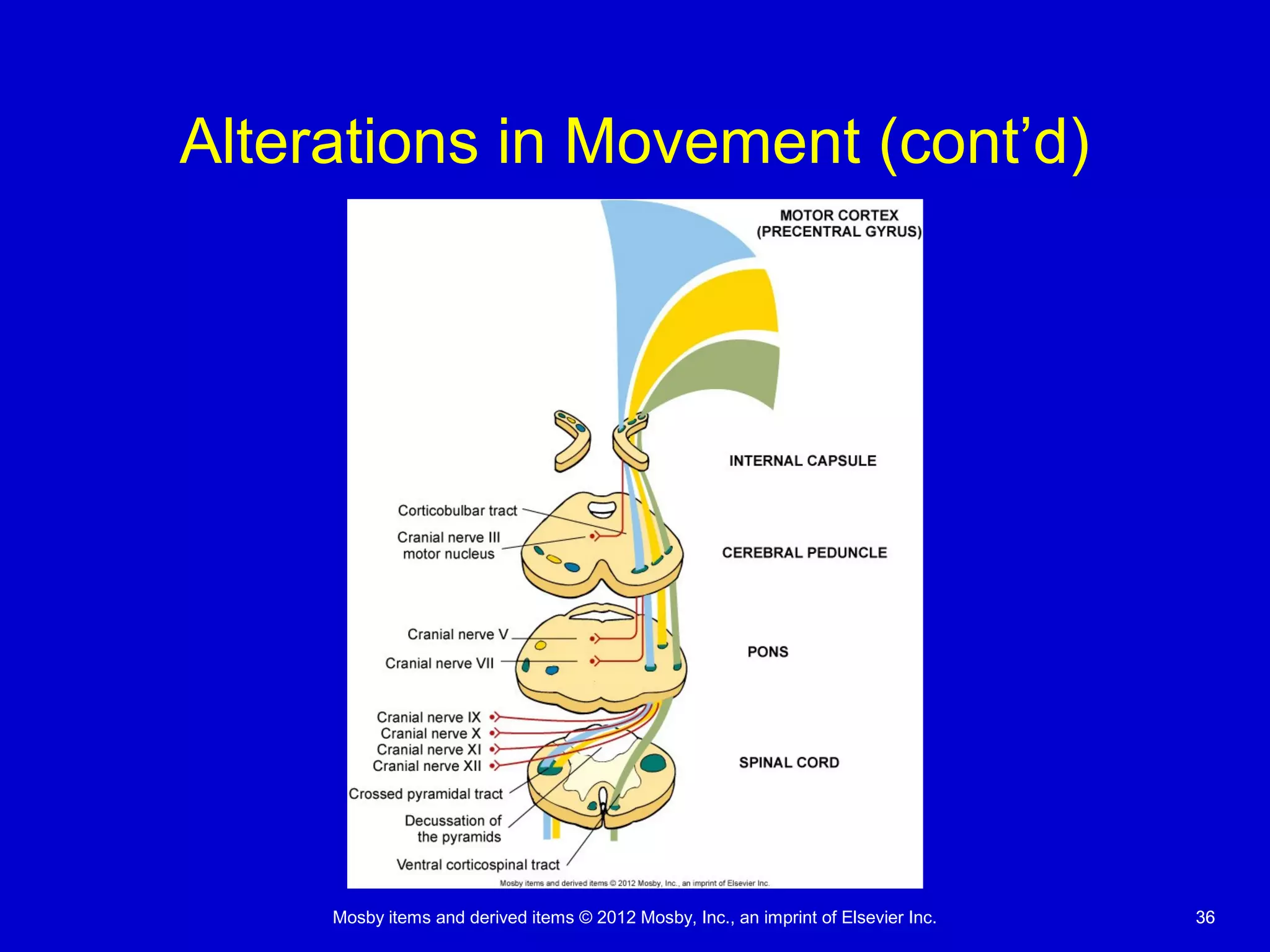
Mosby items and derived items © 2012 Mosby, Inc., an imprint of Elsevier Inc. 3636
Alterations in Movement (cont’d)
Mosby items and derived items © 2012 Mosby, Inc., an imprint of Elsevier Inc. 3737
Alterations in Movement (cont’d)
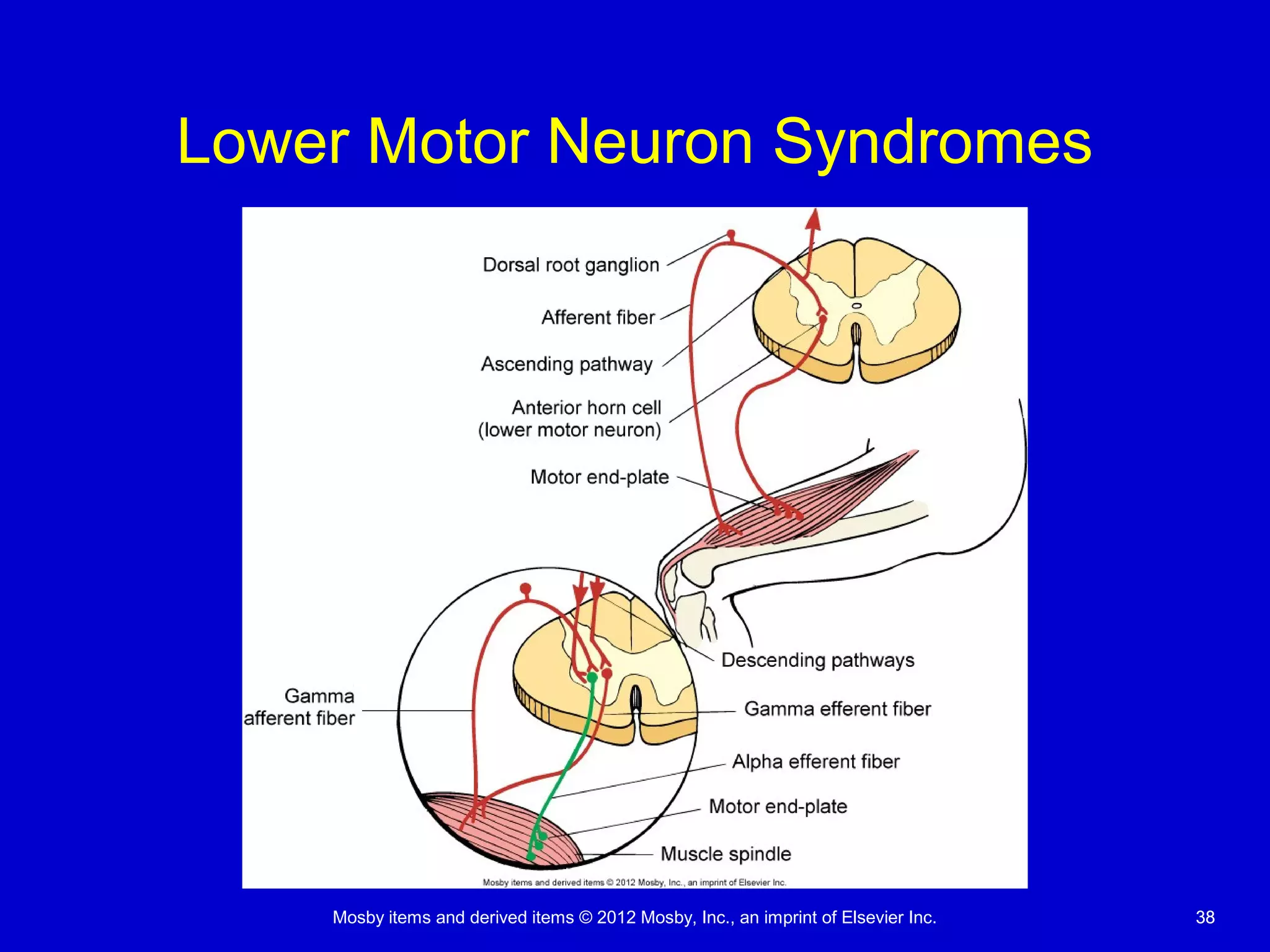
 Lower motor neuron syndromes:
 Flaccid paresis or flaccid paralysis
 Hyporeflexia or areflexia
 Fibrillation
Mosby items and derived items © 2012 Mosby, Inc., an imprint of Elsevier Inc. 3838
Lower Motor Neuron Syndromes
Mosby items and derived items © 2012 Mosby, Inc., an imprint of Elsevier Inc. 3939
Lower Motor Neuron Syndromes
(cont’d)
 Amyotrophies:
 Paralytic poliomyelitis
 Nuclear palsies
 Guillain-Barré syndrome
 Progressive spinal muscular atrophy
 Progressive bulbar palsy
 Bulbar palsy
Mosby items and derived items © 2012 Mosby, Inc., an imprint of Elsevier Inc. 4040
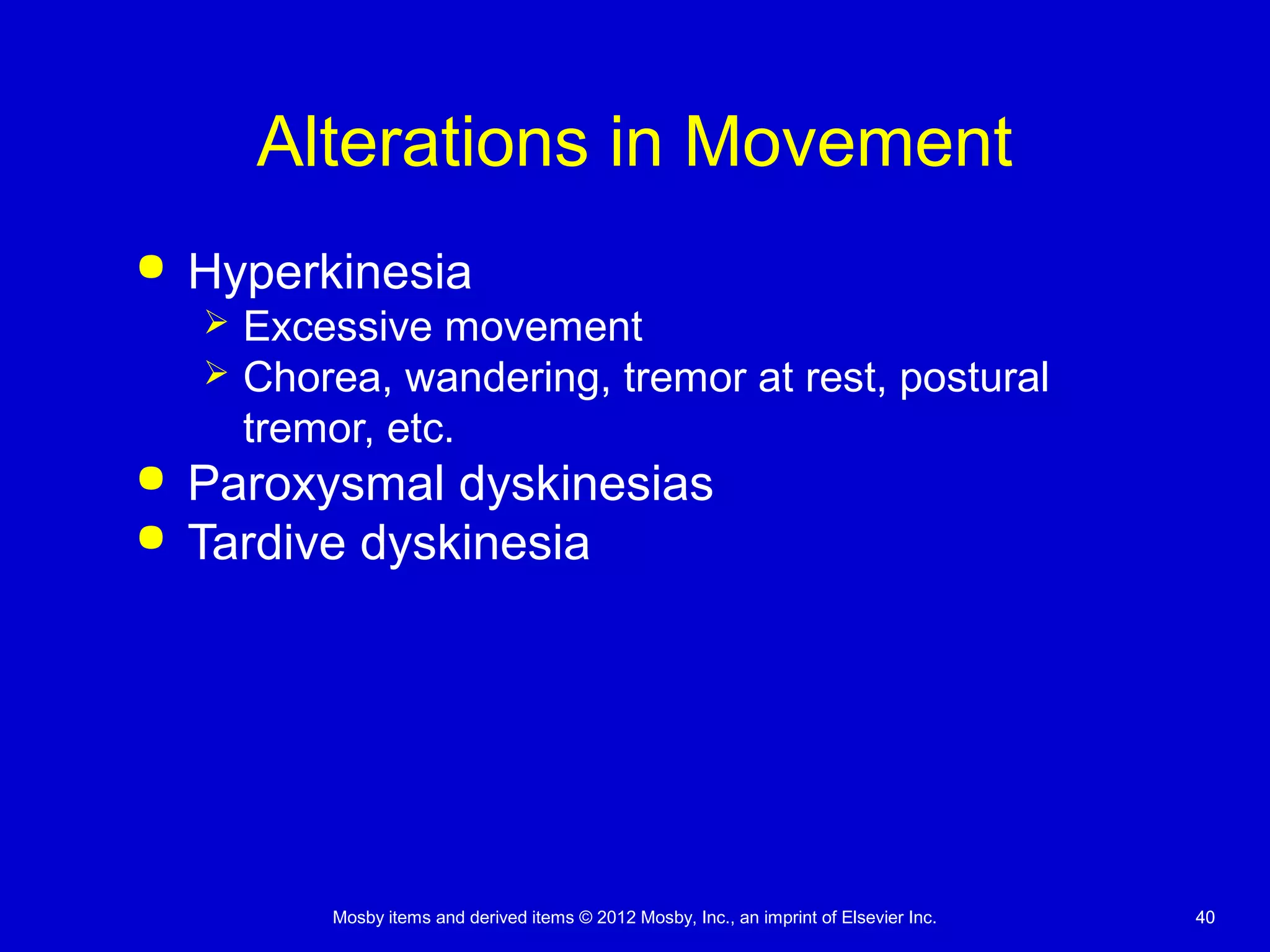
Alterations in Movement
 Hyperkinesia
 Excessive movement
 Chorea, wandering, tremor at rest, postural
tremor, etc.
 Paroxysmal dyskinesias
 Tardive dyskinesia
Mosby items and derived items © 2012 Mosby, Inc., an imprint of Elsevier Inc. 4141
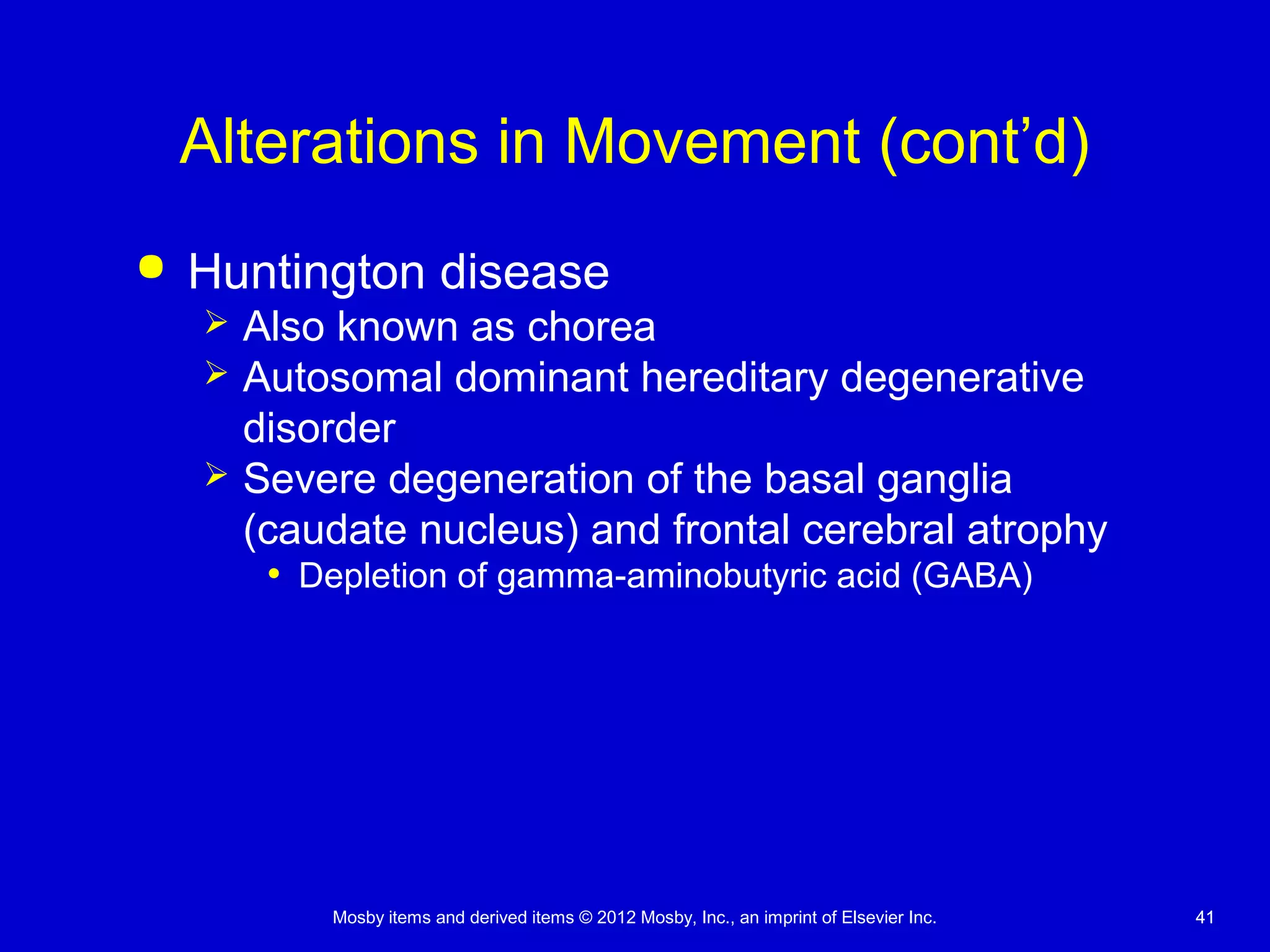
Alterations in Movement (cont’d)
 Huntington disease
 Also known as chorea
 Autosomal dominant hereditary degenerative
disorder
 Severe degeneration of the basal ganglia
(caudate nucleus) and frontal cerebral atrophy
• Depletion of gamma-aminobutyric acid (GABA)
Mosby items and derived items © 2012 Mosby, Inc., an imprint of Elsevier Inc. 4242
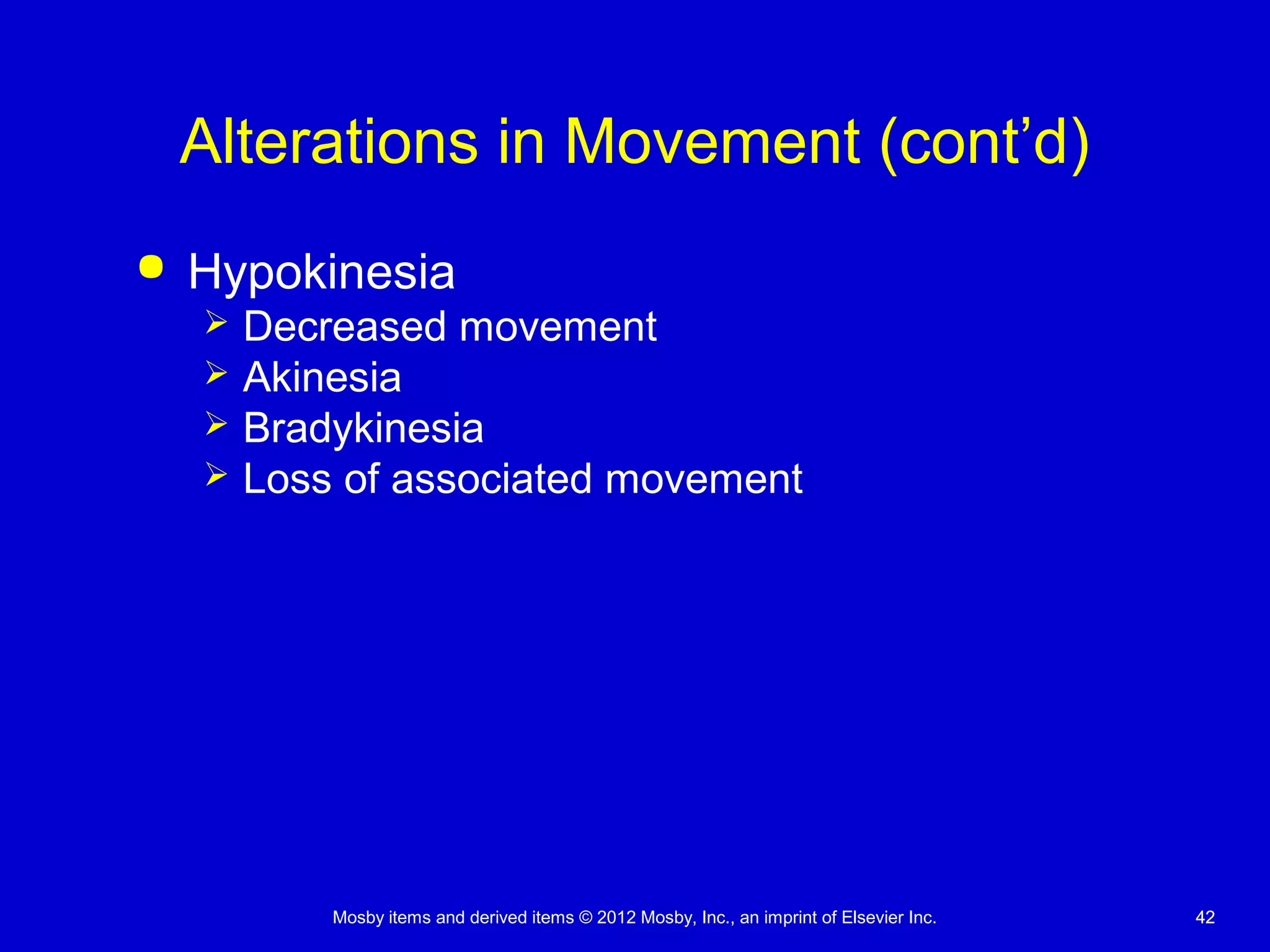
Alterations in Movement (cont’d)
 Hypokinesia
 Decreased movement
 Akinesia
 Bradykinesia
 Loss of associated movement
Mosby items and derived items © 2012 Mosby, Inc., an imprint of Elsevier Inc. 4343
Parkinson Disease
 Severe degeneration of the basal ganglia
(corpus striatum) involving the
dopaminergic nigrostriatal pathway
 Parkinsonian tremor, rigidity, bradykinesia
 Postural disturbances
 Autonomic and neuroendocrine symptoms
 Cognitive-affective symptoms
 Secondary parkinsonism
Mosby items and derived items © 2012 Mosby, Inc., an imprint of Elsevier Inc. 4444
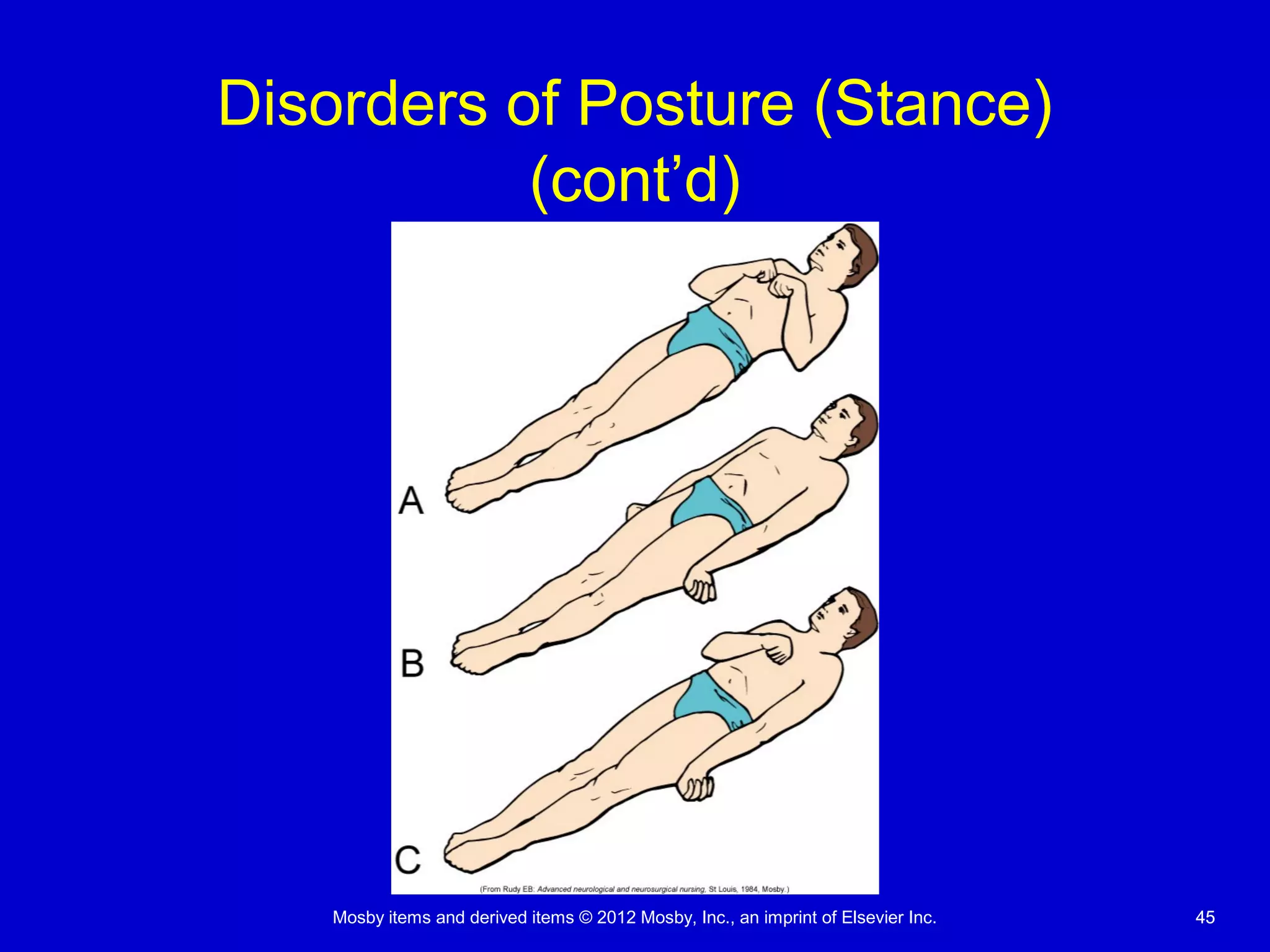
Disorders of Posture (Stance)
 Dystonia
 Dystonic postures and movements
 Decorticate posture
 Decerebrate posture
 Basal ganglion posture
 Senile posture
Mosby items and derived items © 2012 Mosby, Inc., an imprint of Elsevier Inc. 4545
Disorders of Posture (Stance)
(cont’d)
Mosby items and derived items © 2012 Mosby, Inc., an imprint of Elsevier Inc. 4646
Disorders of Gait
 Spastic gait
 Scissors gait
 Cerebellar gait
 Basal ganglion gait
 Senile gait
Mosby items and derived items © 2012 Mosby, Inc., an imprint of Elsevier Inc. 4747
Disorders of Expression
 Hypermimesis
 Hypomimesis
 Dyspraxias and apraxias
Mosby items and derived items © 2012 Mosby, Inc., an imprint of Elsevier Inc. 4848
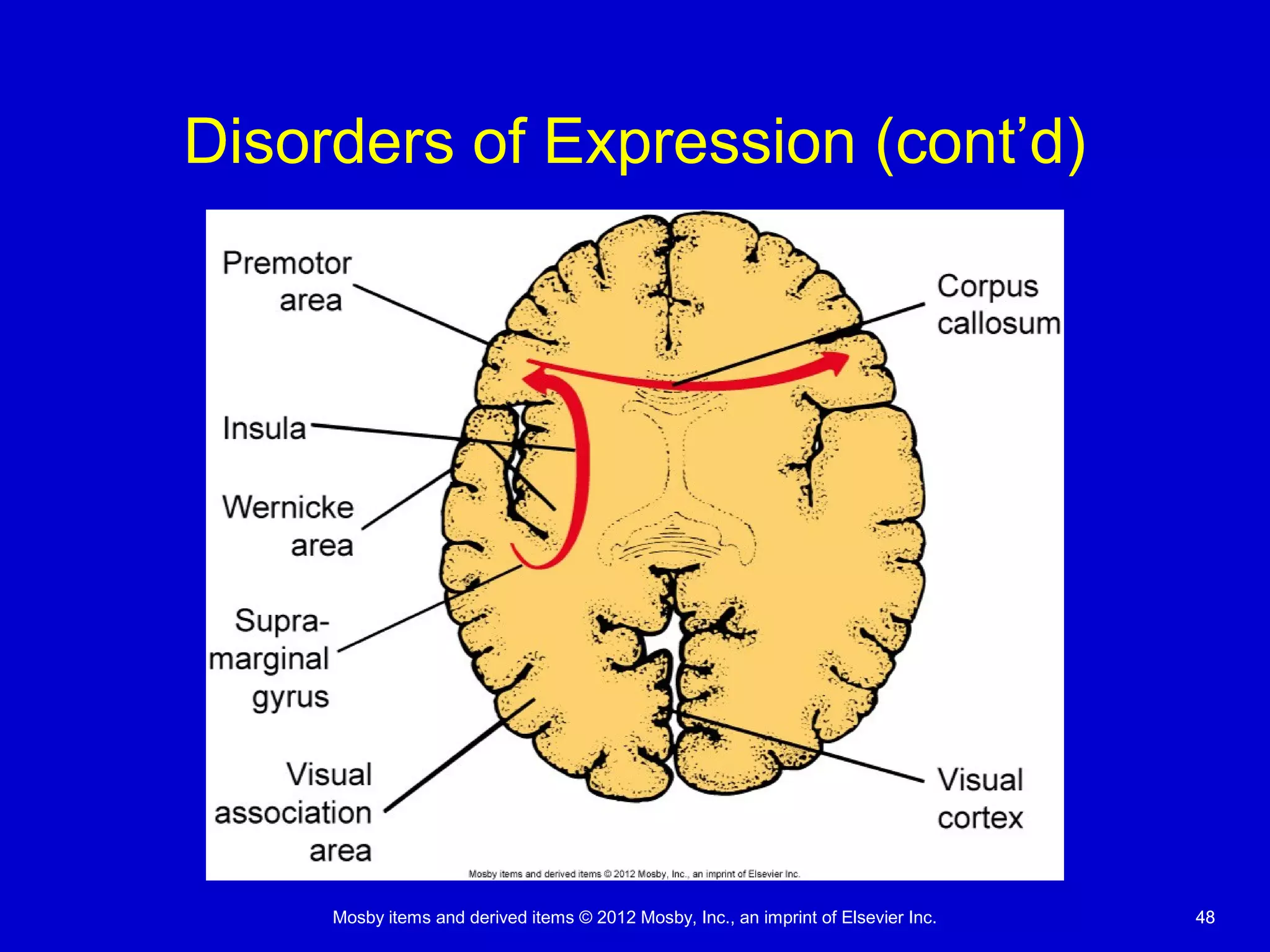
Disorders of Expression (cont’d)
Mosby items and derived items © 2012 Mosby, Inc., an imprint of Elsevier Inc. 4949
Extrapyramidal Motor Syndromes
 Basal ganglia motor syndromes
 Cerebellar motor syndromes
Mosby items and derived items © 2012 Mosby, Inc., an imprint of Elsevier Inc. 5050
Alterations of
Neurologic Function in
Children
Mosby items and derived items © 2012 Mosby, Inc., an imprint of Elsevier Inc. 5151
Review
 Remember there are many differences in
the nervous system with children:
 Do you remember the following:
 *Fontanels
 *Sutures
 *Reflexes
 We Will explore one major area in children,
in this weeks notes
Mosby items and derived items © 2012 Mosby, Inc., an imprint of Elsevier Inc. 5252
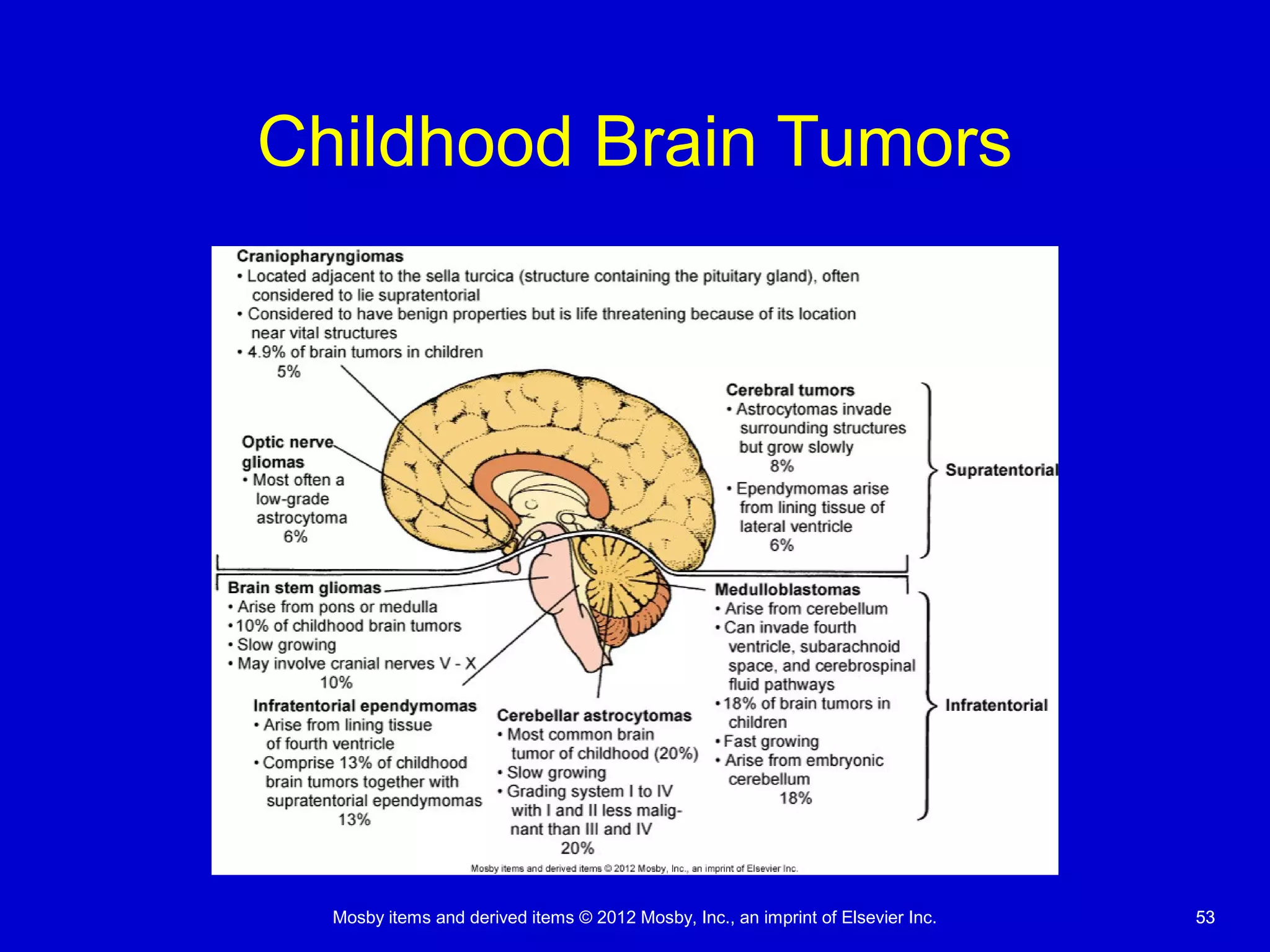
Childhood Brain Tumors
 Brain tumors:
 Medulloblastoma
 Ependymoma
 Cerebellar astrocytoma
 Brain stem glioma
• Craniopharyngioma
 Optic glioma
Mosby items and derived items © 2012 Mosby, Inc., an imprint of Elsevier Inc. 5353
Childhood Brain Tumors

Week three notes

  • 1.
    Mosby items andderived items © 2012 Mosby, Inc., an imprint of Elsevier Inc. 11 Alterations in Cognitive Systems, Cerebral Hemodynamics and Motor Function
  • 2.
    Mosby items andderived items © 2012 Mosby, Inc., an imprint of Elsevier Inc. 22 Alterations in Cognitive Systems  Consciousness  State of awareness of oneself and the environment  Arousal • State of awakeness
  • 3.
    Mosby items andderived items © 2012 Mosby, Inc., an imprint of Elsevier Inc. 33 Alterations in Arousal  Structural  Divided by location above or below tentorial plate  Metabolic  Psychogenic
  • 4.
    Mosby items andderived items © 2012 Mosby, Inc., an imprint of Elsevier Inc. 44 Alterations in Arousal (cont’d)  Coma is produced by either:  Bilateral hemisphere damage or suppression  Brain stem lesions or metabolic derangement that damages or suppresses the reticular activating system
  • 5.
    Mosby items andderived items © 2012 Mosby, Inc., an imprint of Elsevier Inc. 55 Alterations in Arousal  Clinical manifestations:  Level of consciousness changes  Pattern of breathing • Posthyperventilation apnea (PHVA) • Cheyne-Stokes respirations (CSR)  Pupillary changes  Oculomotor responses  Motor responses  Vomiting, yawning, hiccups
  • 6.
    Mosby items andderived items © 2012 Mosby, Inc., an imprint of Elsevier Inc. 66 Clinical Manifestations
  • 7.
    Mosby items andderived items © 2012 Mosby, Inc., an imprint of Elsevier Inc. 77 Clinical Manifestations (cont’d)
  • 8.
    Mosby items andderived items © 2012 Mosby, Inc., an imprint of Elsevier Inc. 88 Clinical Manifestations (cont’d)
  • 9.
    Mosby items andderived items © 2012 Mosby, Inc., an imprint of Elsevier Inc. 99 Clinical Manifestations (cont’d)
  • 10.
    Mosby items andderived items © 2012 Mosby, Inc., an imprint of Elsevier Inc. 1010 Brain Death (Total Brain Death)  Body can no longer maintain internal homeostasis  Brain death criteria:  Completion of all appropriate and therapeutic procedures  Unresponsive coma (absence of motor and reflex responses)  No spontaneous respirations (apnea)
  • 11.
    Mosby items andderived items © 2012 Mosby, Inc., an imprint of Elsevier Inc. 1111 Brain Death (Brain Stem Death)  Brain death criteria:  No ocular responses  Isoelectric EEG  Persistence 6 to 12 hours after onset
  • 12.
    Mosby items andderived items © 2012 Mosby, Inc., an imprint of Elsevier Inc. 1212 Cerebral Death  Cerebral death (irreversible coma) is death of the cerebral hemispheres exclusive of the brain stem and cerebellum  No behavioral or environmental responses  The brain can continue to maintain internal homeostasis
  • 13.
    Mosby items andderived items © 2012 Mosby, Inc., an imprint of Elsevier Inc. 1313 Cerebral Death (cont’d)  Survivors of cerebral death:  Remain in coma  Emerge into a persistent vegetative state  Progress into a minimal conscious state (MCS)  Locked-in syndrome
  • 14.
    Mosby items andderived items © 2012 Mosby, Inc., an imprint of Elsevier Inc. 1414 Alterations in Awareness  Selective attention:  Ability to select from available, competing environmental and internal stimuli  Sensory inattentiveness • Extinction • Neglect syndrome  Selective attention deficit
  • 15.
    Mosby items andderived items © 2012 Mosby, Inc., an imprint of Elsevier Inc. 1515 Alterations in Awareness (cont’d)  Memory  Amnesia  Retrograde amnesia  Anterograde amnesia  Executive attention deficits • ADHD  Image processing
  • 16.
    Mosby items andderived items © 2012 Mosby, Inc., an imprint of Elsevier Inc. 1616 Seizures  Syndrome versus disease  Sudden, transient alteration of brain function caused by an abrupt explosive, disorderly discharge of cerebral neurons  Motor, sensory, autonomic, or psychic signs
  • 17.
    Mosby items andderived items © 2012 Mosby, Inc., an imprint of Elsevier Inc. 1717 Seizures (cont’d)  Convulsion  Tonic-clonic (jerky, contract-relax) movements associated with some seizures  Epilepsy: no underlying cause can be found
  • 18.
    Mosby items andderived items © 2012 Mosby, Inc., an imprint of Elsevier Inc. 1818 Seizures (cont’d)  Etiologic factors:  Cerebral lesions  Biochemical disorders  Cerebral trauma  Epilepsy
  • 19.
    Mosby items andderived items © 2012 Mosby, Inc., an imprint of Elsevier Inc. 1919 Seizures (cont’d)  Partial seizures  Simple, complex, secondary generalized  Generalized seizures  Absent, myoclonic, clonic, tonic-clonic, atonic  Unclassified epileptic seizure
  • 20.
    Mosby items andderived items © 2012 Mosby, Inc., an imprint of Elsevier Inc. 2020 Seizures (cont’d)  Aura  Prodroma  Tonic phase  Contraction  Clonic phase  Relaxation  Postictal phase
  • 21.
    Mosby items andderived items © 2012 Mosby, Inc., an imprint of Elsevier Inc. 2121 Data Processing Deficits  Agnosia  Tactile, visual, auditory, etc.  Dysphasia  Expressive dysphasia  Receptive dysphasia  Transcortical dysphasia  Aphasia
  • 22.
    Mosby items andderived items © 2012 Mosby, Inc., an imprint of Elsevier Inc. 2222 Acute Confusional States (ACS)  Transient disorders of awareness that result from cerebral dysfunction  Secondary to drug intoxication, metabolic disorder, or nervous system disease  Delerium • Hyperkinetic • Hypokinetic
  • 23.
    Mosby items andderived items © 2012 Mosby, Inc., an imprint of Elsevier Inc. 2323 Dementia  Progressive failure of cerebral functions that is not caused by an impaired level of consciousness  Losses:  Orientation  Memory  Language  Judgment  Decision making
  • 24.
    Mosby items andderived items © 2012 Mosby, Inc., an imprint of Elsevier Inc. 2424 Alzheimer Disease (AD)  Familial, early and late onset  Nonhereditary (sporadic, late onset)  Theories:  Mutation for encoding amyloid precursor protein  Alteration in apolipoprotein E  Loss of neurotransmitter stimulation of choline acetyltransferase
  • 25.
    Mosby items andderived items © 2012 Mosby, Inc., an imprint of Elsevier Inc. 2525 Alzheimer Disease (AD) (cont’d)  Neurofibrillary tangles  Senile plaques  Clinical manifestations:  Forgetfulness  Emotional upset  Disorientation  Confusion  Lack of concentration  Decline in abstraction, problem solving, and judgment  Diagnosis is made by ruling out other causes of dementia
  • 26.
    Mosby items andderived items © 2012 Mosby, Inc., an imprint of Elsevier Inc. 2626 Cerebral Hemodynamics  CBF  CPP  CBV  Cerebral oxygenation
  • 27.
    Mosby items andderived items © 2012 Mosby, Inc., an imprint of Elsevier Inc. 2727 Increased Intracranial Pressure (IICP)  Normal 5 to 15 mm Hg  Caused by an increase in intracranial content  Tumor growth, edema, excessive CSF, or hemorrhage  Stage 1  Stage 2  Stage 3  Stage 4
  • 28.
    Mosby items andderived items © 2012 Mosby, Inc., an imprint of Elsevier Inc. 2828 Herniation Syndromes  Supratentorial herniation  Uncal • Uncus or hippocampal gyrus (or both) shifts from the middle fossa through the tentorial notch into the posterior fossa  Central • Downward shift of the diencephalon through the tentorial notch  Cingulate • Cingulate gyrus shifts under the falx cerebri
  • 29.
    Mosby items andderived items © 2012 Mosby, Inc., an imprint of Elsevier Inc. 2929 Herniation Syndromes (cont’d)  Infratentorial herniation  Cerebellar tonsil shifts through foramen magnum
  • 30.
    Mosby items andderived items © 2012 Mosby, Inc., an imprint of Elsevier Inc. 3030 Cerebral Edema  Increase in the fluid (intracellular or extracellular) within the brain  Types:  Vasogenic  Cytotoxic  Interstitial
  • 31.
    Mosby items andderived items © 2012 Mosby, Inc., an imprint of Elsevier Inc. 3131 Hydrocephalus  Excess fluid within the cranial vault, subarachnoid space, or both  Caused by interference in CSF flow  Decreased reabsorption  Increased fluid production  Obstruction within the ventricular system
  • 32.
    Mosby items andderived items © 2012 Mosby, Inc., an imprint of Elsevier Inc. 3232 Hydrocephalus (cont’d)  Noncommunicating hydrocephalus  Internal  Intraventricular  Communicating (extraventricular) hydrocephalus  Acute hydrocephalus  Normal-pressure hydrocephalus
  • 33.
    Mosby items andderived items © 2012 Mosby, Inc., an imprint of Elsevier Inc. 3333 Alterations in Neuromuscular Function  Muscle tone  Hypotonia  Hypertonia • Spasticity • Gegenhalten (paratonia) • Dystonia • Rigidity
  • 34.
    Mosby items andderived items © 2012 Mosby, Inc., an imprint of Elsevier Inc. 3434 Alterations in Movement  Paresis and paralysis  Upper motor neuron syndromes: • Hemiparesis or hemiplegia • Diplegia • Paraparesis or paraplegia • Quadriparesis or quadriplegia • Pyramidal motor syndromes • Spinal shock
  • 35.
    Mosby items andderived items © 2012 Mosby, Inc., an imprint of Elsevier Inc. 3535 Alterations in Movement (cont’d)
  • 36.
    Mosby items andderived items © 2012 Mosby, Inc., an imprint of Elsevier Inc. 3636 Alterations in Movement (cont’d)
  • 37.
    Mosby items andderived items © 2012 Mosby, Inc., an imprint of Elsevier Inc. 3737 Alterations in Movement (cont’d)  Lower motor neuron syndromes:  Flaccid paresis or flaccid paralysis  Hyporeflexia or areflexia  Fibrillation
  • 38.
    Mosby items andderived items © 2012 Mosby, Inc., an imprint of Elsevier Inc. 3838 Lower Motor Neuron Syndromes
  • 39.
    Mosby items andderived items © 2012 Mosby, Inc., an imprint of Elsevier Inc. 3939 Lower Motor Neuron Syndromes (cont’d)  Amyotrophies:  Paralytic poliomyelitis  Nuclear palsies  Guillain-Barré syndrome  Progressive spinal muscular atrophy  Progressive bulbar palsy  Bulbar palsy
  • 40.
    Mosby items andderived items © 2012 Mosby, Inc., an imprint of Elsevier Inc. 4040 Alterations in Movement  Hyperkinesia  Excessive movement  Chorea, wandering, tremor at rest, postural tremor, etc.  Paroxysmal dyskinesias  Tardive dyskinesia
  • 41.
    Mosby items andderived items © 2012 Mosby, Inc., an imprint of Elsevier Inc. 4141 Alterations in Movement (cont’d)  Huntington disease  Also known as chorea  Autosomal dominant hereditary degenerative disorder  Severe degeneration of the basal ganglia (caudate nucleus) and frontal cerebral atrophy • Depletion of gamma-aminobutyric acid (GABA)
  • 42.
    Mosby items andderived items © 2012 Mosby, Inc., an imprint of Elsevier Inc. 4242 Alterations in Movement (cont’d)  Hypokinesia  Decreased movement  Akinesia  Bradykinesia  Loss of associated movement
  • 43.
    Mosby items andderived items © 2012 Mosby, Inc., an imprint of Elsevier Inc. 4343 Parkinson Disease  Severe degeneration of the basal ganglia (corpus striatum) involving the dopaminergic nigrostriatal pathway  Parkinsonian tremor, rigidity, bradykinesia  Postural disturbances  Autonomic and neuroendocrine symptoms  Cognitive-affective symptoms  Secondary parkinsonism
  • 44.
    Mosby items andderived items © 2012 Mosby, Inc., an imprint of Elsevier Inc. 4444 Disorders of Posture (Stance)  Dystonia  Dystonic postures and movements  Decorticate posture  Decerebrate posture  Basal ganglion posture  Senile posture
  • 45.
    Mosby items andderived items © 2012 Mosby, Inc., an imprint of Elsevier Inc. 4545 Disorders of Posture (Stance) (cont’d)
  • 46.
    Mosby items andderived items © 2012 Mosby, Inc., an imprint of Elsevier Inc. 4646 Disorders of Gait  Spastic gait  Scissors gait  Cerebellar gait  Basal ganglion gait  Senile gait
  • 47.
    Mosby items andderived items © 2012 Mosby, Inc., an imprint of Elsevier Inc. 4747 Disorders of Expression  Hypermimesis  Hypomimesis  Dyspraxias and apraxias
  • 48.
    Mosby items andderived items © 2012 Mosby, Inc., an imprint of Elsevier Inc. 4848 Disorders of Expression (cont’d)
  • 49.
    Mosby items andderived items © 2012 Mosby, Inc., an imprint of Elsevier Inc. 4949 Extrapyramidal Motor Syndromes  Basal ganglia motor syndromes  Cerebellar motor syndromes
  • 50.
    Mosby items andderived items © 2012 Mosby, Inc., an imprint of Elsevier Inc. 5050 Alterations of Neurologic Function in Children
  • 51.
    Mosby items andderived items © 2012 Mosby, Inc., an imprint of Elsevier Inc. 5151 Review  Remember there are many differences in the nervous system with children:  Do you remember the following:  *Fontanels  *Sutures  *Reflexes  We Will explore one major area in children, in this weeks notes
  • 52.
    Mosby items andderived items © 2012 Mosby, Inc., an imprint of Elsevier Inc. 5252 Childhood Brain Tumors  Brain tumors:  Medulloblastoma  Ependymoma  Cerebellar astrocytoma  Brain stem glioma • Craniopharyngioma  Optic glioma
  • 53.
    Mosby items andderived items © 2012 Mosby, Inc., an imprint of Elsevier Inc. 5353 Childhood Brain Tumors