S. Thilaganathan
Eight Important Reasons to
Take Notes
 It helps you to concentrate more and focus
attention on the subject.
 It helps comprehension and retention.
 It forces to listen carefully and critically.
 Notes often contain information that cannot
be found elsewhere.
Eight Important Reasons to
Take Notes
 Notes provide better source for review.
 Notes provide better outline of ideas and
concepts.
 Notes help to clarify ideas.
 We remember more when we write things down.
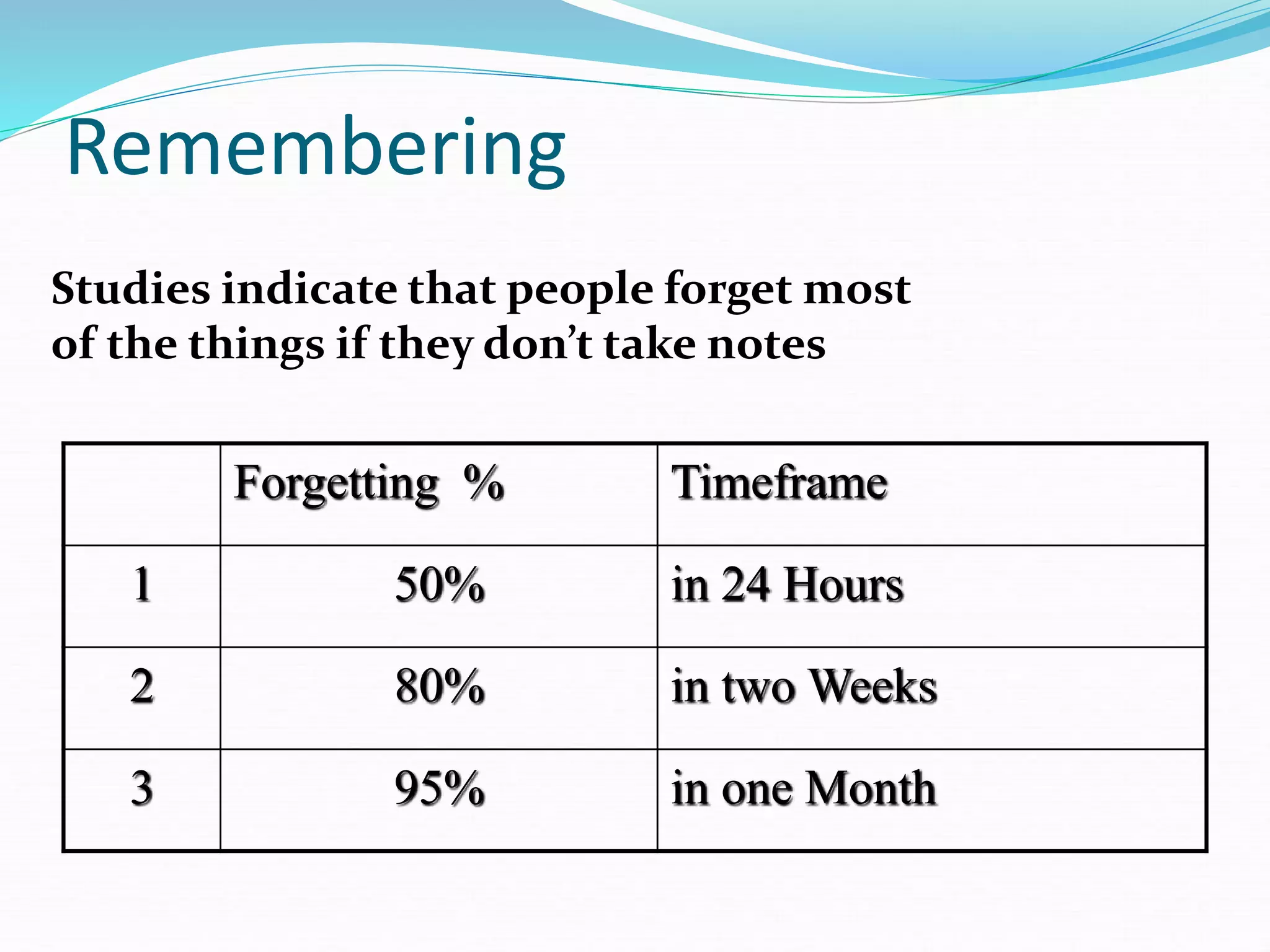
Remembering
Forgetting % Timeframe
1 50% in 24 Hours
2 80% in two Weeks
3 95% in one Month
Studies indicate that people forget most
of the things if they don’t take notes
Note Taking
 Note Taking People are:
 Students, Lecturers, Journalists, Consultants
 Note taking skill is required in many jobs.
 Note taking skill helps you to enhance your
productivity in work place.
Note Taking Situations
Note Taking Situations are:-
 Lectures
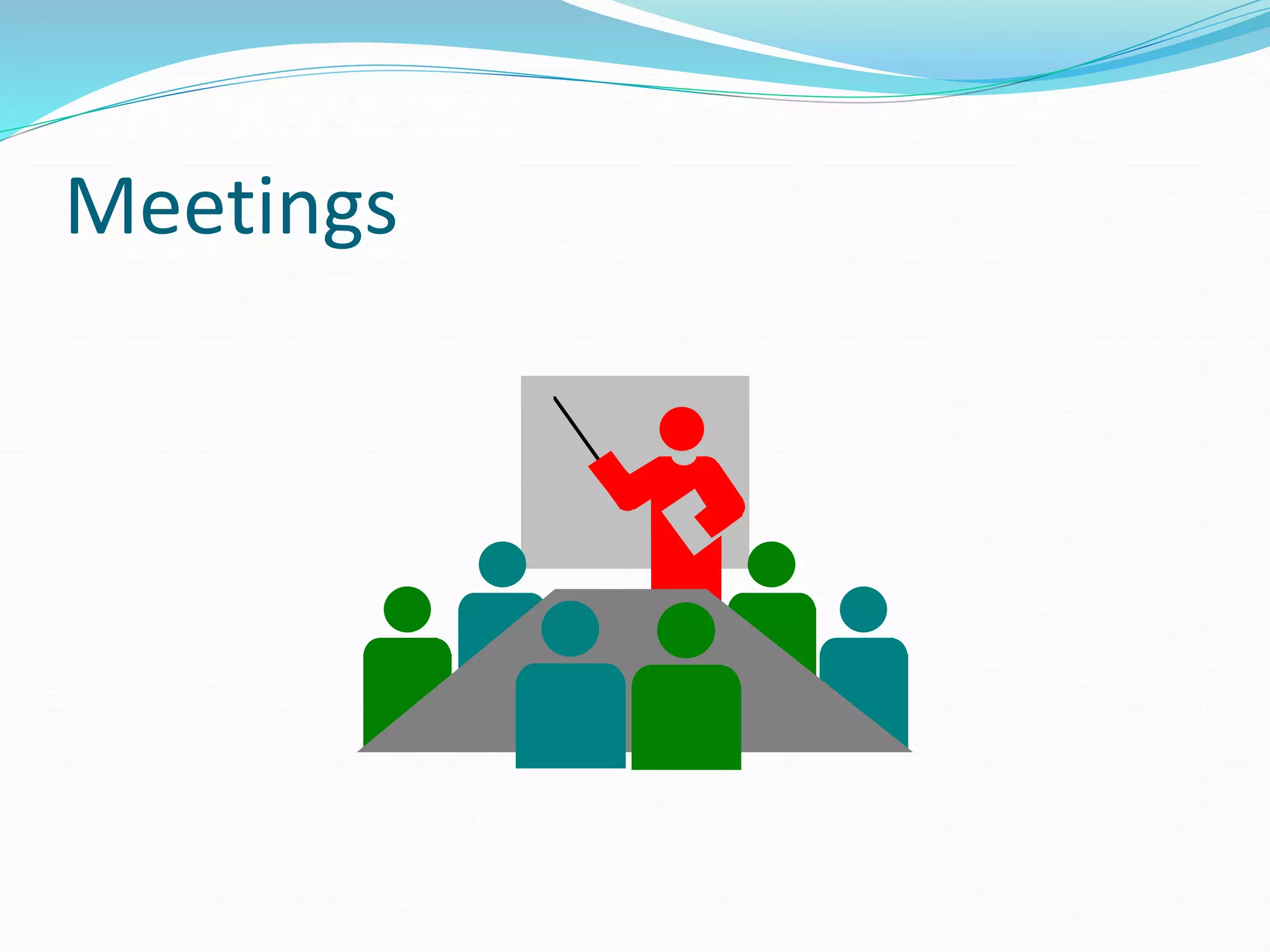
 Meetings
 Discussions
 Seminars
 TV, Audio Programs
 Personal Thoughts & Visions
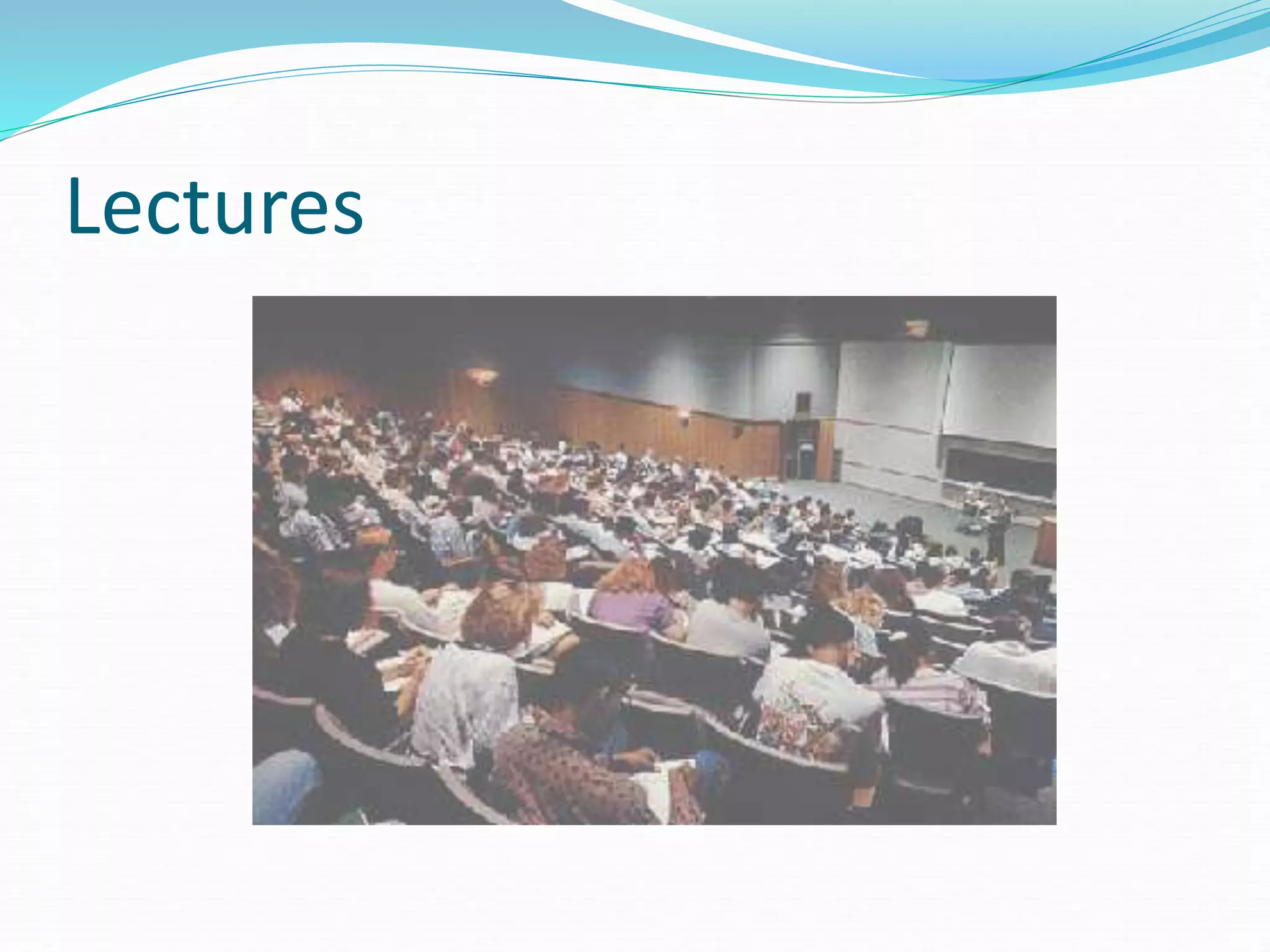
Lectures
Personal Thoughts
.
Meetings
Discussions
Other Situations
Television Programmes
Radio Programmes
Audio and Video Tapes
Note Taking Skills and Techniques
 Using Short Form
 Tidiness
 Avoid over crowding
 Organize your Writing
 Using Patterns
 Using Effects
 Creating Visual Impact
 Outlining
 Using Page Formats
 Leaving Spaces
 Using Text Box
 Standardization
 Formatting
Using Short Forms
 Write notes in point form
 Use abstract /summary
 Use short form(<, >, e. g. vs.)
 Abbreviate recurring term
Tidiness
 Make your pages nice and neat
 Neat pages create more attraction to the reader
 Nice and beautiful notes create encouragement to the
reader
 Write legibly and neatly
Avoid overcrowding your pages
 Avoid crowding of pages with too much of text
 Leave lot of white areas
Notes are more important than papers
Organizing Your Writing and Using Patterns
Identify following organizational Pattern
 Lists/Bullets
 Problem/Solution
 Cause/effect
 Comparison/Contrast
 Advantages/Disadvantages
 Question/ Answers
Using Effects
 Underline
 Block Letters
 Bold/ Painting
 Highlight important points
 Do not over use
Creating Visual Impact
 Visibility
 Using color
 Using Diagrams
 Using picture
Using Outlining Format
Use Standardized Outlining Format
Numerical(e.g. 1.2.1)
Harvard (I.A.I.a)
 Outlining will save time in searching and reading text
Planning Page Formats
Page Format
• One page format
• 2-Column Format
• 3-Column Format
Margins
• Top 1”
• Bottom 1”
• Left 1”
• Right 1”
Leaving Space
 Leave space and margins to add extra material later
 Leave blank spaces between points
Use Text Box
Use Text Box or write it separately
 Formulas
 Examples
 Quotations
 Any Additional ideas
 Your Reflections
Standardization
Follow one Style
 Abbreviation
 Punctuation
 Margin
 Page Format
Using Lists/Bullets
 Use Stars (*)
 Use Bullets ()
 Use Arrows ()
 Use Question Mark (?)
 Checks ()
Organizing Notes
 Take notes in outline form and not in paragraph form
 Note your ideas and reflection separately
 Write your questions in separately
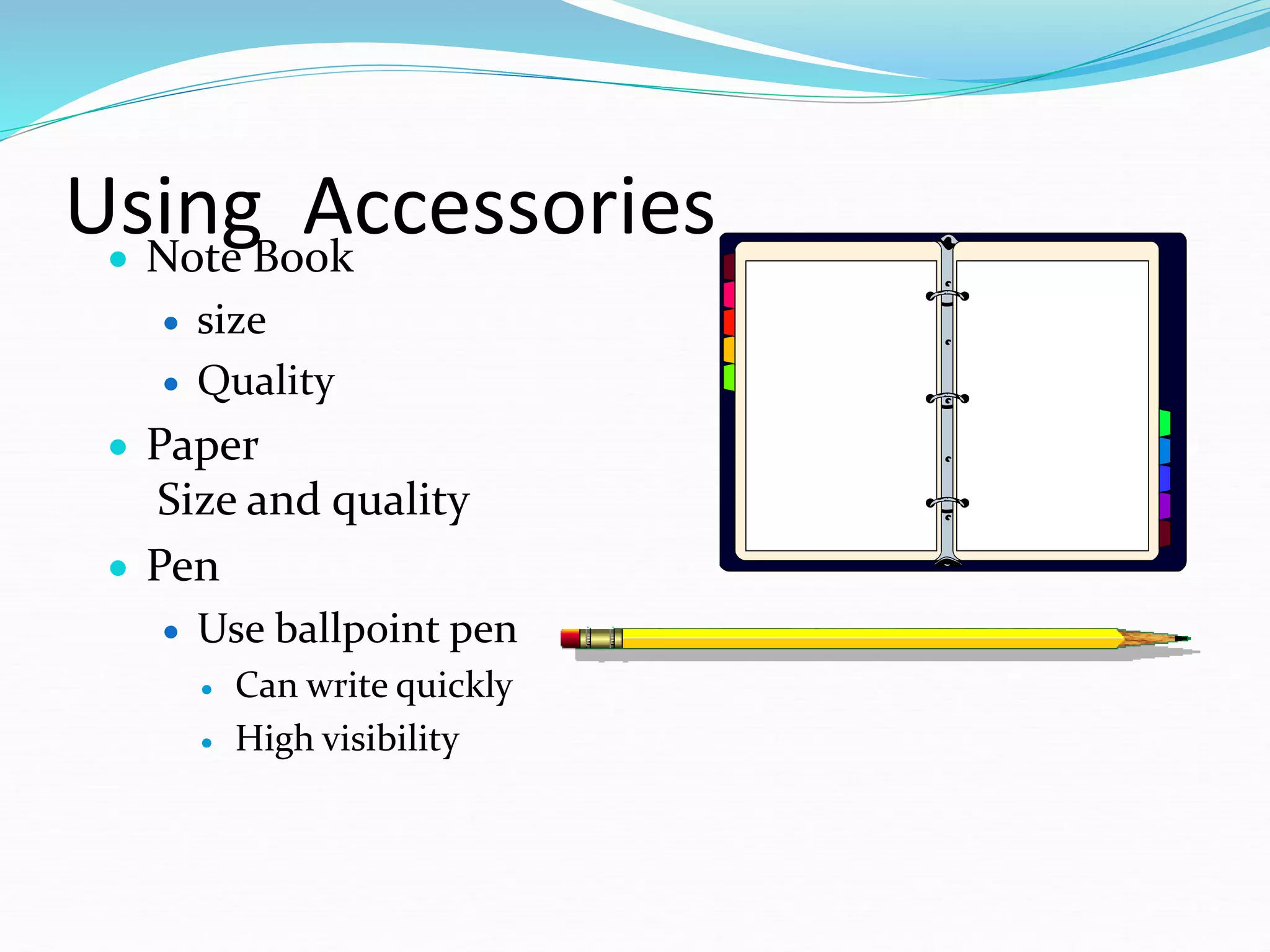
Using Accessories
 Note Book
 size
 Quality
 Paper
Size and quality
 Pen
 Use ballpoint pen
 Can write quickly
 High visibility
File Organization
 File according to subject
 Indicate date and Topic clearly
 Label your notes
Use Advanced Techniques
Mind Mapping
 Mind Mapping
Notes -Taking Stages
 Three Stages of Note taking
Before the Class/Meeting
During the Class/Meeting
After the Class/Meeting
Before the Lecture
 Develop a mind-set geared toward listening
 Acquaint yourself with main ideas
 Read in advance about the topic
During the Lecture
 Arriving early with needed supplies and accessories
 Listen actively for structure and information
 Focus on content, not delivery
 Resist distraction
 Identify major points and minor points
 Focus on the topic to be discussed
 Be open minded about points
Following Speaker’s Message
Pattern
 Identify key points as well as unimportant
points
 Find the sequences of subjects and thoughts
 Get right into the theme of lecture quickly
 Identify the main sections and sub sections
After the Lectures
 Editing Notes
 Leave spaces if confused
 Fill the missing points
 Label main point
 Add heading and Sub heading
 Go through the notes after the class
 Review your notes periodically
Practical Hints
 Don't take down everything
 Note taking requires practice
 Write before and don't get behind
 Date each day's notes & number pages
 Eye-catching notes facilitate retention
 Sit close to the front if there are vacancies
 Ask questions if required
Notes Taking - Strategy or Skill
 Notes taking is more of a strategy than a skill.
 It is a good habit to learn
Advantages Taking Notes
• Note taking enhance listening
• Note taking improve understanding
• Note taking improve memory
Notes taking skills

Notes taking skills

  • 1.
  • 2.
    Eight Important Reasonsto Take Notes  It helps you to concentrate more and focus attention on the subject.  It helps comprehension and retention.  It forces to listen carefully and critically.  Notes often contain information that cannot be found elsewhere.
  • 3.
    Eight Important Reasonsto Take Notes  Notes provide better source for review.  Notes provide better outline of ideas and concepts.  Notes help to clarify ideas.  We remember more when we write things down.
  • 4.
    Remembering Forgetting % Timeframe 150% in 24 Hours 2 80% in two Weeks 3 95% in one Month Studies indicate that people forget most of the things if they don’t take notes
  • 5.
    Note Taking  NoteTaking People are:  Students, Lecturers, Journalists, Consultants  Note taking skill is required in many jobs.  Note taking skill helps you to enhance your productivity in work place.
  • 6.
    Note Taking Situations NoteTaking Situations are:-  Lectures  Meetings  Discussions  Seminars  TV, Audio Programs  Personal Thoughts & Visions
  • 7.
  • 8.
  • 9.
  • 10.
  • 11.
    Other Situations Television Programmes RadioProgrammes Audio and Video Tapes
  • 12.
    Note Taking Skillsand Techniques  Using Short Form  Tidiness  Avoid over crowding  Organize your Writing  Using Patterns  Using Effects  Creating Visual Impact  Outlining  Using Page Formats  Leaving Spaces  Using Text Box  Standardization  Formatting
  • 13.
    Using Short Forms Write notes in point form  Use abstract /summary  Use short form(<, >, e. g. vs.)  Abbreviate recurring term
  • 14.
    Tidiness  Make yourpages nice and neat  Neat pages create more attraction to the reader  Nice and beautiful notes create encouragement to the reader  Write legibly and neatly
  • 15.
    Avoid overcrowding yourpages  Avoid crowding of pages with too much of text  Leave lot of white areas Notes are more important than papers
  • 16.
    Organizing Your Writingand Using Patterns Identify following organizational Pattern  Lists/Bullets  Problem/Solution  Cause/effect  Comparison/Contrast  Advantages/Disadvantages  Question/ Answers
  • 17.
    Using Effects  Underline Block Letters  Bold/ Painting  Highlight important points  Do not over use
  • 18.
    Creating Visual Impact Visibility  Using color  Using Diagrams  Using picture
  • 19.
    Using Outlining Format UseStandardized Outlining Format Numerical(e.g. 1.2.1) Harvard (I.A.I.a)  Outlining will save time in searching and reading text
  • 20.
    Planning Page Formats PageFormat • One page format • 2-Column Format • 3-Column Format Margins • Top 1” • Bottom 1” • Left 1” • Right 1”
  • 21.
    Leaving Space  Leavespace and margins to add extra material later  Leave blank spaces between points
  • 22.
    Use Text Box UseText Box or write it separately  Formulas  Examples  Quotations  Any Additional ideas  Your Reflections
  • 23.
    Standardization Follow one Style Abbreviation  Punctuation  Margin  Page Format
  • 24.
    Using Lists/Bullets  UseStars (*)  Use Bullets ()  Use Arrows ()  Use Question Mark (?)  Checks ()
  • 25.
    Organizing Notes  Takenotes in outline form and not in paragraph form  Note your ideas and reflection separately  Write your questions in separately
  • 26.
    Using Accessories  NoteBook  size  Quality  Paper Size and quality  Pen  Use ballpoint pen  Can write quickly  High visibility
  • 27.
    File Organization  Fileaccording to subject  Indicate date and Topic clearly  Label your notes
  • 28.
    Use Advanced Techniques MindMapping  Mind Mapping
  • 29.
    Notes -Taking Stages Three Stages of Note taking Before the Class/Meeting During the Class/Meeting After the Class/Meeting
  • 30.
    Before the Lecture Develop a mind-set geared toward listening  Acquaint yourself with main ideas  Read in advance about the topic
  • 31.
    During the Lecture Arriving early with needed supplies and accessories  Listen actively for structure and information  Focus on content, not delivery  Resist distraction  Identify major points and minor points  Focus on the topic to be discussed  Be open minded about points
  • 32.
    Following Speaker’s Message Pattern Identify key points as well as unimportant points  Find the sequences of subjects and thoughts  Get right into the theme of lecture quickly  Identify the main sections and sub sections
  • 33.
    After the Lectures Editing Notes  Leave spaces if confused  Fill the missing points  Label main point  Add heading and Sub heading  Go through the notes after the class  Review your notes periodically
  • 34.
    Practical Hints  Don'ttake down everything  Note taking requires practice  Write before and don't get behind  Date each day's notes & number pages  Eye-catching notes facilitate retention  Sit close to the front if there are vacancies  Ask questions if required
  • 35.
    Notes Taking -Strategy or Skill  Notes taking is more of a strategy than a skill.  It is a good habit to learn
  • 36.
    Advantages Taking Notes •Note taking enhance listening • Note taking improve understanding • Note taking improve memory