READING
COMPREHENSION
ANIL KUMAR
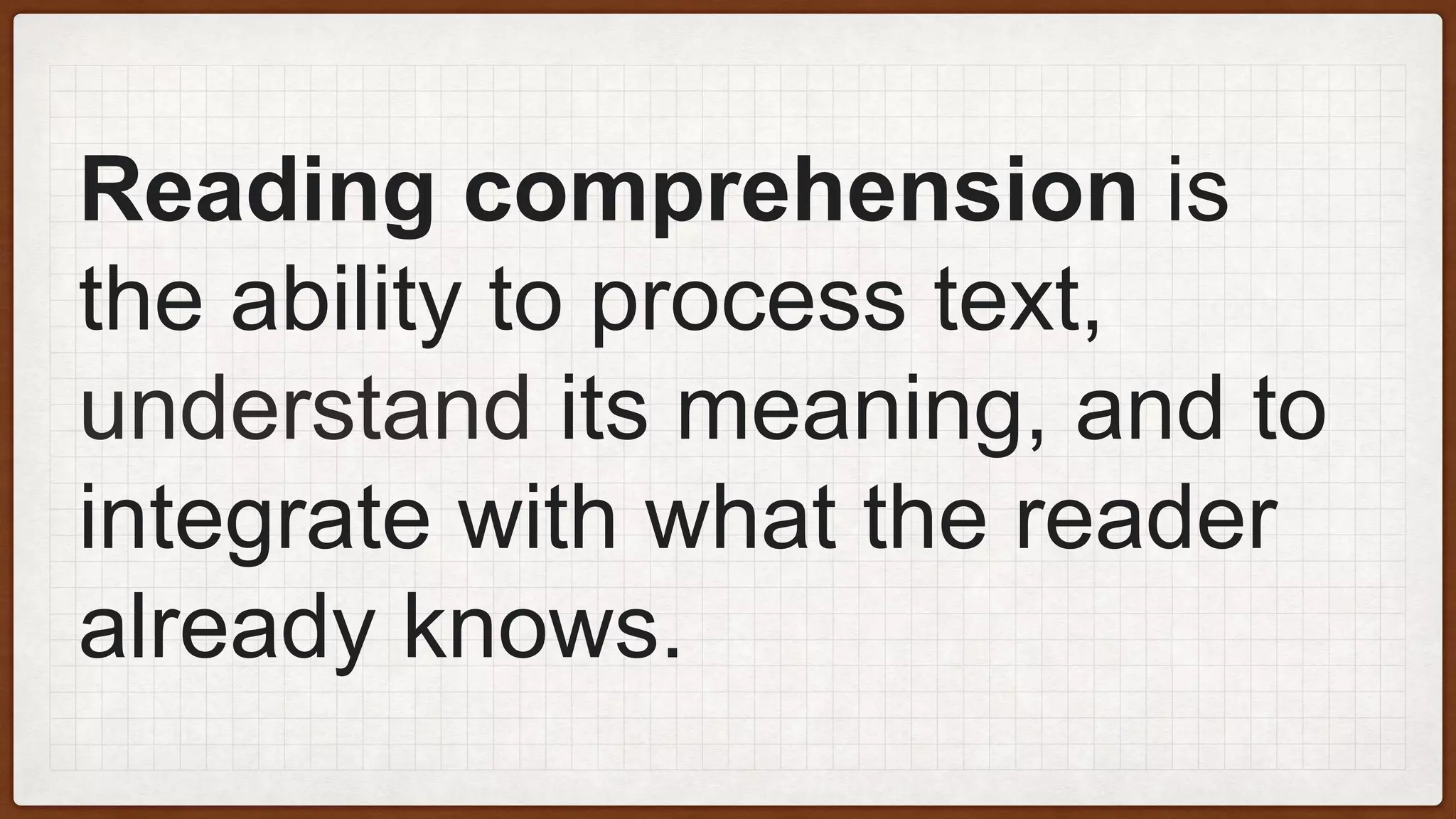
Reading comprehension is
the ability to process text,
understand its meaning, and to
integrate with what the reader
already knows.
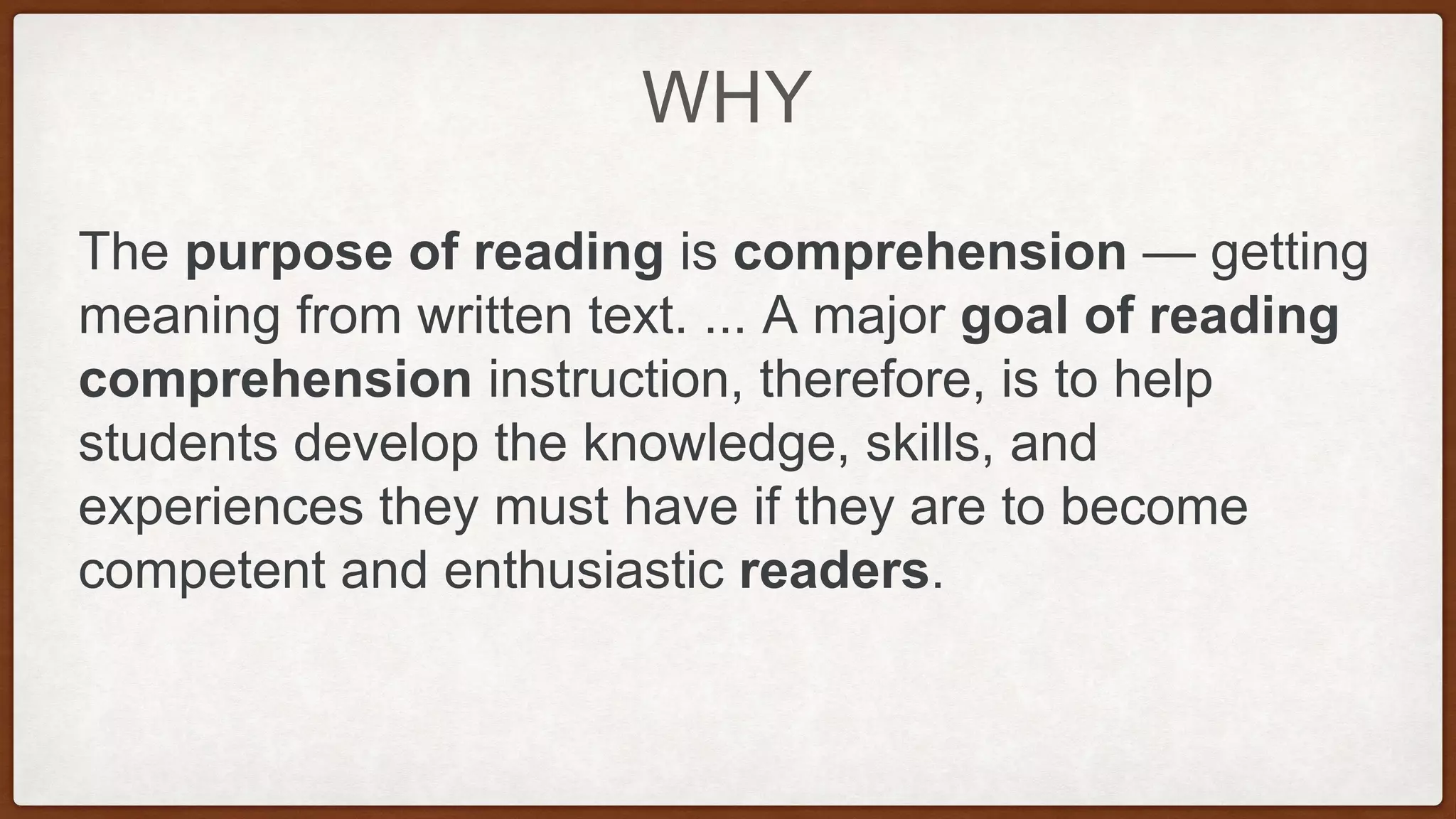
The purpose of reading is comprehension — getting
meaning from written text. ... A major goal of reading
comprehension instruction, therefore, is to help
students develop the knowledge, skills, and
experiences they must have if they are to become
competent and enthusiastic readers.
WHY
STRATEGIES TO ATTEMPT
SECTION A (READING
SKILL)
SKIMMING
Quickly run through the passage once.
Note all capitalized words, numbers,
names, scientific/medical terms.
NOW READ THE QUESTIONS AND GO BACK TO THE
PASSAGE TO FIND THE APPROPRIATE ANSWERS.
SCANNING
Once you locate the paragraph where you think a
particular answer is, read that particular paragraph.
IMPORTANT THINGS TO REMEMBER
• Write your answer without lifting exactly passage content.
• Respond in the tone and tense and direction of the question.
• Answer should be precise and to the point.
• Base your answer on the passage content rather than deviating from it and
applying your previous knowledge.
• In word attack / vocabulary based question, provide only one word/phrase.
• If confused in vocabulary questions, try to deduce/ puzzle out the meaning
from the context.
COMMON ERRORS
• All the parts of the questions are not answered.
• In M.C.Q.s correct answer is not marked.
• Waste a lot of time in reading the Passages.
• Don’t leave space after every part.
• Do not number them properly.
• Change the indentation from 1, 2, 3, to a, b, c or vice versa which
confuses the examiner.
LET’S READ AND
COMPREHEND
Thank you

Reading comprehension

  • 1.
  • 2.
    Reading comprehension is theability to process text, understand its meaning, and to integrate with what the reader already knows.
  • 3.
    The purpose ofreading is comprehension — getting meaning from written text. ... A major goal of reading comprehension instruction, therefore, is to help students develop the knowledge, skills, and experiences they must have if they are to become competent and enthusiastic readers. WHY
  • 4.
  • 5.
    SKIMMING Quickly run throughthe passage once. Note all capitalized words, numbers, names, scientific/medical terms.
  • 6.
    NOW READ THEQUESTIONS AND GO BACK TO THE PASSAGE TO FIND THE APPROPRIATE ANSWERS. SCANNING Once you locate the paragraph where you think a particular answer is, read that particular paragraph.
  • 7.
    IMPORTANT THINGS TOREMEMBER • Write your answer without lifting exactly passage content. • Respond in the tone and tense and direction of the question. • Answer should be precise and to the point. • Base your answer on the passage content rather than deviating from it and applying your previous knowledge. • In word attack / vocabulary based question, provide only one word/phrase. • If confused in vocabulary questions, try to deduce/ puzzle out the meaning from the context.
  • 8.
    COMMON ERRORS • Allthe parts of the questions are not answered. • In M.C.Q.s correct answer is not marked. • Waste a lot of time in reading the Passages. • Don’t leave space after every part. • Do not number them properly. • Change the indentation from 1, 2, 3, to a, b, c or vice versa which confuses the examiner.
  • 9.