DIPLOMA IN MEDICAL LABORATORY
TECHNOLOGY
HAEMATOLOGY DIAGNOSTIC II (SBD 0153)

NAME : NUR FATHIYAH BINTI MOHD.
ID
: 012012111311.
LECTURER’S NAME :MDM SHUHADA
DATE OF SUBMISSION : 03
DECEMBER 2013
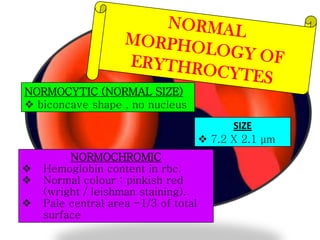
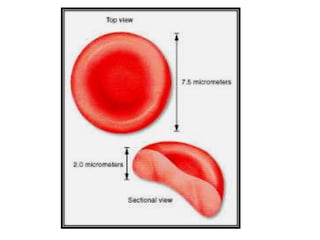
NORMOCYTIC (NORMAL SIZE)
 biconcave shape , no nucleus
SIZE
 7.2 X 2.1 µm




NORMOCHROMIC
Hemoglobin content in rbc.
Normal colour : pinkish red
(wright / leishman staining).
Pale central area -1/3 of total
surface
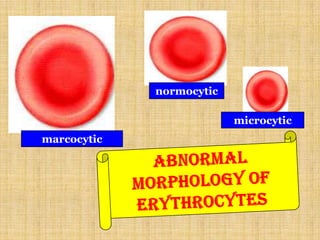
normocytic
microcytic

marcocytic
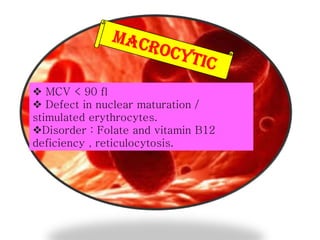
 MCV < 90 fl
 Defect in nuclear maturation /
stimulated erythrocytes.
Disorder : Folate and vitamin B12
deficiency , reticulocytosis.
m
i
c
r
o
c
y
t
i
c

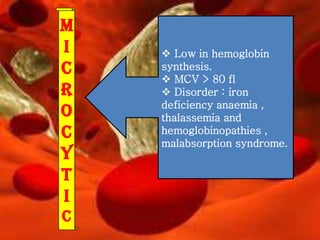
 Low in hemoglobin
synthesis.
 MCV > 80 fl
 Disorder : iron
deficiency anaemia ,
thalassemia and
hemoglobinopathies ,
malabsorption syndrome.
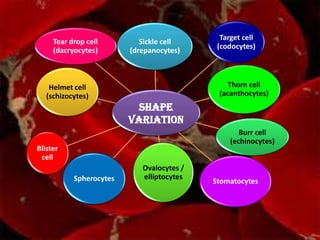
Tear drop cell
(dacryocytes)

Sickle cell
(drepanocytes)

Target cell
(codocytes)

Thorn cell
(acanthocytes)

Helmet cell
(schizocytes)

Shape
variation
Burr cell
(echinocytes)

Blister
cell
Spherocytes

Ovalocytes /
elliptocytes

Stomatocytes
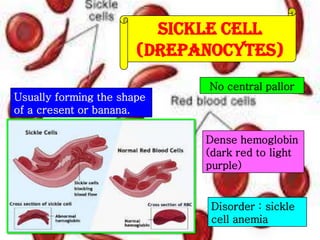
Sickle cell
(drepanocytes)
Usually forming the shape
of a cresent or banana.

No central pallor

Dense hemoglobin
(dark red to light
purple)

Disorder : sickle
cell anemia
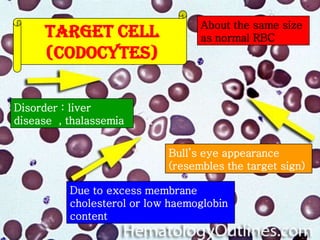
Target cell
(codocytes)

About the same size
as normal RBC

Disorder : liver
disease , thalassemia
Bull’s eye appearance
(resembles the target sign)

Due to excess membrane
cholesterol or low haemoglobin
content
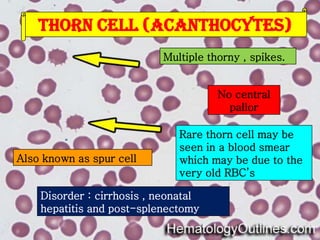
Thorn cell (acanthocytes)
Multiple thorny , spikes.

No central
pallor

Also known as spur cell

Rare thorn cell may be
seen in a blood smear
which may be due to the
very old RBC’s

Disorder : cirrhosis , neonatal
hepatitis and post-splenectomy
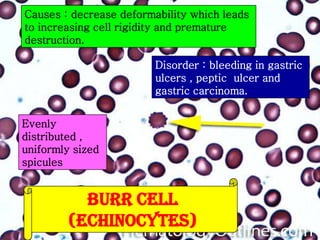
Causes : decrease deformability which leads
to increasing cell rigidity and premature
destruction.
Disorder : bleeding in gastric
ulcers , peptic ulcer and
gastric carcinoma.
Evenly
distributed ,
uniformly sized
spicules

BURR CELL
(ECHINOCYTES)
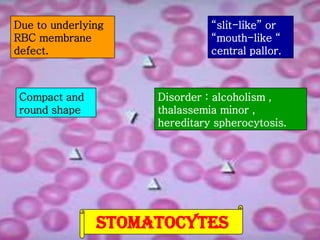
Due to underlying
RBC membrane
defect.

Compact and
round shape

“slit-like” or
“mouth-like “
central pallor.

Disorder : alcoholism ,
thalassemia minor ,
hereditary spherocytosis.

STOMATOCYTES
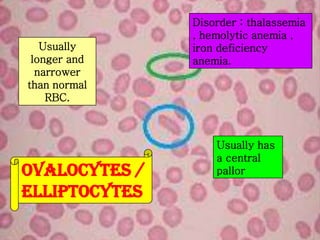
Usually
longer and
narrower
than normal
RBC.

OVALOCYTES /
ELLIPTOCYTES

Disorder : thalassemia
, hemolytic anemia ,
iron deficiency
anemia.

Usually has
a central
pallor
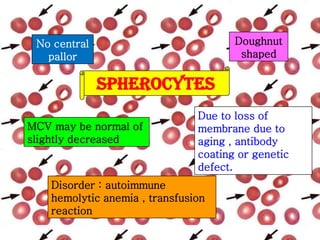
Doughnut
shaped

No central
pallor

SPHEROCYTES
MCV may be normal of
slightly decreased

Due to loss of
membrane due to
aging , antibody
coating or genetic
defect.

Disorder : autoimmune
hemolytic anemia , transfusion
reaction
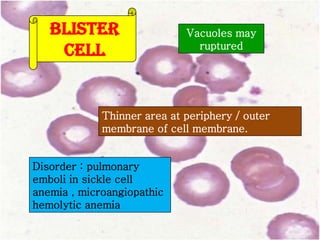
BLISTER
CELL

Vacuoles may
ruptured

Thinner area at periphery / outer
membrane of cell membrane.

Disorder : pulmonary
emboli in sickle cell
anemia , microangiopathic
hemolytic anemia
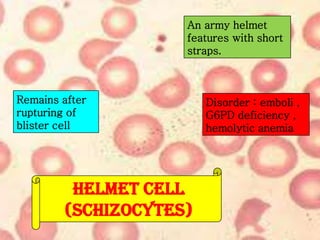
An army helmet
features with short
straps.

Remains after
rupturing of
blister cell

HELMET CELL
(SCHIZOCYTES)

Disorder : emboli ,
G6PD deficiency ,
hemolytic anemia
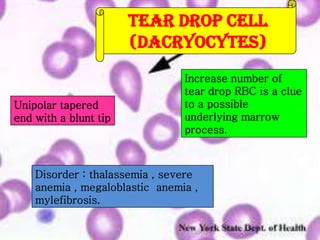
TEAR DROP CELL
(DACRYOCYTES)

Unipolar tapered
end with a blunt tip

Increase number of
tear drop RBC is a clue
to a possible
underlying marrow
process.

Disorder : thalassemia , severe
anemia , megaloblastic anemia ,
mylefibrosis.
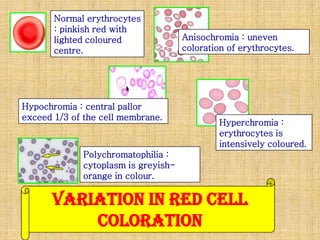
Normal erythrocytes
: pinkish red with
lighted coloured
centre.

Hypochromia : central pallor
exceed 1/3 of the cell membrane.

Anisochromia : uneven
coloration of erythrocytes.

Hyperchromia :
erythrocytes is
intensively coloured.

Polychromatophilia :
cytoplasm is greyishorange in colour.

VARIATION IN RED CELL
COLORATION
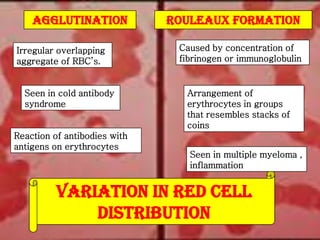
AGGLUTINATION
Irregular overlapping
aggregate of RBC’s.

Seen in cold antibody
syndrome

Reaction of antibodies with
antigens on erythrocytes

ROULEAUX FORMATION
Caused by concentration of
fibrinogen or immunoglobulin

Arrangement of
erythrocytes in groups
that resembles stacks of
coins
Seen in multiple myeloma ,
inflammation

VARIATION IN RED CELL
DISTRIBUTION
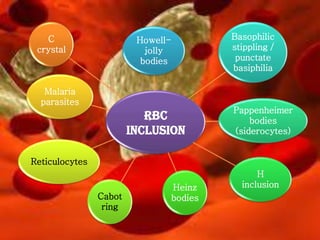
C
crystal

Howelljolly
bodies

Malaria
parasites

RBC
inclusion

Basophilic
stippling /
punctate
basiphilia

Pappenheimer
bodies
(siderocytes)

Reticulocytes

Cabot
ring

Heinz
bodies

H
inclusion
Nuclear / cytoplasmic
aggregates of stainable
substances , usually protein.

condition
 formed if there is the
abnormalitiy
 invoved virus infection
 classified according to staining
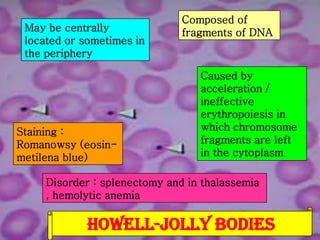
May be centrally
located or sometimes in
the periphery

Staining :
Romanowsy (eosinmetilena blue)

Composed of
fragments of DNA

Caused by
acceleration /
ineffective
erythropoiesis in
which chromosome
fragments are left
in the cytoplasm

Disorder : splenectomy and in thalassemia
, hemolytic anemia

HOWELL-JOLLY BODIES
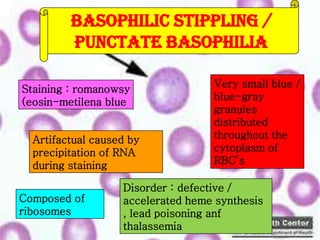
BASOPHILIC STIPPLING /
PUNCTATE BASOPHILIA
Staining : romanowsy
(eosin-metilena blue

Artifactual caused by
precipitation of RNA
during staining
Composed of
ribosomes

Very small blue /
blue-gray
granules
distributed
throughout the
cytoplasm of
RBC’s

Disorder : defective /
accelerated heme synthesis
, lead poisoning anf
thalassemia
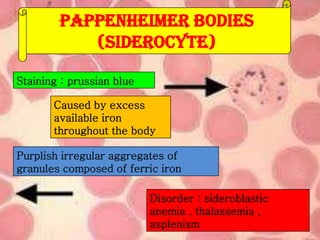
PAPPENHEIMER BODIES
(SIDEROCYTE)
Staining : prussian blue
Caused by excess
available iron
throughout the body
Purplish irregular aggregates of
granules composed of ferric iron
Disorder : sideroblastic
anemia , thalassemia ,
asplenism
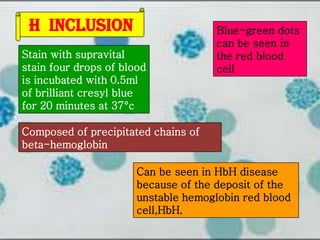
H INCLUSION
Stain with supravital
stain four drops of blood
is incubated with 0.5ml
of brilliant cresyl blue
for 20 minutes at 37°c

Blue-green dots
can be seen in
the red blood
cell

Composed of precipitated chains of
beta-hemoglobin
Can be seen in HbH disease
because of the deposit of the
unstable hemoglobin red blood
cell,HbH.
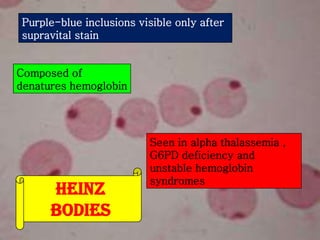
Purple-blue inclusions visible only after
supravital stain

Composed of
denatures hemoglobin

HEINZ
BODIES

Seen in alpha thalassemia ,
G6PD deficiency and
unstable hemoglobin
syndromes
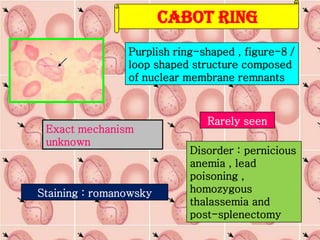
CABOT RING
Purplish ring-shaped , figure-8 /
loop shaped structure composed
of nuclear membrane remnants

Exact mechanism
unknown

Staining : romanowsky

Rarely seen
Disorder : pernicious
anemia , lead
poisoning ,
homozygous
thalassemia and
post-splenectomy
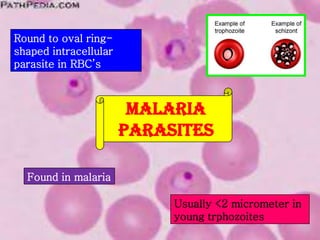
Round to oval ringshaped intracellular
parasite in RBC’s

MALARIA
PARASITES
Found in malaria
Usually <2 micrometer in
young trphozoites
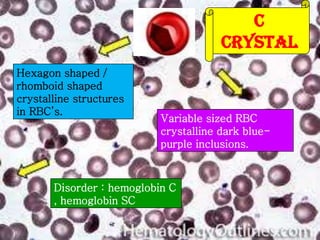
C
CRYSTAL
Hexagon shaped /
rhomboid shaped
crystalline structures
in RBC’s.

Variable sized RBC
crystalline dark bluepurple inclusions.

Disorder : hemoglobin C
, hemoglobin SC
RETICULOCYTES
Young red blood cells that
contains ribonucleic acid
and ribosomes
Seen As dark
blue granule or
filament
Staining : Supravital stains (such as brilliant
cresyl blue, as used here) clump RNA and
mitochondria and permit easy identification
of reticulocytes, as compared to mature RBC
normal and abnormalities in red blood cell

normal and abnormalities in red blood cell

  • 1.
    DIPLOMA IN MEDICALLABORATORY TECHNOLOGY HAEMATOLOGY DIAGNOSTIC II (SBD 0153) NAME : NUR FATHIYAH BINTI MOHD. ID : 012012111311. LECTURER’S NAME :MDM SHUHADA DATE OF SUBMISSION : 03 DECEMBER 2013
  • 2.
    NORMOCYTIC (NORMAL SIZE) biconcave shape , no nucleus SIZE  7.2 X 2.1 µm    NORMOCHROMIC Hemoglobin content in rbc. Normal colour : pinkish red (wright / leishman staining). Pale central area -1/3 of total surface
  • 4.
  • 5.
     MCV <90 fl  Defect in nuclear maturation / stimulated erythrocytes. Disorder : Folate and vitamin B12 deficiency , reticulocytosis.
  • 6.
    m i c r o c y t i c  Low inhemoglobin synthesis.  MCV > 80 fl  Disorder : iron deficiency anaemia , thalassemia and hemoglobinopathies , malabsorption syndrome.
  • 7.
    Tear drop cell (dacryocytes) Sicklecell (drepanocytes) Target cell (codocytes) Thorn cell (acanthocytes) Helmet cell (schizocytes) Shape variation Burr cell (echinocytes) Blister cell Spherocytes Ovalocytes / elliptocytes Stomatocytes
  • 8.
    Sickle cell (drepanocytes) Usually formingthe shape of a cresent or banana. No central pallor Dense hemoglobin (dark red to light purple) Disorder : sickle cell anemia
  • 9.
    Target cell (codocytes) About thesame size as normal RBC Disorder : liver disease , thalassemia Bull’s eye appearance (resembles the target sign) Due to excess membrane cholesterol or low haemoglobin content
  • 10.
    Thorn cell (acanthocytes) Multiplethorny , spikes. No central pallor Also known as spur cell Rare thorn cell may be seen in a blood smear which may be due to the very old RBC’s Disorder : cirrhosis , neonatal hepatitis and post-splenectomy
  • 11.
    Causes : decreasedeformability which leads to increasing cell rigidity and premature destruction. Disorder : bleeding in gastric ulcers , peptic ulcer and gastric carcinoma. Evenly distributed , uniformly sized spicules BURR CELL (ECHINOCYTES)
  • 12.
    Due to underlying RBCmembrane defect. Compact and round shape “slit-like” or “mouth-like “ central pallor. Disorder : alcoholism , thalassemia minor , hereditary spherocytosis. STOMATOCYTES
  • 13.
    Usually longer and narrower than normal RBC. OVALOCYTES/ ELLIPTOCYTES Disorder : thalassemia , hemolytic anemia , iron deficiency anemia. Usually has a central pallor
  • 14.
    Doughnut shaped No central pallor SPHEROCYTES MCV maybe normal of slightly decreased Due to loss of membrane due to aging , antibody coating or genetic defect. Disorder : autoimmune hemolytic anemia , transfusion reaction
  • 15.
    BLISTER CELL Vacuoles may ruptured Thinner areaat periphery / outer membrane of cell membrane. Disorder : pulmonary emboli in sickle cell anemia , microangiopathic hemolytic anemia
  • 16.
    An army helmet featureswith short straps. Remains after rupturing of blister cell HELMET CELL (SCHIZOCYTES) Disorder : emboli , G6PD deficiency , hemolytic anemia
  • 17.
    TEAR DROP CELL (DACRYOCYTES) Unipolartapered end with a blunt tip Increase number of tear drop RBC is a clue to a possible underlying marrow process. Disorder : thalassemia , severe anemia , megaloblastic anemia , mylefibrosis.
  • 18.
    Normal erythrocytes : pinkishred with lighted coloured centre. Hypochromia : central pallor exceed 1/3 of the cell membrane. Anisochromia : uneven coloration of erythrocytes. Hyperchromia : erythrocytes is intensively coloured. Polychromatophilia : cytoplasm is greyishorange in colour. VARIATION IN RED CELL COLORATION
  • 19.
    AGGLUTINATION Irregular overlapping aggregate ofRBC’s. Seen in cold antibody syndrome Reaction of antibodies with antigens on erythrocytes ROULEAUX FORMATION Caused by concentration of fibrinogen or immunoglobulin Arrangement of erythrocytes in groups that resembles stacks of coins Seen in multiple myeloma , inflammation VARIATION IN RED CELL DISTRIBUTION
  • 20.
  • 21.
    Nuclear / cytoplasmic aggregatesof stainable substances , usually protein. condition  formed if there is the abnormalitiy  invoved virus infection  classified according to staining
  • 22.
    May be centrally locatedor sometimes in the periphery Staining : Romanowsy (eosinmetilena blue) Composed of fragments of DNA Caused by acceleration / ineffective erythropoiesis in which chromosome fragments are left in the cytoplasm Disorder : splenectomy and in thalassemia , hemolytic anemia HOWELL-JOLLY BODIES
  • 23.
    BASOPHILIC STIPPLING / PUNCTATEBASOPHILIA Staining : romanowsy (eosin-metilena blue Artifactual caused by precipitation of RNA during staining Composed of ribosomes Very small blue / blue-gray granules distributed throughout the cytoplasm of RBC’s Disorder : defective / accelerated heme synthesis , lead poisoning anf thalassemia
  • 24.
    PAPPENHEIMER BODIES (SIDEROCYTE) Staining :prussian blue Caused by excess available iron throughout the body Purplish irregular aggregates of granules composed of ferric iron Disorder : sideroblastic anemia , thalassemia , asplenism
  • 25.
    H INCLUSION Stain withsupravital stain four drops of blood is incubated with 0.5ml of brilliant cresyl blue for 20 minutes at 37°c Blue-green dots can be seen in the red blood cell Composed of precipitated chains of beta-hemoglobin Can be seen in HbH disease because of the deposit of the unstable hemoglobin red blood cell,HbH.
  • 26.
    Purple-blue inclusions visibleonly after supravital stain Composed of denatures hemoglobin HEINZ BODIES Seen in alpha thalassemia , G6PD deficiency and unstable hemoglobin syndromes
  • 27.
    CABOT RING Purplish ring-shaped, figure-8 / loop shaped structure composed of nuclear membrane remnants Exact mechanism unknown Staining : romanowsky Rarely seen Disorder : pernicious anemia , lead poisoning , homozygous thalassemia and post-splenectomy
  • 28.
    Round to ovalringshaped intracellular parasite in RBC’s MALARIA PARASITES Found in malaria Usually <2 micrometer in young trphozoites
  • 29.
    C CRYSTAL Hexagon shaped / rhomboidshaped crystalline structures in RBC’s. Variable sized RBC crystalline dark bluepurple inclusions. Disorder : hemoglobin C , hemoglobin SC
  • 30.
    RETICULOCYTES Young red bloodcells that contains ribonucleic acid and ribosomes Seen As dark blue granule or filament Staining : Supravital stains (such as brilliant cresyl blue, as used here) clump RNA and mitochondria and permit easy identification of reticulocytes, as compared to mature RBC