Case discussion and topic
         review
 Moderator Dr. Naveen Pandey
  Presenter-Dr. Pradip katwal
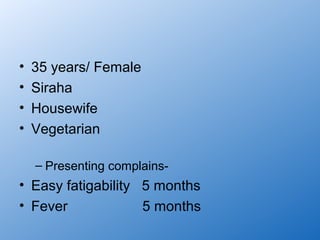
•   35 years/ Female
•   Siraha
•   Housewife
•   Vegetarian

    – Presenting complains-
• Easy fatigability 5 months
• Fever             5 months
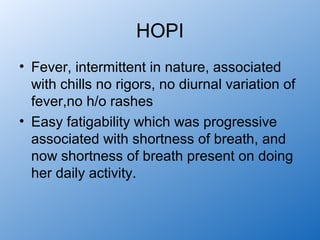
HOPI
• Fever, intermittent in nature, associated
  with chills no rigors, no diurnal variation of
  fever,no h/o rashes
• Easy fatigability which was progressive
  associated with shortness of breath, and
  now shortness of breath present on doing
  her daily activity.
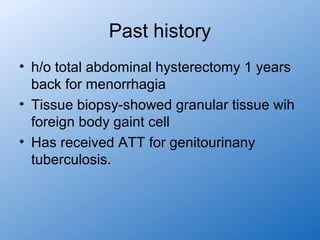
Past history
• h/o total abdominal hysterectomy 1 years
  back for menorrhagia
• Tissue biopsy-showed granular tissue wih
  foreign body gaint cell
• Has received ATT for genitourinany
  tuberculosis.
Family history
• History of tuberculosis in family +
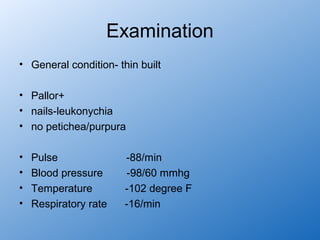
Examination
• General condition- thin built

• Pallor+
• nails-leukonychia
• no petichea/purpura

•   Pulse              -88/min
•   Blood pressure     -98/60 mmhg
•   Temperature        -102 degree F
•   Respiratory rate   -16/min
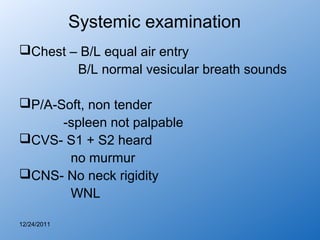
Systemic examination
Chest – B/L equal air entry
        B/L normal vesicular breath sounds

P/A-Soft, non tender
      -spleen not palpable
CVS- S1 + S2 heard
       no murmur
CNS- No neck rigidity
       WNL

12/24/2011
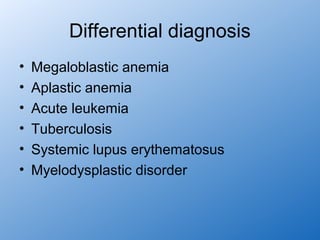
Differential diagnosis
•   Megaloblastic anemia
•   Aplastic anemia
•   Acute leukemia
•   Tuberculosis
•   Systemic lupus erythematosus
•   Myelodysplastic disorder
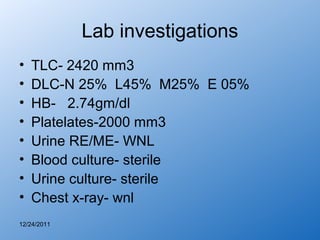
Lab investigations
•   TLC- 2420 mm3
•   DLC-N 25% L45% M25% E 05%
•   HB- 2.74gm/dl
•   Platelates-2000 mm3
•   Urine RE/ME- WNL
•   Blood culture- sterile
•   Urine culture- sterile
•   Chest x-ray- wnl
12/24/2011
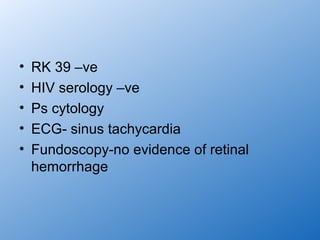
•   RK 39 –ve
•   HIV serology –ve
•   Ps cytology
•   ECG- sinus tachycardia
•   Fundoscopy-no evidence of retinal
    hemorrhage
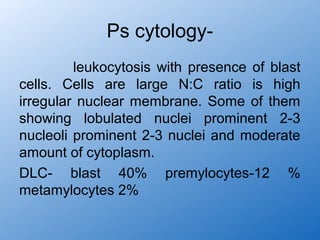
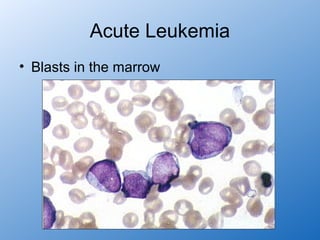
Ps cytology-
         leukocytosis with presence of blast
cells. Cells are large N:C ratio is high
irregular nuclear membrane. Some of them
showing lobulated nuclei prominent 2-3
nucleoli prominent 2-3 nuclei and moderate
amount of cytoplasm.
DLC- blast 40% premylocytes-12 %
metamylocytes 2%
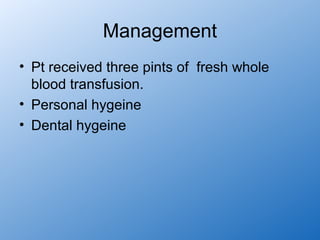
Management
• Pt received three pints of fresh whole
  blood transfusion.
• Personal hygeine
• Dental hygeine
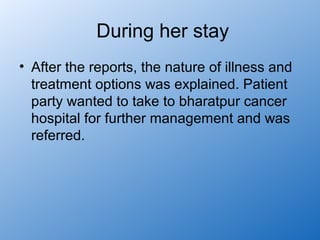
During her stay
• After the reports, the nature of illness and
  treatment options was explained. Patient
  party wanted to take to bharatpur cancer
  hospital for further management and was
  referred.
DIAGNOSIS
• ACUTE MYELOID LEUKEMIA
Epidemiology
• Incidence -3.5 per 100,000 people per
  year

• Median age at diagnosis- 67 years

• AML incidence increases with age
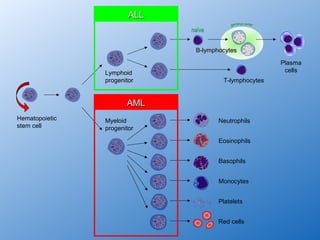
ALL
                              naïve


                               B-lymphocytes

                                                       Plasma
                Lymphoid                                cells
                progenitor             T-lymphocytes


                       AML
Hematopoietic   Myeloid               Neutrophils
stem cell       progenitor

                                      Eosinophils


                                      Basophils


                                      Monocytes


                                      Platelets


                                      Red cells
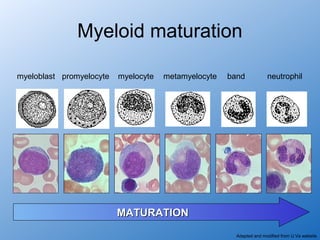
Myeloid maturation

myeloblast promyelocyte   myelocyte   metamyelocyte   band            neutrophil


                          MATURATION
                                                        Adapted and modified from U Va website
Acute Leukemia
• Blasts in the marrow
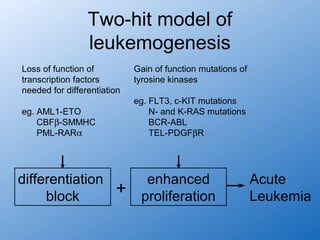
Two-hit model of
                 leukemogenesis
Loss of function of          Gain of function mutations of
transcription factors        tyrosine kinases
needed for differentiation
                             eg. FLT3, c-KIT mutations
eg. AML1-ETO                     N- and K-RAS mutations
    CBFβ-SMMHC                   BCR-ABL
    PML-RARα                     TEL-PDGFβR


differentiation                enhanced                      Acute
     block              +     proliferation                  Leukemia
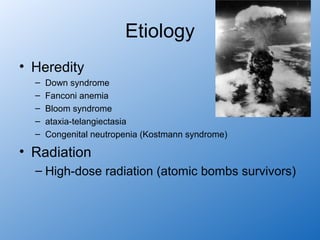
Etiology
• Heredity
  –   Down syndrome
  –   Fanconi anemia
  –   Bloom syndrome
  –   ataxia-telangiectasia
  –   Congenital neutropenia (Kostmann syndrome)

• Radiation
  – High-dose radiation (atomic bombs survivors)
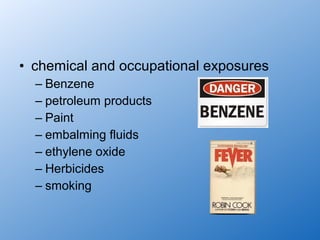
• chemical and occupational exposures
  – Benzene
  – petroleum products
  – Paint
  – embalming fluids
  – ethylene oxide
  – Herbicides
  – smoking
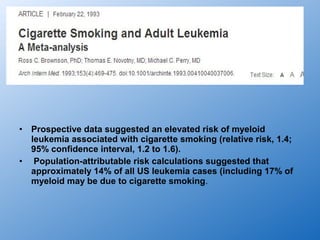
•   Prospective data suggested an elevated risk of myeloid
    leukemia associated with cigarette smoking (relative risk, 1.4;
    95% confidence interval, 1.2 to 1.6).
•    Population-attributable risk calculations suggested that
    approximately 14% of all US leukemia cases (including 17% of
    myeloid may be due to cigarette smoking.
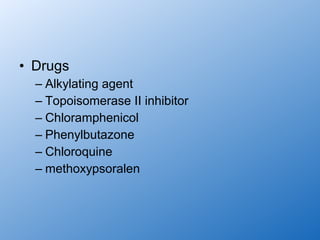
• Drugs
  – Alkylating agent
  – Topoisomerase II inhibitor
  – Chloramphenicol
  – Phenylbutazone
  – Chloroquine
  – methoxypsoralen
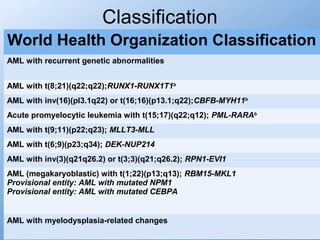
Classification
World Health Organization Classification
AML with recurrent genetic abnormalities


AML with t(8;21)(q22;q22);RUNX1-RUNX1T1b
AML with inv(16)(pl3.1q22) or t(16;16)(p13.1;q22);CBFB-MYH11b
Acute promyelocytic leukemia with t(15;17)(q22;q12); PML-RARAb
AML with t(9;11)(p22;q23); MLLT3-MLL
AML with t(6;9)(p23;q34); DEK-NUP214
AML with inv(3)(q21q26.2) or t(3;3)(q21;q26.2); RPN1-EVI1
AML (megakaryoblastic) with t(1;22)(p13;q13); RBM15-MKL1
Provisional entity: AML with mutated NPM1
Provisional entity: AML with mutated CEBPA


AML with myelodysplasia-related changes
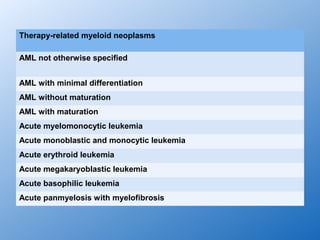
Therapy-related myeloid neoplasms

AML not otherwise specified


AML with minimal differentiation
AML without maturation
AML with maturation
Acute myelomonocytic leukemia
Acute monoblastic and monocytic leukemia
Acute erythroid leukemia
Acute megakaryoblastic leukemia
Acute basophilic leukemia
Acute panmyelosis with myelofibrosis
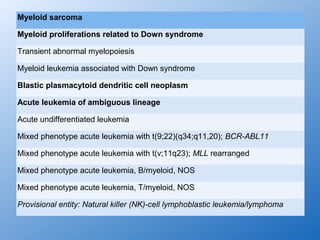
Myeloid sarcoma

Myeloid proliferations related to Down syndrome

Transient abnormal myelopoiesis

Myeloid leukemia associated with Down syndrome

Blastic plasmacytoid dendritic cell neoplasm

Acute leukemia of ambiguous lineage

Acute undifferentiated leukemia

Mixed phenotype acute leukemia with t(9;22)(q34;q11,20); BCR-ABL11

Mixed phenotype acute leukemia with t(v;11q23); MLL rearranged

Mixed phenotype acute leukemia, B/myeloid, NOS

Mixed phenotype acute leukemia, T/myeloid, NOS

Provisional entity: Natural killer (NK)-cell lymphoblastic leukemia/lymphoma
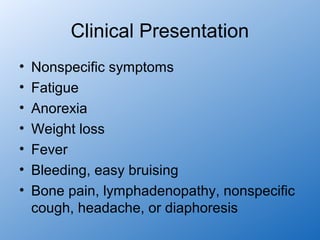
Clinical Presentation
•   Nonspecific symptoms
•   Fatigue
•   Anorexia
•   Weight loss
•   Fever
•   Bleeding, easy bruising
•   Bone pain, lymphadenopathy, nonspecific
    cough, headache, or diaphoresis
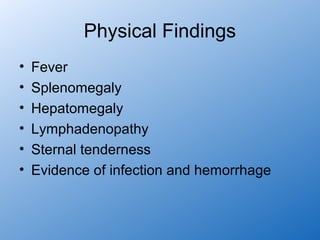
Physical Findings
•   Fever
•   Splenomegaly
•   Hepatomegaly
•   Lymphadenopathy
•   Sternal tenderness
•   Evidence of infection and hemorrhage
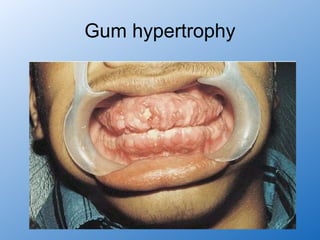
Gum hypertrophy
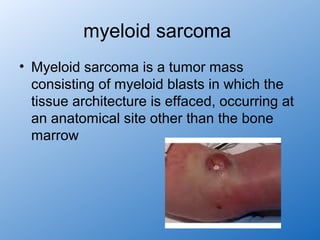
myeloid sarcoma
• Myeloid sarcoma is a tumor mass
  consisting of myeloid blasts in which the
  tissue architecture is effaced, occurring at
  an anatomical site other than the bone
  marrow
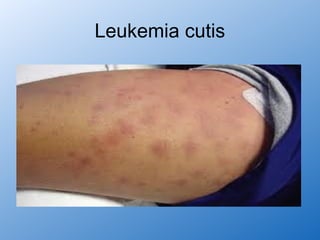
Leukemia cutis
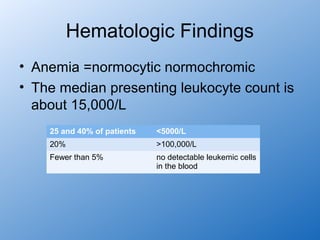
Hematologic Findings
• Anemia =normocytic normochromic
• The median presenting leukocyte count is
  about 15,000/L
    25 and 40% of patients   <5000/L
    20%                      >100,000/L
    Fewer than 5%            no detectable leukemic cells
                             in the blood
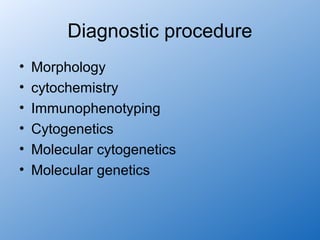
Diagnostic procedure
•   Morphology
•   cytochemistry
•   Immunophenotyping
•   Cytogenetics
•   Molecular cytogenetics
•   Molecular genetics
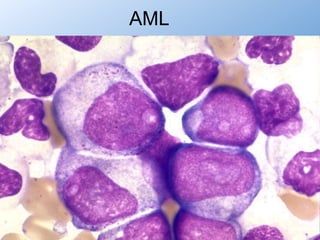
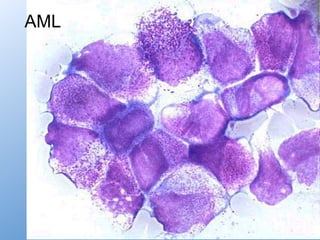
• The morphology of the malignant cell
  varies in different subsets
  – the cytoplasm often contains primary
    (nonspecific) granules
  – the nucleus shows fine, lacy chromatin with
    one or more nucleoli
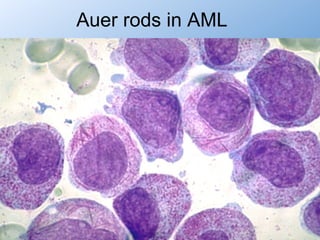
  – Abnormal rod-shaped granules called Auer
    rods are present
  – neutrophil -abnormal lobulation and deficient
    granulation.
Bone marrow in acute leukemia
•   Necessary for diagnosis
•   Useful for determining type
•   Useful for prognosis
•   Acute leukemias are defined by the
    presence of > 20% blasts in bone marrow
    (% of nucleated marrow cells)
AML
AML
Auer rods in AML
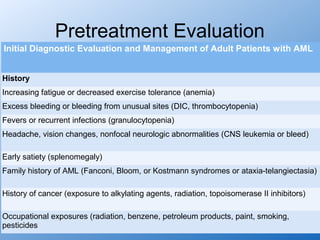
Pretreatment Evaluation
Initial Diagnostic Evaluation and Management of Adult Patients with AML


History
Increasing fatigue or decreased exercise tolerance (anemia)
Excess bleeding or bleeding from unusual sites (DIC, thrombocytopenia)
Fevers or recurrent infections (granulocytopenia)
Headache, vision changes, nonfocal neurologic abnormalities (CNS leukemia or bleed)

Early satiety (splenomegaly)
Family history of AML (Fanconi, Bloom, or Kostmann syndromes or ataxia-telangiectasia)
History of cancer (exposure to alkylating agents, radiation, topoisomerase II inhibitors)

Occupational exposures (radiation, benzene, petroleum products, paint, smoking,
pesticides
Physical Examination

Performance status (prognostic factor)

Ecchymosis and oozing from IV sites (DIC, possible acute promyelocytic leukemia)


Fever and tachycardia (signs of infection)

Papilledema, retinal infiltrates, cranial nerve abnormalities (CNS leukemia)

Poor dentition, dental abscesses

Gum hypertrophy (leukemic infiltration, most common in monocytic leukemia)

Skin infiltration or nodules (leukemia infiltration, most common in monocytic leukemia)


Lymphadenopathy, splenomegaly, hepatomegaly

Back pain, lower extremity weakness [spinal granulocytic sarcoma, most likely in t(8;21)
patients]
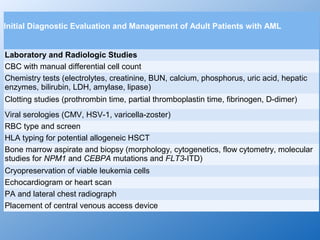
Initial Diagnostic Evaluation and Management of Adult Patients with AML


Laboratory and Radiologic Studies
CBC with manual differential cell count
Chemistry tests (electrolytes, creatinine, BUN, calcium, phosphorus, uric acid, hepatic
enzymes, bilirubin, LDH, amylase, lipase)
Clotting studies (prothrombin time, partial thromboplastin time, fibrinogen, D-dimer)
Viral serologies (CMV, HSV-1, varicella-zoster)
RBC type and screen
HLA typing for potential allogeneic HSCT
Bone marrow aspirate and biopsy (morphology, cytogenetics, flow cytometry, molecular
studies for NPM1 and CEBPA mutations and FLT3-ITD)
Cryopreservation of viable leukemia cells
Echocardiogram or heart scan
PA and lateral chest radiograph
Placement of central venous access device
Initial Diagnostic Evaluation and Management of Adult Patients with AML


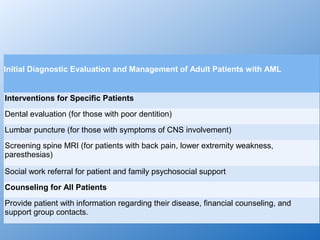
Interventions for Specific Patients
Dental evaluation (for those with poor dentition)
Lumbar puncture (for those with symptoms of CNS involvement)
Screening spine MRI (for patients with back pain, lower extremity weakness,
paresthesias)

Social work referral for patient and family psychosocial support
Counseling for All Patients
Provide patient with information regarding their disease, financial counseling, and
support group contacts.
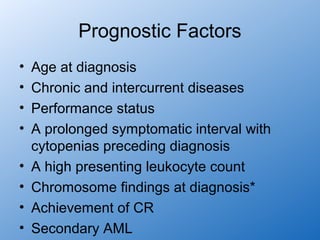
Prognostic Factors
•   Age at diagnosis
•   Chronic and intercurrent diseases
•   Performance status
•   A prolonged symptomatic interval with
    cytopenias preceding diagnosis
•   A high presenting leukocyte count
•   Chromosome findings at diagnosis*
•   Achievement of CR
•   Secondary AML
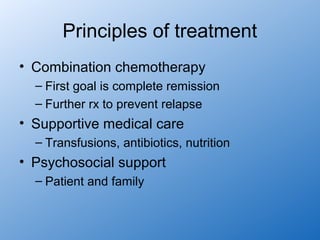
Principles of treatment
• Combination chemotherapy
  – First goal is complete remission
  – Further rx to prevent relapse
• Supportive medical care
  – Transfusions, antibiotics, nutrition
• Psychosocial support
  – Patient and family
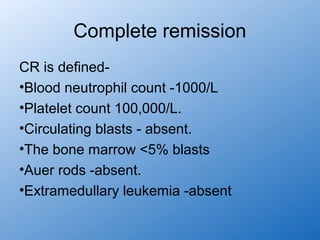
Complete remission
CR is defined-
•Blood neutrophil count -1000/L
•Platelet count 100,000/L.
•Circulating blasts - absent.
•The bone marrow <5% blasts
•Auer rods -absent.
•Extramedullary leukemia -absent
Management: Acute Myeloid
       Leukemia
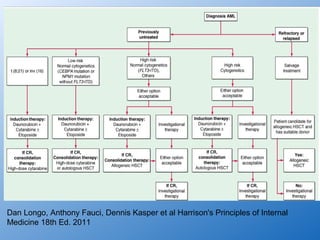
Dan Longo, Anthony Fauci, Dennis Kasper et al Harrison's Principles of Internal
Medicine 18th Ed. 2011
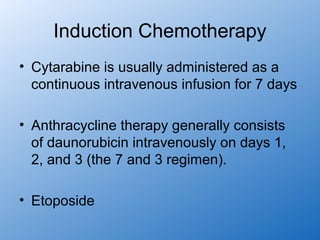
Induction Chemotherapy
• Cytarabine is usually administered as a
  continuous intravenous infusion for 7 days

• Anthracycline therapy generally consists
  of daunorubicin intravenously on days 1,
  2, and 3 (the 7 and 3 regimen).

• Etoposide
Postremission Therapy
• Postremission therapy is designed to
  eradicate residual leukemic cells to
  prevent relapse and prolong survival
• Intensive chemotherapy
  – High-dose cytarabine 4 cycles of HiDAC
  (3 g/m2 per q12h on days 1, 3, and 5)


• Allogeneic or autologous HSCT
• Patients who fail to attain CR after two
  induction courses should be treated with
  an allogeneic hematopoietic stem cell
  transplant (HSCT)
Hematopoietic stem cell
        transplantation
• Permits “rescue” from otherwise
  excessively toxic treatment

• Additional advantage of graft-vs-leukemia
  effect in allogeneic transplants

• Trade-off for allogeneic transplantation:
  greater anti-leukemic effect but more toxic
Molecularly targeted therapy
• Gemtuzumab ozogamicin

• Anti-cd33 antibody
• Chemically linked to the cytotoxic agent
  calicheamicin
• Inhibits DNA synthesis andinduces
  apoptosis
Zein N, Sinha AM, McGahren WJ, Ellestad GA. Calicheamicin gamma 1l:
an antitumor antibiotic that cleaves double-stranded DNA site specifi-
cally.Science.1988;240(4856):1198-1201.
Treatment of Promyelocytic
          Leukemia
• Tretinoin
  – APL differentiation syndrome
• anthracycline-based chemotherapy
• Arsenic trioxide
• Gemtuzumab ozogamicin
Management of special situations
Hyperleukocytosis
• Hyperleukocytosis with leukostasis immediate
  medical treatment.
• Leukapheresis
• Hydroxyurea, given at dosages up
   – 50 to 60 mg/kg per day.

   – Until the wbc has been reduced.
• Prevention of tumor lysis syndrome
  – Hydration,
  – Control of uric acid production using allopurinol or rasburicase
  – Control of urine ph
Cns involvement
• Less than 5% of patient
• Intrathecal cytarabine
• Dexamethasone to prevent arachnoiditis
Supportive Care
Prophylactic anti-infectious
              treatment
•   Personal hygiene
•   Dental hygiene
•   Vigorous hand washing
•   Anti-fungal prophylaxis
•   Antibiotic prophylaxis
Leibovici L, Paul M, Cullen M, et al. prophylaxis in neutropenic patients. New
evidence, practical decisions.Cancer.2006;107(8):1743-1751.
Growth factors
• GM-CSF or G-CSF*
  – Accelerate neutrophil recovery by 2 to 5 days
  – Reduce antibiotic use
  – Reduce duration of fever
  – Number of days spent in hospital
  – Do not retard platelet recovery
  – Do not have a detrimental effect by
    stimulation of leukemic cell growth
 *Estey EH. Growth factors in acute myeloid leukaemia.Best Pract Res Clin
 Haematol. 2001;14(1):175-187
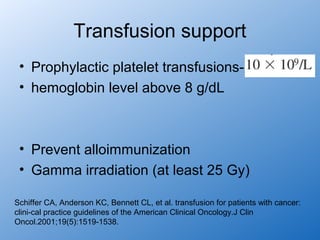
Transfusion support
 • Prophylactic platelet transfusions-
 • hemoglobin level above 8 g/dL


 • Prevent alloimmunization
 • Gamma irradiation (at least 25 Gy)

Schiffer CA, Anderson KC, Bennett CL, et al. transfusion for patients with cancer:
clini-cal practice guidelines of the American Clinical Oncology.J Clin
Oncol.2001;19(5):1519-1538.
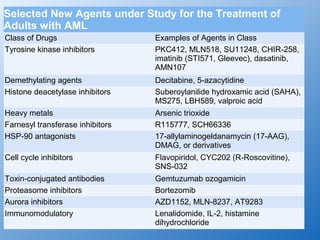
Selected New Agents under Study for the Treatment of
Adults with AML
Class of Drugs                    Examples of Agents in Class
Tyrosine kinase inhibitors        PKC412, MLN518, SU11248, CHIR-258,
                                  imatinib (STI571, Gleevec), dasatinib,
                                  AMN107
Demethylating agents              Decitabine, 5-azacytidine
Histone deacetylase inhibitors    Suberoylanilide hydroxamic acid (SAHA),
                                  MS275, LBH589, valproic acid
Heavy metals                      Arsenic trioxide
Farnesyl transferase inhibitors   R115777, SCH66336
HSP-90 antagonists                17-allylaminogeldanamycin (17-AAG),
                                  DMAG, or derivatives
Cell cycle inhibitors             Flavopiridol, CYC202 (R-Roscovitine),
                                  SNS-032
Toxin-conjugated antibodies       Gemtuzumab ozogamicin
Proteasome inhibitors             Bortezomib
Aurora inhibitors                 AZD1152, MLN-8237, AT9283
Immunomodulatory                  Lenalidomide, IL-2, histamine
                                  dihydrochloride
Refrences
• Dan Longo, Anthony Fauci, Dennis Kasper et al
  Harrison's Principles of Internal Medicine 18th Ed. 2011

• Current Medical Diagnosis and Treatment 2012

• Boblöwenberg et al, acute myeloid leukemia, review
  article, www.nejm.org

•   Hartmut Döhner et. Al, recommendations from an international expert
    panel, on behalf of the Diagnosis and management of acute myeloid
    leukemia in adults:European LeukemiaNet

Acute myeloid leukemia

  • 1.
    Case discussion andtopic review Moderator Dr. Naveen Pandey Presenter-Dr. Pradip katwal
  • 2.
    35 years/ Female • Siraha • Housewife • Vegetarian – Presenting complains- • Easy fatigability 5 months • Fever 5 months
  • 3.
    HOPI • Fever, intermittentin nature, associated with chills no rigors, no diurnal variation of fever,no h/o rashes • Easy fatigability which was progressive associated with shortness of breath, and now shortness of breath present on doing her daily activity.
  • 4.
    Past history • h/ototal abdominal hysterectomy 1 years back for menorrhagia • Tissue biopsy-showed granular tissue wih foreign body gaint cell • Has received ATT for genitourinany tuberculosis.
  • 5.
    Family history • Historyof tuberculosis in family +
  • 7.
    Examination • General condition-thin built • Pallor+ • nails-leukonychia • no petichea/purpura • Pulse -88/min • Blood pressure -98/60 mmhg • Temperature -102 degree F • Respiratory rate -16/min
  • 8.
    Systemic examination Chest –B/L equal air entry B/L normal vesicular breath sounds P/A-Soft, non tender -spleen not palpable CVS- S1 + S2 heard no murmur CNS- No neck rigidity WNL 12/24/2011
  • 9.
    Differential diagnosis • Megaloblastic anemia • Aplastic anemia • Acute leukemia • Tuberculosis • Systemic lupus erythematosus • Myelodysplastic disorder
  • 10.
    Lab investigations • TLC- 2420 mm3 • DLC-N 25% L45% M25% E 05% • HB- 2.74gm/dl • Platelates-2000 mm3 • Urine RE/ME- WNL • Blood culture- sterile • Urine culture- sterile • Chest x-ray- wnl 12/24/2011
  • 11.
    RK 39 –ve • HIV serology –ve • Ps cytology • ECG- sinus tachycardia • Fundoscopy-no evidence of retinal hemorrhage
  • 12.
    Ps cytology- leukocytosis with presence of blast cells. Cells are large N:C ratio is high irregular nuclear membrane. Some of them showing lobulated nuclei prominent 2-3 nucleoli prominent 2-3 nuclei and moderate amount of cytoplasm. DLC- blast 40% premylocytes-12 % metamylocytes 2%
  • 13.
    Management • Pt receivedthree pints of fresh whole blood transfusion. • Personal hygeine • Dental hygeine
  • 14.
    During her stay •After the reports, the nature of illness and treatment options was explained. Patient party wanted to take to bharatpur cancer hospital for further management and was referred.
  • 15.
  • 16.
    Epidemiology • Incidence -3.5per 100,000 people per year • Median age at diagnosis- 67 years • AML incidence increases with age
  • 17.
    ALL naïve B-lymphocytes Plasma Lymphoid cells progenitor T-lymphocytes AML Hematopoietic Myeloid Neutrophils stem cell progenitor Eosinophils Basophils Monocytes Platelets Red cells
  • 18.
    Myeloid maturation myeloblast promyelocyte myelocyte metamyelocyte band neutrophil MATURATION Adapted and modified from U Va website
  • 19.
  • 20.
    Two-hit model of leukemogenesis Loss of function of Gain of function mutations of transcription factors tyrosine kinases needed for differentiation eg. FLT3, c-KIT mutations eg. AML1-ETO N- and K-RAS mutations CBFβ-SMMHC BCR-ABL PML-RARα TEL-PDGFβR differentiation enhanced Acute block + proliferation Leukemia
  • 21.
    Etiology • Heredity – Down syndrome – Fanconi anemia – Bloom syndrome – ataxia-telangiectasia – Congenital neutropenia (Kostmann syndrome) • Radiation – High-dose radiation (atomic bombs survivors)
  • 22.
    • chemical andoccupational exposures – Benzene – petroleum products – Paint – embalming fluids – ethylene oxide – Herbicides – smoking
  • 23.
    Prospective data suggested an elevated risk of myeloid leukemia associated with cigarette smoking (relative risk, 1.4; 95% confidence interval, 1.2 to 1.6). • Population-attributable risk calculations suggested that approximately 14% of all US leukemia cases (including 17% of myeloid may be due to cigarette smoking.
  • 24.
    • Drugs – Alkylating agent – Topoisomerase II inhibitor – Chloramphenicol – Phenylbutazone – Chloroquine – methoxypsoralen
  • 25.
    Classification World Health OrganizationClassification AML with recurrent genetic abnormalities AML with t(8;21)(q22;q22);RUNX1-RUNX1T1b AML with inv(16)(pl3.1q22) or t(16;16)(p13.1;q22);CBFB-MYH11b Acute promyelocytic leukemia with t(15;17)(q22;q12); PML-RARAb AML with t(9;11)(p22;q23); MLLT3-MLL AML with t(6;9)(p23;q34); DEK-NUP214 AML with inv(3)(q21q26.2) or t(3;3)(q21;q26.2); RPN1-EVI1 AML (megakaryoblastic) with t(1;22)(p13;q13); RBM15-MKL1 Provisional entity: AML with mutated NPM1 Provisional entity: AML with mutated CEBPA AML with myelodysplasia-related changes
  • 26.
    Therapy-related myeloid neoplasms AMLnot otherwise specified AML with minimal differentiation AML without maturation AML with maturation Acute myelomonocytic leukemia Acute monoblastic and monocytic leukemia Acute erythroid leukemia Acute megakaryoblastic leukemia Acute basophilic leukemia Acute panmyelosis with myelofibrosis
  • 27.
    Myeloid sarcoma Myeloid proliferationsrelated to Down syndrome Transient abnormal myelopoiesis Myeloid leukemia associated with Down syndrome Blastic plasmacytoid dendritic cell neoplasm Acute leukemia of ambiguous lineage Acute undifferentiated leukemia Mixed phenotype acute leukemia with t(9;22)(q34;q11,20); BCR-ABL11 Mixed phenotype acute leukemia with t(v;11q23); MLL rearranged Mixed phenotype acute leukemia, B/myeloid, NOS Mixed phenotype acute leukemia, T/myeloid, NOS Provisional entity: Natural killer (NK)-cell lymphoblastic leukemia/lymphoma
  • 28.
    Clinical Presentation • Nonspecific symptoms • Fatigue • Anorexia • Weight loss • Fever • Bleeding, easy bruising • Bone pain, lymphadenopathy, nonspecific cough, headache, or diaphoresis
  • 29.
    Physical Findings • Fever • Splenomegaly • Hepatomegaly • Lymphadenopathy • Sternal tenderness • Evidence of infection and hemorrhage
  • 30.
  • 31.
    myeloid sarcoma • Myeloidsarcoma is a tumor mass consisting of myeloid blasts in which the tissue architecture is effaced, occurring at an anatomical site other than the bone marrow
  • 32.
  • 33.
    Hematologic Findings • Anemia=normocytic normochromic • The median presenting leukocyte count is about 15,000/L 25 and 40% of patients <5000/L 20% >100,000/L Fewer than 5% no detectable leukemic cells in the blood
  • 34.
    Diagnostic procedure • Morphology • cytochemistry • Immunophenotyping • Cytogenetics • Molecular cytogenetics • Molecular genetics
  • 35.
    • The morphologyof the malignant cell varies in different subsets – the cytoplasm often contains primary (nonspecific) granules – the nucleus shows fine, lacy chromatin with one or more nucleoli – Abnormal rod-shaped granules called Auer rods are present – neutrophil -abnormal lobulation and deficient granulation.
  • 36.
    Bone marrow inacute leukemia • Necessary for diagnosis • Useful for determining type • Useful for prognosis • Acute leukemias are defined by the presence of > 20% blasts in bone marrow (% of nucleated marrow cells)
  • 37.
  • 38.
  • 39.
  • 40.
    Pretreatment Evaluation Initial DiagnosticEvaluation and Management of Adult Patients with AML History Increasing fatigue or decreased exercise tolerance (anemia) Excess bleeding or bleeding from unusual sites (DIC, thrombocytopenia) Fevers or recurrent infections (granulocytopenia) Headache, vision changes, nonfocal neurologic abnormalities (CNS leukemia or bleed) Early satiety (splenomegaly) Family history of AML (Fanconi, Bloom, or Kostmann syndromes or ataxia-telangiectasia) History of cancer (exposure to alkylating agents, radiation, topoisomerase II inhibitors) Occupational exposures (radiation, benzene, petroleum products, paint, smoking, pesticides
  • 41.
    Physical Examination Performance status(prognostic factor) Ecchymosis and oozing from IV sites (DIC, possible acute promyelocytic leukemia) Fever and tachycardia (signs of infection) Papilledema, retinal infiltrates, cranial nerve abnormalities (CNS leukemia) Poor dentition, dental abscesses Gum hypertrophy (leukemic infiltration, most common in monocytic leukemia) Skin infiltration or nodules (leukemia infiltration, most common in monocytic leukemia) Lymphadenopathy, splenomegaly, hepatomegaly Back pain, lower extremity weakness [spinal granulocytic sarcoma, most likely in t(8;21) patients]
  • 42.
    Initial Diagnostic Evaluationand Management of Adult Patients with AML Laboratory and Radiologic Studies CBC with manual differential cell count Chemistry tests (electrolytes, creatinine, BUN, calcium, phosphorus, uric acid, hepatic enzymes, bilirubin, LDH, amylase, lipase) Clotting studies (prothrombin time, partial thromboplastin time, fibrinogen, D-dimer) Viral serologies (CMV, HSV-1, varicella-zoster) RBC type and screen HLA typing for potential allogeneic HSCT Bone marrow aspirate and biopsy (morphology, cytogenetics, flow cytometry, molecular studies for NPM1 and CEBPA mutations and FLT3-ITD) Cryopreservation of viable leukemia cells Echocardiogram or heart scan PA and lateral chest radiograph Placement of central venous access device
  • 43.
    Initial Diagnostic Evaluationand Management of Adult Patients with AML Interventions for Specific Patients Dental evaluation (for those with poor dentition) Lumbar puncture (for those with symptoms of CNS involvement) Screening spine MRI (for patients with back pain, lower extremity weakness, paresthesias) Social work referral for patient and family psychosocial support Counseling for All Patients Provide patient with information regarding their disease, financial counseling, and support group contacts.
  • 44.
    Prognostic Factors • Age at diagnosis • Chronic and intercurrent diseases • Performance status • A prolonged symptomatic interval with cytopenias preceding diagnosis • A high presenting leukocyte count • Chromosome findings at diagnosis* • Achievement of CR • Secondary AML
  • 45.
    Principles of treatment •Combination chemotherapy – First goal is complete remission – Further rx to prevent relapse • Supportive medical care – Transfusions, antibiotics, nutrition • Psychosocial support – Patient and family
  • 46.
    Complete remission CR isdefined- •Blood neutrophil count -1000/L •Platelet count 100,000/L. •Circulating blasts - absent. •The bone marrow <5% blasts •Auer rods -absent. •Extramedullary leukemia -absent
  • 47.
  • 48.
    Dan Longo, AnthonyFauci, Dennis Kasper et al Harrison's Principles of Internal Medicine 18th Ed. 2011
  • 49.
    Induction Chemotherapy • Cytarabineis usually administered as a continuous intravenous infusion for 7 days • Anthracycline therapy generally consists of daunorubicin intravenously on days 1, 2, and 3 (the 7 and 3 regimen). • Etoposide
  • 50.
    Postremission Therapy • Postremissiontherapy is designed to eradicate residual leukemic cells to prevent relapse and prolong survival
  • 51.
    • Intensive chemotherapy – High-dose cytarabine 4 cycles of HiDAC (3 g/m2 per q12h on days 1, 3, and 5) • Allogeneic or autologous HSCT
  • 52.
    • Patients whofail to attain CR after two induction courses should be treated with an allogeneic hematopoietic stem cell transplant (HSCT)
  • 53.
    Hematopoietic stem cell transplantation • Permits “rescue” from otherwise excessively toxic treatment • Additional advantage of graft-vs-leukemia effect in allogeneic transplants • Trade-off for allogeneic transplantation: greater anti-leukemic effect but more toxic
  • 54.
    Molecularly targeted therapy •Gemtuzumab ozogamicin • Anti-cd33 antibody • Chemically linked to the cytotoxic agent calicheamicin • Inhibits DNA synthesis andinduces apoptosis Zein N, Sinha AM, McGahren WJ, Ellestad GA. Calicheamicin gamma 1l: an antitumor antibiotic that cleaves double-stranded DNA site specifi- cally.Science.1988;240(4856):1198-1201.
  • 55.
    Treatment of Promyelocytic Leukemia • Tretinoin – APL differentiation syndrome • anthracycline-based chemotherapy • Arsenic trioxide • Gemtuzumab ozogamicin
  • 56.
  • 57.
    Hyperleukocytosis • Hyperleukocytosis withleukostasis immediate medical treatment. • Leukapheresis • Hydroxyurea, given at dosages up – 50 to 60 mg/kg per day. – Until the wbc has been reduced. • Prevention of tumor lysis syndrome – Hydration, – Control of uric acid production using allopurinol or rasburicase – Control of urine ph
  • 58.
    Cns involvement • Lessthan 5% of patient • Intrathecal cytarabine • Dexamethasone to prevent arachnoiditis
  • 59.
  • 60.
    Prophylactic anti-infectious treatment • Personal hygiene • Dental hygiene • Vigorous hand washing • Anti-fungal prophylaxis • Antibiotic prophylaxis Leibovici L, Paul M, Cullen M, et al. prophylaxis in neutropenic patients. New evidence, practical decisions.Cancer.2006;107(8):1743-1751.
  • 61.
    Growth factors • GM-CSFor G-CSF* – Accelerate neutrophil recovery by 2 to 5 days – Reduce antibiotic use – Reduce duration of fever – Number of days spent in hospital – Do not retard platelet recovery – Do not have a detrimental effect by stimulation of leukemic cell growth *Estey EH. Growth factors in acute myeloid leukaemia.Best Pract Res Clin Haematol. 2001;14(1):175-187
  • 62.
    Transfusion support •Prophylactic platelet transfusions- • hemoglobin level above 8 g/dL • Prevent alloimmunization • Gamma irradiation (at least 25 Gy) Schiffer CA, Anderson KC, Bennett CL, et al. transfusion for patients with cancer: clini-cal practice guidelines of the American Clinical Oncology.J Clin Oncol.2001;19(5):1519-1538.
  • 63.
    Selected New Agentsunder Study for the Treatment of Adults with AML Class of Drugs Examples of Agents in Class Tyrosine kinase inhibitors PKC412, MLN518, SU11248, CHIR-258, imatinib (STI571, Gleevec), dasatinib, AMN107 Demethylating agents Decitabine, 5-azacytidine Histone deacetylase inhibitors Suberoylanilide hydroxamic acid (SAHA), MS275, LBH589, valproic acid Heavy metals Arsenic trioxide Farnesyl transferase inhibitors R115777, SCH66336 HSP-90 antagonists 17-allylaminogeldanamycin (17-AAG), DMAG, or derivatives Cell cycle inhibitors Flavopiridol, CYC202 (R-Roscovitine), SNS-032 Toxin-conjugated antibodies Gemtuzumab ozogamicin Proteasome inhibitors Bortezomib Aurora inhibitors AZD1152, MLN-8237, AT9283 Immunomodulatory Lenalidomide, IL-2, histamine dihydrochloride
  • 64.
    Refrences • Dan Longo,Anthony Fauci, Dennis Kasper et al Harrison's Principles of Internal Medicine 18th Ed. 2011 • Current Medical Diagnosis and Treatment 2012 • Boblöwenberg et al, acute myeloid leukemia, review article, www.nejm.org • Hartmut Döhner et. Al, recommendations from an international expert panel, on behalf of the Diagnosis and management of acute myeloid leukemia in adults:European LeukemiaNet