TABOO AND EUPHEMISM
Presented by
Hairil Akbar Arifin: 11211141007
Umar:
11211149001
TABOO AND EUPHEMISM


TABOO:

things people do not talk about



EUPHEMISMS: things people talk about in a
roundabout way.




In society: concerned with Behaviour
believed to be harmful to society’s members
for supernatural reasons, or regarded
immoral or improper, because violating a
moral code.
In language: associated with things not said,
and with words and expressions not used
.
•

•

•

Taboo topics: sex, death, excretion, bodily
functions, religious matters.
Used for : drawing attention to oneself, to show
contempt, to be aggressive or provocative, to mock
authority, to express freedom, etc.
Phonetic resemblance to English words: Thai
students avoid using words like fag “sheath” and
phrig “chilli pepper” in the presence of
Anglophones.





According to Crowley in Kabana language of Papua
New Guinea people have name that refers to objects
too…
- Crocodile puaea Son-in-law
- Crocodilebagale-borrowing from a
neighbouring language
Types of Euphemisms





To Soften an Expression
To Be Polite
Euphemisms to be Impolite
To Soften an Expression


Some euphemisms are used in order to
make a blunt or unpleasant truth seem
less harsh:



Passed away instead of died
Correctional facility instead of jail
Departed instead of died




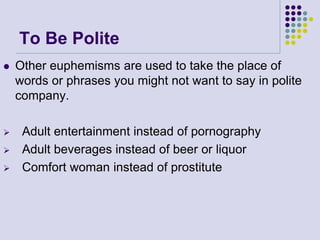
To Be Polite






Other euphemisms are used to take the place of
words or phrases you might not want to say in polite
company.
Adult entertainment instead of pornography
Adult beverages instead of beer or liquor
Comfort woman instead of prostitute
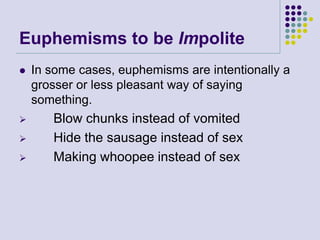
Euphemisms to be Impolite






In some cases, euphemisms are intentionally a
grosser or less pleasant way of saying
something.

Blow chunks instead of vomited
Hide the sausage instead of sex
Making whoopee instead of sex
Any Question?

Taboo and euphemism

  • 1.
    TABOO AND EUPHEMISM Presentedby Hairil Akbar Arifin: 11211141007 Umar: 11211149001
  • 2.
    TABOO AND EUPHEMISM  TABOO: thingspeople do not talk about  EUPHEMISMS: things people talk about in a roundabout way.
  • 3.
      In society: concernedwith Behaviour believed to be harmful to society’s members for supernatural reasons, or regarded immoral or improper, because violating a moral code. In language: associated with things not said, and with words and expressions not used .
  • 4.
    • • • Taboo topics: sex,death, excretion, bodily functions, religious matters. Used for : drawing attention to oneself, to show contempt, to be aggressive or provocative, to mock authority, to express freedom, etc. Phonetic resemblance to English words: Thai students avoid using words like fag “sheath” and phrig “chilli pepper” in the presence of Anglophones.
  • 5.
       According to Crowleyin Kabana language of Papua New Guinea people have name that refers to objects too… - Crocodile puaea Son-in-law - Crocodilebagale-borrowing from a neighbouring language
  • 6.
    Types of Euphemisms    ToSoften an Expression To Be Polite Euphemisms to be Impolite
  • 7.
    To Soften anExpression  Some euphemisms are used in order to make a blunt or unpleasant truth seem less harsh:  Passed away instead of died Correctional facility instead of jail Departed instead of died  
  • 8.
    To Be Polite     Othereuphemisms are used to take the place of words or phrases you might not want to say in polite company. Adult entertainment instead of pornography Adult beverages instead of beer or liquor Comfort woman instead of prostitute
  • 9.
    Euphemisms to beImpolite     In some cases, euphemisms are intentionally a grosser or less pleasant way of saying something. Blow chunks instead of vomited Hide the sausage instead of sex Making whoopee instead of sex
  • 10.