
SPIDER RESOURCES INC. AND KWG RESOURCES INC.


       TECHNICAL REPORT ON THE MINERAL RESOURCE ESTIMATE

                                              FOR

                     THE BIG DADDY CHROMITE DEPOSIT


  McFAULDS LAKE AREA, JAMES BAY LOWLANDS, NORTHERN ONTARIO,
                           CANADA.

                                        NTS 43D16S½

                                        86° 14' 11" W
                                        52° 45' 32" N


                             Effective Date: March 30, 2010
                               Signing Date: June 4, 2010


Richard Gowans, P. Eng.

Jane Spooner, M.Sc., P. Geo.

Ing. Alan J. San Martin, MAusIMM

Charley Murahwi, M.Sc., P. Geo., MAusIMM


                    SUITE 900 - 390 BAY STREET, TORONTO ONTARIO, CANADA M5H 2Y2
                            Telephone (1) (416) 362-5135 Fax (1) (416) 362 5763
Table of Contents
                                                                                                                               Page

1.0     SUMMARY .................................................................................................................... 1
   1.1     TERMS OF REFERENCE, PROPERTY DESCRIPTION AND
           OWNERSHIP .............................................................................................................. 1
     1.1.1     Terms of Reference.............................................................................................. 1
     1.1.2     Property Description ............................................................................................ 1
     1.1.3     Property................................................................................................................ 1
     1.1.4     Underlying Agreements and Ownership..............................................................1
   1.2     LOCATION AND TENURE.......................................................................................2
     1.2.1     Location and tenure.............................................................................................. 2
     1.2.2     Environmental and Permitting ............................................................................. 2
     1.2.3     Accessibility, Climate, Local Resources, Infrastructure......................................2
     1.2.4     Physiography........................................................................................................ 2
     1.2.5     Relief and Drainage ............................................................................................. 2
     1.2.6     Accessibility......................................................................................................... 3
     1.2.7     Climate................................................................................................................. 3
     1.2.8     Vegetation ............................................................................................................ 3
     1.2.9     Fauna....................................................................................................................3
     1.2.10    First Nations......................................................................................................... 3
   1.3     GEOLOGICAL OUTLINE .........................................................................................4
   1.4     DEPOSIT TYPE ..........................................................................................................5
     1.4.1     Uses and Processing of Chromite ........................................................................ 5
   1.5     MINERALIZATION ...................................................................................................6
   1.6     EXPLORATION ......................................................................................................... 6
     1.6.1     Exploration Concept ............................................................................................ 7
     1.6.2     Status of Exploration............................................................................................ 8
     1.6.3     Exploration Results.............................................................................................. 8
   1.7     MINERAL RESOURCES ...........................................................................................8
   1.8     INTERPRETATION AND CONCLUSIONS...........................................................11
     1.8.1     Exploration Concept .......................................................................................... 11
     1.8.2     Geology and Mineral Resources........................................................................ 11
     1.8.3     Metallurgy.......................................................................................................... 11
     1.8.4     Market Outlook.................................................................................................. 11
     1.8.5     Project Objectives .............................................................................................. 12
   1.9     RECOMMENDATIONS...........................................................................................12
     1.9.1     Further Assessment of Chromite Resources ...................................................... 12
     1.9.2     Follow-up on Unexplained EM anomalies ........................................................ 13

2.0    INTRODUCTION........................................................................................................ 14
   2.1   AUTHORIZATION AND PURPOSE ...................................................................... 14
   2.2   BACKGROUND .......................................................................................................14
   2.3   SOURCES OF INFORMATION ..............................................................................15
   2.4   SCOPE OF PERSONAL INSPECTION...................................................................16
   2.5   ABBREVIATIONS ...................................................................................................17


                                                                  i
3.0       RELIANCE ON OTHER EXPERTS ........................................................................ 19

4.0     PROPERTY DESCRIPTION AND LOCATION ....................................................20
   4.1     SIZE, LOCATION AND TENURE ..........................................................................20
   4.2     COSTS OF MAINTENANCE...................................................................................21
   4.3     ROYALTIES AND PROPERTY RIGHTS...............................................................22
     4.3.1     4.3.1 Underlying Agreements ............................................................................ 22
     4.3.2     Royalty Interests ................................................................................................ 23
     4.3.3     Other Parties to the Agreement.......................................................................... 23
   4.4     ENVIRONMENTAL AND PERMITTING.............................................................. 23
     4.4.1     Current Status..................................................................................................... 23
     4.4.2     Baseline Line Environmental Studies................................................................ 24

5.0       ACCESSIBILITY, CLIMATE, LOCAL RESOURCES,
          INFRASTRUCTURE AND PHYSIOGRAPHY.......................................................25
   5.1      PHYSIOGRAPHY..................................................................................................... 25
   5.2      RELIEF AND DRAINAGE ...................................................................................... 25
   5.3      ACCESSIBILITY AND INFRASTRUCTURE........................................................26
   5.4      CLIMATE.................................................................................................................. 27
   5.5      VEGETATION..........................................................................................................27
   5.6      FAUNA......................................................................................................................27
   5.7      FIRST NATIONS ...................................................................................................... 28
   5.8      LOCAL RESOURCES ..............................................................................................28

6.0    HISTORY ..................................................................................................................... 29
   6.1   GENERAL................................................................................................................. 29
   6.2   PROPERTY HISTORY............................................................................................. 30
   6.3   HISTORIC PRODUCTION ......................................................................................30

7.0    GEOLOGICAL SETTING ......................................................................................... 32
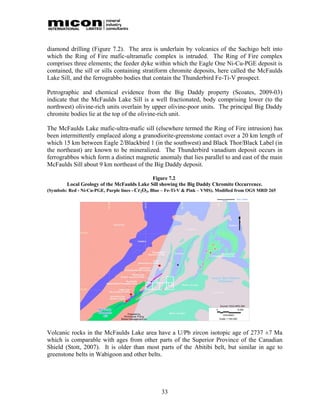
   7.1  REGIONAL GEOLOGY...........................................................................................32
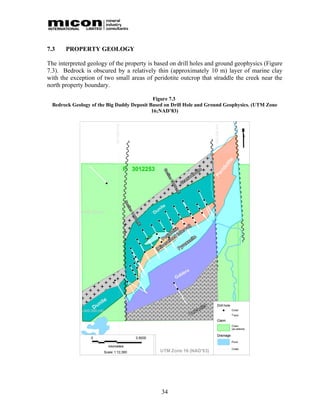
   7.2  LOCAL GEOLOGY.................................................................................................. 32
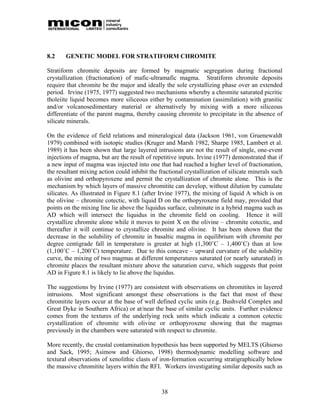
   7.3  PROPERTY GEOLOGY...........................................................................................34

8.0    DEPOSIT TYPES ........................................................................................................37
   8.1  RELATED DEPOSITS..............................................................................................37
   8.2  GENETIC MODEL FOR STRATIFORM CHROMITE ..........................................38

9.0    MINERALIZATION................................................................................................... 42
   9.1  OVERVIEW .............................................................................................................. 42
   9.2  LOCALIZATION...................................................................................................... 42
   9.3  DISTRIBUTION OF CHROMITE GRADES ..........................................................42
   9.4  SULPHIDES AND PGE............................................................................................43

10.0 EXPLORATION.......................................................................................................... 44
  10.1 2009-2010 EXPLORATION ..................................................................................... 44


                                                                 ii
10.1.1 QA/QC ...............................................................................................................44
     10.1.2 Evaluation of PGE – Potential of Hanging Wall Pyroxenite............................. 44
     10.1.3 Ground Geophysical Surveys ............................................................................ 44
     10.1.4 T-2 Target .......................................................................................................... 45
   10.2 DELINEATION STAGE - 2009/2010 DRILLING .................................................. 45
   10.3 INTERPRETATION OF EXPLORATION INFORMATION .................................46

11.0 DRILLING ...................................................................................................................48
  11.1 2004, 2006 AND 2008 DRILLING CAMPAIGNS .................................................. 48
  11.2 2009/2010 DRILLING CAMPAIGN ........................................................................48
  11.3 DRILLING PROTOCOLS ........................................................................................48
    11.3.1  Spotting and Surveying of Drill Collars ............................................................48
    11.3.2  In-hole Directional Surveys ............................................................................... 50
  11.4 SUMMARY AND INTERPRETATION OF THE RESULTS OF THE
         DRILLING COMPLETED ON THE BIG DADDY DEPOSIT ...............................51

12.0      SAMPLING METHOD AND APPROACH ............................................................. 55

13.0 SAMPLE PREPARATION, ANALYSES AND SECURITY.................................. 57
  13.1 QUALITY CONTROL MEASURES BEFORE DISPATCH OF
         SAMPLES .................................................................................................................57
    13.1.1  Pre-2008 Drill holes and Samples...................................................................... 57
    13.1.2  2008 Analyses.................................................................................................... 57
    13.1.3  2009-2010 Analyses........................................................................................... 57
  13.2 LABORATORY DETAILS ...................................................................................... 58
  13.3 SAMPLE PREPARATION .......................................................................................58
  13.4 ANALYSES...............................................................................................................58
    13.4.1  2006/2008 Analyses........................................................................................... 59
    13.4.2  2009/2010 Cr2O3 Analyses ................................................................................ 59
    13.4.3  INAA versus Fusion XRF.................................................................................. 59
    13.4.4  Laboratory In-house QA/QC ............................................................................. 60
  13.5 SECURITY................................................................................................................ 60

14.0 DATA VERIFICATION .............................................................................................61
  14.1 INTRODUCTION ..................................................................................................... 61
  14.2 SITE VISIT (OCTOBER, 2009) ............................................................................... 61
    14.2.1 Overview............................................................................................................ 61
    14.2.2 SG Determinations............................................................................................. 61
  14.3 RESOURCE DATABASE VALDATION................................................................62
  14.4 CONCLUSIONS ON DATA VERIFICATION........................................................ 63

15.0 ADJACENT PROPERTIES ....................................................................................... 64
  15.1 CHROMITE............................................................................................................... 64
    15.1.1 Black Thor / Black Label................................................................................... 64
    15.1.2 Black Creek........................................................................................................ 64
    15.1.3 Blackbird............................................................................................................ 65


                                                               iii
15.2       FE-VA-TI (THUNDERBIRD) ..................................................................................66
   15.3       MAGMATIC MASSIVE SULPHIDES (NI-CU-PGE) – EAGLE ONE ..................66
   15.4       VOLCANOGENIC MASSIVE SULPHIDES (CU-ZN) –
              MCFAULDS DEPOSITS .......................................................................................... 67

16.0 MINERAL PROCESSING AND METALLURGICAL TESTING........................68
  16.1 METALLURGICAL SAMPLES .............................................................................. 68
  16.2 MINERALOGICAL AND CHEMICAL ANALYSIS.............................................. 69
    16.2.1 WIM Preliminary Test Program ........................................................................ 69
    16.2.2 SGS-L Preliminary Testwork Program.............................................................. 70
  16.3 METALLURGICAL TESTING................................................................................ 73
    16.3.1 WIM Preliminary Test Program ........................................................................ 73
    16.3.2 SGS Preliminary Testwork Program ................................................................. 74
  16.4 RECOMMENDATIONS...........................................................................................78

17.0 MINERAL RESOURCE AND MINERAL RESERVE ESTIMATES................... 79
  17.1 DATABASE DESCRIPTION ................................................................................... 79
    17.1.1  Drill Holes and Assays....................................................................................... 79
    17.1.2  Lithology and Mineralization ............................................................................ 79
    17.1.3  Survey ................................................................................................................ 79
    17.1.4  Specific Gravity (2,216 determinations)............................................................79
    17.1.5  Surpac Master Database..................................................................................... 80
  17.2 ESTIMATION DETAILS .........................................................................................80
    17.2.1  Overview of Estimation Methodology............................................................... 80
    17.2.2  Geological Modelling/Interpretation ................................................................. 80
    17.2.3  Statistical Interpretation of Grade Domains ...................................................... 83
    17.2.4  Composite Data and Grade Domains Statistics .................................................85
    17.2.5  Cut-off Grade and Economic Parameters .......................................................... 87
    17.2.6  Geostatistics ....................................................................................................... 87
    17.2.7  Interpretation and Application of Spatial Analysis Results............................... 88
    17.2.8  Block Size, Interpolation Search Parameters and Technique ............................89
    17.2.9  Block Modelling Description............................................................................. 90
  17.3 CLASSIFICATION CRITERIA AND BLOCK MODELLING
         RESULTS .................................................................................................................. 90
    17.3.1  Classification Criteria ........................................................................................ 90
    17.3.2  Responsibility For Estimation............................................................................ 91
    17.3.3  Statement of Results .......................................................................................... 91
    17.3.4  Comments .......................................................................................................... 94
    17.3.5  Validation........................................................................................................... 97
    17.3.6  Qualification of the Mineral Resources ............................................................. 97
    17.3.7  Potential Upgrading of the Indicated Resource ................................................. 97

18.0 OTHER RELEVANT DATA AND INFORMATION ............................................. 98
  18.1 THE MARKET FOR CHROMITE ...........................................................................98
  18.2 OVERVIEW .............................................................................................................. 98
  18.3 PRODUCTION OF CHROMITE AND FERROCHROMIUM................................ 99


                                                                iv
18.4 END-USE SECTORS..............................................................................................100
     18.4.1 Stainless Steel .................................................................................................. 101
   18.5 INDUSTRY STRUCTURE..................................................................................... 101
   18.6 PRICES....................................................................................................................101
   18.7 OTHER RELEVANT DATA AND INFORMATION ........................................... 102

19.0 INTERPRETATION AND CONCLUSIONS .........................................................103
  19.1 EXPLORATION CONCEPT ..................................................................................103
  19.2 GEOLOGY AND MINERAL RESOURCES .........................................................103
  19.3 METALLURGY......................................................................................................103
  19.4 MARKET OUTLOOK ............................................................................................103
  19.5 PROJECT OBJECTIVES ........................................................................................104

20.0     RECOMMENDATIONS...........................................................................................105

21.0 REFERENCES........................................................................................................... 107
  21.1 TECHNICAL REPORTS (SEDAR/IN-HOUSE) ...................................................107
  21.2 SCIENTIFIC PUBLICATIONS AND REPORTS..................................................109

22.0     DATE AND SIGNATURE PAGE............................................................................114

23.0     CERTIFICATES........................................................................................................ 115


                                                   List of Appendices

APPENDIX 1               Claim Abstracts................................................................... At end of Report

APPENDIX 2               Example of QC Report for the Big Daddy Deposit ............ At end of Report

APPENDIX 3               Full Results of Variographic Analysis................................ At end of Report

APPENDIX 4               Level Plans at 50m Intervals Starting from Surface ........... At end of Report

APPENDIX 5               Sections at 50m Intervals .................................................... At end of Report


                                                                v
List of Tables
                                                                                          Page
Table 1.1    Summary of the Big Daddy Massive Chromite Resources................................9
Table 1.2    Summary of the Big Daddy Chromite Deposit Mineral Resource @
             15% Cr2O3 Cut-off...........................................................................................10
Table 1.3    Summary of Budget Proposals for the Big Daddy Chromite Project ..............13
Table 2.1    Summary of Abbreviations Used .....................................................................17
Table 4.1    SKF Property – Summary of Claim Abstracts as of March 19, 2010..............20
Table 6.1    Summary of Exploration Completed on SKF Property between 1995
             and 2008...........................................................................................................31
Table 9.1    Distribution of Cr2O3 Grades ...........................................................................43
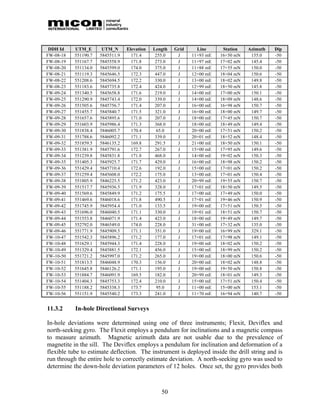
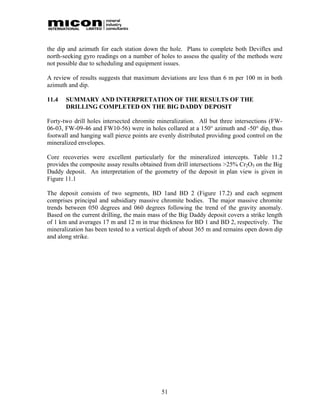
Table 11.1   List of Drill Holes Drilled on SKF Property (2004 – 2010 Programs)
             (UTM Zone 16, NAD’83)................................................................................49
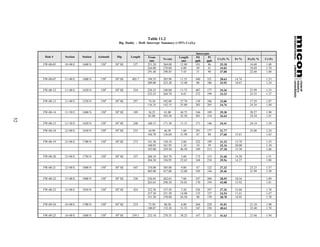
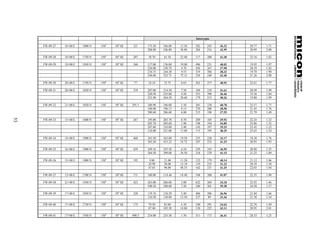
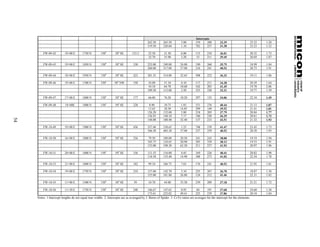
Table 11.2   Big Daddy : Drill Intercept Summary (>25% Cr2O3) .................................52
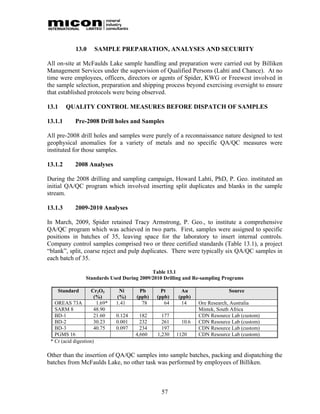
Table 13.1   Standards Used During 2009/2010 Drilling and Re-sampling
             Programs ..........................................................................................................57
Table 13.2   Summary of Cr and Cr2O3 Analyses by Method .............................................58
Table 13.3   Analytical Methods for 2009-2010 Drilling and Resampling Programs .........59
Table 15.1   Resource Estimate by the Sibley Basin Group Ltd. (A. Aubut, 2009) ............64
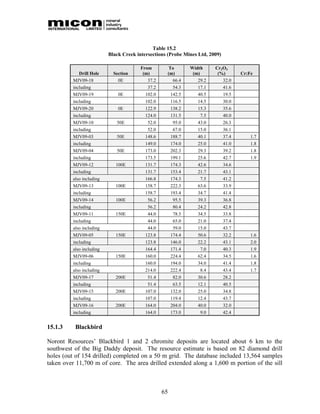
Table 15.2   Black Creek intersections (Probe Mines Ltd, 2009) ........................................65
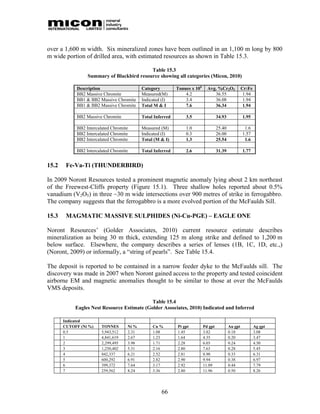
Table 15.3   Summary of Blackbird resource showing all categories (Micon, 2010)..........66
Table 15.4   Eagles Nest Resource Estimate (Golder Associates, 2010) Indicated
             and Inferred......................................................................................................66
Table 15.5   Summary of Resources on McFaulds 1 and 3 (reported by Lahti,
             2008) ................................................................................................................67
Table 16.1   SGS-L Metallurgical Samples .........................................................................68
Table 16.2   Summary of XRD Analysis Results.................................................................69
Table 16.3   Summary of XRF Analysis Results .................................................................69
Table 16.4   SGS-L Metallurgical Sample Chemical Analyses ...........................................70
Table 16.5   SGS-L EPMA Results......................................................................................72
Table 16.6   Summary of Metallurgical Test Results...........................................................73
Table 16.7   Average Feed and Combined Concentrate XRF Analyses ..............................74
Table 16.8   Gravity/Magnetic Separation Test Results - 1 .................................................76
Table 16.9   Gravity/Magnetic Separation Test Results - 2 .................................................76


                                                           vi
Table 16.10   Flotation Test Results.......................................................................................77
Table 17.1    Average Specific Gravity Determinations by Cr2O3 Content ..........................80
Table 17.2    Summary of the Major Characteristics of the Big Daddy Deposit ..................82
Table 17.3    Global Statistics of the Cr2O3 Raw Data..........................................................84
Table 17.4    Composites Summary Statistics of the Massive Chromite Domain and
              the 15%Cr2O3 Cut-off Domain ........................................................................87
Table 17.5    Summary Results of the Spatial/Variographic Analysis of the Big
              Daddy Deposits................................................................................................88
Table 17.6    Summary of Search Parameters .......................................................................89
Table 17.7    Summary of the Big Daddy Massive Chromite Resources..............................91
Table 17.8    Summary of the Big Daddy Chromite Deposit Mineral Resource @
              15% Cr2O3 Cut-off...........................................................................................92
Table 17.9    Summary of Global Results of ID3 Versus Ordinary Kriging (OK) ................97
Table 18.1    General Specifications for Chromite Grades ...................................................98
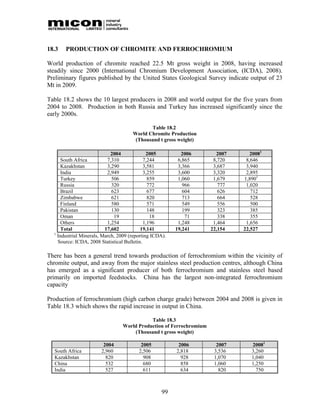
Table 18.2    World Chromite Production.............................................................................99
Table 18.3    World Production of Ferrochromium ..............................................................99
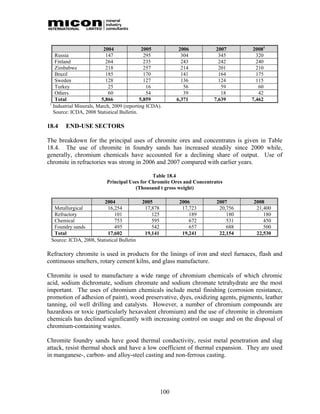
Table 18.4    Principal Uses for Chromite Ores and Concentrates......................................100
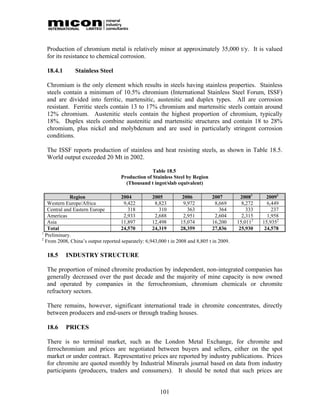
Table 18.5    Production of Stainless Steel by Region ........................................................101
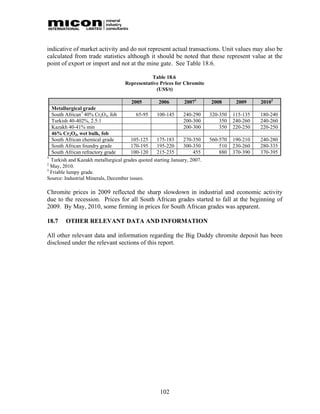
Table 18.6    Representative Prices for Chromite ...............................................................102
Table 20.1    Summary of Budget Proposals for the Big Daddy Chromite Project ............106


                                                         vii
List of Figures
                                                                                                  Page
Figure 2.1    Location Map of the Big Daddy Chromite Deposit .........................................17
Figure 4.1    SKF Project Claim Map. SKF Option claims are shown in green.
              Claim locations are “as staked” based on GPS-derived locations of
              claim posts .......................................................................................................21
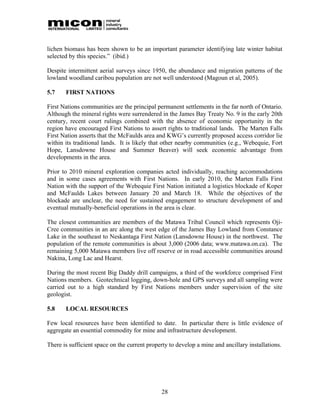
Figure 5.1    Annual Mean Daily Temperature and Range, January to December
              (month 1 to 12).................................................................................................27
Figure 7.1    Regional Geological Setting of the Superior Province ....................................32
Figure 7.2    Local Geology of the McFaulds Lake Sill showing the Big Daddy
              Chromite Occurrence. ......................................................................................33
Figure 7.3    Bedrock Geology of the Big Daddy Deposit Based on Drill Hole and
              Ground Geophysics. (UTM Zone 16;NAD’83)...............................................34
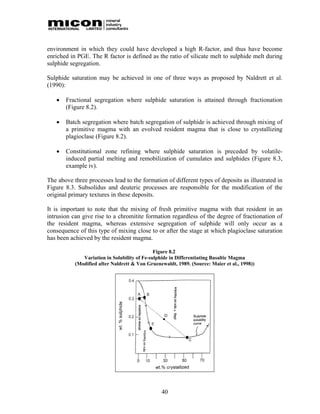
Figure 8.1    Phase Relations in the System Olivine-Silica-Chromite as determined
              by Irvine (1977) ...............................................................................................39
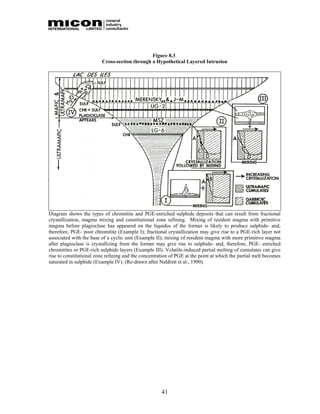
Figure 8.2    Variation in Solubility of Fe-sulphide in Differentiating Basaltic
              Magma .............................................................................................................40
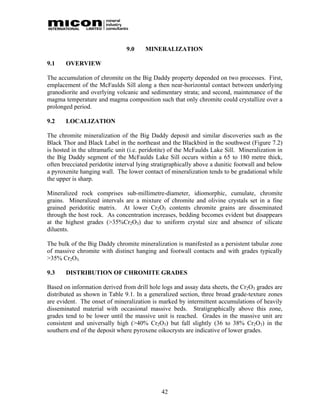
Figure 8.3    Cross-section through a Hypothetical Layered Intrusion ................................41
Figure 10.1   Section 19+00 E (looking northeast) showing Pyroxenite cutting
              down into Massive Chromite Interval. Coloured bars below drill hole
              traces show chromite-bearing intervals with values below. Section is
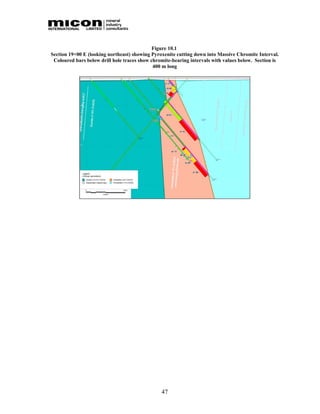
              400 m long .......................................................................................................47
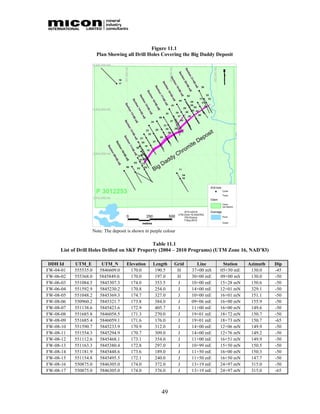
Figure 11.1   Plan Showing all Drill Holes Covering the Big Daddy Deposit......................49
Figure 12.1   Sealed Rice Bags Being Placed into Pails .......................................................56
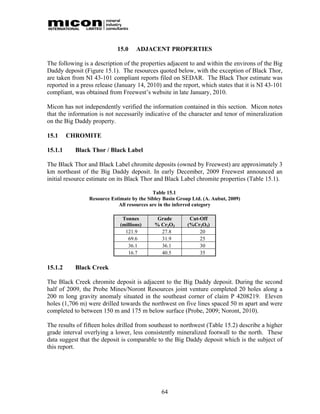
Figure 14.1   Technician Working the Totalcomp Strain Gauge...........................................62
Figure 15.1   Claim Map of the McFaulds Lake Area (as of 22 April 2010)........................67
Figure 16.1   EPMA Samples, Cr:Fe Ratio vs Al2O3 and MgO ............................................71
Figure 16.2   EPMA Samples, Cr2O3 Grade vs MgO and FeO .............................................73
Figure 16.3   SGS Gravity and Magnetic Separation Test Flowsheet...................................75
Figure 17.1   Schematic Lithologic Column for McFaulds Lake Sill, Big Daddy
              Segment............................................................................................................81
Figure 17.2   Gravity Map Bandpass Filter Gravity (Upper Wavelength is 833 m)
              with the Massive Chrome Domain Projected to Surface from Sections..........82
Figure 17.3   Histogram of the Raw Assay Data for Cr2O3 (%)............................................83
Figure 17.4   Probability Plot of the Raw Cr2O3 Data...........................................................85
Figure 17.5   Histogram of the Massive Chromite Domain ..................................................86


                                                          viii
Figure 17.6    Histogram of Composites at 15% Cut-off with Internal Waste .......................86
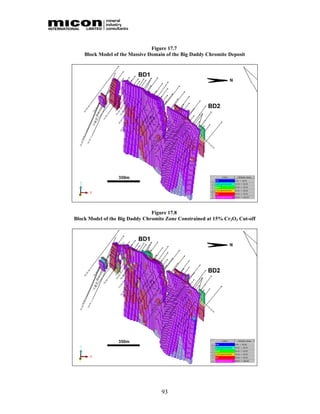
Figure 17.7    Block Model of the Massive Domain of the Big Daddy Chromite
               Deposit .............................................................................................................93
Figure 17.8    Block Model of the Big Daddy Chromite Zone Constrained at 15%
               Cr2O3 Cut-off ...................................................................................................93
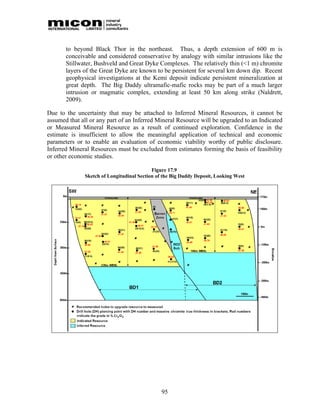
Figure 17.9    Sketch of Longitudinal Section of the Big Daddy Deposit, Looking
               West .................................................................................................................95
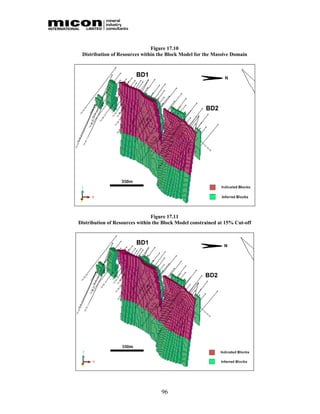
Figure 17.10   Distribution of Resources within the Block Model for the Massive
               Domain.............................................................................................................96
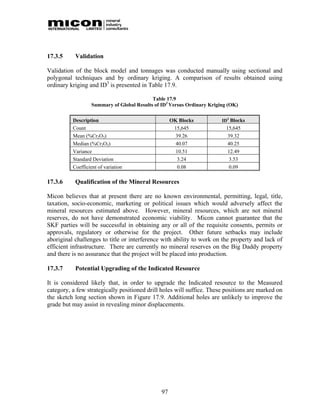
Figure 17.11   Distribution of Resources within the Block Model constrained at 15%
               Cut-off..............................................................................................................96


                                                             ix
1.0    SUMMARY

1.1     TERMS OF REFERENCE, PROPERTY DESCRIPTION AND OWNERSHIP

1.1.1      Terms of Reference

Spider Resources Inc (Spider) represented by Messrs. Neil Novak and James Burns,
President and VP Exploration, respectively, and KWG Resources Inc. (KWG) represented by
Messrs. Frank Smeenk and Maurice (Moe) Lavigne, President and VP Exploration and
Development, respectively, commissioned Micon International Limited (Micon) in March,
2010 to provide an independent resource estimate of the chromite mineralization in the Big
Daddy deposit and to prepare a Technical Report in accordance with the requirements set out
in Canadian National Instrument 43-101 (NI 43-101). The estimate of mineral resources
presented in this report conforms to the CIM Mineral Resource and Mineral Reserve
definitions (December, 2005) referred to in NI 43-101.

1.1.2      Property Description

The Big Daddy chromite deposit lies on mining claim P 3012253 situated in the McFaulds
Lake area of the James Bay Lowlands of north-central Ontario, some 280 km due north of
the town of Nakina. P 3012253 is the westernmost claim of a seven-claim, 1,241 ha property
under option from Freewest Resources Canada Inc. (Freewest) by Spider and KWG (SKF
option). The property is centred near 86° 14' 11" W longitude, 52° 45' 32" N latitude, in NTS
map area 43D16S½.

1.1.3      Property

The property comprises five staked claims (P 3012252, P 3012253, P 3008268, P 3008269
and P 3008793) and two single unit (400 m x 400 m, 16 ha) blocks excised from adjacent
claims (P 3012250 and P 3012251) to the north. The two westernmost claims and both
contiguous single units are subject to a 2% Net Smelter Return royalty currently held by
Richard Nemis (1%) and KWG (1%). All claims are currently registered to Freewest,
however, the property is to be held by KWG in trust.

1.1.4      Underlying Agreements and Ownership

Spider and KWG each held a 25% interest in the property as of September 10, 2009. On that
date each company acquired an option to earn an additional 5% interest in the property by
making minimum annual expenditures of $2.5 million over three years to gain an additional
1½% in each of the first two years and 2% in the final year ending on March 31, 2012.
Provided a minimum of $5 million is spent on exploration, one or both parties may also gain
the balance of the 10% available for option by delivering a positive feasibility study to
Freewest by March 31, 2012. Prior to March 31, 2010, Spider and KWG each spent a further
$2.5 millions, earning an additional 1½%. Spider and KWG currently each hold 26½%
(Freewest 47%).


                                             1
Upon fulfilling the terms of the option, the parties (Freewest, Spider and KWG) will form a
joint venture the decisions of which are to be made by a simple majority. On April 1, 2010,
management of the option was transferred to KWG for the period ending March 31, 2011, at
which time it will revert to Spider.

Freewest is a wholly owned subsidiary of Cliffs Natural Resources Inc. (Cliffs). In addition
Cliffs holds a 19.9% interest in KWG and has board representation.

1.2     LOCATION AND TENURE

1.2.1      Location and tenure

The SKF option encompasses 1,241 ha (78 claim units) in five staked and two single unit
claim units the annual maintenance cost of which is $31,200. The claims were staked in
2003 and are not subject to dispute after their first anniversary. The property lies near the
western margin the James Bay Lowland, 258 km west of Attawapiskat and 78 km east of
Webequie, both remote First Nations communities.

1.2.2      Environmental and Permitting

There is no evidence of past activity on the property. The surface exploration work
comprised cutting of grids, completion of geophysical and GPS surveys and helicopter-
supported diamond drilling of 56 holes. The total area disturbed by drilling is about 1.35 ha.
In 2009 AECOM was retained to commence baseline environmental studies comprising
spring, summer and fall sampling at six sites on the three creeks that cross the property. The
observations to be made will include water flow, electrophysical properties, chemistry and
fish tissue sampling.

1.2.3      Accessibility, Climate, Local Resources, Infrastructure

The area is currently accessible by float or ski-equipped charter aircraft from Nakina, 280 km
to the south or Pickle Lake, 310 km to the southwest.

1.2.4      Physiography

The property lies close to the western margin of the James Bay Lowland, an extensive,
poorly drained area occupying a 400 km wide swath to the west of James Bay, and is locally
underlain by unconsolidated marine clay.

1.2.5      Relief and Drainage

Relief across the Big Daddy claim is about 2 m, which is about 7 m above the Attawapiskat
and Muketei drainages to the east and west respectively. Average relief over the Lowland is
about 0.7 m/km.


                                              2
1.2.6      Accessibility

The property lies 280 km north of the closest paved road at Nakina. Current access is by
float and ski-equipped, charter aircraft from Nakina. Helicopters are required for local
transport.

All-weather highways extend to Nakina (Highway 584) and Pickle Lake (Highway 808)
where the gravel North Road extends a further 193 km to the Musselwhite mine, 290 km to
the west of the property. The Ontario power grid reaches the Victor mine (De Beers), 157
km to the east and the Musselwhite mine (Goldcorp Inc.) to the west.

Canada Chrome Corporation, a subsidiary of KWG, has reported completion of geotechnical
studies along a proposed rail corridor to link the area to the CN rail network near Nakina.

1.2.7      Climate

Mean temperatures range from -20°C in mid-winter to 15°C in mid-summer. Annual
precipitation is about 70 cm, 70% of which falls during the summer. Snowfall peaks in early
winter with accumulation reaching approximately 0.6 m by spring.

1.2.8      Vegetation

The area lies on the northern fringe of the boreal forest and is covered by extensive fen and
bog complexes. Tree cover is highly variable, being dense along the better drained margins
of major drainages where the major species are black and white spruce, and larch.

1.2.9      Fauna

While a wide range of animals and birds are reported, those observed include fox, wolf,
marten, moose, black bear and caribou. The latter are a species at risk due to habitat loss in
their southern range.

1.2.10     First Nations

The Marten Falls First Nation has asserted that the McFaulds Lake area falls within its
traditional lands. Webequie, Fort Hope, and Lansdowne (like Marten Falls) are presently
accessible only by air and may also benefit from potential transportation development.

The remote communities are small offering very limited employment and business
opportunities. Comments by community leaders and elders indicate that the First Nations
want to participate in development of the McFaulds area projects through direct employment,
business opportunities and other potential revenue streams.


                                              3
1.3    GEOLOGICAL OUTLINE

The area is underlain by the Sachigo greenstone belt of the Oxford–Stull Domain in the
Sachigo Subprovince (Stott and Rainsford, 2006). Due to very limited mapping, extensive
marine clay and Paleozoic platform cover, coupled with difficult access, current geological
understanding of the area relies on airborne magnetic data supplemented by diamond drill
holes.

The Sachigo belt comprises a narrow, 5 to 25 km wide, west-facing, arcuate belt of cresentic
greenstone belts intruded to the north and west by granodiorite plutons (2727 to 2683 Ma,
Rayner and Stott, 2005). The belt extends over a strike length of more than 100 km. The
Sachigo belt appears to be wrapped around an older (circa 2.9 Ga) continental fragment.

Chromite, nickel-copper-PGE and iron-titanium-vanadium deposits in the McFaulds Lake are
contained in phases of the large, mafic-ultramafic, magmatic complex, the Ring of Fire
Intrusion. The known chromite deposits occur over a 13 km strike length of a narrow,
steeply dipping, differentiated body, here termed the McFaulds Lake Sill. The principal
nickel deposit (Eagle One) is reported to occur in a dyke lying a little to the west of and said
to be a feeder to the sill. The Thunderbird iron-titanium-vanadium prospect is reported in
ferrograbbos lying to the east of the sill and interpreted to be the more differentiated portion
of the Ring of Fire intrusive complex.

The McFaulds Lake Sill is generally intruded along a northeast-trending granodiorite-
volcanic contact. Evidence of the intrusive relationship comprises remnants of volcanics
remaining between granodiorite and the body and the absence of blackwall alteration in the
sill adjacent to the contact.

The Big Daddy segment of the sill is well-fractionated, comprising lower olivine-rich and
upper olivine-poor units to the west and east respectively. Chromite occurs in the upper
portion of the olivine-rich facies which culminates in the thick, massive Big Daddy chromite
deposit. The upper contact between massive chromite and overlying, olivine-poor
pyroxenite is sharp; Cr2O3 concentrations drop from ~40% to <1% within less than 1 cm.

Silicate minerals comprising the sill units have been pervasively altered by the addition of
water forming serpentine, talc and chlorite. Despite pervasive and complete destruction of
primary igneous minerals, original cumulate textures are faithfully preserved.

Diamond drilling on the Big Daddy claim shows that the sill comprises, from its base
(northwest) to top (southeast), dunite, locally chromite-bearing peridotite, massive chromite,
pyroxenite and gabbro. The latter is in intrusive contact with hanging wall volcanics and
contained sediments. Correlation of units from hole to hole and section to section and
occasional igneosedimentary structures (e.g., bedding) indicate that the sill has been rotated

90° from the original horizontal position so that the body now stands vertical or nearly so. In
addition truncation geophysical features and the northward offset of the Black Creek deposit
suggest that the sill is segmented and offset along a north-south trending left lateral fault


                                               4
lying east of section 2100 E.   A second fault may offset the west end of the deposit near
section 1000 E.

The property lies near the western limit of the post-glacial Tyrrell Sea (ancestral Hudson’s
Bay) and just west of the flat lying Paleozoic Hudson Bay Platform intersected in holes
drilled to the east of the Big Daddy deposit. Pre-Silurian saprolite (tropically weathered
material) is locally preserved. Deep weathering of the upper parts of the chromitite zone is
likely of Pre-Silurian age.

1.4     DEPOSIT TYPE

The Big Daddy chromite deposit is a magmatic stratiform chromite deposit, similar in
setting, form, mineralogy and dimensions to other chromite deposits found in layered mafic
to ultramafic complexes. Examples of currently economic deposits occur in the Bushveld
(South Africa), Great Dyke (Zimbabwe), Sukinda (Orissa, India), Kemi (Finland) and Ipuera
(Brazil) complexes.

The most economically significant massive chromitite deposits occur as laterally extensive
layers, typically a few decimetres to tens of metres thick. These deposits reflect fractional
crystallization of chromite from mafic to ultramafic magmas precipitated due to either
magma contamination or by mixing of magmas. Accessory disseminated chromite is also
formed within the cooling magma chamber. Chrome contents range from a few percent
Cr2O3 (in disseminated chromite) to more than 40% Cr2O3 (in massive chromite). The
thicknesses of individual massive chromite bodies range from centimetres to more than 30 m
(e.g., Big Daddy).

The ultramafic-mafic complex that hosts chromite deposits (Big Daddy, Black Creek, Black
Thor/Black Label and Blackbird) also contains magmatic massive sulphide (Ni-Cu-PGE,
e.g., Eagle One), vanadium (e.g., Thunderbird) and could host reef-type platinum-palladium
deposits (not yet found in the McFaulds area).

1.4.1      Uses and Processing of Chromite

Chromite is the sole economic source for the metal chromium which is used in the
manufature of stainless steel and in which it comprises about 18%. Minor amounts of
chromite are used in the chemical and refractory industries.

Mines upgrade run-of-mine feed by crushing, sometimes grinding and gravity separation, to
produce a range of products including lumpy chromite (+ 15 mm / -80 mm), chips and fines.

The mine product is upgraded by the reduction of pelletized material in submerged, electric
arc furnaces to produce ferrochrome. Although the reduction process is energy intensive,
major primary chromite producers tend to sell the ferrochrome product. The major
ferrochrome producers are South Africa, Kazakhstan and India, however, Russian and
Chinese production is increasing rapidly.


                                             5
Both chrome ore and ferrochrome markets are sensitive to bulk composition which is
reflected in both demand and price variations. The principal compositional/quality indicators
of chromite ores and concentrates are their chrome to iron ratio (Cr2O3:Fe2O3 ) of two or
better and with Cr2O3 at or exceeding 40%.

1.5    MINERALIZATION

The McFaulds Sill extends over more than 10 km from the Blackbird chromite deposit in the
southwest to the Black Thor and Black Label deposits in the northeast. The Thunderbird
vanadium deposits appear to occur in a separate but sub-parallel ferrogabbro sill to the east
and northeast of Black Thor. Available descriptions suggest that the McFaulds Sill varies in
character along its known length (Chance, P., personal communication, 2010). On the
current property the sill is less than 200 m wide on sections 10+00 E and 11+00 E, where
drilling has intersected both the footwall granodiorite and hanging wall volcanics. To the
northeast, the sill is thicker (>400 m), and its contacts have not yet been intersected in
drilling.

Chromite mineralization in the Big Daddy segment of the McFaulds Sill occurs within a 65
to 180 metre thick, peridotite interval which is stratigraphically above a dunite footwall and
below a pyroxenite hanging wall. The lower contact of the main chromite layer tends to be
gradational over a couple of metres while the upper is sharp.

Mineralized rock comprises sub-millimetre-diameter, idiomorphic, cumulate, chromite grains
(e.g. Scoates, 2009). Mineralized intervals are a mixture of chromite and occasional olivine
crystals set in a fine grained peridotitic matrix. At lower Cr2O3 concentrations chromite
grains are disseminated through the host rock. As concentration increases, bedding becomes
evident but disappears at the highest grades (>35%Cr2O3) due to uniform crystal size and
absence of lower grade incursions or perturbations. The bulk of the Big Daddy
mineralization occurs as massive chromite containing about 40%Cr2O3.

1.6    EXPLORATION

In the early 1990’s, following discovery of the Attawapiskat kimberlites, then joint venture
partners Spider and KWG used recently published airborne magnetic maps to focus on
kimberlite exploration. They quickly found the five Kyle kimberlites, which lie a few
kilometres east of the Attawapiskat River and of McFaulds Lake. Those successes led to
financing exploration of an 300 kilometre diameter area, centred on McFaulds Lake. In
2002, De Beers in the search for diamonds and using data optioned from Spider/ KWG,
discovered copper-zinc mineralization – later identified by Spider/KWG as the McFaulds #1
deposit. In the following years, Spider tested similar geophysical targets in a broad arc
extending south and west of McFaulds Lake. In 2006, Howard Lahti recognized a pair of
thin chromite beds in ultramafic rocks in FW-06-03, drilled on the current property. A year
later, Noront discovered the Eagle One Ni-Cu-PGE occurrence. In early 2008, Noront


                                              6
discovered the Blackbird chrome deposit while testing an EM target a few kilometres
southeast of Eagle One.

In late 2008, Spider and KWG with the aid of multiple sets of regionally extensive airborne
data, re-evaluated the SKF property, drilling holes in search of Ni-Cu-PGE, chromite and
platinum-palladium deposits. That work outlined the southwest end of the Big Daddy
deposit, tracing mineralization over a 400 m strike length.

In early 2009 the J grid covering the Big Daddy project area was re-cut, re-chained and
surveyed using gravity and magnetic methods. The new geophysical data showed a gravity
anomaly extending and widening east of the known intersections to an apparent termination
along a prominent creek to the northeast near line 2100 E. A strong magnetic anomaly lies
adjacent and to the north of the gravity feature. In late 2009 and early 2010, a further 33
diamond drill holes were drilled at approximately 50 m intervals on surveyed lines spaced at
100 m apart over a 1,000 m strike length.

During the 2009-2010 campaign, recommendations made in an earlier NI 43-101 compliant
report (Micon, 2009) were followed with respect to assessing the potential of the sill for
chromite, base and precious metals, by testing remaining EM anomalies and improved
quality and precision in the collection, processing and management of technical data,
including implementation of a comprehensive QA/QC program for sampling and assaying.

1.6.1      Exploration Concept

Due to the paucity of outcrop and difficulty in traversing the swampy ground, exploration
relies on airborne geophysical methods to generate preliminary geological maps. Ground
geophysical surveys, typically carried out during the winter, provide additional detail and
confirm target locations for drill testing. Since base metal sulphides conduct, EM is the
preferred geophysical method. By contrast, chromite does not conduct but has a high
specific gravity so gravity is effective for definition of drill targets. Finally PGE’s are
present in amounts too small to alter the electrophysical properties of the host rock so drilling
and detailed sampling of potential host lithologies is required.

The initial McFaulds Lake chromite deposits (Big Daddy and Blackbird) were discovered
while testing EM conductors with coincident magnetic anomalies as potential massive
sulphide deposits.

In retrospect prospecting (including airborne surveys) and government supported mapping
had outlined several large layered mafic complexes (e.g., Big Trout Lake, Highbank Lake) to
the west and south of McFaulds Lake. Alluvium and till sampling carried out by Spider in
the mid-1990’s showed consistent ~15 km long chromium and chromite anomalies, lying
parallel to the McFaulds Sill and the now known chromite deposits. In addition the sill
outcrops at at least two locations; one on the current property and the other about a kilometre
to the north on the Freewest property.


                                               7
Serpentinization [hydration] of the dunite produces excess iron which forms magnetite, thus
the altered olivine-rich, portion of the sill produces very strong total magnetic and highly
variable vertical magnetic gradient anomalies. Locally, magnetite aggregates in the altered
dunite to form narrow, highly conductive veinlets which produce a weak, diffuse but
persistent airborne EM anomaly in the footwall of the Big Daddy, Black Creek and Black
Thor/Black Label deposits.

Although the matrix of the massive chromitite is also pervasively altered to serpentine, talc
and chlorite it lacks significant amounts of magnetite and is non-conductive, but, due to high
density of chromite, has a high specific gravity that is measurable on the ground as a gravity
anomaly.

1.6.2      Status of Exploration

Exploration completed to date is sufficient to define an indicated chromite resource.
Substantial widths of massive chromite mineralization extend from the sub-outcrop, 3 to 10
m below surface, to the deepest intersection 365 m below surface. The deposit has been
tested on 100 m sections between 900 E and 2100 E, a distance of 1,200 m.

The deposit remains open along strike and down dip. However, both gravity and magnetic
anomalies diminish to the southwest near section 900 E and appear to be terminated along
the creek to the northeast beyond section 2100E. Additional drilling and extension of gravity
and magnetic coverage to the south property boundary are required. Drilling northeast of
section 2100 E was not possible due to swampy conditions; however, geophysical data
suggest that the chromite horizon is faulted 600 m left laterally (between sections 2100E and
2200E), becoming the Black Creek deposit on the north property boundary.

1.6.3      Exploration Results

Drilling results indicate that the bulk of the Big Daddy deposit consists of massive chromite
averaging 40% Cr2O3 with Cr:Fe ratio of approximately 2. The thickness of the deposit is
variable but averages 17 m and 12 m for the southwest segment (BD 1) and northeast
segment (BD 2), respectively. Both segments of the deposit are open down dip.

1.7     MINERAL RESOURCES

The Big Daddy resource estimate has been conducted using geological modelling,
conventional statistics, geostatistics, creation of interpolation parameters, block modelling,
resource classification based on both geological, geostatistical and mineralization continuity
and finally, block model validation.

The resource estimate was completed using Surpac Version 6.1.3 and is based on two
scenarios.


                                              8
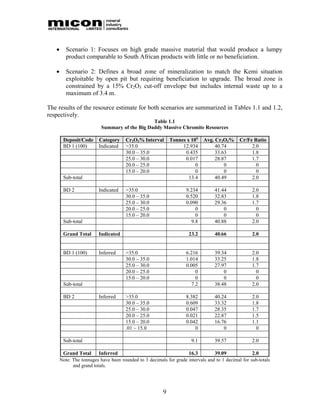
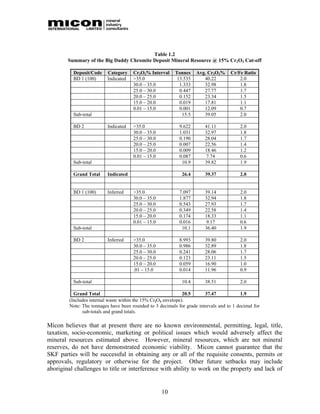
      Scenario 1: Focuses on high grade massive material that would produce a lumpy
          product comparable to South African products with little or no beneficiation.

         Scenario 2: Defines a broad zone of mineralization to match the Kemi situation
          exploitable by open pit but requiring beneficiation to upgrade. The broad zone is
          constrained by a 15% Cr2O3 cut-off envelope but includes internal waste up to a
          maximum of 3.4 m.

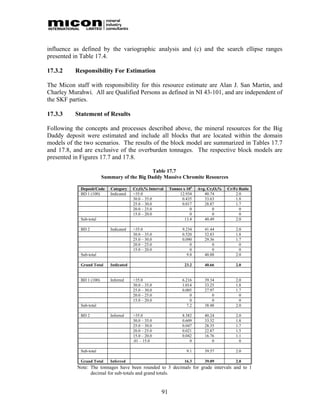
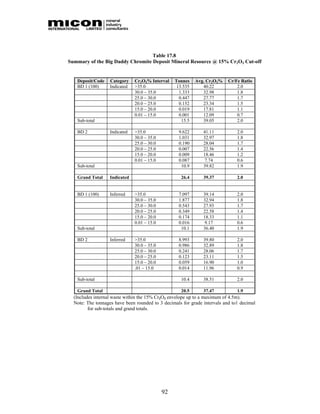
The results of the resource estimate for both scenarios are summarized in Tables 1.1 and 1.2,
respectively.
                                                Table 1.1
                           Summary of the Big Daddy Massive Chromite Resources

        Deposit/Code      Category     Cr2O3% Interval       Tonnes x 106    Avg. Cr2O3%      Cr/Fe Ratio
        BD 1 (100)        Indicated    >35.0                      12.934          40.74            2.0
                                       30.0 – 35.0                 0.435          33.63            1.8
                                       25.0 – 30.0                 0.017          28.87            1.7
                                       20.0 – 25.0                      0             0              0
                                       15.0 – 20.0                      0             0              0
        Sub-total                                                    13.4         40.49            2.0

        BD 2              Indicated    >35.0                        9.234         41.44             2.0
                                       30.0 – 35.0                  0.520         32.83             1.8
                                       25.0 – 30.0                  0.090         29.36             1.7
                                       20.0 – 25.0                       0            0               0
                                       15.0 – 20.0                       0            0               0
        Sub-total                                                      9.8        40.88             2.0

        Grand Total       Indicated                                  23.2         40.66             2.0


        BD 1 (100)        Inferred     >35.0                        6.216         39.34             2.0
                                       30.0 – 35.0                  1.014         33.25             1.8
                                       25.0 – 30.0                  0.005         27.97             1.7
                                       20.0 – 25.0                       0            0               0
                                       15.0 – 20.0                       0            0               0
        Sub-total                                                      7.2        38.48             2.0

        BD 2              Inferred     >35.0                        8.382         40.24             2.0
                                       30.0 – 35.0                  0.609         33.32             1.8
                                       25.0 – 30.0                  0.047         28.35             1.7
                                       20.0 – 25.0                  0.021         22.87             1.5
                                       15.0 – 20.0                  0.042         16.76             1.1
                                       .01 – 15.0                       0             0               0

        Sub-total                                                     9.1         39.57             2.0

        Grand Total       Inferred                                   16.3         39.09             2.0
       Note: The tonnages have been rounded to 3 decimals for grade intervals and to 1 decimal for sub-totals
             and grand totals.


                                                         9
Table 1.2
        Summary of the Big Daddy Chromite Deposit Mineral Resource @ 15% Cr2O3 Cut-off

          Deposit/Code     Category    Cr2O3% Interval     Tonnes    Avg. Cr2O3%      Cr/Fe Ratio
          BD 1 (100)       Indicated   >35.0                13.535      40.22             2.0
                                       30.0 – 35.0           1.333      32.98             1.8
                                       25.0 – 30.0           0.447      27.77             1.7
                                       20.0 – 25.0           0.152      23.34             1.5
                                       15.0 – 20.0           0.019      17.81             1.1
                                       0.01 – 15.0           0.001      12.09             0.7
          Sub-total                                           15.5      39.05             2.0

          BD 2             Indicated   >35.0                 9.622       41.11            2.0
                                       30.0 – 35.0           1.031       32.97            1.8
                                       25.0 – 30.0           0.190       28.04            1.7
                                       20.0 – 25.0           0.007       22.56            1.4
                                       15.0 – 20.0           0.009       18.46            1.2
                                       0.01 – 15.0           0.087       7.74             0.6
          Sub-total                                           10.9       39.82            1.9

          Grand Total      Indicated                          26.4       39.37            2.0


          BD 1 (100)       Inferred    >35.0                 7.097       39.14            2.0
                                       30.0 – 35.0           1.877       32.94            1.8
                                       25.0 – 30.0           0.543       27.93            1.7
                                       20.0 – 25.0           0.349       22.58            1.4
                                       15.0 – 20.0           0.174       18.33            1.1
                                       0.01 – 15.0           0.016       9.17             0.6
          Sub-total                                           10.1       36.40            1.9

          BD 2             Inferred    >35.0                 8.993       39.80            2.0
                                       30.0 – 35.0           0.986       32.89            1.8
                                       25.0 – 30.0           0.241       28.06            1.7
                                       20.0 – 25.0           0.123       23.11            1.5
                                       15.0 – 20.0           0.059       16.90            1.0
                                       .01 – 15.0            0.014       11.96            0.9

          Sub-total                                           10.4       38.51            2.0

           Grand Total                                          20.5     37.47             1.9
         (Includes internal waste within the 15% Cr2O3 envelope).
         Note: The tonnages have been rounded to 3 decimals for grade intervals and to 1 decimal for
               sub-totals and grand totals.

Micon believes that at present there are no known environmental, permitting, legal, title,
taxation, socio-economic, marketing or political issues which would adversely affect the
mineral resources estimated above. However, mineral resources, which are not mineral
reserves, do not have demonstrated economic viability. Micon cannot guarantee that the
SKF parties will be successful in obtaining any or all of the requisite consents, permits or
approvals, regulatory or otherwise for the project. Other future setbacks may include
aboriginal challenges to title or interference with ability to work on the property and lack of


                                                     10
efficient infrastructure. There are currently no mineral reserves on the Big Daddy property
and there is no assurance that the project will be placed into production.

1.8     INTERPRETATION AND CONCLUSIONS

1.8.1      Exploration Concept

Since 2006, the SKF personnel have employed a combination of geophysical techniques
involving magnetic, electromagnetic and gravity surveys to determine the extent and rough
geometry of the Big Daddy chromite mineralization prior to evaluation by drilling. This
worked well, and has reduced the amount of drilling required to delineate the Big Daddy
deposit.

1.8.2      Geology and Mineral Resources

The Big Daddy deposit is tabular as is typical of stratiform chromite deposits hosted by
mafic-ultramafic layered intrusions. The tabular geometry and the continuity of the massive
chromite intersections from hole to hole and section to section have facilitated delineation of
the deposit using relatively wide hole spacing. Three to four holes were drilled along sections
cut at 100 m intervals so that collars were 50 or 100 m apart. The sections extend over a
1,200 m strike length of which approximately 1,000 m is continuously mineralized. The
current drill density is sufficient to estimate an Indicated resource over part of the deposit
(using parameters defined for the NI 43-101 standard). The consistency and persistency of
the deposit as revealed by variographic analysis implies that only very limited additional
drilling will be necessary to upgrade the Indicated resource to the Measured category.

The two segments of the Big Daddy deposit (BD 1 and BD 2) remain open at depth but the
lateral extents are unlikely materially to exceed the already established limits. Micon
suggests that a few strategically positioned drill holes will upgrade the bulk of the Indicated
resource to the Measured level.

1.8.3      Metallurgy

The preliminary metallurgical investigations completed to date are inconclusive. However
the Big Daddy deposit consists of remarkably uniform, massive, high grade chromite with a
favourable Cr:Fe ratio from which a lumpy product may be readily produced and should
satisfy a broad market. Future work should focus on quantifying the product quality.

1.8.4      Market Outlook

Chromite is the source of chromium which is used in a wide range of applications in
metallurgy, refractory materials and chemicals. The principal end uses are in stainless steel
which accounts for approximately 94% of output of chromite, and non-ferrous alloys.


                                              11
Potential new sources of supply will be evaluated in relation to the geographical location of
potential markets and product quality.

1.8.5        Project Objectives

Micon is satisfied that the overall project objectives as detailed in the previous Micon
technical report (2009) have been met in a highly efficient and cost saving manner. The next
major challenge will be to bring the property into production; prior to which additional
technical and economic studies will be required.

1.9      RECOMMENDATIONS

1.9.1        Further Assessment of Chromite Resources

Spider and KWG have established a firm resource base upon which to proceed with
prefeasibility studies. However, in order to advance the project to prefeasibility level, it is
critical to complete sufficient metallurgical investigations to establish the product quality of
the massive chromite and the optimum beneficiation process for the disseminated/lower
grade mineralization.

Whilst additional resources may be discovered by deeper drilling, Micon believes that the
optimal economic depth for mining should be determined before such drilling is undertaken.
Thus in the short to medium term, additional drill programs are not a priority.

In view of the foregoing, Micon makes the following recommendations:

      i. Detailed metallurgical work needs to be completed to enable prefeasibility studies to
         commence. The investigations should primarily focus on the establishment of product
         quality/recovery relationships and the marketing potential of the Big Daddy chromite
         concentrates.

      ii. Detailed mineralogical work should be conducted simultaneously with metallurgical
          investigations so as to elucidate chromite grain liberation characteristics, chromite
          grain chemistry and gangue mineralogy.

      iii. A prefeasibility study should be conducted at the conclusion of metallurgical
           /mineralogical investigations, if warranted.

In addition to the above, a basic but detailed survey of the infrastructural requirements should
be initiated taking into account the possible synergies from cooperation with third parties
holding prospective mining rights in the McFaulds Lake area.

If prefeasibility studies are favourable, Micon recommends that infill drill holes as indicated
on Figure 17.9 be drilled to upgrade the resource. Additional holes to increase the resource
are not marked on Figure 17.9 but can be designed and drilled if warranted. In view of the


                                               12
remoteness and lack of infrastructure of the SKF project area, the overall (global) size of the
deposit will impact significantly in any future investment decision making process.

1.9.2       Follow-up on Unexplained EM anomalies

Whilst current exploration efforts are on chrome, the potential for other deposit types should
not be overlooked, particularly Magmatic Massive Sulphides (MMS) deposits of Ni-Cu-PGE
(which might occur in the same peridotite unit hosting the chrome mineralization) and
Volcanogenic Massive Sulphides (VMS) deposits (Cu-Zn-Au) in the eastern segment of the
SKF project area. Freewest’s and Noront’s MMS discoveries in peridotite (see Section 15)
lend support for continued follow-up work on EM conductors.

In line with these recommendations, Spider/KWG have proposed the following two-phased
budget (Table 1.3)

                                               Table 1.3
                      Summary of Budget Proposals for the Big Daddy Chromite Project

Phase                           Description of Activity/Program                          Estimated.
                                                                                          Cost($)
1a      Geometallurgical studies involving mineralogical and microprobe work                50,000
1b      Metallurgical testing including allowance for drill holes to get metallurgical    500,000
        sample
1c      Infrastructural study                                                              50,000
1d      Prefeasibility/scoping study                                                      100,000
        Contingency on phase 1 activities (about 10% of totals 1 a to 1 d)                 70,000
        Sub total Phase 1                                                                 770,000

2       Diamond drilling                                                                 4,000,000
        Contingency on phase 2 activities                                                  400,000
        Sub-total phase 2                                                                4,400,000

1&2     Grand total                                                                      5,170,000

Micon has reviewed Spider/KWG’s budget proposals and recommends that Spider/KWG
conduct the proposed activities subject to funding and any other matters which may cause the
proposals to be altered in the normal course of their business activities or alterations which
may affect the program as a result of exploration activities themselves.


                                                    13
2.0     INTRODUCTION

2.1    AUTHORIZATION AND PURPOSE

At the request of Messrs. Neil Novak and James Burns, President and VP Exploration of
Spider Resources Inc. (Spider), respectively, and Messrs. Frank Smeenk and Maurice (Moe)
Lavigne, President and VP Exploration and Development of KWG Resources Inc. (KWG),
respectively, Micon International Limited (Micon) has been retained to complete a mineral
resource estimate of the Big Daddy chrome deposit. Spider and KWG require an
independent Technical Report to fulfill the requirements of Canadian National Instrument
(NI) 43-101 for a first time disclosure of the Big Daddy mineral resources.

Micon’s independent Qualified Persons responsible for the preparation of this report are
Richard Gowans, P.Eng., Jane Spooner, MSc., P. Geo., Alan San Martin, MAusIMM and
Charley Murahwi, M.Sc., P. Geo., MAusIMM. The report has been compiled following the
format and guidelines of Form 43-101F1, Technical Report for National Instrument 43-101
(NI 43-101), Standards of Disclosure for Mineral Projects, and its Companion Policy NI 43-
101CP. All members of the Micon team are independent of Spider and KWG as defined in
NI 43-101.

This report is intended to be used by Spider and KWG subject to the terms and conditions of
their contracts with Micon. Those contracts permit Spider and KWG to file this report on
SEDAR (www.sedar.com) as an NI 43-101 Technical Report with the Canadian Securities
Regulatory Authorities pursuant to provincial securities legislation. Micon understands that
Spider and KWG may use the report for a variety of corporate purposes including financings.
Except for the purposes legislated under provincial securities laws, any other use of this
report, by any third party, is at that party’s sole risk.

2.2    BACKGROUND

In this report Big Daddy (Figure 2.1) refers to the chromite deposit situated on claim P
3102253. SKF (Spider-KWG-Freewest) refers to the relationship between Spider, KWG and
Freewest Resources Canada Inc. (Freewest) as described in the September, 2009 option
agreement to which each party is a signatory.

Spider and KWG have recently completed a diamond drilling program which has outlined
substantial thicknesses of high grade chromite mineralization extending over a 1,200 m strike
length to a maximum depth of about 365 m below surface. Under the current option
agreement, Spider and/or KWG can earn an additional 10% interest in the property through
minimum annual exploration expenditures of $5 million over three years ending March 31,
2012. The additional 10% interest may also be gained through minimum exploration
expenditures of $5 million and delivery of a positive feasibility study to Freewest (the
property vendor) by March 31, 2012.


                                             14
In January, 2009, Spider and KWG commissioned Micon to review exploration results
obtained to that date and to make recommendations regarding the most expeditious means to
advance the project and to generate a complete and reliable data set on which to base
additional work. The report, dated March 31, 2009, and entitled “NI 43-101 Technical
Report on the Big Daddy Chromite Deposit and Associated Ni-Cu-PGE, James Bay
Lowlands, Northern Ontario” has been filed on SEDAR by both Spider and KWG. Micon
recommended:

         A combination of ground gravity and magnetic surveys to guide drilling.

         A two phase drilling program designed to establish the extent and character of the
          deposit and then generate detailed information required to support a resource
          estimate.

         Thorough investigation of PGE potential.

         Geophysical definition and drill testing of unexplained conductors (VMS and Ni-Cu-
          PGE targets).

In addition Micon recommended adoption of a comprehensive QA/QC program with respect
to sampling and analyses, implementation of more a comprehensive logging program to
include collection of geotechnical observations, and improved down-hole directional
surveying. Ancillary metallurgical and petrographic studies were recommended. The
immediate objective of this work was to outline a significant chromite resource while
completing a thorough evaluation of the potential for PGE’s in the hanging wall of the
chrome deposit and massive Ni-Cu-PGE-bearing sulphides elsewhere.

Micon noted that:

      “due to remoteness and lack of infrastructure the overall (global) size of the deposit will
      impact significantly in any future investment decision-making process”.

2.3       SOURCES OF INFORMATION

The sources of information for this report are detailed below, and include those in the public
domain as well as privately acquired data.

         Data and transcripts supplied by and at the instruction of Spider/KWG.

         Patrick Chance, P. Eng., was a project manager from early October, 2009 until March
          31, 2010 and was on site during part of the 2009 and for the entire 2010 drilling
          campaign. He assembled the drill hole database, and implemented and supervised
          implementation of systematic data collection procedures.


                                                15
   Review of various geological reports and maps produced by the Ontario Geological
          Survey (OGS), its predecessors, and the Geological Survey of Canada (GSC).

         Discussions with Spider/KWG management and Billiken Management Services
          (Billiken) staff, consultants and contractors familiar with the property.

         Research of technical papers produced in various journals.

         Independent analyses of quartered core samples.

         Independent repeat analyses of sample pulps (assay splits).

         Personal knowledge of Cr and Ni-Cu-PGE in layered intrusions and similar
          geological environments.

Micon is pleased to acknowledge the helpful cooperation of Spider/KWG’s management and
Billiken, the project contractor, whose staff and management made any and all data requested
available and responded openly and helpfully to all questions, queries and requests for
material.

2.4       SCOPE OF PERSONAL INSPECTION

Micon (represented by Charley Murahwi) has twice inspected the property (Claim P
3102253) and the McFaulds Lake camp, where core was logged and processed and is stored;
first, between January 11 and 13, 2009, and again on October 22, 2009. In addition,
Murahwi visited the Activation Laboratory’s sample preparation and analytical facility in
Thunder Bay on January 10, 2009, selecting pulps for re-analysis.

During the initial visit the following activities were completed:

         Review of QA/QC (including sample security) procedures.

         Verification of drill hole collar positions and mineralization intercepts in drill cores.

         Selection of sample pulps (assay splits) for repeat analyses.

         Independent sampling of quarter drill core samples.

During the second visit Micon confirmed that recommendations of the earlier report had been
implemented and that the data collected were of a quality, detail and form required to support
resource estimation and subsequent technical studies.


                                                  16
Figure 2.1
                                    Location Map of the Big Daddy Chromite Deposit


2.5       ABBREVIATIONS

The abbreviations used in this report are summarized in Table 2.1

                                                    Table 2.1
                                           Summary of Abbreviations Used

            Unit(s) of Measurement          Abbreviation                    Name                   Abbreviation
      Average                              Avg             Activation Laboratories               Actlabs
      Above sea level                      ASL             Billion years                         Ga
      Centimetre(s)                        cm              Big Daddy Deposit                     BD
                                                           Big Daddy Deposit southwest segment
      Coefficient of variation             Coef. Var                                             BD 1
                                                           main mass
                                           o               Big Daddy Deposit northeast segment
      Degree(s)                                                                                  BD 2
                                                           main mass
                                           o               Big Daddy Deposit southwest segment
      Degrees Celsius                          C                                                 BD 1 sub
                                                           subsidiary body
      Digital elevation model/Digital                      Big Daddy Deposit northeast segment
                                           DEM/DTM                                               BD 2 sub
      Terrain Model                                        subsidiary body
                                                           Canadian Institute of Mining,
      Electro-magnetic(s)                  EM                                                    CIM
                                                           Metallurgy and Petroleum
      Gram(s)                              g               Canadian National Instrument 43-101   NI 43-101


                                                           17
Unit(s) of Measurement            Abbreviation                     Name                     Abbreviation
Grams per metric tonne                g/t              Diamond drill hole                       DDH
Greater than                          >                End of hole                              EOH
Hectare(s)                            ha               Eurasian Natural Resources Corp          ENRC
Inverse distance                      ID               Geological Survey of Canada              GSC
Inverse distance cubed                ID3              Global Positioning System                GPS
Kilogram(s)                           kg               Horizontal Loop Electromagnetic survey   HLEM
                                                       International Chromium Development
Kilometre(s)                          km                                                        ICDA
                                                       Association
High intensity magnetic separation    HIMS             International Stainless Steel Forum      ISSF
Heavy liquid separation               HLS              Magmatic Massive Sulphide                MMS
Induced polarization                  IP               Marten Falls First Nation                MFFN
Loss on ignition                      LOI              Micon International Limited              Micon
Low intensity magnetic separation /
Laboratory Information Management     LIMS             Ontario Department of Mines              ODM
System
Maximum                               max              Ontario Geological Survey                OGS
Metre(s)                              m                Parts per billion                        ppb
Milligram                             mg               Parts per million                        ppm
Millimetre                            mm               Platinum Group Elements/Metals           PGE/M
Million tones                         Mt               Qualified Person                         QP
Million / Billion years               Ma / Ga          Quality Assurance/Quality Control        QA/QC
Minimum                               min              Net Smelter Return                       NSR
North American Datum 1983             NAD’83           Noront Resources Limited                 Noront
Ordinary kriging                      OK               Not available/applicable                 n.a.
Percent(age)                          %                Ring of Fire                             ROF
Rock quality designation              RQD              Ring of Fire Intrusion                   RFI
Specific gravity                      SG               Standard Reference Material              SRM
                                                       System for Electronic Document
Standard deviation                    Std                                                       SEDAR
                                                       Analysis and Retrieval
Système International d’Unités        SI               Time Domain Electro Magnetic survey      TDEM
True thickness                        T.T.             Volcanogenic Massive Sulphide            VMS
Universal Transverse Mercator         UTM              Webequie First Nation                    WFN
Very low frequency                    VLF              Measured Resource                        MR
Wet high intensity magnetic
                                      WHIMS            Indicated Resource                       IR
separation
                                                       Inferred Resource                        Inf. R
                                                       Whole rock assay                         WRA


                                                       18
3.0     RELIANCE ON OTHER EXPERTS

The authors are Qualified Persons only in respect of the areas in this report identified in their
“Certificates of Qualified Persons” submitted with this report.

Micon has reviewed an executed copy of the September 10, 2009 option agreement between
Spider, KWG (optionors) and Freewest (vendor) but has not verified the legality of any
underlying agreement(s) that may exist concerning the licenses or other agreement(s)
between third parties. Thus Micon offers no legal opinion as to the validity of the mineral
titles claimed. The description of the property, and ownership thereof, as set out in this
report, is provided for general information purposes only.

The existing environmental conditions, liabilities and remediation have been described under
the relevant section as per the NI 43-101 requirements. However, the statements made are for
information purposes only and Micon offers no opinion in this regard.

The general descriptions of geology and past exploration activities used in this report are
taken from transcripts prepared by Spider staff/consultants and from reports prepared by
various reputable companies or their contracted consultants, as well as from various
government and academic publications. Micon has relied on these data, supplemented by its
own observations at site.

While exercising all reasonable diligence in checking, confirming and testing it, Micon has
relied upon the Spider’s presentation of the project data from previous and recently
completed exploration programs.


                                               19
4.0      PROPERTY DESCRIPTION AND LOCATION

4.1        SIZE, LOCATION AND TENURE

The Big Daddy chromite deposit lies entirely on mining claim P 3012253 situated in the
McFaulds Lake area of the James Bay Lowlands of north-central Ontario. P 3012253 is the
westernmost of a seven-claim, 1,241 ha property under option from Freewest by Spider and
KWG (SKF option).

The SKF property lies in NTS 43D16S½ near 86° 14' 11" W longitude, 52° 45' 32" N
latitude. The area is situated 280 km due north of the town of Nakina and 258 km due west
of the James Bay coastal community of Attawapiskat. The option property lies 13 km west-
southwest of the McFaulds Lake camp which is situated on the northwest corner of the lake.

The property comprises five staked claims (P 3012252, P 3012253, P 3008268, P 3008269
and P 3008793) and two single-unit, (400 m x 400 m, 16 ha) blocks excised from adjacent
staked claims (P 3012250 and P 3012251) to the north (Figure 4.1) encompassing a total of
1,241 ha (78 claim units). Claim abstracts are summarized in Table 4.1.

Claim boundaries were marked out by stakers. James Burns, VP Exploration of Spider, has
walked the claim lines recording the locations of lines and posts with a hand-held, retail
grade, GPS.

The property is in good standing until April and August, 2011. Annual assessment
requirements are $31,200. Claim abstracts currently report Freewest as the recorded holder;
however, the property is to be held by KWG in trust.

As of September, 2009 both Spider and KWG had earned a 25% interest (Freewest 50%) in
the property. Spider and KWG’s exploration expenditures in late 2009 and early 2010 each
exceed the $2.5 million required to earn an additional 1½% interest. As of March 31, 2010
the property interests are Spider 26½ %, KWG 26½ % and Freewest 47%.

The two westernmost claims and both contiguous single units are subject to a 2% Net
Smelter Return royalty currently held by Richard Nemis (1%) and KWG (1%).

                                                      Table 4.1
                       SKF Property – Summary of Claim Abstracts as of March 19, 2010
                 (Freewest is the recorded holder of these claims. Claim abstracts are available at
                                         www.mci.mndm.gov.on.ca/claims)

                           Area                                     Work      Total     Total     Present Work   NSR
      Claim No    Units    (ha)1    Due Date      Recorded          Req’d     Work     Reserve      Assigned
  P 3012253         16      249    2011-Apr-22   2003-Apr-22        $6,400   $38,400   $152,334        $30,786    2%
  P 3012252         16      258    2011-Apr-22   2003-Apr-22        $6,400   $38,400         $0                   2%
  P 3008269         16      257    2011-Aug-11   2003-Aug-11        $6,400   $38,400    $33,429        $60,945    0%
  P 3008793         12      202    2011-Aug-11   2003-Aug-11        $4,800   $28,800         $0             $0    0%


                                                               20
Area                                     Work       Total     Total     Present Work   NSR
      Claim No       Units   (ha)1    Due Date      Recorded          Req’d      Work     Reserve      Assigned
   P 3008268           16     243    2011-Aug-11   2003-Aug-11        $6,400    $38,400    $20,203        $24,000    0%
                       76    1,209                                             $182,400   $205,966      $115,731
  P 3012250      2      1      163   2011-Apr-22   2003-Apr-22        $6,400    $38,400    $10,560             $0    2%
  P 3012251      2      1      163   2011-Apr-22   2003-Apr-22        $6,400    $38,400    $10,560             $0    2%
                               32                                               $76,800    $21,120
                       78    1,241
 1 – Measured based on uncorrected, hand-held GPS-derived locations of claim [corner] posts.
 2 - Assessment work is for entire claim which must be maintained to retain the optioned portions.
 3 – Nominal areas based on descriptions of the optioned parcels and locations of relevant claim [corner] posts

                                          Figure 4.1
SKF Project Claim Map. SKF Option claims are shown in green. Claim locations are “as staked” based
                            on GPS-derived locations of claim posts


4.2        COSTS OF MAINTENANCE

In Ontario, mining rights are acquired by staking out and recording claims in a manner
prescribed in the Mining Act (R.S.O. 1990, Chapter M. 14 Section 38 (1)). Claim holders are
required to submit proof of permitted exploration expenditures at a rate of $400 per claim
unit annually starting prior to the second anniversary of recording until the claims are taken
to lease. The annual maintenance costs for 78 units are $31,200. Sufficient eligible work has


                                                                 21
been completed to retain the property in good standing for many years. An assessment report
of recent drilling is in preparation.

4.3     ROYALTIES AND PROPERTY RIGHTS

4.3.1      4.3.1      Underlying Agreements

On 22 April, 2003, Richard Nemis became the recorded holder of six, 16-unit claims (the
Nemis Claims), comprising the western two SKF Option claims (P 3012252 and P 3012253)
and the four adjoining claims to the north that now comprise the Black Thor (Freewest,
100%) property (shown in pink on Figure 4.1).

On June 17, 2003, Richard Nemis agreed to sell 100% interest in the Nemis Claims to
Freewest in consideration of a payment of $10,800 and a 2% NSR royalty. The claims were
transferred to Freewest on August 14, 2003.

On August 11, 2003, Freewest caused the three claims that comprise the east part of the SKF
property (P 3008269, P 3008793 and P 3008268) to be recorded.

On December 5, 2005, KWG and Spider, as equal partners, agreed to earn a 50% interest in
Freewest’s property comprising P 3012253, P 3012252, P 3008269, P 3008793 and P
3008268 together with two single claim units (~32 ha) excised from adjoining Freewest
claims 302250 and 3022251 for exploration expenditures of $1,500,000 by October 31, 2009
of which $200,000 was to be spent by February 28, 2006. The addition of the two single
units permits Spider and KWG to test two EM conductors that extend northwards onto the
Black Thor property.

In March, 2009, Freewest, KWG and Spider entered into a letter agreement which forms the
basis for the September 10, 2009 agreement described below.

On July 21, 2009, Nemis, Freewest and KWG entered an agreement whereby KWG
purchased half of the Nemis NSR (i.e., 1% NSR royalty) which was conveyed to 7207565
Canada Inc., a subsidiary of KWG.

On September 10, 2009, Freewest, KWG and Spider amended and restated the December 5,
2005 agreement, allowing KWG and/or Spider to earn a combined additional 10% interest in
the property through annual expenditures of $2,500,000 each within three years ending
March 31, earning 3% in each of the first two years and 4% in the last year ending March 31,
2012. The additional 10% may also be earned should one or both parties spend a minimum
of $5,000,000 and deliver a positive feasibility study to Freewest by March 31, 2012.

Title of the property was to be transferred to KWG to be held in trust. That has not yet
occurred.


                                            22
The September, 2009 agreement acknowledged that KWG and Spider had already each
earned a 25% interest in the property and warranted that there were no encumbrances on the
property beyond the NSR royalty.

Spider has operated the project from inception until March 31, 2010. KWG is to be operator
for the year beginning April 1, 2010, with operatorship reverting to Spider during the
following year, subject to conditions, after which a joint venture of the three parties is to be
formed at which an operator is to be appointed by a simple majority.

4.3.2      Royalty Interests

Richard Nemis and KWG Resources each hold a 1% Net Smelter Return royalty on claims P
3012252, P 3012253 (Big Daddy deposit), and the adjoining single unit portions of P
3012250 and P 3012251.

4.3.3      Other Parties to the Agreement

Freewest Resources Canada Inc. is a wholly owned subsidiary of Cliffs Natural Resources
Inc. KWG Resources Inc. is a junior exploration company in which Cliffs Natural Resources
holds ~19.9% interest and has board representation.

4.4     ENVIRONMENTAL AND PERMITTING

There are no known environmental liabilities associated with the SKF property. No mining
or other potentially disruptive work has been carried out on the current property beyond that
described in this report. Current legislation (chiefly the Mining Act) does not require
permitting of the early stages of exploration (e.g, ground geophysics, prospecting and
drilling).

4.4.1      Current Status

Surface exploration to date has comprised line cutting of several grids, conducting magnetic,
HLEM, gravity and PEM surveys over portions of the property and the drilling of 56
diamond drill holes. The drilling was supported by helicopter resulting in minimal ground
disturbance (approximately 1.35 ha in total). At the cessation of the 2010 drilling campaign
all foreign materials including containers, drill parts and garbage were removed. A final
walkover is required in snow-free conditions.

On about January 20, 2010, Chief Elijah Moonias of the Marten Falls First Nation reported
his community’s concerns regarding the use of ice strips and the protection of caribou.
Studies into the impacts of ice roads on fish and mammal populations carried out to the north
of Yellowknife and elsewhere were unable to detect measureable impacts (e.g. Moulton et
al., 2003).


                                              23
The woodland caribou and wolverine are listed as species at risk in Ontario. Caribou tracks
are plentiful during the winter, although sightings are rare.

In February, 2010, representatives of relevant federal, provincial and municipal regulatory
agencies inspected the camp facilities at McFaulds Lake and were invited to visit the work
site. The few concerns related to the camp site and have been addressed by Billiken, the
camp owner.

4.4.2     Baseline Line Environmental Studies

In 2009, Spider, as project manager, retained AECOM, formerly Gartner-Lee, to initiate
baseline environmental studies. AECOM established pairs of observation stations on the
three drainages that cross the property, sited up and down-drainage of the property.

During 2009, AECOM completed spring, summer and fall sampling programs, measuring
water flow, quality and physiochemical parameters. Biological (tissue) sampling was also
undertaken.


                                            24
5.0       ACCESSIBILITY, CLIMATE, LOCAL RESOURCES, INFRASTRUCTURE
                              AND PHYSIOGRAPHY

5.1       PHYSIOGRAPHY

The Big Daddy (average elevation 173 m) property lies near the western limit of the Hudson
Bay Lowlands, a vast, poorly-drained area extending along the south and west coasts of
James and Hudson Bays between the Ontario-Quebec boarder and Churchill, Manitoba (e.g.,
Brookes, 2010). The area corresponds with the maximum extent of periglacial marine
inundation (to 180 m) by the ancient Tyrrell Sea and with that of the western margin of the
Hudson Bay Platform. The Platform comprises Lower Paleozoic carbonates and clastics
sediments. Remnants of the Paleozoic platform cover strata were reported in drill holes FW-
06-04 and FW-08-11, which are collared within 200 m of the chromite sub-outcrop, as well
as in holes drilled to the east of the Big Daddy deposit.

Sjörs (1959) describes four distinct landscape features; fens, bogs, black spruce islands and
riparian zones. All are evident on the Big Daddy claim.

         Fens are the basic landscape feature characterized by shallow, typically circular
          ponds, relatively diverse vegetation, higher pH and metal contents.

         Bogs comprise island-like, thick sphagnum accumulations (~3 m) above the local
          surface with irregular, 1.5 m-deep ponds that form string bogs where gradients are
          steeper. Plant diversity is low due to acid, nutrient-poor water.

         Ovoid, black spruce islands are elevated 2 m above the surrounding area, commonly
          with treeless centres. Sjörs (ibid.) encountered frozen ground a metre or so below
          surface.

         The riparian zone comprises river banks including the area subject to seasonal
          flooding. Nutrient availability and locally good drainage contribute to a diverse flora
          including, locally, mature spruce and aspen.

5.2       RELIEF AND DRAINAGE

Big Daddy project area lies in the Attawapiskat drainage system which consist of one of the
two great rivers (the other being the Albany) that drain northwestern Ontario. These
provided convenient access for early explorers and traders. Drainage over the Lowlands is
very poor due to the gentle slope (approximately 0.7 m / km).

Relief across the Big Daddy claim is about 4 m, and as much as 7 m above the closest points
on the Muketei and Attawapiskat rivers. Water flow along creeks and rivers varies from a
maximum in the spring falling gradually until the following spring. During the remainder of
the year even local rainfall rapidly reaches the major drainages causing slight increases in
water level.


                                                25
The Big Daddy claim drains to Black Creek which straddles the east claim boundary. From
there drainage is north-northwest towards the Muketei river.

5.3    ACCESSIBILITY AND INFRASTRUCTURE

The area is remote lying far from the nearest paved road at Nakina, 280 km to the south. A
power line and road also serve the Musselwhite mine (Goldcorp Inc.) 280 km to the west
over much better drained terrain. The area is currently accessible only by float and ski-
equipped aircraft which can land on larger lakes. Aircraft are available in Nakina and Pickle
Lake. Helicopters are essential for local transport, although skidoos and larger tracked
vehicles are useful when the ground is frozen and there is sufficient snowpack.

Nakina has a paved 3,500 foot (about 1,000 m) runway. The main transcontinental CN rail
line also passes through the town. Longer runways are available at Geraldton, (5,000 feet
(about 1,500 m), 337 km south) and Pickle Lake (4,500 feet (about 1,400 m), 310 km
southwest).

Thunder Bay (540 km south-southwest) is the regional centre with daily air service to the
remote communities, Nakina and Pickle Lake. Although the Ministry of Northern
Development, Mines and Forestry’s (MNDM&F’s) development coordinator is based in
Thunder Bay, the area lies in the Porcupine Mining Division and is administered from
Timmins (about 600 km southeast).

All-weather highways extend to Nakina (Highway 584) and Pickle Lake (Highway 808) from
where the gravel North Road extends 193 km to Opapimiskan Lake (Musselwhite mine) to
the west.

The Ontario power grid reaches the Victor mine (DeBeers Canada Inc.), 157 km to the east,
Nakina, 280 km to the south and the Musselwhite mine 290 km to the west.

During 2009 Marten Falls Logistics began construction of an airstrip about four kilometres
north of Noront’s Esker camp. Work is reported as halted due in part to permitting issues.

In 2009 KWG through its subsidiary Canada Chrome Corporation, staked two “rail
corridors”. Subsequently Canada Chrome Corporation commenced a scoping study
pertaining to costs for a rail link to the McFaulds Lake area. The company has completed a
geotechnical, soil sampling program along a 340 km corridor to the area from the CN railway
line at Exton near Nakina. Feasibility level engineering studies and cost estimates for a rail
link are expected to be completed by the end of 2010 (M.J. Lavigne, personal
communication, 2010).


                                             26
5.4                                  CLIMATE

Mean temperatures range from -20°C in December and January to a peak of 15°C in July
(Figure 5.1). Annual precipitation is about 70 cm, of which almost 70% falls as rain with
peak amounts during July. Snowfall peaks in November gradually diminishing to March.
Typical snow accumulations are about 0.6 m.

                                               Figure 5.1
         Annual Mean Daily Temperature and Range, January to December (month 1 to 12)
(Upper curves, left scale) and monthly precipitation (lower curves, right scale) showing rain (blue curve)
  and snow (grey curve for Pickle Lake (1971-2010 data; source: www.climate.weatheroffice.gc.ca).).

                               30                                                                  500


                               20


                                                                                                         P c ita n (s o , ra , to l) (m )
                           )


                                                                                                                                       m
D ily M a T m e tu R n e(°C


                                                                                                   400
       e n e p ra re a g


                                                                                                          re ip tio n w in ta
                               10
                                                                                                   300

                                0

                                                                                                   200
                               -10
 a


                                                                                                   100
                               -20


                               -30                                                                 0

                                      1      2   3   4   5   6      7   8   9   10    11     12
                                                              Month


5.5                                  VEGETATION

The property lies in a broad transition zone between the boreal forest and arctic tundra
further north. It is covered by extensive fen and bog complexes with highly variable tree
cover intermixed with vast numbers of ponds and lakes. The principal tree species include
black spruce (Picea mariana), white spruce (Picea glauca) and tamarack (Larix laricina)
(Sjörs, 1959). Caribou grazing locally alters plant community structure (Proceviat et al.,
2001).

5.6                                  FAUNA

While a wide range of animals and birds are reported, those observed include fox, wolf,
marten, moose, black bear and woodland caribou. The area lies in the northern range of the
woodland caribou, a species at risk in its southern range due to habitat loss (removal of old-
growth, boreal forest; Proceviat et al., 2001).

“Winter survival of woodland caribou in the black spruce peatlands of northeastern Ontario
also appears to be dependent on the availability of ground and arboreal lichen and arboreal


                                                               27
lichen biomass has been shown to be an important parameter identifying late winter habitat
selected by this species.” (ibid.)

Despite intermittent aerial surveys since 1950, the abundance and migration patterns of the
lowland woodland caribou population are not well understood (Magoun et al, 2005).

5.7    FIRST NATIONS

First Nations communities are the principal permanent settlements in the far north of Ontario.
Although the mineral rights were surrendered in the James Bay Treaty No. 9 in the early 20th
century, recent court rulings combined with the absence of economic opportunity in the
region have encouraged First Nations to assert rights to traditional lands. The Marten Falls
First Nation asserts that the McFaulds area and KWG’s currently proposed access corridor lie
within its traditional lands. It is likely that other nearby communities (e.g., Webequie, Fort
Hope, Lansdowne House and Summer Beaver) will seek economic advantage from
developments in the area.

Prior to 2010 mineral exploration companies acted individually, reaching accommodations
and in some cases agreements with First Nations. In early 2010, the Marten Falls First
Nation with the support of the Webequie First Nation initiated a logistics blockade of Koper
and McFaulds Lakes between January 20 and March 18. While the objectives of the
blockade are unclear, the need for sustained engagement to structure development of and
eventual mutually-beneficial operations in the area is clear.

The closest communities are members of the Matawa Tribal Council which represents Oji-
Cree communities in an arc along the west edge of the James Bay Lowland from Constance
Lake in the southeast to Neskantaga First Nation (Lansdowne House) in the northwest. The
population of the remote communities is about 3,000 (2006 data; www.matawa.on.ca). The
remaining 5,000 Matawa members live off reserve or in road accessible communities around
Nakina, Long Lac and Hearst.

During the most recent Big Daddy drill campaigns, a third of the workforce comprised First
Nations members. Geotechnical logging, down-hole and GPS surveys and all sampling were
carried out to a high standard by First Nations members under supervision of the site
geologist.

5.8    LOCAL RESOURCES

Few local resources have been identified to date. In particular there is little evidence of
aggregate an essential commodity for mine and infrastructure development.

There is sufficient space on the current property to develop a mine and ancillary installations.


                                              28
6.0     HISTORY

There is no evidence that the current property had been staked or otherwise explored prior to
2003, however, Spider/KWG and others had conducted diamond exploration in the area since
the early 1990’s.

Government survey agencies have carried out very limited, largely reconnaissance work in
the area due to the perceived lack of outcrop and the high cost of supporting field programs.
Prior to the 1990’s there are few records of past exploration beyond a flurry of diamond
drilling to the north and west of the current area in the early 1970’s following the Kidd Creek
(Timmins) VMS discovery.

6.1    GENERAL

Robert Bell (1886) provides the earliest account of the geology of the Attawapiskat and
tributaries describing well-exposed Paleozoic stratigraphy along the river and including
initial description of Archean rocks exposed in the headwaters of the river. McInnes (1910)
travelled along the upper Attawapiskat and adjacent Winisk rivers a quarter century later.
During the 1940’s the Provincial Government investigated the lignite, gypsum and petroleum
possibilities of the James Bay Lowland, drilling several drill holes to basement (e.g.,
Martison, 1953). The GSC completed regional mapping of the Hudson Bay Platform during
the 1970’s (e.g., Sandford & Norris, 1975). Although Bostock’s (1968) work was of regional
scope, he and colleagues reported much outcrop along drainages from the Muketei
westwards.

Diamond explorers, Monopros (a subsidiary of De-Beers) and Selco, traced diamond
indicator minerals from initial discoveries in the Kirkland Lake area into the Lowland in
1962 culminating in the discovery of the Jurassic-aged, Attawapiskat kimberlites in 1989. In
1971 Inco, Sherritt Gordon, Denison and Kennco drilled base metal targets to the north and
west of the current area. During the mid-1990’s the then Spider-KWG joint venture tested
potential kimberlite targets over a 200 km square area centred on McFaulds Lake, quickly
discovering the five, Proterozoic age Kyle diamondiferous kimberlites under Paleozoic
cover. Elevated chromite counts were reported in drainage and overburden samples collected
during this period marking the earliest report of chromite in the area (Gleason and Thomas,
1997).

The 2002 discovery of chalcopyrite by DeBeers and recognition of VMS mineralization in
2003 by Spider and KWG focused exploration attention in the McFaulds area prompting
Richard Nemis and Freewest to cause the claims comprising the current property to be
staked. Howard Lahti, PhD, P. Geo., was first to recognize chromite in situ noting two thin
beds in drill hole FW-06-03. The Eagle One Ni-Cu-PGE discovery in 2007 precipitated
intense exploration effort over the following two years during which time the Blackbird, Big
Daddy, Black Thor, Black Label and Black Creek chromite and the Thunderbird vanadium
deposits were discovered, Initial resource estimates have been made on all but the last three
mentioned deposits (see Section 15 on Adjacent Properties).


                                              29
6.2    PROPERTY HISTORY

Spider has managed exploration since inception, latterly through Billiken Management
Services, Inc. In mid-2007 Billiken was sold to an unrelated party, thus Spider and Billiken
have operated at arms-length for almost three years.

Early exploration programs (airborne surveys and ground follow-up) were conducted over
contiguous properties. Costs were apportioned according to the work done over each
property. For this reason the J (Big Daddy) grid extends over the adjacent properties.

At some time prior to 2007 Probe Mines held an option on the Freewest Claims, completing
three short diamond drill holes (F-1 to F-3) that narrowly missed the chromite mineralization.
The claims were returned to Freewest before Probe was vested.

The past exploration history, which was reported in the previous 43-101 report, has been
summarized in Table 6.1.

6.3    HISTORIC PRODUCTION

The property has no historical resource or reserve estimates and there has been no prior
production.


                                             30
Table 6.1
          Summary of Exploration Completed on SKF Property between 1995 and 2008


Note: SPQ = Spider


                                           31
7.0      GEOLOGICAL SETTING

7.1    REGIONAL GEOLOGY

The edge of the Hudson Bay Platform also marks the maximum transgression (180 m above
sea level) of the ancient Tyrrell Sea and of deposition of several metres of thixotrophic,
fossil-bearing mud.

The property lies at the western edge of the preserved flat-lying, Lower Paleozoic Hudson
Bay Platform, remnants of which were observed on the current property. The Hudson Bay
Platform comprises Ordovician to Cretaceous sedimentary strata which reach a maximum
known thickness of about 2,500 m in Hudson Bay. Two holes contain saprolite, indicative of
an early Paleozoic tropical weathering event (Patrick Chance, personal communication,
2010).

The property lies in the Sachigo greenstone belt of the Oxford–Stull Domain (Stott and
Rainsford, 2006) of the Sachigo Subprovince (Figure 7.1). The Sachigo greenstone belt is
arcuate, west-facing and 100 km long by 5 km to 25 km wide belt. It is in intrusive contact
with granodiorite rocks to the north and west (Atkinson et al., 2009). The Oxford-Stull
Domain also contains a series of significant mafic to ultramafic intrusions including Big
Trout, Springer, Highbank and McFaulds. Those at Big Trout and Highbank exhibit
magmatic layering a characteristic of fertile mafic complexes.

                                          Figure 7.1
                      Regional Geological Setting of the Superior Province


7.2    LOCAL GEOLOGY

Due to poor access, lack of abundant outcrop and limited mapping, local geology has been
largely interpreted from airborne geophysical data and constrained by limited and selective


                                              32
diamond drilling (Figure 7.2). The area is underlain by volcanics of the Sachigo belt into
which the Ring of Fire mafic-ultramafic complex is intruded. The Ring of Fire complex
comprises three elements; the feeder dyke within which the Eagle One Ni-Cu-PGE deposit is
contained, the sill or sills containing stratiform chromite deposits, here called the McFaulds
Lake Sill, and the ferrograbbo bodies that contain the Thunderbird Fe-Ti-V prospect.

Petrographic and chemical evidence from the Big Daddy property (Scoates, 2009-03)
indicate that the McFaulds Lake Sill is a well fractionated, body comprising lower (to the
northwest) olivine-rich units overlain by upper olivine-poor units. The principal Big Daddy
chromite bodies lie at the top of the olivine-rich unit.

The McFaulds Lake mafic-ultra-mafic sill (elsewhere termed the Ring of Fire intrusion) has
been intermittently emplaced along a granodiorite-greenstone contact over a 20 km length of
which 15 km between Eagle 2/Blackbird 1 (in the southwest) and Black Thor/Black Label (in
the northeast) are known to be mineralized. The Thunderbird vanadium deposit occurs in
ferrograbbos which form a distinct magnetic anomaly that lies parallel to and east of the main
McFaulds Sill about 9 km northeast of the Big Daddy deposit.

                                                  Figure 7.2
         Local Geology of the McFaulds Lake Sill showing the Big Daddy Chromite Occurrence.
(Symbols: Red - Ni-Cu-PGE, Purple lines - Cr2O3, Blue – Fe-Ti-V & Pink – VMS). Modified from OGS MRD 265


Volcanic rocks in the McFaulds Lake area have a U/Pb zircon isotopic age of 2737 ±7 Ma
which is comparable with ages from other parts of the Superior Province of the Canadian
Shield (Stott, 2007). It is older than most parts of the Abitibi belt, but similar in age to
greenstone belts in Wabigoon and other belts.


                                                    33
7.3    PROPERTY GEOLOGY

The interpreted geology of the property is based on drill holes and ground geophysics (Figure
7.3). Bedrock is obscured by a relatively thin (approximately 10 m) layer of marine clay
with the exception of two small areas of peridotite outcrop that straddle the creek near the
north property boundary.

                                             Figure 7.3
  Bedrock Geology of the Big Daddy Deposit Based on Drill Hole and Ground Geophysics. (UTM Zone
                                            16;NAD’83)


                                               34
Glacial overburden over the deposit area is typically 6 m to 10 m thick but can be as little as
1.6 m (drill hole FW-09-30). It comprises marine clay with a few pebbles and cobbles at the
bedrock surface. Locally, overburden may be as much as 13.4 m thick (drill hole FW-08-
05).

Saprolite was reported in two holes (FW-04-01 and FW-09-45) drilled on EM targets off the
sill. Oxidation (assumed to be due to deep, early Paleozoic weathering) is commonly
observed to 50 m below surface but hematite has been reported as deep as 250 m.

Drilling and geophysical data suggest that the sill segment containing the Big Daddy deposit
is about 1,000 m thick. Limited information suggests that the sill thins to the southwest.
Mappable geologic contacts and limited igneosedimentary structures (e.g., bedding) indicate
that the sill has been rotated from an original horizontal to a nearly vertical to overturned
position.

Silicate minerals within the sill have been pervasively altered to serpentinite (serpentine-talc-
chlorite), however, original textures are well preserved in both hand specimen and thin
section.

Sill stratigraphy, comprising lower (to the northwest) olivine-rich and upper (to the
southeast) olivine-poor units, indicates that the sill is strongly fractionated and that the top is
to the east (Scoates, 2009-03). The olivine-rich units comprise a lower marginal pyroxenite,
dunite, peridotite and chromitite. Overlying olivine-poor units are relatively Cr-poor
comprising pyroxenite and gabbros which were observed in intrusive contact with overlying
volcanics.

The dunite is typically coarse grained and dull green. While the grain size varies there is
little evidence of disruption. Magnetite occurs as rims around former olivine grains, as
diffuse patches and in narrow (~1 cm wide), massive veinlets. The latter are strongly
conductive. The abundance of magnetite and presence of narrow but highly conductive
magnetite veinlets produce large amplitude total magnetic fields and diffuse but persistent
AEM anomalies that extend from the Big Daddy claim, northwards onto the Black Creek
(Probe-Noront) and Black Thor-Black Label properties.

The peridotite is chaotic in appearance, being marked by abrupt grain size changes. Scoates
(2009-03) describes an extensive, magmatic breccia unit that reflects a high energy magmatic
environment possibly occupying a feeder dyke. Massive chromite fragments were observed
in earlier (pre-2009) holes (ibid.) but were rare in subsequent holes.

The peridotite unit also contains the economically significant chromite mineralization of
which two intervals were typically observed. The stratigraphically lower unit(s) are
characterized by variable (from interval to interval) chromite contents between 15% and 40%
Cr2O3. The upper massive unit comprises uniform, ~40% Cr2O3, grades, often within 1%
over tens of metres. The grade of the upper unit is consistent over the deposit with the
exception of the southwest part where grades drop to ~38% Cr2O3.


                                                35
Drilling of the Big Daddy deposit has been carried out from footwall to hanging wall so that
the peridotite has been well sampled. The unit is marked by frequent faulting and fracturing
reflected in poor recoveries, lower RQD’s and evidence of deep weathering. While the
faulting and fracturing may be important in mine design through-going faulting is not
required to resolve continuity between holes or sections. It is suggested that these faults
reflect mechanical discontinuities between relatively unaltered massive chromite and
pervasively altered, soft, host rocks (Patrick Chance, personal communication, 2010).

The upper contact of the massive chromitite with olivine-poor pyroxenite is sharp, occurring
over as little as a centimetre. The pyroxenite comprises a distinctive pale green unit in which
pseudomorphs after pyroxene are distinctive. In addition the Cr2O3 contents drops from
~40% to less than 1% across this contact.

Gabbros, some in contact with overlying volcanics, were reported in several holes.

Volcanic hanging wall rocks were not encountered during the recent drill campaign. Work
on the McFaulds Lake volcanogenic massive sulphides suggests that they reflect a back arc
environment (Jim Franklin, personal communication, 2010).

The Big Daddy appears to be contained between north-trending, left lateral faults near
section 1000 E and 2100 E where geophysical anomalies appear to be truncated and along
which the Black Creek deposit is shifted.


                                              36
8.0    DEPOSIT TYPES

Primary/orthomagmatic chromite occurs in two types of deposits, stratiform and podiform.
These both have comparable mineralogy but contrasting origins. Residual and transported
deposits are additional but rarely significant producers (WIM, 2008). The Big Daddy
chromite is a typical stratiform deposit by virtue of its setting, host rock lithologies,
mineralogy and dimensions.

The current major producers are all stratiform and occur in sills typically emplaced in stable
continent environments. Productive sills include the Bushveld (South Africa), Great Dyke
(Zimbabwe), Sukinda (Orissa, India), Kemi (Finland) and Ipuera (Brazil).

The collectively important but individually minor podiform deposits occur as very small pods
(median tonnage 20,000 t; Singer et al., 1986) in the tectonized base of obducted ophiolites.
These deposits are preserved in younger mountain ranges including the Tethyan orogen from
the Balkans, through Turkey to Pakistan and India. Similar deposits occur in the North
American Cordillera in northern California and Oregon. In exceptional environments, larger,
multimillion tonne, podiform deposits have developed (e.g., Kempirasai, Kazakhstan).

Residual secondary deposits are locally significant producers (e.g., Sukinda). Locally
accumulations in beach sands may be significant (e.g., Oregon), however, these tend to have
low Cr:Fe ratios making them problematic to market.

Stratiform deposits account for 45% of total world chromite production and 95% of reserves.
The Bushveld alone accounts for 35% of production. Other significant producers are the
Great Dyke, Kemi and Brazilian deposits, which together produce about 10% of the world’s
total. The many small scale podiform deposits produce the remaining 55% of chromite
which enters the market as ores rather than ferrochrome.

8.1    RELATED DEPOSITS

The shear size, emplacement and crystallization processes associated with ultramafic sills
give rise to an important group of four related deposit types, of which three have been found
in the McFaulds Sill; magmatic massive sulphides (MMS: Ni-Cu-PGE’s), stratiform
chromite, Fe-Ti-V, and reef-type, low sulphide, PGE deposits (not yet found in the McFaulds
Lake area).

MMS deposits (e.g., Eagle One, Voiseys Bay) represent the accumulation of sulphides in
traps in the floors of feeder dykes below the main sill. The remaining deposits occur within
the cooling sills under a set of crystallization conditions that favour the economically
important minerals.

Additional details are available at several on-line sources including USGS (Cox and Singer,
1998), GSC (e.g. Eckstrand and Hulbert, 2008) and BC Department of Mines (Lefebure et
al., 1995).


                                             37
8.2    GENETIC MODEL FOR STRATIFORM CHROMITE

Stratiform chromite deposits are formed by magmatic segregation during fractional
crystallization (fractionation) of mafic-ultramafic magma. Stratiform chromite deposits
require that chromite be the major and ideally the sole crystallizing phase over an extended
period. Irvine (1975, 1977) suggested two mechanisms whereby a chromite saturated picritic
tholeiite liquid becomes more siliceous either by contamination (assimilation) with granitic
and/or volcanosedimentary material or alternatively by mixing with a more siliceous
differentiate of the parent magma, thereby causing chromite to precipitate in the absence of
silicate minerals.

On the evidence of field relations and mineralogical data (Jackson 1961, von Gruenewaldt
1979) combined with isotopic studies (Kruger and Marsh 1982, Sharpe 1985, Lambert et al.
1989) it has been shown that large layered intrusions are not the result of single, one-event
injections of magma, but are the result of repetitive inputs. Irvine (1977) demonstrated that if
a new input of magma was injected into one that had reached a higher level of fractionation,
the resultant mixing action could inhibit the fractional crystallization of silicate minerals such
as olivine and orthopyroxene and permit the crystallization of chromite alone. This is the
mechanism by which layers of massive chromitite can develop, without dilution by cumulate
silicates. As illustrated in Figure 8.1 (after Irvine 1977), the mixing of liquid A which is on
the olivine – chromite cotectic, with liquid D on the orthopyroxene field may, provided that
points on the mixing line lie above the liquidus surface, culminate in a hybrid magma such as
AD which will intersect the liquidus in the chromite field on cooling. Hence it will
crystallize chromite alone while it moves to point X on the olivine – chromite cotectic, and
thereafter it will continue to crystallize chromite and olivine. It has been shown that the
decrease in the solubility of chromite in basaltic magma in equilibrium with chromite per
degree centigrade fall in temperature is greater at high (1,300˚C – 1,400˚C) than at low
(1,100˚C – 1,200˚C) temperature. Due to this concave – upward curvature of the solubility
curve, the mixing of two magmas at different temperatures saturated (or nearly saturated) in
chromite places the resultant mixture above the saturation curve, which suggests that point
AD in Figure 8.1 is likely to lie above the liquidus.

The suggestions by Irvine (1977) are consistent with observations on chromitites in layered
intrusions. Most significant amongst these observations is the fact that most of these
chromitite layers occur at the base of well defined cyclic units (e.g. Bushveld Complex and
Great Dyke in Southern Africa) or at/near the base of similar cyclic units. Further evidence
comes from the textures of the underlying rock units which indicate a common cotectic
crystallization of chromite with olivine or orthopyroxene showing that the magmas
previously in the chambers were saturated with respect to chromite.

More recently, the crustal contamination hypothesis has been supported by MELTS (Ghiorso
and Sack, 1995; Asimow and Ghiorso, 1998) thermodynamic modelling software and
textural observations of xenolithic clasts of iron-formation occurring stratigraphically below
the massive chromitite layers within the RFI. Workers investigating similar deposits such as


                                               38
the Ipueira-Merado Sill determined, supported by isotopic and textural observations, that
crustal assimilation by a primitive and chrome enriched magma was the most likely cause for
the formation of the chrome deposit (Marques et al., 2003).

                                                Figure 8.1
          Phase Relations in the System Olivine-Silica-Chromite as determined by Irvine (1977)
  (Illustrating the consequence of mixing primitive magma (A) with well fractionated (D) and slightly
          fractionated (B) variants of the same primitive magma (Source: Naldrett et al., 1990))


Scoates (2009) speculates that both mixing of primitive magma with fractionated magma
(Irvine, 1977) and crustal contamination of the parental magma (Irvine, 1975; Alapieti et al.,
1989; Rollinson, 1997; Prendergast, 2008) appear to have had complementary roles in the
formation of the Big Daddy chrome deposit. The hanging wall volcanics include both
banded iron formation intervals and volcanogenic sulphide accumulations which, if
assimilated by the sill, could alter magma chemistry sufficiently to deposit chromite.

Association of Ni-Cu-PGE with Stratiform Chromite

Stratiform chrome deposits are commonly associated with magmatic Ni-Cu-PGE
mineralization. For sulphide precipitation to occur, the silicate liquid in the magma chamber
must become sulphur-over saturated and this is dependent upon the following factors:

      Melt temperature.
      Oxygen fugacity.
      Magma composition – MgO/FeO ratio, SiO2 content, and S content.
      Magma recharge

As far as magma mixing is concerned, it is generally accepted (Campbell and Turner, 1986)
that layered intrusions have formed through repetitive inputs of magma. These inputs are
likely to have been turbulent and thus to have involved significant entrainment and mixing of
resident magma within the input. The resulting hybrid would also spread out at the
appropriate density level to give rise to turbulently convecting layers. If sulphides formed in
the hybrid at this stage, the turbulent mixing and convection would have provided the ideal


                                                  39
environment in which they could have developed a high R-factor, and thus have become
enriched in PGE. The R factor is defined as the ratio of silicate melt to sulphide melt during
sulphide segregation.

Sulphide saturation may be achieved in one of three ways as proposed by Naldrett et al.
(1990):

      Fractional segregation where sulphide saturation is attained through fractionation
       (Figure 8.2).

      Batch segregation where batch segregation of sulphide is achieved through mixing of
       a primitive magma with an evolved resident magma that is close to crystallizing
       plagioclase (Figure 8.2).

      Constitutional zone refining where sulphide saturation is preceded by volatile-
       induced partial melting and remobilization of cumulates and sulphides (Figure 8.3,
       example iv).

The above three processes lead to the formation of different types of deposits as illustrated in
Figure 8.3. Subsolidus and deuteric processes are responsible for the modification of the
original primary textures in these deposits.

It is important to note that the mixing of fresh primitive magma with that resident in an
intrusion can give rise to a chromitite formation regardless of the degree of fractionation of
the resident magma, whereas extensive segregation of sulphide will only occur as a
consequence of this type of mixing close to or after the stage at which plagioclase saturation
has been achieved by the resident magma.

                                              Figure 8.2
              Variation in Solubility of Fe-sulphide in Differentiating Basaltic Magma
           (Modified after Naldrett & Von Gruenewaldt, 1989. (Source: Maier et al., 1998))


                                                 40
Figure 8.3
                         Cross-section through a Hypothetical Layered Intrusion


Diagram shows the types of chromitite and PGE-enriched sulphide deposits that can result from fractional
crystallization, magma mixing and constitutional zone refining. Mixing of resident magma with primitive
magma before plagioclase has appeared on the liquidus of the former is likely to produce sulphide- and,
therefore, PGE- poor chromitite (Example I); fractional crystallization may give rise to a PGE-rich layer not
associated with the base of a cyclic unit (Example II); mixing of resident magma with more primitive magma
after plagioclase is crystallizing from the former may give rise to sulphide- and, therefore, PGE- enriched
chromitites or PGE-rich sulphide layers (Example III). Volatile-induced partial melting of cumulates can give
rise to constitutional zone refining and the concentration of PGE at the point at which the partial melt becomes
saturated in sulphide (Example IV). (Re-drawn after Naldrett et al., 1990).


                                                      41
9.0    MINERALIZATION

9.1    OVERVIEW

The accumulation of chromite on the Big Daddy property depended on two processes. First,
emplacement of the McFaulds Sill along a then near-horizontal contact between underlying
granodiorite and overlying volcanic and sedimentary strata; and second, maintenance of the
magma temperature and magma composition such that only chromite could crystallize over a
prolonged period.

9.2    LOCALIZATION

The chromite mineralization of the Big Daddy deposit and similar discoveries such as the
Black Thor and Black Label in the northeast and the Blackbird in the southwest (Figure 7.2)
is hosted in the ultramafic unit (i.e. peridotite) of the McFaulds Lake Sill. Mineralization in
the Big Daddy segment of the McFaulds Lake Sill occurs within a 65 to 180 metre thick,
often brecciated peridotite interval lying stratigraphically above a dunitic footwall and below
a pyroxenite hanging wall. The lower contact of mineralization tends to be gradational while
the upper is sharp.

Mineralized rock comprises sub-millimetre-diameter, idiomorphic, cumulate, chromite
grains. Mineralized intervals are a mixture of chromite and olivine crystals set in a fine
grained peridotitic matrix. At lower Cr2O3 contents chromite grains are disseminated
through the host rock. As concentration increases, bedding becomes evident but disappears
at the highest grades (>35%Cr2O3) due to uniform crystal size and absence of silicate
diluents.

The bulk of the Big Daddy chromite mineralization is manifested as a persistent tabular zone
of massive chromite with distinct hanging and footwall contacts and with grades typically
>35% Cr2O3.

9.3    DISTRIBUTION OF CHROMITE GRADES

Based on information derived from drill hole logs and assay data sheets, the Cr2O3 grades are
distributed as shown in Table 9.1. In a generalized section, three broad grade-texture zones
are evident. The onset of mineralization is marked by intermittent accumulations of heavily
disseminated material with occasional massive beds. Stratigraphically above this zone,
grades tend to be lower until the massive unit is reached. Grades in the massive unit are
consistent and universally high (>40% Cr2O3) but fall slightly (36 to 38% Cr2O3) in the
southern end of the deposit where pyroxene oikocrysts are indicative of lower grades.


                                              42
Table 9.1
                                   Distribution of Cr2O3 Grades
       Mineralization Type    %Cr2O3                            Remarks
       Massive                30 – 50   Dominant type
       Banded                 20 – 30   Rare type. Individual bands may contain up to 40% Cr2O3
       Semi-massive           20 – 30   Very minor type
       Heavily disseminated   10 – 20   Locally common
       Disseminated           1 – 10    Locally common [Background values]

9.4    SULPHIDES AND PGE

Massive sulphides have not been encountered in the chromite-rich zones. However, local
sulphide disseminations have been noted within and immediately above the massive chromite
layers. The identifiable sulphides are pyrrhotite, chalcopyrite, pyrite and rarely pentlandite.

A small (<10 cm diameter) sulphide-rich accumulation from hole FW-09-33 reported a
massive, secondary Fe-Cu-Ni-sulphide assemblage (godevskite, Ni9S8 and mackinawite,
(Fe,Ni)9S8 with minor chalcopyrite, chromite and trace millerite (Kjarsgaard, 2009), in a fault
or shear zone. This assemblage is typical of low-temperature, hydrothermally emplaced
nickel-iron sulphides.


                                                43
10.0   EXPLORATION

The pre-2009 exploration is summarized under History (Section 6, Table 6.1) and was also
described in detail in Micon’s (2009) previous report. The following outlines results of the
most recent exploration campaigns which follow Micon’s (2009) recommendations.

10.1     2009-2010 EXPLORATION

Recent exploration programs reflect implementation of Micon’s 2009 recommendations.

10.1.1     QA/QC

In early 2009, Spider/KWG retained Tracy Armstrong to review the assay data set, make
recommendations for replicate analyses, review the analytical methods used and recommend
appropriate standards and control sample methodologies to ensure quality and to recommend
protocols to meet Spider/KWG’s objective of rapidly acquiring the high quality data required
to fully value the deposit.

Ms. Armstrong concurred with the adoption of XRF as the project’s standard method for
chrome analyses. She identified several problematic batches which were re-analyzed, and
she designed comprehensive QA/QC protocols and supervised the preparation and
certification of standard materials (BD-1, DB-2 and BD-3) prepared from coarse rejects from
previously submitted samples.

10.1.2     Evaluation of PGE – Potential of Hanging Wall Pyroxenite

During the late summer of 2009, Howard Lahti completed a comprehensive resampling
program focusing on PGE’s in the hanging wall pyroxenite, taking almost 500 samples.
These data show locally anomalous intervals containing up to 2 g/t Pt + Pd, however, there
was no evidence of consistently mineralized interval that might reflect potential for a
Merensky or Stillwater-style reef. Both these and subsequent data show a marked increase in
PGE contents in the upper couple of sample intervals in the massive chromite.

10.1.3     Ground Geophysical Surveys

During 2009 and 2010, gravity, magnetic and pulse EM surveys were completed over the
central portion of Grid J. In addition, a Max-Min survey was completed over a small oblique
grid cut over the T-11 airborne target in the southwest corner of the property. A grid was
also cut over the T-2 target and a hole (FW-09-45) was spotted using existing data.

In early 2009 the J grid was re-chained. Geosig (2009) then completed precise (+/- 0.1 m)
Real Time Kinematic GPS levelling, gravity and gradiometer surveys. The gravity data,
which were refined by modelling (e.g, Reed, 2009), show a distinct positive anomaly gaining
width and magnitude from line 900 E to 1400 E and then continuing to about 2100 E where it


                                            44
is abruptly truncated. Total magnetic intensity data show broad areas lying adjacent to and
immediately north of the gravity anomaly.

In late October, 2009, Crone completed pulse EM surveys based on seven loops centred on
the gravity anomaly and extending to the north property boundary. Extension of the survey
over the southwest corner of the property and across the creek near 2100 E was not possible
due to late freeze-up. The survey detected a diffuse but persistent anomaly adjacent to and
northwest of the gravity anomaly, coinciding with the total field magnetic anomaly above
and earlier airborne anomalies that persist northwards across the Probe property and onto the
Freewest property. Hole FW-09-46 was collared in massive chromite and drilled northwest
into the sill footwall where it cut a wide interval of magnetite-bearing, serpentinized dunite
containing occasional massive magnetite-filled veinlets which were found to be highly
conductive.

In January, 2010 Max-Min was completed over the T-11 grid situated in the southwest corner
of the property. The data collected were ambiguous. The most significant response was a
broad and diffuse anomaly evident only in the higher frequencies suggesting an overburden
source. No hole was completed in this area.

10.1.4     T-2 Target

The T-2 target lies on the north property boundary, extending onto the western excised claim
unit. Airborne magnetic data suggested a strong, strike-parallel, magnetic feature that
extends onto SKF property where it bifurcates and weakens.

A single hole, FW-09-45, tested the target, returning a broad (16 m) interval of pyritic,
interflow cherts and volcaniclastics containing trace amounts of chalcopyrite in ampibolitic,
fragmental volcanic strata.

10.2     DELINEATION STAGE - 2009/2010 DRILLING

Drilling was completed in two campaigns; late September to mid-November, 2009 and
January to early February, 2010. A total of 32 holes were collared on the Big Daddy deposit
two of which did not reach the deposit hanging wall. One, FW-09-44, was abandoned due to
poor drilling conditions. The second, FW-10-52, was suspended at 195 m prior to
intersecting mineralization due a blockade by First Nations.

Holes were spotted and aligned relative to grid pickets. Routine down hole directional
surveys with Flexit and Deviflex suggested minimal deviation (<6 m/100 m). North-seeking
gyro surveys, run on several casings, generated refined initial azimuths and reported
drooping of casings due to low-strength overburden. All casings were subsequently surveyed
using a Timble Pro-XRT with an Omni Real-Time Correction (RTC) signal activated,
providing accuracies of better than +/-0.4 m.


                                             45
Logging was enhanced with the adoption of a standard project legend, adoption of GeoTic©
for data capture and use of a Niton hand-held XRF to aid discrimination of chromite grade.
In addition magnetic susceptibility, specific gravity, recovery, RQD and additional
geotechnical parameters were collected for all holes.

Initial holes (2009) designed to confirm continuity of the deposit were drilled in pairs on
sections 100 m apart. Eventually, a third deep hole was added. Intermediate (50 m spacing)
holes were added where additional hanging and footwall contacts were required. Many of
the in-fill holes that Micon will recommend had been planned for the 2010 campaign but
were not drilled due to delays and uncertain supplies due to the blockade initiated by the
communities of Marten Falls and Webequie.

Eventually 32 drill holes were completed with between two and four holes per section,
spaced 50 or 100 m apart. Section lines are 100 m apart. The layout is depicted in Figures
11.1 and 17.2 and covered a total strike length of 1 km down to a maximum depth of about
365 m.

10.3   INTERPRETATION OF EXPLORATION INFORMATION

Although the geophysical techniques were initially aimed at identifying VMS and MMS
targets, they were effective firstly in identifying the highly magnetic peridotitic phase of the
McFaulds Lake Sill which contains the chromite mineralization, and secondly, in defining
the potential chromite zone due to its high density characteristic. The strike lengths of the
magnetic anomaly and gravity anomaly match the strike length of the chromite zone;
furthermore, the intensity of the gravity anomaly is proportional to the thick massive
chromite zone.

Drilling results indicate that the bulk of the Big Daddy deposit consists of massive chromite
averaging 40% Cr2O3 with Cr/Fe ratio of approximately 2. The thickness of the deposit is
variable but averages 17 m and 12 m for the southwest segment (BD 1) and northeast
segment (BD 2), respectively. Both segments of the deposit remain open down dip and have
yet to be closed off along strike.

The interpreted geology of the Big Daddy deposit is shown in Figure 7.3. A typical section of
the deposit is shown in Figure 10.1.


                                              46
Figure 10.1
Section 19+00 E (looking northeast) showing Pyroxenite cutting down into Massive Chromite Interval.
 Coloured bars below drill hole traces show chromite-bearing intervals with values below. Section is
                                             400 m long


                                                47
11.0   DRILLING

The layout and extent of drill holes covering the Big Daddy deposit is shown in Figure 11.1.
Details for each hole are given in Table 11.1.

11.1     2004, 2006 AND 2008 DRILLING CAMPAIGNS

The initial diamond drilling on the SKF claims was conducted in the winter of 2004. In that
year, drill hole FW-04-01 was completed in claim block 3008793 (H Grid). Drill hole FW-
06-02 (H Grid) and discovery hole FW-06-03 and hole FW-06-04 in claim P 3012253 (J
Grid) were drilled in 2006.

The test drilling operations were suspended during 2007 and then revived in the winter of
2008. Between January and December, 2008, nineteen NQ drill holes (6,098 m) were
completed on three targets on the Big Daddy claim (J Grid). The drilling completed during
this phase defined chromite mineralization over a strike length of 400 m.

11.2     2009/2010 DRILLING CAMPAIGN

A total of 32 holes directed at the Big Daddy deposit (J Grid) were drilled during the
2009/2010 drill campaign. This drilling tested the chromite mineralization to a vertical depth
of about 365 m and increased the known strike length of the mineralization from 400 m to
about 1,200 m.

11.3     DRILLING PROTOCOLS

11.3.1     Spotting and Surveying of Drill Collars

Collars were spotted relative to the 100 m cut lines. In early 2009, the J grid was re-cut and
25 metre-spaced pickets re-chained. Picket coordinates were located by GPS (Trimble
GeoXH with post processing using an identical unit as a local base station (positional error is
±0.1 m)) and Trimble ProXRT with Omnistar real time correction (error is ±0.4 m). All
coordinates are reported as metres in UTM Zone 16, NAD’83 datum. Elevations are reported
as distance above sea level.

Cut lines and many pre-2009 drill pads are also visible on a Quickbird satellite image (circa
summer 2008). All data points coincide within approximately 1 m.

Drill hole collars were spotted relative to the cut, J grid and azimuths were taken to be those
of the cut lines. Initial collar dips were set using a builders’ inclinometer. Azimuths and
dips are reported in degrees.

Upon completion of drilling, all collars were surveyed using a pole-mounted, Trimble
ProXRT GPS receiver. Buried casings were located using a magnetic pin finder.


                                              48
Figure 11.1
                        Plan Showing all Drill Holes Covering the Big Daddy Deposit


                      Note: The deposit is shown in purple colour

                                              Table 11.1
     List of Drill Holes Drilled on SKF Property (2004 – 2010 Programs) (UTM Zone 16, NAD’83)

 DDH Id    UTM_E          UTM_N        Elevation     Length     Grid     Line      Station   Azimuth   Dip
FW-04-01   555535.0      5846609.0       170.0        190.5      H     37+00 mS   05+50 mE    130.0    -45
FW-06-02   555368.0      5845849.0.      170.0        197.0      H     30+00 mE   09+00 mS    130.0    -50
FW-06-03   551084.5      5845307.3       174.0        353.5      J     10+00 mE   15+28 mN    150.6    -50
FW-06-04   551592.9      5845230.2       170.8        254.0      J     14+00 mE   12+01 mN    329.1    -50
FW-08-05   551048.2      5845369.3       174.7        327.0      J     10+00 mE   16+01 mN    151.1    -50
FW-08-06   550960.2      5845321.7       173.8        384.0      J     09+06 mE   16+00 mN    155.9    -50
FW-08-07   551138.6      5845423.6       172.9        405.7      J     11+00 mE   16+00 mN    149.6    -50
FW-08-08   551685.8      5846058.5       171.3        270.0      J     19+01 mE   18+72 mN    150.7    -50
FW-08-09   551685.4      5846059.1       171.6        176.0      J     19+01 mE   18+73 mN    150.7    -65
FW-08-10   551590.7      5845233.9       170.9        312.0      J     14+00 mE   12+06 mN    149.9    -50
FW-08-11   551554.3      5845294.9       170.7        309.0      J     14+00 mE   12+76 mN    149.2    -50
FW-08-12   551112.6      5845468.1       173.1        354.0      J     11+00 mE   16+51 mN    149.9    -50
FW-08-13   551163.3      5845380.4       172.8        297.0      J     10+99 mE   15+50 mN    150.5    -50
FW-08-14   551181.9      5845448.6       173.6        189.0      J     11+50 mE   16+00 mN    150.3    -50
FW-08-15   551154.8      5845495.5       172.1        240.0      J     11+50 mE   16+50 mN    147.7    -50
FW-08-16   550875.0      5846305.0       174.0        372.0      J     13+19 mE   24+97 mN    315.0    -50
FW-08-17   550875.0      5846305.0       174.0        376.0      J     13+19 mE   24+97 mN    315.0    -65


                                                         49
DDH Id    UTM_E       UTM_N      Elevation   Length   Grid     Line      Station   Azimuth   Dip
FW-08-18   551190.7   5845511.9     171.4      255.0    J     11+93 mE   16+50 mN    155.0    -50
FW-08-19   551167.7   5845558.9     171.8      273.0    J     11+97 mE   17+02 mN    145.4    -50
FW-08-20   551134.0   5845599.0     174.0      375.0    J     11+88 mE   17+55 mN    150.0    -50
FW-08-21   551119.3   5845646.5     172.3      447.0    J     12+00 mE   18+04 mN    150.6    -50
FW-08-22   551208.6   5845694.5     172.2      330.0    J     13+00 mE   18+02 mN    149.8    -50
FW-08-23   551183.6   5845735.8     172.4      424.0    J     12+99 mE   18+50 mN    145.8    -50
FW-09-24   551340.5   5845658.8     171.6      219.0    J     14+00 mE   17+00 mN    150.1    -50
FW-09-25   551290.9   5845743.4     172.0      339.0    J     14+00 mE   18+09 mN    148.6    -50
FW-09-26   551505.6   5845756.7     171.4      207.0    J     16+00 mE   16+98 mN    150.7    -50
FW-09-27   551455.7   5845840.7     171.5      321.0    J     16+00 mE   18+00 mN    149.7    -50
FW-09-28   551657.6   5845895.6     171.0      207.0    J     18+00 mE   17+45 mN    150.7    -50
FW-09-29   551603.9   5845986.4     171.3      368.0    J     18+00 mE   18+49 mN    149.4    -50
FW-09-30   551838.4   5846005.7     170.4      65.0     J     20+00 mE   17+51 mN    150.2    -50
FW-09-31   551788.6   5846092.2     171.1      339.0    J     20+01 mE   18+52 mN    148.4    -50
FW-09-32   551859.5   5846135.2     169.8      291.5    J     21+00 mE   18+50 mN    150.1    -50
FW-09-33   551381.9   5845791.6     172.7      267.0    J     15+00 mE   17+95 mN    149.6    -50
FW-09-34   551239.8   5845831.8     171.8      468.0    J     14+00 mE   19+02 mN    150.3    -50
FW-09-35   551405.3   5845925.7     171.7      429.0    J     16+00 mE   18+98 mN    150.2    -50
FW-09-36   551429.4   5845710.4     172.6      192.0    J     15+00 mE   17+01 mN    150.2    -50
FW-09-37   551259.4   5845608.0     172.2      175.0    J     13+00 mE   17+01 mN    150.4    -50
FW-09-38   551805.9   5846225.5     171.2      423.0    J     20+99 mE   19+55 mN    150.7    -50
FW-09-39   551517.7   5845936.5     171.9      328.0    J     17+01 mE   18+50 mN    149.5    -50
FW-09-40   551569.6   5845849.9     171.2      175.5    J     17+00 mE   17+49 mN    150.0    -50
FW-09-41   551469.6   5846018.6     171.8      490.5    J     17+01 mE   19+46 mN    150.9    -50
FW-09-42   551745.9   5845954.4     171.0      133.5    J     19+00 mE   17+51 mN    150.5    -50
FW-09-43   551696.0   5846040.5     171.1      330.0    J     19+01 mE   18+51 mN    150.7    -50
FW-09-44   551553.8   5846071.9     171.4      423.0    J     18+00 mE   19+49 mN    149.7    -50
FW-09-45   552792.0   5846549.0     174.0      228.0    J     31+00 mE   17+32 mN    135.0    -50
FW-09-46   551771.9   5845909.5     171.1      351.0    J     19+00 mE   16+99 mN    329.1    -50
FW-10-47   551542.3   5845896.2     171.2      177.0    J     17+01 mE   17+98 mN    149.1    -50
FW-10-48   551629.1   5845944.3     171.4      228.0    J     19+00 mE   18+02 mN    150.2    -50
FW-10-49   551329.4   5845881.5     172.1      456.0    J     15+00 mE   18+99 mN    150.2    -50
FW-10-50   551721.2   5845997.0     171.2      265.0    J     19+00 mE   18+00 mN    150.6    -50
FW-10-51   551813.5   5846048.9     170.3      156.0    J     20+00 mE   18+02 mN    148.8    -50
FW-10-52   551645.8   5846126.2     171.1      195.0    J     19+00 mE   19+50 mN    150.8    -50
FW-10-53   551884.7   5846091.9     169.5      182.0    J     20+99 mE   18+01 mN    149.3    -50
FW-10-54   551404.3   5845753.3     172.4      210.0    J     15+00 mE   17+51 mN    150.4    -50
FW-10-55   551188.2   5845338.3     173.7      95.0     J     11+00 mE   15+00 mN    153.1    -50
FW-10-56   551151.9   5845540.2     173.3      241.0    J     11+70 mE   16+94 mN    140.7    -50


11.3.2     In-hole Directional Surveys

In-hole deviations were determined using one of three instruments; Flexit, Deviflex and
north-seeking gyro. The Flexit employs a pendulum for inclinations and a magnetic compass
to measure azimuth. Magnetic azimuth data are not usable due to the prevalence of
magnetite in the sill. The Deviflex employs a pendulum for inclination and deformation of a
flexible tube to estimate deflection. The instrument is deployed inside the drill string and is
run through the entire hole to correctly estimate deviation. A north-seeking gyro was used to
determine the down-hole deviation parameters of 12 holes. Once set, the gyro provides both


                                                 50
the dip and azimuth for each station down the hole. Plans to complete both Deviflex and
north-seeking gyro readings on a number of holes to assess the quality of the methods were
not possible due to scheduling and equipment issues.

A review of results suggests that maximum deviations are less than 6 m per 100 m in both
azimuth and dip.

11.4   SUMMARY AND INTERPRETATION OF THE RESULTS OF THE
       DRILLING COMPLETED ON THE BIG DADDY DEPOSIT

Forty-two drill holes intersected chromite mineralization. All but three intersections (FW-
06-03, FW-09-46 and FW10-56) were in holes collared at a 150° azimuth and -50° dip, thus
footwall and hanging wall pierce points are evenly distributed providing good control on the
mineralized envelopes.

Core recoveries were excellent particularly for the mineralized intercepts. Table 11.2
provides the composite assay results obtained from drill intersections >25% Cr2O3 on the Big
Daddy deposit. An interpretation of the geometry of the deposit in plan view is given in
Figure 11.1

The deposit consists of two segments, BD 1and BD 2 (Figure 17.2) and each segment
comprises principal and subsidiary massive chromite bodies. The major massive chromite
trends between 050 degrees and 060 degrees following the trend of the gravity anomaly.
Based on the current drilling, the main mass of the Big Daddy deposit covers a strike length
of 1 km and averages 17 m and 12 m in true thickness for BD 1 and BD 2, respectively. The
mineralization has been tested to a vertical depth of about 365 m and remains open down dip
and along strike.


                                            51
Table 11.2
                                                Big Daddy : Drill Intercept Summary (>25% Cr2O3)


                                                                                                   Intercepts
      Hole #    Section   Station   Azimuth    Dip     Length     From               Length        Pd       Pt
                                                                           To (m)                                Cr2O3 %   Fe %    Fe2O3 %   Cr:Fe
                                                                   (m)                 (m)         ppb     ppb
     FW-08-05   10+00 E   1600 N     150o     50o SE    327       251.20   264.00     12.80        101      86    25.18             16.68    1.48
                                                                  264.00   270.00     6.00          49      41    34.03             18.69    1.78
                                                                  291.40   298.85     7.45          31      90    37.00             22.68    1.60

     FW-08-07   11+00 E   1600 N     150o     50o SE    405.7     194.35   205.90     11.55        440    321     28.63    14.74             1.33
                                                                  209.80   223.20     13.40        88     186     33.92    18.67             1.24

     FW-08-12   11+00 E   1650 N     150o     50o SE    354       228.25   240.00     11.75        407    177     34.36             21.99    1.53
                                                                  252.25   260.70     8.45         272    199     33.23             25.55    1.27

     FW-08-13   11+00 E   1550 N     150o     50o SE    297        74.30   102.00     27.70        138    186     33.06             17.29    1.87
                                                                  116.35   142.15     25.80        283    205     34.76             24.34    1.40

     FW-08-14   11+50 E   1600 N     150o     50o SE    189       36.25     81.00     44.75        166    189     39.30             20.27    1.90
                                                                  81.00    103.50     22.50        201    154     26.64             18.54    1.41
52


     FW-08-15   11+50 E   1650 N     150o     50o SE    240       160.15   171.30     11.15        171    146     34.41             24.14    1.39

     FW-08-18   12+00 E   1650 N     150o     50o SE    255        44.90    46.50     1.60         291    177     31.77             25.08    1.24
                                                                  104.70   136.60     31.90        67     88      37.60    15.61             1.65

     FW-08-19   12+00 E   1700 N     150o     50o SE    273       141.50   144.10     2.60         222    199     31.32    13.79             1.55
                                                                  160.85   161.95     1.10         54     59      32.16    20.00             1.10
                                                                  183.00   229.50     46.50        189    212     37.18    15.30             1.66

     FW-08-20   12+00 E   1750 N     150o     50o SE    357       260.10   263.70     3.60         173    153     31.60    14.30             1.51
                                                                  304.30   336.95     32.65        168    218     39.56    14.37             1.88

     FW-08-21   12+00 E   1800 N     150o     50o SE    447       376.00   385.80     9.80         67     122     37.33             23.23    1.57
                                                                  405.00   417.00     12.00        105    144     35.46             21.99    1.58

     FW-08-22   13+00 E   1800 N     150o     50o SE    330       256.05   262.65     7.60         247    260     28.55    10.34             1.89
                                                                  263.65   298.50     34.85        170    194     42.08    15.92             1.81

     FW-08-23   13+00 E   1850 N     150o     50o SE    424       332.30   337.50     5.20         526    297     37.36    15.04             1.70
                                                                  337.30   351.50     14.00        133    157     24.54    11.41             1.47
                                                                  351.50   378.00     26.50        98     178     38.78    14.92             1.78

     FW-09-24   14+00 E   1700 N     150o     50o SE    219        73.50    80.30     6.80         264    229     41.01             21.10    1.90
                                                                  100.87   132.20     31.33        167    230     40.63             23.40    1.70

     FW-09-25   14+00 E   1800 N     150o     50o SE    339.5     232.10   270.35     38.25        167    231     41.63             21.04    1.94
Intercepts

     FW-09-27   16+00 E   1800 N   150o   50o SE   321     173.30   186.80   13.50   282     245   36.32   20.77   1.71
                                                           208.00   246.80   38.80   204     216   42.99   20.99   2.00

     FW-09-28   18+00 E   1750 N   150o   50o SE   207     38.70    61.10    22.40   117     200   41.30   22.16   1.82

     FW-09-29   18+00 E   1850 N   150o   50o SE   368     117.00   136.00   19.00   496     231   40.02   19.92   1.97
                                                           226.00   230.70   4.70    456     267   37.90   20.39   1.82
                                                           234.75   244.30   9.55    319     386   38.33   19.70   1.90
                                                           248.60   323.75   75.15   234     248   43.40   21.26   2.00

     FW-09-30   20+00 E   1750 N   150o   50o SE    77     24.10    32.75    8.65    263     257   40.92   22.61   1.77

     FW-09-31   20+00 E   1850 N   150o   50o SE   339     207.00   214.50   7.50    184     218   41.61   20.49   1.99
                                                           220.50   225.00   4.50    253     390   36.46   19.36   1.84
                                                           235.90   264.50   28.60   179     215   40.26   19.80   1.99

     FW-09-32   21+00 E   1850 N   150o   50o SE   291.5   180.90   186.00   5.10    301     238   40.78   22.57   1.77
                                                           188.00   196.15   8.15    270     280   38.50   21.45   1.76
                                                           200.60   206.60   6.00    215     190   37.55   21.79   1.69
53


     FW-09-33   15+00 E   1800 N   150o   50o SE   267     195.00   203.70   8.70    289     185   29.92   22.25   1.32
                                                           203.70   205.60   1.90    198     194   34.89   25.86   1.32
                                                           207.60   210.00   2.40    145     197   29.25   23.45   1.22
                                                           210.00   221.00   11.00   115     195   40.29   25.63   1.54

     FW-09-34   14+00 E   1900 N   150o   50o SE   468     343.50   363.00   19.50   235     228   33.17   18.38   1.76
                                                           383.50   415.22   32.72   247     252   41.25   20.93   1.93

     FW-09-35   16+00 E   1900 N   150o   50o SE   429     349.16   355.50   6.34    259     345   36.95   28.80   1.25
                                                           364.50   399.00   34.50   318     270   41.15   21.25   1.89

     FW-09-36   15+00 E   1800 N   150o   50o SE   192     9.80     21.00    11.20   122     179   40.14   21.12   1.86
                                                           24.90    38.00    13.10   139     235   31.22   20.39   1.50
                                                           47.65    96.00    48.35   162     231   41.35   22.03   1.84

     FW-09-37   13+00 E   1700 N   150o   50o SE   171     100.00   114.40   14.40   168     200   41.07   22.35   1.80

     FW-09-38   21+00 E   1950 N   150o   50o SE   423     263.00   266.00   3.00    622     269   34.10   22.92   1.46
                                                           390.50   398.00   7.50    240     201   39.38   24.58   1.57

     FW-09-39   17+00 E   1850 N   150o   50o SE   328     119.10   124.50   5.40    406     206   36.96   21.84   1.66
                                                           124.50   138.00   13.50   237     89    33.44   21.30   1.54

     FW-09-40   17+00 E   1750 N   150o   50o SE   175     79.50     83.60   4.10    240     291   34.62   22.76   1.49
                                                           87.40    102.20   14.80   150     225   43.11   20.95   2.01

     FW-09-41   17+00 E   1950 N   150o   50o SE   490.5   234.00   235.50   1.50    311     173   36.41   28.53   1.25
Intercepts
                                                                                             262.50      265.50        3.00        339     208        33.39                   25.52   1.28
                                                                                             319.50      320.60        1.10        782     257        31.38                   23.23   1.32

         FW-09-42         19+00 E        1750 N        150o        50o SE       133.5        25.50        31.50        6.00        115      210       36.01                   20.32   1.73
                                                                                             32.70        35.90        3.20        53       211       39.45                   20.69   1.87

         FW-09-43         19+00 E        1850 N        150o        50o SE        330         225.00      249.00        24.00       190      260       35.75                   18.99   1.84
                                                                                             260.00      317.00        57.00       216      241       40.52                   20.73   1.91

         FW-09-44         18+00 E        1950 N        150o        50o SE        423         281.35      314.00        32.65       508      252       36.33                   19.11   1.86

         FW-09-46         19+00 E        1700 N        330o       50o NW         350          43.00       51.10        8.10        117      211       34.28                   20.39   1.64
                                                                                              54.10       64.70        10.60       162      203       41.45                   19.70   2.06
                                                                                             109.50      112.00        2.50        525      220       32.21                   19.77   1.59

         FW-09-47         17+00 E        1800 N        150o        50o SE        177         66.00        76.20        10.20       297      135       34.06                   22.34   1.49
                                                             o       o
         FW-09-48          18+00E        1800 N        150         50 SE         228          8.90        10.75        1.85        521      276       40.44                   21.13   1.87
                                                                                              13.65       28.50        14.85       299      149       39.52                   21.41   1.81
                                                                                             126.20      132.00        5.80        218      205       37.79                   20.84   1.77
                                                                                             136.93      144.10        7.17        186      330       36.29                   20.61   1.72
54


                                                                                             148.00      180.40        32.40       137      233       42.51                   21.52   1.93

         FW-10-49         19+00 E        1900 N        150o        50o SE        456         337.40      338.65        1.25        748      370       41.47                   23.45   1.73
                                                                                             346.30      403.30        57.00       237      259       40.52                   20.58   1.93

         FW-10-50         16+00 E        1800 N        150o        50o SE        256          79.50      100.00        20.50       241      243       38.00                   19.19   1.94
                                                                                             103.75      124.65        20.90       285      329       38.13                   19.53   1.91
                                                                                             135.00      198.30        63.30       211      237       41.93                   20.97   1.96

         FW-10-51         20+00 E        1800 N        150o        50o SE        156         111.55      116.00        4.45        169      226       40.41                   20.82   1.90
                                                                                             118.50      133.40        14.90       308      273       41.02                   22.54   1.78

         FW-10-53         21+00 E        1800 N        150o        50o SE        182         99.10       106.75        7.65        176      241       40.52                   21.95   1.81
                                                             o       o
         FW-10-54         19+00 E        1750 N        150         50 SE         210         137.60      142.70        5.10        255      267       26.70                   18.87   1.38
                                                                                             155.00      181.80        26.80       124      212       41.46                   22.31   1.82

         FW-10-55         11+00 E        1500 N        150o        50o SE         95         10.70        44.00        33.30       239      209       37.18                   21.21   1.72

         FW-10-56         11+50 E        1750 N        150o        50o SE        240         146.67      147.62        0.95        84       191       37.60                   24.60   1.50
                                                                                             173.61      223.02        49.41       225      239       37.86                   20.10   1.84
     Notes: 1.Intercept lengths do not equal true widths. 2. Intercepts are as averaged by J. Burns of Spider. 3. Cr:Fe ratios are averages for the intercept for the elements.
12.0   SAMPLING METHOD AND APPROACH

The core logger marked out lithologic units including mineralized intervals. A Niton hand-
held XRF was used to more precisely locate assay cut-off (<5% Cr2O3) and grade-range
limits. Generally the entire mineralized interval plus a minimum of five intervals (~7.5 m)
into sub-cut-off material were sampled. In a few places, wide (>20 m) sections containing
<5% Cr2O3 were encountered within the broadly mineralized zone and were not sampled.

The geologist then marked out end points of sample intervals. All sample intervals were
selected within geologically-defined intervals of uniform lithology (including alteration and
structure) and then of consistent grade, finally selecting samples of ~1.5 m length. Lower
grade “shoulders” on massive intervals and rare lower grade intervals within massive
material were sampled separately to ensure that true grade-thickness profiles were captured.
A few sample intervals were as short as 0.3 m.

In view of the wide intervals of consistently high grade material, geologists tended to
synchronize sample start or finish positions with driller’s blocks providing for great
uniformity in the sampling process and allowing for consistency between geotechnical and
chemical parameters. Once the sample intervals were selected, sample tags were inserted
and sample descriptions recorded.

A technician then completed geotechnical observations including core photography,
magnetic susceptibility, specific gravity (SG), recovery and RQD, after which samples were
cut and packed. The sample cutters maintained a sample log which provided a means of
verifying values entered by the logger.

Core cutting was carried out using diamond-embedded blades in a separate tent. Cutters
wore face masks, gloves and glasses while the saw mist was vented from the tent. Core
cuttings were accumulated and backhauled to a licensed landfill.

Samples were cut by batch, so that each batch was checked, packed and sealed before the
next was started.

Samples were placed in 20 L plastic pails, in rice bags, sorted by batch position. Each rice
bag (one per pail) was sealed with a numbered locking tag (Figure 12.1). The lid was then
secured with locking ties inserted through drilled holes to avoid separation in transit.
Samples were shipped by batch (typically three pails).

Pails were transported to Nakina, stored in a secure warehouse and then shipped by bonded
carrier to Actlabs in Thunder Bay. Upon receipt Actlabs issued work orders by which the
batch was tracked to completion.

The sampling process and data capture, evolved over the 2009/2010 drilling program, such
that an already low error rate was reduced to near zero. In addition the grade of each interval


                                              55
as, visually estimated by the logger, may be validated against the specific gravity and
checked on core photos.

Micon comments

Micon believes that the insertion of at least two standards in each sample batch and the
monitoring of the analytical results by an independent consultant (i.e. Ms. Tracy Armstrong,
P. Geo. – see Section 14) add confidence that the assays reported are reliable.

Given that down-hole surveys were conducted using appropriate methodology and
equipment, and that core recoveries were good as described in Section 11, there are no
factors known to Micon which might materially impact on the reliability of the results
reported by Spider/KWG. The down-hole surveys and good core recoveries also ensured that
samples are representative of the deposit.

A summary of the results of the composite samples is given in Table 11.2.

                                          Figure 12.1
                            Sealed Rice Bags Being Placed into Pails


                                              56
13.0        SAMPLE PREPARATION, ANALYSES AND SECURITY

All on-site at McFaulds Lake sample handling and preparation were carried out by Billiken
Management Services under the supervision of Qualified Persons (Lahti and Chance). At no
time were employees, officers, directors or agents of Spider, KWG or Freewest involved in
the sample selection, preparation and shipping process beyond exercising oversight to ensure
that established protocols were being observed.

13.1     QUALITY CONTROL MEASURES BEFORE DISPATCH OF SAMPLES

13.1.1       Pre-2008 Drill holes and Samples

All pre-2008 drill holes and samples were purely of a reconnaissance nature designed to test
geophysical anomalies for a variety of metals and no specific QA/QC measures were
instituted for those samples.

13.1.2       2008 Analyses

During the 2008 drilling and sampling campaign, Howard Lahti, PhD, P. Geo. instituted an
initial QA/QC program which involved inserting split duplicates and blanks in the sample
stream.

13.1.3       2009-2010 Analyses

In March, 2009, Spider retained Tracy Armstrong, P. Geo., to institute a comprehensive
QA/QC program which was achieved in two parts. First, samples were assigned to specific
positions in batches of 35, leaving space for the laboratory to insert internal controls.
Company control samples comprised two or three certified standards (Table 13.1), a project
“blank”, split, coarse reject and pulp duplicates. There were typically six QA/QC samples in
each batch of 35.

                                             Table 13.1
                  Standards Used During 2009/2010 Drilling and Re-sampling Programs

    Standard        Cr2O3      Ni      Pb        Pt      Au                  Source
                     (%)      (%)     (ppb)    (ppb)    (ppb)
   OREAS 73A          1.69*   1.41      78        64     14     Ore Research, Australia
   SARM 8            48.90                                      Mintek, South Africa
   BD-1              21.60    0.124     182      177            CDN Resource Lab (custom)
   BD-2              30.23    0.001     232      261     10.6   CDN Resource Lab (custom)
   BD-3              40.75    0.097     234      197            CDN Resource Lab (custom)
   PGMS 16                            4,660    1,230   1120     CDN Resource Lab (custom)
 * Cr (acid digestion)

Other than the insertion of QA/QC samples into sample batches, packing and dispatching the
batches from McFaulds Lake, no other task was performed by employees of Billiken.


                                                 57
13.2   LABORATORY DETAILS

All Cr2O3 analyses completed in 2009 and 2010 were carried out by Activation Laboratories
Ltd. (Actlabs) the principal office of which is in Ancaster, Ontario. Since February 27, 1998
Actlabs has been certified (accredited laboratory number 266) by the Standards Council of
Canada as a mineral analysis laboratory with specific ability to analyze Cr2O3 by XRF fusion
as follows:

“Fusion XRF using PHILIPS PW 2400 XRF Spectrometer (Quantify 15 analytes by X-ray
Fluorescence which are fused with lithium and reported in the oxide form - SiO2, Al2O3,
Fe2O3, MnO, MgO, CaO, Na2O, K2O, TiO2, P2O5, Cr2O3, Co3O4, NiO, Zn, Sn and Cu).”
(source: www.actlabs.com).

13.3   SAMPLE PREPARATION

In 2009 and 2010 sample preparation, ICP and fire assays were completed at Actlabs
Thunder Bay facility. The material pulps were shipped by bonded courier to ActLabs,
Ancaster laboratory for XRF analysis.

The following summary on sample preparation was provided by Actlabs, Thunder Bay: The
entire sample is crushed to a nominal minus 10 mesh (1.7 mm), mechanically split (riffle) to
obtain a representative sample (about 500 g) and then pulverized to at least 95 % minus 150
mesh (105 microns). (source: www.actlabs.com).

13.4   ANALYSES

Table 13.2 summarizes the sources of Cr/Cr2O3 data in the database. However, only the
INAA and XRF results are used in the resource estimate. The large number of ICP analyses
reflect the effort made to find potential PGE-enriched intervals for which geochemical
evidence suggests reasonable potential. The evolution of analytical methods used reflects the
growth of the project from Cu-Zn, through Ni-Cu-PGE to chrome.

                                               Table 13.2
                               Summary of Cr and Cr2O3 Analyses by Method

                                     Method                                            Count
                ICP                                                                     5,662
                INAA (only)                                                               613
                INAA + XRF                                                                377
                XRF (only)                                                              2,359
              Note: The ICP count includes 505 samples taken from holes that did not intersect the sill.


                                                             58
13.4.1           2006/2008 Analyses

 Sample pulps were shipped to Ancaster where all were analyzed by ICP using a four acid
 digestion (Actlabs Method 1F2, Total Digestion – ICP; Table 13.3). Designated and ICP
 over-limit samples were analyzed for nickel and copper by Optical Emission Spectrometry
 (ICP-OES). Precious metals (Au, Pd and Pt) were determined by ICP analysis of a fire assay
 bead. Samples reporting >1% Cr by ICP were re-analyzed by Instrumental Neutron
 Activation Analysis (INAA).

 13.4.2           2009/2010 Cr2O3 Analyses

 In early 2009, following a QA/QC review by Tracy Armstrong, XRF analysis of fused borate
 disks was adopted as the method of choice due to shorter turn-around times, greater
 laboratory capacity and delivery of the major element oxides and loss on ignition (LOI). A
 summary of the 2009/2010 analytical procedures is presented in Table 13.3.

                                                    Table 13.3
                        Analytical Methods for 2009-2010 Drilling and Resampling Programs

 Code           Method                                                             Description
 RX1       Sample preparation       Crush (<5kg > up to 75% passing 2 mm (coarse reject), split (250 g) and pulverize (hardened steel) to 95%
                                    passing 105 μ (pulp).
 1F2        Total Digestion – A 0.25 g sample is successively digested with hydrofluoric, nitric and perchloric and finally hydrochloric
            ICP                     acids. Chromite is partially solubilized. Analysis by Varian Vista ICP.
 1C         Exploration - Fire A 30 g (may be 5 to 50 gram) sample is fired to 1060 °C with fluxes (borax, soda ash, silica, litharge) and an
            Assay     -Au,Pd,Pt- Ag collector for a hour. The lead button is cupelled at 950°C to recover the Ag (doré bead), acid digested and
            ICP/MS                  the solution analyzed for Au, Pt, Pd by ICP/MS. Smaller sample splits are used for high chromite or
                                    sulphide samples to ensure proper fluxing and metal recoveries. LDL’s & UDL’s are 1 ppb & 30 g/t
                                    repectively.
 4C         XRF Fusion – XRF        The sample is roasted 1050°C for 2 hours (from which LOI is determined), a glass is formed by fluxing a
                                    portion of the roasted material with lithium borate flux. The glass is analyzed on a Panalytical Axios
                                    Advanced wavelength dispersive XRF. The limit of detection is about 0.01 wt% for most of the elements
                                    including Cr2O3.
Source: http://www.actlabs.com/list.aspx. (30 March 2010)


 13.4.3           INAA versus Fusion XRF

 Prior to 2009 INAA was the analytical method of choice due to perceived problems with
 fusions and limitations of acid digestions. XRF analysis of borate glass disks was adopted as
 a result of limited reactor capacity (required to irradiate samples), slow turn around time due
 to the delay between irradiation and counting and the importance of other major element
 oxides in characterizing potentially marketable products. These changes reflected the
 suggestions of a chromite expert (S. McQuade, personal communication, 2009).

 Some cross-check analyses conducted under the supervision of independent consultant Tracy
 Armstrong, P. Geo., showed that the INNA and Fusion-XRF methods yielded the same result
 for Cr2O3. However, other than the problems associated with INAA already mentioned
 above, the latter was more preferable as it gave a quicker turn around.


                                                                   59
13.4.4      Laboratory In-house QA/QC

The ActLabs in-house analytical QA/QC procedures include the following:

        Use of certified reference materials.
        Routine duplicate analyses.
        Use of blanks.
        Participation in round robin analytical exercises.

13.5     SECURITY

A chain of custody was maintained on dispatching the samples to the laboratory. Samples
were shipped in complete batches (typically three pails) by backhaul flights to Nakina where
they were stored in Nakina Air Services’ secure warehouse before being shipped by bonded
carrier to Actlabs facility in Thunder Bay.

Upon receipt of the samples in Thunder Bay, ActLabs personnel verified that seals were
intact, checked the samples against the included packing slip and entered the batch into
LIMS and forwarded a batch receipt, including the batch work order, to the sender, Ms.
Armstrong, the client and Billiken’s management and database manager. Any discrepancies
were checked with the source prior to entry into LIMS. The laboratory’s performance on
control samples was monitored on a batch by batch basis by Tracy Armstrong, P.Geo. Ms.
Armstrong “green-lighted” batches as received and compiled her analyses in reports issued
approximately monthly and sent to Spider and copied to Billiken. An example of Ms.
Armstrong’s reports is in Appendix 2.

Micon Comments

Micon is satisfied that the sample preparation, security and analytical procedures follow the
current CIM exploration best practices guide lines. This ensures credibility of the analytical
results used for the resource estimate.


                                                60
14.0   DATA VERIFICATION

14.1     INTRODUCTION

The data verification conducted by Micon comprised four separate phases as follows:

        Laboratory visit.

        Site visit to the Big Daddy chrome project area at the close of the initial 2008 drilling
         phase.

        Site visit to the Big Daddy chrome project area during the latter half of the 2009/2010
         drilling campaign.

        Resource database validation prior to conducting the resource estimate.

The first two items above were completed in conjunction with the previous 43-101 report
(Gowans and Murahwi, 2009). The second two items support the current report and are
described below.

14.2     SITE VISIT (OCTOBER, 2009)

14.2.1      Overview

Micon conducted a second site visit to the Big Daddy chromite project area on October 22,
2009 primarily to review QA/QC procedures, the construction of the resource database and at
the same time to provide guidance in geotechnical logging of drill cores. In line with
Micon’s recommendations contained in the March 31, 2009 Technical Report, the SKF
project personnel were found to have introduced stringent QA/QC measures under the
guidance of QA/QC specialist Tracy Armstrong, P. Geo. These measures include the use of
standards (certified reference materials) and blanks and monitoring of the performance of the
standards and blanks on a real time basis. Ms. Armstrong also carried out a random selection
of some pulps of the earlier (2008) analyses for repeat analyses.

14.2.2      SG Determinations

Another important component for the second site visit was verification of the tonnage factor.

Specific gravities were determined using a Totalcomp strain gauge attached to a control unit
generally following ASTM standard D5779 – 08. The strain gauge (Figure 14.1) was
attached to a bracket on a length of casing driven into the overburden and thus isolated from
the core shack floor. A basket allowed pieces of core to be suspended in air and then in
water.


                                                61
The operator selected intact pieces of core from each sample interval determined, numbering
them in advance to aid correct replacement in the core tray. The apparatus was well damped
such that the mass settled to ±0.001 kg in less than a couple of seconds. The masses in air
and water were entered in a customized spreadsheet into which a correction for the buoyancy
of the apparatus in water was inserted, the mass in air having been tared out. Initially the
specific gravities of all mineralized intervals and adjacent wallrock were determined. Over
the course of the project the frequency was reduced to every third mineralized and sixth un-
mineralized interval with additional determinations across grade changes. A total of 2,216
observations were eventually made.

                                         Figure 14.1
                        Technician Working the Totalcomp Strain Gauge


14.3   RESOURCE DATABASE VALDATION

The resource database validation conducted by Micon involved the following steps:

      Checking for any non-conforming assay information such as duplicate samples and
       missing sample numbers.

      Verifying collar elevations against survey information for each drill hole.


                                             62
   Verifying collar coordinates against survey information for each drill hole.

      Verifying the dip and azimuth against survey information for each hole.

      Comparing the database assays and intervals against the original assay certificates
       and drill logs.

Some minor discrepancies were noted with duplication of sample intervals where duplicate
analyses had been conducted. The necessary corrections were made.

14.4   CONCLUSIONS ON DATA VERIFICATION

Based on the foregoing data verification exercises, Micon is satisfied that the database used
for the resource estimate in this Technical Report was generated in a credible manner and is
representative of the main characteristics of the Big Daddy chromite deposit.

As described in its 2009 Technical Report, Micon had previously taken samples of core and
of assay rejects which confirmed the presence of chromite at the grades reported for the Big
Daddy deposit.


                                             63
15.0    ADJACENT PROPERTIES

The following is a description of the properties adjacent to and within the environs of the Big
Daddy deposit (Figure 15.1). The resources quoted below, with the exception of Black Thor,
are taken from NI 43-101 compliant reports filed on SEDAR. The Black Thor estimate was
reported in a press release (January 14, 2010) and the report, which states that it is NI 43-101
compliant, was obtained from Freewest’s website in late January, 2010.

Micon has not independently verified the information contained in this section. Micon notes
that the information is not necessarily indicative of the character and tenor of mineralization
on the Big Daddy property.

15.1     CHROMITE

15.1.1     Black Thor / Black Label

The Black Thor and Black Label chromite deposits (owned by Freewest) are approximately 3
km northeast of the Big Daddy deposit. In early December, 2009 Freewest announced an
initial resource estimate on its Black Thor and Black Label chromite properties (Table 15.1).

                                            Table 15.1
                 Resource Estimate by the Sibley Basin Group Ltd. (A. Aubut, 2009)
                             All resources are in the inferred category

                               Tonnes         Grade         Cut-Off
                              (millions)     % Cr2O3       (%Cr2O3)
                                121.9          27.8             20
                                 69.6          31.9             25
                                 36.1          36.1             30
                                 16.7          40.5             35

15.1.2     Black Creek

The Black Creek chromite deposit is adjacent to the Big Daddy deposit. During the second
half of 2009, the Probe Mines/Noront Resources joint venture completed 20 holes along a
200 m long gravity anomaly situated in the southeast corner of claim P 4208219. Eleven
holes (1,706 m) were drilled towards the northwest on five lines spaced 50 m apart and were
completed to between 150 m and 175 m below surface (Probe, 2009; Noront, 2010).

The results of fifteen holes drilled from southeast to northwest (Table 15.2) describe a higher
grade interval overlying a lower, less consistently mineralized footwall to the north. These
data suggest that the deposit is comparable to the Big Daddy deposit which is the subject of
this report.


                                                64
Table 15.2
                          Black Creek intersections (Probe Mines Ltd, 2009)

                                        From        To         Width      Cr2O3
            Drill Hole      Section      (m)       (m)          (m)        (%)       Cr:Fe
         MJV09-18             0E           37.2       66.4        29.2       32.0
         including                         37.2       54.3        17.1       41.6
         MJV09-19             0E          102.0      142.5        40.5       19.5
         including                        102.0      116.5        14.5       30.0
         MJV09-20             0E          122.9      138.2        15.3       35.6
         including                        124.0      131.5          7.5      40.0
         MJV09-10            50E           52.0       95.0        43.0       26.3
         including                         52.0       67.0        15.0       36.1
         MJV09-03            50E          148.6      188.7        40.1       37.4        1.7
         including                        149.0      174.0        25.0       41.0        1.8
         MJV09-04            50E          173.0      202.3        29.3       39.2        1.8
         including                        173.5      199.1        25.6       42.7        1.9
         MJV09-12            100E         131.7      174.3        42.6       34.6
         including                        131.7      153.4        21.7       43.1
         also including                   166.8      174.3          7.5      41.2
         MJV09-13            100E         158.7      222.3        63.6       33.9
         including                        158.7      193.4        34.7       41.4
         MJV09-14            100E          56.2       95.5        39.3       36.8
         including                         56.2       80.4        24.2       42.8
         MJV09-11            150E          44.0       78.5        34.5       33.8
         including                         44.0       65.0        21.0       37.4
         also including                    44.0       59.0        15.0       43.7
         MJV09-05            150E         123.8      174.4        50.6       32.2        1.6
         including                        123.8      146.0        22.2       43.1        2.0
         also including                   164.4      171.4          7.0      40.3        1.9
         MJV09-06            150E         160.0      224.4        62.4       34.5        1.6
         including                        160.0      194.0        34.0       41.4        1.8
         also including                   214.0      222.4          8.4      43.4        1.7
         MJV09-17            200E          51.4         82.0      30.6        28.2
         including                         51.4         63.5      12.1        40.5
         MJV09-15            200E         107.0        132.0      25.0        34.8
         including                        107.0        119.4      12.4        43.7
         MJV09-16            200E         164.0        204.0      40.0        32.0
         including                        164.0        173.0       9.0        42.4


15.1.3    Blackbird

Noront Resources’ Blackbird 1 and 2 chromite deposits are located about 6 km to the
southwest of the Big Daddy deposit. The resource estimate is based on 82 diamond drill
holes (out of 154 drilled) completed on a 50 m grid. The database included 13,564 samples
taken over 11,700 m of core. The area drilled extended along a 1,600 m portion of the sill


                                                  65
over a 1,600 m width. Six mineralized zones have been outlined in an 1,100 m long by 800
m wide portion of drilled area, with estimated resources as shown in Table 15.3.

                                           Table 15.3
                 Summary of Blackbird resource showing all categories (Micon, 2010)

            Description                    Category         Tonnes x 106     Avg. %Cr2O3             Cr:Fe
            BB2 Massive Chromite           Measured(M)          4.2             36.55                 1.94
            BB1 & BB2 Massive Chromite     Indicated (I)        3.4             36.08                 1.94
            BB1 & BB2 Massive Chromite     Total M & I          7.6             36.34                 1.94

            BB2 Massive Chromite           Total Inferred       3.5                 34.93            1.95

            BB2 Intercalated Chromite      Measured (M)         1.0                 25.40             1.6
            BB2 Intercalated Chromite      Indicated (I)        0.3                 26.00            1.57
            BB2 Intercalated Chromite      Total (M & I)        1.3                 25.54             1.6

            BB2 Intercalated Chromite      Total Inferred       2.6                 31.39            1.77


15.2    Fe-Va-Ti (THUNDERBIRD)

In 2009 Noront Resources tested a prominent magnetic anomaly lying about 2 km northeast
of the Freewest-Cliffs property (Figure 15.1). Three shallow holes reported about 0.5%
vanadium (V2O5) in three ~30 m wide intersections over 900 metres of strike in ferrogabbro.
The company suggests that the ferrogabbro is a more evolved portion of the McFaulds Sill.

15.3    MAGMATIC MASSIVE SULPHIDES (Ni-Cu-PGE) – EAGLE ONE

Noront Resources’ (Golder Associates, 2010) current resource estimate describes
mineralization as being 30 m thick, extending 125 m along strike and defined to 1,200 m
below surface. Elsewhere, the company describes a series of lenses (1B, 1C, 1D, etc.,)
(Noront, 2009) or informally, a “string of pearls”. See Table 15.4.

The deposit is reported to be contained in a narrow feeder dyke to the McFaulds sill. The
discovery was made in 2007 when Noront gained access to the property and tested coincident
airborne EM and magnetic anomalies thought to be similar to those at over the McFaulds
VMS deposits.

                                             Table 15.4
            Eagles Nest Resource Estimate (Golder Associates, 2010) Indicated and Inferred

       Indicated
       CUTOFF (Ni %)    TONNES      Ni %        Cu %        Pt gpt         Pd gpt           Au gpt           Ag gpt
       0.5              5,943,512   2.31        1.08        1.45           3.82             0.18             3.08
       1                4,841,619   2.67        1.23        1.64           4.35             0.20             3.47
       2                2,299,495   3.98        1.71        2.28           6.03             0.24             4.50
       3                1,250,402   5.31        2.16        2.80           7.63             0.28             5.45
       4                842,337     6.21        2.52        2.81           8.90             0.33             6.31
       5                600,292     6.91        2.82        2.90           9.94             0.38             6.97
       6                399,372     7.64        3.17        2.92           11.09            0.44             7.79
       7                259,562     8.24        3.36        2.80           11.96            0.50             8.26


                                                     66
Inferred
      CUTOFF (Ni %)      TONNES         Ni %      Cu %       Pt gpt     Pd gpt    Au gpt        Ag gpt
      0.5                4,050,123      1.50      0.91       0.83       3.60      0.25          3.54
      1                  2,650,781      1.88      1.11       0.90       4.21      0.28          4.24
      2                  685,490        3.28      1.25       0.71       5.39      0.21          4.80
      3                  280,372        4.60      1.17       0.56       6.33      0.14          4.32
      4                  164,931        5.40      1.19       0.52       7.14      0.12          4.43
      5                  91,834         6.12      1.22       0.47       7.93      0.10          4.62
      6                  44,672         6.81      1.21       0.45       8.81      0.05          4.90
      7                  15,870         7.52      1.15       0.42       9.22      0.05          4.69


15.4   VOLCANOGENIC MASSIVE SULPHIDES (CU-ZN) – MCFAULDS
       DEPOSITS

In 2002 De Beers Canada discovered sulphides in a reverse circulation hole testing an
isolated magnetic anomaly immediately to the north of McFaulds Lake. Spider and KWG
drilled the McFaulds #1 and #3 prospects in sufficient detail to estimate resources on each
deposit (Lahti, 2008). (See Table 15.5).

                                         Table 15.5
               Summary of Resources on McFaulds 1 and 3 (reported by Lahti, 2008)

       Deposit        Class             t      Cu (%)    Zn (%)      Cut off     DDH       Drilled (m)
       McFaulds 3     Indicated      802,000    3.75     1.10     1.5% CuEquiv     39        12,114
       McFaulds 1     Inferred       279,000    2.13     0.58.    1.5% CuEquiv     15         4,715

                                          Figure 15.1
                   Claim Map of the McFaulds Lake Area (as of 22 April 2010)
                The SKF property is the multi-hatched area at the centre of the map


Other than the De Beers Victor diamond mine located approximately 100 km to the east,
there are no producing mines in the James Bay Lowlands.


                                                        67
16.0     MINERAL PROCESSING AND METALLURGICAL TESTING

Two phases of preliminary metallurgical testing have been completed using samples from the
Big Daddy chromite deposit. The first phase comprised preliminary mineralogical, chemical
and beneficiation testing by World Industrial Minerals, Arvada, Colorado, USA (WIM) in
2008.

The second phase consisted of a mineralogical and metallurgical test program undertaken by
SGS Lakefield Research Limited, Lakefield, Ontario, Canada (SGS) in 2009. The
metallurgical program completed by SGS was scoping in nature. It was designed to provide a
preliminary indication of the metallurgical performance with regard to chromite recovery and
upgrading potential of the Big Daddy mineralization.

16.1   METALLURGICAL SAMPLES

In July, 2008, quarter core samples taken from drill hole FW-08-05 were submitted to World
Industrial Minerals (WIM) in Arvada, Colorado. Eight samples comprising two intervals
(264.0 to 268.5 and 292 to 297 m) were tested.

Micon and Spider jointly selected the metallurgical samples in January, 2009 for the SGS test
program. Eight composite metallurgical samples and twenty microprobe samples were
prepared under the supervision of the Billiken’s geological site team. Table 16.1 shows the
sources of the metallurgical samples.

                                        Table 16.1
                                 SGS-L Metallurgical Samples

               Sample ID        Drill Hole        No. of Intervals   Core Length (m)
                Sample 2        FW-08-06                 17               25.80
                Sample 3        FW-08-23                 17               25.50
                Sample 4        FW-08-15                 17               25.50
                Sample 5        FW-08-18                 16               24.00
                Sample 6        FW-08-13                 17               25.15
                Sample 7        FW-08-22                 16               24.35
                Sample 8        FW-08-14                 17               25.25
                Sample 9        FW-08-12                 16               20.80

The eight metallurgical composite samples, comprising split quarter drill core, were crushed,
blended, assayed and tested to investigate chromite recovery and upgrading potential.

A total of 20 samples were selected for Electron Microprobe Probe Analysis (EPMA) of
chromite grains identified in thin sections prepared from drill core samples. Samples were
selected from drill holes FW-08-05, FW-08-12, FW-08-13, FW-08-18 and FW-08-21.


                                             68
16.2     MINERALOGICAL AND CHEMICAL ANALYSIS

16.2.1        WIM Preliminary Test Program

The eight samples were submitted to DCM Science Laboratory Inc. of Wheat Ridge
Colorado (DCM) for x-ray diffraction (XRD) analysis and The Mineral Lab. Inc., of
Lakewood, Colorado for x-ray fluorescence (XRF) analysis. DCM also completed a
petrographic study of the samples.

A summary of the XRD analytical results is presented in Table 16.2.

                                              Table 16.2
                                    Summary of XRD Analysis Results

Phase           17204      172405       172406     172426            172427       172428     172429     172430
Amphibole          -          -           8%          -                 -            -          -          -
Chlorite         45%        45%          32%        37%               38%          36%        41%        34%
Pyroxene          5%         3%            -          -                 -            -          -          -
Chromite         48%        51%          52%        61%               58%          60%        55%        50%
Talc               -          -           6%          -                2%           2%         1%        13%
Unaccounted      <5%        <5%          <5%        <5%               <5%          <5%        <5%        <5%


A summary of the XRF analytical results is presented in Table 16.3. Only elements and
compounds with values above the instrument detection limit are included in the table.

                                             Table 16.3
                                    Summary of XRF Analysis Results

 Element
                Units   17204       172405    172406        172426     172427      172428    172429    172430
 /Compound
 MgO              %        28         27         24            24          24         23        24        24
 Al2O3            %        7           9         8             12          11         11        12        10
 SiO2             %        25         22         23            16          18         16        18        23
 CaO              %       2.1         1.2       1.5          <0.1        <0.1       <0.1      <0.1      <0.1
 TiO2             %       0.3         0.3       0.4           0.4         0.3        0.3       0.4       0.3
 MnO              %       0.2         0.2       0.1           0.2         0.3        0.3       0.3       0.3
 Fe2O3            %        12         14         14            17          16         18        17        16
 V               ppm      635         690       744           785         791        864       804       842
 Cr              ppm    180,000     190,000   200,000       230,000     220,000    230,000   210,000   190,000
 Co              ppm      135         142       162           176         170        174       155       176
 Ni              ppm     1,320        825      1,040         1,120       1,070       921      1,130      819
 Zn              ppm      316         348       403           529         518        540       499       567


As XRF analyses indicate that the chrome contents are between 18% and 23%, which
corresponds to calculated chromite (Cr2O3) values of between 26% and 34%.

It is noted that the XRF analysis did not include PGM’s, such as Pd, Pt and Rh.

The petrographic analysis showed that chromite grains were generally discrete and high
grade. The grains typically had subhedral to euhedral shape and measured from 50 µm to


                                                       69
750 µm in size. The chromite grains tended to be of very high purity and no deleterious
 inclusions were identified.

 The matrix containing the chromite grains is composed of altered chlorite and talc and the
 mineralogical investigations suggest that chromite could be liberated and recovered using
 standard mineral processing technology.

 16.2.2        SGS-L Preliminary Testwork Program

 Metallurgical Samples

 Detailed analyses of the SGS-L metallurgical samples are included in Table 16.4.

                                                 Table 16.4
                                SGS-L Metallurgical Sample Chemical Analyses

  Sample ID      Sample 2 Sample 3 Sample 4 Sample 5 Sample 6 Sample 7 Sample 8 Sample 9
  Cr2O3 % 2         3.99         7.85        10.1          20.2        35.5        43.3        40.2        34.1
  Cr %              2.73         5.37        6.91          13.8        24.3        29.6        27.5        23.3
  Fe %              8.46         10.0        9.79          12.4        17.9        15.2        14.2        17.0
  Cr:Fe Ratio       0.32         0.54        0.71          1.12        1.36        1.95        1.94        1.37
  SiO2 %            35.6         30.6        30.5          22.9        11.8        8.29        10.1        12.4
  Al2O3 %           2.42         2.87        4.58          7.46        12.5        13.3        13.5       11.8
  Fe2O3 %           12.1         14.3         14           17.7        25.6        21.7        20.3        24.3
  MgO %             28.6         32.8        30.2          23.4        12.3        13.8        13.8        14.3
  CaO %             2.54         0.39        0.23          0.79        0.23        0.09        1.23        0.23
  Na2O %            0.03         0.03        0.05          0.07        0.07        0.07        0.08       0.085
  K2O %            < 0.01       < 0.01       0.03          0.08        0.11        0.05         0.2       0.010
  TiO2 %            0.11          0.1        0.17          0.33        0.53        0.42        0.45        0.40
  P2O5 %           < 0.01       < 0.01      < 0.01         0.07      < 0.01       < 0.01      < 0.01      0.010
  MnO %             0.16         0.07        0.11          0.16         0.4        0.21        0.26        0.31
  Cr2O3 %           3.99         7.85        10.1           ---         ---         ---         ---         ---
  V2O5 %            0.03         0.03        0.05          0.11        0.18        0.17        0.16       0.14
  LOI %              14          11.4        9.13          6.34        1.77        0.64        0.33        2.35
  Sum %             99.6        100.4        99.1           ---         ---         ---         ---         ---
  Ni %              0.14         0.14        0.14          0.14       0.093        0.11        0.11        0.12
  S%                0.15         0.06        0.08          0.22        0.05        0.04        0.03       0.075
  Au g/t            0.07         0.02       < 0.02         0.07        0.03        0.03        0.03        0.07
  Pt g/t            0.09         0.06        0.14          0.25        0.22        0.19        0.15       0.215
  Pd g/t            0.16         0.08        0.23          0.26        0.32        0.14         0.1        0.41
  Cr2O3 % 2          ---          ---         ---          20.2        35.5        43.3        40.2       34.05
  Fe3O4 % 1          2.2          5.4         2.9           0.6          0           0           0           0
1
  Magnetic iron minerals using a Satmagan analyzer.
2
  SGS noted that chromite minerals are often difficult to digest when submitted for chemical analyses. For this test
  program, SGS used fusion for the digestion of the samples. Borate fusion was used for the whole rock assay suite
  (WRA), followed by x-ray fluorescence (XRF) analysis. For samples with greater than 15% Cr2O3 content the
   samples were submitted for a re-assay using a Na2O2 fusion, followed by analysis by atomic absorption (AA).


                                                        70
Microprobe Analyses (EPMA)

A summary of the EPMA test results is presented in Table 16.5.

Microprobe work on 20 samples show that the Cr:Fe ratio of the chromite grains sampled
ranges from 1.0 to 1.9. These ratios are lower than expected. The work also shows that the
chromite grains are low in SiO2 (<0.1%), contain about 14% Al2O3 and that there is a
negative correlation between MgO and Fe. This is expected considering that the spinel
structure of chromite generally has a positive correlation between Cr:Fe ratio and MgO
content. This work also suggests a higher Cr:Fe ratio for the chromite grains for higher grade
chromite samples.

Figure 16.1 compares the Cr:Fe ratio to the Al2O3 and MgO analysis. Figure 16.2 plots the
FeO and MgO analyses against Cr2O3 and shows that as the MgO content of the chromite
tends to increase when the Cr:Fe ratio increases. This is probably due to the spinel nature of
the chromite and the substitution of Fe with Mg.

                                        Figure 16.1
                         EPMA Samples, Cr:Fe Ratio vs Al2O3 and MgO


                                             71
Table 16.5
                                                       SGS-L EPMA Results
                                                       (All Units are Percent)

     Sample    Cr2O3   Fe2O3   FeO    Cr:Fe ratio    SiO2      TiO2      Al2O3   MgO      CaO     MnO      NiO     Na2O     Total
     PS 5-1     51.9    3.95   20.8      1.87        0.12      0.37      13.8    8.69    0.005    0.20    0.061    0.011    100.0
     PS 5-2     51.3    4.42   19.7      1.90       0.001      0.45      14.7    9.82    0.005    0.17    0.058    0.014     101
     PS 5-3     50.2    3.41   27.4      1.45       0.037      0.62      13.7    4.52    0.009    0.53    0.033    0.023     101
     Ave 5      51.1    3.93   22.7      1.74       0.053      0.48      14.1    7.68    0.006    0.30    0.050    0.016     100
     PS 12-1    48.3    7.54   29.7      1.17       0.059      1.49      9.98    3.26    0.001    0.41    0.090    0.005     101
     PS 12-2    50.6    4.12   22.6      1.69        0.15      0.42      14.1    7.63    0.002    0.22    0.092    0.017    100.0
     PS 12-3    47.7    5.27   27.8      1.29       0.095      0.70      13.7    4.28    0.002    0.36    0.057    0.010    100.0
     PS 12-4    47.7    3.83   29.1      1.29       0.051      0.54      14.3    3.26    0.002    0.38    0.008    0.023    99.2
     Ave 12     48.6    5.19   27.3      1.36       0.089      0.79      13.0    4.61    0.002    0.34    0.062    0.014     100
     PS 13-1    46.4    12.1   30.2       1.0       0.063      0.82      7.40    1.95    0.005    0.44    0.020    0.025    99.5
     PS 13-2    51.3    3.91   21.6      1.80       0.034      0.45      14.1    8.33    0.000    0.35    0.037    0.015     100
     PS 13-3    50.7    3.62   23.7      1.66       0.052      0.47      13.8    6.85    0.000    0.35    0.009    0.028    99.6
     PS 13-4    46.4    5.04   29.2      1.21       0.055      0.61      14.3    3.20    0.002    0.37    0.010    0.021    99.2
     Ave 13     48.7    6.17   26.2      1.42       0.051      0.59      12.4    5.08    0.002    0.38    0.019    0.022     100
     PS 18-1    45.4    5.80   27.5      1.22       0.044      0.69      15.1    4.54    0.004    0.35     0.16    0.008    99.6
72


     PS 18-2    50.3    3.68   26.2      1.50       0.061      0.40      14.1    5.43    0.000    0.21    0.042    0.010     100
     PS 18-3    50.1    5.28   20.0      1.78       0.049      0.44      14.5    9.43    0.000    0.21    0.098    0.001     100
     PS 18-4    49.4    5.83   21.3      1.64       0.046      0.44      14.2    8.42    0.003    0.47     0.17    0.003     100
     Ave 18     48.8    5.15   23.8      1.53       0.050      0.49      14.5    6.95    0.002    0.31    0.116    0.005     100
     PS 21-1    50.2    5.37   26.3      1.42       0.061      0.46      12.2    4.96    0.005    0.46     0.17    0.009     100
     PS 21-2    43.6    8.38   30.0      1.02       0.042      1.26      13.4    3.28    0.003    0.27    0.070    0.000     100
     PS 21-3    48.7    4.92   25.9      1.42       0.054      0.54      14.4    5.75    0.003    0.24    0.055    0.025     101
     PS 21-4    50.0    4.23   25.6      1.50       0.038      0.47      13.8    5.77    0.004    0.27    0.067    0.021     100
     PS 21-5    46.4    5.45   29.4      1.19       0.075      0.64      14.7    3.54    0.000    0.25    0.037    0.016     100
     Ave 21     47.8   47.79   47.8     47.79       47.792     47.79     47.8    47.79   47.792   47.79   47.792   47.792     48
Figure 16.2
                           EPMA Samples, Cr2O3 Grade vs MgO and FeO


16.3     METALLURGICAL TESTING

16.3.1     WIM Preliminary Test Program

Metallurgical testing on the Big Daddy composite sample was performed by Phillips
Enterprises LLC of Golden, Colorado. The scope of this preliminary testwork program
included gravity separation and flotation of ground material. The work was scoping in nature
and significant improvements in results would be expected from more detailed studies.

Table 16.6 provides a summary of the scoping testwork results. These results are based on
chemical analyses, which are generally more accurate for chromite determination than the
XRF method.

                                          Table 16.6
                              Summary of Metallurgical Test Results

                 Product                     Chromite            Chromite
                                             Grade (%)        Distribution (%)
                 Gravity concentrate               49                   47
                 Flotation concentrate             43                   28
                 Combined concentrate              47                   74
                 Total Tailings                    10                   26
                 Feed                              37                  100


An XRF analysis of the combined concentrate is compared to the average feed analysis in
Table 16.7.


                                               73
Table 16.7
                        Average Feed and Combined Concentrate XRF Analyses

   Stream    MgO    Al2O3   SiO2   CaO    TiO2   MnO    Fe2O3     V        Cr       Co       Ni      Zn
             (%)     (%)    (%)    (%)    (%)    (%)     (%)    (ppm)    (ppm)    (ppm)    (ppm)   (ppm)
   Feed        24      11     19    1.6    0.3    0.3      17     814   211,250      167     994      518
   Conc.       18     10     11     0.2    0.5    0.2     22      954   280,000     221      761     652


Using the XRF analyses presented in Table 16.7, the calculated Cr to Fe ratio of both the
average feed and combined concentrate is 1.83. However, using wet chemical methods to
analyze for Cr2O3, which is more accurate than XRF due to potential incomplete dissolution
of chromium using the XRF method, the value of Cr2O3 of 46.6% for the combined
concentrate equates to a Cr to Fe ratio of 2.07.

Of note is the 11% SiO2 assay of the combined concentrate which would preclude this
product from some of the main chromite markets. However, mineralogical analyses suggest
that the chromite grains are relatively pure, therefore additional liberation studies and
metallurgical testing would most likely reduce this to an industry acceptable level.

16.3.2       SGS Preliminary Testwork Program

Metallurgical testwork on all eight composite samples comprised gravity separation tests and
magnetic separation tests on fine gravity tailings. This work was designed to investigate the
upgrading potential of the Big Daddy chromite samples.

In order to ascertain the pre-concentration potential, coarse separation tests (-½ inch) using
heavy liquid separation (HLS) and magnetic separation were undertaken on two selected
composites. Samples 6 and 9 were selected for these tests.

A scoping sulphide flotation test was undertaken to investigate sulphide-hosted base metals
and PGM recoveries.

Gravity and Magnetic Separation

The gravity/magnetic separation test flowsheet developed by SGS is presented in Figure
16.3. This procedure had the following steps.

         The test sample is crushed to pass 20 mesh (850 µm).

         In order to enhance recovery as well as upgrading, the crushed sample is then split
          into three size fractions: 850 x 300 µm, 300 x 75 µm and -75 µm.

         The two coarsest sizes were passed over a Wilfley shaking table and the concentrates
          were processed on a Mozley mineral separator or a superpanner to further upgrade the
          heavy concentrate.


                                                   74
   To try and recover non-liberated chromite from the coarse gravity separation tailings,
       they were stage-ground to pass a 75 µm screen and combined with the original -75
       µm fraction.

      Shaking table separation followed by the Mozley mineral separator or superpanner
       was used to produce a gravity concentrate from the -75 µm material.

      A sub-sample from the fine tailings was tested for chromite recovery by wet high-
       intensity magnetic separation [WHIMS].

      It is noted that prior to each gravity separation, the magnetic iron minerals were
       removed by low-intensity magnetic separation [LIMS].

                                                   Figure 16.3
                                 SGS Gravity and Magnetic Separation Test Flowsheet

         Feed -20 mesh (850 micron)
                                                                                   850 x 300
                                                                                                                                                  300 x 75
                                                                           C
                                               M                               M                    T

                                                                                                                                         C                     T
                                                                                                                                              M


               300 µm screen
                                                                       Conc
                                                                                                                                       Conc
                                                                                                                                                                    Stage grind to -75µm
                                      8            F
                                                           C                                                                                                       In the Laboratory Rod
                                                                                                                        F                                                    Mill
                                                                                                                                C
           -300µm                                                              T
                                                                                                2           SP
                                                                                                            Tail                              T
                                           1
                                                                                                                    3
          75 µm screen                     SP                                                           M

                                          Conc                                                                      SP
                                                                                                                   Conc                             4                      75 µm screen
                         +75µm
       -75µm                                                                                9                                                      SP
                                                                                                                                                   Tail
                                                                                                                                                                    -75µm

                                                                           -75                                               M


                                                               C
                                                                       M                T                                                10
                                                   Conc                                                                                  11


                                                       F                                                                                                                       Non-
                                                                   C                                                                                                Mag
                                                                                                Tail                        Splitter                                           Mag

                                SP
                                          5                                         T
                               Conc
                                                                                                                                                          12              13          14
                                       SP              6                                                SP
                                      Mids                                                  7
                                                                                                        Tail


The results from the gravity/magnetic separation tests are summarized in Table 16.8 and
Table 16.9.


                                                                                                        75
Table 16.8
                                             Gravity/Magnetic Separation Test Results - 1

                  Feed                 +75 µ Grav Conc              -75 µ Grav Conc        Low-Intensity Magn.    High-Intensity Magnetics
Sample     Assay, %      Ratio        Cr2O3, %        Ratio        Cr2O3, %        Ratio         Cr2O3, %             Cr2O3, %       Ratio
            Cr2O3        Cr:Fe   Grade Recovery Cr:Fe         Grade Recovery Cr:Fe         Grade     Recovery    Grade Recovery Cr:Fe
     2       4.42         0.35    37.0       5.93      0.83    34.8       4.34      0.77    14.0        56.2      7.05       16.8     0.32
     3       7.96         0.56    42.5       1.57      1.28    41.4       1.79      1.09    11.2        92.2      1.96       2.06     0.29
     4       12.3         0.76    41.2       11.4      1.26    42.7       7.55      1.19    16.2        65.7      7.20       8.21     0.67
     5       20.4         1.17    44.8       22.4      1.47    46.8       25.5      1.49    14.9        7.20      20.5       13.5     1.17
     6       35.4         1.35    44.3       57.2      1.37    47.3       19.5      1.37    23.0        0.32      40.8       8.87     1.37
     7       42.9         1.88    49.0       51.6      1.89    50.3       4.10      1.89    32.5        0.53      47.6       32.0     1.90
     8       40.0         1.96    47.3       52.9      2.02    51.2       16.9      2.10    28.3        0.63      46.4       23.2     1.88
     9       34.8         1.43    46.3       33.2      1.43    47.5       10.7      1.39    28.2        0.78      42.0       15.0     1.37


                                                            Table 16.9
                                             Gravity/Magnetic Separation Test Results - 2

                           Sample           Product           Weight            Assays (%)        Distribution (%)
                                                                %         Cr2O3      S     SiO2   Cr2O3         S
                          Sample 2    Gravity Conc +75 µm      0.71        37.0     2.96   2.93    5.93       1.92
                                      Gravity Conc -75 µm      0.55        34.8     0.29   1.44    4.34       0.15
                                      LI Magnetic Fraction     17.8        14.0     0.14   23.6    56.2       2.31
                                      HI Magnetic Conc         10.6        7.05     3.18   19.2    16.8       30.7
                          Sample 3    Gravity Conc +75 µm      0.29        42.5     0.62   2.73    1.57       3.24
                                      Gravity Conc -75 µm      0.34        41.4     0.36   2.12    1.79       2.19
                                      LI Magnetic Fraction     65.2        11.2     0.07   26.5    92.2      84.09
                                      HI Magnetic Conc         8.4         1.96     0.02   34.7     2.1       3.0
                          Sample 4    Gravity Conc +75 µm      3.41        41.2    0.070 4.28      11.4       3.78
                                      Gravity Conc -75 µm      2.17        42.7     0.11   2.17    7.55       3.79
                                      LI Magnetic Fraction     49.9        16.2    0.074 24.2      65.7       58.4
                                      HI Magnetic Conc         14.0        7.20    0.046 33.7      8.21       10.2
                          Sample 5    Gravity Conc +75 µm      10.2        44.8    0.051 3.01      22.4       2.90
                                      Gravity Conc -75 µm      11.2        46.8     0.16   1.63    25.5       9.93
                                      LI Magnetic Fraction     9.90        14.9     0.79   22.4    7.20       43.6
                                      HI Magnetic Conc         13.5        20.5     0.14   23.3    13.5       10.5
                          Sample 6    Gravity Conc +75 µm      45.7        44.3    0.032 3.64      57.2       64.3
                                      Gravity Conc -75 µm      14.6        47.3    0.022 1.83      19.5      14.11
                                      LI Magnetic Fraction     0.50        23.0     0.14   17.8    0.32       3.06
                                      HI Magnetic Conc         7.71        40.8    0.015 6.57      8.87       4.91
                          Sample 7    Gravity Conc +75 µm      45.2        49.0    0.000 2.77      51.6        0.0
                                      Gravity Conc -75 µm      3.50        50.3    0.095 0.84      4.10       16.8
                                      LI Magnetic Fraction     0.69        32.5    0.085 11.4      0.53       2.98
                                      HI Magnetic Conc         28.9        47.6    0.025 3.40      32.0       36.4
                          Sample 8    Gravity Conc +75 µm      44.8        47.3    0.010 2.49      52.9       19.4
                                      Gravity Conc -75 µm      13.2        51.2    0.032 0.80      16.9       18.1
                                      LI Magnetic Fraction     0.89        28.3    0.073 15.3      0.63       2.83
                                      HI Magnetic Conc         20.0        46.4    0.026 3.24      23.2       22.9
                          Sample 9    Gravity Conc +75 µm      24.9        46.3    0.010 3.17      33.2       3.68
                                      Gravity Conc -75 µm      7.80        47.5     0.11   1.81    10.7       12.5
                                      LI Magnetic Fraction     0.96        28.2     0.48   15.2    0.78       6.82
                                      HI Magnetic Conc         12.4        42.0     0.12   5.78    15.0       21.3


         The results from these tests suggest the following:


                                                                     76
   Samples with Cr2O3 values of 20% and over (samples 5 to 9) upgraded to potentially
       marketable chromite concentrates with reasonable recoveries. The two samples
       grading between 8.0% and 12.3% Cr2O3 upgraded to over 40% Cr2O3 but with low
       recoveries.

      There tends to be a positive recovery/feed grade relationship for samples 5 to 9.
       Also, the Cr:Fe ratios of the respective feed and concentrates were similar suggesting
       that the ratio cannot be improved with upgrading.

      It is noted that for the low grade samples (samples 2, 3 and 4) the LIMS recoveries
       were relatively high while for the higher grade samples (samples 5 to 9) the
       recoveries were low. This suggests magnetite locking, magnetite surface coatings or
       magnetic chromite grains due to high Fe content.

      Good chromite recoveries (>85%) were maintained for samples 6 to 9 while keeping
       the SiO2 content in the concentrate below 5%. The SiO2 content of sample 5 rose
       above 5% at just over 70% Cr2O3 recovery. The SiO2 content of the low grade
       sample (2 to 4) concentrates was consistently high.

Pre-Concentration Tests

Pre-concentration at a relative coarse size, which is common in many commercial chromite
beneficiation facilities, was undertaken to see if heavy media separation (HMS) or coarse
particle magnetic separation would be feasible. Minus ½ inch portions of samples 6 and 9
were used. Heavy liquid separation (HLS) tests at ¼ inch, 0.85 mm and 0.3 mm resulted in
very little upgrading which suggests a smaller than 0.3 mm liberation size for the chromite
samples. The coarse magnetic separation results also showed negligible upgrading.

Sulphide Flotation

One sulphide flotation test was performed to determine if a sulphide concentrate with
platinum group metals (PGM) minerals can be extracted from the chromite ore. A composite
of equal fractions of samples 5, 6 and 9 was used in a 10-kg flotation test. Table 16.10
summarizes the flotation test results.

                                         Table 16.10
                                    Flotation Test Results

    Element            Head Grade     Rougher Recovery       Cleaner Grade   Cleaner Recovery
    Sulphur:             0.11 %              71 %                6.4 %              47 %
    Palladium           0.32 g/t             65 %                14 g/t             36 %
    Platinum            0.22 g/t             46 %                 3 g/t             11 %
    Gold                0.05 g/t             43 %                 1 g/t             19 %

The flotation test was not optimized and improved results would be expected with a more
detailed testwork program.


                                             77
16.4   RECOMMENDATIONS

Most of the various chemical correlations discussed in the report are interesting but not
unexpected. These data would benefit from mineralogical or geo-met investigations.
QEMSCAM was included as an option by SGS but initially declined due to budget
constraints. This, or similar technology, should be included in the next phase of work
undertaken on samples that will be more representative of the potential total mineral
resource.

The testwork conducted so far was undertaken using either massive or disseminated material.
The coarse beneficiation tests were conducted on massive material. No samples crossed the
contact between the 2 types, therefore magnetic and gravity tests to upgrade material were, in
effect, inconclusive. It was suggested that future tests should include samples of massive
chromite and low grade contact material to ascertain coarse beneficiation waste rejection.

A more detailed metallurgical and geo-metallurgical program of work is recommended using
samples representing the mineral resource in order to establish an optimum beneficiation
flowsheet.


                                             78
17.0     MINERAL RESOURCE AND MINERAL RESERVE ESTIMATES

Prior to conducting the resource estimate, the integrity of the entire database was validated as
per the methodology described in Section 14 of this report.

17.1     DATABASE DESCRIPTION

The mineral resources for the Big Daddy chromite deposit have been estimated from surface
diamond drill holes only. The following is a concise description of the database composition
and how the master database used in the resource estimate was derived.

17.1.1          Drill Holes and Assays

The Big Daddy deposit has been tested by 48 drill holes of NQ size on a grid of 100 m
between lines taking 2 to 4 holes per line at between 50 m and 100 m apart. The layout is
depicted in Figure 11.1. The drill holes cover a strike length of 1 km down to a maximum
vertical depth of about 365 m. The assay database consists of 2,974 samples of which the
principal analyses were for Cr2O3, Al2O3, Fe2O3, Cr, Fe, SiO2, and PGEs.

17.1.2          Lithology and Mineralization

All drill holes have the major rock types identified and documented in a “from – to” interval
format. The major rock types that have been coded include granodiorite, peridotite,
harzburgite/dunite, pyroxenite, gabbro, banded ironstone, mafic volcanic rock, intermediate
volcanic rock, felsic volcanic rock, mafic/felsic dykes, dolomite and limestone. The
overburden averages about 10 m. The mineralization has also been recorded for each
interval as being either massive, semi-massive, intermittent beds, heavily disseminated or
disseminated.

17.1.3          Survey

The survey information recorded in the files includes collar co-ordinates, dip, azimuth and
down-hole survey data. Collars were laid out relative to a surveyed grid (±0.1 m) and
verified by GPS (±0.4 m). Down-hole deviations were measured using Flexit, Deviflex or
north-seeking gyro (12 collars).

The Big Daddy project area is monotonously flat and therefore a digital terrain model (DTM)
is not critical to the estimation of resources.

17.1.4          Specific Gravity (2,216 determinations)

Specific gravity determinations were carried out broadly following ASTM standard D5779 –
08 (Standard Test Method for Field Determination of Apparent Specific Gravity of Rock and
Manmade Materials for Erosion Control) using an apparatus suggested by Dr. James
Franklin, a director of Spider Resources.


                                               79
Specific gravities were determined after the core was logged and marked for sampling but
prior to the splitting/cutting of the core samples. Core was broken to about 35 cm or shorter
pieces, the pieces were sequentially numbered to facilitate replacement in the core box, then
weighed first in air and then in water. Shattered and excessively broken core was not
included due to the difficulty in correctly returning it to the core box.

Micon witnessed these SG determinations during its site visit on October 22, 2009 and is
satisfied that the dataset generated is representative of the mineralization encountered at the
Big Daddy deposit. Based on 2,216 determinations, the SG data have been evaluated by
Cr2O3 content and are summarized in Table 17.1

                                           Table 17.1
                    Average Specific Gravity Determinations by Cr2O3 Content

                                    %Cr2O3 Range    Density
                                    0 – 15          2.8
                                    15 – 20         3.0
                                    20 – 25         3.2
                                    25 – 30         3.3
                                    30 – 35         3.4
                                    >35             4.0

17.1.5     Surpac Master Database

The resource estimate was completed using Surpac Version 6.1.3 Software. The Surpac
Master Database was created by importing the data described in Sections 17.1.1 to 17.1.4
from Excel spreadsheet files provided by Spider.

17.2     ESTIMATION DETAILS

17.2.1     Overview of Estimation Methodology

The Big Daddy resource estimate has been conducted using a systematic and logical
approach involving geological modelling, conventional statistics, geostatistics, creation of
interpolation parameters, block modelling, classification based on both geological and
mineralization continuity and finally, block model validation.

17.2.2     Geological Modelling/Interpretation

Based on a detailed analysis of the drill hole logs in conjunction with the assays, the major
geological domains as encountered down-hole are dunite, peridotite, massive chromite,
pyroxenite and gabbro (Figure 17.1). The sequence of appearance of these domains reflects a
fractionation trend in the down-hole direction (northwest to southeast) thus confirming the
conclusion that the mafic-ultramafic complex (sill) has been rotated.


                                              80
The bulk of the chromite mineralization is confined to the massive chromite domain.
However, the peridotite unit does contain sparsely disseminated chromite grains in
concentrations varying between 0 and 10% Cr2O3. Locally, the chromite mineralization may
also occur as either heavily disseminated or semi-massive or intermittent beds within the
peridotite. Sectional interpretation of the drilled profiles shows that the massive chromite
domain forms a distinct layer with observable continuity laterally and down dip. The deepest
drill hole intercept is at a vertical depth of about 365 m below surface, with a true thickness
of about 13 m; this thickness suggests that at this depth, the massive chromite layer is far
from tapering off or pinching.

A surface trace of the massive chromite domain (based on plots from sectional projections)
shows that the Big Daddy deposit comprises two segments which the authors have
designated BD 1 and BD 2. These are plotted on a gravity map (Figure 17.2) and show a
strong correlation between the massive chromite and the gravity anomaly. The subsidiary
smaller massive bodies in the footwall are in this report referred to as BD 1 sub and BD 2 sub
for BD 1 and BD 2, respectively. A longitudinal section of the two segments is presented in
Figure 17.9 which also portrays the distribution of resources. Table 17.2 summarizes the
major characteristics of the segments.

                                           Figure 17.1
              Schematic Lithologic Column for McFaulds Lake Sill, Big Daddy Segment
                                    (Main Geological Domains)


The contact/boundary of the massive chromite (labelled as chromitite in Figure 17.1) with
both the peridotite and pyroxenite is in the majority of instances very sharp. However, in
rare instances the contact with peridotite is gradational from disseminated or intermittent
beds or semi-massive chromite. No chromite content high enough to be considered


                                               81
economically significant (>15% Cr2O3) has been observed beyond the contact between
 massive chromite and pyroxenite; therefore the latter boundary is considered critical for
 geological continuity and has been used in linking massive chromite zones from section to
 section demonstrating continuity for the entire 450 m to 500 m of each segment.

                                             Figure 17.2
   Gravity Map Bandpass Filter Gravity (Upper Wavelength is 833 m) with the Massive Chrome Domain
                                  Projected to Surface from Sections


               Note: The massive chromite is shown as linear black zones. White dots and numbers denote
                     drill hole collars.

                                               Table 17.2
                        Summary of the Major Characteristics of the Big Daddy Deposit

              Approximate          Bearing         Dip              Geometry &        Avg. True
 Segment                                                                                                   Remarks
            Strike Length (m)     (Degrees)      (Degrees)         Mineralizatiuon   Thickness (m)
                                Varies                                                               Compact; open down
                                              Varies between
 BD 1             500           between 50                        Tabular; Massive        17         dip; limited potential
                                              -85 East and -90
                                and 60                                                               along strike
                                                                                                     Compact; open down
                                              Varies between
 BD 2             450           050                               Tabular; Massive        12         dip; limited potential
                                              -70 and -80 East
                                                                                                     along strike.
(Note: In both cases the footwall subsidiaries are excluded)


                                                             82
17.2.3     Statistical Interpretation of Grade Domains

Statistical analysis of the raw data comprising 2,974 samples (2,359 by XRF + 615 by
INAA) shows a bimodal distribution (Figure 17.3) representing two extremes, i.e. low grade
background mineralization disseminated in peridotite and high grade mineralization in
massive chromite. The distribution clearly demonstrates that the mineralization is not
fragmented or spread out, but compact. This is consistent with the geological model
implying that the high grade mineralization envelope corresponds to the massive chromite
geological domain. Using the same graph (Figure 17.3), the top-cut assay for Cr2O3 has been
set at 45.3% which correspond to the 99.5 percentile. Table 17.3 summarizes the global
statistics.

In order to analyze a broader zone of mineralization, a probability plot of the raw data was
constructed and a 15% cut-off was selected based on the break in the probability plot (Figure
17.4). The statistics within this zone shows a very strong negative skewness thereby
confirming the compactness and high grade nature of the Big Daddy deposit. This is
demonstrated in Section 17.2.4.

                                           Figure 17.3
                         Histogram of the Raw Assay Data for Cr2O3 (%)


                                              83
Table 17.3
           Global Statistics of the Cr2O3 Raw Data

               Variable                    Cr2O3 %
Lower cut                                   0.001

Number of samples                            2,974
Minimum value                                0.005
Maximum value                                47.7

                                         Ungrouped Data
Mean                                       18.247806
Median                                     9.435001
Geometric Mean                             7.969418
Variance                                  285.284539
Standard Deviation                         16.890368
Coefficient of variation                   0.925611

Skewness                                    0.405344
Kurtosis                                    1.412646

Natural Log Mean                            2.075611
Log Variance                                2.697682

10.0 Percentile                               0.82
20.0 Percentile                              1.8805
25.0 Percentile                               2.49
30.0 Percentile                               3.69
40.0 Percentile                              6.1045
50.0 Percentile (median)                    9.435001
60.0 Percentile                              20.475
70.0 Percentile                              35.275
80.0 Percentile                              39.575
90.0 Percentile                              42.245
95.0 Percentile                               43.27
96.0 Percentile                              43.535
97.0 Percentile                               43.9
98.0 Percentile                              44.345
99.0 Percentile                              44.905
99.5 Percentile                               45.29
100.0 Percentile                               47.7

Sichel-t                                   30.673167


                             84
Figure 17.4
                              Probability Plot of the Raw Cr2O3 Data


17.2.4     Composite Data and Grade Domains Statistics

Inspections of drill hole sample intervals augmented by a statistical analysis show that the
majority of the sample intervals are 1.5 m. Thus 1.5 m was selected as the standard length
(support) and compositing was done to normalize the database to this length.

The statistical distributions of the massive chromite (mineralization domain 1) and the 15%
cut-off envelope (mineralization domain 2) are presented in Figures 17.5 and 17.6. The
similarity displayed by these distributions is further evidence of a compact distribution of the
mineralization. A summary table comparing the statistics of the two grade domains is shown
in Table 17.4.


                                               85
Figure 17.5
                Histogram of the Massive Chromite Domain


(Skewness: -1.90)

                              Figure 17.6
       Histogram of Composites at 15% Cut-off with Internal Waste


(Skewness: -1.57)


                                  86
Table 17.4
  Composites Summary Statistics of the Massive Chromite Domain and the 15%Cr2O3 Cut-off Domain

              No. of   Min.     Max.                                    Coef.
Domain                                  Mean    Median    Var.   Std                 Remarks
             Samples   Value    Value                                   Var
                                                                                Includes internal
Massive
               927     11.94   47.7     39.39   40.61    21.42   4.63   0.12    waste in exceptional
Cr Zone
                                                                                cases
                                                                                Includes internal
15% Cut-                                                                        waste within
              1,149    2.48    47.7     36.50   39.323   66.78   8.17   0.22
off Zone                                                                        envelope (maximum
                                                                                4.5 m)

17.2.5       Cut-off Grade and Economic Parameters

Demand for chromite is mainly for a metallurgical grade product which is around 40% Cr2O3
with a Cr:Fe ratio of generally at least 2. Metallurgical grades of this nature currently sell for
US$180.00 to US$240.00 per tonne. Currently, the Bushveld complex (South Africa) and
the Great Dyke (Zimbabwe) rank high amongst the world producers with many of their
operations being underground mines.

The Kemi operations in Finland are mainly open pit with an end of 2009 reserve base of 37
Mt at 26% Cr2O3 (Outokumpu, 2009 Annual Report) and a Cr:Fe ratio of about 1.8.
However, a portion of the Kemi production is upgraded by means of beneficiation. Thus in
the Micon’s opinion, two scenarios must be evaluated for the Big Daddy deposit:

         Scenario 1: Focuses on high grade massive material that would produce a lumpy
          product comparable to South African products with little or no beneficiation.

         Scenario 2: Defines a broad zone of mineralization to match the Kemi situation
          exploitable by open pit but requiring beneficiation to upgrade.

Hence, resources have been estimated for the massive zone only, and also for the broad zone
constrained by a 15% Cr2O3 cut-off but including internal waste up to a maximum of 4.5 m.
The 15% cut-off is based on the break in the probability plot (Figure 17.4).

17.2.6       Geostatistics

Fundamental geostatistical principles dictate that variography be conducted on data
comprising a single population (i.e. samples from geologically homogeneous areas) and on
samples representing the deposit (not barren samples). Thus only the massive chromite
domain was considered suitable for spatial analysis. The variographic/spatial analysis was
conducted to achieve the following:

   1. To define the continuity of the mineralization in order to establish (a) the maximum
      range or distance over which samples and drill hole intercepts may be correlated, and
      (b) the adequacy of the drilling grid for a resource estimate.


                                                87
2. To define the optimum parameters for the search ellipse to be used in the
      interpolation of block grades.

The geometry of the Big Daddy deposit is tabular (stratiform) with the major/principal
direction along strike, the semi-major direction down dip and the minor axis across width.
Hence, for each segment of the deposit three sets of variograms were computed to cover the
three geometrical directions. The experimental variograms and their fitted models are
presented in Appendix 3. The down-hole variograms are, as expected, quite stable due to the
high density of sample information. The variograms for the major and semi-major axes are
generally unstable due to low densities of sample information beyond the 275 m lag.
Nonetheless, the variograms give a reasonable reflection of the highly continuous nature of
the Big Daddy mineralization. The variogram models were fitted giving weight to the
number of pairs in each lag in proportion to the drilling grid and using the variance to
establish the sill. A summary of the spatial analysis is presented in Table 17.5.

                                           Table 17.5
          Summary Results of the Spatial/Variographic Analysis of the Big Daddy Deposits

           Segment   Axis         Direction      Nugget   Structure 1   Range   Bearing   Dip
           BD 1      Major        Along strike      0         11         250      60      -90
                     Semi-major   Down dip          0         11         200
                     Minor        Down hole         0         21          40
           BD 2      Major        Along Strike     10         14         225      50      -75
                     Semi-major   Down dip         10         14         225
                     Minor        Down hole         0         21          40


17.2.7     Interpretation and Application of Spatial Analysis Results

The ranges of influence in the major and semi-major directions are in a broad sense about the
same, reflecting the isotropic nature of the massive and compact Big Daddy deposit. The
apparent shorter range in the down-hole direction (minor axis) is due only to the restriction
imposed by the geometry, i.e. the restricted width of 30 m to 60 m of the deposit.

Taking the lower limit of the major axis reflected in BD 2, the range of influence and,
therefore, the maximum distance over which drill intercepts and samples can be correlated is
225 m, indicating highly continuous mineralization. Thus, the drilling grid over the Big
Daddy deposit as it stands at approximately 100 m x 50 m, is considered adequate for
resource definition to the Indicated category. Similar stratiform chromite deposits in
Southern Africa display even higher levels of continuity and ranges of influence.

Based on the ranges of influence, the maximum dimensions of the radii of the search
ellipsoid for grade interpolation of the Big Daddy should not exceed 225 m x 225 m x 40 m
for an Indicated resource.

The variogram range of influence in the major direction is often used in the categorization of
resources. As a general rule, mineral resources are classified as follows:


                                                  88
     Measured Resource when the drill hole spacing is less than the variogram range of
         influence at 66% or less of the sill. This translates to approximately 110 m for the
         massive chromite domain.

        Indicated Resource when the drill hole spacing is less than the variogram range of
         influence at between 66% and 100% of the sill. (100% corresponds to the maximum
         range of influence beyond which there is no spatial correlation between samples).
         This translates to 225 m to 250 m for the massive chromite domain.

        Inferred resource when drill hole spacing is beyond the range of influence.

(Reference: PDAC Short course, 2009. “From the Core Barrel to a Resource Estimate.”)

17.2.8      Block Size, Interpolation Search Parameters and Technique

In an ideal situation the longest axis of a block should equal the drill spacing but in practice it
is varied between half and a quarter of the spacing. On this basis the longer axis of the block
was selected as 25 m. The other dimensions of 10 m and 5 m were based on ideal minimum
height and width, respectively, in a selective open pit or mechanized bulk mining situation.

In deriving the search radii for the major and semi-major axes, Micon adopted a prudent
approach and halved the maximum range of influence as determined by the variography to fit
the current spacing between lines of 100 m. For the minor axis, Micon adopted 5 m which is
the width of the envisaged mining block.

The inverse-distance-cubed (ID3) interpolation method was selected as the most ideal to
bring out grade patterns inherent in the deposit at a micro-scale due to waste inclusions,
particularly for the 15% cut-off domain. The search parameters are summarized in Table
17.6.

                                           Table 17.6
                                   Summary of Search Parameters

                       Attribute                            Pass 1   Pass 2   Pass 3
                       Major axis search radius (m)          100      200      400
                       Semi-major axis search radius (m)     100      200      400
                       Minor axis search radius (m)            5       10       20
                       Maximum # of samples/drill hole         3        3        3
                       Minimum # of samples/interpolation      5        3        3
                       Maximum samples/interpolation          10       20       30
                       Interpolation method                  ID3      ID3      ID3


For the three passes, the maximum number of samples per drill hole is designed to manage
and control the number of drill holes in the interpolation.


                                                   89
For Pass 1, the minimum and maximum number of samples for each interpolation is designed
to ensure that the nearest sample(s) is/are accorded the highest weighting and that a
maximum of the three closest holes are used in the interpolation.

For Pass 2, the minimum number of samples for interpolation is designed to ensure a
minimum of two drill holes in the interpolation while the allowable maximum samples per
interpolation are increased to twenty to go beyond the limits of Pass 1.

For Pass 3, the minimum number of samples for interpolation allows the interpolation to fill
all the space in the solid. The maximum number of samples per interpolation is increased to
30 to allow the bigger ellipse to find at least a second hole for interpolation.

17.2.9     Block Modelling Description

Domain model solids were created to encompass the limits of the components of the deposit
as defined by the geological interpretation. For scenario 1, only the massive chromite
intercepts were considered with no allowance for internal dilution, except in <5% of the
cases where linking sections dictated otherwise. For scenario 2, the 15% Cr2O3 cut-off
envelope was used allowing for a maximum of 4.5 m of internal waste. (Note: The 4.5 m
allowable internal waste equates to three samples and is just under the envisaged block width
of 5 m).

An inclined, rotated, partial-percentage block model (i.e. the percentage of any block that is
contained within the domain model is used to weight the volume and tonnage reports), with
the long axis of the blocks oriented along an azimuth varying between 065 degrees and 050
degrees (parallel to the average domain orientation) and dipping at between -70 degrees and -
90 degrees.

Cr2O3 grades and Cr/Fe ratios were interpolated into the individual blocks of the mineralized
domains using ID3. Ordinary kriging was used to run a parallel estimate to validate the ID3
results.

17.3     CLASSIFICATION CRITERIA AND BLOCK MODELLING RESULTS

17.3.1     Classification Criteria

The mineral resources in this report were estimated in accordance with the definitions
contained in the CIM Definition Standards on Mineral Resources and Mineral Reserves that
were prepared by the CIM Standing Committee on Reserves Definitions and adopted by the
CIM Council on December 11, 2005.

The mineralized material was classified into either the Indicated or Inferred mineral resource
category on the basis of a combination of the following factors: (a) confidence in the
geological and mineralization continuity, (b) position of blocks in relation to the range of


                                             90
influence as defined by the variographic analysis and (c) and the search ellipse ranges
presented in Table 17.4.

17.3.2    Responsibility For Estimation

The Micon staff with responsibility for this resource estimate are Alan J. San Martin, and
Charley Murahwi. All are Qualified Persons as defined in NI 43-101, and are independent of
the SKF parties.

17.3.3    Statement of Results

Following the concepts and processes described above, the mineral resources for the Big
Daddy deposit were estimated and include all blocks that are located within the domain
models of the two scenarios. The results of the block model are summarized in Tables 17.7
and 17.8, and are exclusive of the overburden tonnages. The respective block models are
presented in Figures 17.7 and 17.8.

                                              Table 17.7
                         Summary of the Big Daddy Massive Chromite Resources

            Deposit/Code    Category    Cr2O3% Interval    Tonnes x 106   Avg. Cr2O3%   Cr/Fe Ratio
            BD 1 (100)      Indicated   >35.0                   12.934       40.74          2.0
                                        30.0 – 35.0              0.435       33.63          1.8
                                        25.0 – 30.0              0.017       28.87          1.7
                                        20.0 – 25.0                   0          0            0
                                        15.0 – 20.0                   0          0            0
            Sub-total                                              13.4      40.49          2.0

            BD 2            Indicated   >35.0                    9.234       41.44          2.0
                                        30.0 – 35.0              0.520       32.83          1.8
                                        25.0 – 30.0              0.090       29.36          1.7
                                        20.0 – 25.0                   0          0            0
                                        15.0 – 20.0                   0          0            0
            Sub-total                                               9.8      40.88          2.0

            Grand Total     Indicated                              23.2      40.66          2.0


            BD 1 (100)      Inferred    >35.0                    6.216       39.34          2.0
                                        30.0 – 35.0              1.014       33.25          1.8
                                        25.0 – 30.0              0.005       27.97          1.7
                                        20.0 – 25.0                   0          0            0
                                        15.0 – 20.0                   0          0            0
            Sub-total                                               7.2      38.48          2.0

            BD 2            Inferred    >35.0                    8.382       40.24          2.0
                                        30.0 – 35.0              0.609       33.32          1.8
                                        25.0 – 30.0              0.047       28.35          1.7
                                        20.0 – 25.0              0.021       22.87          1.5
                                        15.0 – 20.0              0.042       16.76          1.1
                                        .01 – 15.0                   0           0            0

            Sub-total                                               9.1      39.57          2.0

            Grand Total     Inferred                               16.3      39.09          2.0
           Note: The tonnages have been rounded to 3 decimals for grade intervals and to 1
                 decimal for sub-totals and grand totals.


                                                      91
Table 17.8
Summary of the Big Daddy Chromite Deposit Mineral Resource @ 15% Cr2O3 Cut-off


   Deposit/Code    Category    Cr2O3% Interval    Tonnes    Avg. Cr2O3%    Cr/Fe Ratio
   BD 1 (100)      Indicated   >35.0               13.535      40.22           2.0
                               30.0 – 35.0          1.333      32.98           1.8
                               25.0 – 30.0          0.447      27.77           1.7
                               20.0 – 25.0          0.152      23.34           1.5
                               15.0 – 20.0          0.019      17.81           1.1
                               0.01 – 15.0          0.001      12.09           0.7
   Sub-total                                         15.5      39.05           2.0

   BD 2            Indicated   >35.0               9.622       41.11           2.0
                               30.0 – 35.0         1.031       32.97           1.8
                               25.0 – 30.0         0.190       28.04           1.7
                               20.0 – 25.0         0.007       22.56           1.4
                               15.0 – 20.0         0.009       18.46           1.2
                               0.01 – 15.0         0.087        7.74           0.6
   Sub-total                                        10.9       39.82           1.9

   Grand Total     Indicated                         26.4      39.37           2.0


   BD 1 (100)      Inferred    >35.0               7.097       39.14           2.0
                               30.0 – 35.0         1.877       32.94           1.8
                               25.0 – 30.0         0.543       27.93           1.7
                               20.0 – 25.0         0.349       22.58           1.4
                               15.0 – 20.0         0.174       18.33           1.1
                               0.01 – 15.0         0.016        9.17           0.6
   Sub-total                                        10.1       36.40           1.9

   BD 2            Inferred    >35.0               8.993       39.80           2.0
                               30.0 – 35.0         0.986       32.89           1.8
                               25.0 – 30.0         0.241       28.06           1.7
                               20.0 – 25.0         0.123       23.11           1.5
                               15.0 – 20.0         0.059       16.90           1.0
                               .01 – 15.0          0.014       11.96           0.9

   Sub-total                                         10.4      38.51           2.0

   Grand Total                                       20.5      37.47           1.9
  (Includes internal waste within the 15% Cr2O3 envelope up to a maximum of 4.5m).
  Note: The tonnages have been rounded to 3 decimals for grade intervals and to1 decimal
         for sub-totals and grand totals.


                                             92
Figure 17.7
    Block Model of the Massive Domain of the Big Daddy Chromite Deposit


                                Figure 17.8
Block Model of the Big Daddy Chromite Zone Constrained at 15% Cr2O3 Cut-off


                                    93
17.3.4      Comments

The block model grades for the massive chromite domain as displayed in Figure 17.7 are
fully supported by the distribution of drill hole intercept grades seen in Figure 17.9. The
distribution of the Indicated and Inferred Resources within the block model is presented in
Figures 17.10 and 17.11 for the massive and 15% cut-off domains, respectively.

Indicated Mineral Resource

The CIM Definition Standards for Mineral Resources and Mineral Reserves of December,
2005 state that:

         Mineralization may be classified as an Indicated Mineral Resource by the Qualified Person
         when the nature, quality, quantity and distribution of data are such as to allow confident
         interpretation of the geological framework and to reasonably assume the continuity of
         mineralization. The Qualified Person must recognize the importance of the Indicated Mineral
         Resource category to the advancement of the feasibility of the project. An Indicated Mineral
         Resource estimate is of sufficient quality to support a Preliminary Feasibility Study which
         can serve as the basis for major development decisions.

On the evidence of the geological model/interpretation, statistical and spatial analysis, the
Big Daddy deposit demonstrates a high level of continuity in the mineralization both in the
lateral and vertical sense. The geological continuity is equally demonstrated, although minor
displacements of the deposit, if any, may not have been revealed on the 50 x 100 m grid.
Nonetheless, the broad zone of continuity along strike (Figure 17.2) and down dip (Figure
17.9) is sufficiently defined to justify the categorization of the drilled part of the deposit as an
Indicated resource.

Inferred Mineral Resource

In accordance with the CIM definition of Inferred Resources , the portion of the Big Daddy
deposit below the -220 m elevation for BD 1 and -160 m for BD 2, and all satellite bodies the
geological continuity of which is questionable, have been categorized as Inferred. The bulk
of the Inferred category of the major components of the deposit remains to be drill tested.
Nonetheless, the lower limit of the inferred resource (at 600 m below surface) is considered
appropriate. This interpretation is based on:

        The large thicknesses of the massive chromite encountered in the line of the deepest
         holes suggesting that, at between 350 m and 400 m depth, the deposit is not
         narrowing at depth.

        A Magnetic 3-D inversion which suggests that the ultramafic rocks hosting the
         chromite mineralization extend to a depth of +/- 1,700 m.

        Experience with similar type deposits: The sill hosting the chromite mineralization is
         known to extend for a lateral distance of over 12 km from Blackbird in the southwest


                                                 94
to beyond Black Thor in the northeast. Thus, a depth extension of 600 m is
       conceivable and considered conservative by analogy with similar intrusions like the
       Stillwater, Bushveld and Great Dyke Complexes. The relatively thin (<1 m) chromite
       layers of the Great Dyke are known to be persistent for several km down dip. Recent
       geophysical investigations at the Kemi deposit indicate persistent mineralization at
       great depth. The Big Daddy ultramafic-mafic rocks may be part of a much larger
       intrusion or magmatic complex, extending at least 50 km along strike (Naldrett,
       2009).

Due to the uncertainty that may be attached to Inferred Mineral Resources, it cannot be
assumed that all or any part of an Inferred Mineral Resource will be upgraded to an Indicated
or Measured Mineral Resource as a result of continued exploration. Confidence in the
estimate is insufficient to allow the meaningful application of technical and economic
parameters or to enable an evaluation of economic viability worthy of public disclosure.
Inferred Mineral Resources must be excluded from estimates forming the basis of feasibility
or other economic studies.

                                           Figure 17.9
              Sketch of Longitudinal Section of the Big Daddy Deposit, Looking West


                                               95
Figure 17.10
 Distribution of Resources within the Block Model for the Massive Domain


                                Figure 17.11
Distribution of Resources within the Block Model constrained at 15% Cut-off


                                    96
17.3.5     Validation

Validation of the block model and tonnages was conducted manually using sectional and
polygonal techniques and by ordinary kriging. A comparison of results obtained using
ordinary kriging and ID3 is presented in Table 17.9.

                                            Table 17.9
                   Summary of Global Results of ID3 Versus Ordinary Kriging (OK)

          Description                                OK Blocks           ID3 Blocks
          Count                                       15,645               15,645
          Mean (%Cr2O3)                                39.26                39.32
          Median (%Cr2O3)                              40.07                40.25
          Variance                                     10.51                12.49
          Standard Deviation                            3.24                3.53
          Coefficient of variation                      0.08                 0.09

17.3.6     Qualification of the Mineral Resources

Micon believes that at present there are no known environmental, permitting, legal, title,
taxation, socio-economic, marketing or political issues which would adversely affect the
mineral resources estimated above. However, mineral resources, which are not mineral
reserves, do not have demonstrated economic viability. Micon cannot guarantee that the
SKF parties will be successful in obtaining any or all of the requisite consents, permits or
approvals, regulatory or otherwise for the project. Other future setbacks may include
aboriginal challenges to title or interference with ability to work on the property and lack of
efficient infrastructure. There are currently no mineral reserves on the Big Daddy property
and there is no assurance that the project will be placed into production.

17.3.7     Potential Upgrading of the Indicated Resource

It is considered likely that, in order to upgrade the Indicated resource to the Measured
category, a few strategically positioned drill holes will suffice. These positions are marked on
the sketch long section shown in Figure 17.9. Additional holes are unlikely to improve the
grade but may assist in revealing minor displacements.


                                                97
18.0    OTHER RELEVANT DATA AND INFORMATION

18.1   THE MARKET FOR CHROMITE

The results of metallurgical testwork described in Section 16.0 of this report indicate that
marketable chromite products may, potentially, be produced from the Big Daddy deposit.

18.2   OVERVIEW

Chromite is the source of the metallic element chromium which is used in a wide range of
applications in metallurgy, refractory materials and chemicals. The principal end-uses are in
stainless steel and non-ferrous alloys, and stainless steel accounts for approximately 94% of
demand for chromite. Metallurgical grade chromite is converted to ferrochromium which is
then added to steel and iron melts. The foundry sands sector accounted for approximately
3% of output in 2007, followed by chromium chemicals at 2% of output and refractories at
less than 1%.

Chromite is produced in metallurgical, chemical, refractory and foundry grades for which the
general specifications are shown in Table 18.1.

                                           Table 18.1
                           General Specifications for Chromite Grades

                 Metallurgical Grade    Chemical Grade      Refractory Grade   Foundry Grade
 Cr2O3 (%)               >46                 >44                  30-40             44
 Cr:Fe                  >2:1                >1.5                 2-2.5:1
 SiO2 (%)                <10                <3.5                    6               <4

Specific end-use sectors require additional physical and chemical characteristics. In
metallurgical applications, phosphorus, sulphur and other minor elements should not exceed
certain levels. Foundry sands require silica at less than 1%, sub-angular grains and specific
grain sizes. Premium refractory grades are relatively coarse-grained.

The majority of chromite used in metallurgical applications is smelted to ferrochromium
before it is added to the steel melt. The principal ferrochromium alloys are high-carbon
ferrochromium (HCFeCr) for which the chromite ores should have a Cr:Fe ratio of 2.0-3.6,
and charge chrome which is produced from lower grade ores with Cr:Fe ratio of 1.3-2.0.
Direct shipping, or lumpy ore, has grain a size over 6 mm and is a premium product since it
can be fed directly to the ferroalloy smelter. Fine grained chromite (less than 6 mm) must be
pelletized before use.

Refractory chromite is further divided into magnesia-chromite (20-70% Cr2O3), chromite
(>30% Cr2O3) and picrochromite (>70% Cr2O3), depending on the specific end use.


                                              98
18.3   PRODUCTION OF CHROMITE AND FERROCHROMIUM

World production of chromite reached 22.5 Mt gross weight in 2008, having increased
steadily since 2000 (International Chromium Development Association, (ICDA), 2008).
Preliminary figures published by the United States Geological Survey indicate output of 23
Mt in 2009.

Table 18.2 shows the 10 largest producers in 2008 and world output for the five years from
2004 to 2008. Production in both Russia and Turkey has increased significantly since the
early 2000s.

                                             Table 18.2
                                      World Chromite Production
                                       (Thousand t gross weight)

                             2004             2005         2006        2007      20081
      South Africa         7,310             7,244        6,865       8,720    8,646
      Kazakhstan           3,290             3,581        3,366       3,687    3,940
      India                2,949             3,255        3,600       3,320    2,895
      Turkey                 506               859        1,060       1,679   1,8901
      Russia                 320               772          966         777    1,020
      Brazil                 623               677          604         626      712
      Zimbabwe               621               820          713         664      528
      Finland                580               571          549         556      500
      Pakistan               130               148          199         323      385
      Oman                    19                18           71         338      355
      Others               1,254             1,196        1,248       1,464    1,656
      Total               17,602           19,141        19,241      22,154   22,527
  1
    Industrial Minerals, March, 2009 (reporting ICDA).
    Source: ICDA, 2008 Statistical Bulletin.

There has been a general trend towards production of ferrochromium within the vicinity of
chromite output, and away from the major stainless steel production centres, although China
has emerged as a significant producer of both ferrochromium and stainless steel based
primarily on imported feedstocks. China has the largest non-integrated ferrochromium
capacity

Production of ferrochromium (high carbon charge grade) between 2004 and 2008 is given in
Table 18.3 which shows the rapid increase in output in China.

                                            Table 18.3
                                 World Production of Ferrochromium
                                     (Thousand t gross weight)

                         2004             2005            2006         2007      20081
  South Africa          2,960            2,506           2,818        3,536      3,260
  Kazakhstan              820              908             928        1,070      1,040
  China                   532              680             858        1,060      1,250
  India                   527              611             634          820        750


                                                    99
2004              2005            2006        2007      20081
    Russia                  147               295             304         345        320
    Finland                 264               235             243         242        240
    Zimbabwe                218               257             214         201        210
    Brazil                  185               170             141         164        175
    Sweden                  128               127             136         124        115
    Turkey                   25                16              56          59         60
    Others                   60                54              39          18         42
    Total                 5,866             5,859           6,371       7,639      7,462
 1
   Industrial Minerals, March, 2009 (reporting ICDA).
   Source: ICDA, 2008 Statistical Bulletin.

18.4    END-USE SECTORS

The breakdown for the principal uses of chromite ores and concentrates is given in Table
18.4. The use of chromite in foundry sands has increased steadily since 2000 while,
generally, chromium chemicals have accounted for a declining share of output. Use of
chromite in refractories was strong in 2006 and 2007 compared with earlier years.

                                               Table 18.4
                           Principal Uses for Chromite Ores and Concentrates
                                       (Thousand t gross weight)

                         2004               2005             2006        2007      2008
  Metallurgical            16,254            17,878           17,723      20,756    21,400
  Refractory                  101               125              189         180       180
  Chemical                    753               595              672         531       450
  Foundry sands               495               542              657         688       500
  Total                    17,602            19,141           19,241      22,154    22,530
 Source: ICDA, 2008, Statistical Bulletin

Refractory chromite is used in products for the linings of iron and steel furnaces, flash and
continuous smelters, rotary cement kilns, and glass manufacture.

Chromite is used to manufacture a wide range of chromium chemicals of which chromic
acid, sodium dichromate, sodium chromate and sodium chromate tetrahydrate are the most
important. The uses of chromium chemicals include metal finishing (corrosion resistance,
promotion of adhesion of paint), wood preservative, dyes, oxidizing agents, pigments, leather
tanning, oil well drilling and catalysts. However, a number of chromium compounds are
hazardous or toxic (particularly hexavalent chromium) and the use of chromite in chromium
chemicals has declined significantly with increasing control on usage and on the disposal of
chromium-containing wastes.

Chromite foundry sands have good thermal conductivity, resist metal penetration and slag
attack, resist thermal shock and have a low coefficient of thermal expansion. They are used
in manganese-, carbon- and alloy-steel casting and non-ferrous casting.


                                                      100
Production of chromium metal is relatively minor at approximately 35,000 t/y. It is valued
  for its resistance to chemical corrosion.

  18.4.1       Stainless Steel

  Chromium is the only element which results in steels having stainless properties. Stainless
  steels contain a minimum of 10.5% chromium (International Stainless Steel Forum, ISSF)
  and are divided into ferritic, martensitic, austenitic and duplex types. All are corrosion
  resistant. Ferritic steels contain 13 to 17% chromium and martensitic steels contain around
  12% chromium. Austenitic steels contain the highest proportion of chromium, typically
  18%. Duplex steels combine austenitic and martensitic structures and contain 18 to 28%
  chromium, plus nickel and molybdenum and are used in particularly stringent corrosion
  conditions.

  The ISSF reports production of stainless and heat resisting steels, as shown in Table 18.5.
  World output exceeded 20 Mt in 2002.

                                                   Table 18.5
                                     Production of Stainless Steel by Region
                                       (Thousand t ingot/slab equivalent)

             Region                  2004           2005           2006          2007         20081     20091
   Western Europe/Africa              9,422          8,823         9,972          8,669       8,272     6,449
   Central and Eastern Europe           318            310           363            364         333       237
   Americas                           2,933          2,688         2,951          2,604       2,315     1,958
   Asia                              11,897         12,498        15,074         16,200     15,0112   15,9352
   Total                             24,570         24,319        28,359         27,836      25,930    24,578
1
  Preliminary.
2
  From 2008, China’s output reported separately: 6,943,000 t in 2008 and 8,805 t in 2009.

  18.5     INDUSTRY STRUCTURE

  The proportion of mined chromite production by independent, non-integrated companies has
  generally decreased over the past decade and the majority of mine capacity is now owned
  and operated by companies in the ferrochromium, chromium chemicals or chromite
  refractory sectors.

  There remains, however, significant international trade in chromite concentrates, directly
  between producers and end-users or through trading houses.

  18.6     PRICES

  There is no terminal market, such as the London Metal Exchange, for chromite and
  ferrochromium and prices are negotiated between buyers and sellers, either on the spot
  market or under contract. Representative prices are reported by industry publications. Prices
  for chromite are quoted monthly by Industrial Minerals journal based on data from industry
  participants (producers, traders and consumers). It should be noted that such prices are


                                                        101
indicative of market activity and do not represent actual transactions. Unit values may also be
calculated from trade statistics although it should be noted that these represent value at the
point of export or import and not at the mine gate. See Table 18.6.

                                               Table 18.6
                                    Representative Prices for Chromite
                                                 (US$/t)

                                       2005         2006       20071       2008       2009     20102
  Metallurgical grade
  South African3 40% Cr2O3, fob          65-95     100-145     240-290     320-350   115-135   180-240
  Turkish 40-402%, 2.5:1                                       200-300         350   240-260   240-260
  Kazakh 40-41% min                                            200-300         350   220-250   220-250
  46% Cr2O3, wet bulk, fob
  South African chemical grade         105-125     175-183     270-350     560-570   190-210   240-280
  South African foundry grade          170-195     195-220     300-350         510   230-260   280-335
  South African refractory grade       100-120     215-235          455        880   370-390   370-395
1
  Turkish and Kazakh metallurgical grades quoted starting January, 2007.
2
  May, 2010.
3
  Friable lumpy grade.
Source: Industrial Minerals, December issues.

Chromite prices in 2009 reflected the sharp slowdown in industrial and economic activity
due to the recession. Prices for all South African grades started to fall at the beginning of
2009. By May, 2010, some firming in prices for South African grades was apparent.

18.7    OTHER RELEVANT DATA AND INFORMATION

All other relevant data and information regarding the Big Daddy chromite deposit has been
disclosed under the relevant sections of this report.


                                                    102
19.0    INTERPRETATION AND CONCLUSIONS

19.1   EXPLORATION CONCEPT

Since 2006, the SKF personnel have employed a combination of geophysical techniques
involving magnetic, electromagnetic and gravity surveys to determine the extent and rough
geometry of the Big Daddy chromite mineralization prior to evaluation by drilling. This
worked well, and has reduced the amount of drilling required to delineate the deposit.

19.2   GEOLOGY AND MINERAL RESOURCES

The Big Daddy deposit is tabular, as is typical of stratiform chromite deposits hosted by
layered mafic-ultramafic intrusions. The tabular form and the continuity of massive chromite
intersections from hole to hole and section to section has facilitated delineation of the deposit
using relatively wide hole spacing. Three to four holes were drilled along sections cut at 100
m intervals so that collars were 50 or 100 m apart. The sections extend over a 1,200 m strike
length of which ~1,000 m is mineralized. The current drill density is sufficient to estimate an
Indicated resource over part of the deposit. The consistency and persistency of the deposit as
revealed by variographic analysis implies that only very limited additional drilling should be
necessary to upgrade the Indicated resource to the Measured category.

The two segments of the Big Daddy deposit (BD 1 and BD 2) remain open at depth but the
lateral extents are unlikely materially to exceed the already established limits. In Micon’s
opinion, therefore, infill drilling to enhance the confidence level of the resource is more
important than step-out drilling to increase tonnage.

19.3   METALLURGY

The preliminary metallurgical investigations completed to date are inconclusive but the
initial work did indicate that marketable products were obtainable. In particular, the core of
the Big Daddy deposit consists of massive mineralization which should generate a lumpy
product comparable in quality to others currently offered in the marketplace. Further test-
work is required.

19.4   MARKET OUTLOOK

Chromite is the source of chromium which is used in a wide range of applications in
metallurgy, refractory materials and chemicals. The principal end uses are in stainless steel
which accounts for approximately 94% of output of chromite, and non-ferrous alloys.

Potential new sources of supply will be evaluated in relation to the geographical location of
potential markets and product quality.


                                              103
19.5   PROJECT OBJECTIVES

Micon is satisfied that the overall project objectives as detailed in the previous Micon
technical report (2009), have been met in a highly efficient and cost saving manner. The next
major challenge will be to bring the property into production; prior to which additional
technical and economic studies will be required.


                                            104
20.0   RECOMMENDATIONS

Spider and KWG have established a firm resource base upon which to proceed with
prefeasibility studies. However, in order to advance the project to the prefeasibility level, a
critical prerequisite is to complete metallurgical investigations to establish the product
quality of the massive chromite and the optimum beneficiation process for the
disseminated/lower grade mineralization.

Whilst additional resources may be discovered by deeper drilling, Micon believes that the
optimal economic depth for mining should be determined before such drilling is undertaken.
Thus, in the short to medium term, additional drill programs are not a priority.

In view of the foregoing, Micon makes the following recommendations:

   1. Detailed metallurgical work needs to be completed to enable prefeasibility studies to
      commence. The investigations should primarily focus on the establishment of product
      quality/recovery relationships and the marketing potential of the Big Daddy chromite
      concentrates.

   2. Detailed mineralogical work should be conducted simultaneously with metallurgical
      investigations so as to elucidate chromite grain liberation characteristics, chromite
      grain chemistry and gangue mineralogy.

   3. A prefeasibility study should to be conducted at the conclusion of metallurgical
      /mineralogical investigations, if warranted.

   4. In addition to the above, a basic but detailed survey of the infrastructural
      requirements should be initiated, taking into account the possible synergies of
      cooperation with other parties holding prospective mineral resources in the McFaulds
      Lake area.

If prefeasibility studies are favourable, Micon recommends that infill drill holes as indicated
on Figure 17.9 be drilled for the purpose of upgrading the resource from Indicated to
Measured. Additional holes to increase the resource from Inferred to Indicated are not
marked on Figure 17.9 but can be designed and drilled if warranted. In view of the
remoteness and lack of infrastructure of the SKF project area, the overall (global) size of the
deposit will impact significantly in any future investment decision making process.

Whilst current exploration/evaluation efforts are on chrome, the potential for other deposit
types should not be overlooked, particularly MMS (which might occur in the same peridotite
unit hosting the chrome mineralization) and VMS type deposits in the eastern segment of the
SKF property area. Freewest’s and Noront’s MMS discoveries in peridotite (see Section 15)
lend support for continued follow-up work on EM conductors


                                             105
In line with these recommendations, Spider/KWG have proposed the following two-phased
budget (Table 20.1)

                                           Table 20.1
                   Summary of Budget Proposals for the Big Daddy Chromite Project

Phase                         Description of Activity/Program                            Estimated.
                                                                                          Cost($)
1a      Geometallurgical studies involving mineralogical and microprobe work                50,000
1b      Metallurgical testing including allowance for drill holes to get metallurgical    500,000
        sample
1c      Infrastructural study                                                              50,000
1d      Prefeasibility/scoping study                                                      100,000
        Contingency on phase 1 activities (about 10% of totals 1 a to 1 d)                 70,000
        Sub total Phase 1                                                                 770,000

2       Diamond drilling                                                                 4,000,000
        Contingency on phase 2 activities                                                  400,000
        Sub-total phase 2                                                                4,400,000

1&2     Grand total                                                                      5,170,000

Micon has reviewed Spider/KWG’s budget proposals and recommends that Spider/KWG
conduct the proposed activities subject to funding and any other matters which may cause the
proposals to be altered in the normal course of their business activities or alterations which
may affect the program as a result of exploration activities themselves.


                                                   106
21.0   REFERENCES

21.1   TECHNICAL REPORTS (SEDAR/IN-HOUSE)

Armstrong, T., Puritch, E., Yassa, A., 2008 08 14. Technical Report and Resource Estimate
on the Eagle One Deposit, Double Eagle Property, McFaulds Lake Area, James Bay
Lowlands, Ontario. NI 43-101 Technical Report by P&E Mining Consultants Inc., Report
No. 149, August 14, 2008.

Armstrong, T., Puritch, E., Yassa, A., Pearson, J. L., Hayden, A., Partsch, A., 2008 10 20.
Technical Report and Preliminary Economic Assessment on the Eagle One Deposit, Double
Eagle Property, McFaulds Lake Area, James Bay Lowlands, Ontario, NI 43-101 Technical
Report by P&E Mining Consultants Inc., Report No. 156.

Aubut, A. 2010 01 10 Mineral Resource Estimation of Black Thor Chromite Deposit,
McFauld’s Lake, Ontario, Canada 43-101 compliant report for Freewest Resources Ltd.
(Disclosed on Freewest’s website; Circa 2010 01 01).

Burns, J. G. April, 2005. Report of Drilling on the McFaulds Lake Property, Porcupine
Mining Division, Ontario, of Freewest Resources Canada Inc. for Freewest Resources
Canada Inc. (Internal Report).

Cavén, R. J. December, 2008. Report on the Mag 3D Inversion of the Magnetic Anomalies
on the Spider Property of Billiken Management, McFaulds Area, Ontario.

Gleason, C.F. and Thomas, R.D. 1997. Regional heavy mineral geochemical survey report
prepared for Spider Resources Inc. 32 pp with appendices and maps.

Golder Associates 2010 04 23 Technical Report and Resource Estimate on McFaulds Lake
Project, James Bay Lowlands, Ontario, Canada for Noront Resources Ltd; 183 pp and 5
appendices. Available at www.sedar.com).

Gowans, R. and Murahwi, C. 2009 03 31 Ni 43-101 Technical Report on the Big Daddy
Chromite Deposit and associated Ni-Cu-Pge James Bay Lowlands, Northern Ontario for
Spider Resources Inc., KWG Resources Inc. and Freewest Resources Inc.

Gowans R., Spooner, J., San Martin, AJ and Murahwi, C. 2010 01 22 Technical Report on
the Mineral Resource Estimate for the Black Bird Chrome Deposits James Bay Lowlands
Northern Ontario, Canada 197 pp. (Available at www.sedar.com).

JVX Geophysical Surveys and Consulting, November, 2008. Report on Magnetic/VLF and
HLEM Surveys, Freewest Option Property, McFaulds Lake Area, Ontario. Private Report for
SKF Option Parties.


                                           107
Kjarsgaard, I. 2009 12 Petrography of a Polished Section from the McFaulds property,
Northern Ontario; DDH FW-09-33 for Dr. James Franklin. 6 pp

Lahti, H. R., April, 2008. Technical Report on the McFaulds Lake Project, Porcupine Mining
Division, James Bay Lowlands, Ontario, Canada, for UC Resources and Spider Resources
Inc.

Lahti, H. R., April, 2008. Final Report on Drill Results Spider/KWG/Freewest [SKF] Project
McFaulds Camp, Ontario. Claims 3012250, 30122252, 3012253, 3008268, 3008269 and
3008793. BMA 527861. Private Report for option parties.

Lahti, H.R. 2008 08 30 Updated Technical Report on the McFaulds Lake Project, James Bay
Lowland, Ontario, Canada 43-101 report for Spider & UC Resources, 96 pp

McBride, D. E., September, 1994. Report on the geological observations and their
significance, Spider Lake Project, Attawapiskat River, James Bay Lowlands. Unpublished
report for KWG Resources and Spider Resources Inc.

Naldrett, A.J., 2009. Report on visit to Spider-KWG and Freewest properties, September 16-
19, 2009.

Noront 2009 07 29 Noront Resources reports Thunderbird vanadium assay results; Press
release.

Noront 2010 03 09 Noront announces resource increase at Eagle's Nest deposit; Press
release.

Noront 2009 08 09 MD&A for year ended 30 April 2009

Novak, N., April 12, 2006. Spider Resource Inc. / KWG Resources Inc/ Freewest Resources
Inc., Option Agreement, West Property, Grids “H” and “J” on claims 3012250, 3012252,
3012253, 3008268, 3008269 and 3008793 (NTS 43D/16). Private Report for option parties.

Phillips Enterprises, LLC, Metallurgical Testing and Consulting Services, October 2, 2008.
Beneficiation Report.

Probe Mines 2009 08 26 Intersects High-Grade Chromite in the New Black Creek Discovery;
Press Release.

Probe Mines 2009 11 24 Phase II Drilling Results Yield More High-Grade Chromite for the
Black Creek Discovery; Press Release.

Reed, L.E. 2009 09 Notes on the Ground Magnetometer and Gravity Surveying, Grid J,
McFaulds Lake Area, Greig Lake, 42D16, Northwest Ontario 11 pp


                                           108
Scott Hogg & Associates, 2004. Ground Magnetic and Horizontal Loop Electromagnetic
Survey, McFaulds Lake - Northwestern Ontario; Compilation and Interpretation Report.

Scott Hogg & Associates, 2006. Condor Diamond Corp. Compilation and Interpretation
Report of a Ground Magnetic Survey in the McFaulds Lake Area, Northern Ontario.

Thomas, Roger D., 2004. Technical Report Spider #1 and #3 Projects, James Bay Joint
Venture, James Bay, Ontario. Spider Resources and KWG Resources.

Naldret, A.J. 2009. Report on visit to Spider-KWG and Freewest properties, September 16-
19, 2009.

World Industrial Minerals, September, 2008. “Chromite Testing Analyses Report, Big Daddy
Chromite Occurrence”. Prepared for the SKF Option Parties.

PDAC Short Course, 2009. From the Core Barrel to a Resource Estimate, A review of
Current Best Practices

21.2   SCIENTIFIC PUBLICATIONS AND REPORTS

Alpeiti, T.T., Kujanpää, J., Lahtinen, J.J. & Papunen, H., 1989. The Kemi Stratiform Deposit,
Northern Finland. Economic Geology, 84, 1057-1077.

Atkinson, B.T., Pace, A., Woo, H., Wilson, A.C., Butorac, S. & Draper, D.M. 2009. Report
of Activities 2008 Timmins Regional Resident Geologist Report: Timmins & Sault Ste.Marie
Districts; Ontario Geological Survey Open File Report 6235, 109p.

Bichan, R., 1969, Chromite seams in the Hartley Complex of the Great Dyke of Rhodesia, in
Wilson, H. D. B., Magmatic ore deposits: Economic Geology Monograph 4, p. 95-113.

Bostok, H.H., 1962. Geology Lansdowne House Ontario, Geological Survey of Canada, Map
4-1962, Scale One inch to Four miles =1:253,440.

Campbell, I.H., Naldrett, A.J., 1979. The influence of silicate:sulphide ratio on the
geochemistry of magmatic sulphides. Economic Geology, 76, 1503 – 1506.

Campbell, I.H. and Turner, J.S., 1986. The influence of viscosity on fountains in magma
chambers. Journal of Petrology 27 1 – 30.

Cameron, E.N., and Desborough, G.A., 1969, Occurrence and characteristics of chromite
deposits--Eastern Bushveld Complex, in Wilson, H.D.B., ed., Magmatic ore deposits:
Economic Geology Monograph 4, p. 95-113.


                                            109
Coad, P.R., 1979 Nickel Sulphide Deposits Associated with Ultramafic Rocks of the Abitibi
Belt and Economic Potential of Mafic-Ultramafic Intrusions; Ontario Geological Survey,
Study 20, 84p.

Cox, D.P. and Singer, D.A., eds. 1998. Mineral Deposit Models, 3rd ed USGS Bull. 1693.

Dickey, J.S., Jr., 1975, A hypothesis of origin for podiform chromite deposits: Geochimica et
Cosmochimica Acta, v. 39, p. 1061-1074.

Eckstrand, R.O. and Hulbert, L.J. 2008. Magmatic Nickel-Copper-PGE deposits in Mineral
Deposits of Canada at http://gsc.nrcan.gc.ca/mindep/synth_dep/ni_cu_pge/index_e.php

Jackson, E.D., 1969. Chemical variation in coexisting chromite and olivine in chromite
zones of the Stillwater Complex, in Wilson, H.D.B., ed., Magmatic ore deposits: Economic
Geology Monograph 4, p. 41-71.

Irvine, T.N., 1975. Crystallization sequences in the Muskox Intrusion and other layered
intrusions. II. Origin of chromite layers and similar deposits of other magmatic ores.
Geochim. Cosmochin. Acta, 39, 991 – 1020.

Irvine, T.N., 1977. Origin of the chromite layers in the Muskox Intrusion and other stratiform
intrusions: a new interpretation. Geology, 5 273 -277.

Jackson, E.D. 1961. Primary textures and mineral associations in the ultramafic zone of the
Stillwater complex. U. S. Geol. Surv., Prof. Pap. 358.

Kruger, F.J. and Marsh, J.S., 1982. Significance of Sr87/Sr86 ratios in the Merensky cyclic
unit of the Bushveld complex. Nature 298, 53 – 55.

Lago, B.L., Rabinowicz, M. and Nicolas, A. 1982 Podiform Chromite Ore Bodies: a Genetic
Model; J. Petrol. 23:1:103-125

Lambert, D.D., Morgan, J.W, Walker, R.J., Shirey S.B. Carlson, R.W. Zientek, M.L. and
Koski, M.S. 1989 Rhenium-Osmium and Samarium-Neodymium Isotopic Systematics of the
Stillwater Complex. Science, 244(4909): 1169 - 1174.

Leblanc, Marc, and Violette, J.F., 1983, Distribution of aluminum-rich chromite pods in
ophiolite peridotites: Economic Geology, v. 78, p. 293-301.

Lefebure, D.V., Alldrick, D.J. and Simandl, G.J. 1995. Mineral Deposit Profile Tables -
Listed by Deposit Group and Lithological Affinities; B.C. Ministry of Energy, Mines and
Petroleum Resources, Open File 1995-8.


                                             110
Magoun, A.J., Abraham, K.F. Thompson, J.E. Ray, J.C. Gauthier, M.E. Brown, G. Woolmer,
G. Chenier, C. and Dawson, N. Distribution and relative abundance of caribou in the Hudson
Bay Lowland of Ontario. Rangifer. Special Issue No. 16, p105-1

Wolfgang D. Maier1, Nicholas T. Arndt2 and Edward A. Curl.

Maier, W.D., Arndt, N.T. & Cirl, E.A. 1998. Exploration for magmatic Ni-Cu-PGE sulphide
deposits: a review of recent advances in the use of geochemical tolls, and their application to
some South African ores. S.Afr J. Geo., 1998, 101(3), 237 – 253.

Marques, J.C. , Ferreira Filho, C. F., Carlson, R. W. & Pimentel, M. M., 2003. Re-Os and
Sm-Nd Isotope and Trace Element Constraints on the Origin of the Chromite Deposit of the
Ipueria-Medrado Sill, Bahia, Brazil. Journal of Petrology 44(4), 659-678.

Martison, N.W. 1952: Petroleum Possibilities of the James Bay Lowland Area; Ontario Dept.
Mines, Vol.61, Pt.6, p.1.

McDonald, J.A., 1965. Liquid Immiscibility as One Factor in Chromitite Seam Formation in
the Bushveld Igenous Complex. Economic Geology, 60, 1674-1685.

McInnes, W. 1910 Report on part of North West Territories of Canada drained by Winisk
and Upper Attawapiskat rivers Geological Survey of Canada, Separate Rpt. 1080 59 pp 5
plates.

Mondal, S.K., Ripley, E.M., Chusi, L. & Frei, R., 2006. The Genesis of Archaean
Chromitites from the Nuasahi and Sukinda Massifs in the Singhbhum Craton, Indian.
Precambrian Research 148, 45-66.

Moulton, V.D., Richardson, W.J., Williams, M.T. and Blackwell, S.B. 2003 Ringed seal
densities and noise near an icebound artificial island with construction and drilling.
Acoustics Research Letters Online, 6 pp

Mungall, J.E., 2008. Formation of massive chromitite by assimilation of iron formation: The
Blackbird Deposit, Ontario, Canada. EOS Transcripts AGU, 89(53), Fall Meeting
Supplement, Abstract 15064 V11A-2014 in Gowans R et al. 2010 01 22.

Naldrett, A.J., Brugmann, G.E. and Wilson, A.H., 1990. Models for the concentration of
PGE in layered intrusions. Can. Mineral. 28, 389 – 408.

Page, N.J, Cassard, Daniel, and Haffty, Joseph, 1982b, Palladium, platinum, rhodium,
ruthenium, and iridium in chromitites from the Massif du Sud and Tiebaghi Massif, New
Caledonia, Economic Geology, v. 77, p. 1571-1577.
Page, N.J, Engin, Tandogan, and Haffty, Joseph, 1979, Palladium, platinum, and rhodium
concentrations in mafic and ultramafic rocks from the Kizidag and Guleman areas, Turkey


                                             111
and the Faryab and Esfandagheh-Abdasht areas, Iran: U.S. Geological Survey Open-File
Report 79-340, 15p.

Page, N.J, Engin, Tandogan, and Singer, D.A., and Haffty, Joseph, 1984, Distribution of
platinum-group elements in the Bati Kef chromite deposit, Guleman-Elagig area, eastern
Turkey: Economic Geology, v. 79, p. 177-184.

Percival J.A., Breaks F.W., Brown J.L., Corkery M.T., Devaney J., Dubé B., McNicoll V.,
Parker JR., Rogers N., Sanborn-Barrie M., Sasseville C., Skulski T., Stone D., Stott G.M.,
Syme E.C., Thurston P.C., Tomlinson K.Y., and Whalen J.B., 1999. Project 95034.
Evolution of Archean continental and oceanic domains in the Western Superior Province:
1999 NATMAP results. Ontario Geological Survey Open File Report 6000, Summary of
Field Work and Other Activities 1999, 17-1 to 17-16.

Percival J.A., Sanborn-Barrie M., Skulski T., Stott, G.M., Helmstaedt, H. and White D.J.,
2006. Tectonic Evolution of the Western Superior Province from NATMAP and Lithoprobe
Studies. Canadian Journal of Earth Science 43, 1085-1117.

Proceviat S.K., Mallory F.F., & Rettie W.J. 2003 Estimation of arboreal lichen biomass
available to woodland caribou in Hudson Bay lowland black spruce sites. 9th North
American Caribou workshop, Kuujjuaq, QC, 23-27 April 2001. Rangifer, Special Issue 14:
95-99.

Prendergast, M.D., 2008. Archean Komatiitic Sill-hosted Chromite Deposits in the
Zimbabwe Craton. Economic Geology 103, 981-1004.

Rayner N. and Stott G.M. Discrimination of Archean Domains in the Sachigo Subprovince:
A Progress Report on the Geochronology. Summary of Field Work and Other Activities
2005, Ontario Geological Survey, Open File Report 6172, p 10-1 to 10-21.

Rollinson, H., 1997. The Archean Komatiite-related Inyala Chromitite, Southern Zimbabwe.
Economic Geology, 92, 98-107.

Sanford, B V & Norris, A W 1975 Devonian stratigraphy of the Hudson Platform;
Geological Survey of Canada, Memoir 37 p 1-121.

Sharpe, M. R., 1985. Strontium isotope evidence for preserved density stratification in the
main zone of the Bushveld Complex, South Africa. Nature 316, 119 – 126.

Singer, D.A., Page, N.J. and Lipin, B.R., 1986. Grade and Tonnage Model of Major
Podiform Chromite. In: Cox, D.P. and Singer, D.A. (Eds.), Mineral Deposit Models, U.S.
Geological Survey, Bulletin 1693, pages 38-44.

Sjörs, H. 1959 Bogs and fens in the Hudson Bay lowlands. Arctic, vol. 12, p. 10.


                                            112
Stott, G. M., 2007a. Precambrian geology of the Hudson Bay and James Bay Lowlands
region interpreted from aeromagnetic data – east sheet. Ontario Geological Survey,
Preliminary Map p. 3597; scale 1:500,000.

Stott G. M., 2007b. Precambrian Geology of the Hudson Bay Lowland Interpreted from
Aeromagnetic Data, poster, Ontario Exploration and Geoscience Symposium, Sudbury
Ontario, December 11-12, 2007.

Stott, G.M. and Josey, S.D. 2009 Regional Geology and Mineral Deposits of Northern
Ontario, North of Latitude 49°30′. Ontario Geological Survey, Miscellaneous Release—Data
265.

Stott G.M., 2008. Precambrian geology of the Hudson Bay and James Bay lowlands region
interpreted from aeromagnetic data – east sheet; Ontario Geological Survey, Preliminary
Map P.3598-Revised, scale 1:500,000.

Thurston, P.C., Sage, R.P. and Siragusa, G.M. 1979 Geology of the Winisk Lake Area,
District of Kenora, Patricia Portion; OGS Report 193,169p. Appendix and maps 2287 and
2292.

Thayer, T.P., 1964, Principal features and origin of podiform chromite deposits and some
observations on the Guliman-Soridag district, Turkey: Economic Geology, v. 59, p. 1497-
1524.

Thurston P.C., Osmani I.A., and Stone D., 1991. Northwestern Superior Province: Review
and terrane analysis. In Geology of Ontario. Edited by P.C. Thurston, H.R. Williams, R.H.
Sutcliffe, and G.M. Stott. Ontario Geological Survey, Special Vol 4, Part 1, pp. 81-144.

Ulmer, G. C., 1969. Experimental Investigations of Chromite Spinels. Economic Geology
Monographs 4, 114-131.

Von Gruenewaldt, G., 1979. A review of some recent concepts of the Bushveld complex with
particular reference to the sulfide mineralisation. Can. Mineral. 17, 233 – 256.


Wells, F.G., Cater, F.W., Jr., and Rynearson, G.A., 1946, Chromite deposits of Del Norte
County, California: California Division of Mines and Geology Bulletin 134


                                            113
22.0     DATE AND SIGNATURE PAGE


MICON INTERNATIONAL LIMITED

Effective Date: March 30, 2010

Signing Date: June 4, 2010


Richard Gowans, P.Eng.
Micon International Limited

“Richard Gowans” {signed and sealed}


Jane Spooner, M.Sc., P. Geo.
Micon International Limited

“Jane Spooner” {signed and sealed}


Alan J. San Martin, MAusIMM
Micon International Limited

“Alan San Martin” {signed}


Charley Murahwi, M.Sc., P. Geo., Pr.Sc.Nat., MAusIMM
Micon International Limited

“Charley Murahwi” {signed and sealed}


                                        114
23.0   CERTIFICATES


         115
CERTIFICATE OF QUALIFIED PERSON
                                            RICHARD M. GOWANS, P.Eng.


As a co-author of this report entitled “Technical Report on the Mineral Resource Estimate for the Big Daddy Chromite
Deposit, McFaulds Lake Area, James Bay Lowlands, Northern Ontario, Canada”, dated March 30, 2010, I, Richard M.
Gowans P. Eng. do hereby certify that:
    1.   I am employed by, and carried out this assignment for
                         Micon International Limited
                         Suite 900, 390 Bay Street
                         Toronto, Ontario
                         M5H 2Y2
                         tel. (416) 362-5135 fax (416) 362-5763
                         e-mail: rgowans@micon-international.com

    2.   I hold the following academic qualifications:
                           B.Sc. (Hons) Minerals Engineering, The University of Birmingham, U.K. 1980

    3.   I am a registered Professional Engineer of Ontario (membership number 90529389); as well, I am a member in
         good standing of the Canadian Institute of Mining, Metallurgy and Petroleum.

    4.   I have worked as an extractive metallurgist in the minerals industry for over 28 years.

    5.   I do, by reason of education, experience and professional registration, fulfill the requirements of a Qualified
         Person as defined in NI 43-101. My work experience includes the management of technical studies and design of
         numerous metallurgical test-work programs and metallurgical processing plants.

    6.   I have not visited the project site.

    7.   I am responsible for the preparation of Section 16 of this report entitled “Technical Report on the Mineral
         Resource Estimate for the Big Daddy Chromite Deposit, McFaulds Lake Area, James Bay Lowlands, Northern
         Ontario, Canada , dated March 30, 2010. 

    8.   I am independent of the SKF option parties involved in the Big Daddy property, as described in Section 1.4 of NI
         43-101.

    9.   I have had no prior involvement with the mineral property in question, other than that I was a co-author of the
         March 31, 2009 Technical Report.

    10. I have read NI 43-101 and the portions of this report for which I am responsible have been prepared in compliance
        with the instrument.

    11. As of the date of this certificate, to the best of my knowledge, information and belief, the sections of this
        Technical Report for which I am responsible contain all scientific and technical information that is required to be
        disclosed to make this report not misleading.

Effective Date: March 30, 2010
Signing Date: June 4, 2010


“Richard M. Gowans” {signed and sealed}


Richard M. Gowans, P.Eng.


                                                           116
CERTIFICATE OF QUALIFIED PERSON
                                     JANE SPOONER, M.Sc., P.Geo.
As a co-author of this report entitled “Technical Report on the Mineral Resource Estimate for the Big Daddy Chromite
Deposit, McFaulds Lake Area, James Bay Lowlands, Northern Ontario, Canada”, dated March 30, 2010, I, Jane Spooner,
P.Geo., do hereby certify that:
1.       I am employed by, and carried out this assignment for
                  Micon International Limited
                  Suite 900, 390 Bay Street
                  Toronto, Ontario
                  M5H 2Y2
                  tel. (416) 362-5135 fax (416) 362-5763
                  e-mail: jspooner@micon-international.com

2.       I hold the following academic qualifications:

                   B.Sc. (Hons) Geology, University of Manchester, U.K. 1972
                   M.Sc., Environmental Resources, University of Salford, U.K. 1973

3.       I am a member of the Association of Professional Geoscientists of Ontario (membership number 0990); as well, I
         am a member in good standing of the Canadian Institute of Mining, Metallurgy and Petroleum.

4.       I have worked as a specialist in mineral market analysis for over 30 years.

5.       I do, by reason of education, experience and professional registration, fulfill the requirements of a Qualified
         Person as defined in NI 43-101. My work experience includes the analysis of markets for base and precious
         metals, industrial and specialty minerals, coal and uranium.

6.       I have not visited the project site.

7.       I am responsible for the preparation of Section 18 of this report entitled “Technical Report on the Mineral
         Resource Estimate for the Big Daddy Chromite Deposit, McFaulds Lake Area, James Bay Lowlands, Northern
         Ontario, Canada”, dated March 30, 2010.

8.       I am independent of the parties involved in the Big Daddy property, as described in Section 1.4 of NI 43-101.

9.       I have had no prior involvement with the mineral property in question.

10.      I have read NI 43-101 and the portions of this report for which I am responsible have been prepared in compliance
         with the instrument.

11.      As of the date of this certificate, to the best of my knowledge, information and belief, the sections of this
         Technical Report for which I am responsible contain all scientific and technical information that is required to be
         disclosed to make this report not misleading.

Effective Date: March 30, 2010
Signing Date: June 4, 2010

“Jane Spooner” {signed and sealed}

Jane Spooner, M.Sc., P.Geo.


                                                           117
CERTIFICATE OF QUALIFIED PERSON
                                         ALAN J. SAN MARTIN

As a co-author of this report entitled “Technical Report on the Mineral Resource Estimate for the Big Daddy Chromite
Deposit, McFaulds Lake Area, James Bay Lowlands, Northern Ontario, Canada”, dated March 30, 2010 , I, Alan J. San
Martin do hereby certify that:

1)       I am employed as a Mineral Resource Modeller by Micon International Limited, Suite 900, 390 Bay Street,
         Toronto, Ontario M5H 2Y2, tel. (416) 362-5135, fax (416) 362-5763, e-mail asanmartin@micon-
         international.com;

2)       I hold a Bachelor Degree in Mining Engineering (equivalent to B.Sc.) from the National University of Piura, Peru,
         1999;

3)       I am a registered Engineer with the Colegio de Ingenieros del Peru (CIP) Membership # 79184;

4)       I am a member of the Australasian Institute of Mining and Metallurgy (Membership #301778)

5)       I have worked as a mining engineer in the minerals industry for 10 years;

6)       I am familiar with NI 43-101 and I am a Qualified Person for the purposes of NI 43-101.

7)       I have not visited the Big Daddy property.

8)       I have had no prior involvement with the mineral property in question.

9)       As of the date of this certificate to the best of my knowledge, information and belief, the Technical Report
         contains all scientific and technical information that is required to be disclosed to make this report not misleading;

10)      I am independent of the parties involved in the Big Daddy project as described in Section 1.4 of NI 43-101.

11)      I have read NI 43-101 and the portions of this report for which I am responsible have been prepared in compliance
         with the instrument.

12)      I am jointly responsible for the preparation of Section 17 of this Technical Report dated March 30, 2010 entitled
         “Technical Report on the Mineral Resource Estimate for the Big Daddy Chromite Deposit, McFaulds Lake Area,
         James Bay Lowlands, Northern Ontario, Canada.”

Effective Date: March 30, 2010
Signing Date:June 4, 2010


“Alan J. San Martin” {Signed}

Ing. Alan J. San Martin, MAusIMM
Micon International Limited


                                                            118
CERTIFICATE OF QUALIFIED PERSON
                                               CHARLEY Z. MURAHWI
As a co-author of this report entitled “Technical Report on the Mineral Resource Estimate for the Big Daddy Chromite
Deposit, McFaulds Lake Area, James Bay Lowlands, Northern Ontario, Canada” dated March 30, 2010, I, Charley Z.
Murahwi do hereby certify that:

1)       I am employed as a Senior Geologist by, and carried out this assignment for, Micon International Limited, Suite
         900, 390 Bay Street, Toronto, Ontario M5H 2Y2, telephone 416 362 5135, fax 416 362 5763, e-mail
         cmurahwi@micon-international.com.

2)       I hold the following academic qualifications:

         B.Sc. (Geology) University of Rhodesia, Zimbabwe, 1979;

         Diplome d΄Ingénieur Expert en Techniques Minières, Nancy, France, 1987;

         M.Sc. (Economic Geology), Rhodes University, South Africa, 1996.

3)       I am a registered Professional Geoscientist of Ontario (membership number 1618) and am also a member of the
         Australasian Institute of Mining & Metallurgy (AusIMM) (membership number 300395).

4)       I have worked as a mining and exploration geologist in the minerals industry for over 28 years;

5)       I do, by reason of education, experience and professional registration, fulfill the requirements of a Qualified
         Person as defined in NI 43-101. My work experience includes 12 years on Cr-Ni-Cu-PGE deposits (on and off-
         mine), and the balance on a wide variety of other mineral commodities including gold, silver, copper, tin, and
         tantalite.

6)       I visited the Activation Laboratory in Thunder Bay on 10 January, 2009 and the Big Daddy mineral property,
         between 11 and 13 January, 2009 and on October 22, 2009.

7)       I have had no prior involvement with the mineral property in question, other than that I was a co-author of the
         March 31, 2009 Technical Report.

8)       As of the date of this certificate to the best of my knowledge, information and belief, the Technical Report
         contains all scientific and technical information that is required to be disclosed to make this report not misleading;

9)       I am independent of the parties involved in the Big Daddy property as described in Section 1.4 of NI 43-101.

10)      I have read NI 43-101 and the portions of this Technical Report for which I am responsible have been prepared in
         compliance with this Instrument.

11)      I am responsible for the preparation of all sections except Sections 16 and 18 of this Technical Report dated
         March 30, 2010 and entitled “Technical Report on the Mineral Resource Estimate for the Big Daddy Chromite
         Deposit, McFaulds Lake Area, James Bay Lowlands, Northern Ontario, Canada”.

Effective Date: March 30, 2010
Signing Date: June 4, 2010


“Charley Z. Murahwi” {signed and sealed}


Charley Z. Murahwi, M.Sc., P. Geo. Pr.Sci.Nat., MAusIMM


                                                            119
APPENDIX 1

Claim Abstracts


     120
  

PORCUPINE - Division 60                                          Claim No: P 3012253                 Status: ACTIVE
Due Date:                             2011-Apr-22                   Recorded:          2003-Apr-22
Work Required:                        $ 6,400                       Staked:            2003-Mar-26 13:15
Total Work:                           $ 38,400                      Township/Area:     BMA 527861 (G-4306)
Total Reserve:                        $ 152,334                     Lot Description:
Present Work Assignment:              $ 30,786                      Claim Units:       16
Claim Bank:                           $0

Claim Holders
Recorded Holder(s) Percentage                                                                              Client Number
RESSOURCES FREEWEST CANADA INC./FREEWEST RESOURCES CANADA INC. ( 100.00 %)                                 300786

Transaction Listing
Type      Date                Applied Description                                               Performed             Number
STAKER 2003-Apr-22                     RECORDED BY DER WEDUWEN, JOHN (M25244)                                         R0360.02089
STAKER 2003-Apr-22                     DER, WEDUWEN JOHN (125420) RECORDS 100.00 % IN THE NAME                        R0360.02090
                                       OF NEMIS, RICHARD (175159)
TRAN       2003-Aug-14                 NEMIS, RICHARD (175159) TRANSFERS 100.00 % TO RESSOURCES                       T0360.00236
                                       FREEWEST CANADA INC., FREEWEST RESOURCES CANADA INC.
                                       (300786)
OTHER      2005-Apr-18                 WORK PERFORMED (AMAG, AVLF) APPROVED: 2005-APR-26        $ 3,549               Q0560.00686
OTHER      2005-Apr-18                 WORK PERFORMED (EM, LC, MAG) APPROVED: 2005-MAY-13       $ 15,793              Q0560.00688
WORK       2005-Apr-18        $ 3,549 WORK APPLIED (AMAG, AVLF) APPROVED: 2005-APR-26                                 W0560.00686
WORK       2005-Apr-18        $ 15,793 WORK APPLIED (EM, LC, MAG) APPROVED: 2005-MAY-13                               W0560.00688
OTHER      2006-Apr-21                 WORK PERFORMED (ASSAY, PDRILL) APPROVED: 2006-MAY-12     $ 195,778             Q0660.00790
WORK       2006-Apr-21        $ 12,090 WORK APPLIED (ASSAY, PDRILL) APPROVED: 2006-MAY-12                             W0660.00790
WORK       2009-Jan-16        $ 568    WORK APPLIED                                                                   W0960.00106
TRAN       2009-Jul-24                 AGREEMENT:       RESSOURCES       FREEWEST       CANADA                        T0960.00248
                                       INC./FREEWEST RESOURCES CANADA INC. (300786) AND NEMIS,
                                       RICHARD (175159)
TRAN       2009-Jul-24                 AGREEMENT:       RESSOURCES       FREEWEST       CANADA                        T0960.00249
                                       INC./FREEWEST RESOURCES CANADA INC. (300786) AND
                                       RESSOURCES KWG INC./KWG RESOURCES INC. (224701)
WORK       2009-Dec-22        $ 6,400 WORK APPLIED                                                                    W0960.03071

Claim Reservations
01 400' surface rights reservation around all lakes and rivers
02 Sand and gravel reserved
03 Peat reserved
04 Other reservations under the Mining Act may apply
05 Including land under water


                                                                       121
PORCUPINE - Division 60                                          Claim No: P 3012252                 Status: ACTIVE
Due Date:                             2011-Apr-22                   Recorded:          2003-Apr-22
Work Required:                        $ 6,400                       Staked:            2003-Mar-29 16:00
Total Work:                           $ 38,400                      Township/Area:     BMA 527861 (G-4306)
Total Reserve:                        $0                            Lot Description:
Present Work Assignment:              $0                            Claim Units:       16
Claim Bank:                           $0

Claim Holders
Recorded Holder(s) Percentage                                                                              Client Number
RESSOURCES FREEWEST CANADA INC./FREEWEST RESOURCES CANADA INC. ( 100.00 %)                                 300786

Transaction Listing
Type      Date               Applied Description                                              Performed               Number
STAKER 2003-Apr-22                   RECORDED BY DER WEDUWEN, JOHN (M25244)                                           R0360.02089
STAKER 2003-Apr-22                   DER, WEDUWEN JOHN (125420) RECORDS 100.00 % IN THE NAME                          R0360.02090
                                     OF NEMIS, RICHARD (175159)
TRAN       2003-Aug-14               NEMIS, RICHARD (175159) TRANSFERS 100.00 % TO RESSOURCES                         T0360.00236
                                     FREEWEST CANADA INC., FREEWEST RESOURCES CANADA INC.
                                     (300786)
OTHER      2005-Apr-18               WORK PERFORMED (AMAG, AVLF) APPROVED: 2005-APR-26        $ 3,549                 Q0560.00686
OTHER      2005-Apr-18               WORK PERFORMED (EM, LC, MAG) APPROVED: 2005-MAY-13       $ 3,009                 Q0560.00688
WORK       2005-Apr-18       $ 3,549 WORK APPLIED (AMAG, AVLF) APPROVED: 2005-APR-26                                  W0560.00686
WORK       2005-Apr-18       $ 3,009 WORK APPLIED (EM, LC, MAG) APPROVED: 2005-MAY-13                                 W0560.00688
WORK       2005-Apr-18       $ 5,000 WORK APPLIED (ASSAY, PDRILL) APPROVED: 2005-MAY-13                               W0560.00689
WORK       2006-Apr-21       $ 7,452 WORK APPLIED (ASSAY, PDRILL) APPROVED: 2006-MAY-12                               W0660.00790
WORK       2007-Mar-12       $ 190   WORK APPLIED                                                                     W0760.00508
WORK       2008-Mar-10       $ 6,400 WORK APPLIED                                                                     W0860.00486
WORK       2009-Jan-16       $ 6,400 WORK APPLIED                                                                     W0960.00106
TRAN       2009-Jul-24               AGREEMENT:       RESSOURCES       FREEWEST       CANADA                          T0960.00248
                                     INC./FREEWEST RESOURCES CANADA INC. (300786) AND NEMIS,
                                     RICHARD (175159)
TRAN       2009-Jul-24               AGREEMENT:       RESSOURCES       FREEWEST       CANADA                          T0960.00249
                                     INC./FREEWEST RESOURCES CANADA INC. (300786) AND
                                     RESSOURCES KWG INC./KWG RESOURCES INC. (224701)
WORK       2009-Dec-22       $ 6,400 WORK APPLIED                                                                     W0960.03071

Claim Reservations
01 400' surface rights reservation around all lakes and rivers
02 Sand and gravel reserved
03 Peat reserved
04 Other reservations under the Mining Act may apply
05 Including land under water


                                                                       122
PORCUPINE - Division 60                                          Claim No: P 3008269                 Status: ACTIVE
Due Date:                             2011-Aug-11                   Recorded:          2003-Aug-11
Work Required:                        $ 6,400                       Staked:            2003-Jul-27 15:30
Total Work:                           $ 38,400                      Township/Area:     BMA 527861 (G-4306)
Total Reserve:                        $ 33,429                      Lot Description:
Present Work Assignment:              $ 60,945                      Claim Units:       16
Claim Bank:                           $0

Claim Holders
Recorded Holder(s) Percentage                                                                              Client Number
RESSOURCES FREEWEST CANADA INC./FREEWEST RESOURCES CANADA INC. ( 100.00 %)                                 300786

Transaction Listing
Type      Date               Applied Description                                            Performed                 Number
STAKER 2003-Aug-11                    RECORDED BY MORTSON, SCOTT ALEXANDER (M20734)                                   R0360.03487
STAKER 2003-Aug-11                    MORTSON, SCOTT ALEXANDER (173106) RECORDS 100.00 % IN                           R0360.03488
                                      THE NAME OF RESSOURCES FREEWEST CANADA INC.,
                                      FREEWEST RESOURCES CANADA INC. (300786)
OTHER      2005-Apr-18                WORK PERFORMED (EM, LC, MAG) APPROVED: 2005-MAY-13    $ 21,057                  Q0560.00688
WORK       2005-Apr-18       $ 21,057 WORK APPLIED (EM, LC, MAG) APPROVED: 2005-MAY-13                                W0560.00688
OTHER      2006-Apr-21                WORK PERFORMED (ASSAY, PDRILL) APPROVED: 2006-MAY-12  $ 97,889                  Q0660.00790
WORK       2006-Apr-21       $ 3,515 WORK APPLIED (ASSAY, PDRILL) APPROVED: 2006-MAY-12                               W0660.00790
WORK       2008-Mar-10       $ 1,028 WORK APPLIED                                                                     W0860.00486
WORK       2009-Jan-16       $ 6,400 WORK APPLIED                                                                     W0960.00106
WORK       2009-Dec-22       $ 6,400 WORK APPLIED                                                                     W0960.03071

Claim Reservations
01 400' surface rights reservation around all lakes and rivers
02 Sand and gravel reserved
03 Peat reserved
04 Other reservations under the Mining Act may apply
05 Including land under water


                                                                       123
PORCUPINE - Division 60                                          Claim No: P 3008793                 Status: ACTIVE
Due Date:                             2011-Aug-11                   Recorded:          2003-Aug-11
Work Required:                        $ 4,800                       Staked:            2003-Aug-01 14:00
Total Work:                           $ 28,800                      Township/Area:     BMA 527861 (G-4306)
Total Reserve:                        $0                            Lot Description:
Present Work Assignment:              $0                            Claim Units:       12
Claim Bank:                           $0

Claim Holders
Recorded Holder(s) Percentage                                                                              Client Number
RESSOURCES FREEWEST CANADA INC./FREEWEST RESOURCES CANADA INC. ( 100.00 %)                                 300786

Transaction Listing
Type      Date                Applied Description                                            Performed                Number
STAKER 2003-Aug-11                     RECORDED BY MORTSON, SCOTT ALEXANDER (M20734)                                  R0360.03487
STAKER 2003-Aug-11                     MORTSON, SCOTT ALEXANDER (173106) RECORDS 100.00 % IN                          R0360.03488
                                       THE NAME OF RESSOURCES FREEWEST CANADA INC.,
                                       FREEWEST RESOURCES CANADA INC. (300786)
OTHER      2005-Apr-18                 WORK PERFORMED (EM, LC, MAG) APPROVED: 2005-MAY-13    $ 14,853                 Q0560.00688
WORK       2005-Apr-18        $ 14,853 WORK APPLIED (EM, LC, MAG) APPROVED: 2005-MAY-13                               W0560.00688
WORK       2006-Apr-21        $ 7,335 WORK APPLIED (ASSAY, PDRILL) APPROVED: 2006-MAY-12                              W0660.00790
WORK       2009-Jan-16        $ 1,812 WORK APPLIED                                                                    W0960.00106
WORK       2009-Dec-22        $ 4,800 WORK APPLIED                                                                    W0960.03071

Claim Reservations
01 400' surface rights reservation around all lakes and rivers
02 Sand and gravel reserved
03 Peat reserved
04 Other reservations under the Mining Act may apply
05 Including land under water


                                                                       124
PORCUPINE - Division 60                                          Claim No: P 3008268                 Status: ACTIVE
Due Date:                             2011-Aug-11                   Recorded:          2003-Aug-11
Work Required:                        $ 6,400                       Staked:            2003-Jul-27 15:20
Total Work:                           $ 38,400                      Township/Area:     BMA 527861 (G-4306)
Total Reserve:                        $ 20,203                      Lot Description:
Present Work Assignment:              $ 24,000                      Claim Units:       16
Claim Bank:                           $0

Claim Holders
Recorded Holder(s) Percentage                                                                              Client Number
RESSOURCES FREEWEST CANADA INC./FREEWEST RESOURCES CANADA INC. ( 100.00 %)                                 300786

Transaction Listing
Type      Date                Applied       Description                                           Performed           Number
STAKER 2003-Aug-11                          RECORDED BY MORTSON, SCOTT ALEXANDER (M20734)                             R0360.03487
STAKER 2003-Aug-11                          MORTSON, SCOTT ALEXANDER (173106) RECORDS 100.00 % IN                     R0360.03488
                                            THE NAME OF RESSOURCES FREEWEST CANADA INC.,
                                            FREEWEST RESOURCES CANADA INC. (300786)
OTHER      2005-Apr-18                      WORK PERFORMED (EM, LC, MAG) APPROVED: 2005-MAY-13    $ 7,959             Q0560.00688
OTHER      2005-Apr-18                      WORK PERFORMED (ASSAY, PDRILL) APPROVED: 2005-MAY-13 $ 50,598             Q0560.00689
WORK       2005-Apr-18        $ 7,959       WORK APPLIED (EM, LC, MAG) APPROVED: 2005-MAY-13                          W0560.00688
WORK       2006-Apr-21        $ 29,046      WORK APPLIED (ASSAY, PDRILL) APPROVED: 2006-MAY-12                        W0660.00790
WORK       2009-Dec-22        $ 1,395       WORK APPLIED                                                              W0960.03071

Claim Reservations
01 400' surface rights reservation around all lakes and rivers
02 Sand and gravel reserved
03 Peat reserved
04 Other reservations under the Mining Act may apply
05 Including land under water


                                                                       125
APPENDIX 2

Example of QC Report for the Big Daddy Deposit


                     126
127
128
129
130
131
132
133
134
135
136
137
138
APPENDIX 3

Full Results of Variographic Analysis


                139
BD 1 PRINCIPAL DIRECTION (MAJOR AXIS)


VARIOGRAM MODELLING             24-Mar-2010

Current anisotropy parameters
-----------------------------

 Ellipsoid plunge : 0.000000
 Ellipsoid bearing: 60.000000
 Ellipsoid dip : -90.000000
 major:semi-major : 1.307016
 major:minor : 1.000000

Current variogram model parameters
----------------------------------

 Model Type : Spherical
 Nugget    : 0.000000

 Structure Sill Range
   1 11.031010 249.452


                                              140
BD 1 SEMI-MAJOR AXIS


VARIOGRAM MODELLING             24-Mar-2010

Current anisotropy parameters
-----------------------------

 Ellipsoid plunge : 0.000000
 Ellipsoid bearing: 60.000000
 Ellipsoid dip : -90.000000
 major:semi-major : 1.307016
 major:minor : 1.000000

Current variogram model parameters
----------------------------------

 Model Type : Spherical
 Nugget    : 0.000000


                                              141
BD 1 MINOR AXIS (DOWNHOLE)


VARIOGRAM MODELLING             29-Apr-2010

Current variogram model parameters
----------------------------------

 Model Type : Spherical
 Nugget    : 0.000000

 Structure Sill Range
   1 20.954050 39.877


                                              142
BD 2 PRINCIPAL DIRECTION (MAJOR AXIS)


VARIOGRAM MODELLING             30-Apr-2010

Current anisotropy parameters
-----------------------------

 Ellipsoid plunge : 0.000000
 Ellipsoid bearing: 50.000021
 Ellipsoid dip : -79.999996
 major:semi-major : 1.000000
 major:minor : 1.000000

Current variogram model parameters
----------------------------------

 Model Type : Spherical
 Nugget    : 9.898158

 Structure Sill Range
   1 14.335420 225.509


                                              143
BD 2 SEMI-MAJOR AXIS


VARIOGRAM MODELLING             30-Apr-2010

Current anisotropy parameters
-----------------------------

 Ellipsoid plunge : 0.000000
 Ellipsoid bearing: 50.000021
 Ellipsoid dip : -79.999996
 major:semi-major : 1.000000
 major:minor : 1.000000

Current variogram model parameters
----------------------------------

 Model Type : Spherical
 Nugget    : 9.898158

 Structure Sill Range
   1 14.335420 225.509


                                              144
BD 2 MINOR AXIS (DOWNHOLE)


VARIOGRAM MODELLING             29-Apr-2010

Current variogram model parameters
----------------------------------

 Model Type : Spherical
 Nugget    : 0.000000

 Structure Sill Range
   1 20.954050 39.877


                                              145
APPENDIX 4

Level Plans at 50m Intervals Starting from Surface


                       146
147
148
149
APPENDIX 5

Sections at 50m Intervals


          150
151
152
153
154
155
156
157
158
159
160
161
162
163
164
165
166
167
168
169
170

MICON - NI 43-101 Technical Resource Report

  • 1.
    SPIDER RESOURCES INC.AND KWG RESOURCES INC. TECHNICAL REPORT ON THE MINERAL RESOURCE ESTIMATE FOR THE BIG DADDY CHROMITE DEPOSIT McFAULDS LAKE AREA, JAMES BAY LOWLANDS, NORTHERN ONTARIO, CANADA. NTS 43D16S½ 86° 14' 11" W 52° 45' 32" N Effective Date: March 30, 2010 Signing Date: June 4, 2010 Richard Gowans, P. Eng. Jane Spooner, M.Sc., P. Geo. Ing. Alan J. San Martin, MAusIMM Charley Murahwi, M.Sc., P. Geo., MAusIMM SUITE 900 - 390 BAY STREET, TORONTO ONTARIO, CANADA M5H 2Y2 Telephone (1) (416) 362-5135 Fax (1) (416) 362 5763
  • 2.
    Table of Contents Page 1.0 SUMMARY .................................................................................................................... 1 1.1 TERMS OF REFERENCE, PROPERTY DESCRIPTION AND OWNERSHIP .............................................................................................................. 1 1.1.1 Terms of Reference.............................................................................................. 1 1.1.2 Property Description ............................................................................................ 1 1.1.3 Property................................................................................................................ 1 1.1.4 Underlying Agreements and Ownership..............................................................1 1.2 LOCATION AND TENURE.......................................................................................2 1.2.1 Location and tenure.............................................................................................. 2 1.2.2 Environmental and Permitting ............................................................................. 2 1.2.3 Accessibility, Climate, Local Resources, Infrastructure......................................2 1.2.4 Physiography........................................................................................................ 2 1.2.5 Relief and Drainage ............................................................................................. 2 1.2.6 Accessibility......................................................................................................... 3 1.2.7 Climate................................................................................................................. 3 1.2.8 Vegetation ............................................................................................................ 3 1.2.9 Fauna....................................................................................................................3 1.2.10 First Nations......................................................................................................... 3 1.3 GEOLOGICAL OUTLINE .........................................................................................4 1.4 DEPOSIT TYPE ..........................................................................................................5 1.4.1 Uses and Processing of Chromite ........................................................................ 5 1.5 MINERALIZATION ...................................................................................................6 1.6 EXPLORATION ......................................................................................................... 6 1.6.1 Exploration Concept ............................................................................................ 7 1.6.2 Status of Exploration............................................................................................ 8 1.6.3 Exploration Results.............................................................................................. 8 1.7 MINERAL RESOURCES ...........................................................................................8 1.8 INTERPRETATION AND CONCLUSIONS...........................................................11 1.8.1 Exploration Concept .......................................................................................... 11 1.8.2 Geology and Mineral Resources........................................................................ 11 1.8.3 Metallurgy.......................................................................................................... 11 1.8.4 Market Outlook.................................................................................................. 11 1.8.5 Project Objectives .............................................................................................. 12 1.9 RECOMMENDATIONS...........................................................................................12 1.9.1 Further Assessment of Chromite Resources ...................................................... 12 1.9.2 Follow-up on Unexplained EM anomalies ........................................................ 13 2.0 INTRODUCTION........................................................................................................ 14 2.1 AUTHORIZATION AND PURPOSE ...................................................................... 14 2.2 BACKGROUND .......................................................................................................14 2.3 SOURCES OF INFORMATION ..............................................................................15 2.4 SCOPE OF PERSONAL INSPECTION...................................................................16 2.5 ABBREVIATIONS ...................................................................................................17 i
  • 3.
    3.0 RELIANCE ON OTHER EXPERTS ........................................................................ 19 4.0 PROPERTY DESCRIPTION AND LOCATION ....................................................20 4.1 SIZE, LOCATION AND TENURE ..........................................................................20 4.2 COSTS OF MAINTENANCE...................................................................................21 4.3 ROYALTIES AND PROPERTY RIGHTS...............................................................22 4.3.1 4.3.1 Underlying Agreements ............................................................................ 22 4.3.2 Royalty Interests ................................................................................................ 23 4.3.3 Other Parties to the Agreement.......................................................................... 23 4.4 ENVIRONMENTAL AND PERMITTING.............................................................. 23 4.4.1 Current Status..................................................................................................... 23 4.4.2 Baseline Line Environmental Studies................................................................ 24 5.0 ACCESSIBILITY, CLIMATE, LOCAL RESOURCES, INFRASTRUCTURE AND PHYSIOGRAPHY.......................................................25 5.1 PHYSIOGRAPHY..................................................................................................... 25 5.2 RELIEF AND DRAINAGE ...................................................................................... 25 5.3 ACCESSIBILITY AND INFRASTRUCTURE........................................................26 5.4 CLIMATE.................................................................................................................. 27 5.5 VEGETATION..........................................................................................................27 5.6 FAUNA......................................................................................................................27 5.7 FIRST NATIONS ...................................................................................................... 28 5.8 LOCAL RESOURCES ..............................................................................................28 6.0 HISTORY ..................................................................................................................... 29 6.1 GENERAL................................................................................................................. 29 6.2 PROPERTY HISTORY............................................................................................. 30 6.3 HISTORIC PRODUCTION ......................................................................................30 7.0 GEOLOGICAL SETTING ......................................................................................... 32 7.1 REGIONAL GEOLOGY...........................................................................................32 7.2 LOCAL GEOLOGY.................................................................................................. 32 7.3 PROPERTY GEOLOGY...........................................................................................34 8.0 DEPOSIT TYPES ........................................................................................................37 8.1 RELATED DEPOSITS..............................................................................................37 8.2 GENETIC MODEL FOR STRATIFORM CHROMITE ..........................................38 9.0 MINERALIZATION................................................................................................... 42 9.1 OVERVIEW .............................................................................................................. 42 9.2 LOCALIZATION...................................................................................................... 42 9.3 DISTRIBUTION OF CHROMITE GRADES ..........................................................42 9.4 SULPHIDES AND PGE............................................................................................43 10.0 EXPLORATION.......................................................................................................... 44 10.1 2009-2010 EXPLORATION ..................................................................................... 44 ii
  • 4.
    10.1.1 QA/QC ...............................................................................................................44 10.1.2 Evaluation of PGE – Potential of Hanging Wall Pyroxenite............................. 44 10.1.3 Ground Geophysical Surveys ............................................................................ 44 10.1.4 T-2 Target .......................................................................................................... 45 10.2 DELINEATION STAGE - 2009/2010 DRILLING .................................................. 45 10.3 INTERPRETATION OF EXPLORATION INFORMATION .................................46 11.0 DRILLING ...................................................................................................................48 11.1 2004, 2006 AND 2008 DRILLING CAMPAIGNS .................................................. 48 11.2 2009/2010 DRILLING CAMPAIGN ........................................................................48 11.3 DRILLING PROTOCOLS ........................................................................................48 11.3.1 Spotting and Surveying of Drill Collars ............................................................48 11.3.2 In-hole Directional Surveys ............................................................................... 50 11.4 SUMMARY AND INTERPRETATION OF THE RESULTS OF THE DRILLING COMPLETED ON THE BIG DADDY DEPOSIT ...............................51 12.0 SAMPLING METHOD AND APPROACH ............................................................. 55 13.0 SAMPLE PREPARATION, ANALYSES AND SECURITY.................................. 57 13.1 QUALITY CONTROL MEASURES BEFORE DISPATCH OF SAMPLES .................................................................................................................57 13.1.1 Pre-2008 Drill holes and Samples...................................................................... 57 13.1.2 2008 Analyses.................................................................................................... 57 13.1.3 2009-2010 Analyses........................................................................................... 57 13.2 LABORATORY DETAILS ...................................................................................... 58 13.3 SAMPLE PREPARATION .......................................................................................58 13.4 ANALYSES...............................................................................................................58 13.4.1 2006/2008 Analyses........................................................................................... 59 13.4.2 2009/2010 Cr2O3 Analyses ................................................................................ 59 13.4.3 INAA versus Fusion XRF.................................................................................. 59 13.4.4 Laboratory In-house QA/QC ............................................................................. 60 13.5 SECURITY................................................................................................................ 60 14.0 DATA VERIFICATION .............................................................................................61 14.1 INTRODUCTION ..................................................................................................... 61 14.2 SITE VISIT (OCTOBER, 2009) ............................................................................... 61 14.2.1 Overview............................................................................................................ 61 14.2.2 SG Determinations............................................................................................. 61 14.3 RESOURCE DATABASE VALDATION................................................................62 14.4 CONCLUSIONS ON DATA VERIFICATION........................................................ 63 15.0 ADJACENT PROPERTIES ....................................................................................... 64 15.1 CHROMITE............................................................................................................... 64 15.1.1 Black Thor / Black Label................................................................................... 64 15.1.2 Black Creek........................................................................................................ 64 15.1.3 Blackbird............................................................................................................ 65 iii
  • 5.
    15.2 FE-VA-TI (THUNDERBIRD) ..................................................................................66 15.3 MAGMATIC MASSIVE SULPHIDES (NI-CU-PGE) – EAGLE ONE ..................66 15.4 VOLCANOGENIC MASSIVE SULPHIDES (CU-ZN) – MCFAULDS DEPOSITS .......................................................................................... 67 16.0 MINERAL PROCESSING AND METALLURGICAL TESTING........................68 16.1 METALLURGICAL SAMPLES .............................................................................. 68 16.2 MINERALOGICAL AND CHEMICAL ANALYSIS.............................................. 69 16.2.1 WIM Preliminary Test Program ........................................................................ 69 16.2.2 SGS-L Preliminary Testwork Program.............................................................. 70 16.3 METALLURGICAL TESTING................................................................................ 73 16.3.1 WIM Preliminary Test Program ........................................................................ 73 16.3.2 SGS Preliminary Testwork Program ................................................................. 74 16.4 RECOMMENDATIONS...........................................................................................78 17.0 MINERAL RESOURCE AND MINERAL RESERVE ESTIMATES................... 79 17.1 DATABASE DESCRIPTION ................................................................................... 79 17.1.1 Drill Holes and Assays....................................................................................... 79 17.1.2 Lithology and Mineralization ............................................................................ 79 17.1.3 Survey ................................................................................................................ 79 17.1.4 Specific Gravity (2,216 determinations)............................................................79 17.1.5 Surpac Master Database..................................................................................... 80 17.2 ESTIMATION DETAILS .........................................................................................80 17.2.1 Overview of Estimation Methodology............................................................... 80 17.2.2 Geological Modelling/Interpretation ................................................................. 80 17.2.3 Statistical Interpretation of Grade Domains ...................................................... 83 17.2.4 Composite Data and Grade Domains Statistics .................................................85 17.2.5 Cut-off Grade and Economic Parameters .......................................................... 87 17.2.6 Geostatistics ....................................................................................................... 87 17.2.7 Interpretation and Application of Spatial Analysis Results............................... 88 17.2.8 Block Size, Interpolation Search Parameters and Technique ............................89 17.2.9 Block Modelling Description............................................................................. 90 17.3 CLASSIFICATION CRITERIA AND BLOCK MODELLING RESULTS .................................................................................................................. 90 17.3.1 Classification Criteria ........................................................................................ 90 17.3.2 Responsibility For Estimation............................................................................ 91 17.3.3 Statement of Results .......................................................................................... 91 17.3.4 Comments .......................................................................................................... 94 17.3.5 Validation........................................................................................................... 97 17.3.6 Qualification of the Mineral Resources ............................................................. 97 17.3.7 Potential Upgrading of the Indicated Resource ................................................. 97 18.0 OTHER RELEVANT DATA AND INFORMATION ............................................. 98 18.1 THE MARKET FOR CHROMITE ...........................................................................98 18.2 OVERVIEW .............................................................................................................. 98 18.3 PRODUCTION OF CHROMITE AND FERROCHROMIUM................................ 99 iv
  • 6.
    18.4 END-USE SECTORS..............................................................................................100 18.4.1 Stainless Steel .................................................................................................. 101 18.5 INDUSTRY STRUCTURE..................................................................................... 101 18.6 PRICES....................................................................................................................101 18.7 OTHER RELEVANT DATA AND INFORMATION ........................................... 102 19.0 INTERPRETATION AND CONCLUSIONS .........................................................103 19.1 EXPLORATION CONCEPT ..................................................................................103 19.2 GEOLOGY AND MINERAL RESOURCES .........................................................103 19.3 METALLURGY......................................................................................................103 19.4 MARKET OUTLOOK ............................................................................................103 19.5 PROJECT OBJECTIVES ........................................................................................104 20.0 RECOMMENDATIONS...........................................................................................105 21.0 REFERENCES........................................................................................................... 107 21.1 TECHNICAL REPORTS (SEDAR/IN-HOUSE) ...................................................107 21.2 SCIENTIFIC PUBLICATIONS AND REPORTS..................................................109 22.0 DATE AND SIGNATURE PAGE............................................................................114 23.0 CERTIFICATES........................................................................................................ 115 List of Appendices APPENDIX 1 Claim Abstracts................................................................... At end of Report APPENDIX 2 Example of QC Report for the Big Daddy Deposit ............ At end of Report APPENDIX 3 Full Results of Variographic Analysis................................ At end of Report APPENDIX 4 Level Plans at 50m Intervals Starting from Surface ........... At end of Report APPENDIX 5 Sections at 50m Intervals .................................................... At end of Report v
  • 7.
    List of Tables Page Table 1.1 Summary of the Big Daddy Massive Chromite Resources................................9 Table 1.2 Summary of the Big Daddy Chromite Deposit Mineral Resource @ 15% Cr2O3 Cut-off...........................................................................................10 Table 1.3 Summary of Budget Proposals for the Big Daddy Chromite Project ..............13 Table 2.1 Summary of Abbreviations Used .....................................................................17 Table 4.1 SKF Property – Summary of Claim Abstracts as of March 19, 2010..............20 Table 6.1 Summary of Exploration Completed on SKF Property between 1995 and 2008...........................................................................................................31 Table 9.1 Distribution of Cr2O3 Grades ...........................................................................43 Table 11.1 List of Drill Holes Drilled on SKF Property (2004 – 2010 Programs) (UTM Zone 16, NAD’83)................................................................................49 Table 11.2 Big Daddy : Drill Intercept Summary (>25% Cr2O3) .................................52 Table 13.1 Standards Used During 2009/2010 Drilling and Re-sampling Programs ..........................................................................................................57 Table 13.2 Summary of Cr and Cr2O3 Analyses by Method .............................................58 Table 13.3 Analytical Methods for 2009-2010 Drilling and Resampling Programs .........59 Table 15.1 Resource Estimate by the Sibley Basin Group Ltd. (A. Aubut, 2009) ............64 Table 15.2 Black Creek intersections (Probe Mines Ltd, 2009) ........................................65 Table 15.3 Summary of Blackbird resource showing all categories (Micon, 2010)..........66 Table 15.4 Eagles Nest Resource Estimate (Golder Associates, 2010) Indicated and Inferred......................................................................................................66 Table 15.5 Summary of Resources on McFaulds 1 and 3 (reported by Lahti, 2008) ................................................................................................................67 Table 16.1 SGS-L Metallurgical Samples .........................................................................68 Table 16.2 Summary of XRD Analysis Results.................................................................69 Table 16.3 Summary of XRF Analysis Results .................................................................69 Table 16.4 SGS-L Metallurgical Sample Chemical Analyses ...........................................70 Table 16.5 SGS-L EPMA Results......................................................................................72 Table 16.6 Summary of Metallurgical Test Results...........................................................73 Table 16.7 Average Feed and Combined Concentrate XRF Analyses ..............................74 Table 16.8 Gravity/Magnetic Separation Test Results - 1 .................................................76 Table 16.9 Gravity/Magnetic Separation Test Results - 2 .................................................76 vi
  • 8.
    Table 16.10 Flotation Test Results.......................................................................................77 Table 17.1 Average Specific Gravity Determinations by Cr2O3 Content ..........................80 Table 17.2 Summary of the Major Characteristics of the Big Daddy Deposit ..................82 Table 17.3 Global Statistics of the Cr2O3 Raw Data..........................................................84 Table 17.4 Composites Summary Statistics of the Massive Chromite Domain and the 15%Cr2O3 Cut-off Domain ........................................................................87 Table 17.5 Summary Results of the Spatial/Variographic Analysis of the Big Daddy Deposits................................................................................................88 Table 17.6 Summary of Search Parameters .......................................................................89 Table 17.7 Summary of the Big Daddy Massive Chromite Resources..............................91 Table 17.8 Summary of the Big Daddy Chromite Deposit Mineral Resource @ 15% Cr2O3 Cut-off...........................................................................................92 Table 17.9 Summary of Global Results of ID3 Versus Ordinary Kriging (OK) ................97 Table 18.1 General Specifications for Chromite Grades ...................................................98 Table 18.2 World Chromite Production.............................................................................99 Table 18.3 World Production of Ferrochromium ..............................................................99 Table 18.4 Principal Uses for Chromite Ores and Concentrates......................................100 Table 18.5 Production of Stainless Steel by Region ........................................................101 Table 18.6 Representative Prices for Chromite ...............................................................102 Table 20.1 Summary of Budget Proposals for the Big Daddy Chromite Project ............106 vii
  • 9.
    List of Figures Page Figure 2.1 Location Map of the Big Daddy Chromite Deposit .........................................17 Figure 4.1 SKF Project Claim Map. SKF Option claims are shown in green. Claim locations are “as staked” based on GPS-derived locations of claim posts .......................................................................................................21 Figure 5.1 Annual Mean Daily Temperature and Range, January to December (month 1 to 12).................................................................................................27 Figure 7.1 Regional Geological Setting of the Superior Province ....................................32 Figure 7.2 Local Geology of the McFaulds Lake Sill showing the Big Daddy Chromite Occurrence. ......................................................................................33 Figure 7.3 Bedrock Geology of the Big Daddy Deposit Based on Drill Hole and Ground Geophysics. (UTM Zone 16;NAD’83)...............................................34 Figure 8.1 Phase Relations in the System Olivine-Silica-Chromite as determined by Irvine (1977) ...............................................................................................39 Figure 8.2 Variation in Solubility of Fe-sulphide in Differentiating Basaltic Magma .............................................................................................................40 Figure 8.3 Cross-section through a Hypothetical Layered Intrusion ................................41 Figure 10.1 Section 19+00 E (looking northeast) showing Pyroxenite cutting down into Massive Chromite Interval. Coloured bars below drill hole traces show chromite-bearing intervals with values below. Section is 400 m long .......................................................................................................47 Figure 11.1 Plan Showing all Drill Holes Covering the Big Daddy Deposit......................49 Figure 12.1 Sealed Rice Bags Being Placed into Pails .......................................................56 Figure 14.1 Technician Working the Totalcomp Strain Gauge...........................................62 Figure 15.1 Claim Map of the McFaulds Lake Area (as of 22 April 2010)........................67 Figure 16.1 EPMA Samples, Cr:Fe Ratio vs Al2O3 and MgO ............................................71 Figure 16.2 EPMA Samples, Cr2O3 Grade vs MgO and FeO .............................................73 Figure 16.3 SGS Gravity and Magnetic Separation Test Flowsheet...................................75 Figure 17.1 Schematic Lithologic Column for McFaulds Lake Sill, Big Daddy Segment............................................................................................................81 Figure 17.2 Gravity Map Bandpass Filter Gravity (Upper Wavelength is 833 m) with the Massive Chrome Domain Projected to Surface from Sections..........82 Figure 17.3 Histogram of the Raw Assay Data for Cr2O3 (%)............................................83 Figure 17.4 Probability Plot of the Raw Cr2O3 Data...........................................................85 Figure 17.5 Histogram of the Massive Chromite Domain ..................................................86 viii
  • 10.
    Figure 17.6 Histogram of Composites at 15% Cut-off with Internal Waste .......................86 Figure 17.7 Block Model of the Massive Domain of the Big Daddy Chromite Deposit .............................................................................................................93 Figure 17.8 Block Model of the Big Daddy Chromite Zone Constrained at 15% Cr2O3 Cut-off ...................................................................................................93 Figure 17.9 Sketch of Longitudinal Section of the Big Daddy Deposit, Looking West .................................................................................................................95 Figure 17.10 Distribution of Resources within the Block Model for the Massive Domain.............................................................................................................96 Figure 17.11 Distribution of Resources within the Block Model constrained at 15% Cut-off..............................................................................................................96 ix
  • 11.
    1.0 SUMMARY 1.1 TERMS OF REFERENCE, PROPERTY DESCRIPTION AND OWNERSHIP 1.1.1 Terms of Reference Spider Resources Inc (Spider) represented by Messrs. Neil Novak and James Burns, President and VP Exploration, respectively, and KWG Resources Inc. (KWG) represented by Messrs. Frank Smeenk and Maurice (Moe) Lavigne, President and VP Exploration and Development, respectively, commissioned Micon International Limited (Micon) in March, 2010 to provide an independent resource estimate of the chromite mineralization in the Big Daddy deposit and to prepare a Technical Report in accordance with the requirements set out in Canadian National Instrument 43-101 (NI 43-101). The estimate of mineral resources presented in this report conforms to the CIM Mineral Resource and Mineral Reserve definitions (December, 2005) referred to in NI 43-101. 1.1.2 Property Description The Big Daddy chromite deposit lies on mining claim P 3012253 situated in the McFaulds Lake area of the James Bay Lowlands of north-central Ontario, some 280 km due north of the town of Nakina. P 3012253 is the westernmost claim of a seven-claim, 1,241 ha property under option from Freewest Resources Canada Inc. (Freewest) by Spider and KWG (SKF option). The property is centred near 86° 14' 11" W longitude, 52° 45' 32" N latitude, in NTS map area 43D16S½. 1.1.3 Property The property comprises five staked claims (P 3012252, P 3012253, P 3008268, P 3008269 and P 3008793) and two single unit (400 m x 400 m, 16 ha) blocks excised from adjacent claims (P 3012250 and P 3012251) to the north. The two westernmost claims and both contiguous single units are subject to a 2% Net Smelter Return royalty currently held by Richard Nemis (1%) and KWG (1%). All claims are currently registered to Freewest, however, the property is to be held by KWG in trust. 1.1.4 Underlying Agreements and Ownership Spider and KWG each held a 25% interest in the property as of September 10, 2009. On that date each company acquired an option to earn an additional 5% interest in the property by making minimum annual expenditures of $2.5 million over three years to gain an additional 1½% in each of the first two years and 2% in the final year ending on March 31, 2012. Provided a minimum of $5 million is spent on exploration, one or both parties may also gain the balance of the 10% available for option by delivering a positive feasibility study to Freewest by March 31, 2012. Prior to March 31, 2010, Spider and KWG each spent a further $2.5 millions, earning an additional 1½%. Spider and KWG currently each hold 26½% (Freewest 47%). 1
  • 12.
    Upon fulfilling theterms of the option, the parties (Freewest, Spider and KWG) will form a joint venture the decisions of which are to be made by a simple majority. On April 1, 2010, management of the option was transferred to KWG for the period ending March 31, 2011, at which time it will revert to Spider. Freewest is a wholly owned subsidiary of Cliffs Natural Resources Inc. (Cliffs). In addition Cliffs holds a 19.9% interest in KWG and has board representation. 1.2 LOCATION AND TENURE 1.2.1 Location and tenure The SKF option encompasses 1,241 ha (78 claim units) in five staked and two single unit claim units the annual maintenance cost of which is $31,200. The claims were staked in 2003 and are not subject to dispute after their first anniversary. The property lies near the western margin the James Bay Lowland, 258 km west of Attawapiskat and 78 km east of Webequie, both remote First Nations communities. 1.2.2 Environmental and Permitting There is no evidence of past activity on the property. The surface exploration work comprised cutting of grids, completion of geophysical and GPS surveys and helicopter- supported diamond drilling of 56 holes. The total area disturbed by drilling is about 1.35 ha. In 2009 AECOM was retained to commence baseline environmental studies comprising spring, summer and fall sampling at six sites on the three creeks that cross the property. The observations to be made will include water flow, electrophysical properties, chemistry and fish tissue sampling. 1.2.3 Accessibility, Climate, Local Resources, Infrastructure The area is currently accessible by float or ski-equipped charter aircraft from Nakina, 280 km to the south or Pickle Lake, 310 km to the southwest. 1.2.4 Physiography The property lies close to the western margin of the James Bay Lowland, an extensive, poorly drained area occupying a 400 km wide swath to the west of James Bay, and is locally underlain by unconsolidated marine clay. 1.2.5 Relief and Drainage Relief across the Big Daddy claim is about 2 m, which is about 7 m above the Attawapiskat and Muketei drainages to the east and west respectively. Average relief over the Lowland is about 0.7 m/km. 2
  • 13.
    1.2.6 Accessibility The property lies 280 km north of the closest paved road at Nakina. Current access is by float and ski-equipped, charter aircraft from Nakina. Helicopters are required for local transport. All-weather highways extend to Nakina (Highway 584) and Pickle Lake (Highway 808) where the gravel North Road extends a further 193 km to the Musselwhite mine, 290 km to the west of the property. The Ontario power grid reaches the Victor mine (De Beers), 157 km to the east and the Musselwhite mine (Goldcorp Inc.) to the west. Canada Chrome Corporation, a subsidiary of KWG, has reported completion of geotechnical studies along a proposed rail corridor to link the area to the CN rail network near Nakina. 1.2.7 Climate Mean temperatures range from -20°C in mid-winter to 15°C in mid-summer. Annual precipitation is about 70 cm, 70% of which falls during the summer. Snowfall peaks in early winter with accumulation reaching approximately 0.6 m by spring. 1.2.8 Vegetation The area lies on the northern fringe of the boreal forest and is covered by extensive fen and bog complexes. Tree cover is highly variable, being dense along the better drained margins of major drainages where the major species are black and white spruce, and larch. 1.2.9 Fauna While a wide range of animals and birds are reported, those observed include fox, wolf, marten, moose, black bear and caribou. The latter are a species at risk due to habitat loss in their southern range. 1.2.10 First Nations The Marten Falls First Nation has asserted that the McFaulds Lake area falls within its traditional lands. Webequie, Fort Hope, and Lansdowne (like Marten Falls) are presently accessible only by air and may also benefit from potential transportation development. The remote communities are small offering very limited employment and business opportunities. Comments by community leaders and elders indicate that the First Nations want to participate in development of the McFaulds area projects through direct employment, business opportunities and other potential revenue streams. 3
  • 14.
    1.3 GEOLOGICAL OUTLINE The area is underlain by the Sachigo greenstone belt of the Oxford–Stull Domain in the Sachigo Subprovince (Stott and Rainsford, 2006). Due to very limited mapping, extensive marine clay and Paleozoic platform cover, coupled with difficult access, current geological understanding of the area relies on airborne magnetic data supplemented by diamond drill holes. The Sachigo belt comprises a narrow, 5 to 25 km wide, west-facing, arcuate belt of cresentic greenstone belts intruded to the north and west by granodiorite plutons (2727 to 2683 Ma, Rayner and Stott, 2005). The belt extends over a strike length of more than 100 km. The Sachigo belt appears to be wrapped around an older (circa 2.9 Ga) continental fragment. Chromite, nickel-copper-PGE and iron-titanium-vanadium deposits in the McFaulds Lake are contained in phases of the large, mafic-ultramafic, magmatic complex, the Ring of Fire Intrusion. The known chromite deposits occur over a 13 km strike length of a narrow, steeply dipping, differentiated body, here termed the McFaulds Lake Sill. The principal nickel deposit (Eagle One) is reported to occur in a dyke lying a little to the west of and said to be a feeder to the sill. The Thunderbird iron-titanium-vanadium prospect is reported in ferrograbbos lying to the east of the sill and interpreted to be the more differentiated portion of the Ring of Fire intrusive complex. The McFaulds Lake Sill is generally intruded along a northeast-trending granodiorite- volcanic contact. Evidence of the intrusive relationship comprises remnants of volcanics remaining between granodiorite and the body and the absence of blackwall alteration in the sill adjacent to the contact. The Big Daddy segment of the sill is well-fractionated, comprising lower olivine-rich and upper olivine-poor units to the west and east respectively. Chromite occurs in the upper portion of the olivine-rich facies which culminates in the thick, massive Big Daddy chromite deposit. The upper contact between massive chromite and overlying, olivine-poor pyroxenite is sharp; Cr2O3 concentrations drop from ~40% to <1% within less than 1 cm. Silicate minerals comprising the sill units have been pervasively altered by the addition of water forming serpentine, talc and chlorite. Despite pervasive and complete destruction of primary igneous minerals, original cumulate textures are faithfully preserved. Diamond drilling on the Big Daddy claim shows that the sill comprises, from its base (northwest) to top (southeast), dunite, locally chromite-bearing peridotite, massive chromite, pyroxenite and gabbro. The latter is in intrusive contact with hanging wall volcanics and contained sediments. Correlation of units from hole to hole and section to section and occasional igneosedimentary structures (e.g., bedding) indicate that the sill has been rotated 90° from the original horizontal position so that the body now stands vertical or nearly so. In addition truncation geophysical features and the northward offset of the Black Creek deposit suggest that the sill is segmented and offset along a north-south trending left lateral fault 4
  • 15.
    lying east ofsection 2100 E. A second fault may offset the west end of the deposit near section 1000 E. The property lies near the western limit of the post-glacial Tyrrell Sea (ancestral Hudson’s Bay) and just west of the flat lying Paleozoic Hudson Bay Platform intersected in holes drilled to the east of the Big Daddy deposit. Pre-Silurian saprolite (tropically weathered material) is locally preserved. Deep weathering of the upper parts of the chromitite zone is likely of Pre-Silurian age. 1.4 DEPOSIT TYPE The Big Daddy chromite deposit is a magmatic stratiform chromite deposit, similar in setting, form, mineralogy and dimensions to other chromite deposits found in layered mafic to ultramafic complexes. Examples of currently economic deposits occur in the Bushveld (South Africa), Great Dyke (Zimbabwe), Sukinda (Orissa, India), Kemi (Finland) and Ipuera (Brazil) complexes. The most economically significant massive chromitite deposits occur as laterally extensive layers, typically a few decimetres to tens of metres thick. These deposits reflect fractional crystallization of chromite from mafic to ultramafic magmas precipitated due to either magma contamination or by mixing of magmas. Accessory disseminated chromite is also formed within the cooling magma chamber. Chrome contents range from a few percent Cr2O3 (in disseminated chromite) to more than 40% Cr2O3 (in massive chromite). The thicknesses of individual massive chromite bodies range from centimetres to more than 30 m (e.g., Big Daddy). The ultramafic-mafic complex that hosts chromite deposits (Big Daddy, Black Creek, Black Thor/Black Label and Blackbird) also contains magmatic massive sulphide (Ni-Cu-PGE, e.g., Eagle One), vanadium (e.g., Thunderbird) and could host reef-type platinum-palladium deposits (not yet found in the McFaulds area). 1.4.1 Uses and Processing of Chromite Chromite is the sole economic source for the metal chromium which is used in the manufature of stainless steel and in which it comprises about 18%. Minor amounts of chromite are used in the chemical and refractory industries. Mines upgrade run-of-mine feed by crushing, sometimes grinding and gravity separation, to produce a range of products including lumpy chromite (+ 15 mm / -80 mm), chips and fines. The mine product is upgraded by the reduction of pelletized material in submerged, electric arc furnaces to produce ferrochrome. Although the reduction process is energy intensive, major primary chromite producers tend to sell the ferrochrome product. The major ferrochrome producers are South Africa, Kazakhstan and India, however, Russian and Chinese production is increasing rapidly. 5
  • 16.
    Both chrome oreand ferrochrome markets are sensitive to bulk composition which is reflected in both demand and price variations. The principal compositional/quality indicators of chromite ores and concentrates are their chrome to iron ratio (Cr2O3:Fe2O3 ) of two or better and with Cr2O3 at or exceeding 40%. 1.5 MINERALIZATION The McFaulds Sill extends over more than 10 km from the Blackbird chromite deposit in the southwest to the Black Thor and Black Label deposits in the northeast. The Thunderbird vanadium deposits appear to occur in a separate but sub-parallel ferrogabbro sill to the east and northeast of Black Thor. Available descriptions suggest that the McFaulds Sill varies in character along its known length (Chance, P., personal communication, 2010). On the current property the sill is less than 200 m wide on sections 10+00 E and 11+00 E, where drilling has intersected both the footwall granodiorite and hanging wall volcanics. To the northeast, the sill is thicker (>400 m), and its contacts have not yet been intersected in drilling. Chromite mineralization in the Big Daddy segment of the McFaulds Sill occurs within a 65 to 180 metre thick, peridotite interval which is stratigraphically above a dunite footwall and below a pyroxenite hanging wall. The lower contact of the main chromite layer tends to be gradational over a couple of metres while the upper is sharp. Mineralized rock comprises sub-millimetre-diameter, idiomorphic, cumulate, chromite grains (e.g. Scoates, 2009). Mineralized intervals are a mixture of chromite and occasional olivine crystals set in a fine grained peridotitic matrix. At lower Cr2O3 concentrations chromite grains are disseminated through the host rock. As concentration increases, bedding becomes evident but disappears at the highest grades (>35%Cr2O3) due to uniform crystal size and absence of lower grade incursions or perturbations. The bulk of the Big Daddy mineralization occurs as massive chromite containing about 40%Cr2O3. 1.6 EXPLORATION In the early 1990’s, following discovery of the Attawapiskat kimberlites, then joint venture partners Spider and KWG used recently published airborne magnetic maps to focus on kimberlite exploration. They quickly found the five Kyle kimberlites, which lie a few kilometres east of the Attawapiskat River and of McFaulds Lake. Those successes led to financing exploration of an 300 kilometre diameter area, centred on McFaulds Lake. In 2002, De Beers in the search for diamonds and using data optioned from Spider/ KWG, discovered copper-zinc mineralization – later identified by Spider/KWG as the McFaulds #1 deposit. In the following years, Spider tested similar geophysical targets in a broad arc extending south and west of McFaulds Lake. In 2006, Howard Lahti recognized a pair of thin chromite beds in ultramafic rocks in FW-06-03, drilled on the current property. A year later, Noront discovered the Eagle One Ni-Cu-PGE occurrence. In early 2008, Noront 6
  • 17.
    discovered the Blackbirdchrome deposit while testing an EM target a few kilometres southeast of Eagle One. In late 2008, Spider and KWG with the aid of multiple sets of regionally extensive airborne data, re-evaluated the SKF property, drilling holes in search of Ni-Cu-PGE, chromite and platinum-palladium deposits. That work outlined the southwest end of the Big Daddy deposit, tracing mineralization over a 400 m strike length. In early 2009 the J grid covering the Big Daddy project area was re-cut, re-chained and surveyed using gravity and magnetic methods. The new geophysical data showed a gravity anomaly extending and widening east of the known intersections to an apparent termination along a prominent creek to the northeast near line 2100 E. A strong magnetic anomaly lies adjacent and to the north of the gravity feature. In late 2009 and early 2010, a further 33 diamond drill holes were drilled at approximately 50 m intervals on surveyed lines spaced at 100 m apart over a 1,000 m strike length. During the 2009-2010 campaign, recommendations made in an earlier NI 43-101 compliant report (Micon, 2009) were followed with respect to assessing the potential of the sill for chromite, base and precious metals, by testing remaining EM anomalies and improved quality and precision in the collection, processing and management of technical data, including implementation of a comprehensive QA/QC program for sampling and assaying. 1.6.1 Exploration Concept Due to the paucity of outcrop and difficulty in traversing the swampy ground, exploration relies on airborne geophysical methods to generate preliminary geological maps. Ground geophysical surveys, typically carried out during the winter, provide additional detail and confirm target locations for drill testing. Since base metal sulphides conduct, EM is the preferred geophysical method. By contrast, chromite does not conduct but has a high specific gravity so gravity is effective for definition of drill targets. Finally PGE’s are present in amounts too small to alter the electrophysical properties of the host rock so drilling and detailed sampling of potential host lithologies is required. The initial McFaulds Lake chromite deposits (Big Daddy and Blackbird) were discovered while testing EM conductors with coincident magnetic anomalies as potential massive sulphide deposits. In retrospect prospecting (including airborne surveys) and government supported mapping had outlined several large layered mafic complexes (e.g., Big Trout Lake, Highbank Lake) to the west and south of McFaulds Lake. Alluvium and till sampling carried out by Spider in the mid-1990’s showed consistent ~15 km long chromium and chromite anomalies, lying parallel to the McFaulds Sill and the now known chromite deposits. In addition the sill outcrops at at least two locations; one on the current property and the other about a kilometre to the north on the Freewest property. 7
  • 18.
    Serpentinization [hydration] ofthe dunite produces excess iron which forms magnetite, thus the altered olivine-rich, portion of the sill produces very strong total magnetic and highly variable vertical magnetic gradient anomalies. Locally, magnetite aggregates in the altered dunite to form narrow, highly conductive veinlets which produce a weak, diffuse but persistent airborne EM anomaly in the footwall of the Big Daddy, Black Creek and Black Thor/Black Label deposits. Although the matrix of the massive chromitite is also pervasively altered to serpentine, talc and chlorite it lacks significant amounts of magnetite and is non-conductive, but, due to high density of chromite, has a high specific gravity that is measurable on the ground as a gravity anomaly. 1.6.2 Status of Exploration Exploration completed to date is sufficient to define an indicated chromite resource. Substantial widths of massive chromite mineralization extend from the sub-outcrop, 3 to 10 m below surface, to the deepest intersection 365 m below surface. The deposit has been tested on 100 m sections between 900 E and 2100 E, a distance of 1,200 m. The deposit remains open along strike and down dip. However, both gravity and magnetic anomalies diminish to the southwest near section 900 E and appear to be terminated along the creek to the northeast beyond section 2100E. Additional drilling and extension of gravity and magnetic coverage to the south property boundary are required. Drilling northeast of section 2100 E was not possible due to swampy conditions; however, geophysical data suggest that the chromite horizon is faulted 600 m left laterally (between sections 2100E and 2200E), becoming the Black Creek deposit on the north property boundary. 1.6.3 Exploration Results Drilling results indicate that the bulk of the Big Daddy deposit consists of massive chromite averaging 40% Cr2O3 with Cr:Fe ratio of approximately 2. The thickness of the deposit is variable but averages 17 m and 12 m for the southwest segment (BD 1) and northeast segment (BD 2), respectively. Both segments of the deposit are open down dip. 1.7 MINERAL RESOURCES The Big Daddy resource estimate has been conducted using geological modelling, conventional statistics, geostatistics, creation of interpolation parameters, block modelling, resource classification based on both geological, geostatistical and mineralization continuity and finally, block model validation. The resource estimate was completed using Surpac Version 6.1.3 and is based on two scenarios. 8
  • 19.
    Scenario 1: Focuses on high grade massive material that would produce a lumpy product comparable to South African products with little or no beneficiation.  Scenario 2: Defines a broad zone of mineralization to match the Kemi situation exploitable by open pit but requiring beneficiation to upgrade. The broad zone is constrained by a 15% Cr2O3 cut-off envelope but includes internal waste up to a maximum of 3.4 m. The results of the resource estimate for both scenarios are summarized in Tables 1.1 and 1.2, respectively. Table 1.1 Summary of the Big Daddy Massive Chromite Resources Deposit/Code Category Cr2O3% Interval Tonnes x 106 Avg. Cr2O3% Cr/Fe Ratio BD 1 (100) Indicated >35.0 12.934 40.74 2.0 30.0 – 35.0 0.435 33.63 1.8 25.0 – 30.0 0.017 28.87 1.7 20.0 – 25.0 0 0 0 15.0 – 20.0 0 0 0 Sub-total 13.4 40.49 2.0 BD 2 Indicated >35.0 9.234 41.44 2.0 30.0 – 35.0 0.520 32.83 1.8 25.0 – 30.0 0.090 29.36 1.7 20.0 – 25.0 0 0 0 15.0 – 20.0 0 0 0 Sub-total 9.8 40.88 2.0 Grand Total Indicated 23.2 40.66 2.0 BD 1 (100) Inferred >35.0 6.216 39.34 2.0 30.0 – 35.0 1.014 33.25 1.8 25.0 – 30.0 0.005 27.97 1.7 20.0 – 25.0 0 0 0 15.0 – 20.0 0 0 0 Sub-total 7.2 38.48 2.0 BD 2 Inferred >35.0 8.382 40.24 2.0 30.0 – 35.0 0.609 33.32 1.8 25.0 – 30.0 0.047 28.35 1.7 20.0 – 25.0 0.021 22.87 1.5 15.0 – 20.0 0.042 16.76 1.1 .01 – 15.0 0 0 0 Sub-total 9.1 39.57 2.0 Grand Total Inferred 16.3 39.09 2.0 Note: The tonnages have been rounded to 3 decimals for grade intervals and to 1 decimal for sub-totals and grand totals. 9
  • 20.
    Table 1.2 Summary of the Big Daddy Chromite Deposit Mineral Resource @ 15% Cr2O3 Cut-off Deposit/Code Category Cr2O3% Interval Tonnes Avg. Cr2O3% Cr/Fe Ratio BD 1 (100) Indicated >35.0 13.535 40.22 2.0 30.0 – 35.0 1.333 32.98 1.8 25.0 – 30.0 0.447 27.77 1.7 20.0 – 25.0 0.152 23.34 1.5 15.0 – 20.0 0.019 17.81 1.1 0.01 – 15.0 0.001 12.09 0.7 Sub-total 15.5 39.05 2.0 BD 2 Indicated >35.0 9.622 41.11 2.0 30.0 – 35.0 1.031 32.97 1.8 25.0 – 30.0 0.190 28.04 1.7 20.0 – 25.0 0.007 22.56 1.4 15.0 – 20.0 0.009 18.46 1.2 0.01 – 15.0 0.087 7.74 0.6 Sub-total 10.9 39.82 1.9 Grand Total Indicated 26.4 39.37 2.0 BD 1 (100) Inferred >35.0 7.097 39.14 2.0 30.0 – 35.0 1.877 32.94 1.8 25.0 – 30.0 0.543 27.93 1.7 20.0 – 25.0 0.349 22.58 1.4 15.0 – 20.0 0.174 18.33 1.1 0.01 – 15.0 0.016 9.17 0.6 Sub-total 10.1 36.40 1.9 BD 2 Inferred >35.0 8.993 39.80 2.0 30.0 – 35.0 0.986 32.89 1.8 25.0 – 30.0 0.241 28.06 1.7 20.0 – 25.0 0.123 23.11 1.5 15.0 – 20.0 0.059 16.90 1.0 .01 – 15.0 0.014 11.96 0.9 Sub-total 10.4 38.51 2.0 Grand Total 20.5 37.47 1.9 (Includes internal waste within the 15% Cr2O3 envelope). Note: The tonnages have been rounded to 3 decimals for grade intervals and to 1 decimal for sub-totals and grand totals. Micon believes that at present there are no known environmental, permitting, legal, title, taxation, socio-economic, marketing or political issues which would adversely affect the mineral resources estimated above. However, mineral resources, which are not mineral reserves, do not have demonstrated economic viability. Micon cannot guarantee that the SKF parties will be successful in obtaining any or all of the requisite consents, permits or approvals, regulatory or otherwise for the project. Other future setbacks may include aboriginal challenges to title or interference with ability to work on the property and lack of 10
  • 21.
    efficient infrastructure. Thereare currently no mineral reserves on the Big Daddy property and there is no assurance that the project will be placed into production. 1.8 INTERPRETATION AND CONCLUSIONS 1.8.1 Exploration Concept Since 2006, the SKF personnel have employed a combination of geophysical techniques involving magnetic, electromagnetic and gravity surveys to determine the extent and rough geometry of the Big Daddy chromite mineralization prior to evaluation by drilling. This worked well, and has reduced the amount of drilling required to delineate the Big Daddy deposit. 1.8.2 Geology and Mineral Resources The Big Daddy deposit is tabular as is typical of stratiform chromite deposits hosted by mafic-ultramafic layered intrusions. The tabular geometry and the continuity of the massive chromite intersections from hole to hole and section to section have facilitated delineation of the deposit using relatively wide hole spacing. Three to four holes were drilled along sections cut at 100 m intervals so that collars were 50 or 100 m apart. The sections extend over a 1,200 m strike length of which approximately 1,000 m is continuously mineralized. The current drill density is sufficient to estimate an Indicated resource over part of the deposit (using parameters defined for the NI 43-101 standard). The consistency and persistency of the deposit as revealed by variographic analysis implies that only very limited additional drilling will be necessary to upgrade the Indicated resource to the Measured category. The two segments of the Big Daddy deposit (BD 1 and BD 2) remain open at depth but the lateral extents are unlikely materially to exceed the already established limits. Micon suggests that a few strategically positioned drill holes will upgrade the bulk of the Indicated resource to the Measured level. 1.8.3 Metallurgy The preliminary metallurgical investigations completed to date are inconclusive. However the Big Daddy deposit consists of remarkably uniform, massive, high grade chromite with a favourable Cr:Fe ratio from which a lumpy product may be readily produced and should satisfy a broad market. Future work should focus on quantifying the product quality. 1.8.4 Market Outlook Chromite is the source of chromium which is used in a wide range of applications in metallurgy, refractory materials and chemicals. The principal end uses are in stainless steel which accounts for approximately 94% of output of chromite, and non-ferrous alloys. 11
  • 22.
    Potential new sourcesof supply will be evaluated in relation to the geographical location of potential markets and product quality. 1.8.5 Project Objectives Micon is satisfied that the overall project objectives as detailed in the previous Micon technical report (2009) have been met in a highly efficient and cost saving manner. The next major challenge will be to bring the property into production; prior to which additional technical and economic studies will be required. 1.9 RECOMMENDATIONS 1.9.1 Further Assessment of Chromite Resources Spider and KWG have established a firm resource base upon which to proceed with prefeasibility studies. However, in order to advance the project to prefeasibility level, it is critical to complete sufficient metallurgical investigations to establish the product quality of the massive chromite and the optimum beneficiation process for the disseminated/lower grade mineralization. Whilst additional resources may be discovered by deeper drilling, Micon believes that the optimal economic depth for mining should be determined before such drilling is undertaken. Thus in the short to medium term, additional drill programs are not a priority. In view of the foregoing, Micon makes the following recommendations: i. Detailed metallurgical work needs to be completed to enable prefeasibility studies to commence. The investigations should primarily focus on the establishment of product quality/recovery relationships and the marketing potential of the Big Daddy chromite concentrates. ii. Detailed mineralogical work should be conducted simultaneously with metallurgical investigations so as to elucidate chromite grain liberation characteristics, chromite grain chemistry and gangue mineralogy. iii. A prefeasibility study should be conducted at the conclusion of metallurgical /mineralogical investigations, if warranted. In addition to the above, a basic but detailed survey of the infrastructural requirements should be initiated taking into account the possible synergies from cooperation with third parties holding prospective mining rights in the McFaulds Lake area. If prefeasibility studies are favourable, Micon recommends that infill drill holes as indicated on Figure 17.9 be drilled to upgrade the resource. Additional holes to increase the resource are not marked on Figure 17.9 but can be designed and drilled if warranted. In view of the 12
  • 23.
    remoteness and lackof infrastructure of the SKF project area, the overall (global) size of the deposit will impact significantly in any future investment decision making process. 1.9.2 Follow-up on Unexplained EM anomalies Whilst current exploration efforts are on chrome, the potential for other deposit types should not be overlooked, particularly Magmatic Massive Sulphides (MMS) deposits of Ni-Cu-PGE (which might occur in the same peridotite unit hosting the chrome mineralization) and Volcanogenic Massive Sulphides (VMS) deposits (Cu-Zn-Au) in the eastern segment of the SKF project area. Freewest’s and Noront’s MMS discoveries in peridotite (see Section 15) lend support for continued follow-up work on EM conductors. In line with these recommendations, Spider/KWG have proposed the following two-phased budget (Table 1.3) Table 1.3 Summary of Budget Proposals for the Big Daddy Chromite Project Phase Description of Activity/Program Estimated. Cost($) 1a Geometallurgical studies involving mineralogical and microprobe work 50,000 1b Metallurgical testing including allowance for drill holes to get metallurgical 500,000 sample 1c Infrastructural study 50,000 1d Prefeasibility/scoping study 100,000 Contingency on phase 1 activities (about 10% of totals 1 a to 1 d) 70,000 Sub total Phase 1 770,000 2 Diamond drilling 4,000,000 Contingency on phase 2 activities 400,000 Sub-total phase 2 4,400,000 1&2 Grand total 5,170,000 Micon has reviewed Spider/KWG’s budget proposals and recommends that Spider/KWG conduct the proposed activities subject to funding and any other matters which may cause the proposals to be altered in the normal course of their business activities or alterations which may affect the program as a result of exploration activities themselves. 13
  • 24.
    2.0 INTRODUCTION 2.1 AUTHORIZATION AND PURPOSE At the request of Messrs. Neil Novak and James Burns, President and VP Exploration of Spider Resources Inc. (Spider), respectively, and Messrs. Frank Smeenk and Maurice (Moe) Lavigne, President and VP Exploration and Development of KWG Resources Inc. (KWG), respectively, Micon International Limited (Micon) has been retained to complete a mineral resource estimate of the Big Daddy chrome deposit. Spider and KWG require an independent Technical Report to fulfill the requirements of Canadian National Instrument (NI) 43-101 for a first time disclosure of the Big Daddy mineral resources. Micon’s independent Qualified Persons responsible for the preparation of this report are Richard Gowans, P.Eng., Jane Spooner, MSc., P. Geo., Alan San Martin, MAusIMM and Charley Murahwi, M.Sc., P. Geo., MAusIMM. The report has been compiled following the format and guidelines of Form 43-101F1, Technical Report for National Instrument 43-101 (NI 43-101), Standards of Disclosure for Mineral Projects, and its Companion Policy NI 43- 101CP. All members of the Micon team are independent of Spider and KWG as defined in NI 43-101. This report is intended to be used by Spider and KWG subject to the terms and conditions of their contracts with Micon. Those contracts permit Spider and KWG to file this report on SEDAR (www.sedar.com) as an NI 43-101 Technical Report with the Canadian Securities Regulatory Authorities pursuant to provincial securities legislation. Micon understands that Spider and KWG may use the report for a variety of corporate purposes including financings. Except for the purposes legislated under provincial securities laws, any other use of this report, by any third party, is at that party’s sole risk. 2.2 BACKGROUND In this report Big Daddy (Figure 2.1) refers to the chromite deposit situated on claim P 3102253. SKF (Spider-KWG-Freewest) refers to the relationship between Spider, KWG and Freewest Resources Canada Inc. (Freewest) as described in the September, 2009 option agreement to which each party is a signatory. Spider and KWG have recently completed a diamond drilling program which has outlined substantial thicknesses of high grade chromite mineralization extending over a 1,200 m strike length to a maximum depth of about 365 m below surface. Under the current option agreement, Spider and/or KWG can earn an additional 10% interest in the property through minimum annual exploration expenditures of $5 million over three years ending March 31, 2012. The additional 10% interest may also be gained through minimum exploration expenditures of $5 million and delivery of a positive feasibility study to Freewest (the property vendor) by March 31, 2012. 14
  • 25.
    In January, 2009,Spider and KWG commissioned Micon to review exploration results obtained to that date and to make recommendations regarding the most expeditious means to advance the project and to generate a complete and reliable data set on which to base additional work. The report, dated March 31, 2009, and entitled “NI 43-101 Technical Report on the Big Daddy Chromite Deposit and Associated Ni-Cu-PGE, James Bay Lowlands, Northern Ontario” has been filed on SEDAR by both Spider and KWG. Micon recommended:  A combination of ground gravity and magnetic surveys to guide drilling.  A two phase drilling program designed to establish the extent and character of the deposit and then generate detailed information required to support a resource estimate.  Thorough investigation of PGE potential.  Geophysical definition and drill testing of unexplained conductors (VMS and Ni-Cu- PGE targets). In addition Micon recommended adoption of a comprehensive QA/QC program with respect to sampling and analyses, implementation of more a comprehensive logging program to include collection of geotechnical observations, and improved down-hole directional surveying. Ancillary metallurgical and petrographic studies were recommended. The immediate objective of this work was to outline a significant chromite resource while completing a thorough evaluation of the potential for PGE’s in the hanging wall of the chrome deposit and massive Ni-Cu-PGE-bearing sulphides elsewhere. Micon noted that: “due to remoteness and lack of infrastructure the overall (global) size of the deposit will impact significantly in any future investment decision-making process”. 2.3 SOURCES OF INFORMATION The sources of information for this report are detailed below, and include those in the public domain as well as privately acquired data.  Data and transcripts supplied by and at the instruction of Spider/KWG.  Patrick Chance, P. Eng., was a project manager from early October, 2009 until March 31, 2010 and was on site during part of the 2009 and for the entire 2010 drilling campaign. He assembled the drill hole database, and implemented and supervised implementation of systematic data collection procedures. 15
  • 26.
    Review of various geological reports and maps produced by the Ontario Geological Survey (OGS), its predecessors, and the Geological Survey of Canada (GSC).  Discussions with Spider/KWG management and Billiken Management Services (Billiken) staff, consultants and contractors familiar with the property.  Research of technical papers produced in various journals.  Independent analyses of quartered core samples.  Independent repeat analyses of sample pulps (assay splits).  Personal knowledge of Cr and Ni-Cu-PGE in layered intrusions and similar geological environments. Micon is pleased to acknowledge the helpful cooperation of Spider/KWG’s management and Billiken, the project contractor, whose staff and management made any and all data requested available and responded openly and helpfully to all questions, queries and requests for material. 2.4 SCOPE OF PERSONAL INSPECTION Micon (represented by Charley Murahwi) has twice inspected the property (Claim P 3102253) and the McFaulds Lake camp, where core was logged and processed and is stored; first, between January 11 and 13, 2009, and again on October 22, 2009. In addition, Murahwi visited the Activation Laboratory’s sample preparation and analytical facility in Thunder Bay on January 10, 2009, selecting pulps for re-analysis. During the initial visit the following activities were completed:  Review of QA/QC (including sample security) procedures.  Verification of drill hole collar positions and mineralization intercepts in drill cores.  Selection of sample pulps (assay splits) for repeat analyses.  Independent sampling of quarter drill core samples. During the second visit Micon confirmed that recommendations of the earlier report had been implemented and that the data collected were of a quality, detail and form required to support resource estimation and subsequent technical studies. 16
  • 27.
    Figure 2.1 Location Map of the Big Daddy Chromite Deposit 2.5 ABBREVIATIONS The abbreviations used in this report are summarized in Table 2.1 Table 2.1 Summary of Abbreviations Used Unit(s) of Measurement Abbreviation Name Abbreviation Average Avg Activation Laboratories Actlabs Above sea level ASL Billion years Ga Centimetre(s) cm Big Daddy Deposit BD Big Daddy Deposit southwest segment Coefficient of variation Coef. Var BD 1 main mass o Big Daddy Deposit northeast segment Degree(s) BD 2 main mass o Big Daddy Deposit southwest segment Degrees Celsius C BD 1 sub subsidiary body Digital elevation model/Digital Big Daddy Deposit northeast segment DEM/DTM BD 2 sub Terrain Model subsidiary body Canadian Institute of Mining, Electro-magnetic(s) EM CIM Metallurgy and Petroleum Gram(s) g Canadian National Instrument 43-101 NI 43-101 17
  • 28.
    Unit(s) of Measurement Abbreviation Name Abbreviation Grams per metric tonne g/t Diamond drill hole DDH Greater than > End of hole EOH Hectare(s) ha Eurasian Natural Resources Corp ENRC Inverse distance ID Geological Survey of Canada GSC Inverse distance cubed ID3 Global Positioning System GPS Kilogram(s) kg Horizontal Loop Electromagnetic survey HLEM International Chromium Development Kilometre(s) km ICDA Association High intensity magnetic separation HIMS International Stainless Steel Forum ISSF Heavy liquid separation HLS Magmatic Massive Sulphide MMS Induced polarization IP Marten Falls First Nation MFFN Loss on ignition LOI Micon International Limited Micon Low intensity magnetic separation / Laboratory Information Management LIMS Ontario Department of Mines ODM System Maximum max Ontario Geological Survey OGS Metre(s) m Parts per billion ppb Milligram mg Parts per million ppm Millimetre mm Platinum Group Elements/Metals PGE/M Million tones Mt Qualified Person QP Million / Billion years Ma / Ga Quality Assurance/Quality Control QA/QC Minimum min Net Smelter Return NSR North American Datum 1983 NAD’83 Noront Resources Limited Noront Ordinary kriging OK Not available/applicable n.a. Percent(age) % Ring of Fire ROF Rock quality designation RQD Ring of Fire Intrusion RFI Specific gravity SG Standard Reference Material SRM System for Electronic Document Standard deviation Std SEDAR Analysis and Retrieval Système International d’Unités SI Time Domain Electro Magnetic survey TDEM True thickness T.T. Volcanogenic Massive Sulphide VMS Universal Transverse Mercator UTM Webequie First Nation WFN Very low frequency VLF Measured Resource MR Wet high intensity magnetic WHIMS Indicated Resource IR separation Inferred Resource Inf. R Whole rock assay WRA 18
  • 29.
    3.0 RELIANCE ON OTHER EXPERTS The authors are Qualified Persons only in respect of the areas in this report identified in their “Certificates of Qualified Persons” submitted with this report. Micon has reviewed an executed copy of the September 10, 2009 option agreement between Spider, KWG (optionors) and Freewest (vendor) but has not verified the legality of any underlying agreement(s) that may exist concerning the licenses or other agreement(s) between third parties. Thus Micon offers no legal opinion as to the validity of the mineral titles claimed. The description of the property, and ownership thereof, as set out in this report, is provided for general information purposes only. The existing environmental conditions, liabilities and remediation have been described under the relevant section as per the NI 43-101 requirements. However, the statements made are for information purposes only and Micon offers no opinion in this regard. The general descriptions of geology and past exploration activities used in this report are taken from transcripts prepared by Spider staff/consultants and from reports prepared by various reputable companies or their contracted consultants, as well as from various government and academic publications. Micon has relied on these data, supplemented by its own observations at site. While exercising all reasonable diligence in checking, confirming and testing it, Micon has relied upon the Spider’s presentation of the project data from previous and recently completed exploration programs. 19
  • 30.
    4.0 PROPERTY DESCRIPTION AND LOCATION 4.1 SIZE, LOCATION AND TENURE The Big Daddy chromite deposit lies entirely on mining claim P 3012253 situated in the McFaulds Lake area of the James Bay Lowlands of north-central Ontario. P 3012253 is the westernmost of a seven-claim, 1,241 ha property under option from Freewest by Spider and KWG (SKF option). The SKF property lies in NTS 43D16S½ near 86° 14' 11" W longitude, 52° 45' 32" N latitude. The area is situated 280 km due north of the town of Nakina and 258 km due west of the James Bay coastal community of Attawapiskat. The option property lies 13 km west- southwest of the McFaulds Lake camp which is situated on the northwest corner of the lake. The property comprises five staked claims (P 3012252, P 3012253, P 3008268, P 3008269 and P 3008793) and two single-unit, (400 m x 400 m, 16 ha) blocks excised from adjacent staked claims (P 3012250 and P 3012251) to the north (Figure 4.1) encompassing a total of 1,241 ha (78 claim units). Claim abstracts are summarized in Table 4.1. Claim boundaries were marked out by stakers. James Burns, VP Exploration of Spider, has walked the claim lines recording the locations of lines and posts with a hand-held, retail grade, GPS. The property is in good standing until April and August, 2011. Annual assessment requirements are $31,200. Claim abstracts currently report Freewest as the recorded holder; however, the property is to be held by KWG in trust. As of September, 2009 both Spider and KWG had earned a 25% interest (Freewest 50%) in the property. Spider and KWG’s exploration expenditures in late 2009 and early 2010 each exceed the $2.5 million required to earn an additional 1½% interest. As of March 31, 2010 the property interests are Spider 26½ %, KWG 26½ % and Freewest 47%. The two westernmost claims and both contiguous single units are subject to a 2% Net Smelter Return royalty currently held by Richard Nemis (1%) and KWG (1%). Table 4.1 SKF Property – Summary of Claim Abstracts as of March 19, 2010 (Freewest is the recorded holder of these claims. Claim abstracts are available at www.mci.mndm.gov.on.ca/claims) Area Work Total Total Present Work NSR Claim No Units (ha)1 Due Date Recorded Req’d Work Reserve Assigned P 3012253 16 249 2011-Apr-22 2003-Apr-22 $6,400 $38,400 $152,334 $30,786 2% P 3012252 16 258 2011-Apr-22 2003-Apr-22 $6,400 $38,400 $0 2% P 3008269 16 257 2011-Aug-11 2003-Aug-11 $6,400 $38,400 $33,429 $60,945 0% P 3008793 12 202 2011-Aug-11 2003-Aug-11 $4,800 $28,800 $0 $0 0% 20
  • 31.
    Area Work Total Total Present Work NSR Claim No Units (ha)1 Due Date Recorded Req’d Work Reserve Assigned P 3008268 16 243 2011-Aug-11 2003-Aug-11 $6,400 $38,400 $20,203 $24,000 0% 76 1,209 $182,400 $205,966 $115,731 P 3012250 2 1 163 2011-Apr-22 2003-Apr-22 $6,400 $38,400 $10,560 $0 2% P 3012251 2 1 163 2011-Apr-22 2003-Apr-22 $6,400 $38,400 $10,560 $0 2% 32 $76,800 $21,120 78 1,241 1 – Measured based on uncorrected, hand-held GPS-derived locations of claim [corner] posts. 2 - Assessment work is for entire claim which must be maintained to retain the optioned portions. 3 – Nominal areas based on descriptions of the optioned parcels and locations of relevant claim [corner] posts Figure 4.1 SKF Project Claim Map. SKF Option claims are shown in green. Claim locations are “as staked” based on GPS-derived locations of claim posts 4.2 COSTS OF MAINTENANCE In Ontario, mining rights are acquired by staking out and recording claims in a manner prescribed in the Mining Act (R.S.O. 1990, Chapter M. 14 Section 38 (1)). Claim holders are required to submit proof of permitted exploration expenditures at a rate of $400 per claim unit annually starting prior to the second anniversary of recording until the claims are taken to lease. The annual maintenance costs for 78 units are $31,200. Sufficient eligible work has 21
  • 32.
    been completed toretain the property in good standing for many years. An assessment report of recent drilling is in preparation. 4.3 ROYALTIES AND PROPERTY RIGHTS 4.3.1 4.3.1 Underlying Agreements On 22 April, 2003, Richard Nemis became the recorded holder of six, 16-unit claims (the Nemis Claims), comprising the western two SKF Option claims (P 3012252 and P 3012253) and the four adjoining claims to the north that now comprise the Black Thor (Freewest, 100%) property (shown in pink on Figure 4.1). On June 17, 2003, Richard Nemis agreed to sell 100% interest in the Nemis Claims to Freewest in consideration of a payment of $10,800 and a 2% NSR royalty. The claims were transferred to Freewest on August 14, 2003. On August 11, 2003, Freewest caused the three claims that comprise the east part of the SKF property (P 3008269, P 3008793 and P 3008268) to be recorded. On December 5, 2005, KWG and Spider, as equal partners, agreed to earn a 50% interest in Freewest’s property comprising P 3012253, P 3012252, P 3008269, P 3008793 and P 3008268 together with two single claim units (~32 ha) excised from adjoining Freewest claims 302250 and 3022251 for exploration expenditures of $1,500,000 by October 31, 2009 of which $200,000 was to be spent by February 28, 2006. The addition of the two single units permits Spider and KWG to test two EM conductors that extend northwards onto the Black Thor property. In March, 2009, Freewest, KWG and Spider entered into a letter agreement which forms the basis for the September 10, 2009 agreement described below. On July 21, 2009, Nemis, Freewest and KWG entered an agreement whereby KWG purchased half of the Nemis NSR (i.e., 1% NSR royalty) which was conveyed to 7207565 Canada Inc., a subsidiary of KWG. On September 10, 2009, Freewest, KWG and Spider amended and restated the December 5, 2005 agreement, allowing KWG and/or Spider to earn a combined additional 10% interest in the property through annual expenditures of $2,500,000 each within three years ending March 31, earning 3% in each of the first two years and 4% in the last year ending March 31, 2012. The additional 10% may also be earned should one or both parties spend a minimum of $5,000,000 and deliver a positive feasibility study to Freewest by March 31, 2012. Title of the property was to be transferred to KWG to be held in trust. That has not yet occurred. 22
  • 33.
    The September, 2009agreement acknowledged that KWG and Spider had already each earned a 25% interest in the property and warranted that there were no encumbrances on the property beyond the NSR royalty. Spider has operated the project from inception until March 31, 2010. KWG is to be operator for the year beginning April 1, 2010, with operatorship reverting to Spider during the following year, subject to conditions, after which a joint venture of the three parties is to be formed at which an operator is to be appointed by a simple majority. 4.3.2 Royalty Interests Richard Nemis and KWG Resources each hold a 1% Net Smelter Return royalty on claims P 3012252, P 3012253 (Big Daddy deposit), and the adjoining single unit portions of P 3012250 and P 3012251. 4.3.3 Other Parties to the Agreement Freewest Resources Canada Inc. is a wholly owned subsidiary of Cliffs Natural Resources Inc. KWG Resources Inc. is a junior exploration company in which Cliffs Natural Resources holds ~19.9% interest and has board representation. 4.4 ENVIRONMENTAL AND PERMITTING There are no known environmental liabilities associated with the SKF property. No mining or other potentially disruptive work has been carried out on the current property beyond that described in this report. Current legislation (chiefly the Mining Act) does not require permitting of the early stages of exploration (e.g, ground geophysics, prospecting and drilling). 4.4.1 Current Status Surface exploration to date has comprised line cutting of several grids, conducting magnetic, HLEM, gravity and PEM surveys over portions of the property and the drilling of 56 diamond drill holes. The drilling was supported by helicopter resulting in minimal ground disturbance (approximately 1.35 ha in total). At the cessation of the 2010 drilling campaign all foreign materials including containers, drill parts and garbage were removed. A final walkover is required in snow-free conditions. On about January 20, 2010, Chief Elijah Moonias of the Marten Falls First Nation reported his community’s concerns regarding the use of ice strips and the protection of caribou. Studies into the impacts of ice roads on fish and mammal populations carried out to the north of Yellowknife and elsewhere were unable to detect measureable impacts (e.g. Moulton et al., 2003). 23
  • 34.
    The woodland caribouand wolverine are listed as species at risk in Ontario. Caribou tracks are plentiful during the winter, although sightings are rare. In February, 2010, representatives of relevant federal, provincial and municipal regulatory agencies inspected the camp facilities at McFaulds Lake and were invited to visit the work site. The few concerns related to the camp site and have been addressed by Billiken, the camp owner. 4.4.2 Baseline Line Environmental Studies In 2009, Spider, as project manager, retained AECOM, formerly Gartner-Lee, to initiate baseline environmental studies. AECOM established pairs of observation stations on the three drainages that cross the property, sited up and down-drainage of the property. During 2009, AECOM completed spring, summer and fall sampling programs, measuring water flow, quality and physiochemical parameters. Biological (tissue) sampling was also undertaken. 24
  • 35.
    5.0 ACCESSIBILITY, CLIMATE, LOCAL RESOURCES, INFRASTRUCTURE AND PHYSIOGRAPHY 5.1 PHYSIOGRAPHY The Big Daddy (average elevation 173 m) property lies near the western limit of the Hudson Bay Lowlands, a vast, poorly-drained area extending along the south and west coasts of James and Hudson Bays between the Ontario-Quebec boarder and Churchill, Manitoba (e.g., Brookes, 2010). The area corresponds with the maximum extent of periglacial marine inundation (to 180 m) by the ancient Tyrrell Sea and with that of the western margin of the Hudson Bay Platform. The Platform comprises Lower Paleozoic carbonates and clastics sediments. Remnants of the Paleozoic platform cover strata were reported in drill holes FW- 06-04 and FW-08-11, which are collared within 200 m of the chromite sub-outcrop, as well as in holes drilled to the east of the Big Daddy deposit. Sjörs (1959) describes four distinct landscape features; fens, bogs, black spruce islands and riparian zones. All are evident on the Big Daddy claim.  Fens are the basic landscape feature characterized by shallow, typically circular ponds, relatively diverse vegetation, higher pH and metal contents.  Bogs comprise island-like, thick sphagnum accumulations (~3 m) above the local surface with irregular, 1.5 m-deep ponds that form string bogs where gradients are steeper. Plant diversity is low due to acid, nutrient-poor water.  Ovoid, black spruce islands are elevated 2 m above the surrounding area, commonly with treeless centres. Sjörs (ibid.) encountered frozen ground a metre or so below surface.  The riparian zone comprises river banks including the area subject to seasonal flooding. Nutrient availability and locally good drainage contribute to a diverse flora including, locally, mature spruce and aspen. 5.2 RELIEF AND DRAINAGE Big Daddy project area lies in the Attawapiskat drainage system which consist of one of the two great rivers (the other being the Albany) that drain northwestern Ontario. These provided convenient access for early explorers and traders. Drainage over the Lowlands is very poor due to the gentle slope (approximately 0.7 m / km). Relief across the Big Daddy claim is about 4 m, and as much as 7 m above the closest points on the Muketei and Attawapiskat rivers. Water flow along creeks and rivers varies from a maximum in the spring falling gradually until the following spring. During the remainder of the year even local rainfall rapidly reaches the major drainages causing slight increases in water level. 25
  • 36.
    The Big Daddyclaim drains to Black Creek which straddles the east claim boundary. From there drainage is north-northwest towards the Muketei river. 5.3 ACCESSIBILITY AND INFRASTRUCTURE The area is remote lying far from the nearest paved road at Nakina, 280 km to the south. A power line and road also serve the Musselwhite mine (Goldcorp Inc.) 280 km to the west over much better drained terrain. The area is currently accessible only by float and ski- equipped aircraft which can land on larger lakes. Aircraft are available in Nakina and Pickle Lake. Helicopters are essential for local transport, although skidoos and larger tracked vehicles are useful when the ground is frozen and there is sufficient snowpack. Nakina has a paved 3,500 foot (about 1,000 m) runway. The main transcontinental CN rail line also passes through the town. Longer runways are available at Geraldton, (5,000 feet (about 1,500 m), 337 km south) and Pickle Lake (4,500 feet (about 1,400 m), 310 km southwest). Thunder Bay (540 km south-southwest) is the regional centre with daily air service to the remote communities, Nakina and Pickle Lake. Although the Ministry of Northern Development, Mines and Forestry’s (MNDM&F’s) development coordinator is based in Thunder Bay, the area lies in the Porcupine Mining Division and is administered from Timmins (about 600 km southeast). All-weather highways extend to Nakina (Highway 584) and Pickle Lake (Highway 808) from where the gravel North Road extends 193 km to Opapimiskan Lake (Musselwhite mine) to the west. The Ontario power grid reaches the Victor mine (DeBeers Canada Inc.), 157 km to the east, Nakina, 280 km to the south and the Musselwhite mine 290 km to the west. During 2009 Marten Falls Logistics began construction of an airstrip about four kilometres north of Noront’s Esker camp. Work is reported as halted due in part to permitting issues. In 2009 KWG through its subsidiary Canada Chrome Corporation, staked two “rail corridors”. Subsequently Canada Chrome Corporation commenced a scoping study pertaining to costs for a rail link to the McFaulds Lake area. The company has completed a geotechnical, soil sampling program along a 340 km corridor to the area from the CN railway line at Exton near Nakina. Feasibility level engineering studies and cost estimates for a rail link are expected to be completed by the end of 2010 (M.J. Lavigne, personal communication, 2010). 26
  • 37.
    5.4 CLIMATE Mean temperatures range from -20°C in December and January to a peak of 15°C in July (Figure 5.1). Annual precipitation is about 70 cm, of which almost 70% falls as rain with peak amounts during July. Snowfall peaks in November gradually diminishing to March. Typical snow accumulations are about 0.6 m. Figure 5.1 Annual Mean Daily Temperature and Range, January to December (month 1 to 12) (Upper curves, left scale) and monthly precipitation (lower curves, right scale) showing rain (blue curve) and snow (grey curve for Pickle Lake (1971-2010 data; source: www.climate.weatheroffice.gc.ca).). 30 500 20 P c ita n (s o , ra , to l) (m ) ) m D ily M a T m e tu R n e(°C 400 e n e p ra re a g re ip tio n w in ta 10 300 0 200 -10 a 100 -20 -30 0 1 2 3 4 5 6 7 8 9 10 11 12 Month 5.5 VEGETATION The property lies in a broad transition zone between the boreal forest and arctic tundra further north. It is covered by extensive fen and bog complexes with highly variable tree cover intermixed with vast numbers of ponds and lakes. The principal tree species include black spruce (Picea mariana), white spruce (Picea glauca) and tamarack (Larix laricina) (Sjörs, 1959). Caribou grazing locally alters plant community structure (Proceviat et al., 2001). 5.6 FAUNA While a wide range of animals and birds are reported, those observed include fox, wolf, marten, moose, black bear and woodland caribou. The area lies in the northern range of the woodland caribou, a species at risk in its southern range due to habitat loss (removal of old- growth, boreal forest; Proceviat et al., 2001). “Winter survival of woodland caribou in the black spruce peatlands of northeastern Ontario also appears to be dependent on the availability of ground and arboreal lichen and arboreal 27
  • 38.
    lichen biomass hasbeen shown to be an important parameter identifying late winter habitat selected by this species.” (ibid.) Despite intermittent aerial surveys since 1950, the abundance and migration patterns of the lowland woodland caribou population are not well understood (Magoun et al, 2005). 5.7 FIRST NATIONS First Nations communities are the principal permanent settlements in the far north of Ontario. Although the mineral rights were surrendered in the James Bay Treaty No. 9 in the early 20th century, recent court rulings combined with the absence of economic opportunity in the region have encouraged First Nations to assert rights to traditional lands. The Marten Falls First Nation asserts that the McFaulds area and KWG’s currently proposed access corridor lie within its traditional lands. It is likely that other nearby communities (e.g., Webequie, Fort Hope, Lansdowne House and Summer Beaver) will seek economic advantage from developments in the area. Prior to 2010 mineral exploration companies acted individually, reaching accommodations and in some cases agreements with First Nations. In early 2010, the Marten Falls First Nation with the support of the Webequie First Nation initiated a logistics blockade of Koper and McFaulds Lakes between January 20 and March 18. While the objectives of the blockade are unclear, the need for sustained engagement to structure development of and eventual mutually-beneficial operations in the area is clear. The closest communities are members of the Matawa Tribal Council which represents Oji- Cree communities in an arc along the west edge of the James Bay Lowland from Constance Lake in the southeast to Neskantaga First Nation (Lansdowne House) in the northwest. The population of the remote communities is about 3,000 (2006 data; www.matawa.on.ca). The remaining 5,000 Matawa members live off reserve or in road accessible communities around Nakina, Long Lac and Hearst. During the most recent Big Daddy drill campaigns, a third of the workforce comprised First Nations members. Geotechnical logging, down-hole and GPS surveys and all sampling were carried out to a high standard by First Nations members under supervision of the site geologist. 5.8 LOCAL RESOURCES Few local resources have been identified to date. In particular there is little evidence of aggregate an essential commodity for mine and infrastructure development. There is sufficient space on the current property to develop a mine and ancillary installations. 28
  • 39.
    6.0 HISTORY There is no evidence that the current property had been staked or otherwise explored prior to 2003, however, Spider/KWG and others had conducted diamond exploration in the area since the early 1990’s. Government survey agencies have carried out very limited, largely reconnaissance work in the area due to the perceived lack of outcrop and the high cost of supporting field programs. Prior to the 1990’s there are few records of past exploration beyond a flurry of diamond drilling to the north and west of the current area in the early 1970’s following the Kidd Creek (Timmins) VMS discovery. 6.1 GENERAL Robert Bell (1886) provides the earliest account of the geology of the Attawapiskat and tributaries describing well-exposed Paleozoic stratigraphy along the river and including initial description of Archean rocks exposed in the headwaters of the river. McInnes (1910) travelled along the upper Attawapiskat and adjacent Winisk rivers a quarter century later. During the 1940’s the Provincial Government investigated the lignite, gypsum and petroleum possibilities of the James Bay Lowland, drilling several drill holes to basement (e.g., Martison, 1953). The GSC completed regional mapping of the Hudson Bay Platform during the 1970’s (e.g., Sandford & Norris, 1975). Although Bostock’s (1968) work was of regional scope, he and colleagues reported much outcrop along drainages from the Muketei westwards. Diamond explorers, Monopros (a subsidiary of De-Beers) and Selco, traced diamond indicator minerals from initial discoveries in the Kirkland Lake area into the Lowland in 1962 culminating in the discovery of the Jurassic-aged, Attawapiskat kimberlites in 1989. In 1971 Inco, Sherritt Gordon, Denison and Kennco drilled base metal targets to the north and west of the current area. During the mid-1990’s the then Spider-KWG joint venture tested potential kimberlite targets over a 200 km square area centred on McFaulds Lake, quickly discovering the five, Proterozoic age Kyle diamondiferous kimberlites under Paleozoic cover. Elevated chromite counts were reported in drainage and overburden samples collected during this period marking the earliest report of chromite in the area (Gleason and Thomas, 1997). The 2002 discovery of chalcopyrite by DeBeers and recognition of VMS mineralization in 2003 by Spider and KWG focused exploration attention in the McFaulds area prompting Richard Nemis and Freewest to cause the claims comprising the current property to be staked. Howard Lahti, PhD, P. Geo., was first to recognize chromite in situ noting two thin beds in drill hole FW-06-03. The Eagle One Ni-Cu-PGE discovery in 2007 precipitated intense exploration effort over the following two years during which time the Blackbird, Big Daddy, Black Thor, Black Label and Black Creek chromite and the Thunderbird vanadium deposits were discovered, Initial resource estimates have been made on all but the last three mentioned deposits (see Section 15 on Adjacent Properties). 29
  • 40.
    6.2 PROPERTY HISTORY Spider has managed exploration since inception, latterly through Billiken Management Services, Inc. In mid-2007 Billiken was sold to an unrelated party, thus Spider and Billiken have operated at arms-length for almost three years. Early exploration programs (airborne surveys and ground follow-up) were conducted over contiguous properties. Costs were apportioned according to the work done over each property. For this reason the J (Big Daddy) grid extends over the adjacent properties. At some time prior to 2007 Probe Mines held an option on the Freewest Claims, completing three short diamond drill holes (F-1 to F-3) that narrowly missed the chromite mineralization. The claims were returned to Freewest before Probe was vested. The past exploration history, which was reported in the previous 43-101 report, has been summarized in Table 6.1. 6.3 HISTORIC PRODUCTION The property has no historical resource or reserve estimates and there has been no prior production. 30
  • 41.
    Table 6.1 Summary of Exploration Completed on SKF Property between 1995 and 2008 Note: SPQ = Spider 31
  • 42.
    7.0 GEOLOGICAL SETTING 7.1 REGIONAL GEOLOGY The edge of the Hudson Bay Platform also marks the maximum transgression (180 m above sea level) of the ancient Tyrrell Sea and of deposition of several metres of thixotrophic, fossil-bearing mud. The property lies at the western edge of the preserved flat-lying, Lower Paleozoic Hudson Bay Platform, remnants of which were observed on the current property. The Hudson Bay Platform comprises Ordovician to Cretaceous sedimentary strata which reach a maximum known thickness of about 2,500 m in Hudson Bay. Two holes contain saprolite, indicative of an early Paleozoic tropical weathering event (Patrick Chance, personal communication, 2010). The property lies in the Sachigo greenstone belt of the Oxford–Stull Domain (Stott and Rainsford, 2006) of the Sachigo Subprovince (Figure 7.1). The Sachigo greenstone belt is arcuate, west-facing and 100 km long by 5 km to 25 km wide belt. It is in intrusive contact with granodiorite rocks to the north and west (Atkinson et al., 2009). The Oxford-Stull Domain also contains a series of significant mafic to ultramafic intrusions including Big Trout, Springer, Highbank and McFaulds. Those at Big Trout and Highbank exhibit magmatic layering a characteristic of fertile mafic complexes. Figure 7.1 Regional Geological Setting of the Superior Province 7.2 LOCAL GEOLOGY Due to poor access, lack of abundant outcrop and limited mapping, local geology has been largely interpreted from airborne geophysical data and constrained by limited and selective 32
  • 43.
    diamond drilling (Figure7.2). The area is underlain by volcanics of the Sachigo belt into which the Ring of Fire mafic-ultramafic complex is intruded. The Ring of Fire complex comprises three elements; the feeder dyke within which the Eagle One Ni-Cu-PGE deposit is contained, the sill or sills containing stratiform chromite deposits, here called the McFaulds Lake Sill, and the ferrograbbo bodies that contain the Thunderbird Fe-Ti-V prospect. Petrographic and chemical evidence from the Big Daddy property (Scoates, 2009-03) indicate that the McFaulds Lake Sill is a well fractionated, body comprising lower (to the northwest) olivine-rich units overlain by upper olivine-poor units. The principal Big Daddy chromite bodies lie at the top of the olivine-rich unit. The McFaulds Lake mafic-ultra-mafic sill (elsewhere termed the Ring of Fire intrusion) has been intermittently emplaced along a granodiorite-greenstone contact over a 20 km length of which 15 km between Eagle 2/Blackbird 1 (in the southwest) and Black Thor/Black Label (in the northeast) are known to be mineralized. The Thunderbird vanadium deposit occurs in ferrograbbos which form a distinct magnetic anomaly that lies parallel to and east of the main McFaulds Sill about 9 km northeast of the Big Daddy deposit. Figure 7.2 Local Geology of the McFaulds Lake Sill showing the Big Daddy Chromite Occurrence. (Symbols: Red - Ni-Cu-PGE, Purple lines - Cr2O3, Blue – Fe-Ti-V & Pink – VMS). Modified from OGS MRD 265 Volcanic rocks in the McFaulds Lake area have a U/Pb zircon isotopic age of 2737 ±7 Ma which is comparable with ages from other parts of the Superior Province of the Canadian Shield (Stott, 2007). It is older than most parts of the Abitibi belt, but similar in age to greenstone belts in Wabigoon and other belts. 33
  • 44.
    7.3 PROPERTY GEOLOGY The interpreted geology of the property is based on drill holes and ground geophysics (Figure 7.3). Bedrock is obscured by a relatively thin (approximately 10 m) layer of marine clay with the exception of two small areas of peridotite outcrop that straddle the creek near the north property boundary. Figure 7.3 Bedrock Geology of the Big Daddy Deposit Based on Drill Hole and Ground Geophysics. (UTM Zone 16;NAD’83) 34
  • 45.
    Glacial overburden overthe deposit area is typically 6 m to 10 m thick but can be as little as 1.6 m (drill hole FW-09-30). It comprises marine clay with a few pebbles and cobbles at the bedrock surface. Locally, overburden may be as much as 13.4 m thick (drill hole FW-08- 05). Saprolite was reported in two holes (FW-04-01 and FW-09-45) drilled on EM targets off the sill. Oxidation (assumed to be due to deep, early Paleozoic weathering) is commonly observed to 50 m below surface but hematite has been reported as deep as 250 m. Drilling and geophysical data suggest that the sill segment containing the Big Daddy deposit is about 1,000 m thick. Limited information suggests that the sill thins to the southwest. Mappable geologic contacts and limited igneosedimentary structures (e.g., bedding) indicate that the sill has been rotated from an original horizontal to a nearly vertical to overturned position. Silicate minerals within the sill have been pervasively altered to serpentinite (serpentine-talc- chlorite), however, original textures are well preserved in both hand specimen and thin section. Sill stratigraphy, comprising lower (to the northwest) olivine-rich and upper (to the southeast) olivine-poor units, indicates that the sill is strongly fractionated and that the top is to the east (Scoates, 2009-03). The olivine-rich units comprise a lower marginal pyroxenite, dunite, peridotite and chromitite. Overlying olivine-poor units are relatively Cr-poor comprising pyroxenite and gabbros which were observed in intrusive contact with overlying volcanics. The dunite is typically coarse grained and dull green. While the grain size varies there is little evidence of disruption. Magnetite occurs as rims around former olivine grains, as diffuse patches and in narrow (~1 cm wide), massive veinlets. The latter are strongly conductive. The abundance of magnetite and presence of narrow but highly conductive magnetite veinlets produce large amplitude total magnetic fields and diffuse but persistent AEM anomalies that extend from the Big Daddy claim, northwards onto the Black Creek (Probe-Noront) and Black Thor-Black Label properties. The peridotite is chaotic in appearance, being marked by abrupt grain size changes. Scoates (2009-03) describes an extensive, magmatic breccia unit that reflects a high energy magmatic environment possibly occupying a feeder dyke. Massive chromite fragments were observed in earlier (pre-2009) holes (ibid.) but were rare in subsequent holes. The peridotite unit also contains the economically significant chromite mineralization of which two intervals were typically observed. The stratigraphically lower unit(s) are characterized by variable (from interval to interval) chromite contents between 15% and 40% Cr2O3. The upper massive unit comprises uniform, ~40% Cr2O3, grades, often within 1% over tens of metres. The grade of the upper unit is consistent over the deposit with the exception of the southwest part where grades drop to ~38% Cr2O3. 35
  • 46.
    Drilling of theBig Daddy deposit has been carried out from footwall to hanging wall so that the peridotite has been well sampled. The unit is marked by frequent faulting and fracturing reflected in poor recoveries, lower RQD’s and evidence of deep weathering. While the faulting and fracturing may be important in mine design through-going faulting is not required to resolve continuity between holes or sections. It is suggested that these faults reflect mechanical discontinuities between relatively unaltered massive chromite and pervasively altered, soft, host rocks (Patrick Chance, personal communication, 2010). The upper contact of the massive chromitite with olivine-poor pyroxenite is sharp, occurring over as little as a centimetre. The pyroxenite comprises a distinctive pale green unit in which pseudomorphs after pyroxene are distinctive. In addition the Cr2O3 contents drops from ~40% to less than 1% across this contact. Gabbros, some in contact with overlying volcanics, were reported in several holes. Volcanic hanging wall rocks were not encountered during the recent drill campaign. Work on the McFaulds Lake volcanogenic massive sulphides suggests that they reflect a back arc environment (Jim Franklin, personal communication, 2010). The Big Daddy appears to be contained between north-trending, left lateral faults near section 1000 E and 2100 E where geophysical anomalies appear to be truncated and along which the Black Creek deposit is shifted. 36
  • 47.
    8.0 DEPOSIT TYPES Primary/orthomagmatic chromite occurs in two types of deposits, stratiform and podiform. These both have comparable mineralogy but contrasting origins. Residual and transported deposits are additional but rarely significant producers (WIM, 2008). The Big Daddy chromite is a typical stratiform deposit by virtue of its setting, host rock lithologies, mineralogy and dimensions. The current major producers are all stratiform and occur in sills typically emplaced in stable continent environments. Productive sills include the Bushveld (South Africa), Great Dyke (Zimbabwe), Sukinda (Orissa, India), Kemi (Finland) and Ipuera (Brazil). The collectively important but individually minor podiform deposits occur as very small pods (median tonnage 20,000 t; Singer et al., 1986) in the tectonized base of obducted ophiolites. These deposits are preserved in younger mountain ranges including the Tethyan orogen from the Balkans, through Turkey to Pakistan and India. Similar deposits occur in the North American Cordillera in northern California and Oregon. In exceptional environments, larger, multimillion tonne, podiform deposits have developed (e.g., Kempirasai, Kazakhstan). Residual secondary deposits are locally significant producers (e.g., Sukinda). Locally accumulations in beach sands may be significant (e.g., Oregon), however, these tend to have low Cr:Fe ratios making them problematic to market. Stratiform deposits account for 45% of total world chromite production and 95% of reserves. The Bushveld alone accounts for 35% of production. Other significant producers are the Great Dyke, Kemi and Brazilian deposits, which together produce about 10% of the world’s total. The many small scale podiform deposits produce the remaining 55% of chromite which enters the market as ores rather than ferrochrome. 8.1 RELATED DEPOSITS The shear size, emplacement and crystallization processes associated with ultramafic sills give rise to an important group of four related deposit types, of which three have been found in the McFaulds Sill; magmatic massive sulphides (MMS: Ni-Cu-PGE’s), stratiform chromite, Fe-Ti-V, and reef-type, low sulphide, PGE deposits (not yet found in the McFaulds Lake area). MMS deposits (e.g., Eagle One, Voiseys Bay) represent the accumulation of sulphides in traps in the floors of feeder dykes below the main sill. The remaining deposits occur within the cooling sills under a set of crystallization conditions that favour the economically important minerals. Additional details are available at several on-line sources including USGS (Cox and Singer, 1998), GSC (e.g. Eckstrand and Hulbert, 2008) and BC Department of Mines (Lefebure et al., 1995). 37
  • 48.
    8.2 GENETIC MODEL FOR STRATIFORM CHROMITE Stratiform chromite deposits are formed by magmatic segregation during fractional crystallization (fractionation) of mafic-ultramafic magma. Stratiform chromite deposits require that chromite be the major and ideally the sole crystallizing phase over an extended period. Irvine (1975, 1977) suggested two mechanisms whereby a chromite saturated picritic tholeiite liquid becomes more siliceous either by contamination (assimilation) with granitic and/or volcanosedimentary material or alternatively by mixing with a more siliceous differentiate of the parent magma, thereby causing chromite to precipitate in the absence of silicate minerals. On the evidence of field relations and mineralogical data (Jackson 1961, von Gruenewaldt 1979) combined with isotopic studies (Kruger and Marsh 1982, Sharpe 1985, Lambert et al. 1989) it has been shown that large layered intrusions are not the result of single, one-event injections of magma, but are the result of repetitive inputs. Irvine (1977) demonstrated that if a new input of magma was injected into one that had reached a higher level of fractionation, the resultant mixing action could inhibit the fractional crystallization of silicate minerals such as olivine and orthopyroxene and permit the crystallization of chromite alone. This is the mechanism by which layers of massive chromitite can develop, without dilution by cumulate silicates. As illustrated in Figure 8.1 (after Irvine 1977), the mixing of liquid A which is on the olivine – chromite cotectic, with liquid D on the orthopyroxene field may, provided that points on the mixing line lie above the liquidus surface, culminate in a hybrid magma such as AD which will intersect the liquidus in the chromite field on cooling. Hence it will crystallize chromite alone while it moves to point X on the olivine – chromite cotectic, and thereafter it will continue to crystallize chromite and olivine. It has been shown that the decrease in the solubility of chromite in basaltic magma in equilibrium with chromite per degree centigrade fall in temperature is greater at high (1,300˚C – 1,400˚C) than at low (1,100˚C – 1,200˚C) temperature. Due to this concave – upward curvature of the solubility curve, the mixing of two magmas at different temperatures saturated (or nearly saturated) in chromite places the resultant mixture above the saturation curve, which suggests that point AD in Figure 8.1 is likely to lie above the liquidus. The suggestions by Irvine (1977) are consistent with observations on chromitites in layered intrusions. Most significant amongst these observations is the fact that most of these chromitite layers occur at the base of well defined cyclic units (e.g. Bushveld Complex and Great Dyke in Southern Africa) or at/near the base of similar cyclic units. Further evidence comes from the textures of the underlying rock units which indicate a common cotectic crystallization of chromite with olivine or orthopyroxene showing that the magmas previously in the chambers were saturated with respect to chromite. More recently, the crustal contamination hypothesis has been supported by MELTS (Ghiorso and Sack, 1995; Asimow and Ghiorso, 1998) thermodynamic modelling software and textural observations of xenolithic clasts of iron-formation occurring stratigraphically below the massive chromitite layers within the RFI. Workers investigating similar deposits such as 38
  • 49.
    the Ipueira-Merado Silldetermined, supported by isotopic and textural observations, that crustal assimilation by a primitive and chrome enriched magma was the most likely cause for the formation of the chrome deposit (Marques et al., 2003). Figure 8.1 Phase Relations in the System Olivine-Silica-Chromite as determined by Irvine (1977) (Illustrating the consequence of mixing primitive magma (A) with well fractionated (D) and slightly fractionated (B) variants of the same primitive magma (Source: Naldrett et al., 1990)) Scoates (2009) speculates that both mixing of primitive magma with fractionated magma (Irvine, 1977) and crustal contamination of the parental magma (Irvine, 1975; Alapieti et al., 1989; Rollinson, 1997; Prendergast, 2008) appear to have had complementary roles in the formation of the Big Daddy chrome deposit. The hanging wall volcanics include both banded iron formation intervals and volcanogenic sulphide accumulations which, if assimilated by the sill, could alter magma chemistry sufficiently to deposit chromite. Association of Ni-Cu-PGE with Stratiform Chromite Stratiform chrome deposits are commonly associated with magmatic Ni-Cu-PGE mineralization. For sulphide precipitation to occur, the silicate liquid in the magma chamber must become sulphur-over saturated and this is dependent upon the following factors:  Melt temperature.  Oxygen fugacity.  Magma composition – MgO/FeO ratio, SiO2 content, and S content.  Magma recharge As far as magma mixing is concerned, it is generally accepted (Campbell and Turner, 1986) that layered intrusions have formed through repetitive inputs of magma. These inputs are likely to have been turbulent and thus to have involved significant entrainment and mixing of resident magma within the input. The resulting hybrid would also spread out at the appropriate density level to give rise to turbulently convecting layers. If sulphides formed in the hybrid at this stage, the turbulent mixing and convection would have provided the ideal 39
  • 50.
    environment in whichthey could have developed a high R-factor, and thus have become enriched in PGE. The R factor is defined as the ratio of silicate melt to sulphide melt during sulphide segregation. Sulphide saturation may be achieved in one of three ways as proposed by Naldrett et al. (1990):  Fractional segregation where sulphide saturation is attained through fractionation (Figure 8.2).  Batch segregation where batch segregation of sulphide is achieved through mixing of a primitive magma with an evolved resident magma that is close to crystallizing plagioclase (Figure 8.2).  Constitutional zone refining where sulphide saturation is preceded by volatile- induced partial melting and remobilization of cumulates and sulphides (Figure 8.3, example iv). The above three processes lead to the formation of different types of deposits as illustrated in Figure 8.3. Subsolidus and deuteric processes are responsible for the modification of the original primary textures in these deposits. It is important to note that the mixing of fresh primitive magma with that resident in an intrusion can give rise to a chromitite formation regardless of the degree of fractionation of the resident magma, whereas extensive segregation of sulphide will only occur as a consequence of this type of mixing close to or after the stage at which plagioclase saturation has been achieved by the resident magma. Figure 8.2 Variation in Solubility of Fe-sulphide in Differentiating Basaltic Magma (Modified after Naldrett & Von Gruenewaldt, 1989. (Source: Maier et al., 1998)) 40
  • 51.
    Figure 8.3 Cross-section through a Hypothetical Layered Intrusion Diagram shows the types of chromitite and PGE-enriched sulphide deposits that can result from fractional crystallization, magma mixing and constitutional zone refining. Mixing of resident magma with primitive magma before plagioclase has appeared on the liquidus of the former is likely to produce sulphide- and, therefore, PGE- poor chromitite (Example I); fractional crystallization may give rise to a PGE-rich layer not associated with the base of a cyclic unit (Example II); mixing of resident magma with more primitive magma after plagioclase is crystallizing from the former may give rise to sulphide- and, therefore, PGE- enriched chromitites or PGE-rich sulphide layers (Example III). Volatile-induced partial melting of cumulates can give rise to constitutional zone refining and the concentration of PGE at the point at which the partial melt becomes saturated in sulphide (Example IV). (Re-drawn after Naldrett et al., 1990). 41
  • 52.
    9.0 MINERALIZATION 9.1 OVERVIEW The accumulation of chromite on the Big Daddy property depended on two processes. First, emplacement of the McFaulds Sill along a then near-horizontal contact between underlying granodiorite and overlying volcanic and sedimentary strata; and second, maintenance of the magma temperature and magma composition such that only chromite could crystallize over a prolonged period. 9.2 LOCALIZATION The chromite mineralization of the Big Daddy deposit and similar discoveries such as the Black Thor and Black Label in the northeast and the Blackbird in the southwest (Figure 7.2) is hosted in the ultramafic unit (i.e. peridotite) of the McFaulds Lake Sill. Mineralization in the Big Daddy segment of the McFaulds Lake Sill occurs within a 65 to 180 metre thick, often brecciated peridotite interval lying stratigraphically above a dunitic footwall and below a pyroxenite hanging wall. The lower contact of mineralization tends to be gradational while the upper is sharp. Mineralized rock comprises sub-millimetre-diameter, idiomorphic, cumulate, chromite grains. Mineralized intervals are a mixture of chromite and olivine crystals set in a fine grained peridotitic matrix. At lower Cr2O3 contents chromite grains are disseminated through the host rock. As concentration increases, bedding becomes evident but disappears at the highest grades (>35%Cr2O3) due to uniform crystal size and absence of silicate diluents. The bulk of the Big Daddy chromite mineralization is manifested as a persistent tabular zone of massive chromite with distinct hanging and footwall contacts and with grades typically >35% Cr2O3. 9.3 DISTRIBUTION OF CHROMITE GRADES Based on information derived from drill hole logs and assay data sheets, the Cr2O3 grades are distributed as shown in Table 9.1. In a generalized section, three broad grade-texture zones are evident. The onset of mineralization is marked by intermittent accumulations of heavily disseminated material with occasional massive beds. Stratigraphically above this zone, grades tend to be lower until the massive unit is reached. Grades in the massive unit are consistent and universally high (>40% Cr2O3) but fall slightly (36 to 38% Cr2O3) in the southern end of the deposit where pyroxene oikocrysts are indicative of lower grades. 42
  • 53.
    Table 9.1 Distribution of Cr2O3 Grades Mineralization Type %Cr2O3 Remarks Massive 30 – 50 Dominant type Banded 20 – 30 Rare type. Individual bands may contain up to 40% Cr2O3 Semi-massive 20 – 30 Very minor type Heavily disseminated 10 – 20 Locally common Disseminated 1 – 10 Locally common [Background values] 9.4 SULPHIDES AND PGE Massive sulphides have not been encountered in the chromite-rich zones. However, local sulphide disseminations have been noted within and immediately above the massive chromite layers. The identifiable sulphides are pyrrhotite, chalcopyrite, pyrite and rarely pentlandite. A small (<10 cm diameter) sulphide-rich accumulation from hole FW-09-33 reported a massive, secondary Fe-Cu-Ni-sulphide assemblage (godevskite, Ni9S8 and mackinawite, (Fe,Ni)9S8 with minor chalcopyrite, chromite and trace millerite (Kjarsgaard, 2009), in a fault or shear zone. This assemblage is typical of low-temperature, hydrothermally emplaced nickel-iron sulphides. 43
  • 54.
    10.0 EXPLORATION The pre-2009 exploration is summarized under History (Section 6, Table 6.1) and was also described in detail in Micon’s (2009) previous report. The following outlines results of the most recent exploration campaigns which follow Micon’s (2009) recommendations. 10.1 2009-2010 EXPLORATION Recent exploration programs reflect implementation of Micon’s 2009 recommendations. 10.1.1 QA/QC In early 2009, Spider/KWG retained Tracy Armstrong to review the assay data set, make recommendations for replicate analyses, review the analytical methods used and recommend appropriate standards and control sample methodologies to ensure quality and to recommend protocols to meet Spider/KWG’s objective of rapidly acquiring the high quality data required to fully value the deposit. Ms. Armstrong concurred with the adoption of XRF as the project’s standard method for chrome analyses. She identified several problematic batches which were re-analyzed, and she designed comprehensive QA/QC protocols and supervised the preparation and certification of standard materials (BD-1, DB-2 and BD-3) prepared from coarse rejects from previously submitted samples. 10.1.2 Evaluation of PGE – Potential of Hanging Wall Pyroxenite During the late summer of 2009, Howard Lahti completed a comprehensive resampling program focusing on PGE’s in the hanging wall pyroxenite, taking almost 500 samples. These data show locally anomalous intervals containing up to 2 g/t Pt + Pd, however, there was no evidence of consistently mineralized interval that might reflect potential for a Merensky or Stillwater-style reef. Both these and subsequent data show a marked increase in PGE contents in the upper couple of sample intervals in the massive chromite. 10.1.3 Ground Geophysical Surveys During 2009 and 2010, gravity, magnetic and pulse EM surveys were completed over the central portion of Grid J. In addition, a Max-Min survey was completed over a small oblique grid cut over the T-11 airborne target in the southwest corner of the property. A grid was also cut over the T-2 target and a hole (FW-09-45) was spotted using existing data. In early 2009 the J grid was re-chained. Geosig (2009) then completed precise (+/- 0.1 m) Real Time Kinematic GPS levelling, gravity and gradiometer surveys. The gravity data, which were refined by modelling (e.g, Reed, 2009), show a distinct positive anomaly gaining width and magnitude from line 900 E to 1400 E and then continuing to about 2100 E where it 44
  • 55.
    is abruptly truncated.Total magnetic intensity data show broad areas lying adjacent to and immediately north of the gravity anomaly. In late October, 2009, Crone completed pulse EM surveys based on seven loops centred on the gravity anomaly and extending to the north property boundary. Extension of the survey over the southwest corner of the property and across the creek near 2100 E was not possible due to late freeze-up. The survey detected a diffuse but persistent anomaly adjacent to and northwest of the gravity anomaly, coinciding with the total field magnetic anomaly above and earlier airborne anomalies that persist northwards across the Probe property and onto the Freewest property. Hole FW-09-46 was collared in massive chromite and drilled northwest into the sill footwall where it cut a wide interval of magnetite-bearing, serpentinized dunite containing occasional massive magnetite-filled veinlets which were found to be highly conductive. In January, 2010 Max-Min was completed over the T-11 grid situated in the southwest corner of the property. The data collected were ambiguous. The most significant response was a broad and diffuse anomaly evident only in the higher frequencies suggesting an overburden source. No hole was completed in this area. 10.1.4 T-2 Target The T-2 target lies on the north property boundary, extending onto the western excised claim unit. Airborne magnetic data suggested a strong, strike-parallel, magnetic feature that extends onto SKF property where it bifurcates and weakens. A single hole, FW-09-45, tested the target, returning a broad (16 m) interval of pyritic, interflow cherts and volcaniclastics containing trace amounts of chalcopyrite in ampibolitic, fragmental volcanic strata. 10.2 DELINEATION STAGE - 2009/2010 DRILLING Drilling was completed in two campaigns; late September to mid-November, 2009 and January to early February, 2010. A total of 32 holes were collared on the Big Daddy deposit two of which did not reach the deposit hanging wall. One, FW-09-44, was abandoned due to poor drilling conditions. The second, FW-10-52, was suspended at 195 m prior to intersecting mineralization due a blockade by First Nations. Holes were spotted and aligned relative to grid pickets. Routine down hole directional surveys with Flexit and Deviflex suggested minimal deviation (<6 m/100 m). North-seeking gyro surveys, run on several casings, generated refined initial azimuths and reported drooping of casings due to low-strength overburden. All casings were subsequently surveyed using a Timble Pro-XRT with an Omni Real-Time Correction (RTC) signal activated, providing accuracies of better than +/-0.4 m. 45
  • 56.
    Logging was enhancedwith the adoption of a standard project legend, adoption of GeoTic© for data capture and use of a Niton hand-held XRF to aid discrimination of chromite grade. In addition magnetic susceptibility, specific gravity, recovery, RQD and additional geotechnical parameters were collected for all holes. Initial holes (2009) designed to confirm continuity of the deposit were drilled in pairs on sections 100 m apart. Eventually, a third deep hole was added. Intermediate (50 m spacing) holes were added where additional hanging and footwall contacts were required. Many of the in-fill holes that Micon will recommend had been planned for the 2010 campaign but were not drilled due to delays and uncertain supplies due to the blockade initiated by the communities of Marten Falls and Webequie. Eventually 32 drill holes were completed with between two and four holes per section, spaced 50 or 100 m apart. Section lines are 100 m apart. The layout is depicted in Figures 11.1 and 17.2 and covered a total strike length of 1 km down to a maximum depth of about 365 m. 10.3 INTERPRETATION OF EXPLORATION INFORMATION Although the geophysical techniques were initially aimed at identifying VMS and MMS targets, they were effective firstly in identifying the highly magnetic peridotitic phase of the McFaulds Lake Sill which contains the chromite mineralization, and secondly, in defining the potential chromite zone due to its high density characteristic. The strike lengths of the magnetic anomaly and gravity anomaly match the strike length of the chromite zone; furthermore, the intensity of the gravity anomaly is proportional to the thick massive chromite zone. Drilling results indicate that the bulk of the Big Daddy deposit consists of massive chromite averaging 40% Cr2O3 with Cr/Fe ratio of approximately 2. The thickness of the deposit is variable but averages 17 m and 12 m for the southwest segment (BD 1) and northeast segment (BD 2), respectively. Both segments of the deposit remain open down dip and have yet to be closed off along strike. The interpreted geology of the Big Daddy deposit is shown in Figure 7.3. A typical section of the deposit is shown in Figure 10.1. 46
  • 57.
    Figure 10.1 Section 19+00E (looking northeast) showing Pyroxenite cutting down into Massive Chromite Interval. Coloured bars below drill hole traces show chromite-bearing intervals with values below. Section is 400 m long 47
  • 58.
    11.0 DRILLING The layout and extent of drill holes covering the Big Daddy deposit is shown in Figure 11.1. Details for each hole are given in Table 11.1. 11.1 2004, 2006 AND 2008 DRILLING CAMPAIGNS The initial diamond drilling on the SKF claims was conducted in the winter of 2004. In that year, drill hole FW-04-01 was completed in claim block 3008793 (H Grid). Drill hole FW- 06-02 (H Grid) and discovery hole FW-06-03 and hole FW-06-04 in claim P 3012253 (J Grid) were drilled in 2006. The test drilling operations were suspended during 2007 and then revived in the winter of 2008. Between January and December, 2008, nineteen NQ drill holes (6,098 m) were completed on three targets on the Big Daddy claim (J Grid). The drilling completed during this phase defined chromite mineralization over a strike length of 400 m. 11.2 2009/2010 DRILLING CAMPAIGN A total of 32 holes directed at the Big Daddy deposit (J Grid) were drilled during the 2009/2010 drill campaign. This drilling tested the chromite mineralization to a vertical depth of about 365 m and increased the known strike length of the mineralization from 400 m to about 1,200 m. 11.3 DRILLING PROTOCOLS 11.3.1 Spotting and Surveying of Drill Collars Collars were spotted relative to the 100 m cut lines. In early 2009, the J grid was re-cut and 25 metre-spaced pickets re-chained. Picket coordinates were located by GPS (Trimble GeoXH with post processing using an identical unit as a local base station (positional error is ±0.1 m)) and Trimble ProXRT with Omnistar real time correction (error is ±0.4 m). All coordinates are reported as metres in UTM Zone 16, NAD’83 datum. Elevations are reported as distance above sea level. Cut lines and many pre-2009 drill pads are also visible on a Quickbird satellite image (circa summer 2008). All data points coincide within approximately 1 m. Drill hole collars were spotted relative to the cut, J grid and azimuths were taken to be those of the cut lines. Initial collar dips were set using a builders’ inclinometer. Azimuths and dips are reported in degrees. Upon completion of drilling, all collars were surveyed using a pole-mounted, Trimble ProXRT GPS receiver. Buried casings were located using a magnetic pin finder. 48
  • 59.
    Figure 11.1 Plan Showing all Drill Holes Covering the Big Daddy Deposit Note: The deposit is shown in purple colour Table 11.1 List of Drill Holes Drilled on SKF Property (2004 – 2010 Programs) (UTM Zone 16, NAD’83) DDH Id UTM_E UTM_N Elevation Length Grid Line Station Azimuth Dip FW-04-01 555535.0 5846609.0 170.0 190.5 H 37+00 mS 05+50 mE 130.0 -45 FW-06-02 555368.0 5845849.0. 170.0 197.0 H 30+00 mE 09+00 mS 130.0 -50 FW-06-03 551084.5 5845307.3 174.0 353.5 J 10+00 mE 15+28 mN 150.6 -50 FW-06-04 551592.9 5845230.2 170.8 254.0 J 14+00 mE 12+01 mN 329.1 -50 FW-08-05 551048.2 5845369.3 174.7 327.0 J 10+00 mE 16+01 mN 151.1 -50 FW-08-06 550960.2 5845321.7 173.8 384.0 J 09+06 mE 16+00 mN 155.9 -50 FW-08-07 551138.6 5845423.6 172.9 405.7 J 11+00 mE 16+00 mN 149.6 -50 FW-08-08 551685.8 5846058.5 171.3 270.0 J 19+01 mE 18+72 mN 150.7 -50 FW-08-09 551685.4 5846059.1 171.6 176.0 J 19+01 mE 18+73 mN 150.7 -65 FW-08-10 551590.7 5845233.9 170.9 312.0 J 14+00 mE 12+06 mN 149.9 -50 FW-08-11 551554.3 5845294.9 170.7 309.0 J 14+00 mE 12+76 mN 149.2 -50 FW-08-12 551112.6 5845468.1 173.1 354.0 J 11+00 mE 16+51 mN 149.9 -50 FW-08-13 551163.3 5845380.4 172.8 297.0 J 10+99 mE 15+50 mN 150.5 -50 FW-08-14 551181.9 5845448.6 173.6 189.0 J 11+50 mE 16+00 mN 150.3 -50 FW-08-15 551154.8 5845495.5 172.1 240.0 J 11+50 mE 16+50 mN 147.7 -50 FW-08-16 550875.0 5846305.0 174.0 372.0 J 13+19 mE 24+97 mN 315.0 -50 FW-08-17 550875.0 5846305.0 174.0 376.0 J 13+19 mE 24+97 mN 315.0 -65 49
  • 60.
    DDH Id UTM_E UTM_N Elevation Length Grid Line Station Azimuth Dip FW-08-18 551190.7 5845511.9 171.4 255.0 J 11+93 mE 16+50 mN 155.0 -50 FW-08-19 551167.7 5845558.9 171.8 273.0 J 11+97 mE 17+02 mN 145.4 -50 FW-08-20 551134.0 5845599.0 174.0 375.0 J 11+88 mE 17+55 mN 150.0 -50 FW-08-21 551119.3 5845646.5 172.3 447.0 J 12+00 mE 18+04 mN 150.6 -50 FW-08-22 551208.6 5845694.5 172.2 330.0 J 13+00 mE 18+02 mN 149.8 -50 FW-08-23 551183.6 5845735.8 172.4 424.0 J 12+99 mE 18+50 mN 145.8 -50 FW-09-24 551340.5 5845658.8 171.6 219.0 J 14+00 mE 17+00 mN 150.1 -50 FW-09-25 551290.9 5845743.4 172.0 339.0 J 14+00 mE 18+09 mN 148.6 -50 FW-09-26 551505.6 5845756.7 171.4 207.0 J 16+00 mE 16+98 mN 150.7 -50 FW-09-27 551455.7 5845840.7 171.5 321.0 J 16+00 mE 18+00 mN 149.7 -50 FW-09-28 551657.6 5845895.6 171.0 207.0 J 18+00 mE 17+45 mN 150.7 -50 FW-09-29 551603.9 5845986.4 171.3 368.0 J 18+00 mE 18+49 mN 149.4 -50 FW-09-30 551838.4 5846005.7 170.4 65.0 J 20+00 mE 17+51 mN 150.2 -50 FW-09-31 551788.6 5846092.2 171.1 339.0 J 20+01 mE 18+52 mN 148.4 -50 FW-09-32 551859.5 5846135.2 169.8 291.5 J 21+00 mE 18+50 mN 150.1 -50 FW-09-33 551381.9 5845791.6 172.7 267.0 J 15+00 mE 17+95 mN 149.6 -50 FW-09-34 551239.8 5845831.8 171.8 468.0 J 14+00 mE 19+02 mN 150.3 -50 FW-09-35 551405.3 5845925.7 171.7 429.0 J 16+00 mE 18+98 mN 150.2 -50 FW-09-36 551429.4 5845710.4 172.6 192.0 J 15+00 mE 17+01 mN 150.2 -50 FW-09-37 551259.4 5845608.0 172.2 175.0 J 13+00 mE 17+01 mN 150.4 -50 FW-09-38 551805.9 5846225.5 171.2 423.0 J 20+99 mE 19+55 mN 150.7 -50 FW-09-39 551517.7 5845936.5 171.9 328.0 J 17+01 mE 18+50 mN 149.5 -50 FW-09-40 551569.6 5845849.9 171.2 175.5 J 17+00 mE 17+49 mN 150.0 -50 FW-09-41 551469.6 5846018.6 171.8 490.5 J 17+01 mE 19+46 mN 150.9 -50 FW-09-42 551745.9 5845954.4 171.0 133.5 J 19+00 mE 17+51 mN 150.5 -50 FW-09-43 551696.0 5846040.5 171.1 330.0 J 19+01 mE 18+51 mN 150.7 -50 FW-09-44 551553.8 5846071.9 171.4 423.0 J 18+00 mE 19+49 mN 149.7 -50 FW-09-45 552792.0 5846549.0 174.0 228.0 J 31+00 mE 17+32 mN 135.0 -50 FW-09-46 551771.9 5845909.5 171.1 351.0 J 19+00 mE 16+99 mN 329.1 -50 FW-10-47 551542.3 5845896.2 171.2 177.0 J 17+01 mE 17+98 mN 149.1 -50 FW-10-48 551629.1 5845944.3 171.4 228.0 J 19+00 mE 18+02 mN 150.2 -50 FW-10-49 551329.4 5845881.5 172.1 456.0 J 15+00 mE 18+99 mN 150.2 -50 FW-10-50 551721.2 5845997.0 171.2 265.0 J 19+00 mE 18+00 mN 150.6 -50 FW-10-51 551813.5 5846048.9 170.3 156.0 J 20+00 mE 18+02 mN 148.8 -50 FW-10-52 551645.8 5846126.2 171.1 195.0 J 19+00 mE 19+50 mN 150.8 -50 FW-10-53 551884.7 5846091.9 169.5 182.0 J 20+99 mE 18+01 mN 149.3 -50 FW-10-54 551404.3 5845753.3 172.4 210.0 J 15+00 mE 17+51 mN 150.4 -50 FW-10-55 551188.2 5845338.3 173.7 95.0 J 11+00 mE 15+00 mN 153.1 -50 FW-10-56 551151.9 5845540.2 173.3 241.0 J 11+70 mE 16+94 mN 140.7 -50 11.3.2 In-hole Directional Surveys In-hole deviations were determined using one of three instruments; Flexit, Deviflex and north-seeking gyro. The Flexit employs a pendulum for inclinations and a magnetic compass to measure azimuth. Magnetic azimuth data are not usable due to the prevalence of magnetite in the sill. The Deviflex employs a pendulum for inclination and deformation of a flexible tube to estimate deflection. The instrument is deployed inside the drill string and is run through the entire hole to correctly estimate deviation. A north-seeking gyro was used to determine the down-hole deviation parameters of 12 holes. Once set, the gyro provides both 50
  • 61.
    the dip andazimuth for each station down the hole. Plans to complete both Deviflex and north-seeking gyro readings on a number of holes to assess the quality of the methods were not possible due to scheduling and equipment issues. A review of results suggests that maximum deviations are less than 6 m per 100 m in both azimuth and dip. 11.4 SUMMARY AND INTERPRETATION OF THE RESULTS OF THE DRILLING COMPLETED ON THE BIG DADDY DEPOSIT Forty-two drill holes intersected chromite mineralization. All but three intersections (FW- 06-03, FW-09-46 and FW10-56) were in holes collared at a 150° azimuth and -50° dip, thus footwall and hanging wall pierce points are evenly distributed providing good control on the mineralized envelopes. Core recoveries were excellent particularly for the mineralized intercepts. Table 11.2 provides the composite assay results obtained from drill intersections >25% Cr2O3 on the Big Daddy deposit. An interpretation of the geometry of the deposit in plan view is given in Figure 11.1 The deposit consists of two segments, BD 1and BD 2 (Figure 17.2) and each segment comprises principal and subsidiary massive chromite bodies. The major massive chromite trends between 050 degrees and 060 degrees following the trend of the gravity anomaly. Based on the current drilling, the main mass of the Big Daddy deposit covers a strike length of 1 km and averages 17 m and 12 m in true thickness for BD 1 and BD 2, respectively. The mineralization has been tested to a vertical depth of about 365 m and remains open down dip and along strike. 51
  • 62.
    Table 11.2 Big Daddy : Drill Intercept Summary (>25% Cr2O3) Intercepts Hole # Section Station Azimuth Dip Length From Length Pd Pt To (m) Cr2O3 % Fe % Fe2O3 % Cr:Fe (m) (m) ppb ppb FW-08-05 10+00 E 1600 N 150o 50o SE 327 251.20 264.00 12.80 101 86 25.18 16.68 1.48 264.00 270.00 6.00 49 41 34.03 18.69 1.78 291.40 298.85 7.45 31 90 37.00 22.68 1.60 FW-08-07 11+00 E 1600 N 150o 50o SE 405.7 194.35 205.90 11.55 440 321 28.63 14.74 1.33 209.80 223.20 13.40 88 186 33.92 18.67 1.24 FW-08-12 11+00 E 1650 N 150o 50o SE 354 228.25 240.00 11.75 407 177 34.36 21.99 1.53 252.25 260.70 8.45 272 199 33.23 25.55 1.27 FW-08-13 11+00 E 1550 N 150o 50o SE 297 74.30 102.00 27.70 138 186 33.06 17.29 1.87 116.35 142.15 25.80 283 205 34.76 24.34 1.40 FW-08-14 11+50 E 1600 N 150o 50o SE 189 36.25 81.00 44.75 166 189 39.30 20.27 1.90 81.00 103.50 22.50 201 154 26.64 18.54 1.41 52 FW-08-15 11+50 E 1650 N 150o 50o SE 240 160.15 171.30 11.15 171 146 34.41 24.14 1.39 FW-08-18 12+00 E 1650 N 150o 50o SE 255 44.90 46.50 1.60 291 177 31.77 25.08 1.24 104.70 136.60 31.90 67 88 37.60 15.61 1.65 FW-08-19 12+00 E 1700 N 150o 50o SE 273 141.50 144.10 2.60 222 199 31.32 13.79 1.55 160.85 161.95 1.10 54 59 32.16 20.00 1.10 183.00 229.50 46.50 189 212 37.18 15.30 1.66 FW-08-20 12+00 E 1750 N 150o 50o SE 357 260.10 263.70 3.60 173 153 31.60 14.30 1.51 304.30 336.95 32.65 168 218 39.56 14.37 1.88 FW-08-21 12+00 E 1800 N 150o 50o SE 447 376.00 385.80 9.80 67 122 37.33 23.23 1.57 405.00 417.00 12.00 105 144 35.46 21.99 1.58 FW-08-22 13+00 E 1800 N 150o 50o SE 330 256.05 262.65 7.60 247 260 28.55 10.34 1.89 263.65 298.50 34.85 170 194 42.08 15.92 1.81 FW-08-23 13+00 E 1850 N 150o 50o SE 424 332.30 337.50 5.20 526 297 37.36 15.04 1.70 337.30 351.50 14.00 133 157 24.54 11.41 1.47 351.50 378.00 26.50 98 178 38.78 14.92 1.78 FW-09-24 14+00 E 1700 N 150o 50o SE 219 73.50 80.30 6.80 264 229 41.01 21.10 1.90 100.87 132.20 31.33 167 230 40.63 23.40 1.70 FW-09-25 14+00 E 1800 N 150o 50o SE 339.5 232.10 270.35 38.25 167 231 41.63 21.04 1.94
  • 63.
    Intercepts FW-09-27 16+00 E 1800 N 150o 50o SE 321 173.30 186.80 13.50 282 245 36.32 20.77 1.71 208.00 246.80 38.80 204 216 42.99 20.99 2.00 FW-09-28 18+00 E 1750 N 150o 50o SE 207 38.70 61.10 22.40 117 200 41.30 22.16 1.82 FW-09-29 18+00 E 1850 N 150o 50o SE 368 117.00 136.00 19.00 496 231 40.02 19.92 1.97 226.00 230.70 4.70 456 267 37.90 20.39 1.82 234.75 244.30 9.55 319 386 38.33 19.70 1.90 248.60 323.75 75.15 234 248 43.40 21.26 2.00 FW-09-30 20+00 E 1750 N 150o 50o SE 77 24.10 32.75 8.65 263 257 40.92 22.61 1.77 FW-09-31 20+00 E 1850 N 150o 50o SE 339 207.00 214.50 7.50 184 218 41.61 20.49 1.99 220.50 225.00 4.50 253 390 36.46 19.36 1.84 235.90 264.50 28.60 179 215 40.26 19.80 1.99 FW-09-32 21+00 E 1850 N 150o 50o SE 291.5 180.90 186.00 5.10 301 238 40.78 22.57 1.77 188.00 196.15 8.15 270 280 38.50 21.45 1.76 200.60 206.60 6.00 215 190 37.55 21.79 1.69 53 FW-09-33 15+00 E 1800 N 150o 50o SE 267 195.00 203.70 8.70 289 185 29.92 22.25 1.32 203.70 205.60 1.90 198 194 34.89 25.86 1.32 207.60 210.00 2.40 145 197 29.25 23.45 1.22 210.00 221.00 11.00 115 195 40.29 25.63 1.54 FW-09-34 14+00 E 1900 N 150o 50o SE 468 343.50 363.00 19.50 235 228 33.17 18.38 1.76 383.50 415.22 32.72 247 252 41.25 20.93 1.93 FW-09-35 16+00 E 1900 N 150o 50o SE 429 349.16 355.50 6.34 259 345 36.95 28.80 1.25 364.50 399.00 34.50 318 270 41.15 21.25 1.89 FW-09-36 15+00 E 1800 N 150o 50o SE 192 9.80 21.00 11.20 122 179 40.14 21.12 1.86 24.90 38.00 13.10 139 235 31.22 20.39 1.50 47.65 96.00 48.35 162 231 41.35 22.03 1.84 FW-09-37 13+00 E 1700 N 150o 50o SE 171 100.00 114.40 14.40 168 200 41.07 22.35 1.80 FW-09-38 21+00 E 1950 N 150o 50o SE 423 263.00 266.00 3.00 622 269 34.10 22.92 1.46 390.50 398.00 7.50 240 201 39.38 24.58 1.57 FW-09-39 17+00 E 1850 N 150o 50o SE 328 119.10 124.50 5.40 406 206 36.96 21.84 1.66 124.50 138.00 13.50 237 89 33.44 21.30 1.54 FW-09-40 17+00 E 1750 N 150o 50o SE 175 79.50 83.60 4.10 240 291 34.62 22.76 1.49 87.40 102.20 14.80 150 225 43.11 20.95 2.01 FW-09-41 17+00 E 1950 N 150o 50o SE 490.5 234.00 235.50 1.50 311 173 36.41 28.53 1.25
  • 64.
    Intercepts 262.50 265.50 3.00 339 208 33.39 25.52 1.28 319.50 320.60 1.10 782 257 31.38 23.23 1.32 FW-09-42 19+00 E 1750 N 150o 50o SE 133.5 25.50 31.50 6.00 115 210 36.01 20.32 1.73 32.70 35.90 3.20 53 211 39.45 20.69 1.87 FW-09-43 19+00 E 1850 N 150o 50o SE 330 225.00 249.00 24.00 190 260 35.75 18.99 1.84 260.00 317.00 57.00 216 241 40.52 20.73 1.91 FW-09-44 18+00 E 1950 N 150o 50o SE 423 281.35 314.00 32.65 508 252 36.33 19.11 1.86 FW-09-46 19+00 E 1700 N 330o 50o NW 350 43.00 51.10 8.10 117 211 34.28 20.39 1.64 54.10 64.70 10.60 162 203 41.45 19.70 2.06 109.50 112.00 2.50 525 220 32.21 19.77 1.59 FW-09-47 17+00 E 1800 N 150o 50o SE 177 66.00 76.20 10.20 297 135 34.06 22.34 1.49 o o FW-09-48 18+00E 1800 N 150 50 SE 228 8.90 10.75 1.85 521 276 40.44 21.13 1.87 13.65 28.50 14.85 299 149 39.52 21.41 1.81 126.20 132.00 5.80 218 205 37.79 20.84 1.77 136.93 144.10 7.17 186 330 36.29 20.61 1.72 54 148.00 180.40 32.40 137 233 42.51 21.52 1.93 FW-10-49 19+00 E 1900 N 150o 50o SE 456 337.40 338.65 1.25 748 370 41.47 23.45 1.73 346.30 403.30 57.00 237 259 40.52 20.58 1.93 FW-10-50 16+00 E 1800 N 150o 50o SE 256 79.50 100.00 20.50 241 243 38.00 19.19 1.94 103.75 124.65 20.90 285 329 38.13 19.53 1.91 135.00 198.30 63.30 211 237 41.93 20.97 1.96 FW-10-51 20+00 E 1800 N 150o 50o SE 156 111.55 116.00 4.45 169 226 40.41 20.82 1.90 118.50 133.40 14.90 308 273 41.02 22.54 1.78 FW-10-53 21+00 E 1800 N 150o 50o SE 182 99.10 106.75 7.65 176 241 40.52 21.95 1.81 o o FW-10-54 19+00 E 1750 N 150 50 SE 210 137.60 142.70 5.10 255 267 26.70 18.87 1.38 155.00 181.80 26.80 124 212 41.46 22.31 1.82 FW-10-55 11+00 E 1500 N 150o 50o SE 95 10.70 44.00 33.30 239 209 37.18 21.21 1.72 FW-10-56 11+50 E 1750 N 150o 50o SE 240 146.67 147.62 0.95 84 191 37.60 24.60 1.50 173.61 223.02 49.41 225 239 37.86 20.10 1.84 Notes: 1.Intercept lengths do not equal true widths. 2. Intercepts are as averaged by J. Burns of Spider. 3. Cr:Fe ratios are averages for the intercept for the elements.
  • 65.
    12.0 SAMPLING METHOD AND APPROACH The core logger marked out lithologic units including mineralized intervals. A Niton hand- held XRF was used to more precisely locate assay cut-off (<5% Cr2O3) and grade-range limits. Generally the entire mineralized interval plus a minimum of five intervals (~7.5 m) into sub-cut-off material were sampled. In a few places, wide (>20 m) sections containing <5% Cr2O3 were encountered within the broadly mineralized zone and were not sampled. The geologist then marked out end points of sample intervals. All sample intervals were selected within geologically-defined intervals of uniform lithology (including alteration and structure) and then of consistent grade, finally selecting samples of ~1.5 m length. Lower grade “shoulders” on massive intervals and rare lower grade intervals within massive material were sampled separately to ensure that true grade-thickness profiles were captured. A few sample intervals were as short as 0.3 m. In view of the wide intervals of consistently high grade material, geologists tended to synchronize sample start or finish positions with driller’s blocks providing for great uniformity in the sampling process and allowing for consistency between geotechnical and chemical parameters. Once the sample intervals were selected, sample tags were inserted and sample descriptions recorded. A technician then completed geotechnical observations including core photography, magnetic susceptibility, specific gravity (SG), recovery and RQD, after which samples were cut and packed. The sample cutters maintained a sample log which provided a means of verifying values entered by the logger. Core cutting was carried out using diamond-embedded blades in a separate tent. Cutters wore face masks, gloves and glasses while the saw mist was vented from the tent. Core cuttings were accumulated and backhauled to a licensed landfill. Samples were cut by batch, so that each batch was checked, packed and sealed before the next was started. Samples were placed in 20 L plastic pails, in rice bags, sorted by batch position. Each rice bag (one per pail) was sealed with a numbered locking tag (Figure 12.1). The lid was then secured with locking ties inserted through drilled holes to avoid separation in transit. Samples were shipped by batch (typically three pails). Pails were transported to Nakina, stored in a secure warehouse and then shipped by bonded carrier to Actlabs in Thunder Bay. Upon receipt Actlabs issued work orders by which the batch was tracked to completion. The sampling process and data capture, evolved over the 2009/2010 drilling program, such that an already low error rate was reduced to near zero. In addition the grade of each interval 55
  • 66.
    as, visually estimatedby the logger, may be validated against the specific gravity and checked on core photos. Micon comments Micon believes that the insertion of at least two standards in each sample batch and the monitoring of the analytical results by an independent consultant (i.e. Ms. Tracy Armstrong, P. Geo. – see Section 14) add confidence that the assays reported are reliable. Given that down-hole surveys were conducted using appropriate methodology and equipment, and that core recoveries were good as described in Section 11, there are no factors known to Micon which might materially impact on the reliability of the results reported by Spider/KWG. The down-hole surveys and good core recoveries also ensured that samples are representative of the deposit. A summary of the results of the composite samples is given in Table 11.2. Figure 12.1 Sealed Rice Bags Being Placed into Pails 56
  • 67.
    13.0 SAMPLE PREPARATION, ANALYSES AND SECURITY All on-site at McFaulds Lake sample handling and preparation were carried out by Billiken Management Services under the supervision of Qualified Persons (Lahti and Chance). At no time were employees, officers, directors or agents of Spider, KWG or Freewest involved in the sample selection, preparation and shipping process beyond exercising oversight to ensure that established protocols were being observed. 13.1 QUALITY CONTROL MEASURES BEFORE DISPATCH OF SAMPLES 13.1.1 Pre-2008 Drill holes and Samples All pre-2008 drill holes and samples were purely of a reconnaissance nature designed to test geophysical anomalies for a variety of metals and no specific QA/QC measures were instituted for those samples. 13.1.2 2008 Analyses During the 2008 drilling and sampling campaign, Howard Lahti, PhD, P. Geo. instituted an initial QA/QC program which involved inserting split duplicates and blanks in the sample stream. 13.1.3 2009-2010 Analyses In March, 2009, Spider retained Tracy Armstrong, P. Geo., to institute a comprehensive QA/QC program which was achieved in two parts. First, samples were assigned to specific positions in batches of 35, leaving space for the laboratory to insert internal controls. Company control samples comprised two or three certified standards (Table 13.1), a project “blank”, split, coarse reject and pulp duplicates. There were typically six QA/QC samples in each batch of 35. Table 13.1 Standards Used During 2009/2010 Drilling and Re-sampling Programs Standard Cr2O3 Ni Pb Pt Au Source (%) (%) (ppb) (ppb) (ppb) OREAS 73A 1.69* 1.41 78 64 14 Ore Research, Australia SARM 8 48.90 Mintek, South Africa BD-1 21.60 0.124 182 177 CDN Resource Lab (custom) BD-2 30.23 0.001 232 261 10.6 CDN Resource Lab (custom) BD-3 40.75 0.097 234 197 CDN Resource Lab (custom) PGMS 16 4,660 1,230 1120 CDN Resource Lab (custom) * Cr (acid digestion) Other than the insertion of QA/QC samples into sample batches, packing and dispatching the batches from McFaulds Lake, no other task was performed by employees of Billiken. 57
  • 68.
    13.2 LABORATORY DETAILS All Cr2O3 analyses completed in 2009 and 2010 were carried out by Activation Laboratories Ltd. (Actlabs) the principal office of which is in Ancaster, Ontario. Since February 27, 1998 Actlabs has been certified (accredited laboratory number 266) by the Standards Council of Canada as a mineral analysis laboratory with specific ability to analyze Cr2O3 by XRF fusion as follows: “Fusion XRF using PHILIPS PW 2400 XRF Spectrometer (Quantify 15 analytes by X-ray Fluorescence which are fused with lithium and reported in the oxide form - SiO2, Al2O3, Fe2O3, MnO, MgO, CaO, Na2O, K2O, TiO2, P2O5, Cr2O3, Co3O4, NiO, Zn, Sn and Cu).” (source: www.actlabs.com). 13.3 SAMPLE PREPARATION In 2009 and 2010 sample preparation, ICP and fire assays were completed at Actlabs Thunder Bay facility. The material pulps were shipped by bonded courier to ActLabs, Ancaster laboratory for XRF analysis. The following summary on sample preparation was provided by Actlabs, Thunder Bay: The entire sample is crushed to a nominal minus 10 mesh (1.7 mm), mechanically split (riffle) to obtain a representative sample (about 500 g) and then pulverized to at least 95 % minus 150 mesh (105 microns). (source: www.actlabs.com). 13.4 ANALYSES Table 13.2 summarizes the sources of Cr/Cr2O3 data in the database. However, only the INAA and XRF results are used in the resource estimate. The large number of ICP analyses reflect the effort made to find potential PGE-enriched intervals for which geochemical evidence suggests reasonable potential. The evolution of analytical methods used reflects the growth of the project from Cu-Zn, through Ni-Cu-PGE to chrome. Table 13.2 Summary of Cr and Cr2O3 Analyses by Method Method Count ICP 5,662 INAA (only) 613 INAA + XRF 377 XRF (only) 2,359 Note: The ICP count includes 505 samples taken from holes that did not intersect the sill. 58
  • 69.
    13.4.1 2006/2008 Analyses Sample pulps were shipped to Ancaster where all were analyzed by ICP using a four acid digestion (Actlabs Method 1F2, Total Digestion – ICP; Table 13.3). Designated and ICP over-limit samples were analyzed for nickel and copper by Optical Emission Spectrometry (ICP-OES). Precious metals (Au, Pd and Pt) were determined by ICP analysis of a fire assay bead. Samples reporting >1% Cr by ICP were re-analyzed by Instrumental Neutron Activation Analysis (INAA). 13.4.2 2009/2010 Cr2O3 Analyses In early 2009, following a QA/QC review by Tracy Armstrong, XRF analysis of fused borate disks was adopted as the method of choice due to shorter turn-around times, greater laboratory capacity and delivery of the major element oxides and loss on ignition (LOI). A summary of the 2009/2010 analytical procedures is presented in Table 13.3. Table 13.3 Analytical Methods for 2009-2010 Drilling and Resampling Programs Code Method Description RX1 Sample preparation Crush (<5kg > up to 75% passing 2 mm (coarse reject), split (250 g) and pulverize (hardened steel) to 95% passing 105 μ (pulp). 1F2 Total Digestion – A 0.25 g sample is successively digested with hydrofluoric, nitric and perchloric and finally hydrochloric ICP acids. Chromite is partially solubilized. Analysis by Varian Vista ICP. 1C Exploration - Fire A 30 g (may be 5 to 50 gram) sample is fired to 1060 °C with fluxes (borax, soda ash, silica, litharge) and an Assay -Au,Pd,Pt- Ag collector for a hour. The lead button is cupelled at 950°C to recover the Ag (doré bead), acid digested and ICP/MS the solution analyzed for Au, Pt, Pd by ICP/MS. Smaller sample splits are used for high chromite or sulphide samples to ensure proper fluxing and metal recoveries. LDL’s & UDL’s are 1 ppb & 30 g/t repectively. 4C XRF Fusion – XRF The sample is roasted 1050°C for 2 hours (from which LOI is determined), a glass is formed by fluxing a portion of the roasted material with lithium borate flux. The glass is analyzed on a Panalytical Axios Advanced wavelength dispersive XRF. The limit of detection is about 0.01 wt% for most of the elements including Cr2O3. Source: http://www.actlabs.com/list.aspx. (30 March 2010) 13.4.3 INAA versus Fusion XRF Prior to 2009 INAA was the analytical method of choice due to perceived problems with fusions and limitations of acid digestions. XRF analysis of borate glass disks was adopted as a result of limited reactor capacity (required to irradiate samples), slow turn around time due to the delay between irradiation and counting and the importance of other major element oxides in characterizing potentially marketable products. These changes reflected the suggestions of a chromite expert (S. McQuade, personal communication, 2009). Some cross-check analyses conducted under the supervision of independent consultant Tracy Armstrong, P. Geo., showed that the INNA and Fusion-XRF methods yielded the same result for Cr2O3. However, other than the problems associated with INAA already mentioned above, the latter was more preferable as it gave a quicker turn around. 59
  • 70.
    13.4.4 Laboratory In-house QA/QC The ActLabs in-house analytical QA/QC procedures include the following:  Use of certified reference materials.  Routine duplicate analyses.  Use of blanks.  Participation in round robin analytical exercises. 13.5 SECURITY A chain of custody was maintained on dispatching the samples to the laboratory. Samples were shipped in complete batches (typically three pails) by backhaul flights to Nakina where they were stored in Nakina Air Services’ secure warehouse before being shipped by bonded carrier to Actlabs facility in Thunder Bay. Upon receipt of the samples in Thunder Bay, ActLabs personnel verified that seals were intact, checked the samples against the included packing slip and entered the batch into LIMS and forwarded a batch receipt, including the batch work order, to the sender, Ms. Armstrong, the client and Billiken’s management and database manager. Any discrepancies were checked with the source prior to entry into LIMS. The laboratory’s performance on control samples was monitored on a batch by batch basis by Tracy Armstrong, P.Geo. Ms. Armstrong “green-lighted” batches as received and compiled her analyses in reports issued approximately monthly and sent to Spider and copied to Billiken. An example of Ms. Armstrong’s reports is in Appendix 2. Micon Comments Micon is satisfied that the sample preparation, security and analytical procedures follow the current CIM exploration best practices guide lines. This ensures credibility of the analytical results used for the resource estimate. 60
  • 71.
    14.0 DATA VERIFICATION 14.1 INTRODUCTION The data verification conducted by Micon comprised four separate phases as follows:  Laboratory visit.  Site visit to the Big Daddy chrome project area at the close of the initial 2008 drilling phase.  Site visit to the Big Daddy chrome project area during the latter half of the 2009/2010 drilling campaign.  Resource database validation prior to conducting the resource estimate. The first two items above were completed in conjunction with the previous 43-101 report (Gowans and Murahwi, 2009). The second two items support the current report and are described below. 14.2 SITE VISIT (OCTOBER, 2009) 14.2.1 Overview Micon conducted a second site visit to the Big Daddy chromite project area on October 22, 2009 primarily to review QA/QC procedures, the construction of the resource database and at the same time to provide guidance in geotechnical logging of drill cores. In line with Micon’s recommendations contained in the March 31, 2009 Technical Report, the SKF project personnel were found to have introduced stringent QA/QC measures under the guidance of QA/QC specialist Tracy Armstrong, P. Geo. These measures include the use of standards (certified reference materials) and blanks and monitoring of the performance of the standards and blanks on a real time basis. Ms. Armstrong also carried out a random selection of some pulps of the earlier (2008) analyses for repeat analyses. 14.2.2 SG Determinations Another important component for the second site visit was verification of the tonnage factor. Specific gravities were determined using a Totalcomp strain gauge attached to a control unit generally following ASTM standard D5779 – 08. The strain gauge (Figure 14.1) was attached to a bracket on a length of casing driven into the overburden and thus isolated from the core shack floor. A basket allowed pieces of core to be suspended in air and then in water. 61
  • 72.
    The operator selectedintact pieces of core from each sample interval determined, numbering them in advance to aid correct replacement in the core tray. The apparatus was well damped such that the mass settled to ±0.001 kg in less than a couple of seconds. The masses in air and water were entered in a customized spreadsheet into which a correction for the buoyancy of the apparatus in water was inserted, the mass in air having been tared out. Initially the specific gravities of all mineralized intervals and adjacent wallrock were determined. Over the course of the project the frequency was reduced to every third mineralized and sixth un- mineralized interval with additional determinations across grade changes. A total of 2,216 observations were eventually made. Figure 14.1 Technician Working the Totalcomp Strain Gauge 14.3 RESOURCE DATABASE VALDATION The resource database validation conducted by Micon involved the following steps:  Checking for any non-conforming assay information such as duplicate samples and missing sample numbers.  Verifying collar elevations against survey information for each drill hole. 62
  • 73.
    Verifying collar coordinates against survey information for each drill hole.  Verifying the dip and azimuth against survey information for each hole.  Comparing the database assays and intervals against the original assay certificates and drill logs. Some minor discrepancies were noted with duplication of sample intervals where duplicate analyses had been conducted. The necessary corrections were made. 14.4 CONCLUSIONS ON DATA VERIFICATION Based on the foregoing data verification exercises, Micon is satisfied that the database used for the resource estimate in this Technical Report was generated in a credible manner and is representative of the main characteristics of the Big Daddy chromite deposit. As described in its 2009 Technical Report, Micon had previously taken samples of core and of assay rejects which confirmed the presence of chromite at the grades reported for the Big Daddy deposit. 63
  • 74.
    15.0 ADJACENT PROPERTIES The following is a description of the properties adjacent to and within the environs of the Big Daddy deposit (Figure 15.1). The resources quoted below, with the exception of Black Thor, are taken from NI 43-101 compliant reports filed on SEDAR. The Black Thor estimate was reported in a press release (January 14, 2010) and the report, which states that it is NI 43-101 compliant, was obtained from Freewest’s website in late January, 2010. Micon has not independently verified the information contained in this section. Micon notes that the information is not necessarily indicative of the character and tenor of mineralization on the Big Daddy property. 15.1 CHROMITE 15.1.1 Black Thor / Black Label The Black Thor and Black Label chromite deposits (owned by Freewest) are approximately 3 km northeast of the Big Daddy deposit. In early December, 2009 Freewest announced an initial resource estimate on its Black Thor and Black Label chromite properties (Table 15.1). Table 15.1 Resource Estimate by the Sibley Basin Group Ltd. (A. Aubut, 2009) All resources are in the inferred category Tonnes Grade Cut-Off (millions) % Cr2O3 (%Cr2O3) 121.9 27.8 20 69.6 31.9 25 36.1 36.1 30 16.7 40.5 35 15.1.2 Black Creek The Black Creek chromite deposit is adjacent to the Big Daddy deposit. During the second half of 2009, the Probe Mines/Noront Resources joint venture completed 20 holes along a 200 m long gravity anomaly situated in the southeast corner of claim P 4208219. Eleven holes (1,706 m) were drilled towards the northwest on five lines spaced 50 m apart and were completed to between 150 m and 175 m below surface (Probe, 2009; Noront, 2010). The results of fifteen holes drilled from southeast to northwest (Table 15.2) describe a higher grade interval overlying a lower, less consistently mineralized footwall to the north. These data suggest that the deposit is comparable to the Big Daddy deposit which is the subject of this report. 64
  • 75.
    Table 15.2 Black Creek intersections (Probe Mines Ltd, 2009) From To Width Cr2O3 Drill Hole Section (m) (m) (m) (%) Cr:Fe MJV09-18 0E 37.2 66.4 29.2 32.0 including 37.2 54.3 17.1 41.6 MJV09-19 0E 102.0 142.5 40.5 19.5 including 102.0 116.5 14.5 30.0 MJV09-20 0E 122.9 138.2 15.3 35.6 including 124.0 131.5 7.5 40.0 MJV09-10 50E 52.0 95.0 43.0 26.3 including 52.0 67.0 15.0 36.1 MJV09-03 50E 148.6 188.7 40.1 37.4 1.7 including 149.0 174.0 25.0 41.0 1.8 MJV09-04 50E 173.0 202.3 29.3 39.2 1.8 including 173.5 199.1 25.6 42.7 1.9 MJV09-12 100E 131.7 174.3 42.6 34.6 including 131.7 153.4 21.7 43.1 also including 166.8 174.3 7.5 41.2 MJV09-13 100E 158.7 222.3 63.6 33.9 including 158.7 193.4 34.7 41.4 MJV09-14 100E 56.2 95.5 39.3 36.8 including 56.2 80.4 24.2 42.8 MJV09-11 150E 44.0 78.5 34.5 33.8 including 44.0 65.0 21.0 37.4 also including 44.0 59.0 15.0 43.7 MJV09-05 150E 123.8 174.4 50.6 32.2 1.6 including 123.8 146.0 22.2 43.1 2.0 also including 164.4 171.4 7.0 40.3 1.9 MJV09-06 150E 160.0 224.4 62.4 34.5 1.6 including 160.0 194.0 34.0 41.4 1.8 also including 214.0 222.4 8.4 43.4 1.7 MJV09-17 200E 51.4 82.0 30.6 28.2 including 51.4 63.5 12.1 40.5 MJV09-15 200E 107.0 132.0 25.0 34.8 including 107.0 119.4 12.4 43.7 MJV09-16 200E 164.0 204.0 40.0 32.0 including 164.0 173.0 9.0 42.4 15.1.3 Blackbird Noront Resources’ Blackbird 1 and 2 chromite deposits are located about 6 km to the southwest of the Big Daddy deposit. The resource estimate is based on 82 diamond drill holes (out of 154 drilled) completed on a 50 m grid. The database included 13,564 samples taken over 11,700 m of core. The area drilled extended along a 1,600 m portion of the sill 65
  • 76.
    over a 1,600m width. Six mineralized zones have been outlined in an 1,100 m long by 800 m wide portion of drilled area, with estimated resources as shown in Table 15.3. Table 15.3 Summary of Blackbird resource showing all categories (Micon, 2010) Description Category Tonnes x 106 Avg. %Cr2O3 Cr:Fe BB2 Massive Chromite Measured(M) 4.2 36.55 1.94 BB1 & BB2 Massive Chromite Indicated (I) 3.4 36.08 1.94 BB1 & BB2 Massive Chromite Total M & I 7.6 36.34 1.94 BB2 Massive Chromite Total Inferred 3.5 34.93 1.95 BB2 Intercalated Chromite Measured (M) 1.0 25.40 1.6 BB2 Intercalated Chromite Indicated (I) 0.3 26.00 1.57 BB2 Intercalated Chromite Total (M & I) 1.3 25.54 1.6 BB2 Intercalated Chromite Total Inferred 2.6 31.39 1.77 15.2 Fe-Va-Ti (THUNDERBIRD) In 2009 Noront Resources tested a prominent magnetic anomaly lying about 2 km northeast of the Freewest-Cliffs property (Figure 15.1). Three shallow holes reported about 0.5% vanadium (V2O5) in three ~30 m wide intersections over 900 metres of strike in ferrogabbro. The company suggests that the ferrogabbro is a more evolved portion of the McFaulds Sill. 15.3 MAGMATIC MASSIVE SULPHIDES (Ni-Cu-PGE) – EAGLE ONE Noront Resources’ (Golder Associates, 2010) current resource estimate describes mineralization as being 30 m thick, extending 125 m along strike and defined to 1,200 m below surface. Elsewhere, the company describes a series of lenses (1B, 1C, 1D, etc.,) (Noront, 2009) or informally, a “string of pearls”. See Table 15.4. The deposit is reported to be contained in a narrow feeder dyke to the McFaulds sill. The discovery was made in 2007 when Noront gained access to the property and tested coincident airborne EM and magnetic anomalies thought to be similar to those at over the McFaulds VMS deposits. Table 15.4 Eagles Nest Resource Estimate (Golder Associates, 2010) Indicated and Inferred Indicated CUTOFF (Ni %) TONNES Ni % Cu % Pt gpt Pd gpt Au gpt Ag gpt 0.5 5,943,512 2.31 1.08 1.45 3.82 0.18 3.08 1 4,841,619 2.67 1.23 1.64 4.35 0.20 3.47 2 2,299,495 3.98 1.71 2.28 6.03 0.24 4.50 3 1,250,402 5.31 2.16 2.80 7.63 0.28 5.45 4 842,337 6.21 2.52 2.81 8.90 0.33 6.31 5 600,292 6.91 2.82 2.90 9.94 0.38 6.97 6 399,372 7.64 3.17 2.92 11.09 0.44 7.79 7 259,562 8.24 3.36 2.80 11.96 0.50 8.26 66
  • 77.
    Inferred CUTOFF (Ni %) TONNES Ni % Cu % Pt gpt Pd gpt Au gpt Ag gpt 0.5 4,050,123 1.50 0.91 0.83 3.60 0.25 3.54 1 2,650,781 1.88 1.11 0.90 4.21 0.28 4.24 2 685,490 3.28 1.25 0.71 5.39 0.21 4.80 3 280,372 4.60 1.17 0.56 6.33 0.14 4.32 4 164,931 5.40 1.19 0.52 7.14 0.12 4.43 5 91,834 6.12 1.22 0.47 7.93 0.10 4.62 6 44,672 6.81 1.21 0.45 8.81 0.05 4.90 7 15,870 7.52 1.15 0.42 9.22 0.05 4.69 15.4 VOLCANOGENIC MASSIVE SULPHIDES (CU-ZN) – MCFAULDS DEPOSITS In 2002 De Beers Canada discovered sulphides in a reverse circulation hole testing an isolated magnetic anomaly immediately to the north of McFaulds Lake. Spider and KWG drilled the McFaulds #1 and #3 prospects in sufficient detail to estimate resources on each deposit (Lahti, 2008). (See Table 15.5). Table 15.5 Summary of Resources on McFaulds 1 and 3 (reported by Lahti, 2008) Deposit Class t Cu (%) Zn (%) Cut off DDH Drilled (m) McFaulds 3 Indicated 802,000 3.75 1.10 1.5% CuEquiv 39 12,114 McFaulds 1 Inferred 279,000 2.13 0.58. 1.5% CuEquiv 15 4,715 Figure 15.1 Claim Map of the McFaulds Lake Area (as of 22 April 2010) The SKF property is the multi-hatched area at the centre of the map Other than the De Beers Victor diamond mine located approximately 100 km to the east, there are no producing mines in the James Bay Lowlands. 67
  • 78.
    16.0 MINERAL PROCESSING AND METALLURGICAL TESTING Two phases of preliminary metallurgical testing have been completed using samples from the Big Daddy chromite deposit. The first phase comprised preliminary mineralogical, chemical and beneficiation testing by World Industrial Minerals, Arvada, Colorado, USA (WIM) in 2008. The second phase consisted of a mineralogical and metallurgical test program undertaken by SGS Lakefield Research Limited, Lakefield, Ontario, Canada (SGS) in 2009. The metallurgical program completed by SGS was scoping in nature. It was designed to provide a preliminary indication of the metallurgical performance with regard to chromite recovery and upgrading potential of the Big Daddy mineralization. 16.1 METALLURGICAL SAMPLES In July, 2008, quarter core samples taken from drill hole FW-08-05 were submitted to World Industrial Minerals (WIM) in Arvada, Colorado. Eight samples comprising two intervals (264.0 to 268.5 and 292 to 297 m) were tested. Micon and Spider jointly selected the metallurgical samples in January, 2009 for the SGS test program. Eight composite metallurgical samples and twenty microprobe samples were prepared under the supervision of the Billiken’s geological site team. Table 16.1 shows the sources of the metallurgical samples. Table 16.1 SGS-L Metallurgical Samples Sample ID Drill Hole No. of Intervals Core Length (m) Sample 2 FW-08-06 17 25.80 Sample 3 FW-08-23 17 25.50 Sample 4 FW-08-15 17 25.50 Sample 5 FW-08-18 16 24.00 Sample 6 FW-08-13 17 25.15 Sample 7 FW-08-22 16 24.35 Sample 8 FW-08-14 17 25.25 Sample 9 FW-08-12 16 20.80 The eight metallurgical composite samples, comprising split quarter drill core, were crushed, blended, assayed and tested to investigate chromite recovery and upgrading potential. A total of 20 samples were selected for Electron Microprobe Probe Analysis (EPMA) of chromite grains identified in thin sections prepared from drill core samples. Samples were selected from drill holes FW-08-05, FW-08-12, FW-08-13, FW-08-18 and FW-08-21. 68
  • 79.
    16.2 MINERALOGICAL AND CHEMICAL ANALYSIS 16.2.1 WIM Preliminary Test Program The eight samples were submitted to DCM Science Laboratory Inc. of Wheat Ridge Colorado (DCM) for x-ray diffraction (XRD) analysis and The Mineral Lab. Inc., of Lakewood, Colorado for x-ray fluorescence (XRF) analysis. DCM also completed a petrographic study of the samples. A summary of the XRD analytical results is presented in Table 16.2. Table 16.2 Summary of XRD Analysis Results Phase 17204 172405 172406 172426 172427 172428 172429 172430 Amphibole - - 8% - - - - - Chlorite 45% 45% 32% 37% 38% 36% 41% 34% Pyroxene 5% 3% - - - - - - Chromite 48% 51% 52% 61% 58% 60% 55% 50% Talc - - 6% - 2% 2% 1% 13% Unaccounted <5% <5% <5% <5% <5% <5% <5% <5% A summary of the XRF analytical results is presented in Table 16.3. Only elements and compounds with values above the instrument detection limit are included in the table. Table 16.3 Summary of XRF Analysis Results Element Units 17204 172405 172406 172426 172427 172428 172429 172430 /Compound MgO % 28 27 24 24 24 23 24 24 Al2O3 % 7 9 8 12 11 11 12 10 SiO2 % 25 22 23 16 18 16 18 23 CaO % 2.1 1.2 1.5 <0.1 <0.1 <0.1 <0.1 <0.1 TiO2 % 0.3 0.3 0.4 0.4 0.3 0.3 0.4 0.3 MnO % 0.2 0.2 0.1 0.2 0.3 0.3 0.3 0.3 Fe2O3 % 12 14 14 17 16 18 17 16 V ppm 635 690 744 785 791 864 804 842 Cr ppm 180,000 190,000 200,000 230,000 220,000 230,000 210,000 190,000 Co ppm 135 142 162 176 170 174 155 176 Ni ppm 1,320 825 1,040 1,120 1,070 921 1,130 819 Zn ppm 316 348 403 529 518 540 499 567 As XRF analyses indicate that the chrome contents are between 18% and 23%, which corresponds to calculated chromite (Cr2O3) values of between 26% and 34%. It is noted that the XRF analysis did not include PGM’s, such as Pd, Pt and Rh. The petrographic analysis showed that chromite grains were generally discrete and high grade. The grains typically had subhedral to euhedral shape and measured from 50 µm to 69
  • 80.
    750 µm insize. The chromite grains tended to be of very high purity and no deleterious inclusions were identified. The matrix containing the chromite grains is composed of altered chlorite and talc and the mineralogical investigations suggest that chromite could be liberated and recovered using standard mineral processing technology. 16.2.2 SGS-L Preliminary Testwork Program Metallurgical Samples Detailed analyses of the SGS-L metallurgical samples are included in Table 16.4. Table 16.4 SGS-L Metallurgical Sample Chemical Analyses Sample ID Sample 2 Sample 3 Sample 4 Sample 5 Sample 6 Sample 7 Sample 8 Sample 9 Cr2O3 % 2 3.99 7.85 10.1 20.2 35.5 43.3 40.2 34.1 Cr % 2.73 5.37 6.91 13.8 24.3 29.6 27.5 23.3 Fe % 8.46 10.0 9.79 12.4 17.9 15.2 14.2 17.0 Cr:Fe Ratio 0.32 0.54 0.71 1.12 1.36 1.95 1.94 1.37 SiO2 % 35.6 30.6 30.5 22.9 11.8 8.29 10.1 12.4 Al2O3 % 2.42 2.87 4.58 7.46 12.5 13.3 13.5 11.8 Fe2O3 % 12.1 14.3 14 17.7 25.6 21.7 20.3 24.3 MgO % 28.6 32.8 30.2 23.4 12.3 13.8 13.8 14.3 CaO % 2.54 0.39 0.23 0.79 0.23 0.09 1.23 0.23 Na2O % 0.03 0.03 0.05 0.07 0.07 0.07 0.08 0.085 K2O % < 0.01 < 0.01 0.03 0.08 0.11 0.05 0.2 0.010 TiO2 % 0.11 0.1 0.17 0.33 0.53 0.42 0.45 0.40 P2O5 % < 0.01 < 0.01 < 0.01 0.07 < 0.01 < 0.01 < 0.01 0.010 MnO % 0.16 0.07 0.11 0.16 0.4 0.21 0.26 0.31 Cr2O3 % 3.99 7.85 10.1 --- --- --- --- --- V2O5 % 0.03 0.03 0.05 0.11 0.18 0.17 0.16 0.14 LOI % 14 11.4 9.13 6.34 1.77 0.64 0.33 2.35 Sum % 99.6 100.4 99.1 --- --- --- --- --- Ni % 0.14 0.14 0.14 0.14 0.093 0.11 0.11 0.12 S% 0.15 0.06 0.08 0.22 0.05 0.04 0.03 0.075 Au g/t 0.07 0.02 < 0.02 0.07 0.03 0.03 0.03 0.07 Pt g/t 0.09 0.06 0.14 0.25 0.22 0.19 0.15 0.215 Pd g/t 0.16 0.08 0.23 0.26 0.32 0.14 0.1 0.41 Cr2O3 % 2 --- --- --- 20.2 35.5 43.3 40.2 34.05 Fe3O4 % 1 2.2 5.4 2.9 0.6 0 0 0 0 1 Magnetic iron minerals using a Satmagan analyzer. 2 SGS noted that chromite minerals are often difficult to digest when submitted for chemical analyses. For this test program, SGS used fusion for the digestion of the samples. Borate fusion was used for the whole rock assay suite (WRA), followed by x-ray fluorescence (XRF) analysis. For samples with greater than 15% Cr2O3 content the samples were submitted for a re-assay using a Na2O2 fusion, followed by analysis by atomic absorption (AA). 70
  • 81.
    Microprobe Analyses (EPMA) Asummary of the EPMA test results is presented in Table 16.5. Microprobe work on 20 samples show that the Cr:Fe ratio of the chromite grains sampled ranges from 1.0 to 1.9. These ratios are lower than expected. The work also shows that the chromite grains are low in SiO2 (<0.1%), contain about 14% Al2O3 and that there is a negative correlation between MgO and Fe. This is expected considering that the spinel structure of chromite generally has a positive correlation between Cr:Fe ratio and MgO content. This work also suggests a higher Cr:Fe ratio for the chromite grains for higher grade chromite samples. Figure 16.1 compares the Cr:Fe ratio to the Al2O3 and MgO analysis. Figure 16.2 plots the FeO and MgO analyses against Cr2O3 and shows that as the MgO content of the chromite tends to increase when the Cr:Fe ratio increases. This is probably due to the spinel nature of the chromite and the substitution of Fe with Mg. Figure 16.1 EPMA Samples, Cr:Fe Ratio vs Al2O3 and MgO 71
  • 82.
    Table 16.5 SGS-L EPMA Results (All Units are Percent) Sample Cr2O3 Fe2O3 FeO Cr:Fe ratio SiO2 TiO2 Al2O3 MgO CaO MnO NiO Na2O Total PS 5-1 51.9 3.95 20.8 1.87 0.12 0.37 13.8 8.69 0.005 0.20 0.061 0.011 100.0 PS 5-2 51.3 4.42 19.7 1.90 0.001 0.45 14.7 9.82 0.005 0.17 0.058 0.014 101 PS 5-3 50.2 3.41 27.4 1.45 0.037 0.62 13.7 4.52 0.009 0.53 0.033 0.023 101 Ave 5 51.1 3.93 22.7 1.74 0.053 0.48 14.1 7.68 0.006 0.30 0.050 0.016 100 PS 12-1 48.3 7.54 29.7 1.17 0.059 1.49 9.98 3.26 0.001 0.41 0.090 0.005 101 PS 12-2 50.6 4.12 22.6 1.69 0.15 0.42 14.1 7.63 0.002 0.22 0.092 0.017 100.0 PS 12-3 47.7 5.27 27.8 1.29 0.095 0.70 13.7 4.28 0.002 0.36 0.057 0.010 100.0 PS 12-4 47.7 3.83 29.1 1.29 0.051 0.54 14.3 3.26 0.002 0.38 0.008 0.023 99.2 Ave 12 48.6 5.19 27.3 1.36 0.089 0.79 13.0 4.61 0.002 0.34 0.062 0.014 100 PS 13-1 46.4 12.1 30.2 1.0 0.063 0.82 7.40 1.95 0.005 0.44 0.020 0.025 99.5 PS 13-2 51.3 3.91 21.6 1.80 0.034 0.45 14.1 8.33 0.000 0.35 0.037 0.015 100 PS 13-3 50.7 3.62 23.7 1.66 0.052 0.47 13.8 6.85 0.000 0.35 0.009 0.028 99.6 PS 13-4 46.4 5.04 29.2 1.21 0.055 0.61 14.3 3.20 0.002 0.37 0.010 0.021 99.2 Ave 13 48.7 6.17 26.2 1.42 0.051 0.59 12.4 5.08 0.002 0.38 0.019 0.022 100 PS 18-1 45.4 5.80 27.5 1.22 0.044 0.69 15.1 4.54 0.004 0.35 0.16 0.008 99.6 72 PS 18-2 50.3 3.68 26.2 1.50 0.061 0.40 14.1 5.43 0.000 0.21 0.042 0.010 100 PS 18-3 50.1 5.28 20.0 1.78 0.049 0.44 14.5 9.43 0.000 0.21 0.098 0.001 100 PS 18-4 49.4 5.83 21.3 1.64 0.046 0.44 14.2 8.42 0.003 0.47 0.17 0.003 100 Ave 18 48.8 5.15 23.8 1.53 0.050 0.49 14.5 6.95 0.002 0.31 0.116 0.005 100 PS 21-1 50.2 5.37 26.3 1.42 0.061 0.46 12.2 4.96 0.005 0.46 0.17 0.009 100 PS 21-2 43.6 8.38 30.0 1.02 0.042 1.26 13.4 3.28 0.003 0.27 0.070 0.000 100 PS 21-3 48.7 4.92 25.9 1.42 0.054 0.54 14.4 5.75 0.003 0.24 0.055 0.025 101 PS 21-4 50.0 4.23 25.6 1.50 0.038 0.47 13.8 5.77 0.004 0.27 0.067 0.021 100 PS 21-5 46.4 5.45 29.4 1.19 0.075 0.64 14.7 3.54 0.000 0.25 0.037 0.016 100 Ave 21 47.8 47.79 47.8 47.79 47.792 47.79 47.8 47.79 47.792 47.79 47.792 47.792 48
  • 83.
    Figure 16.2 EPMA Samples, Cr2O3 Grade vs MgO and FeO 16.3 METALLURGICAL TESTING 16.3.1 WIM Preliminary Test Program Metallurgical testing on the Big Daddy composite sample was performed by Phillips Enterprises LLC of Golden, Colorado. The scope of this preliminary testwork program included gravity separation and flotation of ground material. The work was scoping in nature and significant improvements in results would be expected from more detailed studies. Table 16.6 provides a summary of the scoping testwork results. These results are based on chemical analyses, which are generally more accurate for chromite determination than the XRF method. Table 16.6 Summary of Metallurgical Test Results Product Chromite Chromite Grade (%) Distribution (%) Gravity concentrate 49 47 Flotation concentrate 43 28 Combined concentrate 47 74 Total Tailings 10 26 Feed 37 100 An XRF analysis of the combined concentrate is compared to the average feed analysis in Table 16.7. 73
  • 84.
    Table 16.7 Average Feed and Combined Concentrate XRF Analyses Stream MgO Al2O3 SiO2 CaO TiO2 MnO Fe2O3 V Cr Co Ni Zn (%) (%) (%) (%) (%) (%) (%) (ppm) (ppm) (ppm) (ppm) (ppm) Feed 24 11 19 1.6 0.3 0.3 17 814 211,250 167 994 518 Conc. 18 10 11 0.2 0.5 0.2 22 954 280,000 221 761 652 Using the XRF analyses presented in Table 16.7, the calculated Cr to Fe ratio of both the average feed and combined concentrate is 1.83. However, using wet chemical methods to analyze for Cr2O3, which is more accurate than XRF due to potential incomplete dissolution of chromium using the XRF method, the value of Cr2O3 of 46.6% for the combined concentrate equates to a Cr to Fe ratio of 2.07. Of note is the 11% SiO2 assay of the combined concentrate which would preclude this product from some of the main chromite markets. However, mineralogical analyses suggest that the chromite grains are relatively pure, therefore additional liberation studies and metallurgical testing would most likely reduce this to an industry acceptable level. 16.3.2 SGS Preliminary Testwork Program Metallurgical testwork on all eight composite samples comprised gravity separation tests and magnetic separation tests on fine gravity tailings. This work was designed to investigate the upgrading potential of the Big Daddy chromite samples. In order to ascertain the pre-concentration potential, coarse separation tests (-½ inch) using heavy liquid separation (HLS) and magnetic separation were undertaken on two selected composites. Samples 6 and 9 were selected for these tests. A scoping sulphide flotation test was undertaken to investigate sulphide-hosted base metals and PGM recoveries. Gravity and Magnetic Separation The gravity/magnetic separation test flowsheet developed by SGS is presented in Figure 16.3. This procedure had the following steps.  The test sample is crushed to pass 20 mesh (850 µm).  In order to enhance recovery as well as upgrading, the crushed sample is then split into three size fractions: 850 x 300 µm, 300 x 75 µm and -75 µm.  The two coarsest sizes were passed over a Wilfley shaking table and the concentrates were processed on a Mozley mineral separator or a superpanner to further upgrade the heavy concentrate. 74
  • 85.
    To try and recover non-liberated chromite from the coarse gravity separation tailings, they were stage-ground to pass a 75 µm screen and combined with the original -75 µm fraction.  Shaking table separation followed by the Mozley mineral separator or superpanner was used to produce a gravity concentrate from the -75 µm material.  A sub-sample from the fine tailings was tested for chromite recovery by wet high- intensity magnetic separation [WHIMS].  It is noted that prior to each gravity separation, the magnetic iron minerals were removed by low-intensity magnetic separation [LIMS]. Figure 16.3 SGS Gravity and Magnetic Separation Test Flowsheet Feed -20 mesh (850 micron) 850 x 300 300 x 75 C M M T C T M 300 µm screen Conc Conc Stage grind to -75µm 8 F C In the Laboratory Rod F Mill C -300µm T 2 SP Tail T 1 3 75 µm screen SP M Conc SP Conc 4 75 µm screen +75µm -75µm 9 SP Tail -75µm -75 M C M T 10 Conc 11 F Non- C Mag Tail Splitter Mag SP 5 T Conc 12 13 14 SP 6 SP Mids 7 Tail The results from the gravity/magnetic separation tests are summarized in Table 16.8 and Table 16.9. 75
  • 86.
    Table 16.8 Gravity/Magnetic Separation Test Results - 1 Feed +75 µ Grav Conc -75 µ Grav Conc Low-Intensity Magn. High-Intensity Magnetics Sample Assay, % Ratio Cr2O3, % Ratio Cr2O3, % Ratio Cr2O3, % Cr2O3, % Ratio Cr2O3 Cr:Fe Grade Recovery Cr:Fe Grade Recovery Cr:Fe Grade Recovery Grade Recovery Cr:Fe 2 4.42 0.35 37.0 5.93 0.83 34.8 4.34 0.77 14.0 56.2 7.05 16.8 0.32 3 7.96 0.56 42.5 1.57 1.28 41.4 1.79 1.09 11.2 92.2 1.96 2.06 0.29 4 12.3 0.76 41.2 11.4 1.26 42.7 7.55 1.19 16.2 65.7 7.20 8.21 0.67 5 20.4 1.17 44.8 22.4 1.47 46.8 25.5 1.49 14.9 7.20 20.5 13.5 1.17 6 35.4 1.35 44.3 57.2 1.37 47.3 19.5 1.37 23.0 0.32 40.8 8.87 1.37 7 42.9 1.88 49.0 51.6 1.89 50.3 4.10 1.89 32.5 0.53 47.6 32.0 1.90 8 40.0 1.96 47.3 52.9 2.02 51.2 16.9 2.10 28.3 0.63 46.4 23.2 1.88 9 34.8 1.43 46.3 33.2 1.43 47.5 10.7 1.39 28.2 0.78 42.0 15.0 1.37 Table 16.9 Gravity/Magnetic Separation Test Results - 2 Sample Product Weight Assays (%) Distribution (%) % Cr2O3 S SiO2 Cr2O3 S Sample 2 Gravity Conc +75 µm 0.71 37.0 2.96 2.93 5.93 1.92 Gravity Conc -75 µm 0.55 34.8 0.29 1.44 4.34 0.15 LI Magnetic Fraction 17.8 14.0 0.14 23.6 56.2 2.31 HI Magnetic Conc 10.6 7.05 3.18 19.2 16.8 30.7 Sample 3 Gravity Conc +75 µm 0.29 42.5 0.62 2.73 1.57 3.24 Gravity Conc -75 µm 0.34 41.4 0.36 2.12 1.79 2.19 LI Magnetic Fraction 65.2 11.2 0.07 26.5 92.2 84.09 HI Magnetic Conc 8.4 1.96 0.02 34.7 2.1 3.0 Sample 4 Gravity Conc +75 µm 3.41 41.2 0.070 4.28 11.4 3.78 Gravity Conc -75 µm 2.17 42.7 0.11 2.17 7.55 3.79 LI Magnetic Fraction 49.9 16.2 0.074 24.2 65.7 58.4 HI Magnetic Conc 14.0 7.20 0.046 33.7 8.21 10.2 Sample 5 Gravity Conc +75 µm 10.2 44.8 0.051 3.01 22.4 2.90 Gravity Conc -75 µm 11.2 46.8 0.16 1.63 25.5 9.93 LI Magnetic Fraction 9.90 14.9 0.79 22.4 7.20 43.6 HI Magnetic Conc 13.5 20.5 0.14 23.3 13.5 10.5 Sample 6 Gravity Conc +75 µm 45.7 44.3 0.032 3.64 57.2 64.3 Gravity Conc -75 µm 14.6 47.3 0.022 1.83 19.5 14.11 LI Magnetic Fraction 0.50 23.0 0.14 17.8 0.32 3.06 HI Magnetic Conc 7.71 40.8 0.015 6.57 8.87 4.91 Sample 7 Gravity Conc +75 µm 45.2 49.0 0.000 2.77 51.6 0.0 Gravity Conc -75 µm 3.50 50.3 0.095 0.84 4.10 16.8 LI Magnetic Fraction 0.69 32.5 0.085 11.4 0.53 2.98 HI Magnetic Conc 28.9 47.6 0.025 3.40 32.0 36.4 Sample 8 Gravity Conc +75 µm 44.8 47.3 0.010 2.49 52.9 19.4 Gravity Conc -75 µm 13.2 51.2 0.032 0.80 16.9 18.1 LI Magnetic Fraction 0.89 28.3 0.073 15.3 0.63 2.83 HI Magnetic Conc 20.0 46.4 0.026 3.24 23.2 22.9 Sample 9 Gravity Conc +75 µm 24.9 46.3 0.010 3.17 33.2 3.68 Gravity Conc -75 µm 7.80 47.5 0.11 1.81 10.7 12.5 LI Magnetic Fraction 0.96 28.2 0.48 15.2 0.78 6.82 HI Magnetic Conc 12.4 42.0 0.12 5.78 15.0 21.3 The results from these tests suggest the following: 76
  • 87.
    Samples with Cr2O3 values of 20% and over (samples 5 to 9) upgraded to potentially marketable chromite concentrates with reasonable recoveries. The two samples grading between 8.0% and 12.3% Cr2O3 upgraded to over 40% Cr2O3 but with low recoveries.  There tends to be a positive recovery/feed grade relationship for samples 5 to 9. Also, the Cr:Fe ratios of the respective feed and concentrates were similar suggesting that the ratio cannot be improved with upgrading.  It is noted that for the low grade samples (samples 2, 3 and 4) the LIMS recoveries were relatively high while for the higher grade samples (samples 5 to 9) the recoveries were low. This suggests magnetite locking, magnetite surface coatings or magnetic chromite grains due to high Fe content.  Good chromite recoveries (>85%) were maintained for samples 6 to 9 while keeping the SiO2 content in the concentrate below 5%. The SiO2 content of sample 5 rose above 5% at just over 70% Cr2O3 recovery. The SiO2 content of the low grade sample (2 to 4) concentrates was consistently high. Pre-Concentration Tests Pre-concentration at a relative coarse size, which is common in many commercial chromite beneficiation facilities, was undertaken to see if heavy media separation (HMS) or coarse particle magnetic separation would be feasible. Minus ½ inch portions of samples 6 and 9 were used. Heavy liquid separation (HLS) tests at ¼ inch, 0.85 mm and 0.3 mm resulted in very little upgrading which suggests a smaller than 0.3 mm liberation size for the chromite samples. The coarse magnetic separation results also showed negligible upgrading. Sulphide Flotation One sulphide flotation test was performed to determine if a sulphide concentrate with platinum group metals (PGM) minerals can be extracted from the chromite ore. A composite of equal fractions of samples 5, 6 and 9 was used in a 10-kg flotation test. Table 16.10 summarizes the flotation test results. Table 16.10 Flotation Test Results Element Head Grade Rougher Recovery Cleaner Grade Cleaner Recovery Sulphur: 0.11 % 71 % 6.4 % 47 % Palladium 0.32 g/t 65 % 14 g/t 36 % Platinum 0.22 g/t 46 % 3 g/t 11 % Gold 0.05 g/t 43 % 1 g/t 19 % The flotation test was not optimized and improved results would be expected with a more detailed testwork program. 77
  • 88.
    16.4 RECOMMENDATIONS Most of the various chemical correlations discussed in the report are interesting but not unexpected. These data would benefit from mineralogical or geo-met investigations. QEMSCAM was included as an option by SGS but initially declined due to budget constraints. This, or similar technology, should be included in the next phase of work undertaken on samples that will be more representative of the potential total mineral resource. The testwork conducted so far was undertaken using either massive or disseminated material. The coarse beneficiation tests were conducted on massive material. No samples crossed the contact between the 2 types, therefore magnetic and gravity tests to upgrade material were, in effect, inconclusive. It was suggested that future tests should include samples of massive chromite and low grade contact material to ascertain coarse beneficiation waste rejection. A more detailed metallurgical and geo-metallurgical program of work is recommended using samples representing the mineral resource in order to establish an optimum beneficiation flowsheet. 78
  • 89.
    17.0 MINERAL RESOURCE AND MINERAL RESERVE ESTIMATES Prior to conducting the resource estimate, the integrity of the entire database was validated as per the methodology described in Section 14 of this report. 17.1 DATABASE DESCRIPTION The mineral resources for the Big Daddy chromite deposit have been estimated from surface diamond drill holes only. The following is a concise description of the database composition and how the master database used in the resource estimate was derived. 17.1.1 Drill Holes and Assays The Big Daddy deposit has been tested by 48 drill holes of NQ size on a grid of 100 m between lines taking 2 to 4 holes per line at between 50 m and 100 m apart. The layout is depicted in Figure 11.1. The drill holes cover a strike length of 1 km down to a maximum vertical depth of about 365 m. The assay database consists of 2,974 samples of which the principal analyses were for Cr2O3, Al2O3, Fe2O3, Cr, Fe, SiO2, and PGEs. 17.1.2 Lithology and Mineralization All drill holes have the major rock types identified and documented in a “from – to” interval format. The major rock types that have been coded include granodiorite, peridotite, harzburgite/dunite, pyroxenite, gabbro, banded ironstone, mafic volcanic rock, intermediate volcanic rock, felsic volcanic rock, mafic/felsic dykes, dolomite and limestone. The overburden averages about 10 m. The mineralization has also been recorded for each interval as being either massive, semi-massive, intermittent beds, heavily disseminated or disseminated. 17.1.3 Survey The survey information recorded in the files includes collar co-ordinates, dip, azimuth and down-hole survey data. Collars were laid out relative to a surveyed grid (±0.1 m) and verified by GPS (±0.4 m). Down-hole deviations were measured using Flexit, Deviflex or north-seeking gyro (12 collars). The Big Daddy project area is monotonously flat and therefore a digital terrain model (DTM) is not critical to the estimation of resources. 17.1.4 Specific Gravity (2,216 determinations) Specific gravity determinations were carried out broadly following ASTM standard D5779 – 08 (Standard Test Method for Field Determination of Apparent Specific Gravity of Rock and Manmade Materials for Erosion Control) using an apparatus suggested by Dr. James Franklin, a director of Spider Resources. 79
  • 90.
    Specific gravities weredetermined after the core was logged and marked for sampling but prior to the splitting/cutting of the core samples. Core was broken to about 35 cm or shorter pieces, the pieces were sequentially numbered to facilitate replacement in the core box, then weighed first in air and then in water. Shattered and excessively broken core was not included due to the difficulty in correctly returning it to the core box. Micon witnessed these SG determinations during its site visit on October 22, 2009 and is satisfied that the dataset generated is representative of the mineralization encountered at the Big Daddy deposit. Based on 2,216 determinations, the SG data have been evaluated by Cr2O3 content and are summarized in Table 17.1 Table 17.1 Average Specific Gravity Determinations by Cr2O3 Content %Cr2O3 Range Density 0 – 15 2.8 15 – 20 3.0 20 – 25 3.2 25 – 30 3.3 30 – 35 3.4 >35 4.0 17.1.5 Surpac Master Database The resource estimate was completed using Surpac Version 6.1.3 Software. The Surpac Master Database was created by importing the data described in Sections 17.1.1 to 17.1.4 from Excel spreadsheet files provided by Spider. 17.2 ESTIMATION DETAILS 17.2.1 Overview of Estimation Methodology The Big Daddy resource estimate has been conducted using a systematic and logical approach involving geological modelling, conventional statistics, geostatistics, creation of interpolation parameters, block modelling, classification based on both geological and mineralization continuity and finally, block model validation. 17.2.2 Geological Modelling/Interpretation Based on a detailed analysis of the drill hole logs in conjunction with the assays, the major geological domains as encountered down-hole are dunite, peridotite, massive chromite, pyroxenite and gabbro (Figure 17.1). The sequence of appearance of these domains reflects a fractionation trend in the down-hole direction (northwest to southeast) thus confirming the conclusion that the mafic-ultramafic complex (sill) has been rotated. 80
  • 91.
    The bulk ofthe chromite mineralization is confined to the massive chromite domain. However, the peridotite unit does contain sparsely disseminated chromite grains in concentrations varying between 0 and 10% Cr2O3. Locally, the chromite mineralization may also occur as either heavily disseminated or semi-massive or intermittent beds within the peridotite. Sectional interpretation of the drilled profiles shows that the massive chromite domain forms a distinct layer with observable continuity laterally and down dip. The deepest drill hole intercept is at a vertical depth of about 365 m below surface, with a true thickness of about 13 m; this thickness suggests that at this depth, the massive chromite layer is far from tapering off or pinching. A surface trace of the massive chromite domain (based on plots from sectional projections) shows that the Big Daddy deposit comprises two segments which the authors have designated BD 1 and BD 2. These are plotted on a gravity map (Figure 17.2) and show a strong correlation between the massive chromite and the gravity anomaly. The subsidiary smaller massive bodies in the footwall are in this report referred to as BD 1 sub and BD 2 sub for BD 1 and BD 2, respectively. A longitudinal section of the two segments is presented in Figure 17.9 which also portrays the distribution of resources. Table 17.2 summarizes the major characteristics of the segments. Figure 17.1 Schematic Lithologic Column for McFaulds Lake Sill, Big Daddy Segment (Main Geological Domains) The contact/boundary of the massive chromite (labelled as chromitite in Figure 17.1) with both the peridotite and pyroxenite is in the majority of instances very sharp. However, in rare instances the contact with peridotite is gradational from disseminated or intermittent beds or semi-massive chromite. No chromite content high enough to be considered 81
  • 92.
    economically significant (>15%Cr2O3) has been observed beyond the contact between massive chromite and pyroxenite; therefore the latter boundary is considered critical for geological continuity and has been used in linking massive chromite zones from section to section demonstrating continuity for the entire 450 m to 500 m of each segment. Figure 17.2 Gravity Map Bandpass Filter Gravity (Upper Wavelength is 833 m) with the Massive Chrome Domain Projected to Surface from Sections Note: The massive chromite is shown as linear black zones. White dots and numbers denote drill hole collars. Table 17.2 Summary of the Major Characteristics of the Big Daddy Deposit Approximate Bearing Dip Geometry & Avg. True Segment Remarks Strike Length (m) (Degrees) (Degrees) Mineralizatiuon Thickness (m) Varies Compact; open down Varies between BD 1 500 between 50 Tabular; Massive 17 dip; limited potential -85 East and -90 and 60 along strike Compact; open down Varies between BD 2 450 050 Tabular; Massive 12 dip; limited potential -70 and -80 East along strike. (Note: In both cases the footwall subsidiaries are excluded) 82
  • 93.
    17.2.3 Statistical Interpretation of Grade Domains Statistical analysis of the raw data comprising 2,974 samples (2,359 by XRF + 615 by INAA) shows a bimodal distribution (Figure 17.3) representing two extremes, i.e. low grade background mineralization disseminated in peridotite and high grade mineralization in massive chromite. The distribution clearly demonstrates that the mineralization is not fragmented or spread out, but compact. This is consistent with the geological model implying that the high grade mineralization envelope corresponds to the massive chromite geological domain. Using the same graph (Figure 17.3), the top-cut assay for Cr2O3 has been set at 45.3% which correspond to the 99.5 percentile. Table 17.3 summarizes the global statistics. In order to analyze a broader zone of mineralization, a probability plot of the raw data was constructed and a 15% cut-off was selected based on the break in the probability plot (Figure 17.4). The statistics within this zone shows a very strong negative skewness thereby confirming the compactness and high grade nature of the Big Daddy deposit. This is demonstrated in Section 17.2.4. Figure 17.3 Histogram of the Raw Assay Data for Cr2O3 (%) 83
  • 94.
    Table 17.3 Global Statistics of the Cr2O3 Raw Data Variable Cr2O3 % Lower cut 0.001 Number of samples 2,974 Minimum value 0.005 Maximum value 47.7 Ungrouped Data Mean 18.247806 Median 9.435001 Geometric Mean 7.969418 Variance 285.284539 Standard Deviation 16.890368 Coefficient of variation 0.925611 Skewness 0.405344 Kurtosis 1.412646 Natural Log Mean 2.075611 Log Variance 2.697682 10.0 Percentile 0.82 20.0 Percentile 1.8805 25.0 Percentile 2.49 30.0 Percentile 3.69 40.0 Percentile 6.1045 50.0 Percentile (median) 9.435001 60.0 Percentile 20.475 70.0 Percentile 35.275 80.0 Percentile 39.575 90.0 Percentile 42.245 95.0 Percentile 43.27 96.0 Percentile 43.535 97.0 Percentile 43.9 98.0 Percentile 44.345 99.0 Percentile 44.905 99.5 Percentile 45.29 100.0 Percentile 47.7 Sichel-t 30.673167 84
  • 95.
    Figure 17.4 Probability Plot of the Raw Cr2O3 Data 17.2.4 Composite Data and Grade Domains Statistics Inspections of drill hole sample intervals augmented by a statistical analysis show that the majority of the sample intervals are 1.5 m. Thus 1.5 m was selected as the standard length (support) and compositing was done to normalize the database to this length. The statistical distributions of the massive chromite (mineralization domain 1) and the 15% cut-off envelope (mineralization domain 2) are presented in Figures 17.5 and 17.6. The similarity displayed by these distributions is further evidence of a compact distribution of the mineralization. A summary table comparing the statistics of the two grade domains is shown in Table 17.4. 85
  • 96.
    Figure 17.5 Histogram of the Massive Chromite Domain (Skewness: -1.90) Figure 17.6 Histogram of Composites at 15% Cut-off with Internal Waste (Skewness: -1.57) 86
  • 97.
    Table 17.4 Composites Summary Statistics of the Massive Chromite Domain and the 15%Cr2O3 Cut-off Domain No. of Min. Max. Coef. Domain Mean Median Var. Std Remarks Samples Value Value Var Includes internal Massive 927 11.94 47.7 39.39 40.61 21.42 4.63 0.12 waste in exceptional Cr Zone cases Includes internal 15% Cut- waste within 1,149 2.48 47.7 36.50 39.323 66.78 8.17 0.22 off Zone envelope (maximum 4.5 m) 17.2.5 Cut-off Grade and Economic Parameters Demand for chromite is mainly for a metallurgical grade product which is around 40% Cr2O3 with a Cr:Fe ratio of generally at least 2. Metallurgical grades of this nature currently sell for US$180.00 to US$240.00 per tonne. Currently, the Bushveld complex (South Africa) and the Great Dyke (Zimbabwe) rank high amongst the world producers with many of their operations being underground mines. The Kemi operations in Finland are mainly open pit with an end of 2009 reserve base of 37 Mt at 26% Cr2O3 (Outokumpu, 2009 Annual Report) and a Cr:Fe ratio of about 1.8. However, a portion of the Kemi production is upgraded by means of beneficiation. Thus in the Micon’s opinion, two scenarios must be evaluated for the Big Daddy deposit:  Scenario 1: Focuses on high grade massive material that would produce a lumpy product comparable to South African products with little or no beneficiation.  Scenario 2: Defines a broad zone of mineralization to match the Kemi situation exploitable by open pit but requiring beneficiation to upgrade. Hence, resources have been estimated for the massive zone only, and also for the broad zone constrained by a 15% Cr2O3 cut-off but including internal waste up to a maximum of 4.5 m. The 15% cut-off is based on the break in the probability plot (Figure 17.4). 17.2.6 Geostatistics Fundamental geostatistical principles dictate that variography be conducted on data comprising a single population (i.e. samples from geologically homogeneous areas) and on samples representing the deposit (not barren samples). Thus only the massive chromite domain was considered suitable for spatial analysis. The variographic/spatial analysis was conducted to achieve the following: 1. To define the continuity of the mineralization in order to establish (a) the maximum range or distance over which samples and drill hole intercepts may be correlated, and (b) the adequacy of the drilling grid for a resource estimate. 87
  • 98.
    2. To definethe optimum parameters for the search ellipse to be used in the interpolation of block grades. The geometry of the Big Daddy deposit is tabular (stratiform) with the major/principal direction along strike, the semi-major direction down dip and the minor axis across width. Hence, for each segment of the deposit three sets of variograms were computed to cover the three geometrical directions. The experimental variograms and their fitted models are presented in Appendix 3. The down-hole variograms are, as expected, quite stable due to the high density of sample information. The variograms for the major and semi-major axes are generally unstable due to low densities of sample information beyond the 275 m lag. Nonetheless, the variograms give a reasonable reflection of the highly continuous nature of the Big Daddy mineralization. The variogram models were fitted giving weight to the number of pairs in each lag in proportion to the drilling grid and using the variance to establish the sill. A summary of the spatial analysis is presented in Table 17.5. Table 17.5 Summary Results of the Spatial/Variographic Analysis of the Big Daddy Deposits Segment Axis Direction Nugget Structure 1 Range Bearing Dip BD 1 Major Along strike 0 11 250 60 -90 Semi-major Down dip 0 11 200 Minor Down hole 0 21 40 BD 2 Major Along Strike 10 14 225 50 -75 Semi-major Down dip 10 14 225 Minor Down hole 0 21 40 17.2.7 Interpretation and Application of Spatial Analysis Results The ranges of influence in the major and semi-major directions are in a broad sense about the same, reflecting the isotropic nature of the massive and compact Big Daddy deposit. The apparent shorter range in the down-hole direction (minor axis) is due only to the restriction imposed by the geometry, i.e. the restricted width of 30 m to 60 m of the deposit. Taking the lower limit of the major axis reflected in BD 2, the range of influence and, therefore, the maximum distance over which drill intercepts and samples can be correlated is 225 m, indicating highly continuous mineralization. Thus, the drilling grid over the Big Daddy deposit as it stands at approximately 100 m x 50 m, is considered adequate for resource definition to the Indicated category. Similar stratiform chromite deposits in Southern Africa display even higher levels of continuity and ranges of influence. Based on the ranges of influence, the maximum dimensions of the radii of the search ellipsoid for grade interpolation of the Big Daddy should not exceed 225 m x 225 m x 40 m for an Indicated resource. The variogram range of influence in the major direction is often used in the categorization of resources. As a general rule, mineral resources are classified as follows: 88
  • 99.
    Measured Resource when the drill hole spacing is less than the variogram range of influence at 66% or less of the sill. This translates to approximately 110 m for the massive chromite domain.  Indicated Resource when the drill hole spacing is less than the variogram range of influence at between 66% and 100% of the sill. (100% corresponds to the maximum range of influence beyond which there is no spatial correlation between samples). This translates to 225 m to 250 m for the massive chromite domain.  Inferred resource when drill hole spacing is beyond the range of influence. (Reference: PDAC Short course, 2009. “From the Core Barrel to a Resource Estimate.”) 17.2.8 Block Size, Interpolation Search Parameters and Technique In an ideal situation the longest axis of a block should equal the drill spacing but in practice it is varied between half and a quarter of the spacing. On this basis the longer axis of the block was selected as 25 m. The other dimensions of 10 m and 5 m were based on ideal minimum height and width, respectively, in a selective open pit or mechanized bulk mining situation. In deriving the search radii for the major and semi-major axes, Micon adopted a prudent approach and halved the maximum range of influence as determined by the variography to fit the current spacing between lines of 100 m. For the minor axis, Micon adopted 5 m which is the width of the envisaged mining block. The inverse-distance-cubed (ID3) interpolation method was selected as the most ideal to bring out grade patterns inherent in the deposit at a micro-scale due to waste inclusions, particularly for the 15% cut-off domain. The search parameters are summarized in Table 17.6. Table 17.6 Summary of Search Parameters Attribute Pass 1 Pass 2 Pass 3 Major axis search radius (m) 100 200 400 Semi-major axis search radius (m) 100 200 400 Minor axis search radius (m) 5 10 20 Maximum # of samples/drill hole 3 3 3 Minimum # of samples/interpolation 5 3 3 Maximum samples/interpolation 10 20 30 Interpolation method ID3 ID3 ID3 For the three passes, the maximum number of samples per drill hole is designed to manage and control the number of drill holes in the interpolation. 89
  • 100.
    For Pass 1,the minimum and maximum number of samples for each interpolation is designed to ensure that the nearest sample(s) is/are accorded the highest weighting and that a maximum of the three closest holes are used in the interpolation. For Pass 2, the minimum number of samples for interpolation is designed to ensure a minimum of two drill holes in the interpolation while the allowable maximum samples per interpolation are increased to twenty to go beyond the limits of Pass 1. For Pass 3, the minimum number of samples for interpolation allows the interpolation to fill all the space in the solid. The maximum number of samples per interpolation is increased to 30 to allow the bigger ellipse to find at least a second hole for interpolation. 17.2.9 Block Modelling Description Domain model solids were created to encompass the limits of the components of the deposit as defined by the geological interpretation. For scenario 1, only the massive chromite intercepts were considered with no allowance for internal dilution, except in <5% of the cases where linking sections dictated otherwise. For scenario 2, the 15% Cr2O3 cut-off envelope was used allowing for a maximum of 4.5 m of internal waste. (Note: The 4.5 m allowable internal waste equates to three samples and is just under the envisaged block width of 5 m). An inclined, rotated, partial-percentage block model (i.e. the percentage of any block that is contained within the domain model is used to weight the volume and tonnage reports), with the long axis of the blocks oriented along an azimuth varying between 065 degrees and 050 degrees (parallel to the average domain orientation) and dipping at between -70 degrees and - 90 degrees. Cr2O3 grades and Cr/Fe ratios were interpolated into the individual blocks of the mineralized domains using ID3. Ordinary kriging was used to run a parallel estimate to validate the ID3 results. 17.3 CLASSIFICATION CRITERIA AND BLOCK MODELLING RESULTS 17.3.1 Classification Criteria The mineral resources in this report were estimated in accordance with the definitions contained in the CIM Definition Standards on Mineral Resources and Mineral Reserves that were prepared by the CIM Standing Committee on Reserves Definitions and adopted by the CIM Council on December 11, 2005. The mineralized material was classified into either the Indicated or Inferred mineral resource category on the basis of a combination of the following factors: (a) confidence in the geological and mineralization continuity, (b) position of blocks in relation to the range of 90
  • 101.
    influence as definedby the variographic analysis and (c) and the search ellipse ranges presented in Table 17.4. 17.3.2 Responsibility For Estimation The Micon staff with responsibility for this resource estimate are Alan J. San Martin, and Charley Murahwi. All are Qualified Persons as defined in NI 43-101, and are independent of the SKF parties. 17.3.3 Statement of Results Following the concepts and processes described above, the mineral resources for the Big Daddy deposit were estimated and include all blocks that are located within the domain models of the two scenarios. The results of the block model are summarized in Tables 17.7 and 17.8, and are exclusive of the overburden tonnages. The respective block models are presented in Figures 17.7 and 17.8. Table 17.7 Summary of the Big Daddy Massive Chromite Resources Deposit/Code Category Cr2O3% Interval Tonnes x 106 Avg. Cr2O3% Cr/Fe Ratio BD 1 (100) Indicated >35.0 12.934 40.74 2.0 30.0 – 35.0 0.435 33.63 1.8 25.0 – 30.0 0.017 28.87 1.7 20.0 – 25.0 0 0 0 15.0 – 20.0 0 0 0 Sub-total 13.4 40.49 2.0 BD 2 Indicated >35.0 9.234 41.44 2.0 30.0 – 35.0 0.520 32.83 1.8 25.0 – 30.0 0.090 29.36 1.7 20.0 – 25.0 0 0 0 15.0 – 20.0 0 0 0 Sub-total 9.8 40.88 2.0 Grand Total Indicated 23.2 40.66 2.0 BD 1 (100) Inferred >35.0 6.216 39.34 2.0 30.0 – 35.0 1.014 33.25 1.8 25.0 – 30.0 0.005 27.97 1.7 20.0 – 25.0 0 0 0 15.0 – 20.0 0 0 0 Sub-total 7.2 38.48 2.0 BD 2 Inferred >35.0 8.382 40.24 2.0 30.0 – 35.0 0.609 33.32 1.8 25.0 – 30.0 0.047 28.35 1.7 20.0 – 25.0 0.021 22.87 1.5 15.0 – 20.0 0.042 16.76 1.1 .01 – 15.0 0 0 0 Sub-total 9.1 39.57 2.0 Grand Total Inferred 16.3 39.09 2.0 Note: The tonnages have been rounded to 3 decimals for grade intervals and to 1 decimal for sub-totals and grand totals. 91
  • 102.
    Table 17.8 Summary ofthe Big Daddy Chromite Deposit Mineral Resource @ 15% Cr2O3 Cut-off Deposit/Code Category Cr2O3% Interval Tonnes Avg. Cr2O3% Cr/Fe Ratio BD 1 (100) Indicated >35.0 13.535 40.22 2.0 30.0 – 35.0 1.333 32.98 1.8 25.0 – 30.0 0.447 27.77 1.7 20.0 – 25.0 0.152 23.34 1.5 15.0 – 20.0 0.019 17.81 1.1 0.01 – 15.0 0.001 12.09 0.7 Sub-total 15.5 39.05 2.0 BD 2 Indicated >35.0 9.622 41.11 2.0 30.0 – 35.0 1.031 32.97 1.8 25.0 – 30.0 0.190 28.04 1.7 20.0 – 25.0 0.007 22.56 1.4 15.0 – 20.0 0.009 18.46 1.2 0.01 – 15.0 0.087 7.74 0.6 Sub-total 10.9 39.82 1.9 Grand Total Indicated 26.4 39.37 2.0 BD 1 (100) Inferred >35.0 7.097 39.14 2.0 30.0 – 35.0 1.877 32.94 1.8 25.0 – 30.0 0.543 27.93 1.7 20.0 – 25.0 0.349 22.58 1.4 15.0 – 20.0 0.174 18.33 1.1 0.01 – 15.0 0.016 9.17 0.6 Sub-total 10.1 36.40 1.9 BD 2 Inferred >35.0 8.993 39.80 2.0 30.0 – 35.0 0.986 32.89 1.8 25.0 – 30.0 0.241 28.06 1.7 20.0 – 25.0 0.123 23.11 1.5 15.0 – 20.0 0.059 16.90 1.0 .01 – 15.0 0.014 11.96 0.9 Sub-total 10.4 38.51 2.0 Grand Total 20.5 37.47 1.9 (Includes internal waste within the 15% Cr2O3 envelope up to a maximum of 4.5m). Note: The tonnages have been rounded to 3 decimals for grade intervals and to1 decimal for sub-totals and grand totals. 92
  • 103.
    Figure 17.7 Block Model of the Massive Domain of the Big Daddy Chromite Deposit Figure 17.8 Block Model of the Big Daddy Chromite Zone Constrained at 15% Cr2O3 Cut-off 93
  • 104.
    17.3.4 Comments The block model grades for the massive chromite domain as displayed in Figure 17.7 are fully supported by the distribution of drill hole intercept grades seen in Figure 17.9. The distribution of the Indicated and Inferred Resources within the block model is presented in Figures 17.10 and 17.11 for the massive and 15% cut-off domains, respectively. Indicated Mineral Resource The CIM Definition Standards for Mineral Resources and Mineral Reserves of December, 2005 state that: Mineralization may be classified as an Indicated Mineral Resource by the Qualified Person when the nature, quality, quantity and distribution of data are such as to allow confident interpretation of the geological framework and to reasonably assume the continuity of mineralization. The Qualified Person must recognize the importance of the Indicated Mineral Resource category to the advancement of the feasibility of the project. An Indicated Mineral Resource estimate is of sufficient quality to support a Preliminary Feasibility Study which can serve as the basis for major development decisions. On the evidence of the geological model/interpretation, statistical and spatial analysis, the Big Daddy deposit demonstrates a high level of continuity in the mineralization both in the lateral and vertical sense. The geological continuity is equally demonstrated, although minor displacements of the deposit, if any, may not have been revealed on the 50 x 100 m grid. Nonetheless, the broad zone of continuity along strike (Figure 17.2) and down dip (Figure 17.9) is sufficiently defined to justify the categorization of the drilled part of the deposit as an Indicated resource. Inferred Mineral Resource In accordance with the CIM definition of Inferred Resources , the portion of the Big Daddy deposit below the -220 m elevation for BD 1 and -160 m for BD 2, and all satellite bodies the geological continuity of which is questionable, have been categorized as Inferred. The bulk of the Inferred category of the major components of the deposit remains to be drill tested. Nonetheless, the lower limit of the inferred resource (at 600 m below surface) is considered appropriate. This interpretation is based on:  The large thicknesses of the massive chromite encountered in the line of the deepest holes suggesting that, at between 350 m and 400 m depth, the deposit is not narrowing at depth.  A Magnetic 3-D inversion which suggests that the ultramafic rocks hosting the chromite mineralization extend to a depth of +/- 1,700 m.  Experience with similar type deposits: The sill hosting the chromite mineralization is known to extend for a lateral distance of over 12 km from Blackbird in the southwest 94
  • 105.
    to beyond BlackThor in the northeast. Thus, a depth extension of 600 m is conceivable and considered conservative by analogy with similar intrusions like the Stillwater, Bushveld and Great Dyke Complexes. The relatively thin (<1 m) chromite layers of the Great Dyke are known to be persistent for several km down dip. Recent geophysical investigations at the Kemi deposit indicate persistent mineralization at great depth. The Big Daddy ultramafic-mafic rocks may be part of a much larger intrusion or magmatic complex, extending at least 50 km along strike (Naldrett, 2009). Due to the uncertainty that may be attached to Inferred Mineral Resources, it cannot be assumed that all or any part of an Inferred Mineral Resource will be upgraded to an Indicated or Measured Mineral Resource as a result of continued exploration. Confidence in the estimate is insufficient to allow the meaningful application of technical and economic parameters or to enable an evaluation of economic viability worthy of public disclosure. Inferred Mineral Resources must be excluded from estimates forming the basis of feasibility or other economic studies. Figure 17.9 Sketch of Longitudinal Section of the Big Daddy Deposit, Looking West 95
  • 106.
    Figure 17.10 Distributionof Resources within the Block Model for the Massive Domain Figure 17.11 Distribution of Resources within the Block Model constrained at 15% Cut-off 96
  • 107.
    17.3.5 Validation Validation of the block model and tonnages was conducted manually using sectional and polygonal techniques and by ordinary kriging. A comparison of results obtained using ordinary kriging and ID3 is presented in Table 17.9. Table 17.9 Summary of Global Results of ID3 Versus Ordinary Kriging (OK) Description OK Blocks ID3 Blocks Count 15,645 15,645 Mean (%Cr2O3) 39.26 39.32 Median (%Cr2O3) 40.07 40.25 Variance 10.51 12.49 Standard Deviation 3.24 3.53 Coefficient of variation 0.08 0.09 17.3.6 Qualification of the Mineral Resources Micon believes that at present there are no known environmental, permitting, legal, title, taxation, socio-economic, marketing or political issues which would adversely affect the mineral resources estimated above. However, mineral resources, which are not mineral reserves, do not have demonstrated economic viability. Micon cannot guarantee that the SKF parties will be successful in obtaining any or all of the requisite consents, permits or approvals, regulatory or otherwise for the project. Other future setbacks may include aboriginal challenges to title or interference with ability to work on the property and lack of efficient infrastructure. There are currently no mineral reserves on the Big Daddy property and there is no assurance that the project will be placed into production. 17.3.7 Potential Upgrading of the Indicated Resource It is considered likely that, in order to upgrade the Indicated resource to the Measured category, a few strategically positioned drill holes will suffice. These positions are marked on the sketch long section shown in Figure 17.9. Additional holes are unlikely to improve the grade but may assist in revealing minor displacements. 97
  • 108.
    18.0 OTHER RELEVANT DATA AND INFORMATION 18.1 THE MARKET FOR CHROMITE The results of metallurgical testwork described in Section 16.0 of this report indicate that marketable chromite products may, potentially, be produced from the Big Daddy deposit. 18.2 OVERVIEW Chromite is the source of the metallic element chromium which is used in a wide range of applications in metallurgy, refractory materials and chemicals. The principal end-uses are in stainless steel and non-ferrous alloys, and stainless steel accounts for approximately 94% of demand for chromite. Metallurgical grade chromite is converted to ferrochromium which is then added to steel and iron melts. The foundry sands sector accounted for approximately 3% of output in 2007, followed by chromium chemicals at 2% of output and refractories at less than 1%. Chromite is produced in metallurgical, chemical, refractory and foundry grades for which the general specifications are shown in Table 18.1. Table 18.1 General Specifications for Chromite Grades Metallurgical Grade Chemical Grade Refractory Grade Foundry Grade Cr2O3 (%) >46 >44 30-40 44 Cr:Fe >2:1 >1.5 2-2.5:1 SiO2 (%) <10 <3.5 6 <4 Specific end-use sectors require additional physical and chemical characteristics. In metallurgical applications, phosphorus, sulphur and other minor elements should not exceed certain levels. Foundry sands require silica at less than 1%, sub-angular grains and specific grain sizes. Premium refractory grades are relatively coarse-grained. The majority of chromite used in metallurgical applications is smelted to ferrochromium before it is added to the steel melt. The principal ferrochromium alloys are high-carbon ferrochromium (HCFeCr) for which the chromite ores should have a Cr:Fe ratio of 2.0-3.6, and charge chrome which is produced from lower grade ores with Cr:Fe ratio of 1.3-2.0. Direct shipping, or lumpy ore, has grain a size over 6 mm and is a premium product since it can be fed directly to the ferroalloy smelter. Fine grained chromite (less than 6 mm) must be pelletized before use. Refractory chromite is further divided into magnesia-chromite (20-70% Cr2O3), chromite (>30% Cr2O3) and picrochromite (>70% Cr2O3), depending on the specific end use. 98
  • 109.
    18.3 PRODUCTION OF CHROMITE AND FERROCHROMIUM World production of chromite reached 22.5 Mt gross weight in 2008, having increased steadily since 2000 (International Chromium Development Association, (ICDA), 2008). Preliminary figures published by the United States Geological Survey indicate output of 23 Mt in 2009. Table 18.2 shows the 10 largest producers in 2008 and world output for the five years from 2004 to 2008. Production in both Russia and Turkey has increased significantly since the early 2000s. Table 18.2 World Chromite Production (Thousand t gross weight) 2004 2005 2006 2007 20081 South Africa 7,310 7,244 6,865 8,720 8,646 Kazakhstan 3,290 3,581 3,366 3,687 3,940 India 2,949 3,255 3,600 3,320 2,895 Turkey 506 859 1,060 1,679 1,8901 Russia 320 772 966 777 1,020 Brazil 623 677 604 626 712 Zimbabwe 621 820 713 664 528 Finland 580 571 549 556 500 Pakistan 130 148 199 323 385 Oman 19 18 71 338 355 Others 1,254 1,196 1,248 1,464 1,656 Total 17,602 19,141 19,241 22,154 22,527 1 Industrial Minerals, March, 2009 (reporting ICDA). Source: ICDA, 2008 Statistical Bulletin. There has been a general trend towards production of ferrochromium within the vicinity of chromite output, and away from the major stainless steel production centres, although China has emerged as a significant producer of both ferrochromium and stainless steel based primarily on imported feedstocks. China has the largest non-integrated ferrochromium capacity Production of ferrochromium (high carbon charge grade) between 2004 and 2008 is given in Table 18.3 which shows the rapid increase in output in China. Table 18.3 World Production of Ferrochromium (Thousand t gross weight) 2004 2005 2006 2007 20081 South Africa 2,960 2,506 2,818 3,536 3,260 Kazakhstan 820 908 928 1,070 1,040 China 532 680 858 1,060 1,250 India 527 611 634 820 750 99
  • 110.
    2004 2005 2006 2007 20081 Russia 147 295 304 345 320 Finland 264 235 243 242 240 Zimbabwe 218 257 214 201 210 Brazil 185 170 141 164 175 Sweden 128 127 136 124 115 Turkey 25 16 56 59 60 Others 60 54 39 18 42 Total 5,866 5,859 6,371 7,639 7,462 1 Industrial Minerals, March, 2009 (reporting ICDA). Source: ICDA, 2008 Statistical Bulletin. 18.4 END-USE SECTORS The breakdown for the principal uses of chromite ores and concentrates is given in Table 18.4. The use of chromite in foundry sands has increased steadily since 2000 while, generally, chromium chemicals have accounted for a declining share of output. Use of chromite in refractories was strong in 2006 and 2007 compared with earlier years. Table 18.4 Principal Uses for Chromite Ores and Concentrates (Thousand t gross weight) 2004 2005 2006 2007 2008 Metallurgical 16,254 17,878 17,723 20,756 21,400 Refractory 101 125 189 180 180 Chemical 753 595 672 531 450 Foundry sands 495 542 657 688 500 Total 17,602 19,141 19,241 22,154 22,530 Source: ICDA, 2008, Statistical Bulletin Refractory chromite is used in products for the linings of iron and steel furnaces, flash and continuous smelters, rotary cement kilns, and glass manufacture. Chromite is used to manufacture a wide range of chromium chemicals of which chromic acid, sodium dichromate, sodium chromate and sodium chromate tetrahydrate are the most important. The uses of chromium chemicals include metal finishing (corrosion resistance, promotion of adhesion of paint), wood preservative, dyes, oxidizing agents, pigments, leather tanning, oil well drilling and catalysts. However, a number of chromium compounds are hazardous or toxic (particularly hexavalent chromium) and the use of chromite in chromium chemicals has declined significantly with increasing control on usage and on the disposal of chromium-containing wastes. Chromite foundry sands have good thermal conductivity, resist metal penetration and slag attack, resist thermal shock and have a low coefficient of thermal expansion. They are used in manganese-, carbon- and alloy-steel casting and non-ferrous casting. 100
  • 111.
    Production of chromiummetal is relatively minor at approximately 35,000 t/y. It is valued for its resistance to chemical corrosion. 18.4.1 Stainless Steel Chromium is the only element which results in steels having stainless properties. Stainless steels contain a minimum of 10.5% chromium (International Stainless Steel Forum, ISSF) and are divided into ferritic, martensitic, austenitic and duplex types. All are corrosion resistant. Ferritic steels contain 13 to 17% chromium and martensitic steels contain around 12% chromium. Austenitic steels contain the highest proportion of chromium, typically 18%. Duplex steels combine austenitic and martensitic structures and contain 18 to 28% chromium, plus nickel and molybdenum and are used in particularly stringent corrosion conditions. The ISSF reports production of stainless and heat resisting steels, as shown in Table 18.5. World output exceeded 20 Mt in 2002. Table 18.5 Production of Stainless Steel by Region (Thousand t ingot/slab equivalent) Region 2004 2005 2006 2007 20081 20091 Western Europe/Africa 9,422 8,823 9,972 8,669 8,272 6,449 Central and Eastern Europe 318 310 363 364 333 237 Americas 2,933 2,688 2,951 2,604 2,315 1,958 Asia 11,897 12,498 15,074 16,200 15,0112 15,9352 Total 24,570 24,319 28,359 27,836 25,930 24,578 1 Preliminary. 2 From 2008, China’s output reported separately: 6,943,000 t in 2008 and 8,805 t in 2009. 18.5 INDUSTRY STRUCTURE The proportion of mined chromite production by independent, non-integrated companies has generally decreased over the past decade and the majority of mine capacity is now owned and operated by companies in the ferrochromium, chromium chemicals or chromite refractory sectors. There remains, however, significant international trade in chromite concentrates, directly between producers and end-users or through trading houses. 18.6 PRICES There is no terminal market, such as the London Metal Exchange, for chromite and ferrochromium and prices are negotiated between buyers and sellers, either on the spot market or under contract. Representative prices are reported by industry publications. Prices for chromite are quoted monthly by Industrial Minerals journal based on data from industry participants (producers, traders and consumers). It should be noted that such prices are 101
  • 112.
    indicative of marketactivity and do not represent actual transactions. Unit values may also be calculated from trade statistics although it should be noted that these represent value at the point of export or import and not at the mine gate. See Table 18.6. Table 18.6 Representative Prices for Chromite (US$/t) 2005 2006 20071 2008 2009 20102 Metallurgical grade South African3 40% Cr2O3, fob 65-95 100-145 240-290 320-350 115-135 180-240 Turkish 40-402%, 2.5:1 200-300 350 240-260 240-260 Kazakh 40-41% min 200-300 350 220-250 220-250 46% Cr2O3, wet bulk, fob South African chemical grade 105-125 175-183 270-350 560-570 190-210 240-280 South African foundry grade 170-195 195-220 300-350 510 230-260 280-335 South African refractory grade 100-120 215-235 455 880 370-390 370-395 1 Turkish and Kazakh metallurgical grades quoted starting January, 2007. 2 May, 2010. 3 Friable lumpy grade. Source: Industrial Minerals, December issues. Chromite prices in 2009 reflected the sharp slowdown in industrial and economic activity due to the recession. Prices for all South African grades started to fall at the beginning of 2009. By May, 2010, some firming in prices for South African grades was apparent. 18.7 OTHER RELEVANT DATA AND INFORMATION All other relevant data and information regarding the Big Daddy chromite deposit has been disclosed under the relevant sections of this report. 102
  • 113.
    19.0 INTERPRETATION AND CONCLUSIONS 19.1 EXPLORATION CONCEPT Since 2006, the SKF personnel have employed a combination of geophysical techniques involving magnetic, electromagnetic and gravity surveys to determine the extent and rough geometry of the Big Daddy chromite mineralization prior to evaluation by drilling. This worked well, and has reduced the amount of drilling required to delineate the deposit. 19.2 GEOLOGY AND MINERAL RESOURCES The Big Daddy deposit is tabular, as is typical of stratiform chromite deposits hosted by layered mafic-ultramafic intrusions. The tabular form and the continuity of massive chromite intersections from hole to hole and section to section has facilitated delineation of the deposit using relatively wide hole spacing. Three to four holes were drilled along sections cut at 100 m intervals so that collars were 50 or 100 m apart. The sections extend over a 1,200 m strike length of which ~1,000 m is mineralized. The current drill density is sufficient to estimate an Indicated resource over part of the deposit. The consistency and persistency of the deposit as revealed by variographic analysis implies that only very limited additional drilling should be necessary to upgrade the Indicated resource to the Measured category. The two segments of the Big Daddy deposit (BD 1 and BD 2) remain open at depth but the lateral extents are unlikely materially to exceed the already established limits. In Micon’s opinion, therefore, infill drilling to enhance the confidence level of the resource is more important than step-out drilling to increase tonnage. 19.3 METALLURGY The preliminary metallurgical investigations completed to date are inconclusive but the initial work did indicate that marketable products were obtainable. In particular, the core of the Big Daddy deposit consists of massive mineralization which should generate a lumpy product comparable in quality to others currently offered in the marketplace. Further test- work is required. 19.4 MARKET OUTLOOK Chromite is the source of chromium which is used in a wide range of applications in metallurgy, refractory materials and chemicals. The principal end uses are in stainless steel which accounts for approximately 94% of output of chromite, and non-ferrous alloys. Potential new sources of supply will be evaluated in relation to the geographical location of potential markets and product quality. 103
  • 114.
    19.5 PROJECT OBJECTIVES Micon is satisfied that the overall project objectives as detailed in the previous Micon technical report (2009), have been met in a highly efficient and cost saving manner. The next major challenge will be to bring the property into production; prior to which additional technical and economic studies will be required. 104
  • 115.
    20.0 RECOMMENDATIONS Spider and KWG have established a firm resource base upon which to proceed with prefeasibility studies. However, in order to advance the project to the prefeasibility level, a critical prerequisite is to complete metallurgical investigations to establish the product quality of the massive chromite and the optimum beneficiation process for the disseminated/lower grade mineralization. Whilst additional resources may be discovered by deeper drilling, Micon believes that the optimal economic depth for mining should be determined before such drilling is undertaken. Thus, in the short to medium term, additional drill programs are not a priority. In view of the foregoing, Micon makes the following recommendations: 1. Detailed metallurgical work needs to be completed to enable prefeasibility studies to commence. The investigations should primarily focus on the establishment of product quality/recovery relationships and the marketing potential of the Big Daddy chromite concentrates. 2. Detailed mineralogical work should be conducted simultaneously with metallurgical investigations so as to elucidate chromite grain liberation characteristics, chromite grain chemistry and gangue mineralogy. 3. A prefeasibility study should to be conducted at the conclusion of metallurgical /mineralogical investigations, if warranted. 4. In addition to the above, a basic but detailed survey of the infrastructural requirements should be initiated, taking into account the possible synergies of cooperation with other parties holding prospective mineral resources in the McFaulds Lake area. If prefeasibility studies are favourable, Micon recommends that infill drill holes as indicated on Figure 17.9 be drilled for the purpose of upgrading the resource from Indicated to Measured. Additional holes to increase the resource from Inferred to Indicated are not marked on Figure 17.9 but can be designed and drilled if warranted. In view of the remoteness and lack of infrastructure of the SKF project area, the overall (global) size of the deposit will impact significantly in any future investment decision making process. Whilst current exploration/evaluation efforts are on chrome, the potential for other deposit types should not be overlooked, particularly MMS (which might occur in the same peridotite unit hosting the chrome mineralization) and VMS type deposits in the eastern segment of the SKF property area. Freewest’s and Noront’s MMS discoveries in peridotite (see Section 15) lend support for continued follow-up work on EM conductors 105
  • 116.
    In line withthese recommendations, Spider/KWG have proposed the following two-phased budget (Table 20.1) Table 20.1 Summary of Budget Proposals for the Big Daddy Chromite Project Phase Description of Activity/Program Estimated. Cost($) 1a Geometallurgical studies involving mineralogical and microprobe work 50,000 1b Metallurgical testing including allowance for drill holes to get metallurgical 500,000 sample 1c Infrastructural study 50,000 1d Prefeasibility/scoping study 100,000 Contingency on phase 1 activities (about 10% of totals 1 a to 1 d) 70,000 Sub total Phase 1 770,000 2 Diamond drilling 4,000,000 Contingency on phase 2 activities 400,000 Sub-total phase 2 4,400,000 1&2 Grand total 5,170,000 Micon has reviewed Spider/KWG’s budget proposals and recommends that Spider/KWG conduct the proposed activities subject to funding and any other matters which may cause the proposals to be altered in the normal course of their business activities or alterations which may affect the program as a result of exploration activities themselves. 106
  • 117.
    21.0 REFERENCES 21.1 TECHNICAL REPORTS (SEDAR/IN-HOUSE) Armstrong, T., Puritch, E., Yassa, A., 2008 08 14. Technical Report and Resource Estimate on the Eagle One Deposit, Double Eagle Property, McFaulds Lake Area, James Bay Lowlands, Ontario. NI 43-101 Technical Report by P&E Mining Consultants Inc., Report No. 149, August 14, 2008. Armstrong, T., Puritch, E., Yassa, A., Pearson, J. L., Hayden, A., Partsch, A., 2008 10 20. Technical Report and Preliminary Economic Assessment on the Eagle One Deposit, Double Eagle Property, McFaulds Lake Area, James Bay Lowlands, Ontario, NI 43-101 Technical Report by P&E Mining Consultants Inc., Report No. 156. Aubut, A. 2010 01 10 Mineral Resource Estimation of Black Thor Chromite Deposit, McFauld’s Lake, Ontario, Canada 43-101 compliant report for Freewest Resources Ltd. (Disclosed on Freewest’s website; Circa 2010 01 01). Burns, J. G. April, 2005. Report of Drilling on the McFaulds Lake Property, Porcupine Mining Division, Ontario, of Freewest Resources Canada Inc. for Freewest Resources Canada Inc. (Internal Report). Cavén, R. J. December, 2008. Report on the Mag 3D Inversion of the Magnetic Anomalies on the Spider Property of Billiken Management, McFaulds Area, Ontario. Gleason, C.F. and Thomas, R.D. 1997. Regional heavy mineral geochemical survey report prepared for Spider Resources Inc. 32 pp with appendices and maps. Golder Associates 2010 04 23 Technical Report and Resource Estimate on McFaulds Lake Project, James Bay Lowlands, Ontario, Canada for Noront Resources Ltd; 183 pp and 5 appendices. Available at www.sedar.com). Gowans, R. and Murahwi, C. 2009 03 31 Ni 43-101 Technical Report on the Big Daddy Chromite Deposit and associated Ni-Cu-Pge James Bay Lowlands, Northern Ontario for Spider Resources Inc., KWG Resources Inc. and Freewest Resources Inc. Gowans R., Spooner, J., San Martin, AJ and Murahwi, C. 2010 01 22 Technical Report on the Mineral Resource Estimate for the Black Bird Chrome Deposits James Bay Lowlands Northern Ontario, Canada 197 pp. (Available at www.sedar.com). JVX Geophysical Surveys and Consulting, November, 2008. Report on Magnetic/VLF and HLEM Surveys, Freewest Option Property, McFaulds Lake Area, Ontario. Private Report for SKF Option Parties. 107
  • 118.
    Kjarsgaard, I. 200912 Petrography of a Polished Section from the McFaulds property, Northern Ontario; DDH FW-09-33 for Dr. James Franklin. 6 pp Lahti, H. R., April, 2008. Technical Report on the McFaulds Lake Project, Porcupine Mining Division, James Bay Lowlands, Ontario, Canada, for UC Resources and Spider Resources Inc. Lahti, H. R., April, 2008. Final Report on Drill Results Spider/KWG/Freewest [SKF] Project McFaulds Camp, Ontario. Claims 3012250, 30122252, 3012253, 3008268, 3008269 and 3008793. BMA 527861. Private Report for option parties. Lahti, H.R. 2008 08 30 Updated Technical Report on the McFaulds Lake Project, James Bay Lowland, Ontario, Canada 43-101 report for Spider & UC Resources, 96 pp McBride, D. E., September, 1994. Report on the geological observations and their significance, Spider Lake Project, Attawapiskat River, James Bay Lowlands. Unpublished report for KWG Resources and Spider Resources Inc. Naldrett, A.J., 2009. Report on visit to Spider-KWG and Freewest properties, September 16- 19, 2009. Noront 2009 07 29 Noront Resources reports Thunderbird vanadium assay results; Press release. Noront 2010 03 09 Noront announces resource increase at Eagle's Nest deposit; Press release. Noront 2009 08 09 MD&A for year ended 30 April 2009 Novak, N., April 12, 2006. Spider Resource Inc. / KWG Resources Inc/ Freewest Resources Inc., Option Agreement, West Property, Grids “H” and “J” on claims 3012250, 3012252, 3012253, 3008268, 3008269 and 3008793 (NTS 43D/16). Private Report for option parties. Phillips Enterprises, LLC, Metallurgical Testing and Consulting Services, October 2, 2008. Beneficiation Report. Probe Mines 2009 08 26 Intersects High-Grade Chromite in the New Black Creek Discovery; Press Release. Probe Mines 2009 11 24 Phase II Drilling Results Yield More High-Grade Chromite for the Black Creek Discovery; Press Release. Reed, L.E. 2009 09 Notes on the Ground Magnetometer and Gravity Surveying, Grid J, McFaulds Lake Area, Greig Lake, 42D16, Northwest Ontario 11 pp 108
  • 119.
    Scott Hogg &Associates, 2004. Ground Magnetic and Horizontal Loop Electromagnetic Survey, McFaulds Lake - Northwestern Ontario; Compilation and Interpretation Report. Scott Hogg & Associates, 2006. Condor Diamond Corp. Compilation and Interpretation Report of a Ground Magnetic Survey in the McFaulds Lake Area, Northern Ontario. Thomas, Roger D., 2004. Technical Report Spider #1 and #3 Projects, James Bay Joint Venture, James Bay, Ontario. Spider Resources and KWG Resources. Naldret, A.J. 2009. Report on visit to Spider-KWG and Freewest properties, September 16- 19, 2009. World Industrial Minerals, September, 2008. “Chromite Testing Analyses Report, Big Daddy Chromite Occurrence”. Prepared for the SKF Option Parties. PDAC Short Course, 2009. From the Core Barrel to a Resource Estimate, A review of Current Best Practices 21.2 SCIENTIFIC PUBLICATIONS AND REPORTS Alpeiti, T.T., Kujanpää, J., Lahtinen, J.J. & Papunen, H., 1989. The Kemi Stratiform Deposit, Northern Finland. Economic Geology, 84, 1057-1077. Atkinson, B.T., Pace, A., Woo, H., Wilson, A.C., Butorac, S. & Draper, D.M. 2009. Report of Activities 2008 Timmins Regional Resident Geologist Report: Timmins & Sault Ste.Marie Districts; Ontario Geological Survey Open File Report 6235, 109p. Bichan, R., 1969, Chromite seams in the Hartley Complex of the Great Dyke of Rhodesia, in Wilson, H. D. B., Magmatic ore deposits: Economic Geology Monograph 4, p. 95-113. Bostok, H.H., 1962. Geology Lansdowne House Ontario, Geological Survey of Canada, Map 4-1962, Scale One inch to Four miles =1:253,440. Campbell, I.H., Naldrett, A.J., 1979. The influence of silicate:sulphide ratio on the geochemistry of magmatic sulphides. Economic Geology, 76, 1503 – 1506. Campbell, I.H. and Turner, J.S., 1986. The influence of viscosity on fountains in magma chambers. Journal of Petrology 27 1 – 30. Cameron, E.N., and Desborough, G.A., 1969, Occurrence and characteristics of chromite deposits--Eastern Bushveld Complex, in Wilson, H.D.B., ed., Magmatic ore deposits: Economic Geology Monograph 4, p. 95-113. 109
  • 120.
    Coad, P.R., 1979Nickel Sulphide Deposits Associated with Ultramafic Rocks of the Abitibi Belt and Economic Potential of Mafic-Ultramafic Intrusions; Ontario Geological Survey, Study 20, 84p. Cox, D.P. and Singer, D.A., eds. 1998. Mineral Deposit Models, 3rd ed USGS Bull. 1693. Dickey, J.S., Jr., 1975, A hypothesis of origin for podiform chromite deposits: Geochimica et Cosmochimica Acta, v. 39, p. 1061-1074. Eckstrand, R.O. and Hulbert, L.J. 2008. Magmatic Nickel-Copper-PGE deposits in Mineral Deposits of Canada at http://gsc.nrcan.gc.ca/mindep/synth_dep/ni_cu_pge/index_e.php Jackson, E.D., 1969. Chemical variation in coexisting chromite and olivine in chromite zones of the Stillwater Complex, in Wilson, H.D.B., ed., Magmatic ore deposits: Economic Geology Monograph 4, p. 41-71. Irvine, T.N., 1975. Crystallization sequences in the Muskox Intrusion and other layered intrusions. II. Origin of chromite layers and similar deposits of other magmatic ores. Geochim. Cosmochin. Acta, 39, 991 – 1020. Irvine, T.N., 1977. Origin of the chromite layers in the Muskox Intrusion and other stratiform intrusions: a new interpretation. Geology, 5 273 -277. Jackson, E.D. 1961. Primary textures and mineral associations in the ultramafic zone of the Stillwater complex. U. S. Geol. Surv., Prof. Pap. 358. Kruger, F.J. and Marsh, J.S., 1982. Significance of Sr87/Sr86 ratios in the Merensky cyclic unit of the Bushveld complex. Nature 298, 53 – 55. Lago, B.L., Rabinowicz, M. and Nicolas, A. 1982 Podiform Chromite Ore Bodies: a Genetic Model; J. Petrol. 23:1:103-125 Lambert, D.D., Morgan, J.W, Walker, R.J., Shirey S.B. Carlson, R.W. Zientek, M.L. and Koski, M.S. 1989 Rhenium-Osmium and Samarium-Neodymium Isotopic Systematics of the Stillwater Complex. Science, 244(4909): 1169 - 1174. Leblanc, Marc, and Violette, J.F., 1983, Distribution of aluminum-rich chromite pods in ophiolite peridotites: Economic Geology, v. 78, p. 293-301. Lefebure, D.V., Alldrick, D.J. and Simandl, G.J. 1995. Mineral Deposit Profile Tables - Listed by Deposit Group and Lithological Affinities; B.C. Ministry of Energy, Mines and Petroleum Resources, Open File 1995-8. 110
  • 121.
    Magoun, A.J., Abraham,K.F. Thompson, J.E. Ray, J.C. Gauthier, M.E. Brown, G. Woolmer, G. Chenier, C. and Dawson, N. Distribution and relative abundance of caribou in the Hudson Bay Lowland of Ontario. Rangifer. Special Issue No. 16, p105-1 Wolfgang D. Maier1, Nicholas T. Arndt2 and Edward A. Curl. Maier, W.D., Arndt, N.T. & Cirl, E.A. 1998. Exploration for magmatic Ni-Cu-PGE sulphide deposits: a review of recent advances in the use of geochemical tolls, and their application to some South African ores. S.Afr J. Geo., 1998, 101(3), 237 – 253. Marques, J.C. , Ferreira Filho, C. F., Carlson, R. W. & Pimentel, M. M., 2003. Re-Os and Sm-Nd Isotope and Trace Element Constraints on the Origin of the Chromite Deposit of the Ipueria-Medrado Sill, Bahia, Brazil. Journal of Petrology 44(4), 659-678. Martison, N.W. 1952: Petroleum Possibilities of the James Bay Lowland Area; Ontario Dept. Mines, Vol.61, Pt.6, p.1. McDonald, J.A., 1965. Liquid Immiscibility as One Factor in Chromitite Seam Formation in the Bushveld Igenous Complex. Economic Geology, 60, 1674-1685. McInnes, W. 1910 Report on part of North West Territories of Canada drained by Winisk and Upper Attawapiskat rivers Geological Survey of Canada, Separate Rpt. 1080 59 pp 5 plates. Mondal, S.K., Ripley, E.M., Chusi, L. & Frei, R., 2006. The Genesis of Archaean Chromitites from the Nuasahi and Sukinda Massifs in the Singhbhum Craton, Indian. Precambrian Research 148, 45-66. Moulton, V.D., Richardson, W.J., Williams, M.T. and Blackwell, S.B. 2003 Ringed seal densities and noise near an icebound artificial island with construction and drilling. Acoustics Research Letters Online, 6 pp Mungall, J.E., 2008. Formation of massive chromitite by assimilation of iron formation: The Blackbird Deposit, Ontario, Canada. EOS Transcripts AGU, 89(53), Fall Meeting Supplement, Abstract 15064 V11A-2014 in Gowans R et al. 2010 01 22. Naldrett, A.J., Brugmann, G.E. and Wilson, A.H., 1990. Models for the concentration of PGE in layered intrusions. Can. Mineral. 28, 389 – 408. Page, N.J, Cassard, Daniel, and Haffty, Joseph, 1982b, Palladium, platinum, rhodium, ruthenium, and iridium in chromitites from the Massif du Sud and Tiebaghi Massif, New Caledonia, Economic Geology, v. 77, p. 1571-1577. Page, N.J, Engin, Tandogan, and Haffty, Joseph, 1979, Palladium, platinum, and rhodium concentrations in mafic and ultramafic rocks from the Kizidag and Guleman areas, Turkey 111
  • 122.
    and the Faryaband Esfandagheh-Abdasht areas, Iran: U.S. Geological Survey Open-File Report 79-340, 15p. Page, N.J, Engin, Tandogan, and Singer, D.A., and Haffty, Joseph, 1984, Distribution of platinum-group elements in the Bati Kef chromite deposit, Guleman-Elagig area, eastern Turkey: Economic Geology, v. 79, p. 177-184. Percival J.A., Breaks F.W., Brown J.L., Corkery M.T., Devaney J., Dubé B., McNicoll V., Parker JR., Rogers N., Sanborn-Barrie M., Sasseville C., Skulski T., Stone D., Stott G.M., Syme E.C., Thurston P.C., Tomlinson K.Y., and Whalen J.B., 1999. Project 95034. Evolution of Archean continental and oceanic domains in the Western Superior Province: 1999 NATMAP results. Ontario Geological Survey Open File Report 6000, Summary of Field Work and Other Activities 1999, 17-1 to 17-16. Percival J.A., Sanborn-Barrie M., Skulski T., Stott, G.M., Helmstaedt, H. and White D.J., 2006. Tectonic Evolution of the Western Superior Province from NATMAP and Lithoprobe Studies. Canadian Journal of Earth Science 43, 1085-1117. Proceviat S.K., Mallory F.F., & Rettie W.J. 2003 Estimation of arboreal lichen biomass available to woodland caribou in Hudson Bay lowland black spruce sites. 9th North American Caribou workshop, Kuujjuaq, QC, 23-27 April 2001. Rangifer, Special Issue 14: 95-99. Prendergast, M.D., 2008. Archean Komatiitic Sill-hosted Chromite Deposits in the Zimbabwe Craton. Economic Geology 103, 981-1004. Rayner N. and Stott G.M. Discrimination of Archean Domains in the Sachigo Subprovince: A Progress Report on the Geochronology. Summary of Field Work and Other Activities 2005, Ontario Geological Survey, Open File Report 6172, p 10-1 to 10-21. Rollinson, H., 1997. The Archean Komatiite-related Inyala Chromitite, Southern Zimbabwe. Economic Geology, 92, 98-107. Sanford, B V & Norris, A W 1975 Devonian stratigraphy of the Hudson Platform; Geological Survey of Canada, Memoir 37 p 1-121. Sharpe, M. R., 1985. Strontium isotope evidence for preserved density stratification in the main zone of the Bushveld Complex, South Africa. Nature 316, 119 – 126. Singer, D.A., Page, N.J. and Lipin, B.R., 1986. Grade and Tonnage Model of Major Podiform Chromite. In: Cox, D.P. and Singer, D.A. (Eds.), Mineral Deposit Models, U.S. Geological Survey, Bulletin 1693, pages 38-44. Sjörs, H. 1959 Bogs and fens in the Hudson Bay lowlands. Arctic, vol. 12, p. 10. 112
  • 123.
    Stott, G. M.,2007a. Precambrian geology of the Hudson Bay and James Bay Lowlands region interpreted from aeromagnetic data – east sheet. Ontario Geological Survey, Preliminary Map p. 3597; scale 1:500,000. Stott G. M., 2007b. Precambrian Geology of the Hudson Bay Lowland Interpreted from Aeromagnetic Data, poster, Ontario Exploration and Geoscience Symposium, Sudbury Ontario, December 11-12, 2007. Stott, G.M. and Josey, S.D. 2009 Regional Geology and Mineral Deposits of Northern Ontario, North of Latitude 49°30′. Ontario Geological Survey, Miscellaneous Release—Data 265. Stott G.M., 2008. Precambrian geology of the Hudson Bay and James Bay lowlands region interpreted from aeromagnetic data – east sheet; Ontario Geological Survey, Preliminary Map P.3598-Revised, scale 1:500,000. Thurston, P.C., Sage, R.P. and Siragusa, G.M. 1979 Geology of the Winisk Lake Area, District of Kenora, Patricia Portion; OGS Report 193,169p. Appendix and maps 2287 and 2292. Thayer, T.P., 1964, Principal features and origin of podiform chromite deposits and some observations on the Guliman-Soridag district, Turkey: Economic Geology, v. 59, p. 1497- 1524. Thurston P.C., Osmani I.A., and Stone D., 1991. Northwestern Superior Province: Review and terrane analysis. In Geology of Ontario. Edited by P.C. Thurston, H.R. Williams, R.H. Sutcliffe, and G.M. Stott. Ontario Geological Survey, Special Vol 4, Part 1, pp. 81-144. Ulmer, G. C., 1969. Experimental Investigations of Chromite Spinels. Economic Geology Monographs 4, 114-131. Von Gruenewaldt, G., 1979. A review of some recent concepts of the Bushveld complex with particular reference to the sulfide mineralisation. Can. Mineral. 17, 233 – 256. Wells, F.G., Cater, F.W., Jr., and Rynearson, G.A., 1946, Chromite deposits of Del Norte County, California: California Division of Mines and Geology Bulletin 134 113
  • 124.
    22.0 DATE AND SIGNATURE PAGE MICON INTERNATIONAL LIMITED Effective Date: March 30, 2010 Signing Date: June 4, 2010 Richard Gowans, P.Eng. Micon International Limited “Richard Gowans” {signed and sealed} Jane Spooner, M.Sc., P. Geo. Micon International Limited “Jane Spooner” {signed and sealed} Alan J. San Martin, MAusIMM Micon International Limited “Alan San Martin” {signed} Charley Murahwi, M.Sc., P. Geo., Pr.Sc.Nat., MAusIMM Micon International Limited “Charley Murahwi” {signed and sealed} 114
  • 125.
    23.0 CERTIFICATES 115
  • 126.
    CERTIFICATE OF QUALIFIEDPERSON RICHARD M. GOWANS, P.Eng. As a co-author of this report entitled “Technical Report on the Mineral Resource Estimate for the Big Daddy Chromite Deposit, McFaulds Lake Area, James Bay Lowlands, Northern Ontario, Canada”, dated March 30, 2010, I, Richard M. Gowans P. Eng. do hereby certify that: 1. I am employed by, and carried out this assignment for Micon International Limited Suite 900, 390 Bay Street Toronto, Ontario M5H 2Y2 tel. (416) 362-5135 fax (416) 362-5763 e-mail: rgowans@micon-international.com 2. I hold the following academic qualifications: B.Sc. (Hons) Minerals Engineering, The University of Birmingham, U.K. 1980 3. I am a registered Professional Engineer of Ontario (membership number 90529389); as well, I am a member in good standing of the Canadian Institute of Mining, Metallurgy and Petroleum. 4. I have worked as an extractive metallurgist in the minerals industry for over 28 years. 5. I do, by reason of education, experience and professional registration, fulfill the requirements of a Qualified Person as defined in NI 43-101. My work experience includes the management of technical studies and design of numerous metallurgical test-work programs and metallurgical processing plants. 6. I have not visited the project site. 7. I am responsible for the preparation of Section 16 of this report entitled “Technical Report on the Mineral Resource Estimate for the Big Daddy Chromite Deposit, McFaulds Lake Area, James Bay Lowlands, Northern Ontario, Canada , dated March 30, 2010.  8. I am independent of the SKF option parties involved in the Big Daddy property, as described in Section 1.4 of NI 43-101. 9. I have had no prior involvement with the mineral property in question, other than that I was a co-author of the March 31, 2009 Technical Report. 10. I have read NI 43-101 and the portions of this report for which I am responsible have been prepared in compliance with the instrument. 11. As of the date of this certificate, to the best of my knowledge, information and belief, the sections of this Technical Report for which I am responsible contain all scientific and technical information that is required to be disclosed to make this report not misleading. Effective Date: March 30, 2010 Signing Date: June 4, 2010 “Richard M. Gowans” {signed and sealed} Richard M. Gowans, P.Eng. 116
  • 127.
    CERTIFICATE OF QUALIFIEDPERSON JANE SPOONER, M.Sc., P.Geo. As a co-author of this report entitled “Technical Report on the Mineral Resource Estimate for the Big Daddy Chromite Deposit, McFaulds Lake Area, James Bay Lowlands, Northern Ontario, Canada”, dated March 30, 2010, I, Jane Spooner, P.Geo., do hereby certify that: 1. I am employed by, and carried out this assignment for Micon International Limited Suite 900, 390 Bay Street Toronto, Ontario M5H 2Y2 tel. (416) 362-5135 fax (416) 362-5763 e-mail: jspooner@micon-international.com 2. I hold the following academic qualifications: B.Sc. (Hons) Geology, University of Manchester, U.K. 1972 M.Sc., Environmental Resources, University of Salford, U.K. 1973 3. I am a member of the Association of Professional Geoscientists of Ontario (membership number 0990); as well, I am a member in good standing of the Canadian Institute of Mining, Metallurgy and Petroleum. 4. I have worked as a specialist in mineral market analysis for over 30 years. 5. I do, by reason of education, experience and professional registration, fulfill the requirements of a Qualified Person as defined in NI 43-101. My work experience includes the analysis of markets for base and precious metals, industrial and specialty minerals, coal and uranium. 6. I have not visited the project site. 7. I am responsible for the preparation of Section 18 of this report entitled “Technical Report on the Mineral Resource Estimate for the Big Daddy Chromite Deposit, McFaulds Lake Area, James Bay Lowlands, Northern Ontario, Canada”, dated March 30, 2010. 8. I am independent of the parties involved in the Big Daddy property, as described in Section 1.4 of NI 43-101. 9. I have had no prior involvement with the mineral property in question. 10. I have read NI 43-101 and the portions of this report for which I am responsible have been prepared in compliance with the instrument. 11. As of the date of this certificate, to the best of my knowledge, information and belief, the sections of this Technical Report for which I am responsible contain all scientific and technical information that is required to be disclosed to make this report not misleading. Effective Date: March 30, 2010 Signing Date: June 4, 2010 “Jane Spooner” {signed and sealed} Jane Spooner, M.Sc., P.Geo. 117
  • 128.
    CERTIFICATE OF QUALIFIEDPERSON ALAN J. SAN MARTIN As a co-author of this report entitled “Technical Report on the Mineral Resource Estimate for the Big Daddy Chromite Deposit, McFaulds Lake Area, James Bay Lowlands, Northern Ontario, Canada”, dated March 30, 2010 , I, Alan J. San Martin do hereby certify that: 1) I am employed as a Mineral Resource Modeller by Micon International Limited, Suite 900, 390 Bay Street, Toronto, Ontario M5H 2Y2, tel. (416) 362-5135, fax (416) 362-5763, e-mail asanmartin@micon- international.com; 2) I hold a Bachelor Degree in Mining Engineering (equivalent to B.Sc.) from the National University of Piura, Peru, 1999; 3) I am a registered Engineer with the Colegio de Ingenieros del Peru (CIP) Membership # 79184; 4) I am a member of the Australasian Institute of Mining and Metallurgy (Membership #301778) 5) I have worked as a mining engineer in the minerals industry for 10 years; 6) I am familiar with NI 43-101 and I am a Qualified Person for the purposes of NI 43-101. 7) I have not visited the Big Daddy property. 8) I have had no prior involvement with the mineral property in question. 9) As of the date of this certificate to the best of my knowledge, information and belief, the Technical Report contains all scientific and technical information that is required to be disclosed to make this report not misleading; 10) I am independent of the parties involved in the Big Daddy project as described in Section 1.4 of NI 43-101. 11) I have read NI 43-101 and the portions of this report for which I am responsible have been prepared in compliance with the instrument. 12) I am jointly responsible for the preparation of Section 17 of this Technical Report dated March 30, 2010 entitled “Technical Report on the Mineral Resource Estimate for the Big Daddy Chromite Deposit, McFaulds Lake Area, James Bay Lowlands, Northern Ontario, Canada.” Effective Date: March 30, 2010 Signing Date:June 4, 2010 “Alan J. San Martin” {Signed} Ing. Alan J. San Martin, MAusIMM Micon International Limited 118
  • 129.
    CERTIFICATE OF QUALIFIEDPERSON CHARLEY Z. MURAHWI As a co-author of this report entitled “Technical Report on the Mineral Resource Estimate for the Big Daddy Chromite Deposit, McFaulds Lake Area, James Bay Lowlands, Northern Ontario, Canada” dated March 30, 2010, I, Charley Z. Murahwi do hereby certify that: 1) I am employed as a Senior Geologist by, and carried out this assignment for, Micon International Limited, Suite 900, 390 Bay Street, Toronto, Ontario M5H 2Y2, telephone 416 362 5135, fax 416 362 5763, e-mail cmurahwi@micon-international.com. 2) I hold the following academic qualifications: B.Sc. (Geology) University of Rhodesia, Zimbabwe, 1979; Diplome d΄Ingénieur Expert en Techniques Minières, Nancy, France, 1987; M.Sc. (Economic Geology), Rhodes University, South Africa, 1996. 3) I am a registered Professional Geoscientist of Ontario (membership number 1618) and am also a member of the Australasian Institute of Mining & Metallurgy (AusIMM) (membership number 300395). 4) I have worked as a mining and exploration geologist in the minerals industry for over 28 years; 5) I do, by reason of education, experience and professional registration, fulfill the requirements of a Qualified Person as defined in NI 43-101. My work experience includes 12 years on Cr-Ni-Cu-PGE deposits (on and off- mine), and the balance on a wide variety of other mineral commodities including gold, silver, copper, tin, and tantalite. 6) I visited the Activation Laboratory in Thunder Bay on 10 January, 2009 and the Big Daddy mineral property, between 11 and 13 January, 2009 and on October 22, 2009. 7) I have had no prior involvement with the mineral property in question, other than that I was a co-author of the March 31, 2009 Technical Report. 8) As of the date of this certificate to the best of my knowledge, information and belief, the Technical Report contains all scientific and technical information that is required to be disclosed to make this report not misleading; 9) I am independent of the parties involved in the Big Daddy property as described in Section 1.4 of NI 43-101. 10) I have read NI 43-101 and the portions of this Technical Report for which I am responsible have been prepared in compliance with this Instrument. 11) I am responsible for the preparation of all sections except Sections 16 and 18 of this Technical Report dated March 30, 2010 and entitled “Technical Report on the Mineral Resource Estimate for the Big Daddy Chromite Deposit, McFaulds Lake Area, James Bay Lowlands, Northern Ontario, Canada”. Effective Date: March 30, 2010 Signing Date: June 4, 2010 “Charley Z. Murahwi” {signed and sealed} Charley Z. Murahwi, M.Sc., P. Geo. Pr.Sci.Nat., MAusIMM 119
  • 130.
  • 131.
       PORCUPINE - Division60 Claim No: P 3012253 Status: ACTIVE Due Date: 2011-Apr-22 Recorded: 2003-Apr-22 Work Required: $ 6,400 Staked: 2003-Mar-26 13:15 Total Work: $ 38,400 Township/Area: BMA 527861 (G-4306) Total Reserve: $ 152,334 Lot Description: Present Work Assignment: $ 30,786 Claim Units: 16 Claim Bank: $0 Claim Holders Recorded Holder(s) Percentage Client Number RESSOURCES FREEWEST CANADA INC./FREEWEST RESOURCES CANADA INC. ( 100.00 %) 300786 Transaction Listing Type Date Applied Description Performed Number STAKER 2003-Apr-22 RECORDED BY DER WEDUWEN, JOHN (M25244) R0360.02089 STAKER 2003-Apr-22 DER, WEDUWEN JOHN (125420) RECORDS 100.00 % IN THE NAME R0360.02090 OF NEMIS, RICHARD (175159) TRAN 2003-Aug-14 NEMIS, RICHARD (175159) TRANSFERS 100.00 % TO RESSOURCES T0360.00236 FREEWEST CANADA INC., FREEWEST RESOURCES CANADA INC. (300786) OTHER 2005-Apr-18 WORK PERFORMED (AMAG, AVLF) APPROVED: 2005-APR-26 $ 3,549 Q0560.00686 OTHER 2005-Apr-18 WORK PERFORMED (EM, LC, MAG) APPROVED: 2005-MAY-13 $ 15,793 Q0560.00688 WORK 2005-Apr-18 $ 3,549 WORK APPLIED (AMAG, AVLF) APPROVED: 2005-APR-26 W0560.00686 WORK 2005-Apr-18 $ 15,793 WORK APPLIED (EM, LC, MAG) APPROVED: 2005-MAY-13 W0560.00688 OTHER 2006-Apr-21 WORK PERFORMED (ASSAY, PDRILL) APPROVED: 2006-MAY-12 $ 195,778 Q0660.00790 WORK 2006-Apr-21 $ 12,090 WORK APPLIED (ASSAY, PDRILL) APPROVED: 2006-MAY-12 W0660.00790 WORK 2009-Jan-16 $ 568 WORK APPLIED W0960.00106 TRAN 2009-Jul-24 AGREEMENT: RESSOURCES FREEWEST CANADA T0960.00248 INC./FREEWEST RESOURCES CANADA INC. (300786) AND NEMIS, RICHARD (175159) TRAN 2009-Jul-24 AGREEMENT: RESSOURCES FREEWEST CANADA T0960.00249 INC./FREEWEST RESOURCES CANADA INC. (300786) AND RESSOURCES KWG INC./KWG RESOURCES INC. (224701) WORK 2009-Dec-22 $ 6,400 WORK APPLIED W0960.03071 Claim Reservations 01 400' surface rights reservation around all lakes and rivers 02 Sand and gravel reserved 03 Peat reserved 04 Other reservations under the Mining Act may apply 05 Including land under water 121
  • 132.
    PORCUPINE - Division60 Claim No: P 3012252 Status: ACTIVE Due Date: 2011-Apr-22 Recorded: 2003-Apr-22 Work Required: $ 6,400 Staked: 2003-Mar-29 16:00 Total Work: $ 38,400 Township/Area: BMA 527861 (G-4306) Total Reserve: $0 Lot Description: Present Work Assignment: $0 Claim Units: 16 Claim Bank: $0 Claim Holders Recorded Holder(s) Percentage Client Number RESSOURCES FREEWEST CANADA INC./FREEWEST RESOURCES CANADA INC. ( 100.00 %) 300786 Transaction Listing Type Date Applied Description Performed Number STAKER 2003-Apr-22 RECORDED BY DER WEDUWEN, JOHN (M25244) R0360.02089 STAKER 2003-Apr-22 DER, WEDUWEN JOHN (125420) RECORDS 100.00 % IN THE NAME R0360.02090 OF NEMIS, RICHARD (175159) TRAN 2003-Aug-14 NEMIS, RICHARD (175159) TRANSFERS 100.00 % TO RESSOURCES T0360.00236 FREEWEST CANADA INC., FREEWEST RESOURCES CANADA INC. (300786) OTHER 2005-Apr-18 WORK PERFORMED (AMAG, AVLF) APPROVED: 2005-APR-26 $ 3,549 Q0560.00686 OTHER 2005-Apr-18 WORK PERFORMED (EM, LC, MAG) APPROVED: 2005-MAY-13 $ 3,009 Q0560.00688 WORK 2005-Apr-18 $ 3,549 WORK APPLIED (AMAG, AVLF) APPROVED: 2005-APR-26 W0560.00686 WORK 2005-Apr-18 $ 3,009 WORK APPLIED (EM, LC, MAG) APPROVED: 2005-MAY-13 W0560.00688 WORK 2005-Apr-18 $ 5,000 WORK APPLIED (ASSAY, PDRILL) APPROVED: 2005-MAY-13 W0560.00689 WORK 2006-Apr-21 $ 7,452 WORK APPLIED (ASSAY, PDRILL) APPROVED: 2006-MAY-12 W0660.00790 WORK 2007-Mar-12 $ 190 WORK APPLIED W0760.00508 WORK 2008-Mar-10 $ 6,400 WORK APPLIED W0860.00486 WORK 2009-Jan-16 $ 6,400 WORK APPLIED W0960.00106 TRAN 2009-Jul-24 AGREEMENT: RESSOURCES FREEWEST CANADA T0960.00248 INC./FREEWEST RESOURCES CANADA INC. (300786) AND NEMIS, RICHARD (175159) TRAN 2009-Jul-24 AGREEMENT: RESSOURCES FREEWEST CANADA T0960.00249 INC./FREEWEST RESOURCES CANADA INC. (300786) AND RESSOURCES KWG INC./KWG RESOURCES INC. (224701) WORK 2009-Dec-22 $ 6,400 WORK APPLIED W0960.03071 Claim Reservations 01 400' surface rights reservation around all lakes and rivers 02 Sand and gravel reserved 03 Peat reserved 04 Other reservations under the Mining Act may apply 05 Including land under water 122
  • 133.
    PORCUPINE - Division60 Claim No: P 3008269 Status: ACTIVE Due Date: 2011-Aug-11 Recorded: 2003-Aug-11 Work Required: $ 6,400 Staked: 2003-Jul-27 15:30 Total Work: $ 38,400 Township/Area: BMA 527861 (G-4306) Total Reserve: $ 33,429 Lot Description: Present Work Assignment: $ 60,945 Claim Units: 16 Claim Bank: $0 Claim Holders Recorded Holder(s) Percentage Client Number RESSOURCES FREEWEST CANADA INC./FREEWEST RESOURCES CANADA INC. ( 100.00 %) 300786 Transaction Listing Type Date Applied Description Performed Number STAKER 2003-Aug-11 RECORDED BY MORTSON, SCOTT ALEXANDER (M20734) R0360.03487 STAKER 2003-Aug-11 MORTSON, SCOTT ALEXANDER (173106) RECORDS 100.00 % IN R0360.03488 THE NAME OF RESSOURCES FREEWEST CANADA INC., FREEWEST RESOURCES CANADA INC. (300786) OTHER 2005-Apr-18 WORK PERFORMED (EM, LC, MAG) APPROVED: 2005-MAY-13 $ 21,057 Q0560.00688 WORK 2005-Apr-18 $ 21,057 WORK APPLIED (EM, LC, MAG) APPROVED: 2005-MAY-13 W0560.00688 OTHER 2006-Apr-21 WORK PERFORMED (ASSAY, PDRILL) APPROVED: 2006-MAY-12 $ 97,889 Q0660.00790 WORK 2006-Apr-21 $ 3,515 WORK APPLIED (ASSAY, PDRILL) APPROVED: 2006-MAY-12 W0660.00790 WORK 2008-Mar-10 $ 1,028 WORK APPLIED W0860.00486 WORK 2009-Jan-16 $ 6,400 WORK APPLIED W0960.00106 WORK 2009-Dec-22 $ 6,400 WORK APPLIED W0960.03071 Claim Reservations 01 400' surface rights reservation around all lakes and rivers 02 Sand and gravel reserved 03 Peat reserved 04 Other reservations under the Mining Act may apply 05 Including land under water 123
  • 134.
    PORCUPINE - Division60 Claim No: P 3008793 Status: ACTIVE Due Date: 2011-Aug-11 Recorded: 2003-Aug-11 Work Required: $ 4,800 Staked: 2003-Aug-01 14:00 Total Work: $ 28,800 Township/Area: BMA 527861 (G-4306) Total Reserve: $0 Lot Description: Present Work Assignment: $0 Claim Units: 12 Claim Bank: $0 Claim Holders Recorded Holder(s) Percentage Client Number RESSOURCES FREEWEST CANADA INC./FREEWEST RESOURCES CANADA INC. ( 100.00 %) 300786 Transaction Listing Type Date Applied Description Performed Number STAKER 2003-Aug-11 RECORDED BY MORTSON, SCOTT ALEXANDER (M20734) R0360.03487 STAKER 2003-Aug-11 MORTSON, SCOTT ALEXANDER (173106) RECORDS 100.00 % IN R0360.03488 THE NAME OF RESSOURCES FREEWEST CANADA INC., FREEWEST RESOURCES CANADA INC. (300786) OTHER 2005-Apr-18 WORK PERFORMED (EM, LC, MAG) APPROVED: 2005-MAY-13 $ 14,853 Q0560.00688 WORK 2005-Apr-18 $ 14,853 WORK APPLIED (EM, LC, MAG) APPROVED: 2005-MAY-13 W0560.00688 WORK 2006-Apr-21 $ 7,335 WORK APPLIED (ASSAY, PDRILL) APPROVED: 2006-MAY-12 W0660.00790 WORK 2009-Jan-16 $ 1,812 WORK APPLIED W0960.00106 WORK 2009-Dec-22 $ 4,800 WORK APPLIED W0960.03071 Claim Reservations 01 400' surface rights reservation around all lakes and rivers 02 Sand and gravel reserved 03 Peat reserved 04 Other reservations under the Mining Act may apply 05 Including land under water 124
  • 135.
    PORCUPINE - Division60 Claim No: P 3008268 Status: ACTIVE Due Date: 2011-Aug-11 Recorded: 2003-Aug-11 Work Required: $ 6,400 Staked: 2003-Jul-27 15:20 Total Work: $ 38,400 Township/Area: BMA 527861 (G-4306) Total Reserve: $ 20,203 Lot Description: Present Work Assignment: $ 24,000 Claim Units: 16 Claim Bank: $0 Claim Holders Recorded Holder(s) Percentage Client Number RESSOURCES FREEWEST CANADA INC./FREEWEST RESOURCES CANADA INC. ( 100.00 %) 300786 Transaction Listing Type Date Applied Description Performed Number STAKER 2003-Aug-11 RECORDED BY MORTSON, SCOTT ALEXANDER (M20734) R0360.03487 STAKER 2003-Aug-11 MORTSON, SCOTT ALEXANDER (173106) RECORDS 100.00 % IN R0360.03488 THE NAME OF RESSOURCES FREEWEST CANADA INC., FREEWEST RESOURCES CANADA INC. (300786) OTHER 2005-Apr-18 WORK PERFORMED (EM, LC, MAG) APPROVED: 2005-MAY-13 $ 7,959 Q0560.00688 OTHER 2005-Apr-18 WORK PERFORMED (ASSAY, PDRILL) APPROVED: 2005-MAY-13 $ 50,598 Q0560.00689 WORK 2005-Apr-18 $ 7,959 WORK APPLIED (EM, LC, MAG) APPROVED: 2005-MAY-13 W0560.00688 WORK 2006-Apr-21 $ 29,046 WORK APPLIED (ASSAY, PDRILL) APPROVED: 2006-MAY-12 W0660.00790 WORK 2009-Dec-22 $ 1,395 WORK APPLIED W0960.03071 Claim Reservations 01 400' surface rights reservation around all lakes and rivers 02 Sand and gravel reserved 03 Peat reserved 04 Other reservations under the Mining Act may apply 05 Including land under water 125
  • 136.
    APPENDIX 2 Example ofQC Report for the Big Daddy Deposit 126
  • 137.
  • 138.
  • 139.
  • 140.
  • 141.
  • 142.
  • 143.
  • 144.
  • 145.
  • 146.
  • 147.
  • 148.
  • 149.
    APPENDIX 3 Full Resultsof Variographic Analysis 139
  • 150.
    BD 1 PRINCIPALDIRECTION (MAJOR AXIS) VARIOGRAM MODELLING 24-Mar-2010 Current anisotropy parameters ----------------------------- Ellipsoid plunge : 0.000000 Ellipsoid bearing: 60.000000 Ellipsoid dip : -90.000000 major:semi-major : 1.307016 major:minor : 1.000000 Current variogram model parameters ---------------------------------- Model Type : Spherical Nugget : 0.000000 Structure Sill Range 1 11.031010 249.452 140
  • 151.
    BD 1 SEMI-MAJORAXIS VARIOGRAM MODELLING 24-Mar-2010 Current anisotropy parameters ----------------------------- Ellipsoid plunge : 0.000000 Ellipsoid bearing: 60.000000 Ellipsoid dip : -90.000000 major:semi-major : 1.307016 major:minor : 1.000000 Current variogram model parameters ---------------------------------- Model Type : Spherical Nugget : 0.000000 141
  • 152.
    BD 1 MINORAXIS (DOWNHOLE) VARIOGRAM MODELLING 29-Apr-2010 Current variogram model parameters ---------------------------------- Model Type : Spherical Nugget : 0.000000 Structure Sill Range 1 20.954050 39.877 142
  • 153.
    BD 2 PRINCIPALDIRECTION (MAJOR AXIS) VARIOGRAM MODELLING 30-Apr-2010 Current anisotropy parameters ----------------------------- Ellipsoid plunge : 0.000000 Ellipsoid bearing: 50.000021 Ellipsoid dip : -79.999996 major:semi-major : 1.000000 major:minor : 1.000000 Current variogram model parameters ---------------------------------- Model Type : Spherical Nugget : 9.898158 Structure Sill Range 1 14.335420 225.509 143
  • 154.
    BD 2 SEMI-MAJORAXIS VARIOGRAM MODELLING 30-Apr-2010 Current anisotropy parameters ----------------------------- Ellipsoid plunge : 0.000000 Ellipsoid bearing: 50.000021 Ellipsoid dip : -79.999996 major:semi-major : 1.000000 major:minor : 1.000000 Current variogram model parameters ---------------------------------- Model Type : Spherical Nugget : 9.898158 Structure Sill Range 1 14.335420 225.509 144
  • 155.
    BD 2 MINORAXIS (DOWNHOLE) VARIOGRAM MODELLING 29-Apr-2010 Current variogram model parameters ---------------------------------- Model Type : Spherical Nugget : 0.000000 Structure Sill Range 1 20.954050 39.877 145
  • 156.
    APPENDIX 4 Level Plansat 50m Intervals Starting from Surface 146
  • 157.
  • 158.
  • 159.
  • 160.
    APPENDIX 5 Sections at50m Intervals 150
  • 161.
  • 162.
  • 163.
  • 164.
  • 165.
  • 166.
  • 167.
  • 168.
  • 169.
  • 170.
  • 171.
  • 172.
  • 173.
  • 174.
  • 175.
  • 176.
  • 177.
  • 178.
  • 179.
  • 180.