NON-GOVERNMENTAL ORGANIZATIONS
AND PEACE OPERATIONS

ADEL ABOUHANA

1
WORLD BANK NGO DEFINITION

“Private Organizations that pursue activities to relieve
suffering, promote the interests of the poor, protect
the environment, provide basic social services, or
undertake community development.”

ADEL ABOUHANA

2
NGO’s
 Dramatic Growth

beginning in 2d half of 20th Century
 Over the past several decades, NGOs have
become major players in all international
relief efforts, development, cause advocacy,
and in advancing the concept of a “global
civil society”
 Billions of dollars spent annually on relief and
sustainable development programs
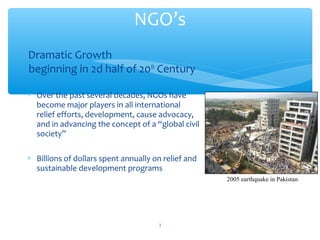
2005 earthquake in Pakistan

ADEL ABOUHANA

3
WHY THE DRAMATIC GROWTH IN NGOs
 Negative Perception of the Welfare State
 Development Crisis

 Perceived Global Environmental Crisis
 Discrediting of Socialism

 Communications Revolution
 Global Economic Growth

ADEL ABOUHANA

4
NGOs
 Overview
 NGOs Play a Key Role in Humanitarian Assistance and
Development
 NGOs are the Rapid Response element for humanitarian
disasters all over the world

 “Foot Soldiers” for International relief efforts
 Military in Peace Support Operations will have to work with
NGOs

ADEL ABOUHANA

5
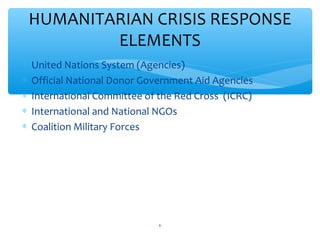
HUMANITARIAN CRISIS RESPONSE
ELEMENTS






United Nations System (Agencies)
Official National Donor Government Aid Agencies
International Committee of the Red Cross (ICRC)
International and National NGOs
Coalition Military Forces

ADEL ABOUHANA

6
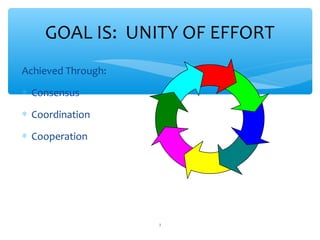
GOAL IS: UNITY OF EFFORT
Achieved Through:
 Consensus
 Coordination
 Cooperation

ADEL ABOUHANA

7
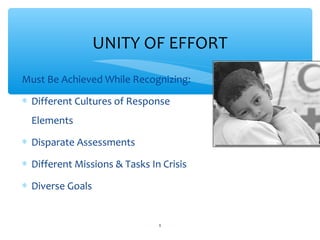
UNITY
OF EFFORT
Must Be Achieved While Recognizing:
 Different Cultures of Response

Elements
 Disparate Assessments

 Different Missions & Tasks In Crisis
 Diverse Goals

ADEL ABOUHANA

8
NGOs--WHAT THEY ARE NOT
 Not Governments…
 Not Businesses...

ADEL ABOUHANA

9
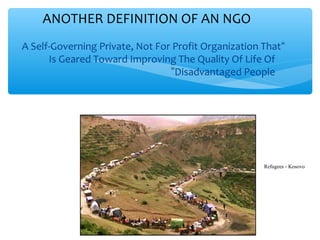
ANOTHER DEFINITION OF AN NGO
“A Self-Governing Private, Not For Profit Organization That
Is Geared Toward Improving The Quality Of Life Of
Disadvantaged People”

Refugees - Kosovo

ADEL ABOUHANA

10
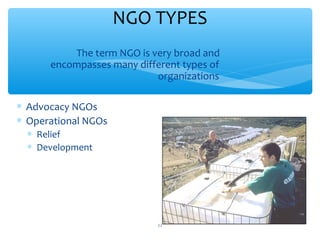
NGO TYPES
The term NGO is very broad and
encompasses many different types of
organizations
 Advocacy NGOs
 Operational NGOs
 Relief
 Development

ADEL ABOUHANA

11
ADVOCACY NGOs
•Their primary purpose is to defend or
promote a specific cause and to influence
policies and practices
•Examples: Amnesty International and the
Muslim Public Affairs Council (MPAC)

ADEL ABOUHANA

12
OPERATIONAL NGOs
 Their primary purpose is field work in
humanitarian relief and design, development
and implementation of development related
projects.
 Operational NGOs are the one’s the military
must work with in a cooperative relationship in a
PSO

ADEL ABOUHANA

13
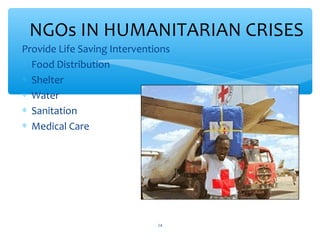
NGOs IN HUMANITARIAN CRISES
Provide Life Saving Interventions
 Food Distribution
 Shelter
 Water
 Sanitation
 Medical Care

ADEL ABOUHANA

14
OPERATIONAL NGOs
ORGANIZATIONAL FRAMEWORKS
 Headquarters in one Country (ICRC)

 Many Autonomous National Chapters (Save the
Children)

 Many National Fund Raising Offices, Pooled Funds,
With A Single World-Wide Field Organization (World
Vision)
ADEL ABOUHANA

15
OPERATIONAL NGOs
ORGANIZATIONAL FRAMEWORKS
(cont.)
 Autonomous National Headquarters with Field
Organization. Work Assigned by Central
International Organization (CARE)
 Field Work Done Only Through Indigenous Local
NGOs (Oxfam America)
ADEL ABOUHANA

16
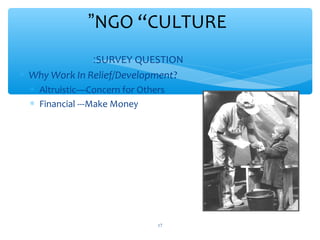
NGO “CULTURE”
SURVEY QUESTION:
 Why Work In Relief/Development?
 Altruistic—Concern for Others
 Financial ---Make Money

ADEL ABOUHANA

17
ORGANIZATIONAL CULTURES






NGO

MILITARY
Controlled Application of
Violence
Hierarchical
Generally Conservative
Explicit Mission Statements
Not Comfortable With
NGOs

ADEL ABOUHANA







18

Help The Disadvantaged
Non-Hierarchical
Generally Liberal
Intangible Missions
Not Comfortable With The
Military
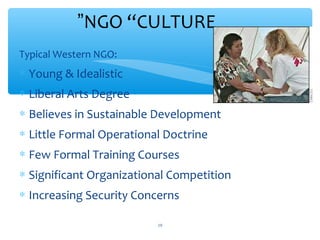
NGO “CULTURE”
Typical Western NGO:

 Young & Idealistic
 Liberal Arts Degree

 Believes in Sustainable Development
 Little Formal Operational Doctrine
 Few Formal Training Courses
 Significant Organizational Competition
 Increasing Security Concerns
ADEL ABOUHANA

19
VOLUNTARY CODE OF CONDUCT
FOR RELIEF ORGANIZATIONS
 Humanitarian Imperative Comes First
 Aid Is Given Regardless of Race, Creed or
Nationality on the Basis of Need Alone

 Aid Will Not Be Used To Further a Particular
Political or Religious Standpoint
 We Shall Endeavor Not To Act As Instruments of
Government Foreign Policy
 We Shall Respect Culture & Custom

ADEL ABOUHANA

20
VOLUNTARY CODE OF CONDUCT
(cont.)
 Build Disaster Response On Local Capacities
 Involve Program Beneficiaries In The Management of
Relief Aid
 Reduce Future Vulnerabilities As Well As Meet Basic
Needs
 NGOs Accountable Both To Beneficiaries & Contributors
 Disaster Victims Are Dignified Humans, Not Hopeless
Objects

ADEL ABOUHANA

21
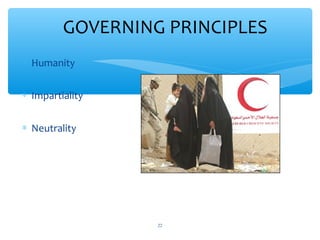
GOVERNING PRINCIPLES
 Humanity
 Impartiality
 Neutrality

ADEL ABOUHANA

22
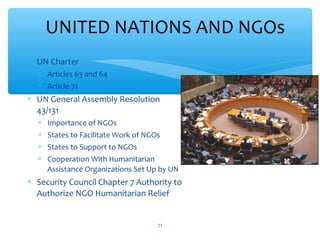
UNITED NATIONS AND NGOs
 UN Charter
 Articles 63 and 64
 Article 71

 UN General Assembly Resolution
43/131
 Importance of NGOs
 States to Facilitate Work of NGOs
 States to Support to NGOs

 Cooperation With Humanitarian
Assistance Organizations Set Up by UN

 Security Council Chapter 7 Authority to
Authorize NGO Humanitarian Relief

ADEL ABOUHANA

23
RISKS TO NGOs &
HUMANITARIAN AID WORKERS





Dangerous Environment
1994 Safety Convention – Not Solution
Safety Needs – Acceptance, Protection & Deterrence
Safety Aids – Information, Planning, Training,
Coordination, Psychological Assistance
 Security Council Responsibilities
 When to Go / When to Stay

ADEL ABOUHANA

24
NGO STRENGTHS (World Bank Study)
 Strong grassroots links

 Field based development expertise
 Ability to innovate and adapt

 Process oriented approach to development
 Participatory methodologies and tools
 Long-term commitment and emphasis on
sustainability
 Cost effectiveness

ADEL ABOUHANA

25
CRITICISM OF NGOs
 Have Lost Their Independence--Just Another Arm Of
Governments
 Too Close To The Corporate World
 Fund Raising Is Their Primary Concern
 Excessive Living Standards In The Midst Of Poverty

ADEL ABOUHANA

26
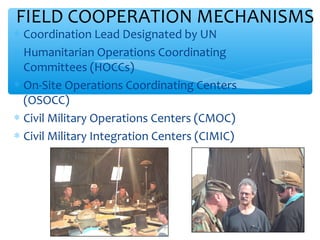
FIELD COOPERATION MECHANISMS

 Coordination Lead Designated by UN
 Humanitarian Operations Coordinating
Committees (HOCCs)
 On-Site Operations Coordinating Centers
(OSOCC)
 Civil Military Operations Centers (CMOC)
 Civil Military Integration Centers (CIMIC)

ADEL ABOUHANA

27
SUMMARY
 Many Participants in Peace Operation
 NGOs Play A Key Role In Humanitarian Assistance
 Absolutely Necessary To:
 UNDERSTAND THE “PLAYERS”
 COORDINATION MECHANISMS
 PURSUE UNITY OF EFFORT BY EMPHASIZING:

COOPERATION-COORDINATION-CONSENSUS

ADEL ABOUHANA

28
ADEL ABOUHANA

29

NGOs in peace ops

  • 1.
    NON-GOVERNMENTAL ORGANIZATIONS AND PEACEOPERATIONS ADEL ABOUHANA 1
  • 2.
    WORLD BANK NGODEFINITION “Private Organizations that pursue activities to relieve suffering, promote the interests of the poor, protect the environment, provide basic social services, or undertake community development.” ADEL ABOUHANA 2
  • 3.
    NGO’s  Dramatic Growth beginningin 2d half of 20th Century  Over the past several decades, NGOs have become major players in all international relief efforts, development, cause advocacy, and in advancing the concept of a “global civil society”  Billions of dollars spent annually on relief and sustainable development programs 2005 earthquake in Pakistan ADEL ABOUHANA 3
  • 4.
    WHY THE DRAMATICGROWTH IN NGOs  Negative Perception of the Welfare State  Development Crisis  Perceived Global Environmental Crisis  Discrediting of Socialism  Communications Revolution  Global Economic Growth ADEL ABOUHANA 4
  • 5.
    NGOs  Overview  NGOsPlay a Key Role in Humanitarian Assistance and Development  NGOs are the Rapid Response element for humanitarian disasters all over the world  “Foot Soldiers” for International relief efforts  Military in Peace Support Operations will have to work with NGOs ADEL ABOUHANA 5
  • 6.
    HUMANITARIAN CRISIS RESPONSE ELEMENTS      UnitedNations System (Agencies) Official National Donor Government Aid Agencies International Committee of the Red Cross (ICRC) International and National NGOs Coalition Military Forces ADEL ABOUHANA 6
  • 7.
    GOAL IS: UNITYOF EFFORT Achieved Through:  Consensus  Coordination  Cooperation ADEL ABOUHANA 7
  • 8.
    UNITY OF EFFORT Must BeAchieved While Recognizing:  Different Cultures of Response Elements  Disparate Assessments  Different Missions & Tasks In Crisis  Diverse Goals ADEL ABOUHANA 8
  • 9.
    NGOs--WHAT THEY ARENOT  Not Governments…  Not Businesses... ADEL ABOUHANA 9
  • 10.
    ANOTHER DEFINITION OFAN NGO “A Self-Governing Private, Not For Profit Organization That Is Geared Toward Improving The Quality Of Life Of Disadvantaged People” Refugees - Kosovo ADEL ABOUHANA 10
  • 11.
    NGO TYPES The termNGO is very broad and encompasses many different types of organizations  Advocacy NGOs  Operational NGOs  Relief  Development ADEL ABOUHANA 11
  • 12.
    ADVOCACY NGOs •Their primarypurpose is to defend or promote a specific cause and to influence policies and practices •Examples: Amnesty International and the Muslim Public Affairs Council (MPAC) ADEL ABOUHANA 12
  • 13.
    OPERATIONAL NGOs  Theirprimary purpose is field work in humanitarian relief and design, development and implementation of development related projects.  Operational NGOs are the one’s the military must work with in a cooperative relationship in a PSO ADEL ABOUHANA 13
  • 14.
    NGOs IN HUMANITARIANCRISES Provide Life Saving Interventions  Food Distribution  Shelter  Water  Sanitation  Medical Care ADEL ABOUHANA 14
  • 15.
    OPERATIONAL NGOs ORGANIZATIONAL FRAMEWORKS Headquarters in one Country (ICRC)  Many Autonomous National Chapters (Save the Children)  Many National Fund Raising Offices, Pooled Funds, With A Single World-Wide Field Organization (World Vision) ADEL ABOUHANA 15
  • 16.
    OPERATIONAL NGOs ORGANIZATIONAL FRAMEWORKS (cont.) Autonomous National Headquarters with Field Organization. Work Assigned by Central International Organization (CARE)  Field Work Done Only Through Indigenous Local NGOs (Oxfam America) ADEL ABOUHANA 16
  • 17.
    NGO “CULTURE” SURVEY QUESTION: Why Work In Relief/Development?  Altruistic—Concern for Others  Financial ---Make Money ADEL ABOUHANA 17
  • 18.
    ORGANIZATIONAL CULTURES      NGO MILITARY Controlled Applicationof Violence Hierarchical Generally Conservative Explicit Mission Statements Not Comfortable With NGOs ADEL ABOUHANA      18 Help The Disadvantaged Non-Hierarchical Generally Liberal Intangible Missions Not Comfortable With The Military
  • 19.
    NGO “CULTURE” Typical WesternNGO:  Young & Idealistic  Liberal Arts Degree  Believes in Sustainable Development  Little Formal Operational Doctrine  Few Formal Training Courses  Significant Organizational Competition  Increasing Security Concerns ADEL ABOUHANA 19
  • 20.
    VOLUNTARY CODE OFCONDUCT FOR RELIEF ORGANIZATIONS  Humanitarian Imperative Comes First  Aid Is Given Regardless of Race, Creed or Nationality on the Basis of Need Alone  Aid Will Not Be Used To Further a Particular Political or Religious Standpoint  We Shall Endeavor Not To Act As Instruments of Government Foreign Policy  We Shall Respect Culture & Custom ADEL ABOUHANA 20
  • 21.
    VOLUNTARY CODE OFCONDUCT (cont.)  Build Disaster Response On Local Capacities  Involve Program Beneficiaries In The Management of Relief Aid  Reduce Future Vulnerabilities As Well As Meet Basic Needs  NGOs Accountable Both To Beneficiaries & Contributors  Disaster Victims Are Dignified Humans, Not Hopeless Objects ADEL ABOUHANA 21
  • 22.
    GOVERNING PRINCIPLES  Humanity Impartiality  Neutrality ADEL ABOUHANA 22
  • 23.
    UNITED NATIONS ANDNGOs  UN Charter  Articles 63 and 64  Article 71  UN General Assembly Resolution 43/131  Importance of NGOs  States to Facilitate Work of NGOs  States to Support to NGOs  Cooperation With Humanitarian Assistance Organizations Set Up by UN  Security Council Chapter 7 Authority to Authorize NGO Humanitarian Relief ADEL ABOUHANA 23
  • 24.
    RISKS TO NGOs& HUMANITARIAN AID WORKERS     Dangerous Environment 1994 Safety Convention – Not Solution Safety Needs – Acceptance, Protection & Deterrence Safety Aids – Information, Planning, Training, Coordination, Psychological Assistance  Security Council Responsibilities  When to Go / When to Stay ADEL ABOUHANA 24
  • 25.
    NGO STRENGTHS (WorldBank Study)  Strong grassroots links  Field based development expertise  Ability to innovate and adapt  Process oriented approach to development  Participatory methodologies and tools  Long-term commitment and emphasis on sustainability  Cost effectiveness ADEL ABOUHANA 25
  • 26.
    CRITICISM OF NGOs Have Lost Their Independence--Just Another Arm Of Governments  Too Close To The Corporate World  Fund Raising Is Their Primary Concern  Excessive Living Standards In The Midst Of Poverty ADEL ABOUHANA 26
  • 27.
    FIELD COOPERATION MECHANISMS Coordination Lead Designated by UN  Humanitarian Operations Coordinating Committees (HOCCs)  On-Site Operations Coordinating Centers (OSOCC)  Civil Military Operations Centers (CMOC)  Civil Military Integration Centers (CIMIC) ADEL ABOUHANA 27
  • 28.
    SUMMARY  Many Participantsin Peace Operation  NGOs Play A Key Role In Humanitarian Assistance  Absolutely Necessary To:  UNDERSTAND THE “PLAYERS”  COORDINATION MECHANISMS  PURSUE UNITY OF EFFORT BY EMPHASIZING: COOPERATION-COORDINATION-CONSENSUS ADEL ABOUHANA 28
  • 29.

Editor's Notes

  • #4 Photo is of some of the devastation that followed the earthquake that measured 7.6 on the Richter scale that hit Pakistan on 8 October 2005.