Showing Your
Employees A Future!
A Primer on New Employees
Presented by Dan Bernacki
President of IDEA
Dan’s Overhead Doors & More
North Liberty, Iowa
How Did You Get Your Start?
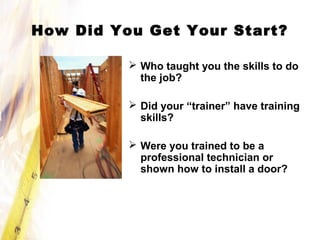
 Who taught you the skills to do
the job?
 Did your “trainer” have training
skills?
 Were you trained to be a
professional technician or
shown how to install a door?
How did you get your start?
Do you train your people today the same way you
were trained, or do you want them to have a better
path than you had?
How We Train
We put the new hire with an experienced
installer and train on-the-job
The new hire learns what the experienced
trainer thinks he should learn
The “trainer” has a job to do and may not
have the new employee’s best interests in
mind
Bad habits are taught as much as good
habits
How We Train
 The vast majority of new employees hired
by door dealers are trained by individuals
with no experience in training.
 As an industry, we can do better, even
with a continued reliance on our
experienced installers as our primary
trainers.
 We need to change our attitudes about
training and developing talent for our
industry’s future.
What We Think About Training
• I’m probably training my competition
• If I train them, they will just leave me go into
business for themselves
• If my people learn their jobs too well, they
become ripe for solicitation by my
competitors
• Why should I invest in training people that I
know will leave me if they get a better offer?
• Hey, I learned the business by hard work and
dedication…my employees can do the same
thing or they can kiss my @&%!
Re-thinking Training
A lack of training causes turnover, loss of
productivity, reduced profitability and
ultimately weakens my company’s
performance.
Rule of Thumb: Poorly trained employees are
a drain on your company. Whatever you
think about the chances they might leave you, it is
worse if you don’t train them and they stay.
Re-thinking Training
Well trained workers increase productivity
and profitability and become the top
assets for that business.
Rule of Thumb: Employees involved in a
company that trains and rewards for
quality performance are far less likely to
leave the company for any reason.
Why Have I Succeeded?
• I learned the industry from a broad perspective, due
to the work of the company and the experience of my
co-workers
• I had good people training me, who weren’t afraid to
train me well
• I was, and am, a hard worker motivated to achieve a
good quality of life
• I have been involved in my industry and learned from
others through networking opportunities
I didn’t start my own company because of
my training. I started my own company
because I wasn’t growing as an individual.
How We Should Train
• Orientation to the industry
• Customer service skills
• Safety training
• Cross training
• Professional opportunities
• Growth and career paths
Show Your Employees a Future!
Orientation to the Industry
• Introduce new workers to a
career, not just a job
• Share association publications
• Let them get involved in local
industry associations, and the
IDA
• Train them to be professional
door systems technicians
Help your employees see this as a
rewarding and promising career
opportunity, and not a dead-end job!
Customer Service Skills
• Employees should gain appreciation and
respect for customers as if they owned
the company
• Speaking well and communicating
professionally are trainable, learnable
skills
• Customer service skills better enables the
installer to appreciate his professionalism
Knowing the technical aspects is only
half the job – gaining confidence and
satisfaction of the customer is the
other half, and equally important.
Safety Training
• The key to employee compliance with
safety policies is to begin training at the
beginning of employment
• Safety is a professional skill
• Employees must know that nothing they do
for the company is worth an injury to
themselves, a co-worker, customer or any
member of the general public
Safety has nothing to do with the high
cost of insurance or the risk of being
sued, and everything to do with the value
of each individual.
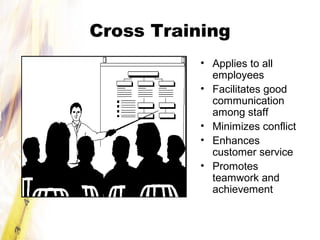
Cross Training
• Applies to all
employees
• Facilitates good
communication
among staff
• Minimizes conflict
• Enhances
customer service
• Promotes
teamwork and
achievement
Professional Opportunities
• Begin with professional training standards
• Give employees goals to achieve
• Establish future growth opportunities
• Promote and encourage performance
through a reward system
• Recognize employee contributions
• Begin with professional training standards
• Enroll employees in certification programs
Growth and Career Paths
• Employees should not be limited to the
jobs they are originally hired to perform
• The door systems industry offers a
quality career for a dedicated employee
• Employees with leadership qualities
should be given the opportunity to lead
Employees who see a quality
future where they are, are less
inclined to go somewhere else
Show Your Employees A Future
We cannot be afraid of our
employees! We must give them
training, opportunities for
growth and reward them for
their achievements. Employees
don’t leave because they are
fulfilled in their work and
hopeful for their future. They
leave when they don’t have
that!
Show Your Employees a Future
• Create a training team
• Establish performance objectives and
rewards
• Involve your company and your staff in
industry events
• Train professionalism, customer service
and not just how to install a garage door
• Cross train to enable better communication
and teamwork
If you give your employees an opportunity grow and
achieve things for themselves, you will have a more
profitable company and a more stable workforce!
Show Your Employees a Future
Now Let’s Hear From You!

New employees primer

  • 1.
    Showing Your Employees AFuture! A Primer on New Employees Presented by Dan Bernacki President of IDEA Dan’s Overhead Doors & More North Liberty, Iowa
  • 2.
    How Did YouGet Your Start?  Who taught you the skills to do the job?  Did your “trainer” have training skills?  Were you trained to be a professional technician or shown how to install a door?
  • 3.
    How did youget your start? Do you train your people today the same way you were trained, or do you want them to have a better path than you had?
  • 4.
    How We Train Weput the new hire with an experienced installer and train on-the-job The new hire learns what the experienced trainer thinks he should learn The “trainer” has a job to do and may not have the new employee’s best interests in mind Bad habits are taught as much as good habits
  • 5.
    How We Train The vast majority of new employees hired by door dealers are trained by individuals with no experience in training.  As an industry, we can do better, even with a continued reliance on our experienced installers as our primary trainers.  We need to change our attitudes about training and developing talent for our industry’s future.
  • 6.
    What We ThinkAbout Training • I’m probably training my competition • If I train them, they will just leave me go into business for themselves • If my people learn their jobs too well, they become ripe for solicitation by my competitors • Why should I invest in training people that I know will leave me if they get a better offer? • Hey, I learned the business by hard work and dedication…my employees can do the same thing or they can kiss my @&%!
  • 7.
    Re-thinking Training A lackof training causes turnover, loss of productivity, reduced profitability and ultimately weakens my company’s performance. Rule of Thumb: Poorly trained employees are a drain on your company. Whatever you think about the chances they might leave you, it is worse if you don’t train them and they stay.
  • 8.
    Re-thinking Training Well trainedworkers increase productivity and profitability and become the top assets for that business. Rule of Thumb: Employees involved in a company that trains and rewards for quality performance are far less likely to leave the company for any reason.
  • 9.
    Why Have ISucceeded? • I learned the industry from a broad perspective, due to the work of the company and the experience of my co-workers • I had good people training me, who weren’t afraid to train me well • I was, and am, a hard worker motivated to achieve a good quality of life • I have been involved in my industry and learned from others through networking opportunities I didn’t start my own company because of my training. I started my own company because I wasn’t growing as an individual.
  • 10.
    How We ShouldTrain • Orientation to the industry • Customer service skills • Safety training • Cross training • Professional opportunities • Growth and career paths Show Your Employees a Future!
  • 11.
    Orientation to theIndustry • Introduce new workers to a career, not just a job • Share association publications • Let them get involved in local industry associations, and the IDA • Train them to be professional door systems technicians Help your employees see this as a rewarding and promising career opportunity, and not a dead-end job!
  • 12.
    Customer Service Skills •Employees should gain appreciation and respect for customers as if they owned the company • Speaking well and communicating professionally are trainable, learnable skills • Customer service skills better enables the installer to appreciate his professionalism Knowing the technical aspects is only half the job – gaining confidence and satisfaction of the customer is the other half, and equally important.
  • 13.
    Safety Training • Thekey to employee compliance with safety policies is to begin training at the beginning of employment • Safety is a professional skill • Employees must know that nothing they do for the company is worth an injury to themselves, a co-worker, customer or any member of the general public Safety has nothing to do with the high cost of insurance or the risk of being sued, and everything to do with the value of each individual.
  • 14.
    Cross Training • Appliesto all employees • Facilitates good communication among staff • Minimizes conflict • Enhances customer service • Promotes teamwork and achievement
  • 15.
    Professional Opportunities • Beginwith professional training standards • Give employees goals to achieve • Establish future growth opportunities • Promote and encourage performance through a reward system • Recognize employee contributions • Begin with professional training standards • Enroll employees in certification programs
  • 16.
    Growth and CareerPaths • Employees should not be limited to the jobs they are originally hired to perform • The door systems industry offers a quality career for a dedicated employee • Employees with leadership qualities should be given the opportunity to lead Employees who see a quality future where they are, are less inclined to go somewhere else
  • 17.
    Show Your EmployeesA Future We cannot be afraid of our employees! We must give them training, opportunities for growth and reward them for their achievements. Employees don’t leave because they are fulfilled in their work and hopeful for their future. They leave when they don’t have that!
  • 18.
    Show Your Employeesa Future • Create a training team • Establish performance objectives and rewards • Involve your company and your staff in industry events • Train professionalism, customer service and not just how to install a garage door • Cross train to enable better communication and teamwork If you give your employees an opportunity grow and achieve things for themselves, you will have a more profitable company and a more stable workforce!
  • 19.
    Show Your Employeesa Future Now Let’s Hear From You!