3


Internal alignment, often called internal
equity, refers to the pay relationships
between the jobs / skills / competencies
within a single organization. The
relationships form a pay structure that can
support the workflow, is consistent
among employees, and directs their
behavior toward organization objectives.
3
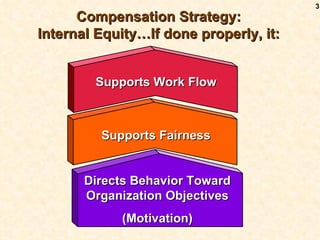
      Compensation Strategy:
Internal Equity…If done properly, it:


        Supports Work Flow


         Supports Fairness


       Directs Behavior Toward
       Organization Objectives
            (Motivation)
3


Pay structure, refers to the array of pay
rates for different work or skills within a
single organization. The number of levels,
differentials in pay between the levels, and
the criteria used to determine those
differences create the structure. They may
vary greatly between organizations.
3

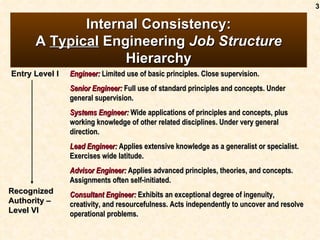
             Internal Consistency:
      A Typical Engineering Job Structure
                   Hierarchy
Entry Level I   Engineer: Limited use of basic principles. Close supervision.
                Senior Engineer: Full use of standard principles and concepts. Under
                general supervision.
                Systems Engineer: Wide applications of principles and concepts, plus
                working knowledge of other related disciplines. Under very general
                direction.
                Lead Engineer: Applies extensive knowledge as a generalist or specialist.
                Exercises wide latitude.
                Advisor Engineer: Applies advanced principles, theories, and concepts.
                Assignments often self-initiated.
Recognized      Consultant Engineer: Exhibits an exceptional degree of ingenuity,
Authority –     creativity, and resourcefulness. Acts independently to uncover and resolve
Level VI        operational problems.
3


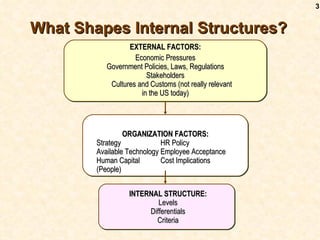
What Shapes Internal Structures?
                  EXTERNAL FACTORS:
                    Economic Pressures
           Government Policies, Laws, Regulations
                        Stakeholders
            Cultures and Customs (not really relevant
                      in the US today)


                 ORGANIZATION FACTORS:
        Strategy             HR Policy
        Available Technology Employee Acceptance
        Human Capital        Cost Implications
        (People)


                  INTERNAL STRUCTURE:
                          Levels
                       Differentials
                         Criteria
3
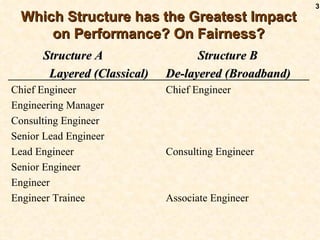
  Which Structure has the Greatest Impact
      on Performance? On Fairness?
      Structure A                  Structure B
       Layered (Classical)   De-layered (Broadband)
Chief Engineer               Chief Engineer
Engineering Manager
Consulting Engineer
Senior Lead Engineer
Lead Engineer                Consulting Engineer
Senior Engineer
Engineer
Engineer Trainee             Associate Engineer
3

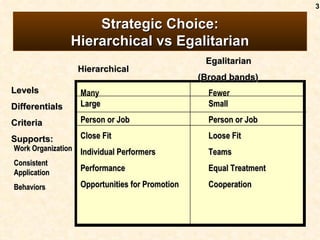
                    Strategic Choice:
                Hierarchical vs Egalitarian
                                                   Egalitarian
                    Hierarchical
                                                  (Broad bands)
Levels              Many                            Fewer
Differentials       Large                           Small

Criteria            Person or Job                   Person or Job

Supports:           Close Fit                       Loose Fit
Work Organization   Individual Performers           Teams
Consistent
Application
                    Performance                     Equal Treatment

Behaviors           Opportunities for Promotion     Cooperation
3


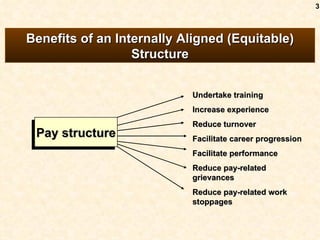
Benefits of an Internally Aligned (Equitable)
                  Structure


                           Undertake training
                           Increase experience
                           Reduce turnover
 Pay structure             Facilitate career progression
                           Facilitate performance
                           Reduce pay-related
                           grievances
                           Reduce pay-related work
                           stoppages
3


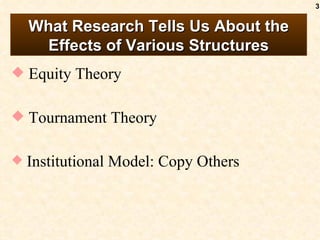
    What Research Tells Us About the
     Effects of Various Structures
 Equity Theory


 Tournament Theory


   Institutional Model: Copy Others
3-


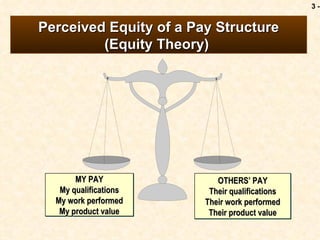
Perceived Equity of a Pay Structure
         (Equity Theory)


       MY PAY              OTHERS’ PAY
   My qualifications     Their qualifications
  My work performed     Their work performed
   My product value      Their product value
3-


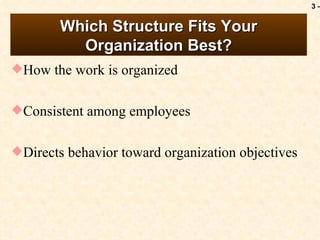
        Which Structure Fits Your
          Organization Best?
How the work is organized


Consistent among employees


Directs behavior toward organization objectives

New chap03

  • 1.
    3 Internal alignment, oftencalled internal equity, refers to the pay relationships between the jobs / skills / competencies within a single organization. The relationships form a pay structure that can support the workflow, is consistent among employees, and directs their behavior toward organization objectives.
  • 2.
    3 Compensation Strategy: Internal Equity…If done properly, it: Supports Work Flow Supports Fairness Directs Behavior Toward Organization Objectives (Motivation)
  • 3.
    3 Pay structure, refersto the array of pay rates for different work or skills within a single organization. The number of levels, differentials in pay between the levels, and the criteria used to determine those differences create the structure. They may vary greatly between organizations.
  • 4.
    3 Internal Consistency: A Typical Engineering Job Structure Hierarchy Entry Level I Engineer: Limited use of basic principles. Close supervision. Senior Engineer: Full use of standard principles and concepts. Under general supervision. Systems Engineer: Wide applications of principles and concepts, plus working knowledge of other related disciplines. Under very general direction. Lead Engineer: Applies extensive knowledge as a generalist or specialist. Exercises wide latitude. Advisor Engineer: Applies advanced principles, theories, and concepts. Assignments often self-initiated. Recognized Consultant Engineer: Exhibits an exceptional degree of ingenuity, Authority – creativity, and resourcefulness. Acts independently to uncover and resolve Level VI operational problems.
  • 5.
    3 What Shapes InternalStructures? EXTERNAL FACTORS: Economic Pressures Government Policies, Laws, Regulations Stakeholders Cultures and Customs (not really relevant in the US today) ORGANIZATION FACTORS: Strategy HR Policy Available Technology Employee Acceptance Human Capital Cost Implications (People) INTERNAL STRUCTURE: Levels Differentials Criteria
  • 6.
    3 WhichStructure has the Greatest Impact on Performance? On Fairness? Structure A Structure B Layered (Classical) De-layered (Broadband) Chief Engineer Chief Engineer Engineering Manager Consulting Engineer Senior Lead Engineer Lead Engineer Consulting Engineer Senior Engineer Engineer Engineer Trainee Associate Engineer
  • 7.
    3 Strategic Choice: Hierarchical vs Egalitarian Egalitarian Hierarchical (Broad bands) Levels Many Fewer Differentials Large Small Criteria Person or Job Person or Job Supports: Close Fit Loose Fit Work Organization Individual Performers Teams Consistent Application Performance Equal Treatment Behaviors Opportunities for Promotion Cooperation
  • 8.
    3 Benefits of anInternally Aligned (Equitable) Structure Undertake training Increase experience Reduce turnover Pay structure Facilitate career progression Facilitate performance Reduce pay-related grievances Reduce pay-related work stoppages
  • 9.
    3 What Research Tells Us About the Effects of Various Structures  Equity Theory  Tournament Theory  Institutional Model: Copy Others
  • 10.
    3- Perceived Equity ofa Pay Structure (Equity Theory) MY PAY OTHERS’ PAY My qualifications Their qualifications My work performed Their work performed My product value Their product value
  • 11.
    3- Which Structure Fits Your Organization Best? How the work is organized Consistent among employees Directs behavior toward organization objectives