Internal Organisation Int 2 Business Management
What is an organisation? A group of people working towards a defined set of goals and objectives.
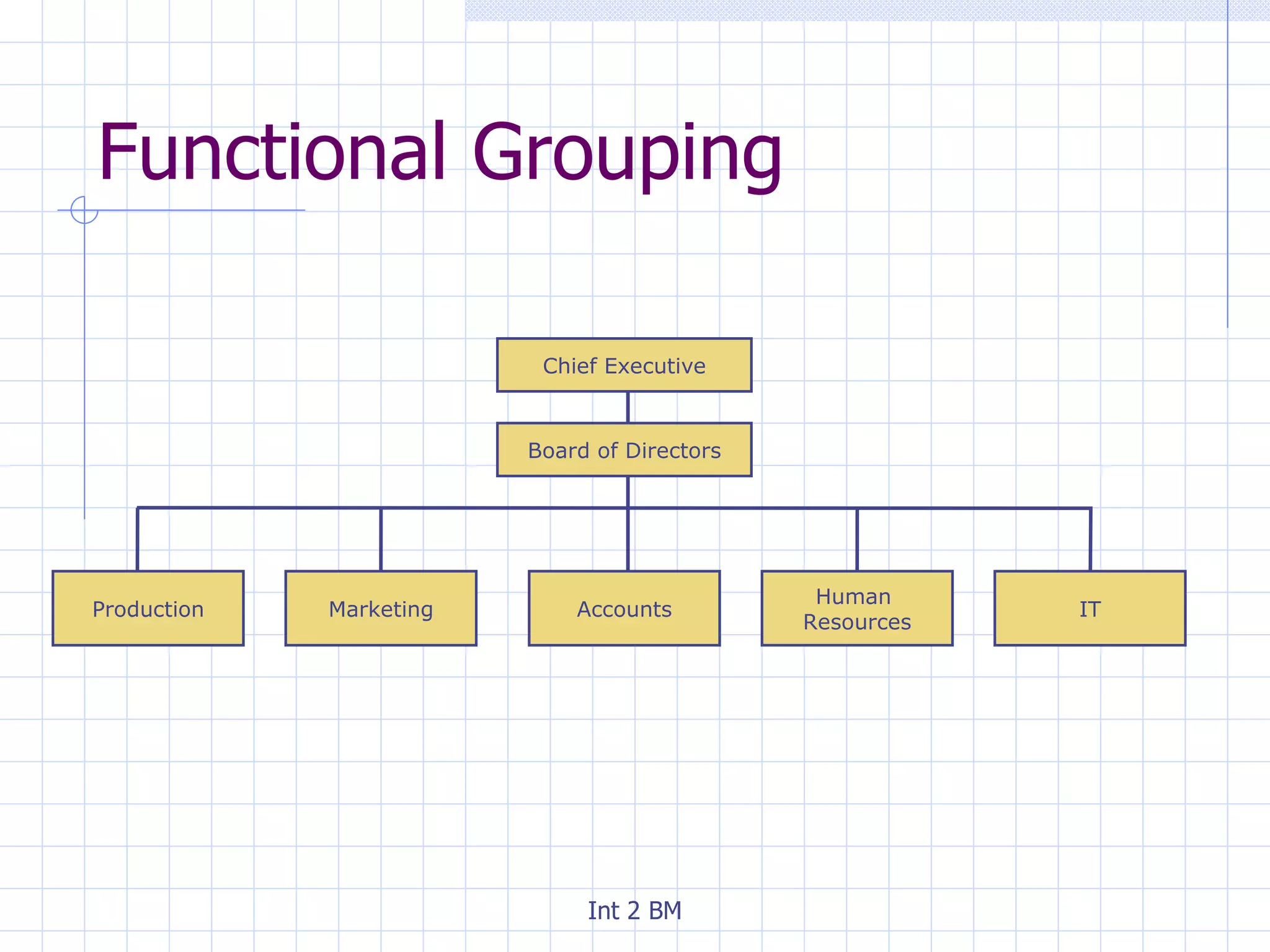
Functional Grouping Departments where staff have similar skills & expertise, and do similar jobs. Functional grouping usually consists of marketing, finance, human resources and operations. What other functional areas might there be?
Functional Grouping Production Marketing Accounts Human  Resources IT Board of Directors Chief Executive
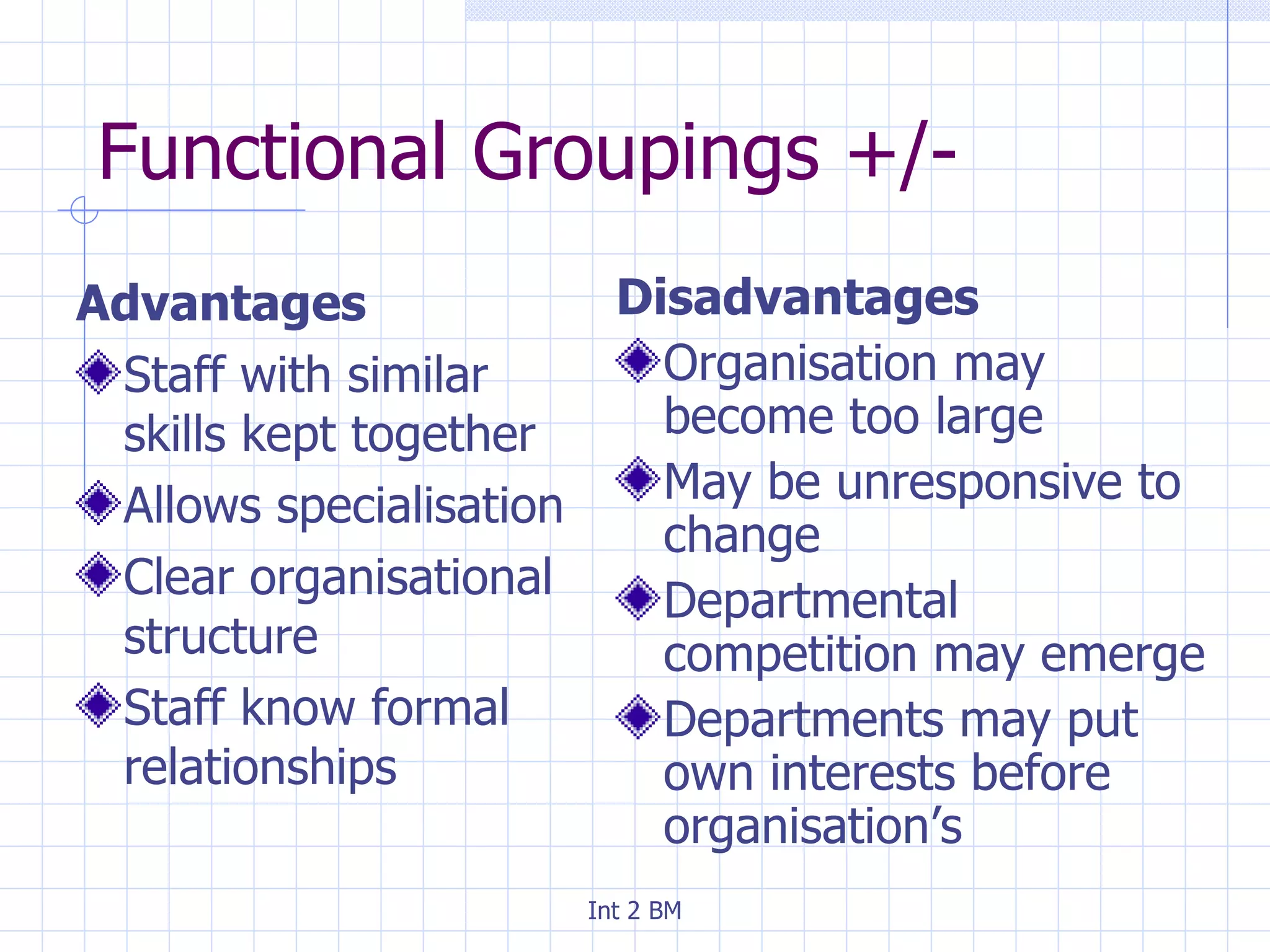
Functional Groupings +/- Advantages Staff with similar skills kept together Allows specialisation Clear organisational structure Staff know formal relationships Disadvantages Organisation may become too large May be unresponsive to change Departmental competition may emerge Departments may put own interests before organisation’s
Levels of Management This is how we would normally see an organisation structure. This is an organisation chart of a business. There is another way we can view the same organisation.
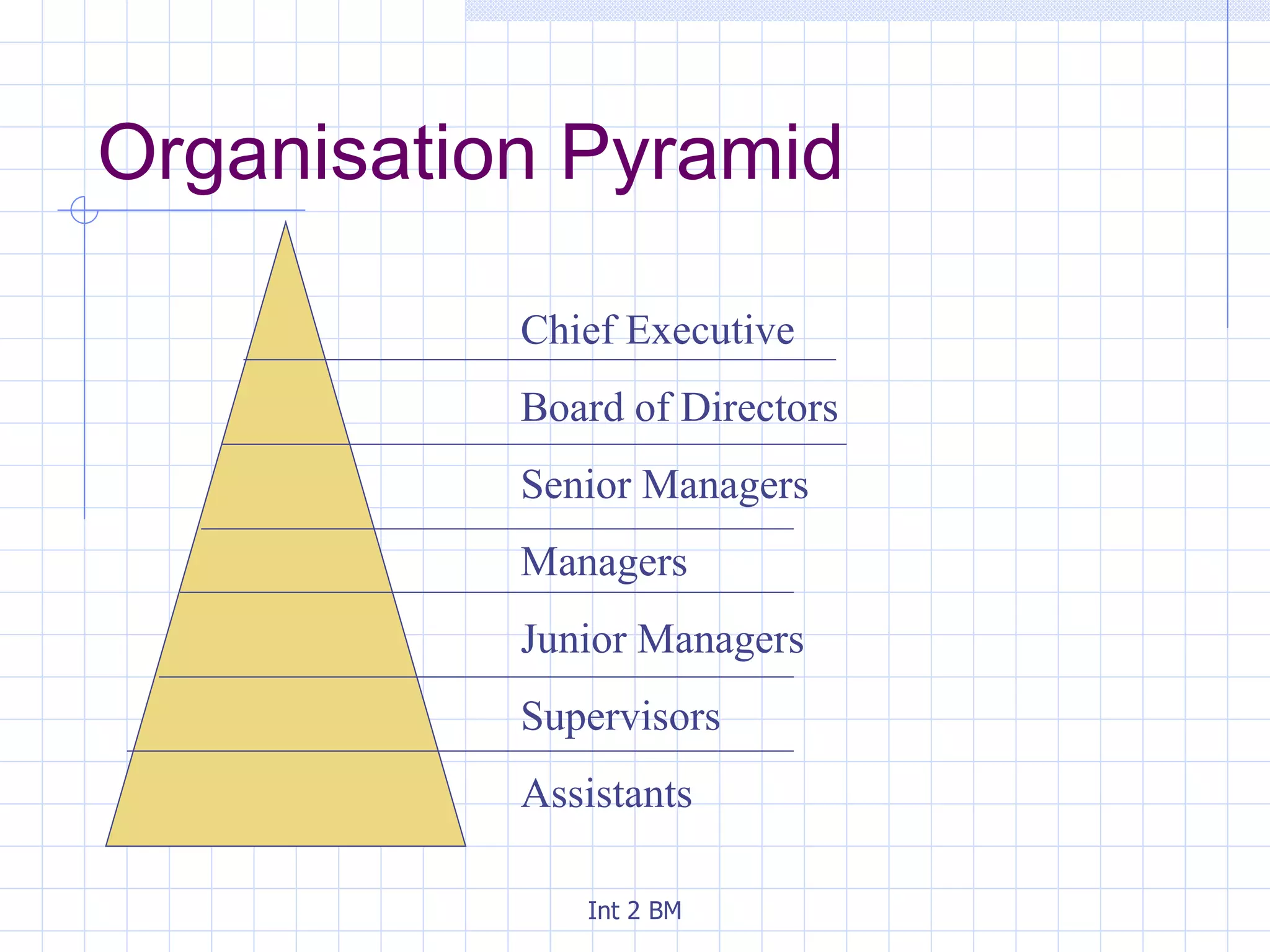
Organisation Pyramid Chief Executive Board of Directors Senior Managers Managers Junior Managers Supervisors Assistants
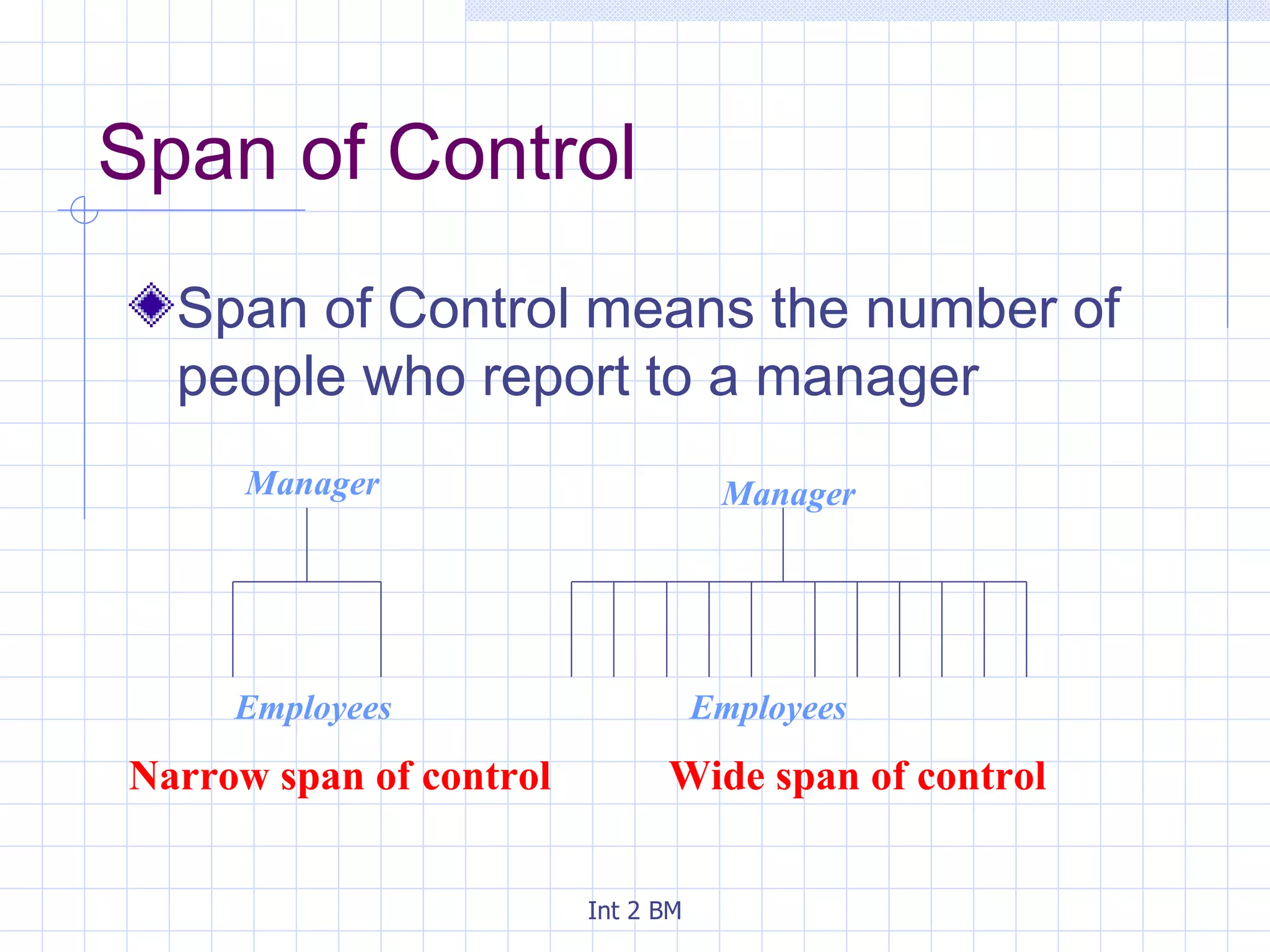
Span of Control Span of Control means the number of people who report to a manager Narrow span of control Wide span of control Employees Employees Manager Manager
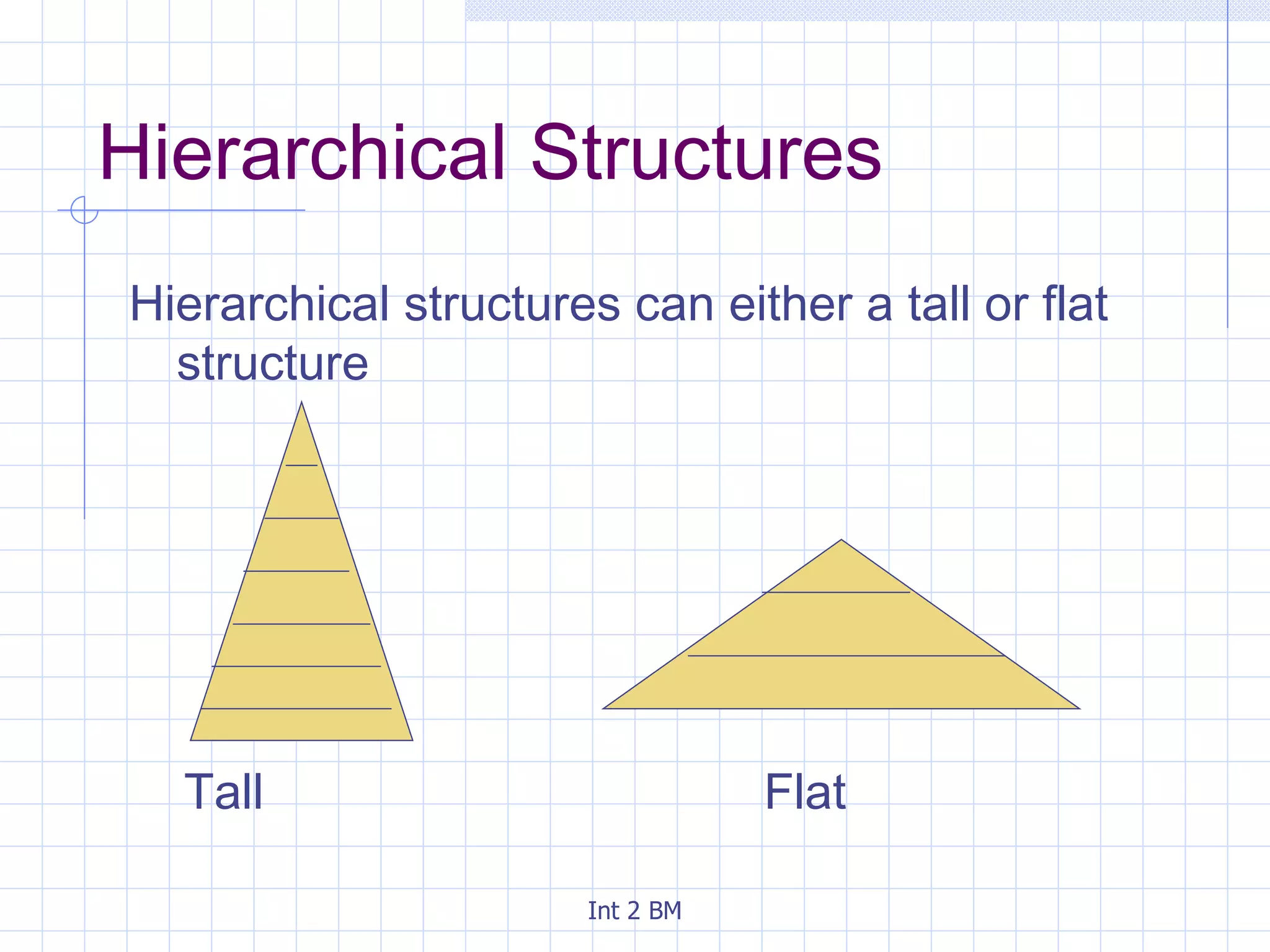
Hierarchical Structures Hierarchical structures can either a tall or flat structure Tall Flat
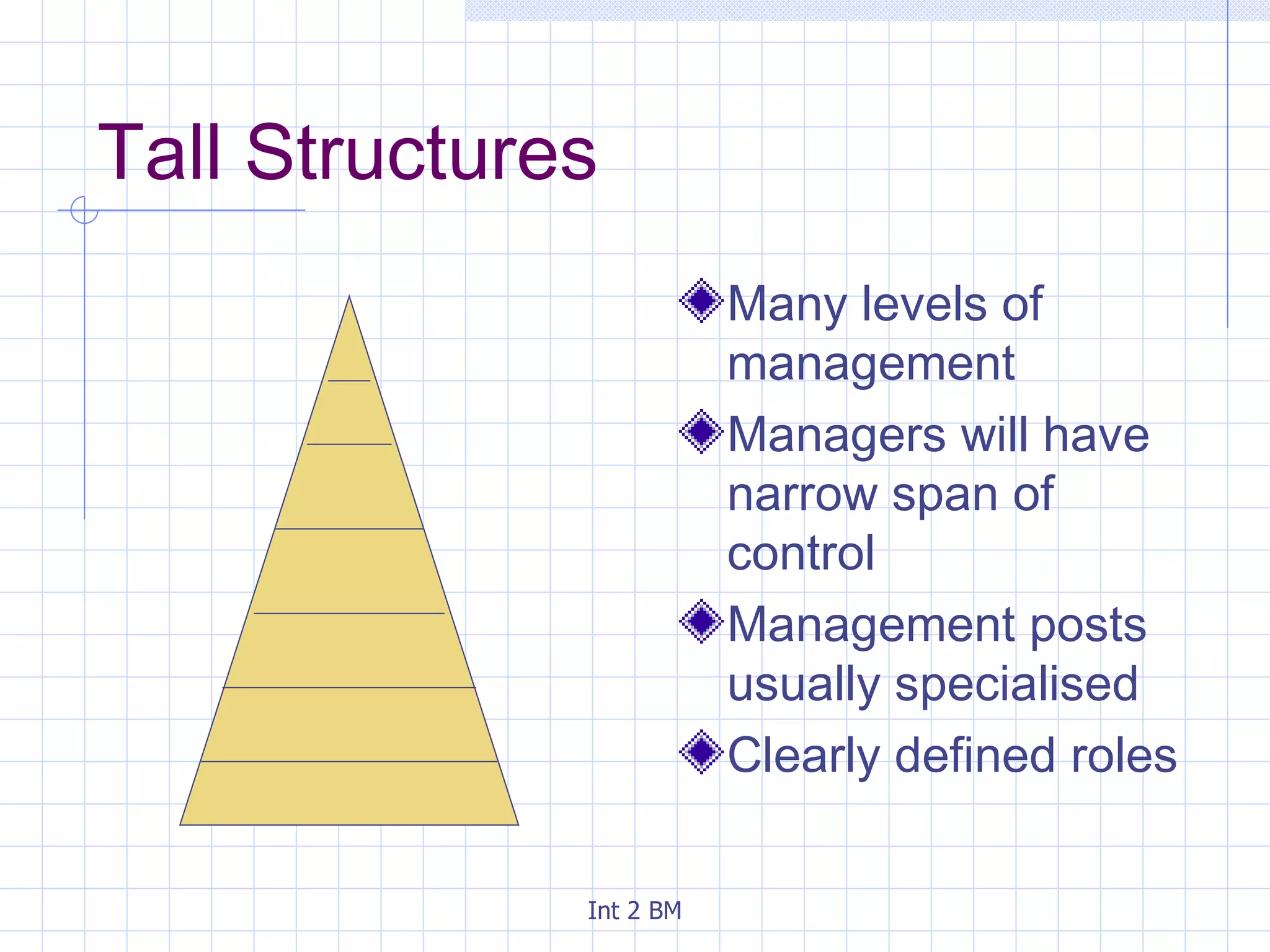
Tall Structures Many levels of management Managers will have narrow span of control Management posts usually specialised Clearly defined roles
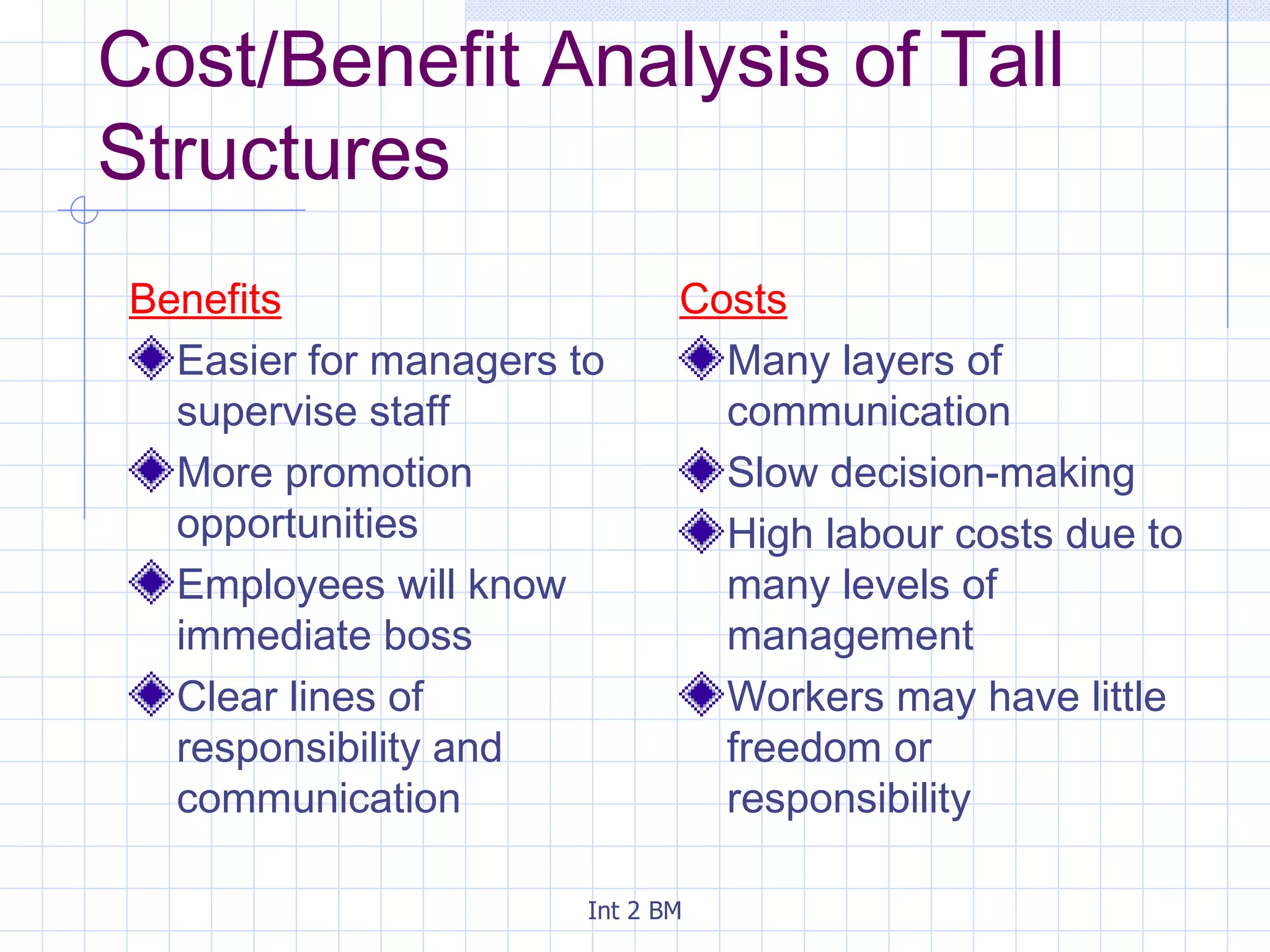
Cost/Benefit Analysis of Tall Structures Benefits Easier for managers to supervise staff More promotion opportunities Employees will know immediate boss Clear lines of responsibility and communication Costs Many layers of communication Slow decision-making High labour costs due to many levels of management Workers may have little freedom or responsibility
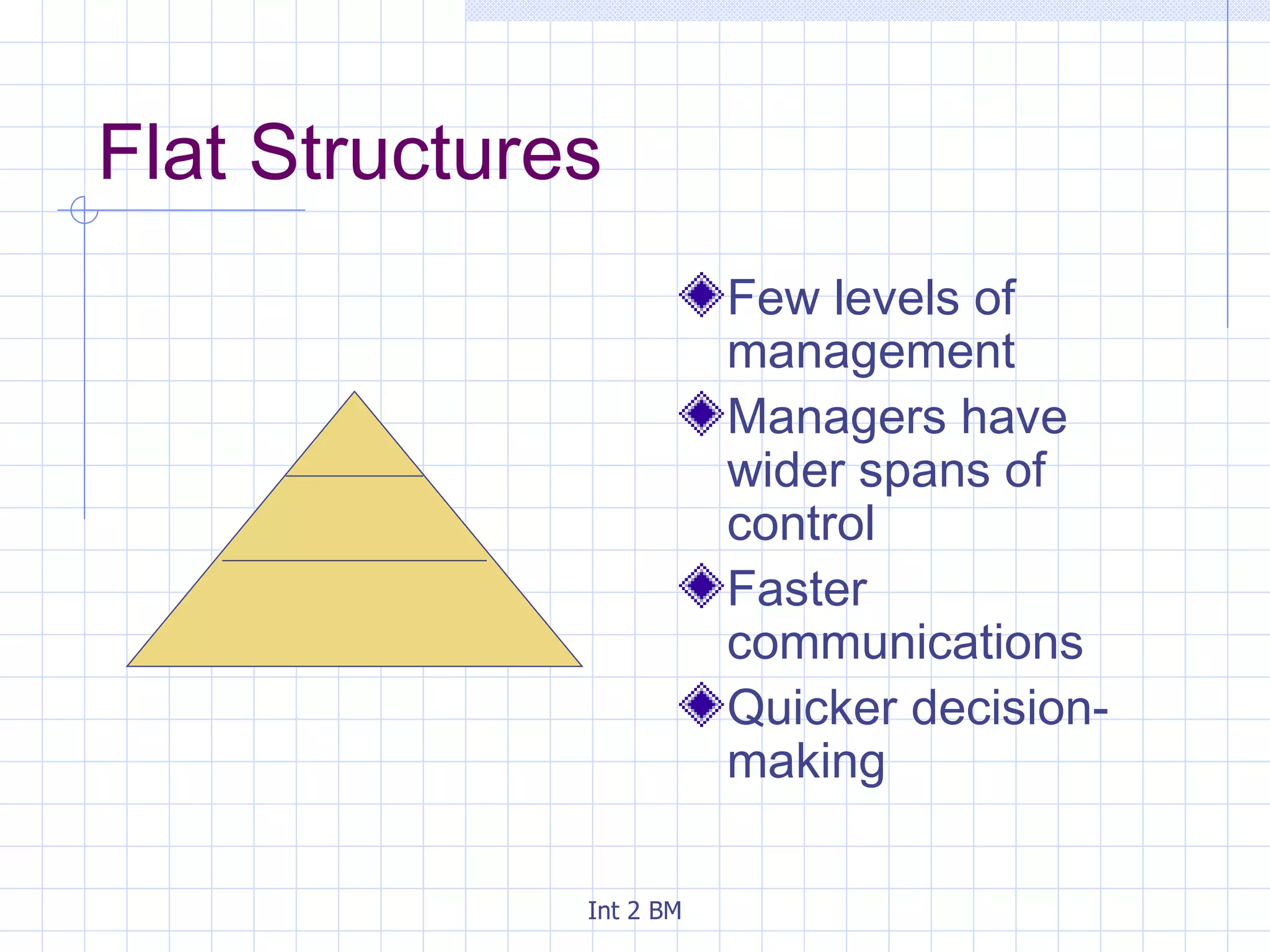
Flat Structures Few levels of management Managers have wider spans of control Faster communications Quicker decision-making
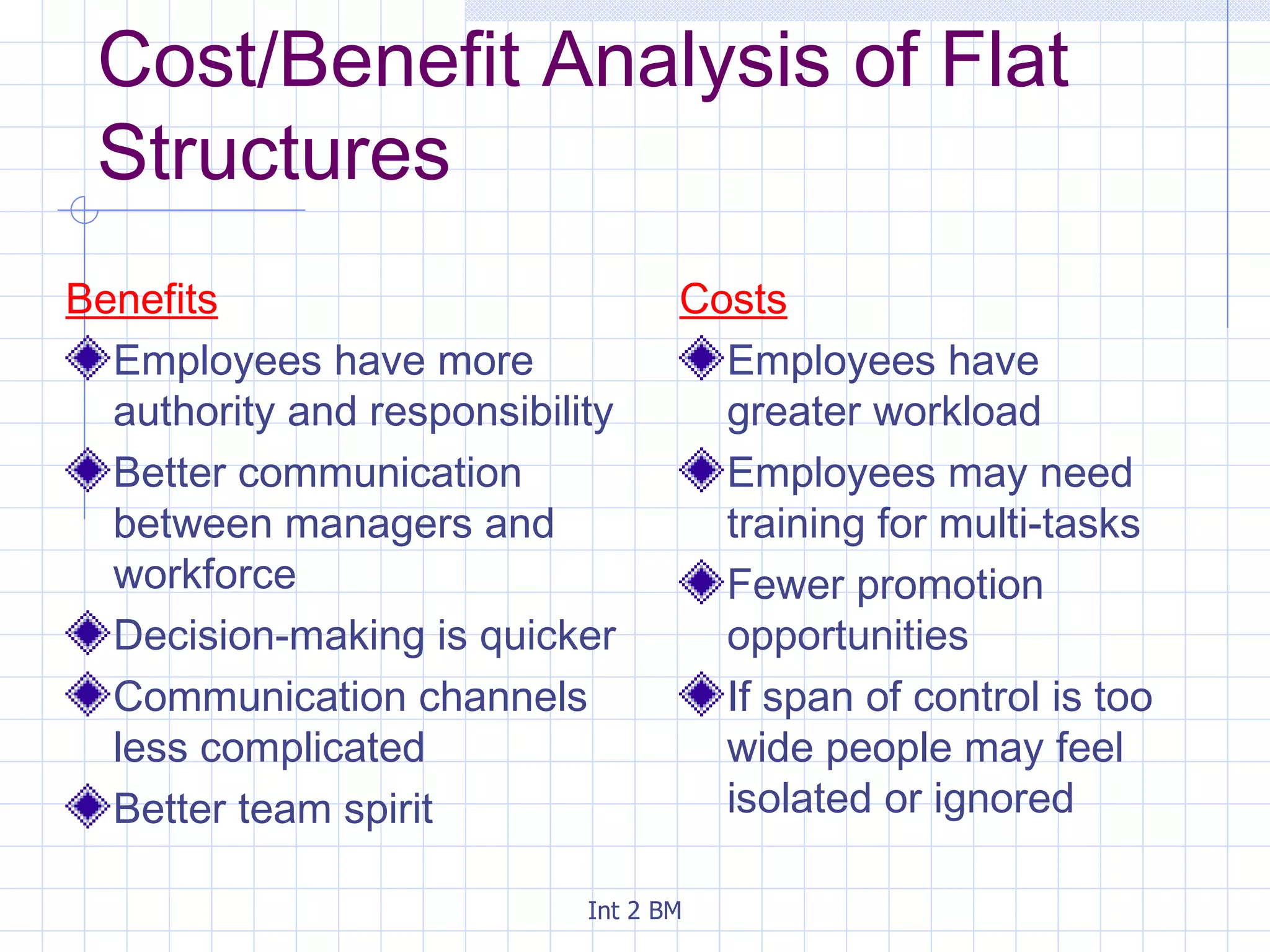
Cost/Benefit Analysis of Flat Structures Benefits Employees have more authority and responsibility Better communication between managers and workforce Decision-making is quicker Communication channels less complicated Better team spirit Costs Employees have greater workload Employees may need training for multi-tasks Fewer promotion opportunities If span of control is too wide people may feel isolated or ignored
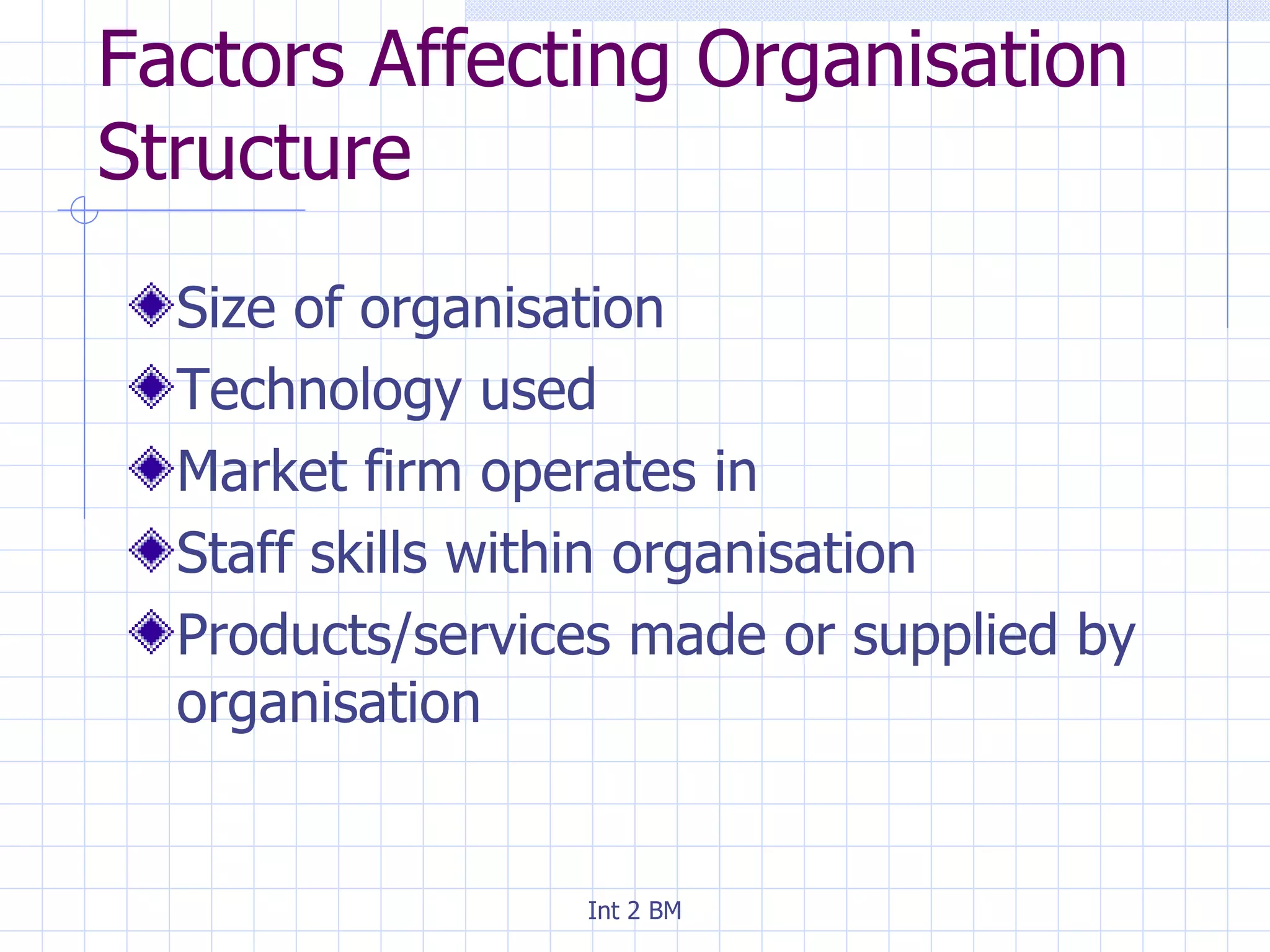
Factors Affecting Organisation Structure Size of organisation Technology used Market firm operates in Staff skills within organisation Products/services made or supplied by organisation
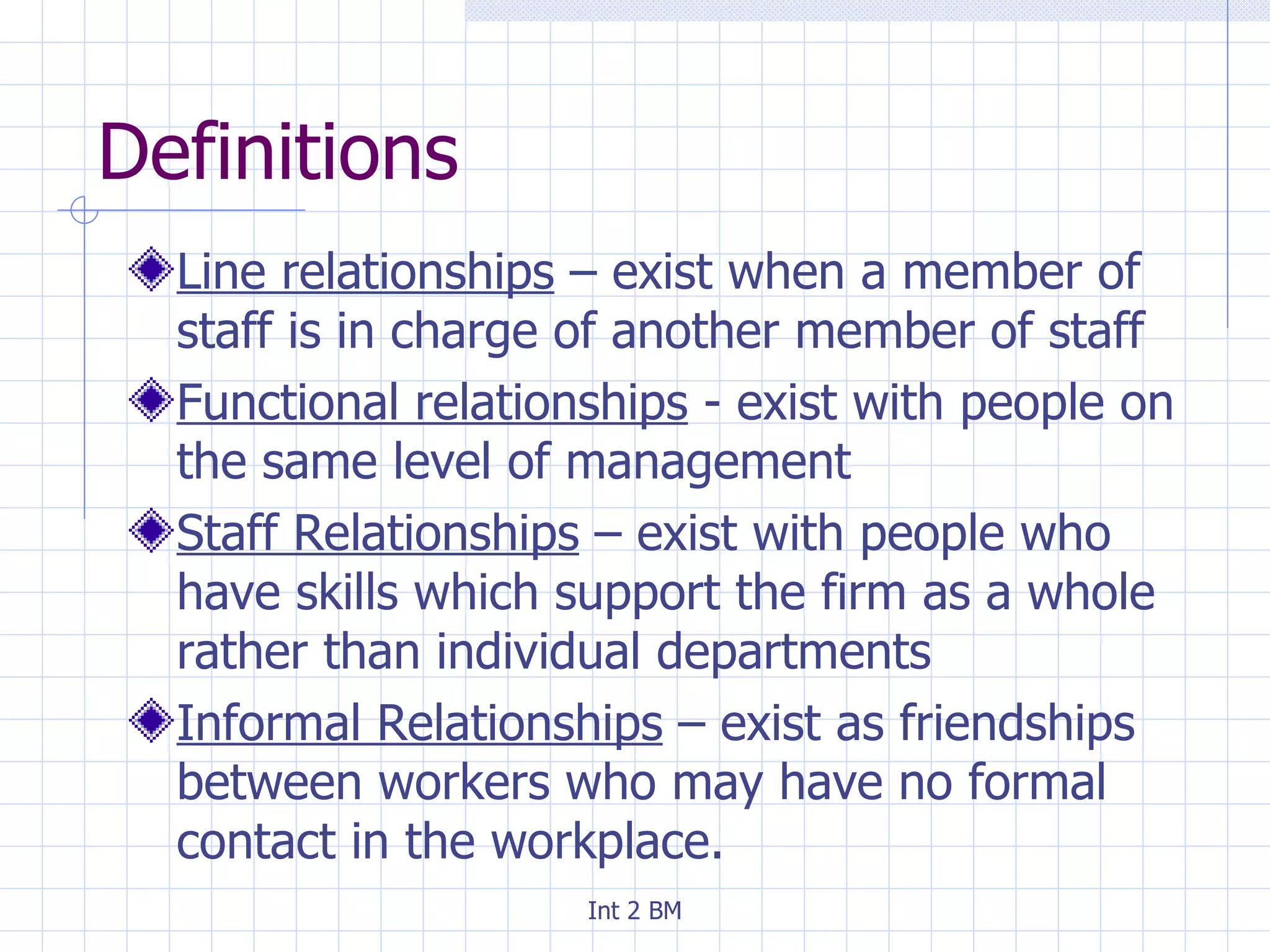
Definitions Line relationships  – exist when a member of staff is in charge of another member of staff Functional relationships  - exist with people on the same level of management Staff Relationships  – exist with people who have skills which support the firm as a whole rather than individual departments Informal Relationships  – exist as friendships between workers who may have no formal contact in the workplace.
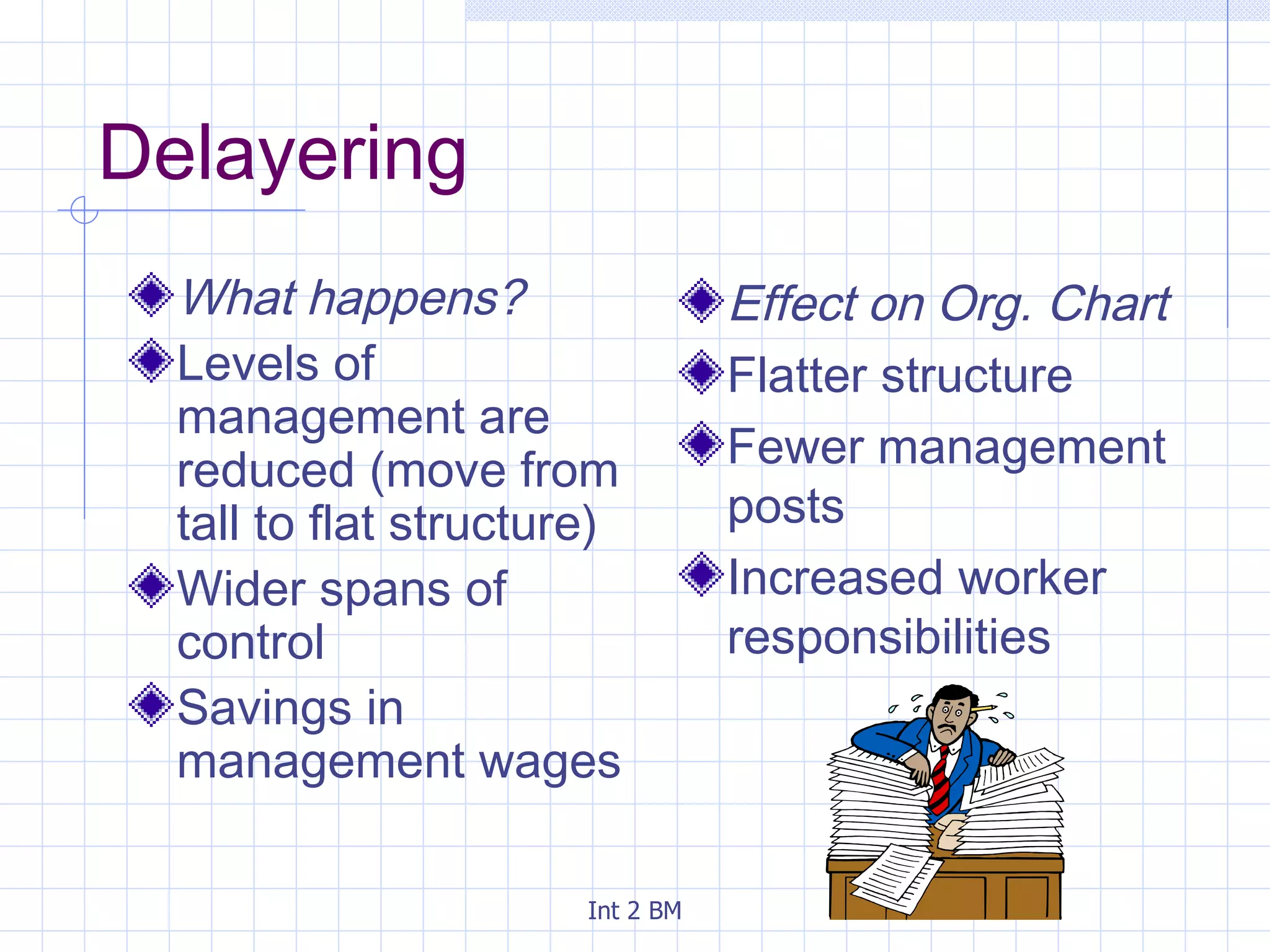
Delayering What happens? Levels of management are reduced (move from tall to flat structure) Wider spans of control Savings in management wages Effect on Org. Chart Flatter structure Fewer management posts Increased worker responsibilities
Downsizing What happens? Staff ‘laid-off’ Wages (labour costs) are reduced Effect on Org. Chart Greater workload for departments Some posts will disappear Workers have more duties

Internal Organisation Int 2

  • 1.
    Internal Organisation Int2 Business Management
  • 2.
    What is anorganisation? A group of people working towards a defined set of goals and objectives.
  • 3.
    Functional Grouping Departmentswhere staff have similar skills & expertise, and do similar jobs. Functional grouping usually consists of marketing, finance, human resources and operations. What other functional areas might there be?
  • 4.
    Functional Grouping ProductionMarketing Accounts Human Resources IT Board of Directors Chief Executive
  • 5.
    Functional Groupings +/-Advantages Staff with similar skills kept together Allows specialisation Clear organisational structure Staff know formal relationships Disadvantages Organisation may become too large May be unresponsive to change Departmental competition may emerge Departments may put own interests before organisation’s
  • 6.
    Levels of ManagementThis is how we would normally see an organisation structure. This is an organisation chart of a business. There is another way we can view the same organisation.
  • 7.
    Organisation Pyramid ChiefExecutive Board of Directors Senior Managers Managers Junior Managers Supervisors Assistants
  • 8.
    Span of ControlSpan of Control means the number of people who report to a manager Narrow span of control Wide span of control Employees Employees Manager Manager
  • 9.
    Hierarchical Structures Hierarchicalstructures can either a tall or flat structure Tall Flat
  • 10.
    Tall Structures Manylevels of management Managers will have narrow span of control Management posts usually specialised Clearly defined roles
  • 11.
    Cost/Benefit Analysis ofTall Structures Benefits Easier for managers to supervise staff More promotion opportunities Employees will know immediate boss Clear lines of responsibility and communication Costs Many layers of communication Slow decision-making High labour costs due to many levels of management Workers may have little freedom or responsibility
  • 12.
    Flat Structures Fewlevels of management Managers have wider spans of control Faster communications Quicker decision-making
  • 13.
    Cost/Benefit Analysis ofFlat Structures Benefits Employees have more authority and responsibility Better communication between managers and workforce Decision-making is quicker Communication channels less complicated Better team spirit Costs Employees have greater workload Employees may need training for multi-tasks Fewer promotion opportunities If span of control is too wide people may feel isolated or ignored
  • 14.
    Factors Affecting OrganisationStructure Size of organisation Technology used Market firm operates in Staff skills within organisation Products/services made or supplied by organisation
  • 15.
    Definitions Line relationships – exist when a member of staff is in charge of another member of staff Functional relationships - exist with people on the same level of management Staff Relationships – exist with people who have skills which support the firm as a whole rather than individual departments Informal Relationships – exist as friendships between workers who may have no formal contact in the workplace.
  • 16.
    Delayering What happens?Levels of management are reduced (move from tall to flat structure) Wider spans of control Savings in management wages Effect on Org. Chart Flatter structure Fewer management posts Increased worker responsibilities
  • 17.
    Downsizing What happens?Staff ‘laid-off’ Wages (labour costs) are reduced Effect on Org. Chart Greater workload for departments Some posts will disappear Workers have more duties