An overview of Corporate Social 
Responsibility (CSR) 
Alexis Lindsay 
Director, The Centre for Corporate Public Affairs
Agenda 
2 
 Defining CSR 
 The development of CSR in Australia 
 Current developments and trends 
 The business drivers 
 Examples 
 Internal infrastructure 
 References
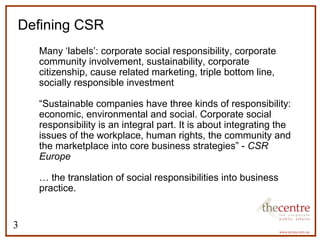
Defining CSR 
3 
 Many ‘labels’: corporate social responsibility, corporate 
community involvement, sustainability, corporate 
citizenship, cause related marketing, triple bottom line, 
socially responsible investment 
 “Sustainable companies have three kinds of responsibility: 
economic, environmental and social. Corporate social 
responsibility is an integral part. It is about integrating the 
issues of the workplace, human rights, the community and 
the marketplace into core business strategies” - CSR 
Europe 
 … the translation of social responsibilities into business 
practice.
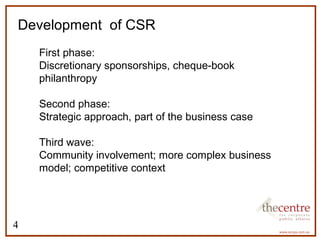
Development of CSR 
4 
 First phase: 
Discretionary sponsorships, cheque-book 
philanthropy 
 Second phase: 
Strategic approach, part of the business case 
 Third wave: 
Community involvement; more complex business 
model; competitive context
Why does business engage in CSR? 
5 
 Enhance reputation 
 Improved community relationships 
 Stronger stakeholder relationships 
 Positive impact on employee morale 
 Important symbol of leadership, company ethos
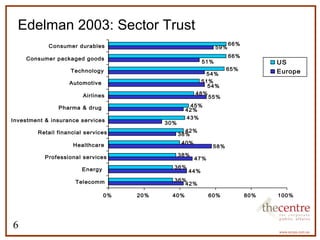
Edelman 2003: Sector Trust 
Consumer durables 
Consumer packaged goods 
Technology 
Automotive 
Airlines 
Pharma  drug 
Investment  insurance services 
6 
51% 
54% 
48% 
45% 
42% 
47% 
38% 
40% 
38% 
44% 
36% 
42% 
59% 
55% 
36% 
43% 
51% 
66% 
66% 
65% 
30% 
42% 
54% 
58% 
Retail financial services 
Healthcare 
Professional services 
Telecomm 
0% 20% 40% 60% 80% 100% 
Energy 
US 
Europe
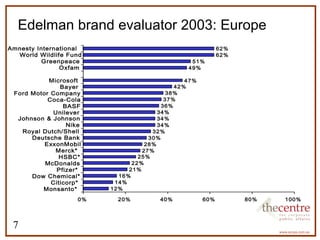
Edelman brand evaluator 2003: Europe 
Amnesty International 
World Wildlife Fund 
Greenpeace 
Oxfam 
Microsoft 
Bayer 
Ford Motor Company 
Coca-Cola 
BASF 
Unilever 
Johnson  Johnson 
7 
16% 
14% 
12% 
38% 4 
37% 
36% 
34% 
32% 
30% 
28% 
25% 
22% 
21% 
27% 
34% 
51% 
47% 
2% 
49% 
62% 
62% 
34% 
Nike 
Royal Dutch/Shell 
Deutsche Bank 
ExxonMobil 
Merck* 
HSBC* 
McDonalds 
Pfizer* 
Dow Chemical* 
Citicorp* 
0% 20% 40% 60% 80% 100% 
Monsanto*
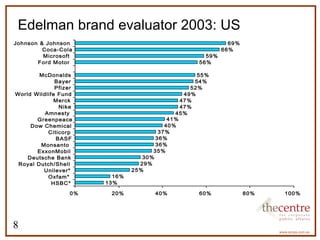
Edelman brand evaluator 2003: US 
Johnson  Johnson 
Coca-Cola 
Microsoft 
Ford Motor 
McDonalds 
Bayer 
Pfizer 
World Wildlife Fund 
Merck 
Nike 
Amnesty 
Greenpeace 
Dow Chemical 
Citicorp 
BASF 
Monsanto 
ExxonMobil 
Deutsche Bank 
Royal Dutch/Shell 
8 
16% 
13% 
30% 
25% 2 
9% 
40% 
37% 
36% 
36% 
35% 
41% 4 
56% 
55% 
54% 
49% 
47% 
47% 
5% 
52% 
59% 
69% 
66% 
Unilever* 
HSBC* 
0% 20% 40% 60% 80% 100% 
Oxfam*
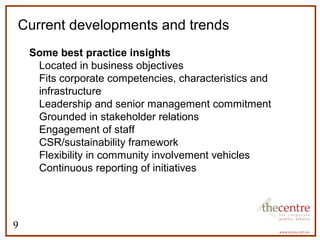
Current developments and trends 
Some best practice insights 
9 
 Located in business objectives 
 Fits corporate competencies, characteristics and 
infrastructure 
 Leadership and senior management commitment 
 Grounded in stakeholder relations 
 Engagement of staff 
 CSR/sustainability framework 
 Flexibility in community involvement vehicles 
 Continuous reporting of initiatives
Examples 
10 
 The Rio Tinto Aboriginal Foundation 
 The Smith Family 
 Westpac 
 Toyota 
 DuPont
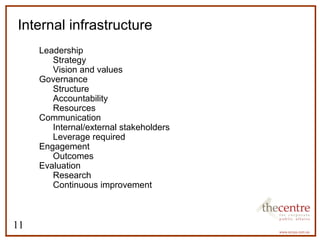
Internal infrastructure 
11 
 Leadership 
 Strategy 
 Vision and values 
 Governance 
 Structure 
 Accountability 
 Resources 
 Communication 
 Internal/external stakeholders 
 Leverage required 
 Engagement 
 Outcomes 
 Evaluation 
 Research 
 Continuous improvement
References 
12 
 The Centre for Corporate Public Affairs; 
http://www.accpa.com.au/csrnews 
 Business in the Community; http://www.bitc.org.uk/ 
 Business for Social Responsibility; http://www.csrwire 
.com/bsr/ 
 Centre for Corporate Citizenship at Boston College; 
http://www.bc.edu/centers/ccc/index.html

CSR and Corporate Philanthropy

  • 1.
    An overview ofCorporate Social Responsibility (CSR) Alexis Lindsay Director, The Centre for Corporate Public Affairs
  • 2.
    Agenda 2 Defining CSR The development of CSR in Australia Current developments and trends The business drivers Examples Internal infrastructure References
  • 3.
    Defining CSR 3 Many ‘labels’: corporate social responsibility, corporate community involvement, sustainability, corporate citizenship, cause related marketing, triple bottom line, socially responsible investment “Sustainable companies have three kinds of responsibility: economic, environmental and social. Corporate social responsibility is an integral part. It is about integrating the issues of the workplace, human rights, the community and the marketplace into core business strategies” - CSR Europe … the translation of social responsibilities into business practice.
  • 4.
    Development of CSR 4 First phase: Discretionary sponsorships, cheque-book philanthropy Second phase: Strategic approach, part of the business case Third wave: Community involvement; more complex business model; competitive context
  • 5.
    Why does businessengage in CSR? 5 Enhance reputation Improved community relationships Stronger stakeholder relationships Positive impact on employee morale Important symbol of leadership, company ethos
  • 6.
    Edelman 2003: SectorTrust Consumer durables Consumer packaged goods Technology Automotive Airlines Pharma drug Investment insurance services 6 51% 54% 48% 45% 42% 47% 38% 40% 38% 44% 36% 42% 59% 55% 36% 43% 51% 66% 66% 65% 30% 42% 54% 58% Retail financial services Healthcare Professional services Telecomm 0% 20% 40% 60% 80% 100% Energy US Europe
  • 7.
    Edelman brand evaluator2003: Europe Amnesty International World Wildlife Fund Greenpeace Oxfam Microsoft Bayer Ford Motor Company Coca-Cola BASF Unilever Johnson Johnson 7 16% 14% 12% 38% 4 37% 36% 34% 32% 30% 28% 25% 22% 21% 27% 34% 51% 47% 2% 49% 62% 62% 34% Nike Royal Dutch/Shell Deutsche Bank ExxonMobil Merck* HSBC* McDonalds Pfizer* Dow Chemical* Citicorp* 0% 20% 40% 60% 80% 100% Monsanto*
  • 8.
    Edelman brand evaluator2003: US Johnson Johnson Coca-Cola Microsoft Ford Motor McDonalds Bayer Pfizer World Wildlife Fund Merck Nike Amnesty Greenpeace Dow Chemical Citicorp BASF Monsanto ExxonMobil Deutsche Bank Royal Dutch/Shell 8 16% 13% 30% 25% 2 9% 40% 37% 36% 36% 35% 41% 4 56% 55% 54% 49% 47% 47% 5% 52% 59% 69% 66% Unilever* HSBC* 0% 20% 40% 60% 80% 100% Oxfam*
  • 9.
    Current developments andtrends Some best practice insights 9 Located in business objectives Fits corporate competencies, characteristics and infrastructure Leadership and senior management commitment Grounded in stakeholder relations Engagement of staff CSR/sustainability framework Flexibility in community involvement vehicles Continuous reporting of initiatives
  • 10.
    Examples 10 The Rio Tinto Aboriginal Foundation The Smith Family Westpac Toyota DuPont
  • 11.
    Internal infrastructure 11 Leadership Strategy Vision and values Governance Structure Accountability Resources Communication Internal/external stakeholders Leverage required Engagement Outcomes Evaluation Research Continuous improvement
  • 12.
    References 12 The Centre for Corporate Public Affairs; http://www.accpa.com.au/csrnews Business in the Community; http://www.bitc.org.uk/ Business for Social Responsibility; http://www.csrwire .com/bsr/ Centre for Corporate Citizenship at Boston College; http://www.bc.edu/centers/ccc/index.html

Editor's Notes

  • #11  Indigenous issues