NETWORK SECURITY
Define Network:
A Network is a series of points or nodes
interconnected by communication paths.
Interconnect with other networks and
contain sub networks.
Define Security:
Security is “Freedom from risk or danger.“
The ability of a system to protect information
and system resources with respect to
confidentiality and integrity.
Network security:
Any activities designed to protect your
network .
Target- variety of threats and stops them from
entering or spreading on your network.
Handled by a network administrator.
Objective:
• Access
• Confidentiality
• Authentication
• Integrity
• Non‐repudiation
History:
During the 1980s, the hackers and crimes
were beginning to emerge.
CERT was created to overcome network
security issues.
In the 1990s, Internet became public and the
security concerns increased tremendously.
Types:
Five types of network security can aid in secure
networking.
• Physical security
• Perimeter protection
• User training and education
• Wireless encryption protocol (WEP)
• MAC address filtering
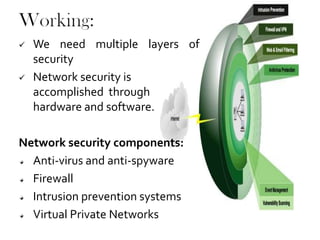
 We need multiple layers of
security
 Network security is
accomplished through
hardware and software.
Network security components:
Anti-virus and anti-spyware
Firewall
Intrusion prevention systems
Virtual Private Networks
Security tools:
• Antivirus software packages
• Secure network infrastructure
• DNS hardware and software
• Virtual private network
• Identity services
• Encryption
• Security management
Network security technology :
Different mechanisms to deal with these
attacks.
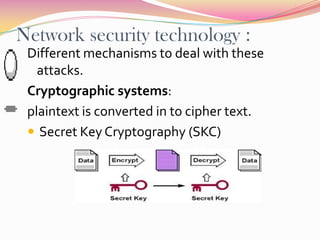
Cryptographic systems:
plaintext is converted in to cipher text.
 Secret Key Cryptography (SKC)
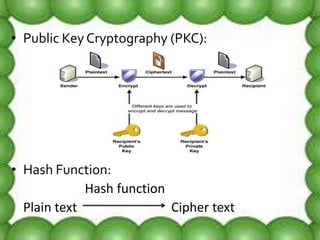
• Public Key Cryptography (PKC):
• Hash Function:
Hash function
Plain text Cipher text
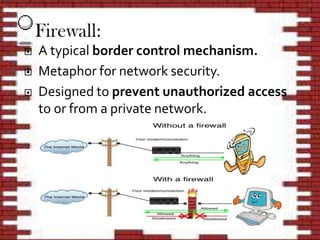
 A typical border control mechanism.
 Metaphor for network security.
 Designed to prevent unauthorized access
to or from a private network.
◦ Packet Filtering Firewall
◦ State Full Firewall
◦ ApplicationAware Firewall etc..
Network-based IDs (NIDS):
The sensor are located at the choke in network
It monitored, it captures all the network traffic
and analyze each packets for malicious traffic.
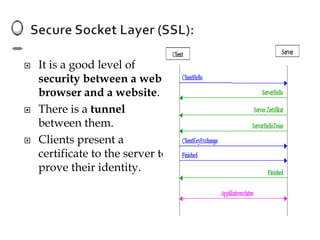
 It is a good level of
security between a web
browser and a website.
 There is a tunnel
between them.
 Clients present a
certificate to the server to
prove their identity.
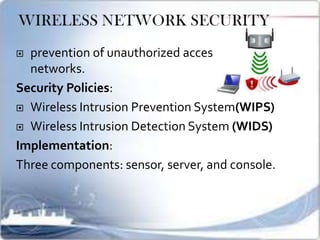
 prevention of unauthorized access using wireless
networks.
Security Policies:
 Wireless Intrusion Prevention System(WIPS)
 Wireless Intrusion Detection System (WIDS)
Implementation:
Three components: sensor, server, and console.
 It is a short program aiming at securing
communication over a network.
Example:
Transport layer security (TLS)
PPP / Point-to-Point Protocol
Internet Protocols security (IPSec)
 Network Security Services (NSS) comprises
a set of libraries
 It develops security-enabled client and
server applications.
Some are:
Mozilla client products, including Firefox etc
Google Chrome
Sun server products
Hardware Developments
 Biometric systems -secure workstation
logons
 Smart cards -undeniable proof of a user’s
identity.
Software Developments
 Current research develops security software
using neural networks.
 Objective- use neural networks for the facial
recognition software.
The network security will be able to function
as an immune system.
The same set of security technology that is
being used today with some minor
adjustments.
 The network security field evolve more rapidly to
deal with the threats further in the future.
“As threats tweaks,
Security tremendously Tweaks”
By ,
I.Madhumithah
V.Kalpana

Network security

  • 1.
  • 2.
    Define Network: A Networkis a series of points or nodes interconnected by communication paths. Interconnect with other networks and contain sub networks.
  • 3.
    Define Security: Security is“Freedom from risk or danger.“ The ability of a system to protect information and system resources with respect to confidentiality and integrity.
  • 4.
    Network security: Any activitiesdesigned to protect your network . Target- variety of threats and stops them from entering or spreading on your network. Handled by a network administrator.
  • 5.
    Objective: • Access • Confidentiality •Authentication • Integrity • Non‐repudiation
  • 6.
    History: During the 1980s,the hackers and crimes were beginning to emerge. CERT was created to overcome network security issues. In the 1990s, Internet became public and the security concerns increased tremendously.
  • 7.
    Types: Five types ofnetwork security can aid in secure networking. • Physical security • Perimeter protection • User training and education • Wireless encryption protocol (WEP) • MAC address filtering
  • 8.
     We needmultiple layers of security  Network security is accomplished through hardware and software. Network security components: Anti-virus and anti-spyware Firewall Intrusion prevention systems Virtual Private Networks
  • 9.
    Security tools: • Antivirussoftware packages • Secure network infrastructure • DNS hardware and software • Virtual private network • Identity services • Encryption • Security management
  • 10.
    Network security technology: Different mechanisms to deal with these attacks. Cryptographic systems: plaintext is converted in to cipher text.  Secret Key Cryptography (SKC)
  • 11.
    • Public KeyCryptography (PKC): • Hash Function: Hash function Plain text Cipher text
  • 12.
     A typicalborder control mechanism.  Metaphor for network security.  Designed to prevent unauthorized access to or from a private network.
  • 13.
    ◦ Packet FilteringFirewall ◦ State Full Firewall ◦ ApplicationAware Firewall etc.. Network-based IDs (NIDS): The sensor are located at the choke in network It monitored, it captures all the network traffic and analyze each packets for malicious traffic.
  • 14.
     It isa good level of security between a web browser and a website.  There is a tunnel between them.  Clients present a certificate to the server to prove their identity.
  • 15.
     prevention ofunauthorized access using wireless networks. Security Policies:  Wireless Intrusion Prevention System(WIPS)  Wireless Intrusion Detection System (WIDS) Implementation: Three components: sensor, server, and console.
  • 16.
     It isa short program aiming at securing communication over a network. Example: Transport layer security (TLS) PPP / Point-to-Point Protocol Internet Protocols security (IPSec)
  • 17.
     Network SecurityServices (NSS) comprises a set of libraries  It develops security-enabled client and server applications. Some are: Mozilla client products, including Firefox etc Google Chrome Sun server products
  • 18.
    Hardware Developments  Biometricsystems -secure workstation logons  Smart cards -undeniable proof of a user’s identity. Software Developments  Current research develops security software using neural networks.  Objective- use neural networks for the facial recognition software.
  • 19.
    The network securitywill be able to function as an immune system. The same set of security technology that is being used today with some minor adjustments.
  • 20.
     The networksecurity field evolve more rapidly to deal with the threats further in the future. “As threats tweaks, Security tremendously Tweaks”
  • 21.