Name: Neha Mehta
Roll No: 15
Semester: 2
Topic: RasaTheory
Submitted to: Smt. s. b. Gardi
Department of English
Bhavnagar
Introduction
 The rasa theory originates with Bharata in
Natyashastra.
 It claims that the object or meaning that is
sought to be conveyed in literary composition
is in nature of an emotion experience on
mans mind and heart.
 The Natyashastra describes nine rasas or
Nava Rasa that are the basis of all human
emotion.
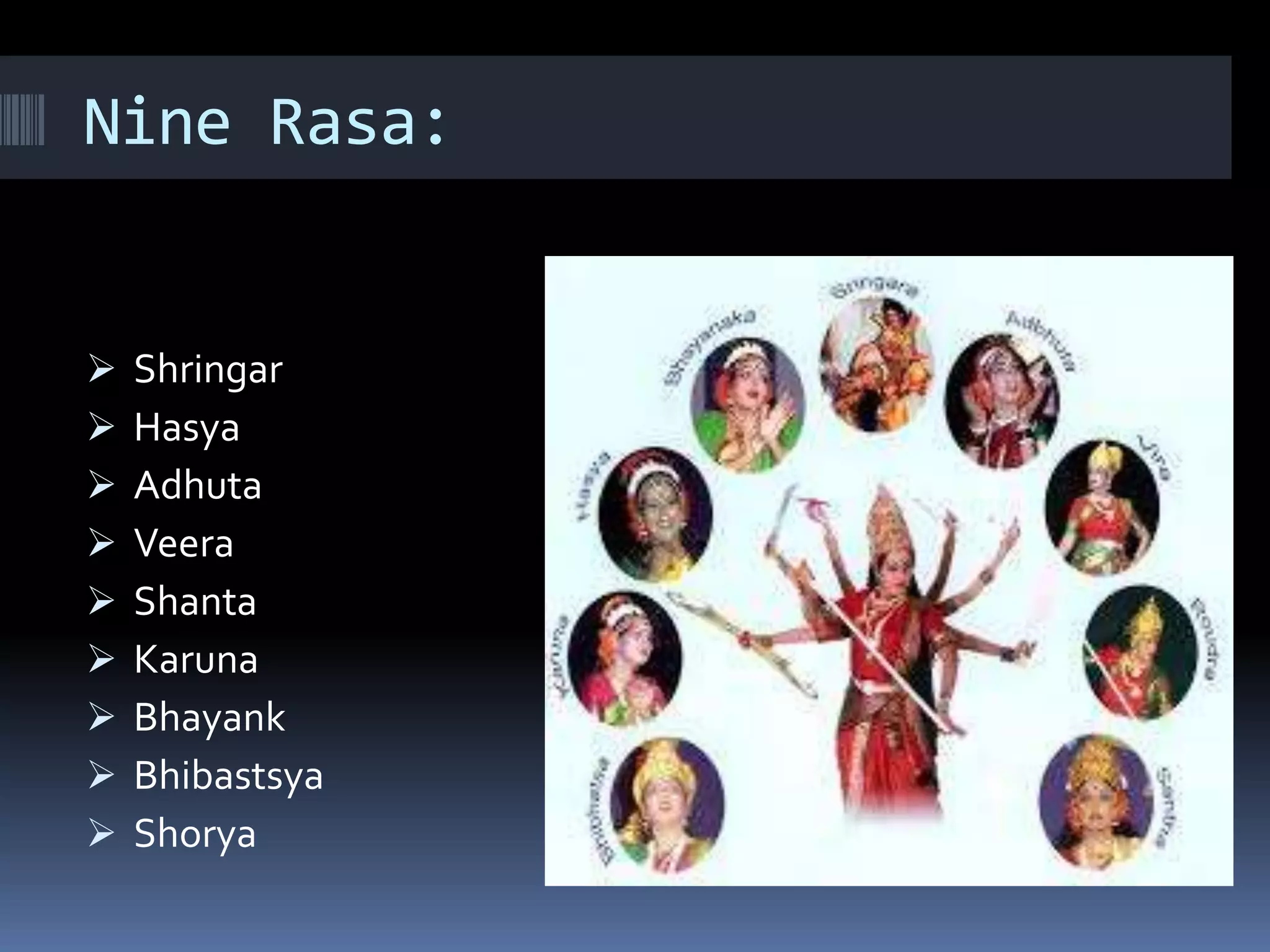
Nine Rasa:
 Shringar
 Hasya
 Adhuta
 Veera
 Shanta
 Karuna
 Bhayank
 Bhibastsya
 Shorya
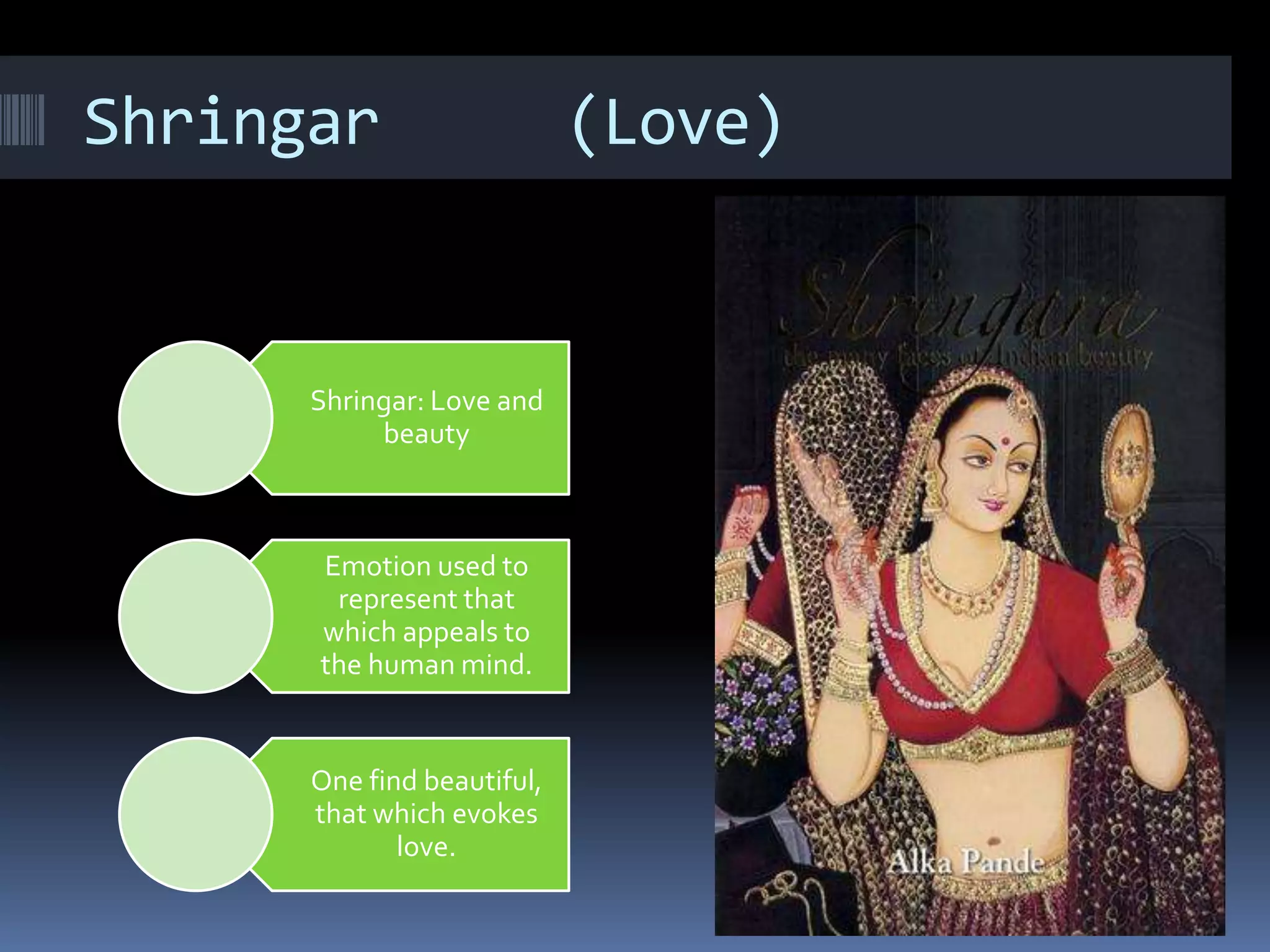
Shringar (Love)
Shringar: Love and
beauty
Emotion used to
represent that
which appeals to
the human mind.
One find beautiful,
that which evokes
love.
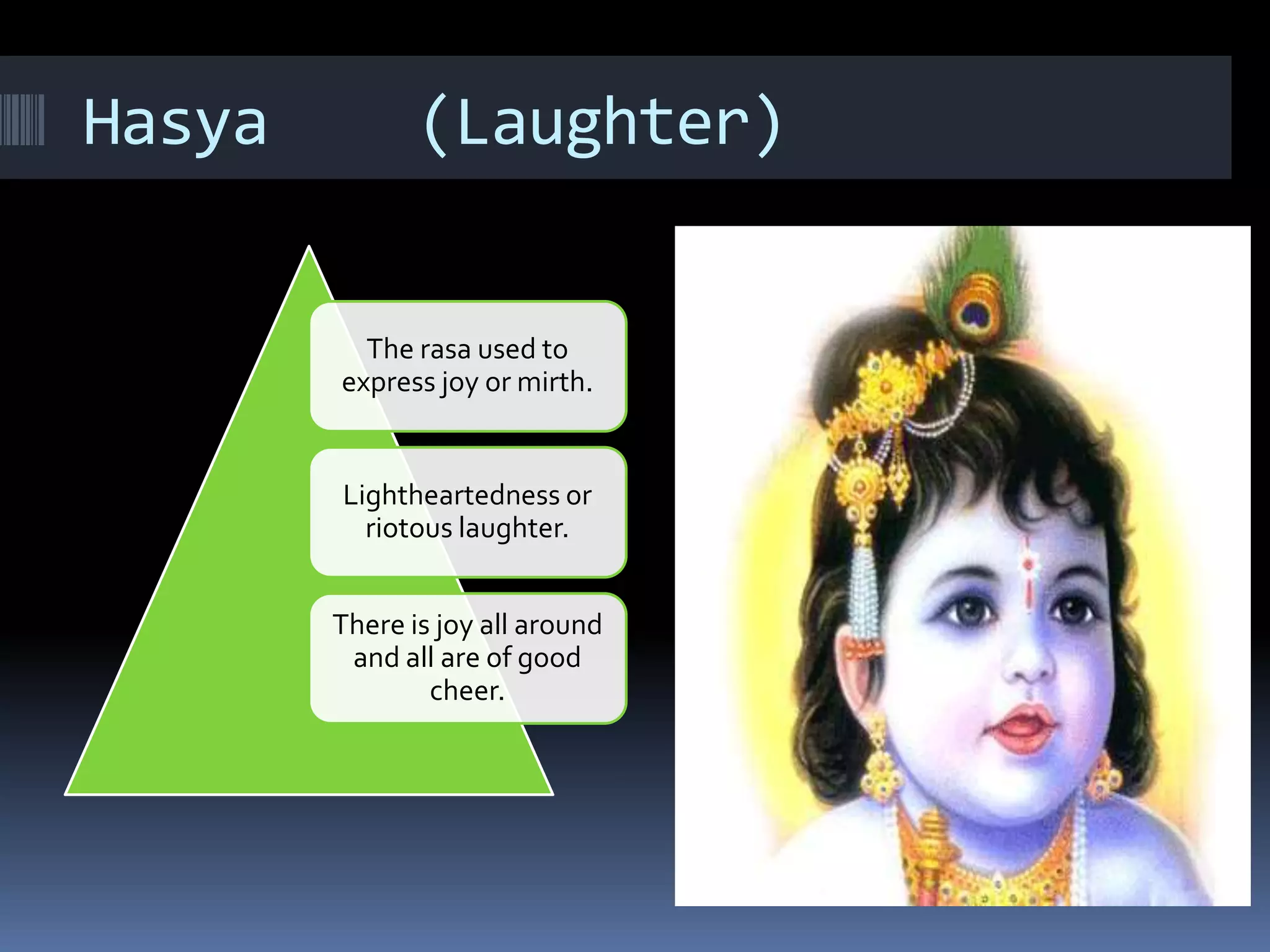
Hasya (Laughter)
The rasa used to
express joy or mirth.
Lightheartedness or
riotous laughter.
There is joy all around
and all are of good
cheer.
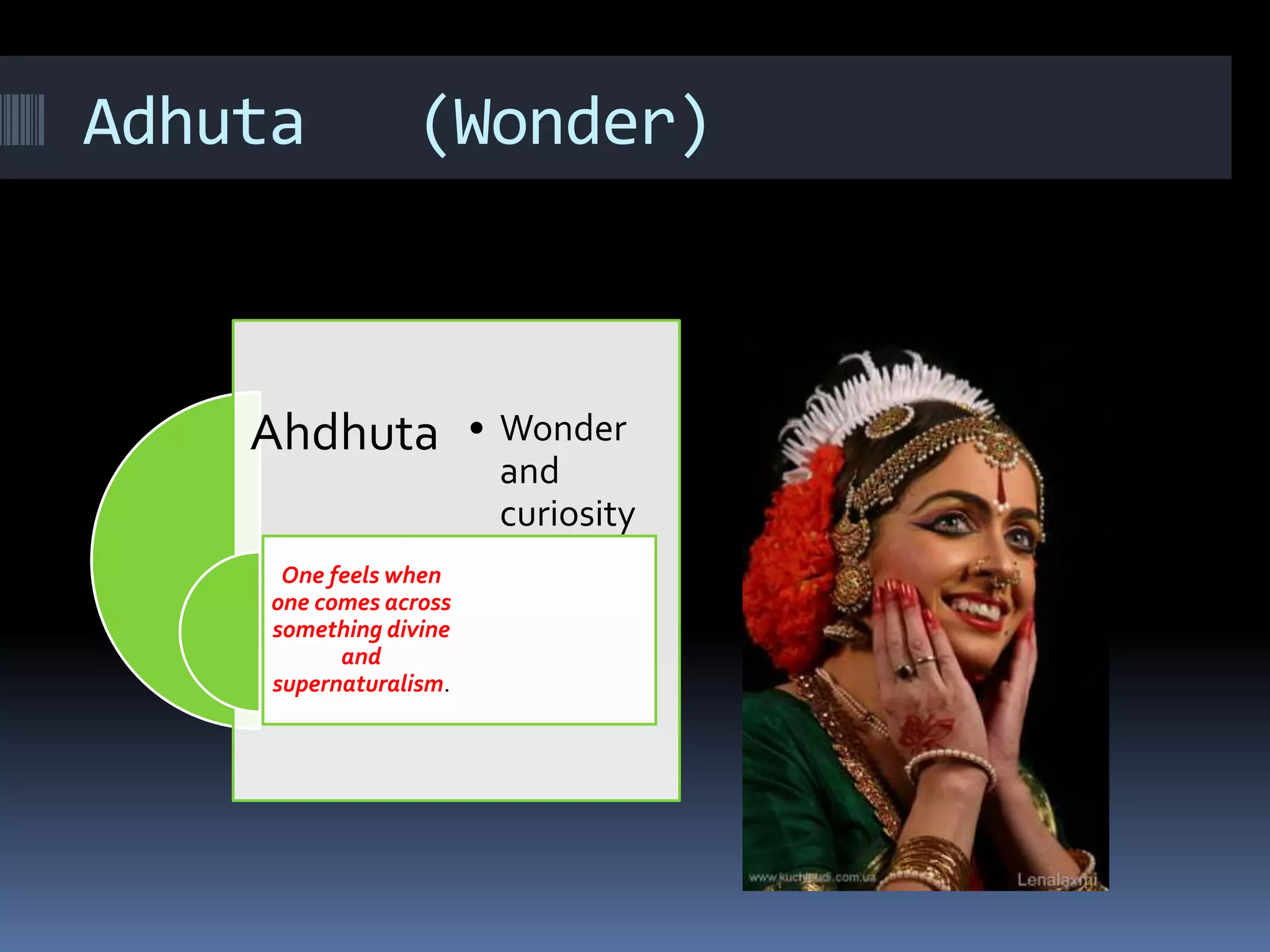
Adhuta (Wonder)
Ahdhuta
One feels when
one comes across
something divine
and
supernaturalism.
• Wonder
and
curiosity
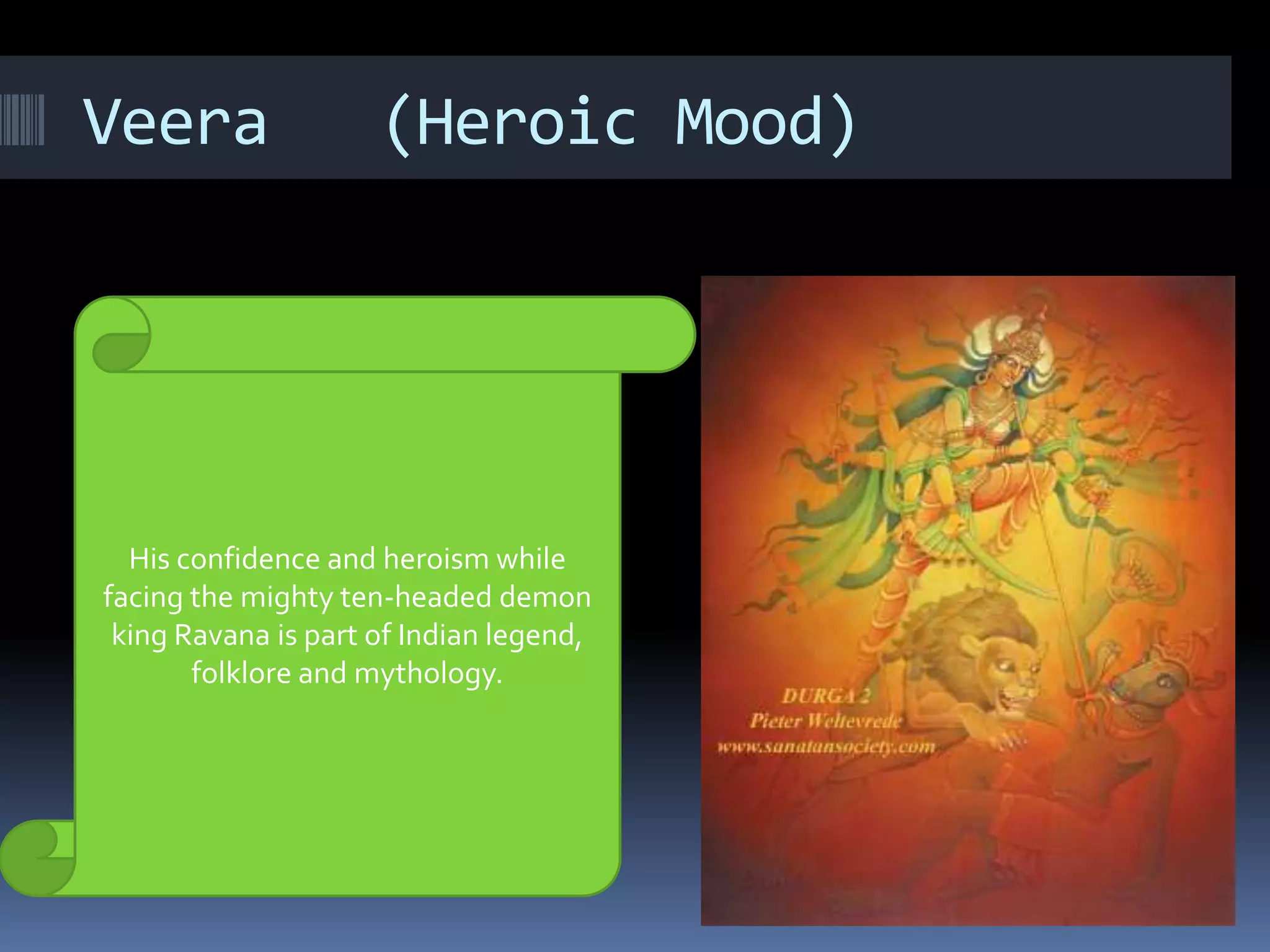
Veera (Heroic Mood)
His confidence and heroism while
facing the mighty ten-headed demon
king Ravana is part of Indian legend,
folklore and mythology.
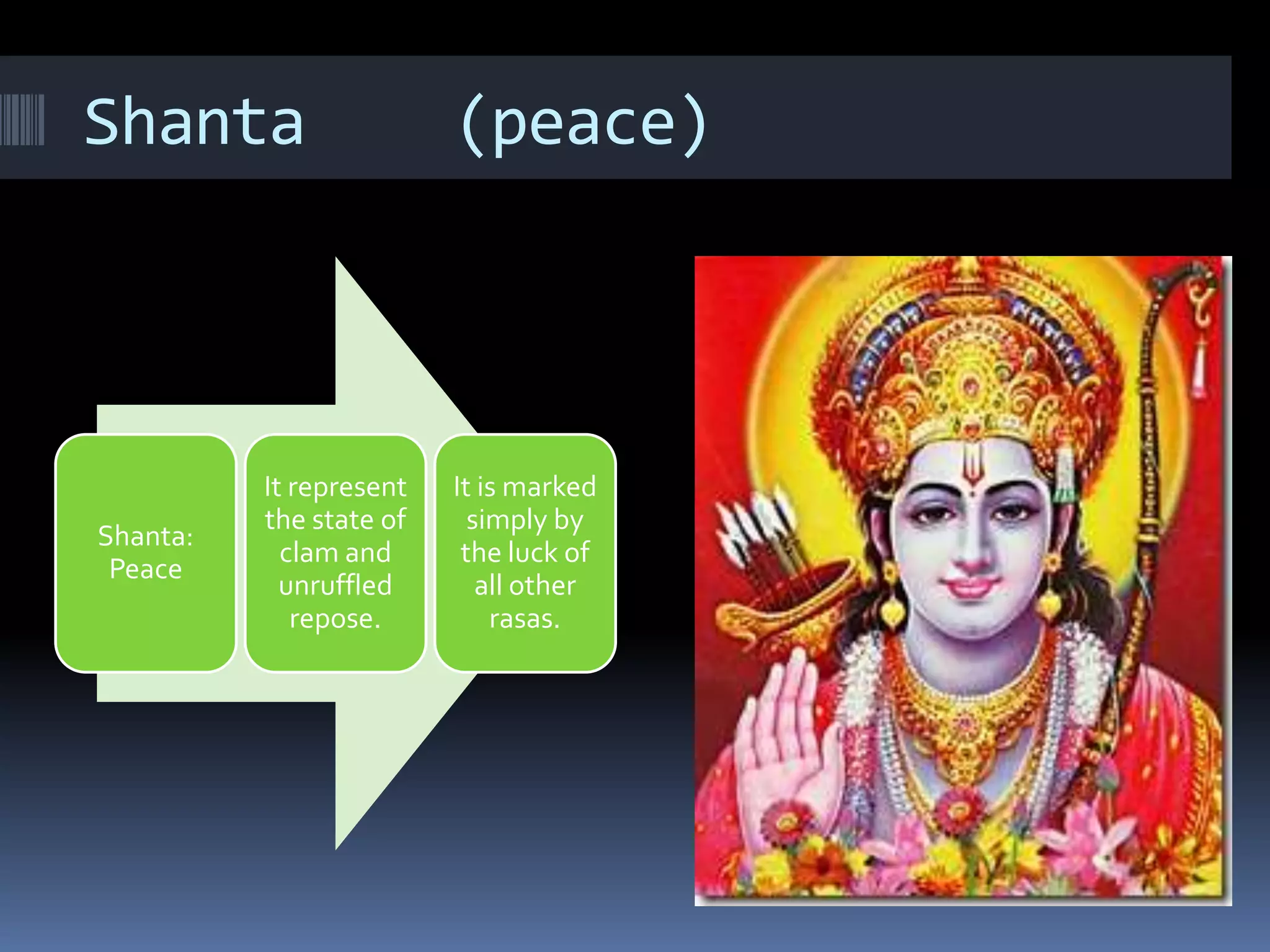
Shanta (peace)
Shanta:
Peace
It represent
the state of
clam and
unruffled
repose.
It is marked
simply by
the luck of
all other
rasas.
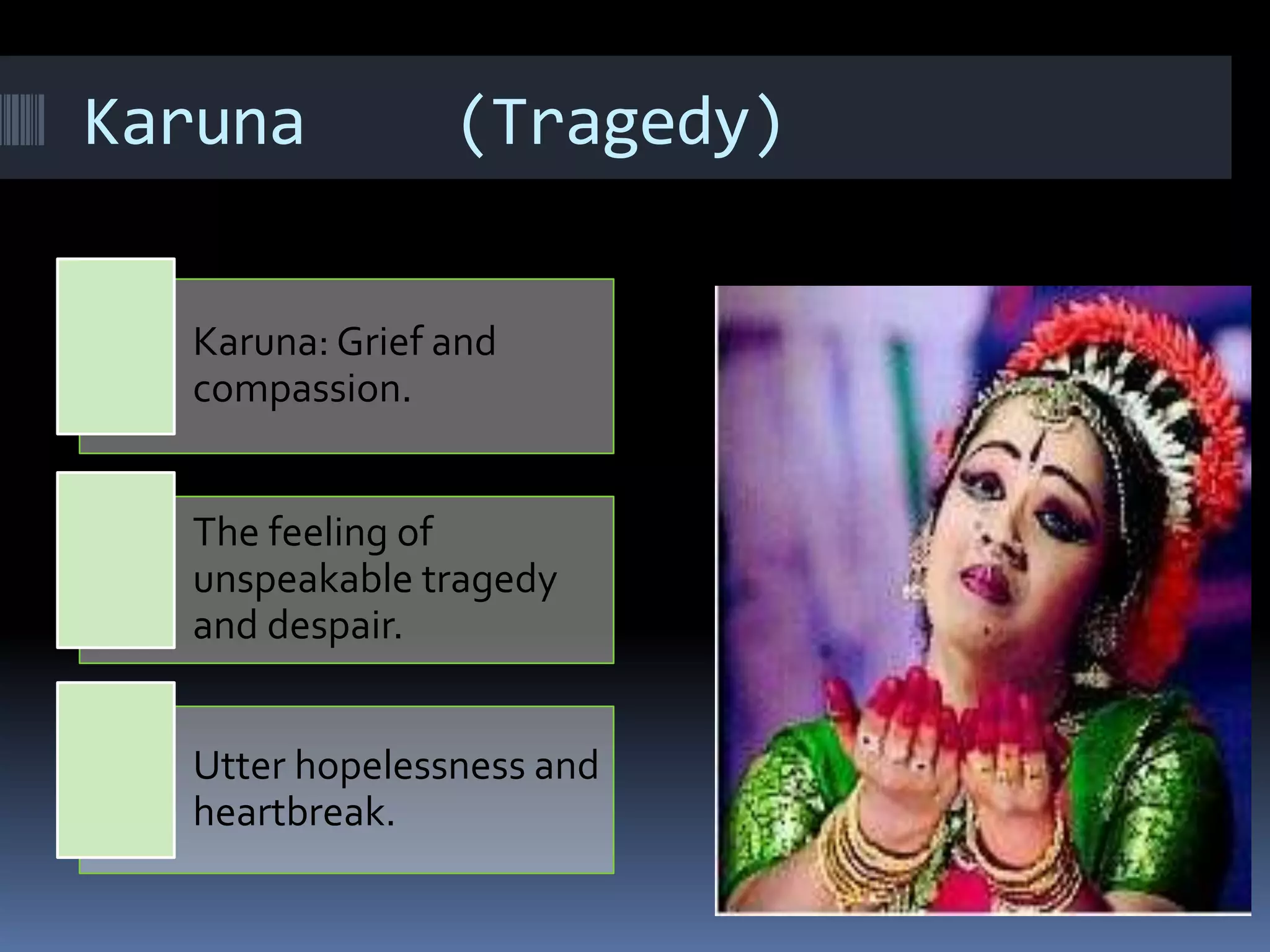
Karuna (Tragedy)
Karuna: Grief and
compassion.
The feeling of
unspeakable tragedy
and despair.
Utter hopelessness and
heartbreak.
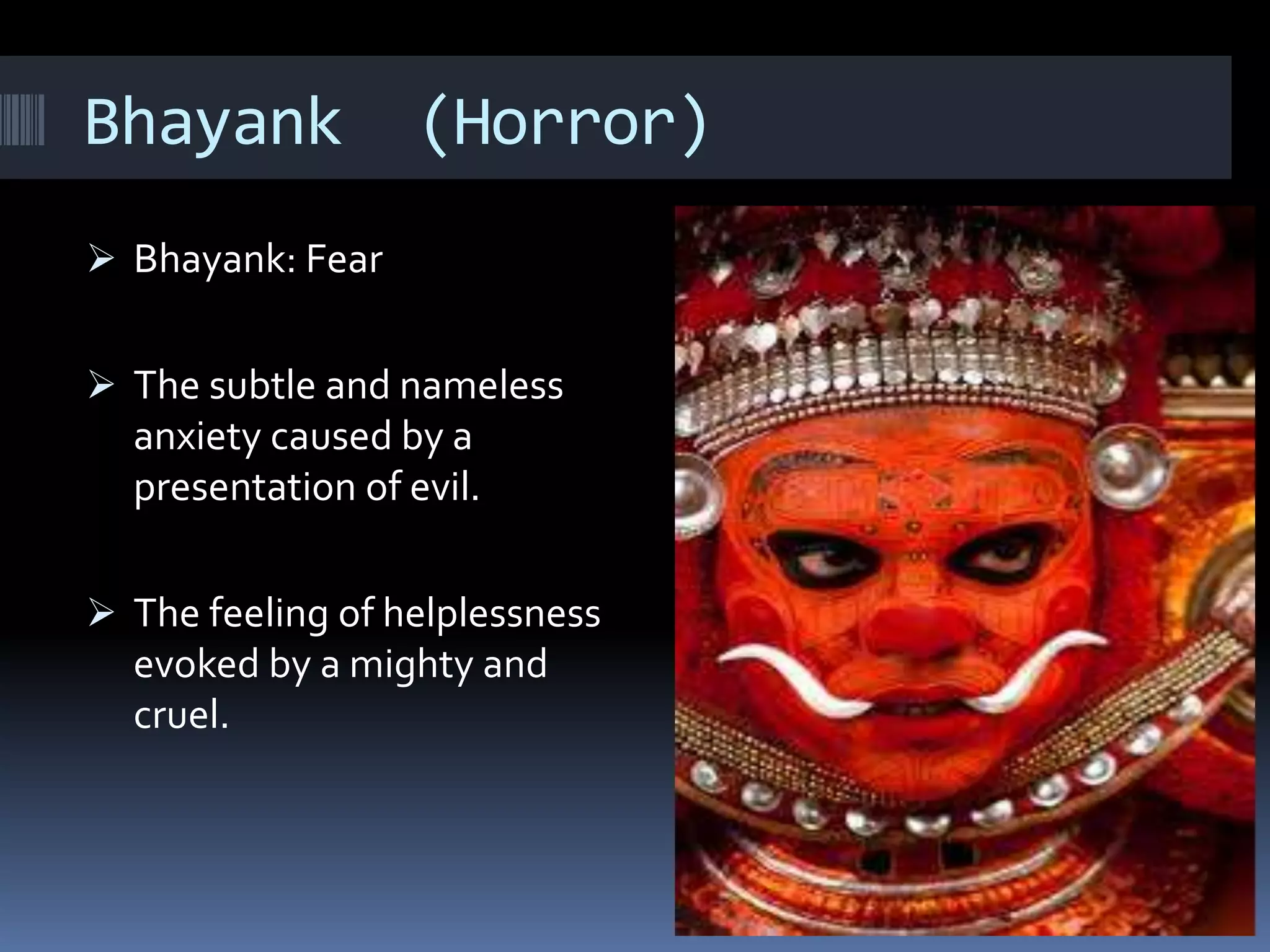
Bhayank (Horror)
 Bhayank: Fear
 The subtle and nameless
anxiety caused by a
presentation of evil.
 The feeling of helplessness
evoked by a mighty and
cruel.
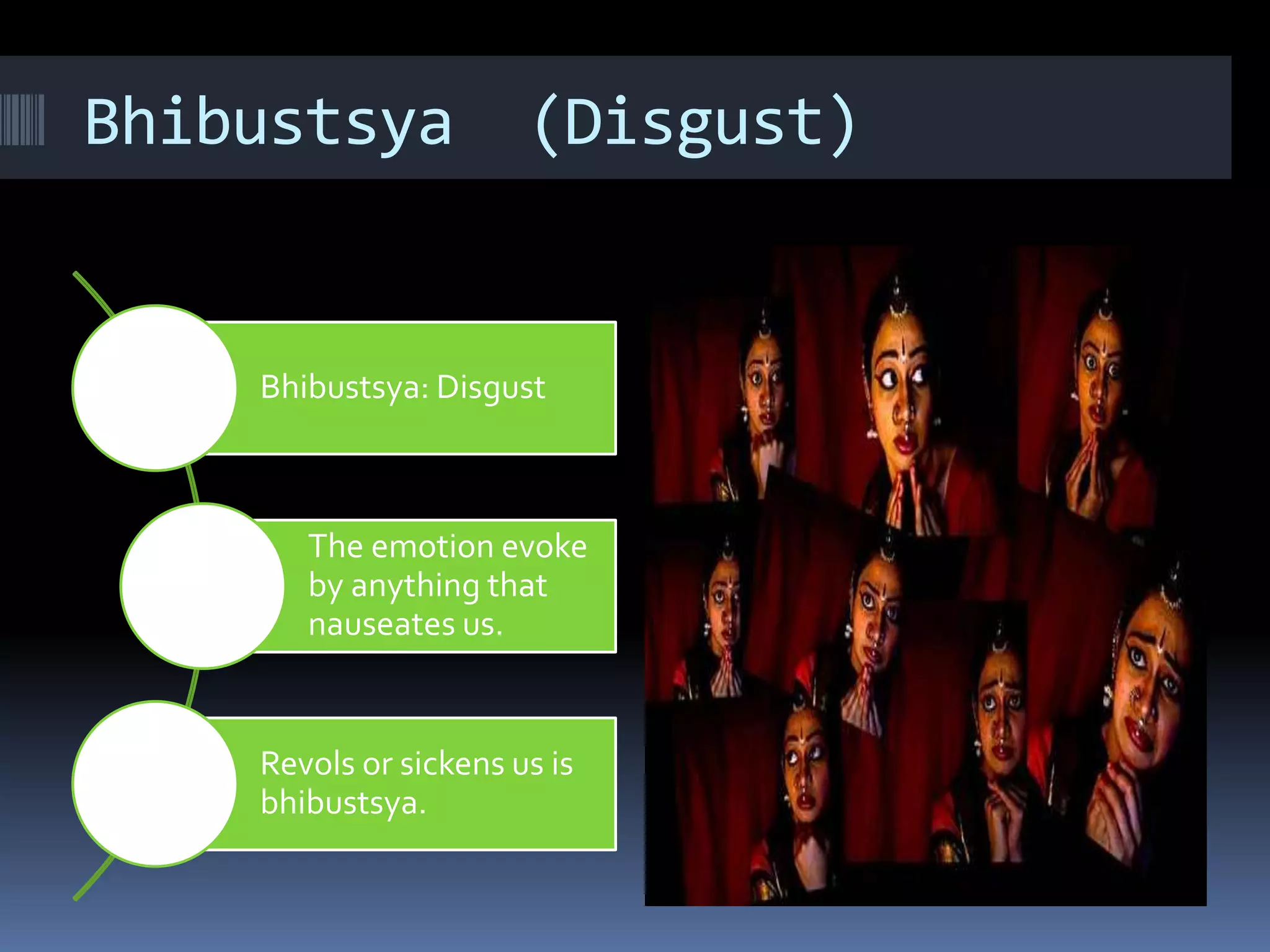
Bhibustsya (Disgust)
Bhibustsya: Disgust
The emotion evoke
by anything that
nauseates us.
Revols or sickens us is
bhibustsya.
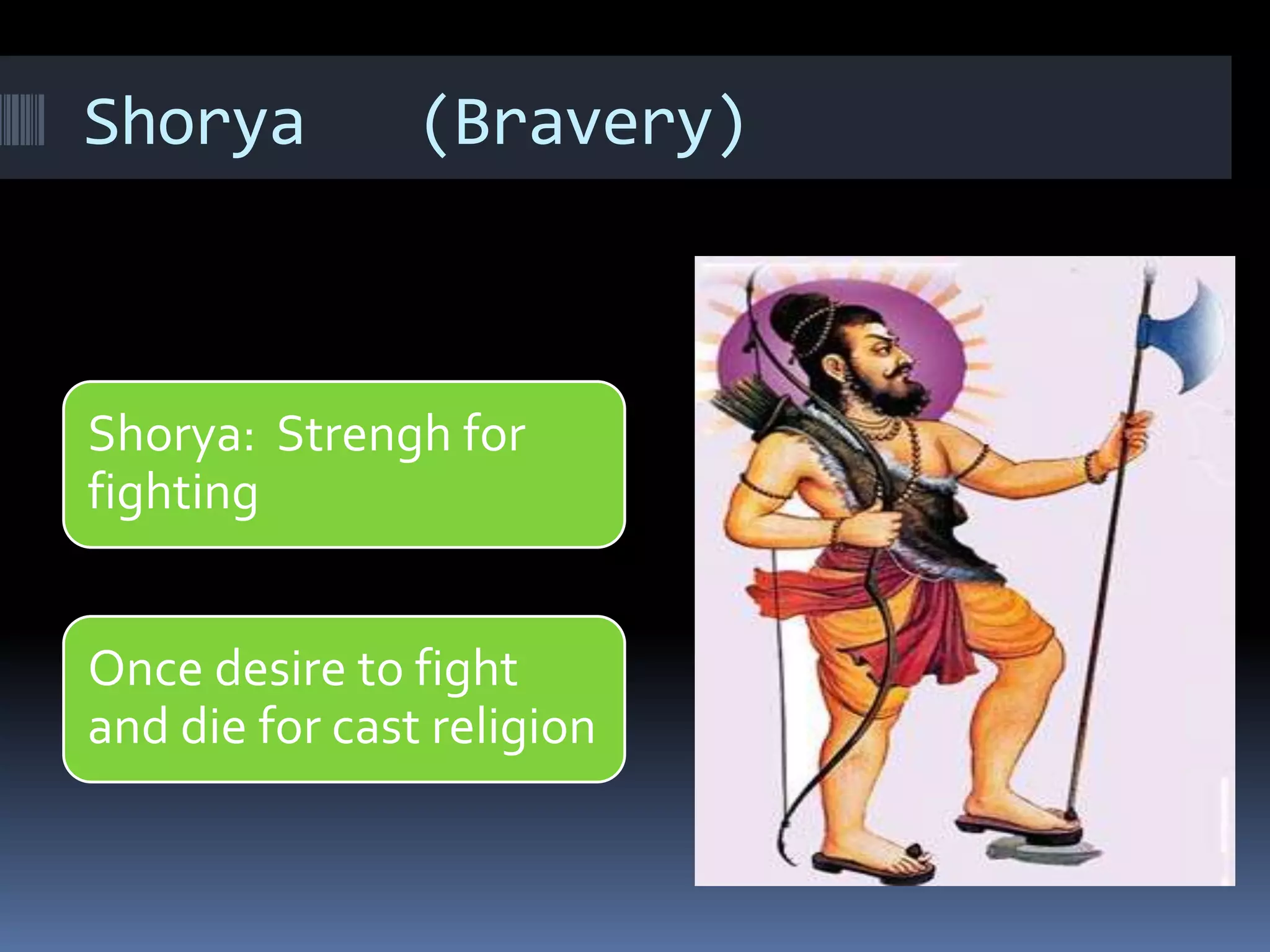
Shorya (Bravery)
Shorya: Strengh for
fighting
Once desire to fight
and die for cast religion
Conclusion
Thank You …

Theory of Rasa