Rasa theory in Padmavat
• Name :- Krishna K. Patel
• Roll no. :- 16
• Semester :- 02
• Batch :- 2018-2020
• Enrolment no. :- 2069108420190035
• Email Id :- krishnadobariya08@gmail.com
• Course :- M. A. English
• Paper no. :- 07 Literary Theory and criticism 02
• Topic :- Rasa theory in Padmavat
• Submitted to :- Smt. S. B. Gardi Department of English
MKBU
What is Rasa?
• A Rasa literally means “Juice, essence or taste”.
• It refers to the emotional flavors/essence crafted into
the work by the writer and relished by a ‘sensetive
spectator’ or sahraday or one with positive taste and
mind.
• Rasa are created by bhavas: the state of mind.
• The rasa theory is mentioned in chapter 6 of the
ancient Sanskrit text Natya Shastra.
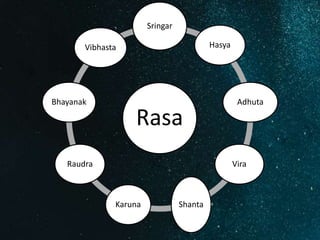
Rasa
Sringar
Hasya
Adhuta
Vira
ShantaKaruna
Raudra
Bhayanak
Vibhasta
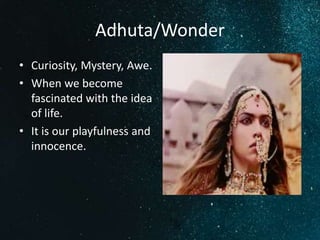
Adhuta/Wonder
• Curiosity, Mystery, Awe.
• When we become
fascinated with the idea
of life.
• It is our playfulness and
innocence.
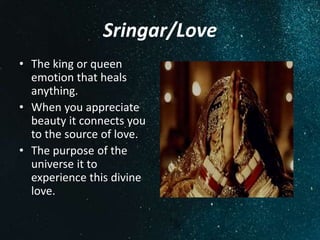
Sringar/Love
• The king or queen
emotion that heals
anything.
• When you appreciate
beauty it connects you
to the source of love.
• The purpose of the
universe it to
experience this divine
love.
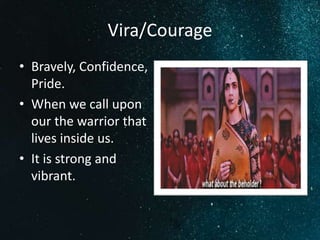
Vira/Courage
• Bravely, Confidence,
Pride.
• When we call upon
our the warrior that
lives inside us.
• It is strong and
vibrant.
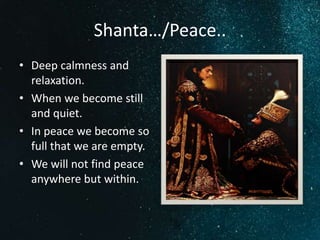
Shanta…/Peace..
• Deep calmness and
relaxation.
• When we become still
and quiet.
• In peace we become so
full that we are empty.
• We will not find peace
anywhere but within.
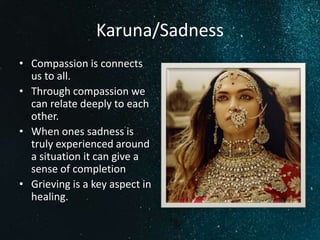
Karuna/Sadness
• Compassion is connects
us to all.
• Through compassion we
can relate deeply to each
other.
• When ones sadness is
truly experienced around
a situation it can give a
sense of completion
• Grieving is a key aspect in
healing.
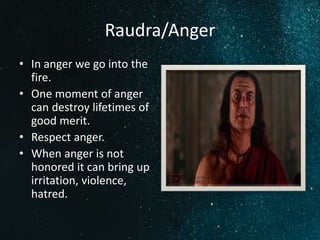
Raudra/Anger
• In anger we go into the
fire.
• One moment of anger
can destroy lifetimes of
good merit.
• Respect anger.
• When anger is not
honored it can bring up
irritation, violence,
hatred.
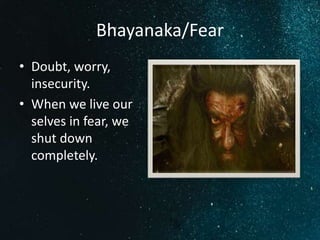
Bhayanaka/Fear
• Doubt, worry,
insecurity.
• When we live our
selves in fear, we
shut down
completely.
Vibhasta/Disgust
• Self Loathing, self
hatred.
• Only through a
loving emotion you
can heal and
appease disgust.
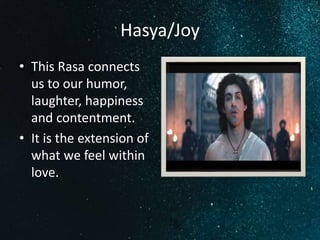
Hasya/Joy
• This Rasa connects
us to our humor,
laughter, happiness
and contentment.
• It is the extension of
what we feel within
love.
Conclusion
• Rasa is the soul of Poem. Rasa Hold our
interest in literature. There are many Rasa
used in literature and structured very well. It is
changed step by step but we don’t come to
know that when the Rasa is changed. No one
literature is interesting without Rasa.
References
• https://www.speakingtree.in/blog/9rasas-as-
9-emotions-in-human-beings
• https://hi.wikipedia.org/wiki/%E0%A4%A8%E
0%A4%BF%E0%A4%B0%E0%A5%82%E0%A4%
AA%E0%A4%A3
Rasa theory in padmavat

Rasa theory in padmavat