 Name : Neha Mehta 
 Roll no.:17 
 Paper no.: 4 
 Topic : Role of Religion in Nuleeni’s Life 
 Submitted To :M.K Bhavnagar 
University
 The Fakeer of Jungheera published by 
Samuel Smith and company, hurkaru 
library Calcutta in 1828 
 Derozio died in 1831 after a brief illness. 
 Many revivalists were cut to the quick 
when told by non Hindu reformers to 
modernize their society.
Nuleeni’s Life 
 While the heroin, the widow nuleeni, 
come from an upper caste bengali 
Hindu family 
 She is called Nuleeni. 
 Though her situation is rather hopeless, 
she does not reflect upon death but 
upon love especially the “blissful hours’’.
 Derozio see love between Hindu and 
Muslim as transceding religion, though 
this could be derozio’s own atheistic 
vision of religious categories based on his 
rationalistic temper 
. 
 Derozio embarked upon a mission of 
resolving some of the inherent evils of 
Hindu society the practice of widow 
burning.
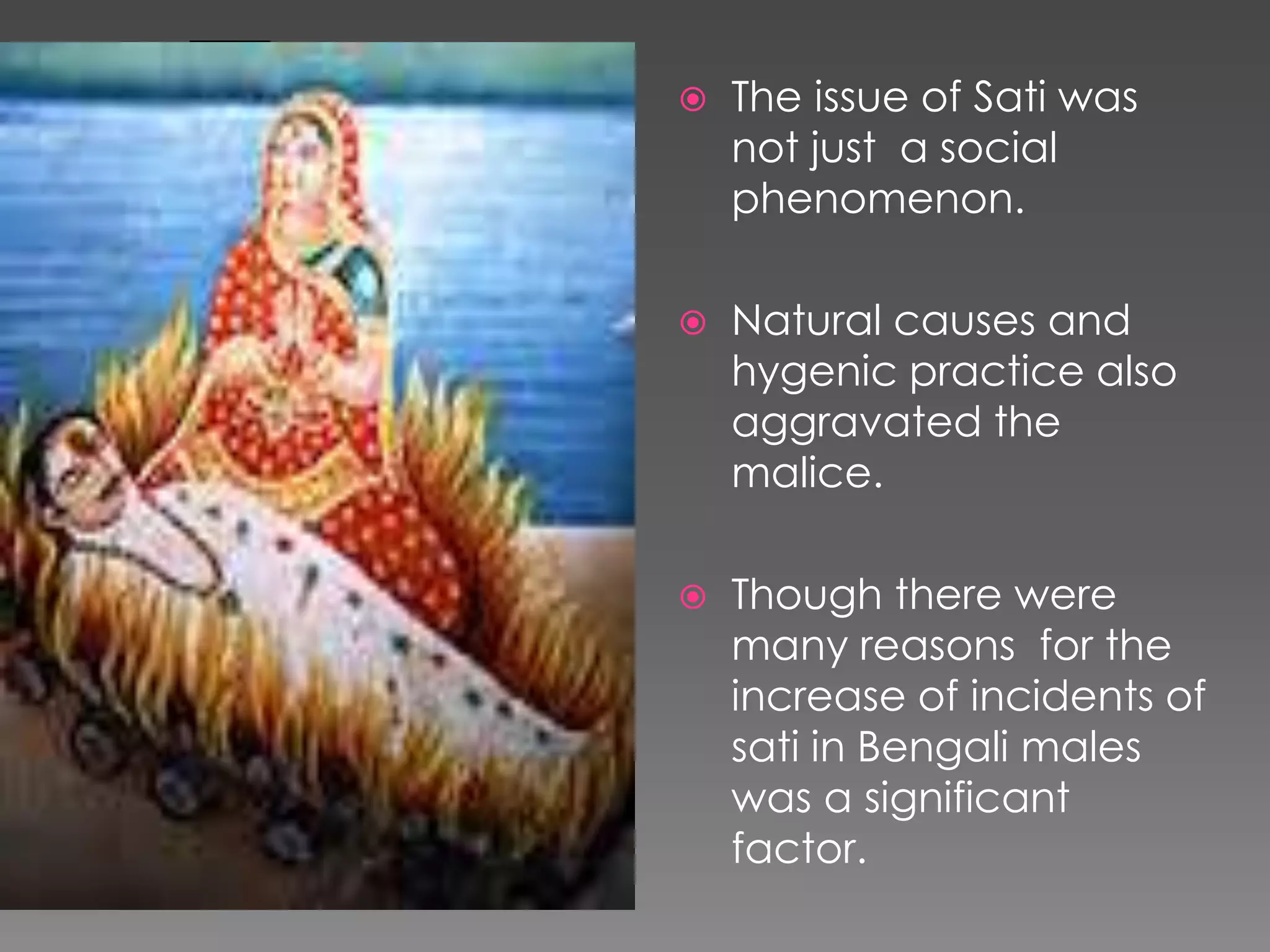
 The issue of Sati was 
not just a social 
phenomenon. 
 Natural causes and 
hygenic practice also 
aggravated the 
malice. 
 Though there were 
many reasons for the 
increase of incidents of 
sati in Bengali males 
was a significant 
factor.
 He believed that now sati declare illegal 
women would enjoy freedom and 
“Social bliss” in a new India. 
 The widow bought to the sacrificial fire is 
young and pure in her “spotleess 
loveliness” but she is a “purchased 
flower” and a victim of human caprice 
and guile. 
 Women who sacrificed themselves 
continued to be called Sati long after 
they were dead and gone.
Conclusion 
The hardening of religious 
identifies in the late 19 and early 
20 centuries and the deepening 
schism between various religious 
categories especially Hindu and 
Muslims rejected the entire 
syncretistic tradition that once 
flowed unhampered not only in 
Bengal.
Nuleeni'S life

Nuleeni'S life

  • 1.
     Name :Neha Mehta  Roll no.:17  Paper no.: 4  Topic : Role of Religion in Nuleeni’s Life  Submitted To :M.K Bhavnagar University
  • 2.
     The Fakeerof Jungheera published by Samuel Smith and company, hurkaru library Calcutta in 1828  Derozio died in 1831 after a brief illness.  Many revivalists were cut to the quick when told by non Hindu reformers to modernize their society.
  • 3.
    Nuleeni’s Life While the heroin, the widow nuleeni, come from an upper caste bengali Hindu family  She is called Nuleeni.  Though her situation is rather hopeless, she does not reflect upon death but upon love especially the “blissful hours’’.
  • 4.
     Derozio seelove between Hindu and Muslim as transceding religion, though this could be derozio’s own atheistic vision of religious categories based on his rationalistic temper .  Derozio embarked upon a mission of resolving some of the inherent evils of Hindu society the practice of widow burning.
  • 5.
     The issueof Sati was not just a social phenomenon.  Natural causes and hygenic practice also aggravated the malice.  Though there were many reasons for the increase of incidents of sati in Bengali males was a significant factor.
  • 6.
     He believedthat now sati declare illegal women would enjoy freedom and “Social bliss” in a new India.  The widow bought to the sacrificial fire is young and pure in her “spotleess loveliness” but she is a “purchased flower” and a victim of human caprice and guile.  Women who sacrificed themselves continued to be called Sati long after they were dead and gone.
  • 7.
    Conclusion The hardeningof religious identifies in the late 19 and early 20 centuries and the deepening schism between various religious categories especially Hindu and Muslims rejected the entire syncretistic tradition that once flowed unhampered not only in Bengal.